SINGAPORE: This year sees a slew of events and projects to mark 200 years since the arrival of Sir Stamford Raffles on Singapore’s shores – and now, commemorations will extend towards helping Singaporeans with specific needs.
To commemorate Singapore’s bicentennial this year, Finance Minister Heng Swee Keat on Monday (Feb 18) announced a S$1.1 billion Bicentennial Bonus to be shared with Singaporeans.
Here’s what this bonus includes:
HELP WITH DAILY LIVING EXPENSES FOR THOSE WHO NEED IT
There will be additional payments for lower-income Singaporeans at the end of the year to help them with daily living expenses.
This includes:
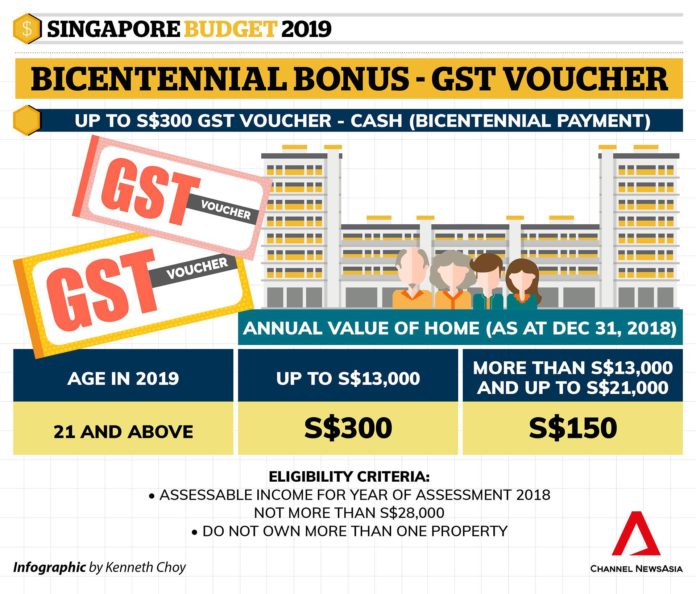
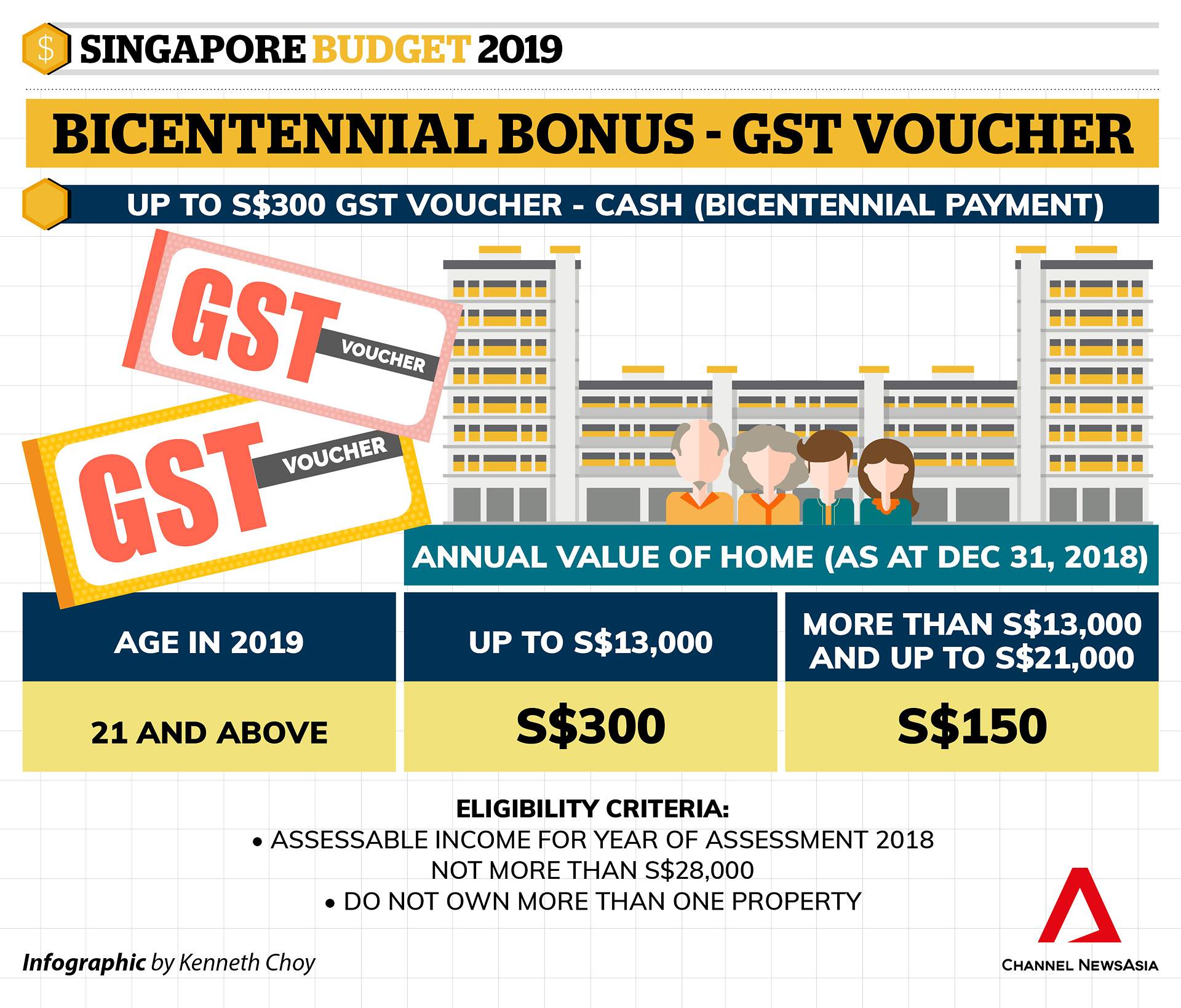
– Up to S$300 in GST Voucher – Cash (Bicentennial Payment)
– A cash Workfare Bicentennial Bonus: Those who receive Workfare Income Supplement payments will get an extra 10 per cent of their payment for work done in 2018, with a minimum payment of S$100.
PERSONAL INCOME TAX REBATE
Also on the table is a tax rebate for income earned in 2018 (Year of Assessment 2019). A personal income tax rebate of 50 per cent of tax payable will be granted to all tax resident individuals – capped at S$200 per taxpayer.
This is estimated to cost about S$280 million.
SUPPORT FOR STUDENTS
Younger Singaporeans have not been forgotten either, with the Government promising additional top-ups to support students’ educations to be made by mid-2019.
Primary and secondary school students will get a S$150 top-up to their Edusave accounts, while Singaporeans aged 17 to 20 will receive up to S$500 in their Post-Secondary Education Accounts.
These top-ups are estimated to cost about S$140 million and to benefit around 570,000 students.
RETIREMENT SAVINGS FOR ELDERLY, ESPECIALLY WOMEN
The Government will also make a one-off CPF top-up of up to S$1,000 for eligible Singaporeans aged between 50 and 64 this year. Those eligible must have less than S$60,000 of retirement savings in their CPF accounts.
About 300,000 Singaporeans will benefit from this top-up. Most of these will be women who left the workforce for caregiving roles and so had fewer years to build up their savings.
SINGAPORE: Travellers entering Singapore will soon get less Goods and Services Tax (GST) relief on items bought overseas. The duty-free alcohol allowance is also being reduced.
The GST relief change will take effect from midnight on Tuesday, while the duty-free alcohol allowance change will start on Apr 1.
Finance Minister Heng Swee Keat announced this in his Budget statement on Monday (Feb 18).
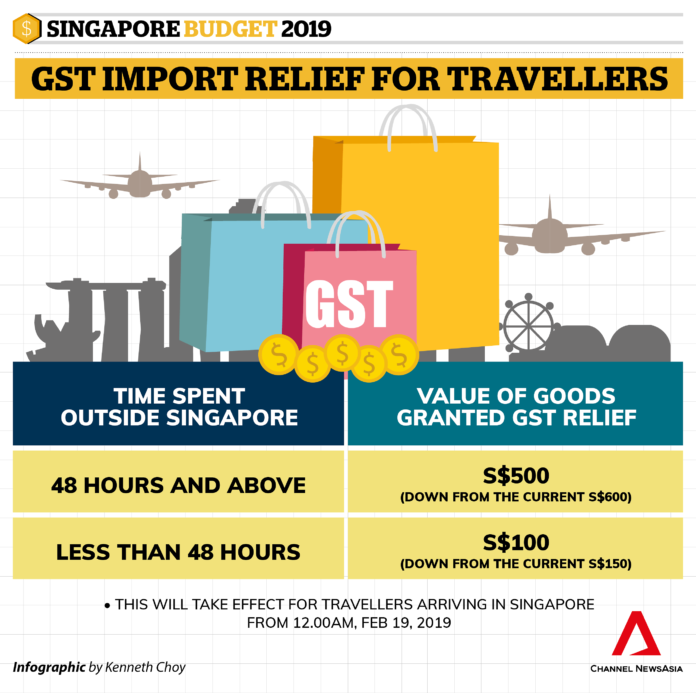
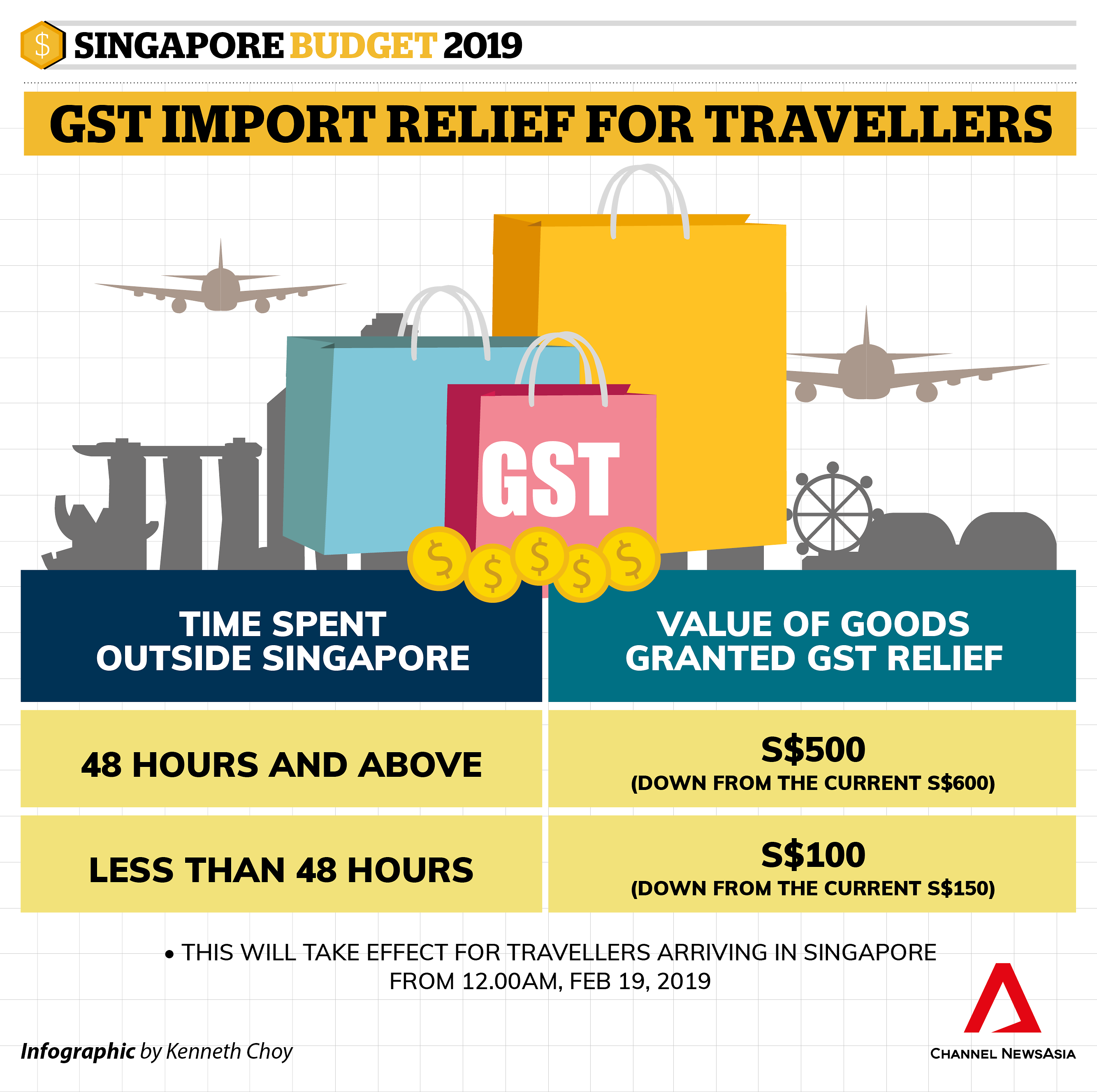
Mr Heng said travellers who spend less than 48 hours outside Singapore will have to start paying GST on goods bought overseas worth more than S$100. The current allowance is S$150.
Travellers who spend 48 hours or more outside Singapore will have to start paying GST on purchases worth more than S$500, down from S$600 currently.
These changes come amid a rise in international travel, Mr Heng said.
The relief is applicable to Singapore citizens, permanent residents and tourists. It is not applicable to crew members and holders of a work permit, employment pass, student’s pass, dependent’s pass or long term pass.
The relief also does not apply to intoxicating liquor and tobacco, as well as goods imported for commercial purposes.
LOWER ALCOHOL DUTY-FREE ALLOWANCE
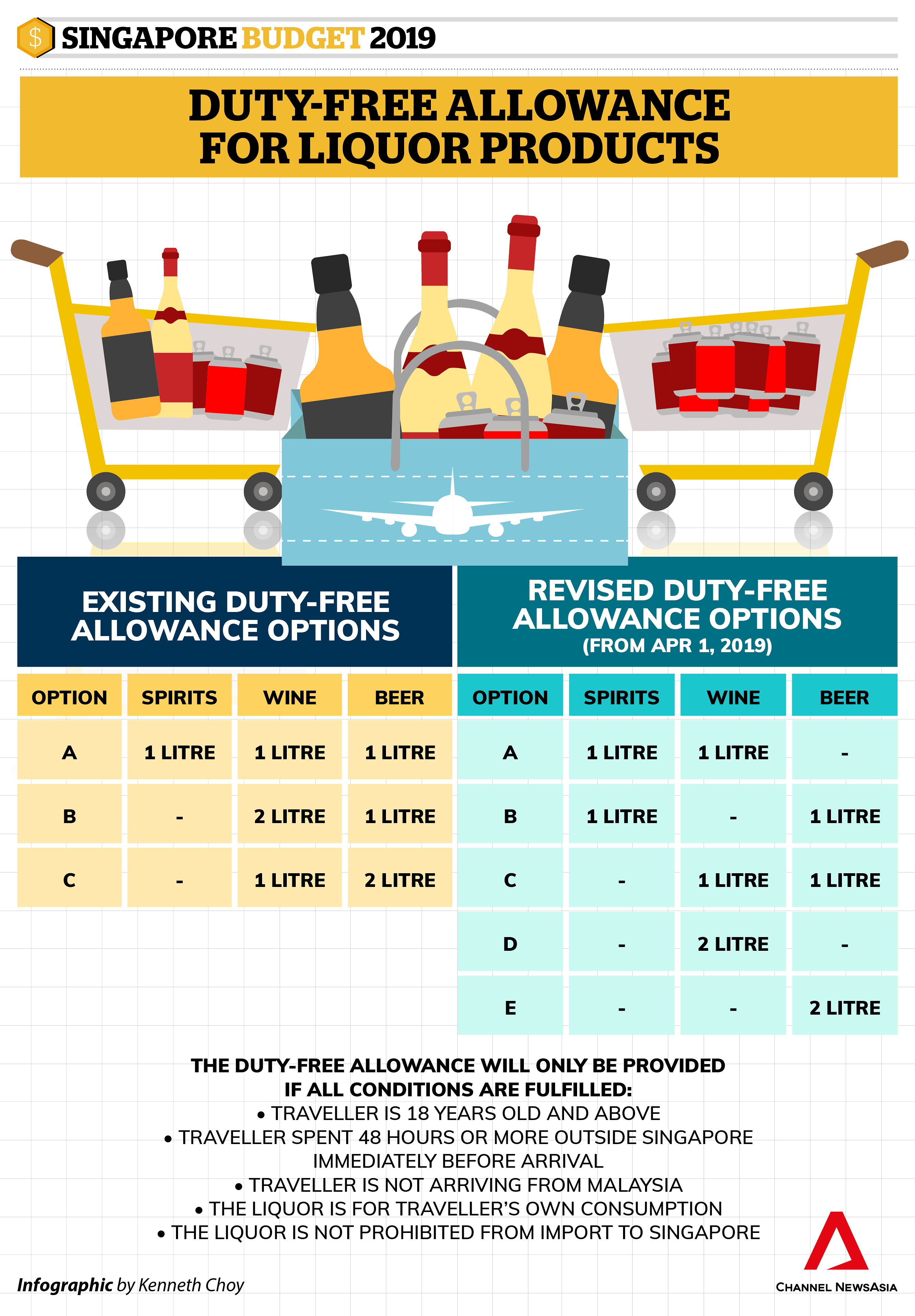
As for the alcohol duty-free allowance, Mr Heng said travellers will be able to buy two litres of duty-free alcohol, down from the current three litres.
As with the current allowance, only one litre of the duty-free allowance can be spirits.
The duty-free allowance will only be provided if the traveller fulfils all conditions. These include spending 48 hours or more outside Singapore immediately before arrival, not arriving from Malaysia and ensuring the liquor is for personal consumption.
These changes will help ensure the resilience of Singapore’s tax system, Mr Heng said. “GST is a broad-based tax that contributes significantly to our fiscal resources,” he added.
This comes after Mr Heng announced the introduction of GST on imported services in last year’s Budget statement to ensure GST collections “remain fair and resilient in a digital economy”.
While Mr Heng said many countries have taken the “easier route” by funding recurrent expenditures – like on healthcare, pre-school education and security – through borrowing, he added that this is “not the Singapore way”.
“We must not do this, as such borrowing shifts the burden of paying for today’s needs onto future generations,” he stated.
“A fairer and more robust approach is to meet recurrent spending with recurrent revenues. Hence, we must continually review our tax system to ensure its resilience.”
SINGAPORE: The Government will provide more financial support for lower-wage and older workers with increased annual payouts from the Workfare Income Supplement Scheme as well as extending initiatives that will help them save more for retirement.
Finance Minister Heng Swee Keat outlined these developments in this year’s Budget as part of the Government’s long-term strategy to build a caring and inclusive society.
To supplement the income of lower-wage workers, the Government will enhance WIS by providing cash payouts and CPF top-ups for workers whose earnings are in the bottom 20 per cent, with some support for those slightly above.
Firstly, the qualifying income cap for WIS will be raised from the current S$2,000 to S$2,300 per month, and this will take effect from January 2020. Secondly, the maximum annual payouts will be increased by up to S$400. Older workers will also see higher increases in payouts. For example, workers aged 60 and earning S$1,200 per month will now receive S$4,000 a year from WIS, or almost 30 per cent of their wages, Mr Heng said.
He added that these enhancements will cost an additional S$206 million a year, pushing the overall enhanced WIS cost to close to S$1 billion a year in total,benefiting almost 440,000 people.
The Government will also be topping up the Special Employment Credit (SEC) fund by S$366 million to increase support for employers hiring older workers.
The SEC, along with the Additional SEC (ASEC) to encourage employers to hire workers who are above the re-employment age, will both be extended for another year until Dec 31, 2020.
“The Government will study better forms of support to continue to help workers to remain productive, earn more, and save more for retirement. We will review the relevance and structure of the SEC and ASEC, in tandem with the recommendation from the Tripartite Workgroup on Older Workers,” said Mr Heng.
ENHANCED CHAS SUBSIDIES AT GP CLINICS
To boost healthcare access at neighbourhood clinics, the Government will extend Community Health Assist Scheme (CHAS) subsidies to cover all Singaporeans for chronic conditions, regardless of income.
Additionally, for lower to middle-income Singaporeans who are CHAS Orange cardholders and who currently receive subsidies for chronic conditions, the subsidies will now be extended for common illnesses. Subsidies for complex chronic conditions will also be increased.
Community Health Assist Scheme (CHAS) cards. (File photo: Ministry of Communications and Information)
Mr Heng also noted that the Government must put in measures to ensure that CHAS clinics are delivering good outcomes.
He said: “To this end, the Ministry of Health will be looking at how to help CHAS clinics better track their patients’ progress and outcomes. In a similar vein, MOH will also review its clinical guidelines for care provided at CHAS dental clinics, to ensure that the care delivered is appropriate to the needs of the patient.”
With the changes, the Government will expect to pay out more than S$200 million a year in CHAS subsidies.
On top of that, the Government will be setting aside another S$3.1 billion, on top of the S$2 billion earmarked last year to support financial protection for the long-term care of Singaporeans.
“The Government will put this S$5.1 billion into a new Long-Term Care Support Fund. This will help fund the CareShield Life Subsidies and other long-term care support measures, such as ElderFund,” said Mr Heng.
FIVE-YEAR MEDISAVE TOP-UPS
Mr Heng also announced increased support for Singaporeans part of the Merdeka Generation.
But for younger people aged 50 and above in 2019, who do not receive the Merdeka Generation Package, Mr Heng announced that the Government will provide a MediSave top-up of S$100 a year for them for the next five years.
“This is a generation who are even younger and healthier, and I hope that everyone will make the extra effort to stay active and healthy,” said Mr Heng.
Meanwhile, the Government will also raise cash assistance rates for the ComCare Long-Term Assistance and Singapore Allowance scheme.
The scheme provides basic monthly cash assistance to those who are permanently unable to work and have little family support, to support their living expenses. As a result of the increased rates, a two-person household who both qualify for the scheme will receive an additional S$130 a month. This brings their total assistance to S$1,000 a month.
Furthermore, government pensioners who draw lower pensions will see an increase in the Singapore Allowance and monthly pension ceiling by S$20 per month each, to S$320 and S$1,250 respectively. This will benefit around 9,300 pensioners, Mr Heng said.
INCREASED SUPPORT FOR CHILDREN FROM DISADVANTAGED BACKGROUNDS
The Government is also looking to do more to better support children from disadvantaged backgrounds, by intervening earlier, with new forms of proactive and targeted support.
To that end, the Uplifting Pupils in Life and Inspiring Families Taskforce (UPLIFT) will pilot upstream interventions and partner communities to help disadvantaged children and their families, to ensure that no child is left behind.
Mr Heng highlighted a recent initiative – the UPLIFT scholarship for Independent Schools – which provides a monetary award of S$800 per year to eligible lower-income students in Independent Schools to cover their out-of-pocket expenses.
“The taskforce is also looking at how to strengthen after-school care and support for disadvantaged students in school-based Student Care Centres,” said Mr Heng. He added that the Minister of Education will elaborate on this and other initiatives spurred by UPLIFT during the Committee of Supply debate.
OTHER SUPPORT FOR HOUSEHOLDS
In addition to the special Bicentennial initiatives, the Government will provide another year of Service and Conservancy Charges (S&CC) Rebate to HDB households.
Eligible households will receive S&CC rebates of between one and a half and three and a half months. This will cost the Government S$132 million and benefit 930,000 households, Mr Heng said.
He added that S$10 million will be added to the Public Transport Fund to continue helping commuters in need with their transport expenses, such as through Public Transport Vouchers for lower-income families.
“The Government keeps a close watch on the cost of living. Over the years, we have done much to alleviate cost pressures – whether in healthcare, education or day-to-day expenses,” said Mr Heng.
SINGAPORE: A number of measures, including reducing the foreign worker quota for the services sector, will be put in place to ensure Singaporeans continue to have “good jobs and opportunities”, said Finance Minister Heng Swee Keat in his Budget 2019 speech on Monday (Feb 18).
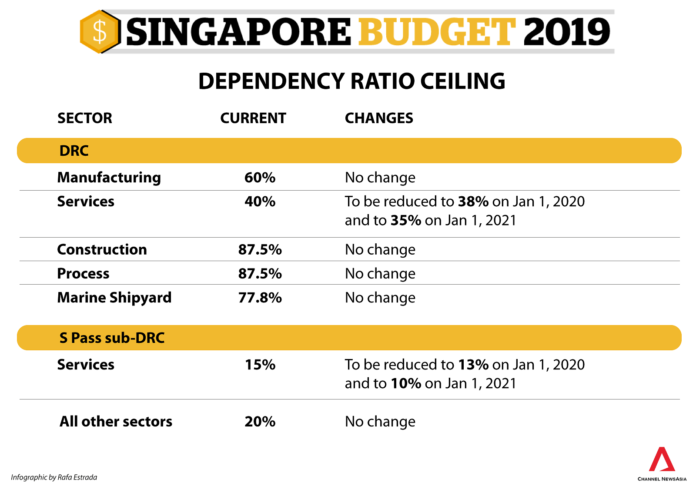
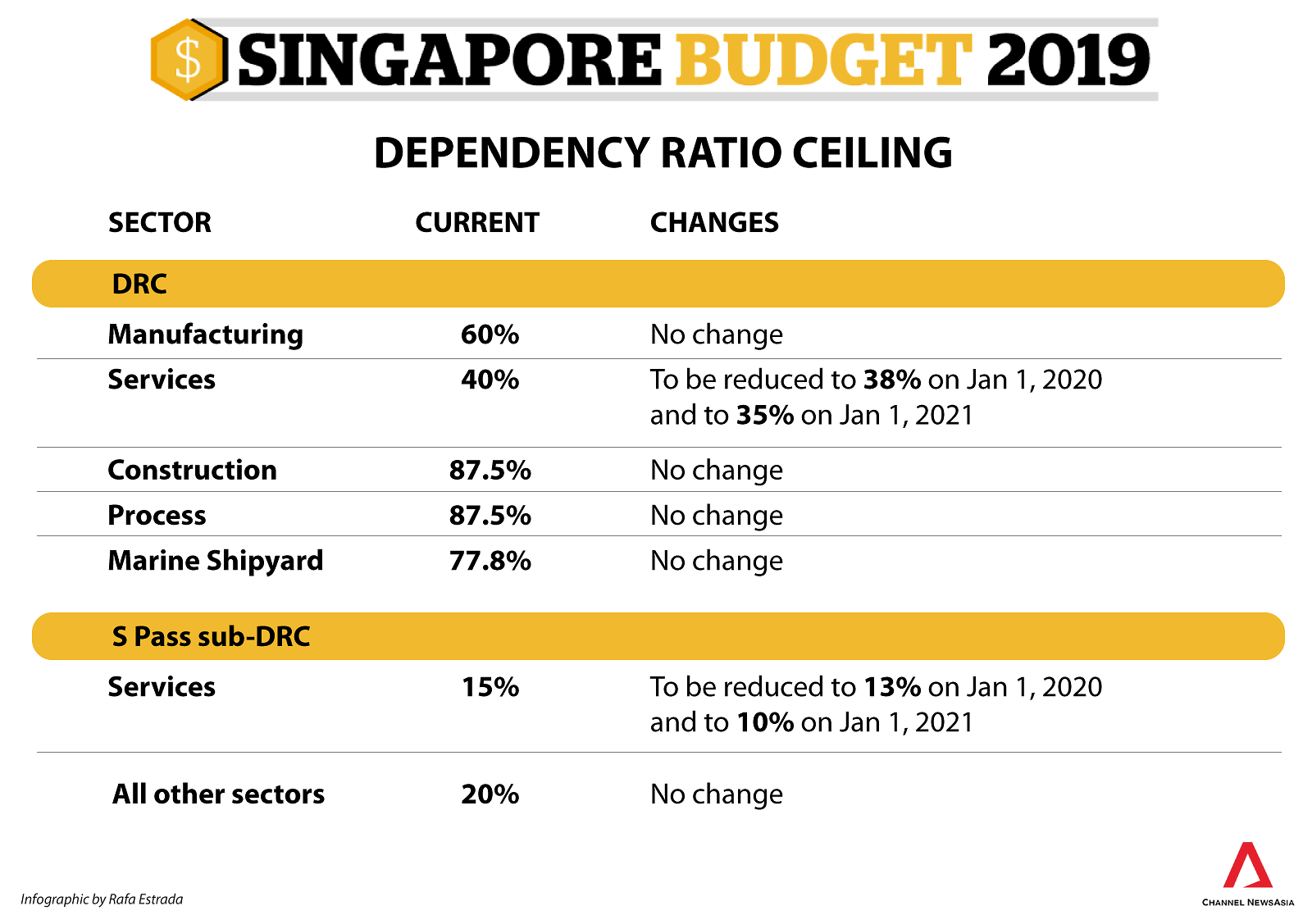
The Dependency Ratio Ceiling (DRC) – which sets out the maximum permitted ratio of foreign workers to the total workforce that a company is allowed to hire, will be reduced for the services sector in two steps: from 40 per cent to 38 per cent on Jan 1 next year, and to 35 per cent on Jan 1, 2021.
DRCs for all other sectors will remain unchanged. Current DRCs for the manufacturing, construction, process and marine shipyard sectors stand at 60 per cent, 87.5 per cent, 87.5 per cent and 77.8 per cent, respectively.
In addition, the services sector’s S Pass Sub-DRC will also be reduced in two steps – from 15 per cent to 13 per cent on Jan 1 next year, and to 10 per cent on Jan 1, 2021.
Growth in S Pass and work permit holders in the services sector has picked up pace, said Mr Heng, with the number having risen by 3 per cent a year or 34,000 in the past three years.
With S Pass growth in this sector the highest in five years, foreign manpower growth could be on “an unsustainable path” if the trend persists, said Mr Heng.
“Relying on more and more foreign workers is not the long-term solution – other economies are developing too,” he added. “What we need is to have a sustainable inflow of foreign workers to complement our workforce, while we upgrade our Singaporean workers and build deep enterprise capabilities in these sectors. We must enhance the complementarities of our local and foreign workers.”
The announcement, which comes one year ahead of the changes, will give companies “time to prepare”, Mr Heng said.
Reduction in Dependancy Ratio Ceiling (DRC).
For firms whose existing workers are in excess of the new limits, the DRC will apply as and when these firms apply for renewals of permits.
“The basic approach to our foreign worker polices has remained consistent,” said Mr Heng. “Based on evidence on the pace of foreign worker inflows, and the progress being made in raising productivity across sectors, we need to calibrate our policies.
“The Government recognises the economic headwinds and cost pressures ahead of us. But if we do not take action early, our firms will find it harder to compete in the years ahead, and our workers will be left behind.”
While foreign worker levy rates will stay the same across all sectors, the previously announced levy increases for the marine shipyard and process sectors will be deferred for another year, as they have “only begun showing early signs of recovery”, added Mr Heng.
The levy rate for the basic tier of work permit holders in the marine shipyard sector is currently S$300 for higher-skilled workers and S$400 for basic-skilled workers.
The levy rate for the basic tier of work permit holders in the process sector is S$300 for higher-skilled workers and S$450 for basic-skilled workers.
To help firms adjust to the impending foreign workforce policy changes, the Government will extend the enhanced support levels of the Enterprise Development Grant (EDG) up to Mar 31, 2023, said Mr Heng.
Announced at last year’s Budget, the EDG provides enterprises with up to 70 per cent government funding to undertake projects to strengthen their business capabilities, improve operational efficiencies and internationalise.
The Productivity Solutions Grant, also announced at last year’s Budget, will also be extended to Mar 31, 2023. It will also be enhanced to include a component that supports worker upgrading.
Eligible enterprises will receive a subsidy for up to 70 per cent of their out-of-pocket training expenses – the remaining amount not already covered by other Government training subsidies. The subsidy will be capped at S$10,000 per enterprise.
INVESTING IN SINGAPOREANS
Singaporeans also need to be “nimble” to build industry-relevant skills throughout their lives, said Mr Heng.
“The ultimate goal is to enable our people to continue to have good jobs and opportunities, and be at their best,” he said. “Hence, the second thrust of our economic transformation in this budget is to deepen the capabilities of our workers.
“We want our people to have the skills, knowledge, and attitude to adapt and thrive in this competitive and technology-intensive environment.”
The leadership of companies play a key role in raising the capabilities of workers, but the Government will continue to “invest” in Singaporeans across all stages of their lives, said Mr Heng.
One of the measures to help workers in their careers has been the Professional Conversion Programmes (PCPs), which are targeted at professionals, managers, executives and technicians including mid-career switchers, to undergo skills conversion and move into new occupations or sectors that have good prospects and opportunities for progression.
More than 100 PCPs have been launched in about 30 sectors since its establishment in 2007. This year, the Government will launch new PCPs relating to blockchain, embedded software and prefabrication to prepare Singaporeans to move into new growth areas, said Mr Heng.
The Career Support Programme, launched in to 2015 to provide wage support for employers to hire eligible Singaporeans who are mature and retrenched, or in long-term unemployment, will also be extended for two years until March 2021.
SINGAPORE: While the Central Provident Fund (CPF) Board has “stepped up” its outreach efforts, there is “much room for improvement” in how it relays information on key issues such as starting payouts for those who are retiring, said Manpower Minister Josephine Teo in Parliament on Monday (Feb 18).
Mrs Teo was responding to Members of Parliament (MPs) Foo Mee Har, Cheryl Chan and Liang Eng Hwa on whether CPF information can be better related to the public.
“The answer is yes.
“For example, we will review the letters sent to (CPF) members who are approaching their Payout Eligibility Age (PEA), so as to avoid misunderstandings which confused members unnecessarily,” Mrs Teo said.
This comes after social media posts sparked discussions on whether the payout age for the Retirement Sum Scheme (RSS) had “quietly shifted” from 65 years old to 70 years old. The RSS is the main retirement payout scheme for members born before 1958 and are now aged 61 and above.
“It is still 65 today. We have not shifted the PEA from 65 to 70, as was alleged by a spurious online post. Members can start their retirement payouts any time from 65,” Mrs Teo said.
Mrs Teo added that the exact payout and letters sent to members may vary, depending on each member’s particular circumstances, such as whether they are on the RSS or the later CPF LIFE Scheme.
“Hence CPF members should not rely on letters sent to others. They should instead contact CPF Board if they are in doubt about any letter sent to them,” she added.
Other than the letters, Mrs Teo explained that the CPF Board has started, from this year, face-to-face meetings for all members reaching the PEA of 65 years old. These meetings are at any of the five CPF service centres across Singapore.
During the meetings, a CPF officer is able to provide personalised guidance as part of their CPF Retirement Planning Service.
In addition, the Government will work with other agencies, such as the Social Service Offices (SSOs), to reach out to CPF members, Mrs Teo said.
“For example, where appropriate, staff at the SSOs will ask members who approach the SSOs for financial help whether they have activated their CPF payouts, and assist them to do so if they wish. We also will collaborate with the Silver Generation Office to communicate this issue to elderly members,” Mrs Teo said.
NO CHANGE TO PAYOUT STARTING MECHANISM FOR RSS
On questions whether the payout starting mechanism has changed, Mrs Teo reiterated that it has always been this way and members will have to instruct CPF Board on when to start their retirement payouts after reaching their PEA.
“Members are in the best position to decide (when to start their retirement payouts) based on their individual circumstances. It is also the same approach as in many other countries,” she said.
Manpower Minister Josephine Teo speaking in Parliament on Feb 18, 2019.
“There is no advantage for CPF Board or Government to want members to defer their payouts beyond 65. Those who defer their payouts, in fact, enjoy the higher interest paid on their CPF monies,” she added.
About six months before turning 65 years old, members who are under the Retirement Sum Scheme (RSS) will receive a letter informing them that they can start their payouts anytime from 65 years old, she explained.
Accompanying the letter is a form that the member can use to fill in information about their bank account details and send it back to the CPF to start their payouts, she added.
“Members who do not instruct CPF Board to start their payouts are reminded through their Yearly Statement of Account”, Mrs Teo said.
For those who do not initiate their payouts, it will start automatically at age 70. This was part of the changes to the CPF Act in 2016 and came into effect in 2018.
“In the past, some RSS members had their savings intact in their CPF accounts until they passed away. They never touched it at all. This is unsatisfactory. We therefore introduced a Latest Payout Start Age of 70 for members turning 70 from 2018,” Mrs Teo said.
“Even if such members have not applied to start payouts, CPF Board will start the payouts for them. But I must again emphasise if a member wants to start his payout before 70, he can do so any time from his PEA. He does not need to wait till 70.
“In other words, the Latest Payout Start Age is not the same thing as the PEA. It is a way to ensure members get to enjoy the benefit of their CPF savings by 70 at the latest,” Mrs Teo said.
SLIGHTLY DIFFERENT FOR CPF LIFE MEMBERS
However, those who are on the CPF LIFE scheme, which replaces the RSS, may differ slightly in their payout starting mechanism.
Those who joined CPF LIFE before July 2015 will receive their payouts automatically at 65 unless they instruct CPF to delay the payouts.
This is because in the past, there was no option to defer payouts and the default option is to start payouts at their 65, Mrs Teo explained.
For this group of CPF LIFE members, about 35,000 of such members had already started to receive their payouts upon reaching 65 by end of 2018.
Members who join CPF LIFE after July 2015 will be like members on the RSS. They can start their payouts any time between 65 and 70 by instructing CPF Board, Mrs Teo said.
WHY NOT START PAYOUTS AUTOMATICALLY AT 65?
MPs Jessica Tan, Liang Eng Hwa, Chong Kee Hiong, Png Eng Huat and Lim Biow Chuan asked if the Government would consider starting retirement payouts automatically at 65.
“If the CPF Board can (make the payout automatic) at 70, why not make the payout automatic at the age of 65? Just credit their account automatically unless the member opts and chooses to fill in an application to say they don’t want to withdraw. I think the point is we need to assure every member that CPF Board will honour any request to withdraw their CPF savings when it’s due for payment. Really, this is about preserving the good faith and trust in the CPF Board,” Mr Lim said.
In her response, Mrs Teo said that she has given “serious thought” to the possibility of shifting the automatic start age to 65 but that there are several concerns to that.
Currently, members receive tangible benefits to start payouts later. Members get to earn risk-free interest of up to 6 per cent a year and enjoy enhanced payouts, she said.
“This 6 per cent includes the extra interest of 1 per cent for the first S$60,000 and additional extra interest of 1 per cent for the first S$30,000. For members on CPF LIFE, for every year deferred, the payouts go up by up to 7 per cent. For five years of deferral, that is up to 35 per cent more,” Mrs Teo said.
Members may therefore prefer to start their CPF retirement payouts later. This is especially if they have other savings to draw on or if they are still working, she added.
Nominated MP Walter Theseira asked if MOM has information on how members use their payouts.
Mrs Teo said that there are no “clear indications” on how members use their monthly retirement payouts, but that the withdrawals at age 55 could provide some information.
“Our survey suggests that slightly over half of the members after taking the withdrawals from their CPF accounts at the age of 55 just put it in a bank account earning much poorer interest rates. That’s a very useful reminder that people are not always so savvy about what’s the best deal they can get on their savings. There is some merit to the current practice of automatically deferring it for them,” Mrs Teo added.
In 2017, six in 10 CPF members on the RSS who had reached their PEA that year did not start their payouts. Even by the time RSS members reached the age of 70, about half had not come forward to start their retirement payouts, she said.
This, she said, could be because the members decided to keep their savings in the CPF because they had no need of the payouts or were not aware that they could have started their payouts earlier.
“The right thing to do therefore is to reach out to those members who may not have a good understanding, and give them clear and simple information to help them make their decisions. With the benefit of knowledge, those who wish to can still start their payouts any time after 65,” Mrs Teo said.
If CPF Board changes its automatic payout age date to 65, members who want to defer their payouts may, too, forget to come forward to instruct the CPF Board, Mrs Teo added.
“When we weigh these two groups. I think both groups may not be so happy that the CPF Board made an assumption to start the payouts (and) deprive them of the benefits if we were indeed to have such a mechanism approach,” she said.
Mrs Teo added that she is reluctant to “make yet another sudden change” because it could risk confusing members even more.
“Every time there is a change, it actually takes a long while for people to get used to it,” she said.
“On balance, I suggest that we focus on improving the communication for the policy as it currently stands … I think if we keep to this consistent line, there is less risk of further confusing,” Mrs Teo added.
He is also expected to announce details on the Merdeka Generation Package, which Prime Minister Lee Hsien Loong said will go some way in helping citizens born in the 1950s with healthcare costs.
This blog is being updated live, please refresh for updates.
3.38pm: Strong, United Singapore Budget 2019 is a strategic plan to allocate resources to build a Strong, United Singapore, says Mr Heng. There are five main themes:
A safe and secure Singapore
A vibrant and innovative economy
A caring and inclusive society
A global city and home for all
A fiscally sustainable future
But Mr Heng cautioned that financial resources alone are not enough: “We call on all Singaporeans to partner with the Government, and support one another to succeed in this endeavour.”
3.35pm: Four major shifts – one more than in 2018
Protesters wearing yellow vests take part in a demonstration in Marseille, France, Jan 19, 2019. (Photo: Reuters)
Besides a shift in global economic weight towards Asia, rapid technological advancements and changing demographic patterns, Mr Heng highlights a fourth major force that is shaping the future: A decline in support for globalisation.
These four major forces are interacting in complex ways, he says. Trade frictions between the US and China are raising geopolitical uncertainty.
Closer to home, ASEAN has thrived for more than 50 years and working together, the nations can maximise their potential.
But neighbours will have “occasional differences” – such as Singapore’s bilateral issues with Malaysia, he says.
3.32pm: Mr Heng starts delivering Budget 2019
Statues of (left to right) Sang Nila Utama, Munshi Abdullah, Tan Tock Seng, Sir Stamford Raffles and Naraina Pillai. (Photo: Singapore Bicentennial Office)
Finance Minister Heng Swee Keat starts his speech with reflections on Singapore’s bicentennial – the 200th year since Sir Stamford Raffles landed on the island in 1819.
Archaeological finds show that Singapore was a trading emporium with history that stretches back at least 700 years, says Mr Heng.
“In our bicentennial year, let us reflect on the twists and turns in our history, so as to chart a path forward for an even better future for our people.”
3.10pm: Finance Minister Heng Swee Keat arrives
Finance Minister Heng Swee Keat arrives at Parliament House to deliver the Budget 2019 statement on Feb 18, 2019. (Photo: Gaya Chandramonhan)
Mr Heng Swee Keat waves as he arrives at Parliament House to deliver the Budget statement, holding the traditional briefcase.
3.08pm: Tune in soon for live Budget 2019 coverage
Finance Minister Heng Swee Keat will deliver this year’s Budget speech in less than half an hour.
Mediacorp will carry the 2019 Budget statement live on Channel NewsAsia, 938NOW and Toggle.
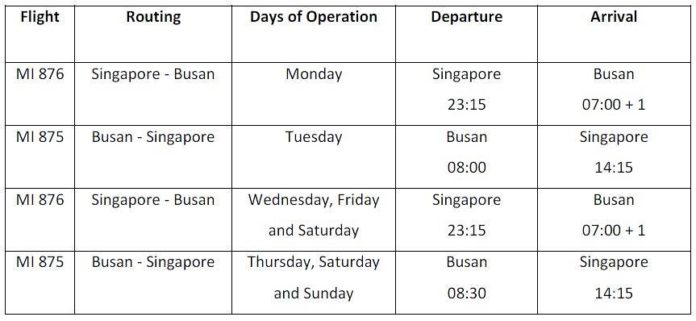
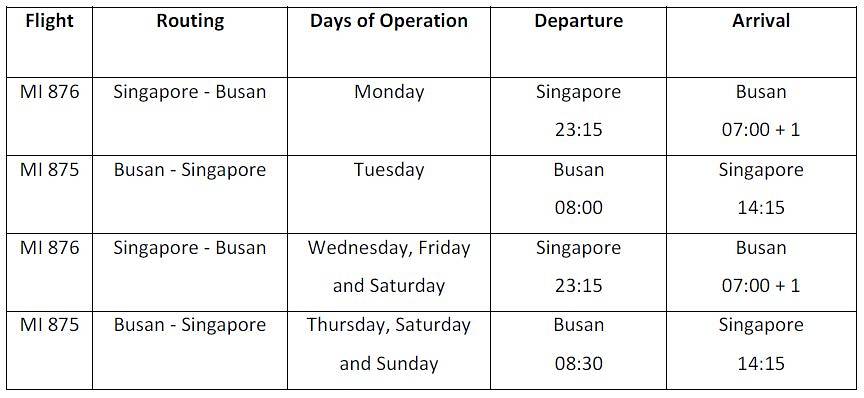
SINGAPORE: Singapore Airlines’ regional subsidiary SilkAir will soon operate non-stop flights between Singapore and Busan in South Korea, the carrier announced in a press release on Monday (Feb 18).
Starting May 1, the airline will operate four flights weekly to the country’s second largest city, making it the first in South Korea to be added to SilkAir’s network.
This “demonstrates (SilkAir’s) commitment to bringing customers new and exciting destinations in the Asia-Pacific region”, the carrier said in the release.
SilkAir is also the first airline to offer scheduled flights between the two cities.
The new service, which will be operated with the Boeing 727 MAX 8 aircraft, will offer both Business and Economy class cabins.
Customers will enjoy a “full-service experience” on board, said SilkAir. This includes in-flight meals, in-flight entertainment, complimentary baggage allowance and through check-in if they are connecting to or from another SilkAir or Singapore Airlines point via Singapore.
“We are pleased to introduce services to Busan, offering customers in Singapore and around the region yet another vibrant and charming destination to explore in our network,” said SilkAir Chief Executive Mr Foo Chai Woo.
“For Koreans travelling from Busan, the new route will also offer greater access and connectivity with the SilkAir and Singapore Airlines network in Asia-Pacific and beyond.”
Busan is a popular tourist destination.
Regional airline SilkAir, which merged with Singapore Airlines last year, operates about 400 weekly flights to 49 destinations in 26 countries.
SINGAPORE: It was all bright lights and a kaleidoscope of colours in Chinatown on Sunday (Feb 17), as Chingay rolled into the precinct to mark the end of this year’s Chinese New Year celebrations.
While light rain persisted throughout the evening, scores of visitors continued to crowd the area and bask in the festivities.
For Ngee Ann Polytechnic students Megan Chew, 17, and Tang Yiling, 18, this year’s parade marked the first time that they performed on the float itself. In previous years, they had performed on the ground as parade members.
“Our float this year is also in front of the VIP section, so when we stopped for our contingent, we are right in front of all the VIPs. It’s stressful but a good kind of stress,” Ms Tang said excitedly.
Students Megan Chew (right) and Tang Yiling (left) had their first taste of performing on the float this year. This is the second Chingay parade for Megan, and the fourth for Yiling. (Photo: Alif Amsyar)
Visitors were treated to bright and colourful costumes, adorned by dancers on the float who kept the festive spirits high. (Photo: Alif Amsyar)
Ponchos were distributed to visitors and parade members as it rained throughout the evening, but it was all smiles and laughter as celebrations continued. (Photo: Alif Amsyar)
From a float decked as a Tongkang, a light wooden boat commonly used in the early 19th century by maritime traders, to a larger than life elephant float, the parade was a visual spectacle.
A performer dressed in an intricate and elaborate traditional costume posing on her float, which was designed as a Tongkang. (Photo: Alif Amsyar)
The performers brought life to the parade with their beautiful costumes and make-up. (Photo: Alif Amsyar)
It was all smiles for performers as visitors lined up around the float to take pictures with them. (Photo: Alif Amsyar)
For some, attending the Chingay Parade is a yearly affair. 13-year-old Denise Seow wore a yellow and blue costume this year and her parents were present to show her support.
“She’s been doing this for quite a few years and it’s great, this a different kind of exposure for my daughter. I want her to experience this atmosphere and what it brings,” said her father, Mr Edwin Seow, 48.
Mr and Mrs Seow joined in the festivities of the parade as they visited their daughter at her float. (Photo: Alif Amsyar)
Furthermore, performers from a number of countries – including South Korea, China and Cambodia – came out in style with a stunning array of costumes and props at Asia’s largest annual street performance and float parade.
Performers from countries around Asia joined in the celebrations in their traditional costumes and gave the audience a taste of their culture. (Photo: Alif Amsyar)
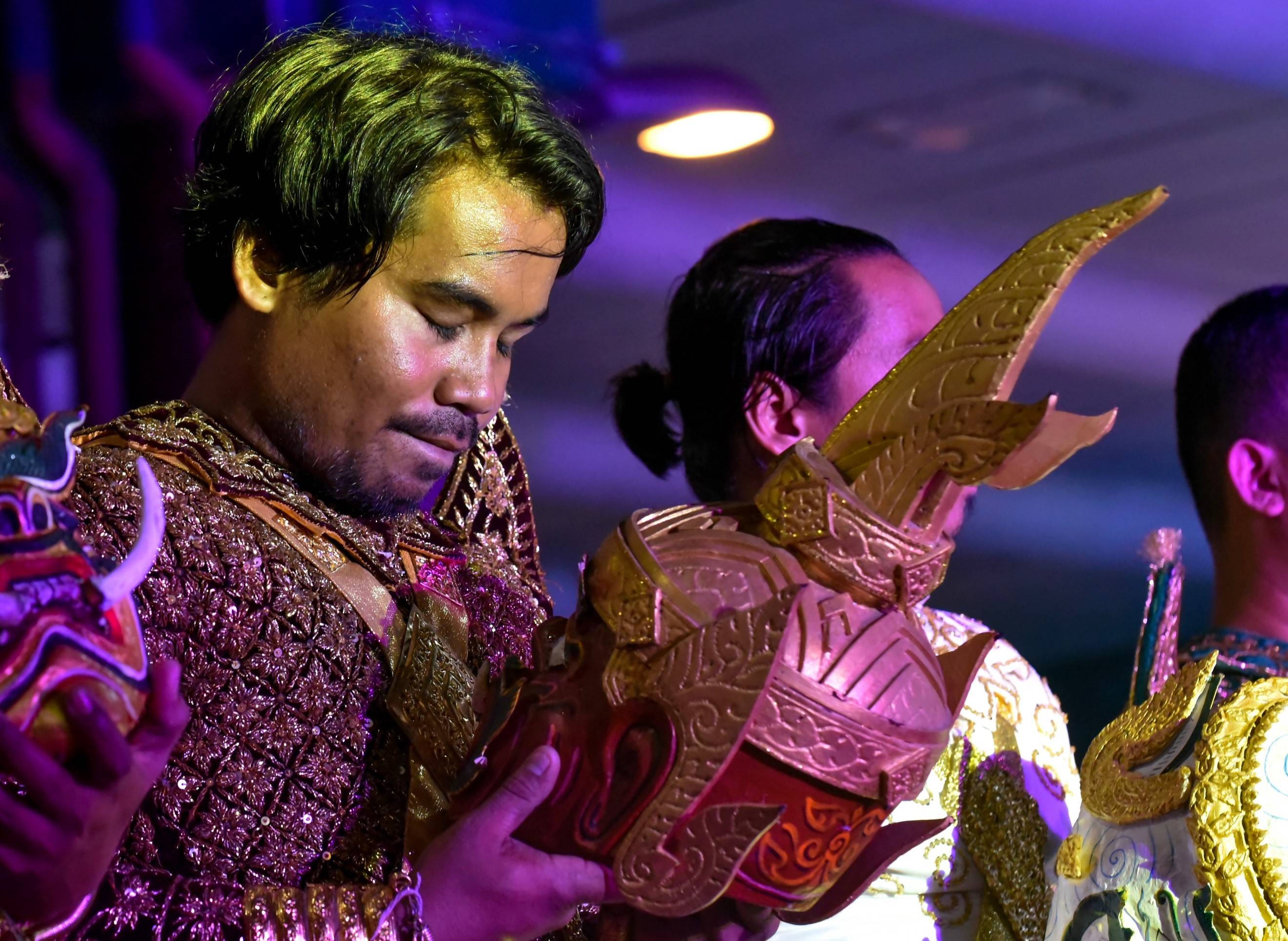
A Cambodian mask dancer having a moment of silent prayer with his mask before going on stage to perform for the thousands of people surrounding the main stage. (Photo: Alif Amsyar)
A splendid display of fireworks rounded off the evening’s celebrations and many visitors had their cameras and mobile phones out to capture moments of the grand finale.
Spectators were treated to a rousing display of fireworks and firecrackers as celebrations for this year’s Chinese New Year drew to a close. (Photo: Alif Amsyar)
The streets of Chinatown will continue to be decorated with the visual treat of lights, which featured larger than life pigs and ingots – until Mar 6. (Photo: Alif Amsyar)
“This is third year we’re organising it in Chinatown, so we’re really very excited and very happy because we received very good response for the past few years,” said Mr Philemon Loh, head of marketing and publicity of this year’s Chinatown Celebrations Organising Committee.
“Although it rained today, we’re very happy that it didn’t take away the excitement from the general public and I think everyone enjoyed it.
“We hope to bring more festive joy to the public and also to improve on our programmes and activities next year, as well as having more props and performing items here,” he quipped.
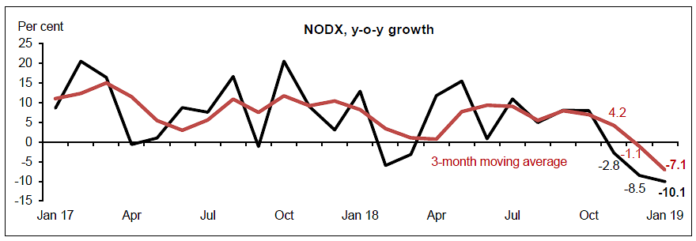
SINGAPORE: Singapore’s non-oil domestic exports (NODX) fell by 10.1 per cent in January from the high base a year ago, , data from trade agency Enterprise Singapore showed on Thursday (Jan 17).
That missed the 1.6 percent decline predicted by 10 economists in a Reuters poll. This is the biggest drop since October 2016 when exports fell 14 per cent from a year earlier.
On a seasonally adjusted basis, exports fell 5.7 per cent month-on-month in January, following December’s decline of 4 per cent due to a decrease in both electronic and non-electronic products.
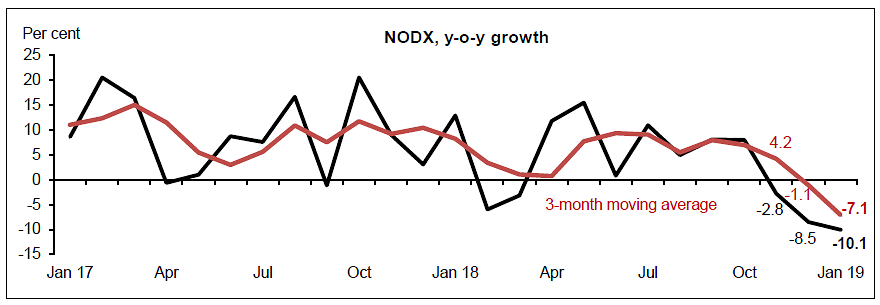
On a 3-month moving average year-on-year basis, NODX declined by 7.1 per cent in January 2019, after the 1.1 per cent decrease in December 2018. (Image: Enterprise Singapore)
Electronic exports dropped by 15.9 per cent year-on-year, following the 11.2 per cent decrease in December.
PCs, disk media products and ICs contracted by 34.3 per cent, 29.2 per cent and 6.8 per cent respectively, contributing the most to the decline in electronic NODX.
Non-electronic exports declined by 7.9 per cent year-on-year in January, slowing further from a 7.4 per cent decline the previous month.
Specialised machinery (-32.8 per cent), petrochemicals (-11.8 per cent) and non-electric engines & motors (-40.9 per cent) contributed the most to this decline.
Overall, exports to Singapore’s top 10 markets declined in January. The largest contributors to the NODX decrease were China (-25.4 per cent), South Korea (-31.4 per cent) and Hong Kong (-11.7 per cent).
Total trade increased by 4.3 per cent in January 2019, extending the 1.6 per cent growth in the preceding month.
SINGAPORE: Singapore’s first new-generation neighbourhood centre officially opened in Punggol on Sunday (Feb 17), offering residents access to a variety of amenities ranging from a supermarket, a food court, a 24-hour fitness centre as well as various shops and food and beverage outlets.
The seven-storey Oasis Terraces, located next to Oasis LRT and facing Punggol Waterway, is also the first neighbourhood centre in Singapore to be integrated with a polyclinic and a childcare centre.
The Housing and Development Board (HDB) said it took into account suggestions by Punggol residents, who want shops and facilities that open until late, family-friendly dining options, as well as sports and recreational facilities.
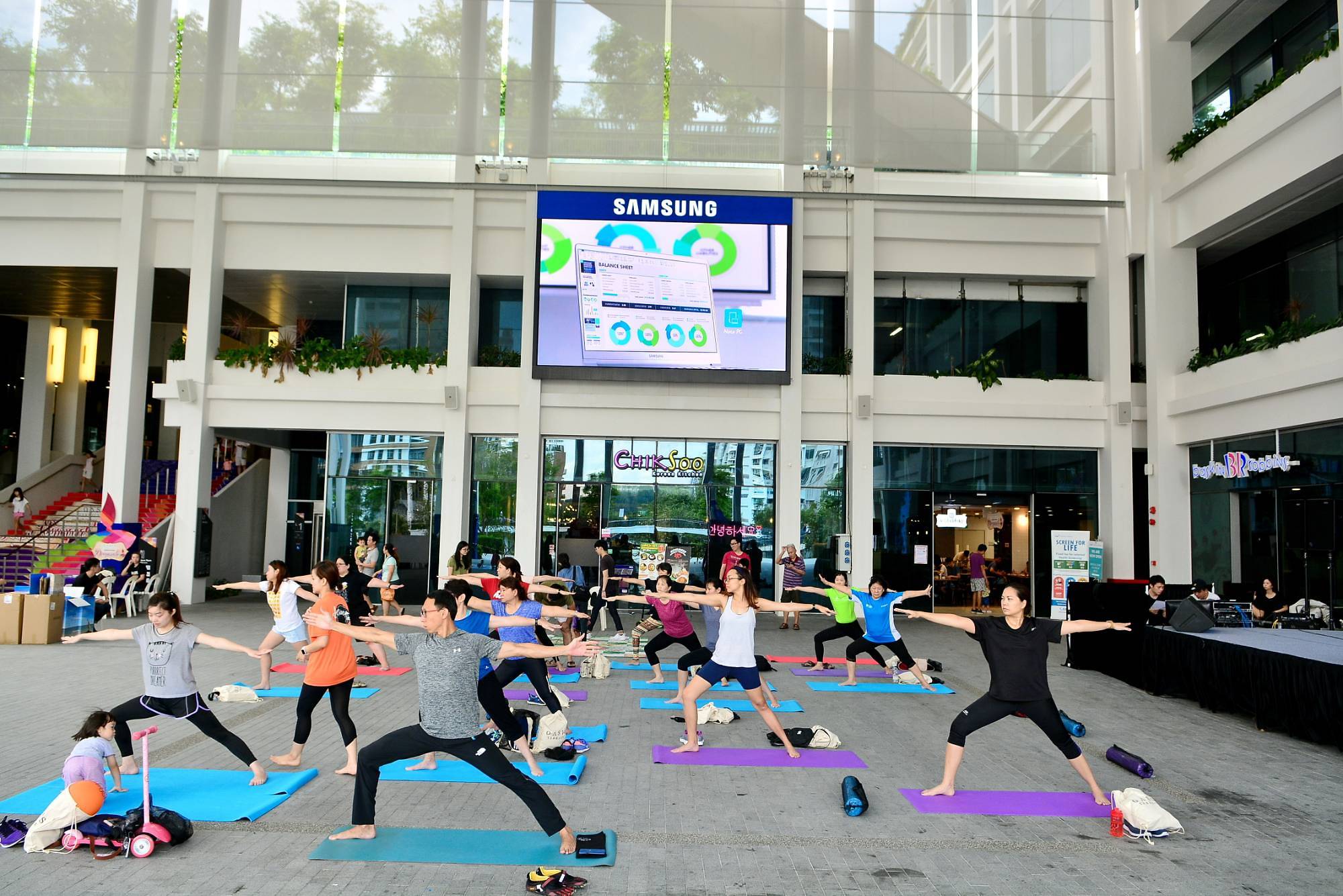
At the heart of the neighbourhood centre is a sheltered plaza where events will be held weekly.
Fronting the Punggol Waterway and in the heart of the development is the sheltered Community Plaza, where weekly events take place. (Photo: HDB)
Built by HDB, the neighbourhood centre is designed to encourage social interaction and bonding, said Minister for National Development Lawrence Wong.
Unlike a private developer, HDB is not out to maximise commercial returns, he said.
“We don’t maximise every single plot ratio. We have many open spaces, public spaces for residents to gather to and mingle, and to achieve our social objective of strengthening family bonds and facilitation community integration,” Mr Wong said at the official opening of Oasis Terraces.
“The tender is not just based on the highest price, it is also based on qualitative factors like the proposed business concept and the operating model.”
‘SPECIAL HDB EXPERIENCE’
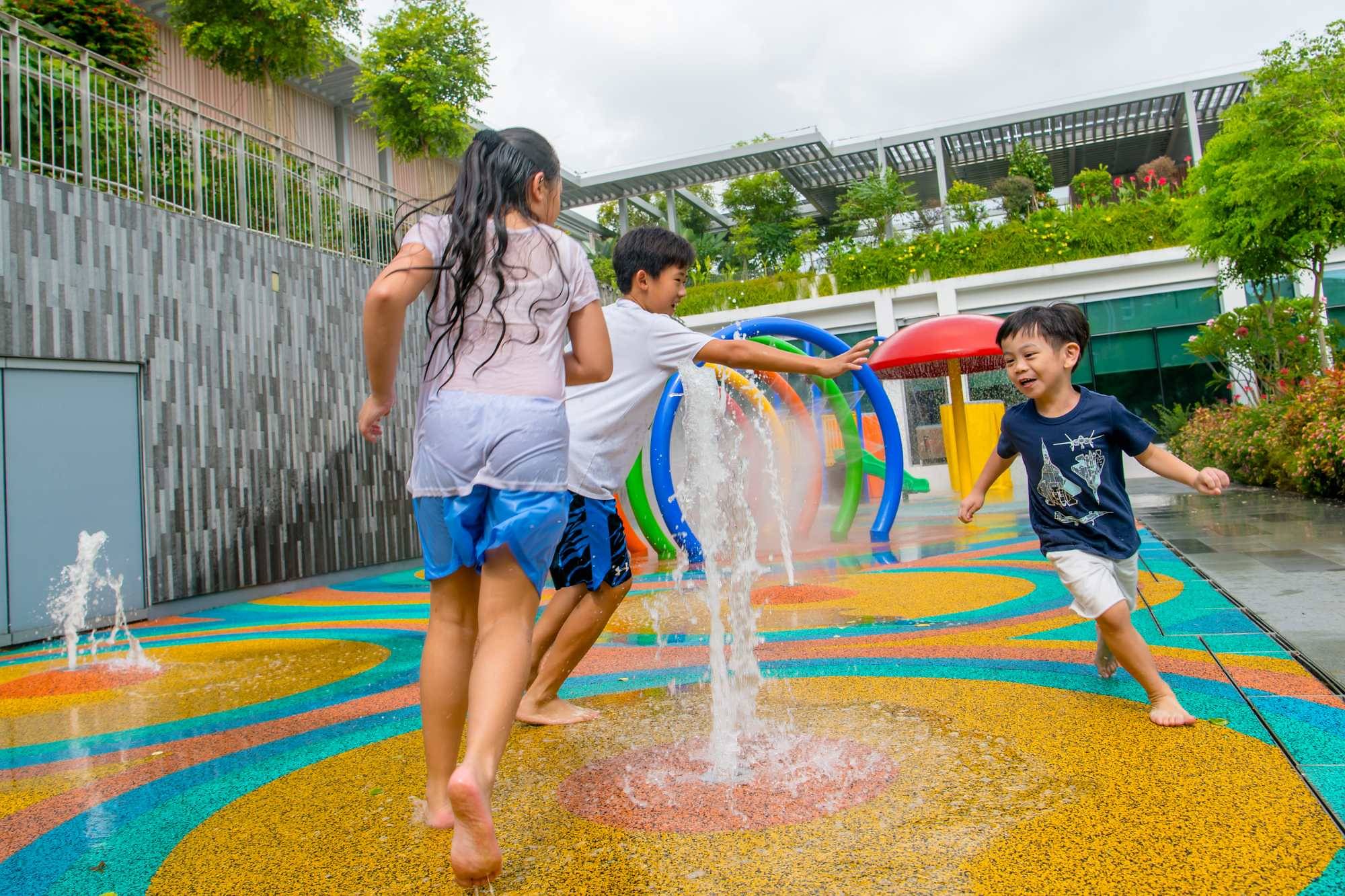
At the sixth floor rooftop, residents can enjoy lush greenery at the cascading garden terraces overlooking Punggol Waterway. There are also “play and explore” elements such as a water park, a playground, a fitness corner and resting spaces.
Gardening enthusiasts can grow fruits, herbs, flowers and other plants at a rooftop community garden, as part of the National Parks Board’s Community in Bloom programme.
“It’s more than just about building that apartment, high-rise public housing apartment – it is also about the design of the entire HDB estate that makes it special.
“And neighbourhood centres are an integral part of this special HDB experience,” said Mr Wong.
A range of facilities, including this water park, encourage residents to lead a healthy and fun lifestyle. (Photo: HDB)
Oasis Terraces is also the first neighbourhood centre to have “smart and sustainable” features, such as motion-sensor lighting and fans.
Additionally, solar panels have been installed on its rooftops, and a system is in place to collect and treat rainwater, and use it to automatically water plants in the centre.
An Entrepreneur Cluster has also been set aside for 10 budding online-to-offline business owners who get to pay lower rents.
Five more neighbourhood centres are scheduled to be completed in the next three years.
Canberra Plaza in Sembawang and Buangkok Square will open this year, said HDB.
Northshore Plaza in Punggol and Hougang Rivercourt are due to open next year, while Anchorvale Village in Sengkang will be ready by 2022.