This is one of two initiatives announced on Tuesday (Mar 5) by Second Minister for Education Indranee Rajah, who was speaking about the work of UPLIFT, a task force that aims to strengthen support for underperforming students from disadvantaged families.
Second Minister for Education Indranee Rajah speaking in Parliament on Tuesday (March 5).
(Updated: )
Bookmark
SINGAPORE: The Ministry of Education (MOE) will set up a dedicated team to strengthen the interface and partnership between schools and other community partners, in a bid to better support disadvantaged students.
This was announced by Second Minister for Education Indranee Rajah on Tuesday (Mar 5). This dedicated team, which will be called the UPLIFT Programme Office, will be set up within MOE.
This is one of two initiatives Ms Indranee announced during a special joint segment in Parliament on building a society of opportunities. She explained that the issues faced by disadvantaged students are multi-faceted, and not all interventions or assistance can or should be school-based.
“One clear theme that has emerged from all the engagement sessions is the need for better coordination to tap community efforts and resources more systematically,” she said.
The UPLIFT Programme Office, she said, will help “close the coordination gap”.
For example, it will work with schools to identify disadvantaged students and map their needs to facilitate community-based outreach to the families, and matching to suitable community programmes or assistance.
It will also match trusted partners and volunteers to schools, by working with the Social Service Offices and SG Cares Community Network and tap on retired educators who wish to volunteer.
In the first instance, she said, the office will focus on supporting school-community coordination in selected pilot sites with a higher number of students and families fitting the target profile.
“UPLIFT has other initiatives in the pipeline, but this will get us off to a good start,” she said.
MOE WILL ALSO EXPAND AND ENHANCE AFTER-SCHOOL CARE AND SUPPORT
Ms Indranee also announced that after-school programmes in secondary schools will be enhanced and expanded from the existing 60 schools, to 120 by 2020.
These consolidated after-school programmes will be known as GEAR-UP. She said that schools will work with community partners to provide customised support and after-school engagement, and strengthen students’ social-emotional competencies and social skills.
After-school programmes have been piloted in secondary schools since 2014 to cater to students who need more support and supervision. Schools provide a room for the students, which they can use for self-study and various activities.
Ms Indranee also said the capacity of school-based student care centres located in primary schools, will also be expanded. Currently, there are 170 of such centres in primary schools. MOE “is on track” to having a centre in all 184 primary schools by next year, said Ms Indranee.
With increased capacity, she said, student care centres can also take in more children, and schools will make a “more concerted effort” to reach out to parents whose children could benefit from attending such centres.
She added that MOE and the Ministry of Social and Family Development will review the affordability of student care centres for low-income families. MOE will also introduce additional programmes aimed at strengthening students’ resilience and improving their socio-emotional well-being.
The social media giant says it’s partnering the People’s Association to bring its We Think Digital initiative to Singapore.
Screengrab of Facebook’s We Think Digital website.
(Updated: )
Bookmark
SINGAPORE: Social media giant Facebook is bringing its new digital literacy programme to Singapore first, even as it hopes to train 1 million people across eight countries in Asia Pacific to think critically and share thoughtfully online by 2020.
In a blog post on Tuesday (Mar 5), Facebook said its We Think Digital initiative is an online education portal with interactive tutorials covering a number of topics such as privacy, safety, security, digital discourse and knowing your digital footprint.
“We Think Digital has been designed for new and existing Internet users of all ages to develop the skills they need to safely enjoy digital technology, including critical thinking and empathy,” said Ms Clair Deevy, Facebook’s director of Community Affairs for Asia Pacific, in the blog post.
There are four modules that the social media giant has developed in collaboration with experts from across the region, she added. These include:
What is the Internet? An explanation of the Internet and social media, how they work and the importance of digital citizenship.
Your Digital Footprint: All you need to know about safety and security online and managing your digital footprint.
Be a Critical Thinker: Helping you to discern different types of information and develop critical thinking and empathy when communicating online.
You as a Digital Citizen: Insights into digital discourse and the differences between interacting online versus offline, your rights and responsibilities, as well as concepts like ‘netiquette’ or online etiquette, being a creator, copyright and plagiarism.
Singapore will be the first country in Asia Pacific to run the programme, the company said, before it is rolled out to other regional markets like the Philippines, Thailand, Indonesia, Vietnam and Taiwan. It is also hoping to bring the programme beyond Asia Pacific to Argentina and Mexico, she said.
People’s Association (PA) is its partner in Singapore and they will work to “bring Singaporeans from all walks of life together through a variety of community programmes”, she added.
Ms Deevy told Channel NewsAsia that Facebook is working with the PA to ensure that the modules it developed are relevant for elderly people in Singapore. It will provide train-the-trainer sessions and work with the organisation to get feedback from the senior community, she added.
PA’s group director of Engagement Group Chia Tze Yee said in the blog post that the organisation recognises the need to equip residents, especially seniors, with digital citizenship skills to exercise critical thinking and responsible online behaviour.
“We are happy to partner with Facebook to launch the We Think Digital initiative and are proud to be able to use our own ‘Seniors for Smart Nation’ programmes and Silver Infocomm Wellness Ambassadors to help deliver these valuable skills to the public,” Mr Chia said.
Ms Deevy declined to share how much Facebook is investing in this initiative, but said We Think Digital is “part of its continued investment in programmes and resources to help its community have safe and meaningful experiences online”.
Additionally, Ms Deevy mentioned that it is forming a regional steering committee to advise Facebook on how We Think Digital can bring the most value to the region.
The committee will comprise members from this region, and its first two members are Dr Vu Minh Khuong, associate professor at the National University of Singapore’s Lee Kuan Yew School of Public Policy, as well as Dr Pijitra Tsukamoto, associate professor at Thailand’s Chulalongkorn University, she added.
Facebook is a signatory of Singapore’s Digital Participation Pledge, which allows organisations to commit to one or more actionable items that help Singaporeans acquire skills and adopt technology. Communications and Information Minister S Iswaran said in Parliament on Monday that more than 270 organisations have pledged to do their part to build a more digitally-ready Singapore.
In its first phase, the infrastructure rejuvenation programme will see three JCs rebuilt, while another upgraded, Education Minister Ong Ye Kung said on Tuesday (Mar 5).
File photo of Temasek Junior College. (Photo: Temasek Junior College/Facebook)
(Updated: )
Bookmark
SINGAPORE: An infrastructure rejuvenation programme will be carried out for junior colleges (JCs) in phases from 2022, Education Minister Ong Ye Kung said on Tuesday (Mar 5).
Speaking during the Committee of Supply debate, he said that a few of the JCs that were merged this year are among the oldest Government JCs, with campuses that have become “somewhat dated”.
“We have been progressively improving the building infrastructure of our ITE and polytechnics,” he said. “I think our JCs deserve new campuses too.”
In his speech, Mr Ong also explained how they chose which JCs to start with for the rejuvenation programme. MOE took into consideration factors such as the age of the buildings, state of existing facilities and the availability of suitable holding sites.
In the first phase, three JCs – Anderson Serangoon JC, Jurong Pioneer JC and Temasek JC – will be rebuilt. Another JC, Yishun Innova JC, will be upgraded. This is expected to be completed by around 2025.
Anderson Serangoon JC will move temporarily to the former Serangoon JC site while its current campus in Ang Mo Kio is being rebuilt.
Mr Ong explained that they had decided to locate the merged JC at the former Anderson JC site, as it is next to Yio Chu Kang MRT station. “The same consideration is still valid in deciding the future permanent site of Anderson Serangoon JC,” he said.
Temasek JC, which has the oldest campus among the government JCs at 43 years old, will move to the former Tampines JC site, while its current campus in Bedok is being rebuilt.
A new campus will be built for Jurong Pioneer JC at the site of the former Jurong JC. Mr Ong explained that the permanent site was chosen for the merged JC as it is near the Jurong Lake District, and will be served by the future Jurong Region MRT Line.
Meanwhile, Yishun Innova JC, which is currently located at the former Yishun JC site, will move to upgraded premises at the former Innova JC site. Mr Ong said the permanent site was chosen because it will be served by the new Thomson-East Coast MRT Line.
Mr Ong added that the second and third phases of the rejuvenation programme will involve the upgrading of the fourth merged JC – Tampines Meridian, as well as Victoria JC and the older Government-Aided JCs.
“The new premises will support the evolution of JC education, where lessons are a lot more interactive, and learning more holistic,” he said. “So instead of just the classrooms we have today, we will have seminar rooms which are modular and flexible, to support more interactive pedagogies.”
He added that the campuses will be made “more digitally-enabled” and also have facilities such as indoor sports halls that will be designed so they can be open for community use.
“The JCs will have campuses that are fit for the future.”
This was one of the longest Singapore Civil Defence Force (SCDF) operations involving vegetation fires in recent years, said SCDF on its Facebook page on Tuesday morning.
SCDF responded to the fire at about 7am on Monday morning, and extinguished it 19 hours later, at about 2am on Tuesday.
Firefighters carry out damping down operations. (Photo: Facebook / Singapore Civil Defence Force)
Damping down operations are ongoing to prevent any potential rekindling from hot burnt surfaces.
The fire, which broke out in multiple spots, was about the size of one football field in length and involved “piles of timber waste amidst thick vegetation”, said SCDF.
The fire was put out at about 2am on Mar 5, 2019. (Photo: Facebook / Singapore Civil Defence Force)
Eight emergency vehicles and 52 firefighters were deployed to fight the blaze.
“We would like to thank the public for the outpouring of support as well as the expression of concern and well-wishes for our frontline officers, both online and offline,” said SCDF.
“Your kind words keep their fighting spirit high even when the going gets really tough. Thank you!”
The cause of the fire is still under investigation, it added.
SINGAPORE: As the relentless march of technology leaves its mark across industries, scores of Singapore workers young and old have risen to the challenge, jumping over hurdles to embrace new skills and stay ahead of the curve.
Yet, there remains a segment of society who risk being left in the dust. Some of these workers, who are typically of the older set and quick to profess a lack of technological know-how, are not only struggling to keep pace with changes roiling almost every industry.
They also fear technology would usurp their roles, leaving them jobless.
It begs the question: What happens to these workers?
While these challenges are not unique to Singapore, the importance of adapting to technology is more acute for workers here than in many other countries, said economics lecturer Kelvin Seah of the National University of Singapore.
This is because there is a much higher tendency for firms here to replace labour with machines than in Indonesia, for instance, where labour costs are low, Dr Seah added.
By contrast, wages in Singapore are relatively high as the country lacks an abundant labour supply. Firms, therefore, have sought to adapt by deploying more machines relative to workers in their production processes.
“We might even expect to see machines taking on some of the cleaning roles (and) similarly… other jobs which require low skills that machines can potentially perform,” said Dr Seah.
Ms Selena Ling, head of treasury research and strategy at the OCBC Bank, said the pace of technological adoption here may be accelerated to some degree because of Singapore’s Smart Nation ambitions, advanced manufacturing activities and efforts to draw foreign direct investments, among other factors.
Robot waiter tech serving food and drinks to customers. (Screengrab from Techmetics video)
The findings of a study released in September last year said as much when it found that Singapore’s labour market was set to face the largest degree of job displacement regionally in the next decade.
The study, which examined the impact of artificial intelligence on workers in six Southeast Asian economies, also found that Singapore would have to confront the biggest mismatch between skills and jobs created in the region.
By 2028, about one-fifth of Singapore’s full-time equivalent workforce (20.6 per cent) will have their jobs displaced, the study by technology firm Cisco and economic forecasting agency Oxford Economics showed. This is higher than in Vietnam (13.8 per cent), Thailand (11.9 per cent), the Philippines (10.1 per cent), Indonesia (8.1 per cent) and Malaysia (7.4 per cent).
The Republic is also set to confront a gap in average skill levels of 14.3 on a scale of 100, higher than the Philippines (13.9), Vietnam (13.4), Malaysia (12.7), Thailand (8.5) and Indonesia (8.4).
This, said the team behind the study, is due to Singapore’s digital transformation happening at a faster rate than other countries in the Association of Southeast Asian Nations (ASEAN).
The anxiety of many Singapore workers has not escaped the attention of the Republic’s lawmakers.
Speaking on Tuesday (Feb 26) during the debate on this year’s Budget Statement, Member of Parliament Seah Kian Peng (Marine Parade Group Representation Constituency) warned the House that the technological pursuit cannot be a “blind” one, and stressed the need to put “people first” and “technology second”.
Mr Seah, the chief executive officer of supermarket chain NTUC FairPrice, called on human resource divisions to rise to the call and “remember they are dealing with humans”.
But despite the best efforts of some companies, there remain pockets of individuals averse to technology for fear of being unable to cope, as interviews with workers over the past month showed.
For this group, their immediate future is unclear, even though economists say there will always be a place for menial work in Singapore or developing economies elsewhere. The options could be more limited for those in their 50s and above, who still have several years — if not decades — left in their working life.
A cleaner pushes his trolley in a shopping centre in Singapore. (File photo: AFP/Roslan RAHMAN)
Yet, going by the examples of those interviewed, one does not necessarily have to be technologically inclined to adapt or pick up new skills, in order to stay employable. At a cleaning company, for instance, cleaners are trained to perform handyman and plumbing services.
Meanwhile, employees at travel agencies now devote more time to customer engagement, having seen their paperwork reduced with the help of technology.
Still, for the older workers, the challenges are real.
Mr Hassan Rahman, 62, a cleaner at Our Tampines Hub, prefers to stick to mopping and cleaning the premises, rather than operate cleaning equipment.
Asked if he was open to handling technology as part of his job, Mr Hassan said using such equipment entails knowledge of operating their various components, such as those for polishing. “I am old already and had better not. I don’t know how to use machines,” the cleaner with ISS, a facility services company, said.
Mr Hassan, who was a mover for more than two decades before he switched to cleaning, echoes the sentiments of many workers — particularly older ones — who would plump for the status quo.
Madam Hun Peck Kien, 69, a cleaner at Nick Cleaning Services, felt that technology was not beneficial, as it would replace workers.
“We have no experience, we don’t know anything, so if we were to work with robots or machines, it’ll be difficult and we’ll face a lot of pressure,” Mdm Hun, who is deployed at Our Tampines Hub’s food centre and Tampines Mall, said in Mandarin.
But when push comes to shove, she acknowledged that she may have no alternative but to learn. “If we don’t, (my boss) would ask us to leave,” she said.
A cleaner at Chong Pang Food Centre. (Photo: Fann Sim)
Cleaner Tay Eng Chor, 65, who also works for ISS, said his supervisors are given the task of operating the cleaning equipment. “They won’t ask us to use technology — we are not on that level,” he added.
Ms Faith Wong, ISS’ director of people and culture, said that the company would identify suitable role models to inspire workers who are not ready to use technology, so as to understand their fears and address them, as well as provide feedback.
“For the foreseeable future, we will continue to perform some work that is not impacted by new technology. Hence, there will always be some work for those few who are unable to adapt,” she said.
Since 2017, commercial cleaning company Spic & Span has introduced user-friendly technology to make the job of its cleaners safer and easier. For instance, it trained them to operate window robots to clean tall glass windows that cannot be reached by ladder, and rolled out mobile carpet sweepers that workers with disabilities can use.
A registered social enterprise, the firm hires marginalised Singaporeans — such as older retrenched workers, persons with disabilities, ex-offenders and the homeless.
Mr Benjamin Chua, 31, its founder, said workers who rejected technology were the minority, and would usually be reassigned to other functions, such as cleaning lower office windows.
“It’s only until the point where they reject everything… (that we) start reducing their job scope until they pretty much do nothing,” he said, adding that these stem more from attitude issues.
In such cases, Spic & Span’s clients may request that these workers leave their posts.
Mr Chua said the company would try to redeploy them, but the employees would mostly choose to stop work because of a change in the location of their workplace.
Window cleaners are seen in front of Nissan Motor Co.’s global headquarters building in Yokohama, Japan on Nov 22, 2018. (Photo: REUTERS/Toru Hanai)
HOW SOME FIRMS AND WORKERS DID IT
Even as some workers remain averse to technology, others eager to break into new realms of work or learn new skills have taken a leap of faith with technology.
But success did not come easy. It took large doses of hard work and even tears along the way.
Ms Nahariah Mohd Nor, 47, was at a crossroads after spending about a decade in four DBS Bank branches as a teller. With her branch due to merge with another, she jumped at the opportunity in 2017 to be retrained as a member of the bank’s pioneering video teller machine team.
The bank introduced such machines in 2017 to provide customers with round-the-clock branch banking services, including instant replacement of debit cards and banking tokens. Customer service officers like Ms Nahariah are on hand to appear via a live video from 8.30am to midnight daily on these machines — numbering 42 islandwide today.
The transition was no cakewalk for Ms Nahariah, who conceded that she was not technologically savvy. Disheartened within the first week of training, she emailed her human resources (HR) department, requesting to return to a branch as she was not suited for the new role.
“They said, ‘why don’t you give yourself six months, go through it first. And if at the end of six months if you really think you cannot take it, then you can go back to a branch’,” said Ms Nahariah, whose job requires her to toggle between computer applications to retrieve customer data and access internal bank services.
She was once so stressed out after making a mistake when serving a customer that she cried during her dinner break. “But I learnt from my mistake,” she added.
Ms Nahariah pressed on with the help of her team manager and younger colleagues, and said she has now got the hang of things. “Until now, they are still helping me because they know I’m not computer-savvy,” she added. “If I didn’t change, I’d be forever in a branch, I’d never have moved forward.”
Ms Theresa Phua, DBS Bank’s Singapore head of HR, said the bank has a multi-generational workforce with various learning needs and speeds, and it will extend greater support to employees like Ms Nahariah who face challenges in picking up new skills.
A logo of DBS is pictured outside an office in Singapore on Jan 5, 2016. (Photo: REUTERS/Edgar Su/File Photo)
“Usually, this means that their team managers and colleagues play an important role in guiding them as well,” she added.
Away from banking, the hotel sector has also seen major technological shifts in recent years.
At Grand Park City Hall, a luxury hotel on Coleman Street, laundry attendant May Tan, 62, also underwent a big shift after her employer put in place an automated conveyor system in March 2017, where staff members retrieve their uniforms by tapping an employee card.
For 12 years previously, Madam Tan served staff members manually, by hanging up their clean uniforms on their assigned hangers and handing them over at the start of the day.
Among her tasks today, she scans the radio-frequency-identification-tagged uniforms after they return from washing, which automatically brings the assigned slot to her along a conveyor line.
Employees pick up their uniforms via a collection point after they are delivered via the conveyor.
At the outset, Mdm Tan said she was slightly apprehensive about coping with the new system, owing to the rather complex process of registering staff members and their uniform chip numbers.
But with the help of a training session and a step-by-step manual, she has overcome the initial difficulties. “Technology is good, it saves time and eliminates error,” Mdm Tan said. “It’s good to update ourselves.”
On the customer front, Grand Park City Hall also has a slew of technological features, including a mobile application that allows guests to check in and head straight to their rooms with a digital key.
But its general manager John Kockan stressed that there has been no reduction in manpower, and the intent is to redeploy resources to other customer-facing areas.
He said: “You have still got to have manpower. The hospitality business is a people business… (and you need) the human touch. You cannot be a hotelier without talking to your customers.”
For instance, some staff members at its front office have been reassigned as ambassadors to drum up awareness of its app and to tell guests about the convenience it brings.
As for laundry attendants such as Mdm Tan, the time savings are spent on additional roles, including managing the laundry of guests.
A robot can bring you almost anything you need at this hotel, including fresh towels. (Photo: Millennium Hotels & Resorts)
IT’S NOT ALL ABOUT TECH
With technology playing a big part in their operations, some firms are finding ways to broaden their workers’ duties or to redeploy them to roles that focus on areas like service experience.
At Spic & Span, the commercial cleaning company, the focus has shifted away from merely cleaning. Last year, it began equipping its workers with skills to perform handyman and plumbing services, by sending them for courses at training providers such as NTUC LearningHub.
Others are being trained to move into clean technology, including bio-fogging and indoor air-quality management.
Its founder Mr Chua said: “These are value-added services that I can share with my clients, so that I can tell them that you’re not only engaging a cleaning company. Any other (problems) that you have … we may be able to solve … (since) we are already in the building.”
Facing intense competition from online booking platforms, travel agencies, too, have had to transform.
At Dynasty Travel, for instance, technology — including an iPad mini booking system, where tour itineraries and prices are just a few clicks away — has obviated the need for travel agents to sift through mountains of paper, in order to offer a quotation.
This has cut the time taken to complete a transaction from 45 minutes to 20 minutes, said Ms Alicia Seah, its public relations and communications director.
Ms Jennifer Mak, 40, who began as a staff member at the counters selling tour packages in 2007, has been reassigned to lead a new customer experience division. Her role includes training staff members in providing good service as well as attending to the needs of customers, including sending email or text messages to check on them during their trip. Ms Mak added:
The human touch is what people want now … We will still need staff to give that human touch to our customers.
At Chan Brothers Travel, another leading travel agency, staff members have been using a new iPad selling tool since last year to retrieve tour fares and show customers photos and videos of their destinations, boosting their confidence during the sales pitch, said its assistant customer service manager Tan Sheau Jing.
Chan Brothers Group emerges as one of BeMyGuest’s Series A investors.
With less time spent on paperwork, head of customer service Reshel Chan said staff members can now focus more on building knowledge about new packages, providing detailed information and good service, and serving more customers. She added:
You have to be more knowledgeable than the customer. Otherwise, they won’t come here anymore.
While technology is front and centre, Chan Brothers Travel’s senior marketing communications manager Jeremiah Wong said the agency has not seen the need to trim manpower at its counters. Technology, he added, helps it to improve customer service, and is “not necessarily a competitor to our human workforce”.
WHAT THE FUTURE HOLDS
Economists spoken to largely agreed that no job is spared from technological disruption, though for the moment, certain roles demanding a high degree of human interaction could be at lower risk.
Mr Song Seng Wun, an economist with CIMB Private Bank, cited psychologists and social workers as roles where human intervention was still important and seeing a human face remains “reassuring”.
Nevertheless, it is unclear how far artificial intelligence could develop in the coming years to disrupt these roles, Mr Song said.
Another option for workers unable to adapt is to become private-hire car drivers for ride-hailing companies such as Grab, but this, acknowledged Mr Song, was “just moving sideways and not up” in terms of mobility.
Workers could also relocate to developing economies nearby with larger labour markets where their existing skills may still be useful, said Mr Song. However, this would be challenging for older, lower-skilled workers and those with families, he added.
Associate Professor Walter Theseira, a labour economist with the Singapore University of Social Sciences, said the number of jobs shielded from technological disruption is likely to grow, rather than shrink, at least in the medium term.
This is because technology — to the extent that it increases productivity — raises incomes, creating demand for personal services. Technology available in the medium term is also unlikely to be good at replacing unstructured personal services requiring some human insight or flexibility.
A man walks past a Grab office in Singapore, Mar 26, 2018. (File photo: Reuters/Edgar Su)Photo
Personal concierge services are an example, where time-pressed individuals pay others to shop for them or walk their pets. Still, he acknowledged that the longer-term viability of such fairly low-skilled service jobs is in question and they “may not be a good substitute for workers who enjoyed higher-paying skilled jobs”.
Responding to queries, the Ministry of Manpower said that technology is transforming the way businesses operate and would have an impact on all sectors.
“However, in most instances, technology does not replace jobs, only job tasks. As routine job tasks are increasingly being automated or digitalised, there is potential for new jobs that will offer better prospects and salaries for workers to be created,” the ministry’s spokesman said.
He added that firms requiring help can tap the Lean Enterprise Development Scheme to transform their businesses and redesign jobs for workers. Under the scheme, they may also leverage the WorkPro initiative, which provides employers with funding support to create easier, safer and smarter jobs, so as to benefit older workers.
There are also employment support initiatives, such as the Professional Conversion and Place-and-Train Programmes, which support firms in hiring and re-skilling locals, he said.
Ultimately, labour economist Christos Sakellariou from the Nanyang Technological University said interventions facilitating re-employment and employability of those hit hardest by technology — such as older workers — would be a necessary ingredient.
Another approach is to keep identifying specific groups that need income support, to ensure workers earn a decent wage, said Associate Professor Sakellariou.
OCBC’s Ms Ling is of the view that many businesses here have not transformed fully to cater to older workers and a restructuring of business models and processes could make a difference.
This could include using technology as an aid, reworking workplaces to make them more age-friendly, adapting work processes, and allowing part-time arrangements and flexible hours, she said.
The Government, she suggested, could also take the lead by re-employing workers beyond age 67 where possible. Teachers and healthcare professionals would be a start, given that the education and healthcare industries are still growing.
“In addition, regulations can also potentially be toughened up against any ageist or discriminatory practices against older workers,” she said, suggesting having an avenue of recourse similar to statutory maternity protection for pregnant women.
SINGAPORE: Firefighters are trying to put out a vegetation fire near Lim Chu Kang Chinese Cemetery which broke out on Monday morning (Mar 4), and efforts are expected to continue through the night.
The fire is about the size of one football field in length, said the Singapore Civil Defence Force (SCDF), adding that it involved piles of timber waste.
A fire near Lim Chu Kang Chinese Cemetery on Mar 4, 2019. (Photo: SCDF)
Eight emergency vehicles and 52 firefighters were deployed. (Photo: SCDF)
SCDF said it responded to the fire at about 7.05am.
It added that as the nearest fire hydrants are about 2km away from the site, 25 firefighters from the Special Rescue Unit had to manually lay hoses across that distance to maintain a constant water supply.
Portable pumps were also set up at intermediate points to boost the water pressure.
Portable pumps were also set up at intermediate points to boost water pressure for effective firefighting. (Photo: SCDF)
“Due to the slow-burning deep-seated fire and coupled with the abundance of nearby thick vegetations and windy condition, the prolonged firefighting operations are currently still ongoing,” said the SCDF in a Facebook post at 8.23pm.
“It is expected to last through the night.”
The fire is expected to last through the night. (Photo: SCDF)
A total of eight emergency vehicles and 52 firefighters have been deployed, said SCDF.
“An onsite rehabilitation area has been set up for the firefighters to take turns to temporarily recuperate throughout the prolonged firefighting operations,” it added.
An onsite rehabilitation area has been set up for the firefighters to take turns to recuperate. (Photo: SCDF)
An onsite rehabilitation area has been set up for the firefighters to take turns to recuperate. (Photo: SCDF)
The cause of the fire is currently under investigation.
The Communications and Information Minister also says the Personal Data Protection Commission is adequately resourced to investigate cases as they come in.
People look at data on their mobiles as background with Internet wire cables on switch hub is projected. REUTERS/Kacper Pempel/Illustration/Files
(Updated: )
Bookmark
SINGAPORE: The country’s Personal Data Protection Commission (PDPC) processed nearly 3,000 data-related cases last year, according to Minister for Communications and Information S Iswaran on Monday (Mar 4).
Mr Iswaran, responding to a parliamentary query from Workers’ Party MP Sylvia Lim, said the data privacy watchdog processed 1,669 complaints related to data protection issues and 1,236 related to Do Not Call issues. He was speaking during his ministry’s Committee of Supply debate.
Ms Lim had also asked if the PDPC possessed the necessary resources to investigate big data privacy cases on its own, to which the minister said the agency has the expertise and resources to investigate different types of data protection breaches.
It also works with relevant parties on investigations where necessary, and Mr Iswaran said the ministry will ensure that PDPC is adequately resourced and fit-for-purpose.
The minister also reiterated that public sector agencies are subject to the same, if not higher, standards of governing data practices for private sector entities. He said the civil service is covered by not just the Public Sector Governance Act but also other specific laws and the Government Instruction Manual.
Where there are data protection concerns between organisations and individuals, PDPC helps to link the individuals with the organisation and its data protection officer to address the former’s concerns. It can also refer parties to mediation, he added.
Mr Iswaran said he was not aware of any case that underwent such alternate dispute resolution methods and resulted in compensation or a settlement sum, in response to a follow-up question by Ms Lim.
Senior Minister of State for Communications and Information Sim Ann says this is in addition to the raised eBook loan quota from eight to 16.
Library visitors of all ages reading at library@harbourfront. (Photo: NLB/ Facebook)
(Updated: )
Bookmark
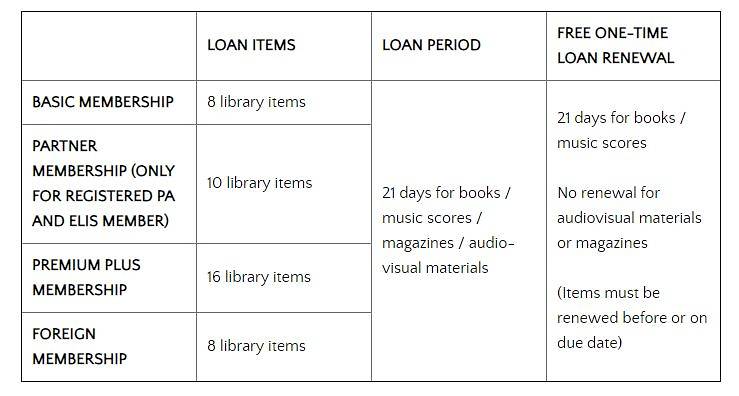
SINGAPORE: People who visit the libraries in Singapore: National Library Board (NLB) members will be able to borrow up to 16 physical items permanently from April this year.
Senior Minister of State for Communications and Information Sim Ann said in her Committee of Supply debate speech on Monday (Mar 4) that for many years, NLB has doubled the loan quota of physical items to coincide with the school holidays.
“Each time we run this, we consistently get great feedback from our users who take advantage of the promotion to read and borrow more,” she said.
From Apr 1, NLB will double the physical loan quota from eight to 16 physical items permanently so users need no longer need to wait until school holidays.
Additionally, the eBook loan quota was raised from eight to 16 and, with this, library users will be able to borrow 32 physical and electronic items at any one time, she added.
The current loan limits for NLB members, which will change come April this year. (Table: NLB website)
MP Darryl David also asked for statistics on the number of eBooks borrowed and whether this will, in time, overtake that of physical books.
To this, Ms Sim said that during the period of 2017 to 2018, the number of digital loans rose from 1.5 million to 5.8 million. However, while the growth is rapid, the number “remains a fraction” to physical loans, which stood at 33 million in 2018, she added.
The ministry will monitor these borrowing trends but it’s clear that NLB should cater to the growing demand for eBooks, she said.
SINGAPORE: A total of 26 vulnerabilities were detected in five highly used Internet-facing government systems and websites, according to a joint press release by the Government Technology Agency (GovTech) and Cyber Security Agency of Singapore (CSA) on Monday (Mar 4).
The findings of the Singapore Government’s second bug bounty programme were announced by Senior Minister of State for Communications and Information Janil Puthucheary during his ministry’s Committee of Supply debate on the same day.
About 400 ethical, or white hat, hackers signed up to find holes in the REACH website, Ministry for Communications and Information’s Press Accreditation Card online, the Ministry of Foreign Affairs website and MFA’s eRegister portal.
The programme ran from Dec 27 last year to Jan 16 this year, the press release said.
Of the 26 validated vulnerabilities, one was considered “high severity” and 18 were medium severity. The remaining were considered low vulnerability, the agencies said, adding all of these have been fixed.
The total bounty paid out was US$11,750, the press release said, which was lower than the US$14,750 doled out in the first one conducted for the Ministry of Defence.
“This process raised our cybersecurity standards,” Dr Puthucheary said.
“We gained insights into potential attack vectors, better secured our Web applications and improved our mechanisms for patching vulnerabilities effectively and comprehensively.”
GovTech and CSA said they will expand the next edition of the Government bug bounty programme to include more Government ICT systems and websites.
PROFILE: LOCAL HACKER SAMUEL ENG
Of the 400 hackers who took part, Singaporean Samuel Eng came in second overall after finding four validated vulnerabilities and taking home US$1,750 in bounty money.
Mr Samuel Eng, 29, encourages other Singapore hackers to stay determined to compete globally. (Photo: Samuel Eng)
The 29-year-old told Channel NewsAsia in an email interview that he has a day job as a penetration tester and security consultant at ST Electronics (Info-Security). He had initially wanted to take part in the MINDEF bug bounty programme but had “other personal commitments” and could not participate.
This was why he was “thrilled” to be given a second chance to “try my hands on Government ICT systems” when the second programme was announced last year, he shared.
He added that his accomplishments showed that Singaporeans can compete globally with other top hackers in such programmes.
“I am very proud to see my name alongside many other famous names on the programme’s leaderboard.”
He did point out that determination is key for Singaporeans to compete internationally.
“It is common for even seasoned professionals to start off finding absolutely zero bugs for days, weeks and sometimes even months,” Mr Ng said. “More commonly, there are people who (give) up before even trying because of overcrowding in public programmes.”
But how can Government systems be better secured against hackers of his ilk, or worse, those with malicious intent?
Mr Ng believed that the low number of vulnerabilities uncovered and their limited implications show that Government systems here are “pretty secure”.
“It is a great step for the Government to work with the local and overseas hacker communities, and I hope that penetration testing will go along with bug bounty programmes to further strengthen the security of important government IT systems,” he said.
One effort is the National Library Board permanently increasing its loan quota for physical items from eight to 16 from April this year.
The children’s section at library@harbourfront is designed to develop children’s creativity and problem-solving skills through DIY learning materials and puzzles. (Photo: Cheryl Lin)
(Updated: )
Bookmark
SINGAPORE: A dedicated council will steer efforts to get Singaporeans ready for the digital economy and the country’s Smart Nation plans.
Speaking at the Committee of Supply debate on Monday (Mar 4), Senior Minister of State for Communications and Information and Transport Janil Puthucheary said he will chair the Digital Readiness Council.
He will be supported by MP Tin Pei Ling, the deputy chair of the Communications and Information Government Parliamentary Committee (GPC) and NMP Douglas Foo, who is also founder and chairman of Sakae Holdings, according to a separate factsheet issued by MCI on the same day.
This announcement comes after the release of the Digital Readiness Blueprint last June, which recommended things like widespread access to basic digital enablers, strengthen focus on information and media literacy and encourage organisations to design for digital inclusion.
“Bringing these recommendations to fruition will require the combined efforts of the Government, industry and community,” the ministry said, which added the council will guide the collective efforts “to help Singaporeans be ready to seize opportunities afforded by technology in everyday life.”
FUNDING SUPPORT
Besides the new council, MCI also revealed it is partnering the Info-communications Media Development Authority (IMDA) and the Ministry of Culture, Community and Youth to create a new stream under the Our Singapore Fund to support grassroots initiative.
It said that eligible projects may receive funding of up to S$20,000 to support up to 80 per cent of their costs, and there are four application windows: Mar 15 to May 15, Jun 15 to Aug 15, Sep 15 to Nov 15 and Dec 15 to Feb 15, 2020.
“The initiative supports the Digital Readiness Blueprint recommendation of providing support for projects that create opportunities for community participation,” the ministry said.
INCREASED LIBRARY LOAN QUOTA
Similarly, the National Library Board (NLB) has expanded its focus beyond the promotion of reading to encourage lifelong learning for the digital economy.
Senior Minister of State for Communications and Information Sim Ann said in her speech that the initiative to transform libraries to keep pace with Singaporeans’ urban lifestyles have been well-received by Singaporeans.
These libraries such as library@harbourfront which opened in January, have generated 50 per cent higher loans and an increase of around 65 per cent in visitorship compared with those that are not revamped, she said.
She also pointed out NLB’s initiative to double the loan quota of physical items to coincide with the school holidays has gotten “great feedback”. With that in mind, it will be doubling the loan quota for physical items from eight to 16 permanently from Apr 1 this year.
This is in addition to the raising of eBook loan quota from eight to 16, she added.
In a separate factsheet, NLB said it will be developing a suite of digital readiness services, reinforced by print and digital information services, to extend its reach to more than 300,000 Singaporeans over the next five years. Of these, 85 per cent will be adults and seniors, and more than 6,000 programmes will be delivered at public libraries to meet the objective, it added.