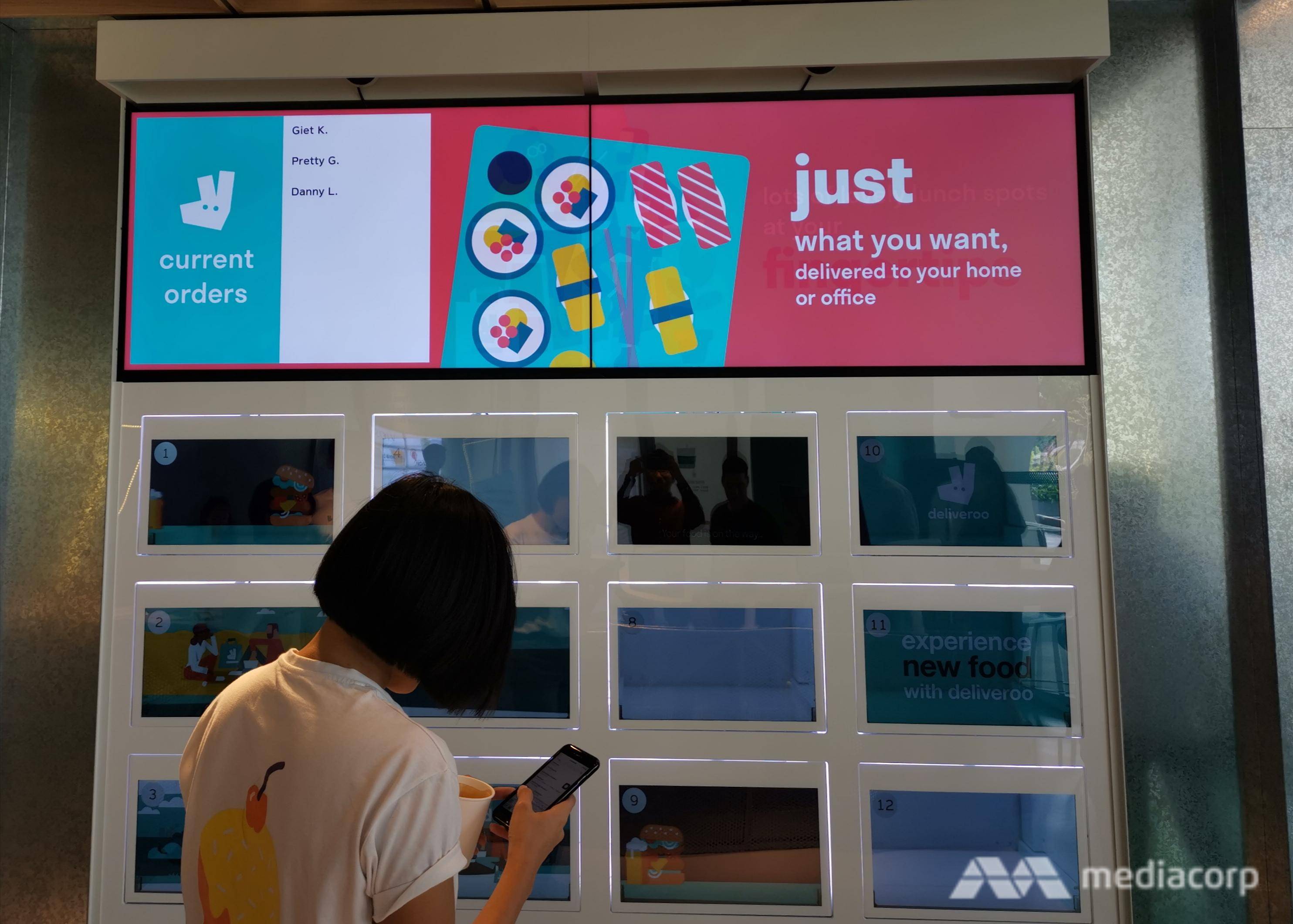
This comes as it launched on Tuesday (Mar 12) its biggest Deliveroo Editions site in Singapore to date, featuring 10 kitchens as well as a 40-seat dining space at Alice@Mediapolis.
There will be seven restaurants offering 11 food concepts at the outlet and these include: Korean fried chicken brand Bonchon, Omakase Burger, Vietnamese noodle bar NamNam, Rasa Rasa, The Flying Squirrel, ComNam and Blu Kouzina.
A closer look at how the Deliveroo Food Market looks from the inside. (Photo: Deliveroo)
Deliveroo Singapore’s general manager Siddharth Shanker told Channel NewsAsia on Tuesday that it chose the site of its latest Editions outlet, called Deliveroo Food Market, using the data it collected.
“We found that the 4km to 5km radius of Clementi, Queenstown and Holland Village to be very interesting, and there is a big catchment area,” Mr Shanker said.
He added that the restaurants it brought together at the Alice@Mediapolis outlet was based primarily on user demand and ordering patterns as well. For example, Blu Kouzina’s Mediterranean fare was favoured by residents in the areas Deliveroo wants to serve, although the data also showed that the preferred price point was between S$15 and S$20.
This led to the restaurant bringing two food concepts – Vios and Lucky Souvlaki – that offer more affordable Greek and Mediterranean food to the new co-kitchen space, Mr Shanker explained.
Deliveroo Food Market will be open seven days a week, Mr Shanker said. Lunchtime will range from 11am to 2.30pm while the dine-in space for dinner will open from 4.30pm to 9.30pm. Food delivery orders from here will end at 10pm, the company added.
DIGITAL DINING EXPERIENCE
Besides the data-driven site location and food choices, it is also collaborating with San Francisco-based tech company eatsa to bring the latter’s fully automated ordering system here.
Diners who complete their orders would see their names on the digital orders board on top of the “smart” cubby holes – a technology brought here by San Francisco-based firm eatsa.
Customers will have to place their orders at one of the self-service kiosks situated at the entrance of the outlet, after which their orders are registered and names put up on the digital order board.
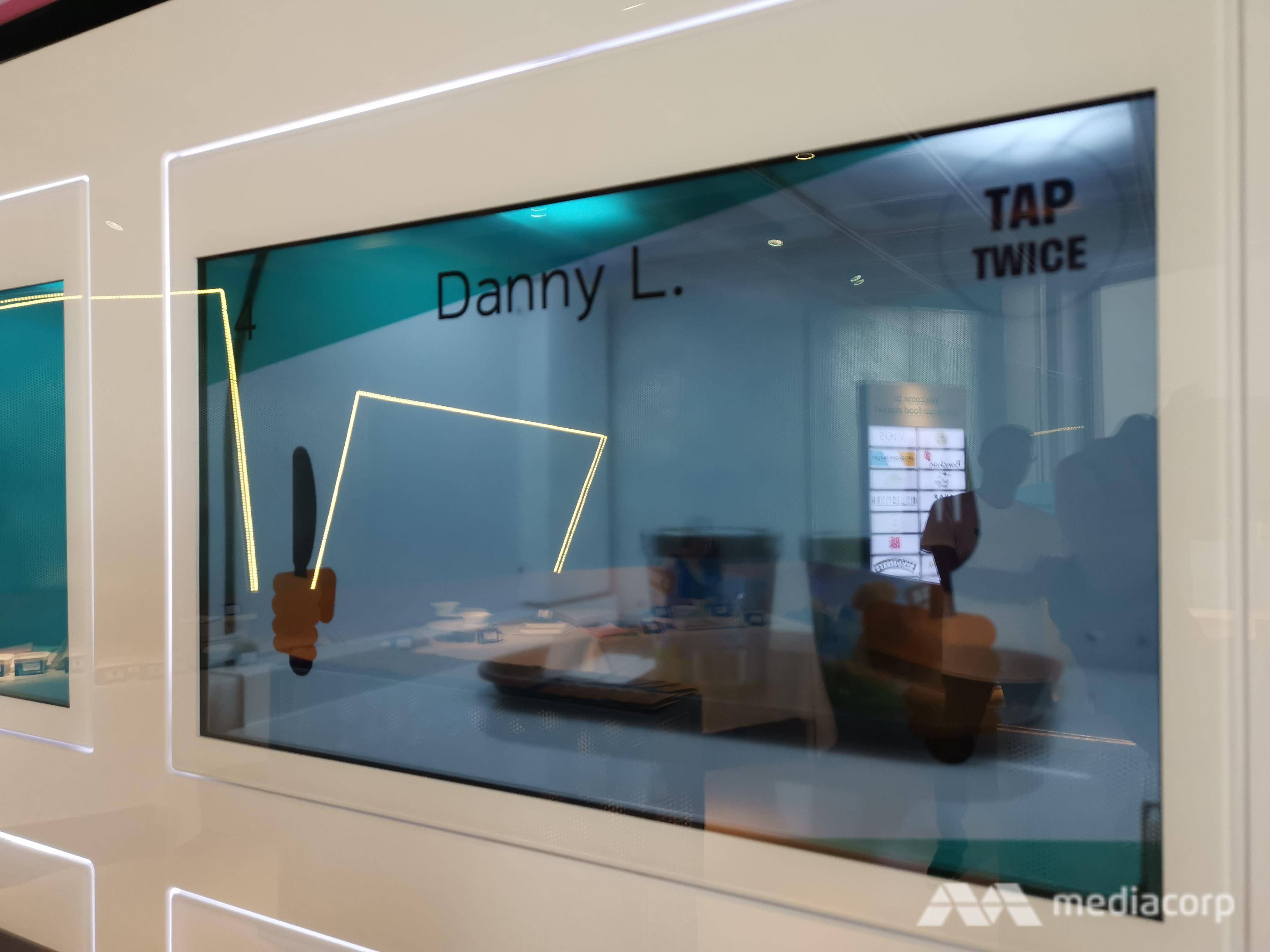
Once ready, the food will be placed in one of the 12 cubby holes and the smart screen will light up with the diner’s name for pick-up. Visitors then tap twice at the top right-hand side of the screen to open the cubby and pick up the food.
Eatsa’s senior program manager Danny Lee, who is in town for the launch, told Channel NewsAsia that this is the first time the company is offering its food ordering system outside the United States.
He explained that eatsa provided the software, hardware and ordering system in place for Deliveroo’s latest Editions site, and worked together with the latter’s team during the design and building of the location.
When a customer’s order is ready, the cubby’s screen will light up with the diner’s name and a moving animation of a pair of hands holding folk and spoon.
Mr Lee said the Singapore market was a natural choice for eatsa to expand to.
“Singapore consumers are very accepting to new technologies and ready for a digital ordering experience like ours,” he said, adding that the adoption of mobile payments here is also another attraction.
The US company does not have an office in Singapore currently, but depending on this “experiment” with Deliveroo, it could be something it looks into, said Mr Lee.
Mr Shanker said the whole outlet took about six months to conceptualise and build, but declined to share how much was invested for this venture.
And he is confident that the company’s experience and track record in running its “super kitchens” concept will stand it in good stead against rivals such as Foodpanda and GrabFood.
The company started Editions in 2017 in Katong before expanding to another site in Lavender a year later. These sites, he explained, helped the company finetune its operations such as providing a rest area for its food delivery riders, and pushed it towards having a dine-in area.
“These (learnings) are not easy to copy,” Mr Shanker asserted.
Grab, too, confirmed with Channel NewsAsia its plans to bring its Kitchen by GrabFood concept to Singapore after it bagged US$1.5 billion of funding from SoftBank’s Vision Fund last week. It did not say when and where this is happening.
SINGAPORE: Singapore’s aviation regulator has ordered the temporary suspension of all Boeing 737 MAX aircraft into and out of the country, it said on Tuesday (Mar 12).
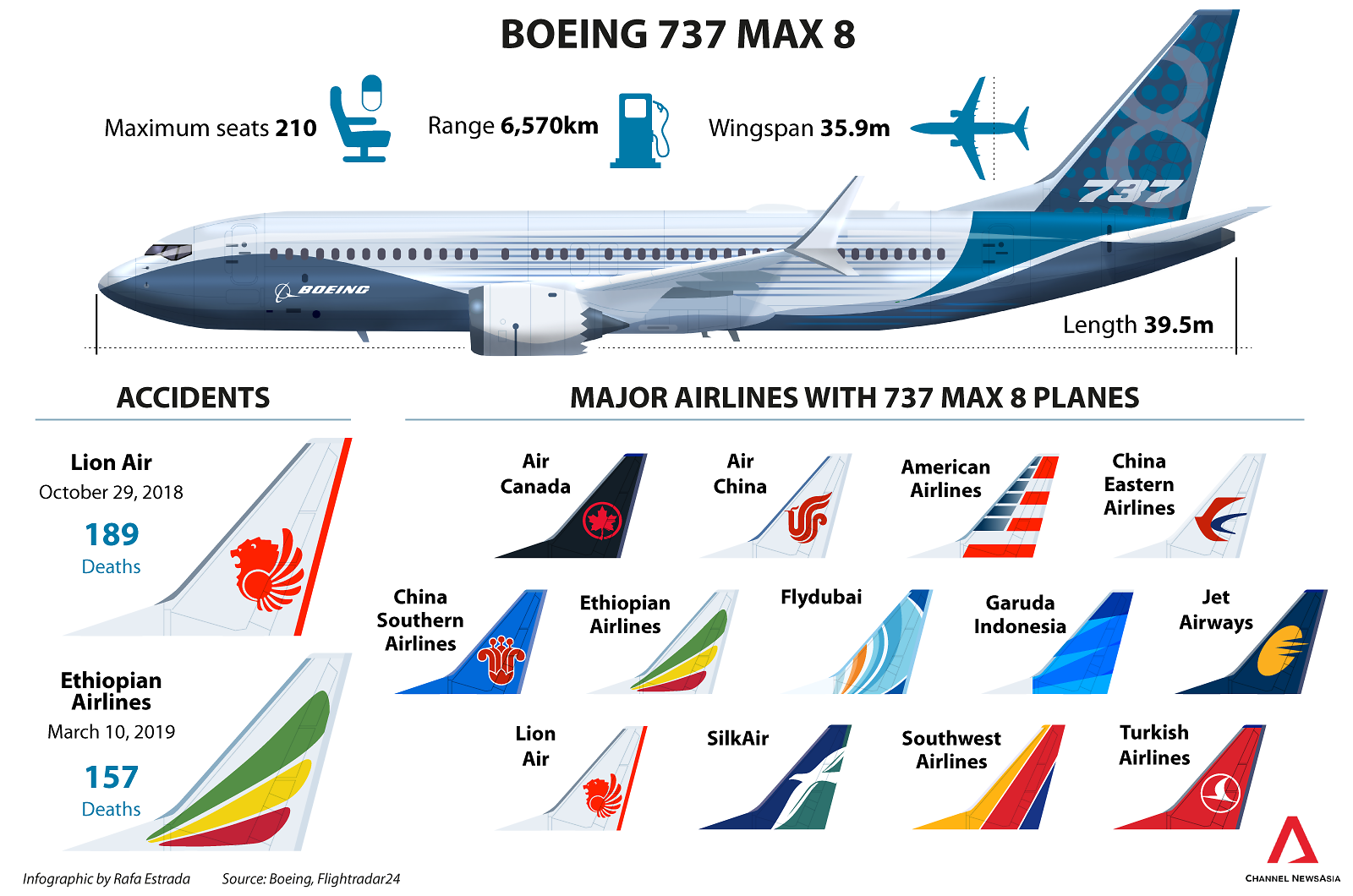
“The Civil Aviation Authority of Singapore (CAAS) is temporarily suspending operation of all variants of the Boeing 737 MAX aircraft into and out of Singapore in light of two fatal accidents involving Boeing 737 MAX aircraft in less than five months,” it said in a statement.
The suspension will take effect from 2pm on Tuesday, the regulator said. SilkAir, which operates six Boeing 737 MAX aircraft, will be affected by this suspension.
Other airlines operating Boeing 737 Max aircraft to Singapore are China Southern Airlines, Garuda Indonesia, Shandong Airlines and Thai Lion Air, CAAS said, adding that it is working with Changi Airport and the affected airlines to minimise the impact to passengers.
“During the temporary suspension, CAAS will gather more information and review the safety risk associated with the continued operation of the Boeing 737 MAX aircraft into and out of Singapore,” it said.
“CAAS is closely monitoring the situation and is in close communication with the US Federal Aviation Administration and other aviation regulators, as well as Boeing.”
The suspension will be reviewed as “relevant safety information becomes available”, it added.
The authority also said that it has been in regular contact with SilkAir on its 737 MAX operations since last year and is “satisfied that it has been taking appropriate measures to comply with the necessary safety requirements”.
SINGAPORE: Mr Fathul Hanif Ariffin recalled that as a student at Hougang Secondary School, co-curricular lessons were the only time when Express and Normal stream students had a chance to bond. But that did not exactly take place.
Verbal grenades were lobbed at the Normal stream students instead.
“The Express students would make snarky remarks that Normal stream students are not as smart as them or we’re slow learners,” recalled Mr Fathul, who was in the Normal (Academic) stream at the school from 2008 to 2012.
Teachers, too, looked down on students like him. As his teachers at the time taught both Express and Normal stream students, they would make comparisons.
“There were times when my classmates and I didn’t do well, they would say, ‘Don’t you want to go to Express? Do you want to spend an extra year?’”, said Mr Fathul, referring to the fact that Normal (Academic) students can do a fifth year in secondary education to take the GCE O-Level examination.
Though the teachers perhaps intended to motivate students, such comments had the opposite effect and came across as “condescending”, said Mr Fathul, who is now 23.
It gave the impression that Express stream students were “more superior”, he added, and that Normal stream students “could not go far in life”.
Mr Fathul went on to Temasek Polytechnic, where he was later offered a bond-free scholarship to pursue his undergraduate studies in communications and media studies at the University of Western Australia. He is currently a first-year student there.
His experience as well as that of others — including Dr Felix Tan, a former Normal stream student who now lectures at SIM Global Education — highlight the downside of streaming.
Pigeonholing students demoralises them, while being put in a stream considered to be of “lower standing” carries a stigma that becomes self-limiting, education experts, past and present Members of Parliament (MPs) as well as former students said.
A student completing an assignment. (Photo: AFP/Frederick Florin)
Even government leaders had acknowledged that the adverse impact on students’ self-esteem is among the pitfalls of streaming.
But the effects of streaming are not exactly clear-cut, those interviewed said.
Former Normal stream students, including Mr Fathul, felt streaming enabled them to learn at their own pace.
The perennial debate on streaming took a decisive turn on Tuesday when Education Minister Ong Ye Kung announced that the system would be replaced by subject-based banding by 2024.
It marked the beginning of the end to a contentious policy after a similar move was made to do away with primary school streaming in 2008.
Those interviewed said the jury is still out as to whether the school streaming system has been a success or failure.
For a while, streaming did serve its purpose, especially during Singapore’s nation-building years. It succeeded in cutting down drop-out rates and kept students in schools, they added.
As the country prospered, however, the inequality gap grew.
On top of that, the rigidity of streaming coupled with the growth of educational pathways and students’ changing aspirations made the system more untenable.
In short, streaming had become outdated, they noted.
Dr Intan Azura Mokhtar, an MP for Ang Mo Kio Group Representation Constituency, recently spoke in Parliament of how her Normal (Technical) students felt demoralised.
Dr Intan was previously a secondary school teacher for six years, and is now an Assistant Professor at the Singapore Institute of Technology under its Design and Specialised Business cluster.
Dr Intan Azura Mokhtar speaking in Parliament on Nov 20, 2018.
She reiterated that streaming has served its purpose.
“It was well-intentioned and did show results,” said Dr Intan, who is also the deputy chair of the government parliamentary committee for education.
“But ultimately, when society becomes more well-educated and more affluent, we aspire for an education system and landscape that can cater to differences and which can be customised to our diverse needs and expectations. Streaming is not able to provide that.”
Before there was self-government, schools were divided along vernacular languages.
After the People’s Action Party (PAP) formed the first government of self-governing Singapore in 1959, it revamped the education system, starting with the introduction of the Primary School Leaving Examination (PSLE) in 1960.
Three years later, a common education system was introduced — there would be six years of primary followed by four years of secondary education as well as two years in pre-university.
Streaming could be traced back to the 1960s.
Before 1969, students were channelled into academic, technical and vocational schools at the end of their primary education.
The Government went on to introduce the Revised Primary Education System and the Revised Secondary Education System in 1976 and 1978, respectively.
This is “to cater for human differences and to reduce attrition”.
Under those systems, students who failed in primary and secondary schools were channeled to vocational courses.
These details were revealed in former Deputy Prime Minister Dr Goh Keng Swee’s landmark report — better known as the Goh report — published in 1979. It detailed the problems of Singapore’s education system then.
It was in this report where Dr Goh, then the Education Minister, raised the need for a proper streaming system to reduce the drop-out rate.
Primary students would be streamed at the end of Primary 3 into either the normal bilingual, extended bilingual or monolingual course. This took effect in 1981 and was later replaced with the labels EM1, EM2 and EM3.
Secondary schools would have the Special, Express and Normal streams.
Mr Goh said in his report that a single curriculum “does not take into consideration differences in absorption capacities and rates of learning of the pupils”. He added:
This rigidity of the system tends to favour above-average pupils, penalising the below-average pupils and slow learners. This resulted in high failure rates. These high failure rates could be reduced if the education system is flexible enough to cater for the different categories of pupils.
File photo of students. (File photo: Ernest Chua/TODAY)
Though he acknowledged concerns over streaming, he pointed out that “much of the prejudice” against it “derives from an egalitarian philosophy fashionable in the western world” after World War II. And this philosophy “partly rests on a prejudice against the pursuit of excellence”.
He reiterated the need for streaming again during a four-day parliamentary debate over the motion of Revised Structure of Education in Parliament in March 1979.
While streaming was a “beastly thing to do”, it was necessary to advance the education system, he stressed.
Over the decades, streaming did reduce the drop-out rate — from 30 to 40 per cent when the system was introduced to 5.3 per cent in 1997. It fell to 3.7 per cent in 2002 and now stands at less than 1 per cent.
From 1994, further changes were made to primary and secondary streaming.
At the secondary level, students were later streamed into Express, Normal (Academic) and Normal (Technical) courses. Over at the primary level, the EM1 and EM2 streams were merged in 2004, and in 2008, streaming was completely scrapped and replaced with subject-based banding.
Since 1979, however, the debate over streaming has raged on till today.
Memorable ones included the intense parliamentary exchange in March 1981 between former PAP MP Dr Tan Cheng Bock and then Education Minister Dr Tony Tan.
The MP questioned the psychological impact of streaming and whether “children of very high intellect in special schools where they only play and work together” could relate to the “less academically endowed”.
Dr Tony Tan responded that streaming enables each student to progress at a pace suited to his or her ability. It was too early then to “speculate on its long-term effects” on Singapore’s society and he did not see “the danger” that the MP had alluded to.
In 2014, MP Denise Phua called for removal of both PSLE and streaming. There should instead be a 10-year through-train education system.
Member of Parliament Denise Phua. (Photo: Jeremy Long)
Last week, MP Louis Ng pointed out that students are not just streamed based on academic results, as students from Normal streams tend to have lower socioeconomic status.
A SUCCESS OR FAILURE?
Former Nominated Member of Parliament (NMP) Calvin Cheng, who has cautioned against entirely removing the streaming system, pointed to its success in reducing the drop-out rate and improving the quality of education. As a result, Singapore is now an “educational powerhouse” that has consistently topped global rankings, he noted.
On the other hand, former MP Inderjit Singh described streaming as a failure due to its psychological impact and how it “widened the class divide”.
The intent was not wrong. We focused on not slowing down good students and paid less attention to allow slow students to catch up,” he added.
Others, however, said there is no clear-cut answer on whether streaming has worked or not.
Dr Intan said it would be too simplistic to describe streaming as a success or failure.
Associate Professor Jason Tan, from the National Institute of Education’s policy and leadership studies department, said that just like any policy, the Government has to constantly juggle conflicting priorities.
“It depends on what their values and priorities are at any one point in time, and it’s tough to make everyone equally happy,” he added.
Still, the majority of those interviewed agreed on one thing: Streaming succeeded at a time when it was needed. Over time, though, it became outdated due to several factors.
Dr Kirpal Singh, director of the centre for educational leadership at the Training Vision Institute, pointed out that streaming was introduced at a time when the playing field was very much levelled as the majority of Singaporeans were still poor.
Then, parents had a “simple mindset” where they “just wanted their children to get an education, finish it quickly and go to work to supplement household income”.
As Singapore’s economy grew over time and its citizens became affluent, some parents had more resources to help their children do well in schools. For instance, by providing tuition.
Slowly, the inequality gap widened. And streaming, said Dr Singh, could have exacerbated the divide as it allowed students from richer households to advance faster, while those from lower-income households lagged behind.
Government statistics showed that from 2014 to 2018, 69 per cent of secondary school students who received assistance from the Ministry of Education’s (MOE) financial assistance scheme came from the Normal streams.
Another factor why streaming has run its course is because the system is “overly rigid”, said Assoc Prof Tan.
It did not allow much inter-stream mobility and instead “froze students into boxes”.
File photo of secondary school students in Singapore.
Streaming also did not have sophisticated mechanisms to recognise students’ strengths in different subject areas and not many subject options were given to students, said Assoc Prof Tan.
He cited, for instance, how Normal (Technical) students are given vocational-type subjects, indicating that they could only go to certain post-secondary institutions and perform certain types of jobs.
Professor David Chan, the director of the Behavioural Sciences Institute at Singapore Management University, said that streaming did not take into account certain elements that can be found in the subject-based banding system.
One of them is that streaming relies too much on general instead of specific academic abilities. As such, “we miss out the important information on the profile of strengths and weaknesses of the diverse specific abilities”, said Prof Chan.
So, a student with great potential and ability in a specific subject but does not do well in other subjects could end up in the lower-ability Normal stream.
Meanwhile, another student who does reasonably well in all subjects but outstanding in none could end up in the higher-ability Express stream, he added.
“The problem is exacerbated if the Normal stream environment is associated with other factors that are not conducive to the development of the student’s specific abilities in particular subjects and are overall demotivating for the student to perform academically,” said Prof Chan.
Such rigidity does not help amid changing aspirations, said those interviewed. And students wanting to break out of the paths dictated for them to pursue growing job opportunities made streaming outdated, they added.
One other factor that made streaming “redundant” is the recognition that students have diverse strengths, as well as the opening up of educational pathways.
Education experts pointed out that this was reflected in the scrapping of primary school streaming. In addition, the MOE has ramped up efforts to open up routes for Normal stream students to polytechnics and place more emphasis on aptitude admissions.
Dr Intan said that the emphasis on different abilities and skills through the SkillsFuture movement, for instance, paved the way for the full implementation of subject-based banding. “The abolition of streaming is the next natural step,” she added.
Minister for Education Ong Ye Kung at the SkillsFuture Fellowships and Employer Awards ceremony in 2017. (Photo: Deborah Wong)
WHAT’S NEXT AFTER STREAMING IS ‘SLAYED’
Former NMP Cheng stressed that removing streaming will not solve the issue of social divide.
On the point that streaming has contributed to, or exacerbated, a class divide, he said critics had got the “cause and effect wrong”.
Children’s socioeconomic backgrounds contribute to their different academic abilities. It is not the other way around, he said.
As such, whether streaming exists or not, the solution should be to help children of poorer families perform in school.
“Not streaming kids isn’t going to suddenly do away with socioeconomic differences later in life. Many other things determine whether one succeeds in life, including luck,” he added.
Scrapping streaming also will not address growing concerns over elitism and the effectiveness of meritocracy, said Mr Cheng, who is an entrepreneur.
Social stratification and elitism are complex issues that cannot be blamed on the education system alone.
Dr Intan echoed a similar point, saying that streaming, for all intents and purposes, is not meant to socially divide. It is seen as an “efficient way of sorting students into groups for efficient teaching and learning”.
“However, we cannot extricate ourselves from our social interactions and social perceptions,” she noted.
“Labelling and stigmatisation are the unintended outcomes of streaming, largely due to our natural tendency to categorise and create stereotypes based on our own personal biases.”
She therefore argued that “it is our beliefs and actions that stratify us, not streaming alone”.
While there is a need to ensure students achieve success, the solution is not to scrap streaming or dumb down examinations. There is still a need to pursue excellence, said Mr Cheng.
The key, he added, is to widen the different definitions of success. “I think we attribute too much of life’s success and failures to academic achievement and streaming.”
File photo of secondary school students. (Photo: TODAY)
Scrapping the labels Express, Normal (Academic) and Normal (Technical) does not mean streaming has been abolished, said education experts. In fact, doing that means that streaming has only been partially removed.
Elite schools are unaffected by the move as they only have a single stream, said Assoc Prof Tan. There could be a situation where the divide between elite and non-elite schools will be more pronounced, he added.
Mr Cheng quipped: “It’s now the top 10 per cent and the rest … You cannot un-stream away differences. Policy cannot make equal what nature has made unequal.”
There is also the question of whether the tuition industry will be affected after secondary school streaming is scrapped. But the experts expect the impact to be minimal.
Dr Singh said that parents still rely on tuition as a form of “extra security” as they still feel the pressure from perceived competition.
Implementation of the subject-based banding also raises questions on how students will be assessed when it comes to post-secondary institutions or even when they enter the workforce.
Assoc Prof Tan pointed out that though the new system sort of provides “equal opportunities”, it “does not promise everyone equal outcomes”.
Entry into junior colleges, he pointed out, should remain rigorous as their sole purpose is to prepare students for university education, and colleges are not at all vocationally oriented.
When it comes to the workforce though, experts said the new system would not have much of an impact since students would receive similar certifications albeit with different subject combinations.
Mr Cheng said that it should not affect one’s employment assessment as an individual’s highest qualification should render the one before that irrelevant, as in other developed countries.
Experts said that overall, subject-based banding will be beneficial in the sense that groups of students will no longer be tarred with the same brush.
While many have described the changes as long overdue, Dr Singh said: “The MOE or the Government should not have to apologise or be embarrassed for making such changes only now. We are entering a more and more complex world, where no nation has come up with an ideal education system.”
SINGAPORE: Inflight meal caterer SATS is boosting its overall food production by 14 per cent, with a S$25 million facility that launched on Monday (Mar 11).
Located at Changi North Crescent, the expanded facility will have a gross floor area of 60,000 sq m. This will increase the company’s production to 120,000 meals daily.
SATS produces 170 million meals a year over 35 locations in Asia. About a quarter of its business comes from non-aviation catering, but it aims to increase this as it sees a growing demand for food-related services across Asia.
“Although we are the market leader in aviation catering and will continue to lead that segment in Asia, what we see as an adjacent big opportunity, is being the central kitchen for the food service chains as they expand in the big cities across Asia,” said SATS president and CEO, Mr Alex Hungate.
Part of that strategy is to produce tastier and more nutritious meals without the use of preservatives. Its latest ready-to-eat meals have a shelf life of six to 24 months and do not require refrigeration.
Minister Chan Chun Sing learns about the Digital Twin technology during the launch. (Photo: SATS)
The company said it is the first in Asia to use pasteurisation and sterilisation technology, which can maintain the taste, texture and nutritional properties better than conventional sterilisation methods.
“For too long, the food industry has been observing large-scale manufacturing, and using preservatives and additives,” said Mr Hungate. “We have sacrificed the healthiness and quality of what our consumers are eating.
“Using new food tech, we still manage to do large-scale, but don’t need preservatives and additives.”
On the menu are dishes like baked fragrant chicken rice, Ancient Treasures and beef bourguignon developed by SATS’s team of food technologists, dietitians and chefs.
Scoot will be the first airline to introduce some of the new meals in June this year.
SATS president and CEO Alex Hungate and Minister Chan Chun Sing look at one of the machines at the new facility. (Photo: SATS)
The new facility will be driven by automation and data-driven analytics, reducing cooking time and manual labour. For example, it has an automated rice line that can cook 4,000 portions per hour with just a three-man team. In the past, it required about eight workers.
An Autofryer is also used to enable cooking of food in large batches. Now, 60kg of fried rice can be prepared in just half an hour, as compared to the previous 90 minutes.
SATS also uses digital twin technology to help simulate different production scenarios to optimise its kitchen resources.
The company introduced these new technologies with the help of funds from the Civil Aviation Authority of Singapore. It also made sure that the staff were not made redundant by training them to use the new equipment, with the help of Workforce Singapore.
SINGAPORE: A 23-year-old man has been arrested after one man was found dead and another injured at a building along Sungei Kadut Loop on Monday (Mar 11), the police said in a news release.
Authorities said they received a call for assistance at about 1pm.
“Upon arrival, the police found a 30-year-old man lying motionless inside the building and he was pronounced dead by paramedics at the scene,” the police said.
Another man, a 29-year-old was conscious when taken to Khoo Teck Puat Hospital, police added.
Police cars are seen after an incident at the International Furniture Centre at Sungei Kadut Loop on Mar 11, 2019. (Photo: Marcus Mark Ramos)
The case has been classified as murder and the suspect will be charged in court on Wednesday.
Preliminary investigations revealed that the victims and the suspect knew each other, said police.
Police vehicles and Health Sciences Authority officers were at the International Furniture Centre along Sungei Kadut Loop when Channel NewsAsia visited the scene on Monday evening.
The area surrounding the building had been cordoned off.
The logo of home goods store Jiji at the International Furniture Centre at Sungei Kadut Loop. (Photo: Marcus Mark Ramos)
SINGAPORE: Construction firms will soon be able to tap a new S$2 million fund to help them acquire quieter equipment and adopt more innovative building methods.
The Quieter Construction Innovation Fund (QCIF) will be disbursed over two years from Apr 1, said the National Environment Agency (NEA) on Monday (Mar 11). It replaces the Quieter Construction Fund (QCF) which expires at the end of March.
Under the new fund, successful applicants can receive a maximum grant of S$300,000, up from S$200,000 previously.
Companies which use quieter piling and demolition equipment that meet the higher noise reduction standard of 10dBA can also receive up to S$300,000 in funding, which is double the amount under the previous framework.
In addition, contractors can receive up to S$50,000 when sub-contracting specialist contractors to carry out piling and demolition works using quieter equipment. This amount is up from the previous S$20,000.
Some of the grant’s criteria have also been lowered, allowing more contractors to qualify for funding support.
NEA said adjustments to the fund were made after feedback from industry players.
While construction firms welcomed the changes, some said there are still challenges such as the costs and time involved in acquiring quieter equipment.
“Every machine can cost up to between S$1 million and S$5 million for big machines,” said Lee Kay Chai, secretary general of The Singapore Contractors Association.
“For contractors to use quieter machines, they also have to think of existing machines which are quite noisy, but (which) they have invested for quite a period of time, so the lifespan of the machines is still there,” he explained. “To substitute with these quieter machines, they have to either sell away these machines and reinvest in new machines, which is a very high investment for them.”
Depending on the take-up rate and industry feedback, NEA said it will review the need to further extend the fund.
“In a dense and urbanised city-state like Singapore, construction noise is often an issue,” said NEA CEO Tan Meng Dui.
“Through our experience in administering the QCF and feedback from the industry, we are aware that the cost of quieter construction technology and noise mitigating measures remains high,” he added.
“The industry can benefit from continued financial support to co-invest in expensive quieter construction machinery and innovative methods.”
Details of the new fund are outlined below:
Funding framework for purchase of quieter construction equipment under the Quieter Construction Innovation Fund. (Table: NEA)
Funding framework for leasing of equipment and/or specialist sub-contractor services under the Quieter Construction Innovation Fund. (Table: NEA)
Funding framework for purchase of noise control equipment under the Quieter Construction Innovation Fund. (Table NEA)
SINGAPORE: A High Court judge on Monday (Mar 11) dismissed an appeal from a doctor at the heart of the data leak of 14,200 HIV-positive people in Singapore.
Ler Teck Siang had appealed against his conviction and two-year jail sentence for abetting his partner Mikhy Farrera Brochez to cheat the Ministry of Manpower (MOM) about Brochez’s HIV-positive status, and for giving false information to the Ministry of Health (MOH) and the police.
The 37-year-old was found guilty last year of helping Brochez deceive the Ministry of Manpower (MOM) by submitting two HIV blood tests using Ler’s blood in Brochez’s name in 2008 and 2013.
Justice Chua Lee Ming on Monday upheld the convictions and sentence of the doctor, saying that Ler’s arguments were “creative but baseless, and in part, illogical”.
The doctor will start his two-year prison sentence on March 21, the judge ordered.
Ler, who was representing himself, had argued that he lied to police in 2016 when he admitted to the cheating offences. He said he had done so in “retaliation” against “perceived discrimination” by MOH over his sexual orientation.
It was proven in the trial that Brochez had gone to the Singapore Anti-Tuberculosis Association’s (SATA) Chinatown clinic in early March 2008, where a blood test proved that he was HIV-positive.
However, another blood test Brochez submitted with Ler’s blood 10 days later found that his blood tested negative for HIV.
Dr Ler Teck Siang and his partner Mikhy Farrera Brochez are at the centre of the data leak of Singapore’s HIV registry. (Photos: Faith Medical Group, Clark County Detention Centre/Mugshots.com)
Ler argued that Brochez had asked someone else to pose as Brochez when going to the SATA clinic in order to get an employment pass. However, he did not expect that the unknown person was HIV-positive.
Asked by the judge why Brochez would do that, Ler answered: “Because of his fear of needles and he just had no regard for rules and regulations and laws.
“There is ample evidence to show he is a fraudster, and not just defrauding local authorities, but the appellant himself (Ler) since day one.”
A FANCIFUL FAIRYTALE
Deputy Public Prosecutor Kwek Mean Luck said it was “absolutely clear” that it was Brochez who tested HIV-positive at the clinic, as the fake Bahamian passport used to register for the test was seized from Brochez’s home, and had Brochez’s picture.
The doctor conducting the test testified that it was his practice to check the face of the patient against identification, in this case, the fake passport.
The prosecution had argued that Ler had higher culpability than Brochez, as he instigated the offences, coming up with the idea of how to deceive MOM, and was “absolutely instrumental to the success of the plan”.
“Dr Ler wasted significant resources in claiming trial… and spinning a fanciful fairytale,” said the prosecutor, pointing out that the trial took 15 days in a district court.
“Numerous public agencies were deceived. MOM was deceived two times. MOH and also the police were deceived by the false information offences.
“There were three distinct public agencies that were deceived, and it is well established that offences involving the cheating of a government department or agency should attract a sentence of general deterrence, even where no financial loss is caused to the Government.”
SENTENCE DEFERRED FOR DISPOSITION OF LER’S PETS
The judge agreed with the prosecution’s arguments that the district judge who sentenced Ler to two years’ jail had not erred.
Ler Teck Siang at the Supreme Court on Mar 11, 2019. (Photo: Gaya Chandramohan)
“In my view, [the] evidence against you is convincing,” said Justice Chua.
“First, it’s not clear why Brochez went to SATA instead of having his test done anonymously, but I agree that what’s important is that he did go to SATA using a fake passport.”
As for Ler’s arguments that he had lied in his police statement and falsely admitted to cheating the authorities in relation to Brochez’s HIV status, the judge said: “You have given your statements voluntarily. There is clear corroborative evidence from… Brochez.”
Brochez had admitted during his trial to charges of cheating and giving false information.
The prosecution quoted Brochez, who had said: “Yes, I am guilty of the charges but I think the MOH misused their powers in order to cover up the fact that they had a data leak.”
Judge Chua said: “I agree with the District Judge that you (Ler) played an active role as an instigator and you were not just an accessory.”
Ler made an application to defer sentence for two weeks for the “disposition of his pets”, later clarifying that he had to make arrangements for someone to care for his unspecified pets.
His mother, who is his bailor, asked for an additional one-day deferment as Mar 20 was his elder brother’s birthday.
The judge granted a one-and-a-half week’s deferment and maintained bail at S$40,000. The prosecution made no objection as Ler has to wear an electronic tag. He will start his prison sentence on Mar 21.
Ler’s alleged mishandling of information he had access to as head of MOH’s National Public Health Unit between March 2012 and May 2013 is believed to have led to Brochez possessing data from Singapore’s HIV registry.
Brochez has since leaked the data and threatened to release more details if the Singapore Government did not release Ler.
SINGAPORE: A doctor at the centre of the HIV data leak from Singapore’s registry told the High Court on Monday (Mar 11) he had lied to the police in 2016 when he admitted to cheating offences.
Ler Teck Siang, who was convicted of the offences in 2018, claimed he had lied in his police statement to “retaliate” against the Ministry of Health’s (MOH) “discrimination” of his sexual orientation.
The 37-year-old was appealing against his conviction and two-year jail sentence for abetting partner Mikhy Farrera Brochez to cheat the Ministry of Manpower (MOM) regarding Brochez’s HIV-positive status, and of giving false information to the Ministry of Health (MOH) and the police.
“BARGAINING CHIP”
Representing himself and reading from a folder he held in the dock, Ler told the High Court that he had lied in his statement to the police in retaliation to the perceived discrimination he felt from MOH over his sexual orientation.
He claimed that he had falsely admitted to cheating offences. When questioned by Justice Chua Lee Ming about what Ler thought would have happened in giving this false information, Ler said: “The appellant (Ler) didn’t really have an intention, it was essentially a retaliation for how he perceived … he was treated.”
Asked how this was a retaliation, Ler said he was uncooperative when he was expected to cooperate with police.
When questioned about what was to happen with this lack of cooperation, Ler said he had not thought about it at that point in time.
Ler Teck Siang at the Supreme Court on Mar 11, 2019. (Photo: Gaya Chandramohan)
He also reiterated his “bargaining chip” defence, which he had used during his earlier trial.
According to Ler, the reason for giving falsely incriminating statements was because he thought that he was “expected” to give a “bargaining chip” to the Criminal Investigation Department (CID) and MOH.
Ler claimed that when he was detained on May 23, 2016, it was “clearly for the primary purpose of extracting [a] confession to cheating”, even though “on the surface he was led to understand that he was supposed to be assisting into investigations looking into the data breach”.
“Even before the 2013 blood test [where Ler] allegedly used his own blood instead of Brochez’s blood, even before that – MOH was already convinced that Brochez was HIV-positive as can be shown by MOH informing MOM that Brochez had made a false declaration in his health declaration,” said Ler.
“Are you saying he’s not HIV-positive?” asked the judge.
“I’m saying at that point he’s not. But MOH was already convinced that he (was),” answered Ler.
The judge said this was not relevant.
“What’s relevant is he was required to do another blood test. Did you use your blood in place of his?” asked Justice Chua Lee Ming.
Ler claimed he did not use his blood for Brochez’s test. He went on to say that the judgment of the district judge, who said the ‘bargaining chip’ defence was “contrived, far-fetched and simply incredible”, has been proven wrong by recent events, such as Brochez’s release of the leaked data.
“So you are saying that you lied when you admitted to the offence in your statement?” asked the judge.
“That is right,” answered Ler.
The judge adjourned the hearing until Monday afternoon.
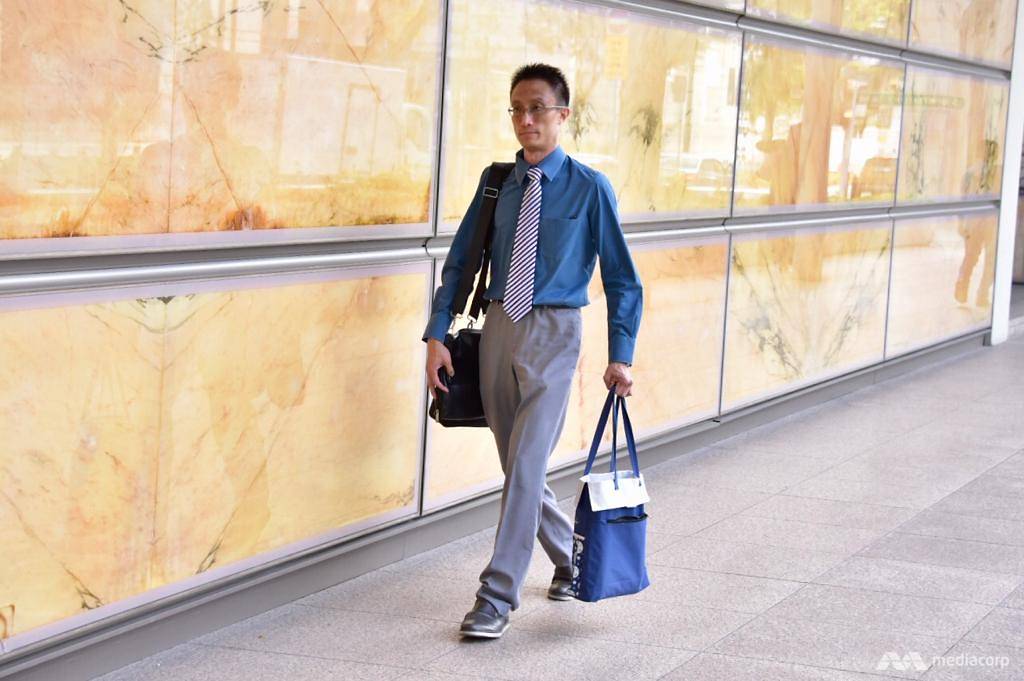
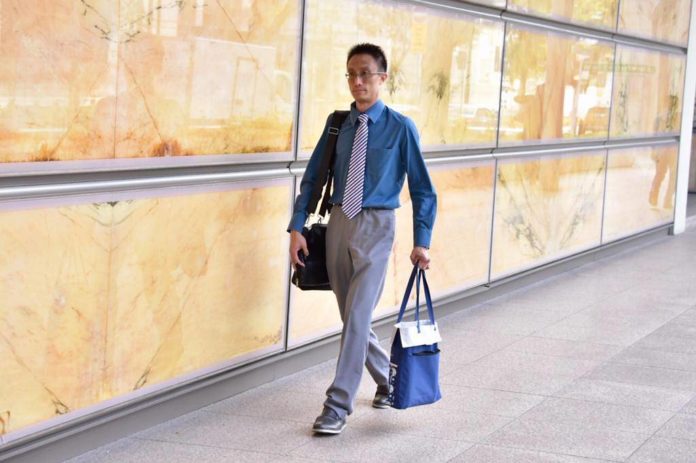
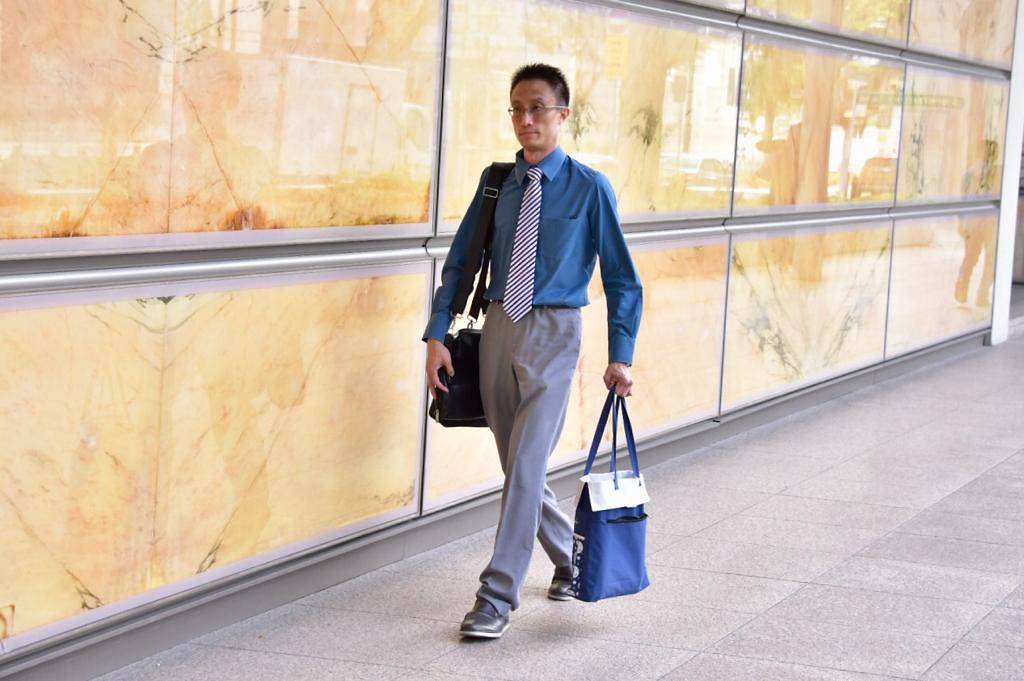
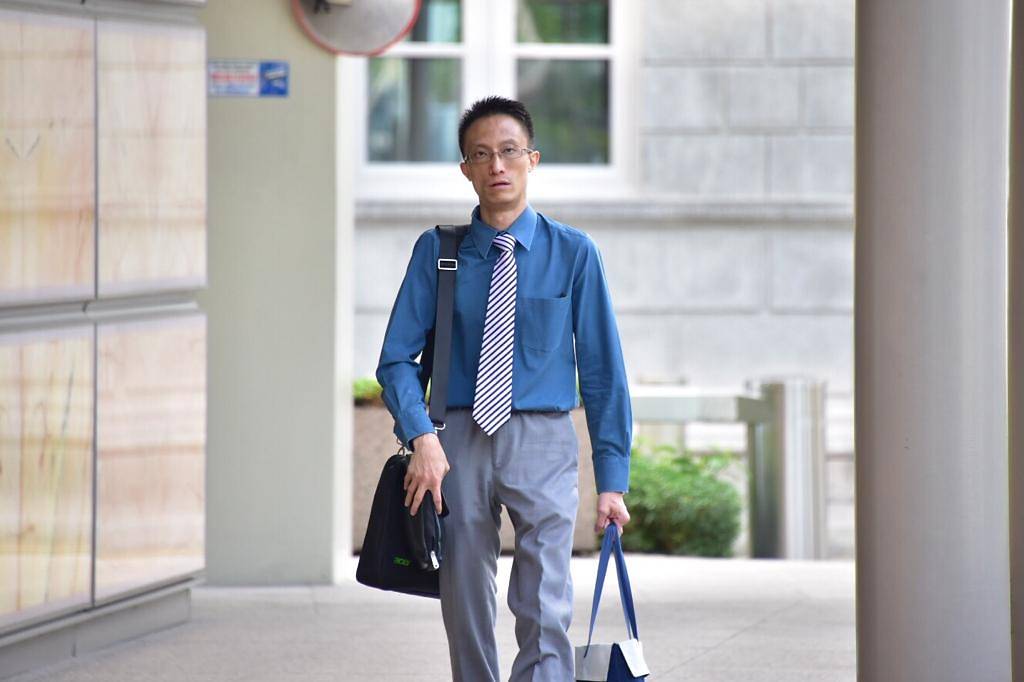
Ler made his first public appearance since news broke in January that his alleged mishandling of information could have led to Brochez leaking the data including phone numbers and medical records of HIV sufferers.
Ler Teck Siang at the Supreme Court on Mar 11, 2019. (Photo: Gaya Chandramohan)
Ler was head of MOH’s National Public Health Unit from March 2012 to May 2013, with access to information in the HIV Registry until he resigned in January 2014.
Brochez, 34, had used Ler’s blood sample to pass blood tests so that he could work in Singapore, the health ministry said in a press briefing in January.
Ler has also claimed trial to drug charges, for which he will return to court in May. A separate charge under the Official Secrets Act of failing to take reasonable care of confidential information has been stood down, or set aside for the time being.
Brochez was deported to the United States in April 2018, after serving his sentence of 28 months’ jail for lying to the MOM about his HIV status, along with other fraud and drug offences.
He was last ordered by a US court on Mar 4 to “immediately” surrender the leaked data to Singapore’s authorities and to destroy all leaks.
In an affidavit filed by the Federal Bureau of Investigation (FBI) on Feb 22, Brochez admitted that he had come “into possession of the database in Singapore” and taken it to the US.
He told the FBI that he would leak more names and information if the Singapore Government did not release Ler.