Home Blog Page 827

Doctor at heart of HIV data leak suspended from practising for 9 months

0

SINGAPORE: The doctor at the centre of the HIV data leak in Singapore could face further disciplinary action after his medical registration was suspended for nine months, the Singapore Medical Council (SMC) announced on Tuesday (Mar 12). 

Ler Teck Siang was found guilty in September last year of helping his partner Mikhy Farrera Brochez to deceive the Ministry of Manpower (MOM) about Brochez’s HIV-positive status, and for giving false information to the Ministry of Health (MOH) and the police. 

READ: Doctor at heart of HIV data leak claims he lied to police to ‘retaliate’ against MOH ‘discrimination’

The suspension, which came into effect on Mar 7, was ordered by an Interim Orders Committee (IOC), said the SMC. 

The council’s statement comes a day after Ler’s appeal against his conviction and two-year jail sentence was dismissed by a High Court judge. 

The SMC added that it will “review the matter” and also consider “further disciplinary action” against the 37-year-old, who is expected to begin his prison term on Mar 21. 

SMC CONSIDERED SERIOUSNESS OF CONVICTIONS

Besides the guilty verdicts, the SMC was also told about four other charges against Ler, in relation to drugs and handling personal information.

On Jan 30, the SMC received information from MOH about a pending charge against Ler under the Official Secrets Act (OSA) for failing to take reasonable care of information from a HIV registry. 

Ler is also facing three drug charges for allegedly trafficking methamphetamine to another man in a hotel, failing to give a urine specimen to the Central Narcotics Bureau (CNB) and for possessing drug utensils.

He has claimed trial to the drug charges and will return to court for proceedings in May.

READ: HIV-positive status of 14,200 people leaked online

Ler’s practising certificate (PC) had expired on Dec 31 and the renewal of his PC was under review by the SMC.

The council added that while it recognised Ler’s appeal, and that the charges against him had not been dropped, it “considered the seriousness of the convictions and the pending charges against Dr Ler”. 

The SMC also took into consideration the need to maintain public confidence in the medical profession while criminal proceedings against Ler were ongoing.

“The information on the convictions and the pending charges was therefore referred to an IOC for the purpose of determining if it was necessary for the protection of members of the public or was otherwise in the public interest, or was in the interests of Dr Ler, that his registration be suspended or be made subject to conditions or restrictions,” the council said.

Ler will start his two-year prison sentence on Mar 21 and is currently out on bail at S$40,000. 

Ler Teck Siang and Mikhy Farrera Brochez

Dr Ler Teck Siang and his partner Mikhy Farrera Brochez are at the centre of the data leak of Singapore’s HIV registry. (Photos: Faith Medical Group, Clark County Detention Centre/Mugshots.com)

His husband Brochez is accused of leaking the personal data of 14,200 HIV-positive people from Singapore’s registry.

Brochez served 28 months’ jail for lying to MOM about his HIV status, along with other fraud and drug offences. He was deported in April last year.

He was last ordered by a US court on Mar 4 “to immediately” surrender the leaked data to Singapore’s authorities and destroy all leaks. 

In an affidavit filed by the Federal Bureau of Investigation (FBI) on Feb 22, Brochez admitted that he had come “into possession of the database in Singapore” and taken it to the US.

He also told the FBI that he would leak more names and information if the Singapore Government did not release Ler.
Source link

Overall improvement in labour market in 2018, but trends mixed towards end of year: MOM

0

SINGAPORE: The labour market improved in 2018, with local hires driving total employment growth for the year, according to a Ministry of Manpower (MOM) report released on Thursday (Mar 14), confirming preliminary estimates.

Annual average unemployment and long-term unemployment rates were lower than a year ago and retrenchments were significantly fewer.

However, labour market trends for the fourth quarter of the year were mixed, with total employment growing at a slower pace and unemployment and long-term unemployment rates in December slightly higher compared to a year ago.

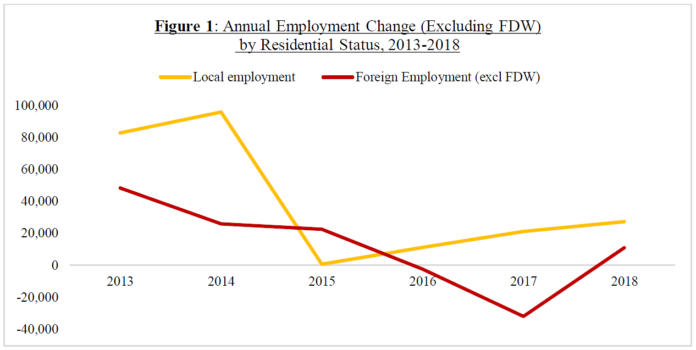
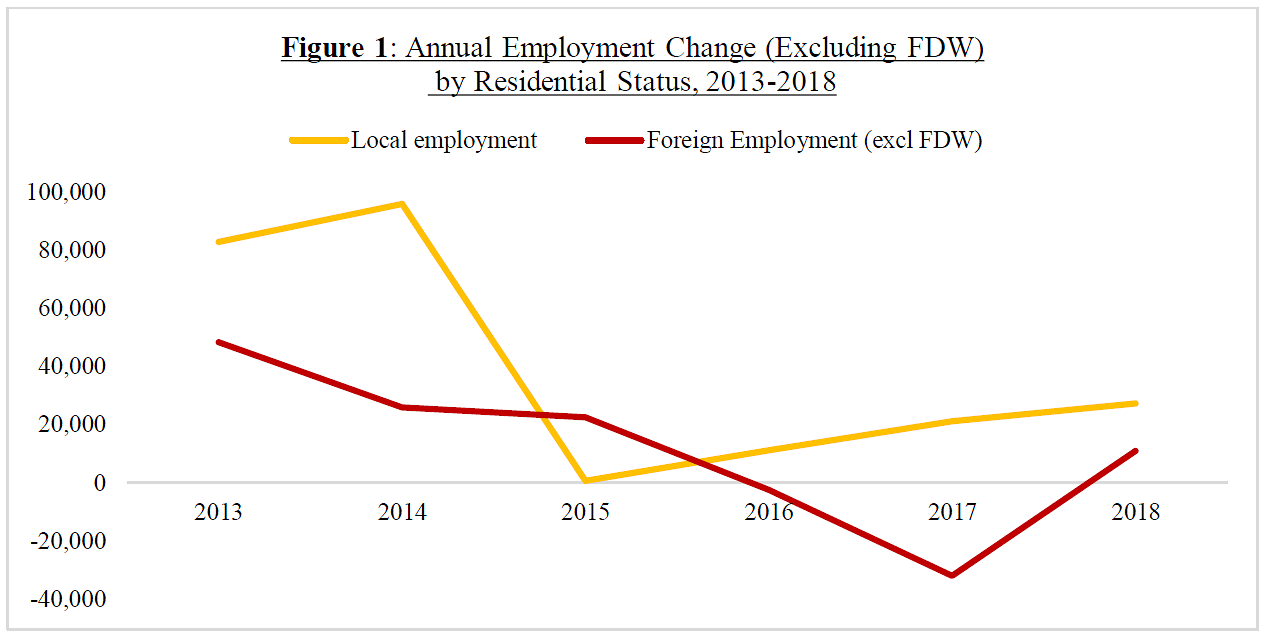
In 2018, total employment – excluding foreign domestic workers – grew by 38,300, a reversal from the decline a year ago (-10,700).

Labour market report for 2018 chart 1

(Image: Ministry of Manpower)

Employment growth among locals came in at 27,400, more than double that of foreigners. Local growth was boosted mainly by hiring in the community, social and personal services, transportation and storage, and financial and insurance services.

Foreign employment – excluding foreign domestic workers – grew by 10,900 last year, reversing a 32,000 decline in 2017.

This was due to stronger growth in the services sector and the moderating decline in the construction sector.

S Pass holders grew by 11,100 across all industries, driven by the services sector, with the highest growth seen in administrative and support, food, information and communications, professional and transportation and storage services.

However, Employment Pass (EP) holders continued to decline across all sectors in 2018, as a result of the raising of the EP qualifying salary in January 2017. 

Over the last two years, the number of EP holders has declined by 6,400, according to MOM.

In 2018, the average unemployment rate was lower than the year before, although the overall unemployment rate came in higher at the end of the year. It rose from 2.1 per cent in September 2018 to 2.2 per cent in December 2018, after holding steady in the previous quarters.

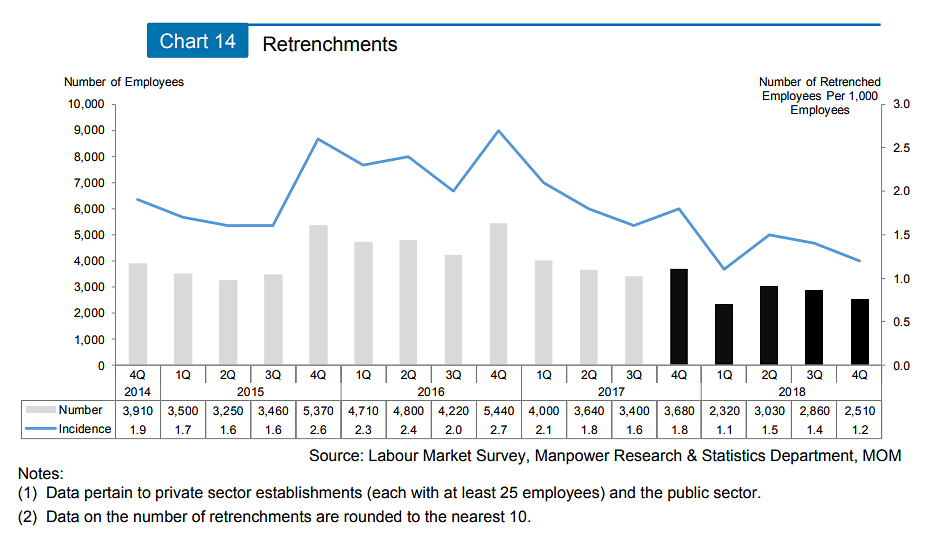
As for retrenchments, these declined to 10,730 in 2018, significantly lower than the 14,720 retrenched in 2017. The decrease was seen across the manufacturing, construction and services sectors.

The number of people laid off in the fourth quarter of last year – at 2,510 – was also lower compared to the previous quarter as well as a year ago.

Similar to previous quarters, firms cited business restructuring and reorganisation as the top reasons for retrenchments in the fourth quarter.

Labour market report for 2018 chart 2

(Image: MOM)

INCOMES HIGHER

Singaporean workers continued to earn higher incomes, said MOM, with the real median income – including employer CPF contributions – of full-time employed Singaporeans increasing by 3.6 per cent per annum from 2013 to 2018, higher than the 1.7 per cent per annum in the previous five years.

Over the last five years from 2013 to 2018, real income at the 20th percentile grew faster
(4.3 per cent per annum) than at the median (3.6 per cent per annum).

Local workforce growth is expected to remain modest in 2019, “due to the underlying demographics of an ageing population”, said MOM. 

The Ministry of Trade and Industry projects that the Singapore economy will grow by 1.5 per cent to 3.5 per cent in 2019, with growth expected to come in slightly below the mid-point of the forecast range.

READ: Singapore economy slows to 3.2% growth in 2018

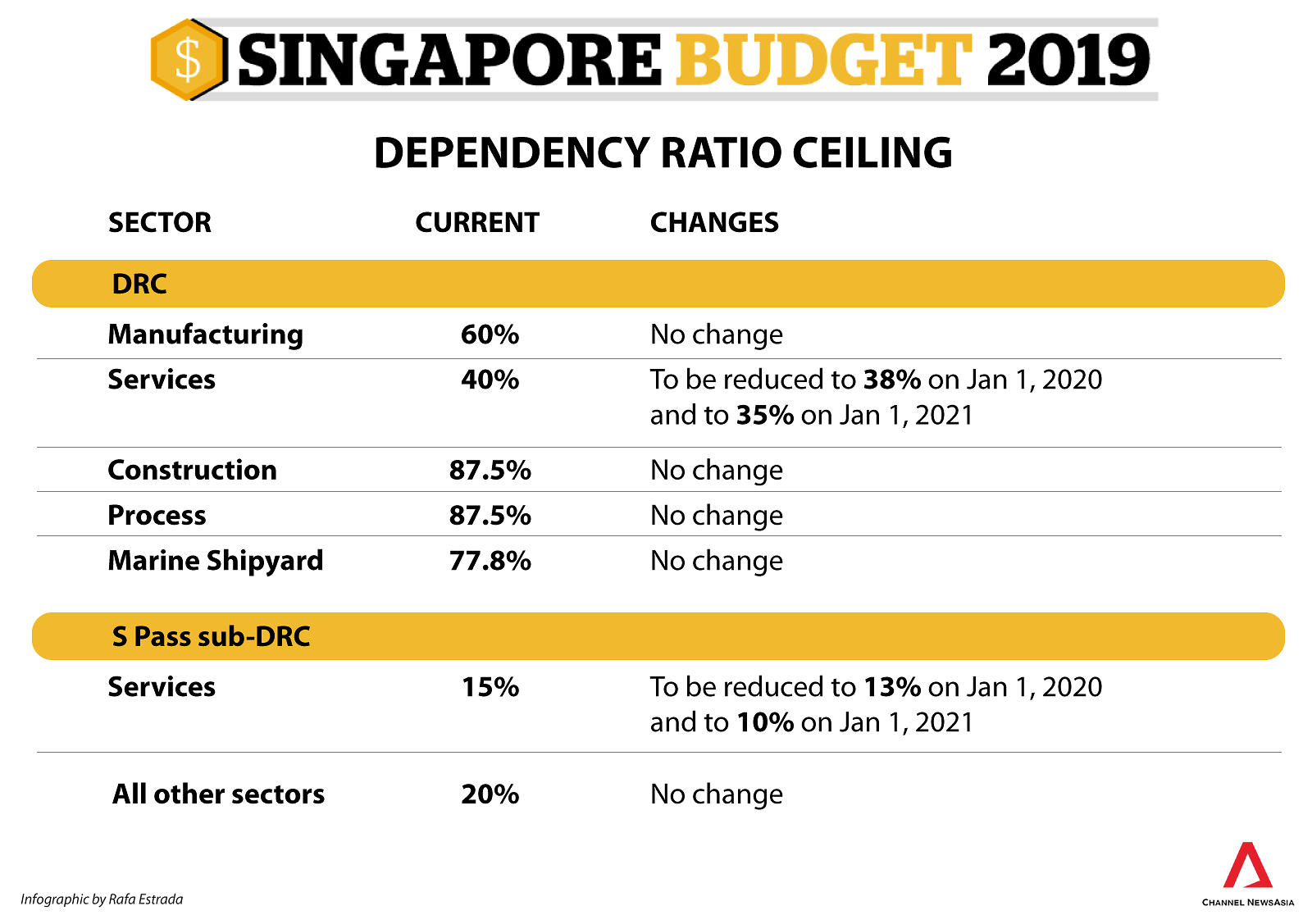
MOM also touched on the reduction of the Dependency Ratio Ceiling for the services sector announced in this year’s Budget.

Budget 2019 Dependency Ratio Ceiling Graphic

“Reducing the Dependency Ratio Ceiling (DRC) and S Pass sub-DRC in the services sector from next year will help to keep the labour market tight to sustain the impetus for restructuring, and support good employment outcomes for Singaporeans,” said the ministry.

Source link

New S$20m lab to develop less toxic e-waste recycling methods

0

SINGAPORE: A S$20-million research centre which aims to develop greener ways of recycling electrical and electronic waste (e-waste) was launched on Wednesday (Mar 13) by the Nanyang Technological University (NTU) and French Alternative Energies and Atomic Energy Commission (CEA).

The centre focusing solely on e-waste recycling is believed to be a world-first.

Among its goals: To extract substantially more valuable metals from lithium-ion batteries and to recycle silicon from solar panels.

The centre, called the NTU Singapore-CEA Alliance for Research in Circular Economy, also wants to make the process of recycling printed circuit boards cheaper and more environmentally friendly, and to detoxify more plastic parts in e-waste, given that plastics form a major part of devices like printers and flat screens.

READ: 60% of large electrical appliances must be collected for e-waste recycling

To recycle lithium-ion batteries more efficiently, the centre has developed a shredder which can crush the batteries in an oxygen-less environment, necessary to prevent them from burning up.

Current industrial methods involve incineration, which is costly and energy-intensive, producing toxic fumes that might pollute the environment.

With the new method, researchers can extract valuable metals from the crushed material by dissolving it in a chemical solution and then letting it precipitate in a process called hydrometallurgy.

The centre aims to extract up to 75 per cent by weight of valuable materials like lithium, cobalt and manganese – 15 times more than the current 5 per cent. These can be used to produce new lithium-ion batteries, commonly found in laptops, smartphones and electric vehicles.

NTU e-waste recycling lab

The lithium-ion battery shredder on display. (Photo: Aqil Haziq Mahmud)

Hydrometallurgy can also be used to detoxify plastic parts in e-waste. Currently, only a small amount of this plastic is recycled as it is difficult to separate and remove. It also contains flame retardants that are toxic to human health and the environment.

After detoxifying the plastic, the plastic is put through an advanced process which involves heating it using microwaves and breaking it down into fuel.

In addition, the centre is exploring how this high-grade plastic can be used for “novel applications”, like filaments for 3D printing and as a base to grow stem cells.

NTU e-waste recycling lab detoxifying plastic

Recycled plastic from e-waste can also be used for prototyping models. (Photo: Aqil Haziq Mahmud)

It is also looking into new ways of recycling printed circuit boards to replace current industrial methods, which emit harmful pollutants that have to go through costly treatment processes before they can be safely released into the environment.

Instead, researchers first use X-ray sorting to separate components into different groups based on their metal content. This allows them to choose the best chemical method of recycling, reducing costs by about 20 to 30 per cent.

One new method involves the use of a carbon dioxide-based fluid to “trap” the metals; the carbon dioxide is then re-converted into recyclable gas, leaving behind only the metals.

NTU e-waste recycling lab printed circuit boards

Printed circuit boards contain metals like copper, aluminium, gold and silver, as well as valuable organics and ceramics. (Photo: Aqil Haziq Mahmud)

For silicon-based solar panels, the centre aims to extract the silicon from the panel. This silicon, which requires a lot of energy to make, can be used to produce new panels and reduce the costs involved.

Currently, industries only recycle the metal frame, glass surface and silver components in a solar panel as it is difficult to separate the thin silicon, which is glued tightly to the rest of the layers.

To overcome this, researchers use a technique called delamination, which involves dislodging the glue using benign means – as opposed to heating – that will not destroy the silicon. These include the use of environmentally friendly solvents, and bacteria or microorganisms to “eat” the glue.

ARE THESE TECHNOLOGIES SCALABLE?

The two organisations and the National Environment Agency (NEA) will pour S$20 million into the collaboration, which comes after the Government identified e-waste as a major stream of trash under its zero waste masterplan.

The Government will also implement a mandatory e-waste management system by 2021.

READ: Compulsory e-waste management system to be enforced by 2021

Singapore generates about 60,000 tonnes of e-waste a year, equivalent to the weight of 220 Airbus A380 airplanes.

“This is a significant and timely development,” Senior Minister of State for the Environment and Water Resources Amy Khor said at the launch of the centre. “We are investing in research and development (R&D) in close partnership with industry and research institutions to overcome technological barriers.”

Co-director of the centre, Professor Madhavi Srinivasan, said the aim is for a majority of these technologies to be scalable within the next three years. This means ensuring it can work with 10kg to 100kg of e-waste, before partnering with the industry for larger-scale testing.

NTU e-waste recycling lab Professor Madhavi Srinivasan

Prof Srinivasan speaking to media ahead of the launch. (Photo: Aqil Haziq Mahmud)

On Wednesday, the centre also signed a letter of intent with four companies – battery producer Durapower, chemicals company Arkema, electric car sharing firm BlueSG and e-waste recycler Virogreen – to kickstart research with industry.

NEA’s director of environment technology Patrick Pang said he was impressed by the progress made by the centre, which was first announced last August.

“(The Government’s) interest in this is to make sure the R&D results in options (that are) proven to be cost-effective and of course environmentally safe,” he said.

NTU e-waste recycling lab Amy Khor

NTU president Subra Suresh (left) and Senior Minister of State for the Environment and Water Resources Amy Khor being briefed on the centre. (Photo: NTU)

Mr Pang added that the Government can adjust its infrastructure plans, which can include setting up purpose-built plants to treat e-waste.

“The actual data of e-waste collected and recycled will allow us to size the appropriate facilities,” he said.

However, Mr Pang added that it was too early to commit to a timeline, or tell how many of such facilities there will be.

“As R&D powers our enterprises and creates new opportunities for (the centre and the companies), it will also create highly skilled jobs for our citizens,” Dr Khor said.

Source link

6,000 cartons of contraband cigarettes hidden in claw machines seized in Tuas

0

SINGAPORE: The Immigration and Checkpoints (ICA) authority said on Wednesday (Mar 13) it has seized 6,000 cartons of duty-unpaid cigarettes that had been hidden in game machines in a warehouse along Tuas Avenue 3. 

ICA said that on Monday at about 1.30pm, its officers conducted checks on a 40-foot container after anomalies were detected in the scanned images of the consignment declared to contain 10 “Game Machines”.

The container had earlier been presented for clearance at the Pasir Panjang Scanning Station. 

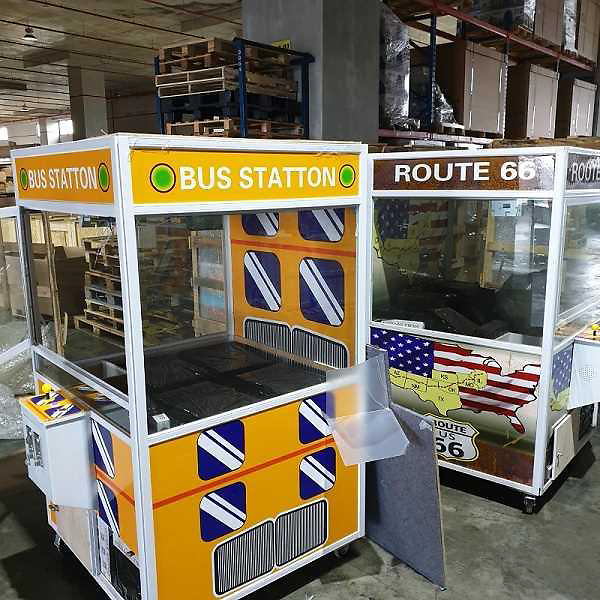
ICA seizes 6,000 cartons of contraband cigarettes concealed in claw machines

Claw machine units found to conceal duty-unpaid cigarettes by Immigration & Checkpoints Authority Officers. (Photo: Immigration & Checkpoints Authority)

“During the course of checks, the officers noticed the game machines were locked,” said ICA in a news release. “This further aroused the officers’ suspicion and they proceeded to pry open a game machine for closer examination.

“Officers found the interior of the game machine to be hollow and contained duty-unpaid cigarettes wrapped in several black bundles.”

The total duty and GST evaded amounted to about S$512,400 and S$37,780 respectively.

The case was handed over to Singapore Customs for further investigation, said ICA. 

Source link

Beware of Keyloggers – This is How Hackers Crack Accounts –

0

The supposedly big hurdle for hackers when accessing accounts such as email, Facebook, online banking and so on is the password. However, the password for digital burglars seems to be no big deal anymore. Passwords can be spied out via so-called keyloggers. A keylogger is software that records the keystrokes and thus the string of the password.

The keylogging software is installed on the PC that the attacker wants to spy on. Frequently, keyloggers are also manually installed by people from the inner circle of the victim with the intent of secret surveillance.

The Keystrokes can be sent to the hacker online for example via Email. When the sent protocol is evaluated, sensitive data and passwords from platforms, banking software or e-mail accounts can get into the hacker’s hands.

Keylogger – What is Forbidden?

The software itself is not prohibited. A user can easily download a keylogger program. However, you come in conflict with the law when the software is installed on the computer without the knowledge and consent of the PC user to perform a covert spying.

A very popular keylogger program is the the software called “Wolfeye Keylogger”. In addition to recording keystrokes, the program has functions to record the screen of the PC user.

The illegal application is not a problem for data thieves. Therefore, on the official website of the Wolfeye Keylogger, the manufacturer expressly points out that the use on other computers without the consent of the owner is prohibited: www.wolfeye.us

Protection against keyloggers

But how can a user protect himself from a keylogging program on the computer? As so often recommended, the use of a current antivirus tool is a must. Unfortunately, hackers also find backdoors here and manage to install the keylogging software on the computer despite virus scanners. The program code for the spy software may creep in unnoticed. The aforementioned Wolfeye Keylogger for example can be declared as an exception in the settings of the antivirus software and consequently no warning message is given during installation.

Password managers provide more security

Remedy could be a password manager. When using a suitable password manager, it is no longer necessary for the user to enter the password via the keyboard. The software recognizes which program or internet portal is being called up and automatically fills in the user name together with the password in the login window. This process cannot be detected by a keylogger.

Even if a password manager provides a little more security, the user should always create different passwords, so that in case of theft the hacker does not get to all accounts. In addition, a firewall can detect suspicious processes in the background that are displayed to the user.

Absolutely guaranteed security does not exist, even if very complex passwords are used together with a password manager. A procedure that is supposed to provide further security has proved its worth: the so-called two-factor authentication.

The two-factor authentication:

In this technique, the password (the 1st factor) is combined with a numerical code (the 2nd factor). The second factor, the code, is sent via SMS to the user’s mobile phone, for example. In order to perform a successful login, the first hurdle is to enter the complex password and the second hurdle, a code via SMS. This produces a very high level of security. Unfortunately, this methodology could not really prevail among the users. CMS such as WordPress, Drupal or Typo3 provide webmasters with plugins and modules to install two-factor authentication on the website.

Software producers strive to protect access with biometric data. Known among other things is the fingerprint with which a smartphone can be unlocked. Also on the face recognition is filed. Windows 10 already provides authentication of the face via the webcam with the software “Hello”.

Conclusion

Users can be more secure when using their computer by…

• Using complex passwords
• Use of a password manager
• Installing anti-virus software
• Running a firewall
• Use of two-factor authentication

Source link

Commentary: With Mobike’s impending exit, is it time to give public bike-sharing a shot?

0

SINGAPORE: Less than a year since bike-sharing titan oBike’s sudden departure from Singapore, and a month after Ofo’s suspension, another operator has waved the white flag.

On Tuesday (Mar 12), the Land Transport Authority (LTA) confirmed Mobike had submitted an application to surrender its bike-sharing license.

The company has also withdrawn applications for a personal mobility device (PMD)-sharing license and said it would pull out of some Asian countries to re-evaluate its position, amid contractions in the market.

ANOTHER ONE BITES THE DUST

It has been a roller-coaster ride for bike-sharing in Singapore.

While we have passed the days where errantly parked bikes dot the urban landscape, the exit of so many bike-sharing companies has been traumatic and disconcerting to say the least.

oBike users who have put down deposits, myself included, haven’t seen any light at the end of the tunnel on their S$49.

Ofo too reportedly owes suppliers more than S$700,000 and let go of staff a few days before Chinese New Year.

Security deposits and licensing fees the Government collects from bike-sharing companies cannot be used to pay their debts to users and employees after their licenses are revoked, said Senior Minister of State for Transport Lam Pin Min, who fired a warning shot in Parliament last month.

Going by his remarks, it sounds like the list of collateral damage casualties may be pretty long.

READ: Lessons from the fall of once-mighty bike-sharing giants, a commentary

At the very least, responsible companies ought to clear out their bikes.

This Wednesday (Mar 13) marks the deadline for Ofo to remove all of its bikes from public places. The public will surely be wondering what swift action authorities will take if Ofo fails to comply.

Obike Mobike Ofo bikes

Bikes from oBike, ofo and Mobike in Singapore. (Photo: Mubin Saadat)

WHAT DISRUPTION LOOKED LIKE

As the third high-profile bike-sharing operator Mobike begins the process of exiting Singapore, it’s starting to feel like deja vu. Haven’t we been here before?

And were there safeguards in place this time to protect society from the adverse effects of this disruption?

In Oct 2017, LTA, NParks and 16 town councils signed a Memorandum of Understanding (MOU) with bike-sharing operators that outlined a set of mutually agreed guidelines to reduce disamenities arising from bike-sharing services.

Within the MOU were requirements for operators to remove indiscriminately parked bikes within half a day and faulty bikes within a day.

Operators were also required to incorporate geofencing technology to detect and expeditiously tackle cases of errant parking.

So it is unclear how bike-sharing got out of hand and indiscriminate parking became so rampant.

Experts have highlighted out how the costs borne by bike-sharing companies may have escalated over time, as vandalism, missing bikes and indiscriminately parked bikes generated additional compliance costs.

NUS Business School Professor Nitin Pangarkar also pointed out in a commentary for Channel NewsAsia that oBike’s closure illustrated how poorly conceived ideas may get funded and survive for some time, as market euphoria and over-eager venture capitalists fuel their rise, only to fizzle out after a price war bleeds the company dry.

READ: Nitin Pangarkar’s commentary on oBike’s closure, a cautionary tale about poorly conceived business ideas

oBike LTA storage

Thousands of oBikes parked at an LTA building near the Kallang-Paya Lebar Expressway (KPE). 

Still, it’s useful to acknowledge that there is no blueprint to running a new business in a different country, said Jonathan Chang, executive director at NUS Enterprise, on a recent episode on The Pulse podcast.

Perhaps more time should have been spent working with relevant stakeholders to support the envisaged growth of the company, he added. He may be onto something.

Mobike operates a small number of 1,000 bikes in Sapporo in Japan but the company had been careful to tie up with local retailers who provided space for designated parking, and secured the approval of city authorities first.

Despite speculation that the company will retreat to focus on the Chinese market, there are no reports it plans to exit Japan just yet, suggesting that market may be more conducive to supporting its business model.

Perhaps part of it is also managing our own expectation and adopting a cautious approach as consumers.

“Consumers have this great faith” in companies they support and sometimes, companies take advantage of this overwhelming support, Mr Chang said while on The Pulse.

“When things are doing well, people don’t seem to pay attention to the possible pitfalls,” he said, pointing to a clause in the oBike rental service agreement that stipulated that deposits would be converted into non-refundable membership subscription fees.

LISTEN: The roller-coaster ride of bike-sharing in Singapore, an episode on The Pulse podcast

He acknowledges that it was reassuring that the Consumers Association of Singapore stepped in when oBike pulled out.

Still, it will take some time before those scarred by these painful retreats can trust bike-sharing operators again.

BIKES AS PUBLIC GOODS

Perhaps the issue is that shared bikes were public goods in the first place.

Authorities had plans to roll out a public docked bike-sharing scheme in 2016, and start small with a tender calling for 1,000 bikes, but the initiative was put on the backburner with the entry of private operators.

The starting costs to set up a bike-sharing infrastructure are admittedly huge, which include not just the costs of procuring bikes but also the costs to mark out parking zones and build bike racks.

And the fees operators were charging pushed down artificially by investor funding may have gained them huge market share which all but disappeared after they were removed.

But now that the supporting infrastructure is in place, why not give public bike-sharing a shot?

QR code parking for shared bikes 1

A QR code installed at a designated parking lot for shared bikes in Singapore.

END GAME

To be sure, the whirlwind journey Singapore’s bike-sharing sector has undergone is not unique.

China’s market also illustrates a similar trajectory, after a winnowing process left millions of zombie bikes strewn around the country.

The first Chinese bike-sharing company Xiaoming to bow out left 430,000 bikes across more than 10 cities and US$115 million (S$156 million) in unreturned deposits.

Perhaps after holding out and hoping that the private sector could be a useful partner to catalyse a cycling culture in Singapore, it’s time to go back to that idea of a public bike-sharing scheme.

Hope still abounds that SG Bike, with its 3,000-bike fleet, can turn things around.

SG Bike chief operating officer Sean Tay told Channel NewsAsia last year that the company has seen some 3,000 rides each day and is doing “much better” than when it first started.

Still, I’m never putting a deposit in a private bike-sharing app ever again.

Lin Suling is executive editor at Channel NewsAsia Digital News where she oversees the Commentary section.

Source link

Wheel woes: The rise and fall of Singapore’s bike-sharing industry

0

SINGAPORE: With the deadline for Ofo to remove all its bicycles from public spaces in Singapore by Wednesday (Mar 13), and Mobike wanting to exit the same market, it appears that the heyday for bike-sharing here is over. 

According to the Land Transport Authority (LTA), Ofo’s failure to do so could result in regulatory action including the cancellation of its licence. Former employees had earlier told Channel NewsAsia that the company had “practically ceased” with no staff left. 

READ: Mobike calls it quits, seeks LTA approval to surrender licence

This comes on the heels of another China-based bike-sharing provider Mobike announcing it has applied to LTA to surrender its licence, although the regulator said it is assessing the company’s request. 

Should both Ofo and Mobike lose their licence to operate here, this would leave Singapore startup SG Bike as the only other entity with a full operating licence. Other players such as Anywheel and Qiqi Zhixiang only have a sandbox licence to offer such services here. 

The industry’s decline is in sharp contrast to its promising start, with Ofo and oBike initially raising millions of dollars from investors and expanding quickly to other market. 

However, issues such as indiscriminate parking by users and abuse of the bicycles put the brakes on these companies’ growth. The abrupt exit by oBike last June, which left many users in Singapore scrambling for their deposits to this day, tarnished the beleaguered industry further. 

bikes

Impounded bicycles from the bike-sharing schemes Mobike and Ofo (AFP/Johannes Eisele)

This is a timeline of the industry’s key developments in Singapore:

Jan – Mar 2017: Ofo, oBike and Mobike launch in Singapore, introducing a few thousand bicycles onto the roads.

Mar 28, 2017: LTA creates new parking zones, with about 750 additional parking spaces marked out in yellow lines. In a statement, LTA said it was working with bicycle-sharing companies to “incentivise their users to park responsibly”.

Oct 2017: Five bicycle-sharing companies sign a memorandum of understanding (MOU) with LTA, the National Parks Board and town councils. Under the MOU, bicycle-sharing companies would have to remove indiscriminately parked bicycles within half a day, implement geo-fencing technologies by the end of 2017 and educate users on the proper uses of their bicycles, among others. In addition, LTA would create more than 4,000 yellow parking boxes.

READ: Bike-sharing operators, authorities move to cut irresponsible use of bicycles

Mar 5, 2018: Parliament passes the Parking Places (Amendment) Bill. Some measures include a new licensing regime for shared bike operators, a review of fleet size every six months, and a QR code-based geo-fencing solution. The geo-fencing solution requires users to scan a QR code at each parking space to ensure proper parking.

Jun 25, 2018: OBike announces its closure in the wake of new regulations implemented by the LTA. The company owed a total of US$4.6 million (S$6.3 million) to its users in deposits, with many users reporting difficulty in retrieving their deposits,

Jun 29, 2018: Mobike and Ofo submit licence applications to the LTA. They become the fourth and fifth companies to apply for a licence, following the footsteps of SG Bike, Anywheel, and oBike.

ofo bike

Ofo bike-sharing bicycles are pictured in Singapore August 29, 2017. REUTERS/Edgar Su/Files

Oct 29, 2018: LTA awards licences to six bicycle-sharing companies. Ofo, Mobike and SG Bike received full licences, while Anywheel, GrabCycle and Qiqi Zhixiang received sandbox licences. Mobike was given a maximum fleet size of 25,000, while Ofo was given a maximum fleet size of 10,000 at its request.

Nov – Dec 2018: Ofo terminates hundreds of employees in Singapore and faces “immense” cash flow problems. Two vendors in Singapore complain that the company owed them about S$70,000.

Jan 4, 2019:GrabCycle gives up its sandbox licence, choosing instead to focus on a shared electric scooter service.  

Jan 14, 2019: LTA’s QR code-based geo-fencing solution comes into effect. Users who fail to scan the QR-code at the end of their trip face an additional S$5 charge on top of their rental fee.

Feb 14, 2019: LTA suspends Ofo’s licence, citing the company’s repeated failures to comply with regulations. Ofo had failed to implement the QR-code system for parking and did not reduce the size of its fleet to the stipulated limit of 10,000.

Mar 12, 2019: Mobike submits application to LTA to surrender its bicycle-sharing licence, but employees were not told beforehand that the company intends to cease operations.

Mar 13, 2019: Deadline for Ofo to remove all its bicycles from public spaces. 

Source link

Oktoberfest – The Munich Beer Festival in Numbers –

0

Situated on massive grounds of 34.5 hectares nothing the Oktoberfest does…is small.

From 2018 data it’s recorded that over 13,000 people were employed at the event over the two weeks via carnival attractions, stall holders and food and drink services (including the 14 massive beer tents) and that an estimated 6.3 million visitors came to the Beer Festival in Munich.

Oktoberfest – The Munich Beer Festival

But to
get a real scope of the enormity of the Oktoberfest check out our list of stats
below:

  1. Top 10 countries in terms of visitors to the event were USA, Great
    Britain, Austria, France, Switzerland, the Netherlands, Italy, Australia,
    Sweden and Belgium.
  2. Over 100000 seats were available in the 14 large tents and more than 20
    small tents.
  3. The Oktoberfest has its own Postal Office and over 500 postcard per day
    were officially sent from there.
  4. Guests drank 7.5 million litres of beer according to the Munich Brewers
    association.
  5. 101000 beer mass (Steins) were confiscated by security personnel at beer
    tent exits.
  6. Almost 300000 coffees and teas were purchased, 1.1 million units of
    water and lemonade, 43000 litres of sparkling wine and 169000 litres of
    non-alcoholic beer
  7. 550000 chickens were consumed along with 116 Oxen, 57 Calves, 44000kg of
    fish, 280000 sausages, 75000 pork knuckles, 100000kgs of salads, 200000kgs of
    bread (including pretzels)
  8. Lost property included 900 passports, 350phones, 300 keys, 460 wallets
    and so much more including a couple of dogs.

This really is a massive event and is still by far the world’s largest
beer fair or Volkfest (“people’s festival”). 
Known as the Wiesn locally, the Oktoberfest is held in the fairgrounds of
what used to be Theresa’s Meadows (Theresienwiese), just outside the city
centre of Munich and is an integral part of Bavarian culture that other cities
across the world have emulated since the first Oktoberfest took place back in
1810.

Many people who attend the Munich Oktoberfest do so with
official, well established companies many of whom offer accommodation options
to suit all budgets and Oktoberfest Tours that are
organised and cost effective.

In 2019 the Oktoberfest will operate from the famous opening ceremony
the “O’Zapft is” at midday on September 21st and run through until
11pm on Sunday the 6th of October. PROST!

Source link

Pamplona’s San Fermin – More than just a Bull Run… –

0

The introduction of a much more family friendly fiesta in 2016 is reaping major rewards for the City Council of Pamplona with data collected from the 2018 event showed yet another year of increases in the number of people involved in the arts and activities program with more than 1.5million attending the event. As the city itself has a population of under 200,000 inhabitants this is good news for the local economy and the 2019 event is expected to once again experience growth. The largest attendances were again recorded at the massive nightly fireworks displays with an estimated 434,000 people witnessing the pyrotechnics and also at the Giants and Big Heads of Pamplona staging’s (the Comparsa de Gigantes y Cabezudos) where more than 190,000 witnessed these massive cardboard and paper mache statues, dance, walk, twirl and party in the streets of Pamplona. There are so many vibrant, exciting and participatory events at San Fermin nowadays proving it is way beyond participants remembering the event just for the Running of the Bulls.

Pamplona’s San Fermin fireworks

The municipal
campaign to raise awareness among all citizens and visitors to San Fermines in
Pamplona has been based on a more modern event with increased artistic and
cultural events, a fiesta free from sexist aggressions and crime and to instil
a more “green” basis to the entire fiesta with waste reduction and recycling
programs at the forefront.

There was, in 2018, 490 Official Acts on the Municipal
Program of San Fermines and in 2019 there are expected to be even more than
this. Naturally it would be impossible for anyone to attend all these events
and just keeping up with where all these events are located and when they are
on would prove to be a titanic task for any experienced festival goer.

Fortunately the City
Council of Pamplona have made this task much easier with the recent
introduction of an Official App for the event available on both android and iOS
and downloadable in Spanish, Basque, English and
French.

This
marvellous new App will update the user accurately with:

  • The events program Check when and where events are
    taking place.
  • Giants and Big-heads. Locate the position of the “Comparsa”
    in real time.
  • What to do now? Get information on active and
    forthcoming events.
  • The “Encierro”. Do you intend to run the bulls? Get
    information on the track and be aware of the regulations and recommendations
    for runners.
  • Services. Locate all the service available to all:
    information offices, left luggage facilities, public toilets, police stations,
    first-aid posts, parking buildings, shower facilities, and much more

To ensure your full enjoyment in Pamplona for the
Festival of San Fermin and The Running of the Bulls this new App is highly recommended. There are many places
offering San Fermin Accommodation and a number of fantastic tour companies that
operate Pamplona Tours during San Fermin. If you’re planning on heading to San Fermin
this year think about downloading the awesome Official App of the City Council of Pamplona from the Google Play Store
or The Apple Store.

Last modified: March 12, 2019

Source link

Singapore ‘deeply saddened’ by Ethiopian Airlines crash: MFA

0

SINGAPORE: Singapore is “deeply saddened” by the deadly crash of Ethiopian Airlines flight ET302, said the Ministry of Foreign Affairs (MFA) in a press statement on Tuesday (Mar 12). 

The Nairobi-bound jet crashed into a field just six minutes after takeoff on Sunday, killing all 157 people on board.

“The 157 victims come from many nationalities and include many United Nations staff who have died in the line of service,” said MFA.

“Our condolences and thoughts go out to the families of the victims in this time of profound grief.”

READ: Singapore grounds Boeing 737 MAX aircraft after 2 deadly crashes

READ: SilkAir says grounding of Boeing 737 MAX fleet will impact flight schedule

Among the dead were 22 UN employees, many of whom were travelling to a UN environment conference in Nairobi.

The World Food Programme lost seven employees in the crash while three from the UN refugee agency UNHCR were killed.

READ: UN mourns after 21 staff killed in Ethiopia plane crash

READ: Ethiopian Airlines crash: Family of 6 among passengers who died

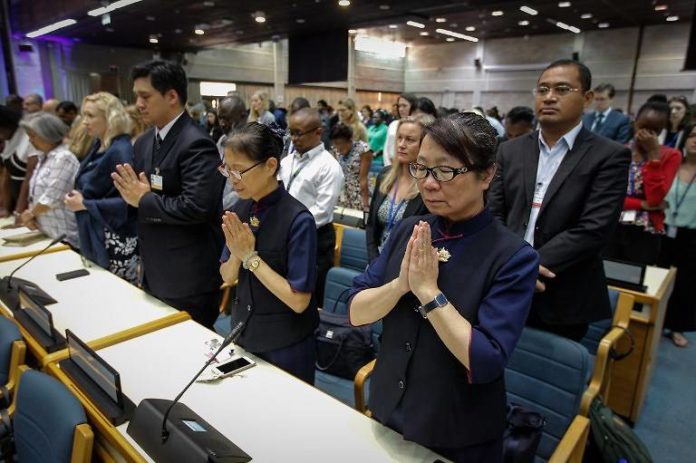
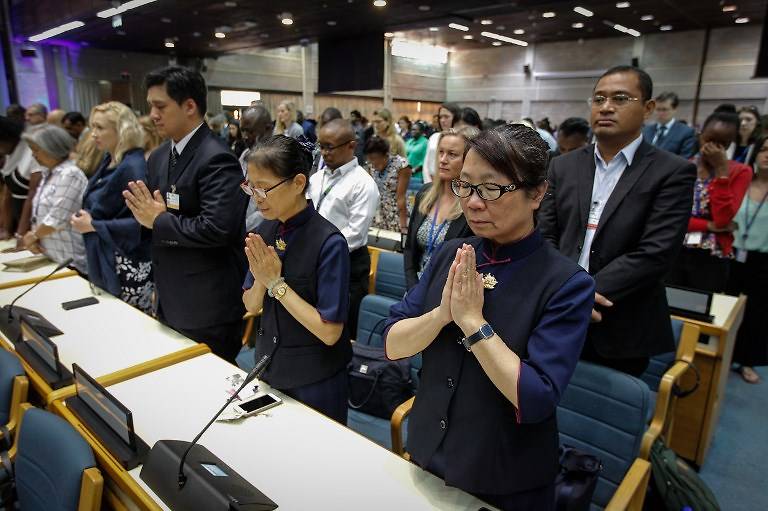
UN staff observing a minute of silence for the victims of the Ethiopian Airlines crash

UN Staff observing a minute of silence for the victims of the Ethiopian Airlines crash, including 19 UN workers, before the opening plenary of the 4th UN Environment Assembly at the UN headquarters in Nairobi on Mar 11, 2019. (Photo: AFP/UNEP)

Flags flew at half-staff at the United Nations on Monday – a “sad day” for the world body, said Secretary-General Antonio Guterres.

“A global tragedy has hit close to home – and the United Nations is united in grief,” he said at the General Assembly as he led delegates in observing a moment of silence in honour of the victims.

Source link