Home Blog Page 817

Siew mai goes high tech: Singapore’s first cell-based shrimp dumplings launched

0

SINGAPORE: Singapore’s first cell-based meat venture Shiok Meats lifted the lid on its lab-grown shrimp dumplings at the Disruption in Food and Sustainability Summit (DFSS) on Friday (Mar 29).

There were just eight dumplings showcased at the summit, but the high-tech dim sum took months and S$5,000 to cook up.

Only three people at the unveiling got a taste – all three are advisors of Shiok Meats, a food tech start-up that focuses on growing seafood from stem cells. The Shiok Shrimp Dumpling is their first product.

“It tastes like siew mai!” said Good Food Institute APAC managing director Elaine Siu.

shiok meats 3

The Shiok Shrimp Dumpling at Shiok Meats’s launch on Friday (Mar 29). (Photo: Cindy Co)

Another advisor, CEO of Monde Nissin Henry Soesanto said the dumplings were “very promising”.

All this reporter got was a whiff as Shiok Meats CTO Ling Ka Yi took the dumplings out of a steamer. Yes, they did smell like shrimp.

“The three advisors who tasted it, they definitely said that it tasted like shrimp. So we’re very happy,” said Shiok Meats CEO Sandhya Sriram.

Founded in August last year, Singapore-based Shiok Meats is the first cell-based meat company in Southeast Asia. It is the brainchild of two stem cell biologists: Dr Sriram, 33 and Dr Ling, 31.

shiok meats 2

CTO Dr Ling Ka Yi and CEO Dr Sandhya Sriram, co-founders of Shiok Meats. (Photo: Shiok Meats)

While cell-based meat companies are not new, with Memphis Meats operating since 2015, most are based in the United States.

Rather than focusing on beef, chicken and pork, Shiok Meats wants to create shrimp, crab and lobster meat for the Asian market.

“(In Asia), we eat a lot of seafood, and not many companies were doing seafood,” she said. “And (personally), Ka Yi and I were very fascinated about saving the ocean as individuals.”

As one of the first companies growing shrimp meat, Shiok Meats had to do everything from scratch.

“There is no academic research out there so even figuring out which part of the animal is a good source for stem cells (was difficult),” she said.

And buying shrimp became a problem, as the company had to find shrimp farms that did not use antibiotics or hormones.

“Currently the way shrimps are being grown in farms, they are being grown in dirty water and being injected with antibiotics and hormones to keep them clean and make them bigger. We had to find very specific shrimp farms for clean shrimp to source our stem cells,” said Dr Sriram.

Cell-based meats have fewer toxins and are less taxing on the earth’s resources, according to Dr Sriram.

“The vision of the company is to completely replace farmed shrimp and wild-caught shrimp. (We want to have) Shiok Shrimp in supermarkets, hawker centres, restaurants, everything,” she said.

For the year ahead, they plan to lower the cost of production by 100 times.

Stem cells have to be placed in a nutrient mix for the cells to grow into meat, but this solution is now too costly for mass production.

This is why creating eight dumplings cost the company about S$5,000.

“If we can hit that magic potion, the price (of the eight dumplings) will come from S$5,000 to S$50,” she said.

She estimates that it would take them at least five years to reach the mass market, but Shiok Meats is in talks with three premium restaurants to use their shrimp by the end of this year.

Many investors have already expressed their interest in Shiok Meats, although most of them are based outside Asia.

“We raised a little more than half a million in two and a half months of starting the company, (but) most of it was money from the US,” said Dr Sriram.

FRANKEN MEAT?

Lab-grown meat has had a rocky start with consumers in other countries, with some media outlets labelling it “Franken meat”.

Will food-obsessed Singaporeans accept it?

Assistant Professor Charlene Chen of the Division of Marketing and International Business at NTU’s Nanyang Business School, believes that there is a future for cell-based meat in Singapore.

“Consumers often buy products to express their values and identities, and buying cell-based meat is a way to express one’s concern for animal welfare (and) the environment in general,” she said.

Assistant Professor Leonard Lee, of the Department of Marketing at NUS Business School was less enthusiastic.

“Singaporeans may be receptive toward such products that potentially serve broader societal needs,” he said, “(but) consumers in Singapore may also be more risk-averse particularly when it pertains to their health and safety.”

Dr Sriram believes that the mixed reception towards cell-based meat stems from a generational divide, citing surveys that she has done with more than 700 members of the public.

“The Millennial generation are the ones who are more open and receptive because they truly care about the environment and sustainability, and they’re willing to try newer things,” she said. “I think that it’s the older generation that might find it hard to accept.”

Members of the public that CNA spoke to were generally open to trying cell-based meat.

National University of Singapore student, 24-year-old Cheong Yinn Shan said: “I would definitely be keen to try this. The meat industry contributes a lot of greenhouse gases and has a high water footprint, so I will support any innovations to reduce our society’s reliance on factory-farmed meat.”

Ms Jelena Lim, a 23-year-old Lee Kuan Yew School of Public Policy student, expressed reservations.

“I would eat it because I’m curious, but the price has to be comparable to traditional meat, it has to taste good, and there are no ethical dilemmas from using stem cells,” she said.

Retiree Robert Tan, 60, had similar doubts. 

“The (long-term effects of cell-based meat) may never be known in our generation, as it may be 50 years down the road. My take is that if FDA (US Food and Drug Administration) and medical authorities say that it is okay, we just follow,” he said.
Source link

Top 3 Hurricanes of All Time that Caused the Most Damage

0

When big storms hit, they can often cause billions of dollars-worth of damage. We thought we’d take a look at three hurricanes that were the most costly in terms of damage caused…

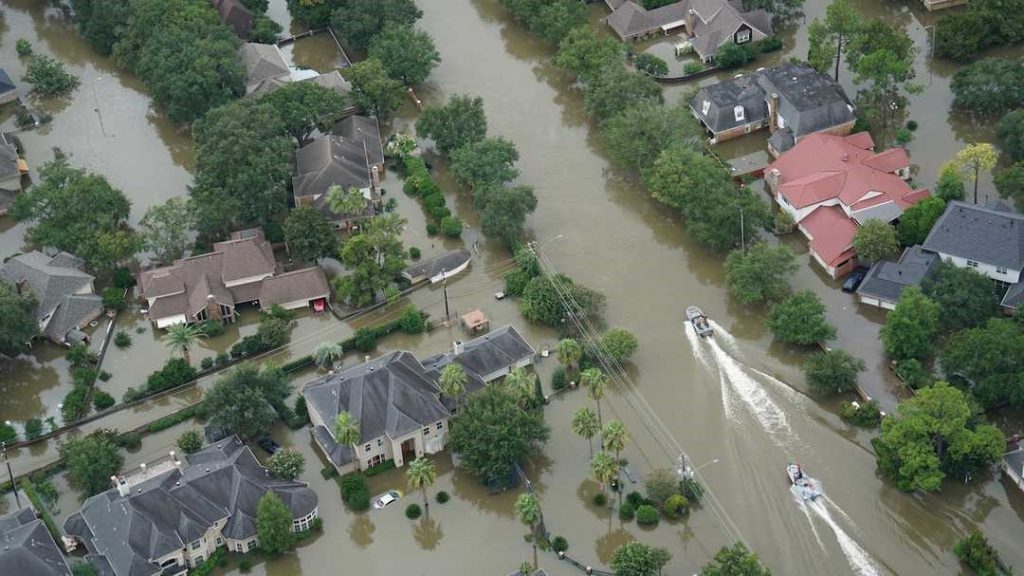
3. Hurricane Sandy in 2012

Estimates suggest
that $70 billion worth of damage was caused when the storm hit the North East
of the US in October 2012. While not the most powerful storm (Category 3), it’s
100mph winds caused wide spread damage.

Interesting Facts
about Hurricane Sandy

  • After
    the storm, there was a unique “baby boom”. Monmouth Medical Center said that
    the number of births they had nine months after the disaster jumped by 35%.
  • Because
    of the damage caused, the “Sandy” name was retired and replaced with the name “Sara”
    for future storms.

2. Hurricane Harvey in 2017

Hurricane Harvey
hit Texas and Louisiana in August 2017 causing at least $125 billion worth of
damage. The Category 4 storm with sustained winds of 115mph at their peak,
created havoc and brought many cities to a stand still.

Interesting Facts about
Hurricane Harvey

  • The storm made a total of five different landfalls, which is very unusual for a Hurricane
  • Hurricane Harvey claimed the lives directly of 68 people.
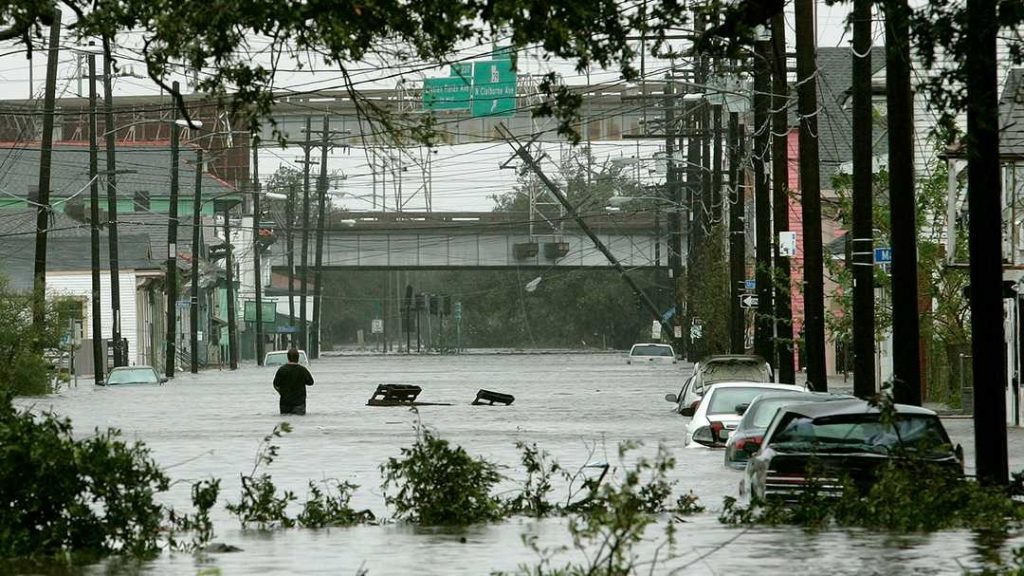
  1. Hurricane Katrina in 2005

When you ask people
to name a hurricane, Hurricane Katrina will most likely be the name that everyone
says. Katrina struck in August of 2005 causing billions of dollars worth of
damage to the Southeast USA, as well as Florida, Mississippi and Louisiana. The
final damage bill came to $160 billion, with many areas not being built, so
arguably the damage caused was far higher.

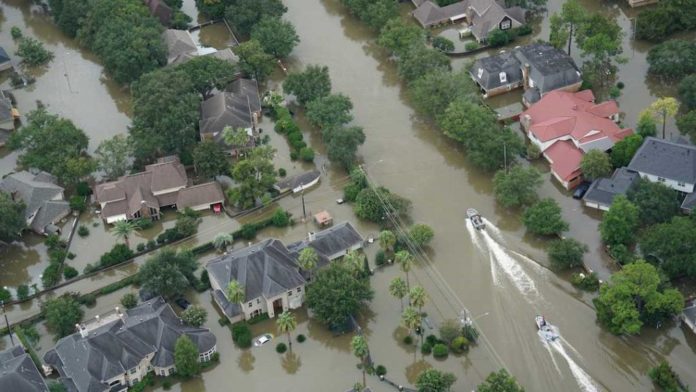
The Category 5 storm claimed the lives of 1,836 people, which made it the deadliest hurricane since the 1928 Okeechobee hurricane, which claimed the lives of over 4,000 people.

Interesting Facts About Hurricane Katrina…

  • Water
    reached 12 miles in land in some locations, causing severe flooding to many towns
    and cities
  • A huge
    80% of the city of New Orleans became flooded

We know that disaster can strike at any time. This is why it is key that you have insurance and create content inventories for your possessions. You can use the automated system from Easyclaimpayment.com to help with this. For more information, we would recommend that you check out https://easyclaimpayment.com/things-to-know/

Source link

Channel NewsAsia to adopt ‘CNA’ as its brand name

0

SINGAPORE: As Channel NewsAsia celebrated its 20th anniversary on Friday (Mar 29), it dropped its television-centric reference to “channel” and adopted “CNA” as its brand name to embrace a new transmedia, multi-platform identity.

Speaking during the dinner celebrations, Mediacorp Chairman Niam Chiang Meng highlighted that CNA has been “working hard” to transform itself into a transmedia company, available on every platform that the public is using to stay relevant in today’s media landscape.

“We intend to be an impartial provider of accurate information and insights, and a source to uplift the standards of journalism and knowledge amongst the public,” said Mr Niam.

READ: Role of CNA in ‘cacophonous’ media landscape ‘more important than ever’: PM Lee

He also noted the recent proliferation of fake news and commented how accuracy is no longer as valued.

“Much has changed in the media landscape today. Aggregators, online news, celebrity bloggers and citizen journalism have become commonplace. It is no longer easy to differentiate opinions from facts … It’s no wonder that public indifference and cynicism have grown,” he said.

CNA’s move into a fully transmedia future is aligned with Mediacorp’s overall transformation. Mediacorp content is consumed by audiences on TV, on radio and digitally on their preferred devices.

READ: CNA commits to a fully transmedia future to remain relevant in changing media landscape

Digitally, CNA content is consumed by an increasing average of about 10 million unique visitors, generating about 73 million page views every month.

CNA REACHES 82 MILLION HOUSEHOLDS IN 29 TERRITORIES

Moreover, CNA enjoys robust traction on social media. With 2.8 million Facebook followers and an average of 26 million Facebook video views every month, CNA holds claim to having the highest social following on Facebook among news networks in Singapore.

In addition, CNA Lifestyle is now the number one lifestyle website in Singapore, drawing almost 830,000 unique visitors every month.

CNA’s premium programming also reaches more than 82 million households in 29 territories across Asia, the Middle East and Australia. It draws an average of more than 600,000 PMEBs across TV and digital in Singapore monthly.

Its digital developments are bolstered by back-end IPs like the in-house content analytics platform RIPPLE, which aggregates analytics of reader consumption patterns and characteristics, trending themes and performance predictions to enhance the efficacy of editorial decision-making.

Commenting on CNA’s development over the years, Editor-in-Chief for Mediacorp Walter Fernandez said: “CNA’s raison d’être as a readily accessible source of Asian-centric reporting has endured since its establishment two decades ago. We are dedicated to serving as a source of trusted news, available anytime, anywhere and on any device.”

He added that CNA differentiates itself by having its “centre of gravity in Asia and navigating cultures”.

“We scrutinise our information and dive deeper to deliver regional news of global significance, all the time applying an Asian lens to our coverage,” added Mr Fernandez.

UPCOMING CUSTOMER-CENTRIC CONTENT

As it steps into its third decade, CNA will roll-out customer-centric content that reinforces its reputation as a proactive player in a multi-platform mediascape.

Firstly, the CNA Leadership Summit will be launched, slated for the third quarter of 2019. The inaugural conference will bring multi-industry movers and shakers together for a debate and discourse about “Asian Leadership in Global Innovation”.

PM Lee at CNA's 20th (9)

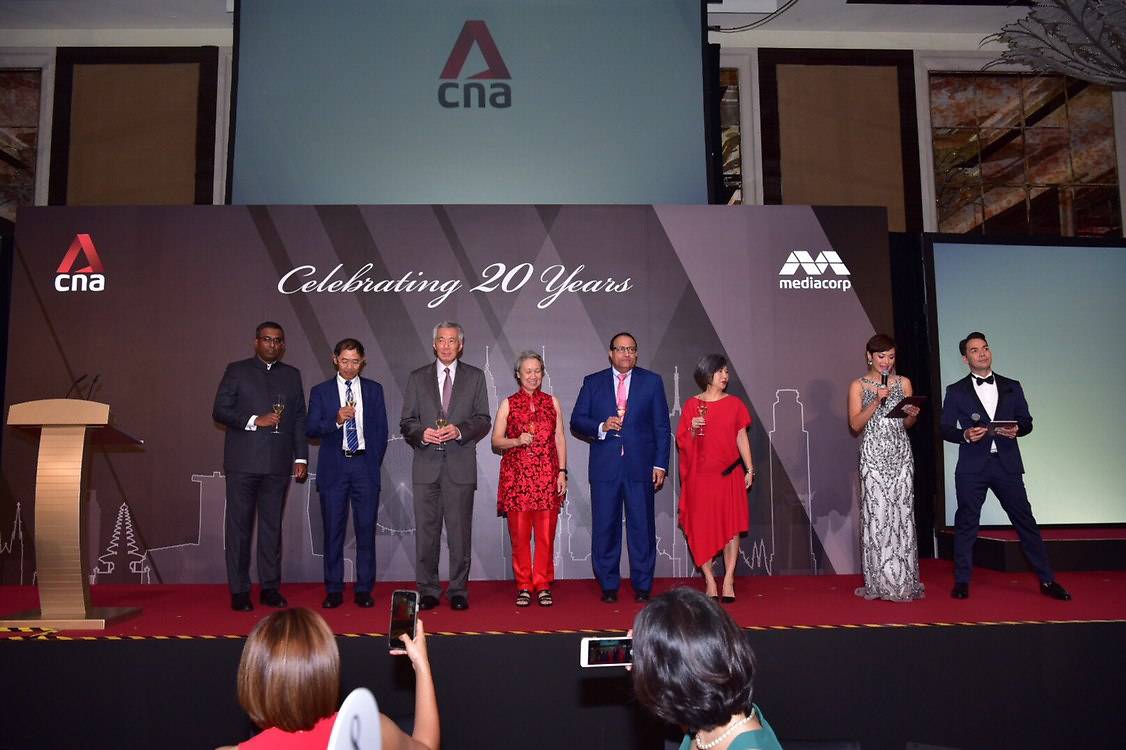
(From left) Mediacorp Editor-in-Chief Walter Fernandez, Chairman Niam Chiang Meng, Prime Minister Lee Hsien Loong, Mrs Lee, Communications and Information Minister S Iswaran, and Mediacorp CEO Tham Loke Kheng at a gala dinner celebrating the 20th anniversary of CNA on Mar 29, 2019. (Photo: Gaya Chandramohan)

Secondly, Tell CNA, a platform for public submission of audiovisual material through its website, WhatsApp or mobile apps, will be rolled out. The content will be verified before it is reported by CNA’s editorial team.

Thirdly, a new radio station CNA Talk will be launched. The station is an improvement upon the existing 938NOW, its live talk-show format assigns an avenue for two-way audio dialogue with audiences.

Lastly, a news and current affairs programme blending the best of Asia Business First and First Look Asia – dubbed Asia First – will be introduced. The series will showcase cross-platform synergy by syncing live coverage between CNA’s radio and TV news studios, and the show is available at consumers’ convenience via online viewing and listening.

Looking ahead to the future, Mr Fernandez said: “As CNA enters its third decade, I am confident that the CNA team will continue to uphold our long-held mission to be a trusted source of news and stories of Asia for the world.”

Source link

CNA commits to a fully transmedia future to remain relevant in changing media landscape

0

Technology, such as Augmented Reality and Artificial Intelligence, is increasingly being tapped to help deliver the news, says Mediacorp chairman Niam Chiam Meng on CNA’s 20th anniversary.

Mediacorp Chairman Niam Chiang Meng speaks at CNA 20th anniversary celebration

Mediacorp Chairman Niam Chiang Meng speaks at CNA 20th anniversary celebration on Mar 29, 2019. (Photo: Gaya Chandramohan)

SINGAPORE: Media outlet CNA intends to be an impartial provider of accurate information and insights, and a source to uplift the standards of journalism and knowledge among the public as it commits to a fully transmedia future amid the changing media landscape, said Mediacorp chairman Niam Chiang Meng.

“Much has changed in the media landscape today. Aggregators, online news, celebrity bloggers and citizen journalism have become commonplace,” he said at CNA’s 20th anniversary gala dinner.

“It is no longer easy to differentiate opinions from facts.”

Fake news has also proliferated, the chairman said.

“Accuracy is no longer as valued as in the past. It’s no wonder that public indifference and cynicism have grown,” Mr Niam said.

READ: Channel NewsAsia to adopt ‘CNA’ as its brand name

BRAND CHANGE, NEW INITIATIVES IN PIPELINE

To stay relevant, CNA has worked hard to transform itself into a transmedia company, available on every platform that the public is using.

As part of this transformation, the brand name of Channel NewsAsia has been shortened to CNA.

“We are dropping the television-centric reference to channel embracing our new transmedia, multiplatform identity,” he said.

It is also investing heavily in technology, including augmented reality (AR) and artificial intelligence (AI), to produce various facets of news, as well as exploring various partnerships to grow its content and distribution channels, Mr Niam said.

READ: Role of CNA in ‘cacophonous’ media landscape ‘more important than ever’: PM Lee

The chairman also revealed several initiatives to reflect changing needs and preferences.

The first is the introduction of Asia First, a cross-platform programme that will combine the best of the current two morning shows First Look Asia and Asia Business First. The new programme will sync live news coverage between TV and radio studios and CNA’s online digital platform, he said.

CNA Talk will replace news radio station 938Now later this year, with significantly more live talk radio built around news and current affairs, he added.

A single integrated user-generated content platform, called Tell CNA, will also be launched later this year. This will give the public a seamless platform to send text, photos or videos through the website, WhatsApp or mobile app, Mr Niam said, adding the content will be verified by its team of editors before reporting is done.

The chairman revealed that Mediacorp will also host the inaugural CNA Leadership Summit, slated for the third quarter of 2019. The conference will bring together thought leaders from different industries on the topic of Asian leadership in global innovation, he said.

“We intend to be an impartial provider of accurate information and insights, and a source to uplift the standards of journalism and knowledge amongst the public,” Mr Niam said.

Source link

SCDF will no longer take non-emergency patients to hospitals

0

SINGAPORE: The Singapore Civil Defence Force (SCDF) will from Monday (Apr 1) no longer take non-emergency patients to hospitals in their ambulances, it said on Friday.

Instead these patients will be advised to seek treatment from nearby clinics or make their own way to the hospital.

The move comes amid efforts by SCDF to respond faster to life-threatening cases and is part of the second phase of its emergency medical services (EMS) response framework.

Last year, SCDF handled more than 187,000 emergency medical service calls – or 500 calls daily.

SCDF: Chief Medical Officer Shalini Arulanandam

SCDF’s chief medical officer Shalini Arulanandam said that Singapore’s out-of-hospital cardiac arrest survival rate stands at 21.3 per cent, in comparison to Tokyo’s 29.9 per cent and Seoul’s 33 per cent. (Photo: Alif Amsyar)

“What we are trying to do is to encourage people not to use emergency medical services for minor emergencies. If you do call us, we will not say no, and we will still come to assess you,” said SCDF’s chief medical officer Shalini Arulanandam.

“But if you are considered to be stable and with something that is not urgent, then we will advise you to make your own way to the hospital or to visit a general practitioner instead,” Dr Shalini added.

In a medical emergency, a paramedic will assess the situation based on their medical knowledge and protocols, before deciding whether the case is life-threatening, a major or a minor emergency, said Dr Shalini.

SCDF High-performance CPR 1

SCDF officers demonstrating the high-performance cardiopulmonary resuscitation (CPR), which will help to improve the treatment of victims who suffer from out-of-hospital cardiac arrest. (Photo: Alif Amsyar)

TIERED RESPONSE FRAMEWORK

SCDF’s tiered frontline response framework was first rolled out in 2017, with the first phase focused on telephone medical triaging and equipping firefighters with the skills to respond to medical emergencies.

The second phase of the framework provides direction for life-threatening cases, non-emergency cases and minor emergencies.

To this end, SCDF will be implementing high-performance cardiopulmonary resuscitation (CPR) on individuals suffering from cardiac arrests from Apr 1. These high performance CPR capabilities will be rolled out progressively over the next three years.

There are about 2,300 out-of-hospital cardiac arrests every year.

Currently, the SCDF’s standard response for cardiac arrest cases is to dispatch one emergency medically trained firefighter on a fire bike together with a three-men crew in an ambulance. The mobility of the bike allows the firefighter to reach the scene ahead of the ambulance to stabilise and render immediate medical treatment.

Going forward, SCDF will dispatch an additional four-men crew on either a Red Rhino, a fire engine or a fire medical vehicle.

The eight-men team will greatly improve chances of the victim’s survival, as it cuts down unnecessary pauses in chest compression during CPR, said SCDF.

The team will also work in unison to ensure that chest compressions are done to an ideal depth, at an appropriate rate and with controlled ventilation, SCDF said.

The team works together like an F1 pit-stop crew, delivering high-quality and integrated cardiac arrest care in the quickest possible time, said Dr Shalini.

Source link

Role of CNA in ‘cacophonous’ media landscape ‘more important than ever’: PM Lee

0

Speaking at a gala dinner celebrating the 20th anniversary of the news provider, Mr Lee said that the transformation of CNA is not a moment too soon.

PM Lee at CNA's 20th

Prime Minister Lee Hsien Loong speaking at a gala dinner celebrating the 20th anniversary of CNA on Mar 29, 2019. (Photo: Gaya Chandramohan)

SINGAPORE: The media landscape has become a far more cacophonous space, but it is precisely in this new environment that trusted news sources like CNA are more important than ever, Prime Minister Lee Hsien Loong said on Friday (Mar 29).

Speaking at a gala dinner celebrating the 20th anniversary of CNA, Mr Lee noted the transformation it has been making over the years as media consumption patterns change.

“20 years ago, people would read the newspaper in the morning for news from the preceding day, and watch the evening news broadcast on TV for an update on the day’s events,” he said. “Today, however, with social media and the Internet, we consume news in real time, across multiple channels and platforms.”

READ: Laws to tackle deliberate online falsehoods to be introduced in Parliament, says PM Lee

“Traditional news broadcasters have no choice but to adapt, and to do so quickly,” he said, adding that CNA’s transformation is not a moment too soon.

Mr Lee noted that from a single channel, CNA has become a multi-platform digital news source, including television, online and radio. 

“You have experimented with video, podcasts, interactive graphics, and augmented reality, and even used drones to capture live footage, to engage viewers and enhance your storytelling,” he said.

He also noted that CNA has branched out to produce original content, including current affairs programmes like The New Silk Road and Wild City, which have won international awards.

“CNA today is one voice amongst many. It is much harder for you to hold your audience’s attention. You have to fight to get your voice through.

“At the same time, your audience has a harder task to filter out the noise, and sieve out facts from the ocean of hearsay, propaganda and fake news,” he added.

Amid these developments in the media landscape, he stressed that CNA’s role has become more important than ever.

“Viewers, readers and listeners need to know where they can get reliable and factual news. They know that you have researched and verified your stories, and organised and presented them as objectively as possible,” he said.

“They look to your brand and track record, and trust you to help them make sense of how and why things are happening, so that they can form a coherent and accurate view of the world, and make their own well-informed judgments and decisions,” he added.

Source link

Four Tips for Selecting Preeminent LED High Bay Light

0

LED high bay light, also
known as LED warehouse light, is mainly used in workshops of mechanical
manufacturing industry. It is an essential part of public lighting and the best
choice for the energy-saving transformation of traditional industrial plants.
With the continuous development and progress of LED lamps, the competition in
the market is becoming more and more fierce, and at the same time, some
unqualified products will appear. So, in the face of this situation, how should
we distinguish the quality of LED high bay light?

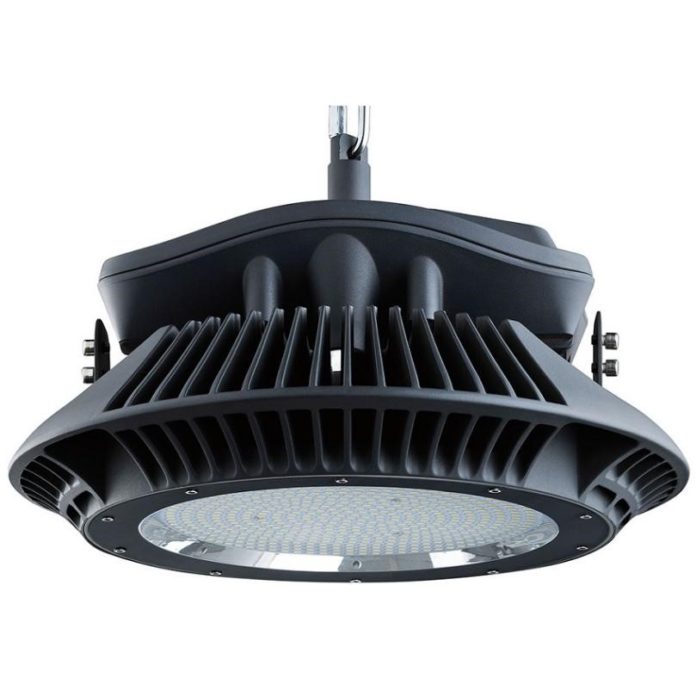
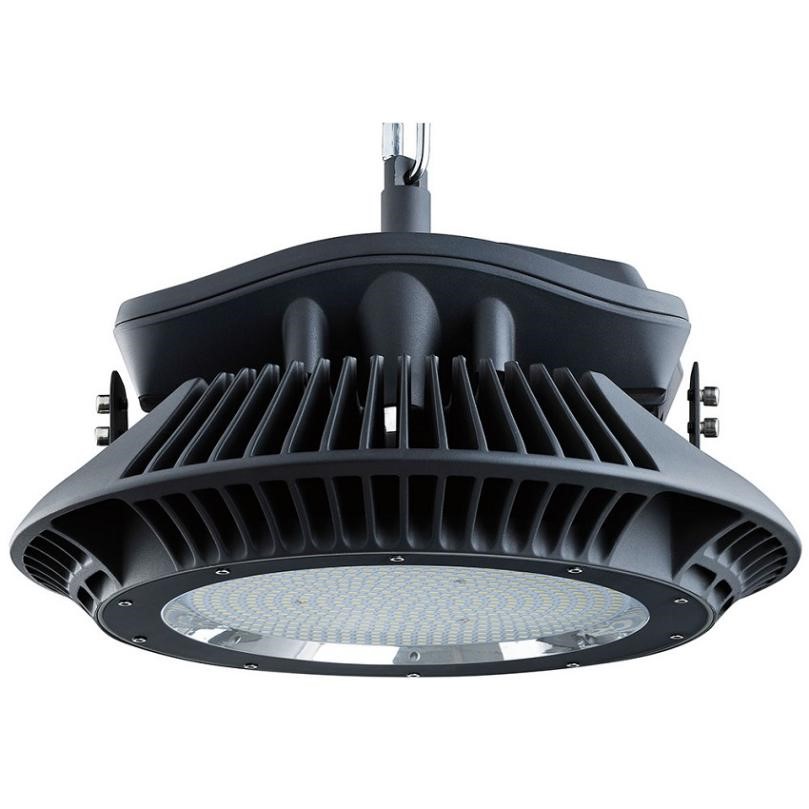
OBALS LED High Bay Light

(OBALS LED High Bay Light)

  1. Observe
    the Power

The
lower the power factor is, the worse the driving power and circuit design
settings are, which will significantly reduce the durability of LED high bay
light.

  • The
    Quality of Light Bead

The
quality of lamp beads directly determines the quality of LED high bay light and
also determines the quality of chip and packaging technology.

At high temperature, the
lumen depreciation becomes large. If the heat dissipation effect of the high
bay light is not good, it will damage the durability, and also affect the
lighting effect.

The power and quantity of
LED high bay light should be selected according to the actual illuminated area.

The Types of LED High Bay
Light

According to the lighting
function, LED high bay light can be divided into general lighting and local
lighting.

General lighting usually
refers to that LED high bay light is uniformly installed above the work site or
on the side wall to ensure that its light can shine on the place where workers
work.

Local lighting refers to
the LED high bay’s key lighting for a part of the work place. This way of
illumination can be based on general lighting, and then strengthen the lighting
effect for a specific workplace.

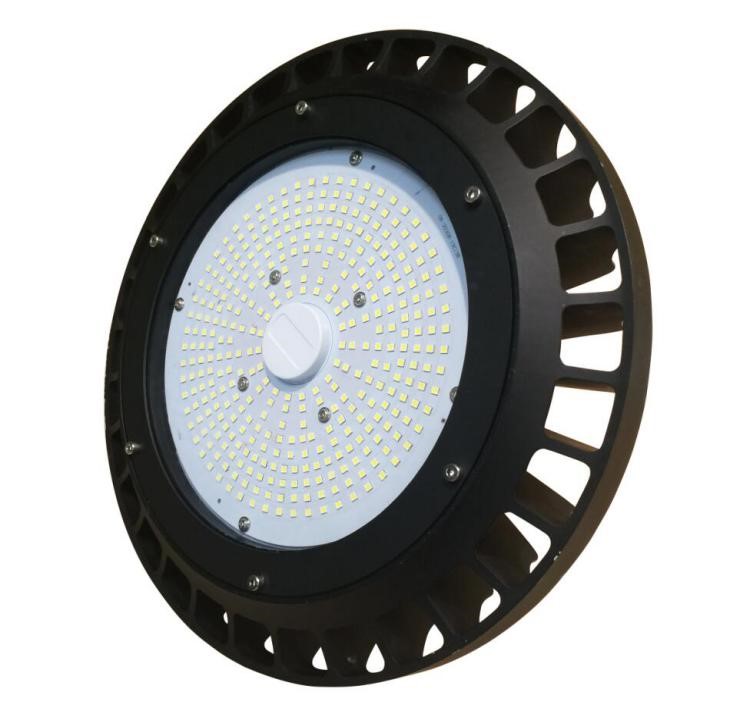
OBALS LED High Bay Light

(OBALS LED High Bay Light)

The Advantages of LED
High Bay Light

  1. LED
    high bay light has low power consumption, high color rendering index, strong
    seismic resistance, long service life and green environmental protection. It is
    the best choice for industrial plants, gas stations and other places,
  2. LED
    high bay light has high stability, and its service life can reach 25,000 to
    50,000 hours, which is more than 10 times longer than the life of the
    traditional light source, no pollution, no heat radiation, no harm to eyes and
    skin.
  3. LED
    high bay light mostly uses high-power lamp beads as the main light source, and
    uses high-tech semiconductor crystal, which has the advantages of high thermal
    conductivity, small light decay and no ghosting.
  4. It
    also has an excellent presentation color function, for any physical color is
    very real. A lot of light colors can be chosen, no matter in what kind of
    environment can meet, so this will eliminate the past lights to the staff to
    bring depression, improving the work efficiency of workers.

OBALS LED High Bay Light
KD-006-S

OBALS LED High Bay Light KD-006-S
  1. Superior
    heat emission function

Superior heat emission
structure with patented technology and power supply configuration, the light
can work efficiently and safely.

The extra accessories can
be installed in ceiling mounted and bracket projection-type.

3.Waterproof
and dustproof

The unit construction of lamp adopts waterproof and dust-proof design, which can meet the indoor and outdoor needs and other different application areas.

Source link

Patients worried after recall of high blood pressure medicine, but doctors say there is no cause for alarm

0

SINGAPORE: Worried high blood pressure patients crowded polyclinics on Friday (Mar 29), a day after three medicine brands used to treat the disease were recalled, but doctors said there is no cause for alarm.

Among the concerned patients at a SingHealth Polyclinic in Bukit Merah was Madam Yoke Chan, 70.

“I was worried because the risk is cancer,” she said.

Her hypertension medication, which she has been taking for about three years, was indeed affected, and changed to one called Lisinopril. 

She said that she was attended to quickly, in about 20 minutes, after she went to a “Losartas Review Counter” that was set up specially to attend to patients like herself.

She consulted a doctor and was able to have her medicines changed. She said she did not want to have to wait till her next appointment in April, and therefore showed up.

READ: HSA recalls 3 brands of high blood pressure drugs over potentially harmful impurity

On Thursday, the Health Sciences Authority (HSA) announced that it was recalling three brands of medicine that contain a lorsartan ingredient, losartan potassium. The brands are Losartas, Hyperten and Losagen. This is because these brands were found to contain unacceptable amounts of nitrosamine impurity, a substance which is possibly carcinogenic, or has the potential to cause cancer.

About 137,000 patients in Singapore are using the three recalled brands of losartan medicine, of whom about 130,000 patients have been prescribed Losartas at the public healthcare institutions, the Ministry of Health said. 

Losartan Losartas 50mg

Affected consumers are advised to consult their medical providers. (Photo: Health Sciences Authority)

Hypertension patients, both those who were affected and unaffected, told Channel NewsAsia that they received text messages from their polyclinics advising them not to stop taking their blood pressure medication.

Since the end of last month, several losartan medicines were recalled overseas due to the presence of such impurities, HSA said. In Singapore, seven other medicines that also contain losartan are not affected, HSA added.

Another worried patient who went to the polyclinic is Mr Yee Kam Chuen, 68. He did not have an appointment on the day, but also walked in as he was concerned after reading that the medicine could increase the risk of cancer.

“It’s better to change, in case there’s any problem, It’s our body, we have to take care of it,” he told Channel NewsAsia.

Others Channel NewsAsia spoke to also had their medicines swapped when they turned up for their regular appointments.

NO CAUSE FOR ALARM: DOCTORS

Despite the worry and flurry, doctors said that there is no cause for alarm. Dr Elly Sabrina, who manages two clinics, in Jurong and in Woodlands, has had patients check with her, although her clinics do not prescribe the affected medicines.

She noted that the impurity that was found in the affected medicines is found in other products which are not as tightly controlled as medicines, like processed meat and cigarettes.

Losartan Hyperten 50mg

HSA has advised patients not to stop treatment on their own. (Photo: Health Sciences Authority)

“If people are worried about their medicines, they should also worry about smoking and having these foods,” she said.

Dr Elly pointed to a circular given to medical professionals that said that there is a risk of cancer, even when the ingredient is within acceptable amounts. The risk is 1 in 100,000 for exposure over a lifetime, or more than 70 years.

READ: 137,000 patients affected by losartan high blood pressure medicine recall: MOH

Dr Lye Tong Fong, who runs a clinic in Pasir Ris, also said there is no cause for alarm. The recall is more to err on the side of safety, he added.

HSA also said that the added cancer risk from an additional six-month exposure is estimated to be less than 0.0002 per cent.

Cardiologist in the National Heart Centre Professor Ding Zee Pin, who is also on HSA’s Expert Panel on nitrosamines, advised that there is no immediate health risk associated with taking the affected medicines.

“Patients are advised not to stop or change treatment on their own. As losartan is used to treat high blood pressure, stopping the medicine without replacement of other equivalent medication can increase the risk of poor control of blood pressure,” he cautioned.

Source link

St John’s Island, Pulau Hantu cleared of asbestos: SLA

0

SINGAPORE: All asbestos removal works on St John’s Island and Pulau Hantu have been completed, the Singapore Land Authority (SLA) announced on Friday (Mar 29).

SLA also added that the campsite on St John’s Island will reopen in June.

This comes a year after the discovery of asbestos on St John’s Island by SLA contractors during maintenance and upgrading works.

A surveyor appointed by SLA had confirmed in April last year the presence of asbestos in samples of debris that were sent for testing on Mar 19.

The island’s nature trail, campsite, lagoon and holiday bungalow area were among areas that were cordoned off to restrict public access.

Further traces of asbestos were also found on Kusu Island and Pulau Hantu but not on Lazarus Island, Pulau Seringat and Kias Island.

Kusu Island was cleared of asbestos last September and has been reopened to the public, SLA said in its press release on Friday.

Satellite view of St John's Island

A satellite view of St John’s Island. (Image: Singapore Land Authority)

READ: ‘Asbestos-containing debris’ found at Big Sister’s Island, monthly guided walks suspended

READ: Debris containing asbestos found on Pulau Ubin, hazardous material removed: NParks

“SLA has since completed all asbestos removal works on St John’s Island and Pulau Hantu, and both islands will be fully reopened to the public,” SLA added.

“With this, all asbestos waste on the islands managed by SLA has been cleared safely.”

The upgrading and maintenance of the campsites are “currently in their final stages and are on schedule for completion by end May 2019”, SLA added.

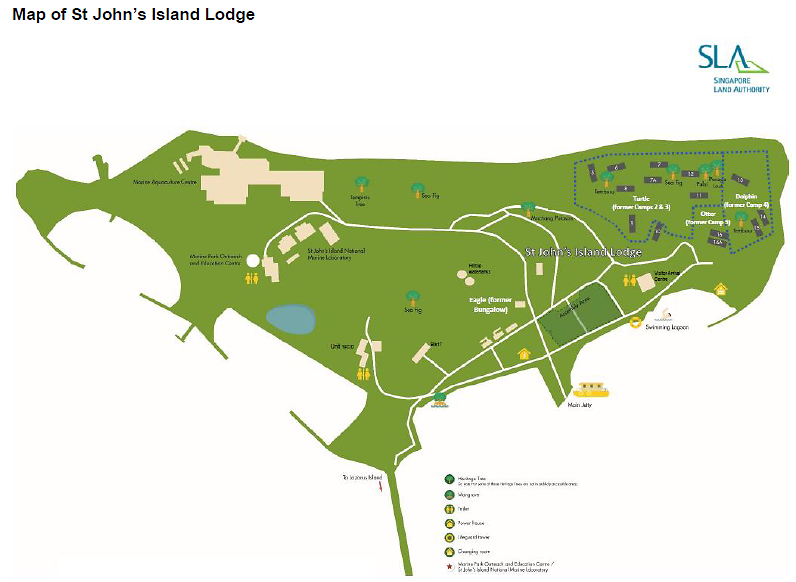
The former St John’s Island Campsite and Holiday Bungalow have been renamed as the St John’s Island Lodge and overnight accommodation facilities will be reopened to the public on Jun 1, SLA said, adding that bookings are available for the St John’s Island Lodge “to increase access and encourage visitorship to the island”.

Map of St John's Island Lodge

Map of St John’s Island Lodge. (Graphic: Singapore Land Authority)

Asbestos is a naturally occurring mineral that has been banned in Singapore since 1989 due to health concerns. It was commonly used as a construction material in the past.

Further traces of asbestos were also found on Pulau Ubin and Big Sister’s island, which are managed by NParks, but has been removed from the islands. 

Source link

Fairy tales and whimsy at Gardens by the Bay’s Floral Fantasy

0

SINGAPORE: For a year, horticulturist Melissa Tan and her team have been brewing fairy tales, flowers and technology into a new thematic attraction for Gardens by the Bay.

Slated to officially open on Apr 14 this year, Floral Fantasy will join Flower Dome and Cloud Forest as the third indoor air-conditioned garden attraction at the gardens.

The 1,500 sq m attraction is located right next to Bayfront station and is smaller than the other two indoor gardens. This is to allow visitors who are pressed for time to experience the best of the indoor gardens.

“To me, I find that it’s a small space, it’s got that intimate feeling,” said Ms Tan, Gardens by the Bay’s senior assistant director of gardens operations.

The word “magic” came up more than once as Ms Tan described to reporters how creating Floral Fantasy required both green fingers and engineering chops.

The attraction is divided into four zones – Dance, Float, Waltz and Drift – with each designed to evoke a different natural environment. Each zone draws from a wide range of inspiration, from the Hanging Gardens of Babylon to fairy tales, according to Ms Tan.

Floral Fantasy 3

More than 3,000 plants and more than 150 species are featured at the Floral Fantasy, Garden by the Bay’s latest thematic attraction. (Photo: Alif Amsyar)

From the moment they enter, visitors are greeted with a narrow path surrounded by flowers on all sides, including a canopy of blooms suspended upside down. At the end of this zone, pendulous floral balls bob gently up and down from the ceiling.

This opens up into the second zone, which is framed with bonsai plants on the left and right.

The third zone is a cavern-like structure with glow lights hanging from the ceiling. The lights provide UV rays and sunlight necessary for the flowers to survive in the darkened space.

There is also a poison dart frog vivarium, which Ms Tan estimates will eventually be home to about 30 frogs.

Floral Fantasy 2

The Poison Dart Frog Vivarium is home to over 30 poison dart frogs, including the Golden Poison Dart frog. (Photo: Alif Amsyar)

Speaking at the behind-the-scenes look of Floral Fantasy on Thursday (Mar 28), Ms Tan also described the challenges of working on the garden.

“We had to work with space constraints, and worked with a lot of ceiling plants which are up above,” she said. 

“It’s not so easy when everything is planted high up. We have to keep checking for the water level (of the plants).”

Many of the flowers displayed at Floral Fantasy are flowers that have never before been brought to Singapore. They will be displayed according to the season they bloom in.

Floral Fantasy - Melissa Tan

Senior Assistant Director of Gardens Operations, Ms Melissa Tan, has been with Gardens by the Bay since the beginning of the project in 2007. (Photo: Alif Amsyar)

Ms Tan explained that she brought in plants from all over the world, as she did not want visitors to feel constrained by country or geographic location.

“(We want to) bring together the most beautiful things regardless of whether they’re from the forest or the Mediterranean or the jungles of South America,” she added. 

“We can mix and match things and bring out the best part of all plants.”

The walk culminates in a 4D ride: Flight of the Dragonfly. Visitors will feel their chairs moving and water splashing as they watch a short 3D clip which shows them the world through the eyes of a dragonfly weaving its way through Gardens by the Bay.

“You’ll see sights that normally you’ll not see,” said Mr Barry Wong, vice-president of training and simulation systems at ST Engineering. This is because of the different angles shown in the clip, such as one of the dragonfly plunging straight down a waterfall.

The 4D ride was created by Gardens by the Bay in partnership with ST Engineering.

Local artist Kristine Hakim will also be exhibiting her work, created just for Floral Fantasy’s Artist Corner.

“It will allow people to imagine more,” said Ms Hakim of the platform for emerging local artists to showcase their work to the general public.

Floral Fantasy 4

Floral Fantasy’s Artist Corner is a platform for emerging local artists to showcase their work to a larger audience. (Photo: Alif Amsyar)

Ms Tan said that she reached back to memories of beloved children’s stories when creating the garden and hopes that visitors might do the same.

“I hope (visitors) will get a sense of magic – that they’re walking through a woodland forest,” she said. 

That maybe some of them will think back on all the stories that we read about the Enchanted Forest, the Magic Faraway Tree, and maybe bring a bit of that magic from the old fairy tales and stories into this garden.”

There will be a special opening promotion for Floral Fantasy tickets from Apr 14 to May 13. 

Local resident tickets are priced at S$9 for adults, and S$5 for senior citizens above 60 years old and children aged three to 12. Prices will rise to S$12 for adults and S$8 for seniors and kids from May 14.

There will also be a discount for tourists, who can get tickets at S$17 instead of S$20 for adults and S$10 instead of S$12 for children during the promotional period.

Source link