SINGAPORE: Families will be able to scatter the ashes of their loved ones at the Garden of Peace at Choa Chu Kang Cemetery Complex from 2020.
The ash scattering garden will be open to all faiths, and religious ceremonies such as burning of joss sticks will not be allowed, the National Environment Agency (NEA) said on Tuesday (Apr 16).
NEA first announced plans in 2017 to introduce inland ash scattering services for cremated human remains. It announced in June last year that such services would be introduced at Choa Chu Kang Cemetery Complex in 2020 and Mandai Crematorium and Columbarium Complex in 2021.
On Tuesday, NEA said that the Garden of Peace at the Choa Chu Kang Cemetery Complex will feature “open garden concept, with designated lanes for walkways and ash scattering”.
Additionally, the Garden of Peace will have the following design elements:
Boundary shrubs and vegetation to demarcate the garden boundaries and provide privacy
A peaceful, serene garden setting created through landscaping and greenery, to provide a dignified and respectful environment
Designated ash scattering lanes to accord families privacy
Beds of pebbles on the ash scattering lanes that will allow ashes to filter through into the soil underneath
Wheelchair-friendly access and seating areas for families to gather and view the ash scattering.
An artist’s impression of the site plan of the Garden of Peace, an ash scattering garden situated within the Choa Chu Kang Cemetery complex. (Image: National Environment Agency)
To maintain the secular nature of the garden and a clean environment, religious ceremonies or rites such as the burning of joss sticks, food offerings, playing of instruments or music will not be allowed, NEA added.
Further details, including on operational procedures and booking arrangements, will be revealed at a later date.
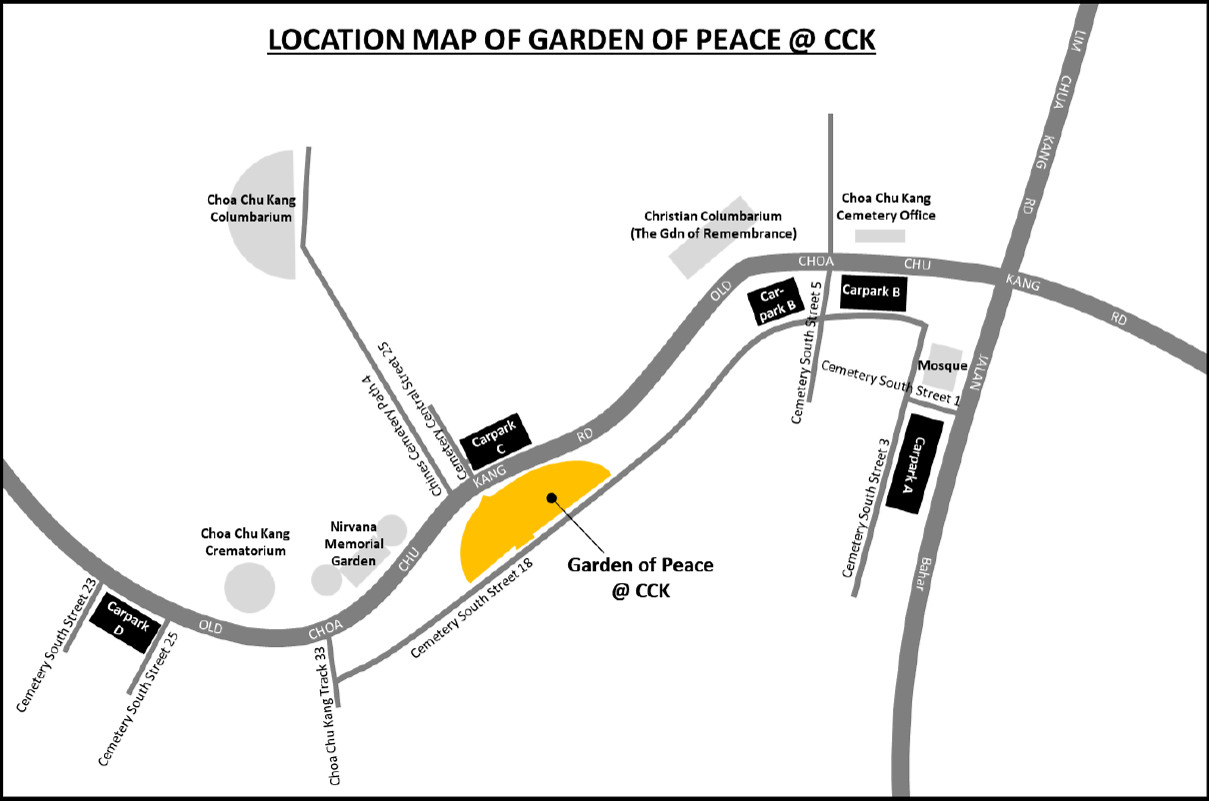
A location map of the Garden of Peace, an ash scattering garden situated within the Choa Chu Kang Cemetery complex. (Image: National Environment Agency)
The Garden of Peace is located at part of an existing garden within the cemetery, between Old Choa Chu Kang Road and Cemetery South Street 18.
NEA is calling for a tender for a contractor to develop the Garden of Peace. The awarded contractor will be required to integrate the ash scattering lanes and supporting facilities to the existing garden at Choa Chu Kang Cemetery.
JAKARTA: More than 10,000 people have volunteered to crowd-source election results posted at polling stations across Indonesia on Wednesday (Apr 17) in a real-time bid to thwart attempts at fraud during the biggest single-day election in the world.
Nearly 193 million people are eligible to vote for the Southeast Asian country’s president and thousands of legislative seats, a Herculean logistical feat many fear could be exploited by cheats.
Tension over alleged election irregularities is already running high between the camps of the two contenders for the presidency, incumbent Joko Widodo and retired general Prabowo Subianto, with charges of suspicious names on electoral rolls and ballot tampering.
An organisation called Kawal Pemilu, or Guard the Election, has brought together volunteers from across the sprawling archipelago to post on its website photographs of result tabulations that go up at polling stations to ensure they match official vote tallies.
The crowd-sourced results on KawalPemilu.org will then be tabulated manually by the organisation.
“We aim to be the data back-up plan for the election,” Kawal Pemilu co-founder Elina Ciptadi said. “To ensure transparency and stop fraud.”
She said that more than 10,000 volunteers have been verified and 3,000 to 5,000 more have registered online to join the “election guardians”, who are required to provide their names and Facebook profiles. Another 2,000, many of them Indonesian expatriates, will work as moderators, logging in data.
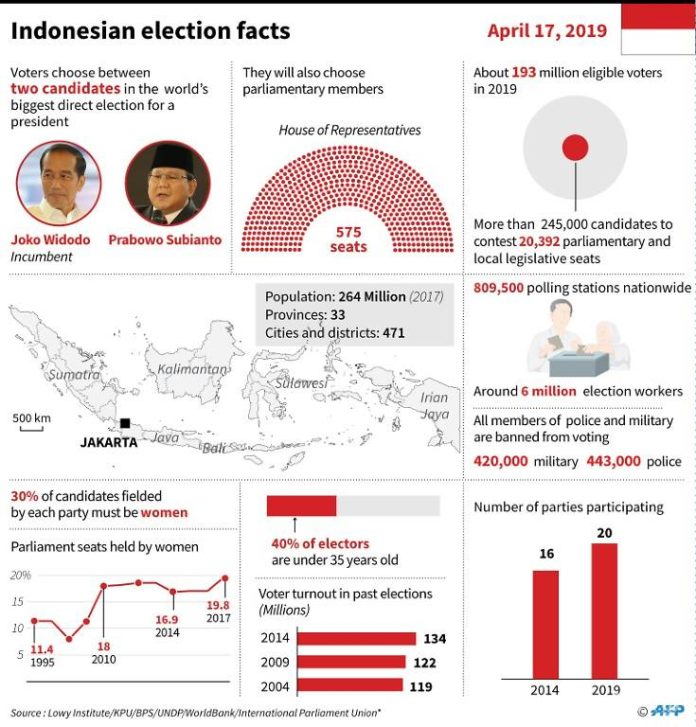
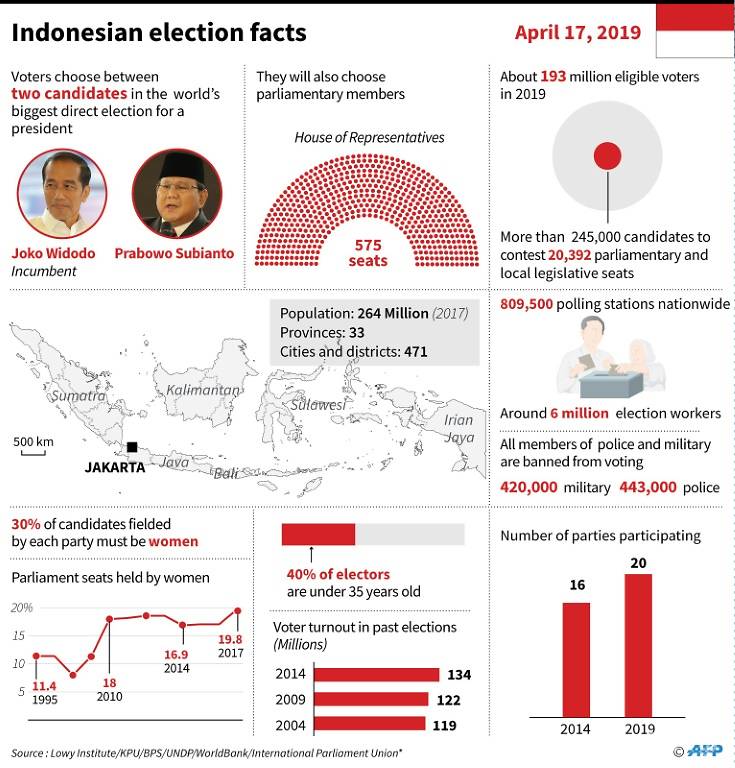
(Graphic: AFP)
University student and alumni groups have pledged to help, as have the youth wings of prominent religious organisations, including of the Catholic Church, and of the two largest Muslims organisations, Muhammadiyah and Nahdlatul Ulama.
Ciptadi and data scientist Ainun Najib, both Indonesian expats who live in Singapore, started the initiative after the last election in 2014 – also a contest between Widodo and Prabowo – when both campaigns declared victory.
“Both sides claimed to win … but neither of them were revealing the data,” said Ciptadi.
Because the electoral commission (KPU) had posted 2014’s polling station results on its website, the group was able to scrape numbers into a database and crowd-source accurate results in six days, while officials took more than two weeks to calculate almost exactly the same result by hand.
EIGHT-HOUR ELECTION
This time the challenge is even greater.
For the first time Indonesia will be holding presidential and parliamentary polls simultaneously, with more than 245,000 candidates running for legislative seats in an exercise that will involve more than 800,000 polling stations and about 6 million election workers.
While the world’s largest democracy, India, is now spreading its election out over seven phases, Indonesia – with roughly one-fifth of India’s population – will get the job done in just eight hours.
The General Election Commission is expected to announce an official result in May.
Ciptadi stressed that her organisation was strictly neutral.
“We are not a political movement, we are an open-data initiative,” she said.
Most opinion polls give Widodo, a former furniture salesman whose political career began as a small-city mayor, a double-digit lead over Prabowo, whom he narrowly defeated in 2014.
The opposition has disputed survey findings. It has also said it uncovered data irregularities affecting millions on the electoral rolls and vowed to take legal action or use “people power” if its complaints are not resolved.
“We are very worried about the issue because the number is huge, there are 17.5 million problematic names in the voter list,” Hashim Djojohadikusumo, deputy director for the Prabowo campaign, told reporters on Sunday.
He said that suspiciously large numbers had Dec 31 and Jan 1 birth dates, and area codes that did not exist.
A spokesman for the election commission refuted the allegations, telling Reuters they had verified the existence of the 17.5 million voters, as based on civil records.
Several videos appeared online last week apparently showing thousands of voting papers stuffed in bags at a warehouse in neighbouring Malaysia, with many apparently already marked.
One showed people holding up ballots, saying they were marked in favour of Widodo, as well as for a member of one of the political parties backing him.
The election supervisory board met Malaysian police on Monday to discuss the case, media reported.
The supervisory board is also deciding whether to hold a new vote for Indonesians in Sydney, after several hundred registered voters were still standing in line after the polls closed there on Saturday.
A rights group has warned that more than 1 million indigenous people, many of whom live in forest areas or conflict zones, won’t be able to vote because authorities had not registered them.
The Indigenous Peoples Alliance of the Archipelago, which represents 15 million indigenous people, told Reuters that several communities had never been registered for electronic identification cards, which provide the right to vote.
A home affairs ministry spokesperson disputed those findings and said any indigenous person who wanted to vote could register. “Please live in a legal location,” he said.
SINGAPORE: By the end of this year, the Ministry of Manpower (MOM) will come up with guidelines for companies to create proper rest areas for low-wage workers such as cleaners, security guards and landscaping workers.
The ministry started gathering feedback at the start of April by interviewing workers and employers to take stock of where and how cleaners rest.
Since then, MOM inspectors have visited 20 out of a projected 200 sites which include places such as food courts, shopping malls and commercial buildings.
“While building owners may set aside spaces within their buildings as storage rooms and rest areas for cleaners, the state of these rest areas differs greatly,” said Minister of State for Manpower Zaqy Mohamad on Tuesday (Apr 16) at MOM’s annual work plan seminar.
Currently, rest areas range from makeshift rest areas at staircases, open public areas to poorly ventilated and cluttered storage rooms.
Labour Member of Parliament Zainal Sapari, who spoke in support of providing proper rest areas for workers during the Committee of Supply debate, said that many workers are uncomfortable resting in open areas out of fear of being perceived as avoiding work.
“I think we need to also understand as we promote this, what’s practical, what are some of the things that our low wage workers, outsourced workers value most?” Mr Zaqy said.
MOM is conducting a survey which will help employers understand the needs of workers and inform the ministry’s guidelines.
Apart from a place to rest, cleaners said in the survey that they hope to have lockers, fans and water dispensers.
For a start, Socially-conscious Enterprise Hawker Centres (SEHCs) and schools already provide rest areas for their cleaners, Mr Zaqy said.
At SEHCs, cleaners’ rooms have been built in all seven hawker centres. The National Environment Agency is also committed to providing such rooms for all new and existing hawker centres, he said.
Similarly, the Ministry of Education has ensured a dedicated room in each of the over 300 schools for cleaners to rest.
Mr Zaqy said that MOM will be working with government agencies and town councils next.
CARVING OUT A REST AREA
While proper rest areas are not yet commonplace, property management company APM has carved out a 402 sq m space, called The Crystal Place, for its 300-odd in-house and outsourced field staff at Suntec City.
The space is for staff members who perform mall cleaning, office tower cleaning, security, technical, and landscaping and pest control duties.
Training, briefings and celebratory get-togethers have been organised in The Crystal Place for outsourced staff at Suntec City. (Photo: Fann Sim)
There is a communal rest area with chairs and tables, and a pantry with microwave ovens and drink stations.
The rest of the space is divided into nine satellite offices for external service providers. Service providers have the freedom to configure their office such as into locker areas or recreational space.
Service providers are also allocated a satellite office in The Crystal Place. The security staff allocated this office have installed a foosball table and darts board in their own space. (Photo: Fann Sim)
Mr Anthony Yip, deputy chairman of APM, said that the space carved out was previously an empty space in Suntec City’s back-of-house area.
Typically, these back-of-house spaces, which are less attractive commercially and out of the way for the public, are used as storage spaces or passage ways.
“Instead of having spaces that are all over the place, the satellite spaces, we put them all together because we believe a central area is much more effective,” Mr Yip said.
The company paid a capital cost of less than S$20,000 to set up The Crystal Place, with air conditioning and music piped in from the mall. Cleaning of the communal space is done voluntarily by the two cleaning service providers using the area.
The monthly operation costs of running the space is limited to utilities, said Mr Yip.
The rest area, which is situated at Office Tower 5, is some distance away for staff stationed at the other end of Suntec City.
To cater for the additional time taken to walk to the rest area, cleaning supervisor K Ramesh, 55, said that his staff get an extra 10 minutes during their break.
Gardener Tan Cheng Hong, 70, who has been stationed at Suntec City for the last four years said that he goes to the rest area for lunch every day.
“We have two tea breaks at 10am and 3pm, and a lunch break at 12pm. … It takes about five minutes to get here from my working location. I’ll come here for lunch but during tea break, I will just go to the food court,” Mr Tan said.
“It’s comfortable to rest here. When we work and we’re tired, it’s relaxing to be here. After resting, we’ll be in a better mood to work.”
SINGAPORE: Food delivery service GrabFood is looking to introduce central kitchens in locations which have few eateries but see high demand “sometime this year”, its Singapore head Lim Kell Jay told reporters during a media briefing on Tuesday (Apr 16).
“For areas which are relatively under-served, I think that’s where we can possibly set up a Grab kitchen and then invite the relevant merchants to those locations to provide deliveries,” he said.
“I think the kitchen is something that will help all our customers.”
Grab did not provide details on the number of kitchens and where they might be, only stating that it is still “doing our research and evaluating”.
Last September, Grab introduced its Kitchen by GrabFood service in Indonesia so customers in locations with fewer eateries can get their food delivered with shorter booking times and lower delivery costs.
It has three central kitchens in Indonesia: Cideng and Keramat in Central Jakarta and Kedoya in West Jakarta.
But Grab’s rivals in Singapore have already adopted this strategy. Foodpanda has central kitchens in Woodlands and Mandai, while Deliveroo has them in Katong and Lavender.
Still, Grab plans to trump the competition by getting “most, if not all” of the 10,000 food establishments registered with the National Environment Agency on its GrabFood app. The app currently has more than 5,000 merchants.
“Hopefully towards the end of the year, we’ll be able to onboard most of them,” Mr Lim said.
He added that GrabFood will continue to add “local favourites” like famous hawkers to its offerings, which have included durians and IRVINS salted egg snacks.
Beyond that, Mr Lim said GrabFood’s “biggest difference” from the competition is the “entire Grab ecosystem”.
“With a single app, you can book a ride, send a parcel, make a payment,” he said. “It creates more use cases, and from our analysis, we see customers who use more services on our platform have a higher lifetime value with us.”
GRABFOOD TO JOIN GRAB “SUPER APP”
This is also why Grab is bringing GrabFood into its “everyday super app”.
Mr Lim said this will be beta-tested among a select number of users in Kallang, Marine Parade, Geylang and Bedok at the end of this month, before being expanded islandwide in May.
Southeast Singapore was chosen for the first beta phase as it represents “quite dense areas in terms of demand and restaurant supply”.
Once the islandwide beta roll-out is complete, the current GrabFood app will be discontinued for all users.
GrabFood Singapore head Lim Kell Jay speaking to reporters on Apr 16, 2019. (Photo: Aqil Haziq Mahmud)
Mr Lim said the move will benefit all users of the app.
Consumers will get a more seamless experience without having to download an extra app, and use Grab’s in-app messaging to chat with riders, saving costs and removing the need to reveal mobile numbers.
Riders will be able to take on parcel deliveries and enjoy more benefits like discounts on motorcycle lubricants. Grab said it will introduce new healthcare benefits in the second half of 2019.
Merchants will get access to Grab’s full customer base and see real-time locations of assigned riders, allowing them to better manage kitchen operations. Merchants can also use a new “temporary pause” feature to temporarily close their online store when the kitchen gets too busy.
Mr Lim also outlined upcoming features that he hopes will be rolled out in the next few months.
These include the ability to re-order in-app widgets for a more personalised experience, pre-order meals and see restaurant ratings based on consumer feedback.
Calling food delivery a “very strategic part of the business”, Mr Lim revealed that GrabFood orders grew 25 per cent month-on-month on average from May 2018 to March 2019.
“We always try to see the perspective from the customer,” he added. “As a customer, I don’t just need to travel. I need to eat, pay and occasionally make deliveries. So, that’s the lens we are trying to put on.
“From that perspective, we want to make it as simple and as frictionless as possible for customers to access these everyday services through one app.”
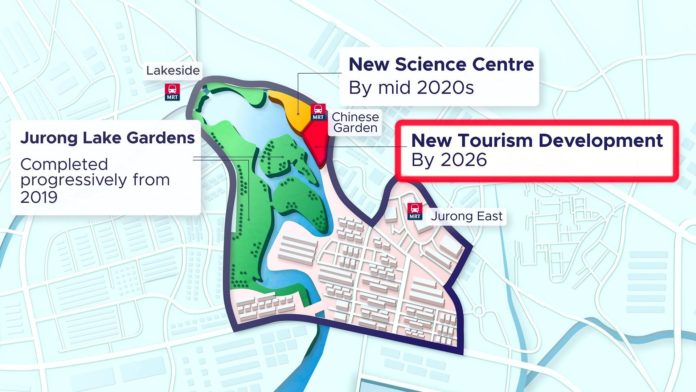
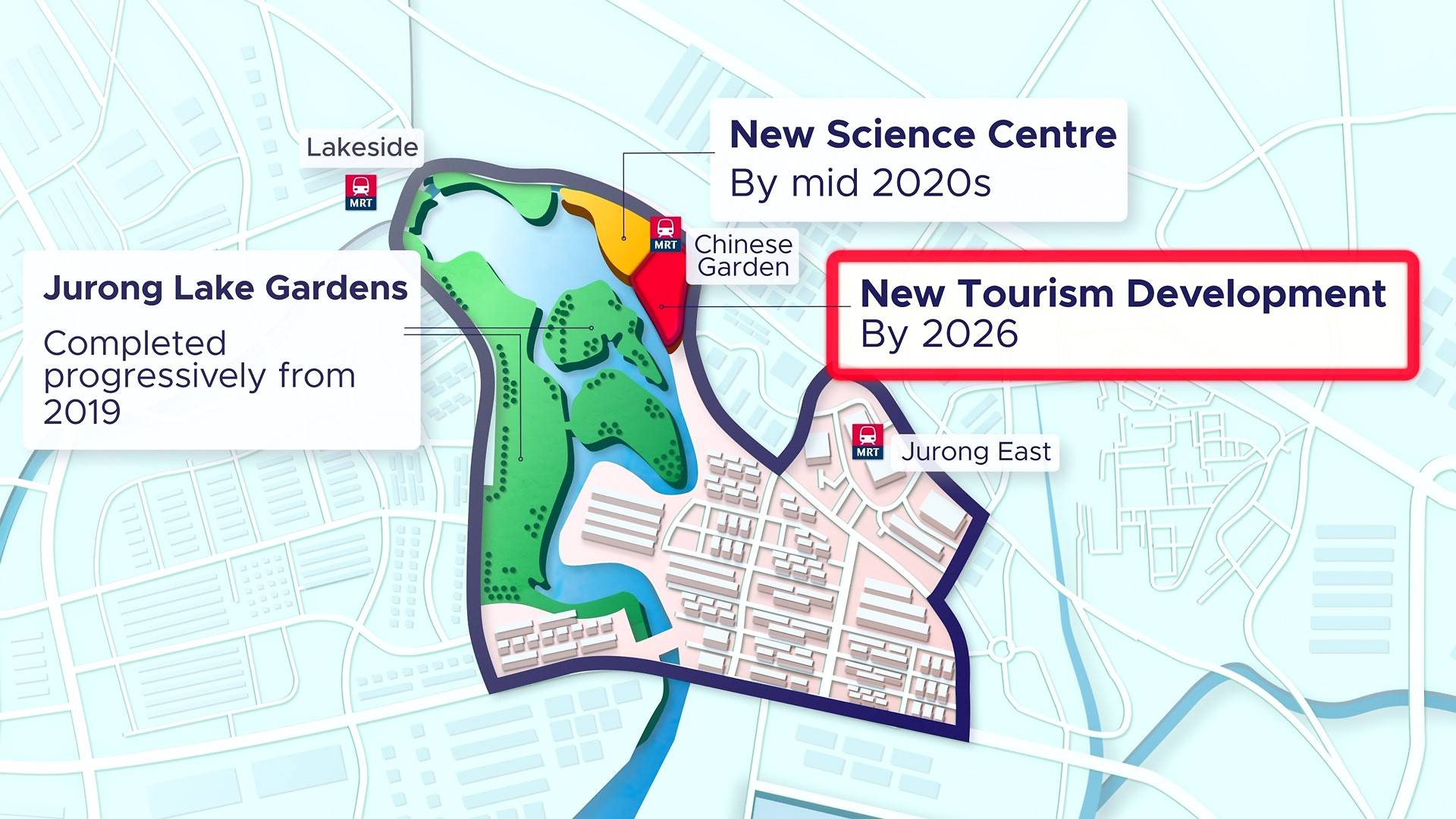
SINGAPORE: A new integrated tourism development will be set up at the Jurong Lake District by 2026, in line with the Government’s strategy to “spread out its tourism offerings across different parts of Singapore”, said Senior Minister of State for Trade and Industry Chee Hong Tat on Tuesday (Apr 16).
“With its unique waterfront environment and location adjacent to the new Jurong Lake Gardens and the new Science Centre, we envision this area to be transformed into a key attraction from 2026,” said Mr Chee, who was speaking at the Tourism Industry Conference.
This area will include attractions, hotels and other lifestyle offerings.
An expression of interest will be launched for the new development, with some players already expressing “keen interest” in the area, said Mr Keith Tan, chief executive of the Singapore Tourism Board (STB). The exercise will close in early November this year.
(Image: Singapore Tourism Board)
TRANSFORMING TOURISM THROUGH TECHNOLOGY
Digital technology will be used to rejuvenate the Singapore Zoo, Night Safari and River Safari, as a way to present animal encounters in new ways.
A masterplan has been drafted for the nature attractions, which will complement the upcoming Mandai eco-tourism hub housing the new Bird Park and Rainforest Park, to open progressively over the next four years.
“This will further strengthen Mandai as a key tourism precinct with world class nature-based attractions, and elevate its international standing amongst other competing attractions,” Mr Chee said.
In addition to these developments, the tourism sector will also get a tech upgrade with three new initiatives.
First, the Sentosa x Enterprise by Sentosa Development Corporation (SDC) will allow businesses to test new concepts and technologies on the island.
It will focus on increasing connectivity and navigation around Sentosa, new offerings to attract visitors, waste and resource management for sustainability and employing technologies that will enhance guest experiences and enhance productivity.
Businesses can benefit from a risk-sharing arrangement with SDC. Successful applicants can have their venue rental co-shared or waived, and enjoy support in infrastructure and other facilitation resources.
In turn, such activities are expected to drive visitors to Sentosa and support SDC’s environmental sustainability goals.
NEW MOUS SIGNED
With the signing of two new memoranda of understanding (MOU), new online marketing campaigns are also expected.
At least 12 marketing campaigns across five Southeast Asian markets are expected to be launched under STB’s partnership with Indonesia-based travel app Traveloka.
The number of Singapore attractions and activities featured on Traveloka’s online platforms will be increased by 15 per cent in order to gain greater insights on the travel habits and patterns of tourists from Indonesia, Malaysia, the Philippines, Thailand and Vietnam.
Additional collaborations to promote the new Jewel Changi Airport and local events, such as the Great Singapore Sale and the Singapore Food Festival, in Indonesia are also being discussed.
The other MOU, signed between STB and Alibaba Group, aims to increase the existing collaborations for the Chinese market.
Under this MOU, STB will work with key business units in the Alibaba ecosystem over the next three years to engage Chinese travellers.
Both organisations will create content to target young families and young professionals in China.
Lastly, to capitalise on these growth opportunities, STB will create a Tech College to better prepare tourism businesses and make data and technology a strategic differentiator for Singapore.
From June, STB and the Singapore Hotel Association will organise a series of Smart Hotel Transformation Workshops. These will focus on areas such as digitalisation and marketing, with the aim to identify opportunities for design and innovation, as well as to plan their technological roadmap.
Tourism has accounted for around 4 per cent of Singapore’s GDP over the past three years. It has also provided more than 60,000 jobs within its core industries, including hotels, attractions, travel agents, as well as the meetings, incentives, conventions and exhibitions (MICE) segment.
SINGAPORE: Drawn like bees to honey, hungry customers wait in line patiently.
It is about 10am on Monday (Apr 15) and the promise of crispy curly fries, coney dogs topped with chunky relish and frosted mugs filled with frothy root beer seems more tantalising than anything else on offer at Jewel Changi Airport.
At least 50 people are in the queue, and American fast-food chain A&W’s only outlet in Singapore hasn’t even opened for the day.
“Today’s the fifth day (since the outlet opened) and perhaps one of the longest queues I’ve ever seen,” said Mr Kelvin Tan, A&W International’s director of marketing and communication.
“It’s unique to us at this moment where we are really the longest queue in Jewel now,” he told CNA.
“We’re glad to have customers who truly are very patient with us and have been adopting the view that good food deserves the wait.”
A&W – which stands for Allen and Wright – made its debut in Singapore in 1966 at Dunearn Road, and the first A&W drive-through opened in 1970 at Bukit Timah Road. But after decades in Singapore, the fast-food chain decided to pull out of the country in 2003, with five outlets then.
This time, A&W is here to stay, insisted Mr Tan. And very soon, it plans to open a second outlet in Singapore.
“The outlet will be open in the next one-and-a-half to two months – in June,” Mr Tan told CNA.
He declined to reveal more details, saying only that it will be located at a “very high traffic location”.
“After opening here, we wanted to be able to scale in such a speed where it would ease off the crowd at the first outlet,” said Mr Tan. “It’s not that we come unprepared, we know that there’s going to be a huge crowd.”
There are also plans to add a third outlet by 2020, he said.
Beyond opening new outlets, A&W also wants to cater to various segments of the local market, said Mr Tan. It has “every intention” of submitting its application to the Islamic Religious Council of Singapore (MUIS) for halal-certification.
A&W’s signature curly fries (right).
“The Muslim community formed a very big chunk of our business (in the past) and I think right now we will continue to respect and recognise that this particular market is very important to us,” said Mr Tan.
“From the start, when developing the menu, we always wanted to make it halal, but obviously we need to get the restaurant to open first – we are in the process – meaning to say we have every intention to submit our application to MUIS.
“We’re hoping that the crowd will ease out a bit and then we will get them to come in (and do an audit),” said Mr Tan.
“Right now, we would like consumers to know that it’s a Muslim friendly menu, no pork no lard, and as soon as we can find the time to submit our application to MUIS, we will do so immediately.”
Customers wait patiently in line to enter the A&W outlet at Jewel Changi Airport. (Photo: Matthew Mohan)
On the timing of its return to Singapore, A&W said the opening of Jewel gave it an opportunity to make its comeback.
“We’ve been receiving a lot of requests from our fans all over the world to bring it back to Singapore,” said Ms Sally See, A&W International’s manager of business development.
“With the opening of Jewel, we found it very timely to do it together.”
In fact, fans wanted the fast-food chain back so badly that they set up a Facebook page dedicated to A&W Singapore when news broke of a possible return, added Mr Tan.
MORE THAN JUST FAST FOOD
A “hybrid” between fast food and casual dining, the A&W Jewel Changi outlet aims to serve as an “incubator” for menu innovations and service design.
For one, this means that in addition to the traditional all-american classics, regional favourites such as the “golden aroma chicken” from A&W’s Malaysian and Indonesian outlets and the “waffle sundae” from A&W’s Thai outlets are available.
“We have tweaked the menu so that it appeals to a wider group of customers,” said Mr Tan. “We have brought in menu items that have done well in overseas markets to Singapore. We still have our classics but have added new things to appeal to a wider crowd.”
A&W staff at work.
The Singapore outlet is not run as a franchise, but is managed directly by A&W Restaurants.
“We could have easily gone for a franchising concept … but as a company-owned store, it offers us greater control over what we want to do for the menu,” Mr Tan explained.
There is also an increased emphasis on the quality of food rather than the speed at which it comes out of the kitchen, he added.
A&W’s burgers and coney dogs are put together only after the orders are sent to the kitchen, rather than being pre-assembled. The same applies for its root beer, which is served to order.
“Unlike the typical fast food concept where you place an order and you immediately expect your food to be served to you right and then, it’s a slightly different concept that we are hoping to explore for this market – especially in Jewel Changi Airport, where we expect the crowd to be a little bit more international, where expectations are higher,” Mr Tan said.
After Jewel Changi Airport’s preview period, A&W will open 24 hours a day.
As queues continue to form, Mr Tan and Ms See remain confident that the chain will not lose its appeal among Singaporeans in the coming years.
“What we have is a very good brand, a very good team already in place and we’ll be rolling out promotions and customer engagement programmes to help us bring in the millennials,” said Mr Tan. “We have a very good strategy in place to make sure that this brand will continue to thrive for a long time to come.”
YAN’AN, Shaanxi: Despite their vast difference in size, Singapore and China have common issues to tackle, Singapore’s Deputy Prime Minister Teo Chee Hean said on Monday (Apr 15) as he hailed the good bilateral ties between the two countries.
These issues cover areas like economic transformation, skills retraining and managing an ageing population.
Speaking to Singapore media at the end of his six-day trip to China, Mr Teo said the visit was a good opportunity to meet old friends, build new relationships and look for new opportunities to cooperate.
One such opportunity is a new bilateral council which will be set up in Shanghai to broaden engagement between the two cities.
Singapore and China are also looking to see how they can take the experience from current projects like the Suzhou Industrial Park to third countries.
During his trip, Mr Teo marked the 25th anniversary of the Suzhou Industrial Park – the first government-to-government project between Singapore and China.
Mr Teo said that while both countries mark 30 years of formal relations next year, there have been “excellent relations” for about 40 years, since China’s reform and opening up.
“We have been able to work as partners in keeping with the times,” Mr Teo said.
“China’s needs and requirements change, its economic and social situation change, and so too in Singapore and in the world – technology and global markets and so on,” he added.
“What is a feature of our relationship is that we have always been able to find new areas of cooperation and that comes about because we have very close conversations with them at all levels.”
NEXT PHASE OF BILATERAL RELATIONSHIP
As for the next phase of the bilateral relationship, Mr Teo said the current regional councils and government-to-government projects are well placed, as China looks to develop regional clusters like the Greater Bay Area and the Yangtze River Delta region.
Mr Teo added that the trip provided Singapore’s new generation leaders an opportunity to meet Chinese leaders.
Deputy Prime Minister Teo Chee Hean hailed the good bilateral ties between Singapore and China. (Photo: MCI)
Traveling with Mr Teo are ministers Chan Chun Sing and Grace Fu, Senior Ministers of State Janil Puthucheary and Edwin Tong, as well as Senior Parliamentary Secretaries Sun Xueling and Tan Wu Meng.
Mr Teo recalled he had benefited from such official visits, under the leadership of then prime ministers Lee Kuan Yew and Goh Chok Tong, as well as former President Ong Teng Cheong.
“When you visit you say you take a picture and it’s a snapshot, it’s a still picture, but to see China as an ongoing movie – it’s a drama that’s unfolding,” said Mr Teo.
“It’s one of the biggest human dramas in the world today. How do you raise 800 million people out of poverty in such a short space of time and where this giant of a country is going in the future? It is a great human drama and to see it unfolding is a great opportunity. So I benefited from the opportunities that Mr Lee and Mr Goh and President Ong provided for me and I see it as my responsibility to pass this on to the next generation of leaders.”
Mr Chan, who is minister-in-charge of the civil service and vice chair of the Singapore-China leadership forum, added that to ensure Singapore’s relevance, a deep understanding of China on the central and provincial level is needed.
This is why Singapore leaders have had interactions in various provinces across the country.
“Without a keen sense of what is happening on the ground at the central level and the provincial level, it would be impossible for us to boost areas of cooperation that are relevant to them and for us to do this, we need to not only have the institutional links between respective ministries and organisations, we need to have personal ties,” said Mr Chan.
Mr Teo ended his trip – which took him through Beijing, Suzhou and Shanghai – in the cradle of the Communist Party of China – Yan’an.
On Monday, he visited symbolic sites like the former headquarters of the Communist Party’s Central Committee at Yangjialing village and Chinese President Xi Jinping’s former cave home at Liangjiahe, where he spent years as a young cadre.
Mr Teo said such visits give Singapore leaders a deeper and more nuanced understanding of China and where it is going, enabling both sides to work better and more closely with each other.
It’s really amazing to make traveling and locomotion the quickest way to your own opulence and Felicity. Nevertheless, when the matter is related to traveling to Egypt, your timeless delight will reach its maximum not only for its wealthy history but also for its unique nature. Egypt offers you the chance to experience all you wish: step back in time by touring the houses of the Pharaohs, relax over the marvelous sandy beaches, enjoy the fantastic moderate weather, immerse beneath the Red sea waters, gain the culture that illuminated the world, do shopping tours, and many more activities you can do in the land of Pharaohs. So Egypt Tours Portal is your gateway to experience what Egypt has to offer to be greatly inclusive and always memorable.
Wealthy Historical Background
Indeed, Egypt Pharaonic history is the most well-known features about Egypt throughout the years. Thousands of years ago, the Egyptian ancestors commenced to follow the first steps on the way to opulent glory that would last for too long and never be erased. The primitive Egyptians led a hard life, they had accommodated in tents and caves and fed on the tree leaves till they settled down over the banks of the Nile which assisted them to cultivate the neighbouring lands and breed the livestock and it was the starting point to glorious life-time civilization. They constructed three fascinating pyramids and the great limestone statue of Sphinx in Memphis city, the ancient capital of Egypt. The great Pyramid of King Khufu which is regarded as the one of the seven world wonders, became the most popualr of Egypt attractions due to its extraordinary size. In Upper Egypt – particularly in Luxor and Aswan -, the ancient kings and queens competed to erect the fabulous historical temples for worship and religious rites. These temples weren’t only houses of worship but they also included carvings, and many timeless drawings on their walls. These drawings tell a lot about the achievements of the pharaohs and their battles against their enemies. Egypt also gained a precious heritage in the modern history: the Ayyubid ruler Salah El Din constructed Cairo Citadel – the reinforced fortress that protected Cairo from the Crusaders’ attacks – and the Egyptian Museum which included more than 120000 monumental arifacts.
Wonderful Beaches & Resorts
Egypt geographic location is unique as it overlooks two major seas: the Mediterranean Sea from the north and the Red Sea from the east. This advantage provides an additional option for Egypt visitors, specially for those who are fund of seas and beaches holidays. Alexandria, for example, is a preferable destination as it combines between the ancient monuments of the Romans and the Greeks, and the blissful sandy beaches of the Mediterranean Sea. Not only Alexandria but also Hurghada and Sharm El Sheikh on the Red Sea shore are also vital destinations for many travelers. Resorts in Hurghada and Sharm El Sheikh provide all means of entertainment and recreation: luxurious hotels, charming pools, fresh food and soft drinks, many adventurous water activities such as scuba diving, snorkeling, and windsurfing and many more over the coasts of the Red Sea.
How to Book a Trip to Egypt
Once a traveler takes a decision to spend a vacation in Egypt, it’s necessary to follow some steps in order to have a marvelous trip. First a traveler doesn’t have to confirm his tour with a big famed travel agency, it’s more important to deal with an agency of a good reputation and a highly qualified staff. Then you have to customize the tour and the itinerary which is suitable for your needs, and budget. If it’s a family trip, you can share the choice with your family members. It’s completely requisite to choose the itinerary that cover most of Egypt sightseeing during your stay in Egypt but your budget for your tour should always be taken into consideration. Order in booking your trip in Egypt is really essential as booking your international flights at first is a must then book your domestic trip to match your arrival and departure flights with your tour itinerary. This step makes you avoid many troubles such as missing one of your international flights, domestic flights or any points of visits. In this case, you will not completely enjoy your tour as you will be confused all over the trip. Another point is to discover Egypt online very well before arrival so as to be able to determine which attractions will satisfy your wishes and which transportation you would like to use to move among the various historical sights. Before you confirm your trip with a travel agency, you will need to recognize some points:
The tour guides that will escort you during the trip and should require a guide who speaks your mother tongue fluently to be able to interact with him.
The hotels that you will be accommodated in and their service levels. You can also check them online before arrival to make sure that your accommodation will be luxurious and comfortable and if you prefer particular hotels, you should recommend them.
The transportations that you will use to move among the historical attractions and assure that they are modern and comfortable.
Your pick up time from the airport and from the hotel to the attractions and your drop off time.
Entry Visa to Egypt: whether you should apply for it before arrival or you will get it in Egypt at the airport.
If your tour includes a Nile cruise, you need to check that it’s a 5* deluxe Nile cruise and ask about the services will be offered on board.
The types of the food that will be served and if you prefer a particular type of food { for example: Vegetarian Food }, you can advise it.
Another remarkable consideration is to inquire about the inclusions and exclusions { what’s included in the tour price and what’s not included }
Another point concerning the total cost of your tour and to what extent it suits your budget.
Another question you should know its answer before booking the trip is whether your tour is private or sharing with other tourists.
The method of payment: you need to require about the way you will pay for the tour, whether you should send a part of the price as a deposit and the remaining amount to be paid upon arrival or you will pay the total cost in Egypt to your tour guide.
Best Tour to Discover Egypt
After you book your holiday in Egypt and match your itinerary to your international flights, have a look to your tour in Egypt in details: For Example { 11 Days Cairo, Alexandria, Hurghada & Nile Cruise }. On Day 1, upon arrival to the airport, the representative will be waiting for you to assist you in passport and luggage formalities and getting the Visa then you will be transferred to check in 5* hotel in Cairo. On Day 2, have you breakfast at the hotel then you will be accompanied by your tour guide in air conditioned car to visit Giza Pyramids Complex { Giza Pyramids – the Great Sphinx – the Valley Temple } then you will have lunch at a local restaurant in Cairo then move to visit Saqqara Step Pyramid. End your first day tour and return to your hotel for overnight stay. Early morning on Day 3, breakfast at the hotel then you will be picked up from the hotel to Cairo Airport to fly to Aswan. Upon arrival, join your tour guide to visit the High Dam, and Philae Temple then check in your 5* Nile cruise where you will have your lunch and overnight on board. On Day 4, sail to Kom Ombo to visit Kom Ombo Temple with your tour guide. Back to the cruise and overnight on board. On Day 5, continue sailing to Edfu and visit Edfu Temple with your tour guide then return to the cruise to sail to Luxor overnight on board. Note that you will have your meals { brakfast – lunch – Dinner on board the cruise }. Morning time on Day 6, check out the cruise then visit Luxor attractions: Valley of the Kings, Queen Hatshepsut Temple, Colossi of Memnon then have lunch at an oriental food restaurant on the Nile then visit Karnak temple. Move to check in 5* hotel in Luxor for overnight stay. On Day 7, you will be transferred to Hurghada by a private air conditioned car. In Hurghada, you will be taken to 5* hotel to check in. On Day , have a free day to explore Hurghada city on your own. Note that { Breakfast – Lunch – Dinner – Soft Drinks are offered in Hurghada }. Early morning on Day 9, Breakfast at the hotel then you will be picked up to the airport to fly to Cairo. Upon arrival, meet your tour guide to visit the Egyptian Museum, the Hanging Church, and Khan El Khalili Bazaar then you will be taken to check in 5* hotel to check in and overnight. On Day 10, join your tour guide to visit Alexandria sights: Catacombs, Qaitbay Citadel, the Pompy’s Billar, and Alexandria Library. Back to your hotel in Cairo for overnight. On day 11 , Check out after breakfast at the hotel then you will be dropped off at the airport and the representative will aid you in departure procedure.
When you mentioned Safari, most people have the imagination of a jungle filled with all kind of wildlife as they see in wildlife documentaries- a jungle where the BIG 5 reign supreme. Well, that’s what you get from a Tanzania safari. As safari to this East African country is, without doubt, an adventure filled with lifetime memories. From some of the world’s top ranking wildlife viewing game reserves, scenic landscape, warm climate to beautiful beaches, Tanzania is a country of startling contrast.
What To Expect On Safari in Tanzania
If you are planning a safari in Tanzania, you have plenty of options to select. The country is endowed with breathtaking natural attractions that are second to none. Although its prolific wildlife is the major reason why people come for safaris, there are tons of natural attractions you can add to your Tanzania safari tours.
Wildlife Safari Experience
So are you a wildlife enthusiast? If yes, then Tanzania boasts of prolific wildlife with almost a third of its landmass secured for the game reserves. From the iconic Serengeti, Ngorongoro, Selous to Ruaha game reserves, you have plenty of options to pick from. However, Serengeti is the most popular due to its thrilling wildlife experience. But if you have enough time, we recommend that you visit all of them as each has its unique safari experience. But you need to get the timing correct.
Best Time to Do a Wildlife Safari in Tanzania
One of the reasons why Tanzania is popular as a safari destination is due to its incredible experience year round. You can pick various times of the year depending on what you want to get out of your safari. As mentioned, Serengeti National Park is the best safari destination. The iconic game reserve is best known for its prolific wildlife including the ‘Big 5’ game. Serengeti ecosystem has earned international recognition due to its vast population of African elephants and other members of the BIG FIVE family. However, the best safari experience that attracts millions of tourists every year is the phenomenal wildebeest and zebra migration. There is a reason why it is the 8th Wonder of the World.
Serengeti Cheetah
When Is Serengeti’s Best Migration Season?
For wildlife enthusiasts, wildebeests, gazelles and zebras’ migration around Serengeti is a spectacle you can’t miss. From December to March is the best time to be in the Serengeti ecosystem since it is the peak season. That is the season millions of wildebeests, Zebras and Gazelles migration is in full swing as in the lush Serengeti fields after the short rains. The season also serves as the calving time for the wildebeest. It is also the perfect time to see the Lion, King of the Jungle hunting. It is definitely a spectacular sight to behold. During this peak season, almost all safari lodges are fully booked in advance. So you need to play your cards well.
Off-peak Serengeti Safari
If you can’t make it during the peak season, you can take up a May or June to October safari. Although it is an off-peak season, Serengeti’s exotic glamour has not faded away as the game reserve still provides a breathtaking game viewing experience. Although the lush fields and The Great Migration are fading away during this time, the resident wildlife is still roaming around including the BIG 5.
A June to October safari to Serengeti is perfect for those looking forward to the beauty of the resident game. It is a dry season, and thus most of the resident game is around water sources. This is the perfect time to view all the BIG FIVE in Serengeti as the lush fields have faded away.
Therefore, you see them clearly even from a distance.
Herd of Elephants in Serengeti
Other Game Reserves you can Visit in Tanzania
Apart from Serengeti, there are other a couple of game reserves that will wow you. They include a safari in Tarangire National Park best known for its herds of elephants. Ngorongoro Conservancy has also grown in popularity as a home to the Big 5 game. Apart from its vast BIG FIVE game, the volcanic Ngorongoro crater a major attraction. Selous and Ruaha game reserves are also great places to be, especially during the June – October season when the land is dry.
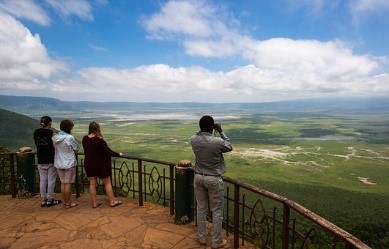
Ngorongoro Crater
Other Tanzania’s Attractions
Apart from wildlife safari, there are many attractions you can enjoy from your Tanzania safari tours. If you love adventures, then a safari in Tanzania will never be a disappointing experience. The mainland Tanzania has some of the best natural attraction in East Africa. How about climbing to Africa’s summit? Well, that is what Mt Kilimanjaro on the border of Tanzania and Kenya is offering. It is the highest point in Africa and the second in the world. Armed with your powerful microscope at the peak, you will be able to see the vast magnificent African land spreading from the foot of the mountain.
Mt. Kilimanjaro
The Great Rift Valley passes through Tanzania and hosts some of the world’s spectacular natural beauties. Most iconic are its lakes including Lake Tanganyika, Lake Nyasa, Lake Natron, Lake Chala amongst others. It is also important to note that World’s largest freshwater lake, Lake Victoria is also in Tanzania. These are just of the natural beauties that you can add to your Tanzania safari tours for a more fulfilling experience.
Tanzania’s Vibrant Beach Life
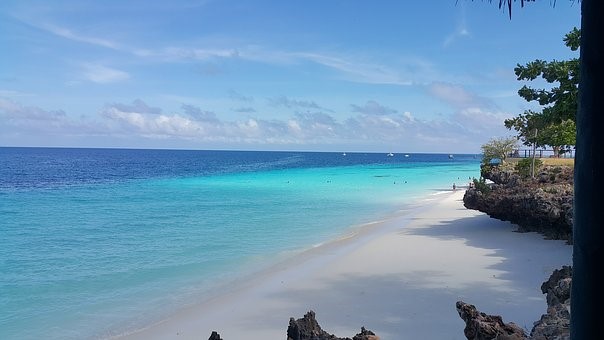
Zanzibar White Beach
Although most of the safaris are in mainland Tanzania, we recommend that you wind up your safari with a beach experience in Tanzania’s exotic Indian Ocean Islands. There are many options that you can pick from including, but Zanzibar archipelago is the real deal. The Indian island provides an incredible beach experience like no other. The archipelago is made up of two large islands namely Unguja and Pemba, but there are about ten islands which are part of Zanzibar. The island also boasts of astounding white beaches and turquoise coral waters which is a sight to behold. If you love snorkeling, boat riding, sea diving, and hiking, Tanzania’s Indian Ocean islands provide a perfect place wind up you Tanzania Safari.
A safari in Tanzania is definitely an adventure filled with lifetime memories. From the wildlife to the vibrant beach life, the country has everything you need for a once in a lifetime Safari. Get a safari package that gives you all this experience.
SINGAPORE: Nanyang Technological University (NTU) scientists have invented a portable device that can detect trace levels of heavy metal contaminants in drinking water in just five minutes.
Drinking water quality is typically monitored using highly accurate laboratory tests that take at least a day to complete, NTU said in a media release on Monday (Apr 15). Lab tests are necessary as heavy metals cannot be identified by colour, taste or odour unless present at high levels.
NTU’s device, however, uses an organic substance found in the human bloodstream called a chelating agent, which detects and binds to heavy metal ions and marks them for excretion from the body.
The device generates test results quickly without the need to bring samples back to laboratories, facilitating on-site water testing. (Photo: NTU Singapore)
The device combines a chelating agent with an optical measurement system and requires just a few drops of a water sample in a disposable sensor cartridge to detect heavy metals at parts-per-billion precision.
This means the device can detect lead levels of five parts per billion, which is more precise than the 10 parts per billion limit stipulated by the Environmental Public Health Act in Singapore.
Associate Professor Yong Ken-Tye, one of the scientists behind the device, said the use of a chelating agent ensures its detection is as sensitive as “the body’s natural defence mechanism against metal intoxication”.
He added that the device can detect up to 24 types of metal contaminants, double the capacity of other commercially available water sensors.
While there already are portable devices on the market that can quickly detect heavy metal contaminants, NTU said they might require the additional step of mixing the water sample with a buffer solution before performing the test.
The sensor for such kits also has to be used within 30 minutes after exposure to air, it added, as its effectiveness can be affected by air, heat or humidity.
Furthermore, NTU said devices that use metal electrodes like mercury as a sensing probe could introduce heavy metal contaminants back into the environment, while colour-changing test strips could lead to results based on subjective readings of the strip.
Beyond efficiency, the device can be integrated into domestic appliances such as water filtration systems and electric kettles.
“The device can easily be integrated into any existing in-line water treatment plant,” said Professor Tjin Swee Chuan, another scientist behind the device. “While our product is competitive enough to penetrate the market, we are still working to enhance and expand our water sensor product line.”
The NTU team has set up a company called Waterply to commercialise the device. It is working with other local companies to collect more data through the device to improve its accuracy.
Waterply is also collaborating with a state-owned company in China to develop next-generation water sensors that can tackle water pollution.