Home Blog Page 804

Commentary: Hyflux after the perfect storm

0

SINGAPORE: Over the past few months, investors in Hyflux have been anxiously observing the unfolding of events.

When white knights in the form of a consortium comprising Salim Group and Medco Group (SM Investments) entered into an agreement in October last year to invest S$400 million for 60 per cent of Hyflux’s equity and to grant S$130 million in loan, things started looking up.

Then in March, national water agency, PUB, issued a default notice giving Hyflux some time to remedy defaults arising from a water agreement, failing which PUB will take over its subsidiary, Tuaspring, “as whole, or the desalination plant alone”. 

A few weeks later, PUB said it will assume control of only Tuaspring Desalination Plant (TSDP) at zero dollars, and waive off the compensation sum which it is entitled to under the water agreement. This caught many by surprise.

The future of Hyflux looked gloomier than ever on Apr 4 when Hyflux cancelled the restructuring agreement with SM investments saying that it has “no confidence the Indonesian investor will complete the deal”. Hyflux subsequently sued SM investments for its repudiation of the rescue deal and for the deposit of S$38.9 million.

Hyflux Singapore

(Photo: Jeremy Long)

Time is running out for Hyflux whose total liabilities stood at S$2.8 billion at the end of March. It now has until its next case management conference with the judge on Apr 25 to indicate if it needs more time to keep creditors at bay.

The pressure has been kept on after PUB issued a termination notice on Wednesday (Apr 17), indicating it would take over TSDP in 30 days.

READ: The fall of once-great Hyflux, a unicorn in the Singapore story, a commentary

MAJOR ROAD BUMPS

Hyflux’s well-publicised ill-timed expansion into the energy business has been a major contributor to its financial woes. The chronic overcapacity in the power generation sector and oversupply of electricity had depressed the selling price of electricity in 2016 and 2017.

Its stalled sale of Tuaspring Integrated Water and Power Plant project and Tianjin Dagang Desalination Plant, and the S$600 million joint venture project with Hitachi and Itochu Corporation to build India’s largest desalination plant in the state of Gujarat India left in limbo, added to its distress.

A large fraction of Hyflux’s Engineering, Procurement and Construction works (about S$1 billion) generated cash inflows that were stretched over lengthy periods.

Tuasspring Hyflux 2

The interior of the desalination plant. (Photo: Hyflux) 

HIGH LEVERAGE A DOUBLE-EDGED SWORD

Hyflux had also aggressively expanded since 2010, with a huge footprint across China, India, and Middle East North Africa (MENA), funded by the Singapore headquarters.

In the most recent five years, the main source of funds were perpetual debt and preference shares. Its debt-to-equity ratio had been on a steady uptrend, which could have been beneficial if profits were healthy as the interest expense can serve as tax shields.

But with Hyflux’s low cash inflow, its high average debt-to-market equity of 6.49 from 2013 to 2018 became a burden. Yet it continued to command the trust and confidence of investors largely because of the strategic support for clean water solutions in Singapore.

Other major players in the clean water solutions industry are not as highly leveraged. Manila Water Co Inc, the sole provider of water and water services to the East Zone of Metro Manila, has an average debt-to-market equity ratio of 0.74.

SIIC Environment Holdings Ltd, despite past debt problems, has a moderate average debt-to-market equity ratio of 1.38, while Veolia Environnement SA and Suez, both listed in Paris, have average debt-to-equity ratios of 1.49 and 1.50 respectively.

(sl) Hyflux debt to equity ratio

The Figure plots the debt to market equity ratios of Hyflux and its four peers from 2013 to 2018. (Graphic: Ruth Tan and Zhang Weina. Source: Factset database.)

FINANCIAL CRACKS

Hyflux had also suffered losses from 2015. Profits in 2013 and 2014 were low. Net cash from operating activities had been negative since 2010.

Hyflux had managed to keep dividends positive every year, however, because it had liquidated assets for cash and borrowed heavily. It secured a sale and leaseback of some industrial property valued at S$115 million for S$111 million in October 2017.

Money raised through bond issues and preference shares were channelled towards paying off loans rather than for incremental working capital or new investments.

Hyflux was once a darling and had a huge fan club in the marketplace. Investors were attracted by its stature as a water company in an industry of strategic interest to Singapore, but that never meant that the business would never fail.

READ: Beyond scarcity and security, does Singapore need a new water narrative? A commentary

Hyflux speaker's corner

A Hyflux retail investor speaking to the crowd at Hong Lim Park on Saturday (Mar 30). (Photo: Amir Yusof) 

Its iconic success and Olivia Lum’s rags-to-riches story captured the imagination of many, and investors may have become careless. They may have been attracted by the high yields.

To be sure, there is no free lunch. High returns come with high risk yet obvious signs of weaknesses were ignored.

WHERE WAS THE BENCHMARKING?

Benchmarking against comparable peers would have uncovered the over-leveraging. There were clues in Hyflux’s cash flow statements – operating activities which serve as the main engine of the firm had not been producing cash for many years.

The lack of credit ratings in Singapore for local bond issuances means all investors have to do their own homework. Past corporate bond defaults include Pacific Andes Resources Development’s S$200 million three-year bond in January 2016, and Swiber Holdings’ S$551 million bonds in July 2016.

Maybe it is time to make the credit risk certification of bond issues mandatory, particularly for publicly listed companies. Sure, these issues come with voluminous prospectuses and can run into hundreds of pages.

Olivia Lum

File photo of founder and CEO of Hyflux Group Olivia Lum.

In June 2017, the Monetary Authority of Singapore launched the Singapore-dollar Credit Rating Grant to encourage issuers in the Singapore-dollar bond market to issue rated bonds. This is a move in the right direction. It will provide greater transparency in credit risk assessment.

Issuers can claim up to 100 per cent of their credit rating expenses, subject to a cap of S$400,000 per issuer.

Maybe the barrier to obtaining a third-party credit risk assessment are the high fees charged by global credit rating agencies. But that is not an insurmountable problem.

There is an alternative public source of credit risk assessment made available by Credit Research Initiatives (CRI) at the Risk Management Institute (RMI) at the National University of Singapore (NUS), which provides a probability-of-default assessment for all publicly listed firms around the world.

And when we looked at CRI’s estimates, Hyflux’s default risk had reached the equivalent of Moody’s Ba1 rating which is a non-investment grade (based on Moody’s historical one-year average default rate from 1983 to 2017).

By 2018, it was at B2 which is five grades below investment grade. In short, the signs of financial distress had appeared as far back as February 2016.

(sl) Hyflux debt default proability

Default probabilities show that signs of Hyflux’s financial distress had appeared as far back as Feb 2016. (Graphic: Ruth Tan and Zhang Weina. Source: NUS RMI CRI and Moody’s Investors Service).

AFTER THE PERFECT STORM

If Hyflux wishes to further extend its debt moratorium, it would need a concrete debt restructuring plan.

For now, the fate of Hyflux depends on whether it can find another white knight or white squire. If nothing is acceptable to the court, the company will be heading towards eventual liquidation.

The final recovered asset value will then depend on legal, market and even political factors related to the geographical location and business nature of those assets.

What remains then will just be the memory of a once glorious company, and traces of its assets under new owners and management teams.

Ruth Tan is Associate Professor in the Department of Finance at the National University of Singapore (NUS) Business School. Zhang Weina is Senior Lecturer in the same department.

Source link

The forgotten hospital off Maxwell Road

0

SINGAPORE: Given its plain and rather uninspiring-looking facade, few among the busy CBD crowd would give this building behind Maxwell Food Centre a second glance.

But the edifice on Ang Siang Hill has nearly a century’s worth of hidden history. “Nothing less than sensational”, is how one architectural historian describes what was possibly the earliest Modernist building in Singapore.

It was a medical supply storehouse, a dispensary, but first of all a hospital – the St Andrew’s Mission Hospital for Women and Children – which from 1922 brought much-needed healthcare to the poor in Chinatown who had no access to proper medical care. 

The Singapore Land Authority (SLA), which manages this three-storey property, recently gave the public a rare chance to explore this site on a #SLASecretSpaces guided tour with heritage blogger Mr Jerome Lim.

maxwell hospital airwell 2

The distinctive airwell of the building, which was built on a triangular piece of land.

Here are eight things you never knew about this mysterious building.

1. IT HAS THE OLDEST ELECTRIC LIFT IN SINGAPORE

At 90 years old, the building’s electric lift – with its collapsible iron gates and wooden panels – is believed to be the oldest such in Singapore.

And there’s a pretty poignant story behind it.

maxwell hospital oldest lift 2

The lift was installed in 1929, and up until 2018 had a permit to operate.

The hospital used to treat children with tuberculosis of the spine or other bones, and for years, the poor nurses had to painstakingly carry these patients up the stairs from the ground floor to the sunlit rooftop.

“These children, because of the nature of the disease, couldn’t very well make their own way to the roof,” said Mr Lim. “The only thing they (the nurses) could do to treat the disease was to bring them up to the roof for fresh air and sunshine – that apparently eased the pain.”

Maxwell hospital Rooftop

Old newspaper photo showing children on the hospital’s rooftop.

In 1929, enough donations were finally collected to purchase and install the lift, which was built by British company Smith, Major and Stevens, an elevator manufacturer that existed from 1770 until 1930.

The lift was still in working order up till March last year.

2. IT WAS POPULAR WITH THIEVES

After World War Two – during which it was damaged by a bomb but still continued, under the Japanese, to see patients – the hospital was turned into a government medical supply storehouse.

It was a frequent target of thieves because of its medical inventory.

Mr Patrick Ho who lived there with his family from the 1940s to the 1960s, recounted how they used to employ a policeman to guard the place.

But that didn’t deter some thieves who, on a couple of occasions, managed to tie up the watchman.

maxwell hospital patrick ho 2

Mr Patrick Ho, whose father ran the medical supply store here.

“The people from the market must have heard him shouting for help, and they untied him. Twice this happened, to two policemen,” he said. 

I heard from people that the thieves were trying to take away some drugs, like morphine.

Mr Ho’s father was managing the medical storehouse and his family lived in quarters erected on the rooftop, It had bedrooms, toilets, a kitchen and a dining area.

The storehouse later saw a change of use and became the Maxwell Road Outpatient Dispensary from 1967 to 1998, distributing medicine to those who lived around the area.

maxwell hospital patrick ho

The building’s design was ahead of its time when it was built in the 1920s.

3. IT IS ONE OF THE EARLIEST MODERNIST BUILDINGS IN SINGAPORE

While its architecture may not be distinctive amid today’s towering skyscrapers, this building probably stood out in 1920s Singapore, said architectural historian Mr Julian Davison.

“Suddenly, right in the middle of Chinatown, you get this white severe Cube, It must have been sensational,” he said. “And it was (not only) a landmark building in terms of architecture but also as a kind of symbol of a new age in Singapore: The advent of the modern world.”

maxwell hospital courtyard

Ground floor area which was once an open-air courtyard.

This building has, after all, an impressive pedigree – it was designed by Swan & Maclaren, Singapore’s oldest architectural firm better known for building the iconic Raffles Hotel, St Andrew’s Cathedral and the Victoria Memorial Hall.

When this building was being constructed, it was surrounded by modern buildings with cladding, metal frames and windows.

“And then we get this building – sheer facades and no ornaments,” said Mr Davison.

“It’s quite astonishing that this building should be found in Singapore, which wasn’t known for its advanced architecture in those days.”

maxwell hospital julian

Mr Julian Davison thinks the building has conservation value.

 4. IT WAS BUILT TO CATER TO WOMEN WHO SHUNNED MALE DOCTORS

Asian women were once terribly uncomfortable about being treated by male doctors.

To reach out to them, Dr Charlotte Ferguson-Davie, wife of the first Anglican bishop of Singapore, set up several clinics – including this hospital in 1922 – and enlisted female doctors to care for them.

maxwell hospital Staff and Children

Staff and children of the hospital. (Source: St Andrew’s Mission Hospital)

“St Andrew’s Mission Hospital, from the perspective of medical history, played a very important role in Singapore, bringing healthcare to the poor who otherwise couldn’t get access to it,” said Mr Lim.

The 60-bed hospital cost S$111,000 to complete. It operated on voluntary donations and grants as the government’s annual grant of S$1,800 was insufficient to meet its expenditure.

maxwell hospital st andrews mission

As it was in the old days. (Source: St Andrew’s Mission Hospital)

5. SOME OPERATIONS WERE CONDUCTED HERE WITHOUT ANAESTHETICS

Dr Ho Boon Liat, who was a director of the hospital, offered a glimpse of life in this institution during the Japanese Occupation in his book, the ‘Syonan Interlude’.

“The amazing thing (was that) procedures – forceps, abnormal presentations, retained placentas – were performed without anesthesia. It sounds barbaric now, but we had finished our stockpile of anesthetics before the end of the very first year of the (Japanese) Occupation,” he recounted.

maxwell hospital Shimin Byoin

From Ho Boon Liat’s book, ‘Syonan Interlude’

Due to the hospital’s location near Chinatown’s brothels, the hospital also treated venereal diseases and “quarrels were very frequent among the women of this locality due to trade rivalry,” said Dr Ho.

6. THE ROOFTOP OFFERED A VIEW OF DEATH HOUSES

The Street of Death – or the infamous Sago Lane with its funeral parlours and death houses – was just a street away, and former resident Mr Ho recalled seeing and hearing funeral processions two to three times a week.

There was also that constant smell of opium wafting through his house right on cue every evening at around 8pm, from his neighbours who were opium smokers.

“(During) that time, I think most Chinese people smoked opium,” he added. “I can recognise how opium smell like… it wasn’t an unpleasant smell, but very strong.”

maxwell hospital reflection

7. IT WAS TANG’S CORPORATE OFFICE

This building was, most recently, the corporate office of Singapore’s oldest department store Tangs.

C K Tang Limited occupied the premises from 2012 to 2017 while various spaces at 310 Orchard Road (TANGS at Tang Plaza) were undergoing refurbishments, said a CK Tang spokesman.

8. IT HAS NO CONSERVATION STATUS

The building has been marked for residential and commercial use, but it doesn’t have conservation status.

Mr Lim feels with its “many layers of history”, in order to document this “some thought should be spared on conserving the building”.

maxwell hospital jerome lim

Heritage blogger Jerome Lim

“I think it’s quite important. The St Andrew’s Medical Mission played a very important role, they built this building and…we find that this building has had many uses.”

For now, the SLA is working with other government agencies to put the property up for either adaptive reuse or longer term plans.

Source link

Tampines Mall reopens after fire breaks out; 1 taken to hospital

0

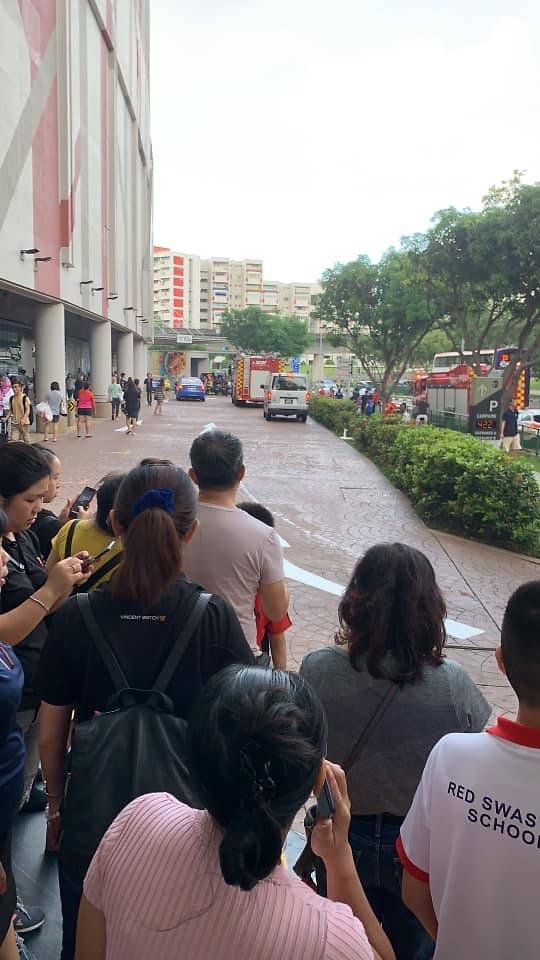
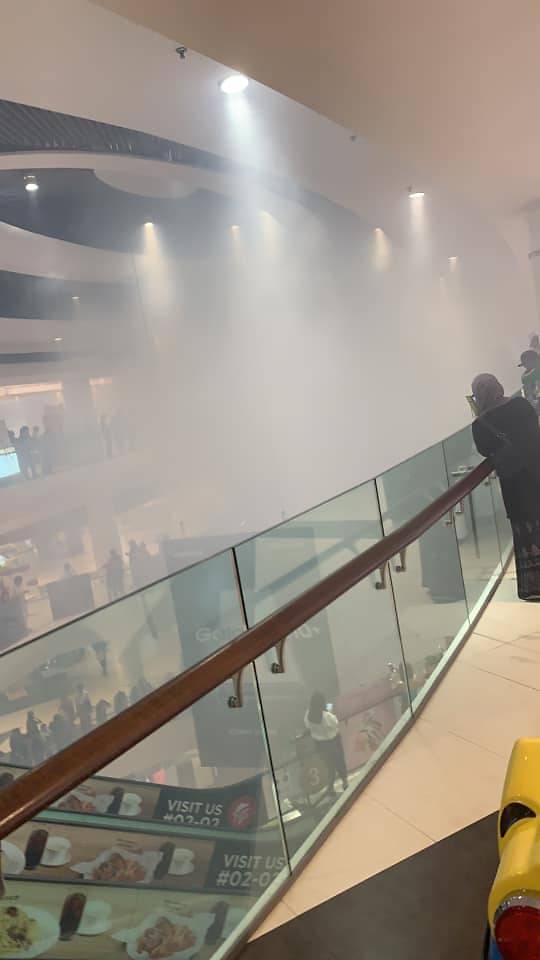
SINGAPORE: Tampines Mall was forced to shutter its doors temporarily after a fire broke out in the shopping centre on Thursday (Apr 18) afternoon.

It reopened to the public about two hours later at 7pm, but said that some shops had chosen to remain closed for the rest of the day.

The fire involved a deep fryer at an atrium fair, the Singapore Civil Defence Force (SCDF) said, adding that it responded to the incident at about 4.30pm.

Members of the public had used dry powder extinguishers and a hose reel to help fight the blaze, which was extinguished before SCDF arrived.

A man was taken to Changi General Hospital for smoke inhalation, SCDF said.

Footage posted on Twitter showed flames near an escalator as a thick cloud of smoke rose into the air. Customers were seen scrambling to safety.

In an statement on Facebook, Tampines Mall said that a small fire had broken out in the atrium of the mall.

“The fire has been put out. As a safety precaution, we have temporarily closed the mall,” it said.

tampines mall fire

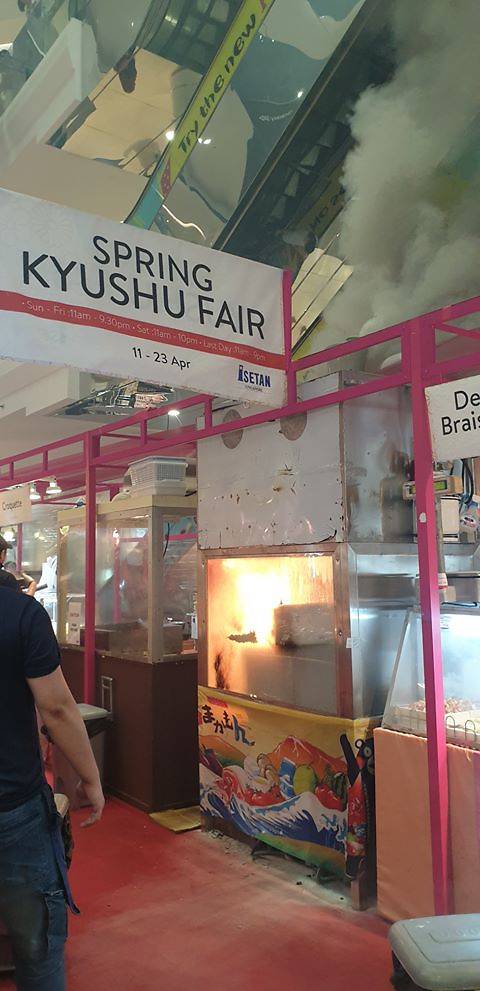
Thick cloud of smoke was seen in Tampines Mall after a fire broke out on Apr 18, 2019. (Photo: Facebook/Joanne Tan)

The fire happened near the Spring Kyushu Fair, a Japanese food fair taking place at the mall. Photos sent by eyewitnesses showed flames next to a stall selling deep fried and braised seafood.

CNA reader Joanne Tan said she was standing next to a stove beside the stall, when she saw it catch fire.

“The fire spread very quickly,” Ms Tan said. “The fire alarm was triggered because of the smoke. I was choked by the smoke.”

She added that several men tried to put out the blaze with fire extinguishers, but they were only able to contain the fire momentarily.

“The fire kept coming back bigger and bigger. The last thing I saw was they were pulling the fire hose to the stall, before I was dragged out by my friend,” Ms Tan said.

“Initially everyone nearby came over to help, but when the smoke was overwhelming, security guards and some men were shouting to others to leave the mall.”

blaze in tampines mall

A fire broke out at Tampines Mall on Apr 18, 2019. (Photo: Facebook/Joanne Tan)

Another witness said he was on the first floor of the mall when he was told by security to evacuate.

“A burning smell was present. Everyone inside was evacuated; everyone was calm,” he added.

“More than four police vehicles were seen, two ambulances and one fire engine.”

Jane Kwek told CNA she was in the Hush Puppies store when the fire started at one of the stalls at the Spring Kyushu Fair.

“The fire was contained in the stall on level one. The smoke covered the entire mall and an announcement was given to evacuate. Security also ushered us to evacuate out of the mall,” she said.

“I was shocked as I have not experienced a fire before. I did not know what to do until the security ushered us out of the mall. The smoke was choking but did not sting.”

SCDF confirmed the mall was evacuated by security personnel as a precautionary measure, and that the cause of fire is being investigated.

Mr Mustafa Abdul Rahim, general manager of Tampines Mall, said: “The fire was quickly put out. As a safety precaution, the centre management office evacuated all the shoppers and tenants in the mall. 

“The SCDF arrived shortly to assess the situation. Tenants started to re-enter the mall at about 5.55pm and the mall reopened to the public at about 6.45pm.

“The safety and security of our shoppers and tenants is of paramount importance. We are giving our full cooperation to the authorities on their investigations into the cause of the fire.

fire engine tampines mall

A fire engine seen outside Tampines Mall. (Photo: Facebook/Jimmy Lin Dewen)

Din Tai Fung, a Chinese restaurant at Tampines Mall, posted on Facebook informing customers that the outlet was temporarily closed.

“Due to unforeseen circumstances, our restaurant at Tampines Mall will be temporarily closed,” it said.

​​​​​​​

fire tampines mall

A fire broke out in Tampines Mall on Apr 18, 2019. (Photo: Facebook/Jimmy Lin Dewen)

​​​​​​​

This story came from a reader tip-off. If you would like to send in photos or videos of something newsworthy, WhatsApp our Mediacorp news hotline at +65 8218 8281 or message us on Facebook.

Source link

Singapore companies must take innovation and technology seriously, says Heng Swee Heat

0

SINGAPORE: Singapore companies must respond quickly to the changing business environment while also taking innovation and technology seriously, said Finance Minister Heng Swee Heat on Wednesday (Apr 17).

He was speaking at the two-day Bridge Forum CEO Summit in San Francisco, organised by the Economic Development Board (EDB) and GIC, which manages Singapore’s foreign reserves.

The forum connects their partners in Asia with networks and business leaders in Silicon Valley to discuss the subject of tech disruption.

When asked by the session’s moderator, EDB managing director Chng Kai Fong, what Singapore can do better in, Mr Heng said: “I hope that our companies take innovation and technology seriously.”

He added: “The speed of technological changes, the speed that others are changing business models means that if you don’t change, you’re going to be left behind. So it’s quite critical, first and foremost, that our companies are really going out to all these changes quickly.”

At the same time, Singapore must ensure that workers are not left behind amid the rapidly changing environment, Mr Heng said.

Heng Swee Keat at Bridge forum

Finance Minister Heng Sweet Keat and Sequoia Capital managing partner Doug Leone at the Bridge Forum CEO Summit in San Francisco. (Photo: GIC and EDB)

He pointed out that Singapore has embarked on a push for skills upgrading and lifelong learning.

“Lifelong learning is not just a slogan. It’s something we are working very hard on,” said Mr Heng, who also chairs the Future Economy Council.

He noted that such efforts have been made possible with the tripartite relationship between businesses, unions and the Government.

The unions take a “very supportive” approach, Mr Heng added. “They work with companies and say, what are the changes that are needed and how do I prepare our workers. If our workers are going to do that, will they benefit?”

“If you look at stories of successful transformation around the world. It is always that the people must believe that the change is good for them, because otherwise you’ll get a strong reaction against the change,” he said.

“In Singapore, ever since our founding, we have the tripartite relationship – businesses, unions and workers and the Government. It is important to have all three elements working together.”

He told the audience: “If you look at all the backlash against globalisation, it is in all the places where workers feel that their interests have been compromised and not taken care of. 

“In an age where technology can replace many of these simple jobs, it is even more important for us to focus our minds on this.”

Source link

Pokemon Go fans in Sentosa for Southeast Asia’s first Safari Zone

0

SINGAPORE: Thousands of people armed with Pokeballs flooded Sentosa for Southeast Asia’s first Pokemon Go Safari Zone event, which started on Thursday (Apr 18).

The event is set to draw more than 100,000 participants over five days, with many coming from overseas to take part. 

Safari Zone events have been held in various countries and regions worldwide, and was most recently in Brazil from Jan 25 to Jan 27. 

These events allow participants to obtain region-specific Pokemon that cannot be caught in the host countries, with increased spawn rates of rare creatures and event-exclusive gameplay features throughout a designated area.

WATCH: 100,000 Pokemon GO trainers set for Sentosa Safari Zone

READ: Pokemon Go is still alive and changing lives, a commentary

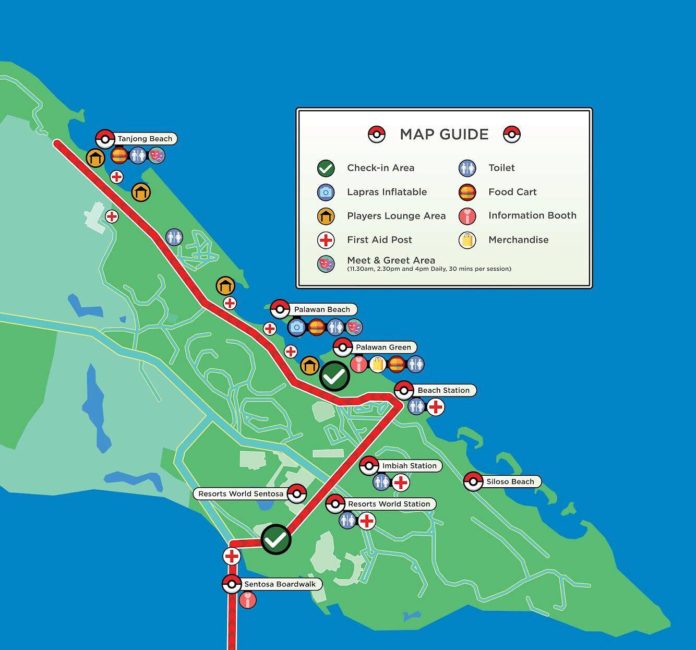
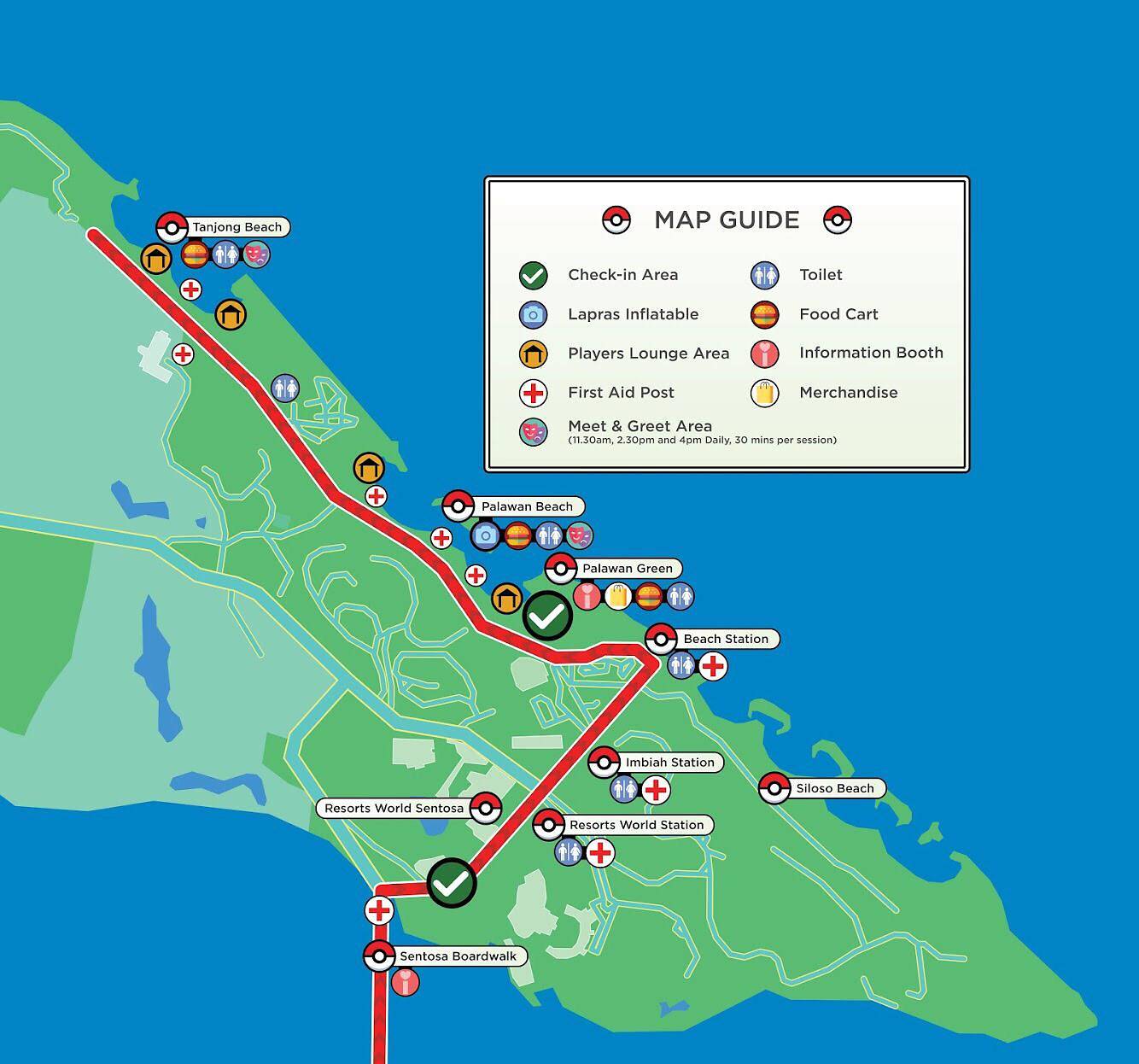
Pokemon Go Safari Zone Sentosa map

Attractions across the 5km-long trail include the world’s first 6-metre-tall Lapras inflatable. (Image: Sentosa)

Pokemon Go Safari Zone check in 1

Check-in area at Palawan Beach. (Photo: Ian Cheng)

Attractions across the 5km-long trail in Sentosa include the world’s first 6m-tall Lapras inflatable, Pokemon photo points, daily meet-and-greet sessions with Pikachu and a Pokemon pop-up store.

Themed rest areas based on the three teams in Pokemon Go – Mystic, Valor and Instinct – are also available, where players can mingle and cool off, as well as seek shelter in the event of wet weather.

Pikachu visors were also given away at random intervals throughout the event to shield participants from the sun.

Pikachu visor

Giveaways of Pikachu visors will be also be held at random intervals throughout the event to shield participants from the sun. (Photo: Ian Cheng)

TIME WITH FRIENDS AND FAMILY

“I was very excited when I saw that my relatives and I all qualified to play on the inaugural day of the event in Singapore,” said 38-year-old retail manager Clifford Loi, who took a day off to explore Sentosa on Thursday with his family.

“My boss plays too,” he chuckled.

A total of 125,000 tickets to the event were allocated to participants who balloted online in early March, with about 80 per cent handed to locals and 20 per cent to tourists.

Pokemon Go Sentosa

The check-in area for the Pokemon Go Safari Zone Sentosa event. (Photo: Ian Cheng)

A 42-year-old educator, who wanted to be known only as Mr Tang, said the best part of Pokemon Go is “the time spent as a family”.

“We will probably stay three to six hours at Sentosa. Hopefully we will get to all the checkpoints, and haul a few Tropius. It’s a public holiday anyway, a perfect time to spend outdoors with the family,” said Mr Tang, who will be attending the event on Friday with his wife and children.

Pokemon Go Team Instinct

Pokemon Go players at the Team Instinct player lounge. (Photo: Ian Cheng)

COMING FROM AFAR

Freelance tutor Plyor Wongsuchat, 31, and her friend Rungnapa Damrongvatanapokin, 30, flew down from Thailand for a weekend trip to Singapore. They made arrangements after their applications for tickets were approved.

“I was happy that one of my closest friends got tickers for the same day,” said Ms Wongsuchat, an avid player and Pokemon fan.

“After being confirmed, I hesitated to come,” conceded Ms Damrongvatanapokin, who does not know if the experience will be worth it. The trip cost the duo about THB29,000 (S$1,230), but their trip is not all about Pokemon.

“It’s also a trip to see some of my friends here anyway that I’ve made through my bunny’s Instagram account,” said Ms Wongsuchat, who is looking forward to the food in Singapore.

Pokemon Go fans from the united states

The McGuire family, who have played Pokemon Go since its launch, flew down from Portland, Oregon. (Photo: Ian Cheng)

The McGuire family, who have played Pokemon Go since its launch, flew down from Portland, Oregon, and planned a holiday around the Safari Zone event.

They previously attended the Go Fest event in Chicago and Safari Zone events in Taiwan.

“I like how the game is constantly evolving. There’s PVP (player versus player) and new content, keeping it fresh. In Portland, Oregon there are PVP tournaments and meetups, where I’ve made lots of friends,” said Corinna, 51, a medical technician.

“I’ve always enjoyed the light heartedness of the game,” said 20-year-old student Anne.

“It has to be a place which we want to visit, and we wanted to visit Singapore,” said Corrine.

“Singapore has a reputation of being a really fun place to travel. It’s clean and tourist friendly, we like Pokemon and travel so why not do both?”

Pokemon Go fans from the United States

The McGuire family from the United States plays Pokemon Go together. (Photo: Ian Cheng)

YouTube personalities Nicholas Oyzon, from Los Angeles, and Julian Sherrod, from Philadelphia, also made an appearance at the event.

Mr Oyzon’s Pokemon Go-focused YouTube channel, Trainer Tips, which chronicles his journeys as a Pokemon Trainer, boasts more than 851,000 subscribers. Mr Sherrod, who runs DX1, a similar channel, has more than 13,000 subscribers.

READ: Pokemon hunting in Singapore? There’s a taxi tour package to drive you around

READ: Elderly Taiwanese man catches them all in Pokemon Go with multiple phones strapped to bicycle

Pokemon Go Pikachu and Ian Cheng

Pikachu mascots were also present at the event. (Photo: Ian Cheng)

The duo attended the event with several friends, including Brandon Tan, 28, from Singapore.

“Honestly it’s just being able to hang out with all my friends from around the world, getting to see people that I know here, people that come from other countries that I’ve met before,” said Mr Oyzon.

“I am actually quite into PVP,” added Mr Tan, who is self-employed. He regularly organises community events and meetups locally. 

Pokemon Go-focused YouTube channel Trainer Tips

Nicholas Oyzon (left), Julian Sherrod and Brandon Tan. (Photo: Ian Cheng)

Mr Sherrod said his highlight of the event so far was catching a shiny Lapras just moments before, while fans looked on.

Inclusivity was also the name of the game in Sentosa. Andy Lee, who was in a wheelchair, had little trouble navigating the beaches of Sentosa.

“I’m very happy and excited, it’s the first time I’m attending this kind of event,” said the 26-year-old Mr Lee, who works as a call centre agent. Aside from the odd staircase, he said that his Pokemon journey has been smooth, as Singapore is wheelchair user-friendly.

Pokemon Go Safari Zone participants

Calvin Voo (left) and Andy Lee at the Pokemon Go: Safari Zone event. (Photo: Ian Cheng)

Mr Lee attended the event with his friend, 22-year-old Calvin Voo, who is currently serving National Service. Both men took a day off from their respective commitments.

RARE POKEMON

An in-game highlight of the Safari Zone event is the appearance of Tropius, a species of Pokemon resembling a dinosaur with large, wing-like leaves, normally obtainable only in Africa, South Spain and Crete.

Lapras, an otherwise rare Pokemon species, is also more commonly encountered during the event. The aquatic Pokemon has been featured prominently in local Pokemon-related collaterals, due to its popularity and association with water, a “fitting image for Singapore”, according to chief business officer of The Pokemon Company Ito Kenjiro.

Pokemon Go Safari Zone pokemon available

Pokemon Go enthusiasts can look forward to catching Unown (left), Lapras and Tropius. (Images: Ian Cheng)

Also featured is Unown, an elusive entity shaped like symbols and letters, a long-necked tropical variant of Exeggutor, which resemble palm trees, Shuckle, a shy bug Pokemon species, and Dratini, a fan favourite with a dragon-based evolutionary line. The Unown variants that can be caught in this event spell Sentosa.

Guests attending the Safari Zone event without tickets will still be able to experience normal gameplay, and can participate in the various activities and attractions that will be taking place during the event.

Pokemon Go Safari Zone Sentosa badges

Screenshots of the Pokemon Go app during the Safari Zone Sentosa event. (Images: Ian Cheng)

“While we expect higher visitorship during the event period, it will be business as usual at Sentosa’s various unique leisure offerings, and the island will continue to welcome all locals and tourists,” said Lynette Ang, chief marketing officer of Sentosa.

SINGAPORE THE “TOP CHOICE” IN SOUTHEAST ASIA

Hikaru Ray Adachi, Niantic’s senior director of product marketing (APAC), said that Singapore was the top choice to host Southeast Asia’s first Safari Zone event, as player experience is a top priority.

“Niantic is aware of the large Pokémon GO player base we have in Singapore and in the surrounding regions, and this also played a large part in our decision,” Mr Adachi told members of the media in an interview.

“Some of the other deciding factors were Singapore’s geographic location, its friendly and welcoming policies coupled with great support from local officials, as well as the nation’s reputation as a regional tourist hub.”

READ: Pokemon GO: The lengths that Singaporeans will go to keep up

READ: Gotta cash ’em all: Businesses bank on Pokemon Go fever

Hikaru Ray Adachi Niantic Japan

Hikaru Ray Adachi, Senior Director of Product Marketing (APAC) for Niantic Japan. (Photo: Niantic)

Mr Adachi added that Sentosa was chosen because it was “uniquely suited” for the event due to its various attractions and family-friendly position.

“We want our player base to get out there and explore the real world while they play our games. Sentosa is very much aligned with this theme and as well as with our three pronged mission of encouraging discovery, exercise, and real-world socialising,” he said.

Pokemon go Team Valor tent

View of the Team Valor player lounge. (Photo: Ian Cheng)

Pokemon Go Safari Zone charging point

No power, no problem: charging points were available at the event. (Photo: Ian Cheng)

“As such, the Pokemon Go Safari is not just a chance to meet your favourite rare Pokemon, but also an opportunity to rediscover local attractions, cities, interact with people, and build lasting friendships throughout the journey.”

Players will have to keep guessing on future plans for Pokemon Go, and Mr Adachi’s lips were tightly sealed about future plans for the game, as well as details on as-yet unavailable Pokemon.

The Safari Zone event is not the first time the beaches of Sentosa have been invaded by Pokemon. Over six days in December last year, a Pikachu Night Parade saw nine Pikachu dressed in LED lights marching and dancing along a 100m route as part of Sentosa’s Island Lights party. Singapore’s first Pikachu Parade was held in Changi Airport’s Terminal 3.

pikachu night parade

The Pikachu Night Parade will have nine of the Pokemon dressed in LED lights. (Photo: Pokemon/Nintendo Creatures/Game Freak)

Other Pokemon-related events have also been held in Singapore. There were two iterations of a Pokemon-themed fun run, with the first drawing a crowd of almost 6,000 people, and also the first Pokemon Research Exhibition outside Japan, held at the Resorts World Sentosa’s S.E.A. Aquarium in October 2016. A Pokemon pop-up cafe also saw hundreds of visitors over its two runs in 2016.

On Wednesday, the Pokemon Center Singapore at Jewel Changi Airport officially opened its doors. The outlet – the first official merchandise store outside of Japan – stocks limited edition items exclusive to Singapore.

Source link

RGS student develops award-winning AI-based fake news detector

0

SINGAPORE: A 17-year-old Raffles Girls’ School (RGS) student, Liu Haohui, has developed a tool to identify whether an article is authentic – something she hopes will help address the “pressing problem” of fake news, she told CNA in an interview on Thursday (Apr 18). 

Speaking on the sidelines of the Young Defence Scientists Programme (YDSP) Congress, Haohui said she had researched the issue and realised there were no viable solutions in the market. Those that existed were localised to their respective markets and usually focused on the United States, she said.

Last year, the teenager interviewed for and was accepted to the four-month Research@YDSP programme run by the Defence Science and Technology Agency (DSTA) and DSO National Laboratories, in which fake news was one of the themes.

The issue of fake news and deliberate online falsehoods is something that the Singapore Government has been looking to address for some time. Earlier this month, the Protection of Online Falsehoods and Manipulation Bill was tabled in Parliament.

“I wanted to see how to use data analytics to protect national security,” said Haohui, who moved to Raffles Institution this year.

After completing her school examinations last October, Haohui picked up new analytics techniques such as deep learning and machine learning. She signed up for an introductory course on machine learning via Udemy, which provided about 40 hours worth of video tutorials and course notes, and learned how there were different techniques for detecting fake news.

“I would spend a few hours on the course each day; sometimes I would watch the videos while having lunch,” she said, adding that she finished the course within two weeks.

Her assigned mentor, Mr Ryan Tarn, also recognised her initiative.

The senior engineer at DSTA’s National Security Programme Centre recounted how Haohui had emailed him a few weeks before the Research@YDSP programme started last September to ask him for materials she could use to learn more about the topic.

TEETHING PROBLEMS

But to tackle the problem of fake news, theories are not enough. Haohui admitted she did not really know how to apply her newly acquired skills.

She also realised that her biggest challenge was in finding the right datasets to train the machine learning models so they could identify fake news.

That there were not many fake Singapore news articles to work with did not help.

Mr Tarn said the dataset that was eventually used to train the predictive model consists of 5,000 authentic Singapore news articles and 1,000 international ones, as well as 6,000 international articles that are fake.

The six pieces of Singapore-related fake news articles that they did get their hands on were left out because they would alter the efficiency of the model, Mr Tarn explained.

Even so, the first round of results was flawed. 

Mr Tarn said the six fake news stories were flagged as authentic by the model. The duo hypothesised that the word “Singapore” was being seen as a cue for reliability given that the word was widely used in authentic articles.

He said he suggested that Haohui remove all nouns from the articles to see if it improved accuracy. She took it a step further by removing pronouns as well.

This process took a few days, as the RGS student had to figure out how to implement the above suggestions, cleaning the data and retraining the model.

Fake news detector by RGS student 2

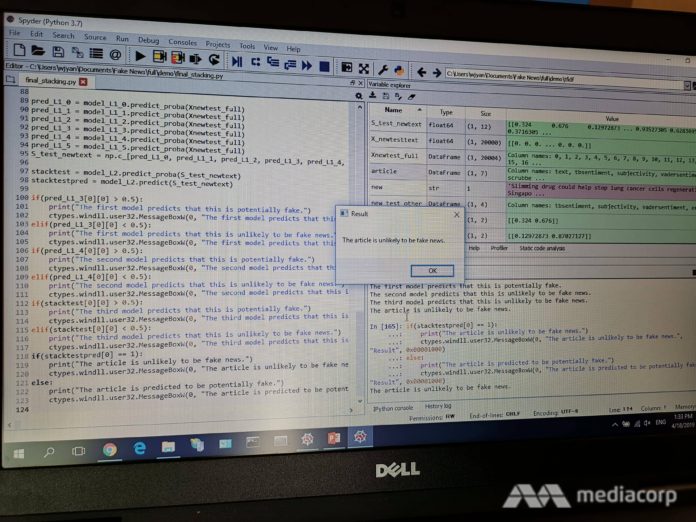
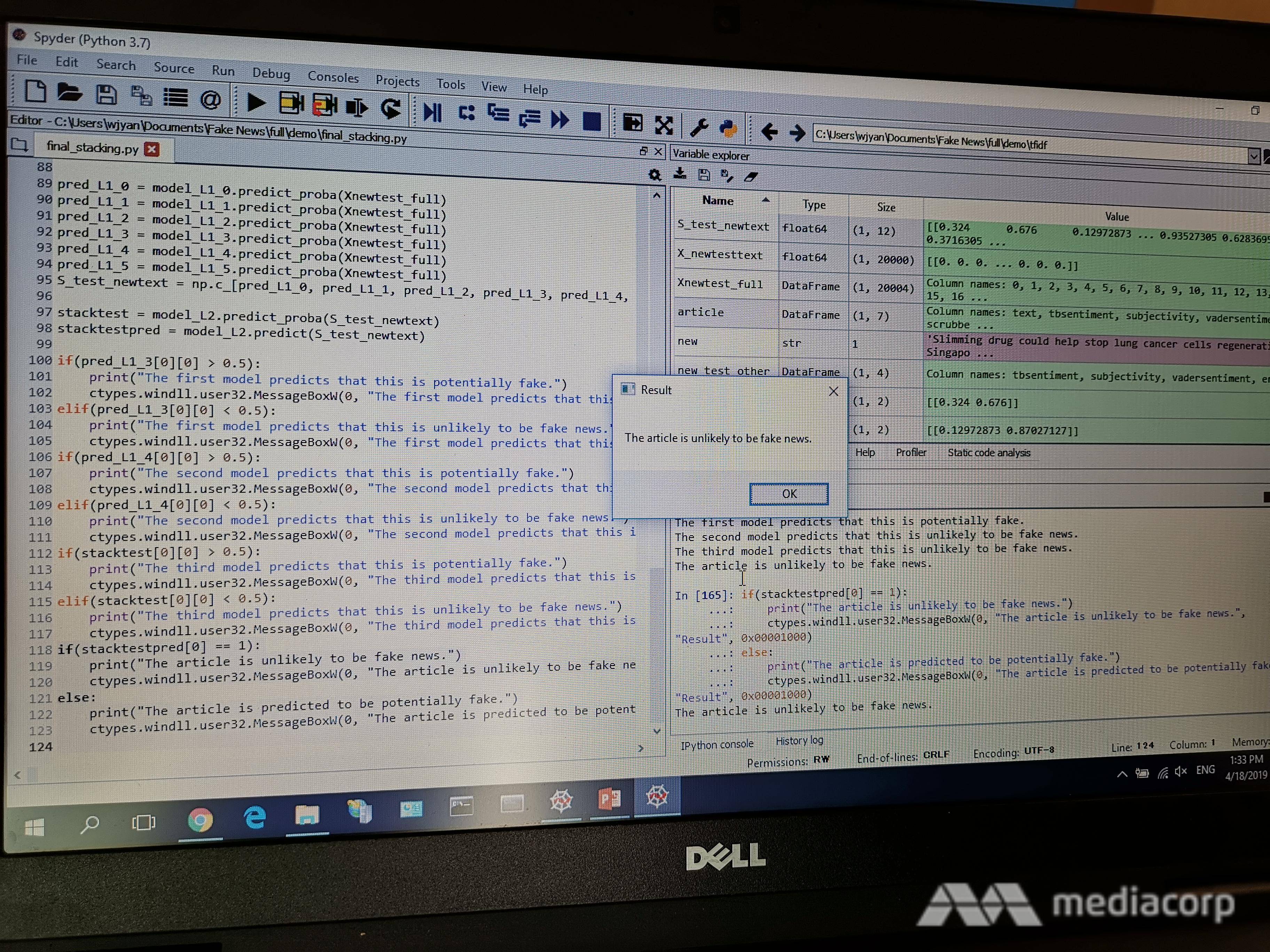
When a new article is “fed” into the fake news detector tool, it will be analysed by five AI models that will individually assess its authenticity based on their respective parameters. The software will then give an assessment such as “The article is unlikely to be fake news”, Haohui explained. 

“It was very exciting to have hands-on experience and apply data analytics techniques to a project that can potentially strengthen our nation’s security,” Haohui said in a press release by DSTA and DSO.

Her project eventually caught their eye, winning the Gold award at this year’s Singapore Science and Engineering Fair together with another Research@YDSP project that looked at how origami can be used to design self-deploying parachutes for disaster relief operations.

“I didn’t expect it at all,” Haohui said. “I just wanted to learn something new.”

The win also gives her the opportunity to participate in this May’s Intel International Science and Engineering Fair, considered by many to be the Olympics of youth science competitions, DSTA said in its press release.

The international competition will be held in Arizona in the United States.

Haohui described the competition as a “great opportunity” for her to share ideas and interact with like-minded people.

She said she wants to further develop her prototype into a mobile app or website that can guide Singaporeans in making more informed decisions.

“I just want to make a contribution to society,” said Haohui.

Source link

Tampines Mall temporarily closed after fire breaks out

0

SINGAPORE: Tampines Mall was forced to shutter its doors temporarily after a fire broke out in the shopping centre on Thursday (Apr 18) afternoon.

Footage posted on Twitter showed flames near an escalator as a thick cloud of smoke rose into the air. Customers were seen scrambling to safety.

In an statement on Facebook, Tampines Mall said that a small fire had broken out in the atrium of the mall.

“The fire has been put out. As a safety precaution, we have temporarily closed the mall,” it said.

A CNA reader said he was on the first floor of the mall when he was told by security to evacuate.

“A burning smell was present. Everyone inside was evacuated; everyone was calm,” he said.

“More than four police vehicles were seen, two ambulances and one fire engine,” he added.

Jane Kwek told CNA she was in Hush Puppies when the fire started at one of the stalls at the Spring Kyushu Fair.

“The fire was contained in the stall on level one. The smoke covered the entire mall and an announcement was given to evacuate. Security also ushered us to evacuate out of the mall,” she told CNA.

“I was shocked as I have not experienced a fire before. I did not know what to do until the security ushered us out of the mall. The smoke was choking but did not sting.”

​​​​​​​

fire engine tampines mall

Din Tai Fung, a Chinese restaurant within Tampines Mall, posted on Facebook informing customers that the outlet was temporarily closed.

“Due to unforeseen circumstances, our restaurant at Tampines Mall will be temporarily closed,” it said.

fire tampines mall

This is a developing story. Please refresh for updates.

This story came from a reader tip-off. If you would like to send in photos or videos of something newsworthy, WhatsApp our Mediacorp news hotline at +65 8218 8281 or message us on Facebook.

Source link

Foodies make a beeline for popular eateries as Jewel Changi Airport opens

0

SINGAPORE: By 11am on Wednesday (Apr 17), the official opening day of Jewel Changi Airport, the queue outside Shake Shack had grown so long that it snaked around an atrium, split into four barricaded sections. 

Signs were parked along the queue informing diners they could only purchase up to five burgers and flat-top dogs per order at the American burger chain’s first outlet in Southeast Asia. ​​​​​​​

Jewel Changi opening day (14)

The queue for fast food outlet Shake Shack during Jewel Changi Airport’s official opening on Apr 17, 2019. (Photo: Jeremy Long)

Jewel Changi opening day (8)

A sign informing customers of the order limit at Shake Shack during Jewel Changi Airport’s official opening. (Photo: Jeremy Long)

First in line were customers Justin Zheng and Hiroki, who wanted to be known only by his first name. They told CNA they had been queuing since 4.30am that morning.

READ: From garden cart to Garden City – Shake Shack goes full circle with Singapore debut

READ: Hungry for more – A&W to open second Singapore outlet in June, eyes “important” halal market

“We’re kiasu Singaporeans,” said Mr Zheng. “First day, first opening, first Shake Shack – kiasu Singaporeans.” 

Unlike Shake Shack, which opened for the first time at 10am on Wednesday, A&W had been open even during Jewel’s preview period. It was reported that customers queued an average of three hours for their food. 

Jewel Changi opening day (13)

The queue at A&W at Jewel Changi Airport on its official opening day, on Apr 17, 2019. (Photo: Jeremy Long)

At around 11am on Wednesday, there were more than 50 people queuing at the fast food restaurant – A&W’s first in Singapore in more than a decade. 

One customer, who declined to be named, said she had been waiting since 7.45am as she thought A&W was going to be open 24 hours. 

Jewel Changi opening day (9)

Shoppers at the Pokemon Centre at Jewel Changi Airport on Apr 17, 2019. (Photo: Jeremy Long)

Jewel Changi opening day (10)

Shoppers at the Pokemon Centre during Jewel Changi Airport’s opening day. (Photo: Jeremy Long)

“I feel that they should have told patrons that they were going to open at 10am, then we would have come at the right time,” she said. 

She told CNA that she visited Jewel during the preview period, but did not manage to buy from A&W due to the long queues.

Jewel Changi opening day (15)

A sign at Pokemon Centre Singapore informing customers of the purchase limit on select items. (Photo: Jeremy Long)

Jewel Changi opening day (16)

Assorted Pokemon merchandise were seen on a shopper’s basket. (Photo: Jeremy Long)

People were not just queuing for the food. One visitor, 26-year-old freelance photographer Neo Wei Xiong, told CNA he had been in the line for the Pokemon Center since about 11pm Tuesday night. 

“It’s the first time the Pokemon Center will be in Singapore and I want to see the item exclusive to Singapore,” he said, adding that he had not managed to get tickets to the Jewel preview. 

The Pokemon fan said he had spent most of Tuesday night waiting outside Jewel, as shoppers were only allowed in the mall at 6am. 

Jewel Changi opening day (4)

Visitors to Jewel Changi Airport take photos during its official opening day on Apr 17, 2019. (Photo: Cindy Co)

Jewel Changi opening day (17)

Indonesians Cynthia Winna Widya Putri (right) and Yenita Shanty Veronika Sianturi were among those who came down to Jewel Changi Airport for its official opening. (Photo: Cindy Co)

Earlier that morning, most of the visitors were crowded around the HSBC Rain Vortex, the world’s tallest indoor waterfall. 

Two of them, Ms Cynthia Winna Widya Putri and Ms Yenita Shanty Veronika Sianturi, had just flown in from Indonesia. 

“We wanted to see Jewel because it’s the (first day of it opening) and we are so excited,” said Ms Putri.

Source link

No more passport stamp when you leave Singapore? 5 other ways travelling has changed

0

SINGAPORE: The news that Singapore will no longer stamp travellers’ passports when they leave the country sounds the death knell for the much-loved (among some) process of packing the pages of your passport with as many chops as possible from as many countries as possible.

When waiting for a flight with friends, you could kill time by seeing who was the most well-travelled by seeing who had the most stamps – and bonus points could be available for the most exotic ones in terms of destination or style.

READ: Foreigners leaving Singapore will no longer have their passports stamped

This is a reminder how the travelling experience has changed over the years. Here’s a reminder of five things that have more or less disappeared and which you might miss (or were perhaps pleased to see the back of):

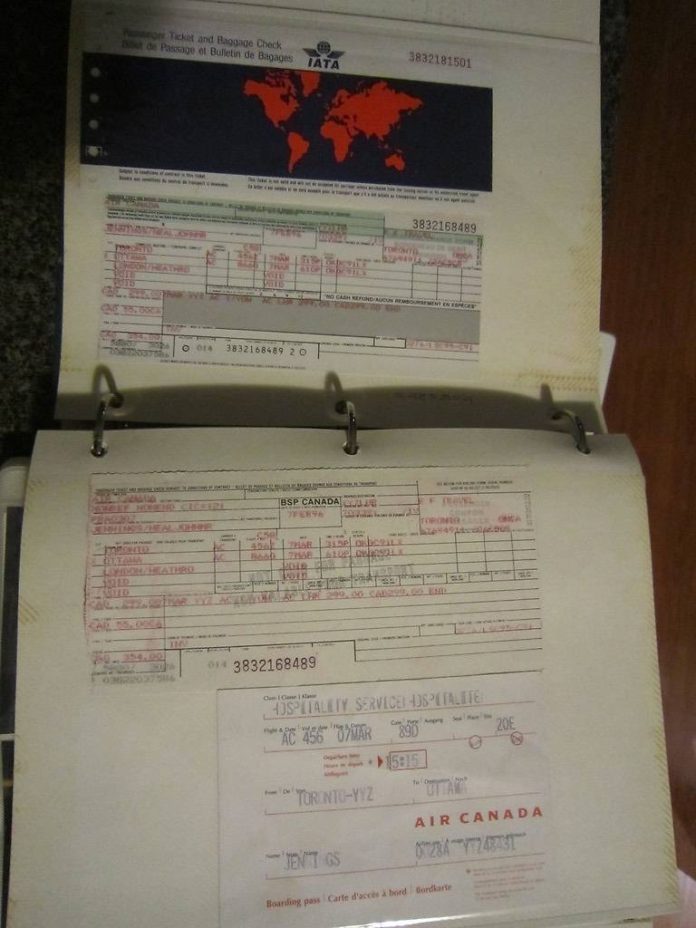
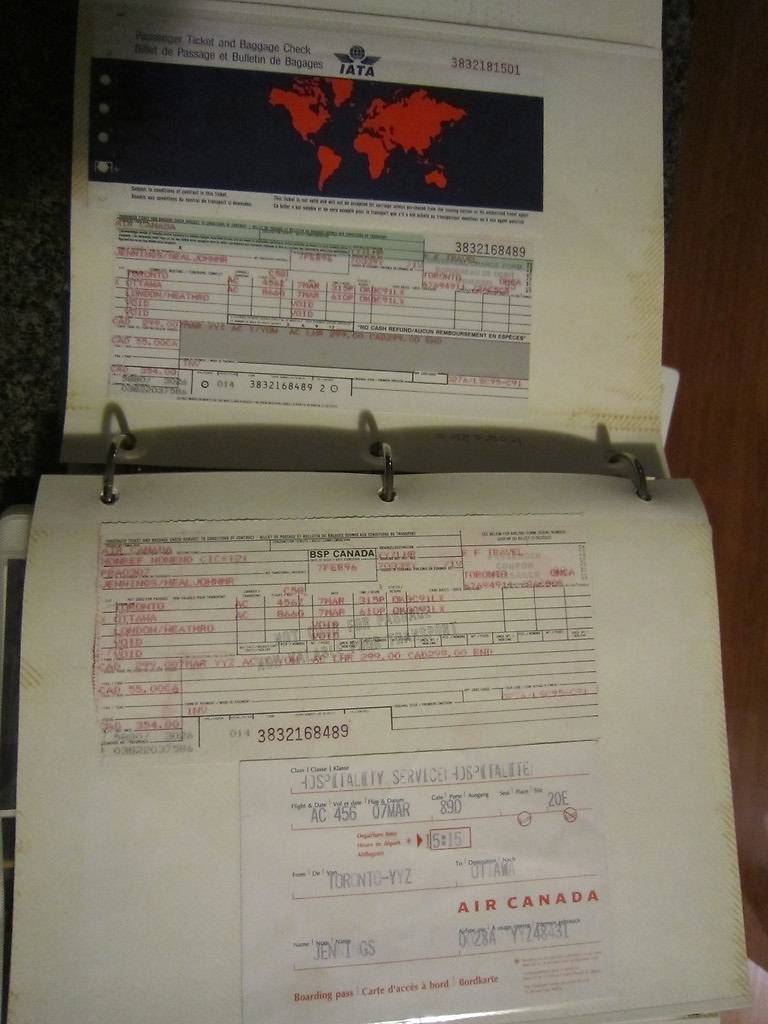
1. No more physical airline tickets

What’s the last thing you do before leaving for the airport? For many people, it’s a quick check to make sure you’ve remembered your passport.

There was a time, though, when you would need to check you had your passport AND your ticket.

Old school airline ticket

Booking plane tickets used to be a more complicated task. (Photo: Flickr/Neal Jennings)

Getting these tickets in the first place was long and complicated: Visit a travel agent, talk through your itinerary, make the reservation and pay for it – and then go back a day or two later to be given a booklet of vouchers, which you would present at the check-in desk in exchange for a boarding pass.

The tickets would speak in a strange language: Odd codes and weird words conveyed the sense that this was an Important Document.

And you would treat them as if you had a Golden Ticket to Willy Wonka’s chocolate factory, guarding them as if your life depended on it.

2. No more calling the airline to reconfirm your flight

So, you’ve got your ticket to your destination. That should mean you’re all set to go, right?

Wrong.

Airlines used to think that buying a ticket was simply an indication that you planned to fly to where you wanted to go on the date you had chosen.

They insisted that passengers contact them a couple of days before departure to say that “Yes, I really do want to fly on that day. Promise! Double confirm plus chop!”

That meant you had to go through the ritual of finding the airline’s phone number (or local office address, if you preferred a nice face-to-face chat) for the reconfirmation process.

Now, the airlines seem much more trusting, assuming that you will turn up for a flight you’ve spent hundreds of dollars on without telling them that you really will.

Frankly, why wouldn’t you?

3. No more smoking on planes

It seems extraordinary now, but it wasn’t that long ago when you’d be asked at the check-in desk if you wanted a smoking or non-smoking seat.

Why wasn’t it seen as the height of stupidity to have people waving naked flames inside a metal tube that also contained thousands of litres of highly flammable jet fuel?

Smoking on a plane

Smoking used to be permitted on flights. (Image: Airliner Ratings website)

Setting aside the dangers, most people would fight tooth and claw to get into their preferred section.

Smokers were terrified at the prospect of sitting in a section where they couldn’t get a regular nicotine fix, whereas non-smokers were appalled at the idea of having to endure a 12-hour flight next to someone who was puffing away on their Marlboro ciggies for the duration.

4. No more big movie screens on planes

Flying long-haul today is a great opportunity to catch up on movies and TV shows which you might have missed. And any airline which offers anything less than hundreds of things to watch on demand is seen as second rate.

So, having NO choice of film and having NO personal screen to view it on might seem like torture.

Yet that was the reality not that long ago.

First flight cinema

A photograph of the first in-flight movie, a screening of Howdy Chicago. (Image: Motion Picture News)

At some point of the cabin crew’s choosing, a screen would be set up and a movie projected on it.

To say this was a less-than-perfect entertainment experience would be an understatement.

Firstly, the picture quality was usually terrible, with light shining on the screening and the usual fuzzy image you’d get from a video tape that had been played hundreds of times.

The audio quality was even worse: The headsets (which some airlines would charge you to use) were little better than cocoa tins on the end of pieces of string.

And the choice of films? Bland and family friendly! Forget about watching a gory horror film, anything with rude language or a saucy love scene. Not surprisingly, the airline entertainment teams selected titles based on whether they would cause offence.

That often meant spending hours watching kid’s films.

It was better than nothing – but only just.

5. No more stopping at random places to refuel

It’s now possible to fly non-stop from one side of the planet to the other.

Singapore to New York or Perth to London? No problem!

These ultra long-haul, non-stop flights are possible because modern jet engines are increasingly fuel efficient.

That wasn’t always the case. The longest journeys would need multiple stops to allow the plane to refuel, with a flight between Britain and Australia needing around six in the 1960s.

Even into the 1970s, the so-called Kangaroo Route would need a couple of refuelling stops, giving people the chance to stretch their legs in places like Bahrain.

Source link

From garden cart to Garden City: Shake Shack goes full circle with Singapore debut

0

SINGAPORE: Sitting in its first Singapore outlet at Changi Airport, it is hard to imagine that just 15 years ago, Shake Shack was a hot dog stand in Manhattan’s Madison Square Park.

On Wednesday (Apr 17), the 180-seater restaurant joined more than 100 F&B outlets as tenants of Jewel Changi Airport, an award-winning S$1.7 billion lifestyle complex built as an extension of the world’s best airport.

The brand plans to open 10 outlets in Singapore in the next five years. Next month, there will be a Shake Shack outlet in Manila and by July, Shake Shack hopes to launch its 100th licensed outlet.

READ: Creating a “mythical garden” was inspiration behind Jewel Changi Airport – Moshe Safdie 

READ: Piece de resistance? Jewel strengthens Changi Airport’s grip on best airport crown

How did Shake Shack evolve from a humble street food cart to a titan in the world of burgers and milkshakes? The American brand has become so popular that those without a Shake Shack at home have been known to plan their travel itineraries around a visit to one of its restaurants.

“I think Shake Shack’s had so much of the success it’s had because it was born from a truly authentic place,” its head of international expansion Michael Kark told CNA on Tuesday. 

“So many brands in today’s world come out of a boardroom setting. Shake Shack was nothing like that at all. It was born out of a park in New York City with the goal of trying to help elevate a park that had become really run down and kind of a place you would walk around rather than through.

READ: In pictures – First look inside Jewel Changi Airport

“When I think today about what our fans around the world connect with about Shake Shack, so much of it is really that. Shake Shack has incredible soul.”

In a way, Shake Shack is coming full circle with its Jewel outlet. Some leafy foliage from the Shiseido Forest Valley peeks into its alfresco dining terrace. 

You cannot see much of it, but you can hear the whooshing sound of the HSBC Rain Vortex, the world’s biggest indoor waterfall just a few steps away. It’s an elevated version of the original Shake Shack dining experience in New York.

Shake Shack Jewel Changi Airport

The Shake Shack terrace overlooking Jewel’s indoor garden. (Photo: Shake Shack)

“I think what makes this location so special, with all the beautiful greenery and the way that you can peek out on to the fountain, reminds me a lot of sitting back in Madison Square Garden, in the middle of the trees, in the middle of summertime enjoying a ShackBurger and a beer,” said Mr Kark.

But there is one caveat – this is not quite the famed streetside experience that Shake Shack has been known for. After six years researching the market, Mr Kark said “streetside” takes on a whole different meaning in Singapore.

“Back in the early days of Shake Shack, all our outlets were on the street because there were not many malls in New York. In fact, today, we only have two mall outlets in the city. Malls are not really a piece of Manhattan culture,” he said.

Shake Shack Michael Kark

Shake Shack’s head of international expansion Michael Kark (right). (Photo: Shake Shack)

“But then we went to places like Dubai, where we opened our first international outlet, and realised how important malls were … For example, after spending some time in Singapore, you realise that you can be walking on the street and be like, ‘Where is everyone?’. Then you go one level down, to the MRT station, and everyone’s there.

“The high street means something different in Singapore than it does for us back home. It means something like this amazing project, Jewel,” Mr Kark added.

DOING BUSINESS IN THE GARDEN CITY

Ten outlets in a small market like Singapore may not sound like an easy feat, but it is certainly not a pipe dream. Mr Kark, who first started working in the project in 2013, said Singapore “has been a really refreshing market”.

Natalie Kwee mural Shake Shack

Mural by Singapore artist Natalie Kwee at Jewel Changi Airport. (Photo: Shake Shack)

“In a lot of countries, you will find that things are not as well-defined. In Singapore, however, the legislation is very clear; this is what you can bring in, this is what you can’t, this is the way that you go about doing it, this is what can be localised, this is what needs to be imported. In a lot of countries, there’s a lot of grey. You can ask two different people and get two very different answers,” he said.

“I think that’s always been the best part about Singapore. Everything works, everything’s very functional. It makes you feel very comfortable and lets you know that you’re doing things the right way,” he added.

Mr Kark hopes to draw people to the restaurant for the “authentic New York experience”, which is why Shake Shack has no firm plans to join up with food delivery apps in the near future. 

The menu will also retain 90 per cent of the “core menu that’s the exact New York experience that we want to bring people through”, he said, using meat from the US and buns brought in from South Korea. 

But there are also a handful of shout-outs to the brand’s new home.

Shake Shack Pandan Shake

Pandan Shake, a menu item exclusive to Singapore. (Photo: Shake Shack)

On the second floor of the restaurant is a large mural featuring the Jewel site by local illustrator Natalie Kwee.

The menu also features a total of four items – all of them desserts – that were created for Singapore. The Pandan Shake is a vanilla frozen custard drink blended with pandan and coconut, and topped with gula melaka crumble. 

Shake Shack Singapore Concrete

The three Shake Shack frozen custard desserts created for Singapore: (from left) It Takes Two To Mango, Jewela Melaka and Shack Attack. (Photo: Shake Shack)

The other three are local versions of Shake Shack’s signature frozen custard ice-cream, Concrete: Shark Attack is a chocolate custard mixed with brownie, fudge, chocolate chunks and chocolate sprinkles, It Takes Two To Mango is a vanilla custard with mango, sago pearls, shortbread and freeze-dried fruit, and Jewela Melaka is a vanilla custard with coconut salted caramel, chocolate chunks, shortbread and of course, gula melaka.

Not only are these “flavours Singaporeans know and loved from their childhood”, they are also the result of collaborations with popular local businesses, according to Mr Kark. The brownie in Shark Attack is sourced from Plain Vanilla and the chocolate chunks from homegrown brand Lemuel. One of the Shack’s shakes will also feature coffee extract from Common Man Coffee.

“We make amazing frozen custard, but we’re not necessarily bakers and we don’t necessarily make the best brownie or have the best coffee extract, so we go to people like Common Man and find the most interesting and local versions of products that we want to incorporate into our food and mix them together.

“So we have this yin and yang balance, if you will, of what’s New York and what’s local,” said Mr Kark.

Source link