SINGAPORE: Aviation regulators from Singapore and Malaysia will be meeting next week to discuss how the new GPS-based instrument approach procedures at Seletar Airport will be implemented, said Transport Minister Khaw Boon Wan.
Speaking at a press conference held jointly with Malaysia’s Transport Minister Anthony Loke at Seletar Airport, Mr Khaw said he was confident the new GPS-based approach systems can be “done pretty soon”.
Mr Khaw had earlier welcomed Mr Loke, who had flown in on Malaysian airline Firefly’s inaugural flight into Seletar Airport.
The GPS-based procedures will replace the Instrument Landing System (ILS) procedures that Singapore withdrew on Apr 6. The transport ministers had announced on Apr 8 during a bilateral leaders’ retreat in Kuala Lumpur that civil aviation authorities from both countries would work together to develop the procedures.
“From Singapore side, we have worked out some possibilities,” said Mr Khaw. “I am quite confident it can be done pretty soon.”
Mr Loke added that Firefly was working toward retrofitting its entire fleet of 12 planes with instruments for GPS-based procedures as well.
“We are looking forward for Firefly to work towards that in a timely manner, and we are looking at the next, maybe, six to twelve months,” Mr Loke added.
Firefly’s CEO Philip See also told reporters that the company would takes its cue from the outcome of the bilateral talks.
Malaysian budget carrier Firefly’s first flight landed at Seletar Airport on Apr 21, 2019. (Image: Screengrab from CNA video)
“It’s not necessarily cast in stone yet what the full options are, so we’re going to hear what the ministers say and then … (with) the six months to 12 months horizon, we’re going to deliberate the fleet options we have,” said Mr See. “Either you retrofit or you do substitute technology, that’s something we have to evaluate. But we’re going to be guided by the regulatory side.”
Firefly’s landing in Seletar Airport will use a visual approach in the meantime, and Mr See said “great care” was taken in designing the route and disruption management in case of low visibility and bad weather.
GOODWILL KEY FOR BILATERAL COOPERATION
The transport ministers also repeatedly affirmed the importance of goodwill in the bilateral relationship during the media conference.
Another issue between the countries is the supplemental agreement to suspend the Rapid Transit System project between Woodlands and Johor Bahru.
Mr Loke said: “The Malaysian Government has requested an extension of six months’ time, of course, we’d rather call it suspension.
“At this point (in) time, we are committed to ensure the project can be continued but of course, we are looking at various options on how to reduce the cost.”
Mr Khaw added: “I thought I should just add that the bilateral agreement does not provide for suspension.
“But like in the case of the HSR (High-Speed Rail between Kuala Lumpur and Singapore) … in the spirit of bilateral cooperation, we can always work out some amendments, or we call some supplementary agreement.
“So, the immediate first step is to settle, finalise and sign the supplementary agreement, which we hope can be done soon.”
SINGAPORE: Malaysian budget carrier Firefly’s first flight to Seletar Airport touched down at 10.53am on Sunday (Apr 21).
Flight FY3126 from Subang Airport landed as the airline resumed services to Singapore after five months due to an airspace dispute between Singapore and Malaysia.
Singapore Transport Minister Khaw Boon Wan welcomed his Malaysian counterpart Anthony Loke who was on board the flight.
There will be two Firefly flights a day between Subang and Seletar Airports from Apr 22 to 28, followed thereafter by six daily flights.
Singapore Transport Minister Khaw Boon Wan welcomes his Malaysian counterpart Anthony Loke who arrived at Seletar Airport on the Firefly flight. (Photo: Lip Kwok Wai)
The airline had suspended its flights to Singapore in December last year after failing to obtain approval from Malaysia’s aviation regulator to move its operations form Changi Airport to Seletar Airport.
Malaysia had opposed the Instrument Landing System (ILS) procedures in use at Seletar Airport, saying it restricted the construction of tall buildings at Johor’s Pasir Gudang.
However, Singapore has said that the ILS simply puts on paper the existing flight paths, making safety rules clearer and more transparent. Singapore’s Ministry of Transport (MOT) has also said that the procedures do not impose any additional impact on other airspace users as well as businesses and residents in Johor.
The ILS procedure refers to an assisted navigational aviation facility at the airport which provides vertical and horizontal guidance to pilots while the flight is descending and approaching the runway.
ILS would have allowed pilots to land in all weather conditions, even when visibility is low. It had been put in place at the request of Firefly.
SINGAPORE: Singapore has one of the most respected transport systems in the world. Inexpensive and high-quality train and bus services, minimal road congestion, and widely available taxi and ride-sharing services make it one of the easiest cities to move around in the world.
Effective investments, electronic road pricing, and the certificate of entitlement (COE) are major reasons for Singapore’s transport success.
RIDE-SHARING AND ITS NEW CHALLENGES
Below the surface, however, new challenges are emerging from services such as vehicle, bicycle, and scooter-sharing.
Implemented in Singapore and elsewhere, ride-sharing has been very successful with US$61 billion in global revenues for 2018.
On the other hand, this growth has been driven by huge subsidies leading to big losses for start-ups in this space, not only in Singapore, but in the US, China, and India.
Grab, Uber, Lyft, Didi, and Ola have yet to make a profit and have accumulated heavy losses totalling about US$5 billion just in 2018 even though they have been providing services for five to 10 years. These losses are almost as large as their revenues suggesting their prices would double if subsidies were eliminated.
These heavy losses also suggest ride-sharing is not much better than existing taxi services, particularly those in Singapore where Comfort and other taxi suppliers have long offered bookings through apps, and before that, call-in services.
After all, the same types of vehicles, drivers and roads are used for both types of services and it is only algorithms that differentiate the two.
Contrast this small difference with that of e-commerce, a service that provides users with a huge value proposition, enabling consumers to bypass stores.
In the US, the stock market will decide over the next few months on whether investors think Lyft and Uber can reverse their losses and prove their services are better than existing taxi services.
Already, Lyft’s Initial Public Offering debut has met with a tepid response from investors leading to a 20 per cent decline in its stock price from a peak of US$85 (S$115) on the first day.
High losses for transport start-ups extends beyond vehicle-sharing to bicycle and scooter-sharing.
The world’s largest suppliers of bike-sharing services, Mobike and Ofo, are incurring heavy losses, and their retreat to China has left people with useless accounts and cities (including Singapore) with piles of bicycles to clean up.
Scooter-sharing is particularly problematic because they must be electrically charged, hence so-called dockless services are hard to implement.
The other nasty fact about sharing services is that they often increase road congestion, particularly in the US and Europe.
Although Singapore’s COE and electronic road pricing may have constrained the impact of ride-sharing on congestion, further increases in ride-sharing – like those necessary for Grab, Gojek, and other newcomers to become profitable – would increase the number of cars on the road and thus congestion in Singapore.
Because ride-sharing vehicles must be on the roads to find new customers (and for drivers to take breaks and eat), their services will increase congestion even when their customers are switching from driving to riding.
Unlike ride-sharing, when you drive yourself, your vehicle is only on the road when you’re commuting. Those switching from public transport to ride-sharing will increase congestion even more.
DRIVERLESS VEHICLES ARE YEARS AWAY
Proponents of ride-sharing argue that it and driverless cars will eventually reduce private car ownership and thus reduce the need for parking spaces, and that driverless cars will allow vehicles to travel more closely together thus increasing the capacity of roads.
Although there is some truth to these arguments, these proponents miss the fact that people will not sell their cars until ride-sharing and driverless vehicles become cheaper and widespread. At the same time, driverless vehicles will not enable cars to travel more closely together until most cars are driverless.
It will take many years if not decades before driverless vehicles can handle every possible contingency and achieve fewer fatal accidents than conventional vehicles. Even many airline crashes, including the recent Boeing crash, are blamed on automation that reduces pilot attention.
TRAGEDY OF THE COMMONS
Proponents of ride-sharing and driverless vehicles overlook a key point about transport; it is built around free resources.
Uber, which has scaled back its driverless car programme, could ramp up efforts as part of a reported alliance with Japanese auto giant Toyota (Read: AFP/JEFF SWENSEN)
Except for some roads in Singapore, cars travel for free on most roads, as do scooters and bicycles, even when the roads (and sidewalks) are adjacent to expensive high-rises in Singapore, London, or New York City.
Although Singaporeans do pay road taxes, those are independent of utilisation rates. When something is free, it will be used far too much, thus leading to high congestion.
There is even a term for this phenomenon; the tragedy of the commons. First used to explain how the unregulated grazing by domesticated animals on common land in England led to overgrazing in the early 1800s, it can be applied to any shared-resource system in which individuals pursue their own self-interest at the expense of the common good of all users.
Transport experts have understood this logic for decades and the fact that putting more cars on the roads of crowded cities leads to more congestion, whether the vehicles are used for taxi, ride sharing, or an owner’s private usage.
Even building more roads doesn’t help because there will still be bottlenecks in some places, though the places may change as more roads are built.
For instance, after above-ground highways were constructed in the US to bring more cars into downtown areas in the 1960s and 1970s, the downtown surface streets became more congested thus reducing the benefits of the highways.
TOO MANY ROADS AND PARKING PLACES?
This emphasis on building more roads to alleviate congestion is why roads and parking use 30 per cent to 50 per cent of surface space in most large cities and thus the real challenge for city managers over the last 50 years has been to reduce the need for this space.
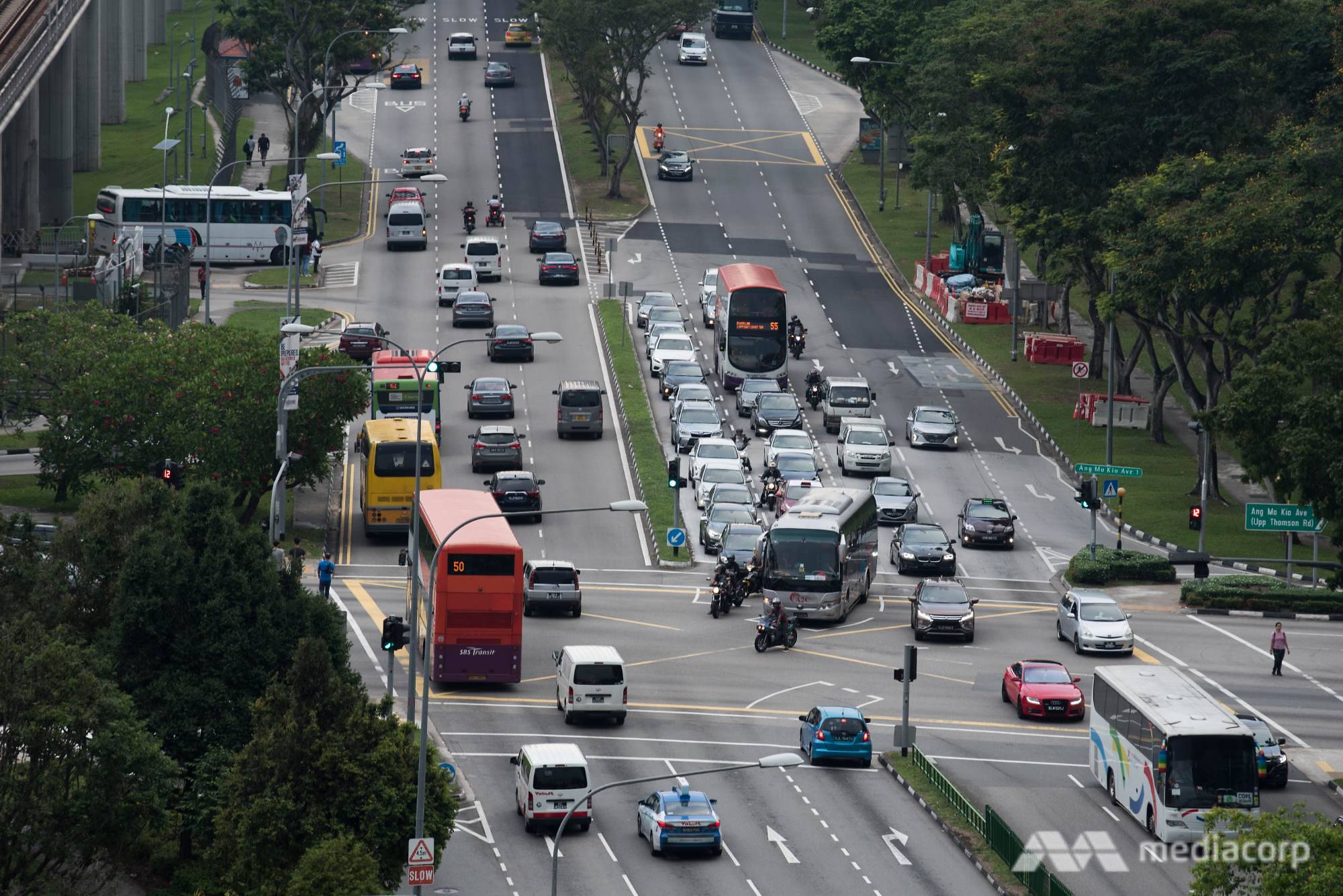
Traffic at a busy intersection in Singapore. (Photo: Jeremy Long)
This is now the challenge for transport-sharing, including car, bike, and scooter sharing. Just disrupting the taxi business is insufficient; these transport-sharing companies must reduce congestion in the short term and the amount of space dedicated to roads and parking in the long term.
Unfortunately, few entrepreneurs, venture capitalists, or even entrepreneurship professors have thought about these problems in much detail. Instead, many have become mesmerised by algorithms that will supposedly allocate work much more efficiently than humans can, despite evidence that algorithms have led to problems in many industries.
THINK CAREFULLY, USE DATA TO RESPOND FLEXIBLY
This does not mean that algorithms are not useful for transportation and other applications. It means that entrepreneurs, venture capitalists, public transport authorities and universities must think more carefully about the use of a common resource; in this case the land for roads, parking spaces, and even sidewalks.
Like I said at the start of this commentary, Singapore’s successful transport system comes from well-thought policies. It now needs to apply the same type of careful thinking to shared vehicles, bicycles and scooters to enact policies that will bring great benefits to Singaporeans.
For instance, algorithms can be used to devise better bus routes, including ones with fewer stops, thus reducing travel times, a key factor in generating demand for bus services.
GPS and smart phones mean that bus routes are no longer constrained by the memory of drivers or the size of bus stop information panels. Bus routes can change throughout the day as traffic patterns change, and users can follow these changes through their smart phones.
A man riding an e-scooter in Singapore.
For example, early morning and evening commuting require certain types of bus routes while mid-day shopping, children returning home in mid-afternoon, and after-work entertainment require other types of bus routes.
TRANSFORMING URBAN TRANSPORT
With large amounts of data for places of living, employment, shopping, entertainment, and education, the Singapore government can identify new routes, routes that have fewer stops than the previous ones and that evolve over the course of a day.
Reducing the number of bus stops comes from understanding the real starting and ending points of passengers through data analysis.
Start-ups can also provide these services if the Government chooses to allow them, giving them the right to offer fixed-route services and the data to do so.
These types of services will likely have shorter travel times than existing public transport services for only slightly higher prices, and they will do far better than have services such as GrabShare or UberPool.
File photo of traffic on a expressway in Singapore. (Photo: Gaya Chandramohan)
Shared scooters and bicycles probably also have a role to play, perhaps in designated locations such as roads closed to cars and trucks. Doing this can also promote greater train usage if the designated locations are near train stations.
Singapore should not rest on its past successes. Vehicle, scooter, and bicycle-sharing and the technologies that form the basis of them provide big opportunities for further improvements to Singapore transportation system.
Singapore has the chance to again show the world that it is still the leader in urban transportation.
Jeff Funk is a retired Associate Professor and author of Technology Change and the Rise of New Industries.
SINGAPORE: Singapore’s largest childcare centre was officially opened in Punggol North on Saturday (Apr 20).
The 100,000 sq ft facility, which has been operational since May last year, is one of 38 Early Years Centres PCF Sparkletots is slated to open by 2021 to meet the demand for pre-school places.
DPM Teo Chee Hean poses with children at the official launch of a PCF childcare centre in Punggol North.
The Government is investing heavily in young children. In 2017, it doubled its annual spending on pre-schools to S$840 million from S$360 million in 2012; it will double its annual spending again over the next five years: to S$1.7 billion in 2022.
Speaking at the launch on Saturday, Deputy Prime Minister Teo Chee Hean said a good pre-school education is key to giving children the best start in life.
“These formative years are very important years. They are the golden years of a child’s development when their minds are open, versatile and they’re ready to really absorb and learn,” said Mr Teo.
Parents CNA spoke to said they chose to enrol their children there because of its facilities and emphasis on outdoor learning.
Ms Tien Hartini, mother of a six-month-old Ilhan, said her son can interact with other children of his age at outdoor facilities such as the water area and outdoor playground. Other play areas in the Punggol North centre include vegetable farms and a culinary zone.
To encourage sensory development, children aged between two months and four years enrolled in these centres can get up-close with nature by interacting with animals such as frogs and fishes.
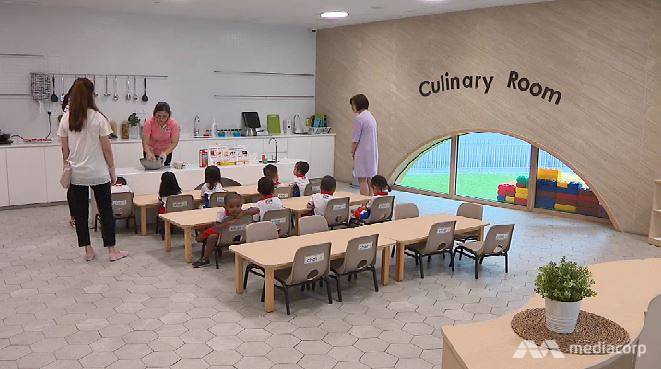
Children learn at a culinary room at the new PCF childcare centre in Punggol North.
MORE TEACHERS FOR EVERY CHILD
The teacher-to-child ratio at the Punggol North centre is higher compared to other PCF pre-schools. It currently has about 130 teaching staff as well as two nurses – a role specifically created due to the high enrolment there.
The centre can take in 1,060 children at full capacity, with PCF opening two more Early Years Centres later this year in Toa Payoh.
Before subsidies, the cost of enrolling an infant at the centre starts from about S$1,364 a month for Singapore citizens. For Singaporean toddlers up to four years old, it costs S$770 monthly.
Children who attend Early Years Centres will have a spot reserved for them in partner MOE kindergartens, which are mostly located in primary schools.
PCF CEO Victor Bay said: “Because of the sheer size of students graduating from our nursery class here, we have decided that there’s a need to have three MOE Kindergartens to take in all our children.
“They are primarily children of Singaporeans or PRs who will be guaranteed a place in either one of these kindergartens.”
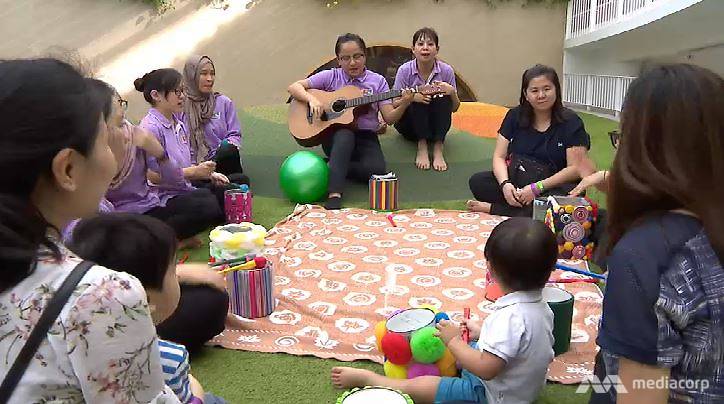
PCF staff members play with children at an outdoor playground at the new PCF childcare centre in Punggol North.
When asked about the recent spate of food poisoning incidents at PCF centres, parents CNA spoke to said they were not overly concerned about the situation, adding that there have been sufficient updates from PCF and reassurances of hygiene standards.
PCF said plans are currently being explored to expand the kitchen facilities, following the shift to in-house cooking for all of their childcare centres.
With about 450 children running about, infants, toddlers and older children also have different play areas to help prevent infections from spreading.
Senior Principal Michelle Lee said the staff members and nurses advise parents and guide teachers on health and hygiene standards, as well as teach them how to look out for developmental growth symptoms in young children.
To ease the children’s transition to kindergarten, such information, including on the children’s special needs, medical requirements and behavioural issues will be shared with the centre’s partner MOE Kindergartens.
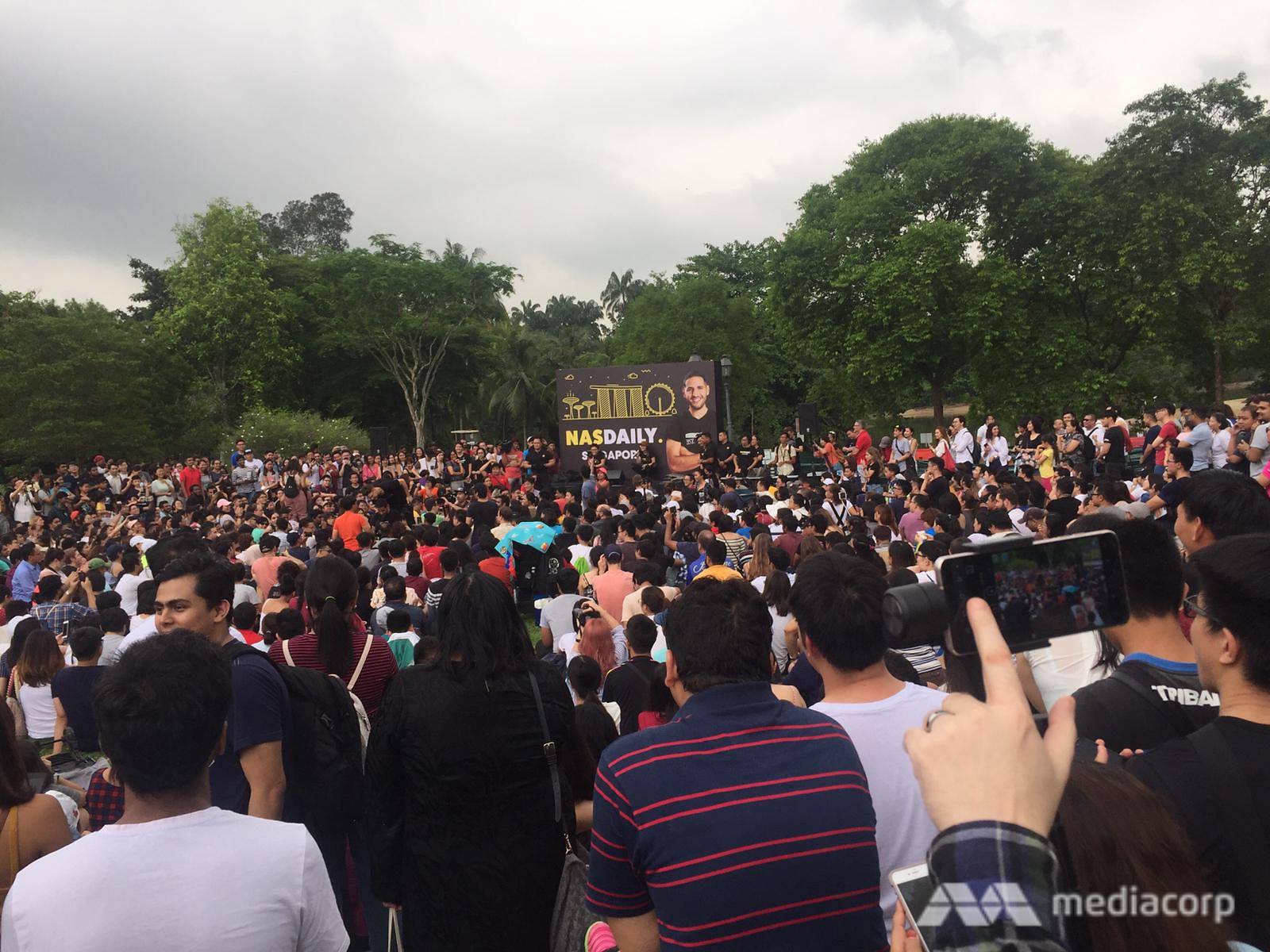
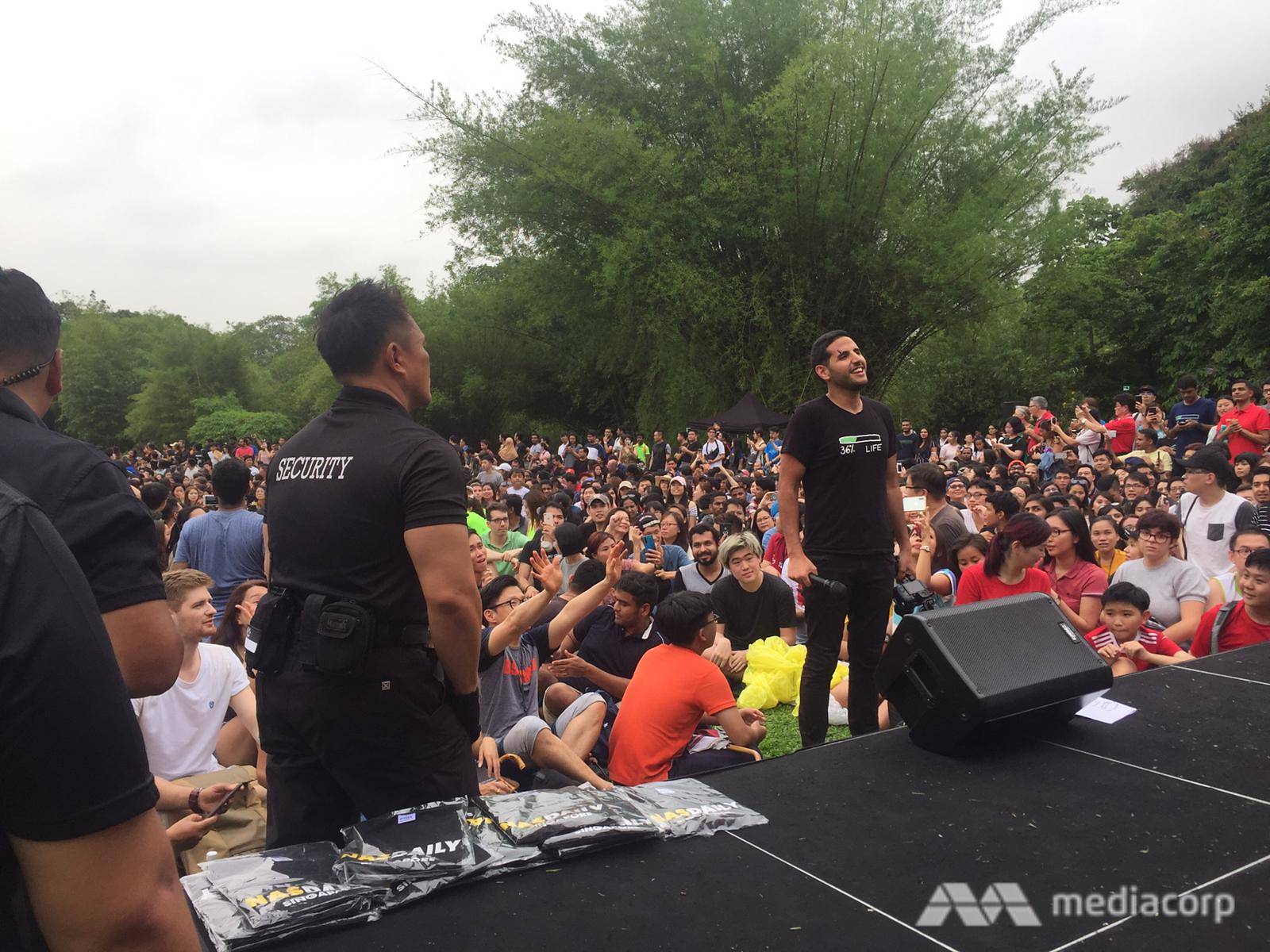
SINGAPORE: About 2,000 people turned up at the Singapore Botanic Gardens on Saturday (Apr 20) to see travel vlogger Nas Daily at his first meetup since moving to Singapore, according to estimates by Botanic Gardens.
Many of them said they were travel enthusiasts inspired by Nas Daily’s travel videos.
Some of them said they had flown to Singapore from as far as the Ivory Coast, Colombia and Israel to see Nas Daily, whose real name is Nuseir Yassin.
Thirty-four-year-old Sabrina Schneider, a German, had rebooked her flight from Tanzania to attend the meet-up. She has been on her own around-the-world trip, inspired by Mr Yassin’s one-minute online videos.
“(Nas Daily is) not about travelling. It’s about everything. He puts up so many interesting topics … you don’t lose the focus, you don’t lose the attention,” she said.
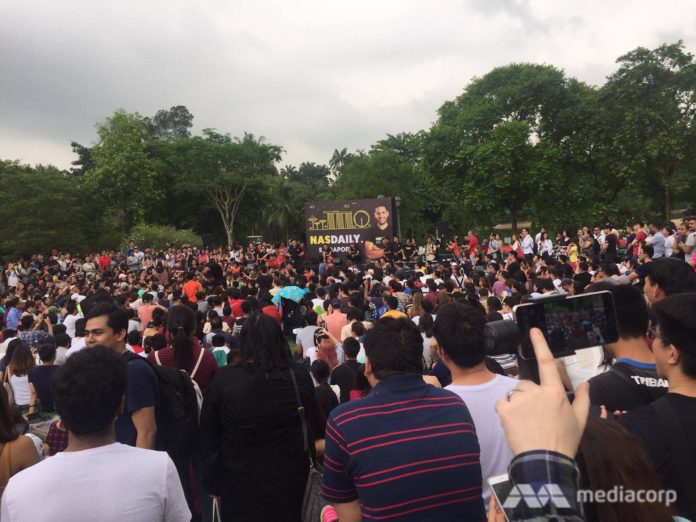
Fans crowd in a field at Singapore Botanic Gardens to meet Nas Daily. (Photo: Cindy Co)
There were also many Malaysian fans who made the trip to Singapore for the meetup after Mr Yassin – who is not allowed to enter Malaysia – encouraged them to do so.
Mr Luqman Nurhakim and Mr Muhd Qawien Azahar, both 23, had travelled across the Causeway to see Mr Yassin.
They have been fans for about a year and say that his videos allow them to “explore the new places that (they) want to go.
Muhd Qawien Azahar and Luqman Nurhakim were fans from Malaysia who came specifically to see Nas Daily. (Photo: Cindy Co)
Digital marketing manager Shaleen Nair has been a big fan of Mr Yassin for “a year or two”.
“I find him very inspiring mostly because of the insights that he shares. He shares a lot of insight about individual countries and not just what people post … or what people typically advertise,” she said.
Nas Daily stands among the crowd at the Singapore Botanic Gardens. (Photo: Cindy Co)
There were people of all ages at the meetup, and some fans brought along their babies and young children.
There were a handful of senior citizens in the crowd, with the oldest CNA spoke to being 65-year-old Neo Kwee Seng. He was there to accompany his son and his grandson, who are fans of Mr Yassin.
Mr Seah is another older fan. He only began watching Mr Yassin’s videos after learning that Mr Yassin was going to settle down in Singapore.
“(He is) such a great influencer. Everything under the sun, everything he says (inspires me),” said Mr Seah, who wanted to be identified only by his surname.
However, not everyone who attended was a fan.
“I just kind of feel like it’s overhyped. Nothing wrong … just feel that maybe the attention can be a bit more on our own local talents,” said Mr Lim, 30, who wanted to be identified only by his surname.
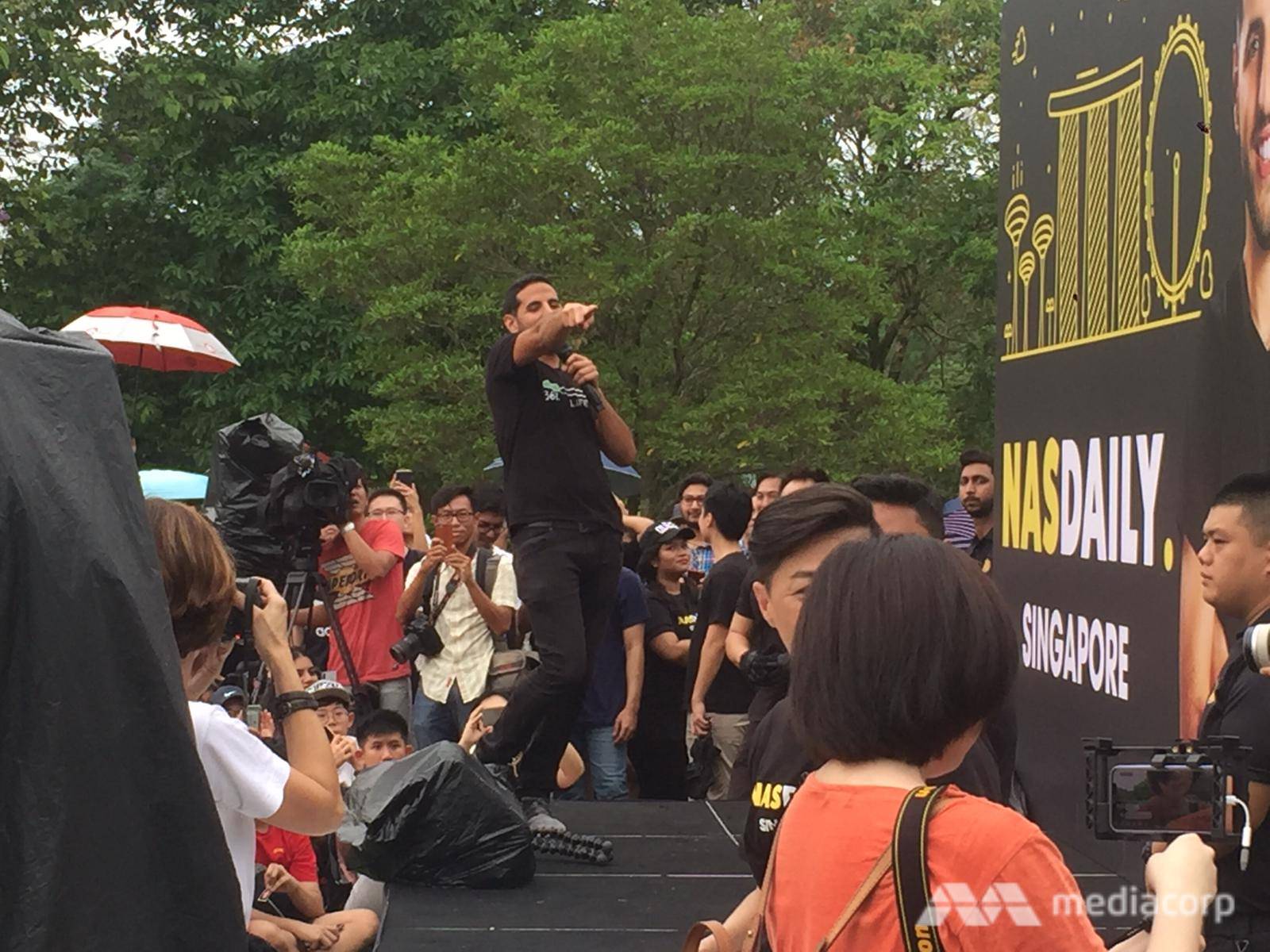
People snap a picture as Nas Daily makes a pointing gesture at the Singapore Botanic Gardens. (Photo: Cindy Co)
NAS DAILY CHOSE SINGAPORE BECAUSE OF COUNTRY’S CENTRAL LOCATION
Security presence was relatively light on Saturday, with several employees from National Parks Board (NParks) and Botanic Gardens on standby, while Mr Yassin had his own security team.
According to Botanic Gardens, no special arrangements were made for the event and their presence there was their “normal in-house security”.
At the fan meet, which took place between 4pm and 6pm, Mr Yassin explained his reasons for moving to Singapore, citing the efficiency of traffic and the central location of the country.
He also said that he had hired two Singaporeans for his company.
Mr Yassin, who has made several videos on Singapore, has been outspoken about how he is “really fascinated” with Singapore.
Some of his videos have touched on how Singapore’s “passport is a lot of people’s dream”, how “you’re not gonna get any road rage” in the country and how its landfills are so “insanely clean” they “almost feel like resorts”.
However, some critics have also taken issue with the overly positive nature of his work, as well as the appearance of Prime Minister Lee Hsien Loong in his video The Almost Perfect Country in September last year.
SINGAPORE: A 28-year-motorcyclist died in a multi-vehicle accident on the Central Expressway (CTE) late on Friday night (Apr 19), the police said.
The police said they were alerted to an accident involving four cars and a motorcycle along CTE towards Ayer Rajah Expressway (AYE) at about 11.45pm. The accident took place before the Braddell Road/Lorong Chuan exit.
The male motorcyclist was pronounced dead by paramedics at the scene, said the police. His pillion rider, a 22-year-old female, was conscious when taken to Tan Tock Seng Hospital.
Another 31-year-old female driver was taken to Sengkang General Hospital after the accident. She was later arrested for “rash act causing death”.
Accident on CTE (towards AYE) before Braddell Rd/Lor Chuan Exit. Avoid lanes 1, 2, 3, 4 and 5
The Land Transport Authority (LTA) warned motorists to avoid lanes one to five in a tweet at about 2am on Saturday.
Photos and videos circulating on social media showed heavy traffic on the expressway following the accident, with at least four lanes closed at the site of the accident.
The accident involved four cars and a motorcycle. (Photo: Telegram/@SGRoad)
SINGAPORE: Plastic products are heavily used in Singapore.
A study by the Singapore Environment Council last year found that Singaporeans use at least 1.76 billion plastic bottles, bags and other disposable items yearly, of which only less than 20 per cent are recycled. The rest becomes discarded trash, left to burn or be put in landfills.
Worldwide, humans have created over 9.2 billion tonnes of plastic since the 1950s, scientists revealed in 2017, and only 25 per cent were recycled.
The popularity of plastic stems from its wide-ranging functions that satisfy consumer needs.
It is relatively inexpensive to produce, but the extraction of finite resources to produce them, whether oil, natural gas or coal, and an undervaluation of its utilisation have sparked discussions aplenty against plastic consumption.
Many staunch environmentalists have discouraged key kinds of plastic use, often citing the environmental issues it creates, and experts too have warned of the adverse effects plastic has on the ocean.
An effort to prevent further degradation of the environment and the ocean, recycling is not a bad option. But this is missing the forest for the trees.
Recycling plastic might slow the rate of environmental degradation, but a more effective approach is for each and every one of us to rethink our lifestyles and abstain from the use of plastics, particularly disposables.
The process of sorting out recyclable plastics from contaminated plastics that cannot be recycled is cumbersome and labour-intensive. Recycling is also done overseas.
Global plastic production has grown to more than 400 million tonnes a year, and an estimated two to five percent of it winds up in the ocean. (Photo: AFP/ERNESTO BENAVIDES)
Singapore exports almost 42,000 tonnes of plastic waste to countries including Malaysia, Vietnam and Indonesia in 2016, according to the latest United Nations trade data.
The destruction plastic wrecks on the environment from its process of extraction, production, consumption, to the end of its lifespan – is serious enough to warrant us to embrace a plastic-light lifestyle, if not a plastic-free one.
As responsible consumers, there are choices that can meet the same need. Unfortunately, the convenience and low cost of using disposable plastics, as well as a habit of using plastics for many decades now have ingrained a certain psyche in most of us.
THE OCEAN NEEDS PROTECTION
The consumption of plastics depletes a finite resource and doubles the emission of greenhouse gases.
Crude oil, a fossil fuel, is a key ingredient for producing different kinds of plastics, from the extremely durable to the malleable, and its distillation consumes energy and adds to greenhouse emissions.
At the end of its shelf life, plastics do not degrade completely. Even though large pieces can be broken down to smaller plastics, microplastic debris are easily swept into the sea where they remain in perpetuity.
This degrades the ocean and compromises its sink function – which is critical in absorbing emissions from economic activities. It is likely that no part of the ocean has been left untouched by plastic pollution.
Although plastic in Singapore is usually burnt and left in landfills, and might not find its way into the ocean, this is not the case elsewhere. Scientists from the non-profit advocacy group 5 Gyres reported in 2014, that the world’s ocean is infested with an estimate of 5.24 trillion pieces of plastic.
The ocean is a precious environmental resource, but the invasion of the marine habitat not only disrupts our global natural ecosystem, but also kills wildlife. Just last month, 40 kg of plastic trash was found in a stomach of a dead whale that was washed ashore in the Philippines.
A total of 40kg of plastic, including grocery bags and rice sacks were found in the whale’s stomach. (Photo: Facebook/D’ Bone Collector Museum Inc)
MAKE PLASTIC LESS ACCESSIBLE
Plastics have seeped into every penetrable space possible. Admittedly, it is impossible to abstain from plastics, though, its use can be averted.
For instance, if plastic bags are made inaccessible, people may rethink consumption patterns. Adding a price tag to use plastic bags could coerce consumers to consider trade-offs and bear the cost of convenience.
Singapore can draw inspiration from the Netherlands – the Dutch government has, since January 2016, banned free plastic bags, and made it compulsory for consumers to be charged about 0.25 euros (S$0.38) for each. The country saw some 71 per cent drop in plastic bag use. This shows that price signals and jolting do influence behaviours.
ECO-FRIENDLY PACKAGING
The Carbon Pricing Act (CPA) which came into effect this year may lead to producers charging a premium for plastics-related product.
Increasing the price of plastic products could make businesses choose less plastic, but it does not equate to no pollution, nor will it reduce the accumulated carbon load. Some businesses would still choose to sell products with elaborate plastic packaging to satisfy the “consumerist culture”.
Further, elements of cleanliness and safety play a significant role in influencing societal affinity to plastics. Simple paper packaging, although kinder to the environment, may be costlier and could hurt their businesses.
Policies should aim to advance the uptake of environmentally friendly products and encourage businesses to use recycled materials instead of pristine plastic. Producers should be incentivised to meet consumers’ demand for minimal, functional and eco-friendly packaging.
A huge array of goods and packaging we use in our everyday lives is made of plastic (Photo: AFP/JEAN-MICHEL ANDRE)
There is a need for an emphasis on close-loop values to minimise wastages but at some point, we must foster an understanding that waste can be feedstock.
With technological advancements, innovative bio-based plastics and eco-friendly plastics have been developed and employed. The use of these materials can help to minimise waste and make progress towards a circular economy where used plastic becomes feedstock.
Plastic contamination did not occur overnight nor will it diminish overnight. Deliberations should not fixate on recycling. On the contrary, it should stress on how plastics enter our environment.
Societal thought leaders can spearhead capacity-building through intellectual platforms such as the International Conference on Plastics in the Marine Environment, which last year saw international experts gather in Singapore to discuss issue of plastic debris in the marine environment, and initiatives like the Blue Economy – which promotes sustainable use of ocean resources in economic growth – and the Blue Plan.
The latter had proposed recommendations, in a gathering of more than 100 environmentalists, on ways to better protect the marine ecosystem in Singapore.
While Singapore has made huge strides in instilling public awareness and engagement as well as encouraging recycling with initiatives such as the National Recycling Programme, and the provision of recycling bins to all HDB blocks and landed homes, it’s worth looking beyond recycling.
After all, apart from the energy needed to sort and recycle plastics, the reality is that, 40 per cent of the load collected from blue recycling bins in Singapore are tainted – and these tainted recyclables have likely end up in the incinerator. So, it is not just about recycling.
File photo of a recycling bin in Singapore. (Photo: Gaya Chandramohan)
Plastics are damaging. Recycling and segregation of plastic is an extremely wasteful effort. So what then can be done?
OUR BADLY NEEDED RE-EDUCATION
While making plastic inaccessible or promoting more use of eco-friendly packaging can help reduce plastic use, these are unfortunately short term remedies. Long-term solution requires education, or more so, re-education – to increase societal awareness.
There is a need to re-educate society to appreciate and conserve our environment.
Consumers need to be more plastic-conscious so that their actions become less intrusive to the environment. Producers should prioritise consumer-centric design packaging that is minimal, functional, and if possible, plastic-free.
For now, we can’t wipe away all the plastic that we have, but a business credit system towards good environmental behaviour can be imposed.
If society can be re-educated and informed, they can alter old habits and change their lifestyles to wean off plastics.
Moving away from a consumerist culture may gain traction if we can first recognise the ills of being a plastic-dependent society. This will need moral suasion and a steadfast environmental stewardship.
As individuals, we must recognise that using plastics is an irrational choice that compromises not just our well-being but our children’s future. So we have to start now and adopt a mantra to minimise plastic use, not just waste.
Societal attitude is the chief suspect behind our plastic waste problem – so recycling clearly cannot be the solution.
Seck Tan is assistant professor at Singapore Institute of Technology. Seck’s research focus is on sustainable development, environmental economics, resource management, and valuation of environmental goods and services.He was also among the panel of experts who spoke at the International Conference on Plastics in the Marine Environment (ICPME) in December 2018.
SINGAPORE: The recent news about Singaporean women flocking to Johor for in-vitro fertilization (IVF) treatments has stirred up questions on whether it is advisable for older women to conceive.
In medical terms, a woman who goes into pregnancy for the first time at 35 years or older is considered “elderly primigravida.” This group is generally treated with more care and subject to higher precautionary measures.
Although science has made it possible for older women to pursue their baby dreams, they bear a fair amount of risk. It is not only harder for them to conceive, but when they do, the chances of miscarriage, stillbirth, premature births and birth defects are significantly higher.
Most who want to have children would naturally try to have them early. As conventional wisdom goes, you need all the energy you can muster to care for your baby and to play with them during the hyper-energetic toddler and preschool years.
But unfortunately for some, the stars do not align early on in life. Some couples are busy establishing their careers and so put off having children.
Sometimes, no matter how much you plan, life deals you surprises at the most unexpected time. (File photo: AFP/Philippe Huguen)
Others just haven’t found the right partner to settle down with, or are into their second marriages and so start late. Yet others may try to conceive early on after marriage but meet with disappointment.
With more couples tying the knot and having babies later, many face fertility woes and turn to assistive reproductive technologies such as IVF.
Should they be denied the chance to procreate, even though science and technology has made it somewhat within reach?
My husband and I had originally planned to have the first two years after marriage to ourselves, so you can imagine our surprise when we received news that I was with child two months after our honeymoon. I was nearly 28 then.
People may not talk about it much, but there are some downsides to having children early.
You may feel more torn between developing your career and spending time with your family as you haven’t had the time to establish yourself in the industry.
You’re likely to be one of the first in your circle of friends to have a baby, and so may feel a bit isolated or clueless about baby caring.
Your marriage may also be less stable if you are newly wedded, and so adding a baby into the mix could generate a lot of stress and tension. I recall thinking that my husband and I hadn’t even had time to adjust to life as husband and wife, and so quickly, we had to embrace our new roles as mum and dad.
(Photo: Pixabay)
But there are also definite advantages to starting early, and we are only beginning to appreciate these fully.
For one, we did not encounter any issues conceiving, and when all three of our children were under the age of five, we somehow mustered sufficient energy to care for and play with them, whilst still maintaining a healthy marriage.
We couldn’t have done it alone of course; we took all the help we could get.
Today, both of us are not yet in our 40s and our eldest is already 10. She is fairly independent. She helps out around the house and with caring for her younger siblings.
Financially speaking, the burden of supporting our kids through school will be reduced when my eldest turns 21, at which time I will be 50. If I had started out 10 years later, that magic number would be 60.
In all honesty, I’d struggle to walk in the shoes of someone at my age trying to conceive her first child. But I can imagine all the reasons why she would want to try anyway.
A person’s desires may change through the course of life and with different experiences. Even a couple who started out not wanting to have children could deviate from that opinion.
And if a couple is well and truly ready to have children, would not the love for their young motivate them to stay fit, active and healthy so that they can enjoy more good years ahead?
A couple and their child at the seaside. (Photo: Pixabay)
GROWING UP WITH AN AGEING PARENT
Perhaps it is the job of medical professionals to ensure their “elderly primigravida” are aware of the potential risks in pregnancy. But for the rest of society, should we be judging a couple’s personal choice as to how and when to pro-create?
Perhaps the real question then is, how much does parental age really affect a person’s childhood experience?
One article published in The Guardian related several stories of children who grew up with older fathers.
Moya Sarner, whose father was 51 years her senior, described that she didn’t really notice that all her parents’ friends had kids who were at least 15 years older than her. She wrote:
I didn’t know it was unusual for dads to spend so much time at home with their children; it was my normal.
A friend shared that the bigger age gap between her and her mother made it hard for her to confide in her during the teenage years. Also, after she became a mum herself, her mother was not really able to play with or help out with her son due to the state of her health.
These are all valid concerns if you’re considering having a child at an advanced age. However, there are other factors that determine the quality of the relationship between parent and child. Things like personality and life experiences play a part as well.
It would not be very fair to say that age alone automatically disadvantages a couple who otherwise enjoy a strong and stable marriage and are willing to carry the responsibility of raising a child into adulthood.
Although health and mobility may go downhill as a person ages, an older parent can also bring stability into the equation, plus a certain wisdom that is accumulated through diverse life experiences.
For relatively young parents like us, time may be on our side. We may enjoy the occasional compliment that we do not look like parents of three little ones.
For those who missed the boat in their early years and now find themselves between a rock and a hard place, modern science has made procreation possible.
But while things may get a little harder with age, age itself isn’t the sine qua non of a meaningful family life.
It has little bearing on the quality of the parent-child relationship and other factors such as unconditional love, intentional effort and a willingness to learn from our mistakes are likelier keys to becoming a good parent.
June Yong is a mother of three, an educational therapist and owner of Mama Wear Papa Shirt, a blog that discusses parenting and education in Singapore.
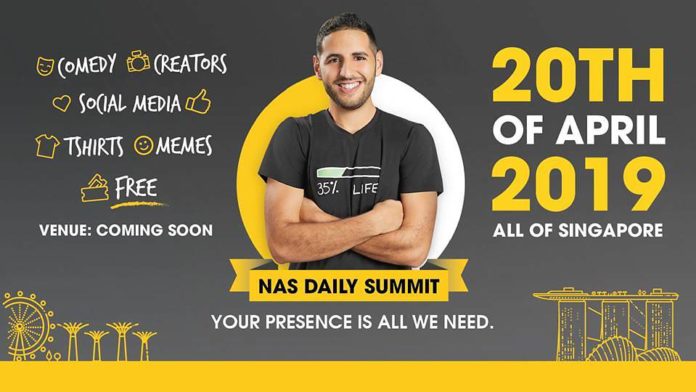
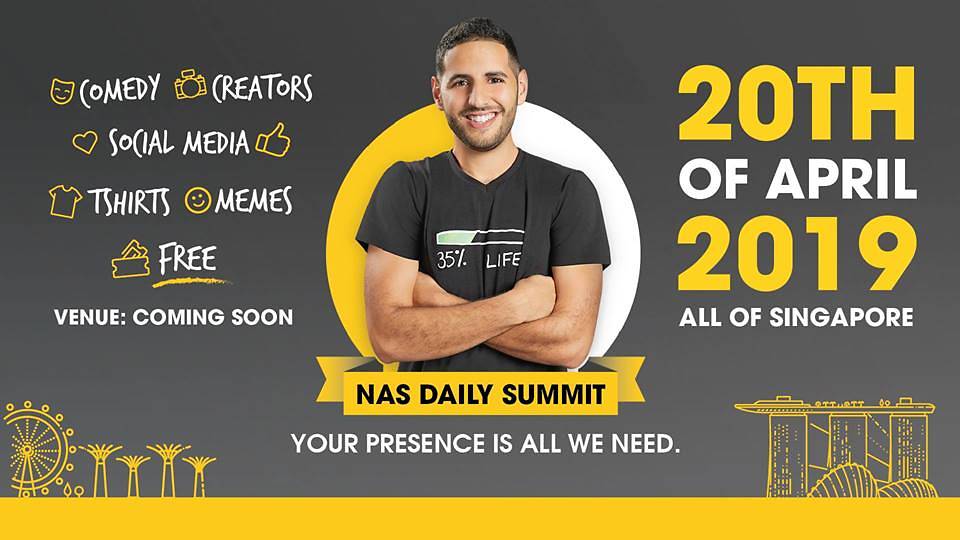
SINGAPORE: The upcoming fan meet with vlogger Nas Daily at the Singapore Botanic Gardens is a “non-cause based event” and does not require a permit under the Public Order Act (POA), said the Singapore Police Force (SPF) on Friday (Apr 19).
This comes after Nas Daily, whose real name is Nuseir Yassin, told CNA earlier in the day that “all the necessary permits have been granted” for his first fan meet since arriving in Singapore on Wednesday.
SPF said that it was aware of false claims that there were “double standards applied for the granting of permits” with respect to the event on Saturday.
In response to media queries, SPF said: “These allegations which suggest that the police have been biased and shown favouritism are untrue and baseless, and maliciously seek to undermine confidence in public institutions.”
Nas Daily’s event involved a media celebrity and such events could be held outside of Speakers’ Corner without a permit, added SPF.
“Many other similar non-cause based events have been held outside Speaker’s Corner without the need for a Police permit under the POA in the past,” said police, citing meet-and-greet events for Hollywood actor Chris Hemsworth at Marina Bay Sands in May last year, and another for local actress Fann Wong at the Bugis Plus shopping mall in 2017.
(Image: The Nas Daily Meetup!/Facebook)
PUBLIC ENTERTAINMENT LICENCE ISSUED
However, as Mr Yassin’s event on Saturday involves the transmission of recorded music, a Public Entertainment Licence (PEL) was issued, police said.
“The requirements for a PEL are set out in law, and Nas’ event has met them,” according to the statement.
“PELs are issued to a wide variety of events organised by various persons or companies,” it added.
“On the other hand, caused-based events, i.e. those that demonstrate support for, or opposition to views or actions of any person, group of persons, or any government, publicising a cause or campaign, or marking or commemorating any event, will require a police permit under the POA.”
Such events could take place at the Speakers’ Corner at Hong Lim Park without a permit if stipulated conditions are met.
“There have been many such events held in the past at Speaker’s Corner without a permit, such as the protest against a GST hike held in 2018 and the ‘Abuse of Process’ rally held in January 2019,” police said.
Beauty is in the eyes of the beholder. But when it comes to beauty packaging, the eyes of the customer can be easily lured into buying a product with an attractive design, the more instagrammable, the better. But that doesn’t come without other consequences, and the legacy that beauty packaging leaves behind is far from pretty. More than 120 billion units of packaging are produced every year by the global cosmetics industry. By 2050 there will be more plastic than fish in the sea as well as 12 billion tonnes of plastic in landfills, the equivalent to 35,000 Empire State Buildings.
Why is this happening?
Most of the beauty products in the market are a combination of different materials. Even when the packaging is made of plastic, it can in fact contain various percentages of different elements. That is why recycling these products can become a challenge even in more developed countries. Choosing packaging that is made by a single material can sensibly increase the recycle rate of beauty waste. In the case of polyethylene, for example, it is possible to reuse the same products almost endlessly without affecting the beauty and the properties of its packaging. Luckily for all beauty businesses out there, it is possible to find a great compromise to meet both standards of appealingness and design while protecting the environment.
Why is this important?
Promoting the social responsibility of your company doesn’t necessarily need to be trending against growing your business. If done correctly, the opposite is often true. Let’s see together 5 reasons for why investing in eco-friendly packaging for your beauty products can be one of the best strategies to be competitive in this market.
1. Limited resources
It would be great to live in a place where resources are not limited, but this is not the case of our planet. It is essential to re-use and recycle as many times as possible, and that is possible with packaging made of polyethylene. L’Oréal, for example, started some years ago to collect empty containers from its consumers for recycling them. Cosmetic packaging manufacturers are investing in more environmental-friendly options, and some of them are doing a great job. That’s the case of Auber Packaging, which is a cosmetic tubes manufacturer with more than 15 years of experience. The production of their PBL tubes (Plastic laminated tubes), and PE (Polyethylene) tubes follows the three pillars known as the “three Rs”: Respect, Reduce, and Replace.
2. More competition
Several years ago consumers had less access to information and could not compare the products of many companies. That is entirely different from now. When looking to buy a product, the average online user will search only on a few websites before taking a decision. On Google, the first domain listed on Page 1 gets just under a third of overall search traffic, while the seventh listing gets only 3.5 percent. Besides, in more advanced markets many products are offering similar benefits. If you want to buy nail polish or hand cream, you just need to go to a retailer or search online to find as many options as you wish. After having fulfilled the desires on the bottom of the Maslow’s pyramid of needs, consumers are nowadays looking for more advanced products and more sophisticated brand images.
3. Focus on Millennials and GenZ
Often considered a cracked generation, Millennials, those who were born from 1977 to 1995, try to live more environmental-friendly lives. We can predict that by 2025 more than 65% of the European workforce will be composed of Millennials, whose purchase power will increase soon. The same is true for the Generation Z (the generation after Millennials), who are even more sensitive to the topic of environmental sustainability. A common characteristic of these two generations is that they would buy more from responsible brands and sustainability is for them a shopping priority. In a 2015 survey on 30,000 consumers from 60 countries organized by Nielsen, 73% of Millennials said they would agree to pay more for products and services that come from companies that are committed to positive social and environmental impact.
4. Consumers want sustainable brands
In 2017 a study from the BillerudKorsnäs consumer panel showed that 72% of consumers around the world are willing to pay more for products with packaging that brings sustainable benefits. When it comes to sustainability, they want companies which are investing in bettering the world, are clear about their efforts, and include them in the process. This creates a sense of a stronger bond between the brand and the consumers, who will more likely have a better overall shopping experience and a higher loyalty. Showing that you are investing in using recyclable packaging is undoubtedly a step forward for a more significant purpose.
5. Conforming to global and national regulations
The European Union wants 55% of all plastic to be recycled by 2030, up from 30% today. This plan is even more critical after China banned the import of plastic waste since the beginning of 2018. For the European governments, the two main strategies to cope with this block are to incinerate or to dump plastic. Several member states are taking this as an opportunity to create a stronger market for secondary plastic and plastic waste. There are countries which have already achieved a more than good recycle rate.
How can you contribute and benefit from this?
Listening to what your customers are asking for while promoting more cost-friendly products is like catching two birds with one stone. You win with either one, but you get even more by combining them together. An even better choice to get ahead the competition is not only choosing the best material and design but also combining it with the most convenient shape. In this case, we can recommend cosmetic tubes.
Key facts about the global tube packaging market:
1. It is expected to reach US$10.96 billion by 2023;
2. It was valued at US$7.14 billion in 2017;
3. With a Compounded Average Growth Rate (CAGR) of 7.4% between 2018 and 2023;
4. In 2017, the European tube packaging market had the most significant share among other regions;
5. In European countries, there are over 45% of the tubes used in the personal care and cosmetics industry, in that 21% each in the toothpaste segment and the pharmaceutical industry;
Based on the facts and the reasons we just saw, we can recommend you invest in more environmental-friendly cosmetic tubes. When doing so, it is essential to select a trustworthy and reliable manufacturer. Auber Packaging, for example, is an ISO9001 certified contract manufacturer offering private label cosmetic tube packaging. They produce cosmetic tubes, private label plastic tubes, metal cosmetic tubes and aluminum plastic laminated tubes to be used in cosmetics, skincare, hair care, lip gloss and many more sectors.
They can offer private label and contract packaging services, as well as tube design, production, printing, labeling, hot-stamping, making orifice, foil seal or tail seal, assembling, delivery, and many more. In their 15 years as a manufacturer, they have served hundreds of customers from all over the world and have been praised for their strong modeling capability and short lead time. If you want the packaging of your product to be recyclable and still have the printing effect of aluminum plastic laminated tubes (ABL), you can change to PBL tubes (Plastic laminated tubes). PBL tube’s material is also made of PE, while it can be printed in flat and then welded. So you can still ask them to print the CMYK color model with very complicated designs.