Healthy Baby, Happy Mama (Essential Oils 101 Class)
Wednesday, January 8, 2020 at 7:00 PM
Wednesday, January 8, 2020 at 7:00 PM
WhatsApp Messenger
Singapore, Singapore
SINGAPORE: Since the National University of Singapore (NUS) sexual misconduct incident erupted on social media, the Internet has been abuzz with a multitude of articles and opinions.
Many are angry. Angry with the punishment that the perpetrator received, angry with what looks like the failure of NUS to protect its student on campus and the mishandling of the case after, and angry with the audacity of the perpetrator.
Many are out for blood, calling for harsher punishment and urging for greater accountability and transparency.
However before we take up our pitchforks, we should recognise that we are not privy to the finer details of the case. Perhaps we should hold off on passing judgement or taking matters into our own hands lest the conversation degenerates into a digital lynching fuelled by mob instincts.

File photo of the National University of Singapore (NUS). (Photo: Alif Amsyar)
WHY ARE THEY HAPPENING?
The issue that has been at the forefront of my mind has more to do with why such incidences are occurring in the first place. Voyeuristic acts seem to be on the rise.
In February 2019, voyeurism was identified as a key emerging crime trend that had to be tackled when the new Criminal Law Reform Bill was first read in Parliament, so it’s clear authorities recognise this is definitely an issue of concern.
This might be in part facilitated by the rise in technology, or because more cases seem to be coming out when our women are becoming more and more willing to speak out against injustice.
Nevertheless, the report of the Penal Code Review Committee submitted in August 2018, which the Government had accepted, highlighted that “a strong and consistent response” will be needed to criminalise the “surreptitious recording of others in circumstances of undress”.
Meanwhile, in South Korea, the sex crime scandal involving K-pop’s biggest stars is another extremely troubling matter. Many cite the Korean culture of toxic masculinity and the objectification of women that allow such cases to flourish.
Seungri, a member of South Korean K-pop band Big Bang, arrives to be questioned over a sex bribery case at the Seoul Metropolitan Police Agency in Seoul, South Korea, Mar 14, 2019. (Photo: Reuters/Kim Hong-Ji)
WHAT HAPPENED TO RESPECT?
Back to our question of why these are happening in the first place, is it also similarly a case of our men are not respecting our women enough?
In modern Singapore, are women still being undervalued and if so, why?
In a recent survey on gender equality in Singapore released by market research firm Ipsos, about 45 per cent of Singaporeans agree that women who wear revealing clothes should not complain if men make comments about their appearance – this is a perspective held almost equally by both men and women.
Views like this breed a culture that puts the responsibility on the victim rather than the perpetrator. Perhaps it is on us to examine our own gender lens and get rid of old-fashioned notions like this.
This is an important issue close to my heart – The Singapore Council of Women’s Organisations (SCWO) has been working towards the ideals of “Equal Voice, Equal Space, Equal Worth” for women in Singapore.
Such voyeuristic acts go against what we stand for by violating a women’s basic right to safe space and makes futile the need for consent and respect. No woman, nay no human, should be made to feel like they are not safe in ordinary day-to-day situations.
Everyone, women or men, should be entitled to peace of mind. This is especially so in private moments and in private spaces – changing rooms and toilets no less.
It is not even about “no means no” when no question was even asked in the first place.
It boils down to respect – respecting that a woman’s body is hers and no one else is entitled to it. Consent is key.
ALL ABOUT RESPECT
More than ever, we need to reassure our women that they have rights to their privacy and empower them to speak out when that is violated. We need to work towards a society where mutual respect between the sexes is the expectation and not a privilege.
A woman walking in Singapore’s financial business district. (Photo: AFP/Roslan Rahman)
Laws can change but in order to get there, we need to start at home. We teach our children the importance of respecting another person’s belongings, not to steal or touch other people’s things, but do we emphasise that same messages regarding our bodies?
Just as we teach our daughters that their bodies are private spaces, we should also educate our sons on the important messages of respect and consent. From a young age, we should teach boys that girls are equals, they are people and not objects – it is about respecting people, irrespective of gender.
We must be careful how we speak about women and girls, and let go of seemingly harmless things we say like “if he’s teasing you, it must mean he likes you!”
That said, we need to also teach our children the importance of accepting personal responsibility for their own conduct. We need to ingrain this in them from young so that when they grow up, they are aware that their actions affect not just themselves, but others as well.
Just as how others are responsible for their own actions, we are responsible for our own bodies, their use and portrayal. I think society as a whole would benefit from having more responsible individuals.
DON’T TAKE PART IN MISOGYNISTIC CONVERSATIONS
Beyond our children, among our peers, it is on us to pass on the message of consent and respect as well.
We need to stand firm and refuse to partake in conversations that objectify women, and to call out others who do.
By refusing to participate even in casual misogynistic conversations and jokes, we would be taking a clear stance to show others the importance of respecting women.
A woman at a cross junction. (File Photo: AFP/Fred Dufour)
Just as voyeuristic content would occur far less if there was no audience for the distribution of such materials, such a misogynistic culture would be reduced if fewer partake in it. Do not feed the fire.
MORE LIKELY TO ASSUME A VICTIM IS MAKING IT UP?
We should also encourage victim reporting and support those who step forward and dare to speak out like Monica Baey.
The same Ipsos survey found that 41 per cent of all Singaporeans agree or strongly agree that false accusations of sexual harassment are a bigger problem than unreported acts of sexual harassment.
This troubling finding speaks of a society that is more likely to assume a victim is making it up than worry about those that suffer in silence. This presents a very worrying attitude that victims have to overcome in order to be heard.
What would a society where mutual respect exists between the sexes look like? I see it as one where if a woman’s modesty is assaulted, she knows that she can take it to someone with authority, and trust that she will be taken seriously and a fair punishment will be upheld.
I see it as one where no one laughs at misogynistic jokes or better yet, no one even makes them.
One day we will not have to warn our daughters not to “court trouble” with the way they dress because we would have taught our sons the importance of respect.
Only then would we have achieved “Equal Voice, Equal Space and Equal Worth”.
We are clearly not where we would like to be.
Junie Foo is First Vice-President of the Singapore Council of Women’s Organisations (SCWO).
JOHOR BAHRU: Malaysia’s exporters of vegetables and fruits are finding it difficult to meet a May 1 deadline imposed by the Health Ministry for safety certification before they can transport their produce to Singapore.
Last year, Malaysia had suggested “requiring exporters of its agricultural produce to register with its Ministry of Health”, said the Singapore Food Agency (SFA) in response to CNA’s queries on Tuesday (Apr 30).
“AVA (Agri-Food and Veterinary Authority) had requested Malaysia to provide more details of the proposed plan for further discussion but no further details have been received,” SFA said.
However, Malaysia’s Deputy Health Minister Lee Boon Chye told CNA the requirement of MyFood Tag for produce due for Singapore was a request from the Singapore authorities.
According to him, SFA had decided on this MyFood Tag requirement in 2017. He added that this will only apply to fresh vegetables and fruits at the moment.
Malaysia Deputy Health Minister Lee Boon Chye. (File photo: Bernama)
“Ensuring food safety is the responsibility and authority of importing nations. Malaysia and Singapore have agreements to mutually recognise (the) certification authority in both countries,” he said.
“While it is a voluntary certification, produce without MyFood Tag will not be allowed to enter Singapore,” he said.
Every successful certification is valid for three years, Dr Lee added.
MALAYSIA’S TRADERS SEEKING DEADLINE EXTENSION
Come next month, all exporters must possess the MyFood Tag certification, or risk having their produce rejected at the checkpoints.
Industry players are asking for an extension to the deadline to sort out their certification, adding that not all exporters are aware of the requirement.
Federation of Malaysian Vegetable Farmers Association President Tan So Tiok told CNA that while MyFood Tag is not a new certification scheme, exporters transporting their produce to Singapore were only informed of the need to be certified early this year.
He said the tight deadline and lack of awareness for MyFood Tag have compounded the problem.
“I do not have the exact figures, but I know some proprietors are still in the midst of applying for the certification. The process takes time as it involves site visits from the authorities to ascertain hygiene practices, etc,” he said.
Mr Tan said while he believed most exporters in Johor were aware of the requirement, farmers and exporters further away, such as Cameron Highlands, were still clueless about MyFood Tag.
About a quarter of the vegetables grown in Malaysia are exported to Singapore, he said.
“The ministry is probably dealing with a surge in MyFood Tag applications right now. We hope the deadline can be extended by another two months,” Mr Tan said.
On the ministry website, MyFood Tag is described as a mechanism to strengthen food safety control and traceability in the food supply chain. The certification process audits the production, storage, transport, processing and distribution of food items.
As of Jan 31, a total of 123 companies nationwide have successfully obtained MyFood Tag, ministry data showed.
Mr Tan said the MyFood Tag requirement would also affect exporters who do not operate physical storage infrastructure. “Some use lorries to pick up vegetables and fruits from farmers and send the produce straight to Singapore. They won’t be able to obtain MyFood Tag,” he said.
Malaysia is Singapore’s top source of vegetables and fruits. According to SFA statistics, Malaysia supplies 69 per cent of the imported leafy vegetables and 37 per cent of imported fruits in Singapore.

An ACH API is able
to offer the opportunity for developers and “software as a service” (SAAS) platforms
to debit and credit bank accounts by making use of the ACH network by using
an Application Program Interface, more commonly known as an API. This enables
the automatic ACH payment collection, disbursement and reconciliation.
If you have an
application that makes use of a recurring or subscription payment-based setup,
making use of an effective ACH Payment Gateway API is a real game changer
and will ensure a seamless user experience for platform users.
You might be trying
to get your head around how ACH APIs will benefit your business. If you have
some knowledge of credit cards, ACH transactions are completed differently to
credit cards.
Credit cards make
use of an authorization component that tells the biller immediately that their
payment has gone through. The ACH doesn’t do this, as it operates in what is
known as a “batch environment”. This means that it can take upwards of 1 to 3
days before an issue or problem with a payment can become known. This form of
payment may be most suitable to bigger organisations who need to process a monthly
payment for each of their customers over a similar timeframe. But, it wouldn’t
be as attractive for a business who may need immediate confirmation of payment
in order to ship a product to their customer.
There are also
differences in terms of cost between the two methods described above. For
credit cards, it can cost around two or three percent of a transaction amount to
successfully process the payment. This is in contrast to an ACH payment, which usually
charges somewhere between 25 and 50 cents per transaction. Of course, these
costs can add up.
A good advantage of
an ACH payment over a credit card payment is that there are much higher decline
rates with credit cards. This is not as big an issue for ACH payments,
especially when you are needing recurring billing. This makes ACH payments an attractive
option.
Another advantage
of an ACH payment over a credit card is that not every customer will have a
credit card. Also, for those customers that do have a credit card that they can
process a payment with, it provides another method for sending payment in case
for whatever reason that payment can’t be taken from a credit card, or if the card
has expired or has been stolen. If you have two payment methods, it will save
time in trying to track down missed payments.
If you are a
business who is looking for an ACH
API integration, you may wish to contact https://www.agilepayments.com/.
Last modified: April 30, 2019
James is our Lead Content Publisher here at Feeds Portal. He has worked with many top websites over the years, including BuzzFeed.
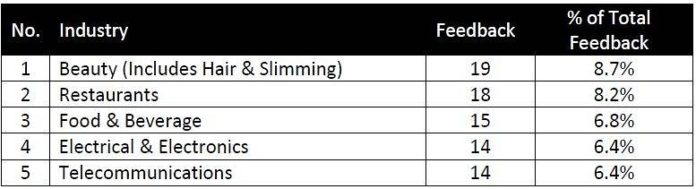
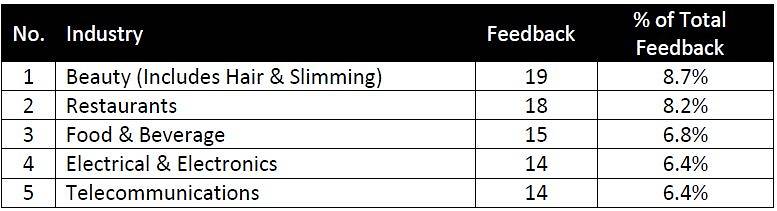
SINGAPORE: The Advertising Standards Authority of Singapore (ASAS) on Tuesday (Apr 30) said it received 19 instances of feedback about beauty-related advertisements in 2018, making it the most complained about industry for the year.
Restaurant advertisements came next, with 18 complaints. ASAS received 218 instances of feedback last year, mostly about advertisements deemed to be misleading.
Most of the feedback for the beauty industry, which includes beauty and slimming treatments, involved claims about hair loss treatments that complainants felt were misleading, ASAS said.
Additionally, these advertisements did not have the mandatory disclaimer for hair and scalp products listed in the Singapore Code of Advertising Practice (SCAP). This disclaimer states that “there is no scientific proof that any product (except certain registered medicinal products) or service can retard hair loss or promote hair growth”.
“ASAS followed up with the advertisers involved to ensure that their advertisements included the above disclaimer,” the authority said.
There were also three cases involving promotions that the complainants said were not honoured due to the terms and conditions referred to, but not written in the advertisement, ASAS added.
“While these promotions had ended when they were reported, ASAS advised the relevant businesses that future promotions should comply with the SCAP,” it said. “Advertisers are reminded that promotional information must be truthful, and all pertinent terms and conditions must be clearly stated.
“If an advertisement does not include the terms and conditions, it should make it easy for the consumer to find them.”
Complaints about restaurant advertisements also increased in 2018, mostly involving matters such as price and discount discrepancies or a lack in clarity in descriptions of items in menus and in promotional materials.
These included advertisements in food delivery and restaurant reservation applications, ASAS said.
ASAS highlighted one example, in which the promotion display on a fast food establishment’s counter offered an upsize on a drink and a side order for S$1. The accompanying image featured a side order and orange juice, but customers who ordered the upsize with orange juice were charged S$2 instead.
ASAS then wrote to the establishment, which then clarified that the promotion applied only to soft drinks. The establishment then said it would change the image to prevent future misunderstandings.
“Advertisers should ensure the information on their promotional materials is clear, accurate and up-to-date, and this extends to prices and terms and conditions,” ASAS said.
The authority encouraged consumers to report advertisements that are “not legal, decent, honest or truthful”.
They can fill out the feedback form on the ASAS website with a copy of the advertisement and details on where it was accessed or received.
SINGAPORE: Every time freelance writer Clare Lee, 27, uses a changing room when trying on clothes in fashion outlets big and small, she will take a few minutes to inspect every nook and cranny in her cubicle for hidden cameras before feeling safe enough to undress herself.
For 27-year-old Fiona, who did not want to give her full name, she will always double-check that the curtains in her bedroom or hotel are fully drawn such that there is not even a teeny-weeny gap for anyone to peek through, and steer clear of unattended baskets in supermarkets.
Freelance content creator Hilary See, 27, would refrain from standing near the edge of the escalator where people can look up her skirt, and try to use either a bag or a file to cover the back of her skirt while climbing the stairs.
With spycams and phone cameras taking voyeurism to unsavoury new heights, these women are among a growing number of people who have taken extra precautions to protect themselves and their private spaces.
As Fiona, who works in the media industry, said of her actions:
This might be irrational fear and excessive caution, but it is better to be safe than sorry. We hear so many stories that hit so close to home, it’d be unwise to not be on our guard.
Singapore has thus far been spared from the epidemic of digital voyeurism that has damaged many lives in South Korea. But the furore which erupted last weekend over the case involving National University of Singapore (NUS) undergraduate Monica Baey, 23 — who was filmed secretly while she was showering in a residential hall — is a reminder that the Republic is far from immune to the problem, and that more could be done to protect victims of voyeuristic acts.
Students sit at a common area in NUS. (File photo: Darius Boey)
On the same weekend that the NUS incident went viral on social media, a 19-year-old man was caught allegedly taking photographs of another man showering in a male toilet at a Nanyang Technological University (NTU) residential hall.
This was the second case in four days which occurred in an NTU residential hall, after a police report was lodged on Apr 18 against a 22-year-old male hostelite who allegedly filmed a fellow student while she was showering the previous evening.
For some victims, like a 27-year-old civil servant who declined to be named, the fear can linger on for years after the incident.
Eight years after she became a voyeur’s victim, the woman still wonders if the explicit video taken in a toilet cubicle at the now-defunct Butter Factory nightclub has been deleted for good, even after she tried to settle the matter by confronting the culprit through an acquaintance.
“I just have to have blind faith and hope it’s been erased. It has been many years, and I (still) think about it now and again,” she said.
She added that there are times when she feels that she will “run out of luck”, and the video will surface when she is at the prime of her life and “truly destroys” her.
She did not go to the police back then as she was having sex in a public space when she was secretly filmed, and was afraid she might get herself into trouble.
Ms Anisha Joseph, head of the sexual assault care centre at the Association of Women for Action and Research (AWARE), said there is sometimes a misconception here that non-physical abuse such as voyeurism is not as harmful or traumatic as physical abuse.
Woman lying in silence. (Photo: Unsplash/MMPR)
While victims of voyeurism aren’t physically assaulted, it does not mean that emotional and psychological damage does not exist, she stressed, pointing out that AWARE had seen cases where victims could feel intimidated, ashamed, angry or powerless at the unwanted exposure.
Psychological effects can be long-term, and can run the full gamut, from developing a fear of others, depression, and anxiety, to suffering flashbacks, numbness and denial, she added.
TIP OF THE ICEBERG
Experts said that the true extent of the problem of voyeurism is far deeper and broader than the ongoing NUS saga.
Unreported cases are common, said the experts who noted that published statistics are just the tip of the iceberg.
It was revealed in a written parliamentary reply in October last year that about 230 voyeurism cases involving hidden cameras were reported to the police in 2017, up from some 150 cases in 2013.
Law and Home Affairs K Shanmugam said this was partly because more people are willing to step forward to report these cases.
Nevertheless, the authorities have moved to tackle the problem.
The Criminal Law Reform Bill was tabled in February to address growing concerns over the surreptitious recording of people in various states of undress or intimacy — an offence which is not sufficiently covered under existing laws. It aims to criminalise the production, possession and distribution of voyeuristic recordings.
Should the Bill be passed in Parliament, voyeurs could face up to two years in jail, caned, and/or fined for each charge, and be slapped with an enhanced penalty if the victim is below 14 years of age. Current laws provide for only up to one year in jail, and/or a fine.
Criminal lawyer Rajan Supramaniam from Hilborne Law LLC, who has handled more than 50 voyeurism cases, said he had come across increasingly more cases involving the use of mobile phones and spy cameras in the past five years. And more teenagers are coming to seek his legal help.
(Photo: Unsplash/Issam Hammoudi)
He is currently representing a 17-year-old who was slapped with 14 charges after secretly filming upskirt videos of two of his teachers at two secondary schools last year, by placing his mobile phone, which was on recording mode, on his classroom floor.
After being caught the first time, the then-Secondary 4 student was given a conditional warning and transferred to another school, where he re-offended before he was charged. Investigations found that he had also unwittingly filmed someone showering by leaving his phone on a shelf in his own bathroom.
Clinical psychologist Joel Yang said he is seeing one new case a month, on average, in the past one-and-a-half years. Quite a number of his clients are voyeurs who have not been reported to the police, and were referred to him by concerned parents, schools, or employers.
He has also seen a few cases of individuals who sought help on their own volition.
One case involved a 32-year-old banker who was about to get married. He was afraid that his habit, if left unaddressed, might jeopardise his relationship with his girlfriend whom he had been seeing since his NUS days.
She still does not know that he had been a voyeur since university, where he had filmed women showering in his dormitory and taken upskirt photos on escalators at shopping malls and in the MRT.
He had stopped such behaviour for a few years after graduation, but relapsed this year after a job switch. The unisex toilet at his new workplace was a big temptation, and he was almost caught in the act once when a female colleague from the same department walked into the washroom, and saw him kneeling down suspiciously before a cubicle.
Although she did not say anything since the banker was deft at hiding his phone in his leg sleeve, that episode was his “trigger” in seeking help, said Dr Yang.
“He realises that it is something illegal and morally wrong. He is religious, so he also doesn’t feel like this behaviour is appropriate. But he describes it as like a bit of an addiction,” he added.
(Photo: Unsplash/Warren Wong)
Psychiatrist Munidasa Winslow, who was formerly chief of the Institute of Mental Health’s (IMH) Addiction Medicine Department, is also seeing more voyeurs seeking help at his clinic. Five years ago, he probably come across one to two such cases yearly. But now, a year can see him handling two to three cases.
ELSEWHERE, AN EPIDEMIC IN SOUTH KOREA
While digital voyeurism has reared its ugly head in Singapore and many other countries, it has become a hot-button issue in South Korea. There, the men have been slammed for perpetuating a spycam “epidemic”, where thousands of people have been filmed by “molka”, or hidden cameras, without their knowledge.
The fear of digital peeping toms has led South Korean women to stuff tiny balls of toilet paper into any holes they find in bathroom walls or cover the holes with tape, as the number of reported molka crimes rose sharply from 1,353 in 2011 to 6,470 – an average of 18 cases a day – in 2017.
In March, police said that more than 1,500 hotel guests in South Korea were secretly filmed, and their private moments unknowingly streamed live online, as suspects had planted mini-cameras with 1mm lenses in digital boxes, hair dryer holders and wall sockets of 42 rooms at 30 hotels in 10 cities.
The molka problem had already sparked much anger before this, with tens of thousands of women taking to the streets in June last year, in what local media reported as the biggest women’s rights demonstration in South Korean history. Several more large-scale protests followed, where protestors held up signs that read “My life is not your porn”.
Protesters in South Korea have been calling for the government to crack down on widespread spycam porn crimes (Photo: AFP/STR)
Meanwhile, similar scandals have rocked the K-pop industry, with singer-songwriter Jung Joon-young, 30, and BIGBANG boyband member Seungri, 28, embroiled in an ongoing spycam porn sex-crime scandal.
While the problem in Singapore does not appear to be as serious as in South Korea, experts said that the situation could get out of hand if voyeuristic acts are allowed to be regarded as “normal”.
UNDERLYING FACTORS
The rising cases of voyeurism in Singapore could be the result of people being exposed to excessive amounts of pornography online, said case workers and some men interviewed for this article.
A lecturer in his 30s, who declined to be named, recalled that during secondary school, he and his friends would, out of mischief, loiter at a shopping mall where the flooring had enough reflection for them to catch glimpses of women’s underwear.
He said they would cheekily whisper to each other “Eh, zao kng leh!”, using a Hokkien term to refer to how someone had accidentally exposed herself.
Growing up at a time when not every home was equipped with Internet connection yet, he also recalled how he and his peers would dare each other to visit pornographic websites, which “secretly everyone of us was curious to see”, in a display of manhood.
To him, chancing upon pornographic materials and their childish reactions to them was a rite of passage for him and his friends to explore their sexuality.
(Photo illustration)
Now, as an adult, he worries that things can get out of hand for today’s youths, given factors such as advancing technology and the unfettered online environment.
Swimming coach Vickel Chan, 25, said he would be disgusted if any of his friends were to tell him that they had voyeurism videos.
“Why do such despicable things? It is other people’s privacy … (Furthermore,) you are just going to embarrass yourself when you get caught,” he said.
Mr Steven John Lam, director of Templars Law, said the act of peeping was “not new”. The lawyer said that during his time more than 20 years ago, male students used to climb up a staircase landing of a multipurpose hall at a university here, where they could peek into the female changing room, and they would be chased away by anyone who saw them.
In the 70s and 80s, the biggest problem posed by voyeurs was them lurking in corridors of public flats to peep into rooms, and through gaps in the bathroom, Mr Lam pointed out. The voyeurs have merely changed their tactics in the past 10 years, when camera phones became widely used, he said.
Dr Yang said people tend to have stereotypical images of those who have voyeuristic tendencies — they are viewed as not very successful in getting the attention of people they find attractive, or have specific sexual fetishes.
However, he said, the issue cuts across all sectors of society, regardless of gender, education, and social-economic class, and most people who admitted to have such tendencies are normal-looking individuals, with good jobs and normal relationships.
“It could just be something that caught their attention once when they were surfing a porn site or something like that. And then it sparked their interest, and (they) wanted to go try it,” he said, noting that this did not necessarily mean that they had became obsessed with porn.
A lot of it could be maladaptive ways of coping with stress or boredom, he added, pointing out that his clients had reported thrills of being able to “get away with something”, apart from them getting the physiological turn-on.
“It is a real problem but I think if we overly-stigmatised it, then people might be less open to treatment or less forthcoming,” said Dr Yang.
(Photo: Unsplash/Christian Erfurt)
Mr Rajan cited a 2013 case where his client, a banker, had been watching about one hour of pornography daily since his university days to relax, and felt uneasy and distracted when he could not watch it.
The man started his own collection of upskirt videos after being introduced to it through an Internet sex forum, where the culture was to share self-made videos with others members.
For four years, whenever he encountered attractive girls during lunchtime around Raffles Place, where he worked, he would consider following them and looking for opportunities to film an upskirt video with his handphone. By the time he was caught, he had amassed 596 obscene films in his computer.
Dr Cheow Enquan, a consultant with the IMH’s Department of Forensic Psychiatry, said that based on his experience, people with a voyeuristic problem struggle with admitting it given that Singapore is largely still a conservative society.
“This problem is viewed as shameful by many people. It is even more stigmatising when this amounts to a mental disorder and one has to seek treatment from IMH,” he said.
He noted that voyeuristic acts “bring only temporary relief at most and do nothing” to resolve the underlying stressors which are often financial or occupational in nature.
“Some perpetrators do feel guilty about their behaviours but this does not prevent them from continuing to engage in voyeurism,” he said.
He reiterated that not every voyeur has a mental disorder. For those who do, it can be treated with a combination of medication and psychological therapy. “Medication can be used to reduce impulsivity and sexual urges while psychological therapy would help to address the underlying deviant sexual thoughts,” he added.
VOYEUR COMMUNITIES EMBOLDENING INDIVIDUALS
With the formation of online communities, such as the SammyBoy forum, more might feel tempted to seek out voyeuristic thrills for themselves, having been a covert consumer of such videos.
A website showing footages of women recorded on spycams. (Photo: Screengrab)
Nominated Member of Parliament (MP) Walter Theseira noted that there is a substantial number of netizens who consume such voyeuristic content and drive demand even though they would never dream about taking part in the act of filming.
“Without active passive consumption by the online community, people won’t feel so emboldened to take these films because the consumption helps to normalise the act,” said Associate Professor Theseira, who is from the Singapore University of Social Sciences.
This could be why the norm around voyeurism is “nowhere as strong as the social norm around, say, child sex offences or rape”, he said.
The rationalisation is that if a victim never finds out, it appears to be a victimless offence. This allows voyeurs to think they are not bad people.
Recent high-profile court cases involving online voyeuristic video-sharing groups provided an insight into how such dynamics worked.
Such groups could be nodes where more boys or men solidify certain thought patterns, be it the objectification of women or other misogynistic attitudes, the experts said.
Dr Winslow said voyeurism shows up more in cultures where male supremacy is predominant and women tend to be objectified.
“I think Singapore is a lot more controlled and less misogynistic than the culture in South Korea. We generally treat our ladies with more respect,” he said.
With stern action taken (against voyeurs), I don’t think it will be a growing craze, though if people see no action being taken, there are risks of escalating cases.
NTU assistant professor Liew Kai Khiun, who studies transnational popular cultural flows and social media cultures, said the current phenomenon could be a case of “technology-enabled toxic masculinity” — technology enabling men to project their control over women with the “male gaze”.
A woman at a cross junction. (File Photo: AFP/Fred Dufour)
“They are able to objectify women further in the most unsuspecting way, which is actually thrilling, because it gives them the power to watch – like the power of a closed-circuit television control room. That is the whole fantasy of it,” said Dr Liew.
It actually gives them this slight feeling of power and control to be able to monitor women, or objects of desire, in the most intimate settings.
The videos, in a sense, become “sexual and cultural capital” for someone who is able to find the latest recording, he added. “That’s the whole idea of porn. It is never on dated material. There is always the need to refresh with something new to satisfy desires.”
Dr Liew also find that voyeurism could be easily weaponised against women in this Internet age, and there are no lack of examples of people using nude video footage or pictures to blackmail others.
LEGISLATION AS A TOOL
While the NUS incident has sparked a public outcry calling for stiffer punishments for voyeurs, the way forward will need more than just making legislative changes, said community leaders.
Even with the upcoming changes to increase penalties for voyeurs and add new offences to deter the commission of such acts, Mr Lam said the law will have to balance between the rehabilitative and punitive aspects of criminal punishment.
“We hear a lot of voices that there should be retribution (for NUS undergraduate Lim), but where do we draw the line? Do we say that there is no second chance in life, (and) there is zero tolerance for mistakes?” said the lawyer, who is also chairman of Sengkang Central’s Citizens’ Consultative Committee.
Dr June Goh, president of the Singapore Council of Women’s Organisations (SCWO), similarly said punishment should stick to a “rational view”, and should be “fair, just and consistent”.
“I don’t think our culture is allowing these acts to flourish. There have been cases highlighted in the press and treated as a serious offence carrying a jail term. Women have spoken up,” she said.
(Photo: Unsplash/Maranatha Pizarras)
Ms Joan Pereira, a Member of Parliament for Tanjong Pagar Group Representation Constituency, concurs. While she stressed that every new case is still “one too many”, she noted that Singapore’s laws and culture “do act as a deterrent against such acts”.
“Our women still feel safe in Singapore and Singaporean women can even be outside at night alone, which is not something that many countries can achieve,” she said.
While a few MPs had suggested that the use of spycams — which are easily available online and in at least four shops in electronics mall Sim Lim Square — be regulated as one of the solutions, Mr Shanmugam had said in a parliamentary reply that this would be “quite unworkable”. “Mobile phones also come with cameras, and they can also be concealed to take secret photos and videos,” he added.
AWARE’s Ms Joseph suggested that the Government shut down sites where voyeuristic materials are distributed. Victims could also be given the option to apply for take-down orders online without having to resort to the many complicated steps of the Protection Against Harassment Act, she said.
ROLE OF EDUCATION
Education has a major part to play to address the problem, the experts said. SCWO’s Dr Goh said:
It boils down to respect and understand that one’s body is completely a private space.
A 29-year-old secondary school teacher noted that there is no lack of educational programmes, from sex education to cyber-wellness education. But many parents are not doing enough on their part in educating their children on these issues, she said.
As to how sex education classes are currently conducted in school, the teacher who previously taught in an all-boys school said she might not want her own child to attend these classes.
(File photo: Pixabay/weisanjiang)
“These hormone-raging students, they are learning more from their peers than from teachers (during those lessons),” she said.
Speak of masturbation, and the whole class gets feverish with excitement.
As for what a parent could teach their children, she said she would tell a boy to understand that while men have natural tendencies to be visually triggered for instance, they are “more than” their animal instincts.
She told her students: “You are supposed to be a protector and defender, meant to lead the family unit. You need to learn how to manage your self-control, and know what areas to watch out for.”
As a way to educate her children about boundaries, the mother of two, Ms Ruchika Saluja, said she has become more mindful of taking her children’s pictures without their consent.
The 38-year-old assistant vice-president at SembCorp Industries said her eight-year-old son recently got a Global Positioning System-tracker that is equipped with a photo-taking function, and she taught him to never take pictures of his friends without their permission.
REINFORCEMENTS NEEDED
Meanwhile, institutions must also take on some responsibility in building a secure environment, some of those interviewed said.
Building owners and mall operators can provide better support by fixing clearer and more CCTVs around public areas as well, they added.
Representatives of facilities’ management, including those of hostels and gyms, interviewed for this article noted that voyeuristic filming is still a nascent problem for them. While not promising any reinforcements, they said they would at the very least do their best to help in the investigation of reported cases.
A 35-year-old former nightclub operator, who declined to be named, brushed aside the suggestion to install more cameras, saying the more pertinent issues for them are molest and assault cases. Besides, their facilities are too dark for cameras to pick up much, he said.
As spycam debugging services pop up in South Korea, spycam suppliers here have also imported devices such as radio frequency readers, as more clients have requested for such services in homes and offices.
The spread of revenge porn and spycam porn in South Korea has prompted protests and calls for tech giants including Google, Youtube, Facebook and Twitter to work harder to curb high-tech sex crimes in the hyper-wired country. (File photo: AFP/Jung Yeon-je)
The devices costing anything between S$50 and S$400 will pick up on radio frequency emissions from short distances and alert a person to the presence of spycams. Some models also come with a scope-like device that will make the lens of a camera reflect brightly to make them easier to spot.
Mr Pieter Tjia, from OMG Solutions, a supplier of such devices, said women can also protect themselves by looking out for oddly placed decorations in a hotel room.
If a decoration is placed at a weird height or at an odd location, there may be a camera embedded, Mr Tjia said.
Cameras can lurk in wall hooks, smoke detectors, table and wall clocks, air fresheners, electrical outlets, bluetooth speakers, night lights, books, small holes in the wall, photo frames, stuffed animals, tissue boxes and clothes hangers, he said.
As a young Singaporean navigating this digital age, actress Naomi Yeo, 25, said it is important for women to be aware of “what we’re up against”.
“I think it’s important to know that these things might and can happen to you, and that we should prepare ourselves on how to react and what to do (if potentially caught in such a situation),” she said.
Beauty blogger Roanna Tan, 27, added:
Women or men, we’re all human and we have our rights to live the way we want to. It’s sad that we women have to protect ourselves in many ways just to carry out our normal daily activities.
AWARE’s Ms Joseph stressed that society has to make clear that it is more of the perpetrator’s responsibility to not commit these acts than the victim’s responsibility to protect herself from them.
She said: “The solution to every form of violence against women cannot be to restrict women’s movements — whether in public spaces, workplace or online spaces.”
The previous record holder for a five-day opening was 2018’s Avengers: Infinity War.
(Screengrab of a scene in Avengers: Endgame)
It’s official – Avengers: Endgame has achieved the biggest five-day opening weekend of all time in Singapore.
The final Avengers instalment took in a whopping S$7.52 million between Apr 24 and 28. This eclipses the record held by Avengers: Infinity War last year, which raked in over a million dollars less at S$6.13 million. Before Infinity War, the record for a five-day opening was 2011’s Transformers: Dark Of The Moon.
Endgame’s strong showing locally is keeping pace with worldwide opening weekend figures – it’s the No 1 movie in at least 54 countries and has smashed global box office records with US$1.2 billion worldwide.
The three-hour war against Thanos also saw chart-topping numbers in North America with US$350 million at the tills, obliterating the previous record-holder, Star Wars: The Force Awakens, which made US$248 million in opening-weekend sales.
At the rate it’s going, Endgame has a good chance of zooming past Infinity War – currently Singapore’s biggest film – which had a total run of S$16.2 million.
HONG KONG: Shipping firm APL and a vessel captain were fined a total of HK$99,000 (US$12,600) on Monday (Apr 29) for transporting nine Singapore Armed Forces (SAF) Terrex vehicles into Hong Kong without a proper licence in 2016.
Chinese national Pan Xuejun, the vessel’s captain, and APL were jointly charged and convicted of importing and exporting strategic commodities without a proper licence.
Pan was handed a HK$9,000 fine and a three-month suspended prison sentence, while APL was fined HK$90,000 by the Hong Kong District Court.
File photo of Pan Xuejun, captain of the vessel that transported nine Singapore Armed Forces (SAF) Terrex vehicles through Hong Kong in 2016.
The SAF Terrex Infantry Carrier Vehicles and associated equipment were seized by local authorities on Nov 23, 2016, as the shipment was passing through Hong Kong. They were on their way back to Singapore after military exercises in Taiwan.
The armoured troop carriers were returned to Singapore two months later, after Hong Kong authorities completed their investigations.
Hong Kong Customs said in March 2017 that it had started prosecution of shipping firm APL and the captain.
NO PROPER LICENCE
The prosecution alleged that the vehicles had no proper licence and were labelled as civilian vehicles instead.
APL’s defence was that its role was that of a vessel agent, and not the carrier agent. A vessel agent is mainly in charge of the operation of the vessel, while a carrier agent is responsible for the documentation relevant to its cargo.
APL said that the carrier agent responsible for the shipment was its American sister company, American President Lines.
Arrival of the nine Singapore Armed Forces (SAF) Terrex Infantry Carrier Vehicles (ICVs) and other equipment in Singapore on Jan 30, 2017. (Photo: MINDEF)
The judge was not convinced by APL’s defence that it was unaware of this particular cargo, saying it had carried out such shipments previously with proper documentation.
The judge was also unconvinced by Pan’s defence that he did not know of the full extent of the shipment on hand, and that he was relying on others to do so.
If Pan had gone to inspect the cargo himself, he would have realised that they were military vehicles instead of civilian vehicles, the judge said.

Buying flowers for
Mother’s Day is often a difficult thing to do. It is the one time of year where
you become a flower expert, wondering which ones are the best and deciding whether
your mother would indeed like the bouquet that you are thinking about buying.
But, if you take the time to choose flowers carefully, we are sure your mother
will love the flowers you choose.
To help you with
this big choice, we’ve decided to bring together our top picks for the very
best flowers that you can send your Mum on Mother’s Day.
Gerberas are a fantastic bouquet to buy. They may might not be the most well-known, but they are a type of flower that is known for conveying feelings of both happiness and joy. Gerberas are also known to be particularly related to children, as they are thought to be representative of children’s innocent hearts, which makes it particularly poignant for Mother’s Day. These flowers not only look great, but also send a nice message of love to your Mum.

Roses are not normally
associated with Mother’s Day, as many consider them just for Valentine’s Day. There
are many different colours of rose to choose from, so they don’t
necessarily need to be red. For Mother’s Day, you may wish to choose yellow or
orange roses.

Lilies are big and beautiful,
and they are certainly expressive flowers which makes for a great Mother’s Day
surprise. Expressive flowers could be considered an expression of love for your
mother. This is why we would recommend that you consider Lilies.

Orchids are a great
gift to give on Mother’s Day, because if cared for, they can then turn into
house plants. It is thought that in Chinese tradition that Orchids signify
“many offspring”, which makes it the perfect flower to give on Mother’s Day.

Alstroemerias are
a little known flower, but they are wonderfully colourful and long
lasting. Again, a message of ever-lasting love can be conveyed with these
flowers.

Carnations are arguably the most traditional flowers to send
to your mum on Mother’s Day. Carnations are bright and expressive, and there
are many different colours that you can choose from.
Do you have any suggestions as to what are the best Mother’s
Day flowers? If so, let us know. If you want to send flowers to your mother on
Mother’s Day, check out Sendflowers.org.uk.

Instagram is a great social media network
if you want to market your brand. Apart from letting you showcase products from
your Shopify store, using Instagram helps in many ways to promote your
business.
Let’s look at the different ways by which
Instagram can help your business.

A Huge User Base
One of the best things about using
Instagram is that you have access to a large user base. With more than 800
million active users on the platform, you can easily find your target audience
on Instagram. Getting followers on Instagram is the first step that you should be taking to
market your business on this platform.
A High Conversion
Rate
Instagram is known to have a high
conversion rate than other platforms such as Pinterest and Polyvore. Instagram
posts tend to leave an impression on the
minds of people. For instance, if they see a pair of shoes posted on Instagram,
they are quite likely to go ahead and purchase it. With the introduction of
Instagram’s shoppable posts, created with Shopify, it has now become easier to shorten the
customer journey. Now that your audience can purchase your products directly on
Instagram, without having to exit the platform, it creates a convenient
experience for them.
Advanced
Ad-Targeting Options
Another benefit of using Instagram for
your business is the advanced set of Ad-targeting options that this platform
offers. Instagram Ads are a great way to directly target audience with your
content, increasing your chances of conversions. Not only can you target a cold
audience, by the basic parameters of age, gender, location, behavior, and
interests, but you also have the option of retargeting an audience. While cold
targeting means targeting people who are not acquainted with your brand,
retargeting is reaching out with your content to those who have already seen or
heard of your brand or content. With Instagram’s retargeting feature, you have
a better chance of enhancing conversions.
Create Different
Types Of Content
Another good thing about Instagram for
your business is that it lets you experiment with content and formats. You can
use Instagram stories, create Instagram posts and now even add IGTV videos to
market your products. Getting followers on Instagram
can be easier if you leverage the different content formats that the platform
offers.
You can post product photos in many
creative and innovative ways. You can also add up to 1-minute long videos
sharing your products. You can also provide a glimpse behind the scenes. You
can probably let your audience see all that goes into building your products or
you can show them how the different photos of your products are captured,
edited and then posted on Instagram.
Increase Brand
Awareness With Hashtags
Hashtags on Instagram help to increase
brand awareness by increasing the presence of your brand on the platform. A
good combination of hashtags should include a niche or industry-relevant
hashtag, a brand-focused hashtag, and other hashtags that you think your target
audience is more likely to look up on Instagram. This will increase your chance
of getting discovered and that of getting more followers.
Leverage The
Power Of Visual Content
Visual content is the most popular type
of content. Instagram lets you leverage this power given that it is a visual
content-focused platform. People connect with this the most and with Instagram,
you can create and post visual content to attract and entice your audience.
Once you have attracted your audience with your content, half the job is done
for you. Now you only need to bring your audience to engage with your content
and eventually target at converting them into customers.
Share
User-Generated Content
You can use Instagram to create
user-generated content. User-generated content is like product recommendations.
If someone posts a photo on Instagram featuring your product (s) or brand, you
can share it through your Instagram profile. This will show your followers that
there are many other customers who are using your products already. It adds a
sense of trust in your brand. You should create a relevant branded hashtag for
this so that people can use this hashtag when they add posts featuring your
products. You can then add all the user-generated content to your Instagram
profile.
Run Influencer
Marketing Campaigns
You can use Instagram to run influencer
marketing campaigns. Instagram is one of the most ideal platforms to
collaborate with influencers as most Instagram influencers boast of a huge
following. Identify niche influencers with whom you can collaborate to promote
your brand. This will help in getting followers on
Instagram.