Four sherpas were deployed to rescue him and he was found in a semi-conscious state in what was described as a “miracle” rescue.
Dr Chin was airlifted to a hospital in Kathmandu last Friday (Apr 26), where he was joined by his wife. An emergency physician at Mediciti Hospital had told AFP his condition was critical and that he was suffering from severe hypothermia and had frostbite on his hands and feet.
Friends and relatives paid their respects at Dr Chin’s wake at a Buddhist temple in Bukit Merah on Thursday.
Well-wishers walked up a hill to the temple, filling up the yellow tent to pay their final respects and to send their condolences to the family. The sombre atmosphere was occasionally broken up with chatter.
Dr Chin’s wife, who was dressed in black and teary-eyed, requested for privacy through a friend, who explained that it was a difficult time for her.
The wake of Dr Chin Wui Kin, who died after getting rescued from a mountain in Nepal on Apr 26, 2019. (Photo: Johannes Tjendro)
Efforts began to find him after his guide stumbled to the camp and raised the alert.
Two days later, a rescue helicopter spotted him waving from an altitude of about 7,500m, his expedition organiser Seven Summits Treks said.
A visiting senior anaesthesiology consultant at Singapore’s Ng Teng Fong General Hospital, Dr Chin’s medical knowledge and familiarity with mountains may have helped keep him alive, said a sherpa last week.
According to his Facebook page, Dr Chin worked at various hospitals in Singapore including at Khoo Teck Puat Hospital, Alexandra Hospital, Tan Tock Seng Hospital and the National University Hospital.
Mount Annapurna is technically difficult and avalanche-prone, and has a higher death rate than Everest, the world’s highest peak.
Nine South Korean climbers were killed last October after a snowstorm swept them off a cliff on Mount Gurja, west of Annapurna.
SINGAPORE: Malaysian Primary Industries Minister Teresa Kok has accused the Singapore Zoo of putting up displays that shed a negative light on palm oil and called for countries in Southeast Asia to present a united front in supporting the industry.
When delivering her keynote address at the Singapore Dialogue on Sustainable World Resources on Thursday morning (May 2), Ms Kok noted that the zoo’s displays at its orangutan enclosure had damaged the image of palm oil producing countries in the region “despite progressive efforts towards sustainability and wildlife conservation”.
“In this case, Singapore Zoo acted possibly in haste and (was) reflecting emotions expressed by some ill-informed visitors,” she added.
In an immediate response to Ms Kok’s comments, Wildlife Reserves Singapore (WRS), which operates Singapore Zoo, said it advocates for sustainably produced palm oil, adding that boycotting the industry is not effective.
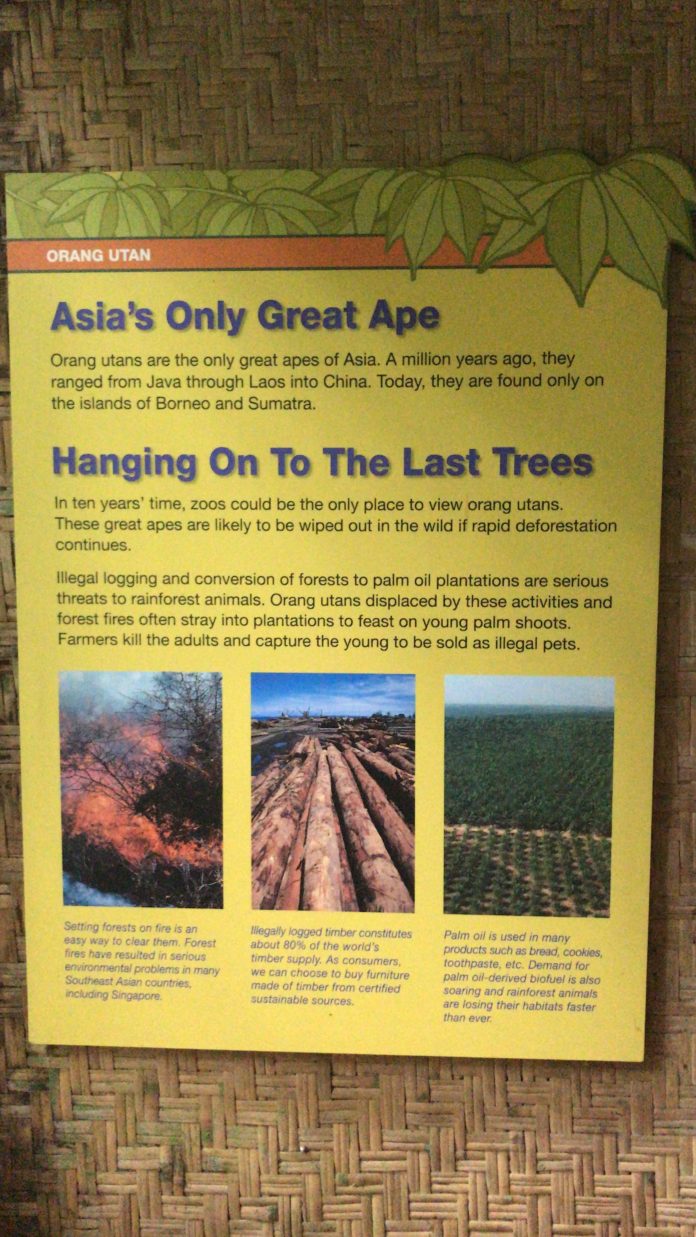
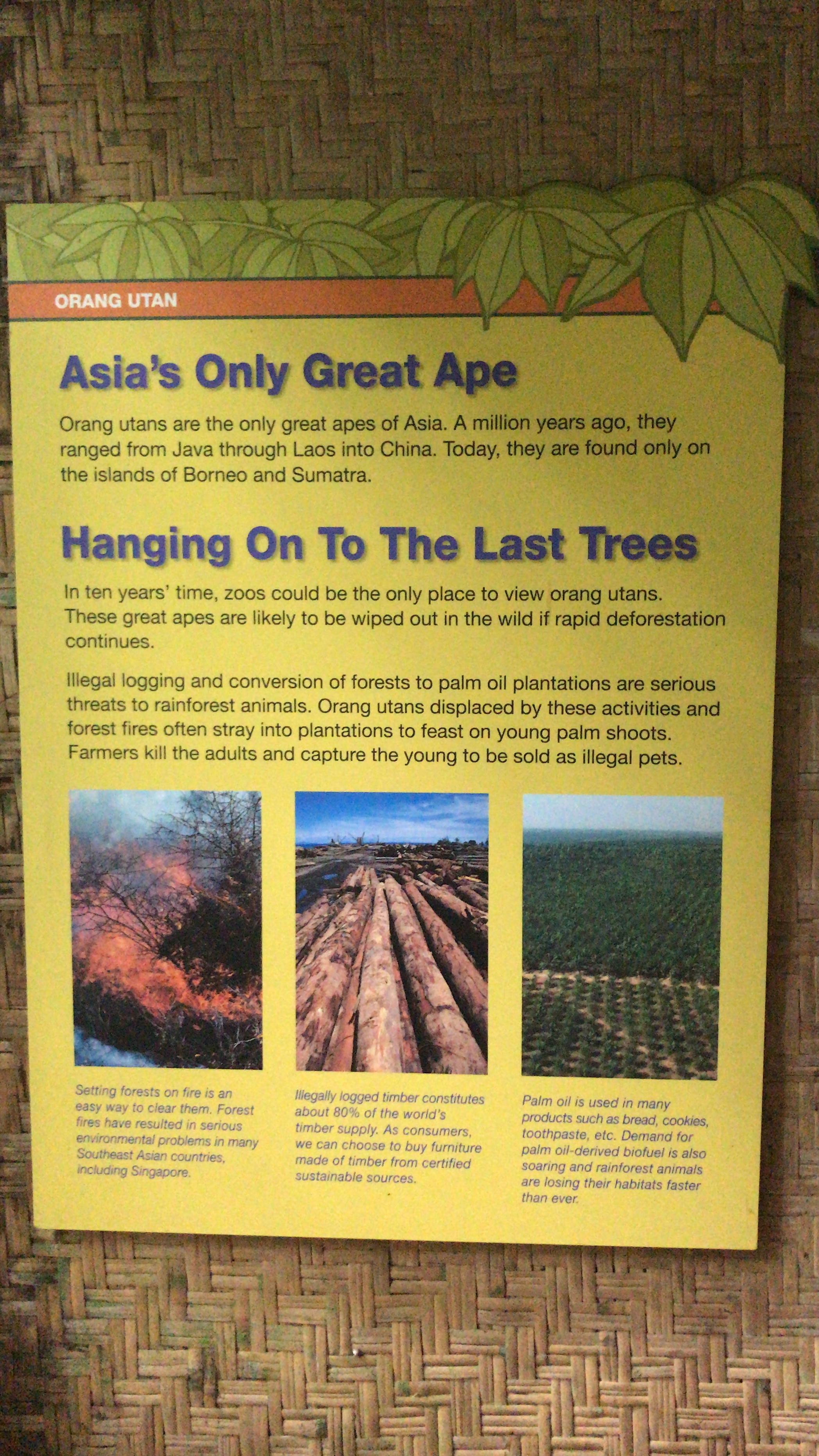
This exhibit at the Singapore Zoo highlights that the conversion of forests to palm oil plantations has threatened orangutans. (Photo: Amir Yusof)
A visit by CNA to the Singapore Zoo on Thursday afternoon found the displays explaining that conversion of forests to palm oil plantations is a serious threat to rainforest animals, such as the endangered Borneo orangutan species.
One of the displays read: “Palm oil is used in many products such as bread, cookies, toothpaste etc. Demand for palm oil derived biofuel is also soaring and rainforest animals are losing their habitats faster than ever.”
ASEAN COUNTRIES MUST STAND UNITED ON PALM OIL: TERESA KOK
In her speech, Ms Kok highlighted that Malaysia’s palm oil industry has contributed funds to wildlife conservation in Sabah to protect iconic species such as the orangutan, Borneo pygmy elephant and the sun bear.
The Borneo orangutans can be found in Sabah and Sarawak. (Photo: Amir Yusof)
She said the curators at the Singapore Zoo should take note of such efforts. “We plan to do far more in Sarawak and in peninsula Malaysia, these are part of our ongoing effort towards sustainable production systems,” she added.
Ms Kok also called for Association of Southeast Asian Nations (ASEAN) countries to show solidarity and “be supportive of one another”, especially on presenting facts on palm oil.
“If the EU (European Union) countries can stand united on assumptions of unsustainable production and consumption of palm oil… we as ASEAN should stand tall to fight against those who are unfair and have discriminatory judgements,” she said.
WE WILL CONTINUE WITH PUBLIC EDUCATION: WRS
In its email statement to CNA, Mr Mike Barclay, Group CEO for Mandai Park Holdings – the parent entity of WRS – said WRS believes that boycotting of the palm oil industry is not effective given the efficiency of palm oil production and its ubiquitous use.
“We recognise that palm oil is the highest-yielding source of vegetable oil and the palm oil industry creates stable employment for many people across the region,” he said.
Mr Barclay highlighted that WRS is an active member of the Roundtable on Sustainable Palm Oil (RSPO), an organisation that is committed to protect tropical rainforests that hold large stores of carbon and biodiversity, and are critical for millions of indigenous and local peoples who depend on forests for their livelihoods.
He said WRS applaud RSPO’s commitment to protect the high carbon stock rainforests.
“We trust that ensuring the consumption of certified sustainable palm oil can help minimise the negative impact of palm oil plantations on wildlife and their habitats,” he added.
Mr Barclay reiterated that public education is a key mission of all the parks operated by WRS in engaging the community and raising awareness about conservation issues.
“We will continue to communicate messages advocating the protection of wildlife and their habitats across all our channels, including animal exhibit interpretives, park posters and our website,” said Mr Barclay.
Malaysia is the world’s second biggest palm oil producer after Indonesia, and it relies on the crop for billions of dollars in foreign exchange earnings and hundreds of thousands of jobs.
In March, Malaysian Prime Minister Mahathir Mohamad said the EU risked opening up a trade war with Malaysia over its “grossly unfair” policies aimed at reducing the use of palm oil.
The comments came after the European Commission concluded that palm oil cultivation results in excessive deforestation and its use in transport fuel should be phased out by 2030.
Dr Mahathir had said that the EU’s increasingly hostile attitude towards palm oil was an attempt to protect alternatives that Europe produced itself, like rapeseed oil.
In Beijing last week, Dr Mahathir witnessed the signing of a deal for China to buy additional 1.9 million tonnes of palm oil from Malaysia over the next five years.
SINGAPORE: While Singapore remains a “fairly conservative” society, there have been “distinct shifts” on issues surrounding homosexual rights, according to an Institute of Policy Studies (IPS) working paper released on Thursday (May 2).
The paper titled Religion, Morality and Conservatism in Singapore was co-authored by three researchers at the institute. Data for the paper came from a survey on Race, Religion and Language conducted between August 2018 and January 2019 on 4,015 Singaporeans and permanent residents. It was the second such survey since 2013.
The study sought to gather their attitudes towards social and moral issues such as homosexual sex and marriage, gambling, infidelity and freedom of speech.
In general, younger respondents had more liberal attitudes than their older counterparts, the study found.
Nearly six in 10 (58.4 per cent) of those aged between 18 and 25 indicated that gay marriage was “not wrong at all” or “not wrong most of the time”, compared to only one in 10 (9.6 per cent) respondents aged 65 and above.
On the whole, 26.9 per cent of those surveyed thought gay marriage was “not wrong at all” or “not wrong most of the time”.
This liberalism was also reflected among the respondents who were more educated, IPS said. However, respondents who identified themselves as being Christian or Muslim tended to be more conservative, it added.
SINGAPORE BECOMING LESS CONSERVATIVE ON HOMOSEXUAL ISSUES
Comparing findings from surveys done in 2013 and 2018, IPS said the Singapore population “has become less conservative over time”.
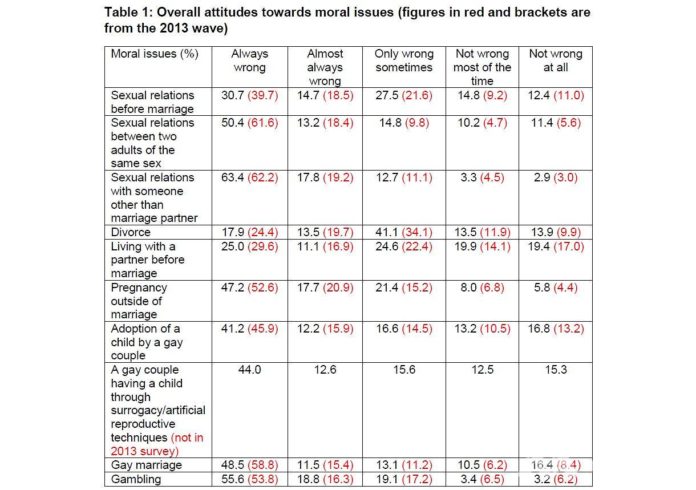
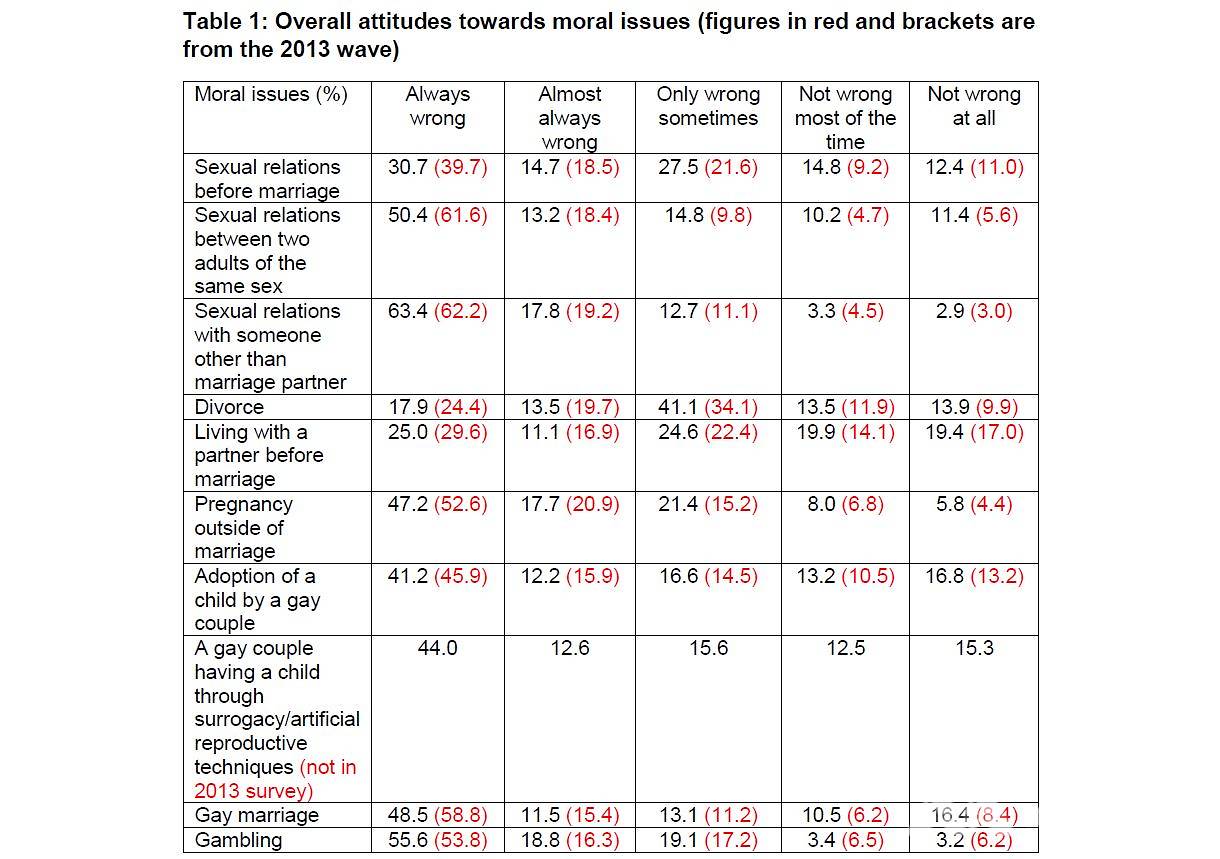
Overall attitudes towards moral issues taken from working paper on Religion, Morality and Conservatism in Singapore, May 2019 (Source: IPS)
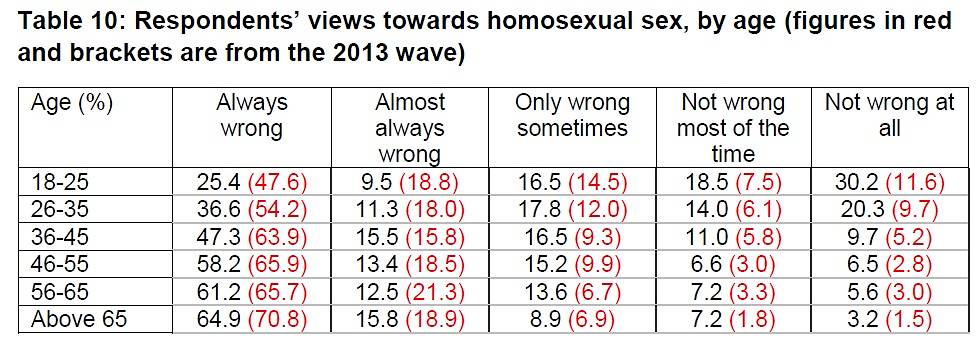
On homosexual sex, 63.6 per cent of respondents indicated it was “always wrong” and “almost always wrong” in the most recent survey, down from 80 per cent in 2013, while 60 per cent indicated similar sentiments for gay marriage, compared to 74.2 per cent five years ago.
IPS found that there were “steep drops” in opposition towards homosexual sex among respondents below 35 years old.
One in three (34.9 per cent) 18 to 25-year-olds and nearly half (47.9 per cent) of 26 to 35-year-olds felt homosexual sex was “always wrong” or “almost always wrong” in 2018. This had fallen from 66.4 per cent for 18 to 25-year-olds and 72.2 per cent for the latter in 2013.
For 18 to 25-year-olds, the proportion who felt homosexual sex was “not wrong at all” nearly tripled – from 11.6 per cent to just over 30 per cent in 2018.
Respondents who had a Bachelors or Masters degree saw the steepest falls in disapproval towards homosexual sex.
Respondents’ views towards homosexual sex taken from working paper on Religion, Morality and Conservatism in Singapore, May 2019. (Source: IPS)
INFIDELITY, GAMBLING STILL FROWNED UPON
A majority of Singaporeans perceived that infidelity (81.2 per cent) and gambling (74.4 per cent) were “always wrong” or “almost always wrong”.
IPS said that there were “no distinct differences across time across all age cohorts”, on these two issues.
“The findings on young respondents’ views towards gambling and infidelity, in contrast to gay rights issues, show that they are not liberal when it comes to all issues, and that there is still some discernment in their application of a liberal lens,” the IPS researchers – Dr Mathew Mathews, Mr Leonard Lim and Ms Shanthini Selvarajan – said.
“The case of gay rights issues might be unique, given growing activism over the years as seen in social movements such as Pink Dot, activism in other countries as seen in the legalisation of same-sex marriages in countries such as India, as well as increasingly positive portrayals of LGBTQ individuals in media.”
Based on its findings, IPS said that while the majority of Singaporeans remain conservative towards gay rights, if the trend towards more liberal attitudes among the young continues, certain social policies will have to be relooked.
One such policy IPS cited was Section 377A of the Penal Code, which criminalises gay sex between men.
IPS also said that “multiple areas of friction between camps that hold vastly different beliefs on issues” could emerge when it comes to gay rights.
It added: “To prevent this friction from escalating into full-fledged conflict, any changes to legislation would have to be managed delicately.”
INFLUENCE OF RELIGION ON MORAL ISSUES
IPS found that Muslims and Christians were the most likely to think that infidelity was “always wrong” or “almost always wrong”. For both religions, 91 per cent of respondents from each community had such sentiments.
The trends for respondents’ opinions towards sexual relations before marriage were similar.
There were lower levels of conservatism among Buddhists and those with no religious affiliation – less than a third of Buddhists and only around one in five of those with no religion had similar sentiments.
Divorce, meanwhile, was viewed most liberally among Singaporeans, with more than 31 per cent of respondents indicating that getting a divorce was “always wrong” or “almost always wrong”, down from 44.1 per cent in 2013.
SOCIO-POLITICAL ISSUES
On socio-political issues, respondents were overall neutral, but tended slightly closer to the position emphasised by the Singapore “state ideology”, IPS said.
For example, on freedom of speech, around four in 10 respondents identified with the position that people should be careful when speaking about sensitive topics, compared to around three in 10 who felt that people should be allowed to speak freely on any topic.
Respondents also appeared to value Asian values such as filial piety, with 57 per cent strongly or slightly agreeing that the younger generation should take care of the older generation, compared to 15.6 per cent who said that each generation should take care of itself.
In addition, respondents valued the multi-cultural, multi-racial and multi-religious diversity of Singapore.
Forty-four per cent identified with being accommodating towards people of different backgrounds, while 17.8 per cent aligned with the position of getting everyone to conform to achieve greater unity.
IPS found that around four in 10 strongly or slightly identified with the position of rootedness in the values of Singapore, describing it as “encouraging”.
Despite the shift in attitudes towards moral issues, it noted that values such as filial piety, multiculturalism and national pride are still being championed.
“This is a positive sign of a distinct Singaporean identity shared by people of diverse backgrounds, grounded on certain sets of core values and principles that may remain unwavering across time,” said the researchers.
HubShout started out in 2008 by offering a multitude of services including SEO, analytics, content marketing, and PPC, as well as other associated solutions for your online business.
What’s Good About Hubshout?
HubShout have grown over the years into one of the industry’s most well-known online solution providers. They have gained a lot of recognition from reputed customers who are very satisfied with HubShout services. One of the best things that customers like about HubShout is their openness with stats. Skimming through the reviews, one can easily observe the level of customer satisfaction HubShout has consistently maintained since 2008.
HubShout believes in the lean startup methodology, where numbers matter more than the words.
But, everything has not been as shiny as it appears today. According to statistics published in 2017 on their website, HubShout has seen dips in business in the past, which compelled them to change their strategy and come out all-guns-blazing. This change in strategy has been effective as the numbers now show.
HubShout have been working really hard on improving its customers’ satisfaction. According to data from 2017, the business saw a sharp increase (15%) in customer satisfaction right after the implementation of a proactive approach in communicating with its customers, according to stats from Hubshout Reviews.
The honesty about their failures is something that many users admire, which has in turn led to more business as they make changes to counteract their shortcomings. Not only has business increased, results for clients have also increased, leading to better reviews.
Areas that need improvement
HubShout has maintained a simple yet professional website, where customer reviews speak louder than gimmicks of fancy themes. Though this can be taken as a positive, infographics and explainer videos are important add-ons that can really make their offering seem more appetising for new users. Many if they worked on this more, it could tempt more webmasters to use their services?
HubShout are offering great services to its clients and they are certainly worth trying out. For more reviews, check out http://hubshoutreviews.com/. Have you used HubShout? If so, let us know what you think of them.
SINGAPORE: A proposed law against fake news narrows, not widens, the Government’s powers, the Ministry of Law said on Thursday (May 2), in response to comments from two Senior Counsels.
The Protection from Online Falsehoods and Manipulation Bill (POFMA) Bill, tabled in Parliament on Apr 1 and due for a second reading next Monday, is aimed at tackling the spread of online fake news using regulatory tools as well as criminal sanctions. It includes powers for ministers to order sites like Facebook, Google and Twitter to put warnings next to posts authorities deem false, and in extreme cases, to take them down.
In opinions published in The Straits Times on Wednesday, Senior Counsels Harpreet Singh and Siraj Omar expressed their concerns and suggested several changes to the Bill.
Mr Singh, a partner with Clifford Chance Asia, said that “legitimate concerns remain” despite the Government’s assurances to allay fears that the Bill would curtail free speech.
Two key preconditions to exercise the extensive powers under the Bill, a “false statement of fact” and a minister’s subjective determination of the “public interest”, are both very widely defined, he said.
“Falsehoods extend to any statement that is ‘misleading … whether in whole or in part, and whether on its own or in the context in which it appears’.”
The definition of “public interest” in the Bill also goes beyond traditional categories to the diminution of public confidence in the performance of any duty, or any function, or any power of the Government or even a statutory board, Mr Singh said.
“These requirements set a very low bar for a minister’s exercise of the extensive powers under the Bill,” he said.
Senior Counsel Harpreet Singh. (Photo: Clifford Chance Asia website)
Ms Teo Wan Gek, Press Secretary to Law Minister, said in response to Mr Singh that the powers to be given to the Government under the Bill, and the public interest grounds on which the Government can exercise its powers, “are actually narrower than the Government’s existing powers”.
In a separate letter on Mr Omar’s opinion, Ms Teo agreed with his view that the proposed law is a “more measured and calibrated approach” by the Government to the problem of fake news.
Both of Ms Teo’s letters were provided to CNA and published in the Straits Times on Thursday.
Mr Omar, a partner with RPC Premier Law, noted that the Government already has broad powers under the Broadcasting Act and other legislation to deal with online content deemed contrary to the public interest.
These powers include the ability to block access to specific sites, such as in the recent blocking of the States Times Review website over an article linking Prime Minister Lee Hsien Loong to the scandal involving Malaysia state fund 1MDB.
“Those who fear that the Bill is an attempt by the Government to broaden its powers should keep in mind that it already possesses wider powers than those provided under the Bill,” Mr Omar said.
Agreeing, Ms Teo said this has been overlooked by some commentators. “The Bill does seek to scope down and calibrate the Government’s powers in key areas,” she noted.
OPINION VS FACT
Mr Singh also pointed out that “while the Bill is not intended to apply to opinions and criticisms, it is often difficult to differentiate statements of opinion and statements of fact”.
“Opinions and criticisms are often premised on underlying statements of fact. Even statements of pure opinion carry an implied statement of fact that there is a reasonable basis for the view expressed,” he wrote. “The Bill, as drafted, may easily be interpreted to extend to criticisms and opinions as long as one of the underlying premises of fact is erroneous.”
In response, Ms Teo said there is jurisprudence, or legal theory, on this.
“If there is a dispute, ultimately the Courts will have to decide whether a statement was factual, or an opinion,” she said.
She agreed with what Mr Omar said in that the Bill proposes greater oversight for the courts than currently under existing laws.
Mr Omar noted that the Bill provides for an appeal to the High Court against the minister’s decision on the question of whether something is a “false statement of fact”. There is no such right of appeal under existing legislation, he said.
“The fact that the Bill refers to a right of appeal and not a right of judicial review is also significant, as the appellate standard is lower than that required in cases of judicial review. The Bill, therefore, provides for greater judicial oversight, which in turn limits the scope of the Government’s powers,” he said.
Senior Counsel Siraj Omar. (Photo: RPC Premier Law)
The concern that the Bill may curtail free speech by blurring the lines between opinion and fact is unfounded, given their well-established definitions in law, Mr Omar said.
“The Bill expressly defines a ‘statement of fact’ as ‘a statement which a reasonable person seeing, hearing or otherwise perceiving it would consider to be a representation of fact’. It is an objective standard that applies, not the minister’s subjective view,” he said, adding that the distinction between fact and opinion is one that the courts have dealt with and refined in many decisions over the years.
SUGGESTED CHANGES
Mr Singh also called for several changes to the proposed legislation, including expressly requiring a minister’s order against a purported online falsehood be supported by reasons.
“Specifically, it should require a minister’s order to identify the relevant falsehood, set out what the true position is, identify the specific public interest involved and how it is threatened by the falsehood, and articulate why the order is both proportionate and necessary.”
For the more onerous take-down orders or disabling directions, there should be reasons explaining why a lesser measure would not suffice, he added.
Mr Singh also recommended that the legislation should require any order to be proportionate to the nature of the falsehood and the degree of harm to the public interest.
By putting some boundaries on these wide powers and requiring that orders made under the Bill are proportionate, the courts would have a greater latitude of supervision over a minister’s orders, he said.
In response, the Law Ministry’s Ms Teo said that a “close reading of the Bill will show that it already contains the proportionality requirement”.
She made reference to Mr Omar’s point that the Bill sets out a range of measures that the minister can take, and that which measure is ultimately deployed depends on what would be “necessary or expedient”.
Mr Singh also called for an annual review of the legislation by Parliament for the first five years. In the review, the Government should provide a summary of the ministerial orders issued, the facts and circumstances of each case, the reasons for the specific orders, the number of appeals and their outcome.
This would enable Parliament to decide if the law is properly achieving its stated legislative aims and how its operation can be improved, he said.
Mr Omar suggested mandating a simplified or expedited process for appeals to the court, and to consider the availability of legal or financial aid to prevent legal costs from becoming a deterrent.
Ms Teo said the ministry will consider the two suggestions from Mr Singh and Mr Omar.
SINGAPORE: Three men have been arrested for importing counterfeit mobile phones and components worth S$290,000, Singapore authorities said on Thursday (May 2).
The three, aged between 26 and 44, were arrested in a 15-hour operation last Friday, said the police and Singapore Customs in a joint news release.
On Apr 15, the Singapore Customs intercepted a consignment from China at the Changi Airfreight Centre. The consignment consisted of more than 500 counterfeit mobile phone component pieces.
The case was referred to the Criminal Investigation Department, which last Friday conducted raids at Keppel Road, Henderson Road and Boon Tiong Road.
The three men were arrested and more than 3,400 mobile phones and components bearing falsely applied trademarks of well-known brands were seized.
Three men were arrested. (Photo: Singapore Police Force, Singapore Customs)
“The authorities take a serious view on intellectual property right infringements and will not hesitate to take action against perpetrators who show blatant disregard for Singapore’s IPR laws,” the news release said.
Those found guilty of importing, possessing or distributing goods with falsely applied trademarks for the purpose of trade face up to five years’ jail and a fine of up to S$100,000.
SINGAPORE: Five entries have been shortlisted in a competition to find a design for an upcoming Founders’ Memorial, the National Heritage Board (NHB) said on Thursday (May 2).
The memorial – envisioned as a gallery and “gardens experience” at Bay East Garden – is meant to commemorate values and ideals exemplified by Singapore’s late founding Prime Minister Lee Kuan Yew, other first-generation leaders and key personalities who played important roles in the nation’s path to independence.
An international design competition was launched in January to seek proposals for the landmark.
NHB said the competition attracted a “strong response” of 193 submissions in total from both local and international architects.
The judging process for stage one of the competition was anonymous.
The five shortlisted teams are:
8DGE Design in collaboration with Ong Ching Ying
Cox Architecture in collaboration with Architects 61
DP Architects
Johnson Pilton Walker
Kengo Kuma & Associates in collaboration with K2LD Architects
Chairman of the Founders’ Memorial committee and jury panel Lee Tzu Yang thanked all the participating architectural teams for their support and enthusiasm.
“Besides Singapore, we had many entries from overseas, for example, from USA, Hong Kong and even Latvia. We are excited to have the shortlisted teams further develop their design concepts in the next stage of the competition, to translate these concepts and the vision of the Founders’ Memorial into more detailed designs,” he added.
Map showing the Founders’ Memorial site. (Image: Founders’ Memorial Commitee)
Public engagement workshops will be organised on the weekend of May 25 to May 26 at the National Museum of Singapore.
“Singaporeans who participated in previous engagements on the Founders’ Memorial will be invited to have an exclusive peek at the five shortlisted conceptual designs, and offer their views on the visitor experience as potential visitors of the memorial,” NHB said.
Other members of the public who are keen to join the engagement workshops can also contact NHB via email.
The jury panel will choose a winning design by January or February 2020.
SINGAPORE: Like a superhero who is most powerful and visible when in costume, Ms Roszana Ali is a woman transformed when she wears her uniform. Without it, she feels invisible to people, or worse, that they look down on her.
With it, the 26-year-old feels a glow of pride. Her green outfit tells the rest of Singapore that she can work. On the day she collected it from GrabFood, she told herself, “Yes, at last.”
She had been waiting since she finished school seven years earlier — an intervening period in which earning money seemed out of reach to her. She had tried and failed to get a job until, bereft of confidence, she gave up.
Then came the work opportunity she secured without even having to say that she was in a wheelchair, or that she had cerebral palsy, a condition that affects muscle control and co-ordination.
Ms Roszana Ali crossing the road in her wheelchair.
Eight months and more than 600 deliveries later, she is enjoying her first real taste of independence as a GrabFood rider. It has given her and her family hope for the future.
But as with her life’s journey so far, it comes with a number of hurdles. These remain standing for lower-income people with disabilities even in the gig economy.
SHE STARTED SCHOOL AT 15
An estimated five per cent of people here with disabilities have jobs, which is one of the lowest rates among developed nations, The Straits Times reported recently.
Watch: Finding a job (and independence) with cerebral palsy (9:52)
And Ms Roszana is no stranger to having to wait for such milestones: She could not go to school until she was 15 years old.
Her cerebral palsy became apparent when she was aged two and started having seizures, “almost monthly”, recalled her father Ali Osman.
“When she was playing, she was normal. We gave her books; she tried to read and write. I trained her to write, but her hand was stiff, and until now, she finds it difficult,” said the 61-year-old.
“Whichever schools we wanted to put her into — mainstream schools — people would come, assess her condition and decide not to take her. They didn’t really help.”
The young girl saw her two elder brothers going to school, and wanted the same. But her parents — a forklift driver and a kitchen helper at that time — could not afford or find a suitable special education school either.
“I felt sad. I kept asking my dad to apply to some for me, but (he) couldn’t get (any),” she recollected.
Still, she was determined to learn, and picked up English by listening to her brothers speak and watching Channel 5, helped sometimes by Malay subtitles.
Her seizures stopped when she was aged 12, and three years later, her father found a place for her in the Cerebral Palsy Alliance Singapore School in Pasir Ris.
“They also helped with transportation. The other schools couldn’t,” said Mr Ali, whose family lives in Jurong. “She was happy. She’d talk about school when she was back home … The teachers loved her and made her a monitor.”
While her teachers taught her functional skills, such as taking public transport and counting money, she also took more than 10 external courses, all in the hope of getting a job later.
For example, she received subsidised training in areas like basic internet skills, digital imaging and word processing, presentation and spreadsheet fundamentals at SPD’s Infocomm Accessibility Centre between 2009 and 2011. Some were extensions of what she was learning in school.
She also attained certificates in workplace literacy under the Workforce Skills Qualifications system. “They said if you take courses, it’ll be easier to find a job,” she noted.
After completing four years of school, however, she began to see that the odds were against her. She went for at least six job interviews and was rejected each time.
One, for example, was for a data entry job, “but they said … (I was) very slow”, she cited. “Obviously, (I was) sad.”
At the age of 22, she stopped looking and fell back on the cash assistance her family was receiving through the ComCare scheme.
‘I DID IT’
Last year, she finally gave herself a shot at another job, thanks to her best friend since school — the first person who talked to her when she was a shy new student.
Ms Juni Syafiqah Jumat, who also has cerebral palsy, had been working for GrabFood for three months when she encouraged Ms Roszana to do the same.
“Because I knew that it was very hard for people like us to find a job,” explained the 24-year-old. But her friend was reluctant, unsure if she was up to it.
Said Ms Roszana: “I said, ‘Cannot lah.’ Because I didn’t know how to go (about) on the roads … I didn’t go out much.”
Ms Syafiqah, however, would not take no for an answer and helped her to apply online. All that was needed was her name, address, date of birth and vehicle type, which she indicated was a personal mobility device. (Electric wheelchair was not given as an option, although change is coming. More on that later.)
On her first delivery, Ms Roszana needed her friend by her side because she was shy of people — since young — and afraid that her pronunciation “wasn’t so clear”. She added: “That’s why I was so scared.”
So Ms Syafiqah followed her to the customer’s block but waited at the void deck, resisting her friend’s appeal to accompany her up. Ms Roszana recalled with a laugh: “Sabo me.”
To add to her nerves, the customer had a dog, which made the rookie rider want to head straight back to her waiting friend. “Then I just relaxed … The person opened the door, then she said, ‘Oh, okay,’” she recounted.
The first thing she told her friend afterwards was “I did it”. Or as Ms Syafiqah put it, “She was so happy that she’d got that one order.”
Happiness turned into excitement by the time she made 20 deliveries — 80 more to go, and she would get her GrabFood uniform, which she did within a month.
She now works Tuesdays to Sundays, five hours a day, delivering food mostly from Jurong Point shopping centre.
She typically makes between S$5 and S$7 per order, and is able to make five to seven deliveries a day before her electric wheelchair runs out of power.
The one mistake she has made was to spill a drink in her bag. But GrabFood covered the cost and communicated that to the customer.
She generally gets a good response from customers, who help her to take their food from her bag at the back of her wheelchair. Some “get a shock” to find a wheelchair user making the delivery.
“One ah ma even treated me. She was cooking bubur cha cha … She said, ‘Wow, you work. You wait, I’ll take for you some food,’” recounted Ms Roszana, who once even received S$60 from a passer-by.
DISABILITY CHALLENGES
While she has not encountered any nastiness so far, and attested that customers have not been angry at her if she is late, she does face challenges.
If the delivery distance is far, which to her is three to four kilometres, she is willing to go the extra mile by taking the MRT, even though a journey to and fro sets her back more than S$1.
As CNA Insider saw, distance can be compounded by other problems, like the time the lift at Pioneer MRT Station was not in operation. She was already running late and had to wait for the maintenance personnel to come.
There was also an occasion when she went to Taman Jurong, only to realise the block did not have lift landings on all storeys.
“I said alamak … Luckily, I had a good customer (who came upstairs) to take the food,” she recounted.
Even so, home deliveries are more wheelchair accessible than office deliveries. She has to reject nearly nine in 10 orders owing to accessibility issues.
In the same amount of time that she makes her daily deliveries, a GrabFood rider on an e-scooter can earn about 2.5 times as much.
Despite having to navigate such obstacles, in the built environment or otherwise, “more people in Singapore, including those with disabilities, have been keen to take on jobs in the gig economy”, noted an SG Enable spokesperson.
“Such jobs offer people more flexibility in where and when they work, though they may be a less regular source of income,” she said.
The agency, which supports people with disabilities, works with training partners to offer courses in areas such as data analytics, website development, guestroom operations and food and beverage services.
More than 2,200 people with disabilities have taken part in such courses. And since SG Enable was set up in 2013, it has placed over 2,000 persons in jobs.
There are, however, 176,000 people with disabilities aged 20 to 64 (as of 2017) as reported by The Straits Times based on the authorities’ estimates of the prevalence of disability here.
And the government estimates that more than 8,600 people with disabilities were employed in the private and public sectors in 2017. More information will be collected in next year’s population census.
Meanwhile, to support students with disabilities who have the potential to work, there is a pilot School-to-Work Transition Programme, which has helped 120 students as of November. It will be rolled out to all special education schools by this year.
This is in addition to current schemes like the Open Door Programme, which offers employers subsidies and incentives to employ people with disabilities.
MAKING PLANS FOR THE FUTURE
Different groups of people with disabilities may be affected differently by unemployment. When it comes to cerebral palsy, Ms Syafiqah, who is a national boccia player, thinks that “even though you’re disabled, you can do things normal people can do”.
She and Ms Roszana are among 20 or so riders in wheelchairs out of the 13,000 on the GrabFood platform.
That was something the Grab team did not foresee, however, when the app was built, admitted Head of GrabFood Singapore Lim Kell Jay.
“I wish we could say that we developed this platform specifically to empower delivery partners with disabilities. The reality is they made it work for themselves,” he said,
“In the new app, we’ll add that (wheelchair as a vehicle option) … We do need to cater for them.”
For its part, the company does not give them deliveries beyond 3 to 4 km. It plans to exclude areas that are not wheelchair-friendly, so that this group will not have to waste time rejecting orders.
“We gather feedback from them as well. It’s an ongoing process of labelling (the) areas,” explained Mr Lim, who is also Grab’s co-chief of staff to the CEO. “Once we build up this database, we’ll be able to be accurate.”
Mr Ali, who is all for a smaller delivery radius, still worries about his daughter’s safety when she is on the move, especially in bad weather. But he is also thankful that she has got a job.
“I want to see Roszana healthy, and … whatever I wanted to see achieved has already been realised, now that she’s already smart (and independent),” he said. “She can now succeed, and … with her help, we get to eat.”
The family now receives S$850 through ComCare, as well as help with their utilities bill and service and conservancy charges.
But with Mr Ali and his wife unable to work because of health issues, he thinks they would have been in a “jam” if not for their daughter.
The job has also been beneficial to her in other ways. “Last time, I felt sad, very bored,” she said. “(Now) I’m very happy. It has changed me a lot. I can find money, help (my) parents.”
She has also found self-confidence and contentment, even if the kinds of benefits and stability that usually come with full-time employment are lacking. Her father, however, wants even more for her in future.
“If we have money from (withdrawing our) CPF savings, I’d like to open an eatery for her. Let her manage it,” he said.
Ms Roszana has a different dream. “I want to be a model,” she said with a smile. “I like dressing up … I like fashion.”