SINGAPORE: It is now easier to do good, with changes to an app run by SG Cares – a national movement to promote volunteerism.
The updates make it easier and faster to search for volunteering opportunities near you and that best suit your interests, as well as to sign up for them.
There is also a personalised dashboard that allows users to monitor the number of volunteer hours they have put in and how much they have donated.
At an event for SG Cares’ Celebrating our Culture of Care mural project on Sunday (May 12), Speaker of Parliament Tan Chuan-Jin said the changes to the app were about making it easier for people to volunteer.
Mediacorp CEO Tham Loke Kheng was also present at the event. (Photo: Ahmad Khan)
“Basically it’s about lowering the barriers to entry. Can I volunteer in as easy a way as possible? My guess is that many people do want to make a difference, they want to help, but sometimes they don’t know where and are not sure how.
“Hopefully, as we make it meaningful as well and convenient, we begin to develop that habit. Imagine if we have multiple of these experiences being shared across our community and more Singaporeans are doing that and experiencing that, I think society will change,” he said.
Mr Tan, who was accompanied by Mediacorp CEO Tham Loke Kheng, said this would in fact build on the legacy of Singapore’s forefathers who laid the foundations of a spirit of giving, which is the focus of the mural project.
The second instalment of the mural, which was unveiled on Sunday, honours 15 pioneers and organisations that have contributed to Singapore’s healthcare, education and youth development since the 1800s.
One of the murals on display from the SG Cares mural project. (Photo: Ahmad Khan)
Many of them are still important pillars of society, such as Girl Guides Singapore and the Singapore Scouts Association.
Six hundred members of the public helped to put the mural together by painting ceramic tiles and making clay bricks.
The first mural was launched last month as part of efforts to involve the public in co-creating a four-part mural.
More than 400 members of public attended the workshops held during that launch, and painted a clay boat and a batik sail to symbolise the immigrant society coming together as one people at the time.
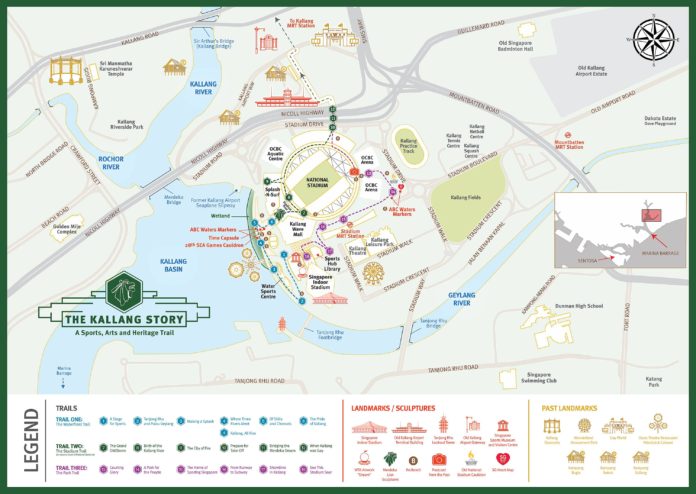
SINGAPORE: The Singapore Sports Hub on Sunday (May 12) launched a new educational trail showcasing the rich history of Kallang, as well as art and sporting achievements, as part of the Singapore Bicentennial commemoration.
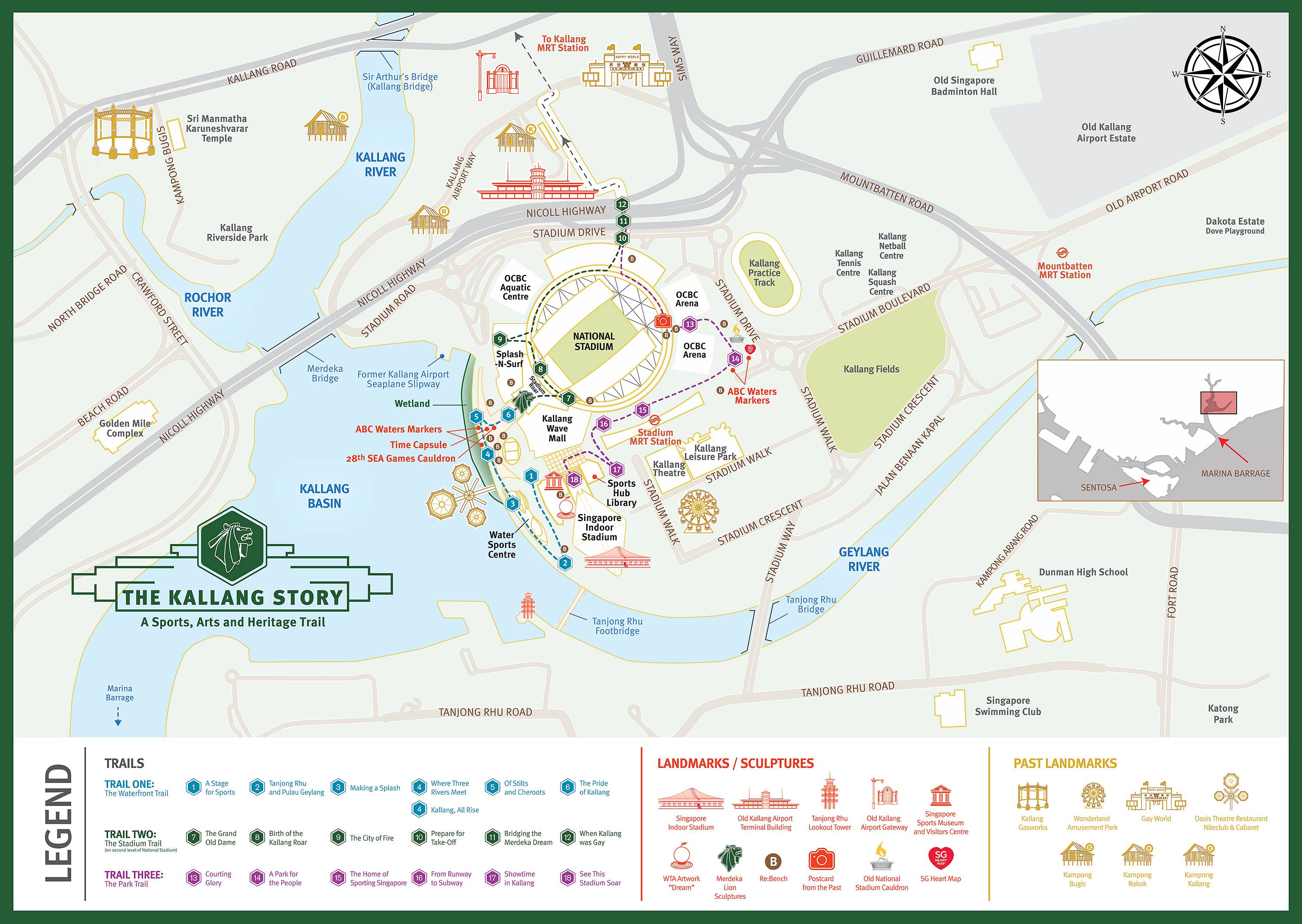
Titled The Kallang Story: A Sports, Arts and Heritage Trail, the trail features 18 heritage markers, artefacts, architecture and new artworks sited around the Singapore Sports Hub.
A map of the 3km trail. (Image: Singapore Sports Hub)
According to a press release, members of the public can explore all 18 markers together or in three separate smaller walking trails – The Waterfront Trail, The Stadium Trail and The Park Trail.
“Each of the trails tells the Kallang story by highlighting prominent landmarks in the area, both past and present,” the release stated.
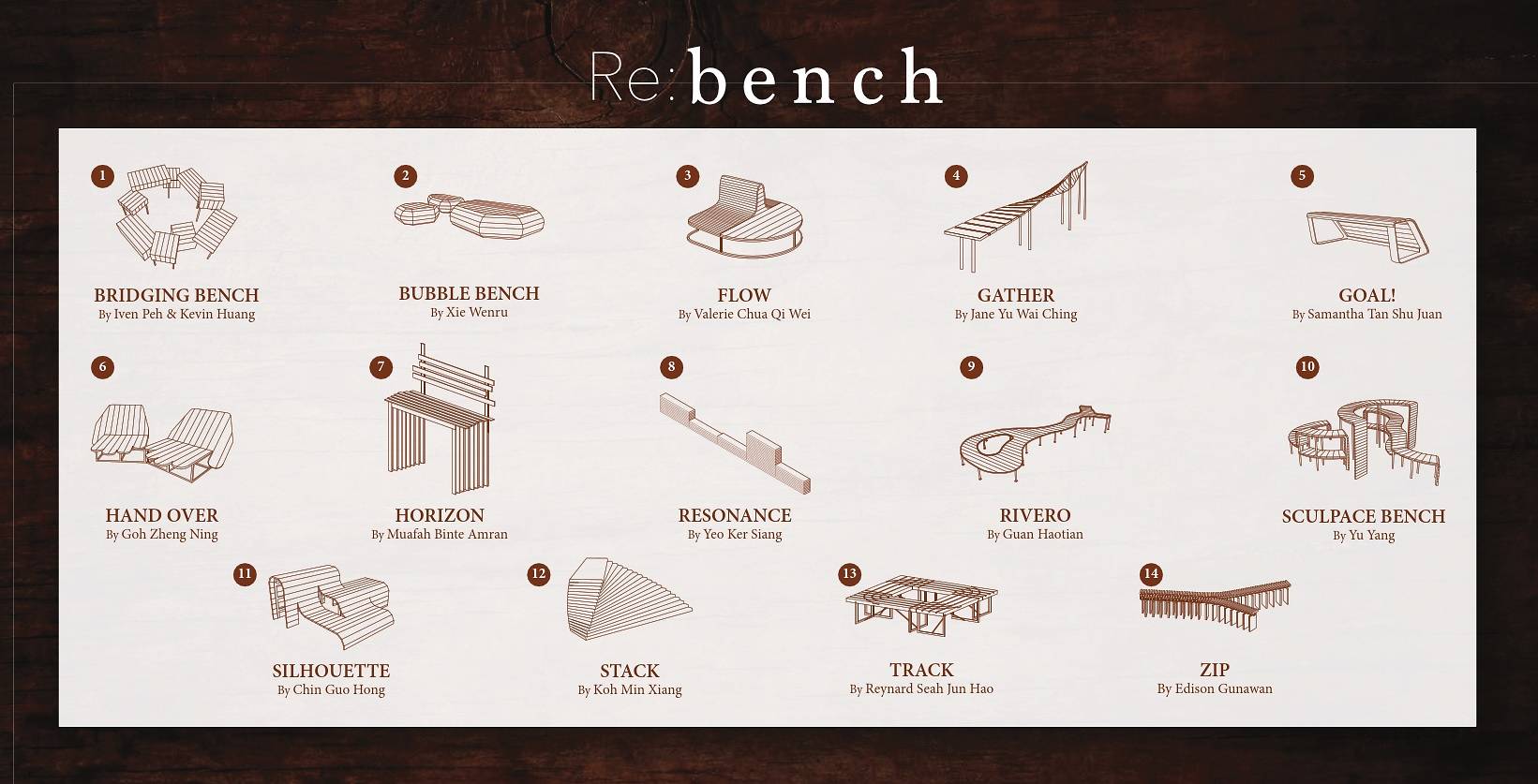
Map showing the location of the 14 benches. (Image: Singapore Sports Hub)
The Waterfront Trail faces the Kallang Basin, a body of water with a rich history going back at least 400 years and reveals the riverine communities who once called the area home, the traditional industries that contributed lasting place names and the legacy of sports.
The Stadium Trail explores the grounds of the National Stadium and covers major architectural icons which played key roles in sports, politics, energy, aviation and entertainment in Singapore.
One of the benches at the Singapore Sports Hub. (Photo: Singapore Sports Hub)
The Park Trail ventures into the former grounds of Kallang Park, journeys through memories of the old Wonderland Amusement Park and ending in front of the Singapore Indoor Stadium.
The artworks, commissioned by the Sports Hub to celebrate Kallang’s heritage and local talents, will be rolled out in phases.
They can pick up self-guided tour maps of the trail at the Sports Hub’s Visitors Centre at OCBC Square.
“RETURN” OF THE MERDEKA LIONS
The trail also features replicas of the Merdeka Lions, the iconic stone lions that guarded the two ends of the Merdeka Bridge up until the 1960s.
With the widening of Nicoll Highway, the twin sculptures were moved to Kallang Park before being shifted to SAFTI Military Institute, where they remain today.
The replicas are located at Stadium Roar, facing the Kallang Basin.
The original Merdeka Lions are currently standing guard at the base of the observatory tower at SAFTI Military Institute. (Photo: Singapore History Consultants)
“There is a treasure trove of stories at Kallang. This was where many of our nation’s sporting memories were forged, and is also home to Singapore’s first civil international airport,” said Mr Baey Yam Keng, Senior Parliamentary Secretary of the Ministry of Culture, Community and Youth, and the Ministry of Transport.
“I am heartened by this Kallang Story project, which documents some interesting elements of our heritage in the year of Singapore’s Bicentennial. I encourage everyone to come explore the area with family and friends, relive old memories, and reflect on our Singapore Story,” said Mr Baey, who attended the unveiling of the Merdeka Lions on Sunday.
Chairman of Singapore Sports Hub Bryn Jones said he hopes the trail will help more people discover Singapore’s sports, arts and heritage scenes.
“Singapore Sports Hub sits on an important historical site not just in relation to its sporting history and achievements. To peel back the layers within the site, there are many prominent landmarks which were unknown to many visitors,” he said.
ABU DHABI: United Arab Emirates-based utility firm Utico has submitted an offer for a binding agreement to invest in Singapore’s Hyflux, Utico’s chief executive said on Sunday (May 12).
Utico will also provide working capital and any urgent interim funding to Hyflux as part of the offer, Richard Menezes said.
Earlier this month, Utico submitted a non-binding letter of intent to invest in Hyflux.
SINGAPORE: Rejected by schoolmates, ignored by relatives, misunderstood by teachers.
In a society so used to uniformity, Siti Nurhamizah was different.
“I had a friend who asked if there was any medicine to cure her ‘sickness’,” recalled Nurhamizah’s mother, Mdm Rosmawati Rusli. “I said it’s not a sickness, it’s something she has within her.
“Being a parent of three kids with special needs made me stronger to face whatever I had to face, especially when people judge me and my kids.”
Along with her two siblings Muhammad Hakim, 19, and Siti Nurhazimah, 17, 21-year-old Nurhamizah has what is known as global development delay (GDD), a condition which can affect aspects of development such as cognitive, speech and motor skills.
While she is used to others labelling her children, Mdm Rosmawati prefers to define them differently.
“I told my husband: ‘You’re not handsome, I’m not pretty, but our kids are perfect,'” said the 46-year-old mum.
Despite being born with mild cerebral palsy, Nurhamizah was a very active toddler, recalled her mother.
“She looked normal apart from her feet being curved slightly inwards,” explained Mdm Rosmawati. “But I had a niece who was her age, the girl could talk well when she was two to three years old. Back then, my mother would complain and say that she would talk to my girl and get no response.
“We didn’t really panic yet but when beginning nursery, she still couldn’t talk well – her words were not clear.”
Acting on the advice of the nursery’s principal, Mdm Rosmawati sent Nurhamizah to a psychologist at KK Women’s and Children’s Hospital, where she was assessed to have GDD.
A BLESSING FROM GOD
Coming to terms with their child having an intellectual disability can be a struggle for mothers.
This was the case for Mdm Shankari Valareandan, when she found out her eldest daughter Priyadashani had mild intellectual disability which manifests itself in lower than average IQ and learning difficulties.
“It came to a point that I was coaching my child and she was failing,” recalled the single mother of three. “She looked normal and was able to get instructions and carry out instructions – so why was this problem surfacing?
Singapore’s Special Olympics runners Siti Nurhayati Ali Aksar Khan (left) and Priyadashani Jeyabalan during a training session at Bishan Stadium. (Photo: Matthew Mohan)
“When I met up with her teacher, she did advise me that it’s better to put her in a special education school,” said Mdm Shankari.
“But as a mum from a typical Indian family, I was not able to accept it. I would just cry and feel totally down … Priya was always my angel … she was there during my hard times, she could understand my problems, why couldn’t I understand her problems? I couldn’t digest it.”
It took a few months of careful research and close conversations with a friend who was a Special Education teacher for Mdm Shankari to come to terms with Priyadashani’s condition.
After Priyadashani had completed PSLE, Mdm Shankari then enrolled her in special education school Grace Orchard.
On the other hand, the diagnosis of Nurhamizah’s GDD did not faze the indomitable Mdm Rosmawati, who quit her job to look after her daughter full-time.
“I felt that God was blessing us by giving her to us,” she said. “I had a new title as a mother. Certain things (like a job) you have to let go.”
But it was also in a mainstream school where Mdm Rosmawati witnessed her daughter running into difficulties.
As Mdm Rosmawati couldn’t send Nurhamizah to a school for children with special needs yet – it would not accept the girl till after completing nursery and kindergarten – she had to send her daughter to a mainstream school.
“One teacher told me off: ‘Our school is expensive, you know your kid is special, why don’t you send her to a special education school?'” said Mdm Rosmawati.
“Some of the teachers kept on complaining, saying: ‘Your kid cannot do this, cannot do that.’ But even if the books were blank, I didn’t mind … as long as she could learn to interact with others,” she recalled.
But while Nurhamizah was happy to get to know her schoolmates, they were not as open to interacting with her.
“She wanted to mix around. I let her take the school bus and I saw her running here and there, wanting to join the kids when they played but they didn’t let her join,” said Mdm Rosmawati. “I felt sad but she is very strong. They pushed her away, but even the next day she still wanted to go to school.
“I learnt from her too.”
NOT THE “SLIGHTEST” DISAPPOINTMENT
When her son Hakim also began to display signs of slower-than-normal motor skills, Mdm Rosmawati suspected that he too had GDD.
“When he walked, he would take his own sweet time,” she recalled. “We brought him to the same psychologist – he was slower in terms of motor skills and speech as well as in understanding and catching up.”
But what might have been a further blow to others only encouraged Mdm Rosmawati to press on with raising her children.
“It’s not a sacrifice, but a gift to have them in my life. I might have been a very different person without them.”
Mdm Shankari with her children. Priyadashani (second from right) and Shaman (first from left) have intellectual disabilities. (Photo: Matthew Mohan)
Likewise, Mdm Shankari pointed out that she did not have the “slightest disappointment” when her third child Shaman was found to also have mild intellectual disability.
“I managed to make adjustments earlier,” she said. “Immediately at the end of Primary 3, I transferred him to Grace Orchard.
“I didn’t have the slightest disappointment because I was already at that stage (with Priyadashani) and I had started to explore. I had been asking around and got a lot of info from her teacher.”
While acceptance of their children’s conditions was a crucial first step, both Mdm Rosmawati and Mdm Shankari note that they have had to use different methods of teaching to help their kids.
“To make them understand, I have to repeat and repeat and repeat,” said Mdm Rosmawati. “For my kids, since they are slow in learning, you need to teach them step by step.
“They cannot take in three or four instructions – it is two at most.”
Mdm Rosmawati, who is the head of the parent support group at Delta Senior School, also meets up with her children’s teachers to better understand their methods, so she is equipped to help her kids.
“I can’t teach them as I would with a mainstream child,” added Mdm Shankari. “I taught them maths with coloured ice-cream sticks … to make them interested and understand, I had to make use of colours.”
When it comes to teaching the English language, using phonics is Mdm Shankari’s preferred method of instruction.
“It takes a long time for them to understand,” she explained. “Initially Priya had this problem where she would take a week to understand, memorise and spell a word.”
THE POWER OF SPORT
Sports also played a key role in their children’s’ development, both mothers said.
Priyadashani and Shaman for instance, are both track and field athletes who most recently represented Singapore at the Special Olympics World Games in Abu Dhabi.
Priyadashani finished with a bronze in the 400m F3 division race, while brother Shaman clinched a silver in his 400m event.
“They have difficulties in studies and other things but definitely sports has helped them lot – to make them focused and disciplined,” said their mother.
Mdm Shankari tries to be present at their training sessions – to provide moral support and to spur them on.
“As a single mom, I have to handle them both in academics and encourage them in sports and their personal life as well,” she said. “It’s been a challenging journey but I have no regrets.”
Ms Denise Phua speaks at the ‘Thank You Mum’ carnival on May 4. (Photo: Matthew Mohan)
In a glass cabinet tucked in the corner of the Sengkang flat Mdm Rosmawati shares with her three children, husband and mother, stand proud momentos of her children’s sporting prowess.
Nurhamizah and Hakim are bowlers, while Nurhazimah is both a track and field athlete as well as a floorballer.
Their mother is ever-present at training sessions, while their father shuttles them around coaching on the weekends.
“I’m happy to be there, so I can see whether I’m doing a good job in how they control their emption, how they take their responsibility and discipline seriously,” said Mdm Rosmawati.
“The mums of the special athletes I’ve seen are special themselves – many of them showed the grit to move on despite the challenges,” president of the Autism Resource Centre (Singapore) Denise Phua told CNA. “They do their very best to develop their children to the extent that their talents are so developed that they are now representing Singapore.
“They are in a league of their own. Even when they sometimes struggle, they are able to stand up, stand out and stand tall. To them I give my highest salute and respect,” said Ms Phua, who is also Member of Parliament for Jalan Besar GRC.
At the recent Special Olympics World Games, Nurhamizah clinched Singapore’s first bowling medal, a silver.
Recalling the moment of her daughter’s triumph, Mdm Rosmawati’s eyes well up and her lower lip trembles.
“She had asked me: ‘Ibu (mother), why are you crying?” she said.
“I said these are tears of joy … During the competition, I saw her interacting and making friends with other athletes,” said Mdm Rosmawati. “I always tell my kids when you go for a competition, it’s not about your score or timing that makes us proud, it’s about your behaviour.”
Siti Nurhamizah (right), Siti Nurhazimah (centre) and Mohammad Hakim (left) pose with medals they have won. (Photo: Matthew Mohan)
Two days later at the Khalifa Bowling Centre, Nurhamizah clinched another medal, a bronze.
Again, there was some crying.
“My husband didn’t cry but I knew from his face he was touched too,” recalled Mdm Rosmawati with a laugh. “By her just being at the Games, it’s like I passed the test. I did it! It wasn’t just about the medal.”
Standing on the podium, the same girl once rejected, ignored, and misunderstood became a winner in the eyes of the world.
SINGAPORE: Growing up, my mother, who worked a 12-hour shift in retail, wasn’t a prominent figure at home.
The only times my siblings and I saw her were before school and just before bed. Our dad who worked “regular” hours was around more.
Still, she was fully involved in our childhood. Before leaving for work, she’ll prepare lunch for us to eat after school. At work, she answered our calls – even for a short while. And during her off days, she would sometimes take us out.
I wouldn’t be telling the truth if I said I wasn’t bothered by her absence then. There were times I was jealous of my peers whose mums were there to pick them up from school.
It wasn’t until I was older that I understood the trade-offs.
NO PRESSURE
Busy with their jobs, my dual-income parents were unintentionally less involved in school matters.
It may go against the grain of contemporary conventional parenting advice, which has led in more cases to many getting heavily involved in their children’s lives, but the autonomy my parents gave us allowed me to escape the academic pressures many of my peers had to face.
There were no expectations on the kind of grades that I should get, or which after-school activities I should participate in.
I might been competitive at times, but the pressure to do well in school never came from my parents.
Researchers have warned that high expectations from pushy parents can create performance anxiety in kids, and potentially tip them into depression.
Brian Poh, a senior clinical psychologist at the Institute of Mental Health (IMH), pointed out that academic-based stress is a common issue that the IMH sees in many patients, in a commentary for CNA.
File photo of students at a primary school.
While this stress can be partly attributed to Singapore’s competitive culture, parents who place great emphasis on academic achievement add fuel to the fire, he said.
One may argue that some kids turn out well because of such pressures from parents.
Sophia and Lulu, daughters of Amy Chua, author of Battle Hymn of the Tiger Mother, got into prestigious colleges. Sophia admitted that her parents had high expectations, but said that it was only because of her parent’s confidence in her that she could do “amazing things”.
Lulu said that she had a “tough childhood, but (it was) a happy one”, even when she was made to play the violin for six hours a day.
Still, I’m not sure I would be happy if I had to play a musical instrument for so many hours each day or that it would have benefited me in the way it did Lulu.
BUILDING INDEPENDENCE
Much can also be lost with “overparenting”.
Amy Brown, a public health professor at Swansea University, has pointed out that a heavily involved parenting style, also known as helicopter parenting, can have adverse effects on a child’s development.
Singaporean parents have been said to “helicopter” around their children. Even the Ministry of Education (MOE) stepped in to advise parents that “constantly hovering over your child may hurt his development” in 2017.
A series of illustrations on MOE’s Facebook page suggests that a helicopter parent can be recognised by the way he/she debates with teachers for extra marks to increase their child’s grades, does homework on behalf of their child, and “flies” to school with their child’s homework when they forget to bring it – all of which my working parents thankfully never did.
Senior Minister Tharman Shanmugaratnam also cautioned earlier this year against helicopter parenting. Citing studies in the United States, he said that such behaviour can have long-term psychological effects on children including “a greater sense of anxiety, a loss of a sense of individuality or independence, and greater stress”.
While my parents weren’t helicopter parents, they were still involved in our lives. Dad drove us to school each morning. Mum came to support us every Sports Day. During her days off, we spent afternoon picnics at the beach, we went cycling at the park, and we took many trips to local attractions. These fond memories are firmly etched in my mind.
How mum made time for us taught me an important thing about family time – that it’s not the quantity but quality that matters.
When she was away, I had the space to be independent.
Mum also showed how one doesn’t have to be constantly present to show that they care, because love can manifest in many different ways – like a pot of curry or a clean home.
(Photo: Unsplash/Le Creuset)
My mother isn’t like the “super mum” common in many media report profiles – she’s not one who juggles multiple jobs, a business and a family and she didn’t pack our days with enrichment classes. But she raised five kids well while working in the same company, and taught us how to be adaptive and resilient in small ways. That to me is already amazing.
Now a housewife, my mother is very much present in our lives. When she’s not at her part-time job, she spends her time knitting, or playing with our cat at home.
This Mother’s Day, let’s celebrate the various, everyday roles mums play in our lives, the quality time they spend with us, and the space they give us to grow into the adults we’ve become.
SINGAPORE: Bus driver Saw Cheong Seng was shocked when he realised that a bag left on his bus on Friday morning (May 11) held nearly S$40,000 in cash.
The 59-year-old senior bus captain was driving service 63 when a passenger alerted him to a bag left on the bus at about 8.40am, SBS said.
The passenger in his 40s spotted the bag as he was alighting at the bus stop opposite Outram Park Station, and passed it to the bus captain. He told Mr Saw that another passenger had left it behind.
Along the way, the driver took a cursory look at the bag and noticed a plastic bag with a stack of paper in it, but he thought were betting slips.
Nearly S$40,000 in cash found on a bus on May 10, 2019. (Photo: SBS Transit)
When he reached Eunos Bus Interchange, Mr Saw opened the bag and found a thick stack of S$100 notes and a bundle of $50 notes.
He hurried to report this to the manager at the interchange. The stash added up to S$39,602.10.
According to SBS, the largest amount Mr Saw had found on his bus before this was about S$100.
Mr Saw, who has been with SBS Transit for 13 years, said: “I would not be able to sleep tonight if I took this sum of money that does not belong to me. I would feel troubled if my passengers are not able to retrieve their lost items, especially their money.
“I just don’t feel good about it. In fact, I want to make sure that every single cent is returned to the passenger.”
A police report has been filed and the money handed over to the police, said SBS.
SINGAPORE: It began with a post in a private group on Facebook, showing off four flat-faced kittens like fluffy balls of black, white and grey.
“All taken,” the post read. “Thank you.”
But all it needed were several private messages, and a day later a middle-aged man swung open the meshed gate of his HDB flat, and with it the promise of an adorable pet.
Sam (not his real name) sat on the bare parquet floor, looking lovingly at three kittens suckling on their mother. They were three weeks old and no bigger than the size of his palm. Two were still available and going for an adoption “fee” of S$1,000 each.
A slightly larger, equally adorable kitten skittered around the living room as the sound of a hairdryer echoed across the hall. The alpha male was getting dried down after a bath.
The felines were part of Sam’s fifth litter. He said he’s given up about 15 kittens from the same parents, all bred in the comfort of his own home.
Current regulations are clear. Animal and Veterinary Service (AVS) regulations dictate that a pet farm licence is needed to breed cats for sale. A pet shop licence is also required to display any animal, including cats, for sale.
Sam admits that “it’s not easy getting the licences”.
“This is a hobby for me. We take care of cats because we love them,” he adds.
Sam’s kittens were apparently not “for sale”. The S$1,000 fee he asks for covers a first round of health checks, vaccinations and de-worming.
In addition, if anything untoward happens to his kittens post-adoption, Sam is constantly on call to help out.
He said he gets worried when when customers stop posting pictures of their new kittens on social media.
“Sometimes when everyone is asleep, I stay out here and play with my kittens,” said the self-employed man, who showed good knowledge of their features and temperament – testament to what he said was 20 years’ experience looking after new-born kittens.
But while he’s seen many litters come and go, breeding is a term he was reluctant to use. “I leave it naturally,” he insisted. “Like humans wanting to have kids.”
MORE THAN AN “ACCIDENT”
While Sam’s kittens appeared to be well cared for, animal advocates believe this may not be typical of all unlicensed breeders.
Some backyard breeders don’t send their kittens for check-ups or vaccinations before selling them, said independent cat rescuer Joanne Cheong. Kittens not cute enough to be sold are at times abandoned; and when they are not, cat hoarding occurs.
She added that poorly-trained backyard breeders could harm the mother through repeated births, while her offspring might inherit genetic diseases.
Ms Cheong said she has gone undercover to the homes of about eight suspected backyard breeders in areas like Bukit Panjang, Boon Lay, Punggol and Tampines. While she found living conditions at these homes generally acceptable, the physical condition of some parent cats sometimes told a different story.
“If you know cats and you’ve seen cats, you understand them,” she told CNA, referring to what she sees in their eyes, fur and behaviour. “You can see that some of them are not happy, some of them are not well taken care of.”
While backyard breeding could be bad for animals’ well-being, AVS group director Chua Tze Hoong said the practice could also affect public health.
“As animals from non-approved sources, such as smuggled animals or through unlicensed breeding for sale, have unknown health status, there is always a risk of them carrying infectious diseases, which can be spread to humans,” he told CNA.
In 2017, rescuers attended a cat hoarding case in Sengkang and found the cats in “dire straits” and living in filthy conditions. (Photos: Saving the Siameses/Facebook)
Backyard breeding doesn’t just happen with cats. The practice is “very common” with dogs too, said Mr Derrick Tan, president of Voices for Animals, an animal welfare group which rescues and rehomes retired breeding dogs.
Mr Tan said breeders usually deal in smaller varieties like poodles, malteses and chihuahuas, and advertisements are usually posted in private online groups, mainly populated by owners of these dogs.
Two years ago, his team rescued a family of poodles from a suspected backyard breeder, after its owner posted an advertisement on online marketplace Gumtree.
“The owners kept saying (the litter) was an accident, but they already sold one litter a year ago,” Mr Tan told CNA. “It’s difficult to get them. They will try to cover up and say ‘I will sterilise next time’.”
Ms Cheong said backyard breeders are cautious when dealing with prospective buyers, noting that they might screen profiles and pull the plug if things seem amiss.
They also intentionally use the term “adoption with fee” in subtle advertising, she added, to avoid falling foul of regulations.
Furthermore, the animal advocates said these breeders usually operate away from the public eye, often in obscure forums or secret groups on Facebook. The latter are not searchable, and admission requires an invitation from a current member.
TIGHTER RULES NEEDED?
But that does not mean backyard breeders have free rein.
Last February, a 26-year-old woman was fined S$4,000 for breeding cats in her Buangkok flat without a pet farm licence, and another S$2,500 for selling cats without a pet shop licence.
The AVS, then-named the Agri-Food and Veterinary Authority (AVA), found six adult cats and another six kittens in her unit, with investigations revealing the woman had posted on her Facebook page photographs of kittens for sale.
Anyone found guilty of operating an unlicensed pet shop is liable to a maximum fine of S$5,000, while anyone found guilty of operating an unlicensed pet farm can by fined up to S$10,000 and/or jailed up to 12 months.
In January, the AVA took action against one cat group on Facebook whose main purpose was believed to be the sale of backyard-bred kittens.
In a message sent to the group’s admin and seen by CNA, AVA said it had received feedback regarding the “sale and adoption of cats through Facebook”, and that it was illegal to do so without a licence.
“We would seek your co-operation as the admin … to educate your followers and to remove all advertisements pertaining to online sale or adoption of pets by 28 Jan 2019,” the authority added.
According to Ms Cheong, the group still exists, only now as a secret group.
On her clandestine visits to the breeders, she would capture evidence and report them to the authorities. But not all these cases have been prosecuted due to a lack of crucial evidence, she said.
“The Government needs to be stricter about this and give higher penalties,” she added.
“The enforcement is not strong,” echoed Mr Tan, who suggested measures like the confiscation of dogs involved in cases of backyard breeding.
When it comes to investigating suspected cases of backyard breeding, AVS’ Dr Chua said all forms of evidence, including photographic and videographic proof, are “critical” to the process.
“AVS takes all feedback received from the public on illegal breeding of animals for sale and concerns regarding animal welfare seriously, and will look into the cases reported,” he added.
THE CHEAP OPTION
In the meantime, backyard breeders continue to thrive amid sustained demand from buyers.
CNA investigations into one cat group on Facebook revealed that in April alone, there was an average of at least one post a day alluding to the sale of backyard-bred cats, based on information in these posts.
A number of these posts were by users who had posted multiple times, each accompanied by photos of different kittens. Many of these posts also had comments from other members indicating their interest.
Photo illustration of cats advertised for sale on Facebook. (Photo: Jeremy Long)
As for why people turn to backyard breeders, the reasons are usually financial.
Mr Tan said backyard-bred puppies usually go for half the price of those in pet shops.
“It’s the cheap option,” Ms Cheong added. “You get really beautiful cats for 500 bucks a pop. Why not?”
While Sam had asked for a fee of S$1,000, a check with a pet shop revealed that a similar kitten would sell for S$3,200.
One buyer, who only wanted to be known as Emily, told CNA she has seen some “exorbitantly priced” Scottish fold kittens in pet shops. Instead, she paid S$3,000 to a backyard breeder last year for a three-month-old kitten of the same breed.
But for the 29-year-old digital marketing executive, the main draw of the breeder – whom she got to know through a friend – was how well her kittens were cared for.
“I felt that this home breeder took care of her kittens way better than the pet shop I got my previous kitten from,” she told CNA. “They’ve cared for cats for a number of years now and genuinely do wish for their cats and kittens to go to good homes.”
Emily said she was not hugely concerned that the breeder was unlicensed. Instead, she made the effort to ensure the breeder ran a knowledgeable and proper practice.
The breeder was open to questions, and Emily visited her terrace home to check on the cats’ living and physical conditions.
“You could also see from the disposition of the cats and kittens that they were well cared for,” she added, noting that they were friendly and well-groomed.
A LUCRATIVE BUSINESS
Responsible or not, the animal advocates maintain that many backyard breeders are in it for the money.
While Sam asked for a S$1,000 fee which included a vet check-up, vaccination and de-worming, a check with three animal clinics showed that these usually cost around S$100 in all.
“The practice for all rescuers is that we never go beyond S$200 dollars for the adoption fee,” cat rescuer Ms Cheong said. “People are taking the risk because the money is quick and easy.”
Prospective licensees would have to submit documents showing the building and landowner’s permission to use the space for farming, as well as the type and dimension of facilities planned for farming activities. They would also need to submit a business proposal for evaluation.
After obtaining an “in-principle, no objection” letter from the AVS, they would then need to seek approval and clearance from relevant agencies where necessary. Before issuing the licence, AVS will conduct a site visit.
The Animal Lodge is a facility for animal welfare groups, independent shelters and pet farms. (Photo: Matthew Mohan)
The owner of a licensed dog farm at The Animal Lodge in Sungei Tengah told CNA that non-official breeders are putting a dent in the pockets of licensed breeders, especially as he’s seen an increase in their numbers over the years.
“We are running a business,” said the owner, who’s been breeding dogs for seven years and declined to be named. “These people are selling for cheap.”
He also felt that backyard breeders fly under the radar because of their covert tactics.
“I just make sure my dogs get welfare, proper medical treatment and good food,” he added. “You don’t use them as a machine, ill-treat them and get the money to spend on yourself.
“When the AVA officers come, I tell them that outside, there are so many illegal breeders.”
AVS’ Dr Chua said the authority has in place conditions for the breeding of dogs, such as age limits concerning when they can start breeding and when they must stop.
“AVS also stipulates the frequency at which they breed, and the length of the rest interval between each cycle,” he added. “If such conditions are not followed, the health of the parents and their offspring will be affected.”
CONFLICTING PERSPECTIVES
On a cool Sunday evening, we met another backyard breeder at a void deck in north-east Singapore.
Dan (not his real name), who cradled a three-month-old brown poodle, had also brought along the father of the precocious pup – trotting obediently on a leash held by his wife. Dan claimed to be a former pet shop owner.
Early in our conversation, he emphasised that his canines were well cared for. Their enclosures were cleaned every day, and the S$2,000 fee being asked for included a first round of vaccinations and microchipping.
Dan showed us a vaccination card; two vouchers for future vaccinations would be thrown in for good measure.
When asked about the puppy’s parents, Dan said the mother was a friend’s female dog he borrowed for breeding. This dog had already given birth to three litters, and this puppy was the last to be sold. Breeding stops after the third litter, he stressed.
“I will guide you through till the puppy is eight months old,” he said. “I have a lot of customers who still contact me. You don’t have to worry. Some even introduce customers to me.”
One of the locations where the meeting with a suspected backyard breeder was set up. (Photo: Matthew Mohan)
But Dan warned that not all backyard breeders were trustworthy.
“Those who post ads online, if they can’t produce the parents, you better not buy,” he said. “Where did they get their puppies from? There are question marks there.”
The business of backyard breeding is clearly controversial.
Back at her flat, Ms Cheong kept Chewie – her affectionate, rescued ginger cat – close to her chest.
“The layman doesn’t see the consequences of illegal backyard breeding,” she said. “You see it on the superficial level: ‘Oh pretty, beautiful cats, so cute.’ (But) it’s horrendous, the things they are doing.”
For Dan, it’s business as usual.
“He’s very smart,” he said, stroking the puppy’s apricot brown fur. “Training him will be very easy. He can be a show dog in the future.”
SINGAPORE: As a successful social entrepreneur, Mr Koh Seng Choon has many things to be proud of.
Among other initiatives, he created Asia’s first community food court managed by people with disabilities, and a second-hand bookshop concept run by youngsters with special needs and their mothers.
His social enterprise Project Dignity won the President’s Challenge Award in 2015.
But for all the accolades, one incident weighs heavily on him: The death of a woman he had trained and placed in a sticker-making factory. The 20-year-old had bipolar disorder.
“People (when depressed) don’t talk, and they keep (everything) inside … One day, on a Monday afternoon, at 3.30pm, she went home. From the sixth floor of her building, she jumped,” he recounted.
“That was the biggest mistake I’ve ever made.”
He later found out, from watching CCTV footage from the factory floor, that she had been affected by a supervisor who had engaged in nitpicking and shouting at her.
After that, Mr Koh expanded his team so that there would be no lack of focus on individuals.
Mr Koh and his team can focus on supporting each employee better now.
As the 59-year-old tells the programme Money Mind, there have been tribulations, setbacks and hurdles in his journey to establish a social enterprise that helps people who feel that they have lost their sense of dignity. (Watch the episode here.)
With a degree from the United Kingdom, this trained engineer was working in Europe, China and the United States before returning to Singapore to start a consultancy.
Driven by a desire to help people with disabilities and the socially disadvantaged, he started community volunteering.
“My thought was that if I could make rich people very rich, why don’t I help the poor people to have a better life?” he said. “I thought that one day a month, I’d do something good.”
He termed it Dignity Day, when he would hire a bus to take the elderly on day tours. He did this for about seven years, and it went from a four-person tour to two busloads.
Next, he taught youngsters in a remand prison, and then advised inmates at a drug rehabilitation centre how to start a business.
In 2006, he decided to do more, with the idea of a food court where he could help to train and employ people with disabilities and social disadvantages.
Dignity Kitchen’s interior.
“If I want to help these people, I must skill them. Cooking is a skill … If I can train them, they must go out and earn proper money,” he explained.
He sought funding from various government agencies, but that did not work out. So he set out to find people who would help him with his social enterprise.
“I went to a lot of people, famous hawkers … They said it wasn’t possible, (that) trying to train normal people to run a food court was already very tough, (let alone) people with (disabilities),” he recalled.
“A lot of people rejected me.”
LOSING $1,000 EVERY DAY
When he knew he could not rely on others for financing, he re-mortgaged his office property, raising S$200,000 to build the first Dignity Kitchen at Balestier Market Food Centre — in 2010, four years after he had conceived the idea.
It had four stalls selling nasi lemak, vegetarian food and local desserts, and although he was unfamiliar with the food business, his passion pushed him on. But the losses were heavy.
One of the Balestier stalls.
“The first and second year, I lost a total of S$700,000 … I was losing S$1,000 a day. That was very stressful and very tough,” he said. “You know, I had two sons studying.”
He tried asking for help and, to his disappointment, found little support again. “Even my friend didn’t want to answer my telephone call because (I was) doing something that nobody believed could be done,” he said.
Mr Koh eventually received help from his family to tide him over. He also stumbled on the reason he was sustaining losses.
He had initially thought it would be a good idea to have the staff, including those with mental health issues or visual impairment, to wear badges identifying their disability so that customers would be understanding.
“I was a bit idealistic. I thought everybody would buy (food) from disabled people … Nobody bought. Everybody (who) came and saw the word ‘mental’ (on some badges) walked away,” he said.
He recounted what one man told him in Hokkien: “You must be mental to get mental people to sell. Aren’t you worried mental people would put dirty things in (the food)?”
A lack of empathy among some people, he realised, was the biggest challenge. It meant lots of leftovers that he had to pack home, give to friends or throw away.
“One night … the cleaner said, ‘Cannot throw food away’, so I decided to go to the toilet and, for the first time in my life, I flushed three kilogammes of nasi lemak down the toilet,” he added.
The loss-making venture turned round only after his staff took off their badges. And the stalls were soon bringing in S$20,000 monthly.
DIGNITY MAMA
When the lease expired, Dignity Kitchen moved to Kaki Bukit. After a few years, however, rental increases forced it to relocate to Serangoon Avenue 3, where it is today a sustainable social enterprise, although high rents remain a challenge.
“After 10 years now, things are better. People are more receptive,” said Mr Koh. “We try to have more events and engage people more.”
One of the stalls in Kaki Bukit, which had a bigger site than the one in Balestier.
Dignity Kitchen, which employs more than 60 people, generates revenue from its food court, catering services, event hosting, consultancy services and training.
“We aren’t an organisation that cooks food and gives to the disabled … We want (them) to go out and get a job. It’s training,” Mr Koh added.
“Once they’re out working … we’re not (only) helping the individual, we’re helping the family and the extended family.”
When he realised that not everyone can be trained to do hawker work, he started Dignity Mama, which employs youth with disabilities — such as Down’s syndrome — and their mothers to sell second-hand books in local hospitals.
The idea is for these young adults to gain basic entrepreneurial skills, and to keep their carers employed. Initially, however, the hospitals were lukewarm to the idea.
“We wrote to a lot of people,” said Mr Koh. “Nobody would give (us) a site.”
But after Project Dignity was featured in a local show, the hospitals offered them space. There are now three Dignity Mama shops, which employ 26 people in all, with a fourth to start soon.
Mr Koh is now looking at expanding the Dignity Kitchen concept overseas; for example, he believes the Singapore model can work in Hong Kong.
It has been a long road he has travelled since he kicked off his social enterprise project. While he has met his fair share of naysayers, he has never been discouraged nor distracted by them.
It boils down to self-belief and passion for the cause. “It’s not a project I can walk away from,” he said. “If I walk away, my people would be out of a job.”
This social enterprise, he added, “is a need, not a want”, as those with disabilities “need to earn money” to support themselves. “People want to work. People want to have a life. And that’s why I’ve kept going.”
Watch this episode of Money Mind here. New episodes every Saturday at 10.30pm.
SINGAPORE: Chances are you stepped into a hawker centre over the last week for lunch, dinner or even enjoyed a sinfully good plate of nasi lemak for brunch.
And if you are going for a holiday in June, one of the first few things you might do after you return is to have a hearty meal at a hawker centre.
In March, Singapore officially submitted its nomination to inscribe Hawker Culture on the UNESCO Representative List of Intangible Culture Heritage of Humanity. If the nomination is accepted, it would promote greater international awareness of our hawker culture, recognise hawkers’ efforts and hopefully encourage future generations to continue the trade. It would be a symbolic win for Singapore hawkers.
However, efforts to safeguard the country’s hawker culture cannot rest simply on admissibility into the UNESCO Representative List.
Singapore’s hawker culture reflects our rich multicultural heritage. Hawker centres have also served an important function in Singapore society as accessible and affordable community dining spaces for many.
So much of our enjoyment of hawker food stems from the idea that we can partake in the creation of affordable, delicious food created by hawkers who have worked hard to arrive at their recipes and run a thriving business.
We must take a long, hard look at the lessons that we can draw from our recent experiment with the social enterprise hawker centre model, and continue to explore ideas that can place our hawker culture on a stronger footing for the future.
REVIEWING THE SOCIAL ENTERPRISE MODEL
When the Hawker Centres Public Consultation Panel, set up in November 2011, proposed the “social enterprise” management model for hawker centres, their objectives were to provide social benefits to the community, employment opportunities for lower-income and less privileged individuals, and help those who aspire to take up the hawker trade.
Socially-conscious enterprise hawker centres (SEHCs) were eventually introduced. Today, there are seven such hawker centres in Singapore managed by five socially conscious private enterprises.
However, over the years, the implementation on the ground by the SEHC operators led to some dissatisfaction in a number of areas.
(Photo: AFP/Roslan Rahman)
While the operators did set out to improve the efficiencies of the hawker centre business through standardisation, centralisation and the introduction of innovative initiatives in driving increased footfall to the hawker centres and raising the standards of hawker fare, there were some complaints by a few stallholders about rising costs as well as onerous contractual requirements being placed on them.
Operators were accused of being too profit-minded and heavy-handed, which would seem inimical to the concept of the “socially-conscious enterprise”.
Last year, those issues were publicly debated after a petition signed by hawkers at Jurong West Hawker Centre, who apparently felt the pinch from paying hundreds of dollars per month for customers to return their trays, made headlines.
The National Environmental Agency (NEA) took action by reviewing the contractual terms between all five SEHC operators and their stallholders. This led to further discussions and subsequent changes to the contractual terms which took effect from Jan 1 this year.
The steps taken include the setting up of direct dialogue channels between stallholders and SEHC operators, and the extension of NEA’s “Productive Hawker Centres” grant – which help to partly fund the cost of a centralised dishwashing service.
These measures certainly make a difference in improving the operating environment for stallholders at the SEHCs. But deeper and more fundamental issues with the SEHC management model remain, suggesting that it’s worth reviewing our approach in this area.
If we aspire to “walk the talk” in promoting the sustainability of our hawker culture as espoused in our UNESCO nomination, we may need to rethink the contractual paradigm which underpins the SEHC management model.
Some contracts signed by SEHC stallholders go beyond a typical corporate landlord and tenant relationship.
Our Tampines Hub Hawker Centre 1 (Photo: Fann Sim)
As previously reported in the media, some of these contracts carry somewhat intrusive terms including stipulations on the amount of calories in the dishes stallholders sell, and the “fines” payable for each day a stallholder closes if he or she does not give a week’s notice approved by the managing agent.
These non-essential terms could add to the hardship of stallholders. For example, a previous requirement to include healthier dining options by dictating the amount of calories in dishes restricts hawkers’ freedom in deciding what dishes to serve, while the requirement to provide a week’s notice for stall closure restricts the hawkers’ freedom to decide how they wish to operate.
Such terms should be taken out of the contract altogether, with business decisions left to stallholders if this is not already done.
The running of the business could then be left to the stallholders who will then be empowered to respond to market forces of demand and supply. If customers want healthier dining options, stallholders may be naturally incentivised to provide such options.
If customers want a premium version of a hawker dish with more expensive ingredients, stallholders may be keen to introduce such dishes and can choose to do so and raise prices accordingly, if consumers are willing to pay. But key here is the hawker’s autonomy.
Hawkers should be free to adjust their food offering and pricing strategy based on market forces, and not be artificially restricted through contractual controls. This would also allow them to be more responsive to business conditions, and earn a fair income that keeps pace with inflation.
The alternative paradigm ought to be one where stallholders and operators are equal partners in the endeavour of creating a flourishing hawker culture. A hawker centre stands or falls by its hawkers. By empowering our hawkers, we also create the best conditions for the success of our hawker centres.
SEHC operators can then focus on the efficient running of hawker centres in a way that can best support hawkers.
Jurong West Hawker Centre is run by social enterprise Hawker Management.
ASSURING OUR HAWKERS AND FUTURE GENERATIONS
As authorities have maintained, the UNESCO nomination is not about staking ownership over hawker culture.
Instead, it demonstrates our collective will to protect this intangible heritage and the underlying social values that bind our society. It conveys our appreciation for past and present generations of hawkers and our commitment to support future generations who take up the trade.
Throughout this discussion and beyond, we should not fail to appreciate that a core focus in any future planning or decision-making should be the interests of hawkers and how they can be meaningfully supported and engaged, as their businesses ultimately concerns their livelihoods, passions and dreams.
This would also let the “socially-conscious enterprise hawker centre” model live up to the social aspirations of its moniker.
Regardless of the nomination outcome, all stakeholders – the Government, stallholders, centre management personnel, representative groups and the general public – should persist relentlessly with efforts to preserve hawker culture and what it stands for.
Cheng Kwang Hwee is a senior lecturer in the Singapore University of Social Sciences, with research interests in contract law and real estate business management. Tan Lee Cheng is a senior lecturer in the same university, with a research interest in Asian legal culture.
The views expressed are those of the authors and not necessarily those of the organisations with which they are affiliated or employed at.
SINGAPORE: Maybe you’re headed there for a weekend of shopping with your friends or perhaps you fancy a nice seafood dinner. Whatever your reason for visiting Johor, there are host of changes underway that could affect your travel.
The road transport law will be enforced from October.
Foreign vehicle owners can apply for the permit online. Drivers applying for the VEP will face a one-off registration fee of RM10 (S$3.30) to have their permit processed.
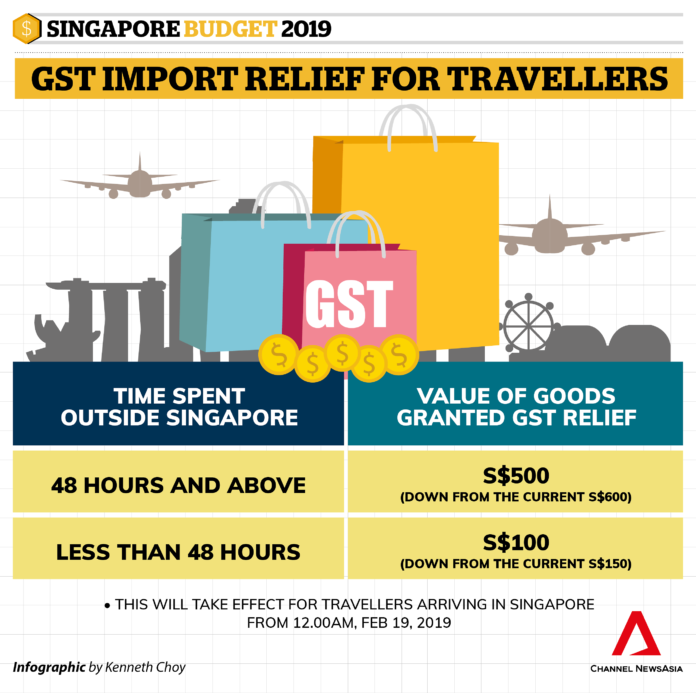
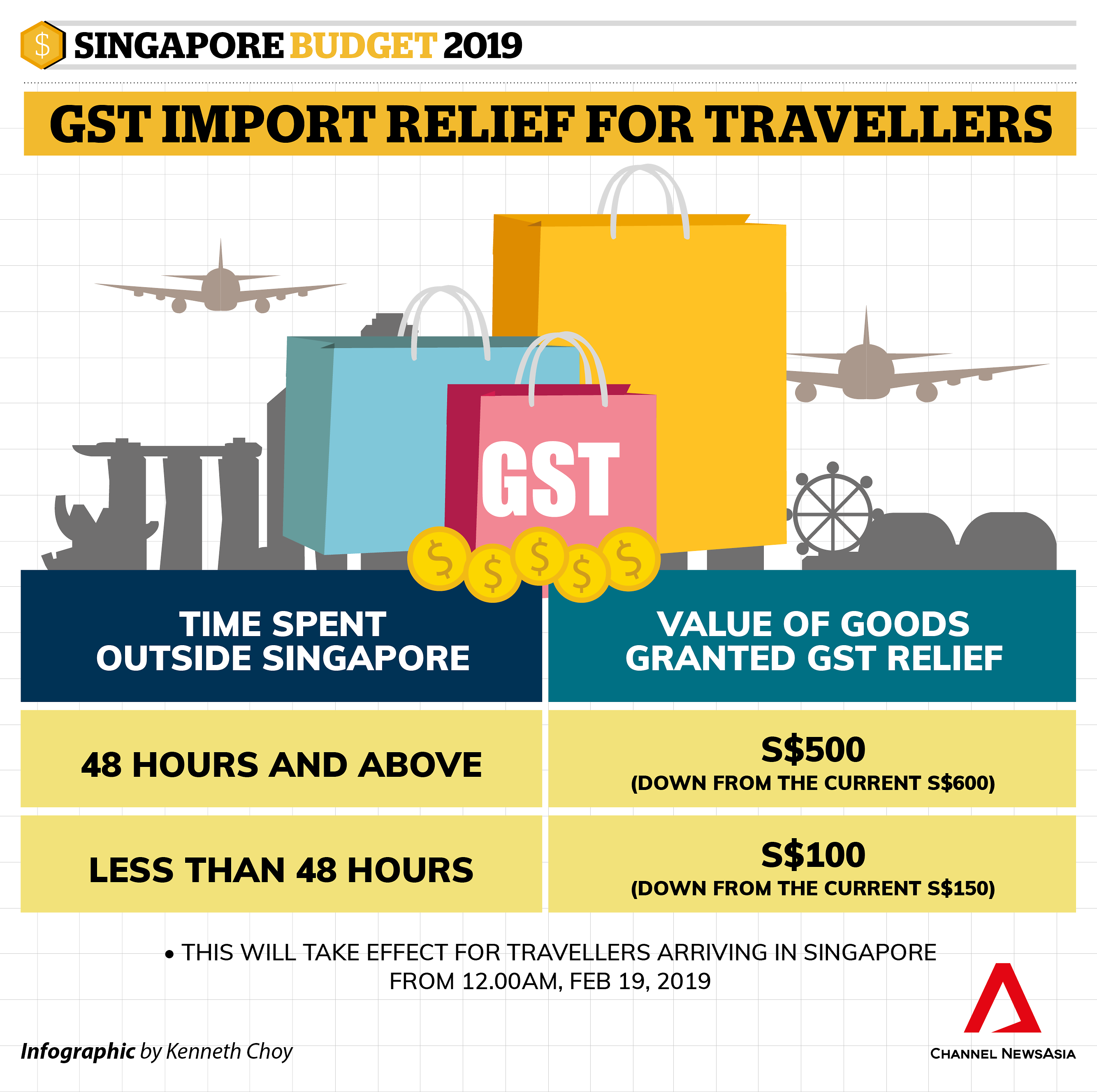
Some people like to hop across the border to load up on household essentials like toilet paper or baby formula. There are still savings to be made, but watch out: Travellers entering Singapore now get less Goods and Services Tax (GST) relief on items bought overseas.
If you spend less than 48 hours outside Singapore, you have to pay GST on goods bought overseas that are worth more than S$100. The allowance used to be S$150.
If you intend to stay longer than that, you will have to pay GST on purchases worth more than S$500, down from S$600 currently.
3. SHOP USING YOUR NETS CARD
When you’re at the hypermarket checkout with your overflowing trolley, you’ll want to pay quickly and efficiently. Good news: There are 4,500 NETS acceptance points across Malaysia.
In Johor Bahru, NETS-enabled cards issued by Singapore banks can be used at popular shopping haunts including Johor Bahru City Square, KSL City and Sutera Mall.
Forget scrambling to find a money changer, remember to pack your NETS ATM card when you next head to Johor.
4. DIESEL VEHICLES UNDER THE THREE-QUARTER TANK RULE
The three-quarter tank rule, which previously only covered Singapore vehicles running on petrol and compressed natural gas, now also applies to diesel-powered vehicles.