SINGAPORE: A fire involving a personal mobility device broke out in a flat at Block 4 Telok Blangah Crescent on Thursday night (May 16).
The Singapore Civil Defence Force (SCDF) said it was alerted to the fire at about 9.30pm.
“SCDF conducted forcible entry into the unit. The fire, which involved a personal mobility device, and contents of a room, was put out by SCDF using compressed airfoam backpacks,” said SCDF.
A woman was taken to Singapore General Hospital, and two other people refused to seek treatment at the hospital, said SCDF. About 30 to 40 residents were evacuated.
Resident Pricilla Lum, 26, said she started smelling the fire at about 9.20pm. She called the SCDF and left her house along with her mother to alert their neighbours.
“It was pretty smoky on level seven. Most of my neighbours are elderly, so my mom and I started knocking on our neighbours’ doors to alert them,” said Ms Lum, who escorted two elderly couples downstairs with help from her mother.
“They’re all old and living in pairs, they’ll definitely need some help to evacuate.”
Residents of the block congregated at an open area near the block while SCDF officers fought the fire.
Onlookers near Block 4 Telok Blangah Crescent after a fire broke out in a flat on May 16, 2019. (Photo: Pricilla Lum)
At about 10.20pm, thick black smoke was still seen to be coming out of the flat.
Residents received instructions from SCDF officers to begin returning to their homes at about 11pm.
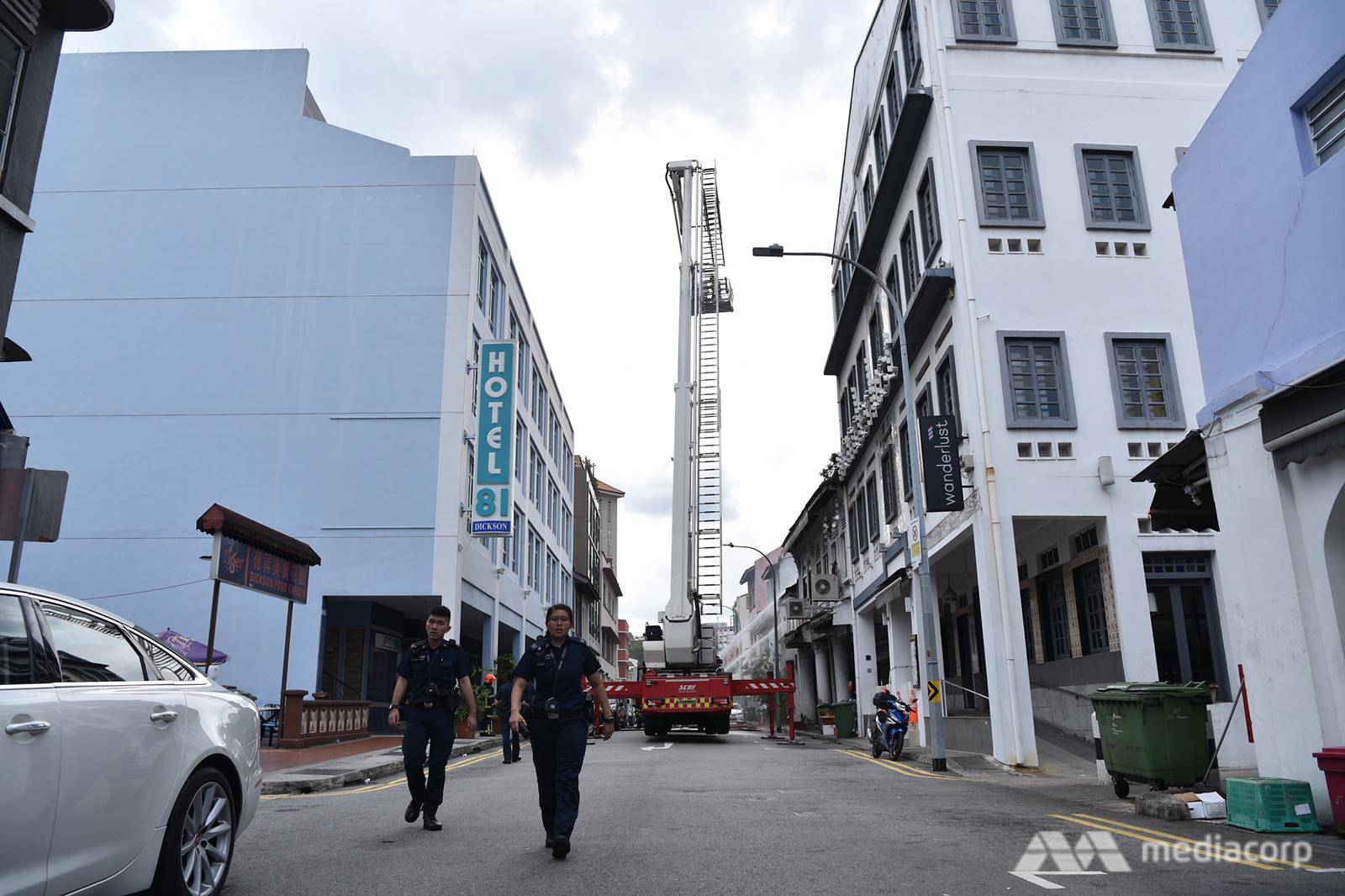
Earlier on Thursday, another fire broke out in a shophouse on Dickson Road in Little India.
“The daily temperature on most days is expected to range between 26 and 34 degrees Celsius,” said the Met Service in the media advisory.
On days with little or no rainfall, the daily maximum temperature could reach 35 degrees Celsius.
On two to three days in the first week, Sumatra squalls could bring widespread thundery showers with gusty winds in the predawn and morning, said the Met Service.
Overall, rainfall for the month of May is likely to be above-normal for many parts of Singapore.
MOVEMENT OF SUMATRA SQUALLS CAUSED STORMY, WET WEATHER
In its review of weather conditions for the first half of May, the Met Service said that a monsoon rain band near the equatorial region brought short thundery showers over Singapore.
On May 8, two consecutive Sumatra squalls moved across Singapore as a result of strong convergence of air streams in the region.
SINGAPORE: Sport Singapore (SportSG) on Thursday (May 16) apologised for an error that resulted in the wrong person receiving the Sports Journalist of the Year award.
Mr Dilenjit Singh from the New Paper was announced as the winner at an award ceremony on Tuesday.
The rightful winner, however, is Straits Times reporter Sazali Abdul Aziz, said SportSG in a media release on Thursday.
Representatives from the judging panel had alerted SportSG to a possible mistake the day after the awards.
“Upon investigation, SportSG confirmed that the winning articles were matched to the wrong journalist. This was an administrative error by a member of the SportSG staff,” said the agency.
It added that the mistake had nothing to do with the award ceremony’s auditor, KPMG.
“We sincerely apologise to Dilenjit and Sazali for the error. We congratulate Sazali on the well-deserved win,” said Mr S Parameswaran, SportSG’s deputy director of public relations.
The Sports Journalist of the Year award recognises a reporter’s contribution to local sport. It is given out as part of the Singapore Sports Awards.
Organised by the Singapore National Olympic Council and SportSG, this year’s Singapore Sports Awards was held at Orchard Hotel.
Swimmer Joseph Schooling and shooter Martina Veloso were awarded Sportsman and Sportswoman of the Year.
Joseph Schooling and Martina Veloso were awarded Sportsman and Sportswoman of the Year at the Singapore Sports Awards 2019. (Photo: SNOC/SportSG)
SINGAPORE: US-China trade talks should take into account China’s increasing influence on the global stage and its “legitimate” interests in wanting to shape evolving norms, said Singapore’s Foreign Affairs Minister Vivian Balakrishnan on Wednesday (May 15).
Speaking at the Center for Strategic and International Studies in Washington, Dr Balakrishnan said viewing China as an adversary to be contained will not work in the long term, as there is a whole spectrum of issues that require the cooperation of the two superpowers.
“We hope that both sides will work out a strategic response that will take into account China’s increasing influence and weight in the international arena, and that both sides will find the way to accommodate each other’s legitimate interests,” he said.
“Competition with China is inevitable, but it does not have to be a zero-sum game. Constructive competition should take place within the bounds of established international norms and an adherence to international law.”
Noting that the US-China trade war has created great uncertainty and volatility in global markets, Dr Balakrishnan said Southeast Asia is viewing developments with great concern.
“And one point is that for us in the middle, and especially for smaller countries, we do not wish to be forced into making invidious choices,” he said.
Singapore will be disproportionately affected by the US-China trade war, he added, because Singapore’s trade is three times its GDP.
The world’s two largest economies have engaged in a tit-for-tat tariff war. (Photo: AFP/Fred Dufour)
US President Donald Trump last week ordered new tariffs on Chinese products, accusing China of reneging on commitments made during months of negotiations.
China denied the allegations and hit back with higher tariffs on a range of US goods.
SINGAPORE COMMITTED TO FREE TRADE
Many countries, including Singapore, believe in a rules-based multilateral system and free trade, said Dr Balakrishnan, who is in Washington on a working visit.
He cited the example of the Trans-Pacific Partnership (TPP) which the US pulled out of, and how the other nations later came together to support a rebooted Pacific trade pact called the Comprehensive and Progressive Agreement for Trans-Pacific Partnership (CPTPP).
“So although America pulled out of the TPP, fortunately Japan stepped up to the plate, managed to corral all the other eleven,” said the minister.
“In the case of the CPTPP, Japan had to take a politically difficult decision to open up its agriculture sector. Vietnam had to update its labour and environmental standards,” he added.
“Nevertheless, their willingness to take these hard decisions shows that the region has signalled our commitment to greater trade liberalisation and economic integration, and we continue to leave the door open, and to keep reminding the American leadership that we hope you will come back and assume your leading place at the table.”
Dr Balakrishnan also pointed out that globalisation and the world order envisioned by the US has given the world seven decades of peace and prosperity.
A world that is split into rival blocs would jeopardise those gains, he warned, even as the world deals with disruption in society and a technological revolution.
“If America remains a confident, open and inclusive conductor, co-conductor, cheerleader of this new emerging global architecture, then a golden age awaits us,” said Dr Balakrishnan.
“The US has built a large reservoir of goodwill, especially in my part of the world, and we believe the US remains well-placed to continue to reap the benefits of my region’s economic dynamism. After all, you sowed the seeds of security, prosperity, friendship based on mutual respect, a long time ago,” he added.
“My appeal to the United States, is to double down, and reap the rewards together.”
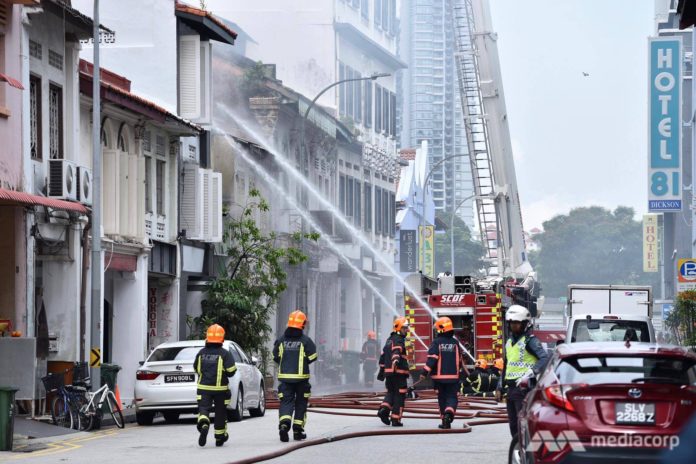
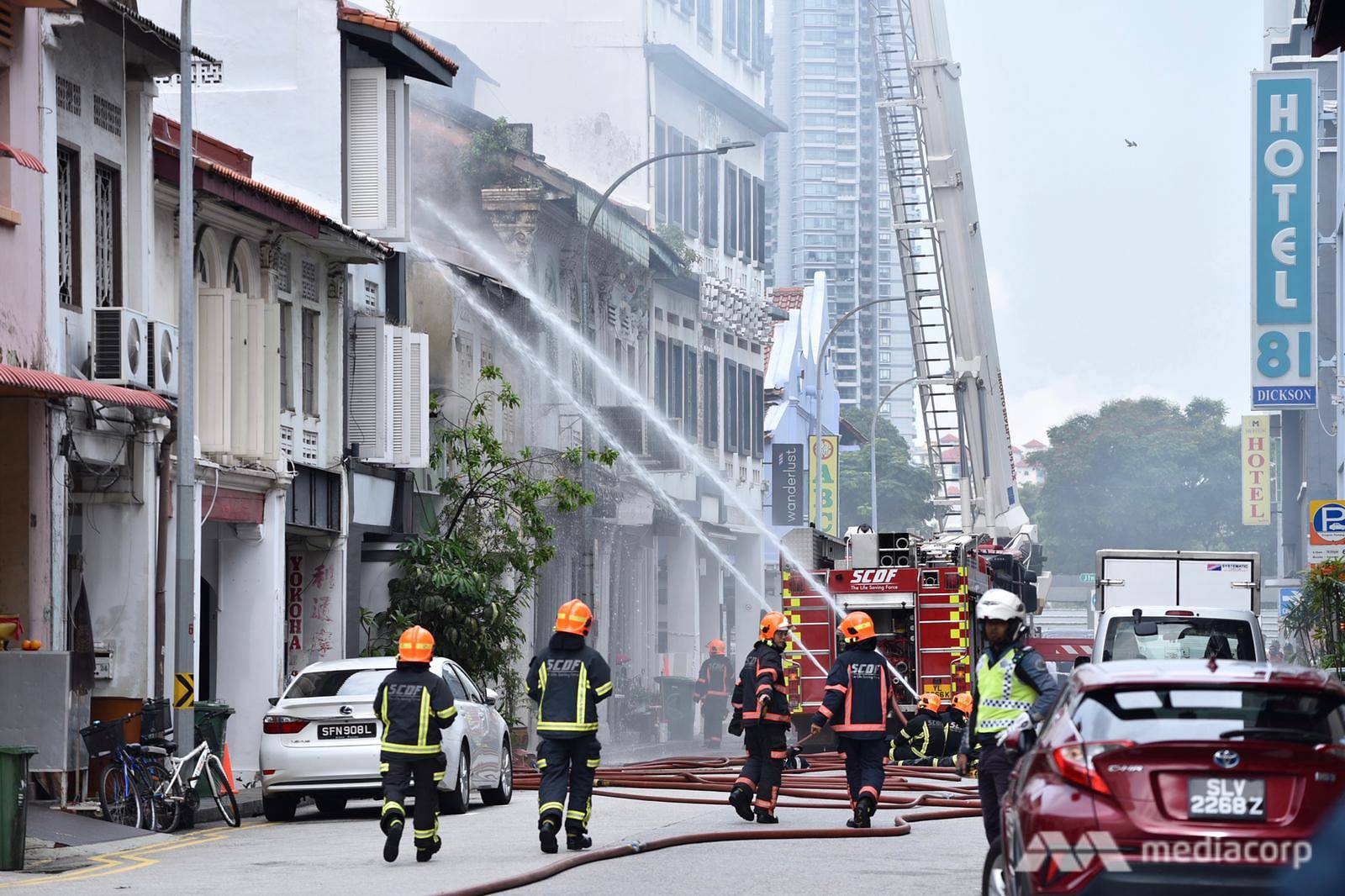
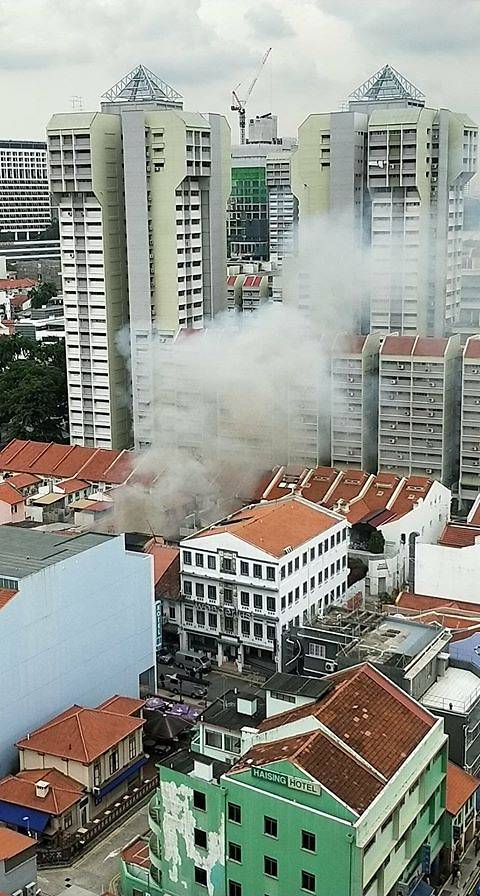
SINGAPORE: A fire broke out in Little India at Dickson Road on Thursday (May 16) afternoon.
The Singapore Civil Defence Force (SCDF) said in a Facebook post at about 3.05pm it had been alerted to the fire at 14 Dickson Road.
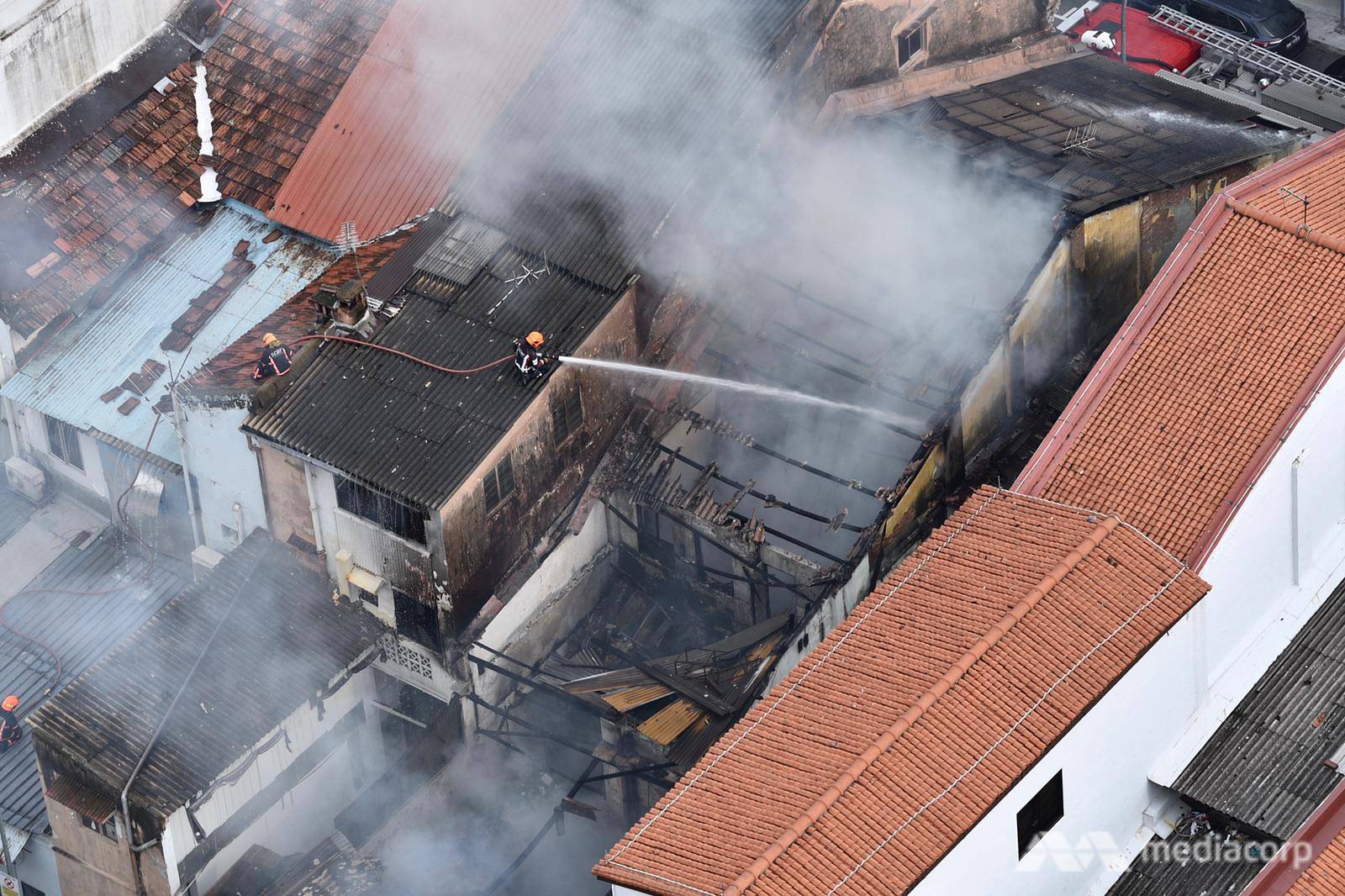
Firefighters battle a blaze at Dickson Road in Little India, May 16, 2019. (Photo: Jeremy Long)
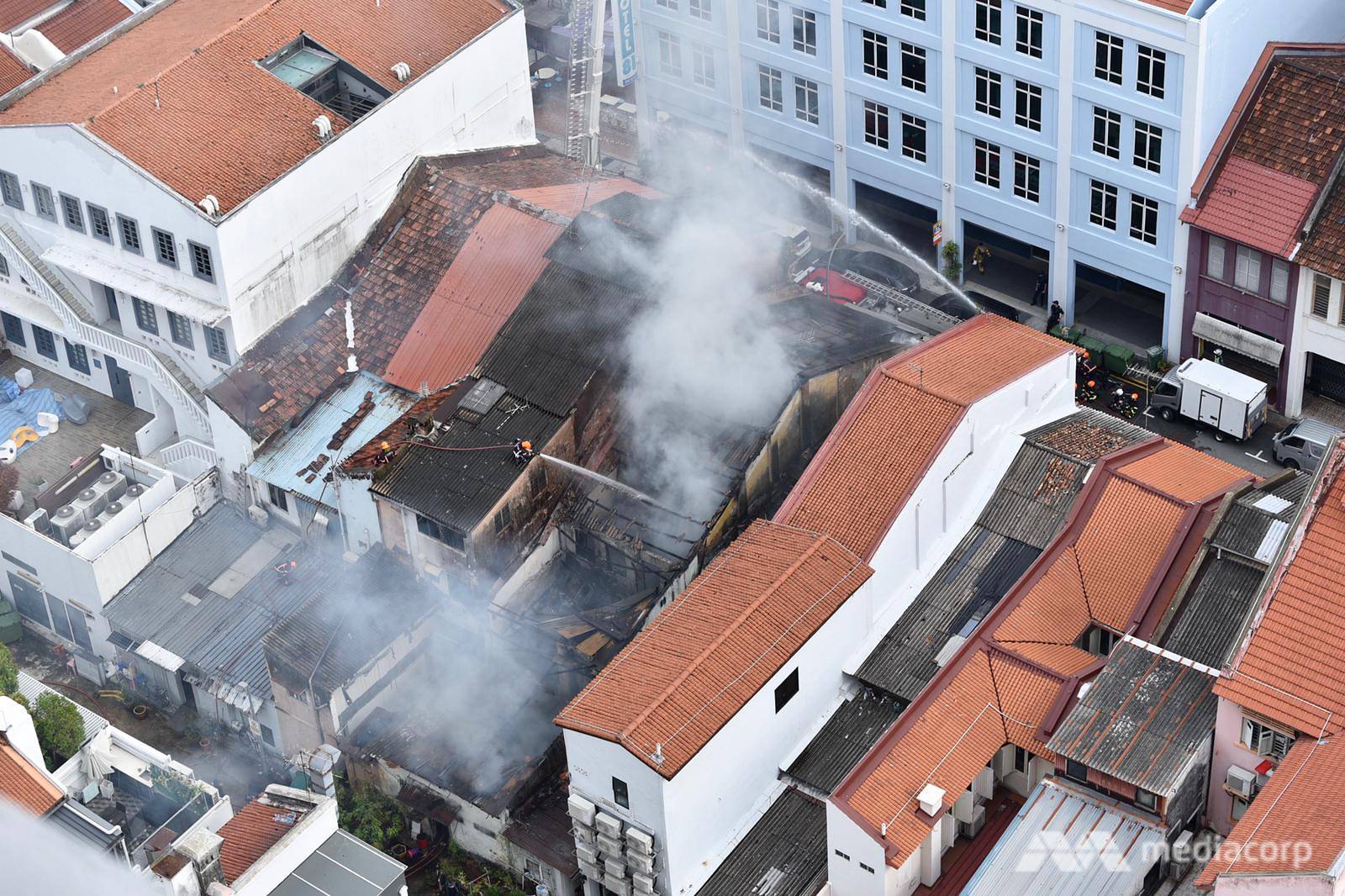
The roof of a shophouse at 14 Dickson Road in Little India was damaged by a fire. (Photo: Jeremy Long)
“SCDF is at scene conducting firefighting operations,” read the post.
Footage posted on social media showed thick, grey smoke rising into the air. Videos shared by eyewitnesses with CNA also showed smoke emanating from a row of shophouses.
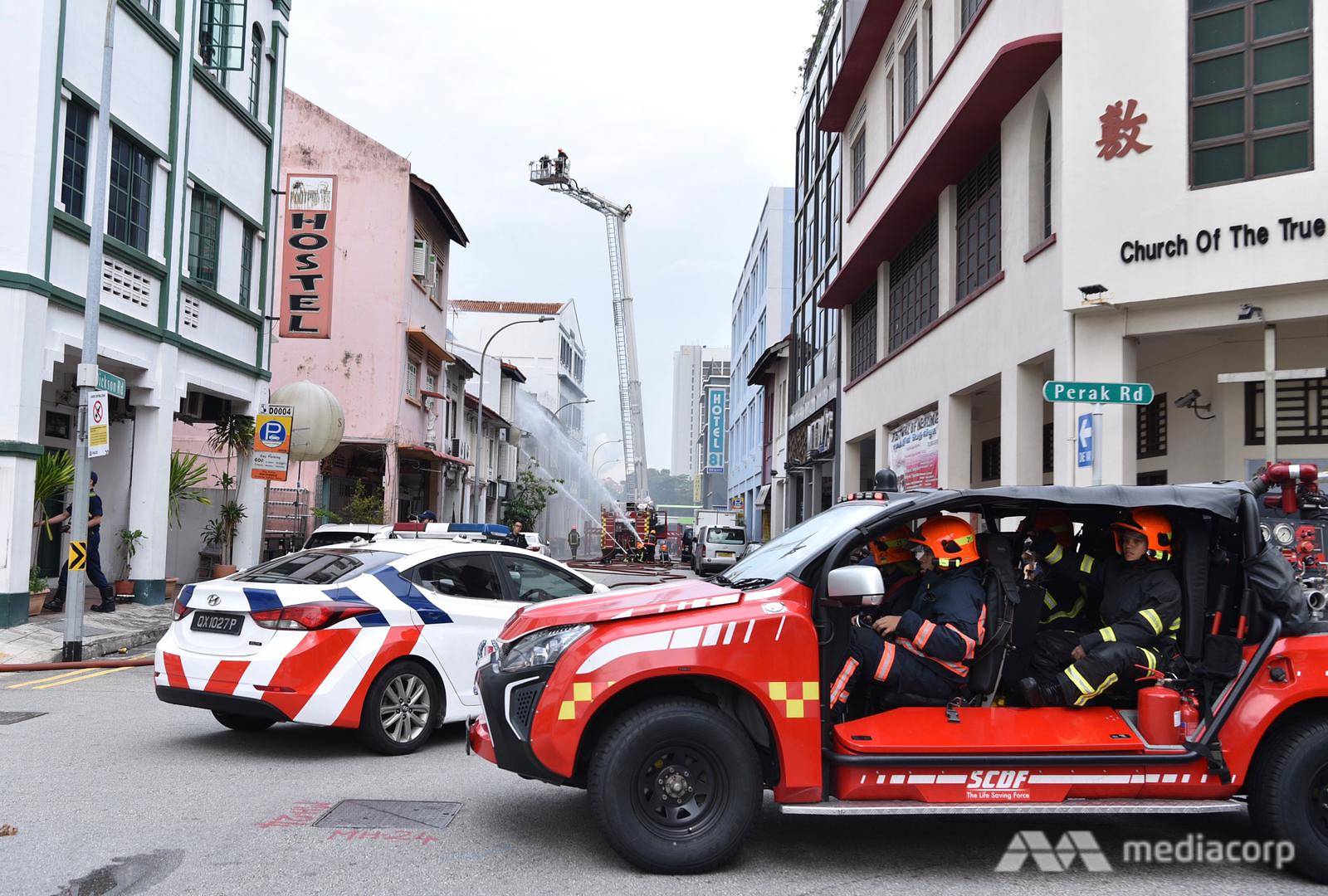
The incident happened at 14 Dickson Road. (Photo: Jeremy Long)
Police officers at Dickson Road in Little India where a fire broke out at a shophouse, May 16, 2019. (Photo: Jeremy Long)
The roof of a shophouse appeared to be charred as several SCDF personnel battled the flames.
“The roof is completely gone,” eyewitness Farihin K told CNA.
Firefighters were at the scene putting out the fire. (Photo: Mohan)
Smoke seen rising above Little India. (Photo: Farihin K)
“The fire engines reached the scene pretty fast,” Farihin added.
“The firemen arrived at the scene in seven minutes,” another eyewitness, Mohan, said, noting that the fire appeared to have been brought “under control” by about 3.20pm.
One Twitter user said the fire was visible from as far as Suntec.
The roof of a shophouse appeared to be charred as several SCDF personnel battled the flames. (Photo: Jeremy Long)
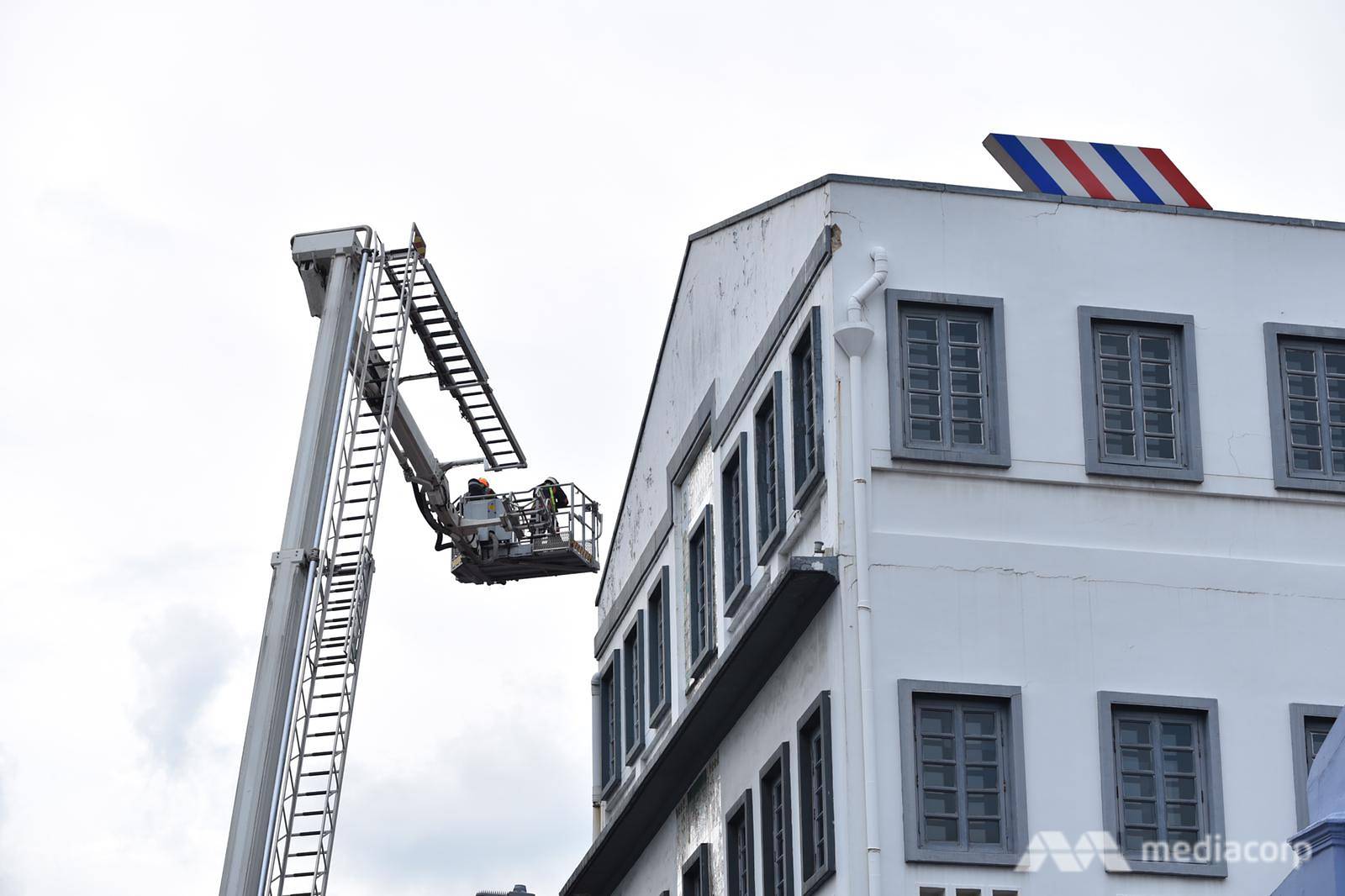
SCDF officers inspect a shophouse at 14 Dickson Road in Little India. (Photo: Jeremy Long)
This story came from a reader tip-off. If you would like to send in photos or videos of something newsworthy, WhatsApp our Mediacorp news hotline at +65 8218 8281 or message us on Facebook.
SINGAPORE: The Home Team Academy, the corporate university of the Home Team, is set to bring a tech boost to training its officers, said Second Minister for Home Affairs Josephine Teo on Wednesday (May 15).
This is to ensure they can face challenges such as terrorism threats, evolving crimes and the weight of public perception.
“Merely increasing manpower or ‘womenpower’ is neither sustainable, nor effective,” said Mrs Teo on Wednesday during a speech at the Home Team Academy Workplan Seminar.
“Instead, as with other sectors, we need to change the way we operate in the Home Team – we need to use technology to a greater extent, streamline and even overhaul our processes and concepts of operation.”
TECHNOLOGY BOOST FOR TRAINING PROGRAMMES
One example of using technology was showcased during a demonstration by the Singapore Civil Defence Force (SCDF) in which participants experienced the simulated aftermath of a bomb attack by donning special goggles.
Using mixed-reality technology, SCDF officers could be trained by treating virtual casualties that appear against a real background.
Such technology will feature in SCDF’s new training centre that is expected to open in 2021. The National Emergency Medical Services Training Centre will take in local and international participants, who will also learn through playing video games with medical simulation.
A HTA officer explains the new terrain of Woodlands Checkpoint in the Home Team Simulation System. (Photo: Home Team Academy)
SCDF will also set up a lab to track the training performance of emergency responders better. The Emergency Responders’ Fitness Conditioning and Enhancement Lab (ExCEL) will cover both physical and behavioural areas.
It will monitor responders’ strength and conduct rehabilitation in an immersive setting. Moreover, there will be environmental chambers to test how they fare in extreme conditions and a cognitive lab to help test and improve their situational awareness and decision-making.
One key feature in the cognitive lab will be the Eye Tracking System that relies on sensors to determine eye movement.
An SCDF instructing officer, Major Hasan Kuddoos, said: “When trainees are shown operational footage of real life incidents, we are able to determine where their eye focus goes to. So, with these, we envision for them to enhance their situational awareness.”
SCDF’s Emergency Responders’ Fitness Conditioning and Enhancement Lab (ExCEL) will feature an Eye Tracking System. (Photo: Home Team Academy)
Major Hasan added that this means trainers can observe how experienced personnel react in situations and learn from them to make their lessons more effective.
For instance, trainees who are more senior tend to zoom in on casualties or exits during a fire, while the less experienced are seen to focus on the blaze first.
Additionally, SCDF is studying data on heat stress, collected from their own officers, to improve training linked to heat endurance.
Meanwhile the Prison Services has developed a virtual reality training prototype for new Prisons officers, which teaches them how to navigate situations such as fights in the yard and medical emergencies.
Demonstration of the new training prototype that simulates scenarios such as a fight or medical emergencies. (Photo: Home Team Academy)
Assistant Superintendent of Prisons Teng Song Guan said that officers who tried out the prototype felt it was realistic and allowed them to be immersed in the situation. A further trial will be conducted later this year.
The Home Team School of Criminal Investigation is also exploring new technology like artificial intelligence.
At this year’s Workplan, it featured a pair of smart glasses which rely on augmented reality and are voice activated.
A police officer wears smart glasses that rely on augmented reality, which may be used in future criminal investigation training. (Photo: Home Team Academy)
Aside from new initiatives, the Academy built on its current simulation system that trains officers to manage different incidents. It has added two new terrains to the current four areas.
While the simulation was previously only open to training for the Singapore Police Force (SPF) and the SCDF, Immigration and Checkpoints Authority (ICA) and Prisons officers can now learn how to navigate situations at the Woodlands checkpoint and in prison respectively.
CHANGING NATURE OF HOME TEAM JOBS
All this training in technology was necessary due to the evolving nature of Home Team jobs, according to Mrs Tee.
She touched on the ICA’s plans to roll out more self-service counters, stating that officers’ roles “will shift from stamping passports to performing analytics of traveller information” so as to sieve out suspicious travellers.
ICA has also designed an eight-week Basic Digital Confidence Course with Singapore Polytechnic. Its first batch of officers graduated last October.
On a wider scale, the Academy aims to equip all 25,000 Home Team officers with basic technology skills by 2021.
It is also working with Singapore University of Social Sciences to accredit the Academy’s basic training programmes
Next January, officers who obtain a Certificate in Home Team Studies will earn credit units if they are pursuing an undergraduate degree there.
In addition to its local programmes, the academy has gone international.
It rolled out in 2018 two new flagship programmes, the International Programme on Crisis Leadership and the Phoenix International Programme, to bring together senior officials from foreign countries to exchange insights about security threats and challenges.
SINGAPORE: The hotel room where Singapore’s first monkeypox patient was staying at has been disinfected, a spokesman for Hotel 81 Orchid said in a statement on Wednesday (May 15).
The patient, a 38-year-old Nigerian national, was staying at the hotel before he was hospitalised. He is suspected to have contracted the rare virus from eating bush meat in Nigeria.
The spokesman for the hotel said the Ministry of Health (MOH) had informed them on May 9 that one of their customers had been diagnosed with monkeypox.
“While MOH has indicated that the possibility of transmission is low, as a precaution, we immediately closed off the level completely where the said guest’s room is located,” the spokesman added.
“We have worked with MOH and the National Environment Agency (NEA) to disinfect the hotel room where the patient had stayed.”
Four staff members who were identified as having made close contact with the patient are also under quarantine. The spokesman said the hotel “will continue to work in full cooperation” with authorities.
The other 18 are from Britain, India, Ireland, Malaysia, Nigeria and Vietnam, and most were at the workshop at 3 Church Street that the patient had attended.
All of them showed no symptoms as of Monday evening, said MOH.
Monkeypox can be spread through close contact with the blood, bodily fluids or lesions of infected animals such as rodents and monkeys. It can also be contracted by eating improperly cooked meat of such animals.
Human-to-human transmission can occur through close contact with an infected person or with objects recently contaminated by their bodily fluids.
Symptoms include lesions, fever, muscle ache, swollen lymph nodes and chills.
MOH added that the disease is usually self-limiting, with most patients recovering within two to three weeks.
The Nigerian patient arrived in Singapore on Apr 28 and developed symptoms two days later. He was tested positive for the virus on May 8.
He is currently being treated in an isolation ward at the National Centre for Infectious Diseases. MOH said on Tuesday that he was “recovering well and in a stable condition”.
SINGAPORE: Central Provident Fund (CPF) members will continue to earn interest at 2.5 per cent per annum on their Ordinary Account (OA) and at 4 per cent per annum on their Special and Medisave accounts (SMA) between Jul 1 and Sep 30.
The concessionary interest rate for Housing and Development Board (HDB) mortgage loans – pegged at 0.1 per cent above the OA interest rate – will remain unchanged at 2.6 per cent per annum for the same period.
The CPF Board and HDB announced the rates in a joint news release on Wednesday (May 15).
An additional 1 per cent interest will continue to be paid on the first S$60,000 of their combined balances, earning CPF members up to 3.5 per cent on their OA and 5 per cent per annum on their SMA.
CPF members aged 55 and older will also get an additional 1 per cent interest on the first S$30,000 of their combined balances, earning them up to 6 per cent interest per year on their retirement balances.
As announced last September, the interest rate for the Retirement Account in 2019 is 4 per cent.
NEW RULES ON HOUSING PURCHASE USING CPF, HDB LOANS
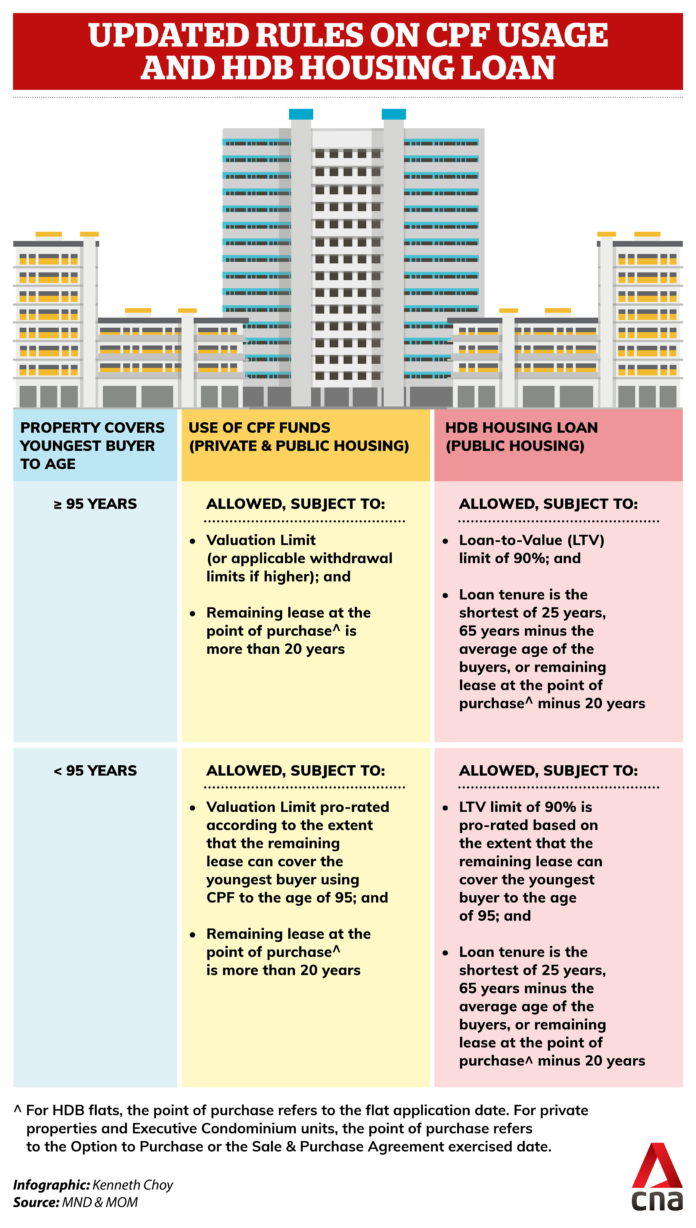
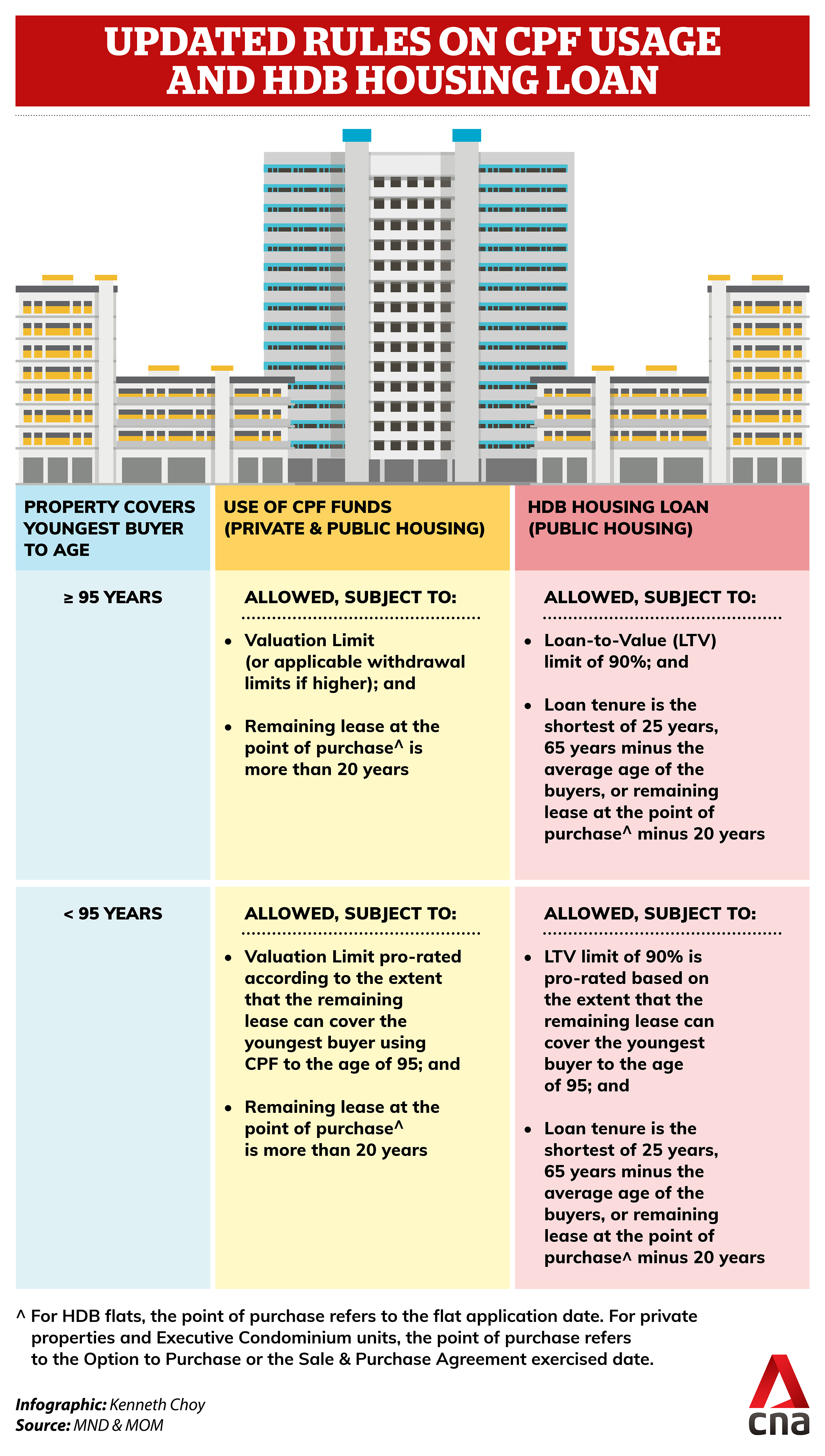
New rules on buying homes using CPF and HDB housing loans were introduced last Friday. The total amount of CPF that can be used to buy a home will depend on whether the remaining lease can cover the youngest buyer until the age of 95.
If this criteria is met, a buyer can use CPF to pay for a property up to its valuation limit. If not, the use of CPF will be pro-rated. Members can use CPF as long as the remaining lease is 20 years or more, lowered from 30 years previously.
For those looking to take an HDB housing loan, buyers will be eligible to take the full 90 per cent Loan-to-Value limit, if the remaining lease can cover the youngest buyer to the age of 95.
If the remaining lease cannot cover the buyer until the age of 95, they will be offered a loan on a pro-rated basis.
When CPF members reach 55 years old, they will need to have a property with a remaining lease to cover them until at least 95 years old to be allowed to withdraw their CPF savings above the Basic Retirement Sum.
SINGAPORE: Three men were charged on Wednesday (May 15) for conspiring to cheat ride-hailing company Grab of more than S$40,000 through fraudulent transactions made with GrabHitch drivers.
Ryan Wong Wei Zhi, 19, Chua Wei Beng, 21, and Kenneth Ho Hong Wei, 22, are believed to be masterminds of a payment fraud syndicate, according to police who had arrested 10 people in an island-wide operation on Monday.
Mobile phones, debit cards and a thumb drive were seized by the police during the operation.
Last month, Grab filed a police report after discovering irregularities in the accounts of some of its drivers under the social carpooling service, police said in a news release on Tuesday.
At least 13 driver accounts were detected with more than 2,000 fraudulent transactions amounting to more than S$41,800 in losses between February and April, police added.
According to court documents, Chua and Ho, both storemen at Selarang Camp and Wong, a full-time national serviceman at Dieppe Barracks, made 314 fraudulent transactions on a GrabHitch account, each worth S$5,653.
Both Chua and Wong intend to engage lawyers.
If found guilty, they could be jailed for up to 10 years and fined.
Smartphones and debit cards seized by police in GrabHitch fraud case. (Photo: SPF)
In a statement to CNA, Grab said: “We take fraud seriously and have worked closely with the police on this matter.
“Providing a safe and secure platform for our users, driver-partners and merchants is a top priority for us, and we will continue to invest in technologies to fight fraud and safeguard our platform.”
SINGAPORE: “I’ve applied for more than a hundred jobs, and I’ve received mostly rejections. What are companies looking for?”
This was the one of several similar emails that landed in my inbox after my last commentary on Career Mobility being the new Career Stability.
While I can’t tell you what every single company is looking for, I can tell you how the very best companies assess candidates.
Think of your career as a story with three parts – Past, Present and Future.
The Past tranche refers to your past performance, experiences, the skills you have already honed and developed and the value you have created.
The Present tranche is your current readiness in your existing role, or the perceived fit between you and the job that you want. This considers factors such as what your competencies are, the cultural fit and your personality.
The Future tranche represents your potential. These are traits that predict your ability to grow as a leader and how fast you develop. These are related to your ability to learn and adapt, and are strongly correlated to social emotional intelligence qualities such as curiosity, resilience, empathy and self-awareness.
HOW TO CHOOSE A WORLD-CLASS TENNIS PLAYER
Imagine you’ve been given the task of trying to select a world-class tennis player.
First you look at the past – how many matches has the person won, for instance, and what their achievements have they chalked up?
Then you look at the present. Imagine in this instance, the person you’re considering has never played tennis before, yet she or he may be able to run really fast and has great hand-eye coordination. Those are indicators of the person’s readiness.
And then you also want to consider if this person has potential to grow. How curious and open is this potential player and how fast do they pick up new techniques for instance?
I first learned this career trajectory model from my friend Elaine Yew, a veteran of the talent development world and senior executive recruitment and development firm Egon Zehnder.
When I asked Elaine for her views on career mobility, she said:
The biggest enemy of career mobility is comfort … Comfort leads us to false security and we stop seeking growth, both in skills and mindset agility.
I see all the time, even amongst very successful senior business people, that the ones who struggle with career advancement, are the ones whose worlds have become narrow – they engage mainly with people from their industry or expertise area, and their thinking about how their skills or experience might be transferable can be surprisingly superficial.
This is exactly why career mobility is so important. In a future of rapid change and uncertainty, the old success formula of deep specialisation and sticking to your strengths and comfort zone doesn’t hold true anymore.
Even fields that require specialised hard skills such as architecture, engineering and medicine are seeing a shift towards broadening out skillbases.
For instance, we are seeing a trend of medical schools around the world looking to offer new skills to broaden out doctor skillsets, such as data science which will allow them to understand Big Data, and empathic communication – a uniquely human skill that robots cannot replicate.
Over the past few years, the American Medical Association has awarded millions of dollars worth of grants to medical schools to develop innovative curricula for the future.
Dean of the National University of Singapore’s Yong Loo Lin School of Medicine Associate Prof Yeoh Khay-Guan said in the Singapore Medical Journal recently:
Soft skills will be more important than knowledge. In the electronic era, you can ‘pull’ knowledge and information, but soft skills such as bedside manner, how you communicate with patients and reassure them, how you answer their questions and your attitude towards them, must be intrinsic in the doctor.
It is clear that developing your career mobility is essential regardless of what sector you’re in and whether you’re a general manager or a technical expert.
So how can you develop your career mobility? Let’s look at those three tranches again.
First, carefully cultivate your “garden of experiences”. Plant new seeds of exploration all the time. Don’t place all your bets on harvesting one crop.
This doesn’t mean that you have to leave your current job, but you can volunteer for stretch assignments within your department, initiate new projects or even shadow someone in a related department to develop new perspectives.
Going overseas can also be a valuable experience and it signals to employers that you have built cultural intelligence and resilience. Your new experiences will grow you and add diversity and breadth to your Past and Present portfolio of what you’ve achieved.
Second, intentionally develop your social capital and network. The people who I see struggle with career mobility often are the ones who neglect their connections. Instead of sending hundreds of applications to HR bots and job portals, it is far more effective to tap your network of connections for career intelligence and introductions.
Develop genuine relationships with people in the industries that you are interested in working in, whether it’s joining business interest groups on social media or attending relevant events and following up with the people who you’ve met.
Kingsley Aikins, CEO of The Networking Institute, calls your network a personal asset which is portable and moves with you regardless of the company you work for. He told me that he also spends his weekends entering the people he has met into a personal database and classifying them into categories – the most powerful relationship category being “People you can call at 3pm on a Sunday afternoon”.
I personally do not have the discipline for weekend social network database maintenance, but I do regularly consider which old friends and contacts I haven’t seen and reach out, even if it’s just a simple text message.
People who are great networkers understand the power of creating value for others without needing something in return. They build and maintain relationships constantly, rather than just seeking out contacts when they need a favour.
A job seeker talks with a corporate recruiter as he peruses the man’s resume at a job fair in Washington, June 11, 2013. (Photo: REUTERS/Jonathan Ernst/File Photo)
Third, always be at your development edge by learning new skills and developing healthy mindsets. These could be adjacent hard skills related to your core function or leadership skills that will allow you to advance your career.
The skills that will be particularly useful for the workplace of the future are what I call Deep Human Superskills, which are the social emotional competencies that separate us from the robots, like using empathy to connect with others on a deeper level, a keen sense of self-awareness and complex communication abilities such as conflict resolution.
It is also important to cultivate mindsets that support learning, such as being open-minded, having a mindset of ownership for your development, and of course developing a growth mindset, which Stanford’s Professor Carol Dweck’s research has shown as being pivotal for development, success and resilience.
Constantly evolving your skills and beliefs will also develop your ability to learn faster and better. Learning to learn and unlearn is perhaps one of the biggest factors in your career potential – the Future piece that we talked about.
Focusing on Career Mobility is not an easy or comfortable mindset shift for some, but it is important. Individuals must be supported in their efforts.
If we are to develop a truly career mobile society, companies and HR personnel also need to reexamine their attitudes and practices.
In general, companies tend to apply too many unhelpful or outdated filters which narrow the talent pool too quickly – whether it is education, schools or experience requirements.
I myself have also been guilty of posting jobs which reuse old job description templates which make arbitrary demands such as five years of specific experience in a particular field, which removed many suitable and competent candidates.
A job seeker holds a “We’re Hiring” card while talking to a representative from Target at a City of Boston Neighbourhood Career Fair on May Day in Boston, Massachusetts, US, May 1, 2017. (Photo: REUTERS/Brian Snyder)
In fact, some of my best hires have had their CVs forwarded to me directly from mutual contacts after their applications ended up on the reject pile due to them not meeting some arbitrary filter.
As employers, we must move away from a tendency to focus on qualifications and hard rules on years of experience, and also question our invisible filter of unconscious biases.
The old rules that worked in yesterday’s world will not work today.
Instead, the world of the future requires growth on both sides – for individuals to own the responsibility for constant development, and for employers to evolve their mindsets regarding what talent and potential truly looks like.
Crystal Lim-Lange is the CEO and Co-founder of Forest Wolf, a future-readiness and talent development consultancy.