SINGAPORE: News of A&W opening at Jewel Changi Airport have taken the nation by storm, or should I say by a flurry of curly fries and frothy root beer.
Those in my generation who still vividly recall sipping root beer at one of the many A&W outlets littered across Singapore are understandably nostalgic. There was much comfort to be found in a glass of root beer float when one was mugging for the exams or dealing with regular teenage angst.
Advertisements by fast food joints usually capitalise on similar emotions.
They feature images of happy couples and families to tap our innate desire for love and connection. Images of cute babies trigger a release of endorphins. Toys and ice cream draw the hearts and minds of young children.
With health-consciousness on the rise, such advertising typically also feature fresh, crisp greens to sell the idea that their products are healthy and wholesome.
Customers wait patiently in line to enter the A&W outlet at Jewel Changi Airport. (Photo: Matthew Mohan)
Although most of us try to curb the consumption of fast food in our daily diet, sometimes convenience and hearing our children’s shouts of hurray tear down the defences of even the best of us.
Around 44 per cent of Singaporeans eat fast food one to three times per week in 2018, according to Statista. A similar percentage (39 per cent) consumes it less than once a week.
There were 477 fast food outlets in Singapore in 2016, generating operating receipts of over S$1 billion, according to Singstat.
It’s not surprising that fast food ranks quite highly on the Singaporean agenda, given our busy lifestyles and the proliferation of fast-food outlets.
Plus, the unbearable heat of some afternoons make it extra tempting to duck into the first joint you can find, just to hide from the heat.
But should we be allowing these things to sway us from our resolve to eat healthily as a family, and more importantly inculcate good food habits in our young?
HOW BAD IS FAST FOOD?
Ask anyone and they’d tell you that fast food isn’t the best kind of food to include in your diet. But exactly why is it so bad?
The term “fast food” generally refers to foods that are rich in energy (read: calories) but low in important nutrients.
They are typically processed and high in fat, sodium and sugar. A diet that features fast food regularly is associated with increased body mass index and obesity, along with related health issues like hypertension, cardiovascular disease and diabetes.
(Photo: Carles Rabada / Unsplash)
But hasn’t fast food changed its ways to keep up with the times?
In recent years, to meet the rise in demand for healthy food options, fast food giant McDonald’s has rolled out new menu items such as salads and wraps, revealed caloric counts of its foods, and included apple slices and corn cups in kids’ happy meals.
Could these multi-national companies expand their menu variety even more and make changes to their food sourcing and preparation, such as limiting the amount of salt they sprinkle over French fries?
This is what a recent Forbes story suggested while highlighting the financial-moral conundrum that surrounds the global fast food industry: It provides jobs for locals, but also contributes to a rise in obesity levels in the country.
One solution put forward is to “slow down” the sector by using more local produce and expanding the availability of healthy and affordable options.
However, a recent study funded by the US Department of Agriculture shows the industry seems to have headed the other direction. It found the portion size and calorie content offered by most American popular fast food restaurants have increased over the past three decades.
The calorie count of mains has increased by 90, while the portion size grew by 39 grams, another research in the Journal of the US Academy of Nutrition and Dietetics.
Can we really imagine a world where fast food is more sustainable for life, and for growing children?
An employee prepares a sandwich with French fries in Nice, France, Sep 25, 2017. (Photo: Reuters/Eric Gaillard)
THE TYRANNY OF CONVENIENCE
It’s hard to deny – fast food is an attractive option for busy families, even when most of us regular joes do our best to put healthy food on the table for the most part of the week.
It is an easy win because of the taste, affordability, speed, and convenience (it can even be delivered to your doorstep).
For some families where parents have to work extended or odd hours to put food on the table, it’s almost impossible to whip up a wholesome home-cooked meal in less than 30 minutes.
In such situations, instant noodles or a ham and cheese sandwich could likely be a daily affair. How can children from lower-income families get the nutrition they need in order to function well in school?
We all know that nutritious food is essential for the healthy development of a child. With the right conditions and resources, we would try to feed our children the most nutrient-dense foods we can provide.
Yet in our time-stretched and stressful realities, it is easier said than done.
Wendell Steavenson, in a Financial Times article, puts it succinctly: “…the rise of fast-food, vending machines, takeaways and online delivery services all encourage a food culture of constant, instant gratification.”
Although I try my best not to make fast food a regular feature in our diet, there is a small part of me that holds fond memories of dining out at McDonald’s when I was young. A hotcakes happy meal would make my Saturday complete, in my young mind.
A Health Promotion Board pillar wrap at Tiong Bahru Food Centre encouraging customers to ask for lower-calorie options. (Photo: Lianne Chia)
As a family, we do eat fast food on occasions, even though I spend a fair amount of that time lecturing the kids about how unhealthy fries and nuggets are – all while being aware of how hypocritical it sounds since I’m also digging in.
We limit their intake of store-bought juices to two to three times a week. And we don’t allow soft drinks at all, citing the convenient excuse that it is not only high in sugar but it also causes bloatedness.
BE AWARE OF WHAT WE EAT
So most of us have this love-hate relationship with fast food but it isn’t the only thing that irks us. Because of the long hours children spend in school, we’re also expected to pack healthy snacks for them daily.
Snack planning can be a stressful affair. Apart from a handful of healthier options like nuts or whole-wheat buns, I fret over what to provide that would be palatable and unspoilt by noon the next day.
Perhaps the problem lies not only in how readily available fast food is, but also how hard it is to find wholesome foods on the go.
Healthy eating is a daily dilemma, and at the moment it appears that no one is winning.
Even for families who eat clean and healthy, there are areas where we are willing to settle for less.
But as a wise friend once said, we should aim to eat well 70 per cent of the time, and allow some wriggle room for indulgences.
(Photo by Anna Pelzer on Unsplash)
Now with the opening of Jewel Changi Airport, the indulgence of the moment might just be an icy glass of root beer float, or maybe a juicy burger at Shake Shack.
And while there’s nothing wrong with rewarding ourselves, let’s be more aware of how fast or slow our daily diet is – and aim to dial back on the frenetic pace of life and food.
June Yong is a mother of three, an educational therapist and owner of Mama Wear Papa Shirt, a blog that discusses parenting and education in Singapore.
SINGAPORE: Sixteen individuals were appointed on Saturday (May 18) to engage with youths on their hopes and dreams for the future of Singapore in 2025.
As part of the SG Youth Action Plan initiative by the Ministry of Culture, Community and Youth (MCCY), the 16-member panel is made up of youth leaders including CEOs, entrepreneurs, a musician and civil society activists.
It is co-led by Senior Minister of State Sim Ann, and Mr Edward Chia, co-founder and CEO of Timbre Group.
Under the SG Youth Action Plan, the ministry said it hoped that engagements could ultimately turn conversations into concrete steps, including policy recommendations.
From now till July 2019, the first round of conversations will come up with focus topics and possibilities for the country’s future – both offline and online via YoCo.sg.
A subsequent round, from August 2019 to March 2020, will call on youths to take part in projects and engagements on policy recommendations based on feedback from the earlier round.
Youths will partner the Government and other stakeholders to come up with projects.
On Saturday, more than 100 youths aged 16 to 40 participated in a three-hour dialogue session at The Red Box in Somerset.
One of them was undergraduate Nur Hazeem Abdul Nasser, 20, who said that it was heartening to see that those present at the session were willing to walk the talk and suggest ways to tackle common concerns.
“IMPORTANT” TO HAVE DIVERSE GROUP
One panel member, singer-songwriter Inch Chua, 30, noted that diversity among the panel members was crucial.
“It’s important to have a diverse group of people to speak from different walks of life, various social classes as well as races to be represented on the panel, so I’m very glad to be one of those many voices,” she said.
One panel member, Ms Inch Chua, 30, a singer-songwriter, noted that the diversity among the panel was crucial. (Photo: MCCY)
Another panel member said that it was important to find out the concerns of youths in order to develop effective solutions.
“I think no matter what the first part is, we need to find out what they are concerned about and what really riles them, what they think is important for them for their future,” Ms Shahira Abdullah, 31, vice-president of Mendaki Club said.
“So from then on, what we can do is we can target our solutions to this concerns of theirs to make it a more effective solution for them and for us,” Ms Shahira added.
Ms Sim said: “We foresee a lot of youth inputs in terms of policy making and certainly, we want to also seed and grow many grounds of partnerships, so that the youths can make a difference in various social movements they are interested in.”
In 2018, dialogue sessions called Youth Conversations saw more than 8,000 youths voice their concerns on topics like social inclusivity, environmental sustainability and mental well-being. The SG Youth Action Plan will build on insights gained from those sessions.
SINGAPORE: As they arrived, the guests would have been in no doubt they were attending a high-profile event.
Huge balloons and congratulatory flowers festooned the area. Drummers and a Chinese orchestra revved up the celebratory atmosphere. Photographers clicked away as guests streamed in and warm handshakes were exchanged.
At the centre of it all was Olivia Lum, the founder of home-grown star company Hyflux.
Dressed in a black and white pant suit, the businesswoman, whose name was synonymous with the water treatment giant she built, had a broad smile when the day’s special guest, Singapore’s Prime Minister Lee Hsien Loong, arrived.
It was a happy day, as seen from the scenes captured by a video on Youtube.
The event was the opening of Tuaspring desalination plant – Singapore’s second and largest seawater treatment plant supplying 70 million gallons of treated water, or 125 Olympic-sized pools worth of water, per day for 25 years.
It was also the first water plant in Singapore and Asia to be integrated with a power generator.
Costing more than S$1 billion to build, the Tuaspring project marked Hyflux’s foray into the energy business. Even if the power plant was not yet operational in September 2013, Lum was eager to showcase her pet project.
“Today is an especially proud moment for all of us at Hyflux,” she told the guests – who included bankers, analysts, foreign dignitaries and local officials – at the invitation-only event.
The Prime Minister, who gave a speech after Lum, said Tuaspring was the “latest milestone in Singapore’s water journey”.
Amid the high spirits, no one could have guessed that this plant would in a few years’ time take mighty Hyflux from its peak to near rock bottom.
For all the ambitions that it embodied, it struggled to make money. The plan was for the power plant to supply electricity to the desalination facility and sell the excess to the national grid, thereby raising energy efficiency and cut costs. But by the time Tuaspring started feeding electricity to the grid, a severe oversupply in the power generation market had made prices undesirably low.
As losses snowballed, Tuaspring became the “noose” around Hyflux’s neck.
Since then, the process has never been far away from the headlines – marked by investor angst that culminated in a rare public protest and a last-minute abortion of a white-knight takeover – and the end seems nowhere in sight, with Hyflux still trying to cobble together a survival plan as this article was being written.
And now, it has ceded control of Tuaspring desalination plant, which opened to much fanfare in 2013, to local authorities on Saturday (May 18) for no money, paralleling how Hyflux has shrunk from one of Singapore’s most successful home-grown businesses to a shadow of its former self.
Prime Minister Lee Hsien Loong was guest of honour for the opening of Tuaspring Desalination Plant on Sep 17, 2013. (Photo: Hyflux/Annual report)
1989-2010
MAKING WAVES
The rise of Hyflux has been told many times, alongside the rags-to-riches story of its founder.
It began in 1989 when Lum left a career in pharmaceuticals and sold her car and apartment to start a business to help solve the world’s water problems.
The indomitable spirit that Lum – an orphan who grew up in a small Malaysian town – displayed in her early life saw her through the tough years of entrepreneurship. By the late 1990s, Lum’s 14-hour work days paid off and Hyflux had made a name for itself with its proprietary membrane technology.
The company went public in early 2001. That year, it also secured its first municipal water treatment project in Singapore to supply and install the process equipment for the country’s first NEWater plant in Bedok.
Other key projects that followed included Singapore’s third NEWater plant in Seletar and the SingSpring Desalination Plant, the country’s first seawater treatment facility. Hyflux also expanded beyond the shores of Singapore, with projects in northern China, India, Algeria and Oman.
Along the way, it garnered state investment firm Temasek Holdings as one of its shareholders, albeit for a brief period from 2003 to 2005.
By 2010, Hyflux was prospering. Its market capitalisation peaked at an eye-popping S$2.1 billion; revenue and net profit also hit record highs of S$569.7 million and S$88.5 million, respectively.
Lum became a role model for entrepreneurs, especially at a time when female founders were comparatively few and far between. She won awards and was at one point a Nominated Member of Parliament.
It was at this peak when Hyflux cast its eyes on its most ambitious project.
Four months before, PUB had called a tender for Singapore’s second and largest desalination plant to be built at Tuas.
Lum wanted that for Hyflux, so she engaged consultants and began studying the local power market, according to industry publication Global Water Intelligence.
She drew up a proposal to build a power plant, which she argued would be profitable and allowed for “an impossibly low bid” of supplying water at a first-year price of S$0.45 per cubic metre, the article added.
When the tender closed in October, PUB received nine bids. Hyflux’s submission was way below its competitors, such as S$0.67 per cubic metre from Keppel Seghers and S$1.42 per cubic metre from Sembcorp Utilities.
It was also markedly lower than the first-year price of water for SingSpring Desalination Plant at S$0.78 per cubic metre.
MAR 2011
TUASPRING IN THE BAG, BUT DOUBTS SURFACED
Five months after it submitted the bid, Hyflux was named preferred bidder for Tuaspring. It would be the company’s largest contract to date.
“We showed our mettle by securing Singapore’s second seawater desalination project amidst very tough competition,” its 2011 annual report said.
But while the company saw it as a win, some analysts had their doubts.
Carey Wong, a former analyst who tracked Hyflux since its initial public offering, recalled how questions were asked at an analyst briefing about the company’s move into the energy business.
“When they announced the project, a number of us were quite surprised why they’d even want to go into power … ‘Why are you going out of your comfort zone? Will you have capabilities to do something like this?’ We had some reservations.”
But Hyflux was “very bullish” about the prospects of selling excess electricity and using that to offset its low bid, Wong recounted in an interview with CNA last month.
True enough, Lum said in a Feb 15 affidavit this year that the “technical and financial viability” of the Tuaspring project was “validated and approved by various parties, including regulators, professional advisors and project finance lenders” at that point in time.
“Electricity (trading) prices were about S$200 back then so it had seemed doable. Nobody foresaw the fall in prices,” said Wong, who is now vice president of portfolio management at Ascend Capital Advisors.
“Now when you look back with hindsight, that’s the one that did them in.”
APR 2011
“EVERYONE KNOWS WHO HYFLUX IS”
The 25-year water purchase agreement with PUB was signed on Apr 6. To fund the Tuaspring project, the company geared up for the issue of its perpetual preference shares with a 6 per cent annual dividend.
It set up a telephone hotline, held roadshows and placed advertisements in the local newspapers.
Hyflux held roadshows and placed advertisements in major newspapers when it issued its 6 per cent perpetual preference shares in 2011.
The advertisements caught the attention of Max. The then-civil servant had made some money from his holdings in similar instruments offered by local banks, and was mulling new investment opportunities.
“They have to go through the Monetary Authority of Singapore to do these issues. You don’t see the smaller companies issuing these for retail investors so it seemed that only the safe companies are allowed.”
Max, who by then had been investing in the local market for at least a decade, added: “The banks are safe names and everyone knows who Hyflux is.”
Max was not alone. The preference shares, which were then the first non-bank corporate perpetual issue by a Singapore company, saw strong interest and was over-subscribed by about six times, Hyflux said in its 2011 annual report.
A strong brand name aside, there was also the lure of attractive coupons in a low interest-rate environment.
2011 proved to be a momentous year for Hyflux with several milestones.
In July, construction of the Tuaspring integrated plant began. Later in December, Lum became the first Singaporean and the first woman to be crowned the Ernst & Young (EY) World Entrepreneur of the Year award.
An even bigger milestone was to come in 2013.
Hyflux founder-CEO Olivia Lum became the first Singaporean and the first woman to be crowned the Ernst & Young (EY) World Entrepreneur of the Year award in 2011. (Photo: Ernst & Young website)
SEP 2013
“IT WAS A CARNIVAL”
After two years of construction, the Tuaspring desalination plant was finally ready. With the balloons and congratulatory flowers all over the facility, Wong, who was covering Hyflux then as an analyst, recalled the opening.
“It was a carnival,” he said. “Olivia Lum was in good spirits. It was one of their biggest projects.”
But by then, its financial statements were looking less rosy.
Net profit had dropped to nearly half of that in 2010. Operating cash flow, which indicates how much cash is generated from business activities, had been negative since 2010.
That meant the company had to increase its investment cash flow through means such as selling assets, in order to keep its free cash flow positive. Otherwise, it would have to resort to external funding, like issuing shares, bonds or loans.
Nevertheless, the mood at the plant opening was a joyous one.
“While the desalination plant is now completed, our work continues with the onsite power plant. We look forward to its completion and connection to the national energy grid,” said Lum.
2014 TO 2016
CHALLENGES EMERGE
It would take almost two years before that happened.
In May 2014, Hyflux reported its first delay in connecting Tuaspring to the national grid. It only managed to do so in the second half of the following year, and began selling electricity to the grid by Feb 2016.
However, it cautioned in its 2016 annual report that “persistently low electricity prices due to an oversupply are expected to continue impacting near-term profitability”.
At the same time, external challenges, such as plunging crude oil prices and persistent political uncertainty in the Middle East due to the Arab Spring uprisings, added a further squeeze on its profits.
It remained aggressive in borrowing and issued 6 per cent perpetual securities in May 2016. Again, it saw red-hot demand from retail investors and had to upsize the issue from S$300 million to S$500 million. Max, the retail investor with preference shares, was among those that subscribed.
“The strong demand for the securities is testament to the market’s confidence in Hyflux,” Lum was quoted as saying in the company’s annual report.
FEB 2017
EXPLORE DIVESTMENT OF TUASPRING
The fall in electricity prices continued to take a toll on Hyflux’s finances. Eight months after, the first sign of weakness came when Hyflux reported earnings of S$4.8 million for the full year ended Dec 31, 2016 – a steep fall of 91 per cent from the previous year.
The company said weaker-than-expected electricity prices had “substantially wiped out” its profits. Excluding losses from the Tuaspring plant, full year earnings would have been S$118 million.
In line with its asset light strategy, it decided that it would be seeking partial divestment of Tuaspring.
The Tuaspring Integrated Water and Power Plant. (Photo: Hyflux)
Later that year, Hyflux caught the attention of iFast Corp’s senior fixed income analyst Ang Chung Yuh.
“Clearly, the financials are unsustainable,” Ang thought. So he released a report on Sep 6, noting Hyflux as a “negative issuer” with a “highly leveraged” overall financial risk profile.
“Even before accounting for the large amount of perpetual securities outstanding, Hyflux’s balance sheet appears unsustainably stretched by any standards,” Ang wrote.
Corporate perpetuals, like those issued by Hyflux in 2011 and 2016, are bond-like instruments that have no maturity date. As such, local issuers have always viewed them as equity, rather than debt. Even a non-call or non-payment of distribution do not constitute defaults.
On this, Ang said there are different views and he belonged to the camp of analysts who recognized perpetuals as debt.
Hyflux’s debt to earnings before interest depreciation and amortization (EBITDA) was at 13.4 times in 2016, while its debt-to-market capitalisation ratio stood at 3.9 times, his report said.
But if one were to take into account the perpetuals, both indicators would “jump to dizzying levels” of 23.4 times and 6.8 times, respectively. “You don’t have to be an expert to know that (this is) not sustainable,” Ang wrote.
With Hyflux falling short of working capital and liquidity, the analyst said the company would have to turn to selling some of its assets to meet short-term needs, and viewed plans to divest Tuaspring as “potential credit positives”.
The analyst, however, acknowledged in a recent interview with CNA that he had underestimated the challenges Hyflux would face when it came to selling its key asset.
FEB 2018
WARNING SIGN?
The losses of Tuaspring proved to be an obstacle in Hyflux’s search for a buyer.
As that came to nothing in 2017, Hyflux announced its first full-year loss since going public. The Tuaspring integrated plant alone chalked up losses of S$81.9 million.
It also said that it would not be redeeming its S$400 million tranche of preference shares until the partial divestment of Tuaspring was completed.
“That’s no longer just a warning sign,” Ang told CNA last month, noting that a failure to redeem such Sing-dollar-denominated investments “has never happened”.
“For a company with very stretched financials, that means a very precarious situation.”
Ang said he started getting queries about his report released in 2017, and more discussions among analysts emerged about whether Hyflux would be able to sell off its prized asset.
Despite all that, Lum reiterated at a results briefing in February that there were still interested parties and Hyflux would not accept a fire sale below Tuaspring’s book value.
File photo of Tuaspring Desalination Plant. (Photo: Darius Boey)
MAY 2018
“I’M GOING TO LOSE MY INVESTMENT”
On the morning of May 22, a Bloomberg article said Hyflux was eyeing court protection to facilitate negotiations with creditors.
Emails to the company were unanswered until late in the evening, Hyflux confirmed that it had applied to the Singapore High Court to commence a court-supervised debt restructuring and an extended six-month moratorium.
A day earlier, it had suspended trading in its SGX-listed shares and related securities. At its last trade price of S$0.21 a share, the company’s market value of S$165 million was a far cry from its 2010 peak.
The news came as a “big shock” for tens of thousands of Hyflux retail investors.
“Initially, the financials were good then it deteriorated rapidly within a short span of time. By then, the price of the securities was too low to offload (and) it was due for redemption, so I decided to wait,” said Madam Loo Leung Hun, a retiree who invested in 2,500 preference shares in 2012.
“The first thing that came to my mind (when I saw the news) – I would not receive any interest and I’m going to lose my investment.”
But just two months before, the company’s auditor KPMG had signed off on Hyflux’s audit report.
This would later become a question that some investors had. In a letter to the company’s board on Feb 11 this year, the Securities Investors Association of Singapore (SIAS) asked how KPMG provided the clean audit report and what could have happened during those two months.
In its reply to the investor advocacy group, Hyflux said when KPMG issued its unqualified opinion, “there were no events or conditions that … cast significant doubt on the going concern assumption as at the balance sheet date of Dec 31, 2017, or at the audit report date of Mar 22, 2018.”
ONE YEAR ON, RUNNING DRY?
Just like how investors were baffled at what could have gone wrong in two months, Hyflux’s journey to restructure its mounting debt has left watchers equally bewildered.
By October 2018, it found a “white knight” in Indonesian consortium SM Investments, with whom it inked a S$530 million investment agreement. At the press conference, Lum declared it as “a happy day”.
It was then that developments picked up pace and emotions started running high.
For many retail investors, the offer from SM Investments seemed inadequate given that Hyflux had a debt of nearly S$3 billion.
“I remembered it was quite dark when I left the Hyflux office (after the town hall). There were people around me; we looked at each other but nobody wanted to talk,” said Max.
“Some of them were holding on to the bento boxes but I didn’t bother. I just wanted to get out of that place. That was when we realised that we would not get our money back. The deal is so bad.”
True enough, by February 2019 when it laid out its restructuring plan – one that would ask some of its investors to accept as much as a 90 per cent haircut – anxiety turned into anger.
However, before the vote on the plan could take place, things turned south fairly quickly. Hyflux aborted the key crucial rescue plan with SM Investments in April, but not before investors staged a protest at Hong Lim Park and national water agency PUB issued a default notice to Tuaspring.
The U-turn in the deal has left the company hanging by a thread. Since then, Hyflux has managed to convince the Singapore court to grant it another debt moratorium extension, and has announced at least three potential new suitors. However, nothing has been confirmed for now.
One thing is for sure, it has lost control over its key asset with PUB seizing the desalination plant on Saturday.
In a statement, the national water agency said: “To safeguard Singapore’s water security, PUB … will take over Tuaspring Desalination Plant with effect from May 18, 2019, following termination of the water purchase agreement with Tuaspring Pte Ltd.”
Secured lender Maybank has also appointed receivers and managers over the remaining assets of the plant.
Even after seeking court protection in May 2018, Hyflux had continued to paint a rather optimistic picture about divesting Tuaspring. In July, when the management met the media, Lum had said that it was in talks with eight bidders.
It was only until October when there was more clarity. Bloomberg reported that Keppel and Sembcorp Industries were the only parties pre-approved by PUB as potential buyers, and that of the two, only Sembcorp had submitted a final bid.
The fate of Tuaspring being seized at no cost has left investors devastated. In a letter sent by SIAS to PUB in March, the investor watchdog asked how the zero-dollar price was determined.
In PUB’s response, it said the desalination plant purchase price is expected to be negative, based on calculations under the water purchase agreement. It is willing to buy the plant for zero dollars and waive any compensation claims on TPL.
Unsatisfied, a group of retail investors sent another list of questions to PUB last month, requesting more details.
“In Singapore, even the smallest HDB flat cost more than S$0. How can a plant of this size be worth S$0? Can PUB share the company who did the valuation and its basis of the valuation?,” the letter read.
Meanwhile, there are others who want more answers from PUB about its $0 purchase price for Tuaspring. These investors have written a letter with some 10 questions and SIAS is understood to have forwarded the letter to PUB on Mon. A screenshot of the letter sent to CNA: pic.twitter.com/ICkAjw7PoV
Earlier this week, one of Hyflux’s potential investor Utico made a last minute appeal to the national water agency to seek a delay in the takeover. PUB has responded that the seizure would go on as planned.
For some investors, the past year has been a painful one.
An investor who CNA met at a shareholder’s meeting last year, shared how he had invested in Hyflux over a span of two decades, slowly accumulating his portfolio in the company’s ordinary shares, perpetual securities and preference shares.
He had trusted the company as a well-known brand dealing with an important resource. Altogether, he ploughed in more than S$200,000 of his hard-earned money.
When contacted for this article in April, this investor said he had decided to move on. “It pains me every time it’s being dug up for discussion. This saga has taken a toll on me and my family.”
“After all these months, we have struggled a lot and recently decided to let it be and move on,” he replied via SMS.
But for those who have not, a burning question remains: Will the company they had once pinned their hopes on, be able to move on?
SINGAPORE: Singapore has successfully built itself into a maritime power house through exploiting its strategic location within old trade routes since independence.
Innovation and sound strategic planning by the city-state’s founding leaders helped entrench this position and made the maritime sector an important economic participant in world trade by connecting the country with major trade markets.
Today, the maritime industry accounts for 7 per cent of the country’s GDP and houses 170,000 jobs, a figure that is set to grow since Minister for Manpower Josephine Teo announced that 13,000 more jobs will be created in the aviation and maritime by 2025.
A LEADING MEGA PORT – FASTER, CHEAPER, SMARTER
The country is upping the ante and making a huge bet on its maritime future.
The Tuas Mega Port, currently under construction and with the first phase to be completed in 2021, is a natural extension of Singapore’s strategy to entrench its regional dominance as a leading trans-shipment port.
In details outlined in development documents, it is quite clear that Tuas Megaport is positioning itself to be a leading trans-shipment port that connects and feeds containers to smaller regional ports.
The consolidation of Tuas from existing Keppel, Brani, Tanjong Pagar and Pasir Panjang ports will enable it to handle 65 million twenty-foot equivalent unit (TEUs), a jump from the combined 50 million TEU they collectively manage today.
Stacks of containers at the Keppel terminal in Singapore. (File photo: AFP/Roslan Rahman)
The huge vessel size it can service, including container ships of more than 20,000 TEUs, will reduce costs as large ships arrive and unload containers to be loaded onto smaller vessels for onward delivery elsewhere in the region.
The competitive advantage of this model is that Tuas’ ability to handle huge volumes and receive large container vessels will bring down the cargo’s unit cost.
The adoption of automation and new technology such as driverless vehicles, drones and automated quay cranes will help port operator PSA achieve efficiency and productivity, and help turn vessels over quicker – a strategic advantage of the Tuas megaport.
These will collectively help reduce congestion at the port.
While it still faces challenges from the likes of the emerging ports in Indonesia, Vietnam, Korea, Laos and Malaysia, the water depth and size of the development will make it hard for these ports to compete on the basis of trans-shipment ports.
Ground excavated from the country’s digging of MRT tunnels have helped more than halve the amount of sand needed, reducing the costs of construction of Tuas Terminal.
LOOMING CHALLENGES AS SUPPLY CHAINS ARE RESHAPED
Indeed, tectonic shifts are underway in the shipping sector as trade and supply chains are reshaped by efforts for greater connectivity between China and the world under the Belt and Road Initiative (BRI).
Links between China and Europe are expected to double by 2025, with 70 per cent of cargo in this trade to be transported by sea.
The first freight train to link China directly to the UK arrived in the eastern Chinese city of Yiwu after covering more than 12,000km, making it the second-longest route in the world. (Photo: AFP/Isabel Infantes)
Chinese ports have increased their capacities in recent years, with seven out of 10 of the world’s top container ports in the country.
A growing network of railroads across China to Western Europe has greatly reduced the time taken to move a piece of cargo to 14 to 17 days, a cheaper alternative compared to air freight which takes five or six days.
This is no small threat considering that air freight volumes and yields have been on the decline for some time, while growth in rail cargo have skyrocketed.
Apart from port-to-port logistics to that of first, transport companies are also bearing in mind last-mile considerations, particularly as production methods and systems change.
There is also greater competition in this area as regional countries step up investments in infrastructure and port capabilities. In Indonesia, President Jokowi has ambitions for the country to become a global maritime fulcrum.
The good news is that even as Tuas keeps Singapore as connected as possible to global shipping to stay ahead of the game, the development of Changi Airport Terminal 5 raises the country’s potential to become a key ocean-air freight node, boosting route options to shipping companies that come through Tuas.
A view of the site where Changi Airport Terminal 5 will be built.
This makes sense as the explosion of e-commerce has made delivery speed paramount.
Singapore’s involvement in the Chongqing Connectivity Initiative, which links the land belt and the sea road of China’s BRI to Southeast Asia, also gives Singapore businesses a share in the BRI’s growth.
Where the BRI has been seen as a threat that cannibalises Southeast Asian maritime trade routes, and a competitor to Tuas Terminal, such efforts give Singapore companies dividends in that growth while fueling private sector partnerships that might reap synergies between the two hubs.
About 240 Singapore corporates now have a presence in Chongqing. Chinese companies in turn are beginning to see Singapore as a gateway to ASEAN, according to HSBC.
Chan Chun Sing at the opening of the CCI Administrative Bureau Office in January 2016. (Photo: Jeremy Koh)
FUTURE PROSPECTS
Perhaps the greatest challenge to Tuas is not geopolitical or commercial but environmental. Global warming and melting ice caps that open up new trade routes in the Northern Sea and raise sea levels can pose a long-term but existential threat.
So far, Singapore authorities have responded well not only by raising the coastline on which Tuas Terminal will be built on to 5m above sea levels but also to get actively involved in the Arctic Council to identify fresh opportunities.
Singapore company Keppel has developed ice-class vessels and rigs to capture new opportunities. But it remains to be seen how the city-state will respond to keep its shipping hub attractive if trade flows begin to shift significantly because of such new routes.
So far Singapore’s strategy to entrench its position as the global node in Asia through the development of Tuas Mega Port seems to have optimistic prospects.
But the country will face greater pressure as other regional ports step up and as Southeast Asian countries get more plugged into the global economy.
Andre Wheeler is chief executive of Asia Pacific Connex, and has 20 years of international business experience in the US and Asia-Pacific.
SINGAPORE: One of the most fun-filled excursions from my primary school days was a class visit to the Road Safety Park.
Though it was intended to inculcate values of road safety, what most of us enjoyed about the experience was getting on the go-kart and zooming around at top speeds.
This memory came to mind as I read news of proposed changes to the Road Traffic Act (RTA) tabled to Parliament for a first reading on May 6, calling for minimum mandatory sentences for dangerous driving, with additional penalties for those who do so while under the influence of alcohol or drugs.
Under the new law, first-time offenders who cause death by dangerous driving could face up to eight years in jail, with a two-year minimum sentence, for example.
The Traffic Police conduct checks during an anti-drink driving islandwide operation on Jan 4, 2019. (File photo: SPF)
These stiffer penalties will deter motorists who drive irresponsibly and cause serious accidents, said Senior Parliamentary Secretary for Home Affairs and National Development Sun Xueling who highlighted the changes in February.
“The basis for higher penalties is that motorists, being in control of a vehicle that they know can potentially cause great harm to other road users, ought to exercise greater care and responsibility,” MHA said in a statement that same month.
At the same time, it is also worth considering how we can do more to ensure that when people get behind the wheel, they display care and attention at all times, and do not develop habits which, at their worst, could result in criminal dangerous driving.
STRONGER ACTION AGAINST DANGEROUS DRIVING
Have our roads become more dangerous? Not really. Last year saw fewer road traffic accidents, repeating the of some years now.
Yet one in two drivers say they feel the roads are less safe than three years ago, according to a November 2018 survey by AXA Insurance.
Similar concerns are reflected in the rise in public reports of irresponsible driving received by the Traffic Police, which more than doubled from 6,900 in 2014 to 18,500 in 2018.
A car mounted a central road divider along Braddell Road Viaduct. (Photo: Channel NewsAsia reader)
Against this backdrop, the expansion of the law to cover more road offences and issue harsher punishments ihas been a welcomed move, including the most recent amendment to the RTA passed in 2015 making it an offence to use a mobile phone or tablet while driving.
Higher fines have also been imposed on motorists, pedestrians and cyclists from April onwards, along with stronger enforcement action.
Technology has also augmented manpower to catch speedsters. Around the island, 240 red-light cameras have been upgraded to more advanced digital models, with seven more affixed along the Marina Coastal Expressway.
A new average speed camera system has also been installed along Tanah Merah Coast Road to deter speeding across a 4km stretch.
DO WE BEHAVE ON THE ROAD BECAUSE WE FEAR GETTING CAUGHT?
Criminologists say a higher likelihood of getting caught is a more effective deterrent than a small chance of a much heavier penalty.
“If I know there is a camera, I behave better,” said NTU Adjunct Associate Professor Professor Gopinath Menon on an episode on The Pulse podcast.
A Traffic Police speed camera. (File photo: TODAY)
“But it’s not just a matter of catching. It’s also a reminder that the area is a dangerous one,” he says, pointing to the role of highly visible cameras deliberately brightly marked out in neon orange around the island that have shaped driver behaviour.
They are trying to prevent accidents.
Drivers used to continue speeding after they pass a camera, but the new average speed cameras can condition motorists to drive at slower speeds across long distances, said Chairman of the Singapore Road Safety Council Bernard Tay on the same episode.
Still, it is probably not feasible to blanket Singapore with average speed cameras, so how sustainable is it if we behave behind the wheel because we are afraid of getting caught?
No doubt stiffer penalties and better education should be part of the equation that keep our roads safe, but it would be inimical to Singapore’s desire to be a more gracious society if the risk of punishment becomes a bigger reason for driving more carefully.
Psychologists have also highlighted how small things, like congested traffic conditions on the road, can set the stage for road rage, which can easily spiral into aggressive and reckless driving.
Research has also shown that motorists tend to respond to perceived threats in a territorial fashion – additionally because cars give them the power and protection of anonymity.
ILLUSORY SUPERIORITY
An instinct to drive with less thought when motorists know they will not likely be caught might be a worldwide problem.
Traffic at a busy intersection in Singapore. (Photo: Jeremy Long)
In Oxfordshire, UK, after police shut off speed cameras for eight months in 2011 due to budgetary cuts, the number of speeding motorists doubled when they were quietly switched back on.
Our sense of illusory superiority might have something to do with this, behavioural economists have pointed out. A famous US study from 1981 found that more than nine in 10 consider themselves to be above-average drivers – a number that hasn’t changed much even in recent years.
LOOMING THREATS
As Singapore becomes increasingly densely-populated and packed, a looming threat might be road rage.
“Everyone is rushing from one place to another. We are in a hurry. We have more vehicles on the road compared to the past, with private-hire cars being added in the thousands over the last few years,” Mr Tay said while on The Pulse.
People can get agitated when honked at and many fly into a rage, he added.
He urged people to give other drivers on the road the benefit of the doubt, when they take less thoughtful actions like cutting into other drivers’ lanes.
Distracted driving, fueled by greater smartphone use, is another danger often ignored.
THE GOOD AND BAD NEWS
Still, the good news is that Singapore has one of the lowest road fatality rates globally of 2.2 per 100,000.
But the bad news is many of us take risky actions behind the wheel. Nearly seven in 10 admitted to engaging in behaviour on the road that run foul of the law – such as speeding or turning without signaling of texting – in that 2018 survey.
Ultimately, the safety of our roads depend on each of us taking extra care, being more considerate and practicing kindness on the roads. As the roads and pavements get more crowded, let’s not look to punitive measures or the watchful eye of more cameras to be better drivers and commuters.
SINGAPORE: When this farmer’s son from Chongqing borrowed money to open a stall selling mala xiang guo in Singapore in 2015, he was taking a gamble in the food and beverage scene here.
Back then, Singaporeans were largely unfamiliar with this stir-fried version of the mala hotpot — 90 per cent of his customers were Chinese nationals.
Pretty soon, Yang Jian, the owner of You Ma You La, found himself in trouble because of weak footfall. To avoid closing his stall, he resorted to secretly pawning his wedding ring, his wife’s earrings and his child’s bracelet.
And then he had a brainwave: Mini lobsters.
Cooking the mini lobsters.
“It was a very difficult six months until mala mini lobster came to mind,” he said. “Mala mini lobster was a very popular dish in China, but it was very rare in Singapore.”
He created a WeChat group to advertise the dish, arrange group buys and pre-orders and even post video clips of the live mini lobster and the cooking process to whet customers’ appetites.
Thanks to his quick thinking, he managed to turn his fledgling business around.
Over the next two years, mala xiang guo caught fire and became a food craze in Singapore — and Yang was in the vanguard of migrant hawkerpreneurs here who fanned that flame.
WATCH: From farmboy to Mala king (4:05)
Now with 14 outlets to his chain, his story is told in the On The Red Dot series, Makan and Migrants. (Watch the episode here.)
DREAMS OF A BIGGER LIFE
Born poor, Yang grew up on a farm where, he admitted, “we didn’t dress well, we didn’t eat well and we’d never been to a big city”.
When he finally experienced city life after serving in the military, he was blown away by the lifestyles of the rich, with their big houses and posh cars.
When he was in the army.
“I told myself to work hard because I thought these people must’ve been able to afford these cars only after working hard and earning money,” recalled the 40-year-old.
Trained as a chef in 2003 — “I topped my class,” he said proudly — he soon got a job in Jiangsu as a head chef. After a year, he took over the restaurant when his boss quit.
In just three years, he earned enough to buy a house. But in 2008, because of the financial crisis, he sold the restaurant to venture out of China.
“I chose Singapore because I’d heard that there were more Chinese (people) around,” he said.
“During that time, Sichuan food wasn’t very popular in Singapore. There were only a few stores but I felt that there was the potential for the growth of Sichuan food such as mala.”
He started off working in a Chinatown restaurant and then in Geylang selling the popular mala duck necks.
“When I received my long-term visit pass, the first thing I wanted to do was to open a mala xiang guo stall in a food court because the risks were lower and the investment capital was lower too,” he said.
UNDETERMINED ORIGINS
Mala, which is from the Chongqing and Sichuan region, is usually associated with hotpot, while mala xiang guo is stir-fried with mala spices and ingredients such as seafood, vegetables and soya products.
A choice of different ingredients.
However, the origins of mala xiang guo are still undetermined, with Yang pointing out that its name did not exist until recent times.
His own theory is that the dish was conjured up by a Chongqing chef who had gone to Beijing and, while preparing lunch for work, fried different ingredients with chillies and peppercorns.
“He realised it tasted pretty good. After several recipes and taste tests, he developed and came up with this name,” he said.
In Singapore, the mala hotpot craze came some years before the mala xiang guo revolution.
Mala hotpot.
The fascination with mala (“ma” for tongue-numbing and “la” for spicy) has spun off creations ranging from cup noodles to potato chips to burgers, said food blogger Daniel Ang of DanielFoodDiary. It also became a trending item on social media.
“You get mala traces everywhere, and that got people interested in mala as a whole,” he added.
“People who’d never experienced mala would think this tastes good. (They) might just want to go back to its origins, to have a mala hotpot or a mala xiang guo.”
Julius Lim, who writes food reviews for digital food guide Burpple, agreed that as mala hotpot grew in popularity, Singaporean eating culture evolved an attraction for the stir-fried version.
Julius Lim.
“That’s how it caught fire, and it created the tipping point for more and more mala stalls to open,” he said.
“And mala xiang guo, I think, is one of the lead (products) because many years ago, I didn’t see many people queueing (for it).”
A FUTURE NATIONAL DISH?
But when Yang was starting out — with a S$10,000 investment, part of which he borrowed from friends — business was not plain sailing.
In the kitchen.
“In the first four months, we were losing money. We didn’t take a salary,” he recounted. “We couldn’t even pay the rent.”
The jewellery he pawned to cope with the losses gave him S$5,000.
“I didn’t know about him pawning the bangle until there was one day, close to Chinese New Year, my mum wanted to put it on my child,” said his wife Chen Liyun.
“He was smart not to worry me. But knowing that my husband had lied to me, I was bound to be angry.”
Chen Liyun.
But he maintained that he had little choice, as the alternative was to close the business.
The mini-lobster idea that then saved the day, and gave him first-mover advantage, was “very smart” of him, said Lim. And his business has since expanded across the island.
Today, Singaporeans make up close to half his clientele, unlike when he first started. “I never imagined that Singaporeans — Chinese and Indians — would actually enjoy mala xiang guo,” said Yang, now a permanent resident here.
By opening stalls in the heartlands, he has provided locals with easy access to mala xiang guo, pointed out Ang.
Daniel Ang.
“This food not only works where the Chinese immigrants or community is, it also works well in the heartlands,” added the food blogger.
Chen, who quit her job as a kindergarten teacher to help her husband, sees mala xiang guo as their gift to Singapore from China, while Yang has even bigger hopes for it.
He wishes to “follow in the footsteps of the early Chinese migrants” and their “famous” chicken rice.
“They made Hainanese chicken rice a national dish. I, too, want to bring the flavours of Chongqing to Singapore and make it a national dish. I’d like to make Chongqing’s mala famous,” he said.
Watch this episode here. On The Red Dot airs on Mediacorp Channel 5 every Friday at 9.30pm.
Ordering chicken rice, a dish that Yang hopes mala xiang guo will be as famous as in future.
SINGAPORE: Six Singaporean men were arrested and drugs with an estimated street value of S$100,000 were seized on Thursday (May 16) evening after raids by the Central Narcotics Bureau (CNB).
Officers from CNB discovered the drugs after searching properties in Tanjong Pagar, Upper Boon Keng Road and Bishan.
CNB said it received information on Thursday about an impending drug transaction in the Tanjong Pagar area. Officers deployed there observed two suspected drug traffickers who met up and then parted ways shortly after.
The first suspect, a 38-year-old, returned to his residence in the area while the other suspect, a 44-year-old, left in a taxi.
A team of officers arrested the 44-year-old when the taxi came to a stop along Victoria Street. About 32g of Ice and an improvised drug-smoking apparatus were found.
A separate team of officers raided the property of the 38-year-old suspect and arrested the man. About 7g of Ice and drug-taking utensils were confiscated.
He was escorted to the lift lobby on the 16th floor of the block, where officers found about 5g of cannabis and four fragmented Ecstasy tablets in a bag that was stuffed into the dry riser.
A 39-year-old suspected drug abuser was also arrested in the area, CNB added.
Drugs recovered from a unit near Upper Boon Keng Road. (Photo: Central Narcotics Bureau)
Later that day, CNB officers raided a unit in the Upper Boon Keng Road area and arrested a 45-year-old man. The suspect is believed to be associated with the 38-year-old man who was arrested in Tanjong Pagar, CNB said.
About 23g of Ice, 29 Erimin-5 tablets, 19 Ecstasy tablets and a small amount of ketamine and new psychoactive substances were seized.
In a separate operation on Thursday night, CNB officers stormed a unit near Bishan Street 12, where two men, aged 30 and 33, were arrested.
About 153g of synthetic cannabis, 16 Erimin-5 tablets, 15 Ecstasy tablets, a small amount of Ice and some drug utensils were recovered.
Prior to the arrest, CNB officers noticed that one of the men had thrown an item down the rubbish chute of the block.
Both suspects were brought to the chute bin on the ground floor and a total of about 518g of Ice, 39g of ketamine, 953 Ecstasy tablets, 260 Erimin-5 tablets and some drug-taking utensils were recovered from within a plastic bag in the chute bin.
Investigations into the drug activities of all the suspects are ongoing.
A total of 580g of Ice was seized in the operations. This amount is enough to feed the addiction of about 331 drug abusers for a week, CNB said.
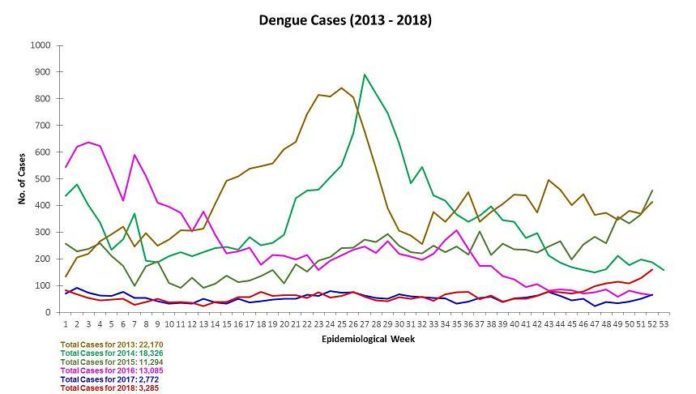
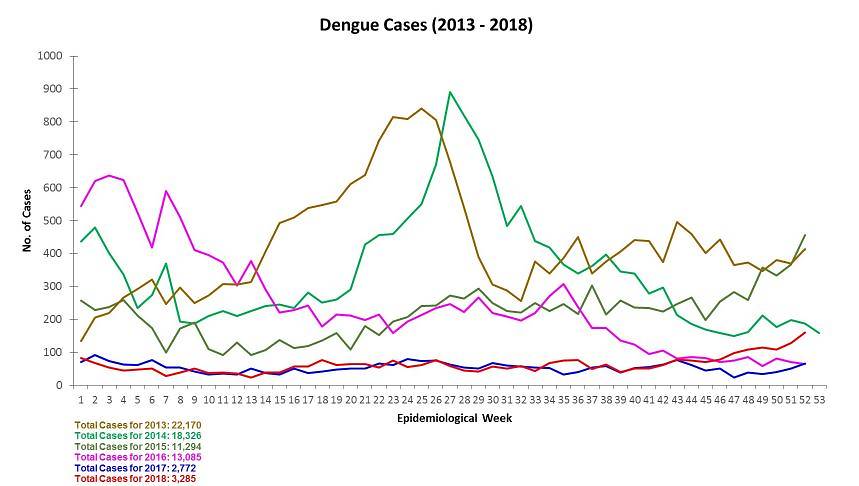
SINGAPORE: The number of dengue cases recorded in 2019 so far has surpassed the total number of cases in 2018, figures from the National Environment Agency (NEA) show.
As of 3pm on Thursday (May 16), there have been 3,455 dengue cases in Singapore in 2019, more than the 3,285 cases reported in 2018 and 2,772 cases in 2017.
Three people have died from dengue this year amid the spike in the number of cases. In March, a 71-year-old woman who lived in Ang Mo Kio Avenue 4 died from dengue.
A 74-year-old man, who stayed in Bedok Reservoir Road, died on Feb 3, while a 77-year-old man, who stayed at Hougang Avenue 3, died on Feb 7.
NEA received 291 reports of dengue cases in the week ending May 11 – the highest weekly recorded figure so far this year.
“The number of weekly reported dengue cases have been on an upward trend and more than doubled in the past seven weeks,” the agency wrote on its website.
As of Monday, there were 44 active dengue clusters, according to the figures from NEA. The five largest clusters were located at:
Number of dengue cases from 2013 to 2018. (Graph: NEA)
“As we approach the warmer months of June to October, we usually see higher transmission of dengue in Singapore due to the accelerated development of the Aedes mosquito and the shorter incubation period of the dengue virus,” NEA said.
“NEA urges all members of the public and stakeholders to take active steps to keep the mosquito population in check in the run up to the traditional peak dengue season.”
It said members of the public can help stem dengue transmission by removing stagnant water through ways like tipping vases and loosening hardened soil.
“Community-led efforts to remove stagnant water from our homes and immediate surroundings play a key role in protecting our neighbourhoods from dengue,” the agency wrote.
The Wolbachia mosquito project – a study by NEA to reduce the Aedes mosquito population and fight dengue – was expanded this year to include areas like Nee Soon and Tampines.
Under the project, male Wolbachia-Aedes mosquitoes, which have been infected with the Wolbachia bacterium will be released into the test sites. When they mate with female Aedes mosquitoes, the eggs the females lay will not hatch, said NEA.
SINGAPORE: Singapore and New Zealand on Friday (May 17) signed a partnership agreement to bolster cooperation in trade, defence, and science, technology and innovation.
Prime Minister Lee Hsien Loong and his counterpart Prime Minister Jacinda Ardern, who is here on her first official visit, sealed the Singapore-New Zealand Enhanced Partnership through a joint declaration at the Istana.
Under this partnership, five agreements and Memoranda of Understanding were signed; these were first announced two years ago and finalised after five rounds of negotiations.
The countries deepened their trade relations by upgrading a long-standing Free Trade Agreement (FTA), the Agreement between New Zealand and Singapore on a Closer Economic Partnership (ANZSCEP).
Singapore and New Zealand already share strong trade and investment ties.
In 2018, bilateral trade registered a 12.1 per cent year-on-year increase to S$4.1 billion. Singapore was New Zealand’s sixth largest investor with a stock of approximately S$3.9 billion worth of investments as of end-2017.
New Zealand Prime Minister Jacinda Ardern and Singapore Prime Minister Lee Hsien Loong at the joint press conference held at the Istana on Friday (May 17). (Photo: Jeremy Long)
COSTS OF TRADE FOR BUSINESSES TO BE REDUCED, TRADE BARRIERS LOWERED
The changes will make the agreement – Singapore’s first and New Zealand’s second bilateral FTA – more contemporary by bringing it in line with newer FTAs to which Singapore and New Zealand are parties.
Some of the benefits the countries are expected to experience by modernising the agreement, which was signed in 2000, are the reduction of costs of trade for businesses, and reduction of trade barriers.
The changes will mean that the pharmaceutical industries in both countries will save time and resources and ensure quicker access to medicinal products for patients, and that shipments will be released at both borders faster.
Two new areas of focus under the upgraded agreement will seek to further improve bilateral relations as they aim to resolve trade-related issues quicker,allow companies to access data freely across both countries, making it easier for them to set up an overseas presence.
The two countries, represented by Minister-in-charge of Trade Relations S Iswaran and New Zealand’s Minister of State for Trade and Export Growth Damien O’Connor, also enhanced collaboration on science, technology and innovation front.
Joint research programmes in Data Science and Future Foods like alternative proteins, will be undertaken.
The countries will have closer cooperation and information sharing on cybersecurity as well.
This expands on established military ties, which sees the Singapore Armed Forces (SAF) conducting regular exercises in New Zealand. Since 1997, the SAF has been conducting artillery training at the Waiouru Training Area in New Zealand.
On the creative front, the arts councils on both sides have committed to skills development opportunities for arts professionals.
To promote business, Enterprise Singapore and its New Zealand counterpart agreed to exchange market knowledge, particularly in the agri-food and technology sectors.
SINGAPORE: Singaporeans remain generally conservative on issues of morality, as a recent Institute of Policy Studies (IPS) paper on Religion, Morality and Conservatism reported.
This was based on a comparison of results from the 2013 and 2018 waves of the IPS Survey of Race, Religion and Language.
There remains strong opposition to extra-marital sex (81.2 per cent felt this was wrong in 2018, compared to 81.4 per cent in 2013), having a child out of wedlock (64.9 per cent vs. 73.5 per cent) and gambling (74.4 per cent vs. 70.1 per cent).
Still, this 2018 edition (which polled over 4,000 Singapore residents) showed significant shifts in social norms on some issues over the last five years.
These include pre-marital sex (45.4 per cent felt this was wrong in 2018, down from 58.2 per cent in 2013) and cohabitation (36.1 per cent, down from 46.5 per cent).
Singaporeans were also more liberal towards homosexuality issues. Slightly more than 20 per cent of those polled last year said gay sex was not wrong at all, or not wrong most of the time, up from about 10 per cent of those polled in 2013. About 27 per cent felt the same way about gay marriage, up from 15 per cent in 2013.
The differences were particularly stark among the young, suggesting that this shift may persist with time. Half of those aged between 18 and 25 felt gay sex was not wrong at all or not wrong most of the time in 2018, up from less than 20 per cent five years before.
Perhaps as a consequence of moves to champion gay rights in many countries, in Singapore, rather than abortion, cohabitation or pre-marital sex, public discussion in recent years has been dominated by this particular subset of moral issues.
The annual Pink Dot event is the most visible of attempts to highlight gay concerns here. It has for a decade attracted large crowds with its tagline that celebrates individuals’ freedom to love.
Pink Dot 2018’s light-up formation this year says “We Are Ready”. (Photo: Fann Sim)
However, the vocal LGBT community and its advocates have also drawn out an equally conservative segment, led by religious groups who believe that liberalising laws on homosexuality is not good for society.
This wave of our study found that Christians and Muslims over the age of 55 chose stronger positions when compared to the 2013 wave, which also surveyed over 4,000 respondents. For instance, 84.6 per cent of Muslims in this age bracket felt homosexual sex was always or almost always wrong in 2018, compared to about 73 per cent in 2013.
EMERGING DIVERGENCE OF VIEWS AND THE STATE’S ROLE
It is clear that there is growing divergence in views on moral issues based on individuals’ age, religious affiliations and backgrounds. Whether this will lead to a polarised, fragmented and feuding society is something we can guard against.
Singaporeans greatly value social cohesion and stability. That is why many have accepted intrusive government policies in areas such as race, religion and language which have been fault lines in our multi-cultural and diverse society. So this divergence, and how it is sometimes played out in public with petitions, can be disconcerting.
Recent examples in Singapore, many of which relate to homosexual rights, highlight this divide. They include dueling petitions when Adam Lambert was invited to headline a 2016 New Year’s Eve concert in Marina Bay. Pink Dot has also attracted substantial concerns from conservatives.
Adam Lambert performing in Singapore at the New Year countdown concert. (Photo: Sherlyn Goh)
LGBT advocates have also tried to silence religious conservatives who take a strong stance against homosexuality. These range from calls to ban church pastor Lawrence Khong from performing a magic show in Ikea in 2015, to condemning the European Union when it invited law professor Thio Li-ann to speak at a human rights seminar in Singapore in 2014.
In private (and sometimes this is vocalised in the public sphere), both LGBT rights advocates and religious conservatives would prefer that authorities manage the other side and persuade them to stop promoting their agenda or impose their views on others.
But society will not benefit if authorities prevent either side from using legitimate methods to discuss the strength of its opinion. These issues will remain important matters to one’s identity, and it is to be expected that some will want to persuade others to see an issue from their point of view.
This, however, does not preclude us from trying to establish certain norms to preserve a common space so that we can continue to live peacefully despite our differences. We should also bear in mind that identity politics can be a zero-sum contest that has hardened faultlines and fractured other societies.
HOW CITIZENS AND OTHERS CAN PRESERVE COMMON SPACES
First, we should not allow either side to dominate the debate when it comes to issues of morality, which can be deeply emotional and difficult to back down from.
Importantly, we should also avoid having religious groups to form distinct blocs lobbying for or against policy moves, for instance in areas related to having a child out of wedlock, or gay rights.
A woman wrapped in the rainbow flag is seen at the Pink Dot rally, Singapore’s annual LGBT rally, at a park in Singapore July 1, 2017. (Photo: REUTERS/Darren Whiteside)
Singapore is much more diverse religiously than other countries, and there are sizeable portions which may coalesce into blocs along religious lines.
Second, we must decide on rules of engagement. This involves articulating and acknowledging what is civil and mature behaviour in our context. There should be no place for disrespectful name-calling, knee-jerk tit-for-tat moves to prove how sizeable a certain camp may be, or disruptive campaigns that veer into strident activism.
Those in other societies, especially liberal democracies with a vastly different political culture, operate with a different set of norms. But using or adapting their antagonistic methods of engagement – which may include social mobilisation and concerted campaigns – might not guarantee the type of stability the vast majority of Singaporeans cherish and desire.
Finally, we should stress overriding goals that Singapore society holds dearly, and how some of the debates and considerations should seek to address those goals.
One goal must be that national unity is paramount, and that holding on to strongly held opinions should not translate into excluding others from our social circles or speaking to them disrespectfully.
Another goal has been the importance of family and the welfare of children. Unlike many developed societies, the great majority of the young in Singapore continue to aspire towards marriage and parenthood.
Any consensus on, for instance, gay rights issues and having a child out of wedlock, will be influenced by how the principles towards family and what constitutes a traditional family unit play out.
The years ahead will, if present trends continue, likely see increased contestation in the public sphere. But we are optimistic that the majority of citizens remain mindful that in Singapore, thumping hard on the door to advocate an issue is generally less productive than a more patient, non-confrontational approach.
Dr Mathew Mathews is Senior Research Fellow at the Institute of Policy Studies and Head of IPS Social Lab. Leonard Lim is Research Associate at the Institute of Policy Studies.