SINGAPORE: Eight suspected drug offenders were arrested on Wednesday (May 22) and drugs worth about S$247,000 were seized.
The drugs included about 2.8kg of heroin and 519g of Ice, said the Central Narcotics Bureau (CNB) in a media release.
CNB’s operation took place in the pre-dawn hours of Wednesday.
Officers deployed in the Chai Chee Road area saw two suspects arriving in a car. Another suspect, a 51-year-old stateless man, then entered the car and got off a short while after to return to his hideout, a fourth-floor unit in the same area.
The 51-year-old suspect was arrested after officers raided the unit. Three more suspects who were in the unit were also arrested.
CNB said about 656g of heroin and 2,379g of tobacco believe to be laced with new psychoactive substances (NPS) were recovered in a bedroom.
About 710g of heroin was recovered in the living room, and a small about of Ice was recovered from two of the suspects.
The interior of the car which was intercepted along Tampines Avenue 10 in CNB operation on May 22, 2019. (Photo: CNB)
Meanwhile, CNB officers from the Special Task Force unit tailed the car which was seen at Chai Chee earlier and intercepted it along Tampines Avenue 10.
The driver and a male passenger were arrested, said CNB, adding that about 513g of Ice and 1,419g of heroin were seized from the vehicle.
The driver was brought to his hideout in the vicinity of Sumang Lane in Punggol, where a small amount of heroin and Ice were recovered.
Another two men were arrested in the unit, said CNB.
More drugs were found when officers searched a motorcycle belonging to the passenger of the car.
Apart from the stateless man, the rest of the suspects are Singaporean. Investigations into the drug activities of all the suspects are ongoing.
CNB said the amount of heroin seized is enough to feed the addiction of about 1,330 abusers for a week, while 519g of Ice can feed the addiction of 296 abusers for a week.
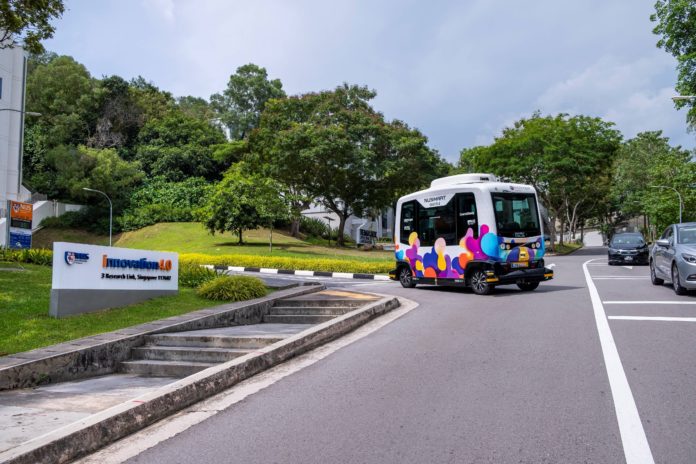
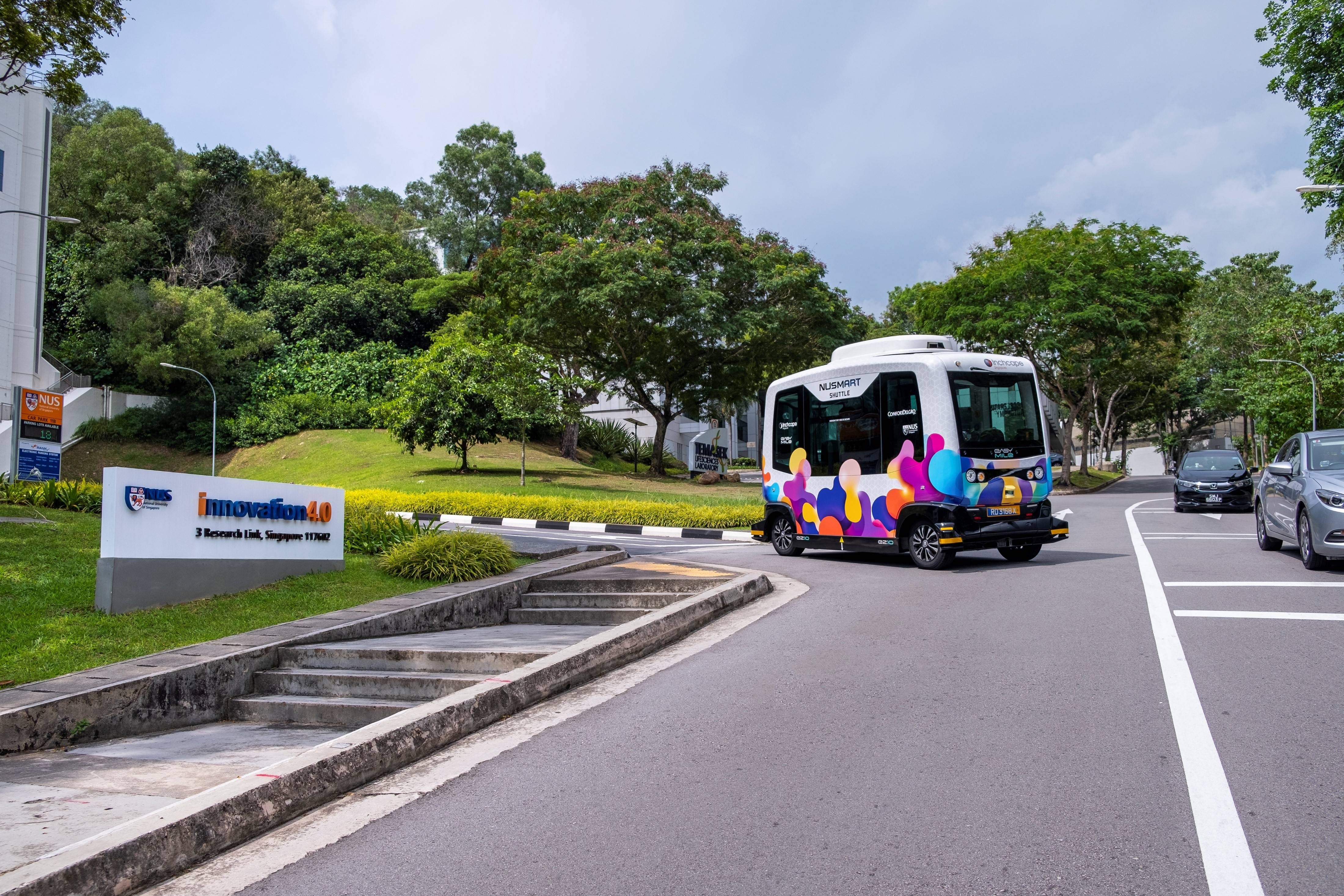
SINGAPORE: A self-driving shuttle bus operated by ComfortDelGro will be tested at the National University of Singapore’s (NUS) Kent Ridge campus starting this Saturday (May 25), although trials with passengers will only begin later this year.
Called the NUSmart Shuttle, the bus is fully electric and has a capacity of 12 people. It follows a predefined route and is equipped with sensors to detect and avoid potential obstacles.
In its first one-and-a-half months of road test, the bus will ply a 1.6km route between Heng Mui Keng Terrace and Business Link, travelling at between 5kmh and 16kmh.
Self-driving NUSmart Shuttle bus. (Photo: The National University of Singapore)
“The key purpose of the road test is to ‘map’ the route through the collection of data for the vehicle’s navigation systems,” said a news release issued on Thursday.
After the mapping process is completed, it will run a “validation test” for three hours daily over four weeks.
PASSENGER TRIALS BEGIN IN THIRD QUARTER
Trials with passengers are expected to start in the third quarter of this year.
During the trials, an operator will be on board to ensure the safe operation of the vehicle and provide information to passengers.
The vehicle is based on EasyMile’s autonomous technology, and is funded and imported by Inchcape Singapore.
“It will be the first autonomous shuttle bus that is being run by a land transport operator in real mixed traffic conditions, alongside regular buses, cars and motorcycles,” said the news release, which was jointly issued by ComfortDelGro, NUS, EasyMile and Inchcape.
“It relies on its own internal array of software and hardware technologies for its navigation on the roads, without any assistance of external infrastructure,” said the release.
ComfortDelGro, through its subsidiary SBS Transit, is participating in two other trials in Sentosa and Jurong Island.
SINGAPORE: Guest rooms in treehouses shaped like seedpods, elevated walkways snaking through a forest canopy and interactive guided nature walks – these are some features the new Mandai eco-resort will offer when it opens its doors in 2023.
Speaking at a media conference at the Singapore Zoo on Thursday (May 23), luxury resort operator Banyan Tree Holdings’ CEO Ho Kwon Ping said that visitors at the 338-room resort will enjoy “unprecedented access” to nature during their stay.
“Because so much of this has been planned sensitively, our guests will come and realise that it’s not an urban hotel in the middle of Mandai park,” Mr Ho said. “It is an experience where they will have unprecedented access to nature in all little ways.”
Architectural illustration of an elevated walkway at the resort. (Image: Mandai Park Holdings)
Banyan Tree will operate the resort, which will be owned by Mandai Park Holdings, which manages wildlife attractions such as the Singapore Zoo, River Safari, Night Safari and Jurong Bird Park.
The design of the resort will be helmed by local architectural firm WOW Architects.
Interior illustration of a treehouse room. (Image: Mandai Park Holdings)
BRINGING GUESTS CLOSER TO NATURE
The 4.6-hectare site for the resort currently houses the Singapore Zoo’s back-of-house facilities.
When completed, the development aims to become the first Super Low Energy resort in Singapore – with its design incorporating energy-saving measures including the use of natural ventilation as well as solar panels.
Extensive planting will be done on the roof and facade of the resort buildings, and more than half the trees on the site will be retained.
Wherever possible, the resort will be elevated several metres above the ground to allow native wildlife to move across the site.
Guests will also be able to choose to stay in 24 treehouses designed in the shape of seedpods.
Cross section illustration of the resort. (Image: WOW Architects)
“WOW Architects’ concept demonstrated the best design response to our brief, one that will bring our guests closer to nature,” said Mr Mike Barclays, group CEO of Mandai Park Holdings, in a press release. “We are confident that they will be able to translate our vision into the design and operations for our new resort.”
“Through carefully crafted design features and programme activities, the Mandai resort experience will encourage guests to be conscious of and care for the plants and animals in the surrounding rainforest. This is consistent with our core belief that we must all work together to protect wildlife.”
Guests will be able to join in behind-the-scenes programmes, guided nature walks as well as hands-on activities. There will also be camping opportunities, Mr Barclays said.
The Mandai precinct is undergoing a rejuvenation project, which will see the relocation of Jurong Bird Park and the development of a new Rainforest Park in the same area as the Singapore Zoo, Night Safari and River Safari.
SINGAPORE: Two Singapore contractors were given “big fines” for not having adequate measures in place to deal with silty water discharge from their construction sites, PUB said in a media release on Thursday (May 23).
Chye Joo Construction and The Builders (Hup Huat) were fined S$30,300 and S$14,400 respectively for flouting earth control measures (ECM) regulations, said the national water agency.
The companies were fined for not complying with the conditions of their PUB-issued clearance certificates before starting construction works.
The contractors’ offences were uncovered between October and December last year during PUB’s regular inspections of construction sites as well as investigations stemming from public feedback, said the agency.
Among its offences, Chye Joo Construction was found to have discharged silty water which had levels of suspended particles far higher than allowable limits.
Silty water containing total suspended solids in a concentration of almost 400 times more than allowable limits was discharged into the public drainage system at its Jalan Gali Batu work site.
The company failed to maintain proper measures, said PUB, causing the water to overflow onto a footpath and subsequently into the roadside drain.
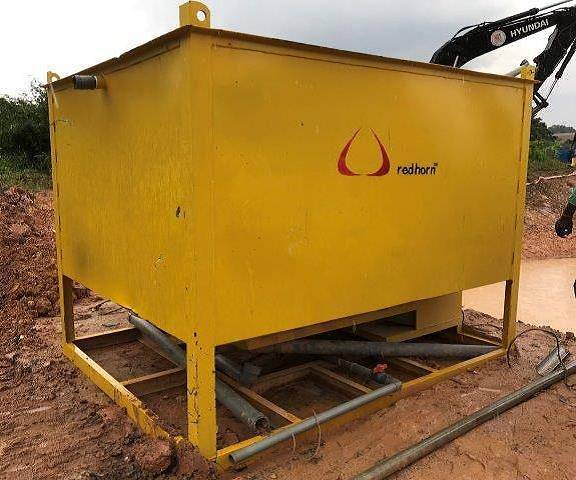
Silty water treatment plants and holding ponds at the company’s Jalan Gali Batu and Jurong Road work sites were also found to be too small, causing it to enter roadside drains and waterways.
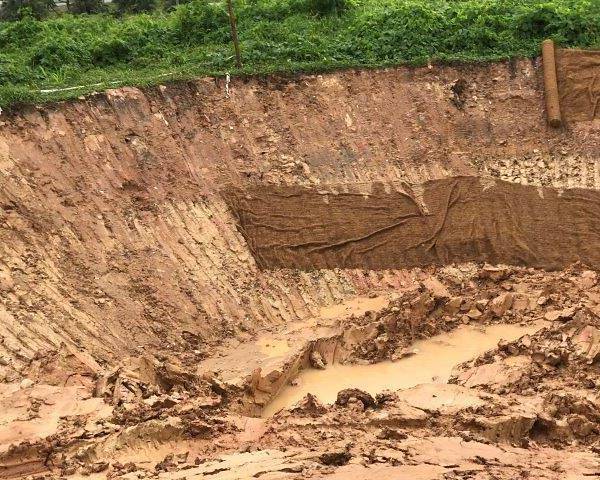
Chye Joo also failed to install a perimeter drain to channel surface run-off to a holding pond, not putting up a complete silt fence along its earth drain, and not covering large bare areas with erosion control blankets, said PUB.
At another work site at North Buona Vista Drive, the contractor had allowed silt to build up within its treatment plant, causing it to overload and discharge silty water into a public drain.
THE BUILDERS (HUP HUAT)
Separately, The Builders (Hup Huat) were fined for failing to implement adequate earth control measures at Tampines Avenue 5 and Fernvale Street worksites.
“The Builders had failed to implement ECM in accordance to the approved plans, which should have included an adequate silty water treatment plant and the construction of cut-off drains to contain silty water within the site,” said PUB.
A cut-off drain was not constructed at The Builders’ construction site at Fernvale Street to contain silty water within the site, said PUB. (Photo: PUB)
There was also no CCTV system in place to monitor the water quality of discharged water before it entered the public drainage system, it added.
Silty water is generated when rainwater run-off mixes with exposed earth materials and soil at construction sites.
An undersized silty water treatment plant at The Builders’ construction site at Fernvale Street. (Photo: PUB)
If such water is not properly treated before being discharged into public drains, silt can build up in waterways and make them less effective in channeling stormwater flow, according to PUB.
SINGAPORE: Australian paedophile Boris Kunsevitsky sexually abused five children in Singapore on three occasions, according to court documents seen by CNA.
Kunsevitsky, 53, pleaded guilty in a Melbourne court on Tuesday (May 21) to abusing dozens of children for more than a decade and producing child pornography material where he induced a child to have sex with another child.
He is facing 59 charges relating to child sexual abuse, including having sex with a child, making child pornography material, inducing a child to have sex with another child, persistent sexual abuse of a child, and importing child pornography material.
The court documents showed the offences involved 44 child victims, including five victims who resided in Singapore, where he was previously based.
The court was told on Monday and Tuesday that Kunsevitsky grew up in Russia before migrating to Australia with his family when he was 12. He moved to Singapore in the 2000s.
He was employed by Singapore beauty firm Esthemedica, where he was a director. The company told CNA on Wednesday it had not known about his crimes and they were speaking to him as recently as last Friday about business plans.
Of his 44 victims, 36 were aged between 10 years old and 15 years old at the time of the offences, and eight were aged between 16 years old and 17 years old.
The majority of the offences occurred when Kunsevitsky travelled to the Philippines and on three occasions when he travelled to Singapore. One victim was in Indonesia, the court documents showed.
Details of the children and others affected by this case have been redacted by court order to protect the victims.
Singapore-based Australian Boris Kunsevitsky, 52, pleaded guilty in the Supreme Court of Victoria to sexually abusing dozens of children. (Photo: Facebook/thammyquoctebally)
On May 26, 2017, charges against him were first issued in Australia while he was overseas. When he returned to Australia on Sep 4, 2017, he was arrested by police and was subsequently diagnosed with paedophiliac disorder.
The Singapore Police Force (SPF) said it was in touch with Australian authorities regarding the matter.
“When required, SPF will act and render the necessary assistance within the ambit of our laws and international obligations,” the force said in a statement.
PERSISTENT SEXUAL ABUSE
The prosecution said there were three main categories of offending, including maintaining a sexual relationship with a child in Melbourne, child sex offending outside Australia and creating films of the sexual abuse.
Court documents showed that Kunsevitsky maintained a sexual relationship with a child in Melbourne between Jan 1, 2004 and Oct 31, 2005. The child was aged between 13 and 15 years old at the time.
He also engaged in sexual intercourse or sexual conduct with children outside of Australia. In some cases, he induced or caused other children to engage in sex with each other in his presence.
Between Jun 11, 2010 and Jun 16, 2011, and again between Feb 20, 2013 and Jun 11, 2013, Kunsevitsky engaged in “persistent sexual abuse” of five children outside of Australia.
Each charge of persistent sexual abuse involved at least three separate instances of abuse. In some occasions, it included up to 10 separate instances of sexual abuse against the same child.
He also produced 55 images depicting his sexual abuse of the Melbourne child.
Internationally, between May 18, 2010 and Apr 28, 2015, he created more than 1,000 photographs and videos depicting children engaged in sexual activity with each other, under his direction, or pictures and films of him sexually abusing the children.
When he was arrested in September 2017, he was in possession of five electronic devices, the court documents show.
More than 35,000 images and 4,800 videos, depicting child exploitation material, were found in those devices.
Kunsevitsky has been remanded in custody and will be sentenced at a later date.
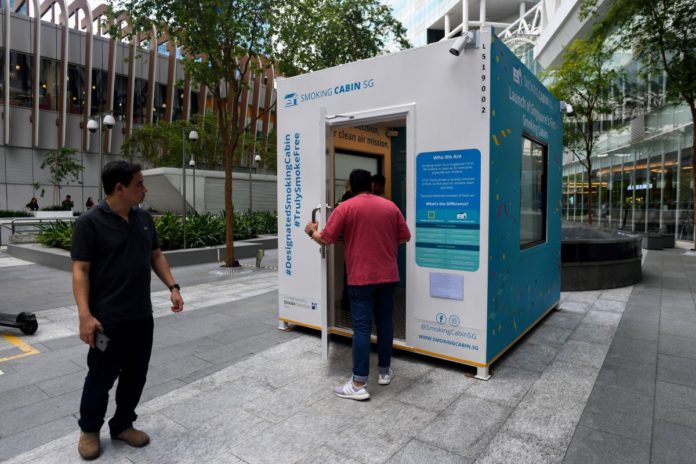
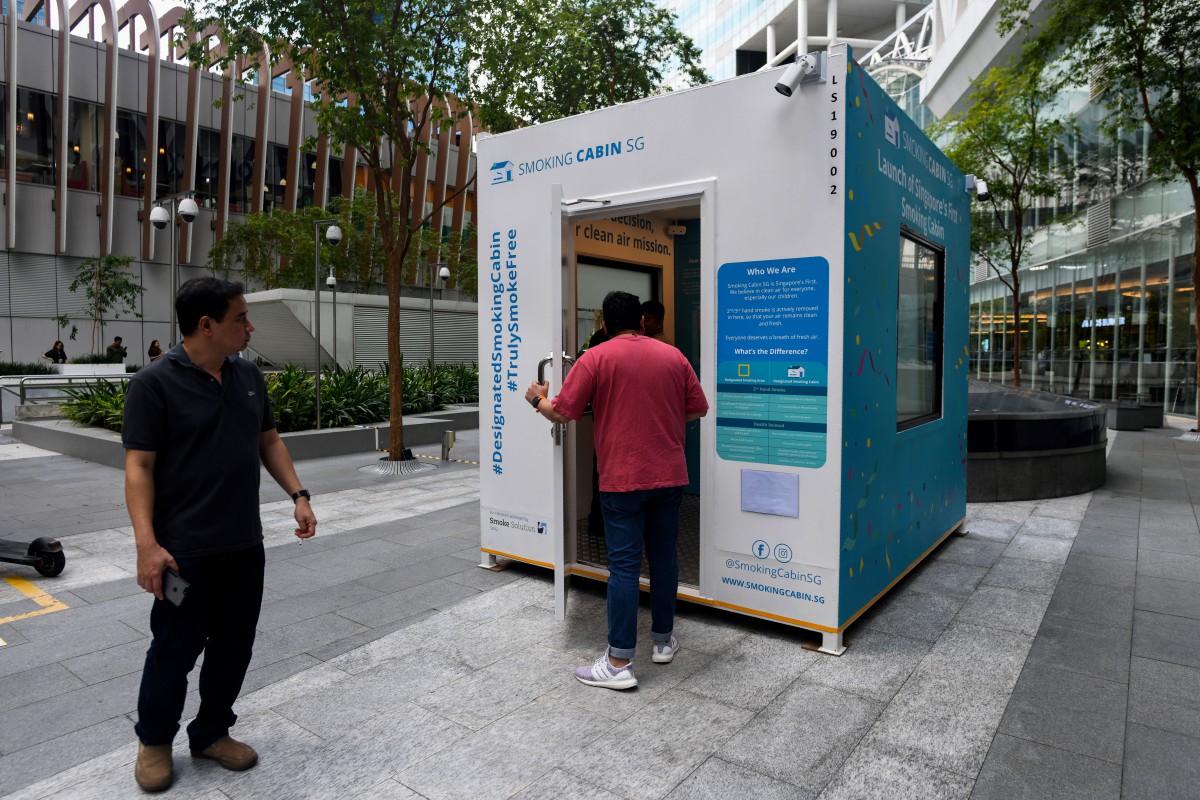
Smokers in Singapore will no longer have to sneak a drag on the street, with the launch of the city-state’s first air-conditioned “smoking cabin”, but the experience won few fans among cigarette puffers on Wednesday.
The city-state has some of the world’s strictest anti-tobacco laws and smoking is banned in most public places, with a fine of up to Sg$1,000 ($725) if caught. E-cigarettes are also banned outright.
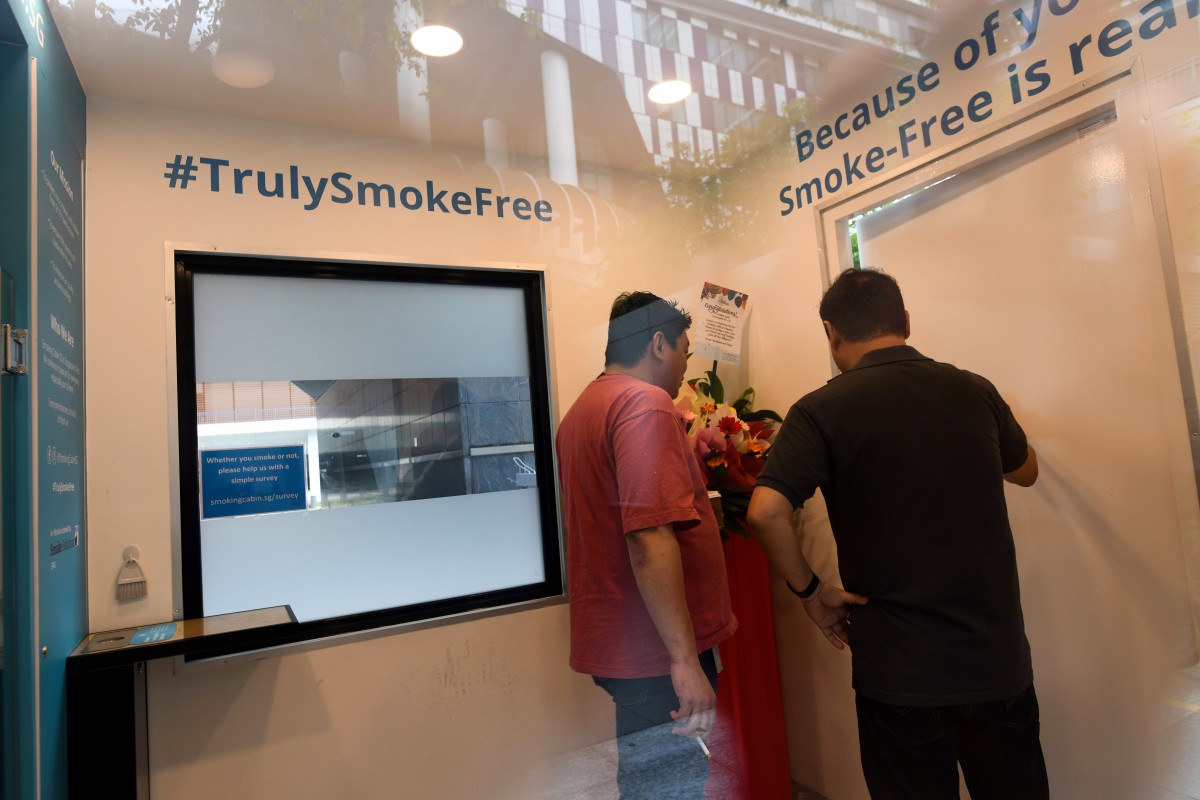
The new cabins, which are fitted with a Danish filtration system that can purify cigarette smoke before it is released into the air, can reportedly fit up to 10 people at a time.
But tobacco enthusiasts appeared unimpressed, with many choosing to light up at a nearby open-air smoking corner instead.
A man (C) enters in a smoking cabin, developed by Southern Globe Corporation (SGC), outside an office building in Singapore on May 22, 2019. Source: Roslan RAHMAN / AFP
People smoke inside a smoking cabin, developed by Southern Globe Corporation (SGC), outside an office building in Singapore on May 22, 2019. Roslan RAHMAN / AFP
“The atmosphere in there is stifling, honestly. Because it’s so small and squeezy, I feel a bit like a second-class citizen smoking in there,” e-commerce executive Azfar Zain told AFP after using the cabin.
“There are no seats, either. I’m not comfortable with smoking there unless they make the room bigger.”
Office worker Rama Dass said he preferred to smoke outside, adding, “sometimes I just need a bit of fresh air”.
Singapore-based Southern Globe Corporation, which launched the cabin on Tuesday, said it planned to deploy 60 such structures by the end of the year.
Singapore first introduced anti-tobacco laws in the 1970s as part of a national effort to reduce smoking.
It has since expanded the number of public places where lighting up is prohibited, including university campuses, common areas around apartment blocks, and inside private cars with the windows down.
SINGAPORE: A company has been fined and a supervisor jailed after a worker fell more than 5m was left permanently disabled in a workplace accident, said the Ministry of Manpower (MOM) on Wednesday (May 22).
AVA Global was fined S$210,000 for failing to take steps to ensure the safety its employees, while construction foreman Sarkar Mithun was sentenced to nine weeks’ jail for negligence.
The accident happened on Sep 14, 2016.
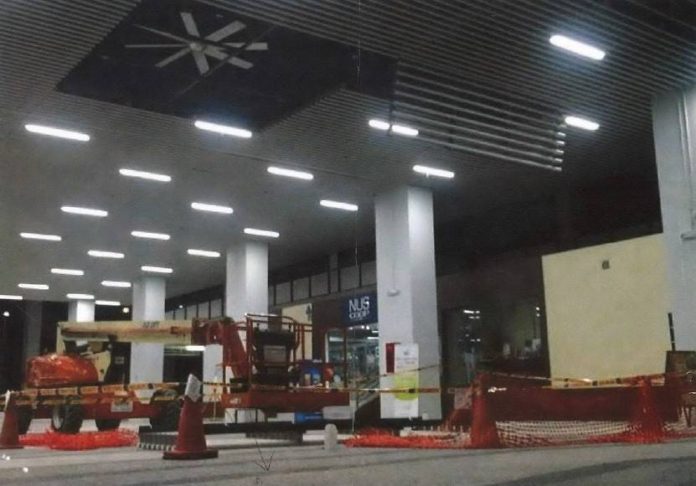
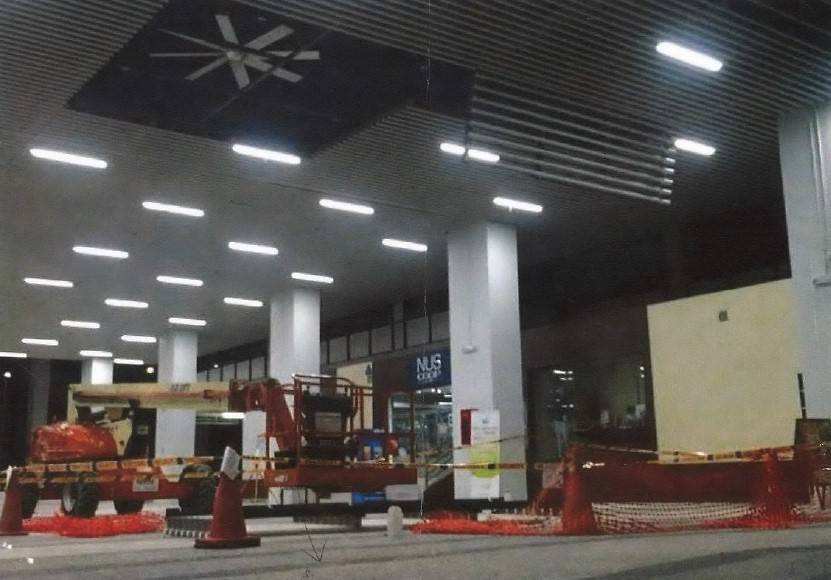
Sarkar was tasked to supervise the installation of tubular ceiling panels at a building belonging to National University of Singapore.
According to MOM, AVA Global did not give Sarkar any installation instructions.
“Sarkar decided on the method of installation himself, based on his observations on how the panels were installed previously by a different company,” said the ministry.
A worker, Miah Jobayed, used a boom lift to get to the ceiling. He stood on a steel structure above the ceiling panel without using any fall protection equipment.
Jobayed later moved to stand on one of the previously installed ceiling panels as his supervisor and another worker tried to align a new panel into position.
Miah Jobayed fell 5.5m to the ground after the ceiling panel he was standing on dislodged. (Photo: Ministry of Manpower)
However, the panel that Jobayed was standing on dislodged and swung downwards, causing him to fall 5.5m to the ground, said MOM.
He underwent surgery at National University Hospital, but a spinal cord injury left him in permanent paralysis. He is now wheelchair-bound, said MOM.
The jail term for Sakar is the second custodial sentence imposed on a supervisor for a negligent act at a workplace, said MOM, adding that he did not obtain a permit-to-work before carrying out the installation.
Supervisors must obtain the permit from an authorised manager before starting work that is more than 3m above ground. The permit allows for an independent safety evaluation on the procedures and methods involved in the work to be done before it starts.
“Supervisors have a duty to ensure a safe working environment for workers under their care and forbid unsafe work practices that may put them at risk,” it added.
“In this instance, there was no culture of care and trust evident at the worksite,” said MOM’s director of occupational safety and health inspectorate Sebastian Tan.
“The MOM will not hesitate to take action against employers and supervisors who blatantly disregard their workers’ safety and health.”
SINGAPORE: Local aesthetics and beauty supplement company Esthemedica confirmed on Wednesday (May 22) it hired Australian paedophile Boris Kunsevitsky but admitted it did not know of his “appalling” acts until news of his crimes emerged this week.
The company last spoke to Kunsevitsky, 52, as recently as last Friday for business matters, according to Esthemedica’s marketing manager Hoong Cheong Hon.
Speaking to CNA during a phone interview on Wednesday, Mr Hoong confirmed Kunsevitsky joined the company in 2014 and that it was his last place of employment before he left for Australia in July 2017 in a “quite abrupt” fashion.
“He told us he had to leave for medical reasons,” the manager said. As far as he knows, the Australian has not been back to Singapore since, Mr Hoong added.
The marketing manager’s timeline corroborated the information the Australian had posted on LinkedIn, where he stated he was Esthemedica’s international business and clinical development director from November 2014 until the present day.
Mr Hoong explained that during the time Kunsevitsky was with the company, he was in charge of selling aesthetic equipment.
Esthemedica’s customer base was “all over”, the manager said, adding that the Australian went overseas for road shows and had “travelled quite a bit” within the Asian region during this time.
Kunsevitsky, who was based in Singapore, pleaded guilty in a Melbourne court on Tuesday to sexually abusing dozens of children over a period of 16 years. He was reported to have groomed children from across four countries, including Singapore, and took photographs and videos of himself performing sex acts with them.
The court also heard that he travelled across Southeast Asia on supposed work trips, but these were used instead for “sex tourism”.
“GRAPPLING WITH REVELATION”
Kunsevitsky had managed to conceal his crimes from Esthemedica, which continued to retain the Australian on a “part-time, need-to-call” basis, given his technical knowledge of some of the beauty equipment the company sold.
Mr Hoong shared that the last time they spoke with Kunsevitsky was last Friday, and they were “talking normally” over some business issues that had cropped up. He added that they were consulting with him over which markets to expand to, as well as other business plans.
“(We were) still thinking he’s a technical resource (we can rely on),” the marketing manager said, adding hat the company’s plans “have to be held back” as it looks for a technical adviser.
Singapore-based Australian Boris Kunsevitsky, 52, pleaded guilty in the Supreme Court of Victoria to sexually abusing dozens of children. (Photo: Facebook/thammyquoctebally)
On a personal level, he said the company was “still trying to grapple with the revelation” of Kunsevitsky’s crimes. Mr Hoong, who has never met the Australian in person, said people would not have been able to tell Kunsevitsky’s background during day-to-day interactions as their relationships were “strictly professional”.
“(His crimes) come as a big shock, and the company is disappointed,” Mr Hoong said. “We didn’t expect him to commit such appalling acts against children, or anyone for that matter.”
The court was showed videos and images of Kunsevitsky either engaged in sex with boys or instructing them to perform demeaning sex acts. One victim, now in his 20s, told the court the abuse had left him confused and isolated from those close to him, and he had turned to drugs, tried to take his own life and lost his marriage.
Kunsevitsky was diagnosed with a paedophiliac disorder after his arrest. He was remanded in custody and is set to be sentenced at a later date.
SINGAPORE: Three men have been jailed for their roles in smuggling more than 25,000 sachets of chewing tobacco from Malaysia into Singapore, the Health Sciences Authority (HSA) said in a press release on Wednesday (May 22).
Malaysian national Saravana Kumar Lechumanan, 30, was sentenced to seven months’ imprisonment after recruiting couriers to bring the tobacco into Singapore. It is the stiffest punishment to date for importing chewing tobacco, HSA said.
Two couriers, both Malaysian nationals, were also handed jail terms. Darmindran Magentheran, 23, was sentenced to six weeks’imprisonment while Kalidas Balakrishnan, 33, was given four weeks’ imprisonment.
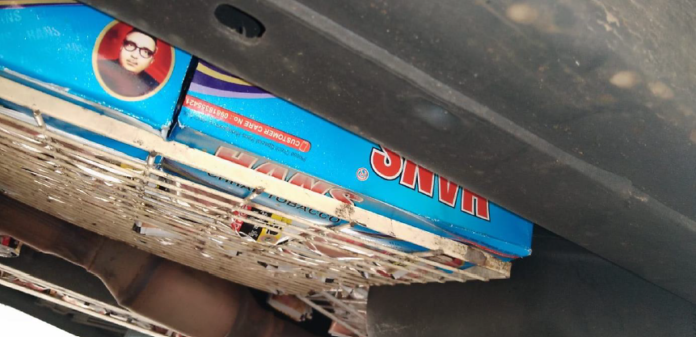
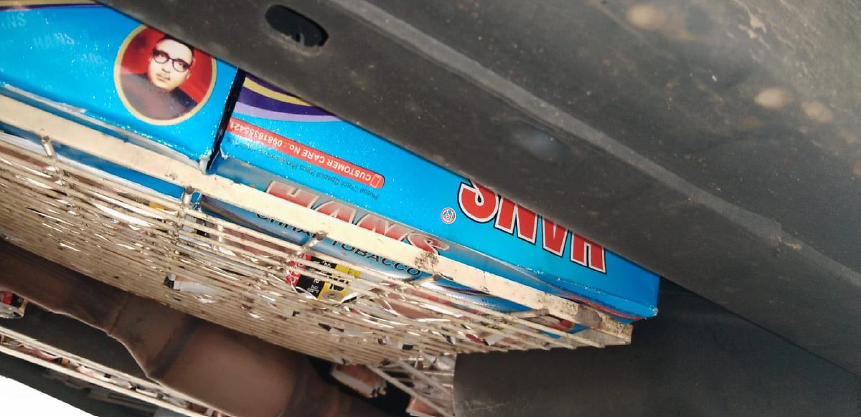
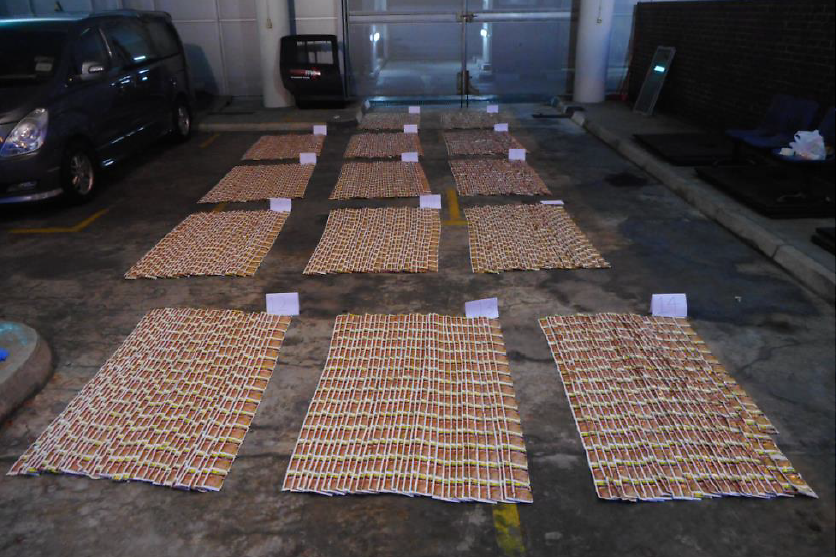
A total of 25,659 sachets of Hans Chhap khaini tobacco were uncovered on five occasions between June and September 2018 by officers from the Immigration and Checkpoints Authority.
Khaini tobacco is a form of chewing tobacco that consists of moist, dark brown tobacco leaves mixed with slaked lime or spices.
The sachets were found concealed in vehicle compartments, such as door panels, the tyre jack compartment, bumper and floor board.
Chewing tobacco products hidden under the vehicle. (Photo: ICA)
HSA’s investigations found that Saravana would rent Malaysian-registered vehicles and dismantle them to hide the chewing tobacco in various compartments.
The vehicles were then handed to couriers, who would drive them from Malaysia to Singapore.
Saravana was found guilty and sentenced on May 10 for abetting by engaging in a conspiracy with the couriers to import chewing tobacco into Singapore, HSA said.
Chewing tobacco products retrieved from a vehicle. (Photo: ICA)
“HSA would like to remind the public that the Tobacco (Control of Advertisements and Sale) Act prohibits the import, distribution, sale or offer for sale of emerging tobacco products,” said HSA in their press release.
“These include shisha tobacco, smokeless tobacco, chewing tobacco such as Gutkha, Khaini, Zarda, vaporisers and their constituents.”
Possession, purchase and use of such products are also prohibited in Singapore, HSA added.
SINGAPORE: It was a routine day at work for Senior Consultant and Associate Professor Lim Poh Lian at the National Centre for Infectious Diseases (NCID) when events started unfolding which would lead to her suggesting that Singapore could be dealing with its first monkeypox case.
She was on duty on May 7 when a man was brought to the adjacent Tan Tock Seng Hospital (TTSH) with suspected Lassa fever.
Prof Lim said she received a call from the emergency department at TTSH and was told the patient was a 38-year-old man who had arrived from Nigeria on Apr 28.
“I was sitting in clinic seeing HIV patients (when I) got a call from the emergency department saying: ‘I’ve actually got a question about Lassa fever’,” she added.
“The concern that we have has really been around viral hemorrhagic fevers. And there are actually a lot of different exotic infections that come in from all over. And so you can’t really be screening for every single thing. But you have to know the travel history (of the patient).”
Image of monkeypox virus magnified (Photo: National Centre for Infectious Diseases)
However, when Prof Lim was told that the patient had rashes on his face and body, she ruled out Lassa fever as the virus does not produce such symptoms. Instead, she started thinking if this could be a case of monkeypox.
NCID was already on the lookout for possible cases, following a major outbreak of the disease in Nigeria in 2017. Tracking of such outbreaks is carried out by the Ministry of Health (MOH) and the NCID, which gather information about emerging infection diseases from around the world. Details are then passed on to frontline doctors about such developments.
Once it was flagged that the man could be suffering from monkeypox, staff at NCID swung into action to confirm it.
“From that point on, the emergency department was on the alert and they admitted him to NCID … to the negative pressure room as a potential monkeypox case. And then the testing was done, which subsequently confirmed it,” said Prof Lim.
“It’s one of those challenges when you’re seeing cases because we do get a lot of travelers and you can’t cry wolf too often.
“So it’s a bit of a judgment call. You have to balance it between trying to not under call it but not over call it either. And it’s constantly a struggle that we as frontline doctors face,” she added.
In a statement issued on Tuesday (May 21), MOH said that the 38-year-old Nigerian man is still receiving treatment in an isolation ward at the National Centre for Infectious Diseases.
“He is recovering well and is in a stable condition. He will be ready for discharge when he has recovered and is assessed to be non-infectious,” added the ministry.
MOH previously said that the patient had attended a wedding in Nigeria, where he may have consumed bush meat, which could be a source of transmission of monkeypox virus.
Speaking to media at a press briefing last week, Executive Director of NCID Professor Leo Yee Sin shared that the patient has been warded in a negative pressure room, which is designed to contain dangerous viruses. It features a ventilation system that generates negative pressure to allow air to flow into the isolation room but not escape out.
A negative pressure room at the National Centre for Infectious Diseases, which has a ventilation system that generates negative pressure to allow air to flow in but not escape out. (Photo: Aaron Chong)
Prof Leo also explained that as part of the healing process, scabs will separate from the skin with a new layer grown over the affected areas.
NCID said that the rash usually evolves over a period of 14 days, starting with skin lesions initially on the face as an early symptom, before spreading in a “centrifugal distribution” towards other parts of the body including palms and soles. The rash will then be lump-like, before pus will start to emerge and scabs formed.
NCID added that while there are no vaccines against monkeypox, the body will heal itself “within 14 to 21 days”. However, the disease can be fatal among young children, with a mortality rate of up to 10 per cent.
“He’s (the patient) continued to do very well, he’s very stable. Most of his rash was already dry, except for certain areas, where it’s still a bit blistery-looking, still a little bit moist,” said Prof Leo.
“We will continue to monitor him. This is a very first case, first experience (in Singapore). (What) we can do is from the literature learning in terms of the infectivity periods, to be very safe then we have to wait for all the scabs to dry up and also separate from the skin with a new layer of skin.”
TESTING FOR THE MONKEYPOX VIRUS
Prior to confirming the diagnosis, samples were taken from the affected areas of the patient’s body and sent to the National Public Health Laboratory, also located at NCID.
Associate Professor Raymond Lin, Director of the National Public Health Laboratory explained that two kinds of tests were conducted.
The first test called the “polymerase chain reaction” (PCR) test to look for the monkeypox virus gene. The other was to put a sample under an electron microscope to “see the shape and the size of the virus”.
File photo of a patient with monkeypox. (Photo: CDC Public Health Image Library)
He added that it took around a day before the results were in.
“I think it’s fast and it’s good enough for action, not to lose the patient as well as will take any other precautions,” said Prof Lin.
He also explained that the electron microscope can be used on other kinds of clinical specimens to also detect viruses and bacteria, as well as for research where to study their structure in greater detail.