Home Blog Page 775

Phasing out plastic straws helps the environment, but more needs to be done, say observers

SINGAPORE: The move by more than 270 food and beverage (F&B) outlets to eliminate plastic straws represents an important move in the right direction, but more work is needed for Singapore to tackle its output of plastic waste, industry observers told CNA.

The local outlets in question will phase out plastic straws by Jul 1, the World Wide Fund for Nature (WWF) announced on Monday (Jun 3).

They will be removing straws completely from their premises, providing them only on request or for specific medical reasons, WWF said in a media release. The move is part of the PACT (Plastic ACTion) initiative by WWF, which is supported by the National Environment Agency and Zero Waste SG.

Ms Melissa Lam, who started Bamboo Straw Girl, a business selling biodegradable straws, suggested that the move represents a “step” rather than an “achievement”.

“It’s got a lot of publicity, a lot of countries have done this and we’re quite slow to the game,” she said. “It’s not going to be the be all and end all of the problem. 

“This is not an achievement, it’s just a step. It is small but it catches the attention.”

READ: Straws made of rice have debuted in Singapore – could they save the earth?

READ: A commentary on what it will take for Singapore to give up plastic

Ms Lam added that attitudes towards the use of plastic straws have been changing.

“When I go to the coffeeshop and order a drink but refuse a straw, the coffeeshop uncle will now say: ‘Oh you’re recycling.’ In the past, I would have to explain myself.

“Right now people are generally aware, it’s whether they wanted take that step to action.”

People in Singapore use about 2.2 million straws daily, according to a 2018 report by AlphaBeta, The Final Straw and the Cyan Project.

Ms Olivia Choong, who co-founded environmental group Green Drinks Singapore, added that some companies may have been adopting a ‘wait and see’ attitude and this move could nudge them towards reducing usage of straws.

“Its a good first step because there are all a lot of business waiting for somebody to start first,” said Ms Choong. “I do think that with all these people saying yes, they always need somebody to start and see that it is doable.

“Other companies won’t want to lose, these companies look good and other companies will think that now its time … It’s just the starting point – it’s like the poster child at the moment. It’s something a lot of people can get behind, so why not ride the wave?”

According to Singstat, there were more than 7,500 food establishments in Singapore in 2016 – the 270 outlets participating in PACT comprise about 3.5 per cent of the total number. Several companies had also announced plans to eliminate plastic straws last year, including KFC, Starbucks, Burger King and Resorts World Sentosa.

In December 2018, Yakult Singapore said it would no longer provide straws with its probiotic cultured milk drinks, and that it was looking at alternative materials to replace plastic as part of its packaging.

GOING THE EXTRA MILE

Rather than just phasing out straws, some companies who are part of the WWF initiative have taken additional steps.

Take Foreword Coffee, a cafe which also incentivises consumers to bring their own cups by providing a 10 per cent discount when they do so. The cafe serves cold drinks in paper cups and has eliminated the use of straws since it began operations.

“We did not face with much backlash from consumers with our straw-less practices even before the straw-less movement become more prominent,” founder Lim Wei Jie told CNA.

“It is encouraging to see larger businesses to also take part in this movement. With such solidarity, the green movement is no longer just a publicity stunt but an inclusive movement for other businesses to take part for the good of the environment.”

Another organisation which has made a push towards eliminating plastic waste is Wildlife Reserves Singapore (WRS).

Water Dispensers at WRS

A water dispenser which was installed by WRS. These dispensers are accompanied by messages that encourage the use of refillable bottles over single-use plastic bottles. Photo: Wildlife Reserves Singapore

In 2017, WRS installed 27 water dispensers across its four parks to encourage the use of refillable bottles over single-use plastic bottles. A year later, all F&B outlets operated by WRS went straw-free, and it stopped all sales of bottled water, replacing them with carton boxed water.

“Sustainability is a core part of Wildlife Reserve Singapore’s values as it plays a major role in our commitment to protecting biodiversity,” said Dr Cheng Wen Haur, WRS’ deputy chief executive officer.

“Plastic pollution is a threat to wildlife and their habitats, with over a million birds and animals killed by plastic waste every year via ingestion or being trapped in them. As a conservation-minded organisation, WRS is committed to reducing usage of plastics – beyond straws – and single-use items across aspects of our daily operations, wherever possible.”

But beyond the measures put in place by individual organisations, concrete steps need to be taken at a higher level, stressed Plastic-Lite Singapore founder Aarti Giri.

READ: Skipping plastic straws might not do much to stop marine pollution, experts say

READ: IKEA to stop selling single-use plastic products by 2020

Singapore uses about 1.76 billion plastic items each year, according to the Singapore Environment Council’s position paper published in 2018. This includes 820 million plastic bags from supermarkets, 467 million PET bottles and 473 million plastic disposable items.

“If you request people (to make a change), it may not be enough to mitigate the monstrous public problem,” said Ms Giri.

“If you really want make concrete headway, it has to be at policy level … If this can spur on changes at a legislative level then I’m all for it. 

“It has to be followed up on, otherwise we will just be grasping at straws.”
Source link

Singapore ‘highly values’ relations with Cambodia and Vietnam: MFA after PM Lee’s remarks on 1978 invasion

SINGAPORE: Singapore “highly values” its relations with Cambodia and Vietnam, its Ministry of Foreign Affairs (MFA) said on Friday (Jun 7) after a recent Facebook post by Prime Minister Lee Hsien Loong mentioning Vietnam’s invasion of Cambodia in 1978 drew the ire of both Indochinese nations.

Responding to media queries, an MFA spokesperson said: “Notwithstanding our differences in the past, we have always treated each other with respect and friendship.

“Bilateral relations have grown in many areas, and we worked together with other Southeast Asian countries to build a cohesive and united ASEAN (Association of Southeast Asian Nations).”

The spokesperson noted that references to this chapter of Indochina’s history are not new. “They reflect Singapore’s longstanding viewpoint, which has been stated publicly before,” MFA said, adding that Mr Lee Kuan Yew had written about this in his memoirs.

ASEAN (then comprising Indonesia, Malaysia, Philippines, Singapore and Thailand) also stated its position on Cambodia clearly in a joint statement that was circulated to the United Nations Security Council in 1979.

The statement affirmed the right of the Kampuchean people to determine their future by themselves, free from interference or influence from outside powers in the exercise of their right of self-determination, noted the spokesperson.

On May 31, Mr Lee wrote on his Facebook page that he had written to Thailand’s Prime Minister Prayut Chan-o-cha to express his condolences on the death of former Thai prime minister Prem Tinsulanonda on May 26.

He noted that General Prem’s time as Thai prime minister coincided with the ASEAN members coming together to oppose Vietnam’s invasion of Cambodia and the Cambodian government that replaced the Khmer Rouge.

“Thailand was on the frontline, facing Vietnamese forces across its border with Cambodia. General Prem was resolute in not accepting this fait accompli, and worked with ASEAN partners to oppose the Vietnamese occupation in international forums,” Mr Lee recounted.

“This prevented the military invasion and regime change from being legitimised. It protected the security of other Southeast Asia countries, and decisively shaped the course of the region.”

Mr Lee also referred to the issue during his keynote address at the Shangri-La Dialogue last Friday when recounting the history of the region during the Cold War period.

“DEEPLY REGRET” LEARNING OF COMMENTS: CAMBODIA’S PM

Cambodian Prime Minister Hun Sen wrote on his Facebook page on Thursday night that he deeply regretted learning of Mr Lee’s comments.

“His statement reflects Singapore’s position then in support of the genocidal regime and the wish for its return to Cambodia,” he said.

“His statement is also an insult to the sacrifice of the Vietnamese military volunteers who helped to liberate Cambodia from the genocidal regime. His statement reveals to the Singaporean people and the world that the leader of Singapore had indeed contributed to the massacre of Cambodian people.”

Cambodia's Prime Minister Hun Sen arrives to attend a World Teacher's Day event in Phnom

Cambodia’s Prime Minister Hun Sen arrives to attend a World Teacher’s Day event in Phnom Penh, Cambodia, October 5, 2018. (Photo: Reuters/Samrang Pring)

The Cambodian prime minister said he would ask PM Lee if he considers the trial of Khmer Rouge leaders legitimate. Last year, two Khmer Rouge leaders were found guilty of genocide for the first time, in a tribunal backed by the United Nations.

Earlier, Vietnam’s foreign ministry reportedly said it had raised the issue with Singapore through diplomatic channels, while adding that Vietnam’s contribution and sacrifice in helping the Cambodians end Khmer Rouge genocide was true and widely recognised.

INVASION OF CAMBODIA AN ISSUE OF PRINCIPLE FOR SINGAPORE

Singapore’s position on the invasion is explained in an official document “Establishing Our Place in the World“, which highlights some of the country’s diplomatic strategies since independence, including how the Vietnamese action in Cambodia presented Singapore with a “moral dilemma”.

Vietnam invaded its neighbour in December 1978 on the pretext of stopping the oppression of the Cambodian people by the brutal Khmer Rouge regime. During its nearly four years in power, the regime under Pol Pot implemented policies that killed about a quarter of Cambodia’s population.

The Vietnamese invasion overthrew that regime and installed a puppet government under Heng Samrin. That government had to consult Vietnam before it made any major decisions. 

While the Pol Pot regime had gained global notoriety for its brutality, Singapore held the view that it was the responsibility of the people of any country to determine who should govern them and how they wanted to be governed, and no other foreign state ought to determine this.

Singapore refused to defend the Pol Pot regime. At the same time, it strongly contested Vietnam’s occupation of Cambodia and did not recognise the regime set up by the Vietnamese.

UN SUPPORT FOR VIETNAMESE WITHDRAWAL

At the UN General Assembly, Singapore together with other ASEAN member states galvanised support for the Khmer Rouge to be regarded as the rightful occupant of Cambodia’s seat at the UN, pending a resolution to the conflict. A UN resolution called for the withdrawal of Vietnamese troops and the recognition of self-determination, while avoiding a return to Khmer Rouge control. 

In 1979, 91 out of 152 UN members supported the resolution, increasing to 124 votes in favour (out of 159 members) in 1989.

Countries supported the resolution not because they were sympathetic to the Khmer Rouge, but because of the principle that no country should violate the sovereignty of another.

Vietnam eventually withdrew from Cambodia and the issue was finally resolved through the Paris Peace Agreement of 1991, after the collapse of the Soviet Union. 

“NO SYMPATHY FOR THE KHMER ROUGE”

On Friday, the MFA spokesperson said that Singapore had no sympathy for the Khmer Rouge and did not want to see the Khmer Rouge return to Cambodia.

In 1988, ASEAN sponsored UN General Assembly resolutions condemning the Khmer Rouge to ensure it would not be part of any eventual government in Cambodia, recounted MFA.

Singapore and ASEAN were keen to provide humanitarian assistance to the Cambodian people. ASEAN spearheaded the 1980 International Meeting of Humanitarian Assistance and Relief to the Kampuchean People, which took place under the auspices of the UN Economic and Social Council. 

“Prime Minister Lee had made reference to this history to explain how statesmanship and foresight helped to end the tragic wars that caused great suffering to the people of Indochina, and to bring about the peace and cooperation that the region enjoys today.”

“He also wanted to emphasise that regional stability and prosperity, as well as ASEAN unity, cannot be taken for granted. The current geopolitical uncertainties make it all the more important that ASEAN countries maintain our unity and cohesion, and strengthen our cooperation.”

MFA noted that while Singapore and Vietnam were on opposing sides in the past and have different views of that history, their leaders chose to set aside differences to forge a close partnership both bilaterally and in ASEAN.

Likewise, Singapore has worked hard to forge a good relationship with Cambodia following internationally supervised elections that elected a new Cambodian government, and to bring it into the ASEAN fold once it was ready, said the spokesperson.

Vietnam and Cambodia joined ASEAN in 1995 and 1999 respectively. 

“WE HAD TO RESPOND”

In 2011, former deputy prime minister Wong Kan Seng detailed how the issue was one of Singapore’s early tests as a country.

Mr Wong, who spoke at the Fourth S Rajaratnam Lecture organised by the Ministry of Foreign Affairs Diplomatic Academy, said: “The invasion of a smaller country by a larger neighbour, the deposition of a legitimate government by external force and the imposition of a proxy by a foreign power became a direct challenge to the fundamentals of our foreign policy.”

Mr Wong said that Singapore had to respond to the invasion or it “would have undermined our credibility and posed serious implications for our own security”.

“The issue for us is that Vietnam’s invasion of Cambodia was a clear case of violation of international borders and an act of external aggression, which would have established an undesirable precedent of international relations if left unopposed … We had to respond.” 

Speaker of Parliament Tan Chuan-Jin wrote on his Facebook page on Friday that while Vietnam may not like some of the comments made by Mr Lee, “this doesn’t change the past as many view it”.

“Nor does it detract from us being good friends or neighbours today. We are committed to that,” he said.

The MFA spokesperson added that Minister for Foreign Affairs Vivian Balakrishnan made separate phone calls on Friday to Vietnamese Deputy Prime Minister and Minister of Foreign Affairs Pham Binh Minh, as well as Cambodian Deputy Prime Minister and Minister of Foreign Affairs Prak Sokhonn.

“Minister Balakrishnan explained these points to his counterparts. They agreed that notwithstanding the serious differences in the past, we have taken the path of cooperation, dialogue and friendship,” said MFA.

“Singapore is committed to building on our good relations with Vietnam and Cambodia, and hope that they can continue to grow from strength to strength, based on candour and trust.”

Source link

1,520 strips of illegal pills found in Singapore-registered car at Woodlands Checkpoint

SINGAPORE: Two men were caught trying to smuggle 1,520 strips of illegal medicines through Woodlands Checkpoint on Thursday (Jun 6), according to the Immigration and Checkpoints Authority (ICA).

The blister strips, which each contained 10 or 14 tablets, had been hidden in the rear car door panel of a Singapore-registered car, the authority said in a Facebook post on Friday.

The car was driven by a 27-year-old Singaporean man. He was accompanied by a 40-year-old Singaporean man.

illegal meds in car door panel

Illegal medicines concealed in the rear door panel of a Singapore-registered car. (Photo: ICA)

Images posted by ICA showed multiple strips of pink and white pills. 

The case has been referred to the Health Sciences Authority (HSA) for investigation, ICA said.

HSA said in response to queries from CNA that the stash included sleeping pills such as midazolam and diazepam as well as codeine tablets.

illegal meds in singapore cra

ICA officers found 1,520 blister strips of illegal medicines in the rear door panel. (Photo: ICA)

“HSA takes a serious view on any person who brings into Singapore illegal medicines that have not been evaluated or registered,” ICA said.

“These medicines might even be fake or adulterated, and pose health risks,” it added.

Source link

Group of friends who helped nab pervert commended by police

SINGAPORE: Three women received the Singapore Police Force’s Public Spiritedness Award on Friday (Jun 7) for assisting in an investigation of a man for insulting the modesty of a woman.

On Mar 22, Ms Cheong Pei Lin Debbi, 23, Ms Hemaa Shruthi Sekar, 23 and Ms Ng Rui Ashlynna, 24, were heading home from a friend’s party with two other friends at around 11pm.

The five of them were walking along Kim Pong Road towards Tiong Bahru MRT station when a middle-aged woman approached and informed them that a man had masturbated in her presence earlier and was still following her.

Together with the victim, they came up with the idea of stalling the guy by pretending to ask him for directions, while Ms Ng called the police.

The man was still calm, until the six women followed and cornered him in a multi-storey car park while waiting for the police to arrive.

According to Ms Cheong, he became visibly distressed and intimidated, repeatedly asking: “What do you want from me?”

“I wasn’t really afraid because I had friends with me. The other thing was that we really wanted justice for the lady in question,” said Ms Hemaa.

“The more we saw him run, the more we wanted to catch him.”

The man was subsequently arrested for public nuisance. Investigations are currently ongoing.

“The fact that six ladies acted very decisively at that time … I think that’s assuring because as we often say, low crime doesn’t mean no crime,” said Assistant Commissioner of Police Gregory Tan at the ceremony.

“This is an example that even in moments where you don’t think something will happen, you come across someone who is doing an obscene act and we are very thankful that they took that decision to step forward.”

Recipients of the Public Spiritedness Awards on Jun 7, 2019

(From left) Ms Rhea Maria Rosa (receiving on behalf of Mr Lam), Ms Maria Leong, Mr Muhammad Talip Bin Ajman Ali, AC Gregory Tan, Ms Ng Rui Ashlynna, Ms Hemaa Shruthi Sekar, and Ms Cheong Pei Lin Debbi. (Photo: Singapore Police Force)

Asked about how they felt receiving the award, Ms Ng said: “I think a lot has to be done to prevent things like this from happening. While it’s nice that we’re receiving this award, really this is something that everyone should be doing.”

“If you see someone who needs help, you should help them,” she added.

Their companions Ms Anthea Julia Chua and Ms Koh Huishan Deborah, who did not attend the ceremony, will be given the award separately.

OTHER AWARDS

Two other members of the public received the award for assisting the police in different cases. 

Ms Maria Leong, 26, was on duty as manager at the Fullerton Bay Hotel on Mar 14 when security informed her that a woman in her 40s was on the edge of the river in front of the hotel at about 4pm.

Maria Leong receives the Public Spiritedness Award

Ms Maria Leong receives the Public Spiritedness Award on Jun 7, 2019. (Photo: Singapore Police Force)

The woman was observed to be emotionally unstable, citing issues with her job and expressed her intention to jump into the river, said Ms Leong.

“I just felt that it was really my responsibility to ensure that everything goes smooth at that point of time,” she added.

“The main thing was to make sure that she didn’t fall into the water.”

Ms Leong called the police for assistance and tried to calm the woman down while waiting for officers to arrive. She was accompanied by director of security Lam Siew Pak, 58, who did not attend the ceremony.

“When the police came, the lady actually retreated back to the ledge and she refused to talk to us,” said AC Tan.

“It was even more encouraging to see Ms Leong step forward again to talk to her, without which we probably would have had a lot of problems.”

He added: “She (the victim) would become even more hysterical, that was her state of mind, so we needed someone not in uniform to engage her.”

They eventually managed to bring the woman to safety after two hours.

Mr Muhammad Talip Bin Ajman Ali receives the Public Spiritedness Award

Mr Muhammad Talip Ajman Ali receives the Public Spiritedness Award on Jun 7, 2019. (Photo: Singapore Police Force)

Meanwhile, GrabFood driver Muhammad Talip Ajman Ali, 26, helped police chase after a man who stole a phone along Lower Delta Road on Mar 17.

Concluding the ceremony, AC Tan said: “We’re very thankful for these individuals’ strong sense of civic mindedness and concern for public safety.”

“In the three cases, they stepped forward to help bring a quicker resolution to the incidents. Their actions are good examples for others and a testament to the strong sense of partnership between the police and the community.”

Source link

Cat Quest maker The Gentlebros wants to leave mark on Singapore gaming scene

SINGAPORE: When Cat Quest was first introduced to the world in 2017, the two-dimensional open world role-playing game (RPG) featuring an adorable feline protagonist quickly caught the attention of gamers and critics alike.

It earned a clutch of industry plaudits such as Gamestart 2017 People’s Choice award and shortlisted as finalist for Casual Connect the same year, while also getting a mention by tech blog MacRumors as one of the top iOS games released that year.

READ: Train commute taking too long? Here are some Singapore mobile games to keep you occupied

The local independent game studio behind the hit game started in 2015 as a three-person team; team-mates Leon Ho and Nursyazana Zainal were all colleagues at Japanese game developer Koei Tecmo before they decided to strike out on their own.

The trio went into the venture with eyes wide open, creating as much of a financial buffer as they could to make sure their passion project “lasts as long as possible”. This includes lining up a financial grant from then-SPRING Singapore and signing a publishing deal for Slashy Hero – its first mobile game title – before The Gentlebros became a reality, Desmond shared.

What many people might not know is how precarious their dreams were to ending despite their best-laid plans. “Cat Quest was actually the last game we could fail (with),” shared the 30-year-old.

Thankfully for them, Cat Quest “did very well” and generated a “seven-figure sum” in the initial launch period, Wong said. To date, there are about 400,000 to 500,000 downloads of the game, which costs US$4.99 on mobile platforms like iOS and Android and US$12.99 on PCs, consoles like Nintendo Switch and Sony PlayStation and online gaming platform Steam, he added.

“The game is still selling pretty well … we are still getting good revenue today.”

The decision to develop the game for as many platforms as possible right from the start paid off, given that the “bells and whistles” could be added to PCs and consoles that have more computing power – thus justifying the higher cost of the same game, he explained.

While the mobile platforms had the majority of game downloads, Wong said the actual revenue contribution from the three platform segments were pretty equally split between them.

IT’S A DOG’S WORLD, TOO

Using this revenue, The Gentlebros – which added a fourth member Cheng Ding Xiang at the start of 2018 – is hard at work creating Cat Quest 2, which Desmond said is a huge undertaking. The sequel of Cat Quest is taking about two years to create, longer than the one to one-and-a-half year development cycle for the original version, he said.

This is because the fictional world of Felingard and the content within will be doubled as they add a canine companion to the cast of cat characters. “We are doubling the game size, but we forgot to double the staff strength,” Wong said, laughing.

The addition of man’s best friend to the gameplay is deliberate, as The Gentlebros hope to attract dog-lovers to come onboard. It is also learning from past mistakes from Cat Quest, such as including more than one memory slot for players to save their games.

“There was quite a bit of backlash (for having just one save slot) …. but we asked for that,” Wong admitted ruefully.

Cat Quest 2 is slated for a September release, the co-founder revealed but the launch platform has yet to be decided on. He hoped that the new game mechanics and characters will hope to make the new version as big a hit as the original, and compensate for the drop-off in players migrating from Cat Quest.

“No game developer can expect (its sequel) to have the same number of players from the original,” he said. “If we have 50 per cent to 70 per cent, we’d be very lucky.”

Asked if The Gentlebros intend to continue to be such a lean outfit, Wong said the decision to stay small is “definitely intentional” as there were fears that if it grew too quickly, the start-up might lose focus.

“Today, we are all peers and we communicate on a WhatsApp chat group,” he said, adding this might not be possible if more people joined. “We hope to keep it as small as possible.”

PLANNING FOR THE FUTURE

However, the dream of staying a small and tight-knit outfit regularly grates against the reality that the team members are usually stretched and having to perform roles out of their comfort zones.

Wong said during the launch of Cat Quest, he had to take out many different roles such as managing the social media outreach and commercial aspects. The wearing of many hats meant he did not feel he excelled in any particular one, he shared.

As such, finding an experienced CEO-type figure who has the contacts to bring the business to the next level is definitely on the company’s to-do list, but they have yet to meet such a person, he said.

Such an appointment would definitely help if The Gentlebros were to achieve its long-term plan of building brands that resonate deeply with people. Wong said the plan is to build a brand that “can be as strong as something from Disney”.

“Disney focuses on building worlds, which is why they purchased Marvel (Entertainment) and Lucasfilm,” he explained. “They know the value of a universe, and we want to have something like that for ourselves.”

This is why The Gentlebros is not content to just create new games, but to build a brand and intellectual property. It is already offering merchandise like plushies and digital stickers, while things like film or TV shows are other ways he cited.

“Instead of creating a new game each time, it is much better to focus on building a universe that you can keep adding on, because as the brand grows so will the community around it,” Wong said.

Angry Birds products are displayed during a news conference in Hong Kong

Angry Birds products are displayed during a news conference in Hong Kong July 3, 2012. REUTERS/Bobby Yip/Files

This is not to say that The Gentlebros want to go down the route of established game developers like Rovio of Angry Birds fame and Candy Crush maker King.com.

“Saying we want to be like Rovio and King gives the impression that we would one day be a hundred- or even thousand-man company with branches all over the world, and that was never our goal,” Wong said. 

“However, if that is needed to reach the objective of creating a strong brand, then we will do it.”

The 30-year-old also encouraged other aspiring local indie game developers to pursue their dreams, saying there is enough room for smaller start-ups to coexist with bigger, triple-A development houses.

“You just need a great idea and believe in your own product,” Desmond said. “And lots of luck.”

Source link

A war hero, Singapore River and gold: Details of the bicentennial S$20 note

SINGAPORE: President Halimah Yacob on Wednesday (Jun 5) launched a S$20 note to commemorate Singapore’s Bicentennial. These are some of the special features of the note:

READ: New S$20 note launched to commemorate Singapore’s bicentennial

WHAT DOES THE NOTE DEPICT?

The note, designed by local artists Mr Eng Siak Loy and Mr Weng Ziyan, represents Singapore’s journey to nationhood and pays tribute to the forebears who laid the foundations for modern Singapore. 

The notes features a multi-coloured lattice-work that reflects Singapore’s rich and diverse cultural tapestry.

TWO NATIONAL MONUMENTS FROM SINGAPORE’S HISTORY

A portrait of Singapore’s first president, Mr Yusof Ishak, is on the front of the note, alongside the former Supreme Court and City Hall.

These two national monuments, which are now the National Gallery Singapore, witnessed many key events in Singapore’s history. This includes the swearing-in of the state government in 1963 and Singapore’s first national day parade in 1966.

8 PIONEERS AND THE SINGAPORE RIVER

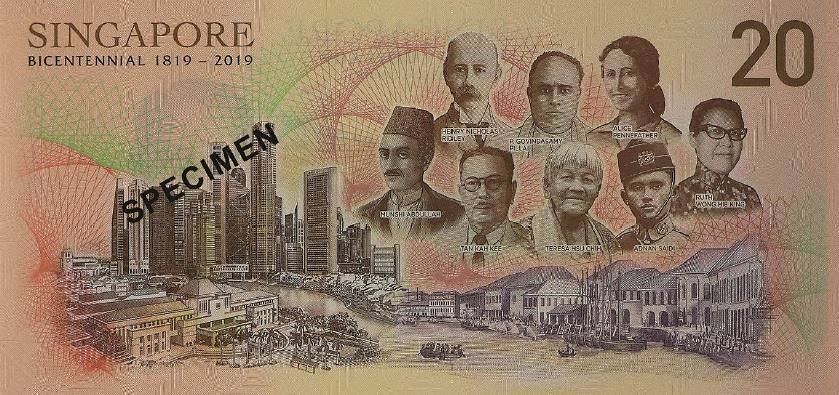
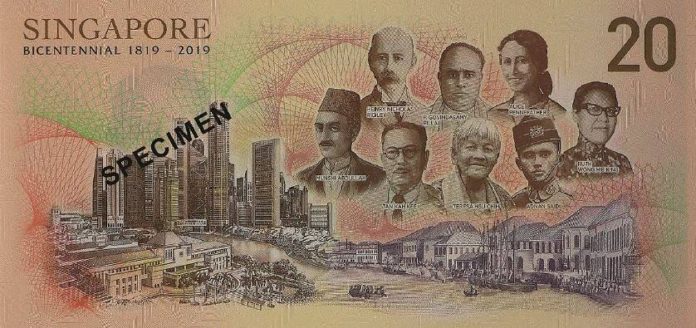
back of note

The back of the S$20 note features eight individuals credited with having contributed significantly to Singapore’s nation building. (Image: Monetary Authority of Singapore)

The back of the commemorative note features eight individuals who contributed significantly to Singapore’s nation building in various areas such as education and defence.

They are portrayed against the backdrop of the Singapore River flowing into modern day Singapore. The river was at the heart of Singapore’s development as a trading port, and later its transformation into a business and financial hub.

Mr Munshi Abdullah was widely recognised as the “Father of Modern Malay Literature” and had tutored Sir Thomas Stamford Raffles in the language, while Mr Henry Nicholas Ridley was the first director of the Singapore Botanic Gardens and credited for establishing Singapore’s rubber plantation in time for the rubber boom in the early 1900s.

The note also features Mr Tan Kah Kee, who helped to set up multiple schools such as Tao Nan, Ai Tong and Nanyang Girls’ School and pushed to remove social barriers based on dialect and clanship.

Mr P Govindasamy Pillai, who travelled to Singapore from India in 1905, is a philanthropist who contributed to temple-building and community welfare.

READ: In search of the real Singapore stories, beyond Raffles

Social worker Teresa Hsu Chih is also featured on the note. She devoted her life to helping the poor and destitute, and continued her humanitarian work even after turning 100 years old.

Also on the note is Mrs Alice Pennefather, a Singaporean badminton and tennis champion, who was a strong advocate for sports.

Mr Adnan Saidi, a lieutenant of the Malay Regiment’s 1st Battalion, is also among one of Singapore’s pioneers. He is best remembered as a war hero for his patriotism, bravery and determination.

He was entrusted with the defence of Pasir Panjang Ridge, which was the last British bastion before Alexandra. In the Battle for Pasir Panjang in 1942, Adnan motivated his troops to fend off the Japanese although they were outnumbered and undersupplied.

Even after Adnan and his men were overpowered, he resisted heroically and refused to surrender.

Dr Ruth Wong Hie King – the first female principal of the the Teachers’ Training College (now known as the National Institute of Education) – is also part of the list of notable pioneers in Singapore for being a forward-thinking educator.

GLITTERING IN GOLD

Who doesn’t like gold?

On the comemorative note, the 20 denomination, Singapore Coat of Arms, Singapore Bicentennial logo, and the years 1819 and 2019 are all depicted in gold. 

HOW TO GET THE NOTES

If you are looking to get your hands on these new notes, two million pieces of the currency will be available from Monday (Jun 10) at: DBS Bank/POSB, Oversea-Chinese Banking Corporation, United Overseas Bank, Bank of China, Citibank Singapore, Industrial and Commercial Bank of China, Maybank, Standard Chartered and The Hongkong and Shanghai Banking Corporation.

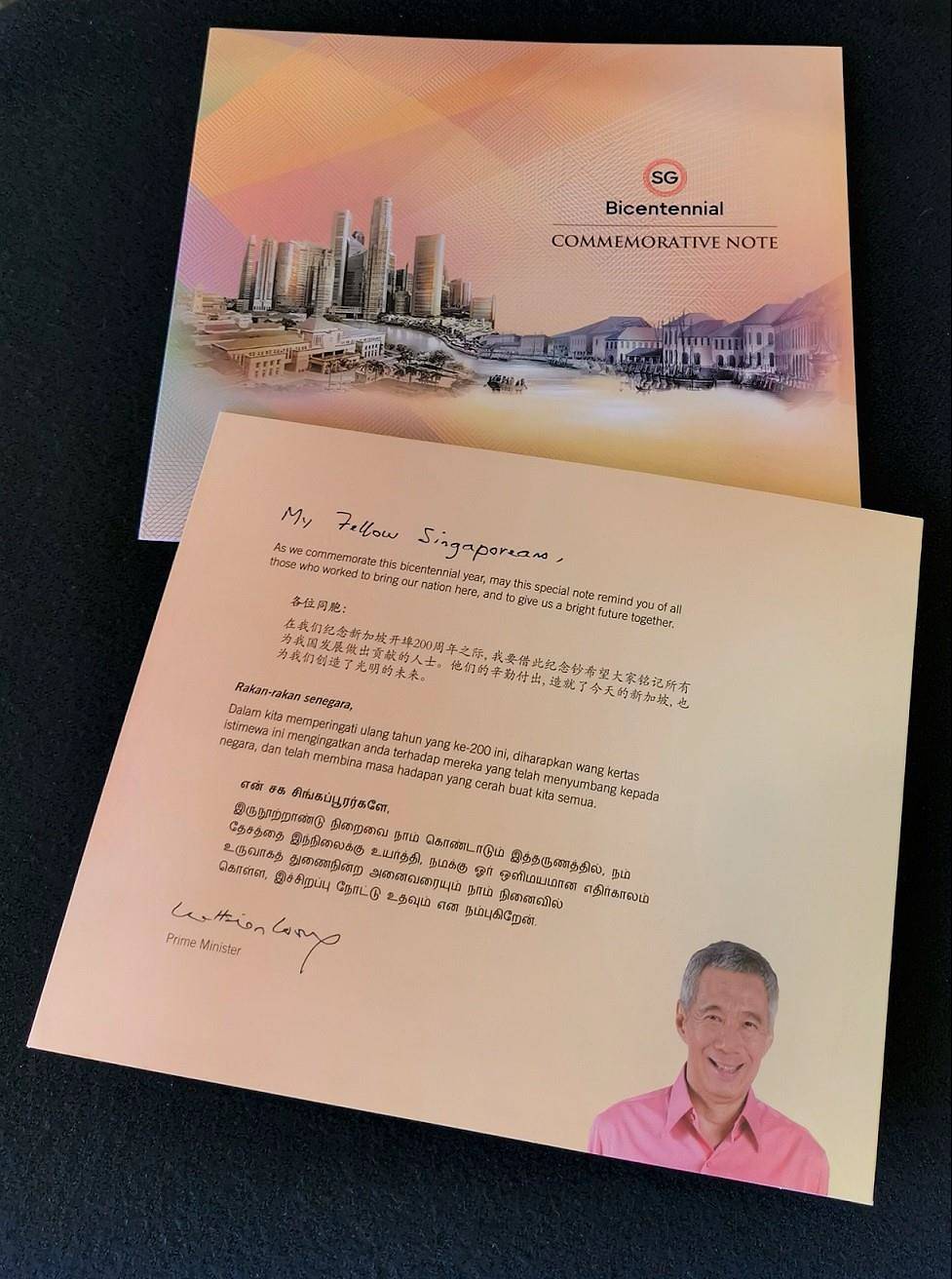
Each person is allowed to exchange up to 20 pieces of the note per transaction, and each note will come with a specially designed folder.

complimentary currency folder

Each note comes with a specially designed folder. (Image: Monetary Authority of Singapore)

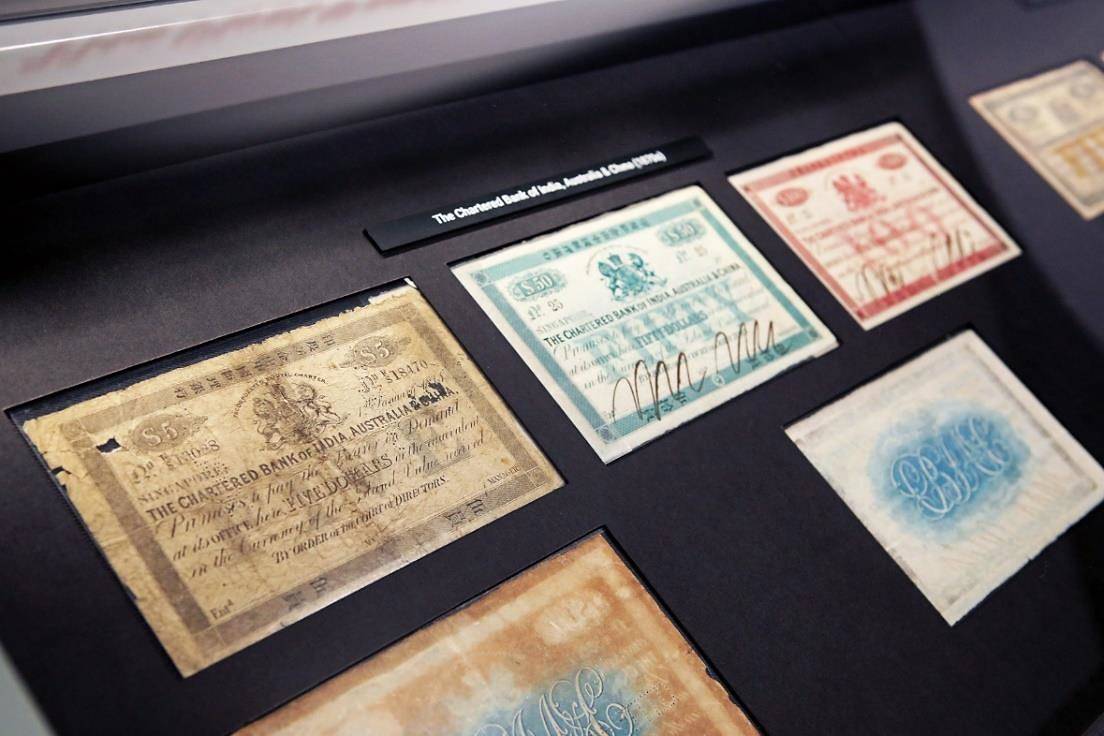
If you are not looking to get the note, it will also be on display at the MAS Gallery, together with a first-time exhibition of a collection of rare currency notes and coins that trace the country’s currency history from the 1800s to current day.

currency on display

A close-up of the early currency notes. (Image: Monetary Authority of Singapore)

FAN OF NUMISMATIC SETS?

There will be 5,000 limited edition numismatic sets, with each set comprising an uncut sheet of three S$20 commemorative notes.

Pre-orders can be placed with The Singapore Mint from Jun 5 to Jun 13. The currency sets will be allocated by balloting if they are oversubscribed. 

Source link

The ‘convenience store’ that is not so convenient

It’s all for a good reason – the exhibition hopes to raise awareness about how our culture of convenience is contributing to global warming and climate change.

[Not-So] Convenience Store 1

The [Not-So] Convenience Store is Temasek Shophouse’s first exhibition. (Photo: Corine Tiah)

SINGAPORE: It looks like a convenience store from the outside, but walk through the doors and you’ll see that this isn’t where you can easily buy food and drinks on-the-go.

Here, there are items such as mini solar chargers, bamboo toothbrushes, compost buckets and menstrual cups – all eco-friendly products that are sustainable alternatives to seemingly convenient everyday products.

Welcome to the [Not-So] Convenience Store.

[Not-So] Convenience Store 2

The exhibition features eco-friendly products that are sustainable alternatives to seemingly convenient everyday products. (Photo: Corine Tiah)

Opening to the public on Friday (Jun 7), it is the first exhibition at Temasek Shophouse at Orchard, near Dhoby Ghaut MRT station. Temasek Shophouse, part of the philanthropic efforts of Temasek Trust, provides a co-working space that promotes social impact and sustainability.

In conjunction with World Environment Day, the exhibition aims to raise awareness about how the “culture of convenience” – such as people’s dependence on single-use plastics and constant desire for new electronic gadgets – contributes to global warming.

Organisers also highlighted the world’s growing waste problem, which has snowballed to more than two billion tonnes a year.

Singapore alone generated more than 7.78 million tonnes of waste in 2017 — enough to fill 15,000 Olympic-sized swimming pools, said the organisers.

[Not-So] Convenience Store 6

A “cashier” will guide visitors through the store and give information on the alternative sustainable solutions available. (Photo: Corine Tiah)

Products on display in the [Not-So] Convenience Store are grouped into four categories to highlight different issues – electronics waste, food waste, household product waste and plastic waste. These are the four main pillars of waste that are generated by Singaporeans daily, according to the organisers.

[Not-So] Convenience Store 4

Visitors can scan the QR code on each item to learn more about sustainability. (Photo: Corine Tiah)

Every item has an accompanying QR code that carries information on how it can help address the environmental impact of less sustainable alternatives.

Items are not for sale at the shop, but the QR codes link visitors to the respective product pages should visitors wish to buy them.

WATCH: Co-working hub to be launched for organisations aiming to create social impact

“We realise that the culture of convenience is really the culprit especially in a place like Singapore. Most of us want to do good but it’s just too troublesome,” said director of Temasek Shophouse Yvonne Tay at a media preview on Thursday.

“Maybe it’s really just a tweak of consumer habits,” she added. “That’s why we have something a little bit more tongue in cheek called [Not-So] Convenience Store.

“What we are trying to do is not to have a top-down approach and not to sound too preachy but something that is a little bit more fun and approachable, helping people to realise that there are so many alternatives to sustainability.”

[Not-So] Convenience Store 3

An ice-cream freezer filled with old phones and computers, with a message calling on consumers to put a freeze on e-waste. (Photo: Corine Tiah)

The exhibition is free. It will open to the public from Jun 7 to Jul 31.

In addition to the exhibition, Temasek Shophouse will play host to a series of workshops and talks by eco-social enterprises and advocates, which will encourage Singaporeans to adopt a zero-waste lifestyle. 

[Not-So] Convenience Store 5

Source link

SembWaste signs MoU to attract workers and upgrade skills in recycling industry

SINGAPORE: The first thing one notices when entering the sorting area in SembWaste’s Materials Recovery Facility is the mountain of rubbish made of items such as plastic bags, boxes, tin cans and even a shoe or two.

SembWaste MoU recycling (1)

A recycling truck collects recyclables from bins and brings them to the SembWaste Materials’ Recovery Facility for sorting. (Photo: Marcus Ramos) 

This is the tipping hall where recyclables from commercial and municipal partners are collected.

The sorting process begins when the truck tips the collected recyclables into a conveyor belt, funnelling them into the next room where orange-jacketed workers wait, assembly line-style.

Accompanied by the rumble of heavy machinery, workers sort the items that come to them on conveyor belts.

SembWaste MoU recycling (2)

Workers sort recyclables into material types and remove contaminated items. (Photo: Marcus Ramos)

Tossing aside rejects such as pillows and shoes, they separate the remaining items into material types and send them on their way.

COMPANY TRAINING COMMITTEE

These workers at the Materials’ Recovery Facility are the ones who stand to benefit from a new Memorandum of Understanding (MoU) signed between SembWaste and the Building Construction And Timber Industries Employees’ Union (BATU) on Thursday (Jun 6).

SembWaste and BATU will set up a Company Training Committee to design training programmes for employees and upgrade their skills, supported by the National Trades Union Congress’s Employment and Employability Institute (NTUC’s e2i), NTUC LearningHub and the National University of Singapore.

Announced in April this year, the training committees will help workers keep pace with technological changes in their industry.

SembWaste MoU recycling (4)

NTUC secretary-general Ng Chee Meng at the signing of the MoU. (Photo: Marcus Ramos) 

Speaking at the event, NTUC secretary-general Ng Chee Meng described the partnership as a “win-win situation” for SembWaste and its workers.

“This will position the company to exploit technologies faster, better, and in turn, workers will be able to keep up with the technologies,” he said.

According to Mr Ng, this will the 33rd training committee established by NTUC, in line with NTUC’s goal to establish training committees in 1,000 companies in the next three years.

As part of this training programme, SembWaste has introduced Asia’s first Econic refuse collection truck with enhanced safety features.

It will have better visibility, a blind-spot camera system, and a low-entry concept that will allow drivers to make eye contact with other road users.

SembWaste MoU recycling (5)

The Econic truck is the first in Asia. (Photo: Marcus Ramos) 

In addition, the company has also invested in driving simulators to train truck drivers in “safe and defensive driving”.

All these measures are meant to maximise workers’ potential and equip them with proper safety knowledge, said senior vice president of waste management at Sembcorp Industry Neo Hong Keat.

“In this industry, people (are our) greatest asset. We want our people to do their job safely and effectively. We want to make sure every worker can do their job properly so they can go back to their families at the end of the day,” he said.

Source link

Most agree vehicles for hire can install inward-facing cameras: Poll

SINGAPORE: Two-thirds of Singapore residents agree that vehicles such as taxis, private hire cars and limousines should be allowed to install inward-facing cameras, according to online poll results released on Thursday (Jun 6).

Such devices, commonly known as “in-car cameras”, are allowed in taxis, private hire cars and limousines, provided they meet the guidelines set by the Land Transport Authority (LTA) regarding the installation and use.

READ: Taxis, private-hire vehicles can have inward-facing video cameras from Jun 22: LTA

READ: Taxi passengers voice concerns on privacy erosion with proposed inward cameras

Of those who responded to the poll, 64 per cent said they agreed, while 22 per cent said they do not. The remaining said they are not sure.

In-vehicle camera poll results

In a Facebook post, Senior Minister of State for Communications and Information and Transport Janil Puthucheary said LTA will take these poll results into consideration when they review the regulations on in-car cameras in the coming months.

“Only authorised data controllers such as Government agencies and operators will be allowed access to support investigations and enforcement efforts,” he added.

The Ministry of Communications and Information’s (MCI) feedback and engagement unit REACH, which commissioned the poll, said about nine in 10 of those surveyed think these devices help protect the interest of both commuters and drivers.

“They felt that video recordings with audio are helpful for enforcement against inappropriate or violent behaviour,” REACH said.

Among those who agreed that the cameras should be allowed to record audio and video, about 40 per cent also believe there are enough regulations in place to safeguard privacy and avoid personal data leaks, while 25 per cent said they are not concerned about their conversations being recorded or their face captured on video.

Reach commissioned the online poll to gauge public sentiments on the use of in-vehicle cameras, it said. It was conducted with 1,000 Singapore residents, aged at least 15 years old, between Mar 15 and 22.

In February, a fare argument between a Gojek driver and a passenger went viral after video footage of the incident was shared on social media websites.

Source link

SP Group and Gardens by the Bay launch pilot project to convert waste to energy, biomass

SINGAPORE: SP Group and Gardens by the Bay launched on Thursday (Jun 6) a two-year pilot project to convert waste to by-products that can used within the local attraction.

The smart waste management system involves the use of gasification technology, turning waste produced within Gardens by the Bay into syngas – primarily carbon monoxide and hydrogen – as well as carbonised biomass. 

The combustion of syngas then produces thermal energy, which is used to heat up water for potable use by F&B outlets within the local attraction. 

The carbonised biomass, known as biochar, is a substance which some studies have shown can be used to help the soil retain nutrients better. Gardens by the Bay will be conducting experiments on the usefulness of biochar before making a decision on its usage.

SP Group and Gardens by the Bay launch pilot project to convert waste to useable by-products (4)

Bags of horticultural waste (top) to be processed and biochar (bottom) that is collected from the waste gasification process. (Photo: SP Group)

The system can handle up to one tonne of waste per day, which is about a fifth of the five to six tonnes Gardens by the Bay produces daily.

Located in a container within the Gardens’ premises, the system is able to reduce waste down to 5 per cent of its original volume. 

In addition, minimal sorting of this waste is required. 

SP Group and Gardens by the Bay launch pilot project to convert waste to useable by-products (1)

The pilot system at the Gardens by the Bay can process up to one tonne of waste per day. (Photo: SP Group)

“As a garden that values nature and sustainability, we have a responsibility towards finding innovative ways to protect our environment,” said Gardens by the Bay CEO Felix Loh in a press release. 

“Gardens by the Bay is uniquely placed to allow for the testing of such an on-site system because waste collected in the Gardens can be directly converted and repurposed into by-products, which can in turn be used in the Gardens.”

SP Group and Gardens by the Bay launch pilot project to convert waste to useable by-products (2)

Using compact gasification technology, waste is converted into thermal energy that is used to heat up a water tank for use at F&B outlets. (Photo: SP Group)

At the Ecosperity Conference 2019 on Thursday, SP and Gardens by the Bay signed an agreement on the rollout of the system, which is supported by Temasek Holdings.

The signing was witnessed by Minister for the Environment and Water Resources Masagos Zulkifli.

The pilot project has been running since early May. It costs “a few” hundred thousand dollars, said SP Group’s Singapore district cooling CEO Jimmy Khoo, who declined to give further details.

SP Group and Gardens by the Bay launch pilot project to convert waste to useable by-products (5)

The waste management system is fitted into a 20-foot container for this pilot. (Photo: SP Group)

“We are developing district solutions to help Singapore achieve its sustainability goals. This paves the way for decentralised waste management for other businesses and residential estates,” said Mr Khoo. 

“After the pilot, over the two years we will collect the data, if its operational costs make sense, we will see more and more of such deployments.”

Source link