SINGAPORE: Singapore’s first seed bank was officially launched on Saturday (Jul 13), as part of efforts to protect local and regional plant diversity against threats like climate change and habitat loss.
The Singapore Botanic Gardens Seed Bank, set up by the National Parks Board (NParks) in House 4 – the largest of the five colonial-style houses within the former Raffles College at Cluny Road – has a storage capacity of up to 25,000 plant species.
This is about half the number of seed plant species in the region and more than double of that currently found in the Singapore Botanic Gardens, which has around 10,000 species.
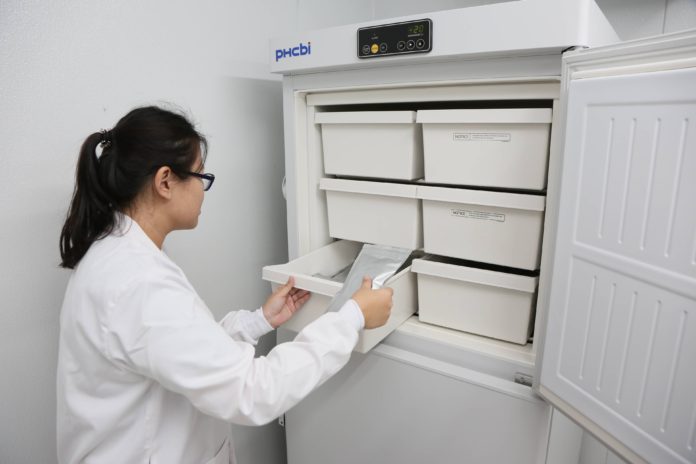
Seeds that can tolerate extreme dry and freezing conditions are stored in a cold room at -20 degrees Celsius to increase their lifespan. (Photo: NParks)
Speaking at the launch of the facility, Second Minister for National Development Desmond Lee likened seed banking to a form of insurance for plant biodiversity.
“With increasing threats from diseases, natural disasters and climate change, the natural dispersal mechanisms of seeds may not be enough,” Mr Lee said.
Seeds stored in the bank can be used in habitat restoration and species conservation projects in Singapore and the region in future, when the need arises.
One example is the critically endangered Sepetir tree. Its seed was collected from a heritage tree in Changi.
The seed bank also houses a seed biology lab, rooms for seed processing and storage freezers, where scientists will conduct research on various storage methods to keep seeds collected from tropical plants for long periods of time.
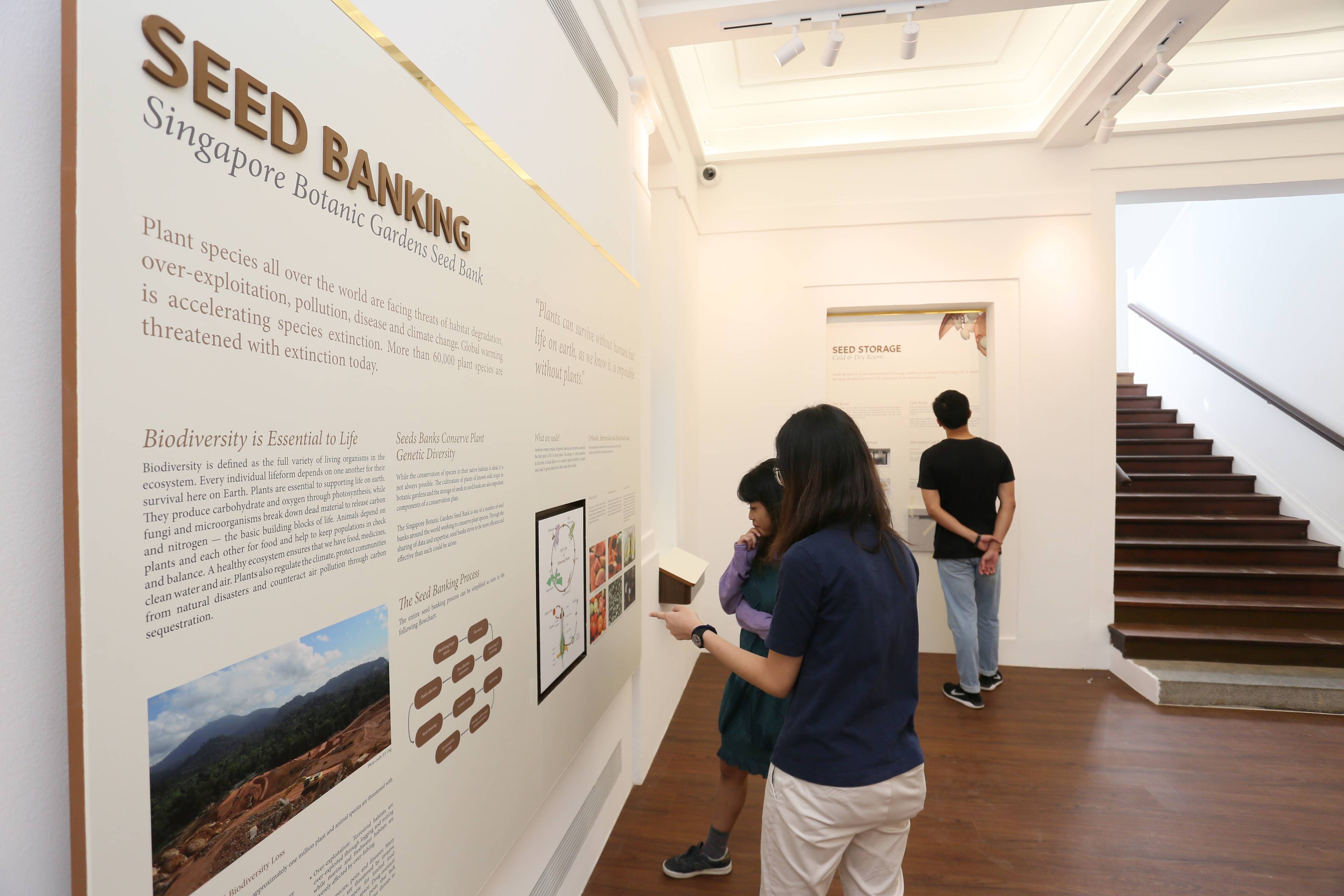
Visitors can learn about the seed banking process at an “interpretive gallery” at the seed bank. (Photo: NParks)
Visitors can also learn about seed banking and conservation work at galleries and an outdoor garden within the facility.
The seed bank will conduct guided tours and public talks to help more learn about the value of seeds and species conservation.
The opening of the facility also marks the start of the annual Singapore Botanic Gardens Heritage Festival, which runs until Jul 21.
A man attempted to rob a pawn shop in Bedok on Jul 12, 2019. (Photo: Cindy Co)
The pawn shop manager, who wanted to be known only as Mr Choo, told CNA that the man entered the shop wearing a mask and holding the weapon.
He slammed the chopper on the glass display case, but the weapon broke into two pieces, Mr Choo said. The man picked up the broken pieces of the knife and fled.
The man failed to smash the glass case. (Photo: Cindy Co)
The man, who was wearing gloves and dressed in dark clothing, looked to be in his 40s and is of “average height”, Mr Choo said.
The police are asking for anyone with information to call their hotline at 1800-255-0000 or submit information online at www.police.gov.sg/iwitness. All information will be kept strictly confidential.
SINGAPORE: To help seniors age well, five ActiveSG gyms designed with the elderly and disabled in mind will open by the end of this year.
Last September, Prime Minister Lee Hsien Loong announced that such gyms will open in mature housing estates. On Saturday (Jul 13), he opened the first at Ang Mo Kio Community Centre, which is also the first ActiveSG gym in a community centre.
The first ActiveSG gym catered to the elderly and disabled opened at the Ang Mo Kio Community Centre on Jul 13, 2019. (Photo: Gwyneth Teo)
The gym is open to the public and costs S$2.50 per entry. To encourage more seniors to make use of the facilities, Singapore residents over 65 years old get free entry on Wednesdays.
Another three gyms will be located in Fernvale, Senja-Cashew and Pek Kio, said Sport Singapore deputy CEO Chiang Hock Woon. The location of the fifth gym has not been announced.
The gym is open to the public but is free on Wednesdays for Singapore residents over 65 years old. (Photo: Gwyneth Teo)
The Ang Mo Kio facility features exercise equipment suitable for the elderly. While the machines are commonly found in gyms – such as for lat pulls, chest presses and leg curls – they are pneumatic, or adjusted using air pressure, and low-impact on the joints.
Additionally, the gym has health screening equipment for users to keep track of their fitness level. For instance, there is a gait motion sensor that measures a user’s walking speed and posture to analyse risk of falls.
The gym also has an ActiveFIT machine, which checks a person’s fitness with seven tests such as reaction time, handgrip strength, balance and push-ups. It also measures blood pressure, body fat and muscle mass. Users can sync the data to the Active Health app. After a 12-week programme, the app will advise users on how to adjust their diet and lifestyle to live healthier.
The ActiveFIT machine measures fitness with seven different physical tests, including grip strength and balance. (Photo: Gwyneth Teo)
In his speech, Mr Lee said he hoped residents will make full use of the gym and activities.
“I hope every day it will be full of people and you will come regularly, every two or three times a week, make use of the equipment, make friends, stay fit, stay well,” said Mr Lee.
“In Ang Mo Kio we have many old people, but in other parts of Singapore as well, people are ageing. More of us are getting on in years, and if we stay active I think we can live healthy productive lives and keep on contributing, looking after the younger ones in our family but also contributing to the broader society and Singapore.”
SINGAPORE: Reading the news as a parent today can sometimes bring on a wave of panic attacks.
Particularly news involving attempted kidnapping, suspected kidnapping, tots falling into train gaps, or mistaken identities that could lead to your child being given away to a stranger at childcare centres.
Many such stories eventually turned out to be false alarms. But when shared over social media when facts were initially unclear, the boundaries between fact and fiction can blur. And the emotion aroused is the unmistakable sense of fear.
As a mother of three, I’ve experienced my fair share of worry – from hiring our first helper to my child’s first experience with a childcare centre.
SAFETY SHOULD NOT BE OVERLOOKED
A year ago when I was picking up my youngest child, I was informed by the kindergarten reception that he’d already been brought back by my helper. I immediately called home, only to be told she did not have him.
What happened next was a blur of confusion and worry. I was later told by a profusely apologetic staff member that my child was still in the premises and it had been a case of mistaken identity.
In those few minutes when I did not know where my child was, the fear was very real. Because the school took swift action to resolve the problem, I did not pursue the matter.
When hiring carers for their children, or picking a childcare centre for their unborn kid, most parents worry whether they’re handing their young ones over to a safe pair of hands.
Children at NTUC My First Skool in Edgefield Plains. (Photo: MCI)
Even the best places are not immune to mishaps. The difference is in how these are handled.
In terms of our children’s care and physical well-being, no doubt we have to exercise vigilance as parents and rightly so. After all, they are at the stage when they cannot fend for themselves.
Apart from safety and school vigilance, we also grieve over cleanliness and the quality of teachers at childcare centres.
And most of us need time, observation and training before we feel comfortable enough to leave a young infant in the hands of a new helper or nanny.
HELICOPTER PARENTING
As adults, we take calculated risks all the time – when investing in a new financial product, buying your first home, or changing jobs. We typically rely on current information as well as past experiences and lessons to guide the choices we make.
We learn to trust our decision-making skills after experiencing some degree of success and confidence. We need to instil these same instincts into our kids but do we?
A supportive environment at home where children feel at ease with confiding in their parents is a key ingredient to addressing bullying in school. (Photo: Alvin Chong)
Studies have uncovered the pitfalls of helicopter parenting.
Helicopter parents tend to be over-involved and demanding because they let fear drive their actions. They often intervene pre-emptively, giving the child little chance to try and accomplish something on their own.
Kids grow up less adaptive. Studies show that kids of helicopter parents they have poorer emotional and academic function, and decision-making skills.
We have to accept that kids will have new experiences without us parents. Instead of hovering around, we could impart knowledge of how to deal with these at all ages, whether our kids are three, seven or 15.
For example, in interacting with strangers, rather than adopting a blanket rule – no talking to strangers – we can couch it differently by saying: “When mummy is around, you can respond when a stranger says ‘hello’. When you are alone, you should find a trusted adult if a stranger approaches you.”
The phrase “strangers will catch you” instils in children a fear that is grossly disproportionate with reality. It teaches them that the world is not to be trusted.
BALANCING RISKS WITH COACHING AND PRACTICE
My daughter is a fairly confident 10-year-old. Even so, she experiences some uncertainty when taking on new, somewhat risky, tasks.
When she enters Primary 5, we plan to train her to take public transport to school. News covering incidents of outrage of modesty on public transport can be hair-raising to read, but I think there is a middle ground between being alert and being paranoid.
We hope to arm her with a balanced view of the possible dangers, along with tips on how to protect herself, such as sitting beside a female passenger and avoiding a crowded bus.
File picture of people queuing to board a bus in Singapore. (Photo: Joey Liew)
We’ll also be her chaperon for the first few times, before letting her go on her own.
Tackling something new is undoubtedly uncomfortable, nerve-wrecking even, but with the right information and emotional support, it can be an area of growth with profound impact on a child’s sense of self-belief.
BE MOTIVATED BY GROWTH, NOT FEAR
Instead of allowing news of child-related crimes and incidents to fan our anxiety and lead us to coddle our children, we should focus on building resilience in our young and instilling in them the right instincts to deal with new situations.
Instead of ringfencing what they can or cannot do, a more productive approach may be to arm them with skills that can act as a protective shield, a more effective shelter to stress and adversity than anything the most loving parent can do or provide.
The keys to achieving this kind of resilience include developing caring relationships with trusted adults whom they know they can contact at the first sign of trouble, fostering a strong sense of autonomy and independence so that they know when to say no, and having an optimistic view of life so that they don’t let apprehension curb their freedom.
As parents, we set the tone for our kids by not letting irrational fears drive our decisions.
If the situation is age-appropriate for them to handle by themselves, take a step back and coach them from the sidelines.
Our children will begin to know themselves and their strengths better, and develop their own radar for sensing real danger.
So let’s keep our eyes on the right ball – by equipping and empowering our kids to try new things and make mistakes, within reasonable and safe limits.
June Yong is a mother of three, an educational therapist and owner of Mama Wear Papa Shirt, a blog that discusses parenting and education in Singapore.
SINGAPORE: Ever find yourself cruising through multiple green lights down an empty stretch of road?
It’s not just luck – technology is also at play.
As part of Singapore’s Smart Mobility 2030 vision, new devices and systems have been introduced to meet the needs of the population on the roads.
Whether you’re a motorist or pedestrian, here are some of the technologies on trial and those that have been around for a while, to help manage traffic and keep the roads safe.
YOU’RE ON CAMERA
Guilty of slamming on the brakes right before a speed camera?
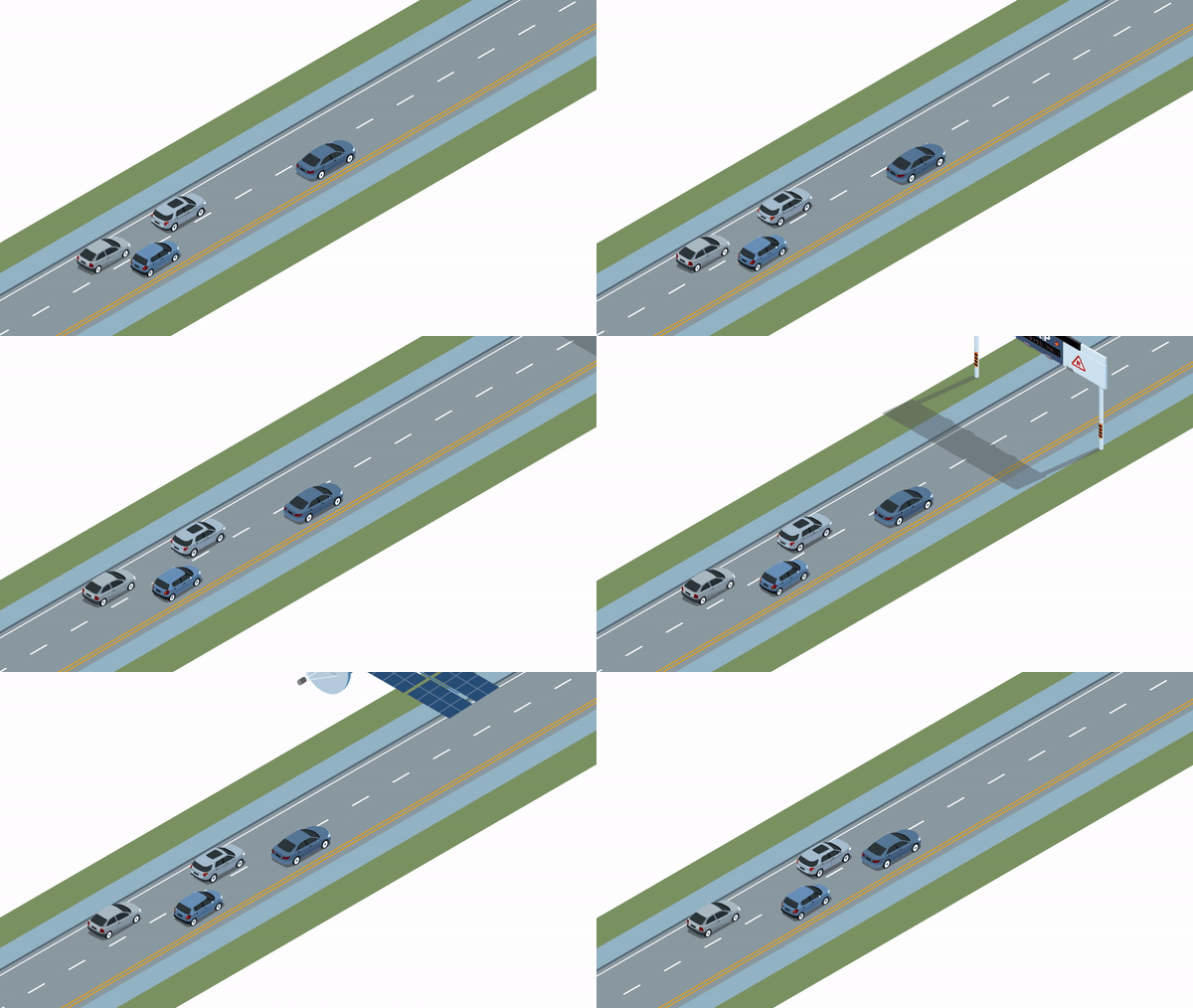
The new speed camera system introduced in December last year, won’t let such motorists off the hook so easily.
The road, which has a speed limit of 70kmh, was chosen to roll out the system “because it is susceptible to speeding and illegal racing”, according to the police.
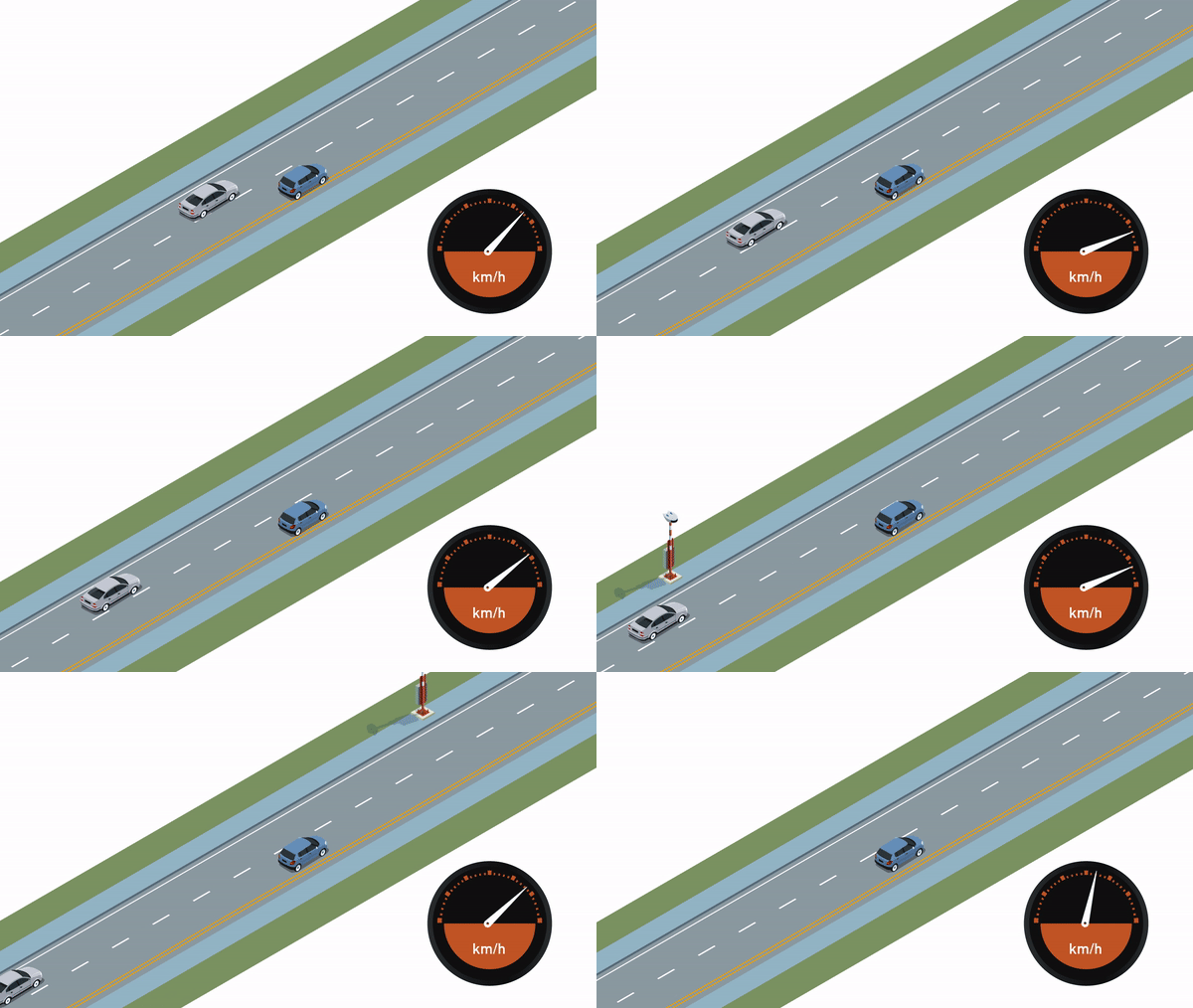
When a vehicle enters and exits the enforcement zone, the two-point camera system will detect and compute its average speed.
This is the first time such a system is being used on Singapore roads.
A new speed camera system introduced in Singapore last year calculates a vehicle’s average speed. (Graphic: Rafa Estrada)
GOODBYE ERP GANTRIES, HELLO SATELLITE ERP
The familiar sight of Electronic Road Pricing (ERP) gantries on Singapore’s roads may be no more in future.
A new ERP system based on Global Navigation Satellite System (GNSS) technology is expected to roll out progressively from 2020 to replace the gantry system which is almost two decades old.
Currently, motorists pay a flat fee once they enter an ERP zone. Under this system, motorists will be charged according to the distance they travel.
Using this system, LTA is also considering the possibility of off-peak car users only needing to pay for using their vehicles for short periods rather than the whole day.
The existing In-Vehicle Unit (IU) will also be swapped out for a new On-Board Unit (OBU), which can be used to pay for parking, checkpoint tolls and usage of off-peak cars electronically.
ERP gantries on Singapore’s roads may be no more. (Graphic: Rafa Estrada)
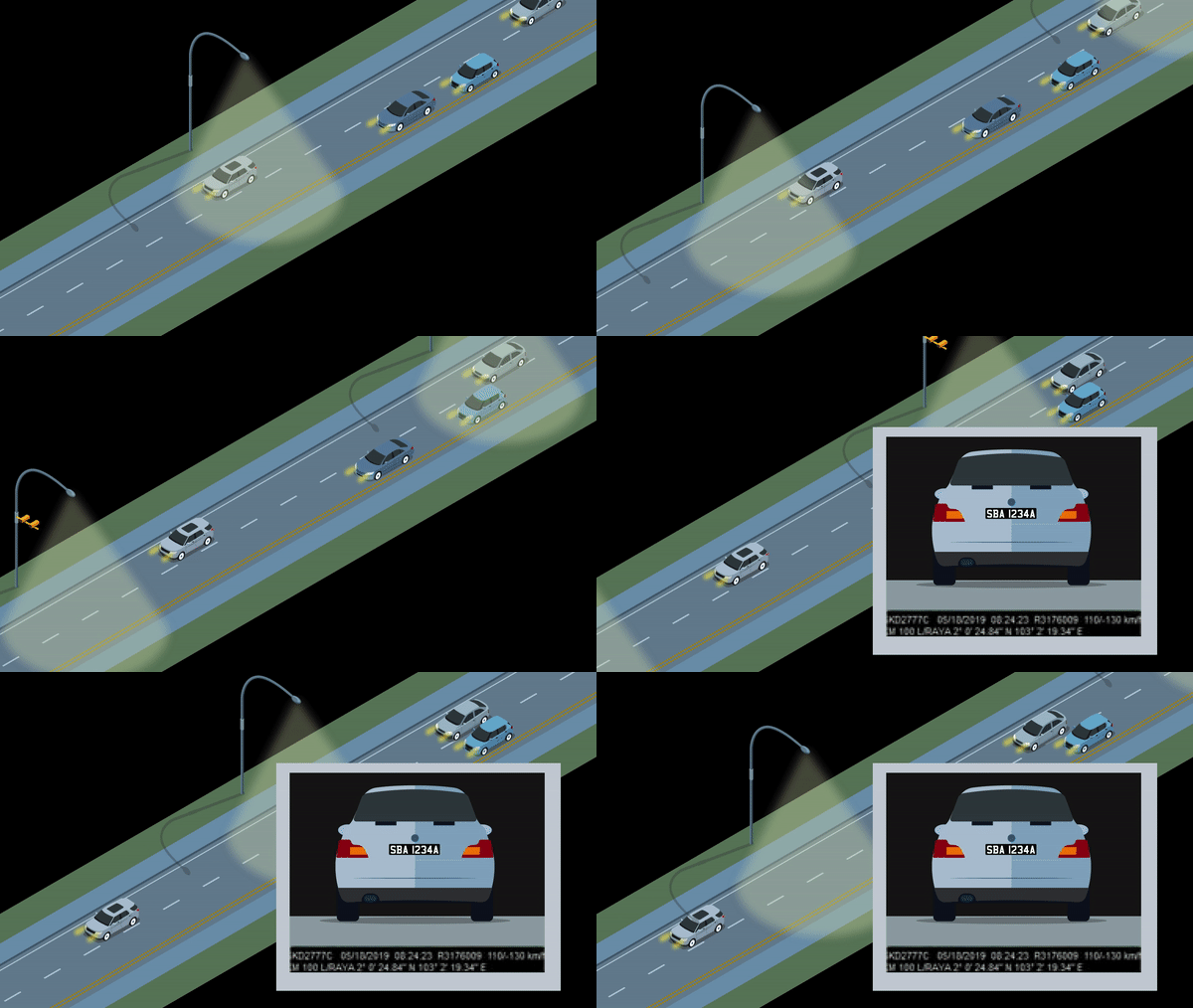
The ANPR system is meant to aid authorities in enforcement – as part of its future traffic management systems – by capturing vehicle number plates with greater accuracy.
The Automatic Number Plate Recognition system is meant to aid authorities in enforcement. (Graphic: Rafa Estrada)
The equipment was existing roadside infrastructure such as bridges and lamp posts, along several expressways during the trial.
In addition, new Dedicated Short Range Communications (DSRC) beacons will also be installed to further enhance positioning accuracy for navigation systems.
Equipment will also be mounted onto vehicles and deployed at areas including Tuas South from April this year, before being expanded islandwide for testing.
Example of equipment that will be mounted onto vehicles. (Image: LTA)
SMART SIGNALS
On off-peak periods, it can be frustrating for motorists waiting at the red light, especially when there are no pedestrians or cars around.
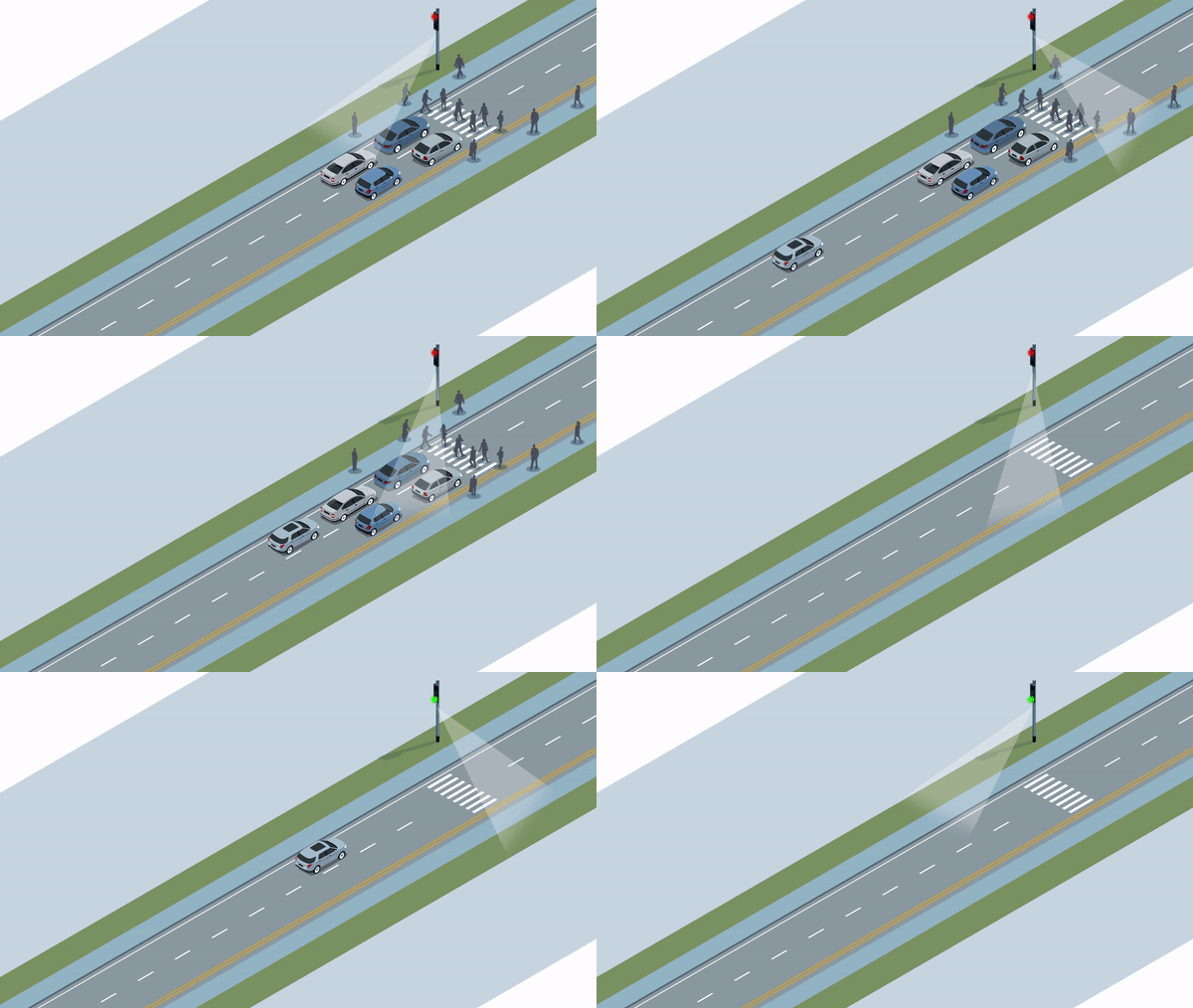
A new smart traffic light control system, which has been on a two-year trial since last September, could reduce the waiting time by detecting the presence of vehicles and pedestrians.
By using artificial intelligence and predictive capabilities, the Cooperative and Unified Smart Traffic System (CRUISE) helps develop traffic light algorithms for smoother traffic and pedestrian flow.
The trial is currently underway near traffic intersections and pedestrian crossings along Corporation Road and Boon Lay Way.
A new smart traffic light control system could reduce vehicles’ waiting time at the red light. (Graphic: Rafa Estrada)
As the latest technologies are being trialled to address the new challenges, there have been several advancements over the years that have been an integral part of traffic management Singapore.
Here are two:
RIDING THE “GREEN WAVE”
The Green Link Determining (GLIDE) system controls all traffic signals in Singapore and allocates green time based on traffic volume.
The GLIDE system controls all traffic signals in Singapore. (Graphic: Rafa Estrada)
Whenever a vehicle is detected by the wire sensors beneath the road surface, the system will adjust the traffic light timing.
Therefore, the direction with heavier traffic flow will be given more green time.
The system also links traffic signals at adjacent junctions to minimize the number of stops – letting motorists catch that “green wave”.
THANKS TO TAXIS
Taxis on an expressway in Singapore. (File photo)
Drivers often check on traffic conditions before starting their commute to work. But how is such real-time data collected?
One way is through TrafficScan which uses taxis to equipped with Global Positioning Systems (GPS) which give off information such as their location and speed.
The data is then processed to calculate the average traffic speeds along roads and made available for motorists on the OneMotoring portal to plan for a smoother journey.
SINGAPORE: Miracle baby Trieu Hoai An survived being abandoned at a coffee plantation in Vietnam. She survived her stay at a Singapore hospital where she received treatment. Sadly, her short time on Earth has now ended.
Hoai An died on Friday (Jul 12) at about 4am, said her primary caregiver Venerable Minh Tai. The baby was at the Hue Quang monastery in Vietnam when she stopped breathing in her sleep.
In March, baby Hoai An was found abandoned in a plastic bag on a tree. She had an open head wound, with maggots wriggling from her head, belly button, eyes and nose.
In addition, she was diagnosed with hydranencephaly, an extremely rare disorder of the central nervous system with symptoms that include an enlarged head, infantile spasm or seizures, paralysis, blindness and fluid in the brain.
Doctors in Vietnam had given her less than a year to live.
Hoai An was just 17 days old when she was admitted to Singapore’s Mount Elizabeth Hospital on Apr 10, thanks to donations that poured in from people who had heard of her plight.
Her condition improved, and her story of resilience touched many.
Hoai An at Mount Elizabeth Hospital on Apr 23, 2019. (Photo: Ian Cheng)
After spending about two months in Singapore, Hoai An returned to the Hue Quang monastery in Vietnam in June.
Sharing news of the death in a Facebook post on Friday, Venerable Minh Tai said the nun who was taking care of Hoai An at the time was woken up by her cries at about 3am.
The nun made some milk for the baby but she continued crying despite finishing the entire bottle.
Hoai An was eventually coaxed back to sleep but when the nun checked on her again, she had stopped breathing. She was rushed to a local hospital where doctors could not resuscitate her.
“The winds of impermanence have shaken the last succulent leaf off the branches of life, with no time for a new plantlet to sprout,” said Venerable Minh Tai, who is known for her charitable efforts.
“May you soon be reborn into a better world.”
In a statement on Friday, Mount Elizabeth Hospital said it is saddened to learn of baby Hoai An’s passing.
“She was a spirited baby who fought bravely despite her condition. We would like to extend our condolences to Venerable Minh Tai and her caretakers,” it said.
SINGAPORE: A man wielding a chopper fled the scene after a failed attempt to rob a ValueMax pawn shop in Bedok on Friday (Jul 12).
Police said they were alerted to a case of attempted robbery at about 1.55pm at Block 213 Bedok North Street 1.
According to the pawn shop manager, who wanted to be known only as Mr Choo, the man entered the shop wearing a mask and holding a kitchen chopper.
He slammed the chopper on the glass display case, but the weapon broke into two pieces, said the manager, who is in his 60s.
The man failed to smash the glass case. (Photo: Cindy Co)
The man then picked up the broken pieces of the chopper and fled. This all happened in the span of five minutes, said the manager.
He added that the man, who was wearing gloves and dressed in dark clothing, looked to be in his 40s and is of “average height”.
“We have insurance, so we’re not afraid of robberies. We’re just afraid that he would use the knife to hack at people,” said Mr Choo, speaking in Mandarin.
Mr Choo, the ValueMax pawn shop manager. (Photo: Cindy Co)
When CNA visited the scene on Friday afternoon, four to five police officers were seen talking to passers-by.
Workers at the neighbouring shops said they were not aware of the incident until police arrived and onlookers started gathering in front of the pawn shop.
An employee at a Bengawan Solo outlet next to the pawn shop estimated that the police were in the area for one to two hours.
Another employee at a different shop – who declined to give her name – said she only realised something had happened when she saw a large number of police officers after lunch.
Speaking in Mandarin, she said: “(It) scared me to death! (Since) there’re only two women (in our shop).”
Police said investigations are ongoing.
Police at the scene after a man attempted to rob a pawn shop in Bedok on Jul 12, 2019. (Photo: Cindy Co)
In August last year, a 29-year-old Bangladeshi man attempted to rob a ValueMax pawn shop outside Boon Lay MRT station. He fled the scene after throwing an object on the counter which he claimed was a bomb.
The man was arrested a few days after the incident.
LONDON: When Brexiters and free-trade buccaneers scout the global horizon for a model of modern flexibility they usually alight on Singapore, the little island which has built itself a position as a financial hub and tech powerhouse.
The city-state’s highest profile new immigrant is prominent Brexit booster, James Dyson. The inventor said in January that he was relocating the headquarters of his company, which makes expensive bagless cleaners and noisy hand-driers, to Singapore.
Now he is reported to have bought the city’s most expensive penthouse atop the Guoco Tower in the Tanjong Pagar financial district. The reported price of S$73.8 million gets Sir James five bedrooms, three storeys, a private pool and a wine cellar.
Sir James has not abandoned his interest in the UK, though. He is reported to own more land than the Queen. He has also set up the Dyson Institute, a school to train the engineers the UK is so conspicuously lacking — but Singapore is not.
DYSON HAS BROKEN THE MOULD
If there was a criticism of the bad old days of British engineering it was that the management lived in their own world of panelled boardrooms and silver service dining, while the workers planned strikes over mugs of tea in the canteen.
They lived in different worlds — Tudorbethan detacheds and council houses — and investment stagnated.
Then came the vulture capitalists and corporate raiders, and the remnants of the biggest names in engineering were sold off or sent into administration.
Sir James broke that mould with a company manufacturing modern, well-engineered products and building contemporary factories. But then he discovered Asia.
Dyson, one of the very few British companies to emerge in the field of engineered consumer products, is British no more.
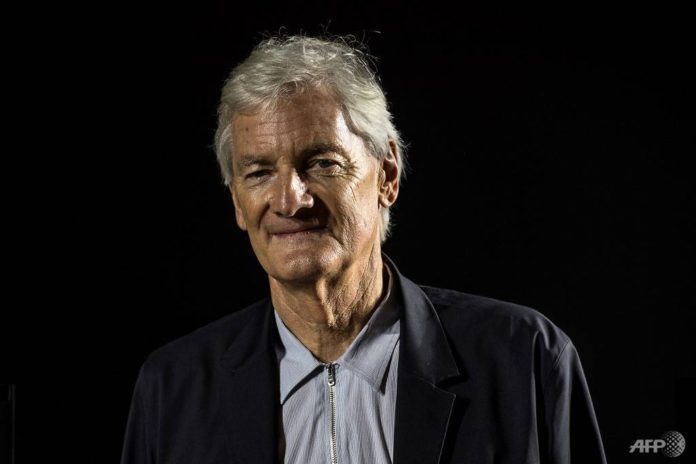
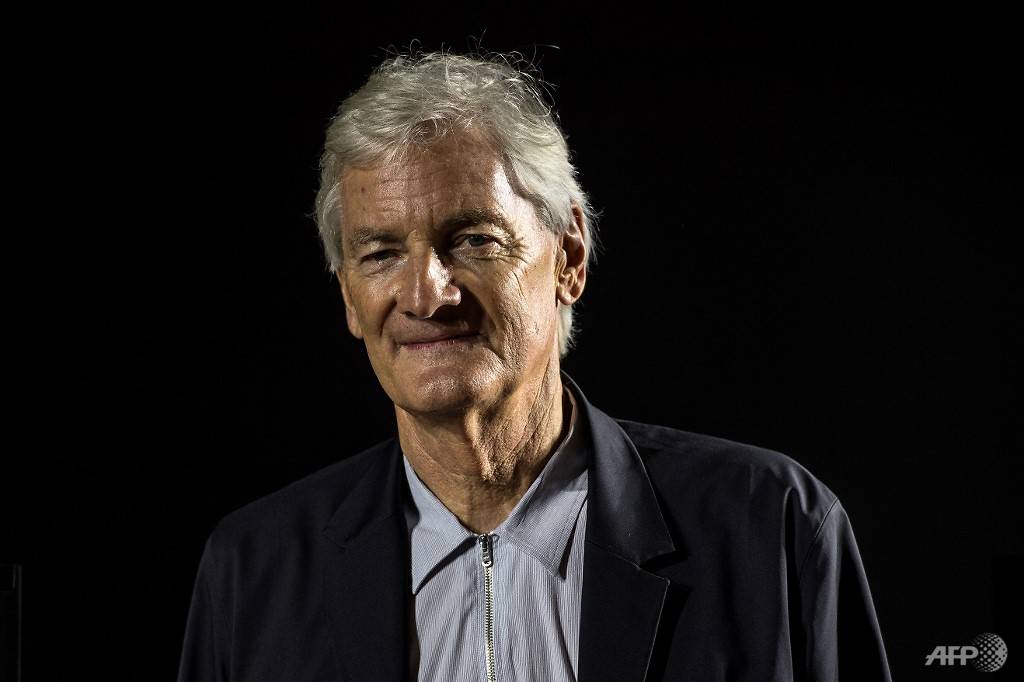
Founder of the Dyson company, designer James Dyson, poses during a photo session at a hotel in Paris on Oct 11, 2018. (Photo: AFP/Christophe Archambault)
HE NOW OWES A VILLA IN THE SKY
Is there a link between a multi-million-dollar penthouse and the seeming impossibility of engineering and manufacturing anything in the UK? If there is, it is not a question of style.
Whereas once the bosses bought old mansions or historicist houses, Sir James is determinedly modern. The Guoco tower was designed by Chicago-based architects SOM, the firm that defined the mid-century look of the corporate US.
The marketing photos show a slick, marble and timber clad modernist villa in the sky with vertigo-inducing floor-to-ceiling glass and the usual tasteful trappings of grey walls and carpets and corporate modernist steel and glass furniture and chunky space-filling sofas.
Perhaps Sir James will add a few hints of the lurid yellow familiar from his bagless cleaners or pine for the sonic blast of a Dyson hand-drier to break up the minimal monotony. Or perhaps not.
The living room of the “super penthouse”. (Image: Wallich Residence website)
GREAT SYMBOLISM
Should we perhaps allow Sir James to wallow in his wealth as he reclines in his private pool? Should we celebrate his success?
Or should we sense a little taste of sourness at the industrialist who talks up a hard Brexit and abandons its consequences?
Or might we in fact begin to understand the luxury penthouse as the architectural symbol of our age? The Romans had their triumphal arches, the Gothics their cathedral spires; we have the urban penthouse, an over-extruded tower pretending to be a house.
The skylines of London and New York are cluttered with unsold apartments at the apexes of generic glass blocks which throw a shadow on those of us living down below.
It seemed, for a while, as if the glut of super-luxe penthouses might signal an end to the wild speculation which has converted the skies above our cities into assets.
But perhaps there is a symbolism in Britain’s penthouses lying empty as Brexit looms, while one of its wealthiest and most successful citizens takes out a 99-year lease on a view that looks down on the world’s most profitable casino.
SINGAPORE: Retail sales in Singapore decreased 2.1 per cent in May 2019 as compared to a year ago, according to figures released by the Department of Statistics (Singstat) on Friday (Jul 12).
The estimated total retail sales value in May 2019 was about S$3.7 billion, with online retail sales making up about 5.3 per cent.
On a month-on-month basis, retail sales fell 2.2 per cent. Excluding motor vehicles, retail sales declined 1 per cent, the authority said.
There were mixed results across the different retail sectors.
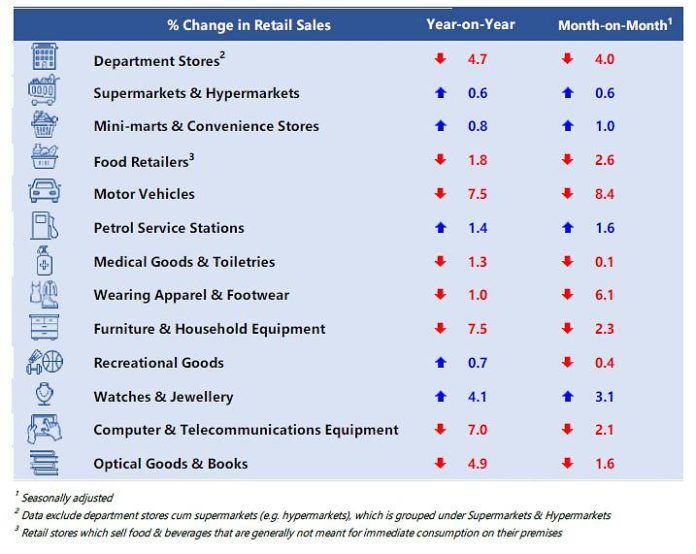
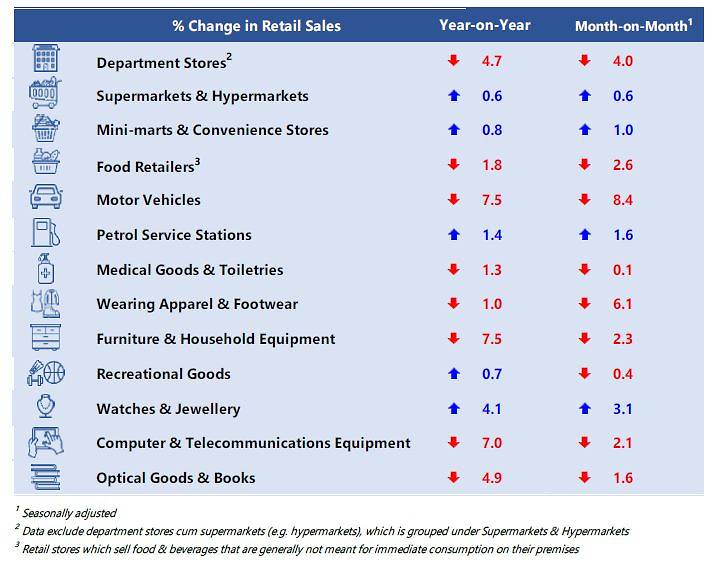
Compared to May 2018, sales of both motor vehicles and furniture and household equipment industries declined 7.5 per cent in May 2019, as a result of fewer motor vehicles sold and lower sales of furniture respectively, Singstat said.
Similarly, computer and telecommunications equipment and optical goods and books industries and department stores registered declines in sales of between 4.7 per cent and 7 per cent.
The watches and jewellery industry, however, grew by 4.1 per cent.
Sales of petrol service stations increased 1.4 per cent, but the sales volume recorded a small decline of 0.6 per cent after exclusion of the price effect.
Month-on-month, the sales of the motor vehicles industry decreased 8.4 per cent compared to April 2019.
“The sales decrease arose from lower volume of motor vehicles sold, which may be attributed to the lower COE quota of motor vehicles for the May to July 2019 period,” Singstat said.
For clothes and footwear, stores and retailers registered declines in sales of between 2.6 per cent and 6.1 per cent.
The sales of the watches and jewellery industry grew by 3.1 per cent, with a higher demand for gold jewellery. The petrol service stations and mini-marts and convenience stores also saw gains of 1.6 per cent and 1 per cent respectively.
(Table: Singstat)
FOOD AND BEVERAGE INDUSTRY
As for the sales of food and beverage services, it grew by 2 per cent in May 2019 compared to the same period last year.
As compared to the previous month, the sales of food and beverage services fell 1 per cent in May.
The total sales value of food and beverage services in May 2019 was estimated at S$849 million, compared to S$833 million in May 2018, Singstat added.
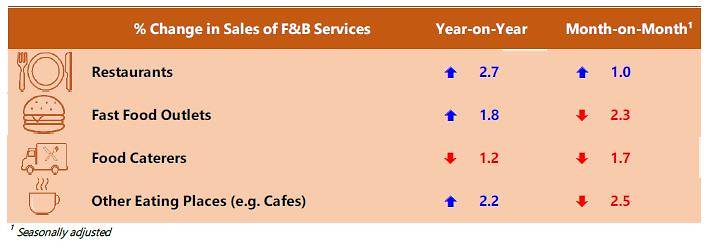
Year-on-year, turnover of restaurants grew 2.7 per cent; while sales at fast food outlets increased by 1.8 per cent. Food caterers saw a drop of 1.2 per cent in sales, while other eating places like cafes increased 2.2 per cent in May.
Month-on-month, fast food outlets, other eating places and food caterers experienced declines in sales of between 1.7 per cent and 2.5 per cent. Only the turnover of restaurants rose 1 per cent.
(Table: Singstat)
The retail sales index and the food and beverage services index measure the short-term performance of retail and F&B service industries based on their sales records.
Sales figures refer to the value of retail goods or food and beverages sold to consumers during the month, excluding taxes such as Goods and Services Tax.
BANGKOK: Countries in the Association of Southeast Asian Nations (ASEAN) must be prepared for more terrorist activity, warned Singapore Minister of Defence Ng Eng Hen on Thursday (Jul 11).
“If you date it to 9/11, Al-Qaeda, Bali bomb blast, the rest of the JI leaders; there was a lull, if you like, with Islamic State-related activities going up in Iraq and Syria. But that means now that when the centre of gravity shifts to ASEAN, we must expect an increase in activity and we already have seen it,” he said.
According to Dr Ng, the number of people radicalised and the number of terror networks in ASEAN countries, including in Singapore, have gone up.
“Whether it is in the networks that are formed or whether it is in the availability of procurement of weapons for terrorist activities, all these have gone up. None of the signs suggest to us that the threat of terrorism has come down.”
Thailand’s Prime Minister Prayut Chan-O-Cha (front, centre) poses for a group photo with ASEAN defence ministers and officials at the Government House in Bangkok, on Jul 11, 2019. (Photo: Royal Thai Government / AFP)
Dr Ng was speaking on the sidelines of the 13th ASEAN Defence Ministers Meeting (ADMM) in Thailand on Thursday, where ASEAN defence ministers pledged to promote sustainable security cooperation and acknowledged the important of the initiatives adopted by ASEAN to strengthen regional peace and security.
One such initiative was the ASEAN Our Eyes initiative, a collaborative platform to exchange counter-terror information.
“If terrorists are attacking your homeland, you certainly want information to be shared to protect your citizens … The more coordinated we are, the more we work together, I think the more the people of ASEAN benefit,” said Dr Ng.
He called for the region’s armed forces to work together more closely and beef up capabilities not just in intelligence, but also in urban counter-terrorism operations.
He said one way Singapore can contribute is by offering the upcoming SAFTI City for ASEAN militaries to train in. The Singapore Armed Forces has already opened up another urban training facility in Murai to the Philippines.
The Defence Minister added that ASEAN has made great headway in dealing with transnational security challenges.
“Over the years, we have been coming up with more initiatives and that is a good sign,” he said.
Dr Ng also met Thailand Deputy Prime Minister and Minister of Defence Prawit Wongsuwan, with both parties reaffirming the close and long-standing bilateral defence relations between Singapore and Thailand.