Home Blog Page 754

Riots, bombings, building collapses: Born in a fire station 75 years ago, this ex-SCDF officer still volunteers in one

0

SINGAPORE: It was the afternoon of Mar 10, 1965, and 21-year-old Yunnos Shariff could feel the ground rumbling beneath his feet.

As the fire alarm at the Central fire station on Hill Street sounded, louder alarm bells rang in his head.

“I said: ‘Eh something is wrong!’ I told the boys that they had to be careful, this is only the beginning,” recalled Mr Yunnos, now a sprightly 75-year-old.

Cloistered in the second floor of the fire station’s control room, Mr Yunnos gave the orders for his men to dispatch three fire engines.

His instructions were followed to the tee – firefighters began to climb into their gleaming red vehicles, gearing up for a day forever seared into the annals of Singapore history.

Three victims would lose their lives that day because of the MacDonald House bombing, with more than 30 others injured.

As Mr Yunnos looked out the window, one of the men about to be mobilised cut a familiar figure – it was his father.

“At first, I was so scared (for his safety),” said Mr Yunnos, who joined the Singapore Fire Brigade (the forerunner of the Singapore Civil Defence Force) in 1962. “But then, I thought to myself: ‘That is part of his duty and my duty is to send the fire engines.'”

There was not much time to dwell on these fears as the men in the control room began to be inundated by calls.

“Not only did the alarm sound, the police called and the public started calling us without stopping,” said Mr Yunnos.

“It was messy, noisy – there were so many calls.”

Hours later, Mr Yunnos’ father returned to the station unharmed, but the two never spoke about the events which transpired that day.

He said: “I dared not ask him about it because I respected him.”

THE CHILD WHO WANTED TO BE A PARLIAMENTARIAN

Not only did Mr Yunnos grow up in a fire station, he was born on the grounds of one.

The fourth of 13 children, he was raised in Geylang fire station, and stayed in a one-room apartment in the station’s quarters.

Discipline was taken seriously at the station, and this applied not just to the firefighters but their children as well.

Yunnos Shariff (2)

A number of Mr Yunnos’ old photographs are currently on display at the Civil Defence Heritage Gallery. (Photograph: Matthew Mohan

“The children were not allowed to play around because there was no playground, the only place we could play is at the yard. But that yard was used for firefighters having their drills,” said Mr Yunnos.

“So what to do? We stayed at home. Every station was the same except for Queensway, where there was a football field where the children could play.”

The family then moved to the Central fire station where Mr Yunnos witnessed firsthand the dangers firefighters faced on a daily basis.

Till this day, he remembers seeing the members of the fire brigade return to the station during the Maria Hertogh riots in 1950.

“When the officers came back on the number 3 (Major Pump 3 fire engine), I saw the blood on their shirts.”

But he always held the vocation in high regard.

“Right in front of my block, when I opened the door I could see the yard, and the firefighters doing drills,” Mr Yunnos said. “It was not only like ‘Wow’, but I said that when I grow up I wanted to be like somebody here.”

However, things could have turned out rather differently if he had done better in school.

“I wanted to be a lecturer so I could join the parliament. But sad to say I got a low grade … only grade three which was not enough,” he said.

“If I’d got grade two or grade one, I wouldn’t be here, I would be in parliament!”

DEALING WITH LALANG FIRES

After completing his training earlier than expected due to his familiarity with the various equipment and drills, Mr Yunnos spent slightly less than two years as a firefighter.

“I’ve only attended 60 fire calls … most were overgrown lalang fires along the highways, one was a fire at (Pulau) Bukom and one was at Kallang Gasworks.”

“The fire engines that we had didn’t carry water,” he said. “When we arrived at the fire we would have a problem – where to get the water supply?”

Without a fire hydrant, firefighters had to rely on using suction equipment to draw water from other water bodies such as village wells.

“We cut the tree branches to use as beaters to fight the fire,” added Mr Yunnos. “But those were only for overgrown lalang fires, not for house fires!”

Yunnos Shariff (3)

Mr Yunnos purchased this fire engine model for $240 at Robinsons two days before the 1972 fire. (Photo: Matthew Mohan)

Mr Yunnos went on to work in the Central fire station’s control room, where he was first a telephone operator before going on to supervise a rota of ten men as he did during the MacDonald House bombing.

Back in the day, upon receiving calls, the operators had to jot the details down on a piece of paper, roll it up and send it down a hollow pole. This would produce a sound, alerting firefighters on the ground floor that they were required on scene.

“In the control room besides coordinating with officers handling the fire, I had other work: For example, any firefighters who wanted to take leave, special off-days, we had to record it.”

Promoted as a dangerous trade inspector – a type of enforcement officer, Mr Yunnos’ next brush with a major incident would be in 1972 when he was on scene a day after the Robinsons department store fire.

Nine people perished in the blaze and Mr Yunnos remembers the scene of total destruction.

In a strange twist of fate, he had been at the department store several days earlier to purchase a model of a fire engine for his personal collection.

“The manager recognised me because I was there two days earlier,” he explained. “I told him it was my job to inspect the cause of the fire. 

“The whole floor collapsed because it was made of timber, the lift cage was also made of timber,” he said. “Going down into the basement was not easy, there was no lift, the staircase had burnt down.”

Six years later, Mr Yunnos would be back in the control room, this time in charge of a section or three rotas, mobilising firefighters to deal with the collapse of Hotel New World.

“In the control room we had a headache, where could we get more men?” he recalled.

“We have to call all the off-duty fireman down, recall them. There were so many calls coming in, even the police were shouting at us: ‘You must send the fire engines now! More fire engines!'”

A PASSION FOR THE JOB 

After over four decades of service, Mr Yunnos retired at the age of 60.

He spent several years at home, busying himself with a hobby – collecting memorabilia related to firefighting.

“I collected patches, caps, whatever belongs to the fire service I would collect,” he said. “I started from young, when I stayed in the quarters.

“Every month I’d ask my father if he could spare some of his money, because I wanted to buy (these things). He would bring me across the road and then when we reached there, I would say I wanted this and that. He said: ‘If you want them, next time when you begin work, you buy them.’ 

“So when I started working, I started buying them.”

Yunnos Shariff (4)

Yunnos Shariff polishes a nozzle. (Photo: Matthew Mohan)

But when the SCDF came calling for volunteers, Mr Yunnos could not resist.

Today, he helps out at the Civil Defence Heritage Gallery as a guide. As a volunteer with the Civil Defence auxiliary unit, he now gives tours to walk-in visitors and organised groups.

“They will ask things like: what are the types of fires? For overseas firefighters, it’s different, they want to exchange views, experiences,” Mr Yunnos said. “The best part is that they give us patches, that is the time I collect patches.”

Mr Yunnos is currently the SCDF’s oldest volunteer and performs over 100 hours of duty per month, far exceeding the minimum 16 hours required. He has also donated much of his memorabilia to the gallery – his photographs, patches, fire engine models and equipment all on display.

“One room at home is full of these (things) and that’s why I decided to contribute to the museum,” he explained nonchalantly.

Minutes after his interview with reporters ended, the fascinating Mr Yunnos was seen perched on a stool, polishing firefighting equipment.

It is a Monday, the day the gallery is usually closed for maintenance, and although he doesn’t need to, the veteran officer insists on donning cotton gloves and quietly goes about his business with no fuss. 

“They wanted to get the contractor to do it, I told them no,” he said. “It can be done by us.”
Source link

Maxwell Chambers opens for preview ahead of grand reopening

0

SINGAPORE: Shutterbugs and heritage buffs were among the first to take a peek into the newly-refurbished Maxwell Chambers Suite on Thursday (Jul 18), two years after the building closed for renovation works. 

Constructed in 1928, Maxwell Chambers was first used as the police force’s barracks. From the 1930s to 1999, it was the Traffic Police headquarters.  

After the Traffic Police’s departure in 1999, the building underwent a revamp and sported a bright red facade as the Red Dot Traffic Design Museum. 

It was then gazetted as a conservation building in 2007.

TRACING ITS ROOTS

Mr Wee Cheng Soon's descendants.

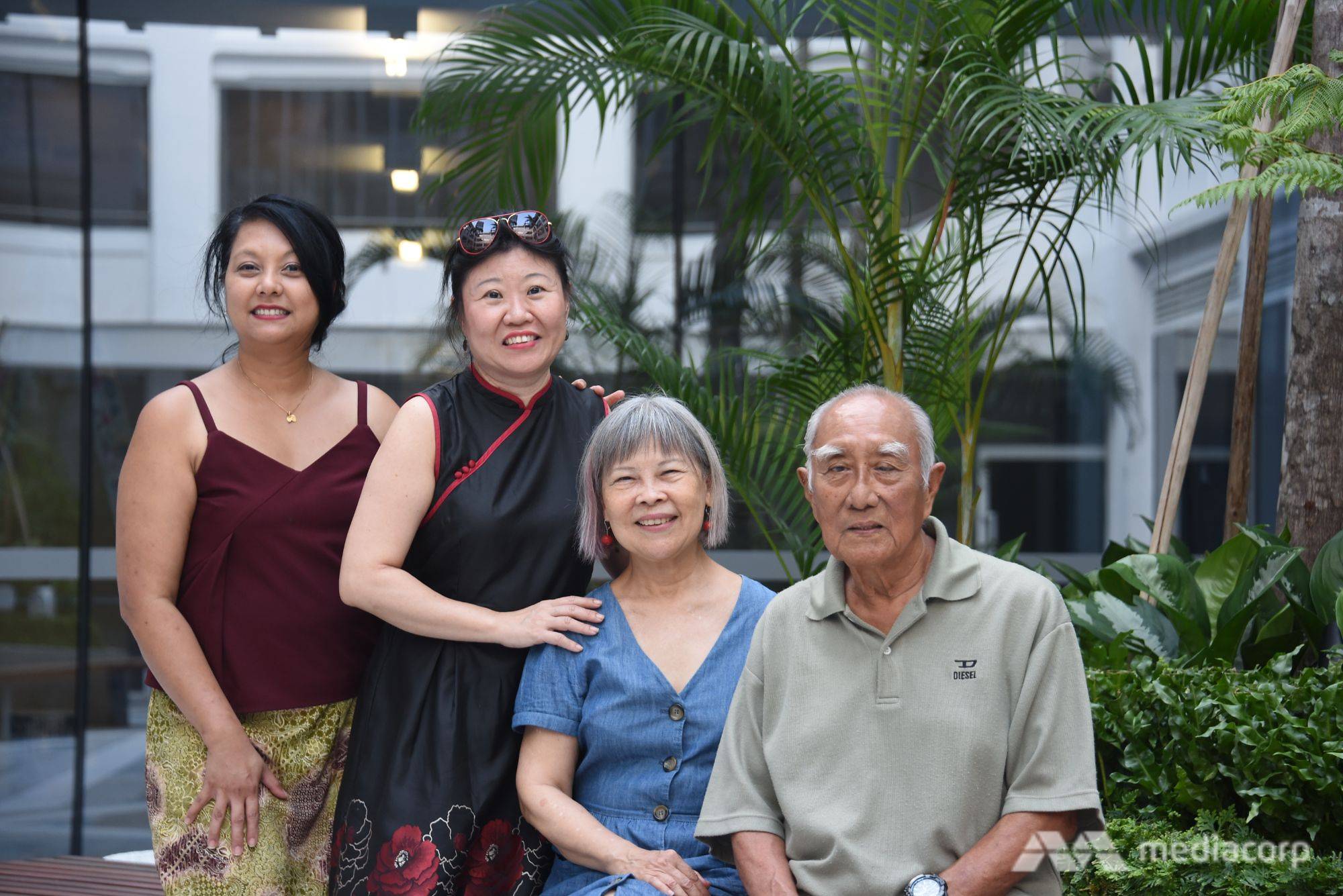
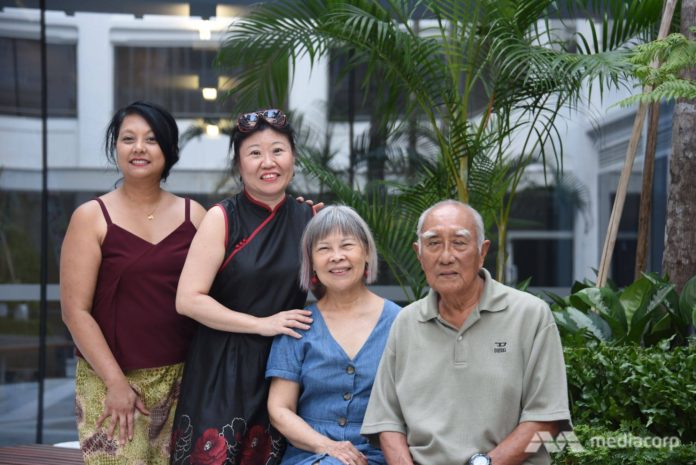
Mr Wee Cheng Soon’s descendants from left to right: Great granddaughters Tanya Pillay-Nair and Sherry Lim, grandniece Juliana Lim and grandson Dr Michael Chia. (Photo: Darius Boey)

The man who made Maxwell Chambers a reality was Mr Wee Cheng Soon, the owner of now-defunct Wee Cheng Soon Construction. Back then, he won the tender to construct the building at 321,100 Straits dollars.

Joining the preview on Thursday were Mr Wee’s grandson Dr Michael Chia, as well as Mr Wee’s grandniece and great-granddaughters. 

Dr Chia, 90, said he felt extremely proud upon seeing his late grandfather’s work being refurbished. 

“This was a journey of discovery because I have never been here before and I didn’t know that he had built this until a few days ago,” he said. “I feel very proud that my grandfather has built this building and many others in Singapore.”

“My kids don’t know about this place, but I would definitely want to tell them, and I would bring them here and show them around,” he said. 

“It’s difficult to say (which part is my favourite) because every part is interesting and it’s almost perfect.”

Mrs Margaret Wee joins Maxwell Chambers preview. (Photo: Darius Boey)

Mrs Margaret Wee, wife of Mr Vincent Wee, grandson of the late Mr Wee Cheng Soon also joined the preview. (Photo: Darius Boey)

The preview is part of the Ministry of Law’s efforts to work with various heritage and photography communities to share the building’s rich heritage ahead of its grand opening on Aug 8, as Singapore celebrates its Bicentennial year and 54th National Day. 

dome-shaped arbitration room

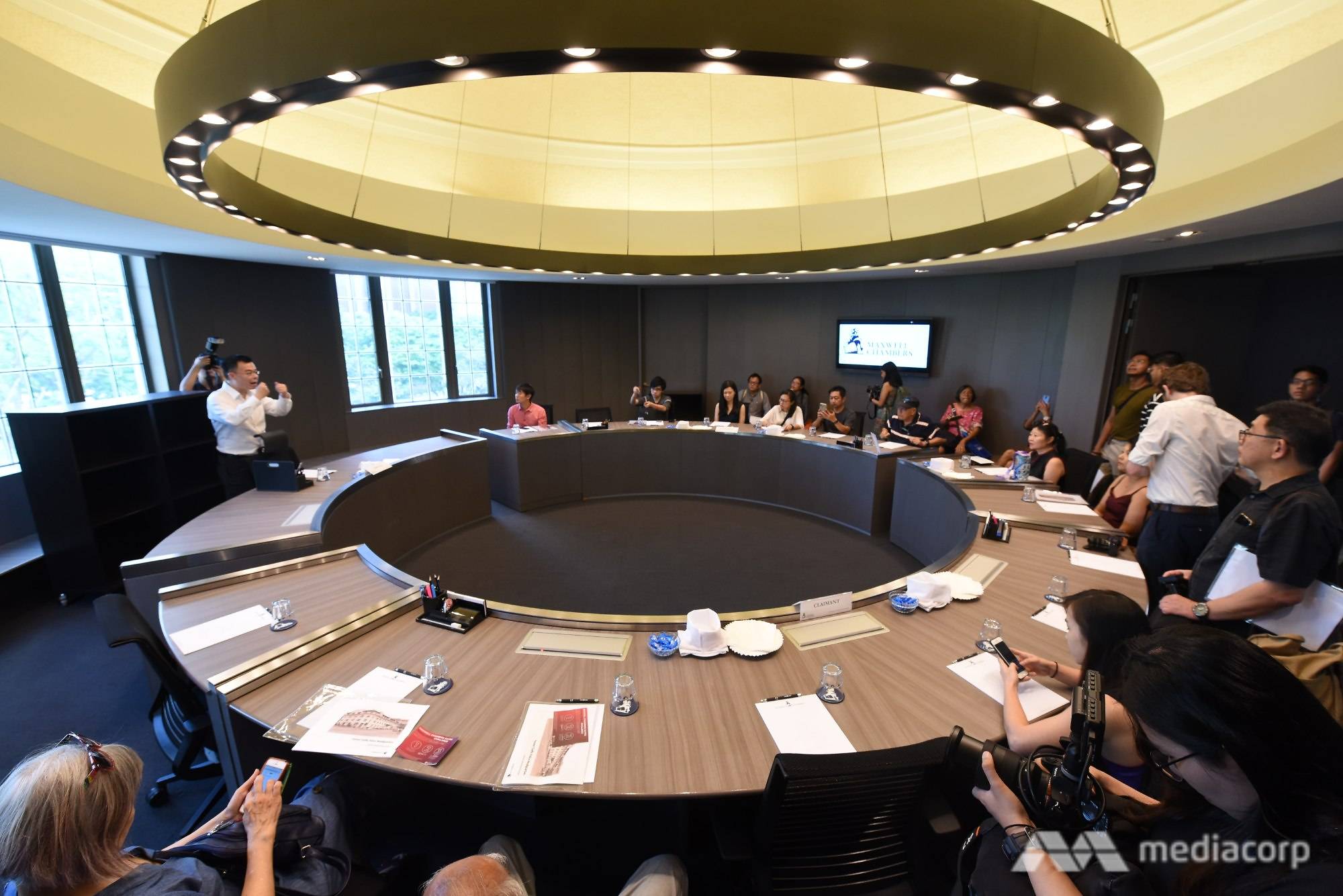
A dome-shaped arbitration room inside Maxwell Chambers. (Photo: Darius Boey) 

AN INSTAGRAMMER’S PARADISE?

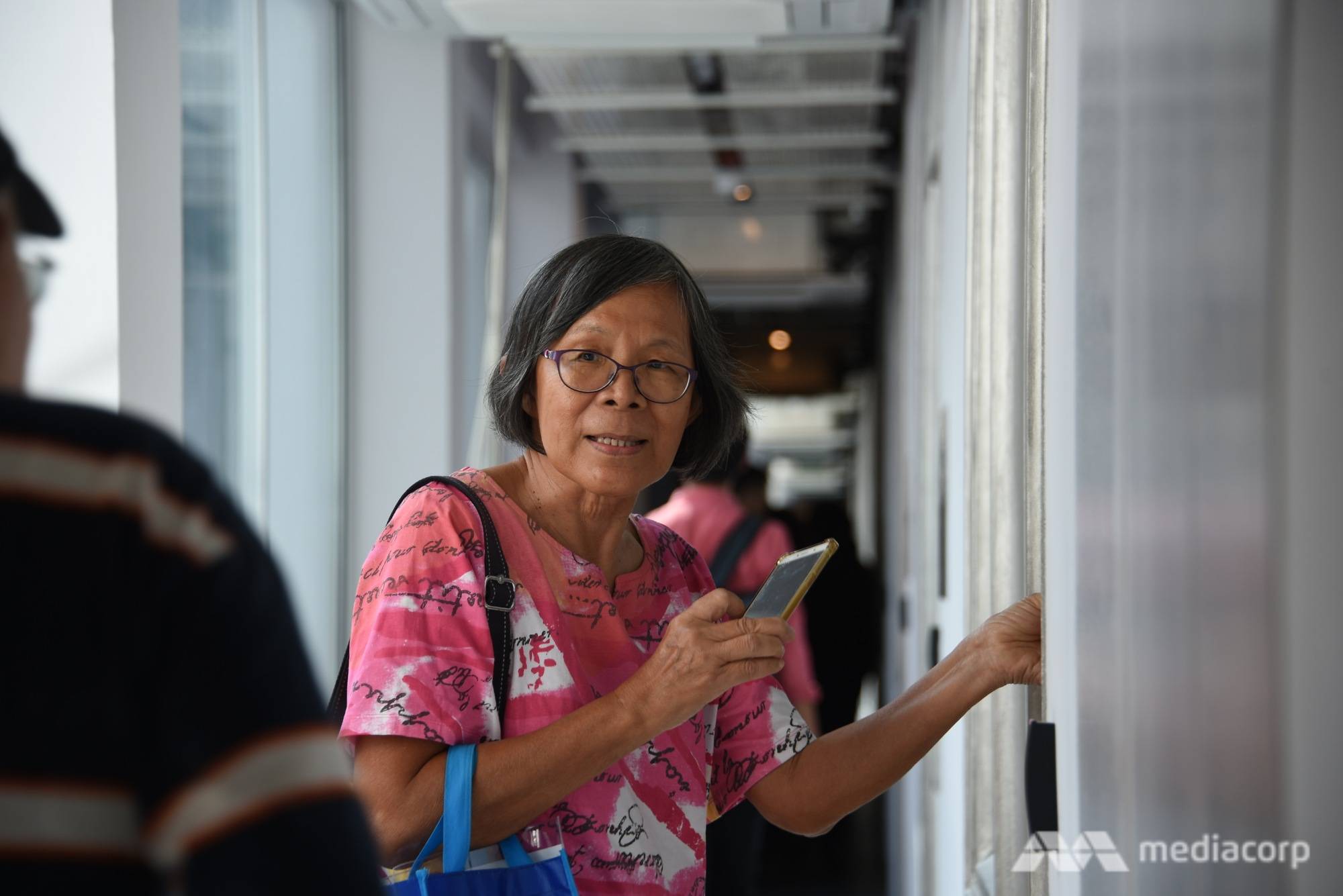
Ninety members of various heritage and photography communities in Singapore, including the likes of Singapore Heritage Society, My Community and Nostalgic Singapore were there.

Bridge linking Maxwell Chambers to Maxwell Chambers Suites. (Photo: Darius Boey)

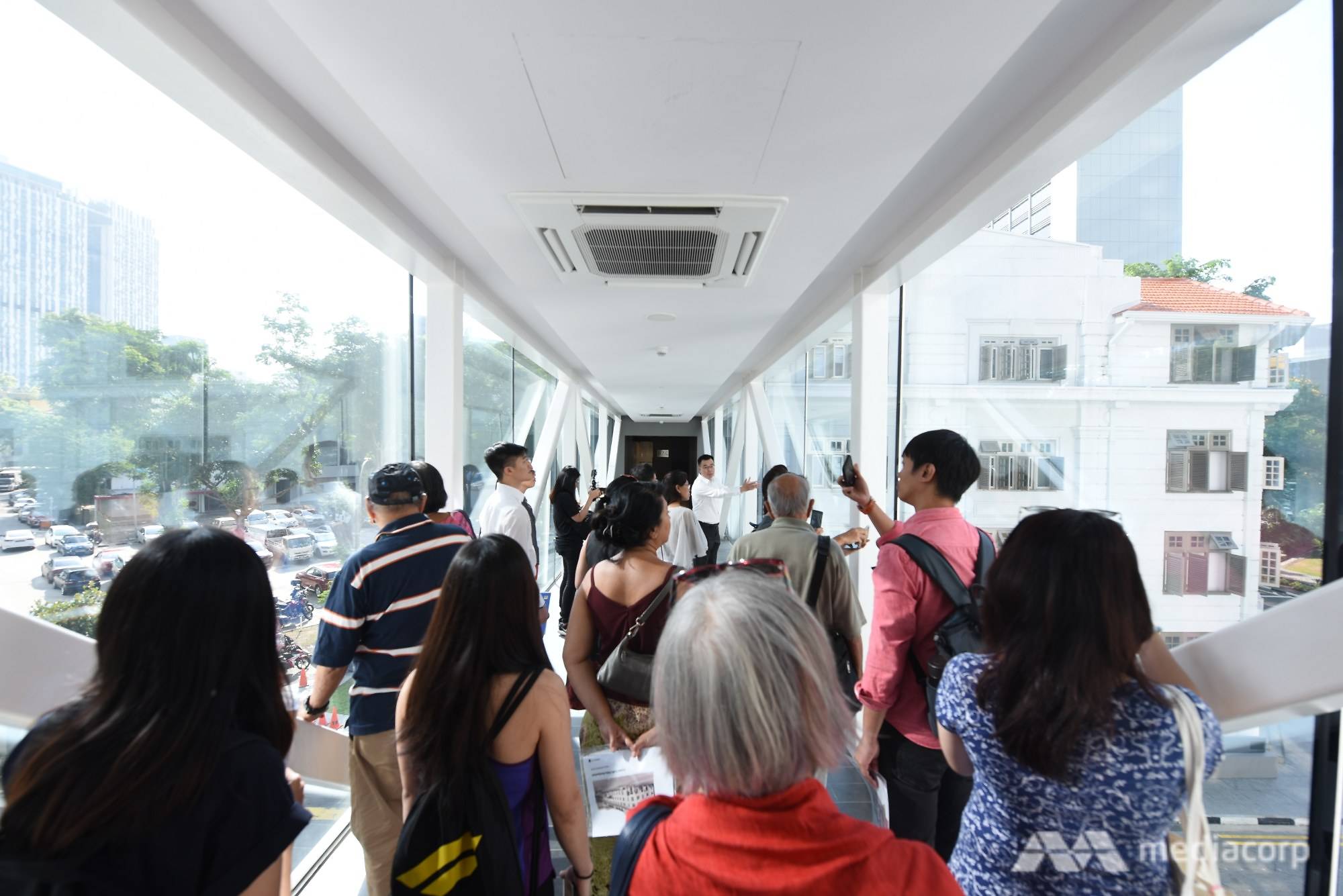
This newly-constructed bridge links Maxwell Chambers to Maxwell Chambers Suites. (Photo: Darius Boey)

One of them is Mr Jiaquan Lu, 31, a member of the Singapore Photography Community, who first came to know about the building when it was still the Red Dot Traffic Museum.

Mr Lu said he only learned about the building’s significance through his parents. 

“It’s my first time experiencing the building apart from their stories and walking through it as well. The building speaks for itself through some of the architectural symbols. It’s interesting to know these bits and pieces of history,” said Mr Lu. 

This artwork can be found within the building's compound (Photo: Darius Boey)

This artwork can be found within the building’s compound (Photo: Darius Boey)

When asked what drew him to join the tour, he said: “It was definitely more of the historical value that drew me, not the aesthetics … I guess we take it for granted when we pass by these buildings and there’s a lot of history behind it.” 

The building has also become an Instagram photographer’s paradise. Following its refurbishment, more people have been flocking to Maxwell Chambers for snapshots. 

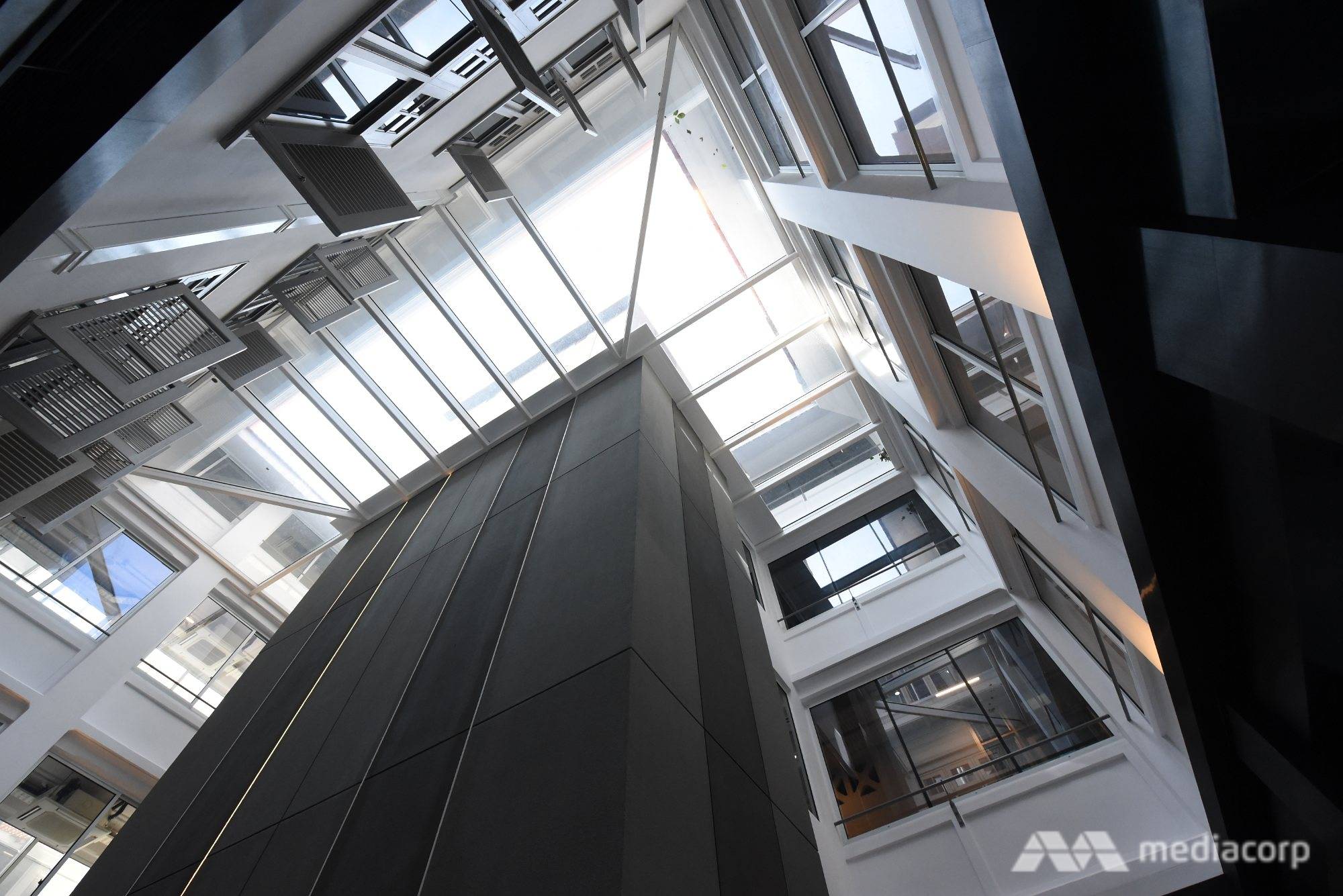
There are many Instagram-worthy spots within Maxwell Chambers. (Photo: Darius Boey)

There are many Instagram-worthy spots within Maxwell Chambers. (Photo: Darius Boey)

“People have actually come here to take photos as they think it’s a very instagrammable building,” said Mr Han Kok Juan, Deputy Secretary of the Ministry of Law.

“I think the beauty and intricacy of this building’s design needs to be shared with the younger generation of Singaporeans and I do think that modern photography and social media is a good channel for a wider population of Singaporeans to appreciate the heritage and the history of this building.”

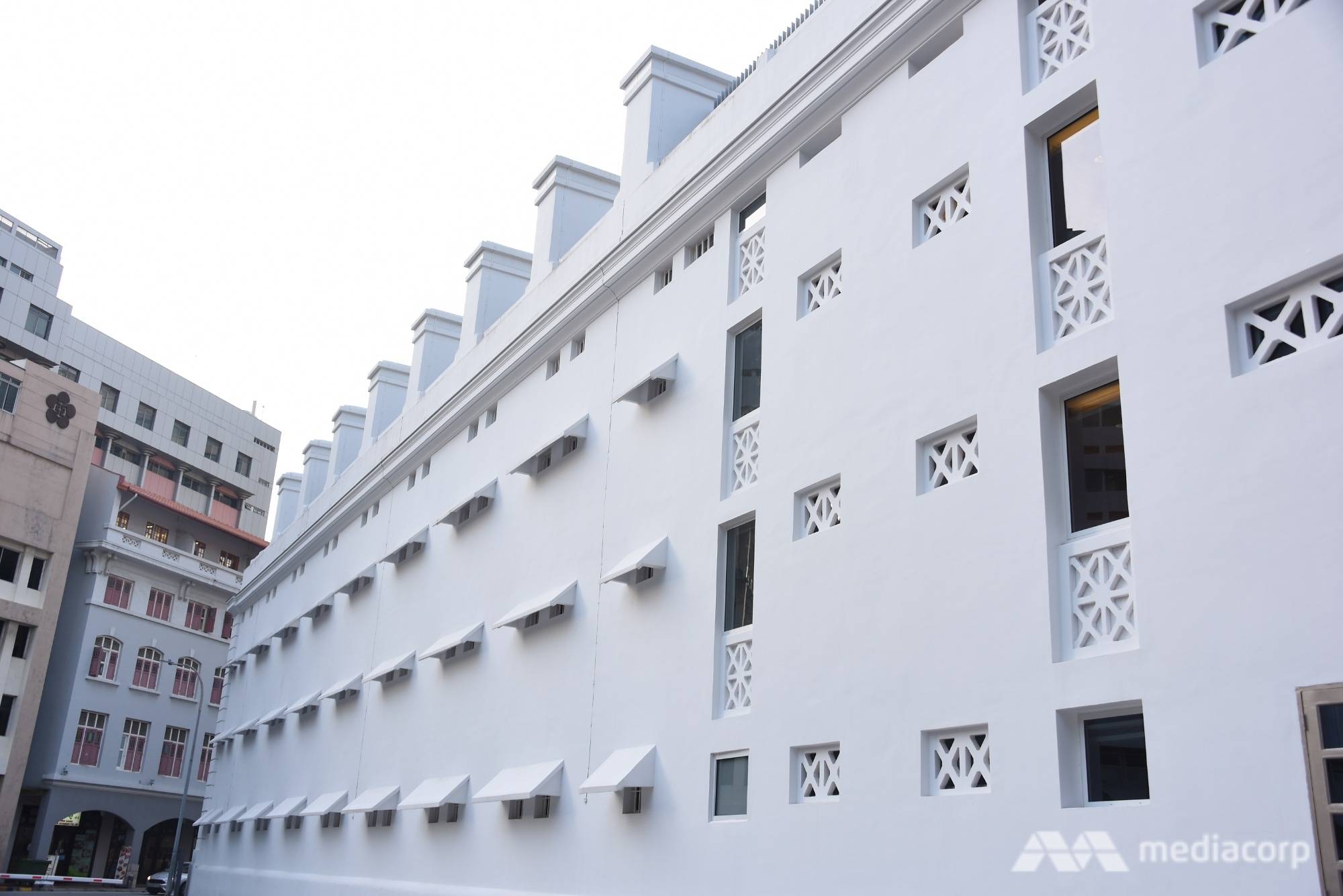
Maxwell Chambers' hooded windows

The building’s hooded windows were preserved during the refurbishment. Back in the day, they were communal kitchens. (Photo: Darius Boey)

Source link

Singapore returning more than S$50 million 1MDB-related monies to Malaysia: Police

0

SINGAPORE: About S$50.3 million of seized 1Malaysia Development Berhad (1MDB)-related monies have either been transferred to Malaysia or are being processed by the banks for repatriation, said the Singapore Police Force on Thursday (Jul 18).

In response to queries from CNA, police said that court applications to return the monies have been filed by the Commercial Affairs Department, in consultation with the Attorney-General’s Chambers.

“The first tranche of court applications for the return of about S$15.3 million in 1MDB-related monies was granted in Sep 2018 and the second tranche of about S$35 million was granted in Mar 2019,” police added.

“Part of the monies have already been transferred to Malaysia, while the rest are still being processed by the banks.”

READ: RM3.3 million spent in one day using Najib Razak’s credit cards, bank says

Last Friday, Malaysian Finance Minister Lim Guan Eng said that the country has recovered RM92.3 million (S$30.5 million) of 1MDB-related funds from Singapore.

In September last year, a Singapore court ordered S$15.3 million in 1MDB-related funds to be returned to Malaysia.

Singapore authorities had said in 2016 that they had seized S$240 million in cash and properties as a result of investigations into 1MDB-related fund flows in the country. 

RM925 MILLION IN VARIOUS CURRENCIES RETURNED

In his statement on Friday, Mr Lim said that a total of RM925.1 million (US$225 million) linked to 1MDB has been returned to the Malaysian government so far, adding that the funds recovered were in various currencies of different denominations.

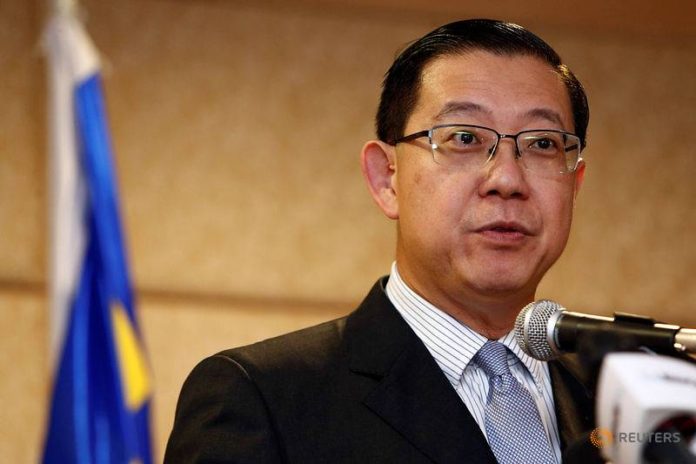
Malaysia's Finance Minister Lim Guan Eng speaks during a news conference in Putrajaya

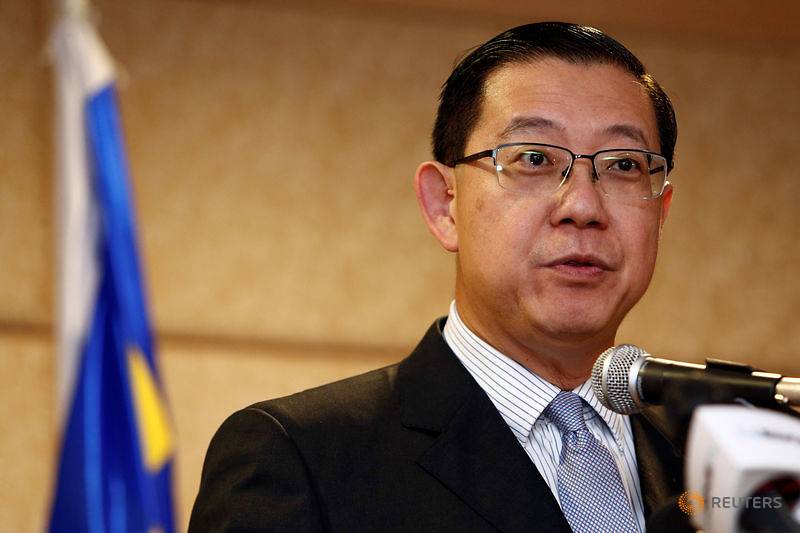
Malaysia’s Finance Minister Lim Guan Eng speaks during a news conference in Putrajaya, Malaysia on May 24, 2018. (Photo: Reuters/Lai Seng Sin)

The minister said RM805.8 million was returned from the United States, of which RM567.8 million were from the Park Lane Hotel in Manhattan and RM238 million from Red Granite Pictures.

In addition, RM27 million was recovered in Malaysia, of which RM6.1 million was from the 1MDB Foundation and RM20.9 million from the state firm itself.

“This is the result of the efforts made by the authorities, including the Malaysian Anti-Corruption Commission, the Royal Malaysia Police, the Attorney-General’s Chambers and the cooperation with foreign authorities,” he said.

“Efforts to recover the funds will continue to repay 1MDB’s debts amounting to RM51 billion,” the minister added, adding that the amount included future interest payments guaranteed by the federal government.

READ: 1MDB – Malaysia’s extraordinary financial scandal

READ: Malaysia to sell 1MDB-linked superyacht Equanimity for US$126m to Genting

Last month, Putrajaya said it is looking to recover about US$5 billion worth of foreign assets linked to 1MDB.

Malaysian and US investigators believe about US$4.5 billion was misappropriated from 1MDB by high-level officials of the fund and associates between 2009 and 2014.

Source link

24 arrested, nearly 2kg of ‘mushroom’ seized in drug raids

0

SINGAPORE: A total of 24 suspected drug offenders were arrested and about 1.9kg of “mushroom” was seized during several raids on Tuesday night (Jul 16) by the Central Narcotics Bureau (CNB).

Some of those arrested are suspected to be involved in distributing sizeable quantities of new psychoactive substances (NPS) in the Geylang area, CNB said in a news release.

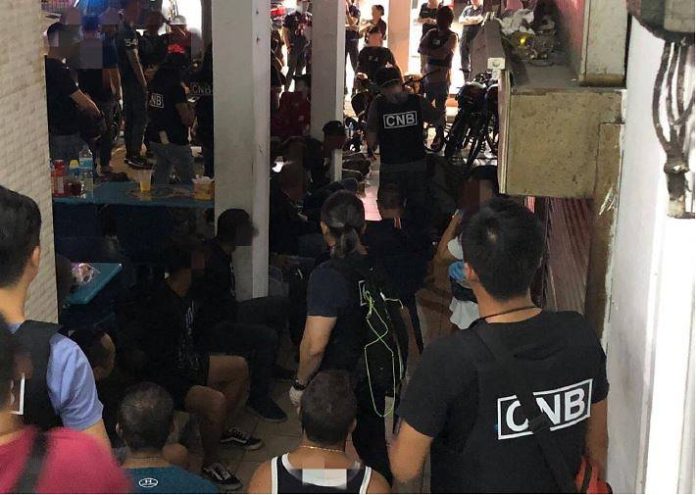
Shortly after 8pm, a team of CNB officers arrested 19 suspected drug offenders near Geylang Lorong 10. Among the 19 arrested were two Singaporean men, aged 38 and 49, who were suspected drug traffickers.

“Officers also recovered about 1,804g of vegetable matter containing NPS,” CNB said.

1.8kg of ‘mushroom’ seized, 24 arrested in CNB raids

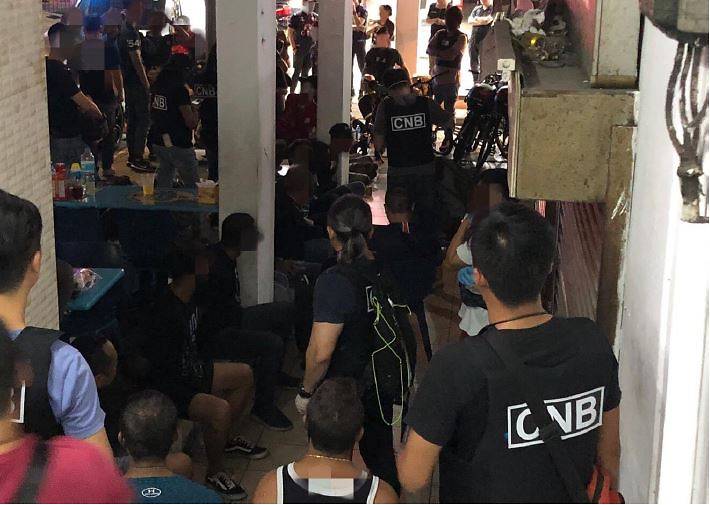
Suspected drug offenders arrested in a CNB raid near Geylang Lorong 10 on Jul 16, 2019. (Photo: Central Narcotics Bureau)

A separate raid at about the same time took place at a unit at Cassia Crescent.

CNB officers arrested a 54-year-old Singaporean man who was a suspected drug trafficker and a 33-year-old Singaporean woman who was a suspected drug abuser.

Officers also recovered a total of about 78g of “vegetable matter” and 104g of powder, both containing NPS.

A bottle of acetone and two bottles of acetone mixed with NPS powder were also confiscated.

Three other suspects were subsequently arrested at two different locations. A 46-year-old was arrested near Ang Mo Kio Avenue 1 while a 42-year-old and a 46-year-old were arrested near Odeon Katong.

All three Singaporean men are suspected to be associated with the 54-year-old male who was arrested at Cassia Crescent.

Investigations into the drug activities of the suspects are ongoing.

NPS LINKED TO SIDE EFFECTS

CNB said that it maintains a zero-tolerance stance towards drugs and will not hesitate to take action against NPS activities.

NPS, also known colloquially as “mushroom”, are substances that mimic the effects of other Class A controlled drugs such as cannabis, cocaine and Ecstasy.

These substances are produced by introducing slight modifications to the chemical structures of controlled drugs.

Their abuse has been linked to adverse physical and psychological reactions, including paranoia, seizures, hallucinations and even death.

The consumption, possession, trafficking, import or export of any controlled drugs is an offence under the Misuse of Drugs Act.

Those found guilty of trafficking Class A controlled drugs face at least five years’ jail and five strokes of the cane.

Source link

2 people rescued from Bukit Batok flat after fire breaks out

0

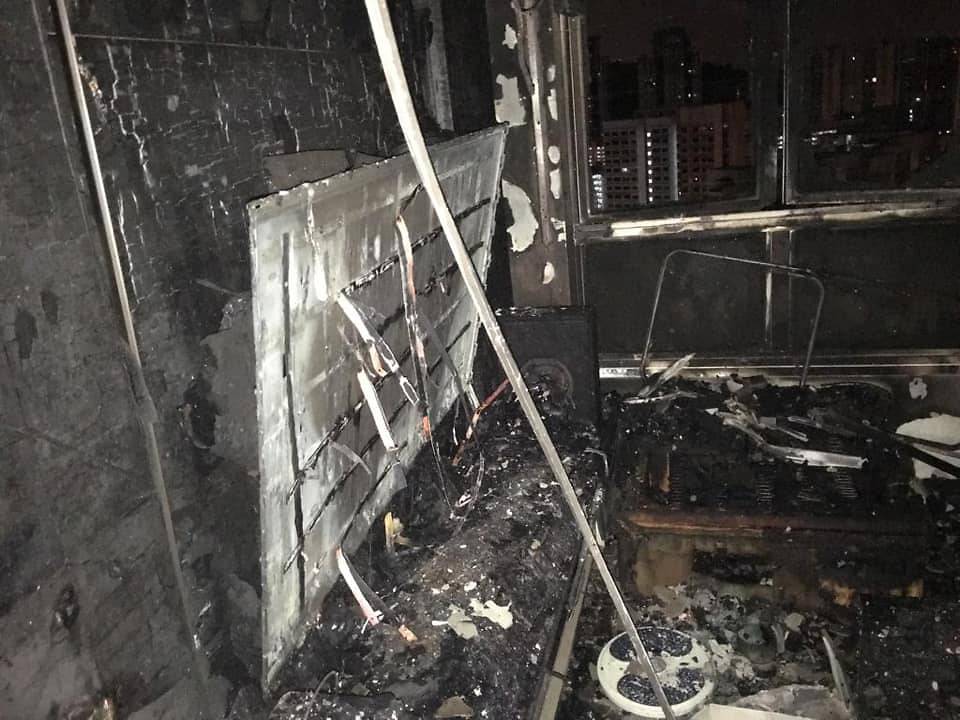
SINGAPORE: A man and woman were rescued from a 26th-floor Bukit Batok flat after a fire broke out in the early hours of Thursday (Jul 18).

About 70 residents of Block 293D Bukit Batok Street 21 were evacuated during the fire, and an elderly man was injured during the evacuation.

The cause of the fire has not been identified by the authorities, although Mr Murali Pillai, the Member of Parliament for the area, said it has been traced to two e-scooters.

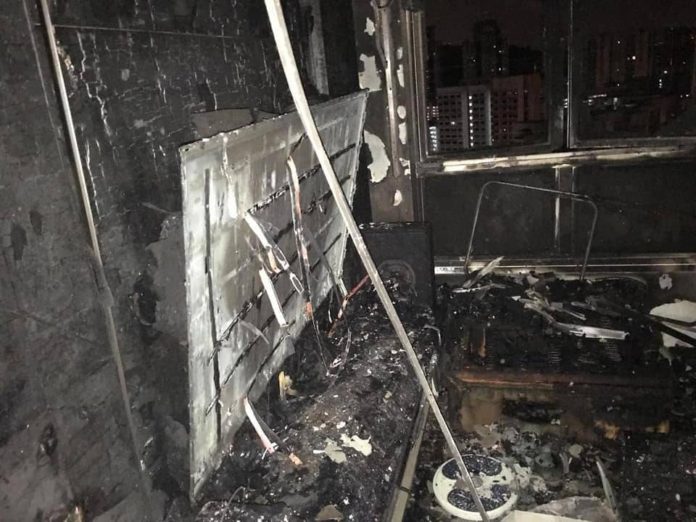
“The fire involved the contents of the living room and was extinguished using two water jets,” said the Singapore Civil Defence Force (SCDF) in a Facebook post, adding that it responded to the fire at about 12.40am.

Firefighters wearing breathing apparatus forced their way into the burning flat and rescued a man and a woman, SCDF said.

The man was found unconscious and taken to Ng Teng Fong General Hospital, while the woman was taken to Singapore General Hospital for smoke inhalation.

Two people were found in the burning flat

Two people were found in the burning flat. (Photo: Facebook/Murali Pillai)

Student James Lum, who lives in the block, said he was out getting food when the fire broke out.

“I was at the coffee shop getting supper. I heard a bit of shouting and I saw police cars coming in to the area,” the 21-year-old told CNA.

About 70 residents were evacuated during the fire at Block 293D Bukit Batok Street 21

About 70 residents were evacuated during the fire at Block 293D, Bukit Batok Street 21. (Photo: Facebook/Murali Pillai)

Fire broke out at Block 293D, Bukit Batok Street 21

Emergency responders at the scene. (Photo: James Lum)

“I went to check it out. When I was approaching the scene, I saw a black shape falling out of the sky and it hit the ground,” he said, adding that he did not know what the object was. 

When he looked up, he noticed smoke and saw the fire. “It was very scary. We were told by the police officers we cannot walk to our unit,” he said.

Firefighters allowed him to return to his flat at around 2am.

The cause of the fire is under investigation, said SCDF.

Source link

3 injured, 70 evacuated after fire breaks out in Bukit Batok living room

0

SINGAPORE: A fire broke out at a Bukit Batok flat in the early hours of Thursday (Jul 18), leading to the evacuation of about 70 people.

Three people were injured and taken to hospital in the incident at Block 293D, Bukit Batok Street 21. The flat was on the 26th floor.

The Singapore Civil Defence Force (SCDF) responded to the fire at about 12.40am.

“The fire involved the contents of the living room and was extinguished using two water jets,” said SCDF in a Facebook post.

Firefighters wearing breathing apparatus forced their way into the burning flat and rescued a man and a woman.

The man was found unconscious and taken to Ng Teng Fong General Hospital, while the woman was taken to Singapore General Hospital for smoke inhalation.

Another elderly man was injured while evacuating and taken to Ng Teng Fong General Hospital.

Fire broke out at Block 293D, Bukit Batok Street 21

Emergency responders at the scene. (Photo: James Lum)

Fire broke out at Block 293D, Bukit Batok Street 21

A fire broke out at a Bukit Batok flat in the early hours of Jul 18, 2019, leading to the evacuation of about 70 people. (Photo: James Lum)

Student James Lum, who lives in the block, said he was out getting food when the fire broke out.

“I was at the coffee shop getting supper. I heard a bit of shouting and I saw police cars coming in to the area,” the 21-year-old told CNA.

“I went to check it out. When I was approaching the scene, I saw a black shape falling out of the sky and it hit the ground,” he said, adding that he did not know what the object was. 

When he looked up, he noticed smoke and saw the fire. “It was very scary. We were told by the police officers we cannot walk to our unit,” he said.

Firefighters allowed him to return to his flat at around 2am.

The cause of the fire is under investigation, said SCDF.

Source link

Cleaning robots that ‘wink’ and ‘joke’ to be deployed by March 2020

0

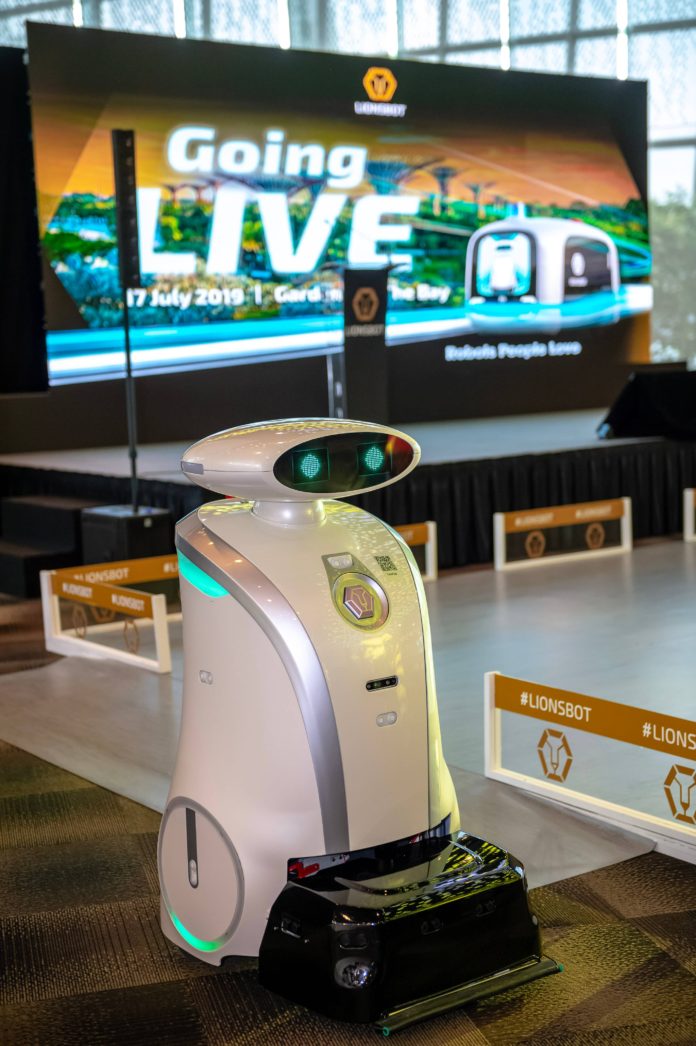
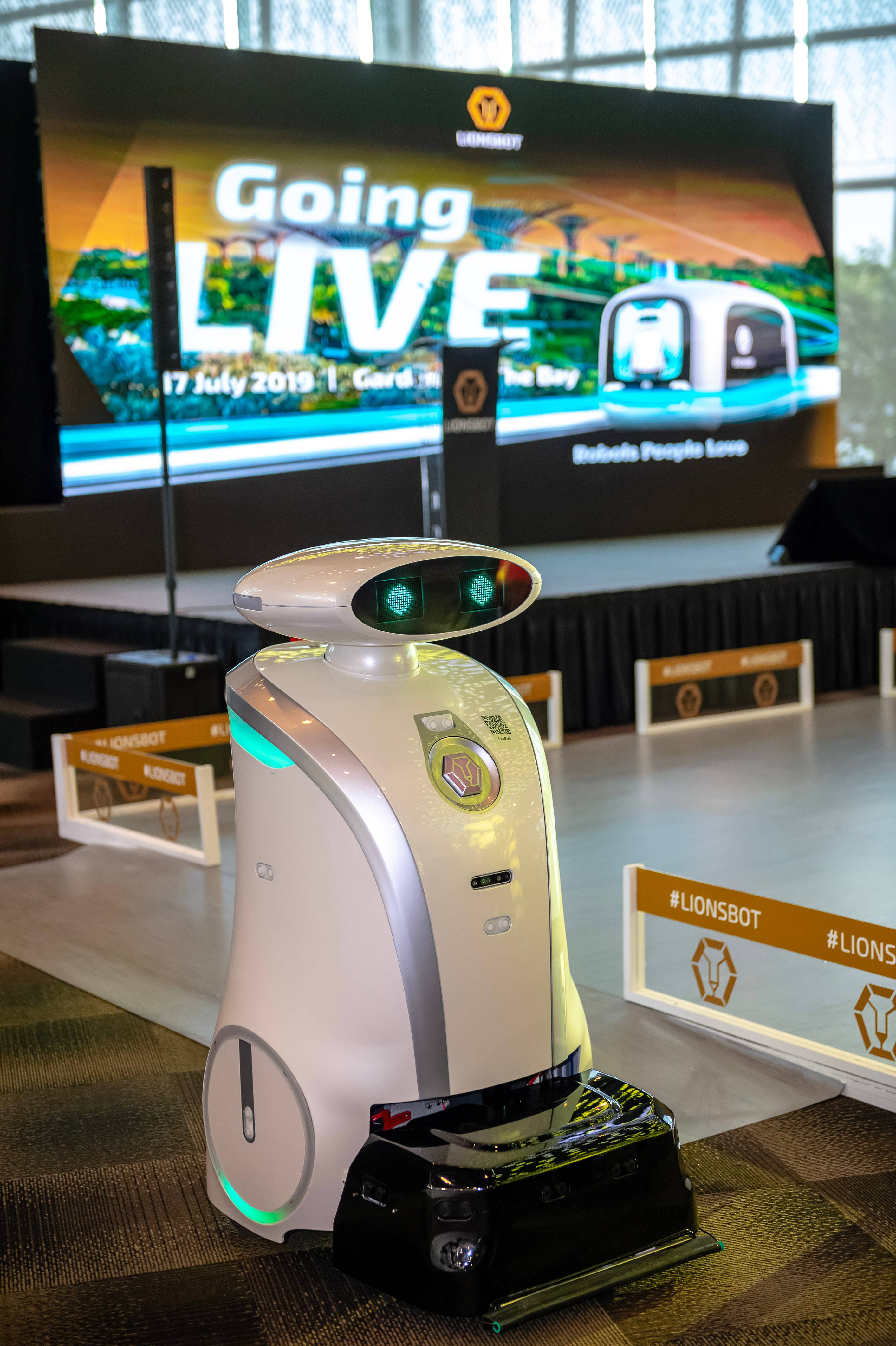
SINGAPORE: They can mop and scrub, “sing and rap” and even make “jokes” at passers-by – meet the cleaning robots that will soon be deployed by several companies.

About 300 of these robots will be produced by LionsBot International, which said it is the world’s first company to offer cleaning robots on a subscription model. 

This means companies looking to use the robots will not need to invest in the ownership and maintenance of the machines. 

Launching the local production of the robots on Wednesday (Jul 17), LionsBot said six cleaning partners will deploy the robots by March 2020. 

Autonomous cleaning robots by 2020

The LionsBot cleaning robots will be able to rap and wink at passers-by. (Photo: LionsBot)

LionsBot said its robots use up to 70 per cent less water compared to existing cleaning solutions, and can work together as a team. 

“Multiple cleaning robots are able to coordinate and clean a given area simultaneously, without the need for human programming,” it said in a media release.

The robots have also been programmed with “warm personalities”. 

“They are able to wink at passers-by and also make jokes if the latter gets in the way of their cleaning duties,” said LionsBot.

By scanning the robot’s QR code, members of the public will also be able to interact with the machine by asking questions such as “What is your name?” or “What type of cleaning do you perform?”.

LionsBot QR code

Members of the public will be able to interact with the autonomous machine by scanning the robot’s QR code. (Photo: LionsBot)

There are 13 different models of the robot. 

Those from the LeoBot Family series, for instance, are designed to clean narrow spaces and have a tight turning radius to navigate obstacles. Robots from the LeoPod Family series were created for open spaces such as shopping mall atriums where there are fewer obstacles.

Cleaning companies and building owners can rent any of LionsBot cleaning robots at monthly fees ranging from S$1,350 to S$2,150.

LionsBot autonomous cleaning robot

LionsBot has developed different cleaning robot series to cater to different needs. (Photo: LionsBot)

At the launch event at Gardens by the Bay, Senior Minister of State for the Ministry of Trade and Industry Koh Poh Koon said such technology has huge potential to raise productivity, adding that the Government will continue to support the deployment of robotics solutions across different industries.

He noted that in 2016, Singapore launched the National Robotics Programme (NRP) to coordinate the development, test-bedding and deployment of robotics solutions.

“We are making good progress,” said Dr Koh. “Today, Singapore has a growing base of robotics companies, research institutes, commercial system integrators and training providers to design, develop and enable the adoption of robotics solutions for industries.”

He added that since the launch of the NRP, Singapore’s robotics ecosystem has secured new investments that will contribute more than S$300 million in value-add and create 1,000 new jobs over the next five years.

Source link

From Sang Nila Utama to Raffles: Free Telok Blangah tour explores 700 years of Singapore history

0

SINGAPORE: Once home to the orang lauts, infested with pirates and now a modern residential town, Telok Blangah is steeped in Singapore history.

A new, free guided walking tour, called the My Telok Blangah Heritage Tour, will trace Singapore’s 700-year maritime history – from a trading emporium founded by Sang Nila Utama in 1299 to a pirate-infested free port established by Sir Stamford Raffles in 1819, and into a modern city today.

The tour will open to members of the public this Saturday (Jul 20) and run from 8.30am to 12.30pm every third weekend of the month.

Taking in an array of national monuments and historical sites, the tour is one of the nine guided tours developed and organised by non-profit organisation My Community.

GOING ON THE TOUR

During the tour, participants will explore the forested Marang Graves at the foot of Mount Faber, and then take a short walk to the Masjid Temenggong Daeng Ibrahim.

The mosque stands on the former site of a royal reception hall established by Temenggong Daeng Ibrahim, most famous for using the orang lauts – or sea people – under his control to harass small ships that frequented the port. 

READ: Othman Wok: A man whose courage and convictions made a difference to Singapore

People can also visit Keramat Radin Mas, the shrine of Javanese princess Radin Mas Ayu. Legend has it that Radin Mas Ayu shielded her father from being killed, only to be killed herself.

keramat radin mas

The flight of steps leading up to Keramat Radin Mas was constructed in August 2002, after caretaker Zainal Angus collected contributions from the community totalling $15,000 and hired a contractor. A new hut, fencing, and ceramic tiles were also added to the site. (Photo: Ang Hwee Min)

The eight-stop tour also includes a cemetery, Taoist temple and the Kampong Silat flats, before ending at the Silat Road Sikh Temple, where participants can look forward to a free vegetarian meal and a hot cup of tea. 

President and founder of My Community Kwek Li Yong, 29, said: “Telok Blangah is often overshadowed by its neighbours Sentosa and Pasir Panjang. Most people know it as a small, quiet neighbourhood that’s not very exciting or attractive. 

“But there are a lot of stories about Singapore’s development as a port city, and the sites selected showcase the different and lesser-known sides of Telok Blangah.”

Volunteers will take 50 participants on the tour, which looks at how Singapore developed through centuries into a port city.

Telok Blangah was home to the Temenggongs – chieftains who established communities and a series of kampongs, including Kampong Bahru and Kampong Radin Mas.

Silat Road Sikh Temple

The Silat Road Sikh Temple provides free vegetarian food three meals a day to all visitors. The Temple houses the memorial for Indian revolutionary Bhai Maharaj Singh, who came to Singapore in 1850 as a prisoner when it was a penal colony, and typically sees more than 2,000 visitors a day. (Photo: Ang Hwee Min)

The settlement at Telok Blangah appears in the Sejarah Melayu – the Malay Annuals. It tells the story of Sang Nila Utama, the prince of Palembang who founded the city of Singapura in 1299.

A section of the story tells how Sang Nila Utama threw his crown into the sea off Telok Blangah to quell a fierce storm.

CONSERVING SINGAPORE’S HERITAGE

Mr Sarafian Salleh, 49, who has volunteered with My Community since 2017, said he first chanced upon the Marang Graves when he was researching his own lineage. He met other volunteers while exploring the area and became a volunteer himself. 

Mr Sarafian, who is an engineer, said: “After 12 years of research, I found out my great-grandfather was a ship captain and a Bugis trader. He eventually settled in Singapore.”

He encouraged Singaporeans to come on the tour, adding that people will be able to see some historical sites firsthand. For example, tour participants can enter the Royal Johor Mausoleum, which is typically not open to visitors.

READ: From patrol policeman to royal bodyguard: How a Singaporean came to protect the Johor crown prince

The Telok Blangah tour is fully booked until September, and Mr Kwek is encouraged by the response. The organisation is also seeing an influx of millennial volunteers, with about 75 per cent of volunteers aged 40 and younger. 

As a millennial himself, Mr Kwek believes the younger generation is beginning to see the importance of conserving Singapore’s heritage.

“Every community has a story to tell. If you look at the museums, there are many stories about people with power. I believe younger people want to conserve the stories of the common man,” he said.

Mr Kwek is unsure whether the historical sites will be affected by the Greater Southern Waterfront redevelopment plans, but he remains hopeful.

READ: URA draft master plan: More housing planned for CBD, Marina Bay area

“I always believe that before we undergo any development, a proper assessment of the cultural significance of the site should be conducted,” he added.

“This means it should involve every stakeholder, so that we can make a collective assessment of what is important to us.”

Mr Zainal Angus, caretaker of Keramat Radin Mas, said he is ready to welcome visitors of all ages and nationalities to the shrine. 

Mr Zainal Angus

Caretaker of Keramat Radin Mas Zainal Angus has been custodian of the shrine for about 20 years. (Photo: Ang Hwee Min)

The 69-year-old volunteer said: “I did this not for me. This is not mine and it doesn’t belong to me. This belongs to the public.

“I think I look after this better than I look after my own house. Sometimes I don’t even mop the floor at home. When I come here, I do all the cleaning. But I don’t feel tired, even though now I have lower back pains.”

He rides an electric scooter from his rented home in Telok Blangah to the shrine every day to maintain it, and in August 2002, spearheaded the project to build a new hut around the tomb.

Mr Zainal said two or three individuals have approached him about taking over the role, but none of them have stayed on. Despite his age, he is not worried about finding a successor.

 “I don’t know when I can do this until, but as long as I have the energy … maybe the spirits will choose the next one.” 

People who want to register on the tour can go to My Community’s eventbrite website

Source link

Exercise Tiger Balm: Singapore and US soldiers storm urban complex, clear explosives

0

SINGAPORE: All was quiet at 10am on Wednesday (Jul 17) at the Murai Urban Training Facility, with its low-rise homes and shops that mirror the old neighbourhoods of Singapore.

But from a small corner of this urban military complex, bordered by tall trees and thick bushes, troops from Singapore and US slowly moved in.

This combined task force had a clear mission: Seize control of key buildings by neutralising the enemies that were hiding within.

Ex Tiger Balm commanders

Singapore’s Brigadier-General Lee Yi-Jin (left) and the US’ Colonel Stephen Logan speaking to each other on the sidelines of the exercise. (Photo: Jeremy Long)

This was part of the 39th Exercise Tiger Balm, involving about 766 soldiers from the 76th Singapore Infantry Brigade and 5th Battalion Singapore Infantry Regiment (5 SIR), and the US Army’s 33rd Infantry Brigade Combat Team, 2-130th Infantry Battalion and 1-23 Stryker platoon. The US soldiers made up about 40 per cent of the participants.

The annual exercise, first conducted in 1981, is the longest-running bilateral exercise between the Singapore and US armies. This year’s edition started on Jul 8 and runs until Jul 19.

Singapore’s Defence Ministry said in a media release on Wednesday that the exercise allows both armies to share tactics, techniques and procedures, and is proof of long-standing ties between the two armed forces.

“This is a very advanced urban training centre and we were fortunate to participate in exercises years past out here,” said Colonel (COL) Stephen Logan, chief of staff of the Hawaii Army National Guard, which deployed a platoon for the exercise.

“In the US, or at least in Hawaii where I’m from, we don’t have something as advanced as this. However, we do have something that’s pretty close at the National Training Centre (in California), but we don’t get to go there as often.”

As the combined task force first stormed a machinery shop and fired blank rounds, battlefield instruments tracked every movement and shot, giving commanders in an off-site command centre a bird’s eye view of troop locations and hits.

Ex Tiger Balm enemies

One of the enemies in the hotel was using a Matador, an anti-tank weapon. (Photo: Jeremy Long)

The enemies, soldiers from 5 SIR wearing red bands around their arms, responded by firing through tiny windows in occupied buildings across the road. From another enemy stronghold, rapid machine gun rounds provided more firepower.

Some of the fiercest fighting took place near a three-storey hotel, where at least five enemy soldiers camped out with only their rifle barrels poking through the windows.

Ex Tiger Balm Singapore Army

Friendly forces from the Singapore Army preparing to clear a room. (Photo: Jeremy Long)

“Enemy where?” one soldier in the hotel shouted to his comrade a floor below. Another soldier pointed to the left, where friendly forces were advancing across a grassy knoll under the cover of a smoke grenade. The enemies unleashed another barrage of rounds that thundered across the sprawling complex.

Ex Tiger Balm smoke grenade

US soldiers hidden by a smoke grenade. (Photo: Jeremy Long)

Third Sergeant Harith Azman, 23, was one full-time national serviceman (NSF) who worked with the US troops to clear rooms across numerous buildings.

“They are really experienced; their clearing and drills were very smooth,” he said. “We did our part too. We secured some buildings and made suppressive fire.”

Ex Tiger Balm US Army soldier

A US soldier inside one of the rooms. (Photo: Jeremy Long)

This back-and-forth lasted past midday until the combined task force received reinforcements in the form of Singapore’s Terrex and US’ Stryker infantry vehicles.

Ex Tiger Balm Singapore and US Army

US soldiers dismounting a Stryker vehicle to provide support. (Photo: Jeremy Long)

US Army Sergeant (SGT) David Mayle, 24, was part of the Stryker platoon that was sent in to clear the hotel from the lowest floor upwards.

“They’re pretty good; pretty quick,” he said of his Singaporean counterparts, adding that the NSFs looked like they cared about their work and enjoyed it.

Ex Tiger Balm casualty evacuation

Singapore soldiers conducting casualty evacuation. (Photo: Jeremy Long)

Once the fighting stopped, attention turned towards a simulated improvised explosive device found in one of the buildings.

Ex Tiger Balm Singapore US soldiers EOD

Singapore and US soldiers preparing to respond to an improvised explosive device. (Photo: Jeremy Long)

For the first time, an integrated explosive ordnance disposal (EOD) team from the Singapore Army’s 36th Battalion Singapore Combat Engineers and the US Army’s 303rd EOD Battalion planned and coordinated a response as part of this exercise.

Ex Tiger Balm ordnance disposal

Explosive ordnance disposal personnel from both armed forces helping a team member put on protective gear. (Photo: Jeremy Long) 

Both sets of troops worked together to prepare a protective suit and helmet, while a US soldier piloted a robotic detonator into the building.

EXCHANGING JUNGLE AND WARTIME EXPERIENCES

But it was not all urban fighting. The US soldiers had also attended a jungle survival course, where they learnt from Singapore soldiers about plants and how to skin animals for food. 

Ex Tiger Balm enemy troops

Enemy troops moving across grassy terrain. (Photo: Jeremy Long)

“Any time that we can train in a new environment that adds a unique experience, whether that be mountains or in a jungle, such as here in Singapore, it’s just more tools that our guys can put in a toolbox and be more capable moving forward,” said US Army Captain (CPT) Edward Worman, 32, from the 2-130th Infantry Battalion.

This exchange of skills goes both ways with the US soldiers bringing their experience of being deployed in real-life conflict scenarios.

Ex Tiger Balm Singapore troops

Singapore soldiers said they welcomed training with their US counterparts who brought with them valuable wartime experience. (Photo: Jeremy Long)

CPT Scott Ang, officer commanding of Bravo Company at 5 SIR, recalled a Stryker platoon leader saying they have at least 100 years of wartime experience among them.

“They not only share what they know, in terms of the things that the US Army has developed, but they share a lot of their personal experiences, their own war stories,” the 26-year-old said. 

“That has been an incredibly enriching experience for me, especially as a regular in the Singapore Armed Forces.”

OF HUMIDITY AND DURIANS

Still, both armies said they face some challenges working together, not least the slightly different terms and tactics they use during urban operations.

Some US soldiers also said they faced difficulties with the stifling humidity, but overcame that by conducting acclimatisation exercises and wearing cooler combat uniforms.

Ex Tiger Balm US Army soldiers advancing

US soldiers advancing to another building. (Photo: Jeremy Long)

Nevertheless, Brigadier-General Lee Yi-Jin, commander 6 Division, which covers 5 SIR, said both armies never fail to turn up for this exercise each year.

“We have an excellent relationship, very warm,” he said. 

“It’s built on professionalism, mutual trust and shared perspectives on many issues. We don’t take it for granted. I think both sides have shown that they’re very committed to this relationship.”

Ex Tiger Balm US and Singapore friendship

Singapore and US soldiers discussing their response to an improvised explosive device scenario. (Photo: Jeremy Long)

So committed that a number of US soldiers even tried some things Singapore. Over the past few days, SGT Mayle said he has visited a beach in Singapore – which he described as “nice” – and tasted fruits like the durian – which he called “gross”.

“We have built some lifelong friendships here,” COL Logan added. “I think the hardest part for the US forces will be when they have to board the plane.”

Source link

Repeat offender jailed, fined S$10 million for dealing with duty-unpaid cigarettes

0

SINGAPORE: A 53-year-old man was on Wednesday (Jul 17) sentenced to three-and-a-half years’ jail and fined S$10.4 million for coordinating the delivery of duty-unpaid cigarettes.

Raymond Soh Tian Khoon, a repeat offender, was convicted of two charges of dealing with duty-unpaid goods.

As he did not pay the fine, he will serve an additional 28 months in jail in default.

Soh is a recalcitrant, said Singapore Customs in a media release, noting that he had previously been jailed for similar offences committed on three separate occasions.

3,948 cartons of duty-unpaid cigarettes were found in the building

A total of 3,948 cartons of duty-unpaid cigarettes were found in the building. (Photo: Singapore Customs) 

In the latest case involving Soh, he was arrested after customs officers raided an industrial building at Bukit Batok Street 23 in April 2017. 

Officers found 3,948 cartons of duty-unpaid cigarettes. The total duty and Goods and Services Tax (GST) evaded was about S$323,120 and S$23,850 respectively, said Singapore Customs.

A Singapore-registered truck and two Malaysia-registered cars were seized. Five other men were arrested.

Truck of duty-unpaid cigarettes

A Singapore-registered truck was seized during the raid. (Photo: Singapore Customs) 

“Investigations revealed that Soh had coordinated the delivery of duty-unpaid cigarettes,” said Singapore Customs, adding that he had engaged one of the men to drive a truck loaded with the cigarettes to the Bukit Batok industrial building. 

Four of the men then collected the cigarettes from the truck. The goods were to be loaded into the two Malaysian-registered cars for distribution to various locations in Singapore.

The five men have all been dealt with, receiving jail sentences of between eight months and 39 months.

The vehicles found in the building duty-unpaid cigarettes

The vehicles found in the building along with the duty-unpaid cigarettes. (Photo: Singapore Customs) 

One of the vehicles found in the building duty-unpaid cigarettes

One of the vehicles found in the building. (Photo: Singapore Customs) 

Soh was previously convicted in October 2006 for delivering 200 cartons of duty-unpaid cigarettes, and was sentenced to 10 months’ jail.

In 2012, he was caught again for delivering 850 cartons of duty-unpaid cigarettes. 

While he was on bail, he was caught the following year for importing 90 cartons and 604 packets of duty-unpaid cigarettes.

For the 2012 and 2013 offences, Soh had been sentenced to 14 months’ jail and fined S$352,000. He served an additional six months’ jail in default of the fine.

“Soh is a recalcitrant who had repeatedly smuggled duty-unpaid cigarettes thinking that he could get away each time,” said Mr Yeo Sew Meng, assistant director-general of intelligence and investigation at Singapore Customs. 

“Singapore Customs would like to warn like-minded offenders that repeat offenders will receive a heavier sentence under the Customs Act, and those who are caught with more than 2kg of tobacco products will face a mandatory imprisonment sentence.”

Source link