Home Blog Page 753

7 things you probably didn’t know about Telok Blangah: Pirates, kings, and a healing spring

0

SINGAPORE: A new, free walking tour starting on Saturday (Jul 20) will focus on Telok Blangah’s past and trace the 700-year maritime history of Singapore. 

From the crown of Sang Nila Utama to the healing spring at the tomb of Radin Mas, to the Orang Lauts and sea pirates of Telok Blangah, the tour – organised by My Community – will look at the mystic charms and legends of the area. The tour will run every third weekend of the month.

Here are seven things you probably didn’t know about one of the most important neighbourhoods in Singapore’s history:

WHERE SANG NILA UTAMA THREW HIS CROWN INTO THE SEA

When Chinese merchant Wang Dayuan visited Singapore in the 1330s, he wrote in his travelogue about two settlements on the island. 

Four new statues at Singapore river

Statues of (left to right) Sang Nila Utama, Munshi Abdullah, Tan Tock Seng, Sir Stamford Raffles and Naraina Pillai. (Photo: Singapore Bicentennial Office) 

The first, which Wang called Banzu, was at modern-day Fort Canning, and the other, known as Longyamen – or Dragon’s Tooth Gate – was in Telok Blangah.

The settlement in Telok Blangah was also recorded in the Malay Annals, which tell the story of the founder of Singapore, Sang Nila Utama. The story goes that Sang Nila Utama set out for the island of Temasek, and once off the coast of Telok Blangah, threw his crown into the sea to quell a fierce storm.

In Wang’s travelogue, he recorded finding a crown at Longyamen.

HOME TO THE ORANG LAUTS

The riverine and coast dwelling people – the Orang Laut – were navigators who grew different crops on the shore and sold them to passing ships.

Models of the houses of the Orang Laut, sea people who navigated Singapore's waters for centuries.

Models of the houses of the Orang Laut, indigenous sea people who navigated Singapore’s waters for centuries.

In the 17th century, the Orang Laut forged alliances with the Malay rulers, the Temenggong. Serving in the naval forces, they ruled the seas off Telok Blangah.

One of the most prominent figures with Orang Laut ancestry is former Minister of Social Affairs Othman Wok. His great grandfather witnessed the signing of the treaty between the Temenggong and Raffles in 1819.

The Temenggong, who were royalty, were key figures in the establishment of the port of Singapore.

INFESTED WITH SEA PIRATES

Think pirates and most people would think of sea-faring Jack Sparrows. But the pirates of Telok Blangah lived on land. 

In 1823, Raffles deprived the Temenggong of a share of Singapore’s revenues. With the royals struggling to pay those under their charge, the sea-faring community turned to piracy.

The Dutch Resident of Riau noted that the area had become “notorious with a great number of pirates who actually lived in New Harbour (Keppel Harbour) and Teluk Belanga districts of Singapore”.

THE POWER OF THE TEMENGGONG IN TELOK BLANGAH

It was in Singapore that Temenggong Daeng Ibrahim would go on to establish his economic power base, through the growth and collection of percha, a sap used to make latex.

The Masjid Temenggong Daeng Ibrahim.

Inside the Masjid Temenggong Daeng Ibrahim. (Photo: Ang Hwee Min)

Based in Telok Blangah, he was described as “one of the richest Malay chieftains in the Malay world” during his rule.

He leased the area to a shipping company, Peninsular and Orient, which developed coal sheds and wharfs. The company operated the earliest mail, cargo and passenger steamship in the region, with their service going as far as Ceylon and Calcutta, as they were known then.

Once the British moved into Singapore, he agreed to relocate and settled permanently in Johor.

KEPPEL HARBOUR’S FIRST “DEVELOPER”

Henry Keppel is often credited with the development of Keppel Harbour, but it was actually Temenggong Daeng Ibrahim who cleared the mangroves and swamps in the area to form the basis of the port.

file photo of keppel harbour from vivo waterfront

File photo of Keppel Harbour.

The royals would also establish a series of kampongs from their base in Telok Blangah, including Kampong Ulu, Kampong Rocher, Kampong Bahru, Kampong Bukit Mawla, Kampong Radin Mas, Kampong Pantai Chermin and Kampong Heap Guan San.

THE SHRINE AND TOMB OF RADIN MAS

Radin Mas Ayu was a Javanese princess who was killed after shielding her father from being murdered, as legend goes.

Near her shrine at the foot of Mount Faber was a spring which was believed to have healing properties. When the spring became too popular and visitors started disturbing residents in the area, the water had to be piped underground and the spring filled in with cement.

The legend of Radin Mas goes: Pangeran Adipati Agung was the brother of a Javanese sultan. Well-loved by the people, he wed a dancer in secret because he could not marry a commoner.

keramat radin mas

The flight of steps leading up to Keramat Radin Mas was constructed in August 2002, after caretaker Zainal Angus collected contributions from the community totalling $15,000 and hired a contractor. A new hut, fencing, and ceramic tiles were also added to the site. (Photo: Ang Hwee Min)

Radin Mas Ayu was their daughter. When the sultan found out, he was furious and sent Pangeran to the front to deal with hostile invaders. While he was away, the king had Pangeran’s house burnt down.

The dancer died in the fire, but Radin Mas Ayu was rescued by a loyal servant. Pangeran found out and he severed ties with his brother. Together with his daughter, they settled in Telok Blangah as commoners.

Years later, after he defeated pirates threatening his new home, he was invited by the Singapore sultan to the palace, where he met a Javanese envoy, who reported back to the sultan.

The Javanese sultan arranged for Pangeran to marry a princess, and they had a son, named Tengku Chik.

One day, Tengku Chik accidentally cut his foot on a piece of broken plate dropped by Radin Mas. Her stepmother, jealous of how close Radin Mas was with her dad, accused her of deliberately harming the child.

Together with her stepmother’s nephew, Tengku Bagus, they plotted against Pangeran and Radin Mas. After intoxicating Pangeran and keeping him prisoner in a well, Tengku Bagus proposed to Radin Mas, threatening to kill her father if she did not agree.

Mr Zainal Angus

Caretaker of Keramat Radin Mas Zainal Angus has been custodian of the shrine for about 20 years. (Photo: Ang Hwee Min)

At the wedding, Radin Mas was asked if her father had consented. Fearful for his life, she lied and said he had died, but her stepbrother, Tengku Chik, blurted out that he was kept prisoner in a well.

After Pangeran was rescued, Tengku Bagus was afraid for his life and lunged at Pangeran with a kris. Radin Mas jumped in front of her father, and was killed instead.

A SHELTER IN CONFLICT

Established in 1929, the Church of St Teresa in Telok Blangah is the only Catholic Church in Singapore featuring Romano-Byzantine architecture.

Church of St Teresa

The Church of St Teresa, one of Singapore’s national monuments. (Photo: TODAY/Najeer Yusof)

It catered largely to Hokkien-speaking Catholics when it first opened, and became a place of refuge for women who sought protection from Japanese soldiers during the occupation of Singapore in World War II.

Later, it sheltered many people during the riots in the 1950s, and again provided relief and living spaces for those made homeless by the Bukit Ho Swee fire of 1961, the biggest fire in Singapore’s history. About 16,000 people were made homeless after 2,800 homes were ravaged by the blaze.
Source link

Commentary: I am Eurasian and Singaporean – same same

0

SINGAPORE: I was once asked by a bank officer what race I was. When I said Eurasian, her reply was “Huh? What is that?” That was not the first time I had been asked where I am from or what race I am.

Like many other young Singaporeans, she had no idea. I used to get agitated. But now I feel sad more than anything that many young Singaporeans are less familiar with Eurasians.  

I do not blame them. There were about 25,000 Eurasians in Singapore before Independence. But many migrated to Australia and the UK from the 1960s to the 1980s for various reasons.

Besides having a sense of uncertainty and insecurity when Singapore became an independent nation against a background of political turmoil in the region, they felt disadvantaged by the second language or mother tongue policy in schools.

As a result, about 15,500 are left today, just 0.4 per cent of the population, down from almost 2.2 per cent at one point – all drowned out by the tsunami of foreigners when Singapore opened its doors to people from all over the world to come and work here.

With our European surnames, no wonder some even thought that Joseph Schooling was a foreign talent.

It can be confusing. I have been mistaken for a Filipino or Thai. Many of my Eurasian friends can tell you of their similar experience. And when they see my brother, they will wonder why he looks more Chinese than me and my sisters.

My Eurasian brother-in-law is dark, and he has one brother who is fair-skinned and another who looks more Chinese. I know of many other Eurasian families like that.

A RICH TAPESTRY, A MIXED ANCESTRY

The varied complexions that Eurasians wear – from shades of white to tan and brown – come from a very mixed ancestry that spans several European and Asian countries.

It all began in the 16th Century, when the Portuguese, Dutch and British came to Southeast Asia, looking to gain control of the lucrative spice trade. They came to Goa, Ceylon, Penang, Malacca, Singapore and to Batavia and Bencoolen in Indonesia, and Macau. 

The French also came to Indochina, and other Europeans, like the Germans, came in smaller numbers to seek their fortune in the Far East.

The men made the long voyages alone, without the women. When they arrived, they either married local women or took them as mistresses. The Portuguese came first, and their offsprings with local women were called Luso-Asians – the first Eurasians.

With each wave of European arrival, inter-marriage with locals and existing European-Asian communities gave rise to a mixed race with many layers of European and Asian heritage in many parts of Asia.

Malay Heritage Centre (Kampong Bugis)

The old Kampong Bugis located along the Rochor-Kallang River. (Photo: National Museum of Singapore, National Heritage Board)

These communities were drawn to Singapore, when it was established as an entrepot in 1819, and then the administrative seat of the Straits Settlements in 1826 and a crown colony in 1867.

Through further inter-marriages among these communities, the Eurasian population in Singapore grew and became a very intricate and colourful fabric with myriad threads.

READ: Bicentennial can be a worthwhile endeavour, a commentary

Eurasians with Portuguese roots married Eurasians with Dutch roots, and British roots, and so on. Chinese, Indians, Peranakans and Malays were also part of the fabric. So quite unlike Eurasians in other parts of Asia, Singapore Eurasians have multiple ethnic roots. 

Take my friend Celeste. She has a mix of Portuguese and Dutch ancestry from her mother, and another blend of Spanish, Filipino and Burmese from her father. 

And my junior college classmate Carla Barker has inherited from her parents even more layers of Irish, Portuguese, Scottish, German, Japanese, Indonesian, Norwegian, English and Goan descent.

My grandfather, Edward Samuel D’Silva, a Ceylonese Burgher with Portuguese roots, came to Malaya and married a Peranakan woman from Penang in the early 1900s. Their eldest son, my father, married a Cantonese woman whose family came from China to seek a better life in Singapore.

READ:  I am Peranakan not Chinese, a commentary

My brother-in-law’s father, George Mackenzie, was also a Ceylonese Burgher with Scottish roots. He too married a Chinese in Malaya. 

In those days when most Eurasians married within the community, these men were ahead of their time.

STILL EURASIAN BUT MORE SINGAPOREAN

Marrying outside the community is more common these days as Eurasians, in their much-reduced numbers, were relocated to all parts of the island by urban planning policies where they integrated even more with other racial groups, in the new neighbourhoods and schools.

I am Eurasian and Singaporean – same same

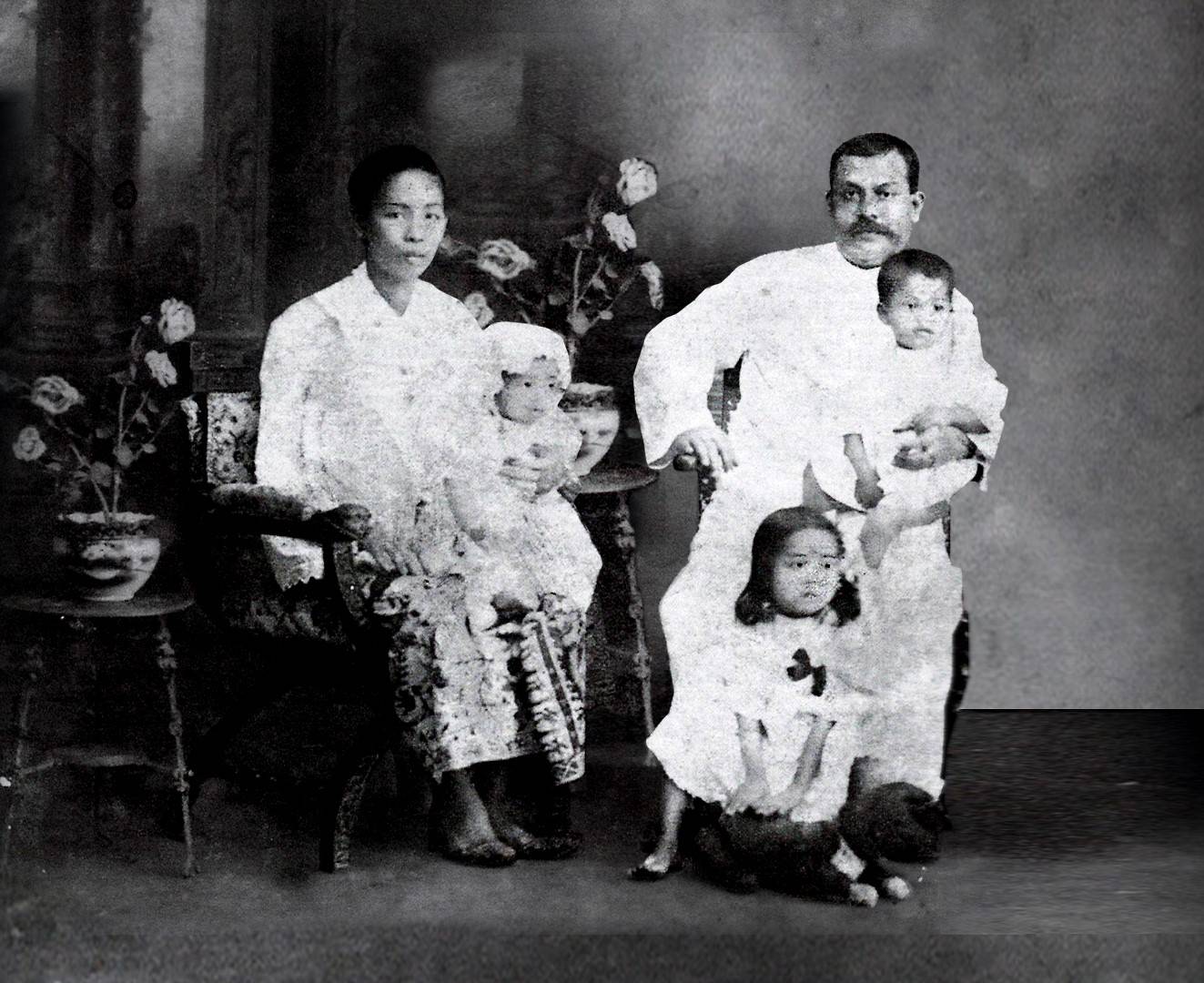
My paternal grandfather (Edward Samuel D’Silva) from Ceylon and his Peranakan wife (Tan Kìm Nan) from Penang, with three of their five children. (Photo: Julia D’Silva)

READ: We’re more than an ‘other’ – Eurasians in search of their disappearing culture

Over time, most of the outstanding Eurasian hallmarks that members of our community shared – speaking English, wearing Western clothes, being Roman Catholics, working in the civil service – no longer held. 

So you could say that Eurasians have become more Singaporean, and vice versa.

OPENNESS TO OUTSIDE INFLUENCES

Indeed, Eurasians embody what Singapore is – a melting pot of cultures, always open to diverse influences from within or without, and willing to borrow, adopt and adapt, and make something that is Eurasian and yet Singaporean.

This is best seen in Eurasian cuisine, where East meets West. Through the many layers of inter-marriages and friendships with other races in the community, Eurasians have created some specialties of their own, as well as added their own twist to dishes shared by other races – think of curry debal, vindaloo, smore, sugee cake, ikan chuan chuan, feng, mulligatawny soup, shepherd’s pie, pang susie, pineapple tarts, and the list goes on.

They fry rice and noodles, and the soup teem is almost like kiam chye t’ng. Sambal belacan is a die-die must have, that even accompanies an English-inspired corned-beef stew.

This openness to other cultures is also seen in the way Eurasians dress and even in their language. The men took to wearing the sarong at home for comfort, and the women wore the sarong kebaya and baju panjang.

Eurasian Sugee_spread of dishes

East meets West in Eurasian cuisine. (File Photo)

READ: Taking pride in ethnic identity does not contradict Singapore identity, a commentary

Kristang, a creole language developed by Portuguese-Eurasians from Malacca using Portuguese words and Malay grammar, was spoken by the Portuguese Eurasians in the early days. 

But English later became the language for Eurasians. And Eurasian-speak at home is peppered with quirky words and phrases from English, Kristang and Malay. And even references to the Bible!

A mother would warn her child, “Oh, dekas (oh God or goodness gracious)! All those red marks in your report card! Wait till your father comes home. It’s time to say the rosary (better say your prayers now). He will slap you till you see Moses (slap so hard you will wake up)!”

Someone startled would exclaim, “Puchok pisang! Don’t you dare play this trick on me again.” Or be dismissive with “Wah! Dressed so sasak (so smartly)! But he is necktie collar, pocket no dollar (all show only)”. 

BONDS WITHIN THE EURASIAN COMMUNITY

Even as they were open to outside influences, the Eurasians looked to their own kind for emotional and moral support, bonding through family and community activities centred around food, music, dance and sports. 

An evening would be spent in someone’s home where they would sing to the accompaniment of a guitar, or in the playground nearby where a friendly game of football would be played with relatives and friends. 

Birthdays, weddings, and other celebrations were always lively events and even now, every Eurasian gathering, big or small, is not complete without food, music and dancing. Unfortunately, this may have given the impression that Eurasians are fun-loving and laid back.

I remember my sister being upset when she visited a school’s national education centre and saw a tennis racket, a guitar and a bottle of champagne displayed in the Eurasian heritage corner.

But these pastimes not only drew the community together, they were also breeding grounds for Eurasians to hone their skills and talents, so much so that over the years, Eurasians have stood out in the fields of sports, music, theatre and the performing arts.

Eurasians

First woman Supreme Court Justice Judith Prakash (L), Olympic champion Joseph Schooling (C) and jazz pianist Jeremy Monteiro (R)

And let’s not forget, it was this openness and willingness to adapt to the circumstances of the day, together with a dose of pragmatism and far-sightedness, that stood Eurasians in good stead in times of change.

Eurasians were the first to be sent to schools set up by the British colonial government and Christian missionaries. It was their mixed heritage that put them in a unique position to act as a bridge and help the British communicate with other ethnic groups, something that the colonial masters found useful.

The Eurasians’ contributions to Singapore continued after Independence. There were many Eurasians who were prominent not only in the field of music and sports but also in the civil service and a wide range of professions such as doctors, lawyers, engineers, teachers, journalists and broadcasters. Many were pioneers in nation-building.

Today, Eurasians are also in science, research and technology, in tandem with Singapore’s progress.

But the one who stands out at present is Joseph Schooling. He is no foreigner. He is Eurasian, and Singaporean. Same same.

A retired civil servant, Julia d’Silva now serves as chairperson of the heritage committee in the Eurasian Association, where she is leading a team to revamp the heritage gallery and help people better understand and appreciate the Eurasian community in Singapore.   

Source link

Trash or treasure? Your old belongings lying around could be worth some money

0

SINGAPORE: For more than three decades, Mr Jamshed Fozdar kept a pair of small, gold boxes in a vault in Singapore without ever taking them out.

The 93-year-old bought the boxes from a Vietnamese empress back in 1956, while visiting her at her palace in the city of Hue. “At that time, we knew that they needed money and we wanted their friendship,” Mr Fozdar told CNA at his apartment in Selegie.

But like many old knick-knacks kept primarily because of sentimental value – or because people just don’t have the heart to put them in the bin – Mr Fozdar’s boxes have not really seen the light of day since he moved to Singapore in 1987. He’s not aware of how much they’re worth either.

“We never thought about it because we never needed money,” said Mr Fozdar, who worked as an engineer, wrote several books and lived in different parts of the world. “It’s just something that we had when we were interested in these kinds of things.”

The charming boxes are engraved with the Chinese zodiac signs – one bearing dragons chasing a pearl and the other depicting rabbits chewing lettuce.

Jamshed Fozdar antique gold boxes

Mr Jamshed Fozdar has a collection of rare antiques from across the globe. (Photo: Aqil Haziq Mahmud)

Now, Mr Fozdar wants to sell them because “at 93, only a damn fool would keep them”.

“Money can be used better than kept in vaults; it won’t help anybody,” he said. “You could donate it to children’s charities in different parts of the world.”

Mr Fozdar has sent the boxes to HotLotz auction house for valuation, where a team of experts will determine what they’re made of, which part of history they’re from and how much they’re worth.

This process of getting family heirlooms valued in the hope of selling them for some cash is not uncommon in Singapore, observers said.

antique gold boxes Jamshed Fozdar

Mr Fozdar bought the gold boxes from the Vietnamese empress Hoang Thi Cuc. (Photo: HotLotz)

In June, the BBC reported that a family in Scotland had kept a medieval chess piece in a drawer for more than 55 years not knowing what it was. The family’s grandfather had bought the piece for £5 (S$9) in 1964.

When the family took the piece to Sotheby’s auction house in London, experts found that it was one of the long-lost, 200-year-old Lewis Chessmen. The piece was sold at a Sotheby’s auction for £735,000.

ANTIQUES IN SINGAPORE?

In Singapore, HotLotz puts up about 10,000 items for auction in a year, ranging from porcelain pieces and designer fashion, to expensive jewellery and works of art. The auction house conducts 60 auction sales a year, with items being sold for anything from S$20 to S$20,000.

READ: Missing a piece of old Singapore? This ‘heritage keeper’ has it in his home

HotLotz managing director Matthew Elton told CNA that Singapore has its fair share of valuable antiques, given its history as a trading centre.

“You’ve had sort of wealthy local families growing through those times,” he said at his saleroom in Bukit Merah. “You’ve had a large international community in Singapore; people have come here to help build the country.”

HotLotz auction house Matthew Elton

HotLotz managing director Matthew Elton at the saleroom. (Photo: Aqil Haziq Mahmud)

But Mr Elton said valuable items aren’t limited to wealthy families, especially as he’s seen articles that were cheaper to maintain because they withstand weather better – like wooden furniture and silver pieces – being auctioned off for a decent sum of money.

“You can have great taste and be poor, and just buy something nice. Or you might have won something in a bet, or sometimes people got paid in things,” he added. “I think most families have got something in the cupboard somewhere, but they’re just not sure if it’s worth any money.”

AN EYE FOR ANTIQUES

If you’re thinking of striking it lucky with a dusty trinket you’ve kept for years, but don’t know the value of, Mr Elton said the first point to note is the item’s condition.

Is it broken? Does it have missing bits? Has it been glued back together? These might all make it less valuable. “The quality of the workmanship and the materials is often the big sign,” he said.

vintage antique items Chinatown 2

Experts said the value of an antique or vintage item usually depends on its age and workmanship. (Photo: Aqil Haziq Mahmud)

The Internet is another place to get more information on the item, with “all sorts of chat groups and forums around on people who’ve got passion in certain areas”. “They love people asking them questions,” Mr Elton said.

This can help establish the item’s provenance: What is its history? Where did it come from? How long has it been kept for?

“If it’s been cared for for years; if it’s got a bit of mythology in the family – it was grandma’s favourite vase – then that’s always a good sign that it’s got some age,” Mr Elton said.

vintage antique items Chinatown

If the item clearly doesn’t have much value, the process of putting a price on it is more or less arbitrary. (Photo: Aqil Haziq Mahmud)

While Mr Elton described valuable “antiques” as items more than 100 years old, he noted that those in Singapore were often from more recent years. But these “vintage” items might still have some value, he added.

US$10 MILLION SALE

If you’re still feeling confident at this point, it’s time bring it in for valuation at an auction house.

FILE PHOTO: Members of Christie's staff pose for pictures next to Leonardo da Vinci's &qu

FILE PHOTO: Members of Christie’s staff pose for pictures next to Leonardo da Vinci’s “Salvator Mundi” painting in London, October 24, 2017. REUTERS/Peter Nicholls/File Photo

At most major auction houses like Christie’s, valuations are free. This often involves sending high-resolution images of the item first, and if there’s interest, bringing it in for a proper appraisal.

While auction houses would have a team of in-house experts and external specialists for valuations, sellers should also provide as complete a provenance as possible. The auction house will then piece everything together.

High-end auction houses usually deal in watches, jewellery as well as Asian and Western art, and conduct auctions both live and online. Prices can go anywhere from US$3,000 to US$10 million.

HotLotz auction house

HotLotz deals in items like high fashion, furniture as well as valuable maps and paintings. (Photo: Aqil Haziq Mahmud)

At HotLotz, the figures are not as eye-watering, but the valuation and auctioning procedures are largely the same.

Like most auction houses, HotLotz will charge both the buyer and seller 19.5 per cent of the final sale price as premium and commission fees. This only happens when items are successfully sold.

HotLotz auction house items

HotLotz aims to bring auctioning to the masses. (Photo: Aqil Haziq Mahmud)

The difference is that HotLotz has two types of auctions: One targeted at the Singapore market, and another for the global audience – usually for more valuable items. This system raises the possibility of higher prices, Mr Elton said.

“I’d say we’re everything between Carousell and Christie’s,” he added, noting that HotLotz will still turn away items “not worth anything”, including mainstream brands, counterfeit products and electrical appliances.

HotLotz auction house items 2

At HotLotz, items can be listed in two different types of auctions. (Photo: Aqil Haziq Mahmud)

Still, Mr Elton acknowledged the sentiment that auction houses were too posh for the average person. “We try really hard to be really nice and friendly, and honest and pragmatic with our advice,” he stated. “We don’t want anyone to be like, it’s too good for me.”

BARGAIN HUNTING

Even then, there are other places that vintage items of minimal value can be sold.

WATCH: Bronze: A Forgotten Treasure

Online marketplaces like Carousell and eBay are one example, although Mr Elton said potential buyers would always seek discounts on the asking price.

It would also be worthwhile to check out the handful of antique shops around Singapore, he said, but again warned that some might only be interested in buying cheap.

Viewpoing Trading and Collectibles Chinatown

The storefront of Viewpoint Trading and Collectibles. (Photo: Aqil Haziq Mahmud)

Some dealers might try questioning an item’s authenticity to get the lowest price, said Michael Poh, owner of Viewpoint Trading and Collectibles, a vintage shop in Chinatown.

“Even if it’s genuine, they’ll say this is not worth much,” he told CNA at his musky shop haphazardly stocked with old Coke bottles, wall clocks and decorative plates.

Michael Poh vintage shop Chinatown

Mr Michael Poh at his shop in Chinatown. (Photo: Aqil Haziq Mahmud)

Mr Poh, on the other hand, tries to run an earnest business. He helps students with their school projects, builds relationships with customers, and lets them know which items are counterfeit.

He also gets about 10 visits a week from people trying to sell him vintage ware like old biscuit packaging and branded bottle openers. Items brought in are never really valuable, so he doesn’t buy them for more than S$100, especially as he needs to sustain the business.

“It’s very easy to buy, but very difficult to sell,” he said.

Chinatown vintage shop customer

A customer browsing through Mr Poh’s shop. (Photo: Aqil Haziq Mahmud)

Mr Poh has been in the business for more than two decades, so he would judge these items’ value solely based on their physical attributes: Does it feel heavy? Is the artwork intact? Are there official logos from that period in time?

He does not ask the seller questions about the item either, preferring to keep his strategy to himself before coming up with a price in a matter of minutes.

“It’s very difficult to say if there’s any value in these things,” he added, noting that it’s usually a case of “willing seller, willing buyer”.

RUNNERS AND WAREHOUSES

Back at the shop, a rag and bone man in tattered clothes turned up to sell Mr Poh a first-aid kit from one of the early Army vehicles in Singapore. The metal case was rusty, and the inventory list on the inside of the lid had peeled off terribly.

Mr Poh still studied the item for about a minute, and when the man suggested a price of S$50, he pulled out his wallet and simply handed over the cash.

“S$50 is too high, but I buy because I want him to come back to me,” he said, noting that this “runner” had been selling to him for a long time.

Michael Poh inspecting vintage box

Mr Poh inspecting the first-aid kit with a magnifying glass. (Photo: Aqil Haziq Mahmud)

But the bulk of Mr Poh’s items come from forfeited warehouses and recently sold private homes. These homes usually belonged to older folks who have died, and the children would invite Mr Poh to take whatever he wanted for a bit of cash.

Last year, Mr Poh combed through a semi-detached house in Aljunied and bought S$3,000 worth of vintage items, including an old turntable in poor condition.

vintage shop Chinatown turntable

The turntable features prominently at the shop entrance. (Photo: Aqil Haziq Mahmud)

He paid about S$1,000 to refurbish the turntable and make it work again, and now it sits proudly outside his shop playing nostalgic tunes from old vinyl records. For interested buyers, the starting price is S$2,500.

It is clear that some vintage items, while not rare, still have some value. In the case of Mr Fozdar’s gold boxes, determined to be from the Qing dynasty in late 19th-century China, they have more than just some value.

antique gold boxes details

Details on Mr Fozdar’s gold boxes. (Photo: HotLotz)

The boxes, made of 20-carat gold and probably used to hold jewellery, were likely offered to a couple during their wedding. Their designs celebrated the year of the dragon and rabbit.

These boxes are currently listed on HotLotz’s international auction, and bidding will end on Jul 28. Estimated price? Anywhere between S$18,000 and S$22,000.

Source link

SCDF celebrates civil defence volunteers at gala

0

SINGAPORE: More than 400 Singapore Civil Defence Force (SCDF) volunteers and Community First Responders gathered at a gala dinner on Friday night (Jul 19) to commemorate civil defence volunteerism, which dates back 150 years.

President Halimah Yacob, who presented awards to outstanding volunteers at the event, highlighted the importance of this band of everyday heroes.

SCDF Gala Night Jul 19, 2019

President Halimah Yacob presented the Outstanding SCDF Volunteer Award to Mr Muhammad Adhwa. (Photo: Singapore Civil Defence Force)

She shared that these volunteers render assistance in the crucial initial moments of an emergency by administering cardiopulmonary resuscitation and first aid, before SCDF officers arrive.

“They exemplify the gotong royong spirit, the willingness to care for our neighbours and to lend a helping hand,” she said.

She also announced that SCDF will provide personal accident insurance coverage for Community First Responders.

READ: Riots, bombings, building collapses: Born in a fire station 75 years ago, this ex-SCDF officer still volunteers in one

Mr K Shanmugan, Minister for Home Affairs and Law, said a lot more people are coming forward, with “tens of thousands” of first responders volunteering their time.

Mdm Halimah presented the new Outstanding SCDF Volunteer Award to 12 volunteers, and the Community Lifesaver award to seven members of the public.

President Halimah Yacob takes a wefie with Gala attendees

President Halimah Yacob posed for a photo with the gala attendees. Photo: Singapore Civil Defence Force)

“Singapore’s safety and security rely on the strength of our institutions and the resilience of our communities, which is best exhibited through the spirit of volunteerism,” she said.

“This will become ever more important as we face new security challenges.”

Source link

NDP 2019: Mobile column to visit 5 heartland areas on Aug 10

0

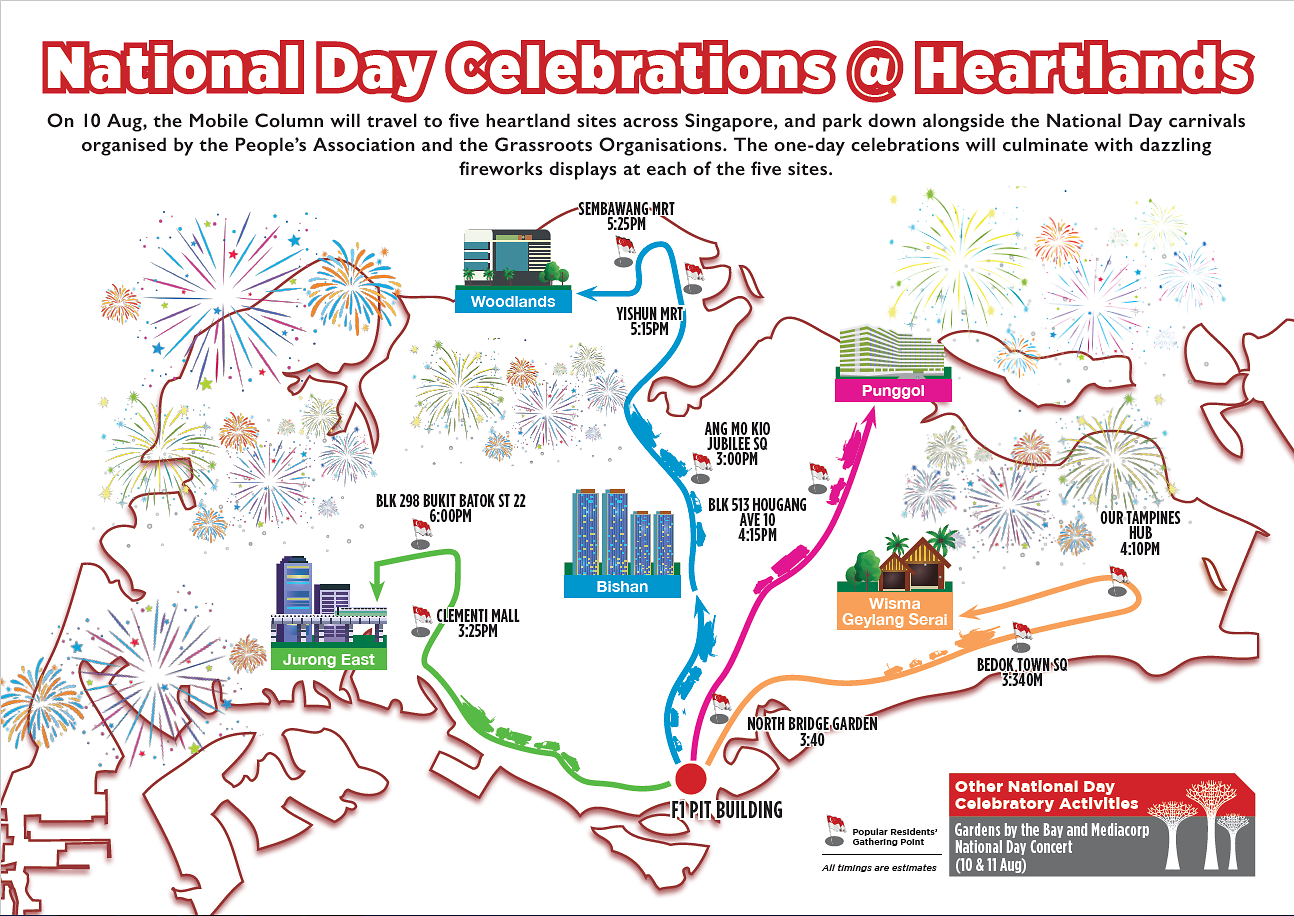
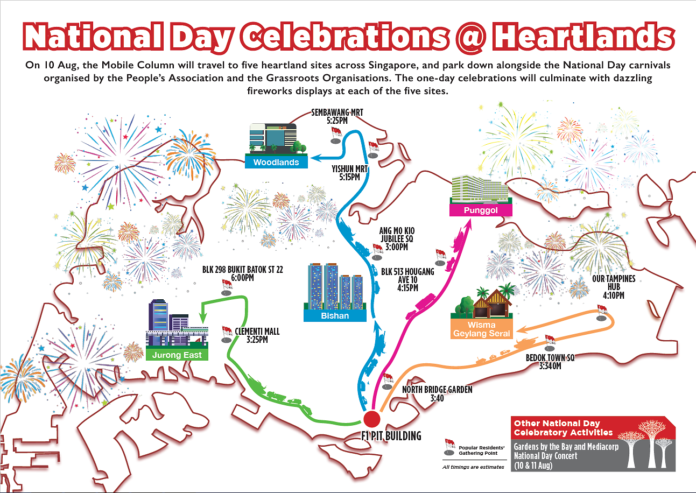
SINGAPORE: National Day celebrations will extend to Aug 10 this year, as the mobile column makes its way from the F1 pit to five neighbourhoods – Jurong East, Woodlands, Bishan, Punggol and Geylang Serai.

Singaporeans can expect to get up close to the array of tanks, jeeps and support vehicles from the Singapore Armed Forces (SAF) and HomeTeam, said Colonel Lim Lit Lam, chairman of the Heartlands Committee at a media briefing on Friday (Jul 19).

Explaining the committee’s decision to extend the celebrations into the heartlands, Colonel Lim said: “This is a special year not just for the Bicentennial, but it is also the 50th anniversary of the mobile column since it first rolled down the Padang in NDP 1969.”

The mobile column is expected to depart at 2.30pm, and it will have five sections, which are estimated to reach their destinations at about 6.45pm.

Residents who want to catch the mobile column will be able to track its location on the National Day Parade’s (NDP) official website, while residents unable to attend the celebrations will be able to watch a livestream of the mobile column as it wends its way along the streets of Singapore, also on the website.

This will be the first time in nine years NDP celebrations will reach the heartlands, and its trip will culminate in fireworks at the five neighbourhoods, said Colonel Lim.

Previously, NDP celebrations were held in the heartlands in 2005 and 2010.

Colonel Yeo Hwee Bin, chairman of the NDP celebrations and mobile column committee said: “The mobile column is a traditional crowd favourite and the key feature for this year’s National Day Parade. By bringing the mobile column to the heartlands, Singaporeans can have an up-close view of vehicles from the Singapore Armed Forces and HomeTeam.”

The roads affected by the mobile column will be closed on a rolling basis and will reopen to traffic once the column passes.

READ: What it’s like to ride in the Mobile Column at NDP

READ: NDP show to feature six-metre tall lion puppet in laser spectacle

Mobile Column route

Source: National Day Parade 2019 Executive Committee

CARNIVALS AND GROUND UP ACTIVITIES

To complement the mobile column’s journey, the People’s Association (PA) will organise carnivals at the mobile column’s five destinations.

Residents living in Bishan can expect activities such as e-sports, AR gaming and a drone showcase, while more than 10,000 residents in Punggol will be aiming to break the Singapore Book of Records by throwing red and white paper balls at the same time.

Singaporeans living in Geylang Serai and Jurong East will have art activities and photo-taking opportunities with art installations.

About 300 people will also attempt to create an umbrella formation spelling out the words NDP 2019@North West in Woodlands.

Other than the carnivals, there will be fringe activities organised by grassroots leaders and residents, which include street performances, balloon sculpting, and flea markets at various locations along the mobile column’s route.

At least 10,000 people are expected to attend the carnivals at each site, said PA group director of partnership Jeanie Tan.

There will also be 50,000 NDP funpacks given out to residents who register with their nearest community clubs.

Source link

Mobile CCTVs and improved app to be used in clampdown against errant PMD riders

0

SINGAPORE: Mobile closed circuit television (CCTV) camera systems will be used to detect personal mobility device (PMD) riders who flout the law as part of an 18-month trial, said the Land Transport Authority (LTA) on Friday (Jul 19).

It will partner the Government Technology Agency (GovTech) on the pilot deployment.

From Jul 31, these CCTVs will be rotated across different hotspot locations including Jurong West, Punggol, Sembawang and Woodlands, LTA said.

“The trial aims to determine the effectiveness of the video analytics software and radar technology in these CCTVs in detecting active mobility offences such as speeding,” it said, adding that errrant riders captured by the CCTVs during the trial may face further investigation and prosecution.

“We’re going to have mobile CCTVs as well as better video analytics available to help us track speed, and potentially facial recognition or number recognition. That would really help us go after culprit riders,” said Senior Parliamentary Secretary for Transport Baey Yam Kheng.

He was speaking at a media preview of a new feature on the MyTransport.SG mobile app which makes it easier for members of the public to report errant PMD and power-assisted bicycle (PAB) riders.

From Jul 31, they can directly report them to LTA via a new “Report PMD/PAB Incident” feature on the app.

LTA said this will not only allow for better follow-up on cases of errant riders, but also deter riders from riding irresponsibly. 

“Riders would be very much aware that anyone around them can report their errant behaviour. That would also assure the public that they can play an active role in reporting such behaviour,” he said.

“We have more than 700,000 people who have downloaded the MyTransport.SG app, so this means that there are potentially more than 700,000 cameras and eyes around to look out for these riders.

“That would multiply by many times what our surveillance is able to accomplish now.”

READ: Town councils can set and enforce own rules on PMD use at void decks: Lam Pin Min

While the app cannot detect speeding riders, LTA said analysing the data collected from the reports will help to identify hotspots on the ground.

Mr Baey said: “This will provide another channel for us to know where are the areas where there are a lot of riders a lot of reckless behaviour, so that we can be more targeted in our enforcement action.” 

He added that the photos or videos submitted could provide conclusive evidence in accidents, which can be used to prosecute the culprit. 

mytransportsg app demo

Screengrab from the MyTransport.SG mobile app showing the three-step process of reporting an errant rider. Unlike the LTA website, submitting a report through the app also allows members of the public to submit videos. 

The authorities may contact those who report such incidents for more information.

READ: More than 85,000 e-scooters registered as deadline closes: LTA

Addressing concerns about fake reports, LTA said there is a team dedicated to sifting through the reports to identify the legitimate ones. 

The public should also refer to LTA guidelines to accurately identify errant riders. For example, PMD riders are not allowed on roads, and the speed limit on footpaths is 10kmh. 

“We hope that the app will be positively welcomed and used by the public … Of course, there could be people who abuse it, but we will improve and build up resources over time, using technology as much as we can, so that we are able to make good sense of the data received,” said Mr Baey.

A total of 3,700 active mobility offences were recorded between May 1 last year and Apr 30 this year. Users who flout regulations can be fined up to S$10,000 and/or face a jail term of up to six months.

Source link

Bigger Aedes mosquito population identified as key reason for surge in dengue cases

0

SINGAPORE: The Aedes aegypti mosquito population has increased by almost three times since the last major dengue outbreak in 2013, the National Environment Agency (NEA) said on Friday (Jul 19) as it outlined some of the key reasons for the high number of cases this year.

As of Thursday, there were 188 active dengue clusters in Singapore, of which more than 45 are listed as high-risk. There have also been 7,808 dengue cases so far this year, about five times more than the same period last year. 

The largest dengue cluster in Woodlands, where there were 216 reported cases, has closed and is now under surveillance, NEA said.  

Five people have died from dengue this year. 

“We are in the peak dengue season in Singapore, which usually stretches from June to October, and the region around us is similarly seeing an upsurge of dengue cases this year,” the agency said in a media advisory.

“Urgent community action is needed to eliminate all potential mosquito breeding habitats.”

KEY REASONS FOR SURGE

Based on NEA’s surveillance, the surge in cases can be attributed to three factors – an increase in the mosquito population, warmer weather and a low herd immunity.

The Aedes aegypti mosquito population is “persistently high”, the agency said, adding that the population has increased by almost three times since the last outbreak in 2013.

READ: More mosquitoes or mutating virus? Experts have different views on dengue spike

In addition, the mean temperature for the first half of this year was 0.7 degrees higher than during the same period last year.

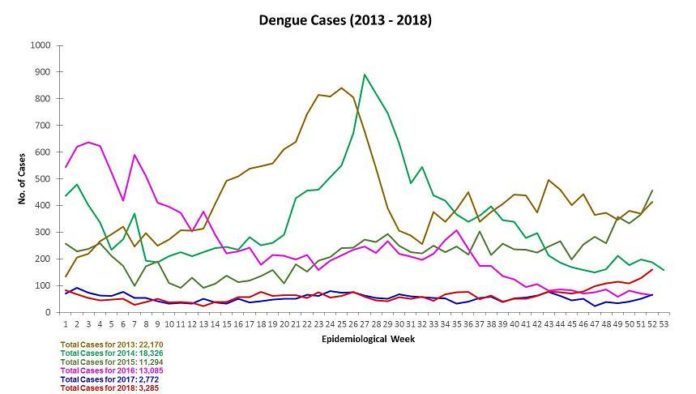
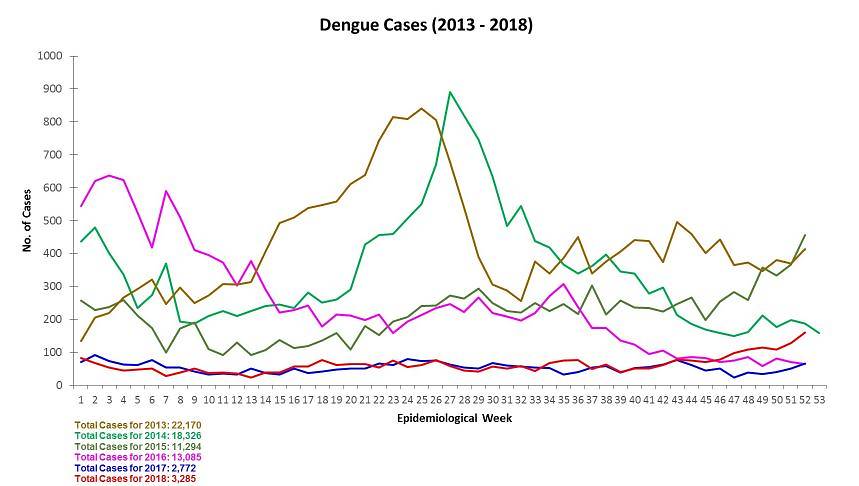
Number of dengue cases between 2013 and 2018

Number of dengue cases from 2013 to 2018. (Graph: NEA)

“Warmer temperatures result in higher transmission of dengue due to the accelerated development of the Aedes mosquito and shorter incubation period of the dengue virus,” the media advisory read.

“At the same time, a large proportion of our population continues to be susceptible to dengue, given our population’s low herd immunity.”

The proportion of adults who have had dengue before has reduced from 59 per cent in 2004 to 41 per cent in 2017.

MOSQUITO BREEDING MOSTLY IN HOMES

More than 442,000 inspections have been carried out by NEA between January and June 2019 and about 8,200 mosquito breeding habitats were uncovered.

As of June 2019, about 1,200 enforcement actions had been taken against households for breeding mosquitos.

“To safeguard public health, NEA will not hesitate to take enforcement action against anyone found to have created conditions favourable for the propagation or harbouring of vectors,” the agency added.

The largest dengue cluster in Woodlands, which includes Avenue 6, Woodlands Circle, Woodlands Crescent, Drive 40, Drive 60, Drive 70 and Drive 72, has closed.

NEA said there has been a slowing down in dengue transmission in the past seven weeks there and no reported cases over the past two weeks.

The rate of dengue transmission has also slowed at the Chai Chee cluster, where there have been 130 cases.

But the agency warned against complacency and said people must maintain vigilant.

READ: The Big Read: As temperatures and urbanisation increase, fight against dengue will only get tougher

There are currently 188 active clusters, with large clusters in Geylang Road and Jalan Lembah Thomson. 

“While these have come down compared to the past weeks, the transmission in these two areas remains persistent, although at a lower case level,” NEA said.

A faster rate of dengue transmission has also been observed at Aljunied Road, Pasir Ris Drive 3, Changi Road and Jurong East Ave 1.

About 60 per cent of the mosquito breeding habitats found in Singapore are found in homes. In the largest Woodland cluster which just closed, 87 per cent of the mosquito habitats were in homes.

“The majority of mosquito breeding habitats found in most of these clusters are within residential premises,” NEA said.

“All residents living in cluster areas are strongly encouraged to cooperate with NEA officers, and facilitate their checks and indoor misting in their homes. 

“As the Aedes aegypti mosquito has adapted well to the urban environment, it is critical to eradicate mosquito breeding habitats and adult mosquitoes. Adult Aedes mosquitoes tend to rest inside homes.”

NEA warned residents living in cluster areas to apply mosquito repellent regularly and to keep their homes free of stagnant water.

“All stakeholders need to reduce the mosquito population urgently. NEA, together with other Government agencies from the Inter-Agency Dengue Task Force, as well as all Town Councils, are continuing to check public areas and housing estates for potential mosquito breeding habitats, with officers carrying out daily checks,” the agency said.

“We are also eliminating adult mosquitoes through measures such as space-spraying and the deployment of  Gravitraps.”

Source link

Old-age selfies are fun, but should you be concerned about Russian-made FaceApp?

0

SINGAPORE: First it was Snapchat’s gender-bending feature, and now FaceApp is taking social media by storm, with users having fun transforming their faces into younger or older versions of themselves.

FaceApp, which was launched by Russian publisher Wireless Lab in 2017, uses artificial intelligence to modify users’ photos, changing their hair colour, adding wrinkles or subtracting years from their faces.

It is currently the most downloaded free application on Google Play, with more than 100 million users, after its new aging filter attracted interest from celebrities including music superstar Drake and NBA champion Steph Curry.  

However, as social media users populate their feeds with these entertaining selfies, is there a cause for concern about how their data is being used?

READ: Why cybercriminals are stalking your social media accounts

WHAT ARE THE CONCERNS OVER FACEAPP?

Concerns over the app and its data privacy have gained traction over the past week.

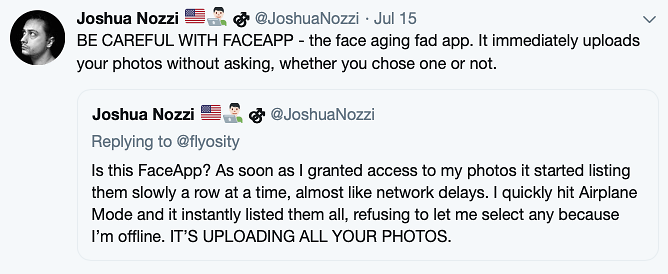
On Monday, software developer Joshua Nozzi’s tweeted his concerns about the app, which were picked up by several news publications.

In a now-deleted tweet, Mr Nozzi said that FaceApp “immediately uploads” users’ photos without their permission. He has since clarified in a blog post that he was wrong about the accusation.

joshua nozzi

A screengrab from Joshua Nozzi’s blog about his tweet that was circulated. 

However, concerns over the terms and conditions of the app remain.

faceapp terms and conditions

Screengrab of FaceApp’s terms. 

Clauses in the app’s terms and conditions include granting FaceApp permission to use the photos for commercial purposes.

“While it may initially seem private, the terms of service from some of these apps may raise some concern around privacy since they do not make entirely clear on what is happening behind the scenes,” Mr Shashwat Khandelwal, McAfee’s head of Southeast Asia consumer business, told CNA in an email interview.

“When users grant certain permissions through the app, the company may use the data for their own benefit,” he added.

FaceApp CEO Yaroslav Goncharov, however, has told the Washington Post that the app only uploads photos selected by a user for editing and that most photos are deleted from its servers within 48 hours.

Government authorities in Russia do not have any access to the photos, he told the Post, adding that the company does not “sell or share any user data with any third parties”.

Mr Goncharov was also cited in BBC as saying that the terms in FaceApp’s privacy policy are generic and that the company does not share the data for ad-targeting purposes.

Instead, the app makes its money through paid subscriptions for premium features, he said.

Still, Mr Shashwat noted, the app stores data on a cloud and “the fact remains that FaceApp gains access to the user’s photographs by the user’s own will”.

“Once the photograph is with FaceApp, it is up to them how they choose to handle that content”, he said.

Additionally, photographs uploaded to the cloud are at risk of being targeted by hackers who may use them for running facial identification to compromise individuals and companies, said Mr Alvin Rodrigues, senior director and security strategist at Forcepoint Asia Pacific & Japan.

“The face is your personal copyright. From a security perspective, you are giving away your ability to use your face as a password to log files or to lock your devices,” he said.

WHY ARE GOVERNMENTS SPEAKING OUT?

Authorities from Singapore to the United States and Europe have raised their concerns about the app, with some calling for investigations into its potential threat to national security.

Singapore Prime Minister Lee Hsien Loong on Friday (Jul 19) cautioned that people should be careful with what apps they download.

“Many are having a bit of fun sharing the modified photos, of themselves or others. There’s nothing wrong with that, but most likely many don’t know (or don’t care) how much personal data such apps get access to when they are downloaded and used,” he said in a Facebook post.

“The tech world moves so fast that it is difficult to screen every new app that comes out. That shouldn’t stop us from trying out new things, but do be careful with what apps you download and use,” he said.

FaceApp has also come under fire in the United States, with one senator urging a Federal Bureau of Investigation (FBI) probe, reported AFP.

“FaceApp’s location in Russia raises questions regarding how and when the company provides access to the data of US citizens to third parties, including potentially foreign governments,” Senate Minority Leader Chuck Schumer said in a letter to the FBI.

“It would be deeply troubling if the sensitive personal information of US citizens was provided to a hostile foreign power actively engaged in cyber hostilities against the United States,” he added.

Poland and Lithuania have also said they are looking into the potential security risks of the app.

Poland’s digital affairs ministry said it was “analysing” the security risks posed by FaceApp to the personal data of its users, despite assurances by its designers that the app is safe.

“Various experts point to possible risks related to inadequate protection of users’ privacy,” the ministry said in a statement on its website.

Cybersecurity authorities in EU neighbour Lithuania are also investigating potential threats to users’ personal data, deputy defence minister Edvinas Kerza told AFP.

Mr Kerza added that the makers of FaceApp have cooperated with other Russian Internet companies that may not comply with EU data use regulations.

WHAT ABOUT OTHER SIMILAR APPS?

FaceApp is not the first app where users upload pictures of themselves. Popular apps such as Instagram and Facebook all make use of similar features and contain user data. According to the editor-in-chief of tech site Lifewire, Twitter also has similar clauses within its terms and conditions.

“Indeed, while the spotlight for the past week has been on FaceApp’s privacy policies on the back of its virality across social media, it’s important that we remember that similar policies are in place across all major social media networks – FaceApp’s policies don’t go against the grain,” Mr Shashwat said.

READ: Cambridge Analytica: Firm at the heart of Facebook scandal

SHOULD USERS BE RESPONSIBLE FOR THEIR OWN DATA?

Sixty-three per cent of consumers do not read license agreements and 43 per cent just tick all privacy permissions when they are installing new apps, said Kasperky’s general manager for Southeast Asia, Mr Yeo Siang Tiong, referring to a study done three years ago.

He added that “there is no harm in joining online challenges or installing new apps”, but “the danger lies when users just grant these apps limitless permissions into their contacts, photos, private messages, and more”.

Users should do some research and look out for any red flags that have been raised around apps’ security, Mr Shashwat added.

“Make sure you always read the privacy terms and conditions when signing up to ensure that your personal data isn’t shared with anyone you don’t know or trust.

“It’s also important to be aware of how your data could be used and accessed by third party sites and apps,” he added.

When it comes to deciphering the chunk of text found within the terms and conditions, Mr Shashwat suggested that consumers look out for the following – personal data, ranging from names or usernames to pictures, location data and browsing habits.

“The privacy policy of any app should dictate how the data that was acquired from the user is handled from start to end. This includes how the data is meant to be used, storage and transfer policies, the duration the data will be kept by the app, policies around how the user can ask for the data to be removed, and whether the data is accessed by any additional third parties,” he said.

“Overall, it’s a good security habit for all consumers to only share personal data when it’s absolutely necessary.”

READ: Commentary: What those ‘updates to our privacy policy’ mean for Singapore

Additional reporting by Kevin Kwang.

Source link

Maxwell Chambers Suites opens for preview ahead of grand opening

0

SINGAPORE: Shutterbugs and heritage buffs were among the first to take a peek into the newly-refurbished Maxwell Chambers Suites on Thursday (Jul 18), two years after the building closed for renovation works. 

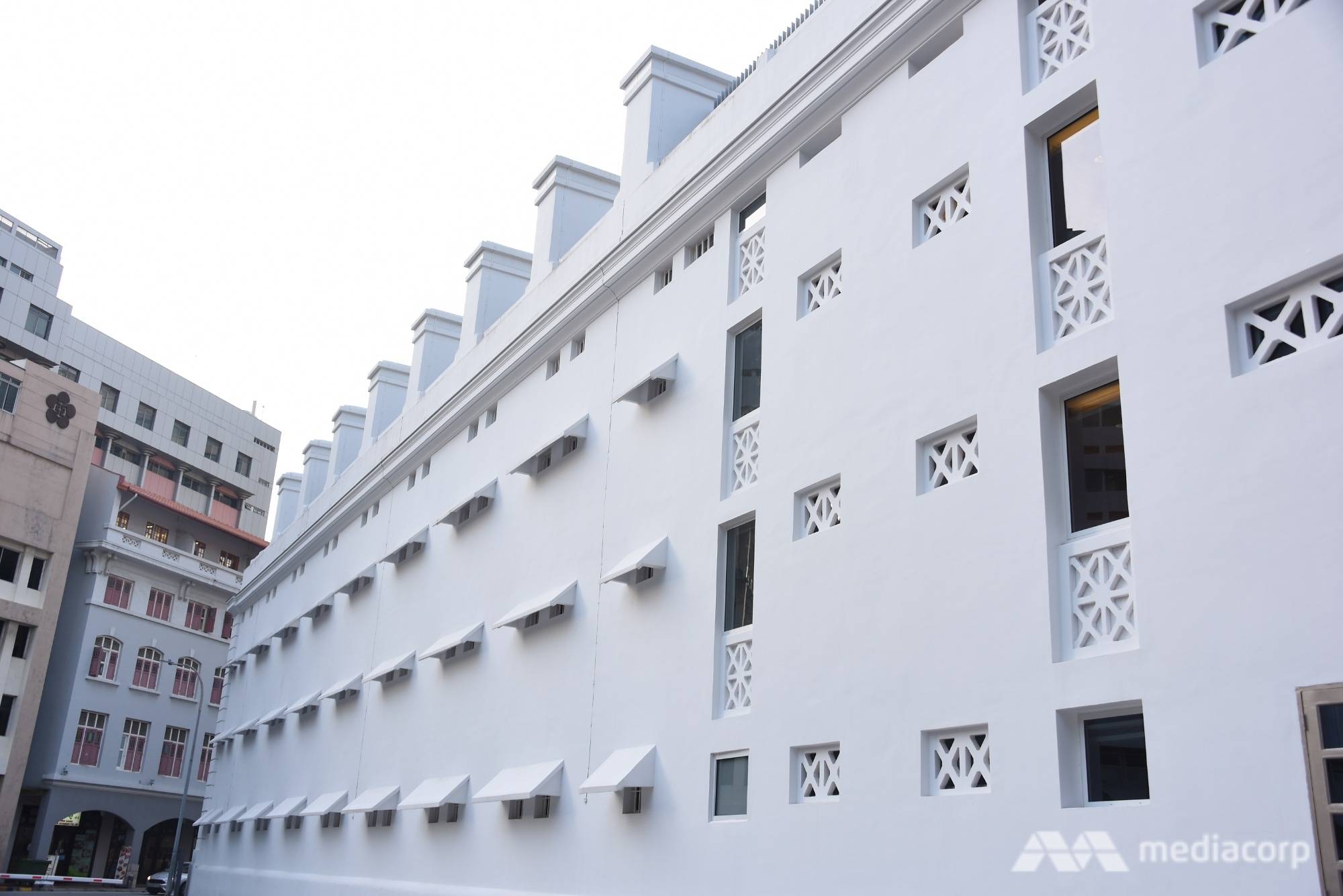
Constructed in 1928, Maxwell Chambers was first used as the police force’s barracks. From the 1930s to 1999, it was the Traffic Police headquarters.  

After the Traffic Police’s departure in 1999, the building underwent a revamp and sported a bright red facade as the Red Dot Traffic Design Museum. 

It was then gazetted as a conservation building in 2007.

TRACING ITS ROOTS

Mr Wee Cheng Soon's descendants.

Mr Wee Cheng Soon’s descendants from left to right: Great granddaughters Tanya Pillay-Nair and Sherry Lim, grandniece Juliana Lim and grandson Dr Michael Chia. (Photo: Darius Boey)

The man who made Maxwell Chambers a reality was Mr Wee Cheng Soon, the owner of now-defunct Wee Cheng Soon Construction. Back then, he won the tender to construct the building at 321,100 Straits dollars.

Joining the preview on Thursday were Mr Wee’s grandson Dr Michael Chia, as well as Mr Wee’s grandniece and great-granddaughters. 

Dr Chia, 90, said he felt extremely proud upon seeing his late grandfather’s work being refurbished. 

“This was a journey of discovery because I have never been here before and I didn’t know that he had built this until a few days ago,” he said. “I feel very proud that my grandfather has built this building and many others in Singapore.”

“My kids don’t know about this place, but I would definitely want to tell them, and I would bring them here and show them around,” he said. 

“It’s difficult to say (which part is my favourite) because every part is interesting and it’s almost perfect.”

Mrs Margaret Wee joins Maxwell Chambers preview. (Photo: Darius Boey)

Mrs Margaret Wee, wife of Mr Vincent Wee, grandson of the late Mr Wee Cheng Soon also joined the preview. (Photo: Darius Boey)

The preview is part of the Ministry of Law’s efforts to work with various heritage and photography communities to share the building’s rich heritage ahead of its grand opening on Aug 8, as Singapore celebrates its Bicentennial year and 54th National Day. 

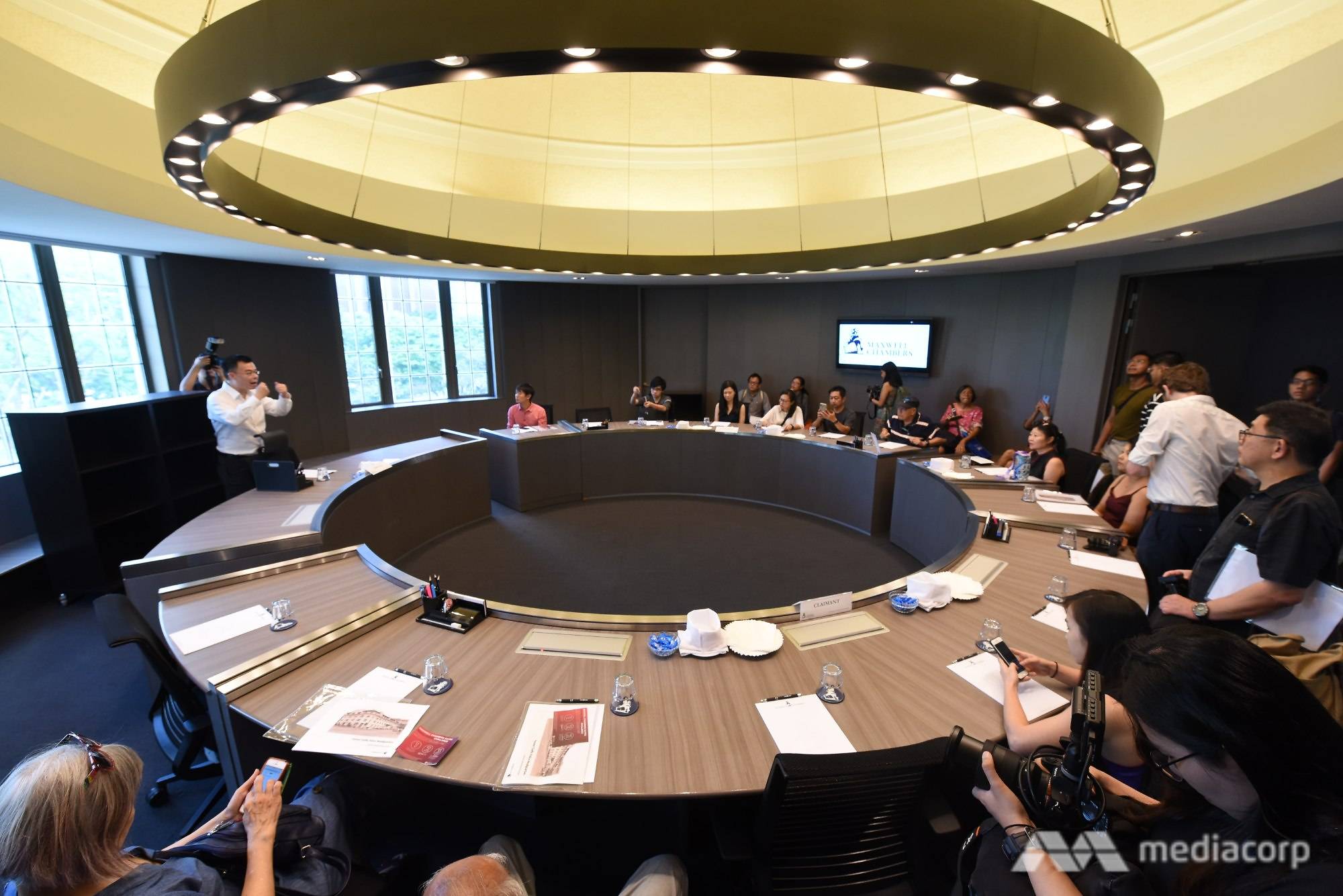
dome-shaped arbitration room

A dome-shaped arbitration room inside Maxwell Chambers. (Photo: Darius Boey) 

AN INSTAGRAMMER’S PARADISE?

Ninety members of various heritage and photography communities in Singapore, including the likes of Singapore Heritage Society, My Community and Nostalgic Singapore were there.

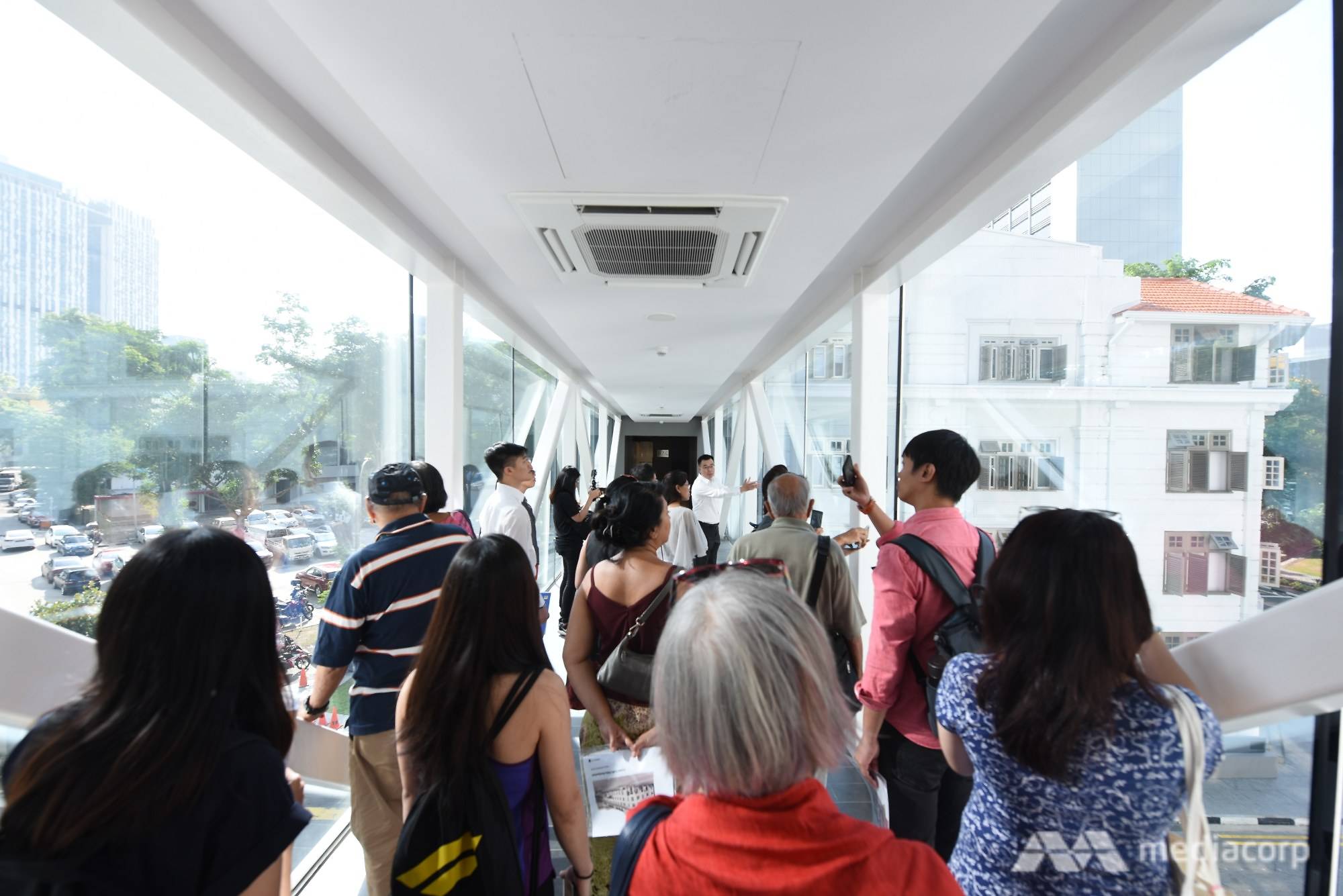
Bridge linking Maxwell Chambers to Maxwell Chambers Suites. (Photo: Darius Boey)

This newly-constructed bridge links Maxwell Chambers to Maxwell Chambers Suites. (Photo: Darius Boey)

One of them is Mr Jiaquan Lu, 31, a member of the Singapore Photography Community, who first came to know about the building when it was still the Red Dot Traffic Museum.

Mr Lu said he only learned about the building’s significance through his parents. 

“It’s my first time experiencing the building apart from their stories and walking through it as well. The building speaks for itself through some of the architectural symbols. It’s interesting to know these bits and pieces of history,” said Mr Lu. 

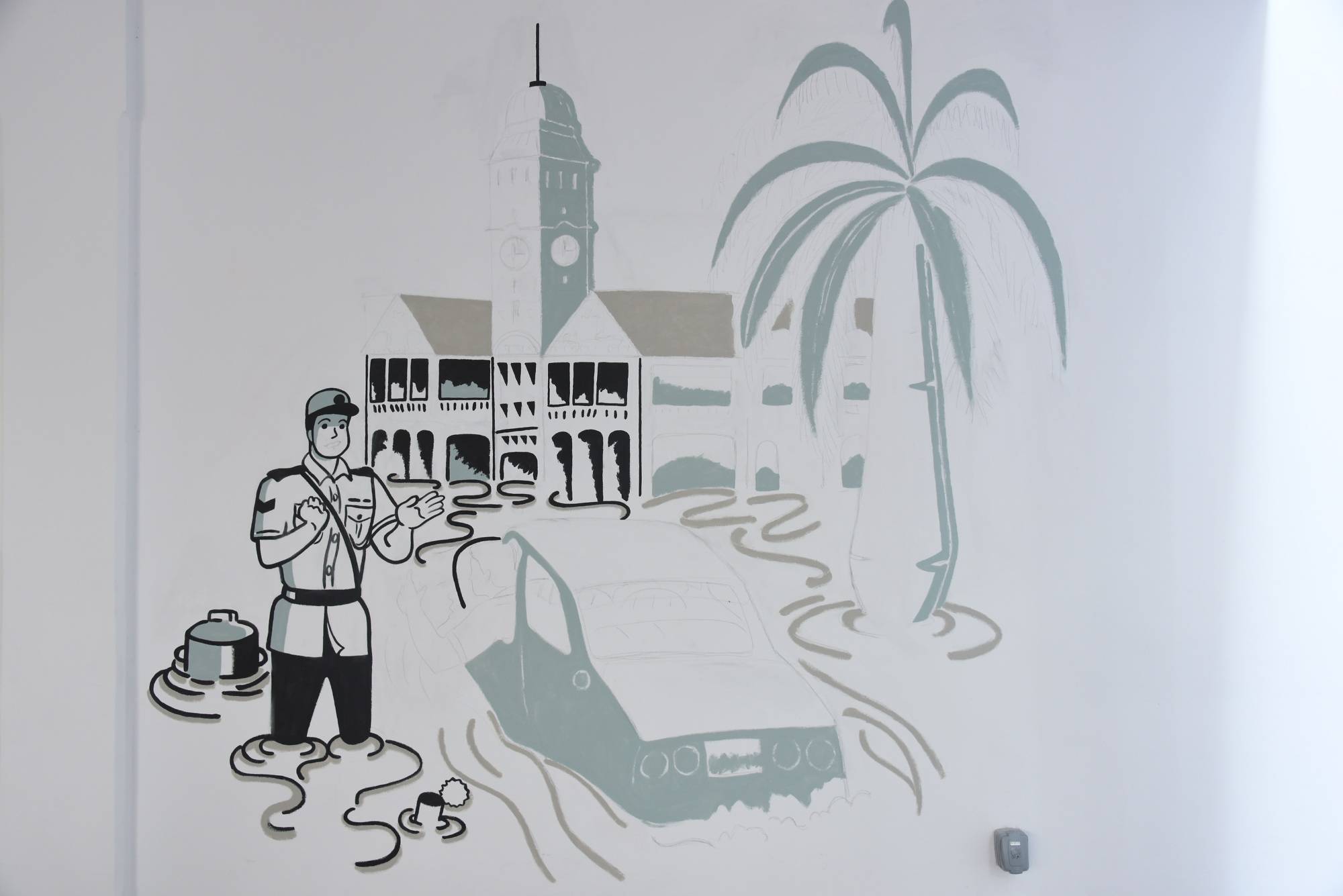
This artwork can be found within the building's compound (Photo: Darius Boey)

This artwork can be found within the building’s compound (Photo: Darius Boey)

When asked what drew him to join the tour, he said: “It was definitely more of the historical value that drew me, not the aesthetics … I guess we take it for granted when we pass by these buildings and there’s a lot of history behind it.” 

The building has also become an Instagram photographer’s paradise. Following its refurbishment, more people have been flocking to Maxwell Chambers for snapshots. 

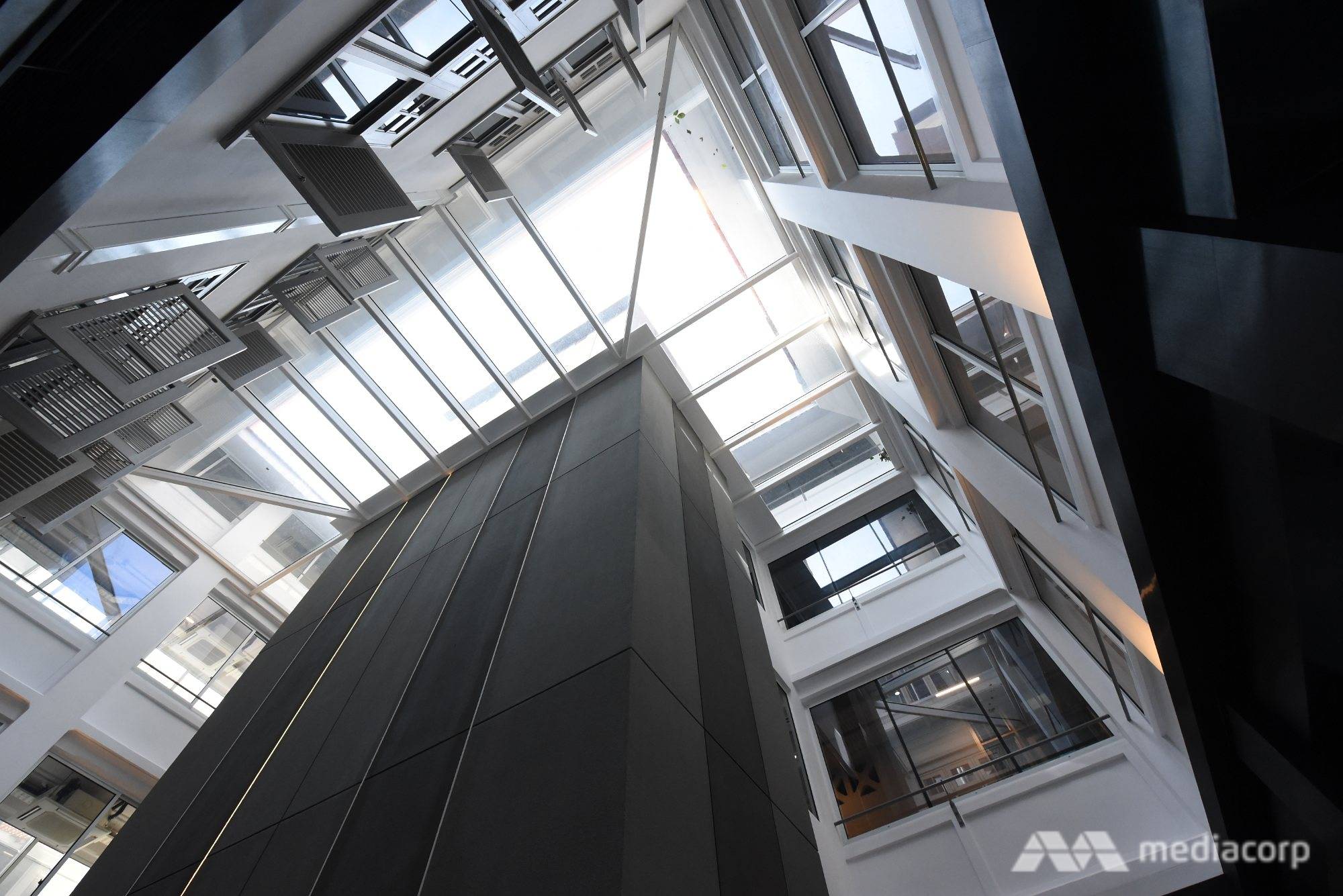
There are many Instagram-worthy spots within Maxwell Chambers. (Photo: Darius Boey)

There are many Instagram-worthy spots within Maxwell Chambers. (Photo: Darius Boey)

“People have actually come here to take photos as they think it’s a very instagrammable building,” said Mr Han Kok Juan, Deputy Secretary of the Ministry of Law.

“I think the beauty and intricacy of this building’s design needs to be shared with the younger generation of Singaporeans and I do think that modern photography and social media is a good channel for a wider population of Singaporeans to appreciate the heritage and the history of this building.”

Maxwell Chambers' hooded windows

The building’s hooded windows were preserved during the refurbishment. Back in the day, they were communal kitchens. (Photo: Darius Boey)

Source link

Singaporeans head to fire hotspot village in Indonesia to tackle haze

0

KUALA LUMPUR: A Singaporean charity is working with villagers in Indonesia to restore ancient peatlands, seeking to curb the haze that chokes the region every year, organisers said on Thursday (Jul 18).

Indonesian farmers burn huge swathes of land every year to clear land for agricultural expansion, creating a vast haze that clouds the skies over large parts of Southeast Asia – including Singapore.

Now the People’s Movement to Stop Haze (PM Haze), an advocacy group in Singapore, has launched a peatland restoration project in a tiny Indonesian village that suffered bad fires in 2014.

“One of the things we realised is that good management of peatland is very important for managing haze in the region,” PM Haze executive director Benjamin Tay told the Thomson Reuters Foundation by phone.

“A lot of the haze comes over from that part of Indonesia into Singapore, so by preventing fires and haze in that region, we prevent haze from coming to Singapore,” he said.

READ: Indonesia sees drop in hotspots due to peatland restoration efforts, says agency

Peaty soil is particularly flammable when dry, often causing fires to spread beyond their intended areas.

When peatlands are drained or cleared by fire, often to make way for oil palm plantations or farming, the carbon is released into the atmosphere where it traps heat, contributing to climate change.

Peatlands restored in Sungai Tohor, Indonesia

Peatlands previously destroyed by fire being restored using canals in Sungai Tohor, Indonesia Mar 11, 2019. (Photo: Thomson Reuters Foundation / Mohd Tahar Jumaat)

Mr Tay’s group is improving canals in the area around Sungai Tohor, a farming village on an island off the coast of Sumatra with a population of about 1,000, to ensure the local peatlands can be kept wet.

PM Haze is also educating villagers about peatland conservation, setting up a nursery for tree replanting, and organising fire prevention workshops.

One of the worst peat and forest fire crises was in 2015 when a thick haze blanketed much of Southeast Asia, causing billions of dollars of economic losses.

About 2.6 million hectares of land in Indonesia was burned between June and October 2015, mainly on Indonesia’s Sumatra and Borneo islands, according to a 2016 World Bank report.

A Harvard University study the same year linked the haze to more than 100,000 premature deaths in Indonesia, Malaysia and Singapore during 2015.

Mr Tay said he hoped the scheme would be scaled up once the Sungai Tohor community was able to lead the project itself.

Source link