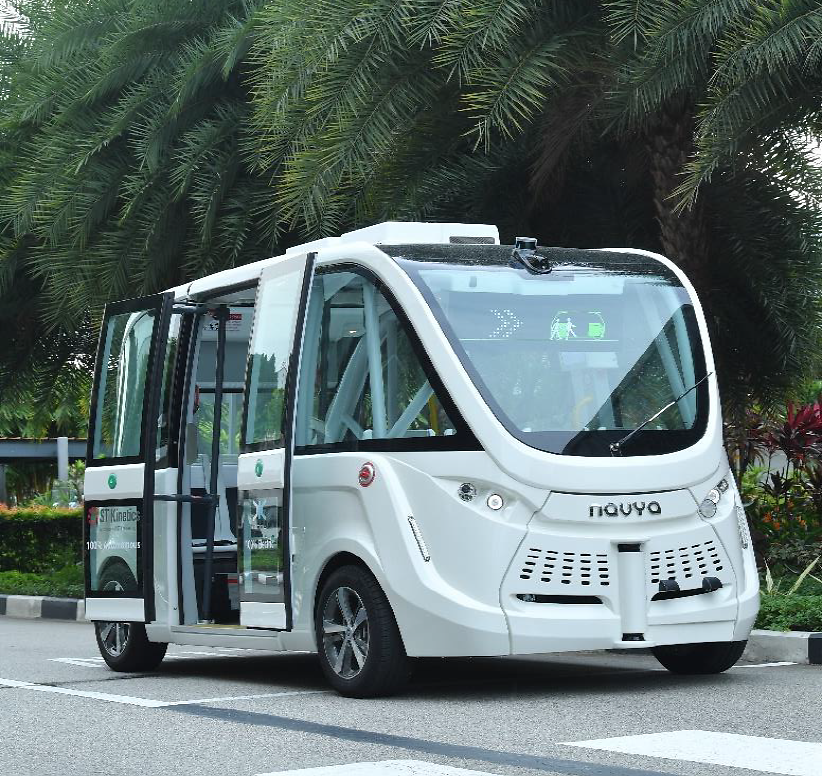
SINGAPORE: Visitors to Sentosa will be able to get around the island for free on on-demand driverless shuttle buses from next Monday (Aug 26), after a trial of the service was launched on Tuesday following more than a year of testing.
The autonomous vehicles – comprising two minibuses and two smaller shuttles – will ply popular destinations along a 5.7km route, including Siloso Point, Beach Station, Palawan Beach, Tanjong Beach and Sentosa Golf Club.
Passengers will be able to hail an autonomous shuttle via the “Ride Now Sentosa” mobile app or kiosks along the 5.7km route, said the Ministry of Transport (MOT), Sentosa Development Corporation (SDC) and ST Engineering in a joint release on Tuesday.
The service will operate for four hours on weekdays, from 10am to 12pm and from 2pm to 4pm.
The shuttle buses will not be available during weekends and public holidays.
Passengers will be able to hail an autonomous shuttle via the “Ride Now Sentosa” mobile app or kiosks along a 5.7km route that includes popular destinations such as Tanjong Beach and Sentosa Golf Club. (Photo: ST Engineering)
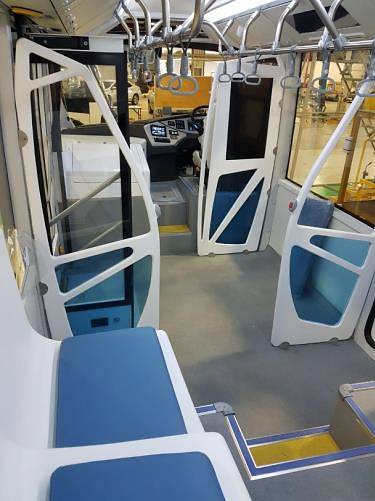
Four autonomous vehicles (AVs), comprising two minibuses and two smaller shuttles, will be deployed for the trial. (Photo: MOT, SDC, ST Engineering)
‘PUBLIC SAFETY IS OUR TOP PRIORITY’
While the vehicles are autonomous, a safety driver – who is trained to take over immediate control of the vehicle should the need arise – will be on board each of the four shuttles.
Each shuttle also has a vehicle fault system that will immediately alert the safety driver of any faults, and cede control of the vehicle to him.
“In addition, all the autonomous vehicles will display electronic signages to signal that they are operating autonomously, for easy recognition by road users and pedestrians,” the release said.
Singapore’s first on-demand autonomous shuttle public trial will run from Aug 26 to Nov 15. (Photo: Jeraldine Yap)
The vehicles come equipped with various technologies to help them sense their environment and identify appropriate navigation paths, obstacles and signages, the joint release said.
This helps them navigate traffic as well as handle a range of complex environments, such as roundabouts, the release said.
Singapore’s first on-demand autonomous shuttle public trial will run from Aug 26 to Nov 15. (Photo: MOT, SDC, ST Engineering)
FUTURE OF PUBLIC TRANSPORT SYSTEM
Permanent Secretary for Transport and chairman of the Committee on Autonomous Road Transport for Singapore, Mr Loh Ngai Seng, said that autonomous vehicle technology has the potential to transform Singapore’s public transport system and the way its people move around in the future.
“This trial will provide important insights into commuter experience and the interaction of autonomous vehicles with other road users, as we seek to enhance urban mobility by deploying autonomous vehicle technology safely in our towns,” he said.
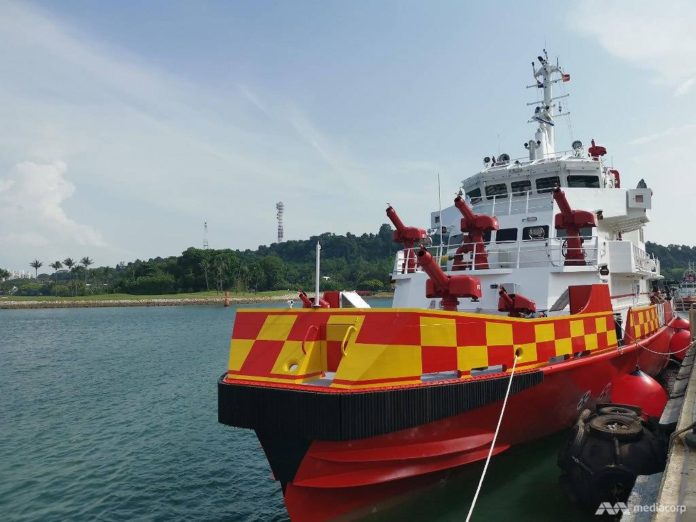
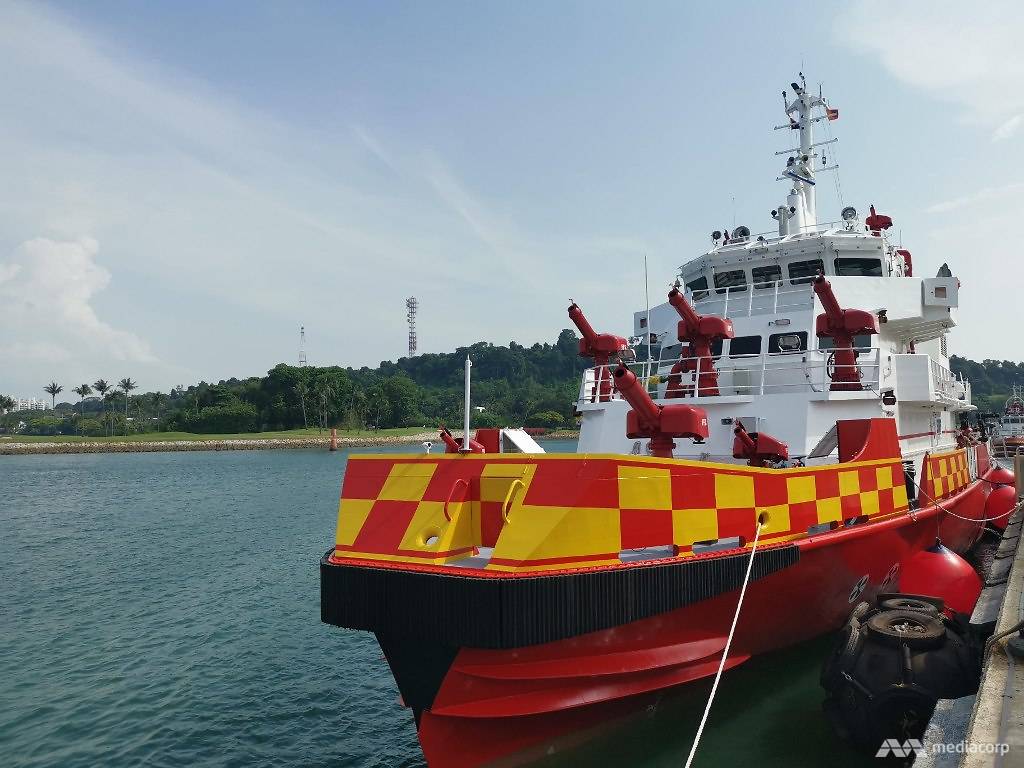
SINGAPORE: Three new firefighting vessels, including one the Singapore Civil Defence Force (SCDF) touted as the “world’s most powerful firefighting vessel”, was commissioned by Home Affairs and Law Minister K Shanmugam on Tuesday (Aug 20).
The three vessels – the Marine Rescue Vessel (MRV), Heavy Rescue Vessel (HRV) and Heavy Fire Vessel (HFV) – will be fully operational by 2020 as the crew is currently undergoing training, according to the SCDF.
With the addition of the three vessels, the SCDF Marine Division now has a total of eight fire-fighting vessels in its fleet, and more could be added in the future, said Assistant Commissioner (AC) Derek Tan during a press briefing ahead of the commissioning of the vessels.
It previously could call on three Rapid Response Fire Vessels (RFVs), which are the equivalent of the land-based Red Rhinos, and two Marine Fire Vessels (MFVs) to respond to fires at sea, AC Tan said.
The enhancement in assets is timely given that Singapore has one of the world’s busiest ports and with the Tuas Mega Port starting its first phase of operations in 2021, there will be more traffic, SCDF said.
In addition, the operation of Marina Bay Cruise Centre since 2012 has resulted in a steady growth in the local cruise industry, with an increase in numbers of high passenger-carrying cruise ships operating out of here, it added.
“The high volume of sea traffic requires a greater capability, capacity and efficiency in handling various forms of maritime emergencies,” SCDF said.
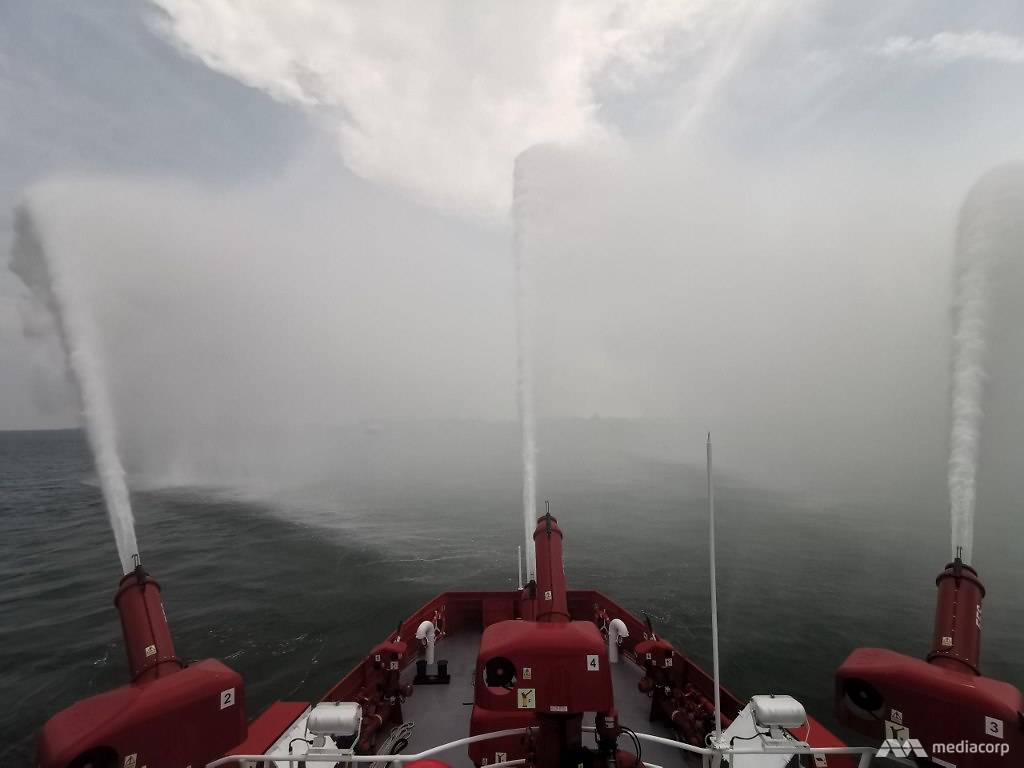
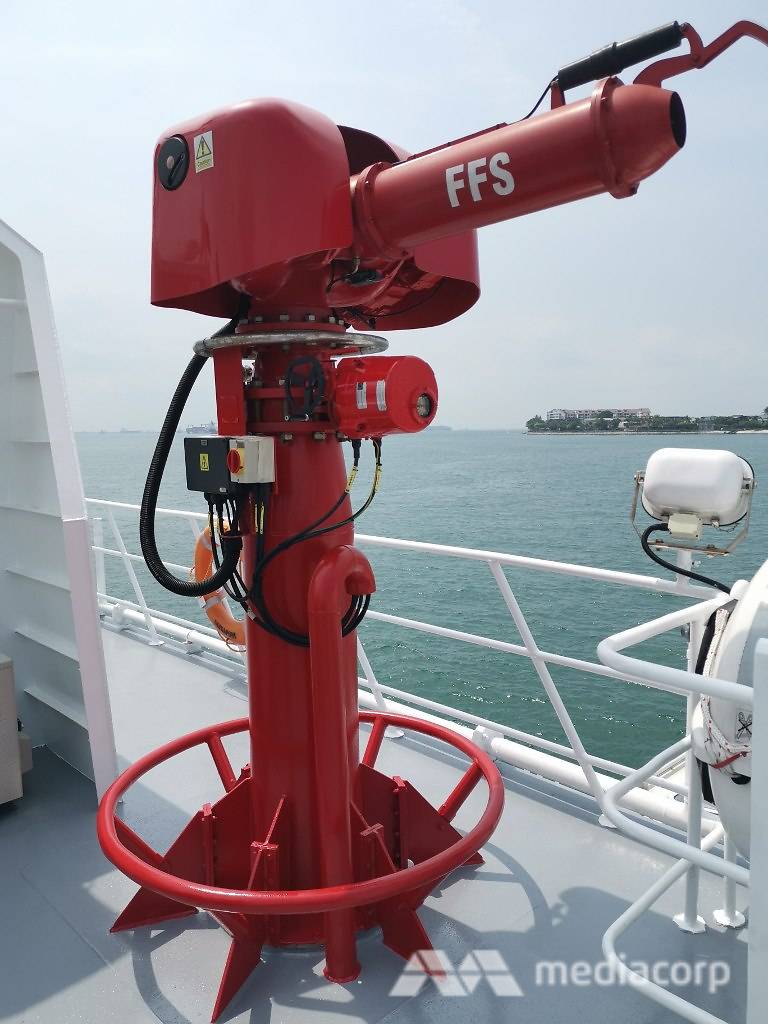
The Heavy Fire Vessel has 12 monitors capable of a total output of 240,000 litres of water per minute, making it the world’s most powerful firefighting vessel, says SCDF.
With the setting up of the Loyang Marine Fire Post in 2017 to improve coverage for the eastern part of Singapore, SCDF marine vessels can now respond within 45 minutes to incidents in most parts of Singapore, said Mr Shanmugam in his speech at the commissioning ceremony.
The response time is likely to improve further with the new Gul Marine Fire Post and Punggol Marine Outposts starting operations in 2020 and 2021, respectively, the minister added.
SCDF worked closely with the Defence Science and Technology Agency (DSTA), as well as local shipbuilders Penguin International and ST Engineering’s Marine arm to conceptualise and build the newly commissioned vessels, following study trips to look at what was available in the market.
Construction of the three vessels began in 2017.
CNA takes a closer look at the three different types of vessels capable of handling anything from chemical, biological and radiation (CBR) incidents and mass evacuations to fighting big fires out at sea.
HEAVY FIRE VESSEL (RED SAILFISH)
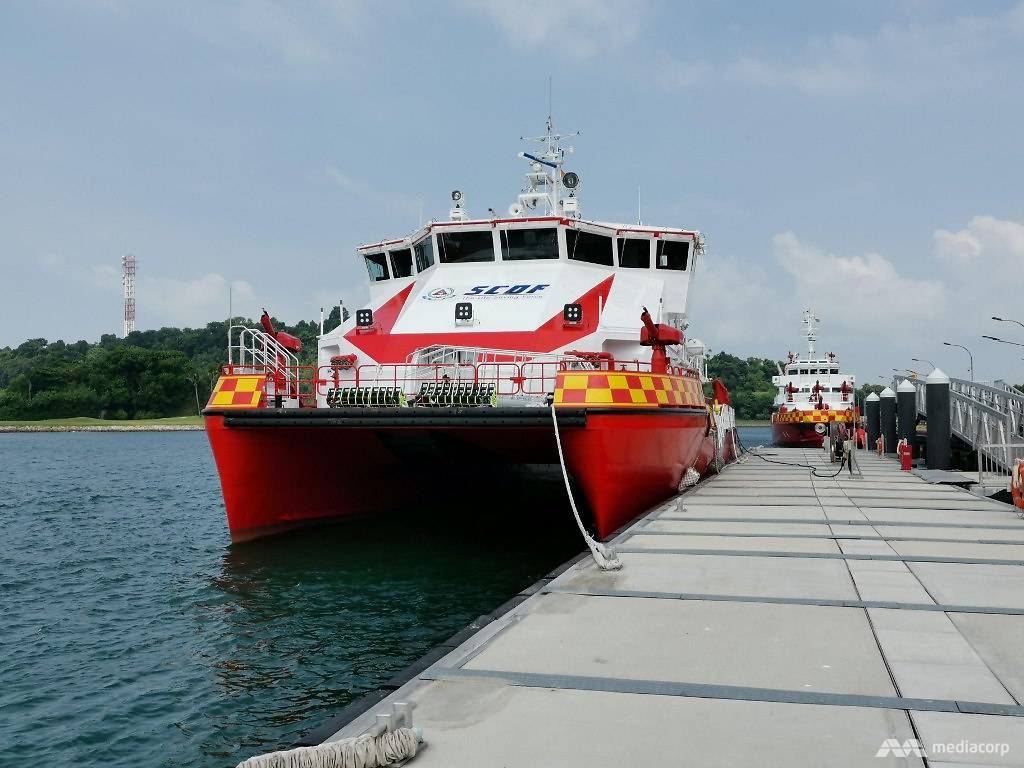
Codenamed the Red Sailfish, after the SCDF Marine division’s mascot, the HFV is touted as the world’s most powerful firefighting vessel. It boasts 12 water and foam monitors and has a total output of 240,000 litres of water per minute.
Red Sailfish’s onboard monitors can spray water up to a distance of 200m.
These monitors can spray water up to a distance of 180 metres to 200 metres, SCDF added.
It is also the first firefighting vessel to have a dynamic positioning system (DPS), which allows the ship to automatically steer itself to counteract the reaction forces of its powerful pumps, SCDF said.
AC Tan explained that the conventional way would be to have two crew members manually control the engine and steering.
“This is manual, very tedious and the (likelihood of) human error becomes higher,” he explained.
With the DPS, which is commonly found in commercial vessels, this can help reduce the dependence on onboard crew members given that the function can be engaged for 96 hours straight, he added.
The vessel is 50m long and has a top speed of 20 knots (or about 37 kmh). It is equipped with CBR protection and detection system, thermal imaging capabilities and a rigid-hulled inflatable boat (RHIB) for quick launch and recovery operations.
There’s a rigid-hulled inflatable boat at the back of the Red Sailfish, allowing the crew to launch quick rescue operations.
It also has a rescue room that could take up to 30 evacuees sitting or six lying down, SCDF said.
The Red Sailfish can also transform into a mobile pumping station for its land counterparts, particularly for near-shore operations.
HEAVY RESCUE VESSEL (RED MANTA)
The HRV, codenamed Red Manta, was built to deal with mass evacuation situations, according to AC Tan.
The Heavy Rescue Vessel is the first catamaran in SCDF’s fleet, and the design helps make it more stable for ship-to-ship operations.
The first catamaran vessel in the force’s fleet, the 39.5-metre Red Manta has a capacity for 300 people and comes equipped with a medical treatment room and decontamination chambers. In fact, it has 12 automated decontamination shower cubicles that allow for mass decontamination of casualties, it said.
The Red Manta’s decontamination room has 12 automated shower cubicles for mass decontamination of casualties, and it can also allow for those lying on stretchers.
The twin-hulled design means the vessel is highly stable, which facilitates vessel-to-vessel operations out in open seas. It also has a top speed of 35 knots, the agency said.
Dorm rooms on board the Red Manta come in single (pictured) and bunk beds, with only the single bedders having an accompanying toilet in the room.
Additionally, the HRV is designed with a heli-winch pad on one of its decks, thus allowing for quick evacuation of casualties in need of urgent medical intervention, AC Tan said, adding it is the SCDF’s only vessel with such a feature.
The Red Manta also functions as a mobile command post during incidents, with the boardroom equipped with 3G and 4G connectivity for real-time situational awareness.
MARINE RESCUE VESSEL (RED DOLPHIN)
Last, but not least, is the MRV – the smallest of the three newly commissioned vessels (34.9m) but also the most versatile, said AC Tan.
The Marine Rescue Vessel has a top speed of 30 knots, and will be the primary vessel for major incidents.
The vessel, named after the dolphin for its versatility and rescue capabilities, is equipped with a CBR filtration system, decontamination cubicles and pressurised cabins capable of responding to CBR incidents at sea, he said.
This is one of three monitors on board the Red Dolphin, giving it firefighting capabilities in addition to its ability to respond to chemical, biological and radiation (CBR) incidents.
It also has three firefighting systems capable of pumping out 88,300 litres of water per minute.
With a top speed of 30 knots, the Red Dolphin will be the primary vessel for major incidents, SCDF said.
There is a medical room on the Red Dolphin for treating casualties after they have been decontaminated, and this includes those who are stretchered on board.
SINGAPORE: Two women were arrested for importing and possessing counterfeit perfume and cosmetic products worth more than S$800,000, Singapore authorities said on Tuesday (Aug 20).
The suspects were aged 21 and 23, said the police and Singapore Customs in a joint media release.
On Jul 25, customs officers inspected a consignment of more than 200 pieces of perfume and cosmetic products believed to be counterfeits.
The case was then referred to the Criminal Investigation Department, which conducted raids on Aug 6 at Tampines North Drive and Sunview Road.
The suspects were arrested in the 19-hour operation, said the authorities.
Officers also seized more than 16,000 pieces of counterfeit perfume and cosmetic products with falsely applied trademarks.
Investigation revealed that the counterfeit goods were meant for sale online.
The items seized were worth more than S$800,000. (Photo: Singapore Police Force)
“The authorities take a serious view on intellectual property right (IPR) infringements and will not hesitate to take action against perpetrators who show blatant disregard for Singapore’s IPR laws,” said the release.
Those found guilty of importing, possessing or distributing goods with falsely applied trademarks for the purpose of trade face up to five years’ jail and a fine of up to S$100,000.
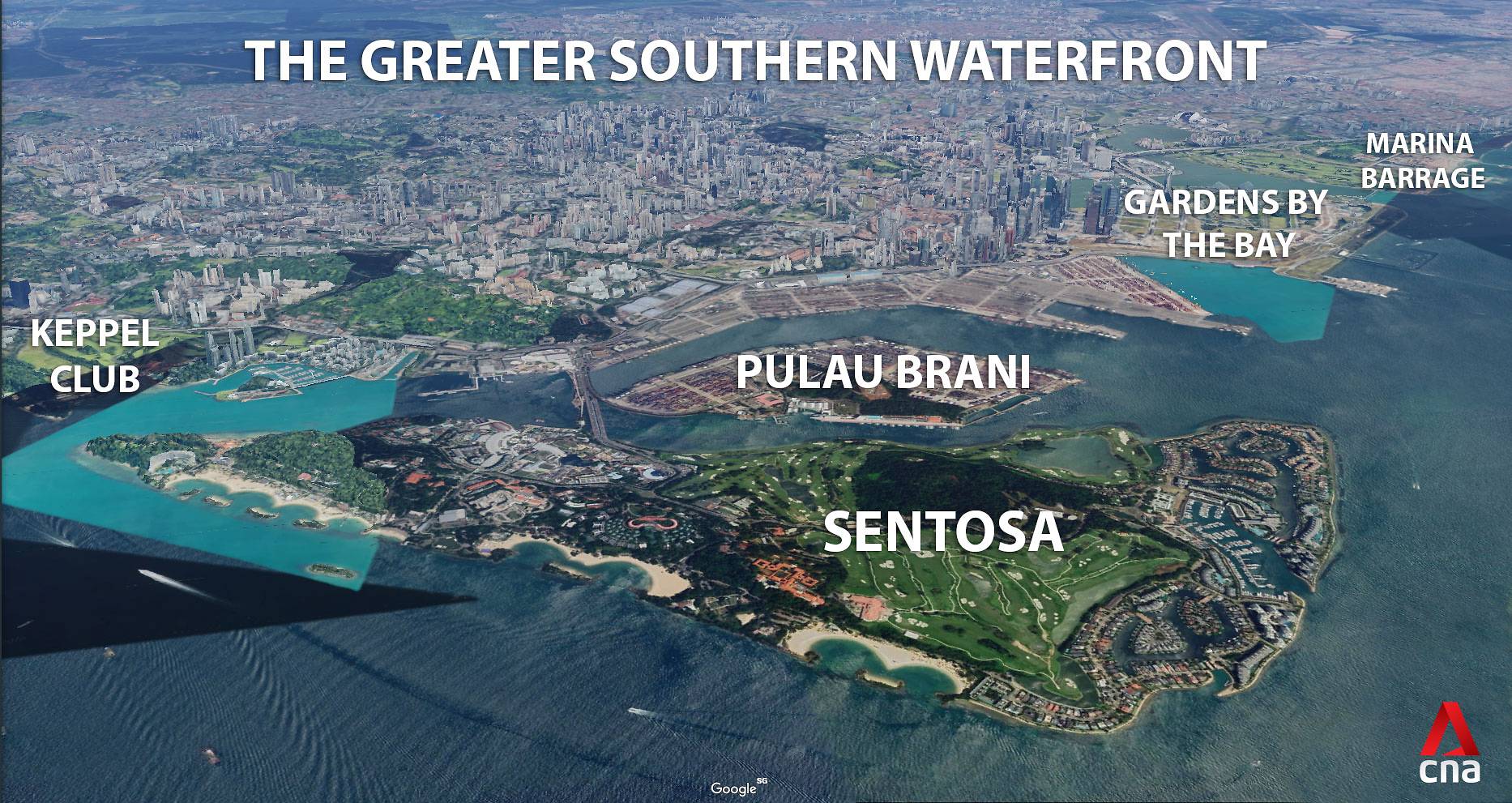
But rarely has Pulau Brani made the headlines in recent years, until it became a significant part of Singapore’s plans to develop the Greater Southern Waterfront.
On Sunday (Aug 18), Prime Minister Lee Hsien Loong gave an overview of the revamp that’s in store for the island during his National Day Rally speech.
Currently home to the Brani Terminal, which opened in 1992, the island will be redeveloped to host a range of lifestyle and tourist attractions – similar to what can be found next door in Sentosa.
As Pulau Brani awaits a new future, a look back in time at how the island evolved.
Artist’s impression featuring a bird’s eye view of the developments on Sentosa and Pulau Brani, under the Sentosa-Brani Master Plan. (Photo: Sentosa Development Corporation)
ISLAND OF THE BRAVE
Situated between the main island’s southern coast and Sentosa, Pulau Brani means “island of the brave” in Malay. In years gone by, it was also known as Pulau Ayer Brani and Pulo Brani.
In Cantonese, it was referred to as San chu-shek tui-min,which means opposite the new tin smelting and chha-tin ma-thau tui-min,which means opposite Jardine’s jetty.
Consisting mainly of fisherfolk, the island hosted four main villages – Telok Saga, Selat Sengkir, Masak Timah and Spedo – which later made way for development.
As part of early development by the British in the mid-19th century, Pulau Brani hosted a brick factory and a yard for repairing small boats. This was the brainchild of Charles Prinsep from the East India Company who also owned a nutmeg plantation in Singapore in what is today Prinsep Street.
FORT TEREGAH
The brick factory and the yard did not last long after the government re-purposed the island for defensive needs. A small repair dock for British naval vessels was then built.
In 1861, Fort Teregah, consisting of a coastal battery with two 64-pounder rifled muzzle loading guns, was established on the southeast of Pulau Brani to bolster Singapore’s defences.
Four years later, a naval coal depot was built, consisting two coal sheds, a small house and a wooden pier.
More developments on the island followed a year later, when a small dock for ship repair was built on the west of the island.
TIN SMELTING PLANT
Towards the end of the 19th century, a Western-style tin-smelting plant was built on the island by the Straits Trading Company that eventually led to the production of “Straits Tin” which became highly regarded internationally.
The construction of the smelter began right after the incorporation of the company – a joint venture by German businessman Herman Muhlinghaus and Scottsman James Sword – in 1887.
The duo decided on Pulau Brani as an ideal location for their new smelter with construction completed in about two years.
By 1895, the plant had 12 furnaces in operation and was capable of producing 14,000 tonnes of tin a year. The rapid progress pushed the company to modernise the plant. This led to the replacement of the coal-firing furnaces with 15 gas-fired ones that were larger.
By the beginning of the 20th century, Pulau Brani was home to the production of the purest-quality tin that was shipped and sold across the world.
Despite the success, tin production was severely hit as the Straits Company struggled to ride the storms of the two world wars, the Great Depression and the impact on demand in the first half of the 20th century.
Prior to the Japanese invasion, European technicians destoyed the smelter for fear of it being used by the invaders. But it was brought back into service after World War II, only for operations to wind down by 1965.
In 1971, the Singapore Government took over the site of the smelter and built Singapore’s first naval base.
BRANI NAVAL BASE
The Brani Naval Base was officially opened on Jan 26, 1974 by then Prime Minister Lee Kuan Yew.
Costing about S$35 million, it was referred to as the Maritime Command Base and was expanded in 1983 with the addition of a second wharf.
The island was deemed ideal because of its central location from which navy ships could be deployed across the Singapore Strait.
Ships could now be berthed in close proximity to the operational headquarters. Previously, ships were secured offshore, with the headquarters located at Pulau Blakang Mati, known today as Sentosa.
It was at Brani Naval Base that the Republic of Singapore Navy commissioned its first missile gunboats which were acquired from Germany.
Due to its limited area, it was announced in 1990 that the Brani Naval Base operations would eventually move to Tuas and Changi.
BRANI TERMINAL
A year after that announcement, a 330-metre causeway was constructed to link Pulau Brani to the mainland.
This was followed by the official opening of Brani Terminal in 1992 which was attended by then Prime Minister Goh Chok Tong.
The S$1.14 billion container terminal was part of an expansion of port facilities in the decade.
Singapore port operator, PSA has been conducting relocation operations from Brani and Keppel to the newer Pasir Panjang Terminal with eventual consolidation – along with Tanjong Pagar terminal – to the Tuas megaport.
After more than 27 years in operation as a port terminal, Pulau Brani is set to be revamped once more as it continues to evolve with the times.
PUTRAJAYA: Johor will not be dependent on the supply of treated water from Singapore by 2022, said Malaysia’s Water, Land and Natural Resources Minister Xavier Jayakumar on Monday (Aug 19).
“We have to make sure that Johor has sufficient treated water and does not need to get it from Singapore – which is why we have to provide new water treatment plants in Johor,” Dr Xavier told reporters after meeting Johor Chief Minister Sahruddin Jamal in Putrajaya on Monday.
“The capacity must reach 260 million litres a day. We already have an understanding that by the year 2022, we will have this capacity.”
It was Dr Sahruddin’s first visit to the ministry after being appointed chief minister in April.
Asked if the effort will impact the Water Agreement talks between Malaysia and Singapore, Dr Xavier said there will be no effect and the agreement still stands.
Malaysia’s Water, Land and Natural Resources Minister Xavier Jayakumar. (File photo: Bernama)
The 1962 Water Agreement, which expires in 2061, entitles Singapore to draw up to 250 million gallons a day (mgd) of water from the Johor River.
Singapore pays 3 sen per thousand gallons of raw water and sells treated water back to Johor at 50 sen per thousand gallons, a fraction of the cost of treating the water.
Johor is meanwhile entitled to a daily supply of treated water of up to 2 per cent or 5 mgd of the water supplied to Singapore. In practice, however, Singapore has been supplying 16 mgd of treated water to Johor at its request.
ENVIRONMENTAL PROBLEMS
Johor has been hit by a spat of environmental problems affecting its rivers and water treatment facilities, causing thousands of residents to fall ill or have their water supply disrupted.
Water levels at major dams have fallen below the critical mark due to dry weather while some rivers, including the Johor River, have been polluted by chemicals.
Dr Xavier said his ministry has agreed with the Johor state government on steps to tackle river pollution through more efficient management of sewage waste.
“Both parties also agreed on forest management, especially involving the conservation of forest reserve areas as a national heritage,” he said.
Dr Xavier said the ministry and the Johor state government also agreed to set up a trust account for operations to save wild elephants.
Despite search efforts by their friends, the pair cannot be found. A police report is subsequently lodged at Rompin police station, Pahang at 10.30am.
A search and rescue team is then activated at Penyabong jetty in Mersing at about 3.30pm.
AUG 10
Singapore’s Ministry of Foreign Affairs (MFA) confirms Singapore authorities are working with their Malaysian counterparts to locate the two kayakers.
The sea search covers 150 nautical miles from Tanjung Resang to Kuala Rompin, while the aerial search covers 400 nautical miles north of Pulau Seri Buat to northwest of Pulau Tioman.
Two Singaporeans and their kayak still missing since Thursday . There were kayaking together with 13 others from Endau, Mersing towards Pulau Mertang . Malaysia SAR team involving a helicopter and three boats are combing an area 150 nautical miles from Tg Resang to Kuala Rompin . pic.twitter.com/5XEF5h0LMp
The Malaysian Maritime Enforcement Agency (MMEA) announces the search area has been expanded to 500 nautical miles north of Pulau Seri Buat to the northwest of Tioman Island.
It was discovered by local fishermen about 0.6 nautical miles southeast of Tanjung Gelang in Kuantan, about 80 nautical miles from where the two were reported missing.
Personal belongings of the two Singaporeans who went missing while kayaking off Mersing in Johor is seen on Aug 13, 2019. (Photo: Johor Maritime Agency)
Personal items are recovered from the kayak, including Mr Tan’s passport, Mr Tan’s mobile phone, two purses with Malaysian and Singaporean money, a bag of clothes, an identity card and a paddle.
The fisherman who found the kayak uses the mobile phone to send a text message to Mr Tan’s family members.
A kayak was found near Kuantan Port by fishermen. (Photo: Bernama)
The search area is widened to cover Kuantan, Pahang.
AUG 15
Ms Puah’s family confirm the body found is Ms Puah’s. They say arrangements are being made to bring her remains back to Singapore.
There is a reported sighting of another body. According to a local fishermen’s WhatsApp group, a body with a life jacket strapped on it was spotted 40 nautical miles from the search area.
Authorities call off the search operation for Mr Tan, citing a lack of new leads. The search operation, which involved multiple agencies, cost a total of RM431,380 (S$143,130), says the Johor Maritime chief.
“Although we were not able to find his body, we take heart in the fact that he loved the sea and he will be at peace there,” they say in a thank you note.
SINGAPORE: The family of missing Singaporean kayaker Tan Eng Soon on Monday (Aug 19) issued their “heartfelt thanks” to those involved in looking for him, after authorities called off a search operation on Sunday night.
The Malaysian Maritime Enforcement Agency (MMEA) on Monday announced they had called off the search and rescue operation for him on Sunday night, citing a lack of new leads.
In a thank you note issued via the Ministry of Foreign Affairs (MFA), Mr Tan’s family expressed their gratitude to all those involved in the search.
“We, the family of Tan Eng Soon, would like to thank the MMEA and all other organisations that have been involved in the search for him,” they said.
“The support and compassion of the local fishermen and community has also touched us and given us strength through this difficult time.”
“We would also like to offer our heartfelt thanks to the Singapore MFA, who have gone above and beyond the call of duty to be with us every step of the way,” they added.
“Although we were not able to find his body, we take heart in the fact that he loved the sea and he will be at peace there.”
The body of Ms Puah was found last week in the waters off Kemaman, Terengganu. The two were separated from their group while kayaking near the Endau islands.
Singapore authorities expressed their “deepest sympathies” to both families.
“We express our deepest sympathies to the families of the two Singaporeans involved in a mishap while kayaking in Mersing, Malaysia,” said MFA in a press statement. “Our thoughts and prayers are with the families during this difficult time.”
Josephine Puah Geok Tin’s body was brought back to Singapore on Aug 16, 2019.
The statement also expressed Singapore’s “deep appreciation” to the Malaysian government and all Malaysian agencies involved in the search and rescue operation.
“It was an intensive operation, during which assets and manpower were deployed in challenging conditions that covered a vast area of waters off the Malaysian states of Johor, Pahang and Terengganu,” said MFA.
“We are especially grateful to the MMEA, who led the (search and rescue) efforts and coordinated amongst the various Malaysian agencies both on the ground and at sea.
“We have also been heartened by the support and assistance of ordinary Malaysians from all walks of life, especially the fishermen in the area who played a critical role in the recovery efforts.”
SINGAPORE: Although economic conditions have been growing increasingly uncertain, the workgroup assessing when to raise Singapore’s retirement and re-employment ages decided that the changes should start to be introduced in the middle of 2022.
This was the response given by Manpower Minister Josephine Teo when asked about the timeline to increase both ages by 2030, and whether the first step to raise the ages, targeted for 2022, is set in stone considering the economic headwinds.
“We did not arrive at this date lightly even though towards the later part of our deliberations, it was clear to us that the economic conditions have changed quite considerably,” Mrs Teo said at a media briefing on Saturday (Aug 17).
The workgroup, comprising 11 representatives from the Government, employers and unions, noted that fundamentally, Singapore needs to address its tight labour market.
“That is not something cyclical in nature,” said Mrs Teo, adding that there is also the need to provide clarity and certainty to businesses and workers.
“Knowing that this is a roadmap, our efforts should be geared towards making it work,” she noted. “I don’t think we’d start off by thinking 2022 doesn’t work; if that’s the case, that wouldn’t be our recommendation.”
Two more moves could be needed to hit the targeted retirement and re-employment ages by 2030, according to Mrs Teo, but the Government will keep a close eye on how businesses are coping and the employment outcomes of older workers after the first adjustment.
“Those things will have to be monitored,” she told reporters.
“If it’s generally smooth, then we can proceed with the timeline and find the right moment.”
“TRADE OFFS”
Raising the retirement and re-employment ages were among the 22 recommendations put forward by the tripartite workgroup after studying the issue for nearly 15 months. The Government has accepted these recommendations “in full”, said Prime Minister Lee Hsien Loong on Sunday during the National Day Rally.
In “gradual steps”, the retirement age will go up from 62 to 63 in July 2022 before being raised further to 65 by 2030.
Similarly, the re-employment age of 67 will go up to 68 in three years’ time, and then to 70 by 2030.
The Central Provident Fund (CPF) contribution rates for those above 55 will also be raised to help older Singaporeans plan for retirement. In particular, the CPF rates of those aged above 55 to 60 will go up to 37 per cent, in line with the rates of younger workers.
While the first adjustment is set for January 2021, the full increase in CPF contributions will be done over the next 10 years or so depending on economic conditions.
In the workgroup’s report released on Monday, it was mentioned that a consensus “was not easy to achieve” and that stakeholders “made trade-offs for a win-win-win solution”.
During the briefing, Mrs Teo noted that while the labour movement “would have liked an earlier timeline”, employers had hoped for the changes to “be held off a little bit more”.
“But in tripartite discussions, we will have to land on something that both sides can work with. For the case of the retirement and re-employment ages, that turns out to be July 2022,” the minister said.
Elaborating on the concerns of employers, Dr Robert Yap, president of the Singapore National Employers Federation (SNEF), said: “This has not been a very easy process. As you know, any increase in cost is always a pain for employers.”
Given how older workers tend to earn higher salaries compared to their younger counterparts, a higher proportion of older workers mean wage bills will “rise significantly”, said SNEF in its press release.
Non-wage costs, such as medical insurance and the increase in CPF contributions, will also present a “significant increase” in the fixed employment costs of older workers.
This comes amid growing headwinds in the economy’s medium-term outlook.
“Hence, SNEF calls on the Government to provide some form of support to employers during the planned changes,” said Dr Yap.
Nevertheless, employers will continue to employ older workers, as long as they are medically fit and able to contribute, said SNEF.
(Left to Right) Ministry of Manpower’s Permanent Secretary Aubeck Kam, President of the Singapore National Singapore National Employers Federation Robert Yap, Manpower Minister Josephine Teo, and NTUC secretary-general Ng Chee Meng.
Employers would have to make investments in training, as well as evaluate part-time re-employment opportunities among others, to help older workers remain employable, it added.
NTUC secretary-general Ng Chee Meng said the concerns of businesses were “reasonable”, but urged companies that may not be facing challenges to take the lead in raising their retirement and re-employment ages.
“I would ask companies to take the leadership position and move if conditions afford, because workers knowing that employers care, will take the extra effort to up-train and up-skill,” he said.
Still, he stressed that workers must do their part too to stay updated with relevant skills. On NTUC’s part, it has been partnering companies to set up committees to help foster better training opportunities.
The workgroup also listed seven other recommendations on how companies can promote an inclusive workforce and progressive workplaces.
These include getting employers to embark on more transformational job redesigns that go beyond specific tasks, providing more part-time employment opportunities, and having structured career planning sessions when workers are in their 40s and 50s.
When asked by CNA if there could have been recommendations to take stricter action against employers that discriminate against older workers, or guidelines to help such workers seek recourse, Mrs Teo said existing measures are “quite well-established” and that the Manpower Ministry continues to make itself available to these workers.
“Overall, the numbers every year as a share of the workforce actually aren’t significant. By and large, we do have employers who are responsible and progressive,” she added.
“When the labour market is generally tight, businesses know it’s in their interest to take good care of their workers.”
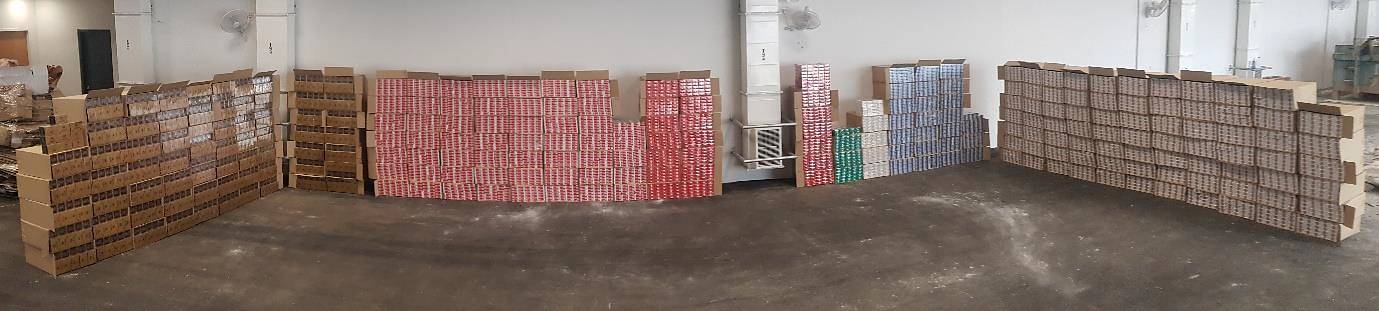
SINGAPORE: A 25-year-old Malaysian lorry driver has been arrested after he tried to smuggle 12,479 cartons of duty-unpaid cigarettes encased in concrete blocks into Singapore.
This is the largest haul of duty-unpaid cigarettes uncovered by the Immigration & Checkpoints Authority in the last five years.
ICA said in a news release on Monday (Aug 19) that the man, who was driving a Malaysia-registered lorry, was checked by officers while the vehicle was at the over-sized lorry lane at Tuas Checkpoint at about 9am on Jul 27.
The lorry was carrying a consignment of 16 concrete blocks.
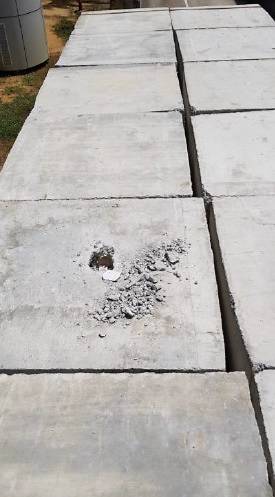
During the course of checks, the officers noticed anomalies in the concrete blocks. The officers then drilled holes into the concrete blocks and discovered the contraband encased within.
The Malaysia-registered lorry carrying a consignment of concrete blocks. (Photo: Immigration and Checkpoints Authority)
ICA officers drilled a hole into the first concrete block. (Photo: Immigration and Checkpoints Authority)
“The 25-year-old male Malaysian driver was immediately placed under arrest and the case was handed over to Singapore Customs for further investigation,” ICA said.
The total duty and Goods and Services Tax (GST) evaded amounted to about S$1,240,430 and S$90,590, respectively.
View of the 12,479 cartons of duty-unpaid cigarettes. (Photo: Singapore Customs)
Investigations into the case are ongoing.
“Safeguarding Singapore’s borders remains ICA’s top priority. The same methods of concealment used by contraband smugglers may be used by terrorists to smuggle arms and explosives to carry out attacks in Singapore,” ICA said.
.KUALA LUMPUR: Malaysia and Singapore have reached “an understanding” over the Johor Bahru-Singapore Rapid Transit System (RTS) Link project, Malaysia’s Transport Minister Anthony Loke said on Monday (Aug 19).
His remarks come ahead of a Sep 30 deadline for the deferment of the project, which had been suspended at Malaysia’s request.
Speaking to reporters at the fourth annual China-Malaysia Port Alliance Meeting, Mr Loke said that both governments are currently working out the details, local media reported.
“We know that the RTS is important and we are currently working behind the scenes,” Mr Loke was cited as saying in the Edge.
“In fact, I met with Singaporean Transport Minister Khaw Boon Wan last month, and we have some sort of an understanding,” he added.
An announcement will be made once the details are ironed out, Mr Loke said.
In response to queries from CNA, Singapore’s Ministry of Transport said that discussions are ongoing to discuss possible ways forward.
“Singapore and Malaysia’s Transport Ministers have been discussing possible ways forward for the RTS Link Project. As discussions are ongoing, we are unable to comment further,” a ministry spokesperson said.
The 4.2km RTS Link, which connects Bukit Chagar in Johor Bahru to Woodlands in Singapore, is expected to ferry up to 10,000 passengers per hour each way.
The project was meant to be completed by 2024, but is now behind schedule with Malaysia repeatedly delaying confirmation of its joint venture partner.
According to a bilateral agreement signed in January 2018, a joint venture company comprising Singapore’s SMRT and Malaysia’s Prasarana Malaysia should have been constituted by Jun 30 last year.
The joint venture company should also have been appointed as the RTS Link operator (OpCo) through a concession agreement with Singapore’s Land Transport Authority and the government of Malaysia by Sep 30, 2018.
Putrajaya was supposed to confirm its venture partner on Mar 31, but had requested for a six-month extension until Sep 30 to make a decision on the RTS project.
Transport Ministers Anthony Loke (left) and Khaw Boon Wan at the signing of a supplemental agreement for the RTS Link on May 21, 2019. (Photo: Jeremy Long)
On May 21, Mr Loke and Mr Khaw signed a supplementary agreement in Singapore to defer the project.
Under the agreement, Malaysia will reimburse Singapore about S$600,000 in abortive costs due to the suspension.
During the suspension period, Malaysia will decide if it intends to proceed with the RTS Link project as it is. Malaysia can also propose changes to the project scope, and Singapore will give any such changes due consideration, Mr Khaw had said at the signing of the supplementary agreement.
The suspension would set back the completion date by “a couple of years”, he added.
Mr Loke had also said at the same event that Putrajaya would use the suspension period to discuss various options.
The cost of the project was a “major consideration”, he added, and Malaysia wanted to look at how the private sector could play a role in the project.