Home Blog Page 731

150 hatchlings born last year at Singapore’s only turtle hatchery: NParks

0

SINGAPORE: About 150 baby turtles were hatched last year at Singapore’s first and only hatchery for these marine creatures, the National Parks Board (NParks) said on Wednesday (Aug 21), nearly a year since its official launch in September 2018, 

The turtle hatchery at Sisters’ Islands Marine Park was built as part of efforts to provide a safe space for incubating eggs, which faces threats caused by human traffic, light pollution and predators such as monitor lizards.

Singapore is home to two species of turtles: the hawksbill turtle and the green turtle, both of which are critically endangered.

The turtles visit various shores around Singapore to lay eggs during the nesting season from May to October. Each nest contains between 100 and 200 eggs.

150 hatchlings born at Singapore's only turtle hatchery in 2018 (4)

Each turtle nest contains about 100 to 200 eggs. (Photo: Junn Loh)

When CNA visited a hawksbill turtle nest along East Coast Beach on Wednesday morning, a clutch of 152 eggs were recorded.

Of those, 98 eggs were relocated to NParks’s hatchery on Small Sister’s Island. The rest of the eggs were not relocated as they had not developed.

NParks said the decision to move the eggs was due to its close proximity to a construction site, which is brightly lit at night. Volunteers patrolling the shores have also reported sightings of hatchlings near the area.

150 hatchlings born at Singapore's only turtle hatchery in 2018 (3)

Turtle eggs collected and placed in a bucket at a hawksbill turtle nest along East Coast Beach. (Photo: Junn Loh)

Baby turtles instinctively move toward the sea, guided by lights from the horizon when they hatch. Light sources from urban environment could confuse the hatchlings, which may attract them to crawl inland instead of out into the waters.

In contrast, the hatchery at the protected Small Sisters’ Island is off-limits to the public and free from excessive light pollution.

The rescued eggs will be left to incubate and monitored within cages on the island until the baby turtles emerge. They will also be protected against predators such as monitor lizards, increasing hatching success.

Members of the public have been roped in to help with the cause. Volunteers from a team called the Biodiversity Beach Patrol are trained on how to protect nesting turtles, and how to spot turtle tracks on the shores, for example.

“We spend the entire night as a group combing the different areas that we’re allocated to,” said volunteer Bernard Seah. 

150 hatchlings born at Singapore's only turtle hatchery in 2018 (1)

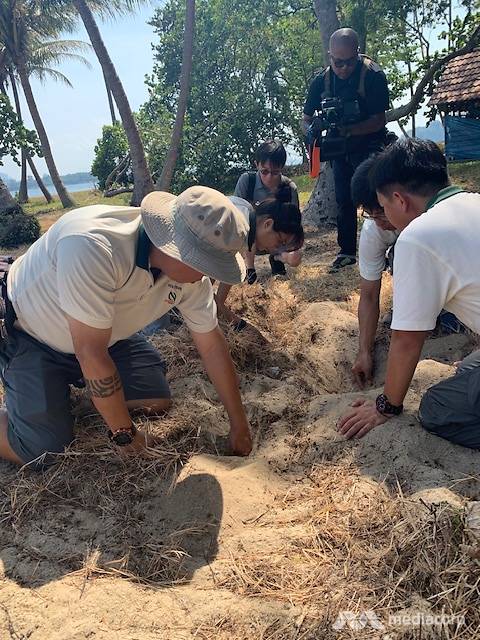
Volunteers are trained on how to protect nesting turtles, and how to spot turtle tracks on the shores. (Photo: Junn Loh)

The group typically splits into teams of two or three, working in alternating six-hour shifts during nesting season.

“If we see turtle tracks, we just report it. But if we see turtle activities, we see a female turtle nesting, or we see hatchlings, we call NParks straight away, and we will activate them to come down to the site to take over,” Mr Seah said.

There were 62 reported turtle sightings and 10 successful nests of hatchlings recorded across Singapore in 2018.
150 hatchlings born at Singapore's only turtle hatchery in 2018

Volunteers patrol the shores to spot and protect turtle nests. (Photo: Junn Loh)

But even as conservation efforts to protect native rare sea turtles bear fruit, Senior Manager of the NParks Coastal and Marine Team Collin Tong said threats caused by marine pollution and human activities remain even after the turtles find their way into the sea.

“Things like plastic bags, especially the translucent ones. They look like jelly fishes to the turtles.” Mr Tong said.

“So it will be good if people try to be more aware. Make sure things don’t fly into the sea, and don’t intentionally drop things into the waters. That will help conserve the marine habitats which all these critically endangered turtles live in,” he added.
Source link

‘Calamity may come’ if Singapore doesn’t take care of its coastlines now: Masagos Zulkifli

0

SINGAPORE: Calamity could befall Singapore if it does not start dealing with the climate change threat to its coastlines today and leaves it until it is too late, warned Minister for Environment and Water Resources Masagos Zulkifli on Wednesday (Aug 21).

In an interview with CNA938, Mr Masagos reiterated the threat of rising sea levels to Singapore that Prime Minister Lee Hsien Loong had spoken about in his National Day Rally speech on Sunday.

Mr Masagos said that scientists have concluded that sea levels will rise by 1m by the end of the century, and when faced together with high tide and heavy rain, will become a “very difficult problem to overcome”.

The long-term impact will not just be on the environment, but also on Singapore’s economy and jobs, said Mr Masagos, adding that this is precisely why Singapore has to take immediate and long-term measures to ensure its coastlines are well protected.

“This problem is going to come upon us slowly over the next century, over the decades,” he said.

“If we start now, we can certainly build over time. If we start too late, then calamity may just come over us.”

Mr Lee had said Singapore is especially vulnerable to rising sea levels and the country should treat climate change defences with “utmost seriousness”.

He also estimated it would cost at least S$100 billion to protect the country from this threat.

READ: Climate change one of the ‘gravest challenges facing mankind’, impact on Singapore to worsen, says PM Lee

READ: It could cost S$100 billion or more to protect Singapore against rising sea levels, PM Lee says

GOING BACK TO BASICS

Beyond big infrastructure-level investments to address the issue, Mr Masagos also touched on national-level initiatives to reduce waste production and increase recycling efforts.

He spoke about Singapore’s first Zero Waste Masterplan and how its focus on food waste, packaging waste and electronic waste is aimed at moving back to a circular economic system.

Using the example of water, Mr Masagos said: “We consume our water, and then we recycle it back into the system, our used water, and then we put it back into the system again and again.

“That’s how we should also use every other resource that we have.”

READ: Zero Waste Masterplan to focus on electronics, packaging, food waste, says Masagos

Mr Masagos also brought up how a circular economy was present in times past, but has been largely forgotten today.

“I remember my mum every day will put away waste food and container, and someone will come and give her eggs in exchange for food waste,” Mr Masagos recounted.

“And this food waste is then fed to maybe pigs, chickens … and well, that’s the best way to get rid of food waste.”

He said it’s become “too easy” for people to throw their waste away because there’s a “backstop” solution – everything thrown will be incinerated away – but this is not sustainable.

“We have to stop that,” said Mr Masagos. “At the rate we are increasing our waste and dumping into our landfill, we will run out by 2035,” the minister said.

BLUE BINS BLUES

During the interview, Mr Masagos also spoke of how some people commingle waste, saying that doing so renders any recycled waste useless.

blue recycling bin

A recycling bin filled to the brim. (Photo: Aqil Haziq Mahmud)

“That’s the problem with our blue bins today. When we throw food into our recyclable bins, the blue bins, it becomes something you have to throw away,” he said.

To improve this state of affairs, he called on people to just rinse out the containers before recycling and not to throw food into these bins.

This problem of the blue bins will, in fact, be one of those that a group of 50 Singaporeans in a yet-to-be-formed citizens’ workgroup will look at.

Mr Masagos said: “Should we legislate? How do we educate? How do we make sure that we can increase the recyclability of our blue bins from 40 per cent to 60 per cent, even 100 per cent?

“I think this is something that if we can get the process right, then we can start to look at even more difficult problems in future,” he added.

The citizens’ workgroup was first revealed on Jul 17 by Senior Minister of State for the Environment and Water Resources Amy Khor, who said that participants will be able to consult experts and be given access to policy-relevant information such as household recycling surveys to come up with solutions.

Source link

HPB partners Fitbit to encourage Singaporeans to adopt healthier habits

0

The Live Healthy SG initiative allows people to sign up for a year-long Fitbit Premium service for S$120 prompting them towards better habits like sleep, nutrition and emotional wellbeing.

fitbit

File photo of a Fitbit. (Photo: Instagram/Fitbit)

SINGAPORE: US fitness wearables company Fitbit is partnering the Health Promotion Board (HPB) in a new initiative to encourage Singaporeans towards better habits in physical activity, sleep, nutrition and emotional wellbeing, the company announced on Wednesday (Aug 21).

Named Live Healthy SG, the initiative will allow Singaporeans to sign up for a year-long subscription to Fitbit Premium at S$10 a month, or S$120 in total. In return, the company is giving participants an Inspire HR health tracker worth S$158 free.

Fitbit Premium offers users a digital coach that will guide them with video workouts and audio coaching, the company’s website stated.

READ: Singapore ranks 32 out of 40 for work-life balance, second most overworked city

READ: Commentary: Sleeping more is essential to performing well at work and school

The joint collaboration is part of a healthy population project that uses technology, behavioural insights and analytics to nudge Singaporeans to get healthier through meaningful and sustained behaviour change, the press release said.

The ticker symbol for Fitbit is displayed at the post where it is traded  on the floor of the NYSE

The ticker symbol for Fitbit is displayed at the post where it is traded on the floor of the New York Stock Exchange (NYSE) February 23, 2016. REUTERS/Brendan McDermid/File Photo

HPB is aligning this initiative with others, such as the National Steps Challenge and the Healthy 365 app, to drive increased participation and engagement among people here.

Users will be able to link their Fitbit activity to health challenges on the Healthy 365 app, which then allows them to win prizes or earn points and redeem awards, the company said.

HPB CEO Zee Yoong Kang said in the release that the agency is working with industry players like Fitbit to use tech to provide Singaporeans with the tools to take control of their own health.

For instance, those who sign up for Fitbit’s service will have the option of sharing their data with the agency. Such data will, in turn, provide insights and contribute to more effective and targeted health intervention and promotional programmes that will benefit Singaporeans.

“Participants of this program will benefit from Fitbit’s plans to incorporate artificial intelligence and machine learning to encourage physical activity, healthy eating and better sleep quality. The insights gathered can also help to enrich HPB’s health promotion programs,” said Mr Zee.

READ: New multi-agency task force to drive health promotion

Mr Steve Morley, vice president at Fitbit Asia-Pacific, told CNA that data sharing with HPB is strictly voluntary via its app and any data shared is “aggregated or de-identified”. This means any and all personal identifiers are removed before sharing is done, he added.

“Fitbit has always been committed to protecting consumer privacy, putting users in control of their personal data, and keeping data safe. We prioritise transparency and clarity in our privacy policies so people understand what is happening to the data they share with us,” Mr Morley added.

All interested Singapore citizens and Permanent Residents will be able to pre-register starting mid-September and the programme will officially kick off in late October this year, Fitbit said.

Source link

5 people taken to hospital after multi-vehicle accident along Bras Basah Road

0

SINGAPORE: Five people were taken to hospital after a multi-vehicle accident along Bras Basah Road on Wednesday (Aug 21) afternoon.

The Singapore Civil Defence Force (SCDF) said it received a call about the incident at 75 Bras Basah Road at around 4.30pm, and dispatched three ambulances.

“There were a total of five casualties,” said SCDF, adding that one was taken to the Singapore General Hospital and the other four to Raffles Hospital. 

The accident involved three vehicles, said SCDF.

Bras Basah Road accident 2

Five people were taken to hospital after the accident along Bras Basah Road. (Photo: Charles Tan)

Bras Basah Road accident 3

Emergency responders were at the scene. (Photo: Charles Tan)

Photos of the incident showed a black car with its rear badly smashed in.

Another vehicle was seen on the pavement outside the Cathedral of the Good Shepherd, smashed against the hedge border.

Emergency responders and an ambulance were also at the scene, with a section cordoned off with police tape.

Eyewitness Charles Tan said the accident caused a major traffic jam in the area, and a lot of honking could be heard.

There was also damage to the railings of the cathedral and shattered glass all over the road, said the 55-year-old, who gave his occupation as manager.

bras basah accident police tape

Police tape seen at the scene of an accident along Bras Basah Road on Aug 21, 2019. (Photo: Gaya Chandramohan)

The Land Transport Authority (LTA) first tweeted about the incident at 4.35pm, warning of an accident on Bras Basah Road towards Raffles Boulevard after Prinsep Street. It told motorists to avoid the right lane.

In a subsequent tweet at around 5pm, the authority warned of traffic congestion until Grange Road. Another update at 6.45pm warned of congestion until Bideford Road.

Source link

Man gets jail for peddling contraband cigarettes, possessing chewing tobacco

0

SINGAPORE: An Indian national received a jail sentence  on Wednesday (Aug 21) for peddling duty-unpaid cigarettes and for possessing chewing tobacco, the Health Sciences Authority (HSA) and Singapore Customs said in a joint news release. 

Veerappan Vimalraj, 33, was prosecuted for storing and dealing 14,130 packets of duty-unpaid cigarettes, and for possessing for sale 12,180 sachets of khaini tobacco, a type of chewing tobacco that is prohibited in Singapore.

Khaini consists of moist, dark brown tobacco leaves, mixed with slaked lime or spices.

Veerappan’s criminal activity was uncovered on May 21, when customs officers – who were conducting an operation – saw Veerappan enter a storage facility in Neythal Road in Jurong Industrial Estate.

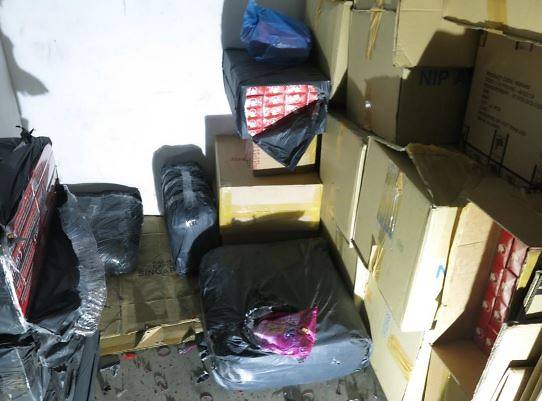
Officers found 10,680 sachets of prohibited chewing tobacco and 13,130 packets of duty-unpaid cigarettes in the storage facility. Another 1,500 sachets of the chewing tobacco and 1,000 packets of the cigarettes were found in a car parked near the storage facility.

duty unpaid cigarettes

A total of 12,180 sachets of chewing tobacco and 14,130 packets of duty-unpaid cigarettes were seized during an operation by the Singapore Customs. (Photo: Singapore Customs)

storage facility with duty unpaid cigs

Veerappan Vimalraj was paid S$600 a month to sell the items. (Photo: Singapore Customs)

Veerappan was paid S$600 a month to sell the items, investigations showed. 

He would use the car to deliver the chewing tobacco and cigarettes to his customers. In order to avoid attention, he would hide the chewing tobacco and cigarettes in bushes at the delivery locations. 

After collecting the chewing tobacco and cigarettes, his customers would either place the payment at the same spot or hand over the cash to him.

Both the car and S$5,927 in proceeds from the sale of the cigarettes were also seized, the authorities said.

The chewing tobacco is estimated to have a street value of more than S$24,000, while the duty, and goods and services tax (GST) evaded on the cigarettes amounted to about S$120,670 and S$8,900, respectively, according to the news release.

On Wednesday, Veerappan was found guilty and convicted on three counts for offences under the Customs Act and the Tobacco (Control of Advertisements and Sale) Act. 

He was sentenced to 19 months and 11 weeks’ jail and the seized cash was forfeited.

Source link

Specific measures could dampen ‘lottery effect’ of public housing at the Great Southern Waterfront, experts say

0

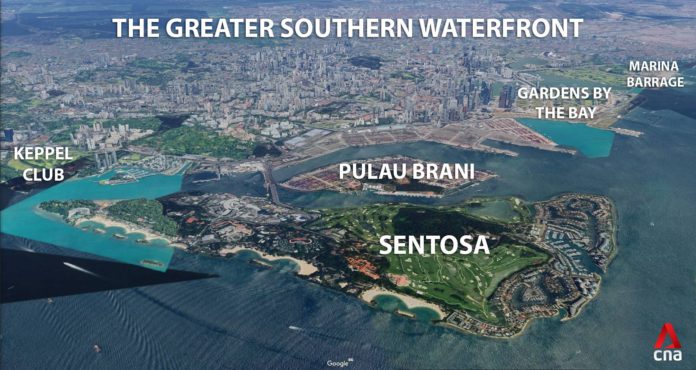
SINGAPORE: Measures such as shorter leases and longer minimum occupancy periods (MOP) might help to mitigate the “lottery effect” of public housing at the Greater Southern Waterfront (GSW), experts said.

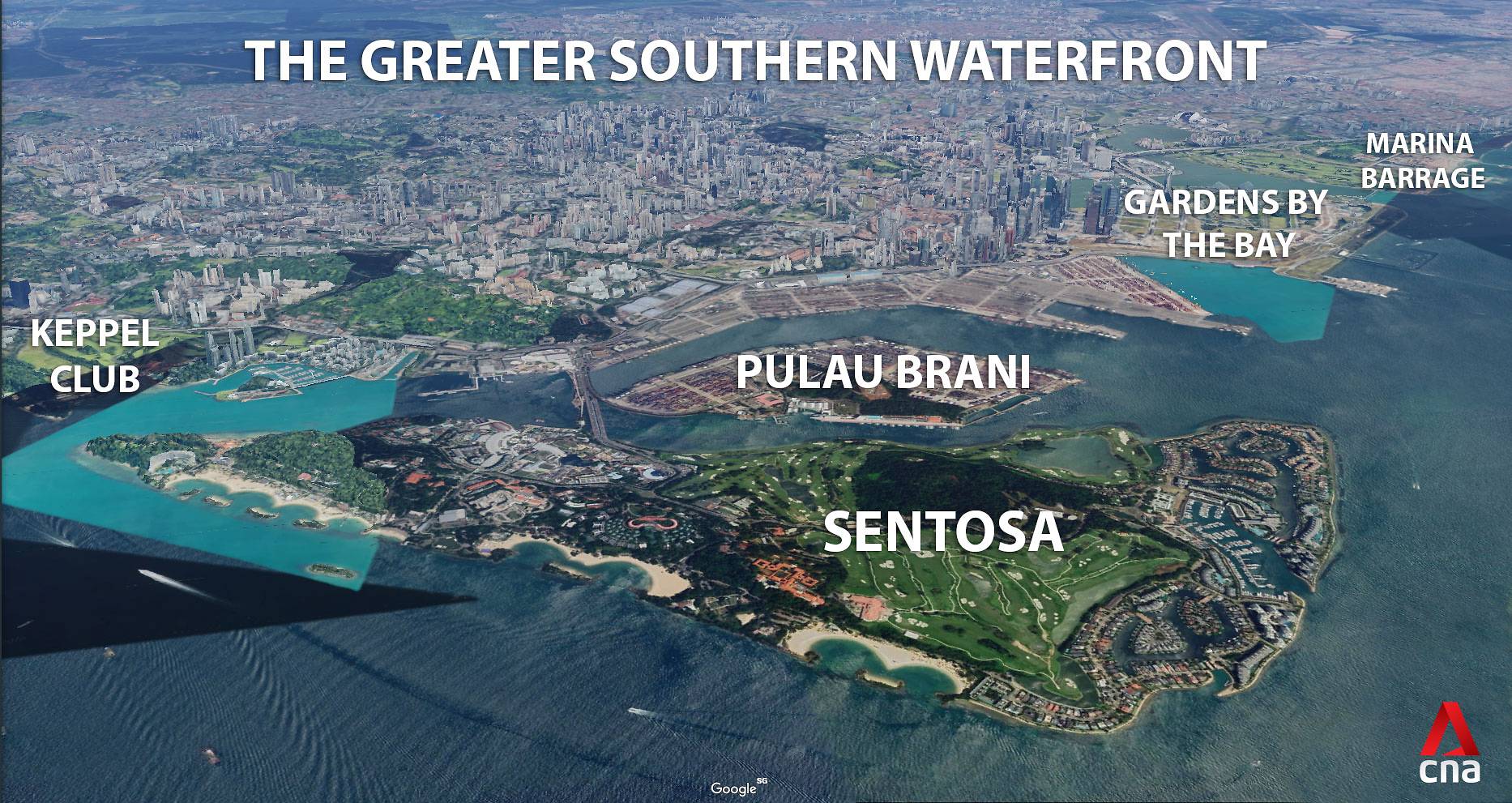
This follows the announcement by Prime Minister Lee Hsien Loong on Sunday that there are plans to build 9,000 private and public housing units on the site of the current Keppel Club when its lease expires in two years’ time.

READ: NDR 2019: New attractions, housing and office spaces to be developed in Greater Southern Waterfront

The plot falls within the GSW which stretches 30km along the southern coastline.

The GSW is poised to become part of the Central Business District (CBD), incorporating residential, commercial and recreational quarters.

National Development Minister Lawrence Wong had in 2016 said that Government wants to preserve HDB living in the CBD, as it is mindful of the rich-poor divide.

But the Government would also look at ways to tighten resale conditions for such units, he said then.

READ: Different kinds of leases for new HDB flats under consideration: MND

This “lottery effect” came under the spotlight following the launch of Pinnacle@Duxton in 2004. 

There was overwhelming response for the 1,848 units distributed across seven 50-storey blocks in Tanjong Pagar. Indicative prices for five-room units then, ranged from S$343,100 to S$451,500.

After the five year MOP in 2014, several five-room Pinnacle flats were sold for over S$1 million, with one sold for S$1.12 million in 2016, fetching what is possibly the highest resale price – at the time – for an HDB flat.

“The Government may have to introduce new policies that will deter speculative activities, such as the resale restrictions through longer MOPs, higher resale levies, and sale rights,” said Associate Professor Sing Tien Foo, director of the NUS Institute of Real Estate.

“One way is to sell the flat at a 60 or even 30-year lease rather than 99 years,” said Ms Christine Li, head of research at Cushman & Wakefield Singapore and Southeast Asia.

“When the leases are shorter, there is limited capital upside and will deter investors from purchasing these flats,” she added.

NDR2019 - Greater Southern Waterfront map

INCLUSIVENESS

Beyond getting the best use for prime land plots, experts said the Government would have other considerations when it decides to build public housing in locations such as the GSW.

“My view is that the Government would have considered other aspects and the other intangibles (such as vibrancy, inclusiveness of society and the local community) by having public housing in the area,” said Knight Frank’s head of research Lee Nai Jia.

“From an urban planning perspective, the Government has to consider the big picture such as overall economic growth and social objectives in deciding the uses,” he added.

“The main purpose of the exciting range of HDB flats is that the fruits of the prime Greater Southern Waterfront will be for everyone – not just for the super wealthy,” explained property analyst Ong Kah Seng.

“If it is purely private and residential and commercial use… it wouldn’t be ideal because it will edge out HDB dwellers or owners from having a chance to live in the Greater Southern Waterfront, an upmarket place.”

“One way is to have mixture of housing of different sizes, and also consider providing greater financial support or higher housing grants for lower income households,” Prof Sing said.

Singapore financial centre

A view of the central business district area. (Photo: AFP/Roslan Rahman)

“To ensure that the Greater Southern Waterfront is for every Singaporean, the planning needs to ensure that all uses – private housing, public housing, commercial, mixed used etc. – are catered for and well integrated,” said Dr Yu Shi Ming, interim head of the NUS Department of Real Estate.

“Open up the area for the public – waterfront, water edge should remain accessible and not exclusively for gated communities,” he suggested.

Other ways to do it is to have common amenities for both private and public housing, suggested Prof Sing.

“The community bonding and activities could also be a way to reduce the stratification of residents,” he said.

He suggested integrating future HDB flats at the current Keppel Club site into the Telok Blangah neighbourhood. This would allow the Government to optimise land by expanding the existing amenities, he added.

Unlike the after-work quiet on weekdays and weekends in the CBD, “HDB flat dwellers are expected to be engaging in (more) neighbourhood and community activities than private home residents,” said Mr Ong.

“The Greater Southern Waterfront public housing can expect to inject more resident vibrancy and energise our future central localities.”

Source link

Oktoberfest by Kempinski 2019

0

Oktoberfest by Kempinski 2019
Thursday, October 10, 2019 at 6:00 PM

13 Stamford Rd

, Capitol Singapore, Outdoor Plaza, Singapore, Singapore

Source link

Commentary: After the Fed’s rate cut, the impact on Singapore and growth

0

SINGAPORE: When the United States Federal Reserve moves on interest rates, the markets listen with bated breath.

That was the case when Fed Governor Jerome Powell recently announced a rate cut for the first time since December 2008, reducing its key overnight lending rate by a quarter of a percentage point. And he may not be done yet.

Disappointing economic data from China and Germany fuelled fears of a mounting recession, prompting traders to plow money into ultra-safe US government bonds. This puts the Fed under even more pressure to cut rates further.

SHIFTS IN THE GLOBAL ECONOMY

In the past, the Fed lowering interest rates was always a good indicator of economic growth for Singapore. 

READ: After another cut in Singapore’s GDP forecast, what could happen next? Experts weigh in

This is because when US interest rates go down, the average American consumers have more money to spend overall and their spending habits change.

This may mean a higher demand for imported goods and thus an increase in trade with an export-driven economy such as Singapore.

About 20 years ago, such trade and investments from US played a crucial role in Singapore’s GDP growth. However, with the rise of regional investment from Australia, China, India and Indonesia, we are seeing a shift in Singapore’s economic relationship with the world’s largest economy.

These regional economies have established themselves as important partners for Singapore in terms of currency, trade and economic and financial collaborations. As a result, the island state’s reliance on the US has decreased significantly.

This decoupling in reliance on the US will continue as geopolitical issues such as Brexit, rising trade tensions, immigration and an increase in right-wing politics drive investors to Asia.

Investors cheered the US decision to delay levies on a range of Chinese goods, which has raised

Investors cheered the US decision to delay levies on a range of Chinese goods, which has raised hopes the two sides can reach a trade compromise. (Photo: AFP/Ina FASSBENDER)

Generally, investors become nervous whenever the Fed lowers rates as they see it as an indication of something amiss with the US economy.

However, while a rate cut may be perceived as a bane for the US economy, the impact on Asia and Singapore in particular, is less obvious.

GLOBAL STOCK MARKET VOLATILITY

Stocks in both the US and Asia fell in reaction to Powell’s hawkish announcement – a reflection of investor anxiety in the equity markets. However, in the longer term, the rate cut may present a greater opportunity for Asian markets. 

This is because American investors, who now cannot earn as much in the US markets, may shift their investments to regions where markets are doing well. We are already seeing evidence of investors going into bonds or looking for higher returns in developing countries.

In fact, this past week saw 10-year government bond yields in the US and UK markets dipping below those of shorter-maturity debt for the first time since the 2008 financial crisis.

However, small economies such as Singapore may not see much impact in the long term should American investors choose to invest their money in Asia.

While we should not be too concerned with Fed rate cuts yet, we should be cognisant about economic developments in our part of the world.

Economies in Asia are booming. Although growth figures are lower than expected, the twin drivers of growth in this region are still doing well compared to their global counterparts. India is expected to grow by 7 per cent, while China’s economy is predicted to expand between 6 to 7 per cent.

READ: Huge investments and 5G super highways. How China is powering ahead in the network race, a commentary

Given the current geopolitical and economic climate, there will be volatility in worldwide markets.

For instance, China recently devalued its currency, India abolished the special status for the state of Kashmir, while the protests in Hong Kong brought the city to a standstill. All are significant economic and political events with ramifications on world markets and currencies.

Chinese 100 yuan notes

This photo illustration taken on August 13, 2019 shows Chinese 100 yuan notes in Beijing. (Photo: AFP/FRED DUFOUR)

If important economies such as China and India see a downturn, sectors such as trade, tourism and education will be affected. 

Thus, while Singapore needs to be mindful of US fundamentals, it should also keep a close eye on regional challenges and monitor the monetary and fiscal policy changes of its neighbours.

When this happens, regulators in Singapore should take actions to ensure that the contraction is limited both in magnitude and duration. To counter such contractions, the Government could provide fiscal stimulus to spur consumption and investments in Singapore.

READ:  What slowing growth means for the man in the street,  a commentary

READ: Singapore and the dreaded R word – recession, a commentary

SINGAPORE PROPERTY INVESTORS SHOULD NOT REJOICE YET

It is a premature and farfetched idea to think that lower rates will boost the housing market in Singapore. For one, banks have priced in these moves and have begun trimming home loan rates as early as April.

Still, when there is an interest rate cut, there is very little incentive for banks to change their lending portfolio rates quickly, including mortgages and credit cards.

READ: After Fed’s rate cut, where are Singapore interest rates and home loans headed?

This is because the Fed funds rate is only moving the daily short-term rate, while the rates that the banks are charging is for a 5-year lending rate for auto loans and 15-year rates for mortgages. To move from daily rates to 15-year rates for example, the change to long-term lending rates may only be between two and five basis points.

In addition, the majority of the lending and savings products offered in Singapore are tied to inflation and inflation is still very low. Singapore inflation is not necessarily correlated with the US market.

While the Fed lowering its rates can influence the Singapore Interbank Offered Rate (SIBOR) indirectly, any changes to lending products involve a long and complicated chain of events before consumers are affected. It is not a frictionless change when the US Fed lowers interest rates.

ATM machine dbs ocbc uob money cash Singapore - file photo

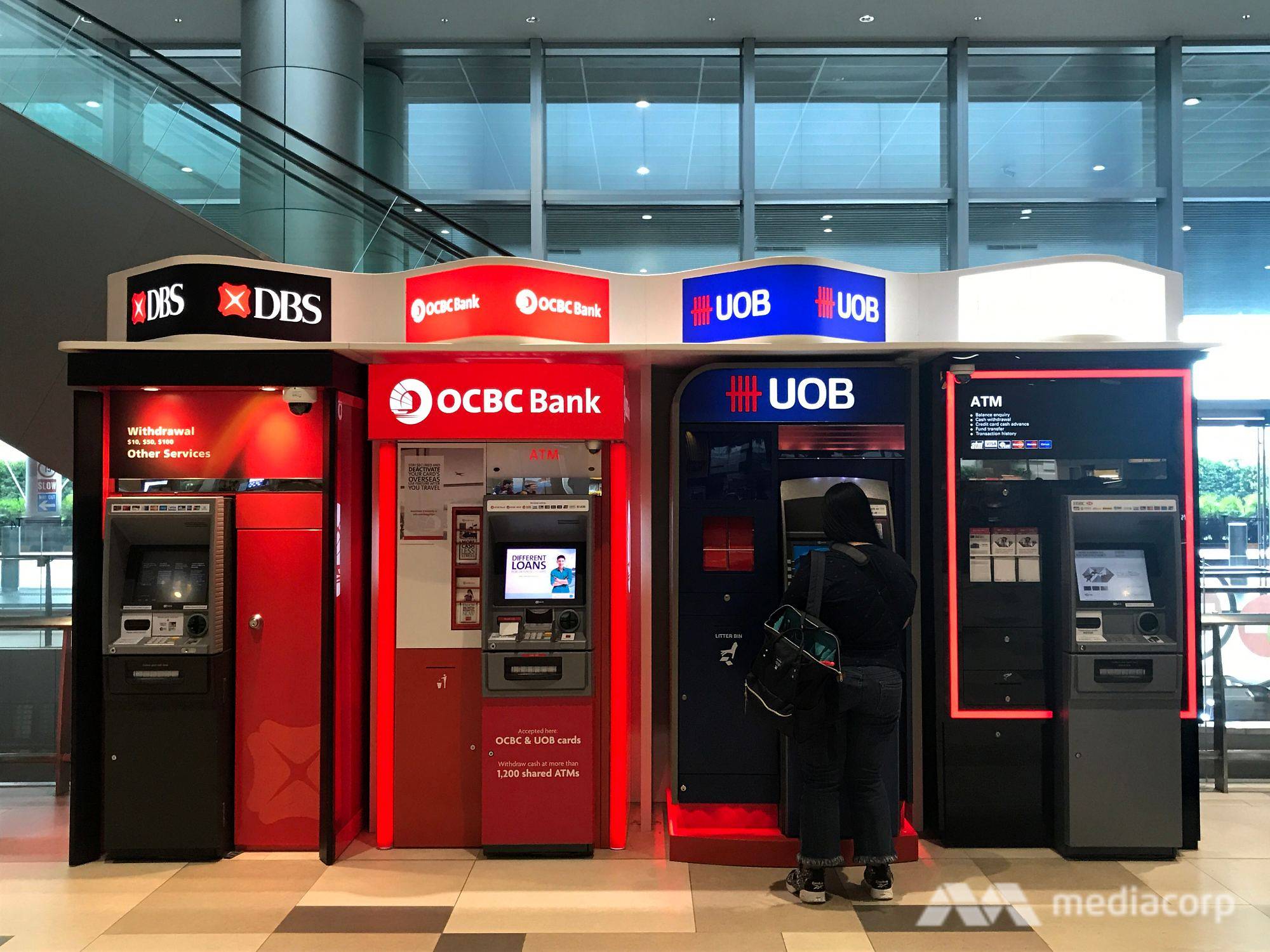
File photo of a row of ATMs in Singapore. (Photo: Jeremy Long)

In contrast, when there is a rate hike, banks tend to act faster to adjust their lending rates because they are losing money on their consumers.

Together, these changes in the US economy brought about by a cut in the Fed rate are likely to have minimal impact on Singapore.

Sumit Agarwal is the Low Tuck Kwong Distinguished Professor of Finance, Economics and Real Estate at NUS Business School. He has also worked at the Federal Reserve Bank of Chicago as a senior financial economist. He is also the author of Kiasunomics. The opinions expressed are those of the writer’s and do not represent the views and opinions of NUS.

Source link

Government aware of cost pressures from changes to retirement, re-employment age and CPF contribution rate hike: Chan Chun Sing

0

SINGAPORE: The Singapore government is aware of the cost pressures businesses will face as a result of the upcoming increase in retirement and re-employment ages, as well as higher Central Provident Fund (CPF) contribution rates for older workers, said Trade and Industry Minister Chan Chun Sing on Tuesday (Aug 20).

Mr Chan said the Government will work closely with the Singapore National Employers Federation and unions to help businesses adjust to the changes.

The Government will also take economic conditions into account as the changes are rolled out over the next decade.

“We think it is the correct thing to do for the long term to ensure that our workers have sufficient retirement savings. And also, by lengthening the career, it also allows people who live longer the chance to contribute meaningfully to the society,” Mr Chan said.

“The question is, how do we make this transition? If we make the transition too fast, it’s very difficult for the business to adjust, especially in a very challenging external economic environment.

“But if you make it too slow, then we will actually deprive many cohorts of older workers to stay meaningfully employed.” Mr Chan added.

READ: NDR 2019: From retirement age to climate change, here are 9 things you need to know

READ: Full restoration of CPF contributions for those aged 55 to 60; higher rates for workers above 60

Speaking after a visit to local seafood distributor Hai Sia Seafood, Mr Chan said companies will need to play their part to cater to older workers, through efforts such as redesigning jobs and work processes to create a more productive and inclusive workplace.

“Every company, including the public service, need to redesign their jobs to employ older workers in a more productive way. Our workers also must play their part, to make sure that they keep pace with the changes in the employment landscape.” Mr Chan said.

Using Hai Sia Seafood’s implementation of automation as an example, Mr Chan said that new machinery has helped to ease the process of scaling, filleting and packaging fish for distribution, which traditionally takes place at night for the company.

More fish can be processed in a shorter time, giving workers in the company the option to switch from the overnight shift to the day shift.

READ: MHA to complete review of retirement age for uniformed officers in ‘next several months

READ: PSD to raise retirement, re-employment ages in 2021; more than 2,000 public officers to benefit

Tan Teng Kwang – who used to work shifts – welcomed the effort, saying that the switch gives him more time to spend with his family.

The 64-year-old added that the automated process is physically less demanding compared to doing it manually.

64-year-old production worker Tan Teng Kwang at Hai Sia Seafood

64-year-old production worker Tan Teng Kwang says the new machines have helped improve production processes and allowed him to switch to the day shift, which allowed him more time to spend with his family. (Photo: Brandon Tanoto)

Source link

MHA to complete review of retirement age for uniformed officers in ‘next several months’

0

SINGAPORE: A review into the retirement age for uniformed officers will be completed “in the next several months”, the Ministry of Home Affairs told its officers on Monday (Aug 19).

This comes after Prime Minister Lee Hsien Loong announced in his National Day Rally speech on Sunday that Singapore will raise the retirement and re-employment age to 65 and 70, respectively, by 2030.

The current retirement age for uniformed officers is 55 years old. 

READ: NDR 2019: New retirement, re-employment ages of 65 and 70 by 2030; higher CPF contributions for older workers

Uniformed officers are exempted from the Retirement and Re-employment Act due to the “stringent demands of uniformed jobs”, MHA said on Tuesday in response to CNA queries.

These demands include a high level of fitness, agility and ability to withstand physical impact in potential life-threatening and unpredictable environments, it added. 

“MHA periodically reviews the retirement age for Home Affairs uniformed officers to ensure that we are able to meet the manpower requirements of the Home Team, taking into consideration changes in life expectancy and years of healthy living, as well as the ability and desire of our officers to work longer,” the ministry stated.

police officers patrolling singapore file photo

Police officers on patrol in Singapore. (File photo)

In 2013, MHA extended the retirement age of junior officers under the Home Affairs uniformed services from 50 to 55, similar to that of senior officers.

“The Home Team also re-employs uniformed officers, subject to performance, conduct and fitness criteria. We will continue to offer re-employment to as many officers as possible, subject to organisational needs,” MHA added.

Separately, MHA said the 3,800 civilian officers in the Home Team are subject to the Retirement and Re-employment Act and that it will work with the Public Service Division (PSD) to progressively raise their retirement and re-employment ages.

This comes after the PSD said on Monday that it will raise the retirement and re-employment ages of its officers by one year to 63 and 68, respectively, in July 2021. 

READ: PSD to raise retirement, re-employment ages in 2021; more than 2,000 public officers to benefit

RETIREMENT AGES IN THE SAF

The Ministry of Defence (MINDEF) said in response to queries that the military retirement ages “remain relevant today”.

“As a military with physical demands required to fulfil its mission, the Singapore Armed Forces’ (SAF) retirement ages for military personnel range from 50 for officers, up to 55 for warrant officers and specialists, and up to 60 years old for military experts,” MINDEF said.

“These military retirement ages remain relevant today. They balance the time required to acquire ground experience and expertise against the physical demands of a military career and the SAF’s operational considerations,” MINDEF added.

The SAF and MINDEF review retirement ages regularly to “ensure that the SAF’s operational requirements are met”.

Defence Minister Ng Eng Hen wrote in a Parliamentary reply in January that officers and other ranks of personnel in the SAF do not adhere to the retirement age of commercial companies and civilian organisations, reiterating that the SAF is a military with physical demands.

“However, the shorter career spans within the SAF is made up by higher remuneration packages as compared to equivalent civilian jobs,” he added.

“In addition, the SAF has specific programmes to prepare personnel for their second careers. Eighty per cent secure jobs within six months of retiring from the SAF.”

Source link