Lewis Capaldi Singapore
Saturday, January 11, 2020 at 8:00 PM
Saturday, January 11, 2020 at 8:00 PM
Capitol Theatre
13 Stamford Rd, Singapore, Singapore
SINGAPORE: There is a need to continue managing religious harmony in Singapore, given the prevailing trends towards “intolerance, extremism and inter-religious strife” in the region as well as the proliferation of social media making it easier for people to cause offence, said Prime Minister Lee Hsien Loong on Monday (Aug 26).
Speaking at the Inter-Religious Organisation’s (IRO) 70th anniversary dinner, Mr Lee said Singapore, too, had experienced religious strife in the past but “enormous progress” to build mutual trust and confidence has been made in the decades since independence.
However, this does not mean the country allows “unfettered and rambunctious” discussion on religion, or worse, provocative or blasphemous cartoons, performances and videos, he said, adding that it is unlikely to do so for “a very long time to come”.

Prime Minister Lee Hsien Loong speaking at the IRO’s 70th anniversary gala dinner.
The Prime Minister also pointed to developments in the region to highlight the issue, saying that prevailing trends are towards intolerance, extremism and inter-religious strife.
He cited the example of Sri Lanka, where Buddhists, Hindus and Muslims had a long history of peaceful co-existence, but since its independence in 1949, the country has been riven by ethnic and religious tensions, conflict and violence.
A series of bomb blasts on Apr 21 that tore through churches and hotels killed at least 290 people in Sri Lanka. Many of the victims were worshippers attending Easter services.
Mr Lee said: “We have no illusions about the depths of the religious fault lines in our society, and the harm that will befall us if we neglect to manage them.”
This is why the Maintenance of Religious Harmony Act was passed in 1990 to set the ground rules for all groups, he said. The Government has never had to invoke its powers but the existence of the law has helped to maintain peace and harmony here, he added.
That said, the situation has changed since the law’s inception. The proliferation of social media, for one, has made it easier for people to cause offence through spreading vitriol and falsehoods, and for others to take offence, the Prime Minister said.
As such, amendments to the law will be tabled in Parliament next week to allow the authorities to deal with new threats “comprehensively and in a timely manner”, he said, adding that religious leaders have been widely consulted and the Government is “very grateful” for their support.
IRO HONOURS LATE PATRON SR NATHAN
Besides legislation, Mr Lee also called on leaders to be “broad-minded and enlightened” and set an example for others to spread the message of tolerance and understanding.
The younger IRO leaders, for example, have been doing this as they reach out to non-religious groups and networks that are also promoting inter-faith dialogues, he said. They are also tackling difficult questions about the role and relevance of religion in Singapore’s society, including holding forums that discuss issues like atheism, he said.
Mr Lee also took time to praise the contributions and guidance of the older leaders, as they have seen and experienced what can go wrong if misunderstandings arise and thus can speak out with conviction.
One example is the late Singapore president SR Nathan, who served as the IRO’s patron from 2012 to 2016 and was honoured posthumously on Monday.
Mr Lee said Mr Nathan will always be remembered for caring deeply about building a harmonious society.
“He exemplified what the IRO stood for, was passionate about the IRO’s mission and provided invaluable advice and wisdom,” he said.
Mrs Nathan, who attended the dinner, accepted the award on behalf of her late husband.

SINGAPORE: A fire broke out in a Sembawang flat on Monday morning (Aug 26), in an incident that was likely caused by a personal mobility device (PMD).
The Singapore Civil Defence Force (SCDF) said it responded to the fire at about 5.10am, in a 12th floor unit at Block 364B Sembawang Crescent.
The fire was extinguished using a hose reel and two compressed air foam backpacks, SCDF said, adding that there were no injuries reported.
“Preliminary investigation into the cause of the fire indicates that it was of electrical origin from a Personal Mobility Device (PMD) which was charging at the time of the fire,” said SCDF in a Facebook post.
A photograph shared by SCDF showed a burnt PMD and furniture in a living room.
This is the latest in a string of fires linked to PMDs.
Earlier this month, three people were taken to hospital after a PMD caused a fire in a home in Choa Chu Kang. The two adults and one child all suffered from smoke inhalation.
On Jul 22, 60 people were evacuated from Block 224 Ang Mo Kio Avenue 1 after a fire broke out in a flat on the fourth floor. SCDF’s preliminary investigation found that the incident was caused by a PMD that was placed in the kitchen.
Just four days before that, 70 residents were evacuated from Block 293D Bukit Batok Street 21. Three burnt PMDs were found in a 26th-floor flat, SCDF said. A man who was rescued from the unit later died of his injuries.
All PMD-related fire incidents this year have involved non-UL2272 certified devices, said Senior Minister of State for Transport Lam Pin Min in Parliament on Aug 5.
As part of measures to improve safety of such devices, authorities have brought forward the deadline for PMDs to comply with the UL2272 certification. All e-scooters will also have to undergo mandatory inspection.
Fire safety tips on preventing PMD fires. (Graphic: Facebook/SCDF)
SINGAPORE: Stallholders at new hawker centres will pay lower rentals in the first two years, under a staggered rent scheme announced by the National Environment Agency (NEA) on Monday (Aug 26).
They will pay 80 per cent of stall rentals in the first year of the hawker centre’s operations, and 90 per cent in the second year. Full rental rates kick in from the third year.
The scheme will apply to the 13 new social enterprise hawker centres (SEHCs) that will be completed by 2027, starting with the one at Bukit Canberra in Sembawang which is scheduled to open in the second half of 2020.
Two years is generally the time it takes for new hawker centres to raise customer awareness and build a regular clientele, said NEA, referencing regular reviews conducted.
In addition, three of the existing seven SEHCs – at Yishun Park, Jurong West and Pasir Ris Central – will also benefit from a 10 per cent rental remission for six months. New stallholders who begin their tenancy between Sep 1, 2019 and Feb 29, 2020 are eligible.
According to NEA, the median rent across the seven SEHCs is S$2,000, which means stallholders at the three newer hawker centres can save around S$200 a month.
“The discount is a bonus, it will be good to have and it will help in some way or another,” said 35-year-old hawker Kenny Wong, who has been running his noodle shop at Yishun Park Hawker Centre for eight months.
“NEA has been implementing new changes and improvements in the management here every three to four months,” he added. “I will rely on them for that because we only know how to make food, and I don’t know anything about management.”
Kenny Wong has been running his noodle shop at Yishun Park Hawker Centre for eight months. (Photo: Corine Tiah)
Another hawker at Yishun Park, 42-year-old Michael Quinn, said that “the subsidies really help.”
“I think it really benefit (us) because compared to restaurants where you can buy premium ingredients, here you’re trying to find the middle ground and sell people decent food at reasonable prices,” said the former Marche chef who now runs a western cuisine stall.
“So far, the feedback has been good, the customers are quite nice and the weekend here had a lot of activity … I think they’re doing their best to try to promote and bring people in.”
Irish Michael Quinn and his business partner, Jillian Phua. He operates a western cuisine shop at Yishun. (Photo: Corine Tiah)
The other four existing SEHCs have been operating for more than two years and are “doing well”, said NEA, which is why there is no need to extend the staggered rent scheme to them.
“Based on the principle that they need about two years to stabilise, these centers are actually all in their third year and beyond. In fact, of the four, two of them are in their second term of operation,” said NEA.
“If they are already established, there is no reason to subsidise them.”
ADJUSTING TENDER EVALUATION FOR UPCOMING HAWKER CENTRES
The social enterprise management model of running hawker centres was introduced with the aim of keeping food prices low while making the hawker trade sustainable.
Under this management model, operators also provide services like centralised dishwashing and cleaning.
Such hawker centres came under the spotlight last year when some stallholders complained about the extra fees levied on top of rental and other charges such as tray-return fees.
It prompted the NEA to take a closer look into how these SEHCs are run, with Senior Minister of State for Environment and Water Resources Amy Khor saying last October that she had asked the agency to “quickly iron out the problems” concerning cost and contractual terms.
On Monday, NEA said it is fine-tuning the criteria for evaluating tender proposals from socially-conscious enterprises interested to operate the upcoming hawker centres.
Currently, operators who propose lower stall rentals and operating costs are considered more favourably.
“In future tenders for new hawker centres, even greater consideration will be given to the proposed total costs to stallholders,” said NEA.
“At the same time, on the business side, proposed initiatives that drive footfall to the hawker centre will also be considered in the tender evaluation, as footfall will ultimately drive patronage and the business success for the hawkers.”
On the staggered rent scheme, NEA said it will be in addition to the subsidy for centralised dishwashing service, which has been in effect since Jan 1.
Under this scheme, NEA co-funds the cost of dishwashing service with stallholders at 50 per cent for the first year and 30 per cent for the second year.
These efforts are aimed at addressing the key challenges identified, which are the high median age of hawkers, the “hard and physical” nature of hawker life and the opening of hawker centres for all three meals, said NEA.
“We will always make sure that these hawker centres will fulfil our social objectives of ensuring that our residents have access to affordable food in a hygienic environment,” said Dr Khor, who visited Yishun Park Hawker Centre on Monday.
“At the same time, we have to safeguard the well-being of our hawkers, make sure that they can make a decent living and that our hawker centres remain as vibrant social spaces, community dining rooms for Singaporeans.”
SINGAPORE: Singapore-based ride-hailing firm Grab is set to invest “several hundred million dollars” in Vietnam where the company sees its next major growth market, just weeks after it unveiled a US$2 billion plan in Indonesia.
The proposed investment is the latest example of a top-notch regional brand deepening its commitment to Vietnam, one of Asia’s fastest-growing economies. It also shows the eagerness of Grab, which has raised billions of dollars from investors, to put its cash to work.
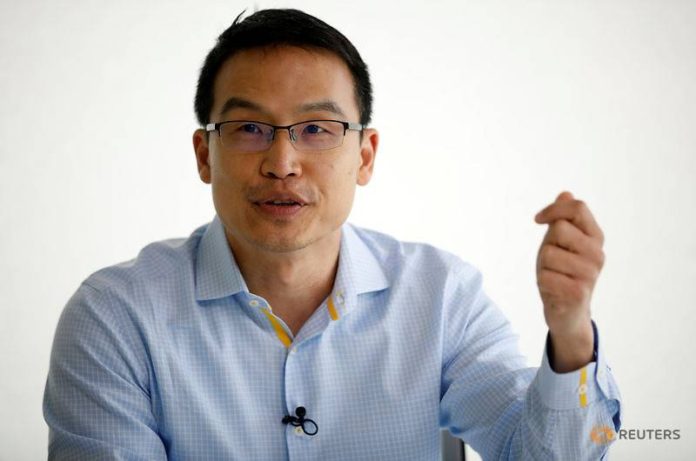
“We’re very excited about Vietnam. We see very similar characteristics to Indonesia,” Grab president Ming Maa told Reuters in an interview.
Grab and rival Indonesia-based Go-Jek are evolving from ride-hailing app operators to become one-stop shops for services as varied as payments, food delivery, logistics and hotel bookings in Southeast Asia.
Grab, with its app on more than 160 million mobile devices across eight countries, has said its Indonesia investment aims to build a next-generation transport network and transform how critical services such as healthcare are delivered.
Like Indonesia, many middle-class and young consumers in Vietnam are using apps and websites to access services, Mr Maa said.
“I would expect us to invest over several hundred million dollars into growing our Vietnam business,” he said without giving specific details on the investment.
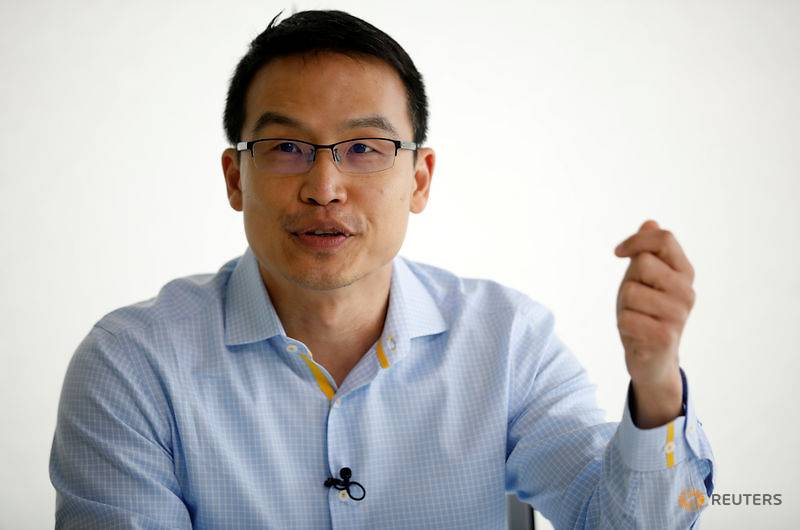
Grab’s president Ming Maa speaks during an interview with Reuters in Singapore on Aug 22, 2019. (Photo: Reuters/Edgar Su)
Vietnam ranks third or fourth among Grab’s top markets, said Mr Maa, who joined the company three years ago from its major investor, Japan’s Softbank Group, and a previous decade-long stint at investment bank Goldman Sachs.
Grab partnered with Vietnamese fintech firm Moca in 2018 to launch a digital wallet. Grab formed a joint venture with Credit Saison, a Japanese credit card company, last year to offer loans and credit analysis to consumers and micro-entrepreneurs across Southeast Asia.
Grab was Vietnam’s most downloaded ride-sharing app from January to July, according to market data and analytics firm App Annie. Aside from Go-Jek, Be is another ride-hailing competitor.
Singapore is Grab’s second-biggest market, where it is building a US$135 million headquarters. The company, which has more than 4.5 million drivers in the region, aims to double its revenue to US$2 billion this year.
Mr Maa said its total gross merchandise volume (GMV) in food delivery, a segment where it is expanding aggressively, has surged 300 per cent in the first half. GrabFood now accounts for 20 per cent of the company’s total GMV.
In its mature ride-sharing business, the company is profitable in several of its markets, Mr Maa said, adding that Grab has no specific plans for an IPO.
“TIP OF THE ICEBERG”
By rolling out a range of daily services at varied price points, Mr Maa was confident of Grab sustaining high growth rates. The company counts Toyota, Microsoft, China’s Didi Chuxing and Hyundai among its backers.
Grab, Southeast Asia’s biggest start-up with an estimated valuation of about US$14 billion, is also betting on its payments business to fuel growth in financial services.
“We’re just at the tip of the iceberg for financial services,” said Mr Maa, adding that developing the region’s largest payment mobile wallet gave Grab valuable data insight into customers and drivers on its network.
It wants to use those insights to create specific financial products including in insurance, credit and ultimately wealth management offerings.
Mr Maa said Grab is interested in taking up a digital banking licence in Singapore, where the central bank has announced plans to issue up to five online-only bank licences and is expected to provide detailed guidelines in a few weeks.
“By using deflationary forces like digital banking, we are able to provide very similar sets of financial services at much lower cost than what traditional banks are able to provide,” said Mr Maa, who earned a master’s degree from the Massachusetts Institute of Technology.
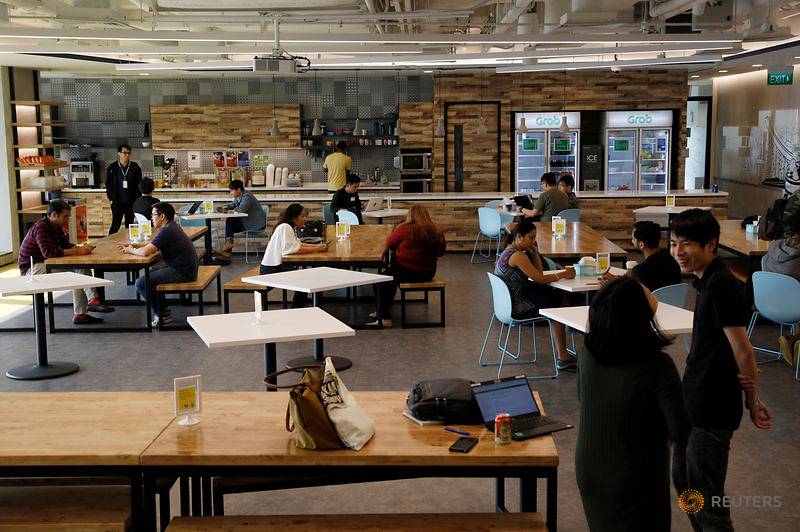
A view of the pantry area at a Grab office in Singapore on Aug 22, 2019. (Photo: Reuters/Edgar Su)
Grab’s interest in digital finance shows how non-banking firms in Asia are shaping up as potential rivals to traditional banks by leveraging their technology and user databases to offer banking services to retail customers and small businesses.
Southeast Asia’s Internet economy is expected to exceed US$240 billion by 2025, a joint study by Google and Temasek Holdings showed in November, a fifth more than previously estimated, as more consumers use their smartphones to go online.
SINGAPORE: Almost 350 pages long, the latest Household Expenditure Survey was chock-a-block with mind-numbing statistics.
One set of data, however, caught the eye: On average, the bottom 20 per cent of households are each spending S$2,570 a month while having a monthly income of S$2,235, which include regular government transfers such as Workfare. This means a shortfall of S$335 on average each month.
This was the only income group whose income was lower than their expenditure, according to the survey conducted by the Department of Statistics (SINGSTAT) from October 2017 to September last year. Nevertheless, such a situation has persisted for at least the past decade.
The average monthly shortfall for this group was S$266 in 2012/2013, and S$321 in 2007/2008, based on Singstat’s data.
To help these households cope, government transfers including ad hoc ones, as well as rebates or subsidies, are disbursed to the families and individuals.
In response to queries, the Ministry of Social and Family Development (MSF) noted that a number of households in the bottom 20 per cent “may be semi-retired households who are able to tap on other sources of income” – for example, savings, allowances from children, and Central Provident Fund payouts – for their household expenses.
The Ministry added that in its Household Income Trends report last year, SINGSTAT noted that about 45 per cent of resident employed households in the bottom decile were headed by persons aged 60 years and above, while some owned a car, employed a maid, or lived in private property.
Be that as it may, Members of Parliament (MPs), sociologists as well as social service agencies stressed the need to pay attention to the situation – notwithstanding the fact that an array of assistance schemes are provided by the Government and the community.
Expenditures of lower-income households outpacing their incomes is a sign that their well-being is being compromised, said Associate Professor Teo You Yenn, head of sociology at the Nanyang Technological University.
“People generally adjust spending to expected income, meaning that people with lower income already forgo spending that higher-income people consider basic needs, including educational needs such as tuition, nutritious food, healthcare, and leisure and social activities important for overall well-being,” said Assoc Prof Teo.
Observers and experts noted that it remains a challenge for the Government and the community to reach out to low-income households who may be unaware of the available schemes or unwilling to seek help. There is also scope to help these individuals and families manage their limited finances, they added.
A one-room rental flat of a low-income family in Singapore. (Photo: TODAY / Ooi Boon Keong)
Interviews with several low-income households found that their main expenses vary according to individual and family circumstances. For example, those with young children find themselves spending a chunk of their income on basic necessities such as diapers and formula milk.
Couples who are childless or who are receiving no financial support from their children find themselves having to cope with medical bills, for instance. These may not necessarily be one-off large expenditures for a medical procedure for example, but the little things add up: Every trip to the polyclinic or general practitioner for relatively minor ailments means money spent on transport and medicine, and a loss of income for the next few days if they are too ill to work.
Then, there are also the indulgences which households with better means hardly think twice about spending money on: For some, it could be simply buying a fish – a luxury for some of these families – to cook at home, as one 72-year-old retiree said. For others, it could be buying cigarettes or beer.
Apart from turning to government handouts, some resort to borrowing from friends and relatives – and end up in a spiral of debt.
Jurong Group Representation Constituency (GRC) MP Rahayu Mahzam noted the difficulties faced by individuals mired in long-standing debts. Help in this area is limited for now since Social Service Offices (SSOs) – run by the MSF – cannot help to repay loans, said Ms Rahayu, who is also the deputy chairperson of the Government Parliamentary Committee (GPC) for Social and Family Development.
While there is no immediate solution, the Government will look into these problems to see how they can be better addressed, she added.
FINANCES OF LOW-INCOME HOUSEHOLDS
Among those interviewed was Madam Rosmah (not her real name), 63.
She and her husband have children from previous marriages, but they do not get financial support from them.
After a heart bypass in late June forced her husband to stop work as a cleaner for half a year, Mdm Rosmah, who works as a cleaner as well, has become the sole breadwinner.
She takes home S$700 a month, but this is easily outstripped by the couple’s monthly spending of about S$1,000. The bulk of their money is spent on groceries (about S$420), with the rest going to electricity and conservancy charges (about S$120), medical expenses (about S$100), transport (about S$100), rent (S$33), and prepaid phone cards (S$18).
She also uses part of her salary to repay money owed to some friends and neighbours – while continuing to borrow from others. Sometimes, when their finances run dry towards the end of the month, the couple would cook less or eat with their neighbours.
Unable to keep up with their bills, the couple had water supply to their one-room rental flat in Jalan Kukoh cut more than three years ago.
“Little water runs through the taps (now). We have to put pails and bottles under our taps to collect the water to shower and drink,” she said from the couple’s one-room rental flat in Bukit Merah estate.
Mdm Rosmah had approached MSF’s Social Service Office in June, and received one-time ComCare assistance to tide over the initial period where Mdm Rosmah had to stop working to look after her husband. It consisted of cash, as well as help with their rent, utilities and service and conservancy charges.
A medical social worker also helped with her husband’s medical expenses. The Islamic Religious Council of Singapore also provided cash assistance to the couple. The MSF said it is reviewing the couple’s situation to see if they require further help.
For low-income households which have young dependents, they have different concerns including setting aside enough money for their offspring.
Operations manager Nizam Ibrahim, 41, said he would sometimes eat instant noodles throughout the week, so he can provide for his wife and his one-month-old infant.
“We don’t go out at all: No holidays, no eating out. It has been this way for a year, since I got married,” he said.
To supplement his wage, he works part-time as a driver with ride-hailing firm Grab. In total, he takes home S$2,500 a month. But like the other families interviewed, Mr Nizam said his income is not enough to cover his expenses which come up to about S$2,650 each month. Part of the reason is that he is servicing a S$40,000 loan, which he took out to refurbish his house from a previous marriage. He pays off S$1,000 in debts every month.
To stretch his dollar, he travels across the Causeway every week to stock up on supplies, which are cheaper in Johor Bahru. “Diapers cost S$15 a pack and milk costs S$20 in Malaysia, which are so much cheaper than in Singapore,” he said.
Asked if he had tried seeking financial assistance, he said that he can still manage for the time being. His neighbours had suggested to him to go to speak with his MP, but he said: “I don’t intend to do that, not now. Now still okay.”
Likewise, Mdm V M, who declined to give her full name, is finding it a challenge to make ends meet.
The 48-year-old divorcee works as a hospital attendant. Her take-home pay is S$1,120 a month, and she has two more mouths to feed apart from herself: Her daughter – a single mother who is looking for work – and her granddaughter.
She said her monthly expenses total about S$1,200 a month. She spends about S$500 on groceries (including more than S$330 on diapers and formula milk), S$200 on transport and S$150 on water bills.
She also pays rent for her one-room Jalan Kukoh flat (S$111), and medical (S$100) and electricity expenses (S$100). Her granddaughter’s nursery programme is subsidised and she pays just S$10 a month for it.
The monthly financial assistance from ComCare has helped alleviate her situation by providing cash and help with rent, utilities and service and conservancy charges. She also receives Medifund assistance for her medical bills.
Still, her household is months behind on conservancy and rental bills, she said. To try and save money, she is training her granddaughter to use a potty, which will obviate the need for diapers.
On its part, the Government has sought to ease the general expenses for families with young children, apart from targeted schemes to help low-income familiies, said the MPs who were interviewed.
Nee Soon GRC MP Louis Ng reiterated that it has become more affordable for families to raise children over the years.
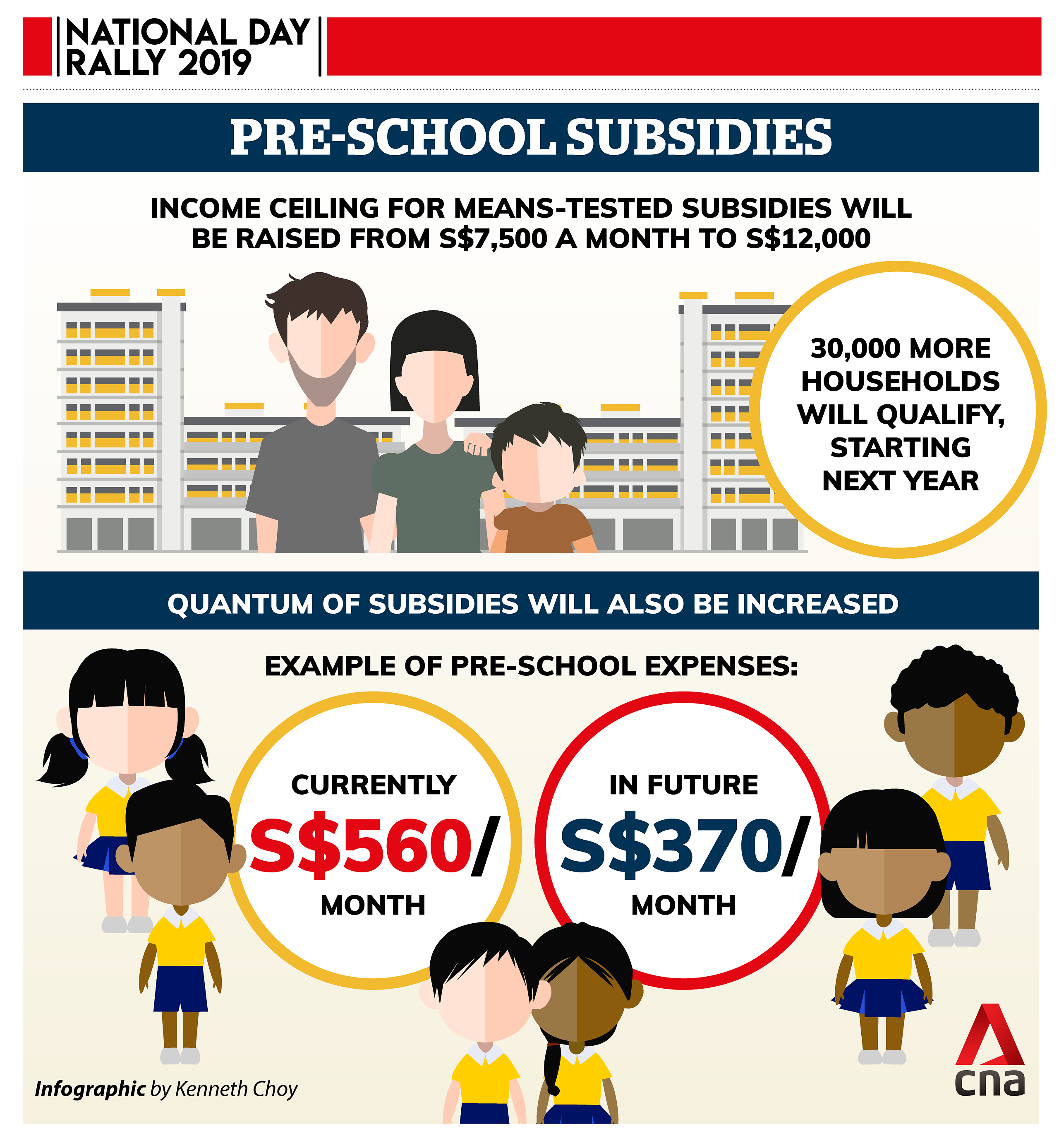
He cited Prime Minister Lee Hsien Loong’s announcement at the recent National Day Rally that the Government would beef up subsidies to soothe concerns over the cost of preschool education.
These include doubling spending on early-childhood education, from about S$1 billion today, and raising the income ceiling for households to qualify for extra subsidies.
“I always feel that the financial side of things are resolved – those who really need it will get it. That’s my experience on the ground,” Mr Ng said.
Agreeing, Marine Parade GRC MP Seah Kian Peng cited the example of milk powder, which has also become more affordable. Today, a can of milk powder can cost under S$30 and there is a wider range of options compared with two years ago, he said.
But he acknowledged that making the financially prudent choice is not always easy as parents want to be able to give their children “little luxuries”.
Parents need to be better educated on how to make informed purchases so that they can stretch their dollar, he said.
Apart from providing for their children, healthcare cost is a major concern for some low-income households, especially for singles and couples who do not have children or whose children are not able to support them financially.
While the array of government schemes help families defray their medical expenses, the attendant costs such as paying for transport to see the doctor and the loss of income are also considerable.
In the case of Mdm Rosmah, her husband’s surgery was covered by government subsidies . For the first few weeks after he was discharged from hospital, she was absent from work on some days because she had to look after him. She lost about S$40 in wages each day she missed her shift.
“It was very hard on me,” she said. She added that she resorted to borrowing small sums from friends and neighbours to get by. Her husband’s condition improved early last month and she has since returned to work fully.
On healthcare costs, Jalan Besar GRC MP Lily Neo, deputy chairperson of the GPC for health, pointed out that there are many Government schemes to help families cover these expenses, but families needing help must step forward.
“Affordability-wise, I think Singapore is pretty good in terms of healthcare. The 3M system – Medisave, MediShield and MediFund – is pretty comprehensive to ensure that no one is deprived of healthcare due to a lack of means,” she said.
But Dr Neo acknowledged that some families may be unaware of the schemes. “For families who face this problem, the best is for them to visit the SSO or their grassroots advisers. Sometimes, we do not know that they are facing certain issues, and if they come forward, we can explain the schemes to them,” she added.
Apart from the day-to-day expenses, some low-income individuals or families invariably find themselves spending money on guilty pleasures or even vices.
Freelance dishwasher Rajasheker Narayanasamy, 58, said he spends almost S$1,500 on alcohol and cigarettes each month. This is two-thirds of his S$2,000 wage, which fluctuates because a problematic knee cap leaves him unable to work at times.
“I drink so that I can go to sleep at night. Otherwise, the pains in my body will cause me to lose sleep,” said Mr Narayanasamy, who received ComCare assistance in 2015 when he was looking for a job. According to the MSF, the SSO recently reached out to him to review his case and see if he requires help.
GOVT & COMMUNITY HELP AVAILABLE
Among other things, the Household Expenditure Survey also found that the proportions of low-income households and those living in one- and two-room public flats who have creature comforts – namely air-conditioners and Internet subscriptions – have increased significantly compared with five years ago.
For example, among households living in one- and two-room public flats, 45 per cent of them have access to the Internet in 2017/18, compared with 22 per cent in 2012/13. And 25 per cent of this group now have air-conditioners, compared with 14 per cent five years ago. And this reflects a higher standard of living and lifestyle changes, among other things, said Singstat.
Among the nine low-income households interviewed, one has an air-conditioner at home but the individual said he rarely turns it on as his electricity bill was already too high. None of them had broadband Internet subscriptions at home, and few subscribed to a mobile data plan.
In response to queries, an MSF spokesperson said the Government reviews schemes for low-income families regularly to ensure that their coverage and criteria are responsive to the needs of beneficiaries.
For instance, the ministry regularly reviews ComCare, which provides aid to low-income families, taking into account changes in the prices of essential items and the changing lifestyles of Singaporean families.
“For example, telecommunications items such as broadband access and mobile subscriptions are recognised as essential needs and are factored into the ComCare assistance provided,” the spokesperson added.
The MSF recently improved its ComCare Long-Term Assistance scheme, which offers help to individuals who are permanently out of work and require support for their daily expenses.
From Jul 1, the monthly cash assistance for single-person households rose from S$500 to S$600. The cash-assistance rates are higher for larger households, the ministry said.
The MSF also has a ComCare Short-to-Medium Term Assistance scheme, which provides financial support to those who are temporarily out of work, between jobs or receive low wages.
While there are income caps to qualify for support, MSF noted that the SSOs are allowed flexibility if they find that a household who earns above the cap needs help.
For example, the SSOs may refer those who are looking for jobs or earning low wages to government agency Workforce Singapore or the labour movement’s Employment and Employability Institute for help, MSF said.
The MSF, which has a network of 24 SSOs in every Housing and Development Board estate, also partners other agencies and organisations to bolster support for low-income families.
While government assistance can help families stay afloat, it is also up to the community to step in to fill the gaps. Community resources, MSF said, are an added layer of support for low-income households. These include organisations that provide low-income families with meals and food vouchers, courses to upgrade their skills, and medical and mental-health services.
The public, too, can play its part. Those who come across individuals or families who need help should approach the nearest social service office or call the ComCare hotline, the ministry added.
Ms Rahayu reiterated that many constituencies have schemes to help their residents. “Very often, local communities can help to deal with specific issues, such as families not being able to afford food, diapers and milk powder,” she said.
Mr Ong Ai Wah, 56, for example, has turned to a host of agencies – including the SSO and non-governmental organisations – for money, canned food and other necessities, such as clean mattresses.
Since 2017, he has been receiving monthly ComCare assistance in the form of cash, and help with rent, and service and conservancy charges. He also receives Medifund assistance for his medical bills.
He said that he receives about S$500 a month from the SSO, and also borrows money from friends to make ends meet.
Mr Ong is unemployed and lives in a one-room rental flat at Jalan Kukoh. The divorcee has three children aged 17 to 24 . He gives his youngest son about S$20 as pocket money each month. In total, he spends an average of S$600 a month on groceries, food and transport.
His oldest son sells insurance part-time, while his daughter is estranged. He said that his children occasionally live with him but they do not support him financially.
Mr Ong Ai Wah, who is unemployed, said landing a job is impossible because of his failing health. (Photo: TODAY / Kimberly Lim)
Mr Ong added that he has been unable to find a job because of his failing health. Living with mental illness and lung cancer, and having suffered a heart attack this year, the former part-time plumber and electrical technician makes regular trips to the hospital.
Meanwhile, charities and self-help groups said they have also stepped up support or widen their services to cater to shifting needs.
For example, the Chinese Development Assistance Council (CDAC) will relax its income-eligibility criteria to allow more people to benefit from its programmes.
With effect from January, it will raise its monthly household-income cap from S$1,900 to S$2,400, and its per-capita income ceiling from S$650 to S$800.
Similarly, the Singapore Indian Development Association (SINDA) also said that it launched a slew of initiatives and revised subsidy-eligibility criteria across all its programmes last year.
Its initiatives include educational programmes, parenting workshops and counselling services. Under the revised criteria, participants from families with a per-capita income of S$1,000 and below will have their fees waived. Those from families with a per-capita income of $1,001 and above will pay a one-off “commitment fee” of S$10 for every programme.
For those who do not qualify for its help schemes, SINDA has the Beacon Fund which offers emergency and interim assistance – such as with funeral expenses for an unexpected death in the family – as well as help with household, mobility and information-technology matters.
GETTING OUT OF THE POVERTY TRAP
While helping families to alleviate their daily struggles was important, Ms Rahayu said the goal should be to help them rise above their situation.
“We can help them for a while with their immediate needs, but they also have to review what they spend on and try to upskill, so that they can get a better income,” she said.
A spokesperson from North West Community Development Council (CDC) said that they work with various partners to provide students from low-income families with financial literacy skills and knowledge through various programmes.
An example of this is the POSB Matched Savings Programme which is open to primary school students who either receive financial assistance from the Ministry of Education or who are beneficiaries of the School Pocket Money Fund.
The programme supports the students and their parents in learning the importance of cultivating good saving habits and equips them with money management skills.
Mr Seah noted that financial literacy could go a long way towards helping low-income families manage their finances better.
“Every dollar saved means a lot more to someone from a lower-income family than a middle-income family. We have to find ways to help them save where the money is there for the taking,” he added.
However, for some families, the barrier between making the first step towards being more financially capable is not a lack of desire but a lack of information.
Ms Tan Ying Jie, who oversees capacity and partnerships at charity organisation Daughters of Tomorrow (DOT) said that in her experience, women from low-income households are already making use of what is available to them to best provide for their families. However, they struggle because they lack the information and resources to make better financial choices.
In October last year, DOT partnered with women’s charity organisation Aidha to run a financial literacy programme for low-income women. The programme was offered to existing beneficiaries who have employment or a source of income in addition to receiving financial assistance from the Government.
Over the course of six months, nine women, who were aged 20 to 45, were introduced to different strategies on how they can better manage their finances. As part of the curriculum, participants were also given a notebook where they were asked to track their expenses.
At the end of the programme, the women were able to collectively save about S$4,000. This meant that each participant had saved about S$30 to S$100 dollars a month, Ms Tan said.
During the feedback session, the participants also reflected that the programme has helped them to be more aware of their spending habits and they will work towards being more cautious in the future.
Some of them were also interested in what they can do to further grow their money now that they have achieved some financial stability, and so an expansion of the curriculum is currently being explored, she said.
Aidha chief executive officer Jacqueline Loh said that the programme will run again in September and plans are afoot to conduct another session in November.
However, not all low-income individuals or families see the benefits of such programmes.
Mr Ong, who has attended budgeting classes suggested by his social worker, said he did not find them helpful. He said: “Whenever I fall sick and I have to travel to see the doctor, I have to spend money. These things are out of my control. How do I save the money when there’s already not enough to spend?”
“SERIOUS IMPLICATIONS”
While providing holistic support for low-income households requires massive efforts and resources from the Government and the community, experts said there are serious implications if this group of Singaporeans perpetually struggle to make ends meet on their own.
Assoc Prof Teo said that this trend would imply that these families are unable to save, and this has negative long-term effects in old age. It also puts stable households at risk of a crisis when there is illness, accident, job loss or a child with special needs, she said.
Dr Mathew Mathews, a senior research fellow at the Institute of Policy Studies, said that while low-income households can avail themselves of subsidies, family circumstances may render these ineffective.
“While (government subsidies) are substantial measures, the cost of living in Singapore is high,” he said.
He added: “Some families will have greater challenges, depending on the types of issues they have to deal with, such as chronic illnesses. While there might be subsidies for healthcare, there might be many out-of-pocket expenses that can be rather substantial.”
Sociologist Tan Ern Ser of the National University of Singapore cautioned that if left unchecked, the situation could likely result in these families being entrenched in poverty.
These households should be supported in finding employment, and the Government and charity sector have a part to play, he said. “It’s not just about money, but about finding employment and helping the children in terms of educational support,” he added.
SINGAPORE: Singapore isn’t alone in confronting the consequences of rising seas.
Several other coastal cities and small islands also face this hazard, and lessons can be drawn from how they plan for and adapt to it.
Recent research shows three general approaches can be considered when dealing with the threat of sea level rise. First, accommodate the threat, which includes flood-proofing existing buildings and infrastructure, or designating areas that would be allowed to flood during high tide.
Second, retreat from the threat, which includes the removal and reallocation of key infrastructure and assets to areas that the sea cannot inundate.
Third, protection from the threat, which includes planting and managing mangrove coasts, or engineered options like sea walls, land reclamation and polders described during Prime Minister Lee Hsien Loong’s National Day Rally speech.
Aerial view of polder site at Pulau Tekong. (Photo: Housing & Development Board)
THE PROBLEM: WE STILL CANNOT ANSWER MANY QUESTIONS DEFINITIVELY
Our best estimates suggest we can expect sea levels rising by at least a metre in Singapore under current emission scenarios by 2100.
It is very likely this magnitude is an underestimate, as recent measurements taken at Greenland indicate melt rates of its ice sheets are significantly increasing every year.
Herein lies the challenge: A major consideration in assessing the effectiveness of the options Singapore has in dealing with rising sea levels is that we are unable to definitively answer questions of how much and how fast sea level will rise for Singapore 80 years from today despite access to the best climate models available.
The reason isn’t so much the quality or accuracy of models used for gauging future sea levels in Singapore. The uncertainty arises because these levels depend on how much future global greenhouse gas emissions arise from our actions locally and globally.
The amount and rate of these emissions strongly affects how quickly large continental ice sheets in Greenland and Antarctica – these large kilometres-thick ice sheets are the main sources of global sea level rise – melt and contribute water to the oceans.
Hence, the recent governmental initiative to fund S$10 million into future sea level rise research is a welcome one, especially as improved understanding of physical processes affecting sea level rise is critical for adaptation decision-making.
DECISIONS WE NEED TO TAKE IN THINKING THROUGH ADAPTATION
The physical sciences can help in lowering uncertainties of long-term model forecasts of sea levels, but assessing the total effectiveness of coastal adaptation to rising seas requires an arguably more important social scientific approach.
How effective these adaptation measures are strongly depends on the confluence of several factors. First, the role of geography, such as questions of “is there a hinterland that enables coastal retreat?” or “how does the natural or pre-urban coastline historically adapt to rising sea levels?”.
Continued growth in the world’s population and global economic activity will inevitably lead to rising consumption levels and resource depletion. (File photo)
Second, the types of coastal land use exposed, such as the proportion of commercial, residential or industrial areas subject to flooding from rising seas.
Third, the prevailing socio-economic context, with important questions such as “are there areas of commercial and cultural heritage are worth protecting more than others?”, or “are there socio-political and economic resources to implement these for the long term?”
In Singapore’s case, two relevant examples apply. First, identifying low lying flood-prone areas will not give a full picture of the total vulnerability to rising seas of a region.
What’s needed is an assessment of the costs accrued when installing and maintaining coastal protection, and the potential loss of natural ecosystems during its construction. These costs must then be balanced against the benefits of protecting critical infrastructure and property of financial and historical value.
This evaluation requires an in-depth socio-economic assessment of current and future land use, as well as the value judgments of existing natural capital or its ecosystem services provided. The net cost-benefits are needed prior to deciding on the coastal adaptation option.
WHAT’S NEEDED TO DECIDE ON LONG-TERM PROTECTION MEASURES
Second, evaluation of the long-term resilience of each protection measure to increasing sea levels is needed.
An engineered dyke or sea wall for polders may be relatively inexpensive and quick to construct, but it serves one protective function and can be prone to catastrophic failure under severe events.
Reclamation work at Marina Bay in 1977. (Photo: Urban Redevelopment Authority)
In contrast, a reclaimed coastline with a restored mangrove buffer – like in Chek Jawa or Sungei Buloh – may take more time to develop and requires more careful management.
However, this buffer has multiple functions; mangroves can naturally “adjust” to rising sea levels to protect inland areas while reducing coastal erosion, as well as providing both a natural habitat for wildlife, and a recreational park space for visitors.
In this case, multi-disciplinary research suggests that nature-based adaptation solutions, which often provide more than one function when protecting coasts from hazards, likely result in more resilient outcomes.
Such research, combining science with humanities and social sciences, is clearly needed before deciding on long-term protection measures to sea level rise in Singapore.
WINNING THE BATTLE BUT LOSING THE WAR
Even when all relevant research is completed, and the “best” measure selected to protect Singapore from rising seas, we must not lose sight that adaptation to climate change alone is insufficient.
Mitigation, through reductions of total carbon emissions causing climate change, must go hand-in-hand with adaptation.
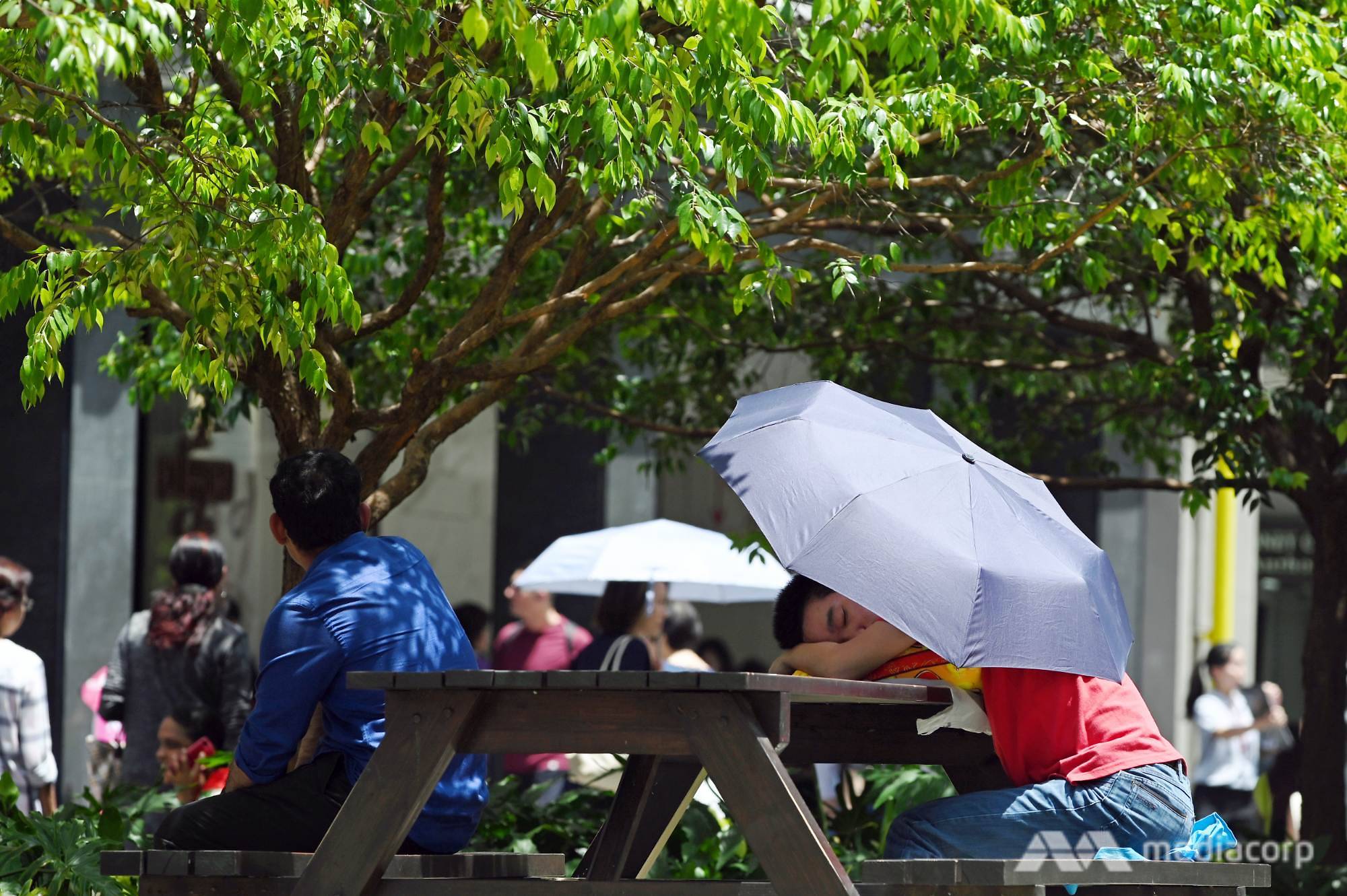
Napping under the sun during a spell of hot weather in Singapore. (File photo: Marcus Mark Ramos)
The S$100 billion that may be spent on adaptation is likely an underestimate; especially when climate science indicates it is virtually certain sea levels will continue to rise beyond 2100, and more resources would have to be spent on maintaining coastal protection in Singapore in the 22nd century.
Further, there are other short-term climate risks that will affect Singapore before sea level rises beyond a metre.
These include direct climate impacts such as heatwaves, severe storms, droughts and floods, and their indirect effects on food, water, and disease. These cumulative impacts also require potentially costly adaptation measures.
It would thus be sensible to place greater attention on climate change mitigation to greatly lower these risks. While the global response on mitigation is slow but steady, local action can be enhanced considerably.
In Singapore, aside from the government-led mitigation measures like the carbon tax, or individual actions involving lowering personal carbon footprints, local companies in the private sector can also act.
For instance, financial divestment from fossil-fuel industries, and R&D towards renewable energy technologies in the power generation and transport sectors can be effective in significantly reducing carbon emissions.
To extend the military analogy used by PM Lee, ensuring Singapore’s survival from climate change requires fighting multiple battles simultaneously. A strategy of focussing only on the battle against sea level rise may end up being a Pyrrhic victory, especially if other fronts are neglected.
Winston Chow is an Associate Professor of Humanities at the Singapore Management University’s School of Social Sciences and Office of Core Curriculum. He is a Lead Author for the chapter on Cities, Settlements and Key Infrastructure, and the Cities and Settlements by the Sea paper for the Intergovernmental Panel on Climate Change’s Sixth Assessment Report to be published in 2021.
SINGAPORE: In his National Day Rally speech last Sunday (Aug 18), Prime Minister Lee Hsien Loong announced that the retirement and re-employment ages would be raised to 65 and 70 respectively by 2030, to facilitate those who wish to continue working to do so.
The Central Provident Fund (CPF) contribution rates for older workers will also rise, to enhance older workers’ financial security. Details were announced the day after by Manpower Minister Josephine Teo.
Today, the life expectancy of Singaporeans has increased to almost 85 years, compared to 76 years in 1990. Latest statistics indicate that Singaporeans have some of the longest healthy years.
It would therefore be a great waste of precious human capital if the strengths and potential of older workers are not proactively harnessed.
While raising the retirement and re-employment ages is a step in the right direction, the issues surrounding employment of older workers extend well beyond that.
CHANGE OF ATTITUDES ABOUT OLDER WORKERS
Extensive evidence demonstrates that older workers are just as effective at work as their younger colleagues.
In fact, fewer customer confrontations have been attributed to the presence of older workers. They tend to have better emotional control, crisis management and problem-solving capacity.
There is no consistent evidence either that suggests older workers are less productive than younger workers. Job performance is generally the same across age groups.
There is also little evidence that chronological age alone is a strong determinant of health.
Yet, studies consistently reveal an overall negative bias against older workers. Research from Singapore also found that expectations of work withdrawal, assumptions about health and decision-maker’s age influence negative attitudes towards older workers.
An elderly worker in Singapore. (File photo: TODAY)
Even human resource managers responsible for age-related policies hold stereotypical views of older workers. These myths and stereotypes, detrimental to age-diverse workplaces, need to be challenged.
The treatment of older workers by their employers and colleagues has significant influence on their decision to either continue working or retire.
In general, it is not the age of a worker that is most important but the demands of work exceeding a worker’s capabilities. In this modern era, health and technology improvements mean there are few jobs that the average 70-year-old cannot do.
CREATING CONDUCIVE WORK PLACES
Studies have shown that ergonomic workplace design is particularly important for older employees because efficiency of the senses, physical strength and speed decline with age.
Poor health, a major factor in shortening working life, is often an outcome of poor-quality, work and workplace design and poor management practices.
To sustain the work ability of employees, employers could institute regular health checks, such as occupational health and general health care examinations, and organise educational programmes.
Topics could include nutrition, smoking cessation, managing stress and preventing burnout. Fitness, sports and recreation would also benefit employees.
(Photo: Unsplash/helloquence)
Such activities need not be costly. One creative employer used cardboard that her company no longer needed as exercise mats for employees to carry out stretching exercises.
She even converted her factory floor space into a gym in the evenings.
CHOICE OF FLEXIBLE WORK
Local surveys reveal that many older workers would like to work part-time and even go back and forth between periods of work and periods of leisure.
Some want to spend more time with their families; others want to travel overseas to visit their children and grandchildren for a longer duration than two or three weeks but then return to work.
Employers could benefit by making such opportunities more available. These may include allowing an older worker to take several months’ leave and then return to the job. Coverage of duties would have to be arranged and flexibility and creativity exercised.
A system could be put in place that is similar to maternity or unpaid leave for women to look after a new-born baby or young children. Another option is to have two older workers share a job, with each working four-hour shifts each day.
“Phased retirement” is another option in which an older person gradually decreases their number of work days a week until retirement. The Singapore University of Social Sciences applies this, allowing older employees and parents to do a two-day, three-day or a four-day work week.
CULTURE OF RESPECT
Increasingly, with three or four generations working alongside one another, employers need to be cognisant of the disparate needs, interests and motivations, and foster a culture of respect and consideration, within the context of an already diverse workforce comprising various ages, nationalities and gender.
Two colleagues in a discussion. (Photo: Unsplash)
Corporate guidelines for an inter-generational human resource policy would need to be developed, and diversity concepts would have to be discussed and promoted in organisations.
In addition, workshops with supervisors to examine and reflect on their personal age stereotypes could be carried out. Staff surveys on attitudes about age, supervisors’ behaviour and feedback from other employees could be obtained.
The exchange of knowledge between older, experienced employees and younger employees could be systematically promoted through mentoring and reverse-mentoring roles. Older employees can be paired with and mentored by younger employees on topics such as technology and social media.
Other inter-generational collaborations, activities and teams could enhance awareness, appreciation and cooperation between the young and old.
The Port of Singapore Authority is one great example. With a focus on its people as one of its core values, it wins as a team by respecting, nurturing and supporting one another. It fosters innovation by embracing diversity, and the combined knowledge and experience across generations. Through activities such as cognitively stimulating games and organised walks, bonds between the young and the old are strengthened.
CAREER CRAFTING
Employers should support the personal development of older workers through appropriate tools and processes.
After long periods of employment, it is important for employers to offer older employees the opportunity to reflect on where they stand in their career and what further development steps should be taken.
File photo of office workers.
This would facilitate older employees to question their career situations, assess their potential and need for further training, and articulate their ideas and aspirations on their continuing career. Contrary to assumptions, research in Singapore has revealed that older workers want to learn new tasks and take on new work roles.
Employers could even support a personal development plan, for example, by providing workshops on career assessment. These could be organised externally (by professional moderators) or internally.
Occupational strengths and weaknesses, professional career and the current work situation of participants are examined with colleagues of similar age. Development prospects are worked out, with career moves planned.
The focus of such programmes is on what employees can do to fashion their own career situation to be more interesting, less stressful and more aligned with their personal circumstances.
This is likely a win-win proposition for both employers and older employees. Temasek Polytechnic introduced such a progressive programme for its older employees several years ago.
DISPEL AGEIST MYTHS
While the rationale for raising the retirement and re-employment ages is to provide opportunities for those who wish to continue working, by itself, it is insufficient.
In fact, such a legislation might precipitate the opposite effect, and deter employers from hiring older workers, particularly those who are nearing retirement age.
File photo of a senior citizen pushing a trolley in Singapore. (Photo: Marcus Mark Ramos)
To promote employment of older adults, the most crucial ingredient is a fundamental change in attitudes of employers towards older workers. Employers must be fully convinced about the value that older workers bring to their organisations.
Considering the evidence about older workers, ageist myths unsubstantiated by research must be dispelled.
In the current developing environment of the fourth industrial revolution, disruptive technologies and trends such as the Internet of Things, robotics, virtual reality and artificial intelligence are making a profound impact on the way we live, work and relate to one another.
This speed of transformation and breakthroughs has no historical precedent, disrupting every industry in every country, and changing entire systems of production, management and governance.
Against this backdrop, the future of work is likely to be very different from the work of today. In fact, the notion of a retirement age may be obsolete.
Dr Helen Ko is Senior Lecturer for graduate Gerontology programmes at the Singapore University of Social Sciences and concurrently Executive Director of Beyond Age, a silver workforce training consultancy. She has been in the sector for over 30 years and was previously Executive Director at the Centre for Seniors and Chief Executive Officer of St Luke’s Eldercare.
SINGAPORE: Gingerly walking across the glossy tiles of a gynaecology clinic, Mdm Margaret See was arriving for her first ultrasound scan.
With her husband trailing just behind, Mdm See, who was diagnosed with polio at the age of one, was using arm crutches to support herself.
Unknown to the then 30-year-old, who was five months pregnant, was some water spilled ahead in her path on the clinic floor.
As her crutches made contact with the liquid, the metal structures immediately went gliding sideways, leaving her falling stomach-first to the ground.
“What could I have done? I just fall,” said Mdm See, recalling the horror in her doctor’s eyes as he witnessed the incident.
This wasn’t the first time Mdm See had fallen, and it wouldn’t be her last either.
Mdm Margaret See pictured with her family when she was pregnant with her second child. (Photo: Margaret See)
“We are prone fallers,” said Mdm See, referring to polio patients. “A little bit of water, the crutches will (slide). Sure one. So many times I fall, fall, fall.”
Now 62, Mdm See has sailed through two pregnancies, countless falls and miraculously, zero miscarriages.
Beaming as the topic of her son and daughter was brought up, Mdm See said it seemed like a lifetime ago when she thought she would never have children.
‘NOT EASY’ – BUT NOT IMPOSSIBLE – TO FIND A PARTNER
Spending her younger years in a home for the disabled, Mdm See said that “only 1 per cent” of her childhood friends eventually got married.
“I was well prepared that I might not have (children). Because getting a partner is considered very lucky in those days,” she said.
Mdm See (far left) around the age of 12, when she was living in a home for disabled people. (Photo: Margaret See)
“For a girl (like me), to have an abled husband, is not an easy thing.”
But love found its way in Mdm See’s life during a church event when she was 23. “I was in the choir and he was a photographer,” she giggled.
Some of her husband’s family members however were initially unsure on welcoming Mdm See. One relative exclaimed: “Why (her)? The whole world, (there are) so many (other) women!”
Such a reaction is unsurprising, given that around 64 per cent of people in Singapore are willing to share public spaces with people with disabilities – but not willing to interact with them, according to a Lien Foundation report.
In an email to CNA, Disabled People’s Association executive director Dr Marissa Lee Medjeral-Mills said that “there is very little awareness” that those with disabilities have a right to have family and children.
“Ignoring the sexual and reproductive rights of persons with disabilities – especially women – may lead to people missing out on the opportunity to have relationships and children,” she said.
‘WHY DO YOU STILL WANT TO GET MARRIED?’
For 54-year-old Philip Ang, who has spinal muscular atrophy, society’s lack of understanding of those with disabilities have also led to some disconcerting questions.
“I’ve been asked: ‘Why do you still want to get married and have children despite … (not being able to) take care of yourself? Why do you still want to take on this extra burden?”
Mr Philip Ang and his two children. (Photo: Philip Ang)
Mr Ang, who has a son and daughter, had simply answered: “The joy (of parenthood) is greater than my challenges.”
“As a disabled person of course it’s much harder to find a partner – and that’s only the first hurdle,” admitted the senior finance executive at the Society for the Physically Disabled.
But it only felt natural to want to have a family and settle down, explained Mr Ang, who met his wife, a therapist, at a home he was residing in.
A portrait of Mr Philip Ang’s family. (Photo: Philip Ang)
“Many of them (in the home) hope to find a partner, settle down, get married – but it’s not easy. Not many will have this opportunity.”
Before having children, doctors had told Mr Ang there was a small risk his children could have the gene which carried his disability.
But Mr Ang and his wife decided to take the leap of faith, and in 2009 they had a healthy boy named Elnathan, who was named after the Hebrew phrase ‘God has given’.
Five years later came another child. This time, a girl – Eliyanah.
“It means God has given me again,” said Mr Ang with a huge grin.
TYPICAL PARENTING CHALLENGES, BUT WITH ADAPTATION
Some of the myths regarding those with disabilities are that they are not able to give their children the best quality of life or be a good caregiver, noted Dr Medjeral-Mills.
But in fact, parents with disabilities face the same challenges as parents without disabilities.
“Worries about their children’s welfare and health, challenges in navigating parenthood without having all the answers … All parents go through this,” she said.
One such parent is Mdm Neo Geok Cheong.
When Mdm Neo discovered that both of her children were deaf, like her and her husband, she took it in stride. “It didn’t matter that they were deaf,” signed the 69-year-old via interpreters from the Singapore Association of the Deaf.
“I was just worried about their education … I wasn’t sure how to teach them and had to send them to a school (for the deaf) to make sure they received proper education.”
Mdm Neo, who grew up with five other siblings who were also deaf, said her disability never deterred her from her role as a mother.
“I just wanted to look after my kids,” she said simply.
Mdm Margaret See with her family during her daughter’s graduation. (Photo: Margaret See)
Mdm See and Mr Ang also echo the same sentiments, though they admit they have had to adapt to certain chores.
Step into Mdm See’s house, for example, and there is not much furnishing.
This is because as soon as she reaches home and removes her leg calipers, which is a type of brace, she needs the space to “crawl from one room to another”.
Without the calipers, Mdm See mostly uses her upper body to move around while doing her chores.
“In my house, my children didn’t sleep in a baby cot. Everything is on the floor,” said Mdm See, who describes her house as minimal “Korean-style”.
Mr Ang, who is in a motorised wheelchair, also has to find alternative ways to discipline his children.
“I will just remove their privileges – cannot use iPad, cannot watch YouTube.
Mr Ang’s condition, which is linked to the degeneration of muscles, has caused his limbs to be weakened.
“Especially for my case, I cannot use cane … Sometimes I would tell my son, you should be thankful I cannot spank you,” he laughed.
PEOPLE WITH DISABILITIES DON’T NEED PITY
In her email to CNA, Dr Medjeral-Mills stressed that the disability community does not need or want pity.
“The charity model of disability should be left in the past,” she said. “(This is) especially when we can see examples of persons with disabilities who are thriving because they have access to appropriate accommodations and good support networks.”
They should be seen as equal members of a diverse Singapore society, she added.
For Mdm Neo, she has had to hold her head high whenever she received negative comments about her family being deaf.
“There were people making fun of me saying, ‘oh because I’m stupid, my kids will be stupid as well’,” said the housewife.
“It doesn’t matter if people say we are not smart, not good, we don’t do well, it doesn’t matter, because right now, my kids are doing very well,” said Mdm Neo triumphantly.
Mdm See, who is also no stranger to receiving stares, said she has become “immune” to such negativity.
While it might be tempting to look at the able-bodied people around her and become a bitter person, Mdm See is anything but.
She holds on firmly to this philosophy of gratitude: “Don’t look at those above you, but those below you.”
This is why Mdm See – despite all the bruises and pain – has the strength to get up every single time she falls.
SINGAPORE: An 18-month-old toddler died from her injuries on Friday (Aug 23) after a full-length mirror fell on her at a fashion store in Jewel Changi Airport.
The incident occurred at Urban Revivo, a Chinese fashion label with an outlet on the second floor of Jewel Changi Airport.
The police said in a statement on Saturday that they received a call for assistance at about 12.30pm at 78 Airport Boulevard where a mirror had fallen on an 18-month-old girl.
The girl was unconscious when taken to Changi General Hospital, where she was subsequently pronounced dead, said the police, adding that they were investigating the unnatural death.
Jewel Changi Airport said on Saturday that it was “deeply saddened by the tragic accident”, and that they were working with Urban Revivo to ascertain the details of the incident.
“A full-length mirror had fallen and staff on-site quickly administered first aid on the child as they waited for the paramedics to arrive,” the spokesperson said.
“We are in contact with the family and providing them our fullest support during this difficult time. Our hearts and thoughts are with them,” the spokesperson added.
The cordoned-off entrance to Urban Revivo on Aug 24, 2019. (Photo: Clarence Yeo)
Urban Revivo said in a statement on Saturday that they were also deeply saddened by the incident.
“We are assisting the police with its investigations. We are in contact with the family, and providing them our fullest support during this difficult time.”
In pictures taken of Urban Revivo at about 6pm on Saturday, the entrance to the store was cordoned off, with signs informing customers that it was “closed for stock take”.