In a press release, the Ministry of Manpower (MOM) said the company failed to “take reasonably practicable measures to ensure the safety and health of its employees”.
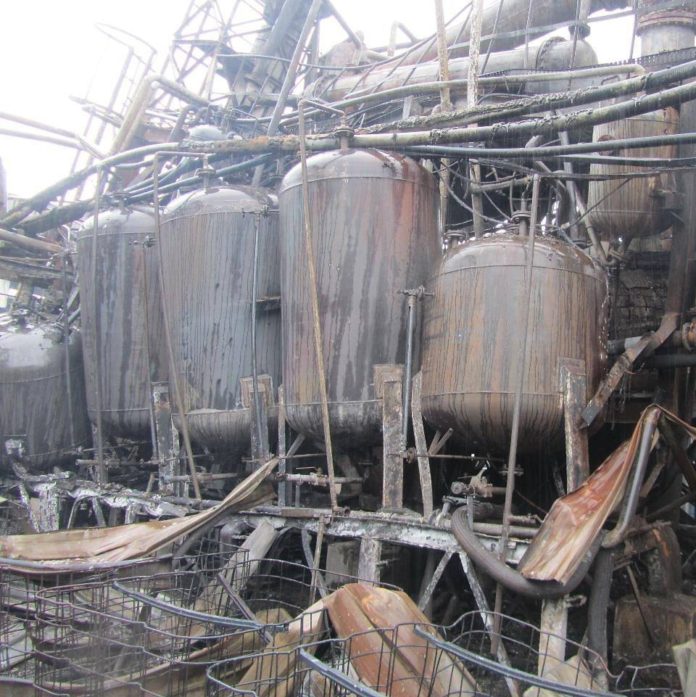
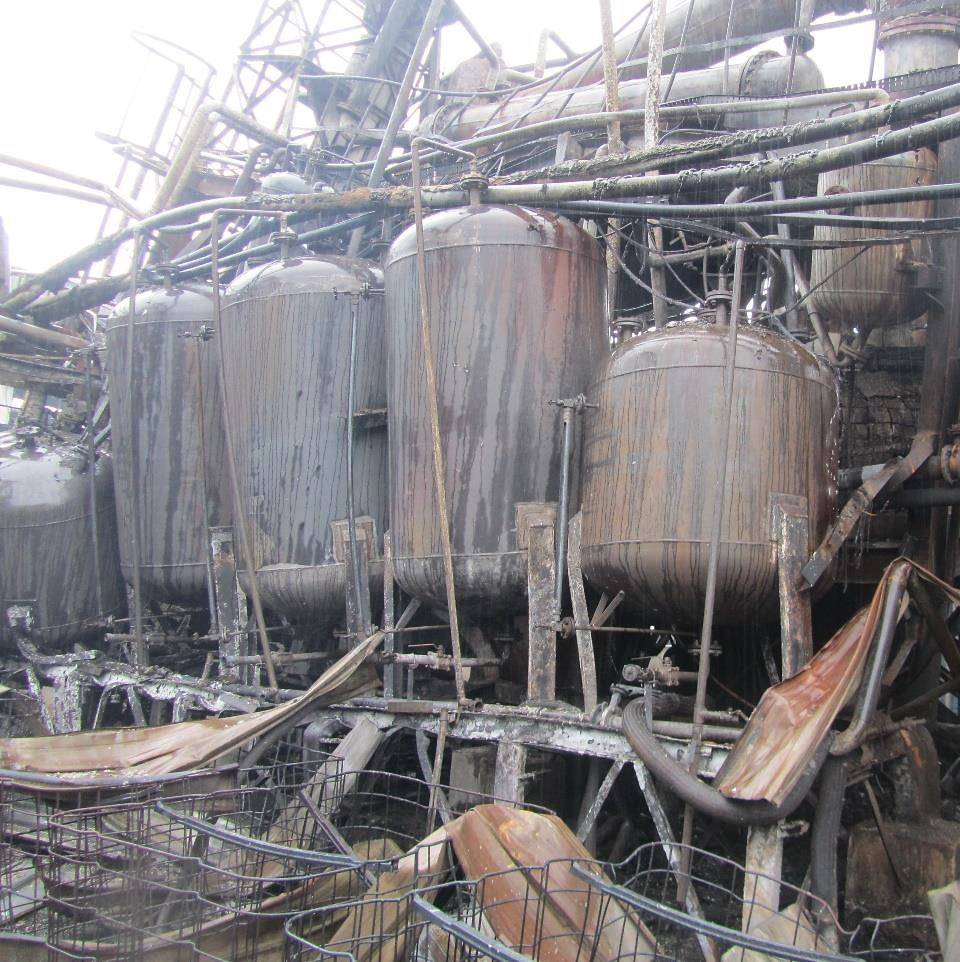
A flash fire broke out at the plant at 23 Tuas View Circuit on the morning of Feb 23, 2017 while a worker was discharging recovered liquid Hexane into a plastic intermediate bulk container (IMC). It quickly spread into a site-wide fire that affected half the plant.
More than 200 firefighters were deployed to quell the blaze, which took four hours to put out. No workers were injured, and the facility sustained heavy damage.
MOM said in its release that investigations found that the company had failed to conduct a risk assessment to ensure that the plastic IBCs were suitable for storing the highly flammable Hexane.
“The IBC used by ECO SWM was not suitable as it could not dissipate the electrostatic charges generated during the discharging of Hexane, which ignited the flammable Hexane vapour-air mixture that resulted in the fire,” it said.
The fire broke out while a worker was discharging recovered liquid Hexane into a plastic immediate bulk container. (Photo: Ministry of Manpower)
The company was also found to have failed in ensuring its workers followed safe operating procedures when dealing with hazardous products, it added.
“Hexane and another flammable liquid, Xylene, were spilled onto the floor during previous work processes, and were not cleaned up immediately by the workers,” MOM said.
“The spilled liquids formed flammable vapours in the area, which fuelled the spread of the fire.”
MOM’s director of the major hazards department, Mr Go Heng Huat, said: “Companies in hazardous waste treatment business must ensure that a comprehensive risk assessment of their work processes is conducted and all necessary risk control measures are implemented.
“They also have the duty to ensure that workers understand and adhere to safe operating procedures at all times. MOM will not hesitate to prosecute companies that disregard hazards at the workplaces and contravene safety regulations.”
Tale number 1. About a week ago, a video of a group of students riotously chanting “kukubird” (a reference to the penis) while making thrusting hip gyrations was shared on Instagram.
Believed to have been filmed during a freshman orientation camp at Nanyang Technological University, this sparked a significant amount of online censure, with blogger mrbrown aka Lee Kin Mun calling out this behaviour and netizens quickly joining in to express outrage. Ostensibly, such a crude cheer is offensive and unbecoming of university students.
Tale number 2. In the movie Crazy Rich Asians, there is a scene of a rowdy bachelor party held in a freight ship, where one of the characters goes on stage to yell “kukujiao” (a variation of the penis reference) before goading the crowd into joining in.
By most accounts, the Singaporeans who noticed this little nugget were delighted that a local Hokkien slang had managed to sneak into a Hollywood blockbuster.
Author Kevin Kwan (right) and cast members Henry Golding and Constance Wu pose at the premiere of Crazy Rich Asians in Los Angeles on Aug 7, 2018. (File photo: Reuters/Mario Anzuoni)
CHILDISH, STUPID ACTIONS
While the movie is fictitious, what struck me was the contextual similarity of both situations – a bunch of rambunctious young people resorting to childish, and some say stupid, actions in a moment of exuberance.
The difference in reception though, is stark. Perhaps this is borne out of a years-long habit of nitpicking at the annual orientation camps that our local universities hold.
Like clockwork for most of the past decade, during this time of the year when freshman camps are underway, media reports of sexualised orientation activities conducted under the guise of breaking the ice are sure to surface.
Many of these incidents, which range from coercing freshmen into re-enacting rape scenes both through dialogue and physical actions to asking female students questions about drinking bodily fluids are downright unacceptable.
They are lewd and demeaning, promote objectification and sometimes even trivialise sexual violence. These rightfully deserve censure.
File photo of students studying at the Hive, Nanyang Technological University (NTU). (Photo: Alif Amsyar)
So, it was almost a relief when this year’s orientation activity outburst centred around an infantile playground insult. The first time I watched the leaked video, I rolled my eyes and, I admit, had a giggle at its puerile humour.
Let’s be clear – this juvenile chant about the human anatomy may be of questionable taste but it is not offensive, sexist or mysogynist. Is it really that big a deal to be shouting the slang for penis, which half the population possesses? And who among us has not uttered a swear word that invokes body parts or laughed at a crude joke?
Instead, it may be more productive to consider these orientation shenanigans as a manifestation of a somewhat repressed population.
In secondary schools, sex education typically focuses on abstinence. At home, many parents actively discourage their children from having boyfriends and girlfriends until they are in university and can find “the one” to get married to.
Many moons ago, when I was in a SAP (or Special Assistance Plan) school, I recall that the school did nothing to debunk the perception that students who dated were the bad eggs and belonged in a neighbourhood (read: less academically rigorous) school. I hope this has changed.
It can’t be unexpected then, to discover that the sudden liberation a young person experiences for the first time in university combined with a surge in hormones might translate to somewhat unruly behaviour as students finally get to explore this whole new world before them.
File photo of Halls of Residence at the Nanyang Technological University (NTU). (Photo: Alif Amsyar)
As gracious adults, instead of railing against the supposed degeneration of morality in the next generation or making snide comments about the “quality” of our university students, let’s allow the young some leeway to do dumb things, like cheer for kukubirds.
While we are at it, this could be a good starting point to relook the way sex-education is taught in schools. Combined, these are opportune ways to allow youth to organically learn about respect and boundaries along the way.
After all, we do not want the freshmen’s only takeaway from this furor to be to avoid filming school activities in the future.
Needless to say, a big bold line should be drawn when it comes to violent, misogynistic or sexist behaviour.
TIME FOR A CHANGE
Besides educational institutions implementing new rules and guidelines, it is also up to the students to be “woke” enough to step up. The seniors, who are usually the ones organising orientation camps, can certainly exercise greater discretion when planning orientation activities.
I can’t think of a better reason to get rid of that deeply ingrained practice of merely rehashing what used to be done for tradition’s sake in favour of something that does not cross lines.
There are many non-sexual ways to get people to bond through embarrassing yet funny activities. For inspiration, take a look at the wedding gatecrashing activities that are so popular in Singapore.
File photo of Nanyang Technological University (NTU Singapore) undergraduates studying at the benches. (Photo: Alif Amsyar)
In this post #MeToo and #TimesUp era, students should be empowered to decline to participate in activities that they may feel uncomfortable about. Here, their support structure matters too.
Schools, teachers, parents and seniors can collectively create a safe environment for everybody. It is also worth reminding freshmen that while orientation is a good way to make new friends, it is not the only way. Perhaps this will help reduce the pressure they face to show up for all manner of activities.
We may not be able to take back the questionable sexualised orientation activities of the past but we can certainly change what will happen in the future. And that is exactly what growing up is all about.
Karen Tee is a freelance travel and lifestyle writer. Six years ago, people thought she was crazy to leave the security of her full-time job. Today, most want to know how she does it.
SINGAPORE: The state visit of Turkmenistan President Gurbanguly Berdimuhammedow to Singapore has opened “a new chapter” in relations, said President Halimah Yacob on Tuesday (Aug 27).
This is the first such visit by the Turkmenistan president, and Mdm Halimah described it as a “historic milestone”.
At a state banquet held in honour of the visiting president, Mdm Halimah said that relations have been “friendly and problem-free” since diplomatic ties were established 23 years ago.
The two countries share many similarities despite the geographical distance, she noted.
“Both are young nations facing many common challenges. Our two countries are focused on economic development and in building up our human capital,” said Mdm Halimah.
Turkmenistan President Gurbanguly Berdimuhammedow speaking on Aug 27, 2019 at a state banquet in Singapore in his honour,
Mr Berdimuhammedow is on a two-day state visit, accompanied by senior Cabinet ministers and government officials.
The inaugural Singapore-Turkmenistan Business Forum was held on Monday.
Both sides also signed a number of agreements, including seven memoranda of understanding that will boost business ties and promote investments between the two countries.
On Tuesday, Mdm Halimah highlighted three areas of cooperation – tourism, business and capacity building.
She said Turkmenistan has “immense potential” to attract more visitors to its white marble capital Ashgabat, as well as UNESCO World Heritage Sites such as the Silk Road city Ancient Merv.
“These are attractions that would interest Singaporeans,” she said.
On the agreements signed, Mdm Halimah stressed the importance of seeing them implemented.
In addition, she said Singapore hopes to welcome more Turkmen officials to exchange experiences and deepen mutual understanding.
“Singapore stands ready to share our developmental model with Turkmenistan in relevant areas,” she added.
SINGAPORE: Technology is already beginning to displace lawyers from some areas of practice, said Chief Justice Sundaresh Menon on Tuesday (Aug 27) as he urged the legal profession to “reskill” to adapt to this new reality.
“The future of the legal profession, like that of our nation, hangs on the ability and willingness of its members to reskill and relearn,” he said.
“Technology is already beginning to displace lawyers from areas of practice, especially those involving the more routine areas which are more susceptible to automation.”
Speaking at the annual Mass Call at the Supreme Court auditorium, Chief Justice Menon gave the example of a free online service recently launched by OCBC that can generate a will in less than 10 minutes.
“Such developments can be expected to have a significant impact on demand for wills and probate work, which has long been a mainstay for smaller practices,” he said.
“Apart from this, some aspects of due diligence and contract review, which has long formed the bulk of the work performed by junior lawyers, can now be conducted more quickly and accurately by natural language processing and machine learning tools.”
The Chief Justice also brought up examples in other countries where the legal industry has undergone transformations in the way it operates.
He cited the Federal Court of Australia, which announced earlier this year that it has created a machine learning tool – in conjuction with IBM – designed to help parties in a divorce divide assets and liabilities.
The programme proposes a division, taking into account factors such as age, income, earning capacity, children and length of relationship.
The “obvious” implications for the practice of family law, he said, are that many parties will likely negotiate an agreement based on the expected outcome of litigation as predicted by the programme, “bypassing not only lawyers but even, in a sense, the court”.
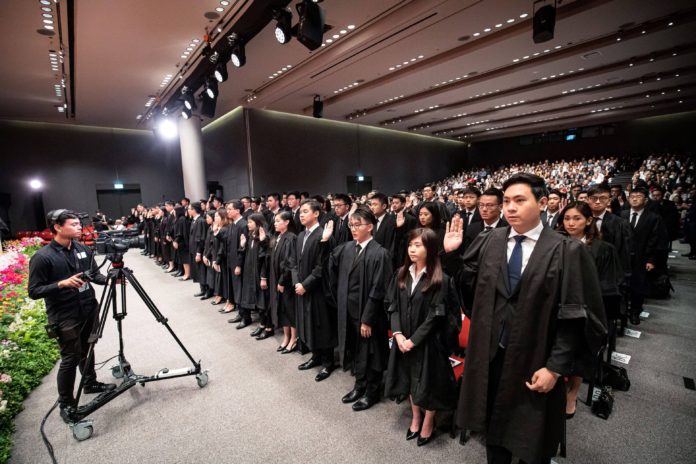
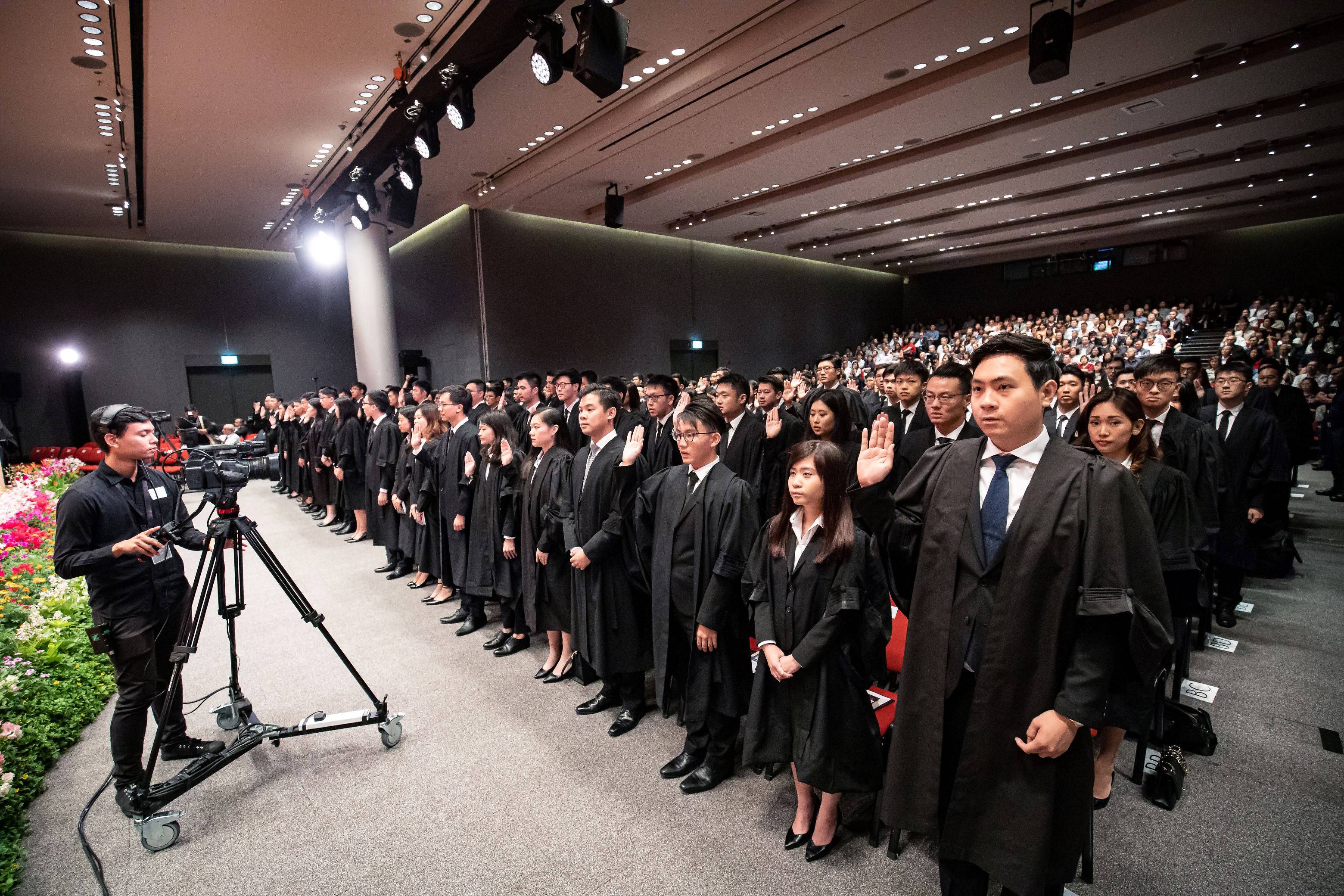
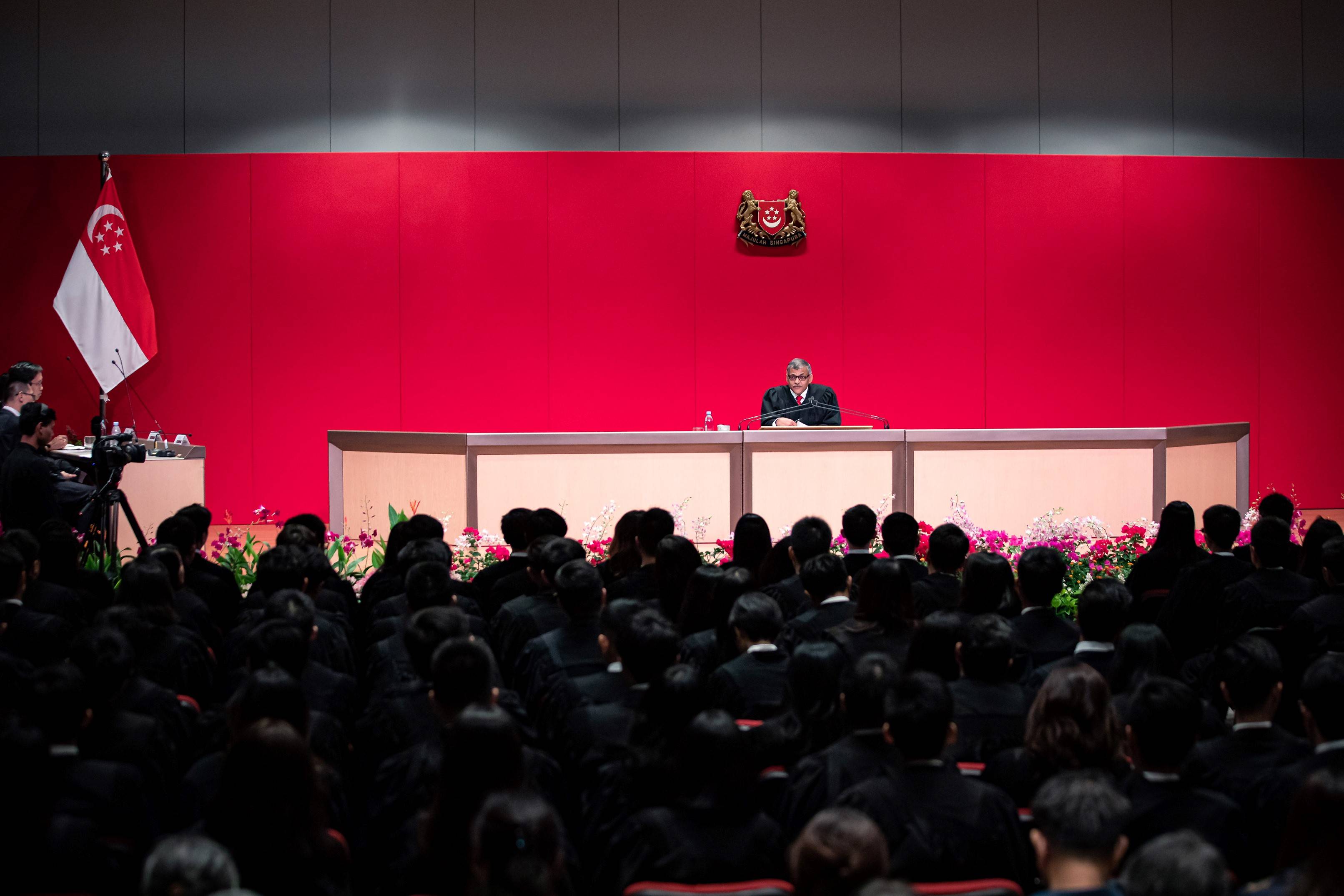
More than 520 newly appointed advocates and solicitors are called to the Bar in 2019. (Photo: Supreme Court)
This is the first of three Mass Call sessions, during which more than 520 newly appointed advocates and solicitors will be called to the Bar.
ACCEPT AND ADAPT TO “NEW REALITY”
Chief Justice Menon has, since 2016, spoken several times about the impact of technology on the legal industry. At the opening of that legal year, he said that the courts of the future will be very different from their present-day iterations.
Last year, he stressed that “we must begin to imagine what (technological disruption) will mean for the practice of law” with some urgency.
At the opening of this legal year, Chief Justice Menon said with the development of legal tech, “a culture of ‘self-sourcing’ will likely take hold amongst members of the public”.
Chief Justice Sundaresh Menon tells newly minted lawyers how technology has transformed the legal industry both in Singapore and abroad. (Photo: Supreme Court)
At Tuesday’s Mass Call, he urged the newly minted lawyers to accept and adapt to the “new reality”, saying that while not all of them can or will become proficient coders, they should strive to acquire “an effective and nuanced understanding of the interface between technology and the law”.
He encouraged them to be “agile learners”, and expand learning to fields beyond law.
“Abandon the assumption that all you need to know to become a good lawyer is simply the law. If that has ever been true, it certainly no longer is,” he said.
Concluding his speech, Chief Justice Menon said that although the legal profession came to be known as a “learned profession” centuries ago, “we inhabit a different age, and it will take much more than it used to to rightfully retain the privilege of that appellation”.
“In this age of change, we can only remain a ‘learned profession’ by becoming a profession of learners.”
SINGAPORE: A 43-year-old man has been arrested after a safe containing about S$16,900 in cash was taken from a restaurant in VivoCity.
The police said they were alerted to a case of housebreaking at 8.40am on Monday (Aug 26).
“A safe containing cash amounting to around S$16,900 was purportedly stolen,” said the police.
A safe containing about S$16,900 in cash was taken from a restaurant in VivoCity. (Photo: Singapore Police Force)
About S$14,000 in cash was recovered. (Photo: Singapore Police Force)
The man was arrested later that day. About S$14,000 in cash was recovered, said the police.
The suspect will be charged on Wednesday with housebreaking and theft by night.
If found guilty, he could be fined and jailed for between two and 14 years.
The police advised members of the public not to keep large sums of cash and valuables in commercial premises, to secure doors and openings before leaving such premises and to install burglar alarms and other security aids to cover access points into the premises.
SINGAPORE: More than 11,000 cartons of duty-unpaid cigarettes hidden inside paper rolls were seized at Woodlands Checkpoint by officers, the Immigration and Checkpoints Authority (ICA) said in a news release on Tuesday (Aug 27).
At about 6.20am last Friday, officers directed a Malaysia-registered lorry for further checks after they noticed anomalies in the scanned images of a consignment of paper rolls.
During the checks, a total of 11,054 cartons and 402 packets of duty-unpaid cigarettes were found hidden inside the consignment.
The driver, a 31-year-old Malaysian man, was arrested and the case was handed to Singapore Customs for further investigation.
ICA said the total duty and Goods and Services Tax (GST) evaded amounted to about S$1,075,010 and S$78,610 respectively. Investigations are ongoing.
This is the second-largest haul of duty-unpaid cigarettes uncovered by ICA within a month.
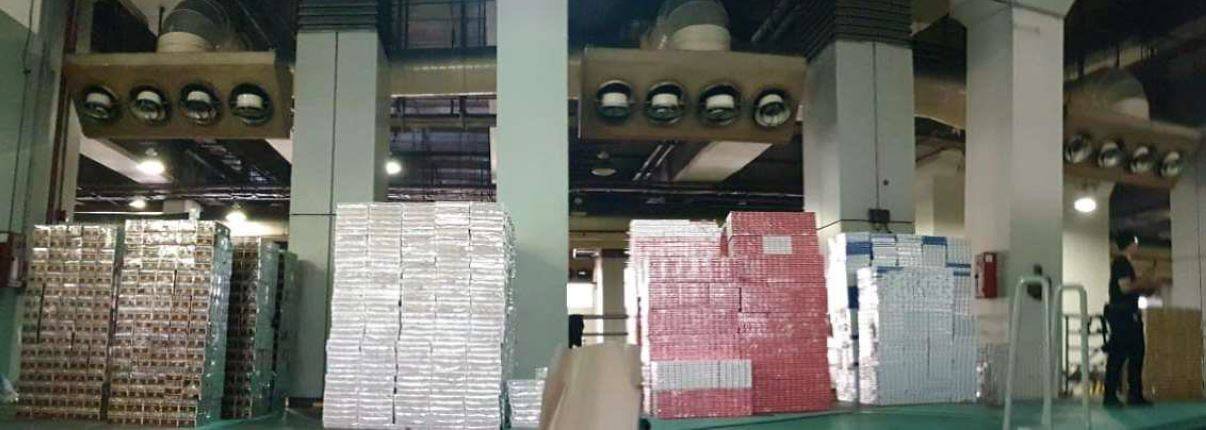
The Malaysian-registered lorry driven by a 31-year-old Malaysian man was carrying more than 11,000 cartons of duty-unpaid cigarettes hidden inside paper rolls. (Photo: ICA)
A total of 11,054 cartons and 402 packets of duty-unpaid cigarettes were seized. (Photo: ICA)
“The same methods of concealment used by contraband smugglers may be used by terrorists to smuggle arms and explosives to carry out attacks in Singapore,” the authority said.
“ICA will continue to conduct security checks on passengers, cargos and vehicles at the checkpoints to prevent attempts to smuggle undesirable persons, drugs, weapons, explosives and other contrabands across our borders.”
SINGAPORE: Roaming peacocks, meandering tourists and curbside bushes were all causing headaches this week for operators of one of the first autonomous bus shuttle services to hit public roads in Singapore.
Passengers found themselves almost outnumbered by bus stewards checking their seat belts were tightly fastened as ST Engineering began testing four vehicles in Sentosa.
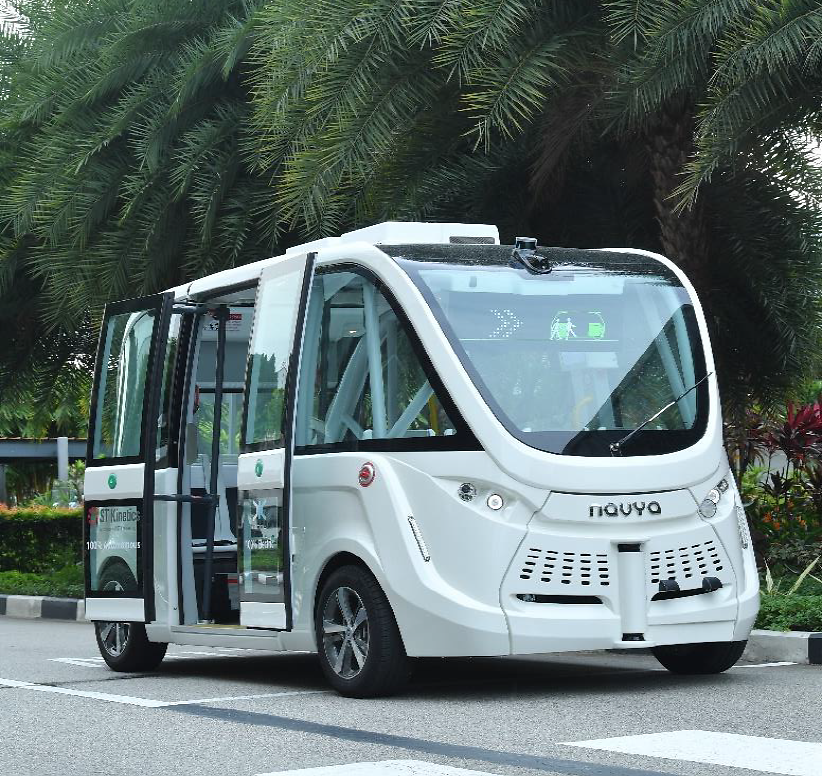
The autonomous vehicles – comprising two minibuses and two smaller shuttles plied popular destinations along a 5.7km route, including Siloso Point, Beach Station, Palawan Beach, Tanjong Beach and Sentosa Golf Club.
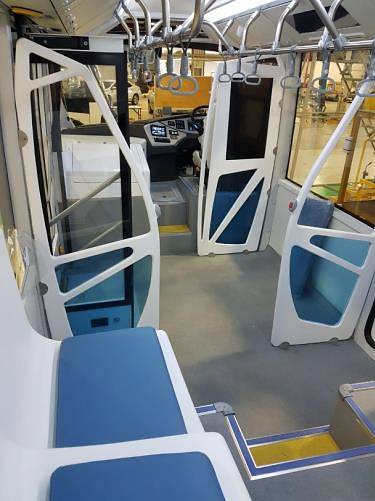
Singapore’s first on-demand autonomous shuttle public trial will run from Aug 26 to Nov 15. (Photo: MOT, SDC, ST Engineering)
Singapore, ranked second behind the United States in its preparedness for wide-scale driverless transport in a recent KPMG report, plans to deploy autonomous buses in three districts of the island from 2022.
The latest trial, due to run until Nov 15, is being closely watched by tech firms and automakers around the world. It was launched last Tuesday following more than a year of testing.
“Public safety is our top priority,” Singapore’s transport ministry said in a joint statement with ST Engineering.
Tan Nai Kwan, chief robotics engineer at ST Engineering’s Land Systems arm, said the test was “nerve-wracking”, but stressed the safety precautions taken.
Those included a human driver hovering over the self-rotating steering wheel, ready to snatch back control in an instant.
Each shuttle also has a vehicle fault system that will immediately alert the safety driver of any faults, and cede control of the vehicle to him.
The vehicles come equipped with various technologies to help them sense their environment and identify appropriate navigation paths, obstacles and signs, it was previously reported. This helps them navigate traffic as well as handle a range of complex environments, such as roundabouts, the release said.
Singapore’s first on-demand autonomous shuttle public trial will run from Aug 26 to Nov 15. (Photo: Jeraldine Yap)
Four autonomous vehicles (AVs), comprising two minibuses and two smaller shuttles, will be deployed for the trial. (Photo: MOT, SDC, ST Engineering)
On the first day of the trial on Monday, roadside bushes lightly buffeted by the wind and wandering beachgoers were enough to trigger the bus’ many sensors, bringing it to a juddering halt as it trundled along quiet roads.
Tan said the most “dangerous beasties” encountered so far were the roaming peacocks which fly unexpectedly into the road.
The service is free and will operate for four hours on weekdays, from 10am to 12pm and from 2pm to 4pm. The shuttle buses will not be available during weekends and public holidays.
A similar test is underway on roads around the National University of Singapore’s Kent Ridge campus. Tan said with advances in technology, the plan is for safety drivers to eventually retreat to remote control centres although he did not put a time frame on that happening.
In 2016, a self-driving car being tested in Singapore collided with a truck as it was changing lanes. The were no injuries but similar accidents in the US have been fatal.
Still, the few intrepid tourists who managed to navigate the on-demand service on the trial’s first day in Singapore did not seem fazed by their robotic navigator.
“It’s pretty cool but at the same time it feels similar to a normal bus,” said Stephen Byrne, a 20-year old student from Ireland. “I suppose that is a good thing, it’s not too much of a shock. It’s probably safer than being in some human’s hands.”
SINGAPORE: Seventeen people have been arrested for selling and possessing chewing tobacco products in Little India and Jurong, said the Health Sciences Authority (HSA) on Tuesday (Aug 27).
A total of 21,036 sachets of chewing tobacco were seized during the raids on Sunday and Monday by HSA and the Singapore Police Force. The tobacco had a street value of S$42,000, according to HSA.
Chewing tobacco seized at Little India. (Photo: HSA)
Two of the sellers caught were social visit pass holders and have been repatriated.
At Little India, officers found the chewing tobacco hidden under a metal plate along a pavement, as well as in a haversack on a shoe rack in a temple.
At Jurong, officers seized the chewing tobacco at a storage facility.
Chewing tobacco hidden in a haversack placed on a shoe rack at a temple. (Photos: HSA)
The suspects are currently assisting with investigations.
The two-day operation was the largest to date in curbing the selling of Khaini tobacco, with the highest number of sellers caught, said HSA.
Khaini is a type of chewing tobacco that is prohibited in Singapore. It consists of moist, dark brown tobacco leaves, mixed with slaked lime or spices.
The chewing tobacco seized at the storage facility in Jurong. (Photo: HSA)
“Chewing tobacco like Khaini, Gutkha and Zarda has been found to cause oral cancer and is prohibited under the Tobacco (Control of Advertisements and Sale) Act,” said HSA.
Anyone convicted of importing or selling these products faces a jail term of up to six months, a fine of up to S$10,000, or both. The penalties are double for repeat offenders.
Those found guilty of possessing, purchasing or using the products can also be fined up to S$2,000.
SINGAPORE: Every Mid-Autumn Festival, many in Singapore buy and gift mooncakes to celebrate the occasion. Most of them come enclosed in fancy boxes, with colourful and lacquered packaging.
And each year, the mooncakes seem to come in more extravagant packaging. But as these retailers compete to win over consumers with the most extravagant designs, the resulting packaging waste from these mooncake boxes can be harmful to the environment, said experts.
About 40 per cent of the packaging is unnecessary and wasteful, said Mr Liow Chean Siang, head of environmental certifications at the Singapore Environment Council (SEC).
He added: “Over the years, packaging for mooncakes has become so much more elaborate and fancy, resulting in more paper and plastic being used. Besides the presentation box itself, more plastic and paper are also used for the inner packaging to keep each mooncake in place to prevent spoilage, contamination and damage during transportation.
“All this adds up to more waste being generated than necessary.”
A spokesman from Tay Paper Recycling told CNA that it receives slightly less than five tonnes of paper and cardboard waste from mooncake boxes every year. Tay Paper Recycling is one of the major paper recycling companies in Singapore; it processes about 5,000 to 8,000 tonnes of waste paper monthly.
He added that mooncake boxes can be difficult to recycle due to the laminate that makes the boxes glossy. “We generally do not accept them. There is not much we can do but to send them for incineration.”
And each tonne of paper used is equivalent to 17 trees, said Mr Liow.
“With the growth of green consumerism, we have the power to say no to elaborate packaging, and send a clear message to manufacturers to reduce product packaging to a minimum and cut down on unnecessary wastage,” he added.
“If we can reduce paper consumption, we can reduce the number of trees from being cut down.”
Mooncake retailers CNA spoke to acknowledged that mooncake packaging can be made more environmentally friendly, but also highlighted the importance of design and food safety.
Mr Cavaliere Giovanni Viterale, general manager of Fullerton Hotels and Resorts, said their mooncakes this year are packed in cardboard boxes which are “95 per cent recyclable and 100 per cent reusable”.
“The team designed the boxes such that they can be repurposed and reused. Our premium boxes are designed to be reused as jewellery boxes. Our limited edition boxes, meanwhile, are collectibles. This year’s edition is designed as a carry case with a mirror, perfect for reuse as a beauty kit.”
He added that the team is currently exploring a fully recyclable mooncake box for next year, but highlighted that retailers have to strike a balance between reducing packaging waste and ensuring quality, food safety and hygiene.
Hilton Singapore has released a fully recyclable, food-grade aluminium tiffin carrier mooncake box this year. (Photo: Hilton Singapore)
A Hilton Singapore spokesman said the team “worked closely” with its packaging supplier to create a mooncake box that is recyclable, reusable and can be repurposed for other uses.
The hotel’s mooncakes come in a four-tier round floral embossed tiffin carrier made from 100 per cent fully recyclable, food-safe aluminium material, meant to be repurposed as a takeaway food carrier, he said.
The spokesman also highlighted that the team is considering using food-grade paper instead of plastic packaging when wrapping individual mooncakes.
Chairman of the Packaging Council of Singapore Betty Tan said it may be difficult for retailers to avoid fanciful packaging.
“The trend now is to give these mooncakes as a gift. In order to attract consumers to purchase these mooncakes, the presentation and marketing must be eye-catching. And the only way to do this is to have attractive packaging to gift wrap these mooncakes,” she added.
USING LESS IS STILL BEST
Mr Liow believes “using less is still the best”, adding that the SEC strongly believes that reducing usage is always preferred over reusing and recycling.
“Packaging should be functional. If retailers and manufacturers need to make it more fancy, then one way is to design the boxes to have dual use, which some are already doing, but it is still not preferred as additional resources are used,” he added.
Ms Melissa Tan, chairman of the Waste Management & Recycling Association of Singapore, agreed that manufacturers should cut down on unnecessary packaging because not everything can be recycled.
“Most of the packaging can be recycled as long as it is not contaminated by food waste like remnants of mooncakes and oil stains, and the paper or cardboard is not covered by a layer of glossy varnish or waterproof wax,” she added.
“Besides contributing to less generation of waste, the manufacturers should let the quality of their products speak for themselves to attract customers, rather than the design of the packaging. The outward appearance of the product should be decent, but it need not be ostentatious and ultimately, wasteful.”
It “would be ideal” if consumers could peel off the laminate before sending their unwanted mooncake boxes for recycling, said the spokesman for Tay Paper recycling.
“Remove all non-paper materials such as plastic stickers, laminate, cushioning materials. Manufacturers could adopt a package labelling scheme similar to the one in Australia to better indicate if the packaging is recyclable or if steps are needed before sending them for recycling,” he added.
Mr Liow said: “Eating mooncakes used to be a delicacy eaten once a year as part of the tradition of the Mid-Autumn Festival. Over the years, the custom seems to have changed. Today, buying expensive mooncakes is often about gifting to impress someone and not about the festival, for example, given as corporate gifts by businesses to their clients.
“Let us start to do our part for the environment by being more conscious of our consumption and voice it out through our choice of purchases.”
SINGAPORE: Every Mid-Autumn festival, many in Singapore buy and gift mooncakes to celebrate the occasion. Most of them come enclosed in fancy boxes, with colourful and lacquered packaging.
And each year, the mooncakes seem to come in more extravagant packaging. But as these retailers compete to win over consumers with the most extravagant designs, the resulting packaging waste from these mooncake boxes can be harmful for the environment, said experts.
About 40 per cent of the packaging is unnecessary and wasteful, said Mr Liow Chean Siang, head of environmental certifications at the Singapore Environment Council (SEC).
He added: “Over the years, packaging for mooncakes has become so much more elaborate and fancy, resulting in more paper and plastic being used. Besides the presentation box itself, more plastic and paper are also used for the inner packaging to keep each mooncake in place to prevent spoilage, contamination and damage during transportation.
“All this adds up to more waste being generated than necessary.”
A spokesman from Tay Paper Recycling told CNA that they receive slightly less than five tonnes of paper and cardboard waste from mooncake boxes every year. Tay Paper Recycling is one of the major paper recycling companies in Singapore, it processes about 5,000 to 8,000 tonnes of waste paper in Singapore monthly.
He added that mooncake boxes can be difficult to recycle due to the laminate that makes the boxes glossy. “We generally do not accept them. There is not much we can do but to send them for incineration.”
And each tonne of paper used is equivalent to 17 trees, said Mr Liow.
“With the growth of green consumerism, we have the power to say no to elaborate packaging, and send a clear message to manufacturers to reduce product packaging to a minimum and cut down on unnecessary wastage,” he added.
“If we can reduce paper consumption, we can reduce the number of trees from being cut down.”
Mooncake retailers CNA spoke to acknowledged that mooncake packaging can be made more environmentally friendly, but also highlighted the importance of design and food safety.
Mr Cavaliere Giovanni Viterale, general manager of Fullerton Hotels and Resorts said this year, their mooncakes are packed in cardboard boxes which are “95 per cent recyclable and 100 per cent reusable”.
“The team designed the boxes such that they can be repurposed and reused. Our premium boxes are designed to be re-used as jewellery boxes. Our limited edition boxes, meanwhile, are collectibles. This year’s edition is designed as a carry case with a mirror, perfect for reuse as a beauty kit.”
He added that the team is currently exploring a fully recyclable mooncake box for next year, but highlighted that retailers have to strike a balance between reducing packaging waste, and ensuring quality, food safety and hygiene.
Hilton Singapore has released a fully recyclable, food-grade aluminium tiffin carrier mooncake box this year. (Photo: Hilton Singapore)
A Hilton Singapore spokesman said the team “worked closely” with its packaging supplier to create a mooncake box that is recyclable, reusable and can be repurposed for other uses.
The hotel’s mooncakes come in a four-tier round floral embossed tiffin carrier made from 100 per cent fully recyclable, food-safe aluminum material, meant to be repurposed as a takeaway food carrier, he said.
The spokesman also highlighted that the team is considering using food-grade paper instead of plastic packaging, when wrapping individual mooncakes.
Chairman of the Packaging Council of Singapore Ms Betty Tan said it may be difficult for retailers to avoid fanciful packaging.
“The trend now is to give these mooncakes as a gift. In order to attract consumers to purchase these mooncakes, the presentation and marketing must be eye-catching. And the only way to do this is to have attractive packaging to gift wrap these mooncakes,” she added.
USING LESS IS STILL BEST
Mr Liow believes “using less is still the best”, adding that the SEC strongly believes that reducing usage is always preferred over reusing and recycling.
“Packaging should be functional. If retailers and manufacturers need to make it more fancy, then one way is to design the boxes to have dual use, which some are already doing, but it is still not preferred as additional resources are used,” he added.
Ms Melissa Tan, chairman of the Waste Management & Recycling Association of Singapore, agreed that manufacturers should cut down on unnecessary packaging because not everything can be recycled.
“Most of the packaging can be recycled as long as it is not contaminated by food waste like remnants of mooncakes and oil stains, and the paper or cardboard is not covered by a layer of glossy varnish or waterproof wax,” she added.
“Besides contributing to less generation of waste, the manufacturers should let the quality of their products speak for themselves to attract customers, rather than the design of the packaging. The outward appearance of the product should be decent, but it need not be ostentatious and ultimately, wasteful.”
It “would be ideal” if consumers could peel off the laminate before sending their unwanted mooncake boxes for recycling, said the spokesman for Tay Paper recycling.
“Remove all non paper materials such as plastic stickers, laminate, cushioning materials. Manufacturers could adopt a package labelling scheme similar to the one in Australia to better indicate if the packaging is recyclable or if steps are needed before sending them for recycling,” he added.
Mr Liow said: “Eating mooncakes used to be a delicacy eaten once a year as part of the tradition of the Mid-Autumn Festival. Over the years, the custom seems to have changed. Today, buying expensive mooncakes is often about gifting to impress someone and not about the festival, for example, given as corporate gifts by businesses to their clients.
“Let us start to do our part for the environment by being more conscious of our consumption and voice it out through our choice of purchases.”