JOHOR BARU – Johoreans are sceptical that the 50 additional motorcycle lanes at the Causeway and the Second Link announced under Budget 2020 will make much of an impact on the congestion.
Technician K. Sushtendran, 40, said while he welcomed the government’s announcement, he believed that the effect would not be significant.
“Hundreds of motorcyclists cross both the Causeway and Second Link every day. I do not think that extra 50 lanes will make any difference. It may help to reduce a bit of the congestion but the problem will still remain, ” he said.
“The more urgent thing to look into is ensuring that there are enough officers to man the counters, ” Mr Sushtendran.
SINGAPORE: She had 48 hours before the patient was going to die.
That was all the time Melissa Chew had to convince the man’s family to see him on his deathbed. She had to tell them the story they never knew, which he told her — about why he had abandoned them.
His eldest child was 10 years old, and the youngest, only three, when a fortune-teller told him “his presence in the house would bring bad luck to the family”. So he left, and they were left with questions and anger.
But “throughout the years”, even when his children were grown-ups, he had been “secretly watching them” and taking photos of them.
“They’d done well in life, but they also had struggles,” said Chew, who had traced the family and wanted to show them the photos before he died of cancer.
Nobody should die alone — that is what the principal medical social worker at Tan Tock Seng Hospital, and her counterparts, “feel very strongly about”, she explained.
“The other thing is unfinished business. If family relationships break down because of past issues, sometimes it’s also the patient’s yearning to … make amends (and) leave on a good note.”
Whether it is about reconciling a family or tracing the next of kin, even after a patient’s death, the 39-year-old sees it as a “very important” part of her job.
That role in the end-of-life process means she is sometimes the last hope for the dying and the dead in ageing Singapore.
Melissa Chew.
ONE LAST VISIT
The trend towards seniors here living alone is something she notices in her job.
Some of them have a domestic helper or live with a distant relative. Some are also estranged from their family, but no case so strange to her as the one she described above.
At first, the cancer patient did not want his family to know his side of the story. All that Chew could do was update his eldest child — the only one willing to be contacted — about his condition.
But she persisted for three weeks, until the man relented with a couple of days to live. “And I shared the story. So the eldest son broke down in front of me. It was very, very difficult,” she recounted.
“(He) told me he had 10 years of his life of very good memories of the father.”
She was there when he visited the hospital and told his father he “couldn’t understand why he had believed the fortune-teller and left them”.
“But the father said to him, ‘You’re doing very well now — it’s because I left.’”
Though the son could not convince his siblings nor his mother to make one last visit, they did attend the man’s funeral wake.
Chew drawing a patient’s family tree.
There are families, however, who want nothing to do with a dying or dead patient, despite a medical social worker’s efforts.
“There’s no trick to it — it’s not that we didn’t try hard enough. Sometimes the past problems are so bad that there’s no way (the relationship) can recover,” said Chew, citing domestic violence and extramarital affairs as tough cases.
She and her colleagues encounter “lots of emotions” when they face fractured families.
“But after a few hours of calming down and reflecting, the family (may) call back and say, ‘I’m sorry. I shouldn’t have slammed the door (in your face), but I haven’t seen him for a very long time,’” she said.
The “breakthroughs” come when she sees families reconcile. But even if a family steps forward only after the patient has died, that is a “triumphant” moment in her job.
“It’s very ironic because we’re dealing with death,” she admitted. “But it’s the sense that, ‘hey, the person isn’t going on this last journey on his own’ — that (during) the cremation process, the last rites, the family’s there.
“It’s the sense that I couldn’t save his life — I can’t undo that — but at least I can make the last journey respectable and dignified.”
WATCH: She tracks down long-lost families of the dead (4:52)
CONTACT TRACING
While it is one thing when patients can tell her about their relatives, it is another when they cannot and had come in without any identification. And some of them die suddenly.
That is when medical social workers like her must play sleuth to track down the next of kin — like the time an elderly man had a heart attack on his way to buy dinner.
There was only a key pouch on him, but that was enough to provide “preliminary information”: A telephone number written on a pocket calendar. The number belonged to a friend he had met just days earlier.
“So the friend had to help us but vaguely gave us certain information,” recounted Chew.
With a couple of housing blocks given as the man’s possible address, and uncertainty as to which storey, she went to the nearby neighbourhood police post “to see whether anyone had lodged a missing person report”.
“That’s where we met the family,” she said. “We were there at the same time.”
The contact tracing took a few hours in this case, but it usually involves “many days of hard work”, going to the site where the patient was picked up and again getting doors slammed in her face.
Sometimes medical social workers must check with a patient’s neighbours for contact tracing.
For instance, a patient may not have changed the address on his identity card. “When you knock and say, ‘Do you know so and so’, and people know you’re from a hospital … sometimes they don’t react very well,” she cited.
“Sometimes if we get called in the middle of the night … they’re very upset, because they don’t know the person.”
The longest she has taken to track down a deceased person’s next of kin was a week.
The patient, who was living alone, had a brother, and all she knew about him was the coffee shop he went to, as gleaned from an 80-year-old friend of the patient.
But the brother was overseas at the time, so she had to wait until the patient’s friend saw him again.
“He didn’t even know the patient was back in Singapore. Because they had some disagreement, the patient had left for overseas. The family … kept thinking that he was away,” she recalled.
“Unfortunately, the patient had already been cremated then.”
She stressed that it was vital for medical social workers to swing into action when contact tracing is needed.
“There’s a difference between seeing your loved one just passed away and there’s still some warmth, compared to a person being in the mortuary for one or two days,” she said.
TENDING TO THE LIVING
Chew had always wanted a fast-paced job, and it has now been 16 years for her as a medical social worker.
Over the years, contact tracing has become “a little bit easier because our patients are quite well known to a lot of services nowadays”, such as senior activity centres, family service centres and other agencies.
Death and bereavement cases, however, make up on only 20 per cent of her work. Her other kinds of case management include providing financial assistance for patients.
But families may also need financial assistance when a patient dies, especially if he or she was the sole breadwinner. They could need grief counselling too.
So medical social workers are there when doctors inform relatives of a death, especially sudden deaths.
The most traumatic case Chew saw was two years ago when a 16-year-old boy — her youngest patient up until then — who had collapsed outdoors died in the A & E after resuscitation efforts failed. He was the only child.
“It was very difficult for the mother. She was just breaking down,” she recalled. “(She was) even saying that … (she didn’t) want to live any more.”
In such cases, TTSH’s medical social workers are prepared to accompany the family home. But the team managed to identify “strong pillars” — relatives who could “stabilise the family”.
“In a case whereby there’s very good family support, you basically only need to … guide and teach the family members what they need to look out for, what they need to say (and) what they need to do,” Chew explained.
Close collaboration with the mortuary staff is also needed, to prevent any hiccups for a grieving family.
“Every single thing we do, every single thing we say, matters because they’d always remember that process,” she added. “What social workers can do is to ensure that the entire process is smooth.”
These professionals can also do follow ups after the funeral, “to make sure the family is okay”.
Chew kept in contact with the family who lost their teenager for three months. Her longest case, which involved “complicated grief” and psychiatric intervention, lasted a year.
The work she does to help all these families is “very meaningful” to her, and it also remains “very exciting”. She said: “Every single day, I have no idea what’s going to happen.”
That is what she reminds her team too. “I keep telling my social workers, ‘An accident, a split second, the family’s lives change forever,’” she shared.
“Life’s very precious. That’s why I make it a point to tell my father and mother I love them a lot — every single morning before I leave the house.”
SINGAPORE: The title of my first novel, My Mother-In-law’s Son, always perplexed people. Before most people read the book, they will ask me: “Why don’t you just say brother-in-law or husband?”
The novel is set in post-war Singapore in a Chinese household and the story is told by Swee Gek, a Peranakan daughter-in-law. After my readers have read the novel, they finally get the subtle inference of the title – that Swee Gek’s husband never really belonged to her but continued to be his mother’s child.
Mothers-in-law did rule the roost, especially in the old days. So, Swee Gek’s husband was always the son first and rarely the husband.
Have things changed? Of course, they have.
In 1961, when the Women’s Charter was passed, life changed for women in Singapore. The new law protected women and children. It did not permit a man to have more than one wife at the same time.
There was also the added benefit that the majority of women started to earn their own income. This took away a great deal of insecurity for them.
HOW THE DRAGON MOTHER-IN-LAW CAME TO BE
But in the days of the Dragon Mother-in-law, the woman had no say if her husband chose to have several wives. If she was not working, she had no income of her own and was thus dependent on the man.
Gender roles were clearly marked. The man’s role was to bring home the money; the woman’s role was to bear children, look after her husband and create a beautiful, comfortable home for him to come back to.
The woman had to work exceptionally hard to ensure her husband was less likely to want another wife. So, she excelled in cooking delicious food, kept herself pretty and knew how to keep her husband satisfied in bed. Her power was thus in the household.
When such a woman provided her husband with an heir, her good fate was sealed. Even if her husband were to stray, she held the golden key – a son. From this developed what I call The First Son Syndrome. Or worse, The Only Son Syndrome.
It was in the woman’s interest to pander to her son, for if her husband should die, it was the son who would in turn look after her. In wealthy households, such sons became utterly spoilt. But even in poor villages, sons get the best food not allocated to daughters.
So, when a daughter-in-law appeared on the scene, Mother-in-law had to control the daughter-in-law so that she would not usurp her position in the household. This was particularly so if Daughter-in-law, after marrying, came to live with her in-laws.
An older woman arguing with daughter in law. (Photo: Hanidah Amin)
Thus, began this wage of war between the two throughout history. Mother moaned to the son that his wife behaved badly; Wife pillow-talked her husband that Mother-In-law was merciless.
In Peranakan-speak, a daughter-in-law is a menantu. But if Mother-in-law was mad at her, she would call her an hantu, a devil. Peranakans have a penchant for rhyming words.
It is ironic that the bullying Mothers-in-law had forgotten that once, when she was Daughter-in-law, she were bullied too yet has morphed into becoming a bully herself now. Sometimes, the poor Son got so caught by the cross-fire that he stayed away from home.
Photo illustration of a woman arguing with her husband. (Photo: Try Sutrisno Foo)
A LOCKED-HORN BATTLE
The hereditary locked-horn battle has never really gone away even in modern times.
Though Mothers-in-law is no longer as vulnerable as before, she still wields power over her son. Especially if he is her First-born Son. Or worse, her Only Son.
She treats him as precious, she is subservient to him, and she caters to his comfort so long as she can control him. So, any wife that comes on the scene has to learn to navigate this potentially explosive landscape.
If Daughter-in-law is a kind and good woman, she has to tug and pull as though she’s flying a kite, know when to assert herself yet showing deference to Mother-in-law.
These days, most young women are working women and so, are not entirely dependent on their husband’s income so she has more say.
Yet, in order for there to be peace and harmony, Daughter-in-law needs to dance a delicate dance between husband and Mother-in-law.
In the latter’s presence, some husbands undergo a kind of transformation and revert to a child in his mother’s presence. So, Daughter-in-law must practise some patience and decorum and allow her Mother-in-law some rope.
Photo illustration of a couple arguing. (Photo: Try Sutrisno Foo)
She should not possess her husband so tightly that Mother-in-law feels threatened and pushed away. She should never, never criticise her husband in front of Mother-in-law. Use the private bedroom for that or when you are out.
Daughter-in-law can do her best to include Mother-in-law in certain outings, like Sunday lunch or dinner, remember crucial days like birthdays, anniversaries or special feast or worship days. Try to empathise with Mother-in-law, feel her fear of losing her son entirely and thus her security.
For one day, you too might become a mother-in-law with the same fear of losing your son to your daughter-in-law.
MOVING INTO A FOREIGN COUNTRY
If Daughter-in-law moves in to a home that belonged to Mother-in-Law, she has to realise that she is entering a foreign country whose territory has been under Mother-in-Law’s jurisdiction for years before her arrival.
To try to change anything without discussing with Mother-in-law first is to invite wrath. The best thing to do is to set some boundaries, like the bedroom, which is sacrosanct to you. Then if you must, slowly and gently ring in the changes.
An older woman and daughter in law ignoring each other. (Photo: Hanidah Amin)
Any modern Mother-in-Law of any worth will know that Daughter-in-law now holds the golden key – her Son.
Unlike the old days, where a daughter-in-law is entirely dependent on her husband’s income, times have changed. So, the old act of the Dragon Mother-in-law no longer has the same bite as before.
If a woman wants to continue to see her son, and in future, her grandchildren, she needs to know which piper is playing the tune. She cannot afford to antagonise the modern Daughter-in-law.
TAKE HEED DAUGHTER-IN-LAW
Sadly, these days, there are many instances where Daughter-in-laws not only do not play the archaic, subservient roles but they assert a superior status. Some neglect to upkeep the role of mediator or social planner of visits.
This is particularly true of high-powered Daughters-in-law whose income is much higher than her husband’s.
Photo illustration of an upset wife and an angry husband. (Photo: Try Sutrisno Foo)
I have heard of grandmothers and grandparents who do not get to see their grandchildren because daughters-in-law do not make the effort to let them connect. The sons either feign busy work-lives or do not make any effort because they are too weak to fight their wives over their mothers or too afraid to rock the boat.
Ultimately, the loss is the grandchildren’s. They miss out on a relationship with one grandmother or a set of grandparents.
It is not to Daughter-in-law’s benefit to create this chasm of estrangement. Some day when the kids are grown up, they will question why they have not known their father’s mother or parents. So, Daughters-in-law beware.
Joy in the family comes from a union of varied characters practising tolerance of their differences. People are more educated now. We can afford to bury the old hatchet of insecurity and possessiveness.
We can accept that Mothers-in-law and Daughters-in-law have their own roles to play and appreciate this fact.
Josephine Chia is author of many books, most famously Kampong Spirit: Gotong Royong, Goodbye My Kampong and the children’s edition, Growing Up in Kampong Potong Pasir, and most recently, Big Tree in a Small Pot.
SINGAPORE: It was a typical Friday morning for 85-year-old Leung Fong Yee, who shuffled slowly about the Choa Chu Kang apartment doing her daily chores.
She greeted this reporter without emotion, and did not seem to mind the company, although her 50-year-old daughter-in-law Stella Lin Bin said it took time, patience and medication for the elderly woman to adjust to her diagnosis of dementia and depression.
Describing her mother-in-law as a strong, capable woman, Stella said the octogenarian used to visit Chinatown on her own, but has stopped doing so as she could lose her way now.
Today, she remembers only two routes: One to a nearby coffee shop, and another to the home of a fellow senior whom she is fast friends with.
Already, Mdm Leung is starting to forget people, said Stella. She remembers those she sees on a daily basis, but cannot remember her son who lives in Hong Kong and those she sees only rarely.
Stella noticed a change in her mother-in-law’s behaviour about three years ago.
Mdm Leung, a Singapore permanent resident, would repeat old stories of her time in Hong Kong, mixing up her memories from the Second World War, and the 1967 leftist riots in the former British colony.
On top of this, she would claim that her belongings had gone missing, and asked family members “which auntie took my things”, and spewed negative comments.
Madam Leung Fong Yee going about her daily chores. (Photo: Rauf Khan)
Sensing something amiss, Stella took her mother-in-law to Choa Chu Kang Polyclinic.
In the six months that followed, Mdm Leung’s condition worsened. She threw tantrums, thinking that “everyone was her enemy”, and became increasingly negative.
Stella would be woken up in the middle of the night by the sounds of the elderly woman crying, and find her things missing only to learn later that her mother-in-law had taken them.
Specialists later confirmed that Mdm Leung was suffering from dementia and depression, and she was prescribed medication.
Mdm Leung was also referred by the polyclinic to non-profit organisation Fei Yue Community Services, which provides free counselling and checks up for dementia patients.
In the beginning, she would not take the medication properly, taking it all in one go and making snide remarks in Cantonese such as “you’re treating me like I’m sick”.
It took some time for Mdm Leung to open up to the workers from Fei Yue, but she did so eventually and her condition has now stabilised thanks to a combination of medication, counselling and shifts in lifestyle that Stella has made.
Notes left in the living room for family members to remember the tasks needed for Mdm Leung. (Photo: Hani Amin)
“Now we know it’s a sickness, we will know to comfort her, and she seldom flares up,” said Stella.
Mdm Leung takes pride in being able to wash the dishes, do the laundry and mop the floor, tasks that Stella lets the older woman do, even though she says “it’s easier for me to do it, since I can do it quickly”.
The little duties entrusted to her let her feel that she has responsibilities, explained Stella.
“It makes her feel like: ‘I’m very important in this house, I have a contribution, I’m still OK’,” she said.
Stella also encourages Mdm Leung to have more social interaction, and entrusts her with the care of a cat – a duty the elderly woman takes seriously.
As dementia is an incurable disease, doctors have told the family that Mdm Leung’s condition is likely to progress, but the goal is to delay it.
Madam Leung Fong Yee occupies herself cleaning the house, a task she takes great pride in. (Photo: Hani Amin)
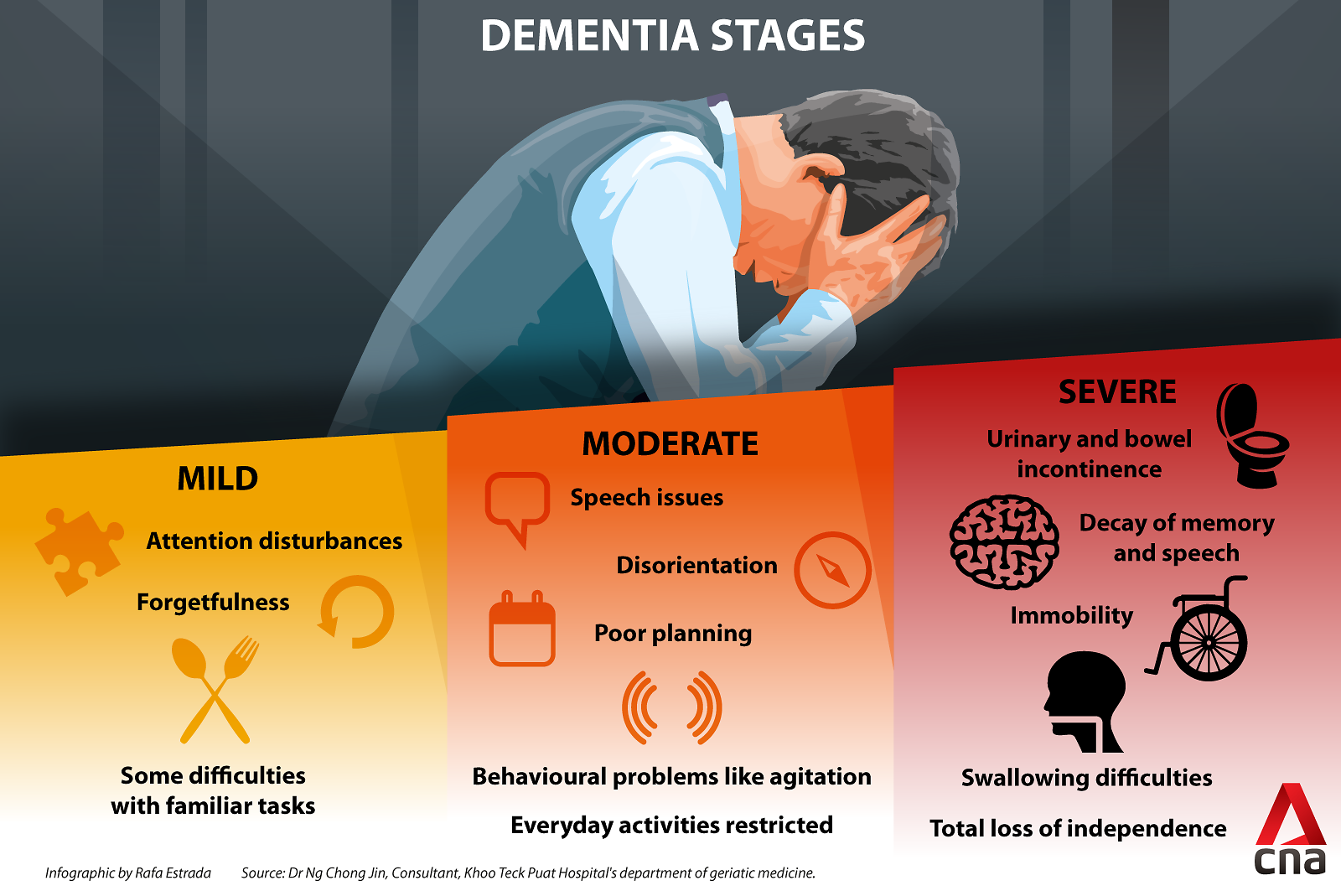
Mdm Leung’s situation is not rare: One in 10 seniors in Singapore above the age of 60 is currently diagnosed with dementia, according to statistics from the Ministry of Health (MOH), with the number of people suffering from the condition set to grow as the population ages.
“This translates to an estimated 82,000 cases in 2018, with the number expected to go beyond 100,000 by 2030,” Jason Foo, CEO of the Alzheimer’s Disease Association (ADA), told CNA.
THE PROBLEM OF CAREGIVER STRESS
While she copes with her mother-in-law’s condition, Stella is also acutely aware of the need to focus on her own needs.
“Caregivers are increasingly facing more stress and burnout due to round the clock caregiving,” said Mr Foo.
“They themselves may start to feel social isolation due to the 24-hour care they provide, making it very difficult for them to maintain friendships or relationships outside their charges or family.”
He added that some people with dementia may also take their frustrations and aggressions out on their caregivers whether verbally or physically.
Stella makes an effort to make time for her own hobbies, which range from dance and art classes to photography. The avid photographer’s latest obsession is sports photography, she shared, excitedly swopping camera tips and tricks with CNA’s own photojournalists.
Madam Leung Fong Yee and her daughter-in-law Stella Lin Bin. (Photo: Rauf Khan)
She advises fellow caregivers not to lose their sense of self and to avoid over-caring such that the dementia patient is deprived of their own agency.
“Don’t tell yourself that – in my life, all that’s left is caring for my family,” she said. “You have to have your own social circle and things you like to do.”
She initially felt frustration over her mother-in-law’s condition, but learned from counselling sessions with Fei Yue how to express her feelings to friends.
“There are sometimes caregivers who may not have the patience that Stella has, and usually they will get a maid to take care of the elderly,” said senior social worker Sng Bee Li, who cared for Mdm Leung after she was referred to Fei Yue’s community intervention team.
“Even if they have a maid, we will encourage them to have daycare … so they will have some social interaction to keep the mind active.”
WHAT’S BEING DONE TO SUPPORT DEMENTIA PATIENTS, CAREGIVERS
Fei Yue’s community intervention teams are part of support networks, led by health professionals, made up of counsellors, social workers and nurses. The free services they provide include assessment, counselling and psychoeducation for clients with mental health conditions and their caregivers.
There are 20 community intervention teams, partnering general practitioners and polyclinics and focusing mainly on adults and seniors with mental conditions like depression, psychosis and dementia, with 39 supporting community outreach teams that take over when the conditions have stabilised.
The establishment of the teams is part of steps taken by MOH and the Agency for Integrated Care (AIC) in scaling up resources to provide for seniors with dementia and their caregivers.
An MOH spokesman told CNA that its strategy for dementia focuses not only on those already diagnosed with it, but also on outreach efforts to increase awareness and early detection.
Some moves by the ministry include adding 1,000 dementia day care places in 2018, launching a Dementia Friends mobile app that provides tips on caregiving and allows caregivers to post information about missing loved ones, and increasing the number of polyclinics offering mental health and dementia services to 12.
Steps to tackle the issue include raising awareness of dementia in the community and the launching of a mobile application for caregivers. (Photos: Agency for Integrated Care)
At the doctor level, more than 190 GP partners have been trained as of December 2018 to diagnose and support people with mental health conditions, while most doctors undergoing specialty training since 2014 are required to take part in a geriatric medicine modular training programme, which includes a dementia module.
There are currently eight dementia-friendly communities including Yishun, Queenstown, Bedok, and Woodlands, where areas are adapted to be dementia-friendly with ramps and large text on signs, and this is set to increase to 15 by 2021, MOH said.
There are also more than 200 go-to points across Singapore with dementia resources that also act as safe return points for those with dementia.
Looking to the future, the government also supports dementia research, with the National Medical Research Council awarding the National Neuroscience Institute a $1.7 million grant for research on young onset of dementia in Singapore, said MOH.
For Stella, the family focuses on each day as it comes.
“The medication is to delay the onset of the illness,” she said. “The most important thing is to let her be happy.”
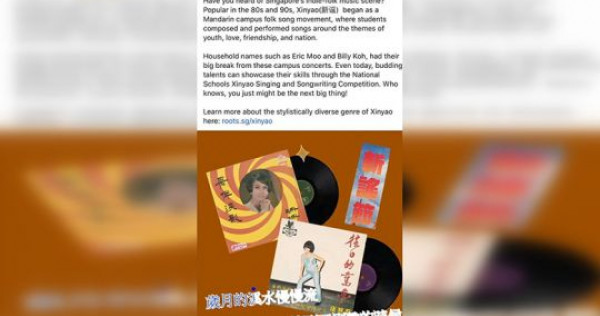
SINGAPORE – The National Heritage Board (NHB) has apologised for an error made in a recent Facebook post about xinyao – the home-grown Mandarin music movement which was popular in the 1980s and 1990s.
The post introduced xinyao singers such as Billy Koh and Eric Moo and directed readers to heritage portal roots.sg to learn more about the movement.
But it was accompanied by pictures of 1960s records from before the xinyao movement and also featured inaccurate lyrics from xinyao pioneer and local musician Liang Wern Fook’s beloved creation Xi Shui Chang Liu (Friendship Forever) – which literally means “Small Stream That Flows Forever”.
The board was criticised by netizens for the blunder and the post has since been deleted.
In response to queries from The Straits Times, an NHB spokesman said: “The National Heritage Board apologises to Dr Liang Wern Fook and fans of xinyao for errors made earlier on our Facebook post featuring xinyao as an important part of Singapore’s intangible cultural heritage. We should have been more careful about this and have amended the post to correct the errors.”
A 22-year-old man was arrested for drink-driving after crashing a lorry into a pre-school at Block 553 Serangoon North Avenue 3 in the early hours of Friday (Oct 11).
The police told Stomp in response to queries that they were alerted to an accident involving a lorry at the service road of the block at 12.47am.
The lorry driver was conscious when taken to Sengkang General Hospital and was subsequently arrested for drink-driving, said a police spokesman.
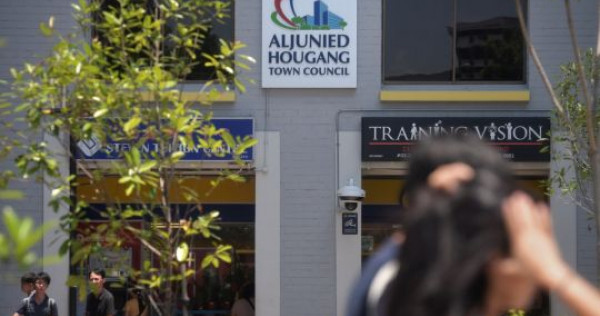
SINGAPORE – Work at the Aljunied-Hougang Town Council (AHTC) continues in earnest, Workers’ Party (WP) chief Pritam Singh said, even as he and his fellow Aljunied GRC MPs, Ms Sylvia Lim and Mr Low Thia Khiang, study a judgment issued by the High Court on Friday (Oct 11).
“We are reviewing the judgment carefully and will take the advice of our lawyers before announcing our next step,” Mr Singh said in a Facebook post on Friday evening.
In a 338-page judgment released on Friday afternoon, High Court judge Kannan Ramesh found the trio liable for damages suffered by AHTC.
Later in the day, most of the 20 Aljunied and Hougang residents who were interviewed said they were not surprised by the verdict but expressed the hope that the case would not disqualify them from being MPs.
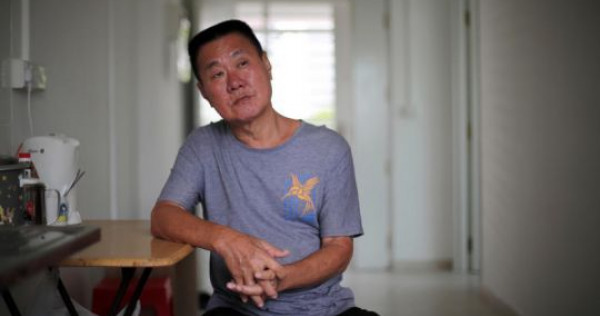
SINGAPORE – After about 10 years sleeping on the streets after his divorce, Mr Swee Peng Chye, 63, finally has a roof over his head to call his own.
A divorcee with five children, he moved into a rental flat in Jurong East at the start of October, sharing the small space with another elderly man.
Before that, he spent about five months at a shelter in Ang Mo Kio after much persuasion from social workers who had first found him sleeping on a bridge in Chinatown.
The social service office at Kreta Ayer eventually helped him find lodging, where he and his flatmate pay $99 a month for rent.
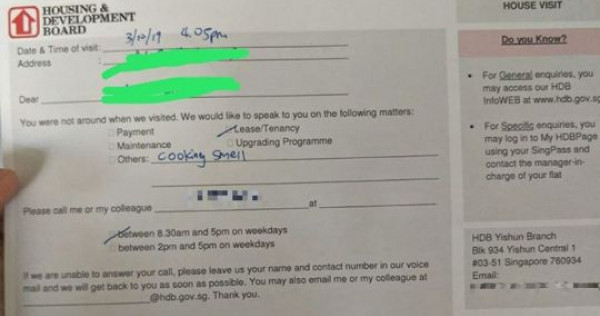
SINGAPORE – A Housing Board inspection at a rental flat in Yishun due to complaints of a “cooking smell” was prompted by allegations that it was being used for illegal food catering operations, the board clarified on Friday (Oct 11).
Last Thursday, Facebook user Aspa M Hatta posted a photo of a service card left by HDB staff at the rental flat on the same day. The slip told the flat occupant to call an HDB officer, citing only “cooking smell” as the reason.
Replying to queries by The Straits Times on the matter, HDB said on Friday that its inspection also found no indication of food catering activities in the flat.
The flat involved is at Block 461B Yishun Avenue 6, and is understood to be rented to the female cousin of the Facebook user.
The user, who wanted to be known only as Mr Aspa, told ST last Thursday: “We were quite shocked when we saw the slip. My cousin had not been home in the past few days. Now we are hesitant to even cook instant noodles.”