JOHOR BAHRU: The decision to continue with the construction of the Johor Bahru-Singapore Rapid Transit System (RTS) project will be announced by the end of the month, Malaysia’s Transport Minister Anthony Loke said on Monday (Oct 14).
“This is an indication of the government’s support for the project, but I cannot provide further details as it will be discussed and decided in the Cabinet within the next two weeks.”
Loke said he would contact his Singaporean counterpart Khaw Boon Wan after obtaining the Cabinet’s approval, as the project involves both countries.
“After that, we (the federal government) are confident that an official announcement will be made by the end of this month. We are committed to the Oct 31 deadline, so an official announcement can be made by that date,” he said, adding that he would propose for the announcement to be made in Malaysia.
Last May, Singapore and Malaysia agreed to suspend works on the RTS link, which would address the traffic congestion on the Causeway, until Sep 30.
As part of the agreement, Malaysia had agreed to reimburse Singapore for the abortive costs incurred – around S$600,000 – due to the suspension.
The suspension was extended at no extra cost for a month, to Oct 31, after a meeting between Loke and Khaw in Sepang, Selangor last month.
The RTS Link will connect Bukit Chagar in Johor Bahru to Woodlands in Singapore, and is expected to serve 10,000 passengers per hour each way. It was meant to be completed by 2024, but is now behind schedule.
During the suspension period, Malaysia was to decide if it intends to proceed with the RTS Link project as it is.
Malaysia can also propose changes to the project scope, and Singapore will give any such changes due consideration.
Despite the obvious emergency, the driver of a white Porsche allegedly blocked and refused way to an ambulance on Oct 9, even flashing her middle finger.
Cham Ai Hui, 41, who was in the passenger seat of the ambulance, took to share the incident on Facebook, garnering over 5,000 shares at the time of writing.
The patient in the ambulance was her father, an 82-year-old lung cancer patient who had suffered a stroke.
In an interview with Lianhe Zaobao on Oct 12, Cham shared that her father was originally warded at St Andrew’s Community Hospital. When doctors found him unresponsive, he was rushed to Singapore General Hospital.
Her brother had wanted to drive his father there personally. However, due to the urgency of the situation, an ambulance was called for instead.
“I was seated next to the driver while a paramedic attended to my father. About 10 minutes later, we encountered a white Porsche that refused to give way,” Cham related.
Although the emergency siren wasn’t switched on, other cars had automatically given way to them.
SINGAPORE – A lawyer who vanished after more than $33 million parked at his firm went missing was slapped with four new charges on Monday (Oct 14), including one count of criminal breach of trust (CBT) as an attorney.
The CBT charge refers to Jeffrey Ong Su Aun’s time at law firm JLC Advisors where the 42-year-old allegedly misappropriated more than US$4.85 million (about $6.65 million) on Oct 23, 2017.
The three other new charges are for forgery for the purpose of cheating, which Ong allegedly committed on Aug 7 last year. Ong, who is now in remand, appeared in court via video link.
The court heard that he had allegedly forged bank statements for the months of April to June last year to dupe a lawyer from another firm, Mr Chan Yi Zhang, into believing that monies linked to the CBT charge were still present and unused.
The cash was linked to a settlement between two firms – trading company Airtrust Singapore and Wrangwell. It was then held by JLC Advisors in escrow, which is an essential service in capital markets that support transactions such as mergers and acquisitions.
Here on a social visit pass, Steeven Raj Bernard Clement hatched a plan to steal from a prostitute to repay his debts.
The Malaysian, 29, responded to an online advertisement offering sexual services, had paid sex with a 30-year-old prostitute and robbed her at knifepoint.
He took more than $2,000 in various currencies and an iPhone worth about $1,400.
For committing robbery after 7pm and before 7am, Clement was, on Thursday, jailed for three years and three months and given 12 strokes of the cane. A charge for possessing dangerous weapons and an unrelated criminal intimidation charge were taken into consideration.
On June 9, Clement responded to an ad and was told to go to Min Wah Hotel in Geylang. At about 10pm, he went to a room there, gave $100 to the victim, a Chinese national and Special Pass holder, and had sex with her.
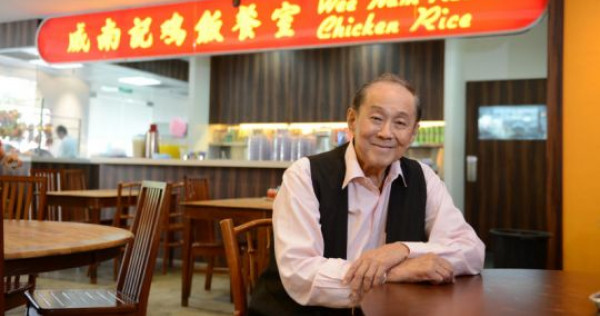
SINGAPORE – Mr Wee Toon Ouut, founder of popular local chicken rice brand Wee Nam Kee Chicken Rice Restaurant, died on Sunday (Oct 13), aged 81.
In a Facebook post on Sunday, Wee Nam Kee Chicken Rice announced Mr Wee’s passing but did not give details on the cause of death.
“As a mark of respect, all our restaurant and outlets will be closed on Saturday 19 October 2019, to send him off on his final journey,” it wrote.
“We seek your kind understanding and apologies for any inconvenience caused.”
The Straits Times understands that Mr Wee has been in and out of hospital in the past few months, eventually succumbing to his illness on Sunday morning.
PHOTO: The Straits Times file
Mr Wee founded Wee Nam Kee Chicken Rice in 1989 and oversaw its successful growth here and expansion into the Philippines, Japan, Korea and Indonesia.
A Singapore woman who received more than $500,000 from the Central Provident Fund (CPF) belonging to her late former husband has been ordered by the court to return the money after it ruled that his second marriage had cancelled out her status as his nominee.
But in a rare twist involving CPF monies, the High Court also ruled that the second wife – a Filipina who now lives in Canada – was ineligible to receive the money as she no longer practised the Islamic faith.
The court ordered the first wife, Madam Mamuah Naim, to pay the full sum of $575,735 to the administrator of the dead man’s estate for distribution based on Islamic law.
In the High Court order filed last month, Justice Andrew Ang also ordered the law firm acting for Madam Mamuah to return the legal fees she paid from the CPF money.
Mr Samsudin Mohamed had nominated her as his beneficiary in 1985, but the couple, who had no children, were divorced in June 1989.
He married Ms Leonisa Acha Vallecera in Toronto 13 years later and they had a son.
Mr Samsudin died in December 2015, and his sister in Singapore, Madam Hamidah Hanif, was tasked with administering his estate.
SINGAPORE: The war on sugar consumption is ramping up.
Singapore will be the first country in the world to ban advertisements of pre-packaged drinks with high sugar content, and it is also making nutrition labels mandatory for such drinks.
Our Government is leading the Southeast-Asian region on tackling the diabetes problem, but are these new rules able to effectively deal with the root issues of false assumptions and fixed mindsets?
FALSE ASSUMPTIONS
Here is a quick pop quiz. Which of the following do you believe to be beneficial for you: Fruit juice, isotonic drinks or energy drinks?
The answer is none of the above.
Fruit juices have a high amount of sugar – a cup of orange juice has as much sugar as a soft drink. It is always better to eat an orange instead if you want to be healthy as its dietary fibres and vitamins have not been stripped away.
Isotonic drinks are marketed to help you replenish your bodily salts and sugars after exercise. But the effectiveness of such drinks has been questioned by scientific research and many of these drinks have high sugar content.
In most cases, drinking plain water is the best way to rehydrate.
Energy drinks are used by many as a quick pick-me-up, and even though there have been recent launches of zero-sugar variants, the most popular energy drinks are very sweet in taste.
A good alternative to energy drinks is plain black coffee (without sugar or milk) as it contains very few calories.
Why do such false assumptions persist?
The lack of basic food nutrition knowledge among many people means that they cannot discern which types of food or drinks are causing their weight gain.
People are often surprised when I tell them that the major culprit in their weight gain is probably sugary drinks. Their assumption is their weight gain is largely caused by food dishes or the lack of exercise.
That may be the case, but think about it – most of us do not eat char kuay teow daily, but we may gulp down soft drinks, sweetened soya bean drinks and bubble tea daily without thinking.
Will the new nutrition labels help change these assumptions? Only time will tell, but if people are not told the hard truths (say, about fruit juices), they may never know.
The mandatory nutrition labels should also help prevent the sneaky ways that calories are increasingly “hidden” on some drink packaging today to make them appear more healthy.
If you read the current nutritional labels on some drinks, they claim each serving has only 40 kCal per serving, but you may miss the fine print that the packet actually contains three servings – hence each pack really contains 120 kCal of energy.
FIXED MINDSETS
Singaporeans spend a lot of time discussing topics like PSLE math questions, housing prices and investment vehicles, but they probably do not talk about diabetes until they get hit by it.
Unknown to many locals, the diabetes risk is high, with Singapore having some of the highest diabetes rates in the world. Today, 11 per cent of Singaporeans aged 18 to 69 have diabetes, and 14 per cent in the same age group have pre-diabetes.
More than any government body in the region, our Health Promotion Board has gone all in to spread the word on diabetes – bus stop ads, HDB lift decals, National Step Challenge activities and so on.
But mindsets are difficult to change.
Just observe your daily surroundings to take a gauge of the general indifference to diabetes or sugar consumption.
I would wager that when office workers debate their lunch options, the D-word does not come to mind.
Office work areas are often well-stocked with sugary snacks for employees to deal with work stress or boredom. (How many times have you heard people complain about gaining weight after they start work?)
Office professionals at work. (File photo: Unsplash/Mimi Thian)
During group dinners in a restaurant, people no longer question the lack of freely available plain water.
When prepping for ethnic celebrations like Chinese New Year, people snap up cartons of soft drinks to serve their relatives and friends, otherwise one might be seen as a lousy host.
Apart from sugary drinks, there is also too much sugar in daily indulgences like pastries, restaurant food and processed supermarket food.
The Government cannot possibly regulate every type of sweet food – even food gravy may contain sugar – so it is up to us to take personal responsibility for our health.
Changing mindsets may prove especially challenging in food-crazy Singapore, where finding (and queuing for) the tastiest dishes is a national pastime.
For a start, parents can play a huge role in their children’s eating habits.
When we eat out, my family (wife, two teenagers and me) do not drink soft drinks unless we can share a single serving. We each have different-sized water bottles for different occasions, and we only fill them with plain water from the tap or water coolers.
Nobody is unhappy about the lack of sweet beverages in my family. It is simply the way we have lived for many years.
If one of my teenagers wants to buy bubble tea, I would point out the sugar content but will not stop them from drinking it.
Instead, I encourage them to share it, which is a more positive way of managing sugar intake without depriving oneself.
I too, have a sweet tooth and always take a sip to get the pleasurable sugar rush.
But to finish the whole 400 kCal cup by myself? Oh, the horror.
Ian Tan is a marketing professional, former journalist and author of the book Anyone Can Lose Weight. By counting his calories, Ian lost 10kg in 2013. His 63kg body weight and BMI of 21.5 have remained constant for the past six years.
SINGAPORE: Three weeks into depression, 27-year-old Clement (not his real name) was told to “get over it”.
When Rachel (not her real name), 26, suffered from psychosis, she was told to “think about children dying in Africa”.
After a suicide attempt, Ms Nawira Baig was told that she did not know how to appreciate life. The 27-year-old has been living with bipolar disorder for the past 10 years, which causes her to experience bouts of depression.
The words uttered might seem innocuous enough to those around them and may be well-intended, but for people with mental health conditions like Clement, Rachel and Ms Baig, hearing them from their family and close friends made them feel worse.
“For people who want to end their life, it’s because it’s very painful. We don’t know how to deal with this and we cannot bear this any longer. It doesn’t help when people don’t understand and there is no support,” said Ms Baig, 27, who is working in the mental health sector.
While hurt, Clement, Rachel and Ms Baig did not blame the people who made those remarks, attributing them to a lack of awareness and understanding.
But as the global community observed World Mental Health Day on Thursday (Oct 10), those interviewed by TODAY — including mental health professionals and advocates, bereaved parents and youths who have mental illness — believed that there is much scope for Singaporean youths to be taught emotional and mental literacy, in order to bring about greater mental wellness in society.
Nominated Member of Parliament (NMP) Anthea Ong, for example, has been advocating for mental health education to be made mandatory in schools. A more preventive approach to the issue is needed, she said.
A study released by the Institute of Mental Health (IMH) last year pointed to rising rates of mental health issues among children and youths. For example, the number of children between five and nine years of age calling its hotline increased by more than five times during the period under study.
For years, mental health awareness campaigns have focused on the social stigma surrounding mental illness, and efforts to change people’s perceptions have borne fruit. According to the experts and observers interviewed, Singaporeans’ attitudes towards mental illness and their knowledge of it have vastly improved compared with a decade ago.
However, mental health professionals say that preventive work needs to be done alongside destigmatisation efforts, and that includes learning the appropriate language to use when speaking to a family or a friend who has a mental health condition, and what actions to take when they are in severe distress.
“Rachel”, 26, who has psychosis, was diagnosed four years ago. (Photo: TODAY/Nuria Ling)
According to a Forbes article published earlier this week, more and more schools in the United States are adding social-emotional learning to their curriculum. The United Kingdom has also unveiled plans to make wellbeing education universal in schools by 2020.
Several young Singaporeans told TODAY that they simply do not know what to do when they find themselves or their friend emotionally distressed.
When a friend confided in 20-year-old Dai Zhuxuan that he had depression, the university student said she was not sure what she could say to make him feel better.
“I was scared I might say something wrong… I tried to tell him that it was not as bad as he thought, like everything would be okay. But I don’t think it really helped,” she said.
Part of that preventive approach also includes building up emotional resilience among the young, which teaches them how to manage their emotions, what are the signs and symptoms when they are emotionally distressed, and how to seek help.
“Whenever there is a report on suicide statistics, then everyone starts talking about it… ‘We need a focus group on this or that, start funding for this or that’. But these things have been happening all the time,” said Ms Porsche Poh, executive director of Silver Ribbon, a non-profit organisation focusing on mental health issues.
“Why don’t we focus on the wellness and not the illness? Learn to take care of yourself and manage stress well. Rather than wait until you’re being diagnosed, and then we go ‘okay we have such a programme for you’,” she added.
WHAT THE NUMBERS SHOW
According to IMH, those aged between 19 and 35 make up about 45 per cent of new patients diagnosed with a mental illness each year. The figure, however, does not include those younger than 19 years old, as they would be seen at the child guidance clinic.
The number of 19 to 35-year-olds diagnosed with a mental illness has averaged at about 2,500 annually over the past three years.
IMH’s statistics are not representative of the whole country, as patients may seek help at other hospitals, with psychiatrists at private clinics or with community agencies.
Still, previous news reports have shown that more young people are seeking help for mental health issues. The study released by IMH last year noted that the number of young Singaporeans between the ages of 16 and 30 who sought help from IMH’s Community Health Assessment Team (Chat) from 2015 to 2017 had jumped by 190 per cent.
Meanwhile, over the past five years, the number of 10- to 29-year-olds who died every year due to suicide was between 73 and 106 — making up around 22 per cent of the total number of deaths by suicide in the same period, based on data from the report on registration of births and deaths by the Immigration and Checkpoints Authority (ICA).
Suicide still remains the leading cause of death for youths aged between 10 and 29, said Ms Wong Lai Chun, the senior assistant director of Samaritans of Singapore (SOS), the only suicide prevention agency here that offers a 24-hour hotline.
The prevalence of suicide mortality among youths and males is a “significant societal concern”, she said.
Of particular concern is the fact that male teenage suicide in 2018 was at its highest since 1991, a 170 per cent increase from seven deaths in 2017, according to the latest SOS report released in July.
While mental health conditions are risk factors for suicide, not everyone with suicidal ideations have mental health conditions, said Ms Lee Yiping, a youth support worker at Chat, a programme which allows 16 to 30-year-olds to get a free and confidential mental health check.
A person suffering from a mental illness may feel suicidal after a prolonged period of feeling worthless and helpless. But there are some who choose to end their lives after experiencing unforeseen circumstances, such as losing one’s job suddenly, said Ms Lee.
OLD AND NEW STRESSORS
The stressors among youth mainly revolve around family or intimate partner relationships, friendships, concerns about academic or work performance, financial worries and stress resulting from life transitions, said mental health professionals, and these have remained pretty much the same over the years.
When Luke (not his real name) was 17, the pressure of wanting to meet his parents’ expectations led him to switch to a junior college, even though he was very much well-adjusted and enjoying his time at his polytechnic.
Now 32, Luke told TODAY that he was under such stress during the transition period between schools that he started developing hallucinations and almost jumped from his apartment building.
Several young Singaporeans told TODAY that they simply do not know what to do when they find themselves or their friend emotionally distressed. (Photo: TODAY/Nuria Ling)
For Clement, not being able to get into his dream school after his O-level examinations was the trigger for his depression, which he was officially diagnosed with when he was 17.
“I believed deeply that I would only be worthy as a person if I had an accomplishment of note and therefore, this ‘failure’ not only shattered all the confidence I had in my abilities, it left me in a place wondering ‘If I cannot achieve, then what worth do I have?’” he said.
According to Ms Wong, youths may not have yet developed adequate positive coping mechanisms, and may not be aware of the available resources that can help them.
“The combination of different stressors may lead youths to feel overwhelmed and not able to cope positively. Maladaptive coping mechanisms, such as self-harm and suicide ideation, then become a possible alternative for youths as a means of coping with overwhelming psychological and emotional pain,” she added.
Biologically, the part of the brain that deals with emotions is not as developed among the young, and hence they tend to experience more mood swings compared to adults, said Ms Lee.
Due to a lack of life experience, young people may not be able to pick themselves up after facing a failure, believing that it is a reflection that they are not good enough.
Apart from the common stressors faced by youths, Ms Lee also pointed out that previously taboo topics — such as struggles over one’s sexual orientation — are beginning to surface.
“When we do assessment and young people say they have depression, when we try to find out why, young people in the past may not say it’s because of their sexual orientation. But now increasingly they will say they are queer, or they are homosexual, but they don’t want to speak to their family,” she said.
For 23-year-old Peter (not his real name), a gay individual raised in a Catholic environment, the inability to reconcile his sexual orientation with his religious beliefs was a major factor that added to the mental distress with which he has had to struggle since primary school.
While he experienced other traumatic incidents as well, such as growing up in an abusive family, tensions surrounding his sexuality was his most difficult struggle.
“You cannot be yourself. (It’s) the pain that comes along with this identity,” said the undergraduate.
THE SOCIAL MEDIA FACTOR
Another form of stressor that has emerged recently, said several mental health professionals, is cyberbullying — the result of increased use of technology and social media, especially among the young.
“The way they express and call for help have changed as well. In the past, you can spot someone with cutting marks on their arms. Now through social media, they may post such photos also,” said Ms Lee.
Mental health professionals generally see social media as a double-edged sword.
With several mental health organisations and also government agencies posting their mental health awareness campaigns and resources online, social media can be an avenue for youths to receive positive messages, or find out how and where they can seek help.
However, the type of content that youths are exposed to on social media is also largely a result of what is trending. The issue then is whether youths are able to navigate through the social media maze and limit exposure to content that may add to their distress, said Ms Wong Ying Li, the head of youth division at Fei Yue Family Service Centre.
Similarly, the debate over whether people should share their mental health struggles on social media drew mixed reactions from the experts interviewed.
Such posts could be their own way of calling for help and mental health professionals agree that even a simple checking in from friends on how they are doing would help. But there is a danger that youths are also opening up themselves to online bullying.
“No matter what you post, you should be keeping an open mind to get both negative and positive comments. You can’t expect everyone to agree with what you share,” said Ms Poh from Silver Ribbon.
Most youths TODAY spoke to are wary about sharing something as personal as a mental health struggle on social media, well aware of the vitriol that exists in the online space.
Those who post about their mental health struggles may end up being accused of trying to attract attention or playing the victim card, said Ms Erica Tay, a 22-year-old university student.
However, some of them have seen a few of their friends posting cryptic messages that may imply that they are going through some form of mental distress.
Simple messages like “I feel tired” or “I wanna quit school” are things that Ms Tay has seen on her Instagram feed.
Though not clinically diagnosed, Joseph (not his real name), 26, who has been experiencing some symptoms of mental health conditions such as restlessness and severe fatigue for more than five years, uses Instagram as an “emotional outlet” and posts song lyrics that reflect his thoughts on mental health and suicide
“Taxi driver, be my shrink for the hour, leave the meter running” — the first three verses of the song Bad Religion by singer Frank Ocean — is one example.
Jaren Ong, 18, who is currently serving National Service and went through a bout of depression during his junior college days, writes about his experience with depression and anxiety on Instagram. But he does it through an account where he is friends with only 15 people, all of whom are his close associates.
As a mother who lost her son to suicide due to depression, Ms Elaine Lek, 55, is exasperated about the role of social media among youth.
Before her son, Zen Dylan Koh, passed away in October 2018 when he was almost 18 years old, Ms Lek said he posted about his suicidal ideation and photos of the cuts on his hand on Instagram.
“People that follow him, what did they do? They like it. How can they like it? And there was a comment: ‘Oh wait for me, let’s do it together,’” said Ms Lek, who is heading the global brand team at tableware firm Luzerne.
PROVIDING THE RIGHT SUPPORT
Mental health professionals generally agree that the stigma attached to people with mental illness has lessened, evidenced by the growing number of recovery stories shared by people with mental illness, greater interest among students in the issues of mental health, and increasing number of young people seeking help.
According to an online poll last year by the National Youth Council, mental health was among the top 10 concerns among youth. It also found that they generally had positive attitudes towards people with mental health issues.
The problem, however, is that youths do not feel equipped to support their friends who are living with a mental health condition.
Most youths TODAY spoke to are wary about sharing something as personal as a mental health struggle on social media, well aware of the vitriol that exists in the online space. (Photo: TODAY/Nuria Ling)
Through TODAY’s interviews with several young people who are still living with or have had a mental illness, there were numerous examples of how they felt dismissed and their pain trivialised due to remarks made by people around them.
When Rachel first started hallucinating four years ago — a symptom of psychosis — the then-university student was feeling very upset and confided in a close friend.
His reaction? “Can you don’t feel like this? You know how many people in Africa are dying?”
“That’s when I realise you can’t tell someone in depression to get up and go,” said Rachel, who is a civil servant.
Another way people usually respond is by making comparisons, said SOS’ Ms Wong.
“Comparisons to the self, or others who may have had it worse may act to invalidate one’s struggles to cope. These comparisons often do not serve as encouragements, but instead reinforces the perception that “you just don’t understand me,’” she added.
For Peter, the hurt also comes when people are being too politically correct around him after learning about his history of mental illness.
“It’s like ‘that guy has mental health issues, must be careful towards him’. It reduces me to the lowest common denominator, it’s like my entire life is whether or not I will kill myself,” he added.
Ms Lee pointed out that people with mental illness should not be made to feel that their identity is defined solely by their mental health.
“If I were to tell someone I have been diagnosed with depression, their immediate reaction is ‘how are you feeling today?’ They immediately think that you must be feeling sad and that you are affected by it,” she added.
So, what do people with mental health conditions like to see more from the people around them?
Just being there, some told TODAY.
For Peter, a simple message asking him to go for coffee is more than enough.
“The ones who are genuine will relate to you. Not those who make proclamations about how strong I am, saying stuff like ‘wah you went through this, you strong man’, when they are just putting my suffering on a pedestal, thereby eliminating any personal obligation to relate further,” he said.
During the times when Ms Baig was hospitalised, she remembers her friends giving her chocolate cake or painting her nails in the hospital, among other things.
“To them, I am still who I am. That never changes. I really value that they did not treat me differently, they didn’t tread cautiously or treat me as fragile,” she said.
It is the little things that matter, said Cheryl (not her real name), 21, who has been experiencing anxiety since she was 13.
“Trying to regulate my breathing with me while I’m having an anxiety attack, accompanying me to a counselling appointment, or simply sitting with me while I cry to get all the overwhelming emotions out. These things give me strength when I can’t carry on,” she added.
It is human nature to offer quick solutions, said the experts. But what is more important is to just listen and validate the feelings of those with mental health conditions, they added. This is especially so for those who are living with chronic mental health issues which could possibly last for a lifetime.
“For them it is not about ‘I get cured’, but ‘I learn to cope with it’,” said Fei Yue’s Ms Wong.
While these may seem common sense, the experts said these are skill sets that need to be taught.
“When you see an old lady crossing the road, you know what to do. These things we take for granted, but we actually learned it… You will never have a 9-year-old boy who have a toothache and not know what to do about it. But you would have a 9-year-old boy who is feeling distressed and despair, and not know what to do and therefore think jumping is an option,” said Ms Ong, the NMP.
Such skill sets are missing even among adults. Sometimes, parents themselves can unwittingly hurt their children with mental health conditions.
After seeing his son in a prolonged state of sadness for three months, Clement’s father told him to “get better or get out of the house” in a fit of anger and despair.
While Clement recognises that it was tough for his father as well, that incident was “deeply traumatic” for him, causing him to have trust issues till this day.
Majority of the youths TODAY spoke to shared that they would not choose to share with their parents any struggles they may be going through, or talk about mental health with them.
For some, it is their own parents who were the source of their distress and for others, mental health is an issue that Asian families do not seem to be comfortable talking about.
BUILDING EMOTIONAL RESILIENCE
Mental health advocates believe that there is also a need to teach young people, especially those who are still in school, how to build emotional resilience.
Ms Lee said that one way to teach young people to be resilient is to let them encounter failures and mistakes, but provide a nurturing environment for them to bounce back from the setbacks.
“The support structure, (from parents and friends) is important. Young people need a lot of guidance. Not necessarily teaching them what to do, but to help them process their thoughts,” she added.
Besides learning from failures, young people can also build emotional resilience by learning how to regulate their emotions, and by equipping themselves with the tools they can use to soothe themselves when they sense an anxiety episode coming, said mental health professionals.
Finding healthier coping mechanisms to manage their stress levels is also one way to build resilience.
For some of the young people with mental health conditions interviewed by TODAY, acquiring healthier coping mechanisms is very much a trial-and-error process.
Ms Baig, who was initially not aware of how to process the internal pain from her bipolar disorder, resorted to cutting herself and trying to end her own life.
Through her recovery process, she realised that journaling and dancing helped her release some of her internal tensions.
For Rachel, reading up on mental illness and developing a routine set of activities for the weekend that were focused on herself, such as going to the gym or facial, helped her to overcome the difficult side effects brought about by the cocktail of medication she had to ingest daily.
A perspective shift also has helped some of them overcome the inadequacies they feel about themselves.
Instead of subscribing to society’s conventional definitions of success, Peter said he learned to “lower his expectations” and find joy in the simplest things, such as being able to make someone else smile.
Whenever Cheryl starts to struggle with feelings of guilt and worthlessness, she has learned how to comfort herself by reassuring herself that “it’s okay, because I’m trying my best”.
“I continuously work on building my self-love, because to me, the greatest affirmation is the one that comes from within,” she added.
With a larger emphasis on mental health and higher incidences of people going through mental distress today, there are those who argue that it may be that young Singaporeans — viewed as part of the “strawberry generation” — are weak.
Mental health professionals disagree, believing it to be an unfair assertion.
Ms Lee said: “It’s easy for the older generation to make statements like that. They are speaking from their age now. If we spoke to them in their younger days, if we catch them when they were feeling stressed at that point in time, I do think they will have suicidal thoughts in their mind.”
The challenges that youths face today are more complex and nuanced, said Ms Lee. While older generations of Singaporeans did face stresses in the past as well, especially relating to survival matters, young Singaporeans have their own set of challenges.
For one, competition is more intense now, with the job market being more globalised.
Ms Wong from Fei Yue also pointed out that younger Singaporeans are living in a more connected world with social media. As a result, they are not comparing themselves with just their peers around them, but also with people overseas.
She reiterated that negative comments about younger generation may end up reinforcing the stigma associated with mental health conditions. In their bid to not be seen as weak, some youths may end up isolating themselves more, she said.
MENTAL HEALTH LITERACY
For individuals to learn emotional resilience and how to provide better support to those with mental illness, the experts and youths interviewed say there should be more structured mental health education in schools.
“We may be given scientific literacy and numeracy in school. But we are never given emotional and mental help literacy,” said Ms Ong, the NMP.
Having experienced the feeling of loss and doubt when his friend had depression, 17-year-old Gabriel Ong said a “more holistic approach” to mental health education would be helpful. His school’s current module on mental health provides just very basic knowledge about remembering to take breaks while studying, for example.
“It is hard for us to discern what would be the right thing to do for our friend. How do we know what is good for him? There are a lot of doubts in ourselves,” he said.
In response to TODAY’s queries, Madam Choy Wai Win, director of guidance and student development curriculum at the Ministry of Education (MOE), said that schools and Institutes of Higher Learning (IHLs) adopt an individualised approach given that at-risk students often have to deal with multiple factors and unique circumstances.
She added that MOE provides a “supportive environment in all schools and IHLs”, where students are taught resilience-building and how to reframe perceptions.
All schools have at least one to two school counsellors, while all IHLs have at least two to three. The counsellors provide individualised social and emotional support. “Where necessary, the counsellors will refer students to medical professionals for further help,” said Mdm Wong.
Ms Poh revealed that in 2006 when she started Silver Ribbon, she began talking to the authorities about a more structured mental health education in schools.
But she faced pushback from school principals and teachers. “They had concerns about educating children (about mental health issues) at such a young age, (being) afraid they may have stereotypes and all,” said Ms Poh. To overcome the concerns, a pilot programme can be implemented and assessed later, she suggested.
The need to start a conversation on mental health and suicide in schools is something close to the hearts of Ms Lek and Ms Doreen Kho, who also lost her son to suicide. They are part of a support group of bereaved parents called Please Stay, which will officially launch next month.
Ms Kho, 44, lost her son Evan in November 2017, when he jumped from the 16th floor of a condominium. He was 11 years old.
The entrepreneur believes that mental health education programmes in school need to teach children how to identify others in pain and how to offer help.
“The curriculum could include social skills as well — how to communicate and how to be sensitive to each other,” she added.
As for Ms Lek, she feels there should be more dialogue on mental health issues and suicide.
“There isn’t enough coverage because they are afraid of copycat suicides, afraid it will trigger something in kids. But let’s be real. All of these are available online, on social media,” she said. “Kids are already exposed, so why can’t we address it in school?”
While mental health has become less of a taboo topic, the experts and youths said it remains a topic that some people dance around, which prevents more open and honest discussions about it.
To achieve that, mental health advocates said that Singaporeans need to be more comfortable talking about their emotions and simply start asking people around them, “how are you feeling?”
If you or someone you know is seeking help for mental health-related issues, here are some helplines:
Samaritans of Singapore (24-hour hotline): 1800-221-4444
Community Health Assessment Team: 6493 6500/01 or click on the webchat icon at chat.mentalhealth.sg
Singapore Association for Mental Health helpline: 1800-283-7019
This article was written in partnership with the National Youth Council (NYC). If you have an idea on how to improve mental well-being support for youths, turn it into reality by joining the Youth Action Challenge Ideation session on Oct 19.
This challenge is organised by the Ministry of Culture, Community & Youth and the NYC. Through a series of workshops and hackathons, you will get to hear from Government representatives, industry heads and youth leaders.
Youths with the best ideas will have a chance to pitch their proposals at a finale in April 2020 and receive up to S$50,000 in grants for implementation. Sign up for the challenge at bit.ly/yacBR
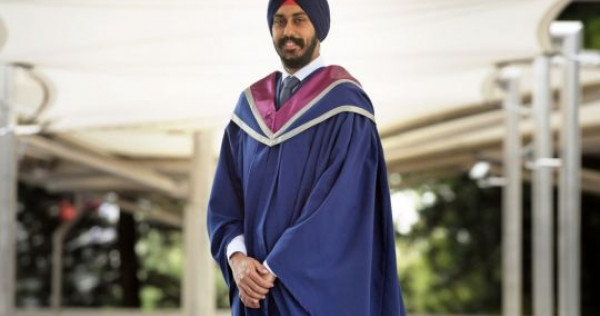
SINGAPORE – To this day, national hockey player Ishwarpal Singh Grewal still vividly recalls returning home as a tearful 15-year-old, dreading to tell his father that he had failed to make the school’s hockey team.
“The ball hit the floor and bounced back higher than where it was. That was the first time he taught me this lesson that stuck with me for the rest of my life: It’s not about how you fall, it’s about how high you bounce back,” Dr Singh told young graduates at an annual Sikh Graduates Tea on Sunday (Oct 13).
Dr Singh is now 26 and graduated from Nanyang Technological University’s Lee Kong Chian School of Medicine this year.
BANGKOK: Footballer Ben Davis says he has no plans to return to Singapore or fulfil his National Service (NS) duties in the future, as he puts all his focus on the pursuit of his professional career in England and representing Thailand on the international stage.
“It is the right decision,” he said, while in Bangkok for a training camp with the Thai national U23s squad ahead of the Southeast Asia (SEA) Games in November.
“I don’t think I’m going to go back. I’m cool with that,” he said. “For me it’s all about succeeding in football. I don’t really look back.”
Davis said that while he was initially “unhappy” about not being able to return to Singapore to see his family and friends, he is now wholly committed to representing the country of his birth. He had previously been called up to Singapore’s national side in 2018, before he signed a professional contract with Fulham, at the time competing in the English Premier League.
“I feel like I’m from Thailand and England. I feel like those are my home countries. And my mum really wants me to play for Thailand so I want to make her proud. That’s my main reason,” he said.
“I’ve always wanted to play for Thailand or England because I knew the standard was better and in my blood, I knew I was from there. When I was living in Singapore it was difficult because I came through the system and I grew up there a bit and grew up playing football there so that’s the only thing I knew,” he said.
When asked about how his former team mates in Singapore have reacted to his move away from the country, Davis said the response has been positive.
“They’re actually happy for me. They support me. They’re not mad or anything but when we play against each other we’ll see what happens,” he said with a smile.
Singaporean footballer Benjamin Davis has applied for NS deferment. (Photo: Football Association of Singapore)
“I’D JUST BE SORRY THAT I HURT YOUR FEELINGS”
Davis’ application to defer his NS enlistment last year in order to take up the contract with Fulham was rejected by Singapore’s Ministry of Defence (MINDEF), who said he did not “meet the criteria for long-term deferment from full-time NS”.
The ministry added that Davis’ actions are “meant to further his own professional career, not national interest”.
His father Harvey Davis had lobbied for a special exemption for his son, arguing that his success in Europe would be an inspiration for Singapore.
“As the father of Ben, I really hope that common sense can prevail so that Ben can be given the opportunity to not just pursue his dream of playing in the EPL, but also the dream of every young Singaporean footballer and to make Singapore proud by being the first Singaporean to play in the EPL,” Harvey Davis said at the time.
Dr Ng gave three reasons why Davis’ application was rejected.
The first is that Davis is playing for Fulham as an English national, not a Singapore citizen, Dr Ng said, referring to information published on the club’s website.
Second, Dr Ng said Davis’ father has “consistently refused” to indicate when his son would return to serve NS, pointing to a reply he gave authorities stating that he was “unable to commit to a date” due to the possibility that his son would be offered a new contract or sent out on loan.
Third, Dr Ng said Mr Davis has indicated that his son would still proceed to sign the contract if not granted deferment, something which he had already done.
Davis’ subsequent decision to depart Singapore for England was a divisive one, but he said he hopes there is no lasting animosity about the choices he and his family have made.
“I’d just be sorry that I hurt your feelings. I didn’t mean to. It is what it is. There’s always going to be one side and another side. It’s life,” he said, referring to those critical of him.
“A lot of people thought I was (frustrated). I wasn’t really that bothered by it. I was just focused on my journey and succeeding. That’s what I wanted to do.”
He contends that his career prospects could have been irreparably damaged by taking two years out of the sport. “If I hadn’t have taken the contract I wouldn’t be where I am. I wouldn’t have made my debut or anything. It was a big decision,” he said.
“It’s tough you know. Because I’ve done a lot in two years. I don’t think I would have made it this far if i was to take those two years off. I probably would still make it but not at as high a level as this.
“You have to have tunnel vision, you have to be selfish, you have to be confident in everything, especially to succeed in Europe.”
He made his first-team debut for Fulham on Aug 27, coming on as a substitute in the 89th minute in the Cottagers’ 1-0 loss to Southampton in the Carabao Cup. It was a nervous moment for him, he admits, but one that consolidated his belief in his footballing journey.
He has eyes on more playing minutes for the senior side this season in the Championship proper and hopes to have his playing contract extended mid-next year. He confirmed that he is registered as a local player with the English Football Association.
“I think I can make it to the top. You have to have that mindset. Even if you’re someone who can’t, you still have to have that mindset to reach the top. So I think I will be able to make the Premier League,” he said.
He also wants to be playing consistently for Thailand’s senior national side, as early as November when the team continues its World Cup qualifying campaign. While his Thai is rusty, he says he has felt welcomed by the team’s players, management and fans.
“I’m grateful to them to support me and I want to make them proud. I like the standard. It’s decent and I feel we can win some competitions.”
Life in London is also becoming more settled for the teenager, who is relishing having his own car and freedom, he says. He is living with a local family now but plans to move out on his own next year.
“Sometimes it can be lonely, especially for a footballer. It’s important to do things outside football as well. You have to have friends. My grandmother lives near Watford so I always go back there.”
Davis will return to his Fulham duties in the coming days.

.jpg "20191014_porshe-1.jpg")