The incident occurred at the Bear Claw Taiwan arcade, located on Basement 1 of Lucky Plaza, on Oct 7.
Stomp contributor Anonymous, who owns the affected machine at the 24-hour arcade, contributed CCTV footage of the incident that took place at around 7.30am.
Anonymous said: “I decided to check the CCTV because I saw that the machine was in a huge mess. The toys that were hanging in it had all dropped down.
“Sensing something amiss, I checked the camera playback.
“The woman came to the arcade, played with some machines and then walked over to mine.
“She didn’t even insert any token and started to shake the machine.
The cops have nabbed four men believed to have been behind SG Nasi Lemak, the Telegram chat group exposed earlier this month for disseminating obscene videos and images as well as promoting vice activities within the channel.
According to the Singapore Police Force, the four suspects — aged between 17 and 37 — were arrested at various locations islandwide yesterday (Oct 14) after their identities were established through investigations.
They will be charged in court today with conspiracy to commit distribution of obscene materials, which could land them in prison for three months and/or a fine.
SINGAPORE – An accident between a motorcycle, trailer and private bus resulted in 20 people being taken to three different hospitals on Sunday (Oct 13).
Police said on Monday they were alerted to the accident along the Bukit Timah Expressway towards the Pan-Island Expressway at 1.38pm, and that 20 people aged between eight and 68 were conscious when they were taken to hospital.
It is understood that their injuries were not life-threatening.
The Singapore Civil Defence Force said 15 people were taken to Ng Teng Fong General Hospital, three were taken to Tan Tock Seng Hospital, and two to National University Hospital.
In a video posted on citizen journalism website Stomp, a silver motorcycle is seen on the third lane of the road, with its front against the back of a white-and-blue bus. Debris can be seen in front of the bus.
SINGAPORE: On a casual afternoon almost five years ago, Mark* arrived at his mother’s home for lunch. While she was cooking he lay down for a short nap, as he had been feeling very tired that day.
When his sister came to get him for lunch, she noticed that his body was “dancing” strangely. She tried to wake him, only to find Mark was unconscious and unresponsive.
She immediately called an ambulance. The paramedics were able to resuscitate Mark and he was rushed to the hospital .
Mark was 58, and had experienced a heart attack.
His extreme lethargy before the episode was his only symptom, and he had no history of heart problems, prior chest pain or any health complaint.
After his surgery, Mark made a miraculous recovery and is now back to his usual lifestyle, taking his medication regularly, and resting when he feels tired.
As scary as it sounds, Mark’s experience having a heart attack is not uncommon at all. In fact, seven out of 10 Singaporeans were unable to identify a heart-attack, according to a Manulife study conducted earlier this year.
What do you think of when you think of a heart attack? A sudden pain or tightness in your chest, falling over or losing consciousness?
Those are the common symptoms that we tend to associate with heart attacks, backed up by what we see on television. However, there is also a type of heart attack that does not present these symptoms – a silent heart attack.
A silent heart attack describes a situation in which a patient may be having a heart attack, but experiences minor discomforts, seemingly unrelated symptoms, or sometimes no symptoms at all.
(Photo: Unsplash / Giulia Bertelli)
In many cases of a silent heart attack, patients may experience symptoms so mild and fleeting that they can get confused for a passing discomfort, or another minor illness, and thus ignore them.
For example, patients may feel light headed, nauseas or have symptoms of indigestion – all of which can be dismissed for other less serious illnesses.
Silent heart attacks are increasingly common today, accounting for almost half of all heart attacks. Beyond the dangers of not recognising the heart attack, patients with a history of silent heart attacks are also at higher risk of suffering from sudden cardiac death.
In a recent study, more than 40 per cent of patients who experienced sudden cardiac death were found to have scarring associated with a silent heart attack.
Even more interestingly, research from the American Heart Association has also shown that women more often display these different and less alarming cardiac symptoms compared to men.
As these patients may be unaware these symptoms relate to heart disease, it is easy to mistake something else as the cause.
A key issue for patients suffering a silent heart attack is that they take longer to reach a hospital or seek medical attention, as they simply do not realise they are having a heart attack. This puts them at much higher risk for complications such as heart failure or even death.
Today, cardiovascular disease accounts for almost one in three deaths in Singapore.
SIGNS OF HIGHER RISK OF A HEART ATTACK
When it comes to heart attacks, both men and women share the same risk factors, namely diabetes, high blood pressure, high cholesterol, smoking, a family history of heart disease and obesity.
However, men are at higher risk of a heart attack much earlier in life than women. Female hormone oestrogen offers women some protection from heart disease, at least until after menopause, when hormone levels drop significantly.
(Photo: Pixabay/sbtlneet)
Patients who have diabetes are also more likely to experience atypical symptoms or no chest pain at all when having a heart attack.
Emotional and mental stressors can also increase the risk of having a heart attack. How someone experiences stress, and how they react to it can put extra strain on their heart.
In some cases, excessive stress can lead to an increased heart rate. With such conditions, the heart may not be able to pump blood effectively to the rest of the body, which can lead to heart failure and a sudden cardiac arrest.
Other highly stressed people may experience increased blood pressure and hypertension. In the long term, this may eventually lead to coronary artery disease, and an increased risk of heart attack.
Emotional and mental stress can also manifest in behavioural changes – overeating, for example, can lead to obesity. An individual with an unhealthy diet would, over time, develop high blood sugar and cholesterol levels.
Other patients may turn to vices such as smoking and drinking to cope with stress. All these unhealthy lifestyle choices will definitely add to the higher risk of someone getting a heart attack.
Alcohol can change the way a woman’s body metabolises oestrogen. (Photo: Unsplash)
The most effective way to reduce a risk of a silent heart attack is the early detection of traditional risk factors such as diabetes, hypertension and high cholesterol.
Regular health screenings might help but more importantly, leading a healthy lifestyle is crucial, and this includes exercising regularly – at least 30 minutes of brisk walking five times a week, maintaining a balanced diet, reducing alcohol consumption and smoking cessation. If there have been certain risk factors identified, work with a doctor to get those under control.
Techniques that help manage stress will also go a long way in improving your overall health, Exercising, maintaining a positive attitude, and getting enough rest are good ways to deal with stress.
Relaxation and mindfulness techniques can also be practised in our daily lives – not just for physical health but mental well-being too.
*All names used in this commentary are pseudonyms.
Dr Leow Khang Leng is Consultant Cardiologist at Nobel Heart Centre, a member of Healthway Medical Group.
SINGAPORE: Four people have been arrested for their suspected involvement in a Telegram chat group called “SG Nasi Lemak”, the police said in a news release on Tuesday (Oct 15).
The suspects, aged between 17 and 37, have been arrested for their “suspected involvement in circulating obscene materials and promoting vice activities” through the group, said the authorities.
“Between Mar 15 and Oct 3, 2019, the police received several reports against the chat group for circulating obscene materials and promoting vice activities,” said the Singapore Police Force.
“Through investigations, officers from Ang Mo Kio Police Division established the identities of the men and arrested them at various locations islandwide on Oct 14, 2019.”
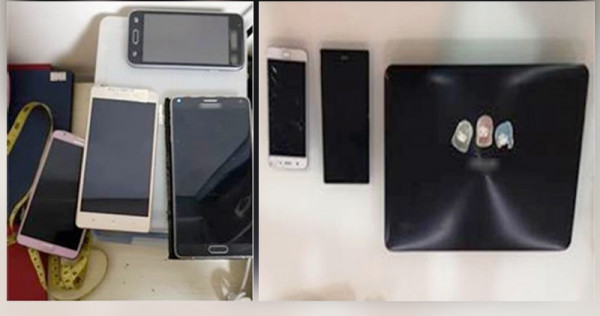
More than 10 electronic devices, including a central processing unit, a laptop, a hard disk and several mobile phones, were seized. (Photo: Singapore Police Force)
Investigations revealed that a 26-year-old man and a 37-year-old man were the administrators of the chat group, while a 17-year-old and a 19-year-old distributed the obscene materials, said the police.
More than 10 electronic devices including a central processing unit, a laptop, a hard disk and several mobile phones were seized.
The chat group, which is no longer accessible, is said to have had tens of thousands of members, some of whom shared obscene photos and videos of women.
The police earlier this month said they had received reports against the chat group and that investigations were ongoing.
The suspects will be charged in court on Tuesday with conspiracy to commit distributions of obscene materials.
If convicted, they could be jailed for up to three months, fined, or both.
“Members of the public are advised to stop soliciting in any lewd website or joining such online platforms and illicit chat groups,” said the police, adding that they take “a serious view” of anyone involved in criminal activities and will continue to take tough enforcement actions against those breaking the law.
This is the first time the central bank has eased monetary policy since April 2016, and comes amid faltering growth in Singapore as a protracted trade war and a global tech downturn continue to weigh on the key manufacturing sector.
With growth lacklustre and inflationary pressures set to be muted, the MAS said it will “reduce slightly the rate of appreciation of the S$NEER (Singapore dollar nominal effective exchange rate) policy band.”
There will be no change to the width of the policy band and the level at which it is centred.
“This measured adjustment to the policy stance is consistent with medium-term price stability, given the current economic outlook,” it added in its statement.
Now, what is the S$NEER? What does it mean for you and me when the slope is reduced?
WHAT IS THE S$NEER?
Unlike most central banks that target the interest rate, the MAS uses the exchange rate as its main policy tool.
This refers to the S$NEER – the exchange rate of the Singapore dollar managed against a trade-weighted basket of currencies from Singapore’s major trading partners.
Having a trade-weighted exchange rate – where the currencies of Singapore’s larger trading partners bear more weight – better reflects the country’s diverse trading patterns, compared to a bilateral exchange rate between the Sing dollar and a foreign currency, according to a list of frequently asked questions (FAQ) about its monetary policy on the MAS website.
The basket of currencies is “reviewed and adjusted periodically” according to the country’s trade patterns.
To deter speculation, the make-up of this basket is never revealed.
WHY EXCHANGE RATE?
This is because Singapore is a small and open economy with a heavy dependence on trade.
Gross exports and imports of goods and services account for more than 300 per cent of gross domestic product (GDP), according to the FAQ. Almost 40 cents of every dollar spent domestically is on imports.
As such, targeting the exchange rate has been deemed more effective in achieving the central bank’s primary goal – to ensure price stability as a basis for sustainable economic growth.
The MAS said the nominal effective exchange rate affects a wide range of prices in the Singapore economy, both directly and indirectly.
These include import and export prices, wages and rentals, consumer prices and output prices.
For instance, if the Sing dollar appreciates against those of major trading partners, it will reduce prices of imported goods and services. This subsequently dampens the prices that households here have to pay.
HOW DOES THE MAS CONDUCT ITS POLICY?
The S$NEER is allowed to float within an unspecified band. Should it go out of this band, the MAS steps in by buying or selling Sing dollars.
It also changes the slope, width and mid-point of this band based on assessed risks to the country’s growth and inflation, and announces these changes at its two scheduled policy meetings.
These meetings typically happen in April and October, unless otherwise necessary.
The last time MAS surprised markets with an inter-meeting move was in January 2015, when it unexpectedly reduced the slope of the band. Then, a sharp drop in global oil prices had caused a significant shift in its inflation outlook.
File photo of Sing dollar notes. (Photo: Goh Chiew Tong)
WHAT ABOUT THE SLOPE?
This is probably the most common tool used by the MAS to adjust the band.
Simply put, the slope determines the rate at which the Sing dollar appreciates. If the slope is reduced, this means the local currency will be allowed to strengthen at a slower pace. It strengthens as a faster pace when the slope is increased.
On Monday, the MAS said it was reducing the S$NEER policy band “slightly”.
Economists believe that the slope still remains positive and that the Sing dollar should be rising by 0.5 per cent a year, down from 1 per cent previously, against the basket of currencies.
“The MAS did not describe policy as ‘neutral’ as a result of the adjustment. We believe this implies the MAS reduced the slope by 50 basis points to an estimated 0.5 per cent, in line with our view,” said Barclays economist Brian Tan.
The last time the MAS flattened the slope was in April 2016 when growth slowed amid a dimmer global outlook.
The central bank held on to that “neutral” stance for two years, before increasing the slope twice in 2018 to a path of “modest and gradual appreciation” as growth and inflation picked up.
WHAT ABOUT THE MID-POINT?
This is a tool generally reserved for “drastic” situations, such as recessions, when the outlook for growth and inflation sees an abrupt and rapid change, said Maybank Kim Eng economist Lee Ju Ye.
Compared to tweaks in the slope, an adjustment in the mid-point either upwards or downwards is likely to yield a quicker and bigger impact on the currency, explained Mr Jeff Ng from Continuum Economics.
“The Sing dollar is managed within an unspecified band and we estimate it to be about 4 per cent. If it’s a drastic change of say 10 per cent, it will technically strengthen or weaken the currency immediately.
“If it’s a small change and still within the allowance, it’s more to reflect how the currency is supposed to be faring across the trade-weighted partners … but it will still have a strong signaling effect,” Mr Ng.
Past instances of a re-centring in the mid-point include a downward adjustment in April 2009, as the 2008 global financial crisis sent Singapore’s economy into a recession and inflation fell sharply.
By doing so, the MAS was effectively doing the equivalent of a one-off currency devaluation to support the economy. A weaker Sing dollar generally tends to be good news for the country’s exporters as it makes them cheaper and more competitive.
The width controls how far the Sing dollar can fluctuate. This means the wider the band, the more volatile the currency can be.
It is typically reserved for periods of increased uncertainties or volatility, said Ms Lee.
For instance, the band was widened in October 2001, after the Sep 11 terrorist attacks in the United States led to extreme volatility in the financial markets.
More recently in October 2010, the width was also widened slightly “in view of the volatility across international financial markets”.
SO, WHAT DOES THE LATEST POLICY STATEMENT MEAN FOR YOU?
The slight reduction in the slope will now put the Sing dollar on a slower pace of appreciation.
But the local currency appeared unaffected following the policy review, and was last seen gaining about 0.25 per cent to trade at 1.3699 against the greenback as of 4.20pm on Monday.
This was due to positive sentiment in the market following a “partial trade deal” between the United States and China, experts said.
There were also some expectations in the market for the MAS to do a more drastic easing to a “neutral” stance, but that did not materialise, said Mr Ng.
In the long run, however, analysts generally expect the Sing dollar to weaken against the greenback, with forecasts ranging from 1.4 to 1.43 by end-2019.
Further easing in 2020 also seems to be on the table, some analysts said, given how the central bank noted that it will continue to closely monitor developments and “is prepared to recalibrate monetary policy should prospects for inflation and growth weaken significantly”.
Typically, a weaker currency helps to lift growth by making exports cheaper abroad but it also makes imports more expensive in Sing dollar terms.
So what does this mean for you and me? Possibly weaker spending power but it is not all bad news for households here, according to experts.
Opting for a gradual reduction in the appreciation pace will ensure that local interest rates do not spike, Mr Ng said.
In general, a softer Sing dollar can put upward pressure on local interest rates, such as the Singapore interbank offered rate (Sibor), as investors seek higher yields as compensation for holding the weakening currency.
“By not allowing the currency to weaken too much, they are trying to make sure that interest rates don’t rebound too much too,” he explained.
“This is so that when the US cuts interest rates, Singapore’s interest rates can also come down accordingly.”
Eating and drinking on public transport in Singapore doesn’t just attract dirty looks and the possibility of getting Stomp-ed — you could also get fined. But are the rules more lax for foreigners?
Recent posts on All Singapore Stuff, a Facebook page where Singaporeans gather to complain about all and sundry, have stirred up a debate after two Caucasians were caught chowing down on public transport.
One video posted to All Singapore Stuff on Oct 11 showed a Caucasian man sipping from a bottle of beer at Chinatown MRT station.
While he got the side-eye from a few commuters, many remained oblivious or turned a blind eye.
According to the video caption, staff at the station, which is operated by SBS Transit, did not stop the man.
SINGAPORE – A lorry driver involved in an accident that killed three pedestrians near Yio Chu Kang MRT station last year pleaded guilty on Monday (Oct 14) to driving the vehicle without a Class 3 licence and insurance.
Singapore permanent resident Xu Kai Xiang, 27, was fined $1,400 and banned from driving for a year for the two charges.
Although he initially faced a third charge of causing the deaths of the pedestrians by driving dangerously on April 23 last year, Xu was granted a discharge not amounting to an acquittal pending the outcome of a coroner’s inquiry into the deaths.
This means Xu can still be prosecuted for the offence later, depending on the evidence that emerges.
At the time of the accident, Xu was working as a safety supervisor for his father’s construction company Chang Fu Pte Ltd, and was driving the company lorry to collect a parcel.
At around 9.30am, Xu was driving along Ang Mo Kio Avenue 6 towards Marymount Road when the vehicle ploughed into the three pedestrians – Mr Chua Cheng Thong, 86; his daughter Gina Chua Aye Wah, 58; and a family friend, Mr Yap Soon Huat, 63.
SINGAPORE: Bike-sharing start-up Moov Technology has been granted in-principle approval for a full licence to operate a fleet of up to 10,000 bicycles, the Land Transport Authority (LTA) announced on Monday (Oct 14).
With the full licence, it can operate in public places for two years. Moov said it intends to expand beyond the western part of Singapore, make all 10,000 bikes available to users by the first quarter of 2020.
“We are grateful for LTA’s decision and committed to continue working with the authorities, communities and users to provide the public with green mobility-sharing solutions,” said Moov chief operating officer Sharon Meng.
Moov Technology was previously granted a sandbox licence in April.
Bike-sharing operators here must meet requirements such as implementing a Quick Response (QR) code parking system to ensure users park within designated areas.
Since the QR code parking system started in January, the number of trips ending in indiscriminate bicycle parking has fallen from 44 per cent to 13 per cent, said LTA on Monday.
Users who fail to properly park and scan the QR-codes for three or more times in a year will face a month-long ban from all bicycle-sharing services. The ban period will increase with subsequent lapses.
There are currently three bike-sharing operators in Singapore.
Apart from Moov, Anywheel is licensed to operate 10,000 bikes. SG Bike’s fleet size of 25,000 bicycles is the largest in Singapore after it took over Mobike’s licence.
“LTA regularly reviews the fleet sizes of shared bicycles to ensure that their numbers are able to meet user demand without causing public disamenities,” said the authority.
Singapore’s economy avoided an expected technical recession in the third quarter, preliminary data released on Monday showed, adding a fresh twist to speculation about when Prime Minister Lee Hsien Loong will call a general election.
Some observers had predicted weak GDP figures – especially if the country slipped into a technical recession – could compel Lee to call a snap vote sooner rather than later given the tendency of Singaporean voters to back his ruling People’s Action Party (PAP) during periods of uncertainty.
Elections are not due until April 2021 but there have been recent indications the prime minister intends to call a snap vote within months.
The poll will be the last election before the 67-year-old leader, in power since 2004, hands over the prime ministership to his named successor, Deputy Prime Minister Heng Swee Keat.