Home Blog Page 578

Some businesses, charities see minimal impact from new imported services GST in 2020

0

SINGAPORE: In less than a month, the goods and services tax (GST) will be levied on imported services. These range from marketing and IT services procured by businesses to music and video streaming platforms used by individual consumers here.

The changes, which will “level the GST treatment for all services consumed in Singapore”, was first announced by Finance Minister Heng Swee Keat in 2018 during his Budget speech. Currently, only services from a local supplier are subject to GST. 

Experts have said the taxing of business-to-business (B2B) services from abroad will only impact specific industries here, such as banks, insurers and charities. Those from these industries that responded to CNA’s queries said they do not expect significant cost increases.

As for the GST levied on consumer-centric overseas digital services, also commonly dubbed the so-called “Netflix tax”, it remains to be seen if that will hit the pockets of individual consumers.

Overseas providers of digital services have to register for GST under an overseas vendor registration regime and more than 100 have done so ahead of the changes on Jan 1, the Inland Revenue Authority of Singapore (IRAS) said on Monday (Dec 9).

WILL CONSUMERS SEE PRICE INCREASES? 

American video streaming giant Netflix is among those that have registered as an overseas vendor. 

Only those with an annual global turnover of more than S$1 million and sells more than S$100,000 worth of digital services to consumers in Singapore in a 12-month period are required to do so.

Those registered will have to charge GST when selling digital services to consumers – individuals and non-GST registered businesses – in Singapore from January 2020.

Digital services are those provided over the Internet or an electronic network, IRAS said. Apart from content streaming services, it also includes downloadable digital content like mobile apps and electronic books, anti-virus and office software programmes, as well as website hosting and data management.

Under certain conditions, operators of electronic marketplaces may also be regarded as suppliers of the digital services made by overseas vendors that are listed on its platforms, according to IRAS website.

READ: GST on imported digital services: 5 things to know

Experts say it remains hard to tell if overseas vendors will automatically pass on the tax charges to consumers.

“From our experience, some might and some will not,” said Deloitte’s indirect tax leader Richard Mackender.

“These could be (businesses) that are locked into one- or two-year subscriptions and it may not be that easy for them to just pop in the extra charges. They might absorb (the GST) for a while.”

Responding to CNA’s queries on whether it will be adjusting its price plans, Netflix’s spokesperson said: “We have no new updates on pricing.”

With operations around the world, Chinese Internet behemoth Alibaba said it understands and respects the guidelines implemented by individual markets. It will “respectfully comply with all regulations”, it added.

A Dec 6 report by the Nikkei Asian Review said Google will start collecting tax on its digital services in Malaysia starting next month, when the country officially rolls out a six per cent digital service tax on foreign providers.

When asked for its plans in Singapore, the Google spokesperson would only say: “We pay all of the taxes due and comply with the tax laws in every country we operate in around the world. As laws evolve, we will of course comply with new regulations.”

Other overseas digital services providers, such as Spotify, Apple, Amazon and McAfee, declined comment or did not respond when contacted.

FILE PHOTO: The Netflix logo is seen on their office in Hollywood, Los Angeles

FILE PHOTO: The Netflix logo is seen on their office in Hollywood, Los Angeles, California, U.S. July 16, 2018. REUTERS/Lucy Nicholson/File Photo

COST INCREASE MANAGEABLE FOR SOME FIRMS, CHARITIES

The other change involves B2B services that have been increasingly procured from overseas by companies here. These include marketing, accounting, IT and management services.

Similarly, local businesses do not pay GST for such services sourced from abroad now.

But come Jan 1, they will have to do so under a reverse charge mechanism.

This mechanism means that instead of having overseas providers collect GST, local businesses will have to “step into the shoes of their providers” and pay GST to the tax authority directly on the services it imports, said PwC Singapore’s GST Leader Kor Bing Keong.

Most businesses would not be impacted as they would be eligible for GST refunds when they buy imported services, as long as these are regarded as inputs for taxable supplies of goods and services.

The impact will be contained to specific industries, such as banks, insurers, finance companies, as well as mixed and residential property developers, experts said.

This is because the likes of banks and insurers sell goods and services – bank loans or life insurance – that are exempted from GST. This means they cannot claim GST refunds in full. 

For instance, the recovery rate for banks ranges from 72 per cent for a full-license bank to around 94 per cent for offshore and wholesale banks, said Mr Kor.

“What that means for businesses, especially in the financial services sector, is that there’s likely to be more cost because the GST they are going to incur on these imported services is not going to be recoverable in full,” said Mr Mackender.

Budget 2018: GST to be imposed on digital services from 2020

OCBC’s head of group tax Jane Lim said the local bank currently purchases brokerage services, online courses, as well as subscriptions to financial information and IT services from overseas vendors.

“We have engaged all our business units to identify which services will be subject to the GST reverse charge, and how to identify such transactions efficiently, so as to reverse the charge in a timely manner.

“We have briefed the various business units to assist them with completing the data they must provide when making payments for such services,” she said in a emailed response.

The new tax “will incur some additional costs” but “the amount is small” compared to the bank’s total expenses. As such, this will not impact OCBC’s procurement plans, which are “mostly determined by the availability of these services and the competency of the service providers”, added Ms Lim.

At Aviva Singapore, it only deals with “a small number of overseas suppliers” hence the insurer does not expect significant impact on its business processes.

Eleven other companies contacted by CNA, including DBS, UOB, Mapletree and AIA, declined comment or did not respond to queries.

Charities that receive non-business receipts may also be impacted if they rely a lot on imported services, experts said.

The SPD, formally known as the Society for the Physically Disabled, said it expects “some impact” as it engages professionals from abroad for training or consultancy services.

But it does not foresee a significant increase in cost, administrative work or any changes in procurement plans as the number of such services is “relatively minimal”, according to chief executive officer Abhimanyau Pal.

Others, such as the National Kidney Foundation and Singapore Red Cross, said the new tax are not applicable as they do not consume imported services.

MAINTAINING A FAIR TAX SYSTEM

When announcing the tax on imported services in Budget 2018, Mr Heng had said this is to ensure that Singapore’s tax system remains “fair and resilient in a digital economy”.

The changes would “ensure that imported and local services are accorded the same treatment”.

When implemented, the tax is expected to bring in around S$90 million of tax revenue a year, Mr Heng had added then.

READ: Commentary: What taxation for the digital age ought to consider

Tax experts say this estimated GST collection is “not significant”.

“Compared to our GST collection of about $12 billion, this is a drop in the ocean,” said Mr Kor, stressing that the changes are aimed at closing the gap between local and foreign service providers and preparing Singapore for the future.

“The trend moving forward is that there will be more and more purchases online. If you don’t start somewhere now, it may be too late in future so start somewhere and as you grow, your tax revenue will grow together,” he added.

Echoing that, Mr Mackender described the changes as “part of making sure that Singapore is an effective, stable and secure place to do business” amid a broader discussion around the world about digital taxes.

Taxing digital services is not unique to Singapore, with similar measures having been taken by countries like Australia, Japan, New Zealand and South Korea from as early as 2015, IRAS said on Monday.

It added that businesses and consumers are responsible for providing complete and accurate information to registered overseas digital service providers who use these information to determine if their customers reside in Singapore.

“It is a serious offence to provide incorrect or false information to overseas digital service providers to avoid paying GST on digital services,” it said.


Source link

Consumers to pay GST for Netflix and other overseas digital services: 5 other policy changes from Jan 1

0

[ad_1]

SINGAPORE – From Jan 1, those who subscribe to Netflix and other overseas digital services will have to pay a 7 per cent goods and services tax (GST).

Here are five other policy changes that will affect you from New Year’s Day next year.

1. Increase in Central Provident Fund (CPF) retirement sum payouts

Some CPF members will see an increase in monthly payouts in their retirement.

Payouts through the Retirement Sum Scheme (RSS), the main CPF retirement payout scheme for members born before 1958, will last up till age 90, instead of the current 95, from next year.

More than a third of members on the RSS who are currently receiving their payouts, or some 60,000 people, will see an increase in payouts, Manpower Minister Josephine Teo announced in Parliament in November.

The new rules will apply to all RSS members who turn 65 from July 1, 2020, and will take effect from Jan 1, 2020, for those who are currently receiving payouts.

Around 160,000 RSS members have passed the payout eligibility age and have started receiving payouts.

[ad_2]

Source link

Family of 3 spotted on Vespa sparks concern among Singapore netizens

0

[ad_1]

A family that spends time together, stays together, but perhaps one family might have taken that saying literally after going out for a spin on one Vespa, together.

In a video uploaded on Dec 9 to Facebook page Singapore Road Vigilante, the trio could be seen pressed chest-to-back as they go on their way.

8dec2019

#FBJ5893E piaggo vespa
spotted turning in alex condo

traffic violation
#1 : 3 pax on a bike
#2 : child need…

[ad_2]

Source link

‘No-nonsense’ training from 7.30am to 1am: New book reveals how Israel helped Singapore establish SAF

0

SINGAPORE: Singapore’s first batch of officer cadets had to wake up at 5.30am, begin training at 7.30am and end their day only at 1am.

This “no-nonsense” regimen, implemented by Israeli military advisors, ensured these pioneers had high standards when training future generations of conscripted soldiers for the Singapore Armed Forces (SAF).

When the cadets complained about the tough schedule, then-Minister for Defence and Security Goh Keng Swee told them during a visit to the training school to either strictly follow instructions, “otherwise you will do double”.

This anecdote is from the book Beating The Odds Together, which commemorates 50 years of Singapore-Israel ties.

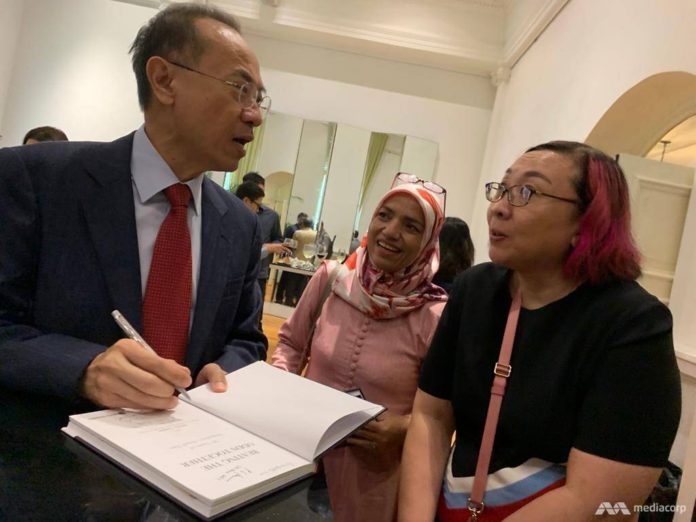
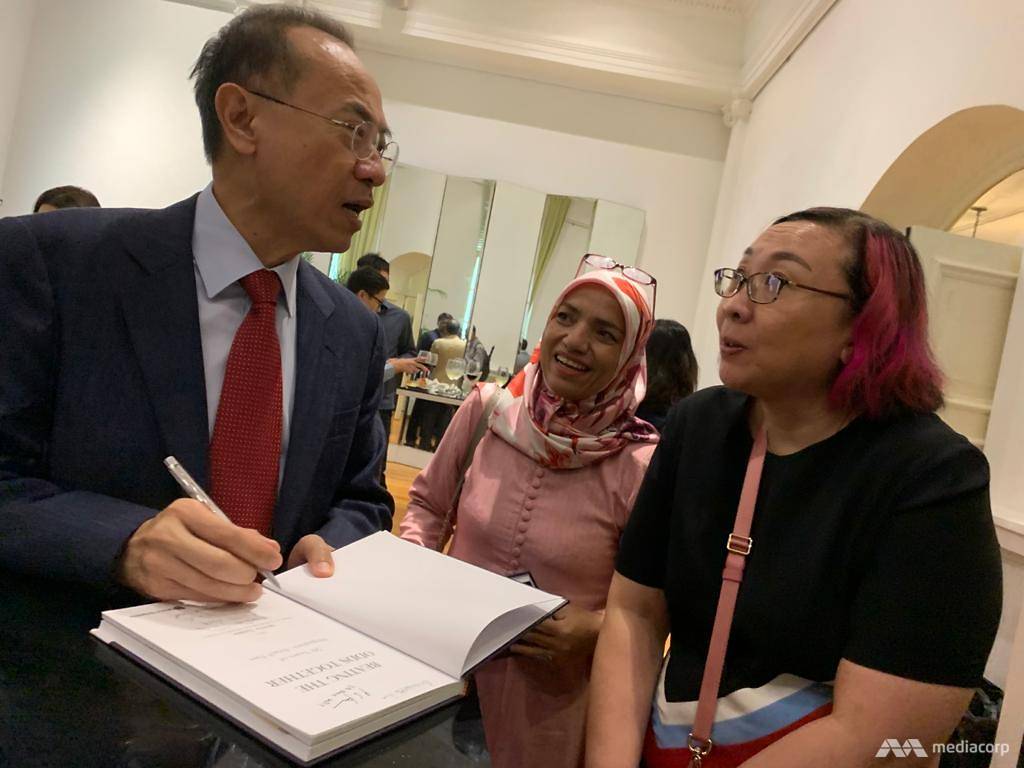
The book, jointly published by the Middle East Institute and World Scientific, was launched on Monday (Dec 9) by former Foreign Affairs Minister George Yeo.

The book details how Israel helped Singapore establish the SAF when other countries declined the latter’s calls for help. It also shows how that relationship has developed beyond security to fields such as business and technology.

The depth of Singapore’s relationship with Israel has rarely been publicised because of political sensitivities, wrote Emeritus Senior Minister Goh Chok Tong in his foreword in the book, highlighting Singapore’s neighbours’ position towards Israel.

“Today, we can be open in telling the story of the extraordinary contribution by our Israeli friends to our security when few thought that Singapore could survive on its own,” he said.

THE BROWN BOOK

While the book celebrates 50 years of diplomatic ties between Singapore and Israel, the relationship between the two countries actually dates back slightly earlier to 1965, when Singapore separated from Malaysia.

The split happened amid a communist insurgency and armed confrontations in the region, prompting Singapore to make defence capability an “existential priority”, wrote the former Permanent Secretary (Defence) Peter Ho in one chapter of the book.

Dr Goh Keng Swee agreed to lead the effort to build an army from scratch and approached countries that had done the same.

While India and Egypt congratulated Singapore on its independence, they did not offer military aid. Then-Prime Minister Lee Kuan Yew subsequently gave the green light to approach Israel for help, Mr Ho wrote.

In October that year, a general of the Israel Defense Forces was despatched to Singapore under conditions of “great secrecy”.

Singapore-Israel book launch George Yeo

Former Foreign Affairs Minister George Yeo, who wrote a chapter in the book, signs a copy. (Photo: Aqil Haziq Mahmud)

He travelled incognito around Singapore by taxi, studied the terrain and ground conditions, and together with a team developed The Brown Book, a master plan for the creation of the SAF.

“It covered strategy and doctrine,” wrote Mr Ho. “But at its core was the fundamental assessment that the only viable solution for Singapore was to build a citizen army of conscripts, trained and led by a small regular force.”

EARLY YEARS OF NS

The Brown Book also proposed the setting up of an officer training school to produce professional leaders that could train future soldiers.

In November, a group of seven different Israeli advisors arrived in Singapore and eventually selected Pasir Laba as the site for the training school.

One year later, the Singapore Armed Forces Training Institute – now known as the SAFTI Military Institute – was built.

The Israeli advisors “insisted from the very start that the Singaporean officers were to learn from them so that they could take over as instructors as soon as possible”, wrote Mr Ho.

Singapore-Israel book launch editor

The book was edited by Mattia Tomba, an adjunct senior research fellow at the Middle East Institute. (Photo: Aqil Haziq Mahmud)

By the early 1970s, word started going around that Israeli training had been incorporated into the SAF syllabus, and that it was extremely tough and dangerous, with the use of live ammunition and the occasional serviceman injury or even death, said Mr Ho.

“Of course, this was all exaggeration and rumour-mongering in the hothouse of the early years of National Service,” Mr Ho added.

“But I suspect such rumours served a useful purpose, because it persuaded us in those days that our military training was to be taken very seriously.”

EAGER STUDENTS

In Singapore, the Israeli team also conducted a course for recruits and platoon commanders, and Israel soon became a key source of defence equipment and technology.

“We will always be a student to Israel in military affairs. We should always be eager students,” said Mr Yeo at the book launch event on Monday.

“Our bilateral relationship now extends beyond defence to many other fields, and it has always been our fervent hope that Singapore can be a benefit to Israel to whom we owe a deep, eternal debt of gratitude.”

The 143-page book retails at major bookstores for S$37.

Source link

DJ Lim Peifen responds to flak after son allowed into Jewel Changi Airport attraction without proper footwear

0

[ad_1]

A parent questioning why a local celebrity’s child was allowed into an attraction at Jewel Changi Airport without proper footwear while her own son was barred entry has sparked much unhappiness for all the parties involved.

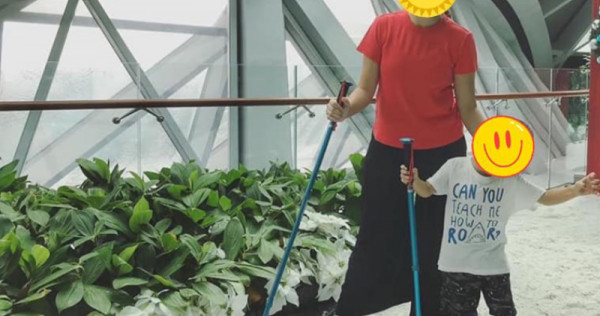
Facebook user Kailin Ng had brought her four-year-old son to Jewel’s Canopy Park, which currently has Christmas-themed features such as a Snow Walk Spectacular at the Topiary Walk, on Nov 23.

In a Facebook post on Dec 3, the 30-year-old housewife wrote that her son Aden was denied entry into the Snow Walk due to improper footwear.

He had been wearing open-toe sandals instead of covered shoes, which are required as part of safety measures.

Ng said in her post: “Lucky for me, Aden was understanding. He left that part of the walk saying to me, ‘It’s ok, I’m still happy.'”

However, Ng was “baffled” when she came across a photo posted by a “Singapore celebrity DJ”, showing the latter’s son on the Snow Walk despite being clad in sandals.

[ad_2]

Source link

12.12: 50% off at Crystal Jade, $10 Ippudo ramen & other deals this week

0

[ad_1]

We scour the island for the best deals to help you stretch your dollar, and keep you in the loop on the hottest shopping trends. ‘Cos good things must share.


50% OFF AT CRYSTAL JADE ON 12.12

Crystal Jade will be offering 50 per cent discounts across their outlets on Dec 12, for the first 50 walk-in customers.

For Crystal Jade Jiang Nan, Crystal Jade Hong Kong Kitchen and Crystal Jade La Mian Xiao Long Bao (excluding Changi Airport T1), diners can get 50 per cent off the a la carte food bill. 

At Crystal Jade Palace, Crystal Jade Golden Palace, Crystal Jade Dining IN & Crystal Jade Pavilion, diners can get 50 per cent off individual set menus (minimum two to dine).

For the full list of outlets, check them out here.

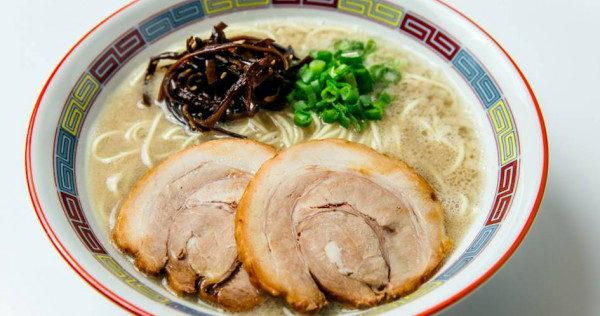
$10 IPPUDO TONKOTSU RAMEN

[ad_2]

Source link

This luxury confinement centre in Singapore which costs $12k per stay is making me want to have my first child

0

[ad_1]

The idea of pregnancy and seeing your body change is scary enough. Top that off with the dos and don’ts during confinement — as told differently by every concerned relative — while learning to care for a tiny human, and you’re suddenly stuck in a stressful situation. 

While many couples engage confinement ladies to stay over to care for the baby and cook nourishing food for the new mother after childbirth, I struggle at the thought of sharing my home with a complete stranger during my most vulnerable period, let alone entrusting a newborn baby to her. 

Most of these confinement ladies are recommended by word of mouth. If you hire one that’s sensitive to you and your baby’s needs, it’ll be like heaven on earth, but I’ve read horror stories that can be frightening for someone who already has doubts about having a baby. 

Sure, mothers and mothers-in-law will be most willing to look after the baby, but that can be quite taxing on them too, especially if they still have full-time jobs and have to put their commitments on hold during the first month. 

[ad_2]

Source link

SGH Campus to get new road network, 1,000 more parking lots

0

SINGAPORE: Those visiting the Singapore General Hospital Campus can expect to see smoother traffic flow and less congestion from the end of this month, when a new road network comprising three separate non-connecting routes is opened.

The “destination-based road network” comes into effect Dec 29, said SingHealth in a media release on Monday (Dec 9). 

It will enable drivers to get directly to specific destinations in SGH Campus in a “smooth and efficient manner”, instead of looping through using the current one interconnected network.

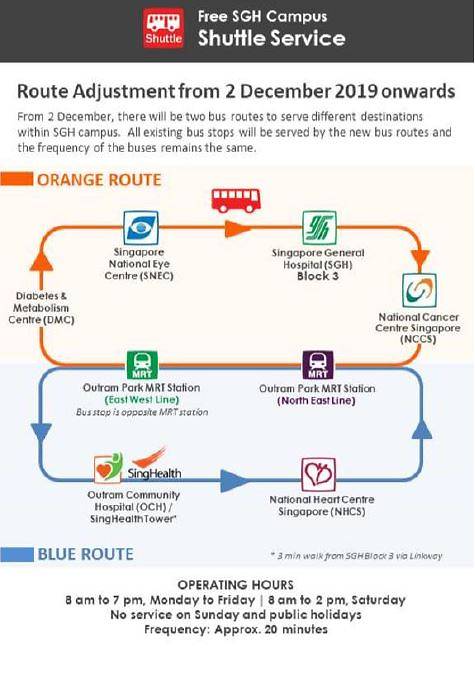
Further improving the traffic flow, shuttle buses from Outram Park MRT station to SGH Campus began plying two routes since Dec 2, up from the single roundabout trip.

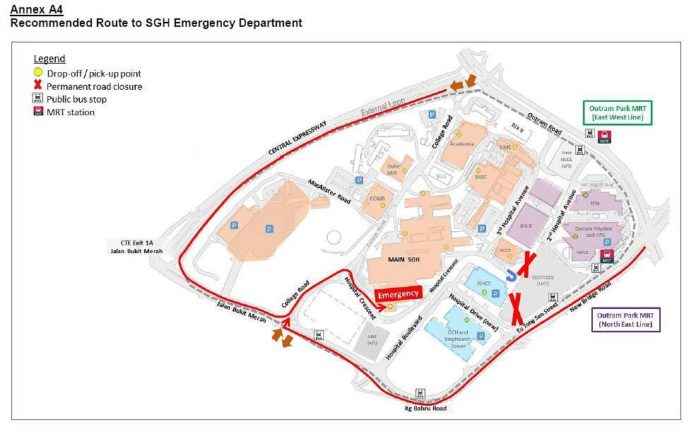
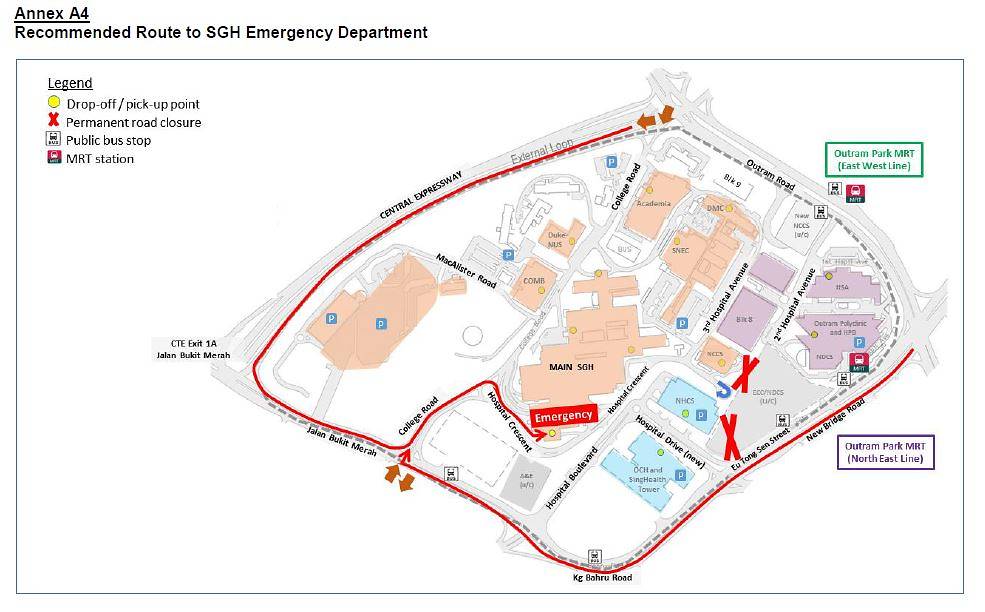
Recommended Route to SGH Emergency Department

(Map: SingHealth)

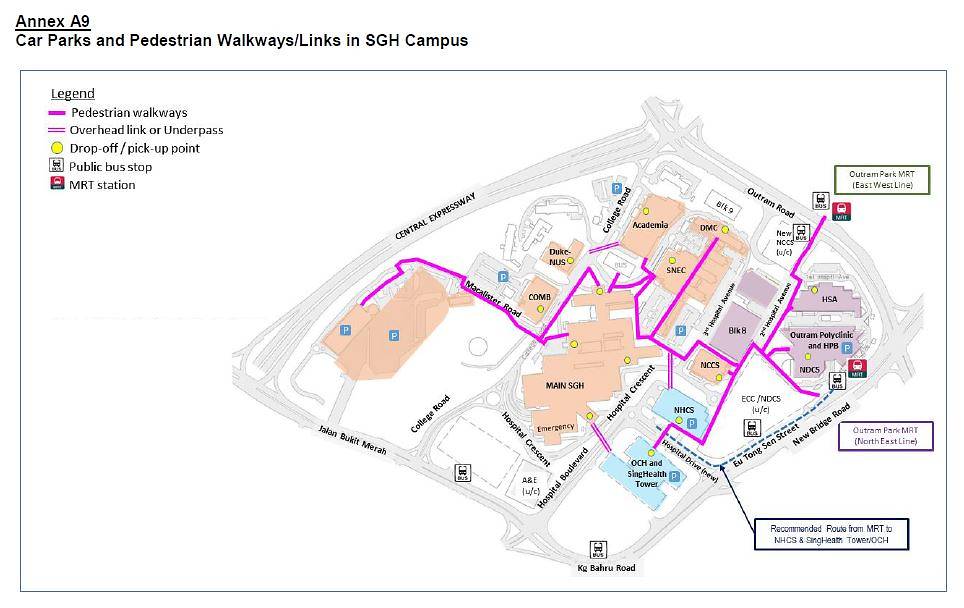
pedestrian walkways

(Map: SingHealth)

One thousand additional parking lots are also available for drivers, following the opening of Outram Community Hospital/ SingHealth Tower, the release said.

HOW WILL DRIVERS BE AFFECTED?

From Dec 29, drivers who want to access SGH Blocks 2, 3 or 4 or the National Cancer Centre Singapore should use Kampong Bahru Road or Jalan Bukit Merah to enter via College Road.

Drivers looking to get to Academia, Singapore National Eye Centre, Diabetes and Metabolism Centre or  SGH Blocks 5, 6 or 7 should use Outram Road to enter via College Road.

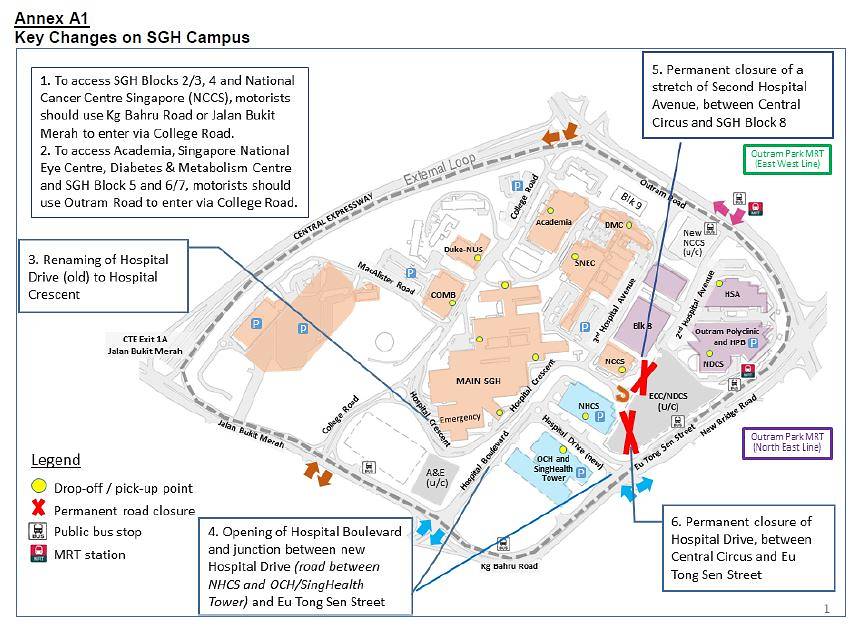
The current Hospital Drive will also be renamed Hospital Crescent.

Additionally, a new junction will be opened between Eu Tong Sen Street and the new Hospital Drive, and connect to Hospital Boulevard.

In another key change, several roads will be closed permanently, including a stretch of Second Hospital Ave between Central Circus (in front of NCCS) and SGH Block 8, as well as Hospital Drive between Central Circus and Eu Tong Sen Street.

key changes

(Map: SingHealth)

ADDITIONAL PARKING AVAILABLE

For parking options, there are now 1,000 more lots available following the opening of the Outram Community Hospital (OCH)/SingHealth Tower.

The updated parking options are at: Outram Community Hospital/SingHealth Tower, Car Park H at MacAlister Road, National Heart Centre Singapore Car Park, Health Promotion Board Car Park, Car Park G, Ministry of Health Car Park (Car Park F), SGH Bowyer Block Car Park (Car Park C) and SGH Diabetes & Metabolism Centre Car Park (Car Park I).

NEW SHUTTLE BUS ROUTES

Those taking public transportation and using the free shuttle bus services from Outram Park MRT station will now have two routes to choose from.

“The routes will serve different institutions on the Campus, allowing patients to reach their destination faster compared to a single roundabout trip,” according to the news release.

“All existing stops will be served by either one of the new bus routes and the frequency of the buses remains the same.”

The first route, the orange route, serves the SGH Diabetes and Metabolism Centre, Singapore National Eye Centre, SGH Block 3, and National Cancer Centre Singapore (NCCS).

The blue route stops at Outram Community Hospital/SingHealth Tower and National Heart Centre Singapore.

shuttle service

(Image: SingHealth)

FUTURE PLANS

There will also be upcoming changes as part of the SGH Campus Masterplan developments.

The new facilities being built on the Campus include the new NCCS building, Emergency Medicine building, as well as new SGH and National Dental Centre Singapore building.

“We carefully planned this road network change in tandem with ongoing infrastructure redevelopment to help motorists get to where they need to go on SGH Campus with minimal disruption,” said Mr Tan Jack Thian, group chief operating officer, SingHealth and chief operating officer, SGH.

“Together with the dual shuttle bus routes from Outram Park MRT station, it is hoped that the road changes will ease congestion and facilitate smoother travel to our healthcare institutions,” he said. 

Source link

Local hotpot restaurant continues sale of rabbit meat dishes despite social media outcry

0

[ad_1]

A local hotpot restaurant has found itself in hot water after announcing two new additions to their menu made of an exotic protein not commonly available in Singapore — rabbit.

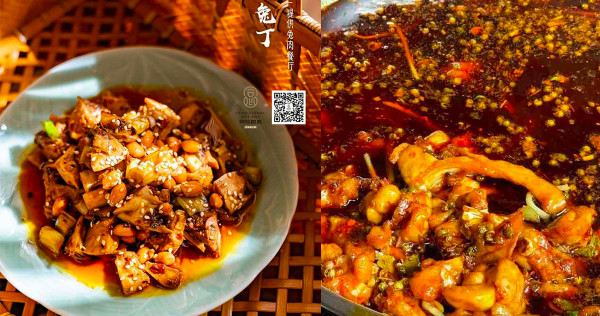
Located along Lorong Telok in Clarke Quay, Tong Xin Ru Yi introduced their new diced rabbit in chilli oil ($16) and rabbit hotpot ($68) dishes in a Facebook post that has since been removed.

“We are happy to announce that we are the first and only one to release rabbit hot pot in Singapore,” the post had stated.

PHOTO: Facebook/ Tong Xin Ru Yi Traditional Hotpot 

Suffice to say, the controversial move encountered much backlash from animal-lovers, many of whom lambasted the decision.

[ad_2]

Source link

Daily roundup: 2 men arrested after brawl at Jewel Changi Airport – and other top stories today

0

[ad_1]

Stay in the know with a recap of our top stories today.

1. ​Fight breaks out at Jewel Changi Airport; 2 men arrested

In a video, a group of around 10 people – both men and women – involved in the fight in front of American fast-food chain A&W… » READ MORE

2. Couple nabbed over airsoft gun on East Coast Park Service Road

[ad_2]

Source link