SINGAPORE – Harmony Funeral Care, the company implicated in a mix-up that resulted in a wrong body being cremated, will be barred from using government after-death facilities until it can prove it has taken measures to prevent a repeat of such a situation, said the National Environment Agency (NEA) on Saturday (Jan 4).
NEA said its investigations into Harmony Funeral Care had found that the company had insufficient measures in place to ensure the proper handling of the body, which resulted in the “egregious error”.
“NEA will bar Harmony Funeral Care from the use of government after-death facilities at Mandai Crematorium and Choa Chu Kang Crematorium and Cemetery until it can demonstrate to NEA that it has implemented satisfactory measures to prevent such future errors,” said the NEA spokesman.
The Straits Times had reported on Friday (Jan 3) about a mix-up at the funeral home on Monday (Dec 30) that led to what is believed to be the first reported case of a wrong body being cremated in Singapore.
SINGAPORE: A few months ago, my 30-something cousin made a surprising confession. He’s trying out a vegetarian diet.
I’ve always thought of my cousin as a hardcore meat-lover. I remember him (when he was a younger lad) vacuuming up all the beef slices in the hotpot, or extricating every bit of flesh from spindly crab legs.
But he and his wife – parents of two infants – have watched Netflix’s The Game Changers. The documentary explores how vegan diets have benefitted world-class athletes, from lanky marathoners to hulking weightlifters. Where vegetarians do not eat meat, vegans go the extra mile by not eating animal products, including dairy and eggs.
Both my cousin and his wife were convinced by the documentary’s argument that a plant-based diet provides sufficient protein, and reduces the risk of heart diseases and cancer.
My cousin also confided in me that his cholesterol level is four times higher than what’s considered healthy.
PLANT-BASED EATING GAINING TRACTION
The past decade has seen an uptick of interest in plant-based diets, which comprise grains, legumes, fruits and vegetables with few to no animal products.
People are growing more aware of the nutritional and environmental impact of their food. This awareness has been reflected in the growing appetite for sophisticated plant-based “meat” products – Barclays predicts that the global industry will be worth US$140 billion by 2029.
A giant digital display shows Beyond Meat (BYND) listed on the NASDAQ stock exchange during the company’s IPO at the NASDAQ Market Site in Times Square in New York City, New York, U.S., May 2, 2019. REUTERS/Mike Segar
Plant-based meat producer Beyond Meat saw its shares rise more than 160 per cent after its market debut in May 2019, in one of the year’s best-performing IPOs.
Plant-based eating has been picking up in Singapore as well. Vegetarian and vegan eateries have mushroomed in Singapore over the past ten years, from international chain VeganBurg to homegrown outlets like Real Food and Greendot.
In 2016, People for the Ethical Treatment of Animals (PETA) ranked Singapore the second most vegan-friendly city in Asia (Taipei clinched the top spot).
However, sometime during our family meal last week at a tze char restaurant, I glanced over at my newly vegetarian cousin and saw him eating pork ribs.
PLANT-BASED EATING NOT YET MAINSTREAM
I don’t blame my cousin entirely. As a vegetarian myself, I can empathise: The meatless pickings at our table that day were slim. I too wish for the day where I could order more than fried kailan, three-egg spinach and white rice.
And when your non-vegetarian family members order up a feast, you can’t help but feel that you’re being irritating with your dietary restrictions. It’s so much easier (and more polite) to acquiesce and eat whatever’s on the table.
Many experts say we should be eating less meat for health, economic, and environmental reasons. But if we truly accepted plant-based eating, surely any given restaurant would offer more meatless options.
Perhaps we could make more meaningful moves to exclude meat from our diets if we tackle the misconceptions around plant-based eating.
MISCONCEPTION #1: PLANT-BASED EATING IS A FAD DIET
People have asked me before whether I’m a vegetarian to lose weight. That question has always suggested to me that people think of plant-based eating as some fad diet that is no different from a juice cleanse.
(Photo: Pixabay/Free Photos)
But plant-based eating seems like a sensible orientation worth considering for the long term on an increasingly strained planet.
Globally, food accounts for a third of greenhouse gas emissions, and red meat has the biggest carbon footprint per kg of protein.
In Singapore, the total emissions of the food people consume will increase by about 19 per cent by 2030 due to population growth. Pork has the highest carbon footprint here, accounting for about 28 per cent of food-related emissions. The most straightforward way to reduce food-related emissions would be to consume less meat.
Shifting towards a less resource-intensive plant-based diet could also reduce the stress put on global food supply chains.
An August 2019 United Nations report suggests that global population growth has strained land and water resources. Coupled with extreme weather events brought about by climate change, rising food insecurity and hunger is an emerging reality many nations will face.
A plant-based diet also suits the reality of living in land-scarce Singapore. Singapore produces less than 10 per cent of its nutritional needs, half of which come from fruits and vegetables, but in March 2019, the Singapore Food Agency announced a target for Singapore to up this number to 30 per cent by 2030.
Supported by advances in vertical farming and urban agriculture, and investments in developing local farming talent, Singapore, in particular, aims to supply 20 per cent of the fruits and vegetables it needs.
In this context, a plant-based diet may be aligned with Singapore’s vision of becoming more self-sufficient in feeding its people.
MISCONCEPTION #2: PLANT-BASED EATING IS FOR THE WEALTHY AND VIRTUOUS
Another complaint I’ve heard many times is that plant-based eating is expensive.
(Photo: Pixabay/Virtual Stylist)
Many imagine that plant-based diets entail kale shakes for breakfast, avocado toast for lunch, and quinoa bowls for dinner. It seems that the only people who eat that way are white-collar workers who can afford to take yoga classes during lunch breaks.
All those foods listed above are, or were at some point, health food trends. Their high price points do not reflect the cost of raw materials, but rather, of rent, labour and marketing.
We place a higher value on these food items because they’re sold to us as healthy and trendy, not very different from how much more people are willing to shell out for artistic Instagram foodporn or the newfangled fancy their favourite food bloggers gush about.
I readily admit that there can be an offputting aura around vegetarianism and veganism. The perceived exclusivity, coupled with the suggested moral superiority of its proponents, can sometimes add to a cult-like fervour around plant-based diets.
But plant-based eating isn’t some posh membership awarded only to a select few.
Such a diet could be cheaper than a meat-heavy one. Ordering three vegetable dishes at your cai png store sets you back less than ordering three meat dishes. Chickpeas cost less than chicken breast on a per-kg basis in an average supermarket.
Moreover, vegetarianism has long had a presence in Singapore. Many Buddhists and Hindus are vegetarians. Their vegetarian cuisines are a part of Singapore’s culture.
Hawker centres ranging from Chinese vegetarian stalls to social enterprises also provide some affordable, vegetarian fare.
ARE PLANT-BASED DIETS HERE TO STAY? TIME WILL TELL
Perhaps plant-based eating is too new a trend for us to judge whether it’s just a phase, or a first step towards a more sustainable and lifestyle. The sustainability debate hasn’t been around long enough and it admittedly takes time for habits and lifestyles to shift.
Shoppers at a wet market in Singapore. (Photo: AFP/Roslan Rahman)
Maybe the climate crisis would push us to take real action towards eating more sustainably.
And maybe one day, we will have a greater diversity of vegetarian options in more restaurants, cafes and hawker centres – beyond vegetarian stalls, and beyond having just one vegetarian option on menus around Singapore.
For now, I’ll continue eating my plant-based “meat” – and hope with all my heart that these products are here to stay. And that meatless chicken wings would one day be made reality.
SINGAPORE: From Sasa to Borders and HMV, a number of popular retailers have left Singapore shores or announced plans to do so over the last decade.
Once-mighty department stores like Metro and Isetan have also downsized operations.
These slew of developments have prompted questions over how well Singapore malls are adapting to this disrupted landscape, facing stiffer competition from e-commerce and perennial issues of labour and rental costs.
Indeed, Singapore is not the only country experiencing this changed retail landscape.
Where mall rats used to roam shopping centres in the US, the once-colourful retail scene has seen the shuttering of K-Marts, Sears and Macy’s stores, not to mention Barneys filing for bankruptcy.
Just across the Atlantic, fate has also been less kind to UK department store chains Debenhams and John Lewis.
Even in the land of Alibaba, the Chinese Academy of Sciences and Social Sciences predicts a third of malls in China will close their doors by 2020. The remainder will have to adopt to a new “click-and-mortar” model or reinvent themselves into an experiential mall.
Although many developments characterise the 2010s, what have been defining features are the advancement of digital technologies and the enormous rise of platforms.
Retail has seen an explosion of digital commerce, social media and augmented reality (AR) transforming shopper behaviour in the last several years in a drastic fashion.
But the Singapore mall is fighting back. While it had been slow to react to the initial disruption at the turn of the last decade, its response in recent years has been bold.
BIG DISCOUNTS
The surest sign of malls reclaiming their position was the huge footfall achieved over Black Friday and CyberMonday, which attracted up to 46 per cent more shoppers in 2018 compared to daily averages, according to CBRE.
Ngee Ann City pulled out all stops, with most stores including anchor giant Takayshimaya offering steep discounts.
Department store Robinson’s, which offered up to 90 per cent off items, saw a huge line-up some more than 24 hours before its Black Friday sales begun.
Orchard Road was packed for the first time in a while, with many retailers offering a long sale period stretching from Singles’ Day to the post-Christmas week.
Strong sales figures released by many retailers have proven that the Singapore mall is still a vital part of the shopping experience. Queues continued all the way until the New Year.
ICONIC ATTRACTIONS, NEW EXPERIENCES
Apart from one-off sale events, new mega malls that have dotted the Singapore landscape over the last decade have zoomed in on creating experiences that make them a great lifestyle destination.
The Pokemon Parade at Jewel Changi Airport will include a dance performance at the North Canyon. (Photo: Jewel Changi Airport Development)
Many have incorporated a novelty feature that allows them to stand out from the crowd and earn top-of-mind recall.
The rain vortex of Jewel Changi Airport and Skywalk have been major attractions that keep many Singapore families chasing after something that will keep their kids mesmerised and youths looking for their next Instagram shot coming back.
In a similar fashion, what keeps people returning to Marina Bay Sands is its proximity to attractions nearby, whether the ArtScience Museum, or carnivals held in the adjacent space, which was home to Cirque Du Soleil last year.
Funan reopened as a rebranded modern industrial lifestyle mall with an outdoor urban farm, rock-climbing facility, a Golden Village cinema and a Wild Rice theatre.
Indeed, the shopping mall of the future is increasingly one that offers entertainment options and activities to engage in with friends and families.
These take a leaf from the books of some of the most popular Chinese malls that have built iconic features and provided lifestyle options that keep people returning.
These allow them to position themselves as a place for people to spend their weekends at and something more than a functional shopping mall where shoppers look to for their next purchase.
Golden Village Funan. (Photo: Golden Village)
Kunming’s Aegean Shopping Mall houses an indoor horse-riding racetrack where patrons can ride, feed and pat horses, a swimming pool and an ice-skating rink.
Chengdu’s New Century Global Centre, as an integrated lifestyle resort and shopping nexus, has an indoor beach more than a kilometre long, a water park and multiple hotels.
FRESH TENANTS
Malls, however, do not have to undergo drastic infrastructural overhaul and expansion in order to compete in this market.
What remains important to the Singapore shopper is a strong retail mix of fresh brands and new stores which has been met in a variety of ways.
Many mall operators already change up their retail mix every few years to bring in new tenants but have been more aggressive in freeing up space for new ones in recent years.
JCube recently engaged Don Don Donki and cleared out a huge basement area for the Japanese retail and F&B giant, which has pulled more shoppers over.
ION Orchard brought in H&M at the turn of the decade, rejigging floor plans and making space across a few floors for the retail giant. It is now home to the only JD.com store in Singapore that sell the hottest sneakers.
Pop-up store concepts all along the length of Orchard Road have also piqued shoppers’ interest and allow mall operators to be more nimble in serving up fresh tenants.
Even the strategy employed by many neighbourhood malls to host a buzzy calendar of seasonal events, where retailers offer fresh produce and new items, seem to be a working strategy that continues to pull in recurring patrons from the surrounding estates.
CLEAR VALUE PROPOSITION AND BETTER CUSTOMER RELATIONSHIPS
Many malls have also crystalised their value-add in a crowded landscape to attract a specific target audience.
Paragon focuses on specialist medical needs while Wheelock Place offers a host of cosmetic and beauty treatments. Both serve up many luxury brands and fine dining to this clientele, with much success.
In Novena, United Square consolidates a wide range of educational enrichment specialists, Learning Lab being the most well-known, that draws in parents with complementary shop offerings – including children’s apparel, toys and books.
Some have also invested in developing a better customer relationship with returning consumers.
Frasers group, which operate a series of neighbourhood malls, has introduced an app to inform patrons of promotions and new events, which has a F&B reservation feature and a loyalty programme where customers can rack up points in e-wallets to be spent at their group of malls.
CapitaLand has collaborated with Alibaba in China and Lazada in Singapore to create an online mall on their platform, which allows shoppers who patronise the CapitaLand official store on Lazada.SG the option to collect purchases in CapitaLand malls.
This additionally gives customers better assurance of the product quality they intend to purchase where they can feel, touch and try before purchase – with fitting rooms and a product testing bench.
INVEST IN A DIGITAL EXPERIENCE
As much as we have seen many foreign brands shutter in Singapore, the Singapore mall has changed to meet new challenges.
But the digital transformation that has disrupted retail will demand that malls evolve further. A 2016 study by Temasek Holdings and Google suggest online shopping in Singapore could grow by five times by 2025 to reach SS$7.4 billion.
The next phase is for malls to invest in a holistic omni-channel experience. Location-based services can be one area.
Imagine if as a parent, being alerted to diapers and milk promotions when you walk into a mall with an NTUC. Or sent push notifications on the discounts of the weekend at your frequented retailers each Saturday morning as you stroll across Orchard Road.
Similarly, malls could leverage live-streaming to promote events or special sales at their respective malls in the way Tmall, Sina Weibo and JD.com have to gain sales in China.
A woman looking at her smartphone while walking outside a shopping mallk. (Photo: AFP)
THE FUTURE IS NOT SET IN STONE
It is telling that the Singapore retail real-estate investment trusts (REIT) are among the markets best performers – with the 12 retail REITs averaging a return of 23 per cent in the first 11 months of 2019, according to the Singapore Exchange and outperforming the Straits Times Index.
The Urban Redevelopment Authority Masterplan 2019 also plans to bring in more housing to downtown Singapore.
That, coupled with plans to revitalise Orchard Road and attract tourism to the country, could boost human traffic in those shopping districts and inject greater life into our malls.
Indeed, the future of Singapore retail has not been set in stone. The next decade could see malls wrestle back that future from e-commerce even more decisively.
Dr Lau Kong Cheen is a Senior Lecturer for Marketing Programme at the Singapore University of Social Sciences and he is passionate about branding and consumer behaviour.
SINGAPORE: At five years old, Oscar Saxelby-Lee has already gone through more than what most people will do in a lifetime.
Oscar is battling acute lymphoblastic leukaemia – a rare form of aggressive cancer that has so far rejected all forms of treatment.
The small boy spent most of 2019 – 10 months in total – in isolation wards as doctors fought to find a way to save his life.
Most children his age would be starting school about now after enjoying life, playing and learning.
Oscar has had a very different time, undergoing four regimes of chemotherapy, a stem cell transplant, and treatment where healthy cells are injected into him.
They have all failed – the cancer remains in Oscar’s blood and will kill him in months if left to itself.
Still, there is hope.
The latest experimental treatment, developed in Singapore, might save his life.
The boy from Worcester, England has flown here for a new form of treatment, in which immune cells from a patient’s blood is drawn and equipped with a Chimeric Antigen Receptor (CAR-T).
Oscar has started treatment in Singapore for acute lymphoblastic leukaemia. (Photo: Family)
The receptor binds itself to a specific protein on the cancer cell and activates the CAR-T cells to kill the cancer cells.
This particular form of CAR-T treatment is different and more difficult because the leukaemia cells resemble Oscar’s immunity system, Associate Professor Allen Yeoh, head of paediatric oncology at the National University Hospital (NUH), explained.
Oscar will be the second person in the world to undergo this. The first child received the treatment only months ago in NUH.
This is compassionate treatment – which means it is not even in the medical trial stage yet – but his parents and doctors believe it could save Oscar’s life.
His mum Olivia, 24, said: “Oscar is not giving up. He doesn’t give up.”
LEUKAEMIA WAS THE LAST THING ON OUR MINDS
About a year ago, Oscar’s parents’ world crumbled. The normally active four-year-old boy was unusually lethargic, struggling to move around or play.
Three days after Christmas in 2018, his parents received the worst news possible – Oscar had cancer and it was spreading quickly.
Acute lymphoblastic leukaemia starts in the bone marrow and invades the blood quickly. If not treated, it would have killed Oscar in weeks.
Oscar was diagnosed with acute lymphoblastic leukaema on Dec 28, 2018. (Photo: Family)
“It was quite a scary diagnosis because he got to the point where he was laying on the sofa everyday unable to move around. He was so lethargic,” Olivia explained.
“It was diagnosed and told to us over the phone. We had a bit of intuition that something wasn’t right – but not leukaemia. That was the last thing on our minds.
“We rushed him into hospital and treatment began that day.”
Doctors started treatment just hours after the diagnosis. But within 28 days, it was clear the chemotherapy was not working. Medical staff started more intense chemotherapy.
But in March 2019, doctors told Oscar’s parents he was a non-responder, and that the cancer remained in 30 per cent of his cells and was spreading quickly. He needed a bone marrow transplant.
The news soon went viral on social media, and thousands of people queued up in the hope of being a match for Oscar.
“We spent three months trying to find a donor and we had a massive plea, it went really far,” Olivia said.
“We thought we got to the point when we wouldn’t find his match, but out of the blue, we did.”
Oscar Saxelby-Lee in NUH for acute lymphoblastic leukaemia treatment. (Photo: Family)
That was welcome news because Oscar was struggling.
By April – in the fourth and strongest dose of chemotherapy – it was clear the usual treatment for acute lymphblastic leukaemia was not going to be enough. Doctors could still detect cancer cells in Oscar’s blood.
CANCER SPREADING QUICKLY
At the end of May, the little boy underwent a stem cell transplant after more radiotherapy and conditioning in isolation. By this point, he had spent two months in isolation, with only the occasional reprieve when he went home for a few hours on some weekends.
“All of the isolation, (that was) 10 months in hospital. He had a couple of days home leave, here and there, but never got discharged. He’s not been home overnight and has to come back to hospital,” Olivia said.
“He has been isolated for a very long time.”
Doctors had to monitor Oscar when he first arrived in Singapore. (Photo: Family)
It was thought that stem cell transplant might be the cure, but in August, a small percentage of cancer cells was found in the bone marrow – 0.01 per cent.
Acute lymphoblastic leukaemia is aggressive. A week later, the number of cancer cells had multiplied three times.
“We knew it was going to grow. It is his kind of disease,” Olivia explained.
“Within a week, it had gone up to 0.03 per cent. We knew it was rapidly increasing. This was the point when the doctors explained to us that a stem cell transplant was Oscar’s cure, and that was the best thing they could have offered him.
“They sadly didn’t have much else to offer. To us as parents that was the worst thing possible to hear.
“We knew Oscar had an angry, horrible disease. We didn’t feel (what the doctors told us) was enough. He was so well. He was back to his really happy, chirpy self.
“He was recovering so well – and it was only a small amount of disease. We still thought there was something we could do for him.”
That was when doctors told Olivia and her partner Jamie to consider other treatment that was not available in the UK.
Oscar gives the thumbs up as he arrives in hospital. (Photo: Family)
A NEW HOPE
Medical treatment in the UK is covered by the National Health Service, which means treatment was free for Oscar.
But trying experimental treatment in other parts of the world could cost a lot of money.
Jamie, who had a job as a builder, stopped working in March to take care of Oscar. Olivia, who had worked as a teaching assistant, was retraining in university to be a social worker.
They simply did not have the huge amount of money – £500,000 (S$885,000) – needed to fly to another country for treatment. So, the family approached the Grace Kelly Childhood Cancer Trust for help.
No one would insure Oscar, and the money proved a big hurdle, but thousands of people responded and they raised the required funds in just three weeks.
Jamie and Olivia reached out to doctors across the world, and heard about Professor Dario Campana’s work at the National University of Singapore (NUS) on childhood cancer.
They approached him and Assoc Prof Yeoh.
Associate Professor Allen Yeoh, head of paediatric oncology at NUH. (Photo: NUH)
“Everybody kind of gave their advice but didn’t have very much to offer. Speaking to Prof Allen – there was a very tricky conversation (about coming to Singapore),” Olivia explained.
“It’s in a different country – it’s halfway across the world for us – and we just didn’t know what to do.
“For us to make the decision and for another country to accept Oscar was a really tough call to make.”
Oscar had one more treatment in the UK. Again, there was no response – cancer still ravaged his bone marrow.
By November, Oscar’s condition was worsening – the cancer cells had multiplied 100 times since the end of August. With no more options apparently available in the UK, the family made the decision – they had to come to Singapore.
Assoc Prof Yeoh said he knew the previous treatments would fail – the disease was “uncontrollable”.
“The parents knew that was not working and they flew in.”
Oscar in NUH preparing for acute lymphoblastic leukaemia treatment. (Photo: Family)
By the time Oscar arrived in Singapore on Nov 19, his cancer count was 1 per cent, and growing ever more quickly.
VERY LITTLE TIME
Doctors in Singapore knew they had little time. The treatments in the UK had brought some respite, but they also knew Oscar needed to be well enough for the experimental treatment.
While some in the medical team worked on that, others toiled around the clock to prepare the cells to be injected into the five-year-old.
Assoc Prof Yeoh said: “We knew the cancer had the cells that the treatment could attack. We had to harvest his cells and worked around the clock for six weeks to get it ready.”
When he arrived in NUH, Oscar had been in isolation for months.
“When they came, while we were working on the cells, we wanted him to be stronger. Basically we took everything off and let him enjoy himself,” Assoc Prof Yeoh explained.
“He started walking. Mum noticed bruises on his leg and it was because he was walking again – previously he didn’t walk for months (while in isolation).
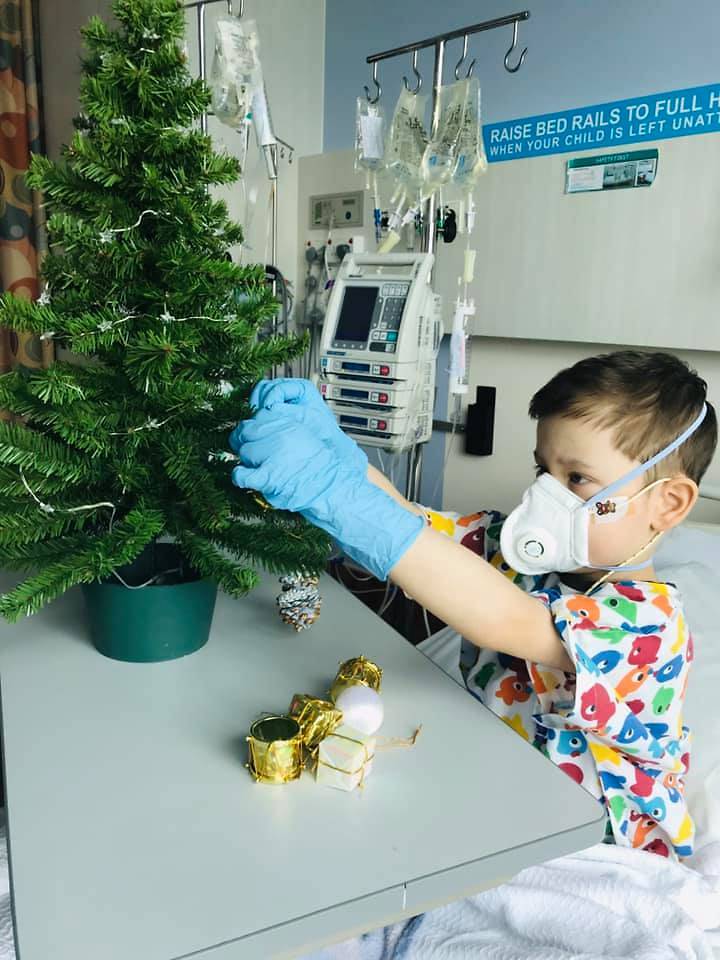
“We got him out to the zoo and out somewhere making Christmas trees. We needed him to boost up his feelings and to get his family to recharge before the next fight.
“You need the rest before this final run.”
Oscar Saxelby-Lee putting ornaments on a Christmas tree in NUH. (Photo: Family)
Olivia said: “Oscar is very good, he understands that he is poorly, he understands he has got really bad blood.
“We don’t want him to know how much risk he is at, or what potential risks, we just want him to know that he’s getting better.
“It’s longer than we thought it was – we’re sorry he is in hospital. He has every right to be upset.
“But I always say to him there is no reason why he is here and I wish there was, but it’s just that he has got poorly blood and he needs to get better.”
“THIS IS THE ONLY THERAPY”
On Dec 18, the young boy was brought back to NUH to prepare him for the new cells to be injected. By then, his cancer cells had multiplied and was now at 7 per cent.
On Christmas Eve, his parents decided there was no time to lose.
Oscar Saxelby-Lee allowed out of isolation for a short walk. (Photo: Family)
Assoc Prof Allen said: “He was relapsing. Mum knew he was relapsing. Out of 100 cells in his bone marrow, seven of them were cancerous.
“When he had one cancer cell in 10,000 you knew it was starting to relapse. You predict he would not respond to other treatment.
“It’s very fast. These cells are even worse because they have seen all the chemotherapy, have evaded the bone marrow transplant cells in general … so these to me are seasoned terrorists that would be ready to destroy and kill him.
“This is the only therapy that we could do in general.”
On Thursday, Oscar was let out of isolation for 10 minutes to walk around the ward. It was a moment of freedom for the young boy, who will be facing high fevers – among other symptoms – for the next few weeks as his body battles the cancer.
Olivia said her family is grateful to be here.
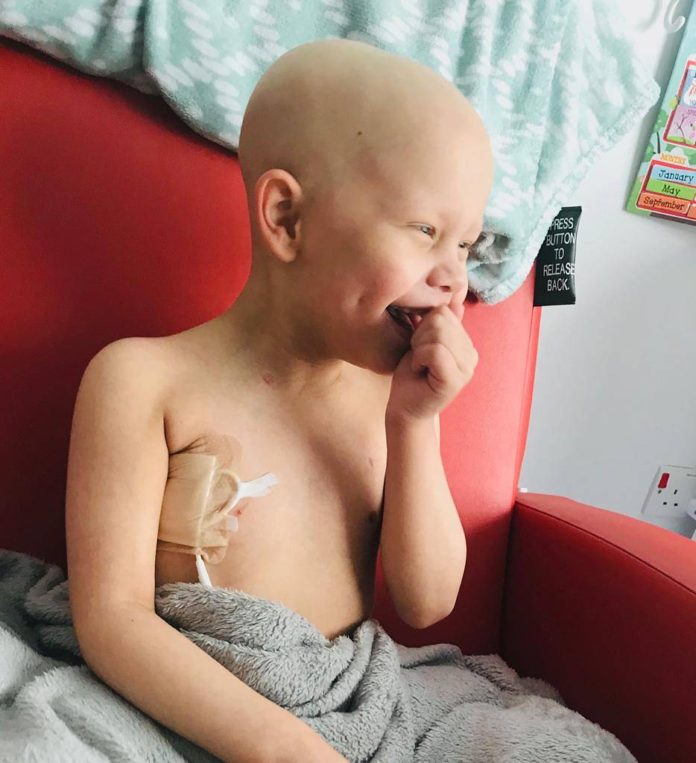
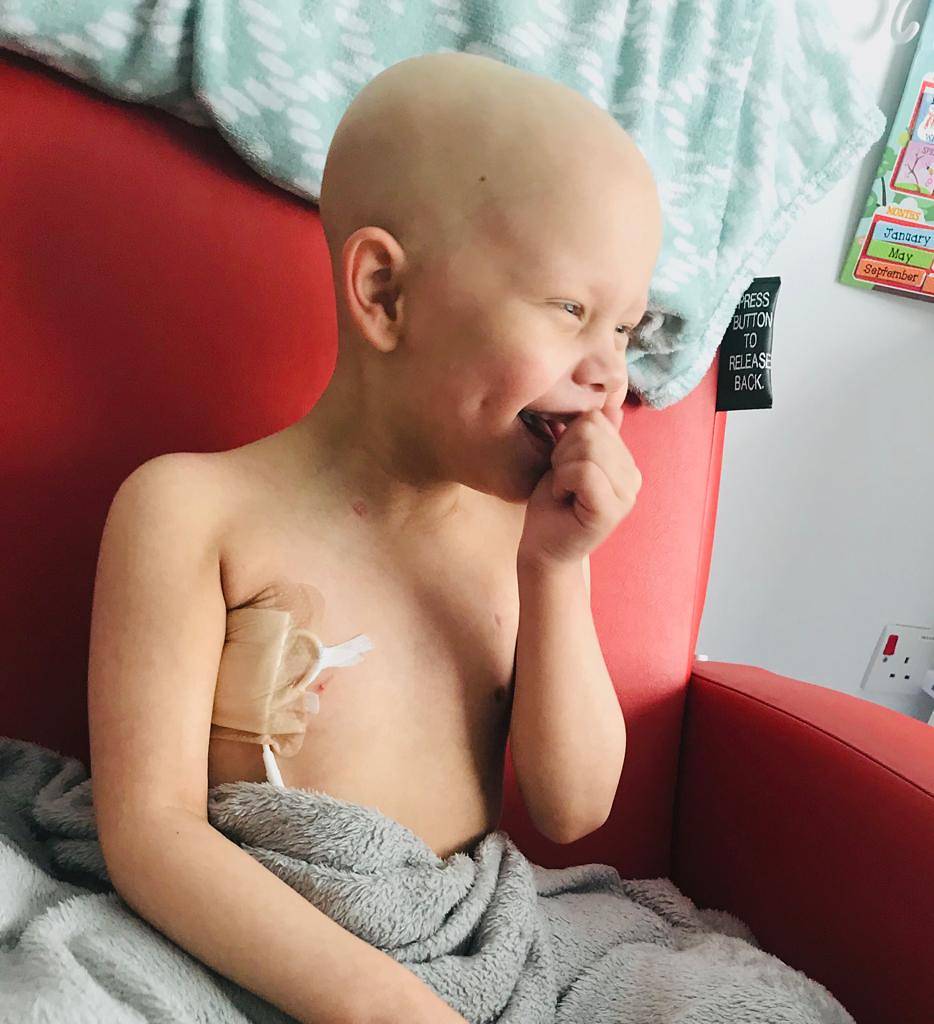
Oscar Saxelby-Lee is still smiling despite undergoing cancer treatment in Singapore. (Photo: Family)
“It was quite worrying coming to a different country. My worry as a mum was, am I doing the right thing? What do I do?” she added.
“Our time here has really shown us that the Singaporean way is so kind.
“There have been a couple of times I get in a taxi and I burst out crying and the drivers are always so kind.
“There is a great team here, the nurses are great to Oscar.”
For Olivia, the hope for her son is that he will no longer be plagued by the cancer that has ruined 2019.
“We’ve been through so much together. We also want to encourage others not to give up – if the treatment is not there, go out and find it,” Olivia said.
“It might not work, but try. If it was not for us looking for Oscar, we wouldn’t have got here. No consultant in the UK was going to send us to Singapore.
“The hope is he is in remission for the rest of his life – that he’s cured. But I would love to see him without any suffering any more.
“It has been a year of trauma. If I can ask for one thing, it’s for him to be happy and well and himself, content with his life.”
SINGAPORE: Two men have been arrested by the Central Narcotics Bureau (CNB) after officers seized about S$1.1 million worth of drugs and S$16,250 in cash over a two-day operation.
On Thursday (Jan 2), CNB officers tailed a 39-year-old Singaporean man from Woodlands Drive 50, before arresting him along Pasir Ris Drive 1.
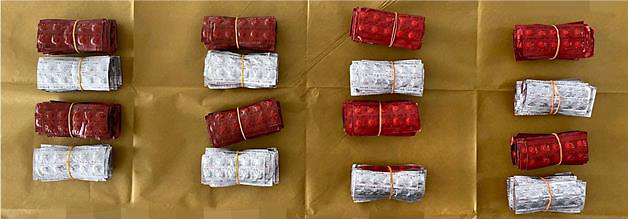
Officers found 2,009 Ecstacy tablets and 4,000 Erimin-5 tablets in the car he was driving. They then raided the suspect’s residence in Compassvale Lane, where they found cash amounting to S$16,250.
A large assortment of drugs worth an estimated S$1.1 million were seized by officers from the CNB. (Photo: CNB)
In a follow-up operation on Friday morning, CNB officers arrested another suspected drug trafficker in Lorong 16 Geylang.
The 23-year-old Singaporean man was brought to his car, which was parked at a multi-storey carpark in Woodlands Drive 50.
About 60g of heroin, 854g of ketamine, 8.6kg of Ice, 2,800 Ecstasy tablets and 2,919 Erimin-5 tablets were found in the car boot.
The car driven by the 39-year-old suspected drug trafficker. (Photo: CNB)
“Preliminary investigations found that the 39-year-old suspect had picked up the drugs that were seized from him, from under the car parked at Woodlands Drive 50, where the 23-year-old suspect had earlier left them,” CNB said in a news release on Saturday.
Investigations into the drug activities of both suspects are ongoing, the bureau added.
According to CNB. the amount of Ice seized is enough to feed the addiction of 4,900 abusers for a week.
A 48-year-old man was charged with the murder of a 43-year-old woman on Saturday (Jan 4).
Paul Leslie Quirk was arrested on Friday at Esparina Residences condominium in Sengkang after the police received a call for help at 12.07pm and found a woman, Ms Christina Khoo Gek Hwa, unresponsive in the condo unit. She was later pronounced dead by paramedics.
Quirk will be remanded at Changi Prison’s medical centre for psychiatric observation for three weeks, and be brought back to court for mention on Jan 24.
Residents told The Straits Times that they heard loud voices from the couple’s third-floor unit for about 15 minutes at 11am on Friday. Witnesses said the two were a couple who were often seen walking around holding hands.
People ST spoke to also said they had been living in the condominium for several years and that a child would occasionally stay with them.
If convicted of murder, Quirk could face the death penalty.
A car caught fire while parked in a multi-storey carpark in Choa Chu Kang on Saturday morning (Jan 4), charring at least two cars parked alongside it.
The Singapore Civil Defence Force (SCDF) said there were no reported injuries from the vehicle fire that happened at 3am.
Photos appear to show the flame originating from the third storey of Block 541A, Choa Chu Kang Street 52. Bits of the cement infrastructure near the affected cars have fallen onto the ground, with at least two bigger plates landing on a third BMW.
One of the cars’ hood is open and burnt beyond recognition, with most of its metal casing having melted away.
SCDF said its officers extinguished the fire using two water jets and two compressed air-foam backpacks. It is investigating the cause of the mishap.
The Straits Times understands that the police are not currently involved.
This article was first published in The Straits Times. Permission required for reproduction.
Things are heating up in Sembawang once again, with the reopening of Singapore’s only hot spring.
The Sembawang Hot Spring Park reopened on Saturday (Jan 4) after a $4.3 million redevelopment, expanding from its original 0.1 hectare to 1.1 hectare now.
The park, which was closed in Aug 2018 for the development works, now features a new cascading pool and a water collection point, with enhanced accessibility for wheelchair users.
There are also educational panels for visitors to learn more about the history and geology of the hot spring park, which is accessible along Gambas Avenue.
Ms Kartini Omar, group director of parks development at the National Parks Board (NParks), said that in designing the park, “NParks incorporated feedback and suggestions from the community from a public consultation in end-2017”.
Among the suggestions were having a food and beverage outlet, an activity lawn and toilets, and ensuring the park remains “rustic and natural”, said Ms Kartini.
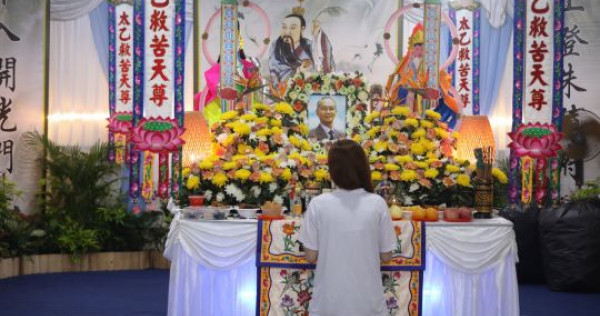
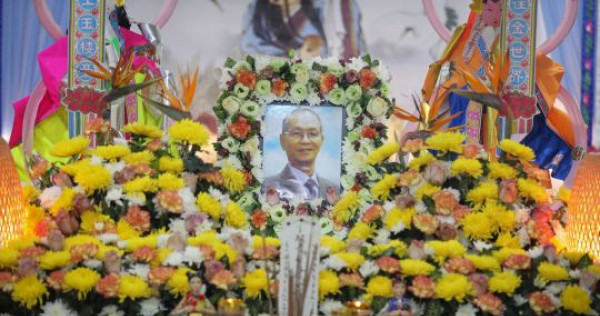
A grieving family were at their home’s void deck to receive their patriarch’s body for the wake, only to be told by staff of Harmony Funeral Care that his body had already been cremated.
To add to their distress, his send-off was done according to Christian traditions and funeral rites, when the man was a Taoist.
The erroneous act by the funeral home is believed to be the first reported case in Singapore of a wrong body being cremated.
Family members of Mr Kee Kin Tiong, 82, told The Straits Times they were in “great pain” over the mix-up on Monday (Dec 30).
“We feel very regretful that because of this incident, our loved one had to leave this world on his own, without anyone from his family to send him off,” said Mr Kee’s son-in-law, who wanted to be known only as Mr Ho.
“According to our beliefs, it is required that the deceased’s body be allowed to ‘rest’ for a minimum of three days before it is cremated. We weren’t even able to do that for my father-in-law, because of what happened,” he said.
An electric bicycle caught fire beside Choa Chu Kang MRT station on Friday morning (Jan 3), in the second incident involving motorised devices in two days.
Videos posted online of the incident show the e-bike engulfed in flames. Multiple small exploding sounds could be heard, with small pieces of debris flung from the burning e-bike.
A GrabFood delivery bag can be seen mounted on the e-bike.
No one was reported to be injured in the incident.
The retailer of the e-bike has alleged that the fire was due to the bike’s owner installing an “unauthorised external battery”.
In response to queries, the Singapore Civil Defence Force (SCDF) said it responded to the incident at 15 Choa Chu Kang Avenue 4 at about 10.45am.
“The fire, involving a power-assisted bicycle belonging to a member of the public, was extinguished by an SMRT staff member using a fire extinguisher prior to SCDF’s arrival,” it said.
SCDF is investigating the cause of the fire.
Retailer Mobot said in a Facebook post that the e-bike belonged to one of its customers.