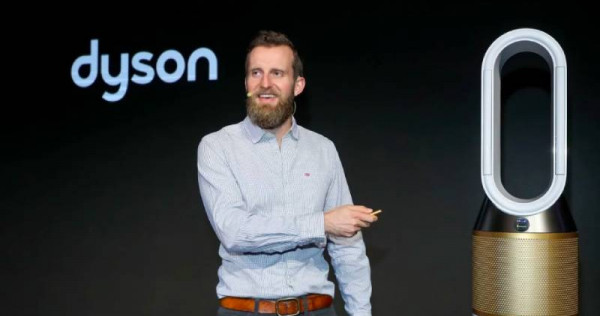
Household appliance giant Dyson is broadening the technology role of its Singapore research and development team as part of the plan to shift its UK headquarters to the Asian island nation.
Dyson has started recruiting for “early stage research projects specifically in Singapore,” Charlie Park, Dyson’s global category director for environmental care, said in an interview on Thursday.
Originally run as a subsidiary of the UK parent, the Singapore operation had been “purely supporting late stage development”, with all of the early stage research done in the UK, Park said.
However, the maker of vacuum cleaners and air dryers is now planning to upgrade the Singapore team in line with the level of research it has been doing in the UK, he added.
For now, the UK still provides Dyson’s strongest R&D muscle, accommodating half of the company’s 6,000 engineers globally.
Singapore currently has 1,100 but Park said there will be “a significant amount of growth” in line with the separate decision a year ago to move global headquarters from Wiltshire, England to Singapore to be closer to its fastest-growing markets and production base.
SINGAPORE – A train at Raffles Place MRT station was evacuated after white smoke was seen inside the train on Friday afternoon (Jan 10).
The smoke, seen at around 12.45pm at the station, was caused by a leaking air-conditioning compressor that released freon gas, rail operator SMRT said.
Freon gas is an inert non-flammable gas that is also used in refrigerants and aerosol propellants.
“As a safety precaution, all commuters on board the affected train were asked to disembark and board the next train,” said Ms Margaret Teo, SMRT’s chief communications officer. “The affected train was withdrawn from service for further checks.”
No fire or injuries were reported in the incident, which happened on the East-West Line. The train was subsequently sent back to the depot for checks.
SINGAPORE: Water gushed down the staircase of a Housing & Development Board block in Hougang and flooded a coffee shop on Friday (Jan 10) afternoon, after a pipe became “dislodged” while the water tank was being washed.
Ang Mo Kio Town Council said in response to queries from CNA that water supply to residents was not disrupted during the incident at Block 644 Hougang Avenue 8.
“We were conducting water tank washing at that point. However, towards the final moments before completion, as the water was flowing out, the pipe dislodged,” said an Ang Mo Kio Town Council spokesperson.
A video supplied by a CNA reader showed water gushing down the staircase of the block and into Broadway coffee shop at about 2.40pm.
People in the coffee shop were seen wading through the flooded water, which also flowed off the awning.
The eyewitness, who wanted to patronise the coffee shop, said it was inaccessible.
“People couldn’t go up to their residences,” he said as he described the worried locals at the scene.
“There was no danger, but locals were briefly alarmed.”
The “gushing” water caused “mild disruption”, must mostly left people “bemused”.
“It was very loud and unexpected,” he said as he described the sound of .
Residents looking on as water flows down a flight of stairs. (Photo: CNA reader)
People walking on the flooded ground at Block 644 Hougang Avenue 8 on Jan 10, 2020. (Photo: CNA reader)
Water gushing down a flight of stairs at Block 644 Hougang Avenue 8. (Photo: CNA reader)
Water flowing from an awning. (Photo: CNA reader)
The situation lasted about 20 minutes, according to him.
“Upon discovery of the gushing water, our contractors turned off the valve,” the town council confirmed.
It described it as a “one-off incident”.
“The contractor did check to ensure that the pipe was in working order before commencing the washing.
“This is a one-off incident when the pipe dislodged.
“We will be making improvements to the design of the pipe layout to prevent a recurrence.”
SINGAPORE: Officers were going about their duties at Woodlands Checkpoint on a Friday morning. They were interrupted by a loud alarm. A gunman was shooting and terrorising travellers waiting to clear immigration and customs.
The officers immediately went into action. The first response team made their way to the scene, while a commander in the operations room issued instructions. They moved quickly to subdue the gunman.
It took an intense few minutes but the gunman was overpowered.
The officers breathed a sigh of relief, got up from their computer terminals and walked into the room next door to review the exercise.
Such command and control simulation training exercises have been taking place since March 2019, with more than 200 immigration officers at the checkpoint taking part in the simulation exercises at least once a month.
It is meant to enhance ability of the ground commanders and first responders to respond effectively to a major incident at the checkpoint, said the Immigration and Checkpoints Authority (ICA).
According to the authorities, Woodlands Checkpoint is one of the busiest land crossings in the world. Tuas Checkpoint and Woodlands Checkpoint see a total of 415,000 travellers on a regular day and 475,000 travellers during peak period.
The training, which the officers experience in first-person view, currently has 45 scenarios “encompassing varying complexities”, such as fires, hostage-taking and even suicide bombings.
Additional scenarios based on real-life security developments elsewhere in the world can also be adapted into the system, said ICA, and this ensures training is kept current and officers are trained based on latest developments.
Immigration officers take part in the simulation in teams, about once to twice a month. (Photo: Gaya Chandramohan)
While it is just an exercise, it is taken seriously. There is a structured debrief post-training, where a playback of the session can be reviewed. A transaction log tracks the officers’ actions, and instructors give feedback based on set guidelines for each situation.
And if a team does not perform well during the simulation training, they may be asked to repeat it.
The simulation training has some advantages over live simulations and table top exercises which the officers undergo as well.
A commander and operations room personnel will train in the checkpoint operations room, coordinating with first responders in another room responding to the evolving scenario. (Photo: Gaya Chandramohan)
For most live training exercises, sections of the checkpoint have to be cordoned off, and they usually take place at odd hours. With the simulation system, training is now “more accessible and convenient” for frontline officers, said ICA.
“Officers are able to undergo frequent training without adversely affecting ground operations and at the same time optimising resources that are typically required for large-scale exercises at the checkpoints,” said ICA.
The authorities will evaluate the pilot trial before deciding if whether it should be extended to other checkpoints.
Assistant commander (ground operations) Au Mei Xian said she has observed that after undergoing the simulation training, officers are more confident when approaching situations in real life, especially because it allows them to practice verbal commands and real-life manoeuvres.
“We can also test our concept of operations and repeat the scenario to better our actions. This would be a safe and controlled environment,” said deputy superintendent Au.
“We do have a lot of unattended baggage, so the officers are now able to respond and we don’t actually need the team leaders on the ground to supervise them. They actually know what to do.”
A judge turned down a request from prosecutors in May 2019 to detain the former BigBang singer, but the authorities have filed for an arrest warrant again.
According to KBS World Radio, the Seoul Central District Prosecutors’ Office said on Friday (Jan 10) that it is seeking the warrant over charges of procuring prostitutes and gambling.
Seungri, 29, is accused of gambling multiple times in Las Vegas over a period of more than three years from December 2013.
He is also said to have arranged sexual services for investors from Japan – on 29 occasions – from September 2015 to January 2016.
Korean media outlets reported last year that Seungri had incurred gambling losses amounting to more than US$1 million (S$1.35 million).
A court hearing will be held on Monday (Jan 13) to decide if the prosecutors can get their way this time round.
Seungri is among several high-profile artists who were swept up by a damaging K-pop scandal which broke early last year.
Christmas and New Years may be over, but the festivities aren’t. With Chinese New Year, it’s time to gather the family, eat till you drop, and indulge in some friendly lo hei over reunion dinners.
A glorious 15 day celebration, Chinese New Year officially starts on Saturday, Jan 25, and ends on Saturday, Feb 8.
Apart from the delicious feasts and gatherings with loved ones, Chinese New Year is also about giving and receiving lucky red packets that we affectionately call ang baos (红包).
A symbol of good luck and happiness, these red packets are exchanged during this festive season between close family and relatives.
But just how much should you bao in an ang bao? Here’s a rough estimate based on a regular Singaporean’s income and not a Crazy Rich Asian’s.
SINGAPORE: More family-friendly policies and initiatives will be needed to further narrow the gender pay gap in Singapore, women advocacy groups told CNA .
On Thursday (Jan 9), the Ministry of Manpower (MOM) released a study on Singapore’s gender pay gap which found that in 2018, women earned six per cent less than their male peers in similar jobs. This adjusted gender pay gap is the wage difference that remains after taking into account factors such as the worker’s industry, occupation, age and education. It translates to a median monthly salary difference of S$342.
However, the unadjusted gender wage gap, which just compares the median pay between both genders, showed that women in Singapore earned 16.3 per cent less than men in 2018 inching up 0.3 percentage point from 2002.
This unadjusted figure is often used in international comparisons by the likes of the Organisation for Economic Co-operation and Development (OECD).
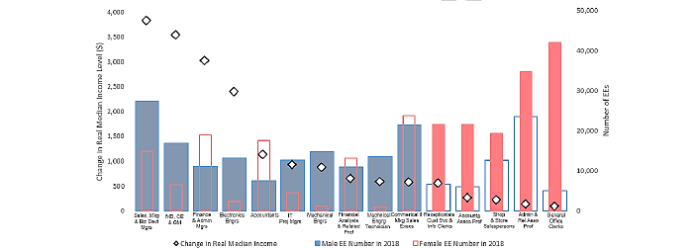
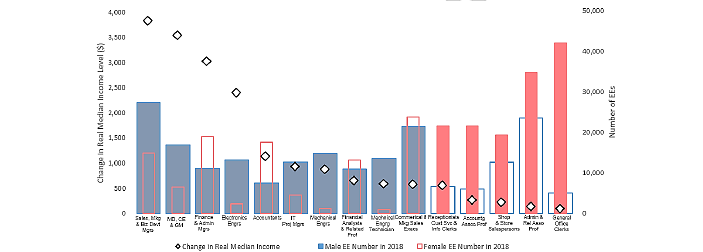
The 16.3 per cent pay gap is largely driven by the tendency of men and women to work in different occupations, the study said, as women tend to be in lower-paying jobs compared to men, who continue to be over-represented in higher-paying occupations.
Mrs Sher-li Torrey, the founder of Mums@Work, said that this issue of occupational segregation reflects the challenges working mums face. She said as the majority of women are the primary caregivers at home, they end up choosing or switching to jobs that are less time-consuming and offer more flexibility. These occupations traditionally pay less than those dominated by men, she added.
(Source: Ministry of Manpower’s Comprehensive Labour Force Survey).
“I have come across many women who were in the legal, banking, media or consulting industries who quit after having children due to the long work hours and frequent travel schedules taking a toll on the family time,” Mrs Torrey said.
Ms Shailey Hingorani, head of research and advocacy at the Association of Women for Action and Research (AWARE), agreed. The figure highlighted the lack of progress in encouraging men to take up equal caregiving responsibilities so that their wives can advance in their careers, she said.
Even a 6 per cent gap is significant, Ms Hingorani added, as the amount compounds when workers progress in their careers. While the difference in absolute amount is small for entry-level positions, the gap widens if you compare what senior-level executives get.
Women also fall behind in income when they leave their jobs temporarily to look after their children, Mrs Torrey noted. When they step out for a year or more and try to rejoin the workforce, she said the pay they are offered is pegged to their last-drawn salary, and they could lose opportunities to be promoted.
By then, their pay grade would have lagged behind their male counterparts, who would have more years of work experience and received increments.
Instead of asking jobseekers what their previous salary was, companies should peg offered salaries to the market rate and the skills demanded in job advertisements, both Mrs Torrey and Ms Hingorani said. This way, women are not penalised for taking a career break to look after their family.
Mothers who return to work tend to have more company loyalty and maturity, Mrs Torrey pointed out, as they usually have carefully thought through the decision to rejoin the workforce.
IMPROVE MEASURES, EDUCATE YOUNG ONES
Currently, the Government has several programmes to address the difficulties women have in juggling both their career and childcare needs.
There is the Work-Life Grant, which offers a monetary incentive for companies implementing flexible work arrangements. Last March, MOM announced an increase in the budget for the grant from S$30 million to S$100 million.
Fathers of children born from Jan 1, 2017 are also eligible for two weeks of paid paternity leave. And if their child was born on or after Jul 1, 2017, they are entitled to take up to four weeks of shared parental leave off the wife’s 16 weeks of paid maternity leave.
However, last year Parliament was told that only 35 per cent of men took paternity leave in 2018.
Ms Hingorani said that while AWARE lauds the efforts the authorities are taking to balance the scales, there should be other measures in place such as legislating the right for all workers to request flexible work arrangements, equalising the amount of maternity and paternity leave and making it mandatory for parents to take them.
In response to questions at a media briefing on Thursday, MOM said that any legislation to tackle the gender pay gap must take into account Singapore’s cultural context.
The lack of improvement in the unadjusted gender pay gap, despite the 16-year period, shows that traditional expectations of women, like them being the primary caregivers at home, still prevail, said Cheryl Chong, a board member with the Singapore Council of Women’s Organisations.
Still, Singaporeans should continue to push for more progressive gender norms, said Mrs Torrey, but admits that it will not happen overnight.
Parents should also take the initiative to dispel any gender stereotypes such as “only girls do ballet” among their children, said Ms Chong.
“Maybe then we’ll see a mindset shift in the next 16 years,” she said.
The School of Management and Communication (SMC) at Republic Polytechnic has been leading the way in using technology for its diploma programmes.
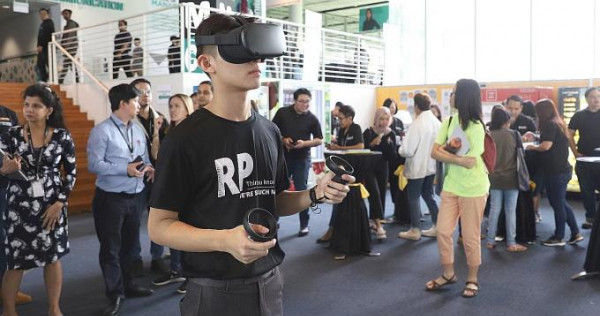
In its latest move, the SMC will tap on augmented reality (AR) and virtual reality (VR) as it consolidates the diploma in business and sports management and the diploma in business and social enterprise under one diploma in business programme.
Announced last month, the diploma in business programme, which will also be a three-year course, will start in the new academic year in April.
Students will do common modules in the first year before choosing to pursue either sports management or social enterprise in the second year.
Students currently pursuing diplomas in business and social enterprise or sports management will not be affected by the change.
Mr Sim Choon Hou, director at the SMC, said the consolidation of the two courses will give students the opportunity to specialise in what they like.
“It gives them more time to consider if they want to pursue social enterprise or sports management,” he said.
Data analytics is already a key tool used at the poly.
It began with a soft crying sound and ended with two cleaners saving the life of an abandoned newborn boy.
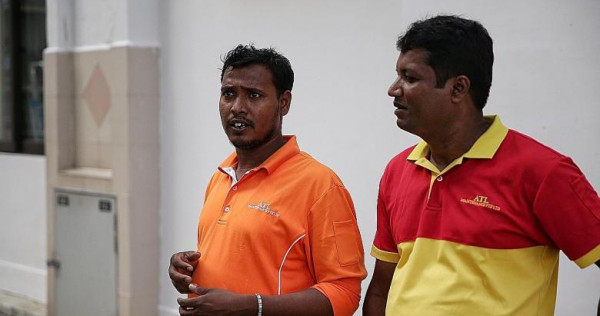
As Mr Patwari Shamim and Mr Mostafa Kamal drove a buggy to collect rubbish bins from the 17 refuse chute chambers around Block 534 in Bedok North Street 3 on Tuesday morning, they heard crying in one of the bins.
Mr Patwari, 24, thought he had misheard and asked his colleague. Mr Mostafa, 37, had also heard it and said it was probably a discarded toy doll with its batteries still intact.
In a decision that could well have decided the baby’s fate, Mr Patwari, who was driving, stopped the buggy for Mr Mostafa to check the bin.
The Bangladeshi cleaners related their account in a mixture of English and Bengali to The New Paper yesterday.
When Mr Mostafa opened the bin, a sheet of newspaper was on top. Below it was a Sheng Siong supermarket plastic bag that looked wet and bloody. He stepped back in shock. Something in the bag had moved.
Mr Patwari decided to look for himself and he could make out tiny limbs thrashing inside the bag.