Public holidays are like gifts bestowed upon us by the heavens.
You get an extra day of rest, get to sleep in slightly more and get to avoid being terrorised by your boss every other hour.
This is why we have compiled a 2020 public holiday list for you to better plan your travels.
This 2020, we’re looking at a total of 7 long weekends for us to make the most out of our travels.
The best part? You’ll only require a maximum of 4 days of leave to jet set on a 10 day adventure!
Always feel as if there isn’t much to do in Singapore?
If you’re one of those who wish to take advantage of your long weekends and public holidays, we’ve got you covered.
We have broken down popular travel destinations for Singaporeans into three different groups based on their proximity to Singapore, in order for you to plan the length of your trip:
1. Short Trips (3 – 4 days)
2. Medium Trips (5 – 7 days)
3. Long Trips ( > 8 days)
It’s time to grab your family or friends to sate the inner travel bug within you!
SINGAPORE: Singapore congratulated Taiwanese President Tsai Ing-wen and her party on Sunday (Jan 12) after a landslide victory the day before.
“We welcome the successful conclusion of the elections in Taiwan on 11 January 2020 and congratulate Dr Tsai Ing-wen and her party on their victory,” the Ministry of Foreign Affairs said on Sunday.
On Saturday, Tsai won another four-year term by a landslide, and her Democratic Progressive Party (DPP) also gained a majority in parliament.
MFA noted that Singapore and Taiwan share a “close and friendly relationship, which goes back many years”.
“We will continue to grow this relationship based on Singapore’s ‘One China’ policy,” MFA said.
“The peaceful and stable development of cross-strait relations would not be possible without wisdom and pragmatism by the leaders on both sides of the Taiwan Strait.
“Over the years, both sides of the Strait have benefited immensely from such relations.
“Efforts to secure the well-being of future generations and contribute to the peace and prosperity of the region will continue to be welcomed by Singapore and the international community,” MFA added.
Hong Kong anti-government protesters attend a rally in support of Taiwan President Tsai Ing-wen outside the Democratic Progressive Party (DPP) headquarters in Taipei, Taiwan January 11, 2020. REUTERS/Tyrone Siu
TSAI RECEIVES SECOND TERM DESPITE BEIJING’S EFFORTS
Taiwanese voters on Saturday delivered a stunning rebuke of Beijing’s campaign to isolate the self-ruled island and handed its first female leader a second term.
Official results showed Tsai secured 57 per cent of the popular vote with a record-breaking 8.2 million ballots, 1.3 million more than her 2016 victory.
The result is a blow for Beijing, which views Taiwan as part of China and has made no secret of wanting to see Tsai turfed out.
Over the last four years it ramped up economic, military and diplomatic pressure on the self-ruled island, hoping it would scare voters into supporting Tsai’s opposition.
But the strong arm tactics backfired and voters flocked to her Democratic Progressive Party, fuelled in part by China’s hardline response to months of huge and violent protests in Hong Kong.
During her victory speech Tsai said she was committed to dialogue with China’s leaders and wanted peace.
But she called on Beijing to halt its sabre-rattling towards Taiwan and respect the idea that only the island’s 23 million inhabitants can decide its future.
After Tsai’s speech, Chinese state media carried a short statement from the mainland’s Taiwan Affairs Office saying Beijing “opposed any form of Taiwanese independence splittist attempts”.
Office spokesman Ma Xiaoguang later told Xinhua state media that Beijing continues to “uphold the basic principles of ‘peaceful reunification’ and ‘one country, two systems’ and the one-China principle”.
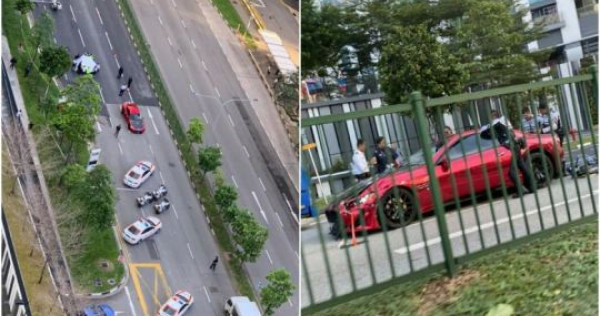
SINGAPORE – A motorist who allegedly drove off after running over a woman in Cantonment Road was arrested five days after the fatal accident last Sunday (Jan 5).
The 44-year-old driver had left the scene before the police arrived and was arrested on Friday for failing to render assistance, the police said.
She is the second person arrested in relation to the accident which took 69-year-old Madam Ong Soh Boey’s life.
A 25-year-old Maserati driver, whose car was on the wrong side of the road, was arrested for dangerous driving causing death after the accident last Sunday.
A video clip of the accident soon circulated online showing that a second, yellow car was also involved. Madam Ong, who was lying on the road, was hit again and dragged several metres in the second collision involving the yellow car.
The police said they were alerted to the accident along Cantonment Road, towards Keppel Road, at about 5.50am last Sunday.
Every time Josh Lim meets up with his friends from secondary school in Singapore, they never fail to ask about his work in China.
“There’s always this buzz and excitement when we talk about what’s going on in China,” noted Lim, who heads his own Shanghai-based investment and advisory firm, IJK Capital Partners.
“I guess our education has helped foster this affinity with China. They’re curious and it’s very easy for us to connect on the topic – more so than when I talk about the same things with friends from elsewhere, who tend to be less interested.”
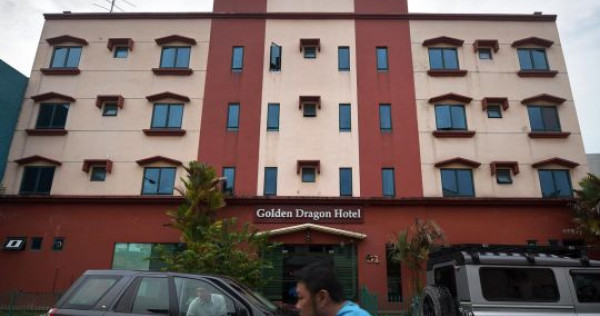
SINGAPORE – Mr Siah Seng Koon knew his hotel was falling into disrepair.
There were cigarette burns in the comforter, flies in the bathroom and questionable stains on the walls.
To add insult to injury, the former Golden Dragon Hotel in Geylang’s red-light district had garnered an average rating of 1.5 out of five stars on travel ratings site TripAdvisor and a reputation as one of Singapore’s worst hotels when this reporter wrote about her sleepless night there in 2019.
But solving these problems was beyond the 60-year-old hotel owner, who bought the land and built the hotel in the 1990s with his two brothers. He opened Golden Dragon in 1997 and has been running it since.
“I wanted to improve things, but my knowledge of hotel management was not up to date. I could not keep up with the demands of younger customers who are used to online ratings and bookings,” says the Mandarin-speaking Mr Siah, a married man, who did not want to reveal more about his family or other businesses.
SINGAPORE: A huge change went relatively unnoticed on Thursday (Jan 9), when the Singapore Exchange (SGX) announced it will do away with a 15-year-old rule that requires companies with a market capitalisation above S$75 million to file quarterly financial statements from Feb 7 onwards.
In its place, quarterly reporting will only be required of companies without clean audits or whose auditors have highlighted material going-concern uncertainties.
Businesses instead are encouraged to provide voluntary updates to shareholders in a timely fashion, rather than wait for a reporting milestone to release important disclosures.
SGX Regco – the exchange’s regulatory arm – will also be able to order companies to report quarterly at its discretion. SGX Regco has said it plans to release a list of about 100 companies that will have to continue quarterly reporting once the revised rule takes effect.
About 70 per cent of SGX-listed companies had been required to report results on a quarterly basis previously.
SGX Regco first launched its public consultation on changing the quarterly reporting rules in 2018, and it has taken a good two years for the exchange to finally respond and make its decision in the absence of consensus among market stakeholders and observers.
RELAXED RULES WILL EASE BUSINESS COMPLIANCE COSTS
While some smaller companies that would not have had to report quarterly numbers under the old system may have to do so under the new rules, the net effect of the relaxed regulation is that many more companies are freed from the quarterly reporting requirement.
That push and pull between the desire for more information from investors and the cost of providing that information that companies presents SGX with a tough balancing act.
A general view of the Singapore Exchange (SGX) building in Singapore. (Photo: AFP/Rahman Roslan)
In evaluating how beneficial these changes are, the most important yardstick is therefore regulatory efficiency: Do the new rules most improve the fairness and orderliness of the Singapore stock market for the lowest regulatory burden.
The review on the quarterly reporting regime based on market cap is timely, because the market cap test was problematic.
The benefit of the old regime is that investors receive financial information from most Singapore-listed companies regularly and at a fairly high frequency.
But that transparency comes with a compliance cost so high that regulators have had to mitigate it by exempting the smallest companies.
Yet, those are often the riskiest issuers on the market most in need of close monitoring, which means that the market-cap approach is no longer delivering the same level of benefit that it was supposed to.
IDENTIFYING RISK REMAINS CHALLENGING
A risk-based approach makes more sense in theory, because it concentrates the compliance cost of disclosure on companies that pose the greatest risks.
The problem is that an apt risk-based filter is extremely challenging to identify carry out in practice.
(Photo: Jeremy Long)
Take the example of water company Hyflux, which sought court protection from creditors in 2018, shortly after it announced its first-quarter results.
There is good reason to think Hyflux would not have been required to make quarterly reports if the new rules had been in place at that time, since Hyflux’s auditors had been giving the company clean opinions and SGX Regco was not publicly querying the company’s financials at the time.
Mandatory quarterly reporting would not have saved Hyflux, even though there is a higher chance investors who bothered to dig deep into the company’s financial statements every three months would have found some clues about the company’s struggles.
And overall, Hyflux’s case suggest the need for tighter regulatory oversight of the market, not less.
CAN SGX SUFFICIENTLY ENFORCE AGAINST ERRANT LISTED COMPANIES?
Relaxed quarterly reporting rules on the Singapore Exchange (SGX) will raise pressure on the market regulator to quickly improve its effectiveness as an enforcer.
The most important actor in the risk-free regime is the regulator itself, who becomes more directly responsible for determining who needs to report more frequently.
To its credit, SGX Regco has been strengthening its enforcement arm over the past few years, with a more targeted public query system and the careful addition of greater powers to order compliance and to issue sanctions.
FILE PHOTO: An SGX sign is pictured at Singapore Stock Exchange July 19, 2017. REUTERS/Edgar Su/File Photo
The regulator has said that it is working to strengthen its continuous disclosure guidelines, and rightly so.
In moving to a risk-based test, SGX must demonstrate that it can adequately identify at-risk companies in a timely fashion even if those companies are no longer disclosing financial results every three months.
Regulators will also have to show that they can curb insider trading risk, and hold miscreants accountable. While SGX Regco has made progress on those fronts over the past few years, its critics argue that there is still much distance to cover in improving corporate governance.
Still, the exchange will have to show that its risk-based approach and public queries can give the market at least the same level of timely insight into the listed companies as compulsory reporting. That will not be easy.
Adhere too closely to fixed tests and too many issuers will slip through the cracks. But take too much of a case-by-case approach and the regulator risks creating uncertainty and disregarding due process.
Another challenge for the regulator is in deterring bad behaviour in the first place. Relying on an auditor’s opinion may be bureaucratically sound, but for investors this will probably lead to too many cases of too little, too late.
Deterrence has two aspects. The first is effective surveillance, in that would-be perpetrators should believe that bad behaviour has a high chance of being detected.
Besides the question of whether companies are making timely disclosures, the regulators will also have to better detect insider trading.
People work in an office at the Singapore Exchange (SGX) on July 27, 2016. (File photo: AFP/Roslan Rahman)
The second aspect of deterrence lies with accountability.
Holding directors legally accountable in Singapore is notoriously difficult, especially after the 2011 and 2013 air cargo logistics firm Airocean’s cases, in which four directors were acquitted of disclosure-related charges when the prosecution could not prove the undisclosed information would impact Airocean’s share price or that the company acted recklessly in not disclosing the information.
What makes deterrence complicated is that not all of it lies within SGX Regco’s control. The Exchange will rely on the courts and the legal system to carry out due process, since it has no statutory power to obtain evidence or investigate auditors.
SGX Regco will need help from the other regulatory bodies in Singapore’s financial market ecosystem, namely the Monetary Authority of Singapore, the Commercial Affairs Department and the Accounting and Corporate Regulatory Authority.
SGX Regco’s plan to streamline its rules is well-intended, but it will have its work cut out in ensuring things work as intended.
A study commissioned by the CFA Institute found that most of the London-listed companies that stopped quarterly reporting once their regulator stopped mandating it tended to be the smaller companies that did not provide earnings guidance.
In other words, the companies that are likely to make use of the opportunity to disclose less are precisely the ones who are weakest and probably most at risk.
It is hard to imagine this as the desired outcome for SGX.
Kenneth Lim is a writer who has been covering capital markets in Singapore and the United States since 2003.
MELBOURNE: As history has shown us, it is one thing for militaries to buy advanced, high-tech weaponry that look good at national parades, it is another to be able to use it effectively and decisively when push comes to shove.
From the decisive defeats Israel inflicted on the well-equipped Arab armies in 1967 and 1973, to the Saudi-led coalition’s ongoing struggle to defeat Houthi insurgents in Yemen despite the oil-rich kingdom being the world’s top arms importer between 2014 and 2018 – there is ample evidence showing militaries need to focus on adequately training and integrating new platforms to become an effective fighting force.
The challenge of gaining proficiency on, and integrating a new, technologically advanced platform is not new to the Singapore Armed Forces (SAF).
Singapore’s impending purchase of the Lockheed-Martin F-35 Lightning II Joint Strike Fighter will however present a new test of the SAF’s ability to successfully do so.
That purchase moved one step closer to reality when the US Department of Defence announced an approval of a sale of up to 12 F-35s and related equipment to Singapore on Friday (Jan 10).
A US Marine Corps Lockheed Martin F-35B fighter jet hovers over the runway at the Farnborough International Airshow. (File photo: REUTERS/Peter Nicholls)
A GAME-CHANGING FIGHTER JET
As has been described before, the F-35 suite of stealthy networking capabilities will be a game-changer, with the potential to radically transform how militaries operate not just in the air but in the land and sea domains as well.
The F-35B variant, which Singapore has requested to purchase, has also a lift fan, essentially a second engine that directs additional thrust downwards, that allows the fighter jet to take off and land vertically, without the need for a long runway.
For land-scarce Singapore, merging three airbases into two in the near future, this added capability will give the country a needed boost in its air power generation capabilities.
Coupled with the SAF’s push in recent years to transform itself into a networked force, the need to fully utilise the F-35’s game-changing technology and ensure it is fully integrated into the SAF will take on an added layer of importance and potential complexity.
So how would the F-35’s introduction to service look like?
THE TRAINING NEEDED TO GET PILOTS UP TO SPEED
Defence Minister Ng Eng Hen has previously said Singapore’s F-16s will start to be phased out around 2030.
By this time, the Republic of Singapore Air Force (RSAF)’s future F-35 pilots would have started training on the jet, with Singapore’s first handful of aircraft having already been delivered, almost certainly at an overseas training detachment.
At first glance, the prime candidate for this training detachment would appear to be Luke Air Force Base just outside of Phoenix, Arizona.
An F-15SG at Luke Air Force Base. (Photo: Aqil Haziq Mahmud)
The base is where the RSAF’s Peace Carvin II F-16 training detachment is located, having been there continually over more than two decades, and is also where the US Air Force’s Air Education and Training Command will train American and international F-35 pilots for the foreseeable future.
However, the USAF and most international users will operate the conventional take-off and landing F-35A variant.
Hence, it might make more sense to set up a training detachment at one of the US Marine Corps’ bases, given that the Marines are the service operating the F-35B and the RSAF can leverage on their experience on the unique capabilities of the F-35B – the same model the UK and Italy employ, and which Japan has also ordered.
Between 2015 and last August, the UK Royal Air Force operated a small detachment of its aircraft alongside a Marine F-35B training squadron at Marine Combat Air Station (MCAS) Beaufort in South Carolina for crew training purposes, before heading back home last year.
Given that the infrastructure, such as simulators and other support equipment at bases like Beaufort (or MCAS Yuma in Arizona where the Marines will also be basing F-35Bs at) will be specific to the F-35B, the case for the RSAF setting up a training detachment at these bases is stronger than anywhere else.
Training may also involve partnership programmes with friendly air forces that have purchased the F-35B variant – which on top of the US and UK, include Italy and Australia, countries that the RSAF have very friendly ties with and have training spaces in or made training deployments to.
Senior Minister of State for Defence Heng Chee How and Australia Assistant Minister for Defence David Fawcett at Warriors’ Camp, Rockhampton. (Photo: Gaya Chandramohan)
THE ROAD TO FULL OPERATIONAL CAPABILITY
The setting up of an overseas training detachment will be followed by the first aircraft heading back to Singapore, to form the nucleus of the first locally-based RSAF F-35 squadron.
The next major milestone for the squadron would be attaining Initial Operational Capability (IOC) with the F-35.
The criteria for IOC would be determined by the RSAF and differ from other operators, but it would likely be pegged to a certain number of aircraft delivered, the number of air and ground crew trained to perform an initial set of missions and roles, and the ability to deploy a pre-determined number of aircraft for operations.
Full operational capability (FOC) for the F-35 will follow, which is typically declared a few years after IOC.
By this time, the first RSAF squadron would have received its full complement of aircraft, a cadre of crew trained to carry out the full range of missions and the platform integrated into the RSAF.
The F-35 will have been integrated into Singapore’s Island Air Defence Network, a locally developed systems-of systems network that enables all air defence sensors and platforms to be linked under a single communication protocol.
The RSAF will also almost certainly have taken part in overseas exercises with the F-35 by this time, for benchmarking and interoperability training with foreign partners, in addition to integration training within the SAF itself.
Given the RSAF’s cautious entry into the F-35 programme following a history of development delays and cost overruns, the path towards IOC and FOC will have been well-trodden by other operators by the time it is Singapore’s turn, which will help the RSAF in gaining an understanding of how to tailor its own processes.
An RAF F-35B Lightning fighter jets flies over The English Channel during the “Point Blank” excercise after taking off from RAF Mildenhall, Britain, November 27, 2018. (File photo: REUTERS/Eddie Keogh)
Using the Boeing F-15SG Eagle as a rough guide, the first RSAF jet arrived at the Peace Carvin V detachment at Mountain Home, Idaho in the US in May 2009, followed by the arrival of the first jets in Singapore in April 2010 to form the nucleus of 149 Squadron at Paya Lebar Airbase. The squadron then declared FOC in October 2013.
It is however by no means certain that the introduction of the F-35 will follow a similar timeframe. The time taken to reach the IOC and FOC milestones is dependent on several different variables, and the integration of the F-35 into the SAF may well be very different from its predecessors, given its complex suite of capabilities.
RENOVATED BASE INFRASTRUCTURE
Singapore’s air bases will also change with the arrival of the F-35 in Singapore. This goes beyond the base realignment that has already been announced so far, which will see Paya Lebar Air Base close in the 2030s to free up land for other uses and the aircraft, equipment and personnel moved to the expanded Tengah and Changi East airbases.
Work at whichever base(s) the RSAF’s F-35s will be stationed at will also need to take into account US security requirements for F-35 basing.
Essentially, an extra layer of fencing will need to be built around all F-35 parking areas, along with additional security arrangements.
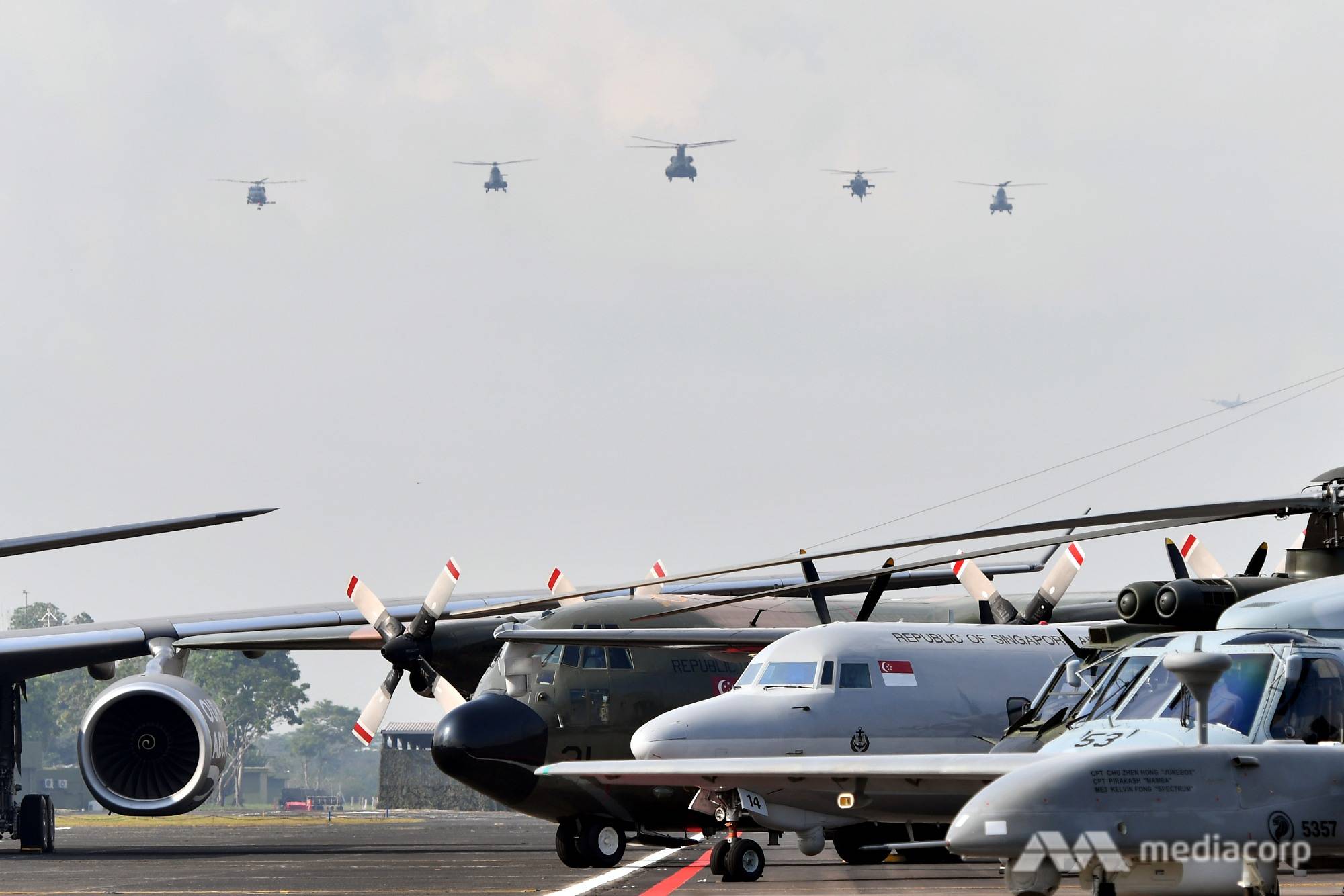
The sequential flypast with the CH-47 Chinook as the lead aircraft at the RSAF50 media preview at Tengah Air Base on Tuesday (Aug 28). (Photo: Jeremy Long)
These include limiting access to these areas only to personnel specially cleared to enter, essentially turning it into an airbase within an airbase.
Another upgrade would entail the building of landing pads to allow F-35B pilots to conduct vertical landing training and operations on. These pads would need to be specially reinforced to withstand the intense downward heat generated by the F-35B’s powerful engine as it lands vertically.
The F-35 looks set to transform the global air power landscape in the next few decades. It also has the potential to transform how Singapore will use air power and leverage technology to defend itself.
Introducing its capabilities into the RSAF would be a complex task, and one whose success is crucial to maximising its potential with the SAF.
Mike Yeo is the Asia reporter for US-based defence publication Defense News.
SINGAPORE: When Ms Delvinder Kaur signed up for a stint as a show presenter at the Singapore Zoo in 2013, she expected nothing more than a fun holiday job of playing with animals and speaking to visitors before moving on to do her university degree.
Fast forward six years, Delvinder, 28, hopes to retire in the zoo.
“I’ve seen a lot of my seniors who have retired here, and even after retiring, they still come back. You see the passion, and I think that’s the same passion that I would want in myself as well,” she said.
The Life Science Associate is just one of the many zookeepers who joined the Singapore Zoo without a related degree.
“Like most young kids at that point in time, I was just looking for a fun job, something that was just out of the ordinary, and Singapore Zoo was one of the areas,” she said.
Show presenting gave her the opportunity to work with a variety of animals, such as sea lions and elephants, and develop her understanding of them. And it was this understanding that allowed her to appreciate the animals a lot more.
In fact, she enjoyed her post-A levels holiday job so much that she never stopped.
“I fell in love with the job,” she said, “and I dragged it on a bit longer to find out what it is that I wanted to do.”
Despite having no background in life sciences, on-the-job training helped Delvinder learn the ins-and-outs of zookeeping. (Photo: Marcus Ramos)
A few months turned into another three years before she decided to continue the studies that she had put on hold.
In 2015, Delvinder moved from being a show presenter to the zoology department, where she got her first taste of working with invertebrates – specifically, insects.
She explained that she found the classification of animals – the different species and subspecies – one of the most challenging things about the job initially.
“I think not being from a life science background, zoology background, did make it a bit difficult initially … but the thing about Singapore Zoo and being a zookeeper, a lot of things happen with on-the-job training.
“Being on the field and working with different teams and with the guidance of your seniors, it allows you to develop the needed skills to manage and take care of animals and to understand the animals we have under human care as well,” she said.
All the guidance and hard work paid off when she managed to move from her part-time position to a full-time junior zookeeper position in 2016. At the same time, she started her English Language and Communications degree with the Singapore University of Social Sciences, which she is due to complete in a year.
“I feel like I grew up in the zoo. I became a bit more mature in this environment, because I understand it a bit more,” she said.
“It maybe started off as something very childish, (but) it’s something more important and valuable to me now – it’s a greater cause.”
Delvinder introduces a butterfly. (Photo: Marcus Ramos)
NOT JUST A PHYSICAL JOB
Delvinder is one of an increasing number of female zookeepers who havejoined Wildlife Reserves Singapore in the past decade.
Currently, 78 out of the 246 keepers under the zoo’s employ are female – including the first female elephant keeper.
Although zookeeping was traditionally thought to be more suited for a man, Delvinder felt this stemmed from a lack of understanding over a zookeeper’s work.
“I think it’s a common misconception that zookeeping is a masculine job, that it’s a man’s job and you have to carry heavy items and there’s a lot of work and effort that goes into it,” said Delvinder.
That was one of the main worries her parents had too, she added, as they didn’t understand the job scope.
“It took me three years to convince them that the job was alright and this is the field that I wanted and I got my blessings from them,” she said.
Zookeeping encompasses more than just caring for the animals. Other than zoology, there are departments such as conservation, nutrition, veterinary – which work closely to ensure the zoo functions smoothly.
There is also a research component to Delvinder’s work, one that she has earned accomplishments in. She contributed toa pioneering study on the breeding of Dragon-Headed Katydids, a type of invertebrate, published by Wildlife Reserves Singapore.
Delvinder’s work not just involves the physical caring for animals, but also research into invertebrate behaviour, including a published paper on Dragon-Headed Katydids. (Photo: Marcus Ramos)
Ultimately, all this research helps with conservation of these animals and public education.
“Animals in zoos are representations of their wild counterparts. We have them in zoos under human care (which allows us) to view them up close, to learn more about them, and also to see them, appreciate them, and understand what we can do for those out in the wild,” she said.
She added that conservation begins with the smallest projects. Even actions like understanding the role of bees in the ecosystem and leaving a beehive alone to perform its natural functions would help wildlife thrive.
Especially since invertebrates are such commonly misunderstood animals, public education is crucial to changing the public’s mindset of them, said Delvinder.
“A lot of people, they want to help, they like the idea of having more butterflies … of having more invertebrates around, but they don’t know how to go down that track,” she said. This is where the zoo’s educational programmes come into place.
She pointed to the zoo’s Swallowtail Day held this year, where members of the public were invited to join them to look for the butterflies. Not only did the activity teach participants about Swallowtail butterflies, the event closed with a sharing sessions with specialists, who taught participants about the things they could do to help the conservation of the species, she said.
“Basically, zoos play a very important role in terms of education, conservation, and having good human care for the animals,” said Delvinder.
“WHEN THE BEES DIE, WE DIE”
In her day-to-day duties, Delvinder looks after the wellbeing of all the invertebrates in the zoo. This includes monitoring the exhibits, back-of-house breeding facility. She also takes on projects.
She is currently working on the Pollinator Project which focuses on improving the population of butterflies and stingless bees through surveys of these species across all of Wildlife Reserves Singapore’s parks, studying different potential habitats, and enhancing existing ones.
While Delvinder exudes confidence and is knowledgeable about invertebrates now, this was not always the case.
Delvinder’s first day at the invertebrate department had her cleaning over a tank full of Madagascan Hissing Cockroaches. It took her a week to get used to the task. (Photo: Marcus Ramos)
When she started her posting with the invertebrates, she remembered having to come face-to-face with one of her greatest fears: the Madagascan Hissing Cockroaches.
With some of them nearly half a palm in size, these black-headed, brown-bodied, segmented creatures can scurry through the tanks at a dizzying pace. Each tank can hold up to a few hundred cockroaches – although Delvinder remembered her first tank being four times the size.
“I had to clean the whole tank full of cockroaches, and that was my first day working as an invertebrate keeper.
“As you can see, you can imagine the cockroaches were scurrying all around … Every time I put my hand in and the cockroaches scurry over, I would freak out and remove my hand from the tank,” she said.
It took her about a week to get over her fear, but having the opportunity to learn about these cockroaches, to understand them, and to hold her first cockroach, was crucial in getting over her fear, she said.
It is ignorance that causes people to fear invertebrates so much, said Delvinder.
“It shows as well, that when we don’t really understand the animals, we tend to stigmatise them, and that can also affect our outlook on them. So it’s something that I’ve learned, and I’m also helping others to learn it as well,” she said.
Delvinder holds a butterfly in her hand. (Photo: Marcus Ramos)
In fact, invertebrates play a larger role than most people might expect: comprising 97 per cent of the animal kingdom, they are important for the continued survival of all animal species on Earth, shesaid.
“There’s a line: ‘When the bees die, we die,’” said Delvinder. “It says a lot already. In a way, it’s a domino effect. Once the bottom foundation layer starts to go, everything else will continue as well, because not only are you taking the main runners of the ecosystem, you’re also taking away those who maintain the rainforest, you’re also taking away the food for the other animals.”
“SOMETHING THAT I DON’T THINK I EVER REGRET”
Looking back, Delvinder finds the learning the most rewarding part of her job.
“For me, it’s always the ability to learn something new. Every time we learn something new, we can apply it in a certain way, and (invertebrates) is an area which I personally think is very understudied.
“There’s so much that we should learn … So being able to play a part in that and working with the other members of my internal and external team is one of the most rewarding things for me,” she said.
And it’s this desire to learn, to contribute, and to work with these animals that continues to drive this accidental zookeeper.
“You don’t realise it the moment you walk in – it takes a bit of time to understand why we’re doing this, what do we get out of it, and how (our work) is helping … (I do this) because of my appreciation and understanding, and what I think the future should be for these animals,” she said.
Reflecting on her unconventional path, Delvinder said: “It’s something I don’t think I ever regret. It’s gotten me to this stage right now.
“It’s feel that sometimes Singapore is a bit too fast-tracked, and we need to stand back and understand what we’re interested in, and for me, allow me to develop my passion as well.”
SINGAPORE: While the first stage of the Thomson-East Coast Line (TEL1) will improve connectivity within Woodlands, commuters may have to wait up to 15 minutes for a train during the initial operating period.
There will be intervals of 10 minutes between trains during peak hours and 15 minutes during off-peak hours when passenger service commences at the end of this month, according to the Land Transport Authority (LTA).
On other lines, trains usually run at intervals of about two to three minutes during peak hours, and about five to seven minutes during off-peak periods.
This is because of low projected ridership during the early days of the new line, said LTA.
“As ridership on TEL1 increases, the frequencies for both peak and off-peak hours will be reviewed and adjusted,” said the authority.
The 32-station Thomson-East Coast Line is expected to initially serve about 500,000 commuters when it is fully operational in 2024, a number that is expected to eventually double to 1 million.
The first three stations of Singapore’s sixth MRT line – namely Woodlands North, Woodlands and Woodlands South – opened their doors to the public on Saturday (Jan 11).
Commuters were able to enjoy free rides on the Thomson-East Coast Line as part of a special open house event, ahead of passenger service starting on Jan 31.
OPENING FIRST STAGE A “NO-BRAINER” FOR RESIDENTS
Speaking at the event, Minister for Transport Khaw Boon Wan noted the first stage is the shortest section of the 43km line, which will open progressively in five stages.
“We could have combined it with stage two, which will extend southwards to Caldecott through five stations, but we decided to open stage one first,” he said. “Doing this allows us to run in all the new systems, before the remaining stages open in the next few years.”
The platform for the new Woodlands station on the Thomson-East Coast Line. (Photo: Zhaki Abdullah)
The line, which is expected to cost more than S$25 billion to build, will provide “additional capacity and network resilience”, said the minister, noting it runs parallel to the North-South and East-West lines along different stretches, both of which have heavy commuter loads.
Mr Khaw – who is also a Member of Parliament for Sembawang GRC – said opening the three stations was a “no-brainer” for Woodlands residents, providing them with greater convenience and shorter commuting times.
Engineer Edmund Kwok welcomed the opening of the new line, adding that the new Woodlands South station, which is a two minute walk from his home, could help him shave 10 to 15 minutes off his morning commute compared to taking the bus.
“There is a bus stop nearby, but it is usually very crowded in the morning,” said the 40-year-old, who has lived in Woodlands for five years.
The new Woodlands South MRT station. (Photo: Zhaki Abdullah)
THE JOHOR BAHRU-SINGAPORE RTS LINK
Mr Khaw, who is also Coordinating Minister for Infrastructure, said the Woodlands North station was designed to connect to the proposed Johor Bahru-Singapore Rapid Transit System (RTS) link station, “if and when it materialises”.
“The station was therefore sized accordingly, to accommodate the peak hour traffic travelling between Singapore and Johor Bahru via the RTS Link,” he said.
The RTS Link has been suspended thrice following the election of Malaysia’s Pakatan Harapan government in 2018, as the new government sought to review agreements signed by the previous administration.
On Friday, Malaysia’s Transport Minister Anthony Loke said he had visited his Singaporean counterpart for a “fruitful discussion” on the RTS project, adding both countries were committed to concluding the agreement by April this year.
Each new line provides the authorities with the opportunity to exploit new technology and apply new operating and commercial models so as to provide better service, added Mr Khaw.
The new MRT network map launched alongside the new Thomson-East Coast Line. (Photo: Zhaki Abdullah)
For example, he said the Mandai Depot has 6,200 solar panels as part of efforts to reduce its carbon footprint, while trains and operating systems on the new line use condition monitoring devices to improve reliability and make operations and maintenance more efficient.
The Thomson-East Coast Line will also feature a new ticketing machine, the assisted service kiosk, which allows a central pool of officers to serve commuters via video call.
Mr Khaw said he had asked the LTA for a briefing on the progress for the rest of the line, in particular the second stage, and said more details would be shared in due course.
SINGAPORE – A mentally impaired man was dealt a blow in 2018 when he was slapped and fell to the ground, seriously injuring his head.
Mr Lee Cheng Peng, 50, could perform daily chores on his own before Thomas Lee Zhixiong, 38, assaulted him on Jan 24 that year.
Today, he stays in a nursing home, unable to do the chores. A district court heard that his condition is unlikely to improve.
Thomas Lee was sentenced to six months and four weeks’ jail on Friday (Jan 10) after he admitted to assaulting the older man.
He also pleaded guilty to a second unrelated assault charge and one count of mischief.
At the time, Thomas Lee was working as a consultant with NRT Group which operates coffeeshops. The Straits Times understands that he is no longer working with the company.
Deputy Public Prosecutor Andrew Low told the court that NRT Group had earlier taken over a coffeeshop at Block 279, Sengkang East Avenue and its opening ceremony was held on Jan 24, 2018.
Thomas Lee was at the eatery around 2.40pm that day when Mr Lee, who was asking for a job, lightly tugged the shirt of the younger man.