SINGAPORE: Across the nation, 16-year-olds have been waiting with bated breath to receive their O-level results, which were just released today.
Most parents and children today spend an unprecedented amount of time preparing for the PSLE. And once they cross the big hurdle, they set their sights on the O-levels.
After that, as some of those receiving their results today would have already been doing – most will begin to weigh the pros and cons of Junior College (JC), polytechnic or the Institute of Technical Education (ITE), while pondering: “What is the best path for me?”
There is a sense that the decision they will soon be making is nothing short of life-changing. Make a rash move and you might slam the door to a dream shut forever or waste some time doing something you may not end up liking or be suited for.
But is it a little too late then?
Should career choice be an ongoing conversation we have with our young teens, rather than at 16? After all they will have to decide their subject combinations at Secondary 3, and having a clearer idea about career options helps.
I say this merely to suggest that we can look at things more holistically — than to deem these high-stakes examinations as separate issues to worry about.
There is conventional wisdom in applying the “one-thing-at-a-time” school of thought. However, it also makes sense to look at the big picture from time to time, and for each child to mull over questions such as: “What do I enjoy doing?” or “What strengths do I possess?”
File photo of students receiving their GCE O-Level results in 2018. (Photo: Facebook/Ministry of Education)
In the time-strapped, high-pressure society we live in today, it can be tough to carve the mental space and time to do so, but it is no less important.
JC VERSUS POLYTECHNIC
The JC system was first introduced at the end of the 1960s as a means to standardise the pre-University (pre-U) courses offered by secondary schools in Singapore.
The first polytechnic, Singapore Polytechnic, was established in 1954 as an industry-oriented alternative to the more broad-based education that pre-U education offered.
The two different systems were built to serve quite distinct purposes. One prepared students for further studies in university; the other prepared students for the workforce.
The structure, the curriculum and pedagogy and the learning environment are thus quite different.
Some have described JCs as an extension of secondary school life — the uniforms, the similar though more advanced subjects, the lectures, and the exams. Such a rigorous environment may be more suitable for kids who thrive on structure and find traditional subjects manageable or even exciting to learn.
In polytechnic, however, you are treated more independently like you would in a tertiary environment. There are no uniforms, the campus is typically sprawling, there are distinct faculties and schools, and you tackle mostly projects, with some exams for certain subjects.
Life in a polytechnic is a bit more fluid, and because of its less controlled nature, self-management and discipline are key traits for success.
The divergent purposes of the two types of institutions have blurred in recent years, as more poly graduates are finding their way into university — whether local or abroad. According to reports, one in three local university entrants in 2015 was a poly graduate.
Michelle Choy, whose second daughter graduated from JC last year and third daughter is in polytechnic, has a good piece of advice: ”If you know what you want to do in life, and there is a polytechnic course for that, go for it.”
Having seen the difference in her children’s experiences in JC and polytechnic, she believes that it is only advisable to go to JC if you are academically inclined and are still unsure of your career choice.
But how many of us knew exactly what we wanted out of life at the age of 16?
MY POLY DECISION
When I first entered polytechnic in 1997, I was among a handful of students from my secondary school to choose the route.
I wasn’t entirely sure what I wanted to do for the rest of my life but I remember loving writing since I was a little girl. And when a relative told me about Ngee Ann Polytechnic’s mass communications course, I was hooked.
I must have sounded more certain about my future than I really was, because I got buy-in from my parents.
For me, it was a case of talking to the right person at the right time. That relative armed me with the information I needed to make the best decision I could have made at the time.
Ngee Ann Polytechnic. (Photo: Nabihah Hashim / TODAY)
Thankfully, she turned out to be a good source.
Although I struggled to fit in initially (I was one of the rarer introverts in a group of rather outspoken individuals), I soon found a group of firm friends.
Every year, we would find ourselves facing different modules and different classmates, but there were always some familiar faces, and we bonded over tackling tough projects and stressing out over presentations.
On hindsight, I think all the project work moulded me into a better team player and also made clear some of my strengths and weaknesses.
FINDING THE BEST FIT
Most Singaporeans are pragmatic; they’d advise you to go for the best place you can secure, based on your O-level results. If you can gain entry into a good JC, why not?
But as a good friend puts it, “In today’s landscape, it’s not so much about whether you land in JC, polytechnic, or ITE, and more of asking, ‘What’s right for you?’”
There is less hesitance surrounding pursuing a polytechnic education, so instead of worrying about what kind of institution to go for, you can focus on matching your interests to the specific courses or subject combinations available.
A view of ITE College Central, on Aug 18, 2019. (Photo: Gaya Chandramohan)
In general, people are more accepting of the idea that there are different pathways, and not just one best way.
If I could talk to my 16-year-old self, I’d tell her to set the external expectations and pressures aside and to look within — your decision might become clearer this way.
If you have done your due diligence, stop agonising over it. It’s okay to take some risks.
It’s less about making the grades to get into a branded college and a prestigious university thereafter, and more about the best fit.
Like deciding on a life partner, many wouldn’t blindly settle for the suitor with the best credentials; you would mull over factors like chemistry and traits that are admirable or complementary in order to find a good match.
In life, you can only plan so far. Many who start out developing their career in their field of study end up switching careers as they progress. So it’s hardly ever a direct and linear path forward.
HELPING TEENS KNOW THEMSELVES
Through my conversations with other parents, it came up that many kids today have no inkling as to what area of study they should explore.
This may be an age-old problem, but it is now compounded by the sheer number of options out there and the rapidly-changing landscape of work.
Perhaps the missing piece in today’s educational landscape is real-world exposure to different jobs in the market. As Choy remarked, “Some kids like desk-bound work; others like to be on the move. Some like to work with people, and others don’t. Everyone is different and you got to try it before you know.”
We’ve been so focused on academic achievement that we are uncertain how to go about letting our kids gain work experience or life skills.
Apart from developing their interests outside of school, they can try their hand out at various odd jobs — from waitressing to tech support, or even tending a relative’s pet store over the holidays.
File photo of students receiving examination results. (Photo: Marcus Mark Ramos)
These experiences will help them grow and mature in character, learn about themselves and also learn to deal with different kinds of people.
They begin to form a mental picture of the possible career paths for themselves. After snipping away the jobs and experiences they don’t like, the picture of their ideal job begins to take shape.
Perhaps then, it may not matter as much whether they go for JC or polytechnic. As with when they meet with setbacks, like having to retain another year in JC, or not entering a local university after polytechnic.
Armed with a clear goal and purpose in life, these youths will continue to drive themselves forward.
And maybe like my 16-year-old self, they may meet an older, wiser person who might recognise something in them and help to point them the right way.
June Yong is a mother of three, an educational therapist and owner of Mama Wear Papa Shirt, a blog that discusses parenting and education in Singapore.
The sight on Friday (Jan 10) afternoon surprised other motorists on the road who recorded the incident on their mobile phones and dashboard cameras.
In one of the clips circulating on social media, the woman was seen stepping in front of a car that had pulled to a stop on the leftmost lane along Rochor Road.
SINGAPORE – A woman was taken to hospital after she lost her balance and fell while collecting laundry at a fourth-floor flat in Whampoa Drive.
The police were alerted to a fall from height at Block 82 Whampoa Drive at 7.20pm on Saturday (Jan 11).
The woman, 27, was conscious when she was taken to Tan Tock Seng Hospital.
The victim being escorted onto an ambulance after her fall on Jan 11, 2020. PHOTO: Shin Min Daily News
Investigations are ongoing.
Chinese-language evening newspaper Shin Min Daily News reported that the woman was a Vietnamese national who was staying at a friend’s home with three other friends. The four of them were on holiday here.
She was scheduled to return to Vietnam on Sunday, but the accident has resulted in a delay.
“Although her head was bleeding yesterday, her head injury is not serious. However, her leg is fractured,” the woman’s friend told Shin Min Daily News on Sunday.
Singapore is opening up its banking industry to digital lenders in a reform that could shake up the sector across Southeast Asia, with Chinese billionaire Jack Ma and ride-hailer Grab among those seeking licences.
Traditional banks are being challenged by a new generation of online-only competitors that can offer better savings and borrowing rates, as they don’t need to spend money on overheads such as physical branches.
The introduction of digital lenders into the Singaporean market heralds the biggest liberalisation of the financial hub’s banking sector for two decades and follows similar moves in the United States (US), Britain, Japan and Hong Kong, among others.
With most adults in the city already having access to financial services, firms awarded licences are likely to use the city-state as a gateway to the wider region, where many consumers still lack bank accounts.
“It’s a total reconfiguration of the terrain – we’re talking about radical changes,” Lawrence Loh, a professor at the National University of Singapore Business School, told AFP.
When she saw an object flying from an open-top lorry towards her motorcycle, she thought it was a piece of string.
Then Ms Ismawati Ali, 40, realised it was an iron pipe or rod – and it was heading towards her head.
She managed to duck her head out of the way while maintaining control of her 800cc Kawasaki Z800 motorcycle.
But the object struck her left shoulder, with the impact causing her to jerk backwards and the bike to wobble on the Pan-Island Expressway.
Fortunately, she managed to steady herself and continue riding towards Bukit Batok, where she was meeting a Carousell seller, on Thursday evening last week.
Ms Ismawati, 40, told The New Paper yesterday that the incident occurred when she was travelling at 75kmh on the right-most lane, about a car length’s behind the lorry, which was in the centre lane.
It was laden with metal recyclables such as iron scraps.
The accountant said: “When the metre-long pipe flew towards me, I quickly bent down and it hit my shoulder really hard. My shoulder jerked sharply backwards.
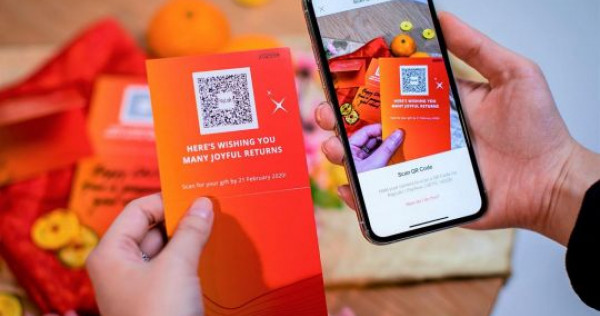
SINGAPORE – DBS is bringing back its QR code red packets this Chinese New Year with a host of new and improved features, including opening up the service to non-DBS customers and younger teenagers.
The DBS QR Gift, first introduced in a pilot last year under a different name, enables users of the DBS PayLah! app to scan a QR code to load a cash value of up to $999.
They can then give this QR code to friends and family as a substitute for traditional red packets, with recipients scanning the code to receive the loaded amount.
Recipients previously had to be DBS PayLah! users and at least 16 years old, but the criteria have now been widened to include all PayNow users, as well as PayLah! users above 13 years old.
Teenagers will still need parental consent in order to use the service and redeem their digital red packets.
PayNow is a funds transfer service provided by nine banks here. It has about 2.8 million users, compared to 1.6 million for DBS PayLah!
Other new features of the QR Gift include the option to load up to 10 QR Gift cards at once, instead of having to do so one at a time.
SINGAPORE: A few taps on a smartphone is what most people will do these days to book a ride, order a meal or pay a bill.
These changes in day-to-day activities are powered by technological advancements, which have also reshaped jobs and how businesses operate.
For instance, the mobile app that allows you to pay a bill, apply for a new credit card and open a new account underscores how banks are tapping technology to create new products and services for digital-savvy customers. With fewer people visiting bank branches, some job functions, such as those of bank tellers, have had to evolve.
Singapore has embarked on an all-out push to get itself ready for this new reality.
Going digital is now an imperative for companies across all sectors, and workers are nudged to pick up new skills as the economy embraces more technology.
By one estimate, the burgeoning digital economy is set to add as much as US$10 billion (about S$13.5 billion) to Singapore’s gross domestic product (GDP) by 2021.
It can also increase GDP growth rate by 0.6 per cent annually, according to the 2018 study by Microsoft and market research firm IDC Asia-Pacific.
But with opportunities come challenges. For example, when jobs and skills are made redundant quicker than people think.
What does the transformation into a digital economy mean? Here’s what to know:
Photo illustration of a man using a laptop.
WHAT IT’S ALL ABOUT
The World Economic Forum and the Group of Twenty define the digital economy as a broad range of economic activities that use digitised information and knowledge as key factors of production, modern information networks as an important activity space, as well as information and communications technology to drive productivity growth.
To put it simply, the digital economy is organised, enabled and facilitated by technology ranging from computers, Internet to emerging ones like artificial intelligence and the Internet of Things.
Its growth and far-reaching influence have brought about tremendous disruptions across all industries.
Look no further than the brick-and-mortar retailers and taxi operators, which have been upended by the rise of e-commerce and ride-hailing platforms, respectively.
Back at banks, technology has also been deployed at the back end amid the chase for greater productivity and cost efficiencies. For instance, the use of software to automate manual and repetitive operational tasks and processes.
As the relentless march of technology leaves its mark across industries, some jobs have changed. While some became obsolete, others now demand new skills such as programming and data analytics.
These changes will continue to come thick and fast, said a 2019 report by a United Nations body that focuses on trade, investment and development issues.
This boils down to how the collection, usage and analysis of massive amounts of data are now possible.
The United Nations Conference on Trade and Development also named the emergence of digital platforms as a catalyst. These data-driven platforms, which enable different parties to interact online, have disrupted existing industries over the past decade and will continue to do so.
“The power of platforms is reflected in the fact that seven of the world’s top eight companies by market capitalisation use platform-based business models,” the report said, citing the examples of Facebook and Alibaba.
WHY SHOULD SINGAPORE CARE?
The digital age has thrown up a resource – data – that allows Singapore to overcome its geographic and resource limitations, according to Trade and Industry Minister Chan Chun Sing at a press conference on the launch of the Committee on the Future Economy report in 2017.
With the global outlook for 2020 still shrouded in uncertainty, the digital economy remains one of the “exciting” opportunities – and a “major” one – for Singapore, he said in Parliament this month.
Digitalisation enables small countries like Singapore to transcend size and geography, and helps enterprises to penetrate new markets, he said.
Southeast Asia’s digital market, which is estimated to exceed US$300 billion by 2025, also serves up opportunities, added the minister in a speech on Jan 6.
Professor Sumit Agarwal from the National University of Singapore (NUS) Business School said Singapore, as a small and open economy, has been at the forefront of previous economic revolutions.
With digital technologies becoming increasingly pervasive in economies, businesses and people’s everyday lives, embracing it is crucial in remaining relevant.
“If Singapore doesn’t care, Singapore will be left behind,” he said.
WHAT HAS BEEN DONE
A plethora of measures have been put in place, with the digital economy named a key pillar of Singapore’s Smart Nation goals.
An additional S$500 million will also go into digital technologies as announced last year under a mid-term review of the five-year Research, Innovation and Enterprise 2020 plan.
To nudge businesses to digitalise, transformation maps for 23 industries were rolled out from 2017, alongside initiatives that offer funding support or advice like the SME Go Digital programme.
More recently, a new digital-focused office has been set up. It will encourage public-private partnerships to help companies digitise, while creating an estimated 10,000 new tech-related jobs over the next three years.
Another key focus is on raising the digital capabilities of the local workforce.
This by incorporating more technology-centric programmes into the curriculum at education institutions and providing existing workers with various options for skills upgrading or on-the-job training.
More help for both businesses and workers can be expected in Budget 2020, Deputy Prime Minister Heng Swee Keat has said in his New Year message.
Elsewhere, the push towards a cashless society continues and the local banking sector is poised for more shake-up with plans by the Monetary Authority of Singapore to issue five new digital bank licenses.
On a broader level, Singapore is pursuing digital economy agreements with Chile, Australia and New Zealand. It is also co-leading the World Trade Organisation Joint Statement on E-Commerce initiative, which aims to establish rules for the digital economy.
For all these efforts, Singapore was ranked as the world’s second-most digitally competitive country in an annual ranking published by Swiss business school IMD last year. The United States took the top spot.
CHALLENGES
There are also concerns, with the readiness of workers for the digital economy at the top of the minds of experts that CNA spoke to.
Many countries, including leading economies, are facing the challenge of a job-skills mismatch, said Ms Jaya Dass, managing director of recruitment firm Randstad in Malaysia and Singapore.
“The speed at which technology is advancing surpasses the current capabilities of the local workforce. There are new technologies such as robotics process automation and artificial intelligence, which the majority of the workforce is not equipped to carry out.”
Singapore’s Manpower Minister Josephine Teo said last month that the jobs and skills mismatch here will not go away.
In fact, Singapore must expect it “if we are transforming our economy at a fast enough rate” and see it as an opportunity instead.
Some surveys have showed societal concerns about the future of work.
A 2019 survey by PwC showed one in five Singaporeans being concerned about the future impact of technology on their jobs. This put Singapore as the second-most nervous country in the 11-nation poll.
When asked why they felt nervous or scared, 58 per cent of respondents were worried about being made redundant by technology and 36 per cent feared about not having the right skills.
Slightly more than half also thought that it is likely their roles will be made obsolete or significantly changed by automation over the next 10 years, the survey said.
Asked if Singapore is making the transition too quickly, OCBC’s head of treasury research and strategy Selena Ling said given how the rise of the digital economy is a global phenomenon, the pace of transformation is not something that can be controlled.
She said the local education sector is now “a lot more plugged in with the general economic direction and industry needs”, and the challenge remains on how to help existing workers keep up with the technology-induced shifts in the labour market.
This will likely have to involve more support measures for businesses, especially the small- and medium-sized enterprises, and workers moving forward, said Ms Ling.
Globally, there are concerns about how existing inequalities, such as the digital divide with sharing being predicated on access to technology and income divide, could be exacerbated.
The digital economy also tosses up new problems, such as cybersecurity risks and taxation, for world governments to mull over, experts said.
Singapore has, for instance, begun levying the Goods and Services Tax on digital imported services from January 2020.
“I think we are still at the nascent stage in policy responses to the digital economy, but overtime you’ll expect it to grow and displace traditional economic activities. Then, how you regulate, govern and tax will become increasingly important,” said Ms Ling from OCBC.
In March 2020, the inaugural CNA Digital Economy Leadership Summit 2020 will bring together some 200 key decision makers from Government, diplomatic circles and the private sector from around Asia, to explore key issues that include: How to grow and innovate in a digital economy, as well as how to manage talent and ensure sustainability in the digital economy.
SINGAPORE: With her hair tightly pulled back in a ponytail, Rui looks like a typical 15-year-old with a quiet and studious demeanour – not quite what one would expect of a YouTube personality.
In about 15 months, Rui, who declined to have her pictures taken or her full name published, has attracted almost 17,000 subscribers to her “spudstudy” channel.
So far, she has put up 29 videos showing her putting together her study notes, tidying up her desk, giving tips on how to have better handwriting, as well as her travel vlogs, among other things – all without showing her face.
One of her first few videos, which she put up during the December holidays in 2018, racked up 400,000 views. The three-minute video titled “day in my life : holiday edition” shows her going about routine activities such as taking care of her pet guinea pigs and preparing her meals.
Requests for endorsement are already trickling in, from as far away as the United Kingdom (UK).
The first request came from a tuition centre in the UK, while the second was from a video editing website. She did not take up the first one as she suspects that it is a scam while she turned down the other as the company wanted her to reveal her face.
She is currently talking to a firm which wants her to mention a PDF document converter in one of her videos in return for US$70 (S$94.50). In the meantime, she has earned a couple of hundred dollars from AdSense, a program run by Google that allows advertisements to be run on YouTube videos.
Despite her modest success on YouTube, Rui said she has no interest in trying to carve out a career by making videos, like what many YouTubers aspire to.
Speaking to us at a cafe after school earlier this week, she said her interest lies in science. “YouTube is a place where I relax during study breaks, get views and have fun, but I don’t take it as a career,” she added.
Rui is earning peanuts compared to the eye-popping amounts that bona fide YouTube stars overseas as well as in Singapore make. But every YouTuber has to start somewhere.
In second spot was the five-man sports crew, known as Dude Perfect, which specialises in intricate trick shots. They made US$20 million.
Rounding up the top three was Russian-American Anastasia Radzinskaya, 5. She earned US$18 million with videos that mainly feature her playing with her dad, according to Forbes. She now works with toy and food brands.
Singapore’s biggest YouTube stars are not in the same stratosphere but they are doing not too badly themselves.
There is little publicly available information about the YouTube industry in Singapore, except that the hours of content uploaded from YouTube channels here increased by over 50 per cent between 2018 and last year.
Nevertheless, Mr Tan Jianhao, 26, is regarded as Singapore’s top YouTuber with 3.8 million subscribers to his channel. The chief executive officer and founder of Titan Digital Media reportedly earns a six-figure sum annually although industry observers believe the amount to be higher.
Another major player, Night Owl Cinematics (NOC) said their annual revenue is a seven-figure amount.
OUT OF THE BEDROOM, INTO THE BIG TIME
Official figures on YouTube’s earnings are not available, although estimates for 2019 ranged between US$16 billion and US$25 billion. As such, the size of the YouTube industry in Singapore is a mystery as well.
But while there was the perception just five years ago that YouTubers should get a real job, several homegrown YouTubers have managed to break out of their bedroom workspaces to build thriving businesses with million-dollar revenues and dozens of employees.
Having built a brand on YouTube, many of them have established presence on other social media platforms as well.
According to industry players, the “Big Four” of Singapore’s YouTube industry are Titan Digital Media, NOC, Wah!Banana, and Clicknetwork.
Mr Ryan Tan and Ms Sylvia Chan of Night Owl Cinematics (NOC). Ms Chan said she has to be more selective with clients as her firm’s YouTube channel – which has about 967,000 subscribers – receives 50 to 150 enquiries a week. (Photo: NOC)
Mostly run by millennials in the late 20s or early 30s, these channels have hit the big time.
Together, they produce most of the comedy sketches, vlogs, and lifestyle videos that many young Singaporeans are glued to.
They are getting a big chunk of advertising and marketing budgets as well — both from government agencies and private companies, with quotations of about S$30,000 or more for a branded video.
Clients are turning to them, instead of traditional production houses as the YouTubers offer quick turnarounds and “guaranteed” views.
Among the Big Four, Mr Tan Jianhao leads the pack, charging S$38,000 for branded content and S$20,000 for a vlog in 2018 when he had 1.4 million subscribers on YouTube, according to his June 2018 rate card.
Today, with nearly 4 million subscribers, it is estimated that Mr Tan Jianhao is charging about S$50,000 for a video on YouTube.
He did not respond to our query on his latest rates, but it could be seen from his September 2019 Instagram rate card that his rates had more than doubled in 15 months.
With 581,000 Instagram followers in September 2019, he charged S$4,400 per photo post and S$10,000 per video post, up from S$1,800 and S$4,500 respectively in June 2018.
The September 2019 rate card also showed that Mr Tan Jianhao’s five-year-old dog, a Pomeranian called BunCha, commanded rates of S$2,500 per video and S$1,200 per photo on Instagram. BunCha’s account, babybuncha, currently has about 132,000 followers.
Such rates for Singapore’s top YouTubers are by no means scaring clients off.
NOC co-founder Sylvia Chan, 32, said she has to be more selective with clients as her firm’s YouTube channel – which has about 967,000 subscribers – receives 50 to 150 enquiries a week.
The channel’s median per-video income ranges between S$30,000 and S$40,000, said Ms Chan who runs the business with her husband, Ryan Tan, 31.
Nevertheless, Ms Chan said their business expenses including manpower and equipment costs are substantial, running into the millions.
FEW SAW IT COMING
When they first started their channel in 2011, little did they know how big the industry would become.
At that time, the world’s most-subscribed YouTuber, PewDiePie, had fewer than 60,000 subscribers and Ryan, the top earning YouTube star globally, was not even born yet.
“There was no money in this industry,” said Ms Chan. “There were a couple of years where I just earned a few thousand dollars a year. A lot of people would have given up by then, but for us, I thought as long as we are not that poor … we were not in debt, and you are doing something that you love, it is okay.”
According to the YouTubers, the marketing dollars here started pouring in about three years ago.
For NOC, 2018 was a standout year where its revenue grew five to 10 times, said Ms Chan.
“I started … to deconstruct this business … so that we could see for ourselves the avenues where we need to be more professional in and areas that we need to study a lot more on,” she said.
The university dropout – who was reading economics and sociology at the University of London (Singapore) – and her husband, a former restaurateur, started taking a more active approach towards growing NOC’s business from around 2015.
“We researched. We tried new things,” she said. “You start to realise that this is not a joke anymore… It (became) a legitimate business.”
Now, NOC has about 40 people on its payroll, 25 of whom are full-time employees.
A relatively new entrant is a 30-man content agency and media group, Grvty Media. Employees of the company are seen working on new content at their office along 62 Bendemeer Road. (Photo: TODAY/Najeer Yusof)
Over at Wah!Banana, which has more than 1 million subscribers, co-founder and producer Xiong Lingyi said the channel’s revenue grew by 50 per cent last year, and its clientele has grown beyond consumer goods companies.
It now hires seven full-time staff and engages about a dozen talents.
Ms Xiong, 31, said: “We are not known for having great production value, but we are very, very fast.”
Noting that her channel can produce branded content as quickly as within two days, she added that it also has “well-known talents”.
She pointed out that there is “no shortage of money” in the industry, given that many multinational corporations have their headquarters in Singapore.
“A lot of people hire us for the audience we have in this region,” she said.
When Wah!Banana started out in 2012, 90 per cent of its audience were from Singapore. The proportion has dropped to less than 40 per cent today, as they gain audiences in Malaysia, Indonesia, Australia, India and the Philippines.
Based on our interviews with YouTubers, such a trend is common for many of them as well.
COMPETITION HOTS UP, AS RATES “NORMALISE”
The explosive growth of the lucrative YouTube industry has drawn new players who were previously focused on other platforms.
They include TheSmartLocal and SGAG’s Nubbad TV, which have about 264,000 and 72,300 subscribers respectively.
A relatively new entrant is a 30-man content agency and media group, Grvty Media.
In 2018, it started producing a risque online talk show Real Talk, which helped its Millennials of Singapore channel grow rapidly.
The talk show has featured topics such as how to “talk dirty” and the hosts had also shared how they lost their virginity.
A popular episode saw DJ and social media personality Jade Rasif, 25, letting her co-hosts try her breast milk.
Grvty Media co-founder Johnathan Chua, 30, who is one of the four co-hosts of Real Talk, said clients go to them for their different appeal.
One of Real Talk’s latest and biggest clients is ride-hailing company Grab, which sponsored an episode where the co-hosts discussed their relationship with parents.
Towards the end of the unscripted episode, co-host Dew Francis, 28, who is also Grvty’s business development manager, introduced Grab into the discussion when he said that his mother would get him to send her home, as she knew that two destinations could be keyed into one trip order.
At the end of the show, the co-hosts reveal that Grab had sponsored the episode.
Grvty Media co-founder Johnathan Chua, 30, who is one of the four co-hosts of Real Talk, said clients go to them for their different appeal. (Photo: TODAY/Najeer Yusof)
Grvty media director Daniel Lim, 28, said more clients are now aware of the power of soft sell.
At the same time, clients are becoming increasingly savvy.
“When we first started, there were a lot of cowboy players who were charging stupid amounts of money that was very, very hard to justify. There was no sense of normalisation,” said Mr Chua, who was previously from social media agency Gushcloud.
Indeed, a YouTuber in his 20s who declined to be named, said that about five to six years ago, he was shocked to be offered S$35,000 by his first client to conceptualise and produce a series of seven three- to five-minute videos for a local brand. His channel was only a year old at that time and had about 10,000 subscribers.
“I thought it was S$5,000 for the whole project but when they say S$5,000 per video, I went like ‘Huh!’,” he said. Today, his channel has more than 70,000 subscribers and he charges about S$2,000 for a video.
The success of some of Singapore’s top YouTubers has recently been attracting criticism of their content.
Among other things, they have been criticised for being unoriginal and relying on listicles and eye candy – young, attractive women wearing sexy outfits – to draw eyeballs.
In the middle of last year, content creator Sneaky Sushii sought to enter the industry with a splash, by putting up a video roasting some of Singapore’s most prominent YouTubers.
The video titled “How not to be a Singaporean YouTuber” was taken off YouTube due to a copyright claim by NOC over images of bikini-clad girls featured in Sneaky Sushii’s clip which were taken from NOC’s videos.
Mr Tan Jianhao also posted a series of Instagram stories in response. Defending his heavy use of listicles, he said: “This is YouTube. I am not going to spend weeks on a video then leave it there and hope nobody watches lol.”
He added: “Viewers of the channel have seen how much our content evolved over the years, and the list is simply just a structure. And I don’t plan to change that anytime soon … Don’t hate the player, hate the game.”
Asked about Sneaky Sushii’s criticism on NOC’s use of girls, Ms Chan said one of the pictures featured was a screenshot from NOC’s travelogues to Phuket. She added, “If you go to Phuket, what do you want us to wear?”
Ms Chan pointed out that the top shows produced by NOC were “not the trashy talk shows” but “legit talk shows” – such as her recent interview with a tech entrepreneur on how he built his business.
Still, at least two YouTubers we spoke to admitted that the use of eye candy is a deliberate strategy in the industry to optimise view counts.
A YouTuber in his late 20s who declined to be named said he used the tactic once on his channel, and managed to get more than 300,000 views.
“I was like ‘woah, that easy?’ Of course, it was funny content as well, but girls are (half the battle won) – the first step of making a successful YouTube video in Singapore or anywhere else,” he said.
However, junior college student Jamie Lynn, 17, who has stopped watching Singapore YouTubers even though she used to as a child, said she is “disgusted and disturbed” by the use of sexualised images to draw viewers.
“It will breed a very predatory kind of culture … It makes it look like it’s okay to use women’s bodies for clickbait and for boys to think of girls like that,” she said.
In general, she now finds that the comedy sketches by Singapore YouTubers are “too exaggerated” and the jokes “are not funny anymore”.
THE POWER STRUCTURE: EITHER YOU’RE IN OR YOU’RE OUT
A YouTuber in his late 20s also offered some insights into another less savoury aspect of the industry – a toxic numbers game in which the person with the most subscribers plays “god”, and a hierarchy forms around others with the next biggest subscriber bases.
He said he wants to create his own brand of comedy, but even as he gained a notable following, he deliberately chose not to be too closely associated with the in-group as he did not want to be embroiled in their politics couched as a culture of “collaboration”.
In his early days, he had thought that he should be part of the group and he did hang out with the “cool kids”.
“The dynamics are such that if someone helped me before the last time and I forgot about them after I got famous, they will talk behind my back and say: ‘So you are doing your own thing now?’” he said. “There’s the unsaid thing of how you better pay your respects and kiss the ring.”
According to YouTubers interviewed, a well-known clique in the local scene comprises NOC, Mr Tan Jianhao and Mr Darryl Koshy (better known as Dee Kosh).
Silhouettes of mobile device users are seen next to a screen projection of Youtube logo in this picture illustration taken March 28, 2018. (File photo: REUTERS/Dado Ruvic/Illustration)
In 2017, YouTuber-turned-actor Noah Yap spoke out against this clique, after they posted a “Smash or Pass” video, in which they go through a list of other well-known influencers and declare if they would consider him or her attractive enough to sleep with.
In his vlog, Mr Yap said the YouTubers community was thriving too much on each other’s drama, and it became just about how many followers a YouTuber has, and “who has the hottest girls (or) who has the biggest (breasts)”.
Dee Kosh responded to claims of bullying thrown at him by other YouTubers. Among the examples cited was a video which Dee Kosh did in 2018 with fellow social media personality Munah Hirzi, where they made fun of influencer and YouTube personality Nicole Choo after she published a book.
Dee Kosh said he does not consider it to be bullying when he laughs “at the stupidity of another one of my peers”.
“It is true that in this day and age, you’re gonna need to be careful and, in some sense, be politically correct and responsible, even when it comes to comedy. But that is not me,” he said.
“If you put yourself in the public eye and you mess up, and people laugh about it, sadly, it’s just what comes with you being in the public eye.”
He added: “My comedy is a reflection of society, of you, even the bad parts about it, and if you yourself looking in the mirror can’t accept what you see, then of course you’re gonna blame the mirror for bullying you. So if you can’t take the heat, then why are you in the kitchen? Basically, loosen up.”
Ms Chan from NOC described the community as one “where people want each other to grow”.
“We have been friends with the other YouTubers for many years. I believe that this is a very strong community … We are the pioneers and we kind of set this standard, so if you are not a community player, then we don’t want to be friends with you,” she said.
On the claims that the big players help one another at the expense of others, Ms Chan said that such collaboration is simply a way by which close friends help each other to stay competitive.
“If a client is particularly rich, I’ll say: ‘You know what, bro? How about a video on Jianhao’s (channel) too?’ And the same thing he does for me and Dee Kosh,” she said.
Mr Tan Jianhao did not reply to our request for comment.
On whether such a culture could be a detriment to smaller players hoping to break into the scene, Mr Marc Lefkowitz, head of creator and artist development for YouTube’s Asia-Pacific operations, reiterated that “everyone has an opportunity to be successful on YouTube on their own”.
He pointed out that YouTube provides learning courses such as the YouTube Creator Academy or the Creator Insider channel to level the playing field.
YouTube has created an “entirely new creative economy” and many successful creators have gone on to found companies and create job opportunities for fellow aspiring creative minds in the community, Mr Lefkowitz said.
IS THE INCREASINGLY CROWDED SPACE BIG ENOUGH?
Indeed, some YouTubers new to the scene said they generally felt that there is enough space to flourish on their own terms.
A picture illustration shows a YouTube logo reflected in a person’s eye on June 18, 2014. (File photo: REUTERS/Dado Ruvic/Illustration)
Ms Brenda Tan, 24, started creating lifestyle videos on YouTube in 2016. She has never felt a need to conform to creating certain types of videos, such as comedies that have proven to be successful.
“The number one comment I get from my audience and subscribers is that they enjoy how refreshing my content is because I’m just being myself and talking about things I like, that makes sense to me in my life,” she said. “I feel really proud of my content and motivated to make more of what I want to make without jumping on trends.”
Other YouTubers also pointed out that they need not restrict themselves to the Singapore market.
Ms Tiana Roy, 22, who runs lifestyle YouTube channel “heythisistiana”, said she prefers engaging an overseas audience.
“I find the YouTube scene in Singapore a bit one-dimensional… I might as well do what I like,” she said.
Still, the industry is not for the faint-hearted. A former darling among the audience, TreePotatoes, which has 390,000 subscribers, might be calling it a day.
The channel, which was launched in November 2013 but is inactive these days, had produced videos which in their own words, “explore all the quirkiness of life in South-east Asia”.
Ms Janice Chiang, 32, one of the personalities behind the channel, said their client enquiries, which used to come from government agencies and big firms, started tapering off two to three years ago.
So rather than focusing on producing branded content, it started exploring alternative sources of revenue by going into producing original content – at a time when big names such as Netflix and HBO were growing such offerings.
“We decided that we better jump before the ship starts sinking,” said Ms Chiang, who is now doing marketing and business development in the media industry.
“EVERY KID WANTS TO BE A YOUTUBE STAR”
As the industry continues to grow and evolve, many parents are becoming concerned about the influence that YouTubers have on their children.
In fact, it is common to hear kids saying they want to be YouTube stars when they grow up.
Mr Steven Mun, 48, a customer service executive, has a 13-year-old daughter and a 14-year-old son.
His daughter, Shernice, said she spends about four hours a day after school watching videos on YouTube. His son, Sheldon, wants to be a YouTuber talking about video games.
Mr Mun noted that children these days no longer aspire to be doctors or lawyers.
“We parents have a dream of what we hope our kids to be but that doesn’t mean they want to be. It’s better to let them choose their career paths and we as parents can guide them,” he said. “I told (Sheldon) to get a job and do YouTube on the side. If his channel takes off, then he can do it full time.”
As for his daughter, he constantly nags at her to manage her time better. Still, he acknowledges that watching YouTube can be beneficial for his children if they use it “the right way”.
He added that his children have learnt vocabulary from watching YouTube videos. “My son also learnt entrepreneurship ideas from there. But of course there is always the other side of the coin,” he said.
The darker side of social media platforms like YouTube is what Ms Lee Mui Kiaw, a 49-year-old civil engineer, is worried about.
Ms Lee is the mother of Rui, the YouTuber who has gained a following for her videos on putting together study notes, among other seemingly mundane things.
The popularity of Rui’s videos on YouTube had surprised her mother. “I did not expect that she will have so many subscribers and views but I’m happy and proud that she did it on her own,” Ms Lee said.
But she is worried that Rui might “fall prey to criminals who pose as sponsors and advertisers”.
“Luckily, she will discuss with us parents and I hope it works out well,” she said.
MANILA – A volcano near the Philippines capital spewed ash up to 15km into the sky on Sunday (Jan 12), prompting the evacuation of thousands of people, the cancellation of flights and warnings of a possible explosive eruption and volcanic tsunami.
Taal volcano, one of the country’s most active, is in the middle of a lake about 70km south of the centre of the capital, Manila. As tremors shook the area, volcanic lightning flickered in the column of steam and ash.
SINGAPORE: Two of the Filipino workers involved in the fatal Lucky Plaza accident are still undergoing treatment, but are “now stable”, the Centre for Domestic Employees (CDE) said in a Facebook post on Sunday (Jan 12).
The accident, which took place on Dec 29, claimed the lives of two women and injured four others.
The two deceased were identified as Ms Abigail Danao Leste and Ms Arlyn Picar Nucos.
Among the four injured were Ms Arceli Picar Nucos, who is Ms Arlyn’s sister. Two others are cousins Ms Egnal Layugan Limbauan and Ms Demet Limbauan Limbauan. The fourth injured victim is Ms Laila Flores Laudencia.
All six women are domestic workers from the Philippines working in Singapore.
Ms Laila Laudencia, who was injured in a car accident on Dec 29, 2019, takes a wefie with her friends during one of their outings outside Lucky Plaza – the scene of the crash. She and her friends often gather there on Sundays. (Photo: Courtesy of Luz Rivera)
Sisters Arceli (left) and Arlyn Nucos were both in a horrific car crash outside Lucky Plaza on Dec 29, 2019. Arlyn died from her injuries while Arceli was warded in hospital. (Photos: Facebook)
Ms Arceli and Ms Egnal, who are still in Tan Tock Seng Hospital, “have been moved to the normal wards”, the chairman of the Centre for Domestic Employees Mr Yeo Guat Kwang said.
“Both have been through extensive medical treatments and we ask for your continued prayers, and give them privacy and time while they embark on their rehabilitation and recovery journey,” Mr Yeo added.
CENTRE OFFERING EMOTIONAL COUNSELLING FOR THOSE AFFECTED
It was previously reported that the other two injured, Ms Laila and Ms Demet, have been discharged. Mr Yeo provided an update on the women saying, “Demet and Laila are continuing their recovery and will continue working with their current employers.”
“CDE is in regular contact with both and will provide further assistance to them should either require help.”
Flower bouquets and other tributes are laid by the railings near Lucky Plaza on Dec 31, 2019, where a fatal accident has occurred. (Photo: Rachel Phua)
In partnership with The Salvation Army, the centre has also extended emotional counselling to anyone affected by the accident.
“So far, six people have been assisted by CDE through these sessions – all of whom are Filipino workers who were friends or relations of the affected workers, as well as our own staff,” Mr Yeo said.
“We have also extended this service to Demet and Laila should they require it.”
In the Philippines, the bereavement and funeral arrangements for Ms Abigail and Ms Arlyn have concluded, Mr Yeo added, explaining how the centre will send the funds raised to their families.
“In the coming days, CDE intends to complete the necessary financial and governance formalities to disburse an initial payment to the two families from the charitable monies raised, to cover their most urgent and immediate needs,” he said.
“Following this initial payment, we will be making continuous monthly support payments to the four surviving workers and the (dependents) of the two deceased, up until they have regained financial independence or the donated funds are exhausted.
“It is our hope that we can stretch this supplementary monthly support and additional assistance for the victims and/or dependents for as long as possible.”
Emotional scenes as mourners gather at the wake of Filipino domestic worker Arlyn Nucos who was one of the victims of the Lucky Plaza car crash on Sunday Dec 29, 2019. (Photo: Gaya Chandramohan)
A person wiping away her tears at the wake of Ms Abigail Leste on Dec 31, 2019. Ms Leste died in the Lucky Plaza car crash. (Photo: Jeremy Long)
“WE WITNESSED OUR COMMUNITY PULLING TOGETHER”
In the post, Mr Yeo also thanked the medical staff of Tan Tock Seng Hospital and the community in Singapore.
A woman lights a candle at the memorial. (Photo: Cindy Co)
Messages of condolences and flowers left for two women who lost their lives in a car accident at Lucky Plaza on Dec 29, 2019. (Photo: Try Sutrisno Foo)
He said: “CDE will like to express our gratitude to the medical staff of TTSH for all they have done for the victims of the accident.
“We are thankful and encouraged by the outpouring of help and support for our domestic workers in the last two weeks.
“In many instances, we witnessed our community pulling together to help and support strangers who have less or have suffered more.
“We continue to hope our social compact is strengthened further after this incident and that Singaporeans continue to appreciate and cherish the contributions of all migrant workers.”