New York-based travel vlogger Bobby Briskey has been to a lot of places around the world. He shares his adventures on his YouTube channel and likes to do little “challenges” for his videos, like living on cheap street food in India for 24 hours and surviving on 7-Eleven meals in Japan for a day — things that aren’t that hard to pull off, really.
His latest challenge took him to Singapore, which, according to him, has the world’s best vending machines — a claim he truly believes despite spending a decent chunk of time in Tokyo, the undisputed capital of fascinating vending machines.
In a video posted last Friday (Feb 14), he shared his thoughts and genuine enthusiasm, spending 24 hours around Singapore checking out the plethora of vending machines across the island.
SINGAPORE: To help students in acquire cross-cultural skills and understand the region, the Government has set a new target for 70 per cent of local graduates from Institutes of Higher Learning (IHLs) to have overseas exposure, and 70 per cent of the exposure to be in Southeast Asia, China or India.
Setting the “70-70” target during his 2020 Budget speech on Tuesday (Feb 18), Deputy Prime Minister Heng Swee Keat said that the Government will introduce a new Asia-Ready Exposure programme to achieve this, supporting visits by local young people to cities in Southeast Asia, China or India.
It will also enhance support for internships under the Global Ready Talent Programme, said Mr Heng.
Deputy Prime Minister and Finance Minister Heng Swee Keat delivers Budget 2020 in Parliament on Feb 18, 2020.
The Global Ready Talent Programme was launched in October 2019, combining current and local overseas internship programmes, with more funding support for students interning overseas with Singapore firms.
Singapore enterprises offering student internships or management associate programmes are currently eligible for up to 70 per cent of funding support for allowances or salaries of participants.
Launching the programme in October 2019, Minister for Trade and Industry Chan Chun Sing had said that over the next five years, the Government aimed to offer 5,000 overseas placements to IHL students and young graduates.
The programme also supports high-growth Singapore firms, to send Singaporeans with up to three years of working experience for postings in key markets, including Southeast Asia, China and India.
Noting that about half of all local IHL students gain experience abroad through internships, exchanges, service learning or study trips, Mr Heng said local students are “well-prepared to thrive” in other countries and cultures, including in Asia.
“In my pre-Budget dialogue with youth leaders, I was struck by their understanding of the importance of learning new skills and exploring new opportunities. They look forward to overseas exposure and postings in the region,” he added.
Mr Heng also noted that IHLs and industry have distinct roles, and students can secure good jobs if these roles are aligned to “keep learning relevant”.
“Employment rates are high, and starting salaries have increased. We develop Singaporean talent in partnership with enterprises under the Singapore-Industry Scholarship scheme,” he said.
“Many of them have graduated and are developing their careers with leading enterprises like ST Engineering and Micron.”
SINGAPORE: The annual bursary amount for pre-university students from lower-income families will be increased from S$900 to S$1,000, part of enhancements to the Ministry of Education’s (MOE) Financial Assistance Scheme.
Announcing the enhancements during his 2020 Budget speech on Tuesday (Feb 18), Deputy Prime Minister Heng Swee Keat said transport subsidies for all students and school meals subsidies for secondary school students will also be increased.
With these enhancements, MOE’s Financial Assistance Scheme will cost an additional S$9 million per year, increasing the yearly total to S$52 million.
Noting that primary school is free for all Singaporeans and secondary school fees are S$5 a month, Mr Heng said that education in the primary to pre-university school years is “already heavily subsidised”.
“Students pay a few dollars of miscellaneous fees,” he added.
ENHANCED BURSARIES FOR DIPLOMA AND DEGREE HOLDERS
Bursaries for full-time Institute of Technical Education (ITE) students will also be enhanced from the 2020 academic year, Mr Heng announced during his speech. Students from households who qualify under the lowest income tier for the bursaries will now receive 100 per cent fee subsidies on top of the cash bursary, he said.
The cash bursary for students from low- and middle-income households will also increase by up to S$200 a year, he added.
Deputy Prime Minister and Finance Minister Heng Swee Keat delivering the Budget 2020 statement in Parliament on Feb 18, 2020.
More than 33,000 diploma students and 21,000 undergraduates will benefit from the Government’s enhanced bursary scheme announced last year, including students enrolled in ITE, the National Institute of Early Childhood Development, Nanyang Academy of Fine Arts and Lasalle College of the Arts.
About 30,000 of these students come from families with incomes at the 30th percentile and below. The bursaries would be “heavily weighed towards benefiting” families from the 30th percentile and below, Mr Ong had said in August.
This means that families from the lowest income bracket could pay fees as low as S$150 a year for polytechnics, down from the current S$550. University undergraduates in this bracket would only need to pay S$2,000 a year, compared to the current S$4,200.
The enhanced bursaries will be rolled out from the 2020 academic year. Mr Heng said the cost of bursaries for higher education will increase to S$198 million per year, up from S$148 million per year.
DOUBLING PRE-SCHOOL SPENDING
Mr Heng also noted that pre-school subsidies were significantly enhanced and made available to more families from this year.
These measures took effect in January. Families with a gross monthly income of S$3,000 now pay S$3 a month per child at anchor operator pre-schools, as the maximum additional subsidy was increased from S$400 to S$467. This is on top of the S$300 basic subsidy.
“Good education provides a strong foundation for children to grow, realise their aspirations, and continue a journey of lifelong learning,” said Mr Heng.
“We have committed to decisive shifts in the Government’s support for early childhood development. We are determined to give every child, regardless of circumstances, a good start in life.”
He also said that the share of government-supported pre-school places will also be increased to 80 per cent by around 2025, up from just 50 per cent today.
Adding that the Government is “doubling” its support for children in their pre-school years, Mr Heng said government spending on the early childhood sector will double to over S$2 billion per year within the next few years.
“A good education lays a strong foundation for a better future. This is why this Government has been providing significant education subsidies for each child,” he said.
A Singaporean child will receive more than S$180,000 of education subsidies by the time they turn 16, added Mr Heng, including S$50,000 in government subsidies over five years when they enrol in a full-day childcare programme with an anchor operator.
“This substantial investment is how we maximise every child’s potential, regardless of family circumstances,” he said.
“This is a promise that I, as former education minister and now finance minister, am committed to keep.”
SINGAPORE – The goods and services tax (GST) hike will not kick in next year while $6 billion has been set aside this year to help cushion the impact when the increase does take effect.
The Budget’s new Assurance Package means all adult Singaporeans will get cash payouts of between $700 to $1,600 over five years so most households will get enough to offset at least five years’ worth of additional GST expenses.
Those living in one to three-room flats will get enough to offset about 10 years’ worth.
This works out to about $7,000 in GST offsets over five years for a family of four in a four-room flat with a combined income of $6,000. It includes cash of about $4,000.
The planned GST hike from 7 per cent to 9 per cent was first announced in 2018.
The government said then that it was necessary given the needs in healthcare and other areas, and would take place sometime between 2021 and 2025.
Finance Minister Heng Swee Keat said on Tuesday (Feb 18) that the coronavirus outbreak is a “stark reminder of the continued importance of maintaining a sound fiscal footing to deal with surprises and unexpected scenarios”.
SINGAPORE: Amid the COVID-19 outbreak and other global uncertainties, the Government on Tuesday (Feb 18) proposed a stabilisation and support package worth S$4 billion to help workers and businesses deal with near-term economic uncertainties.
“Our foremost concern is jobs”, followed by helping enterprises with cash flow, said Deputy Prime Minister (DPM) and Finance Minister Heng Swee Keat during his Budget speech in Parliament.
Additional support will also be given to sectors directly affected by the coronavirus outbreak, such as tourism, aviation, retail, food services and point-to-point transport services.
The proposals came on the back of “modest” 0.7 per cent economic growth in 2019 – the weakest since the 2008 financial crisis.
And “just as the global economy was beginning to recover”, the COVID-19 outbreak “hit us”, said DPM Heng.
The outbreak prompted Singapore to raise its Disease Outbreak Response System Condition (DORSCON) level to Orange on Feb 7. As of Monday, 77 people have tested positive for the virus in the island, 24 of whom have been discharged.
With an expected impact on the economy, the Ministry of Trade and Industry downgraded this year’s GDP forecast from between 0.5 per cent and 2.5 per cent to between -0.5 per cent and 1.5 per cent.
“However, the duration and severity of this outbreak and the impact on the global economy are still unclear.
“While MTI’s baseline is for GDP growth to come in at 0.5 per cent for the full year, we must be prepared that the economic impact may be worse than we projected,” DPM Heng added.
Here is what you need to know about the stabilisation and support package included in Budget 2020:
This will support more than 1.9 million local employees in Singapore and will be paid out to employers by the end of July 2020.
1) HELPING WORKERS STAY EMPLOYED
To help workers stay employed, the Government will support businesses by defraying their wage cost through two schemes, as well as redeployment programmes for selected sectors.
Jobs support scheme: The Government will offset 8% of every local worker’s wage, up to a monthly cap of S$3,600 for three months.
This will support more than 1.9 million local employees in Singapore and will be paid out to employers by the end of July 2020.
Wage credit scheme: The existing scheme, which supports wage increases for Singaporean employees earning a gross monthly wage of up to S$4,000, will be expanded to workers earning up to S$5,000 a month.
The proportion of wages co-funded by the Government will also be increased by five percentage points to 20 per cent and 15 per cent, for 2019 and 2020 respectively.
Redeployment programmes: Employees in tourism, aviation, retail and food services sectors will receive enhanced support under the adapt and grow initiative, specifically through redeployment programmes, with the funding period for reskilling extended from three months to a maximum of six months.
Together with the Jobs Support Scheme, this will support employers in these sectors retain and train more than 330,000 local workers.
2) RENTAL WAIVER FOR FOOD SERVICES AND RETAIL SECTORS
Stallholders in hawker centres and markets managed by the National Environment Agencies will be given a full month of rental waiver. Other agencies, such as the Housing and Development Board, will provide half-a-month of rental waiver to commercial tenants.
Establishments operating in qualifying private properties will get a 15 per cent property tax rebate. “I strongly urge landlords to pass this on to their tenants by reducing rentals,” DPM Heng said.
3) HELPING FIRMS MANAGE CASH FLOW
The stabilisation and support package will also provide “economy-wide support to help enterprises with cash flow”, said DPM Heng.
Corporate income tax rebate: At a rate of 25 per cent of tax payable, capped at S$15,000 per company, this rebate will benefit all tax-paying companies for year of assessment 2020.
To put more cash in the hands of enterprises, several tax treatments under the corporate tax system will also be enhanced for year of assessment 2021. For instance, firms will be given a faster write-down of their investments in plants and machinery, and renovation and refurbishment.
Working capital loan under enterprise financing scheme: The maximum loan quantum will be raised from S$300,000 to S$600,000, and the Government’s risk-share will be increased to 80 per cent from between 50 per cent to 70 per cent.
Flexible rental payments: Tenants and lessees of government-managed properties can approach the relevant agencies “to discuss options for more flexible rental payments such as installment plans”, which will be assessed according to the firm’s individual circumstances, said DPM Heng.
Property tax rebate: A 30 per cent rebate will be given for the accommodation and function room components of hotels, serviced apartments and meetings, incentives, conventions and exhibitions (MICE) venues.
International cruise and regional ferry terminals will receive a 15 per cent rebate, and the rebate for the integrated resorts will be 10 per cent.
4) TAX REBATES FOR AVIATION
Changi Airport will receive a 15 per cent property tax rebate. Rebates will also be given on aircraft landing and parking charges.
There will also be assistance for ground handling agents, and rental rebates for shops and cargo agents at Changi Airport.
The ministry had announced the package, with the largest component being a S$73 million Special Relief Fund that will help active full-time taxi and private-hire car drivers defray business costs.
The Government will contribute S45 million towards the whole package, with the remaining provided by taxi and private-hire car operators.
“We will continue to monitor the situation closely. If needed, we can and are prepared to do more,” said DPM Heng.
Deputy Prime Minister and Finance Minister Heng Swee Keat delivers Budget 2020 in Parliament on Feb 18, 2020.
A care and support package will also complement the stabilisation and support package in providing “timely help” to households with cost of living. More help will be given to the less well-off, added DPM Heng.
The stabilisation and support, as well as the care and support packages add up to a total budget of S$5.6 million.
Separately, agencies at the forefront of fighting and containing the outbreak will get an additional S$800 million, the bulk of which will go to the Ministry of Health.
On behalf of the Government, the DPM thanked “frontline officers who have been working tirelessly, day and night, over weekends” in fighting the outbreak.
“You exemplify the resilience and indomitable spirit of our people. But please take care of yourselves,” he added. “I am confident that together, we will stay strong, and get through these trying times.”
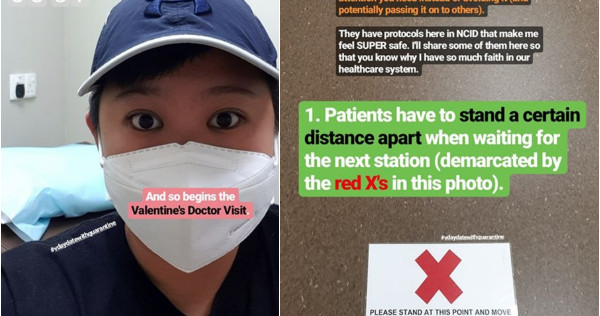
Of all the different ways to spend Valentine’s Day, one local resident began her Valentine’s in the National Centre for Infectious Disease (NCID) after being suspected of being infected with Covid-19.
Despite the coronavirus fear that has seized many Singaporeans — resulting in hoarding, discrimination and fear-mongering — her documented trip to the NCID helped to put many netizens’ minds at ease.
Joyce Chan’s post on Facebook and Instagram, dated Feb 14, which covered the entire process from admission, triage, diagnosis to discharge, had gotten over 8,200 shares at the time of writing.
As photo- and video-taking are not allowed within the NCID, the post has since been edited to remove the photos capturing other patients and medical personnel.
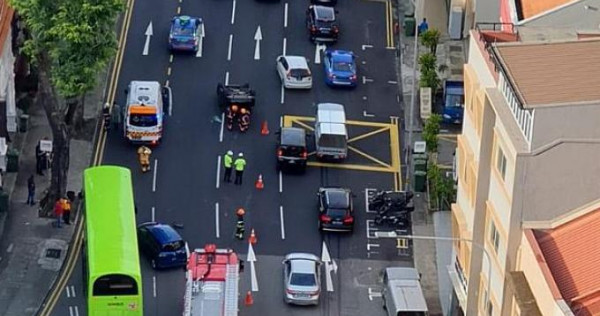
An accident occurred near 327 Jalan Besar yesterday morning, which left a car overturned in the middle of the road.
An eyewitness, Mr Mike Ho, said he was on his way to work at Sing Huat Hardware & Machinery, which is located in the area, when he saw the car flip over after colliding with another vehicle that was travelling alongside a double-decker bus.
Mr Ho, a sales manager in his 50s, immediately called for an ambulance.
His colleague opened the door of the overturned vehicle to assist the driver out of the car. The driver was wearing a sarong and looked to be in his 30s, Mr Ho said. He crawled out and walked to the side, looking stunned, Mr Ho added.
Another eyewitness, Mr Jay Lim, 48, told TNP he was awoken by the crash, despite being 15 storeys up at home.
Out of his window, Mr Lim saw the accident and the traffic congestion it caused.
He said: “All the cars had to filter to the right side of the road. The jam lasted around one hour.”
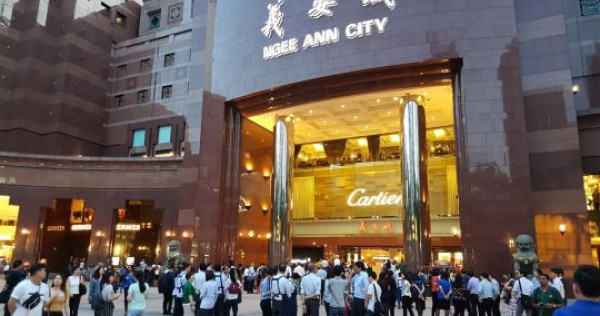
A floor at Ngee Ann City Tower A has been cordoned off and the area is being cleaned after a DBS staff working there tested positive for the coronavirus.
He is the second employee from the bank to be infected and a close contact of the first case, DBS said.
In a notice issued to tenants on Monday (Feb 17), Ngee Ann City’s management said the affected office space and floor have been closed off and common areas such as lifts and toilets are being deep-cleaned and disinfected in accordance with the Ministry of Health’s guidelines.
General manager Lim Yen Li said in the notice: “We have immediately cordoned off the area where he worked and have initiated a (series) of deep cleaning processes in the immediate area as well as the common areas where the case was last seen.
“Special cleaning and disinfection have been done in the surrounding areas as a precaution.”
Last week, DBS vacated 300 employees from one of its offices on the 43rd floor of Tower 3 at Marina Bay Financial Centre.
This was after a 62-year-old employee working there was confirmed to have contracted the virus.
SINGAPORE – All four telcos here have applied for at least one of four 5G licences up for grabs by the close of the local regulator’s submission deadline on Monday (Feb 17), bringing Singapore one step closer to a future of driverless vehicles, cloud gaming on-the-go, and robot-run factory and ports.
Singapore’s largest telco Singtel and newcomer TPG Telecom submitted solo bids, while StarHub teamed up with M1 in a joint bid, said the Infocomm Media Development Authority (IMDA) on Monday evening.
“IMDA is currently evaluating the submissions, and we expect to award the spectrum by mid-2020,” the regulator said in a statement, referring to the airwave licences.
IMDA will assess, among other things, telcos’ network security design and ability to achieve 50 per cent islandwide coverage by end-2022.
The Straits Times understands that there is a three-way contest for the two licences to operate a nationwide 5G network, with analysts saying that such a licence is key to long-term survival.
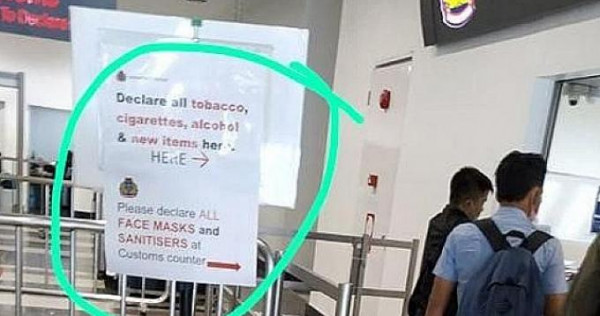
There are no extra restrictions on masks and hand sanitisers, but the usual customs duty applies to the import of these items, Singapore Customs said yesterday.
It issued the clarification after a picture of a sign recently put up at the Singapore Cruise Centre instructing travellers to declare their purchase of face masks was shared on social media. The new sign had been placed below another one telling travellers to declare dutiable goods like cigarettes, alcohol and new items.
The post had prompted some concern whether the import of face masks and hand sanitisers was being clamped down on.
Singapore Customs said it had put up the sign at the cruise centre in response to a surge in the number of ferry passengers hand-carrying the items in large quantities.
These passengers had carried the items with values in excess of their GST import relief thresholds or had bought the items for commercial purposes, and thus had to pay customs duty for them according to existing rules that would also apply to other dutiable goods, it added.