SINGAPORE: Immigration and Checkpoints Authority (ICA) officers on Monday (Feb 17) seized thousands of cartons of duty-unpaid cigarettes declared as vegetables in a lorry.
The total duty and Goods and Services Tax (GST) evaded amounted to about S$445,788 and S$36,094 respectively, said ICA in a news release on Friday.
In the incident, which happened at about 4.40am, officers at Woodlands Checkpoint grew suspicious when they found “anomalies” in the scanned images of a consignment in a Malaysia-registered lorry.
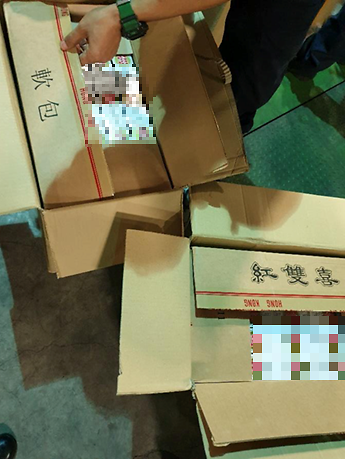
The consignment had been declared as “vegetables” – but when officers carried out further checks, they discovered 5,220 cartons of duty-unpaid cigarettes hidden inside cardboard boxes.
Duty-unpaid cigarettes hidden inside boxes within a “vegetable” consignment. (Photo: Immigration and Checkpoints Authority)
A total of 5,220 cartons of duty-unpaid cigarettes were discovered. (Photo: Immigration and Checkpoints Authority)
“Further checks revealed that the 27-year-old Malaysian driver was in possession of a forged Malaysia driving license,” said the authority.
He was immediately arrested and the case was referred to Singapore Customs and the Singapore Police Force for investigations.
The story behind the island (Read it here!) is a little sketchy, but all accounts involve a giant tortoise transforming itself into an island.
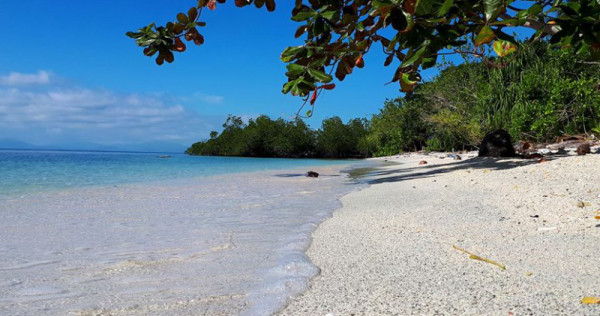
Located only 5.6 kilometres off the main island of Singapore, it’s popular with in-the-know day-trippers, even if you don’t believe in its supernatural prowess.
GETTING THERE
Make your way to Marina South Pier (right next to Marina South Pier MRT Station) and buy your ferry tickets from Singapore Island Cruise around the main entrance of the pier.
Book your tickets here.
Do note you are not allowed to camp or stay overnight on the island, so remember to keep track of time to catch the last ferry back to the mainland!
1. VISIT HISTORIC SACRED SITES
The main highlights of the 85,000 square metre island are the three Malay shrines and the Chinese temple.
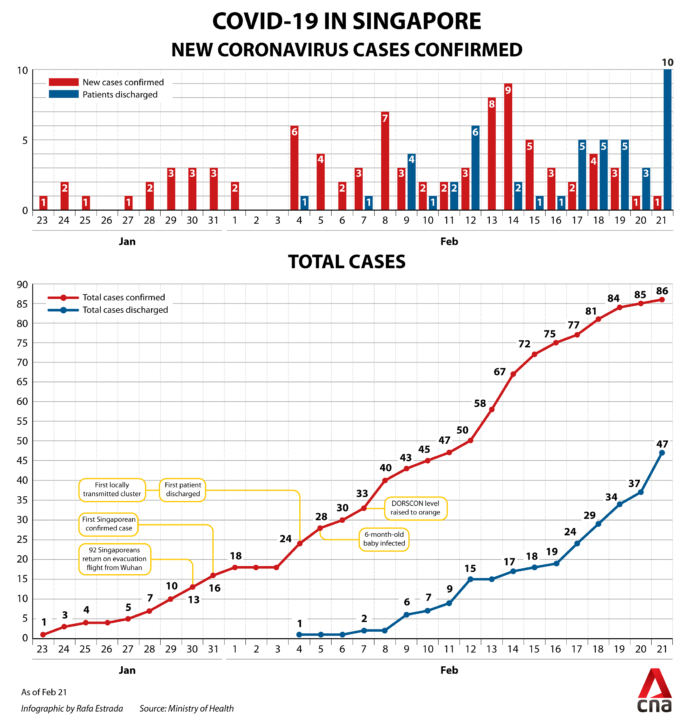
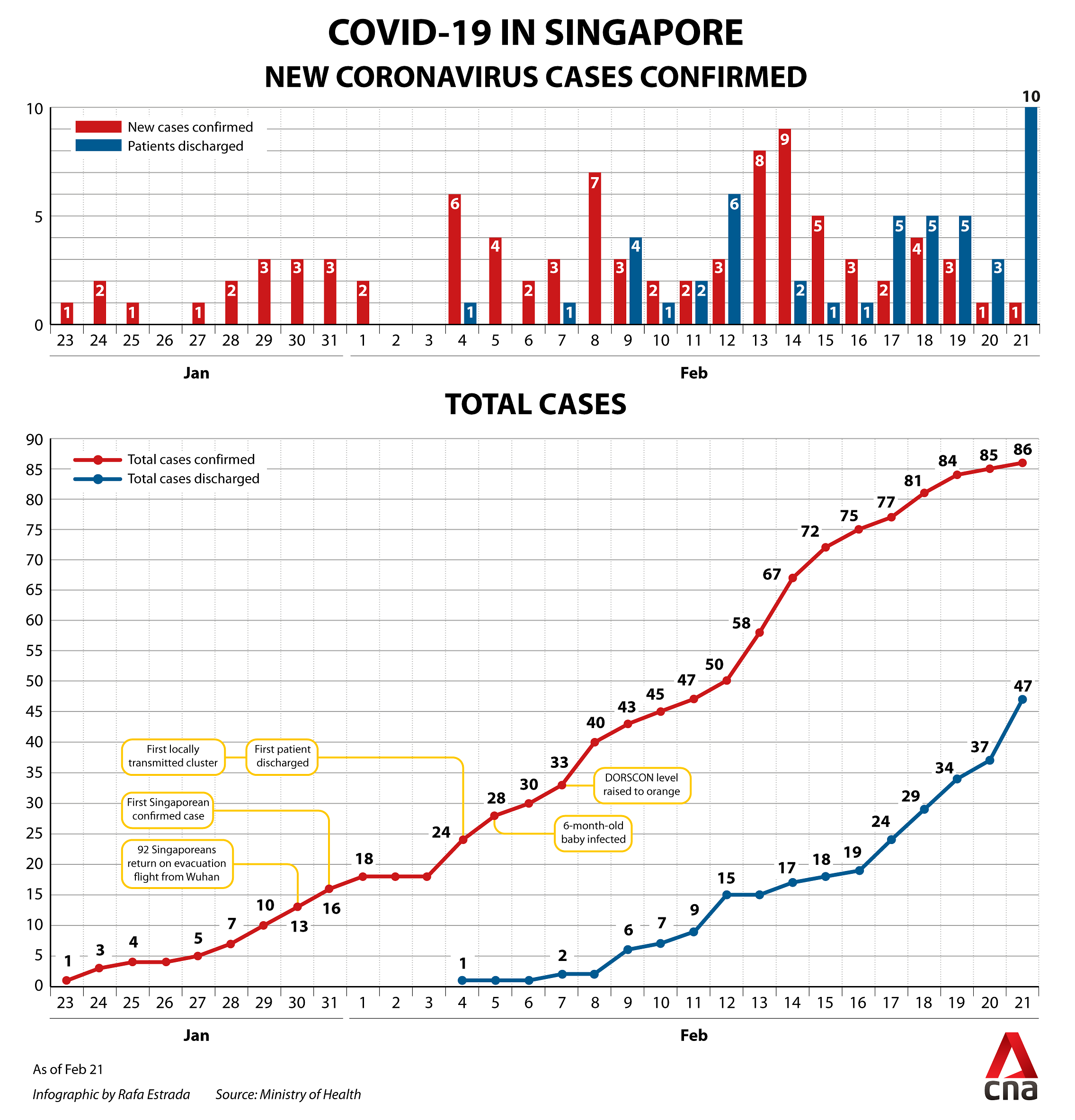
SINGAPORE: Ten more COVID-19 patients were discharged from hospital on Friday (Feb 21), including a DBS employee and several people linked to the Grace Assembly of God church cluster, said the Ministry of Health (MOH) in a daily update.
Singapore reported one more confirmed case of COVID-19 , bringing the number of cases in the country to 86.
Forty-seven people have now fully recovered from the virus, while 39 remain in hospital, with five in critical condition.
The latest confirmed case is a 24-year-old Singapore Institute of Technology student from Singapore.
He has no recent travel history to China and is linked to Case 82, a 57-year-old Singaporean woman. He lives at Bukit Batok East Avenue 5.
The man reported onset of symptoms on Feb 14 and sought treatment at two general practitioner clinics on Feb 16 and 18. He then sought treatment at Ng Teng Fong General Hospital on Feb 19 and was immediately isolated.
The next day, he was confirmed to have COVID-19.
He has not been to school since the onset of symptoms.
DBS EMPLOYEE AMONG THOSE DISCHARGED
Among those discharged on Friday is a 62-year-old Singaporean man who works at DBS (Case 50), as well as a 37-year-old man from Wuhan (Case 3) who is the son of the first confirmed COVID-19 case in Singapore.
Case 84, a 35-year-old Singaporean woman linked to the cluster at Grace Assembly of God, was discharged on Friday as well – just two days after she was confirmed to have the disease.
The ten cases discharged on Friday are: Cases 3, 23, 27, 50, 51, 57, 63, 70, 83, 84.
As of noon on Feb 21, MOH has identified 2,696 close contacts who have been quarantined. Of these, 1,122 are currently quarantined, and 1,574 have completed their quarantine.
MOH also released more information on Friday about the previous day’s confirmed case.
Case 85, a 36-year-old man from China and a Singapore work pass holder, is currently warded in an isolation room at the National Centre for Infectious Diseases.
He reported onset of symptoms on Feb 14 and sought treatment at a general practitioner clinic that day and also on Feb 16 and Feb 19. He also sought treatment at Yishun Polyclinic on Feb 19.
He was taken to Khoo Teck Puat Hospital in an ambulance on the same day.
He was confirmed to have the disease on Feb 20.
Before being admitted to hospital, he had mostly stayed at his rental apartment at Woodlands Avenue 6, except when he went to seek medical treatment, said MOH.
The Bangladesh High Commission confirmed with CNA on Thursday that a 39-year-old Bangladeshi infected with the virus in Singapore is in a very critical state.
The patient, Singapore’s 42nd case, has been in the intensive care unit for 14 days as of Thursday, the High Commission said.
The Bangladeshi national is one of five cases linked to a construction site at Seletar Aerospace Heights.
Originating in the central Chinese city of Wuhan, COVID-19 has killed more than 2,200 people and infected more than 75,000, mostly in mainland China.
It has spread to more than 25 countries, including Singapore, Japan and Thailand.
Outside mainland China, 13 people have died from the disease. These include passengers who were on the Diamond Princess cruise ship, and residents in Japan, South Korea, Hong Kong, Taiwan, France, the Philippines and Iran.
Singapore on Feb 7 raised the Disease Outbreak Response System Condition (DORSCON) to Orange, prompting additional precautionary measures.
The country has also set aside S$800 million in Budget 2020 to support frontline agencies in their efforts to contain the COVID-19 outbreak, with the bulk allocated to the Ministry of Health.
The newly announced measures to help firms, workers and households are appropriate for now but the Government is prepared to do more if the situation warrants it, said Deputy Prime Minister Heng Swee Keat.
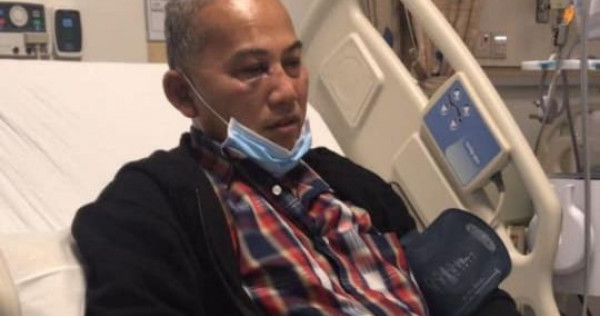
SINGAPORE – The police are investigating an attempted robbery in Hougang on Thursday morning (Feb 20) in which a taxi driver was allegedly strangled and punched by the robber.
The police saidon Friday they received a call on the attempted robbery at 4.58am on Thursday, and that the 54-year-old man was taken to Sengkang General Hospital from Hougang Avenue 6.
Facebook user Muhd Taufiq, who claims to be the taxi driver’s son, said in a Facebook post on Thursday that his father was allegedly assaulted by a man who looked to be in his mid-30s.
His father picked the passenger up at Hougang Central Bus Interchange, but was given “abrupt” instructions to stop at a bus stop. There, the passenger was accused of strangling his father from behind the driver’s seat and punching his face several times before fleeing from the scene.
Mr Taufiq added that his father pressed on the car horn during the altercation to seek help from passers-by but there was no one around.
Sexual harassment in colleges is a disquieting issue that afflicts campuses around the world, but it’s one that’s finally holding larger scrutiny in Singapore of late.
There were 56 cases of sexual misconduct involving students from six local universities in the last three years, revealed Education Minister Ong Ye Kung in parliament last year. And that’s not counting the cases that have gone unreported by scared or silenced victims.
With that dreadful data in mind, four Nanyang Technological University undergraduates have an idea on how to harvest technology — specifically, virtual reality — to help make university campuses a safer place for their fellow students.
SINGAPORE: Singapore Airlines (SIA) has stepped up the cleaning and disinfecting of its aircraft to prevent the spread of COVID-19, amid a decline in demand for air travel.
SIA has also made changes to its in-flight services to reduce contact between passengers and crew, such as by replacing its in-flight magazines and using pre-packed wet towelettes instead of hot towels.
The national carrier began introducing enhanced safety measures shortly after Chinese New Year, when the coronavirus situation became more serious, SIA in-flight services operations manager Nicole Lew told reporters on Friday (Feb 21).
SATS aircraft interior cleaning team members disinfect a Singapore Airlines Airbus A350. (Photo: Jeremy Long)
SATS aircraft interior cleaning team members disinfect a Singapore Airlines Airbus A350. (Photo: Jeremy Long)
In addition to its existing hygiene measures – which include the cleaning of washrooms, vacuuming of carpets and cleaning of surfaces such as tray tables – SIA is also using a strong disinfectant on areas such as in-flight entertainment screens and windows.
For flights from mainland China – where the virus is believed to have originated in the city of Wuhan – SIA also takes the added step of fogging the cabin.
Before fogging is conducted, the cleaning team from aviation services provider SATS removes all blankets.
Soiled and unused linen are also bagged and removed from the plane, and disinfected before going through high temperature washing.
SATS aircraft interior cleaning team members disinfect a Singapore Airlines Airbus A350. (Photo: Jeremy Long)
SATS aircraft interior cleaning team members disinfect a Singapore Airlines Airbus A350. (Photo: Jeremy Long)
Minister of Transport Khaw Boon Wan and Senior Minister of State Lam Pin Min try out disinfectants used on board the aircraft. (Photo: Jeremy Long)
Transport Minister Khaw Boon Wan, along with Senior Minister of State for Transport and Health Lam Pin Min, witnessed some of these enhanced cleaning measures on one of SIA’s Airbus A350 aircraft on Friday.
Speaking to the media after his visit, Dr Lam noted the toll that COVID-19 has had on the aviation industry, with more than 80 per cent of flights between mainland China and Singapore cancelled due to the outbreak.
“We are aware that cleanliness is something that is on the mind of passengers, and by implementing some of these measures, it’s reassuring to passengers and reassuring to the crew as well,” he said.
SIA and its regional subsidiary SilkAir has been forced to cut flights across its network because of lower demand due to the coronavirus outbreak.
Affected destinations include Frankfurt, Jakarta, London, Tokyo and Los Angeles.
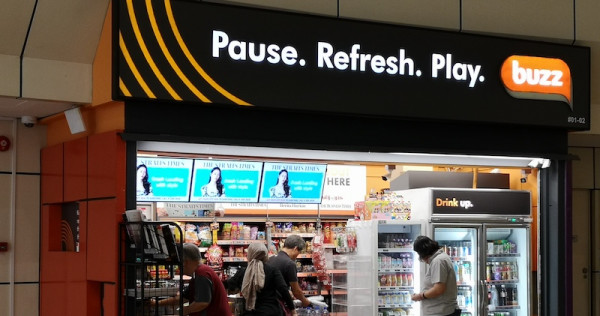
Throngs of hopefuls turned up at various Buzz convenient stores across the island on Thursday (Feb 20) after learning that they’re selling surgical masks.
Ads in The New Paper, Lianhe Zaobao, and Buzz’s Facebook page informed readers that selected Buzz outlets would carry boxes of surgical masks for sale at 3pm. A box of 50 was priced at $35, and each customer could only buy one box.
PSA: As published in The New Paper, V-Isolation masks will be sold in limited quantities at the following Buzz…
SINGAPORE – In primary school, children teased him with names like ‘vampire’ and ‘botak’.
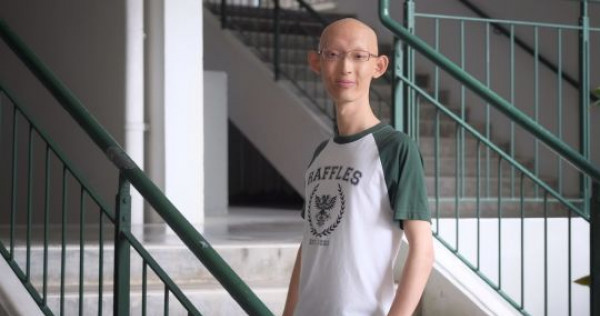
Raffles Institution graduate Loh Yih Hang has no sweat glands and minimal salivary glands. The 18-year-old looks older than he is, with no hair and missing teeth.
“I look more or less like this since young,” he said.
“Back then I was a bit uncomfortable with it and I didn’t really know how to deal with it… but my parents told me not to care about what other people say about me,” said Yih Hang.
On Friday, he collected his A-level results from the school where he was a student for six years.
He scored straight As for all his subjects – H2 physics, chemistry, mathematics and geography, as well as H1 general paper and project work.
Yih Hang hopes to pursue computer science in a local or overseas university.
Diagnosed at birth with hypohidrotic ectodermal dysplasia, he is also susceptible to heat stroke as the condition makes him unable to sweat and expel heat.
But he also developed a “thick skin” to block the nasty comments, he said.
SINGAPORE: Uncertainty is the bedrock of adulthood, although most of us don’t realise we lack the skills to navigate it, until we have to confront a major fork in the road.
If you’re receiving your GCE A-Level results today, you might experience conflicting feelings about which university to go to, which course to take, or perhaps, whether you should even go to university right now.
The answers to these questions will feel monumental, as though this seemingly pivotal decision will determine the rest of your life. In some ways, it will.
For example, picking the right course that combines your interests and abilities will mean there’s a higher chance of doing well, and hence, embarking on a career you can flourish in. It also ensures that you have a fulfilling time in university, which enriches your mental and emotional well-being, allowing you to realise your fullest potential.
Alternatively, gaining relevant work experience before deciding on a course could prove crucial for the industry you wish to enter. Then you need to ask yourself how long you’d like to defer your university plans.
While figuring out how to deal with these choices is extensively covered by career and course counselling guides, you can take some comfort in the fact that the hyper-vigilant focus on these immediate, tangible decisions ironically reflect the safe environment of our education system.
For most of our school lives, many of us cruise along without making particularly risky or divergent education choices. One of the biggest decisions is, in fact, picking the science or arts track in junior college.
These secure parameters are precisely why making a decision after receiving your A-Level results can feel exceptionally scary, like falling through a broken stair without warning.
However, the real mistake many of us will make lies not in our education choice but in believing the uncertainty ends once we make a choice.
YOU ARE NOT DEFINED BY YOUR CIRCUMSTANCES BUT BY HOW YOU RESPOND
File photo of a student taking the 2017 A-Level Chemistry paper. (Photo: Ruyi Wong)
For everyone receiving your results today, this won’t be the last time that adulting slaps you with a cold reality check, so it’s best to familiarise yourself with the discomfort of uncertainty.
But it can be the last time that you feel overwhelmed by the weight of having to make such a critical decision, if you learn how to handle such choices.
For starters, we need to reframe our perspective of success and failure, because our present definition results in tunnel vision. We believe that choosing a “wrong” course or taking a gap year, instead of pursuing a university education, means we are not as successful as our peers who go on to read prestigious degrees.
Likewise, if you’ve received less than favourable results today, it’s tempting to wallow in self-pity or spiral into shame.
But please remember that neither good results nor bad results have the power to define us. How we respond to each situation we’re placed in has far greater bearing on who we become and the life we lead.
A strict conformity to rigid definitions of what success looks like might shape our choices in perverse ways, when what we believe we should want or aim for guides decision-making.
In this case, getting straight As doesn’t give you a headstart if you choose a course simply because it’s the trendy decision, only to regret it later on, while getting Cs and Ds isn’t the end of the world if it encourages you to bolster your resume with work experience before university to make up for your grades.
YOUR CHOICES MATTER – NOT JUST IN THE WAY YOU THINK
But first, a reality check. While we create unnecessary anxiety for ourselves when we place excessive importance on a single decision in our lives, as though believing one wrong move at this juncture would negate every other action, you shouldn’t be cavelier with your choice.
Deciding what to do or where to go after receiving the A-Level results can mark a turning point in your life. For instance, doing a general degree might close off specialist fields, such as medicine or engineering.
Your degree might not matter for the rest of your life, but it helps you start off the journey on the best possible foot.
(Photo: Unsplash/rawpixel)
A good start will also reduce uncertainty in the future, significantly alleviating the pressure of building a “successful” professional life. This is especially important if you seek a stable career trajectory that affords you time and money to start a family or pursue other non-professional dreams.
Understandably, at 18 or 19, not everyone knows what they want to do for the rest of their lives. So if you make a poor choice now, take comfort in the fact that life is a series of choices. One single decision doesn’t – and won’t – define you, if you make subsequently more enlightened choices.
Take this common example. If you eventually realise that you’d have preferred studying sociology over business, the latter doesn’t automatically become the wrong choice. You can either make a switch to your desired course, or find something that interests you in your current course and pick up skills that would be relevant to any career.
While not everyone has the privilege to embark on an entirely new university degree, everyone has the capacity to find the silver lining in an unfavourable situation. Either way, you gain self-awareness – a sorely underrated skill in handling adulthood.
And there’s nothing stopping you from reading, exploring and learning outside the boundaries of your formal educational curriculum. That sense of curiosity is a trait found in the best corporate leaders, according to Harvard Business Review, so start exercising that muscle.
FORGET PASSION – FIGURE OUT YOUR PURPOSE
There are multiple pathways to your eventual goal. The trouble is we often assume the goal is a job or career. But this is as myopic as assuming the decision we make after getting our A-Level results will dictate the rest of our lives.
In reality, the goal should be in realising our purpose in our life, not a job.
I took a gap year before university, working at the corporate communications department of my polytechnic in trying to figure out what university course to take to further my interest in telling meaningful stories.
Office professionals at work. (File photo: Unsplash/Mimi Thian)
That experience allowed me to talk extensively with students and staff to feature them in internal publications and get media coverage for their stories.
The year revealed to me something new: The novel and multifaceted means to tell stories and how learning can come from doing, rather than the confines of a degree.
In the end, I chose an arts degree at the National University of Singapore, so I could finish my degree in 2.5 years (after exemptions from my diploma) and start working as soon as possible.
I have learnt to hustle for the professional future I wanted even before university, because I was guided by my overarching purpose, not a job.
Ultimately, I’m less fazed by uncertainty now not because I believe I’ve “made it” professionally, but because the skills I’ve learnt from owning my education choices and their consequences have prepared me to deal with the grey areas in every other aspect of life.
And that is what adulting is about – figuring out how to make decisions when the road ahead seems unclear.
Grace Yeoh is a journalist. She’s also mentored secondary school students as part of The Astronauts Collective, a not-for-profit organisation that aims to help youths explore and better understand their career interests and passion.