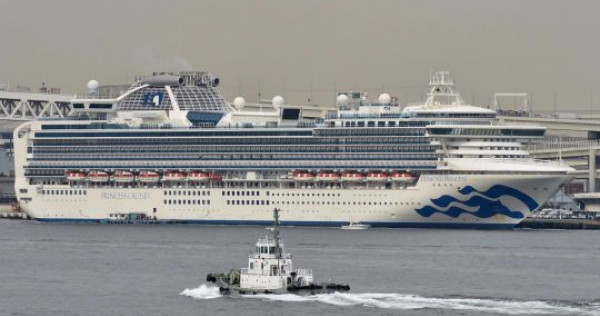
SINGAPORE – Five Singaporeans quarantined aboard the Diamond Princess cruise ship in Yokohama, Japan, have been allowed to disembark from the ship.
They have decided to remain in Japan for 14 days before returning to Singapore, said the Ministry of Foreign Affairs (MFA) on Friday (Feb 21).
“The Singaporeans will be quarantined if they return to Singapore within 14 days from the date of their disembarkation as an additional precautionary measure according to our current public health protocol,” said an MFA spokesman.
The MFA said that the Singapore Embassy in Tokyo will continue to provide help to the five Singaporeans.
The ministry also thanked the Japanese government for its help rendered to the Singaporeans during the quarantine.
More than 600 passengers have tested positive for the Covid-19 disease. This makes the ship, which has been docked off the coast of Japan since Feb 3, the largest single cluster outside of China.
The World Health Organisation has said that the cases on the Diamond Princess are “cases on an international conveyance” and should not count in Japan’s total.
Politicians, by their very nature and job requirements, aren’t usually known for their candidness. Unless you’re counting populist presidents of course.
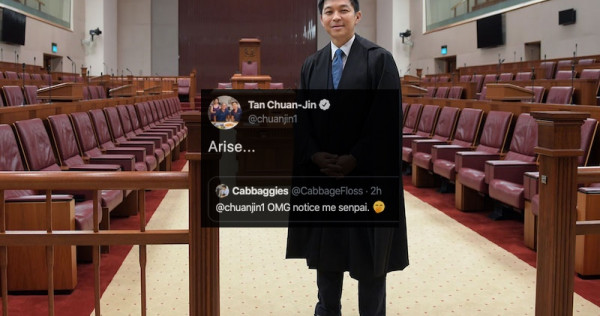
But certainly candid was Tan Chuan-Jin last night (Feb 20) as Singapore’s Speaker of Parliament went off on Twitter. His forthright vibes must have felt like a huge breath of fresh air for folks on Twitter, who quickly became his stans after he personally responded to everyone who @ him.
To be clear, the man has had an active Twitter account for quite some time already but it was only last night that it suddenly blew up. It began with a rando responding sourly to Tan’s sensible tweet urging people not to go panic-shopping in response to the heightened coronavirus outbreak situation.
SINGAPORE: A 39-year-old Bangladeshi national warded here is in a very critical state, the Bangladesh High Commission confirmed on Thursday (Feb 20).
The patient, who already suffered from respiratory and kidney problems, and pneumonia before being infected with COVID-19, has been in the Intensive Care Unit for 14 days as of Thursday, the High Commission said.
The Bangladeshi’s family has been informed, it added.
The High Commission also said that Singapore’s Minister for Foreign Affairs Vivian Balakrishnan called his Bangladesh counterpart AK Abdul Momen to convey the updates on this patient on Wednesday.
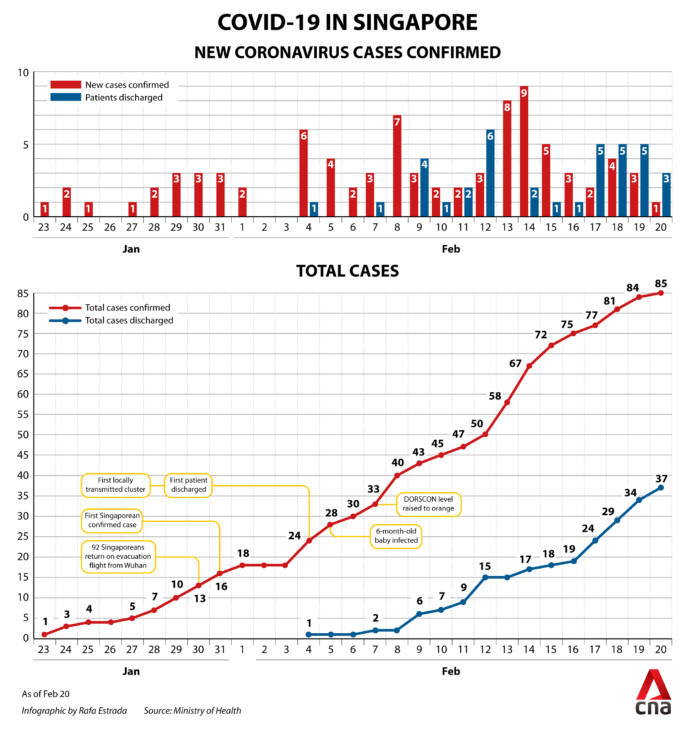
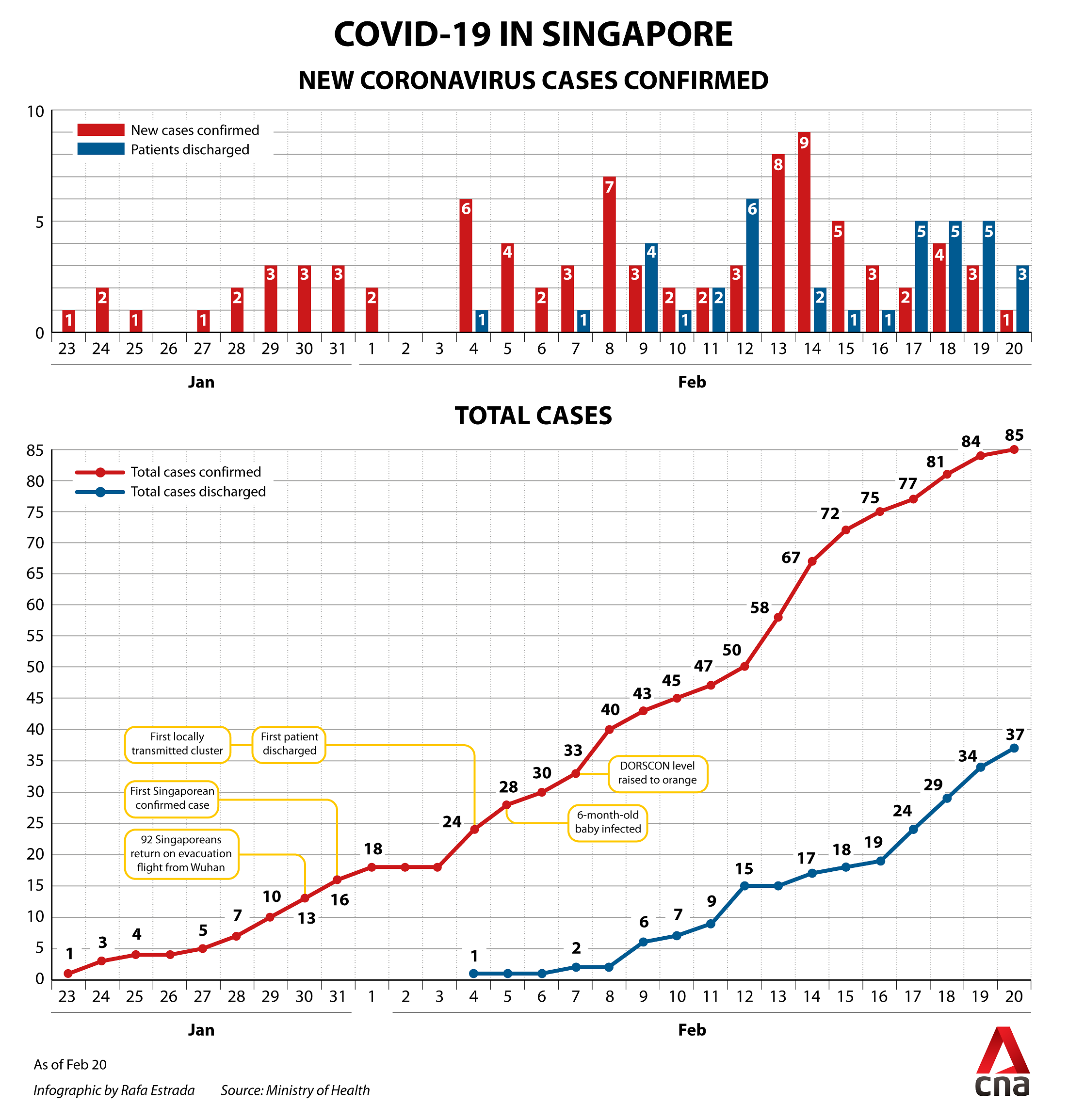
SINGAPORE – One new case of the coronavirus disease was confirmed on Thursday (Feb 20), bringing the total number of infected people here to 85.
The new case is a 36-year-old male Chinese national who is a work pass holder with no recent travel history to China.
He was confirmed on Thursday morning to have the coronavirus disease, known as Covid-19, and is now warded at the National Centre for Infectious Diseases.
Meanwhile, three more patients were discharged from hospital on Thursday, said the Ministry of Health (MOH). To date, a total of 37 cases have fully recovered from the infection and have been discharged.
Of the 48 confirmed cases who are still in hospital, most are stable and improving. Four are in critical condition in the intensive care unit.
As of noon on Thursday, MOH has identified 2,616 close contacts, with 1,147 currently quarantined. Another 1,469 have completed their quarantine.
MOH also provided more details of the confirmed cases announced on Wednesday.
Here are some fun activities happening around the island to enjoy with your friends and family.
While we know Singapore is currently in Dorscon Orange, as long as you take the necessary precautions (wear a face mask and whip out the hand sanitisers), there’s no reason not to live our lives as normally as we can.
SINGAPORE – Singapore has confirmed the first patient to be infected with both the coronavirus disease and dengue.
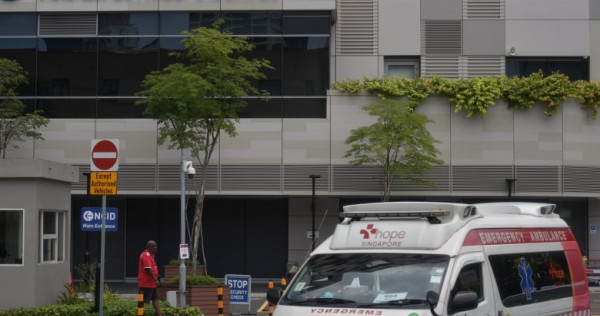
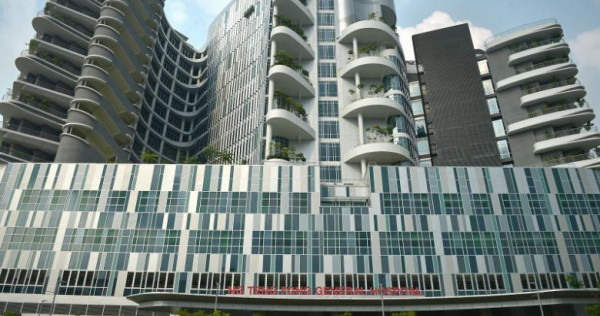
All other patients who had been warded with the woman when she was admitted as a dengue patient are now quarantined at Ng Teng Fong General Hospital, the Ministry of Health (MOH) said on Thursday (Feb 20).
The 57-year-old Singaporean, who is case 82, is the only known person here with both diseases, MOH said.
She visited the hospital last Thursday and Saturday, and was admitted as a dengue patient in a general ward on the second visit.
MOH said on Thursday (Feb 20) that she was not misdiagnosed and that her symptoms and laboratory results were consistent with dengue.
However, when she developed respiratory symptoms, she was tested for the coronavirus disease. The tests confirmed on Tuesday afternoon that she had the coronavirus disease known as Covid-19, and she was immediately transferred to an isolation room.
Those with dengue usually have fever and rash but no respiratory symptoms. Respiratory symptoms associated with the coronavirus disease include cough, runny nose and sore throat.
A woman in a broken marriage plotted with her lover to kill her husband by sabotaging his car.
Amanda Yeo Pei Min, 27, told her lover, Leong Wei Guo, 25, to loosen the wheel bolts and tamper with the brakes of her husband’s Honda Odyssey, despite knowing her children could get into harm’s way.
But their plan to kill Mr Walter Ting Yong Chin, 28, was thwarted when an eyewitness called the police after seeing Leong behaving suspiciously at a multi-storey carpark.
Yesterday, Yeo and Leong each pleaded guilty to conspiring to cause grievous hurt to Mr Ting by performing a rash act.
PLEA DEAL
Yeo, an administrative assistant, was originally charged with abetment of murder and Leong, a delivery assistant, with attempted murder, but they had their charges downgraded on Nov 1 last year as part of a plea deal.
Yeo and Mr Ting, who tied the knot in September 2011, have two children.
In June 2017, Mr Ting, a Grab driver, found out Yeo was having an affair with Leong, whom she had met on Facebook.
Their relationship developed as Yeo’s marriage deteriorated, culminating with her husband seeking a divorce.
JAKARTA: Indonesian Fredy Tan is supposed to go to Singapore at the end of February for an annual medical check-up with his wife and one-year-old son.
But with more than 80 cases of COVID-19 being reported in the country, the 52-year-old Jakartan may postpone his travel plans.
Mr Tan has been regularly travelling to Singapore for medical check-ups since 2000, as he admires the professionalism of the doctors and trusts the health system.
However, the current situation is worrying from his perspective. “I think it is serious,” he told CNA.
“We do not want to be near any hospital because they have so many germs,” Mr Tan explained, adding that they are also avoiding malls and other places where crowds typically gather.
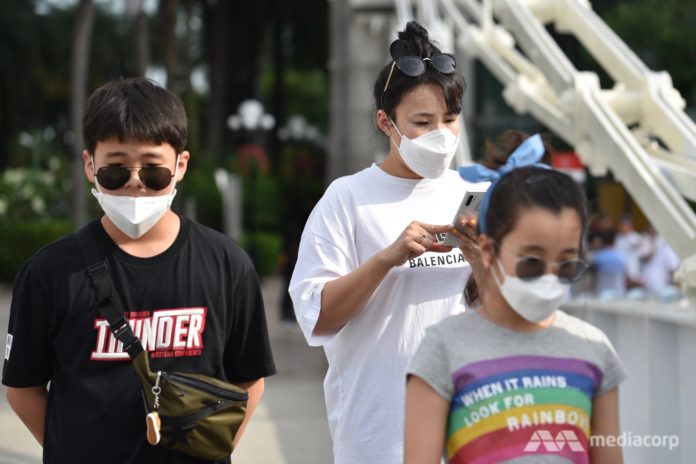
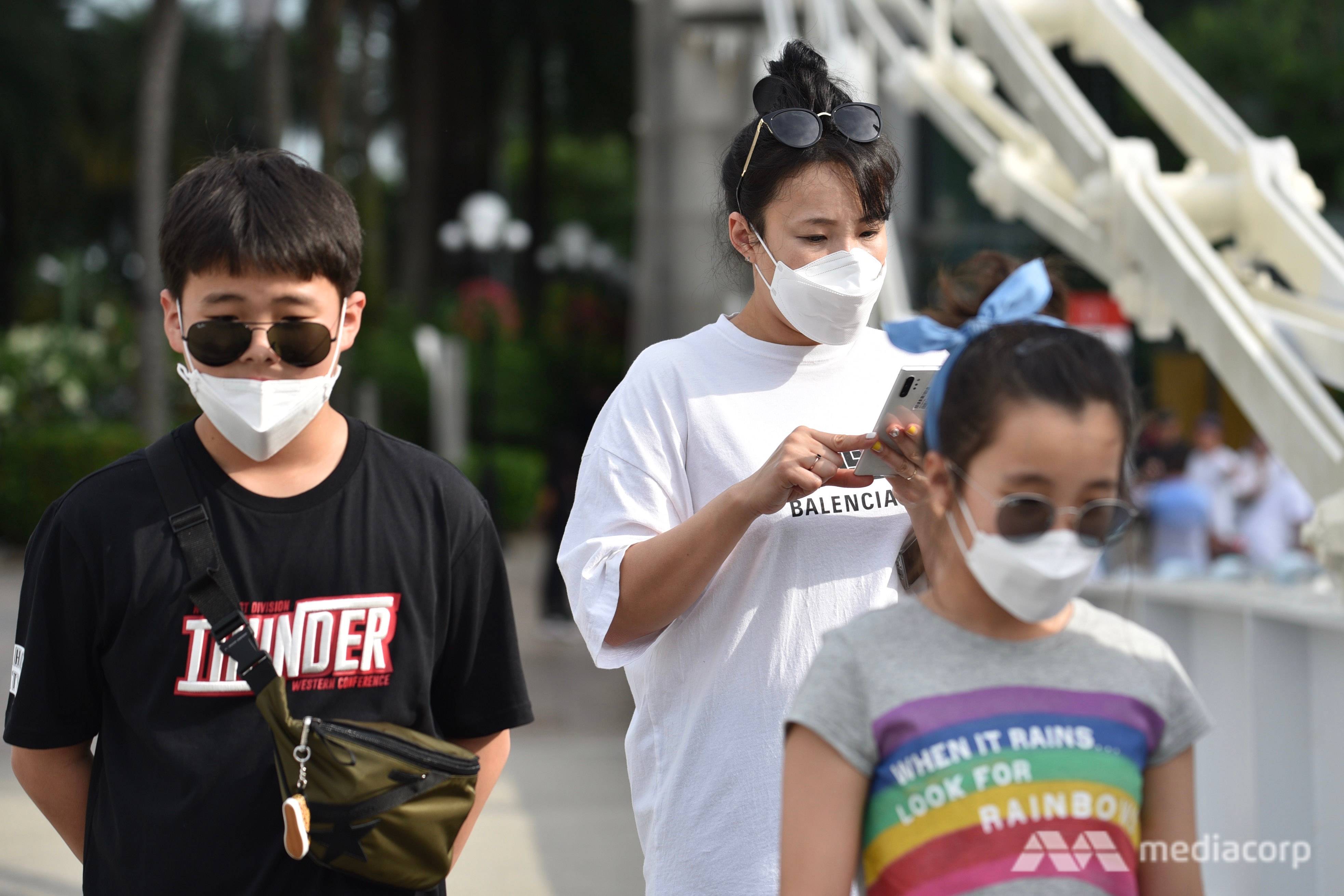
Tourists walking along the Cavenagh Bridge (Photo: Jeremy Long)
Indonesian medical tourists interviewed by CNA said that they are postponing their travel plans, especially if the trips are for non-essential treatments.
Mr Tan’s concerns are shared by Ms Cecilia Juarso, a Surabaya resident who also had plans to travel to Singapore for medical screening.
The 34-year-old business owner usually flies to Singapore once or twice a year for a medical check-up and was planning to go there sometime in February or March with her mother.
But given the latest situation in Singapore, Ms Juarso is now postponing it.
“I’d prefer to wait for the situation to get better first, or even wait until there is a vaccine ready,” Ms Juarso said.
She said the medical check-up can be rescheduled as it is not urgent and they have yet to buy tickets.
She and her mother, however, are still going to Penang, Malaysia for a separate medical check-up this week since her mother suffers from age-related macular degeneration.
The health screening has to be done on time and routinely by the doctor in Penang who handled her mother from the beginning – she is now in her seventh year of treatment.
“I actually do worry a bit (to go to Penang) but the doctor’s schedule cannot be postponed as it may pose a risk to semi-permanent blindness if we delay it.
“Besides, the COVID-19 cases seem to be more prominent in Singapore, perhaps as Singapore is a worldwide point of flight transit, unlike Penang,” she said.
Malaysia has more than 20 confirmed COVID-19 cases, while Indonesia has yet to report its first case.
A row of empty seats are seen on board a Singapore Airlines flight to Singapore from Jakarta International Airport, before the aircraft’s departure from the Indonesian capital on Feb 18, 2020. (Photo: AFP/Goh Chai Hin)
Mr Ronny Winata, a Jakarta-based travel consultant with Aviatour, said: “I have a few medical tourist customers who cancelled their trips (to Singapore). But if it is urgent, they’re still going.”
He was speaking to CNA during a rather quiet Singapore Airlines travel fair in Jakarta last weekend.
DOCTORS ADVISE AGAINST TRIPS TO SINGAPORE
In some instances, the doctors are advising patients against trips to Singapore.
An Indonesian woman living in Jakarta, who did not want to named, said she was supposed to head to Singapore this weekend for health screening but is now cancelling the trip.
The breast cancer survivor was told by her doctor to avoid visiting Singapore for the time being, as her condition is vulnerable.
“The doctor said I should wait until the (DORSCON) alert level is downgraded to Yellow … They will call me again early March,” said the woman who is in her 60s.
Singapore raised the Disease Outbreak Response System Condition (DORSCON) level to orange from yellow on Feb 7.
Responding to CNA’s queries, Singapore’s Mount Elizabeth Hospital said it has advised patients to defer non-essential procedures.
“Since the Singapore Ministry of Health raised the DORSCON level to Orange on Feb 7, and until we have a firmer grip on the situation, we have advised all our local and overseas patients to postpone non-essential procedures and treatments at our hospitals.
“This is to limit the risk of exposure for all patients, their visitors and loved ones,” Dr Noel Yeo, Chief Executive Officer of Mount Elizabeth Hospital said in a written statement.
People are seen wearing protective face masks at Orchard Road, Singapore on Jan 28. (Photo: Gaya Chandramohan)
He added: “Nevertheless, there are still many patients who come to us for critical or essential treatment.
“They are unable to defer their care or find alternative medical options in their home country. For such patients, our hospitals have put in place all necessary precautions to protect their well-being and minimise the risk of infections.”
Dr Yeo is also the chairman of the DORSCON Orange Command Centre at Parkway Pantai’s Singapore Operations Division.
A spokesperson from Farrer Park Hospital said that adjustments have been made to patients’ visits so that they can come to Singapore during a safer time.
“This measure is taken with good intentions to ensure patients returning from Singapore are not subjected to unnecessary quarantine. In the meantime, we extend the patients’ medications till a visit can be arranged,” said the spokesperson.
As a result, the number of Indonesian patients visiting the hospital is lower, said the spokesperson. However, Farrer Park Hospital said it is difficult to ascertain the exact drop in the number of patients given the fluidity of the situation.
A woman wearing a facemask walks past screens showing thermal imaging scans of arriving passengers at Sukarno-Hatta international airport on Jan 24, 2020, as airports across the region stay alert in response to a deadly coronavirus. (Photo: AFP/Adek Berry)
More than 3.1 million Indonesians visited Singapore in 2019, making it the second-largest number of international tourists in the country after China.
Despite the outbreak, Mr Mohamed Firhan Abdul Salam, Singapore Tourism Board’s area director for Indonesia was quoted as saying by Indonesian media earlier this week: “We’re ready for business-as-usual.”
“All businesses and tourism sites are open and operating normally. However, we are very cautious about people who are sick and showing symptoms of the virus,” he noted.
Despite the COVID-19 outbreak, the medical tourists maintained that there is trust in Singapore’s hospitals and doctors.
“I think the Singaporean medical services are good and the doctors are professional,” said Ms Lydia Sheridan, 36, even as she is thinking of postponing her trip in April.
The self-employed Jakartan is scheduled to get her yearly medical check-up with her mother in Singapore as she used to live there and still has relatives living in Singapore.
“The situation is worrying as it (COVID-19) spreads within clusters rapidly … But I’m positive the situation will be handled and is soon under control,” she said.
Singapore city skyline. (Photo: Unsplash/Mike Enerio)
Mr Fredy Tan also has confidence in the Singapore system, even though he is staying away for now.
He thinks Singapore has the best system in the region to detect and handle the outbreak.
“The government did a good job at informing the public albeit sacrificing the economy a bit … Kudos to the government of Singapore,” he said.
SINGAPORE: With the COVID-19 outbreak hitting Singapore amid a gloomy global economic outlook, many businesses in Singapore have seen a drastic drop in footfall as consumers avoid crowded places.
This is worsened by travel advisories to Singapore issued by many countries, dampening tourist and business visits. Already, with much of China on lockdown, businesses in Singapore are feeling the effects of a drop in Chinese visitors.
Companies most affected by the impact of the disease in Singapore are in the tourism, retail, hospitality, transport and MICE sectors.
Against this backdrop, the pre-Budget measures to assist taxi and private-hire drivers and companies unveiled and assurances the Government will also provide targeted and broad-based measures in Budget 2020 to help businesses tide over the anticipated downturn have sent helpful signals.
It was also encouraging to see additional measures to support businesses during these trying times rolled out in Deputy Prime Minister (DPM) and Finance Minister Heng Swee Keat’s Budget speech on Tuesday (Feb 18).
But aside from crossing this COVID-outbreak challenge, these measures also aim to get businesses ready for the eventual upturn.
EASING THE PAIN
Broad-based measures for all businesses include tax rebates, temporary enhancement of the working capital loan scheme, wage credits and the job support scheme, were announced.
Businesses are already familiar with tax rebates, the SME working capital loan scheme and wage credits.
Tax rebates though will only help businesses that are profitable and paying taxes. The enhanced SME working capital loan scheme should help businesses with their more immediate need – cash flow – provided the banks come on board and sanction loans to the SMEs.
Hopefully, these measures will also encourage private capital to invest in companies that may have a short-term liquidity crunch but have strong mid to long-term potential.
The Jobs Credit Scheme was first introduced during Budget 2009 and proved very popular and helpful to businesses in withstanding the impact of the worst ever global financial crisis in 2009.
File photo of an SME in Singapore (Photo: TODAY)
The Job Support Scheme announced in Budget 2020 is a similar measure to help businesses retain their workforce by defraying the costs of keeping jobs through the provision of a cash grant of 8 per cent of a qualifying employee’s gross monthly salary.
In Budget 2013, the wage credit scheme was introduced to help businesses pursue their transformation journey amidst rising wage costs and to encourage employers to share productivity gains with employees by providing co-funding on wage increases for local workers. It was also well received.
It is thus heartening to see that the wage credit scheme has not only been extended but will also be enhanced.
At present, the scheme co-funds wage increases for workers earning a gross monthly wage of up to S$4,000 but DPM Heng announced that this cap will be increased to S$5,000 with the government’s contribution also increased to 20 per cent for last year and 15 per cent for this year.
With the introduction of these measures in 2009 and 2013, our overall unemployment rate has since remained relatively steady and hovered at about 2 per cent.
The combination of the enhanced wage credit scheme and the additional cash grant will help employers address their cash flow situation, as a result reducing their need to cut jobs. It will thus help reassure workers and provide a greater sense of job security.
The sectors that are directly impacted by the coronavirus – namely aviation, food services, point-to-point transport, retail and tourism – were given extra support in the Budget in terms of property tax rebates ranging from 10 per cent to 30 per cent and also additional support to retain and re-skill employees.
The benefits of these property tax rebates and rental rebates should hopefully flow back to tenants.
MAKE HAY WHILE THE SUN SHINES
It is clear that the Government is not only concerned about the Singapore workforce being retained but is also keen for businesses to focus on re-skilling workers during this down time.
Although some measures were introduced in earlier budgets to support businesses to “go digital”, business owners have often cited more immediate challenges with the lack of financial and manpower resources to cope with daily operations.
Using the unplanned downtime generated by the outbreak, the government has given these impacted sectors a boost by increasing the funding period for reskilling from three months to up to six months under the Adapt and Grow Initiative. This is aimed at encouraging and enabling businesses to start their digitalisation journeys by re-skilling employees.
Such re-skilling is important for all sectors to tackle the digital disruption already impacting businesses prior to the COVID-19 outbreak, so that employees may be upskilled and, where necessary, re-deployed to handle other jobs and new processes that arise from digitalisation.
Deputy Prime Minister and Finance Minister Heng Swee Keat arrives at Parliament to deliver the Budget 2020 statement. (Photo: Jeremy Long)
It is an opportune time for businesses in these sectors to make hay while the sun shines and an important step towards achieving the government’s long-term vision for Singapore to be the Global-Asia node for technology, innovation and enterprise, which DPM Heng outlined.
BUSINESSES HAVE TO RESKILL
While the short-term measures will help companies tide over some of their immediate cash flow concerns, the outlook for businesses in sectors such as retail and food services is not as certain.
On top of the reduced footfall and business activity due to COVID-19, organisations in these sectors have also been facing structural and operational challenges brought on by technological advancements.
For example, the retail sector has seen demand seized away by the significant rise in e-commerce platforms and pure online retailers while the food and beverage sector has been seen new challenges posed by the surge in online food delivery platforms.
In order to be sustainable in the long term, traditional players in these sectors must re-examine their business models and take this opportunity to reassess their strategy to better address the impact of longer-term trends such as digitalisation.
A change of strategy will also need to be supplemented by restructured operations and workforce upskilling. This will prepare them better for the business environment after the support provided during the COVID-19 period is reduced, and be more competitive in the long term.
That is why the government’s enhanced assistance to retrain the workforce in these sectors is key. It is crucial that companies take advantage of this scheme for their sustained survival.
COVID-19 has tested our country’s ability to adapt to uncertainty and Singapore has been waiting in eager anticipation of how the government can protect businesses, jobs and households.
It is possible that after these measures are in place, more help will be needed to keep the economy growing. It may be that the government will choose to supplement these at a later stage especially if it takes longer to tackle and overcome COVID-19.
Now, after the government has announced plans for that future, it is time for businesses to leverage these measures and get into action.
Elaine Ng is Tax Partner; Vishal Thapliyal is Partner (Corporate Finance, Strategic Solutions & Transformation) and Irene Liu is Government & Public Services Co-Lead. All of them are from PwC Singapore.
“I’ve been a (Singapore) permanent resident for really long,” he said, full of smiles. “When I have time, I’ll immediately apply [for citizenship], I hope they give it to me.”
Now that he’s thinking about his next phase of life, what does he plan to do after getting his citizenship?
“I want to start a small business,” the actor shared before laughing. “Something to do with milk tea maybe.”