SINGAPORE – The race to build smartphones with flexible screens is heating up after Huawei announced its second foldable handset on Monday (Feb 24), during a virtual press conference streamed from Barcelona, Spain.
The new Huawei Mate Xs comes just two weeks after rival Samsung unveiled its second foldable phone, the Galaxy Z Flip.
It is a direct sequel to last year’s Huawei Mate X, and looks almost identical.
Both have a 8-inch flexible screen that wraps on the outside of the device. When folded, this display splits into a 6.6-inch main screen and a 6.38-inch secondary display.
This is unlike its main competitor, the Samsung Galaxy Fold, which opens like a book to reveal a 7.3-inch display.
The Mate Xs, unlike its predecessor, will be sold outside China as well, including Singapore, Malaysia, Indonesia and the Philippines.
Huawei has yet to announce its price and exact date of release in Singapore, although the phone is set to debut here next month. The Mate Xs (8GB RAM and 512GB storage) is priced at 2,499 euros (S$3,800).
SINGAPORE – The Ministry of Manpower (MOM) has taken action against 10 more work-pass holders and suspended the privileges of nine more employers for breaching leave-of-absence (LOA) requirements between Feb 10 and Monday (Feb 24).
MOM said in a statement that as of Monday, it has taken action against a total of 14 work-pass holders and 15 employers.
Of the 10 work-pass holders who most recently flouted the rules, six have had their passes revoked.
The ministry said that among the six, one foreign worker had his work pass revoked and is permanently banned from employment in Singapore after he was caught visiting a casino.
Two of these workers claimed they were not aware of the LOA requirements despite being informed by MOM earlier. Their work passes were revoked, and they have been permanently banned from employment in Singapore.
Their employers’ work-pass privileges have also been suspended for two years.
SINGAPORE: It started with her parents always arguing at home. The father remembers her mother throwing things — even breaking a fan — once she lost her temper.
But the couple’s arguments got more heated than that.
“She’d carry my daughter to the window and threaten to throw my daughter down. I always ran over to hold her hands and say, ‘You can’t do that,’” said the man, who also recounted how she “wanted to stab me”.
Their daughter was taken away by the Ministry of Social and Family Development’s (MSF) Child Protective Service (CPS).
The four-year-old is now in foster care. Her parents had already finalised their divorce when child protection officer Hon An Chi took over the case last year. But the work has only just begun for the CPS.
The mother, a Vietnamese, has not given up hope of caring for her daughter again. That is a risk Hon is having to manage, mindful that “every decision I make may have a direct impact on the child’s life”.
“People often think that our job is to simply remove children and break up families,” said the officer.
“But the big part of our job is to also support the families so that they can keep the child safe, and at the same time we want to rebuild the relationships between parents and the child.”
That is a reason CPS cases “are quite complex”, underlining the delicate work of officers like her.
What people do not often see — hostility of parents, scrutiny of every unpopular decision and the emotional weight of witnessing neglect and abuse inflicted on minors — is now featured in the series Inside the Child Protective Service.
Because for the first time, and over four months, CNA followed this team of social workers whose job is to protect Singapore’s children. (Watch the three-part series here.)
A child protection officer needs to know what is happening at home and how unsafe the child feels.
‘A HEAVY RESPONSIBILITY’
Their work, in their words, is to talk to children when they may be unsafe at home to find out what has happened to them, and find ways to ensure that they do not need to feel confused or scared.
“Our core work is to ensure that children are not harmed. We want to ensure that every child grows up in a safe and loving environment,” said CPS director Jai Prakash Ramalingam.
“We have a heavy responsibility to be the voice for the children.”
That responsibility, governed by the Children and Young Persons Act, has increased over the years. The CPS investigates almost 100 cases a month, compared with the 343 cases it handled in all of 2013.
A new officer like Hon, who joined last year, undergoes training for up to a year. When she was six months into the job, she was already working on about 40 to 50 cases.
And one of the first few cases assigned to her was the daughter in danger. Fortunately, the father has a good relationship with the girl, who can stay over at his home on Saturdays if the mother is not present.
The mother’s contact sessions with the girl, however, were at the MSF for two hours a week, and Hon had to be around to observe them.
“But I may not necessarily step in because we also want to see how the mother is able to handle the child,” she said.
In this case, the child displayed unwillingness to interact with the mother in the initial stages, but Hon was hopeful the relationship would improve “because the mother’s trying”.
While more time was needed, the thing about working to reunite children with their parents is that “time isn’t on our side”, said CPS deputy director Fayane Tan.
“As the children grow older, it’s more difficult for the children to return home.”
So, for the mother not to delay her progress towards outings with her daughter outside the MSF, which means more time to spend together, what was needed was a “safe person” to help supervise their interactions.
A safe person is an adult placed to prevent children from being exposed to further harm. And the CPS must assess the person’s suitability to assist in the care of the child.
What happens, however, if the person has a criminal record — for rioting and drug abuse in his younger days and for helping to “bring some girls in from overseas” 10 years ago, which landed him in jail for three years?
That was a concern when the mother proposed her new husband as a safe person, although he professed that he was “a changed person”.
The CPS has the ability to restrict the stepfather’s access to the child. But after a team consultation, the decision was to facilitate access and observe their interactions first.
“Because the stepfather is already part of the mother’s life. And if the child is to return to the mother’s care, he’ll also be a part of the child’s life,” said Hon.
The girl spending time with her mum under supervision. She was put in foster care at 10 months old.
TO REMOVE A CHILD OR NOT
For each case, there are “hard decisions” to make. “People might think that we might be playing God,” Tan acknowledged. And the first decision is whether to remove a child from the parents’ care.
This was a call that child protection officer Maisurah Afiah Amin had to make for a two-year-old boy after the parents had a domestic altercation in front of his pre-school.
He was removed directly from the school, which provoked “a lot of anger” from the parents and paternal grandparents, acknowledged the officer. The father was so angry, in fact, that he caused a commotion at the CPS office.
But it was not the first time the boy had been exposed to family violence.
When the case was first referred to the CPS, its officers found that there was “chronic spousal violence”, especially during the wife’s second pregnancy, related Maisurah. So the second child, a one-year-old girl, was removed at birth.
With yet another incident, the brother joined his sister in the foster care system. “These were very real worries about the child’s safety that as a child protection officer, I couldn’t ignore,” said Maisurah.
We were especially concerned because not only was violence occurring very frequently, but the mother of the children was reported to have suffered a lot of injuries as well.
That is also why, with the mother pregnant again, the CPS had to consider whether the couple’s third child would need to be removed at birth.
“The baby, being a very vulnerable child, (would be) at risk of being indirectly or directly harmed whenever the parents have physical fights,” said CPS assistant manager Nurul Nadiah Mohamed Noor.
Reported incidents before their son was taken away showed that the father had already “involved the child in their conflictual relationship”, noted Maisurah.
For example, there was a public altercation between the father and the mother together with her family — while he was carrying the boy. The police had to intervene.
There was also a video taken by the father that showed him teaching the child to curse and “reject the mother”, cited Maisurah.
Yet, placing their newborn in alternative care was the last resort for the CPS. “We want … family members who can come in to help out because that’s the most effective way,” Nadiah told the parents during their case plan discussion.
The problem was the couple were proposing that the father’s parents play the important role of safe persons, when the CPS had tried this before and assessed that the paternal grandparents could not be suitable any further.
These are the kinds of high-risk cases that the CPS’ intervention team must manage over a period of time, like a year or two, or longer. They have a caseload of about 1,200 children.
“We’re the team who takes on parents who are very challenging, unable or unwilling to work with us,” said Tan, who heads the team.
In the case of the angry father, it was only after the CPS’ court affidavit was served on him and his wife that they eventually agreed on foster care for their newborn.
The baby now joins his siblings in weekly contact sessions with the parents at the MSF.
The two-year-old was removed from his parents after the CPS received reports of their altercation.
SCRUTINY OF THE COURT
These decisions that CPS officers make, such as whether to remove or return a child to the family, must stand up under the scrutiny of the Family Justice Courts.
And the courts do overrule the CPS’ assessments if, for example, there are no immediate safety concerns. That was the case with one family where there was suspected violence and drug use.
It was referred to the CPS by a hospital after the father presented himself as intoxicated or on drugs, with bloodshot eyes. There were also reports — from community agencies involved in the case — that the parents fight with each other.
The concern was that the three children, aged six years to four months, were being exposed to violence. In the CPS’ first interview with the two older children, they said they have seen the father hit the mother.
Notwithstanding the parenting capacity of the couple, the court did not find substantial evidence to rule that the children should be placed out of home, as recommended by the CPS.
“The court felt that the parents haven’t committed any direct harm on the children,” said CPS assistant director of investigation Tang Hong Hong.
(But the judge) didn’t throw out the case. He’s satisfied that there are CP (child protection) concerns, and (we) need to investigate further.
The work of the investigation team is thus to understand a lot more about such families in the first instance, and especially to “see the impact of whatever they’re doing on the child”, said senior child protection officer Tessa Tay.
But that is not always easy. In this family’s case, she said the CPS “didn’t get much from the children” after a second interview. Meanwhile, the father admitted only that he has “pushed” the mother before.
Still, the CPS can impose a set of rules — a safety plan — that parents must sign in agreement before their children can return home.
For this family, that meant no physical punishment of the children, no blaming them for the CPS’ involvement, as well as allowing its officers and those of other agencies to make announced or unannounced home visits.
“On top of that … it’s important that we increase the visibility of the children in the community, so that’s why they have to go school every day, Monday to Friday,” Tay told the parents.
Non-attendance is not only a breach of the plan, but also calls for the CPS to go “to the house, to the school, anywhere, just to find out where the child is and whether the child is safe”, said Jai Prakash.
That was what happened when the two older children missed school on four out of the 12 days that followed.
Tang’s home visit, however, caused the mother to blow up because she needed the father to step up while she took care of their baby. And that was where the officer had to turn her focus.
In the end, Tang recommended that the CPS continue monitoring the family for six months. “The judge also agreed that a period of monitoring is necessary, not to guard the family but to provide support,” she said.
To keep children safe, sometimes child protection officers impose certain conditions on parents.
STRESSES OF THE JOB
As a mother of four, Tang can understand the perspective of parents like the one who shouted at her.
“Caregiver stress is very real. We face our children 24/7. So without support … it’s very hard for someone to care for children alone,” she said.
The job of a child protection officer is also “highly stressful”, pointed out Jai Prakash.
Very few parents would agree with what the child protection officers are doing.
One of the contentious issues is caning. On this, he said: “In situations of discipline, I’d say a child is able to understand why a parent was harsh. When it’s abuse, it’s where discipline leads to serious injuries.”
This was one such case that child protection officer Muhamad Mubarak Mohamed Johari had to investigate when a school counsellor found cane marks on an eight-year-old boy — “on the right side of his face, 5 cm by 2 cm”.
It was inflicted by the boy’s paternal aunt. She had been caring for him and his twin sister for two weeks and was getting complaints from the school about the boy misbehaving.
Then when he cut up his mathematics textbook, “she couldn’t control herself”. “She said it was in the heat of (the moment),” related Mubarak. “She just continued caning.”
The father, a widower, had left his children with their aunt because of a heart condition. He has been declared unfit to work for a year, and his medications cause him to sleep for more than 12 hours a day.
So the CPS decided to explore the safe adult option: The children’s paternal grandfather. Getting him to live with the family, however, was not the difficult part for Mubarak.
The officer had to wait to do the interview, and until the CPS could assess that the grandfather can step in, the twins had to be placed in a children’s home, apart from each other because of lack of space.
They could not stomach living separately, and it showed. “When a child cries, obviously it affects me … I’m also human, and it’s hard,” said Mubarak. “I really tried my best to ensure that they were in the same home.”
The child protection officers have seen how sad children can be when a parent leaves. They have seen children neglected because of drugs. They have seen parents’ mental health issues compromise children’s safety. And there are times they get angry.
“Whenever there’s abuse or neglect right, I always ask myself, why do you (parents) have children?” said child protection officer Atiqah Habsah Ashik.
And because they are worried about the children, there are cases that give them “nightmares”, said Tay. “At any point in time, a parent can escalate that one action,” she added. “I’m definitely fearful of a child dying.”
Every two weeks, officers are encouraged to share their problems at check-in sessions. They could be feeling stuck, tired or confused, for example. But they keep going.
“What keeps me in this job is basically I think it’s a form of responsibility,” said Mubarak. “A child can’t possibly go home feeling scared every single day.”
It can be hard to say goodbye at the end of contact sessions, as with this girl and her sickly dad.
WORKING WITH CHILDREN
There are also long-term implications if a child remains in an unsafe environment, pointed out senior child protection officer Sakshi Dovedy.
“As a child grows older, the child would continue to engage in such behaviours to resolve any conflicts,” she said. “It’ll continue to impact him through his different stages of life and his relationships with others”.
In one case, she observed a four-year-old already demonstrate certain signals of that.
“It could be through him being louder, or him throwing things at his brothers, or being upset to the point where he’s screaming and being quite difficult to calm down,” she said.
“It isn’t very common for (four-year-olds) to attack other people or want to hurt them. It could be that he’s witnessed certain things that’ve been traumatic.”
When child protection officer Wong Wei Jin asked him where he learned to hit people, the boy and his older brother said “Mummy and Daddy”, who had fights at home.
“That was a bit surprising because, usually, children won’t be so able to clearly state such a thing,” added Wong.
In cases of parents who are unable and unwilling to change, the CPS will “shift its focus” to building up the child’s resilience, said Tan.
The agency’s Practice Enhancement Team works with the children to help them adjust to life changes and heal from trauma.
For the four-year-old the CPS is supporting, Dovedy thinks it is “promising” that the boy can remember certain emotional regulation tools that were introduced to him. And his “frequency of using physical aggression” has reduced.
This kind of positive change children get to experience in a different environment may even help their parents.
‘Parents don’t suddenly wake up one day and decide to be bad parents. Sometimes they’re so stuck in their ways of doing things. So we have to show them a different side through their children,” said Tan.
This work the CPS does with children and the fact that even abusive parents can “really love their children” were among the things that struck CNA producers Tang Hui Huan and Sharifah Alshahab.
“It was interesting that (the officers) would also put in sessions to help these children make sense of their lives. That’s something we didn’t think was part of their job,” said series producer Tang.
She added that the CPS realises “it can’t just be a small group of child protection officers looking out for these vulnerable children”, as the public, from schoolteachers to neighbours, “can keep their eyes and ears open”.
“It doesn’t mean that a child has to be hurt for you to call the hotline to alert the CPS. It could be emotional abuse or you just realise that something doesn’t feel right,” she said.
Sharifah hopes that Singaporeans “can all appreciate the complexities of these cases, and maybe afford to be more understanding of realities that aren’t our own, and ultimately create an atmosphere for children to grow up safe”.
For the CPS’ part, Tan believes its success rate has been “quite encouraging”. She said: “More than half of these children are returned home and remain safe in their parents’ care when we close the case.”
SINGAPORE: The 2020 outlook for Singapore Airlines (SIA) has turned from relatively bright to dismal due to COVID-19.
Singapore’s aviation and tourism industries have been significantly impacted as the virus has led to a virtual halt in travel to and from China as well as dramatic reductions in traffic to and from several other major Asian markets.
China is the largest source market for Singapore’s tourism industry and one of SIA’s largest markets. China routes accounted for around 11 per cent of SIA Group’s passenger traffic prior to the emergence of the COVID-19, which has led to all but a few of the group’s China routes being suspended and the rest being cut by over 50 per cent.
The SIA Group, which includes regional subsidiary SilkAir and budget airline Scoot, carried around 38 million passengers in the 2019 calendar year.
DEPENDENCE ON VISITORS FROM CHINA
Singapore Changi Airport’s total passenger traffic was 68.3 million in 2019, representing a 4 per cent increase over 2018. The inbound market (visitors travelling to Singapore for work or leisure) is Changi Airport’s largest segment, surpassing outbound (Singapore residents travelling abroad for work or leisure) and transit (passengers connecting between flights at Changi).
There were 14.9 million visitor arrivals at Changi in 2019, equating to nearly 30 million total passengers or 44 per cent of Changi’s total passenger traffic.
Chinese visitors accounted for 2.6 million or 17 per cent of total visitors arriving at Changi in 2019 according to data from the Singapore Tourism Board. Total Chinese visitor numbers to Singapore amounted to 3.6 million in 2019, a 6 per cent increase over 2018, when also including visitors arriving by land and sea.
The SIA Group carries a large portion of Singapore’s Chinese visitors. SIA also has significant China originating traffic that connects in Singapore to other destinations – regionally within Southeast Asia and to its long-haul network. The portion of traffic on SIA Group’s China routes originating in Singapore and other countries is smaller but also significant.
Given SIA’s high reliance on mainland China it is no surprise it is one of the most impacted airline groups in Asia, excluding Chinese and Hong Kong carriers, by COVID-19.
WIDER IMPACT BEYOND CHINA
The sudden virtual zeroing out of China traffic alone is enough to result in losses for the SIA Group. SIA is hardly alone as most other – and possibly all – major Asian airline groups will join SIA with losses in the March and June quarters.
But it is not just about China exposure. The impact of COVID-19 is also hitting non-China routes hard for SIA as well as other Asian airline groups.
Singapore is experiencing sharp declines in visitor numbers from all its major source markets due to advisories placed by many countries against travelling to Singapore. As I recently told media, outbound traffic in Singapore is also impacted as residents have postponed or cancelled holiday plans and companies in Singapore have stopped all but essential business travel.
SATS aircraft interior cleaning team members disinfect a Singapore Airlines Airbus A350. (Photo: Jeremy Long)
Routes connecting Singapore with other Asian countries have been most impacted but there is also reduced demand on long haul routes from Singapore to Australasia, Europe, the Middle East, Africa and North America.
CUTS NOT ENOUGH
The SIA Group responded to reduced demand on non-China and Hong Kong routes by announcing last week capacity cuts for around 30 Singapore Airlines and SilkAir routes. Flights to Hong Kong were earlier slashed along with the suspension of most routes to mainland China.
While cutting capacity on non-China routes is sensible given the sharp reduction in demand, the cuts are surprisingly small. The total number of Singapore Airlines and SilkAir flights cancelled, around 800 in total over three months from late February to late May, represent only 2 per cent of the total flights that would normally be operated by them over a three-month period.
The reductions on North Asia routes other than China and Hong Kong are particularly too small. Japan and South Korea have been the most impacted outside Greater China as travel to and from these two large markets have dramatically declined.
However, SIA has cut only a handful of its Japan flights for March and April. The May cuts in the Japan market are more significant but still represent less than 10 per cent of its total Japan capacity. The Korea cuts start in late February and are more but total Korea capacity is being cut by only about 10 per cent over the three-month period.
Most of the long-haul route cuts are limited to May, which is an off-peak month for travel to Europe, North America and Australia. SIA is cutting long haul flights that would have not performed well regardless of COVID-19 although there is now even weaker demand due to the virus.
A lot of passengers that would have normally booked flights for April and May in February are waiting to see what happens with the virus before firming any travel plans.
An Airbus A380-800 aircraft of Singapore Airlines takes off from Zurich airport, Apr 9, 2019. (Photo: REUTERS/Arnd Wiegmann)
Singapore Airlines and SilkAir will likely need to cut more of its non-China flights for March, April and May, particularly regional flights within Asia.
As it is, the current cuts it announced last week are already less than the drop in demand. So even if the demand stabilises at the current reduced level and it doesn’t get worse than this, SIA will have the problem of over-capacity. If the virus is not contained soon, extending some of the cuts to June and July is also likely.
Scoot, which has so far only announced cuts to China, will also need to pursue significant cuts on its non-China routes. Scoot’s rival, Singapore-based budget airline Jetstar Asia, last week announced a 15 per cent cut in capacity across its entire network. This includes China and Hong Kong but Jetstar Asia has a small presence in these markets while Scoot has more exposure to China than any Singapore-based airline.
Other Asian airlines have also been very slow to cut capacity on non-China routes. Airlines throughout the region should consider immediate and significant capacity cuts on non-China routes to avoid flying half-empty planes over the next few months.
OTHER MEASURES NEEDED
SIA and other Asian airline groups also need to consider unpaid leave schemes, which is the strategy often used by airlines when there is a need to cut capacity for a few months. Assuming that the market will recover once the threat from the virus ends, this is a more prudent strategy than cutting jobs entirely.
Outside of China and Hong Kong, only Korea’s Asiana has so far announced unpaid leave for crew. The SIA Group has so far decided against offering an unpaid leave scheme in order to have enough crew in place to operate a full schedule when the virus becomes contained. This decision could backfire if the virus is not contained soon.
Most financial analysts I have spoken to are now projecting the SIA Group to post losses in the March and June quarters.
The March quarter loss will offset some of the S$520 million net profit and S$862 million operating profit the group generated in the nine months ending December but the SIA Group will comfortably remain in the black for the fiscal year ending March.
SIA will be able to weather the current storm and is fortunate to have had a great quarter ending December, reporting a group net profit of S$449 million. In fact, the profit turned by the parent airline for the three months ending December 31, 2019 was the highest in over a decade.
SIA’s annual profit streak will also remain intact. The group has never incurred an annual loss in its history, an incredible achievement.
During SARS, the SIA Group escaped an annual loss as the impact was spread across two fiscal years and the recovery was fast after a dismal quarter ending June 2003. SIA will again have dismal June and March quarters but a rapid recovery is again likely, leading to a return to profitability starting in the September quarter.
However, at the moment SIA needs to respond accordingly. The group has so far reacted too slowly in cutting capacity, particularly on non-China routes, and has not been transparent enough about the financial impact.
How the situation and Asia’s aviation market evolve over the next several weeks is unpredictable.
Big decisions will need to made in the coming weeks that will capture headlines and move stock prices. Airlines that make the right decisions will be able to minimise losses and improve their long-term position.
Brendan Sobie is the founder of Singapore-based independent aviation consulting and analysis firm Sobie Aviation. He was previously chief analyst for CAPA – Centre for Aviation.
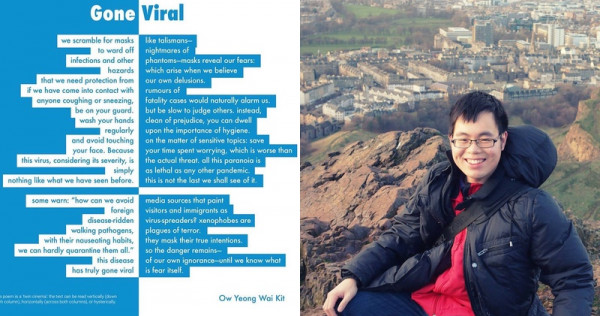
A poem about a viral outbreak called Gone Viral has gone viral online. And it’s penned by a Singaporean literature teacher, too.
Ow Yeong Wai Kit, a published poet and a literature teacher at Bukit Batok Secondary School, published on Friday a poem about the country’s reactions to the ongoing coronavirus outbreak.
It’s not just the title that contains dual meaning — his composition is crafted in the multi-layered format of the twin cinema poetic style, created by Singaporean poet Yeow Kai Chai. Such poems consist of two discrete columns of poetry which can be read separately as vertical writing or horizontally together across the columns.
No matter which way you read it, the poem is coherent. And coherence of varying views is something that Gone Viral’s creator wants readers to take away. The poem, according to Wai Kit, dramatises the dialogue between voices that adopt opposing perspectives.
A motorcyclist has won internet points for showcasing remarkable defensive riding skills that could’ve meant injury or death if he wasn’t careful enough.
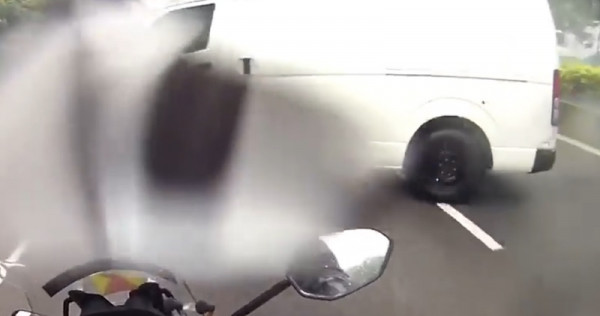
The same cannot be said for a van driver who very nearly caused a major multi-vehicle accident while driving on the drenched roads of the Ayer Rajah Expressway last Friday (Feb 21).
In a heart-stopping video posted by the SG Road Vigilante Facebook page, the motorcyclist can be seen riding along the middle lane of the expressway when an overtaking van on the right skidded and went drifting about before hitting a road barrier.
Eventually, the driver managed to wrestle back control of the van and it ended up at the road shoulder. Rather miraculously, the motorcyclist managed to avoid any impact whatsoever with the careening van, despite the wet conditions.
SINGAPORE – A lawyer who left Singapore after more than $33 million parked at his firm went missing faces 12 new charges related to the sum.
Eleven of the charges involve the allegation that Jeffrey Ong Su Aun had committed criminal breach of trust as an attorney between October 2017 and August 2018. The charges involve sums of between $9,967.10 and $12,200,005 each.
Ong, who appeared in a district court via video-link on Monday (Feb 24), was also charged with one count of forgery.
On April 15 last year, he allegedly forged on a cheque the signature of Mr Vincent Lim Puay Chong, a partner at law firm JLC Advisors. Ong, 42, had previously worked at the firm.
Ong now faces 38 charges in all.
He first made the headlines last year after more than $33 million that was held in escrow by JLC Advisors for client Allied Technologies went missing.
Escrow is an essential service in capital markets that supports transactions such as mergers and acquisitions.
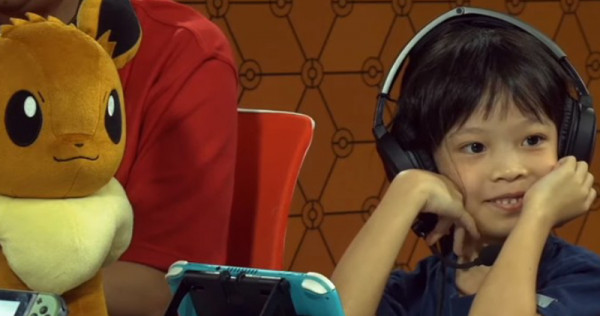
Seven-year-old Singaporean Simone Lim has proven that she is the very best Pokemon trainer, that no one ever was by winning the Junior Championships grand final for the Pokemon Oceania International Championships in Melbourne.
The final battle for the Junior Championships saw Lim going against reigning champion Justin Miranda-Radbord who had previously taken home the title of Regional Champion 21 times, including the Pokemon Oceania Junior Championships in 2019.
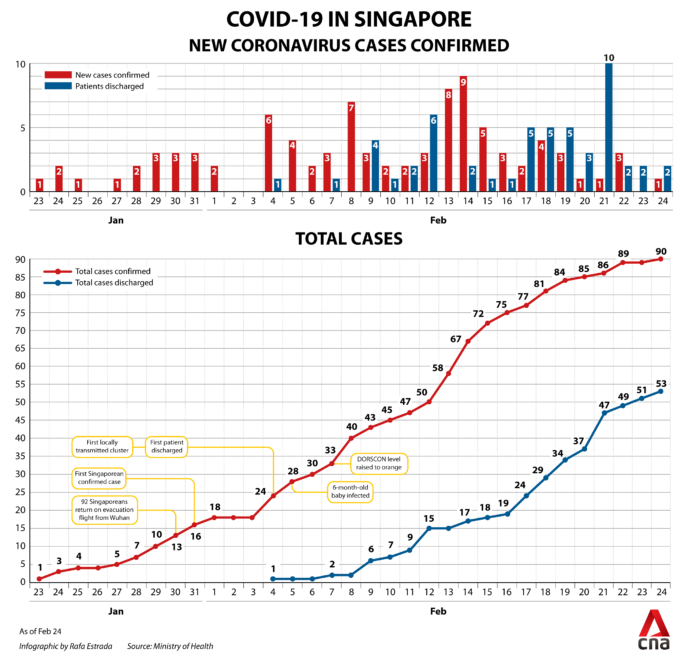
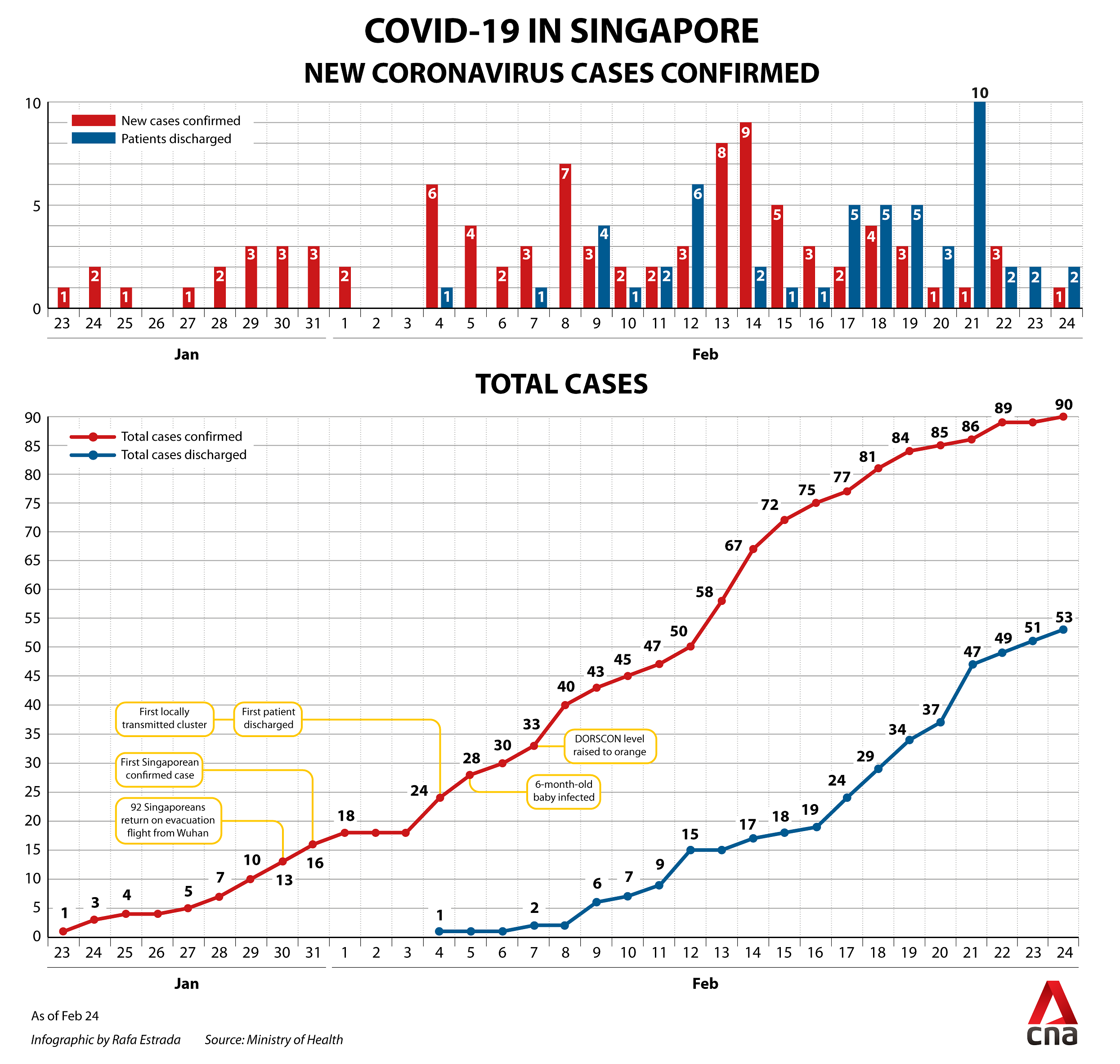
SINGAPORE: Two more COVID-19 patients were discharged from hospital on Monday (Feb 24), the Ministry of Health (MOH) said in a daily update, while one new case was confirmed.
In all, 53 have fully recovered from the infection and have been discharged from hospital.
Of the 37 confirmed cases who are still in hospital, most are stable or improving. Seven are in critical condition.
With the two new patients discharged (Case 46 and 87), a total of 53 people have fully recovered from the infection in Singapore.
Case 46 is a permanent resident in Singapore who lives in Johor Bahru and works at Resorts World Sentosa Casino. He was confirmed with the virus on Feb 10.
Case 87 is a 32-year-old Singaporean man who was evacuated from Wuhan on Feb 9. He is linked to Case 76, a one-year-old baby who was also evacuated from the epicentre of the outbreak.
The man was diagnosed with the virus on Feb 21.
Of the 37 people who are still in hospital, seven are in critical condition, MOH said. It did not provide an update on the Bangladeshi national who was in a critical condition.
As of noon on Monday , MOH has identified 2,842 close contacts who have been quarantined. Of these, 856 are currently quarantined and 1,986 have completed their quarantine.
China reported 150 more fatalities earlier on Monday, with only one outside the epicentre Hubei province. The National Health Commission also confirmed 409 new cases, with all but 11 in Hubei.
In total, China has reported 77,150 cases and 2,592 deaths.
Originating in the central Chinese city of Wuhan, COVID-19 has spread to more than 30 countries and territories, including in Singapore, Japan, South Korea and Thailand.
South Korea confirmed 70 more coronavirus cases on Monday, taking the nationwide total to 833, by far the largest national total outside China. It has seven deaths.
Earlier on Sunday, South Korea raised its alert on the coronavirus to the highest level, “grave”, with President Moon Jae-in urging officials not to hesitate in taking “unprecedented powerful measures” to contain the outbreak.
Kuwait, Bahrain and Iraq on Monday recorded their first new coronavirus cases, all people who had been in Iran, which raised its toll from the disease to 12 dead and 61 infected.
In Europe, Italy has more than 200 cases of COVID-19, five of whom have died.
Last week, the World Health Organization (WHO) said it was “very impressed” with Singapore’s response to the COVID-19 outbreak.
The country has also set aside S$800 million in Budget 2020 to support frontline agencies in their efforts to contain the COVID-19 outbreak, with the bulk allocated to the Ministry of Health.