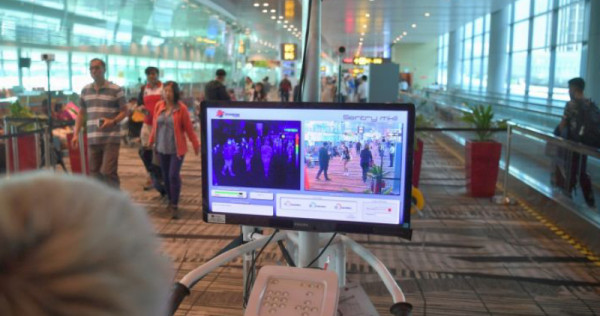
SINGAPORE – Singapore will bar visitors from Cheongdo county and Daegu city in South Korea, as the number of coronavirus cases in these areas continues to climb.
Health Minister Gan Kim Yong on Tuesday (Feb 25) also sounded an alert that as the number of Covid-19 cases increases worldwide, Singapore must expect to see the number of cases rise because of the risk of imported cases.
National Development Minister Lawrence Wong, who co-chairs a multi-ministry task force tackling the coronavirus with Mr Gan, said that returning Singapore citizens, permanent residents and long-term pass holders with a travel history to Cheongdo and Daegu within the last 14 days will be issued a stay-home notice.
This means that they will not be allowed to leave their homes for 14 days after they return to Singapore.
South Korea, where 10 have died, has raised its virus alert to red – the highest – as the number of cases continues to spike, with a total of 977 at last count.
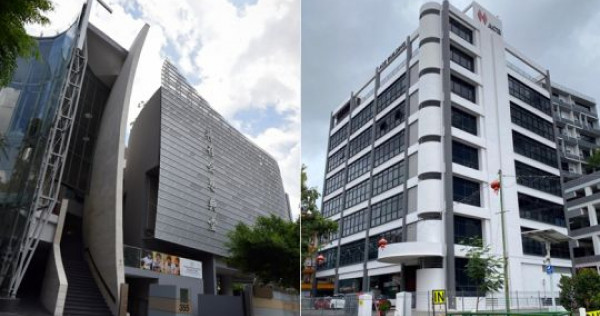
At least 511 cases are linked to the Shincheonji Church of Jesus in Daegu, and 113 cases are from Daenam Hospital in Cheongdo.
Language tutoring platform Tutoroo recently got a little Tuto-rude when it was called out over a video ad that poked fun at a Chinese woman’s accent.
The Singaporean company released a statement on Twitter on Feb 21 defending the controversial ad and denying accusations that it had been racist or sexist.
The complaints appeared after the ad in question was posted on the company’s Twitter page on Jan 23.
In the 30-second clip, titled Getting The Phone Number Of A Chinese Girl, a Caucasian man exchanges flirtatious glances with a Chinese woman in a bar. As she leaves the joint, he runs after her and asks for her number.
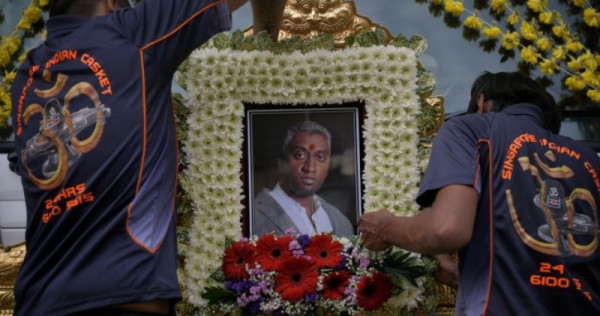
SINGAPORE – Bodybuilder Pradip Subramanian, who collapsed after a 2017 celebrity muay thai bout against YouTube personality Steven Lim, died of cardiomegaly – an enlarged heart – with abnormal heart rhythms.
Following an inquiry, State Coroner Kamala Ponnampalam stated in her findings dated Feb 11 this year that the 31-year-old Singaporean died from a natural cause.
Associate consultant forensic pathologist Wu Jia Hao, from the Health Sciences Authority, who performed his autopsy, had said that genetic screening for inheritable cardiac conditions revealed a pathogenic variant in the KCNQ1 gene.
This is a genetic mutation associated with abnormal function of the ion channels in the heart muscle, resulting in abnormal heart rhythms, the court heard.
Dr Wu felt that these conditions may predispose Mr Pradip to acute abnormal heart rhythms, resulting in sudden cardiac death.
Mr Pradip, who was the president of the World Bodybuilding and Physique Sports Federation, had gone through a medical screening before the match and was found to be fit for the bout.
SINGAPORE: Fiji and Singapore became the first two countries to deposit their respective instruments of ratification of the United Nations Convention on International Settlement Agreements Resulting from Mediation on Tuesday (Feb 25).
The treaty, known as the Singapore Convention on Mediation, will allow countries to enforce mediated settlements across borders. The treaty was named after Singapore to recognise its role in developing and negotiating it.
Singapore and Fiji were represented by Senior Minister of State, Ministry of Law and Ministry of Health Mr Edwin Tong, and Permanent Representative of the Permanent Mission of Fiji to the United Nations, Mr Satyendra Prasad respectively.
The instruments of ratification were deposited in a handover ceremony at the UN Headquarters with the Under-Secretary-General for Legal Affairs and UN Legal Counsel, Mr Miguel de Serpa Soares.
Permanent Representative of the Permanent Mission of Fiji to the United Nations, Mr Satyendra Prasad (left) and Under-Secretary-General for Legal Affairs and UN Legal Counsel, Mr Miguel de Serpa Soares at the United Nations Headquarters on Feb 25, 2020. (Photo: Permanent Mission of Singapore to the United Nations)
The Singapore Convention on Mediation will enter into force six months after the third State deposits its instrument of ratification, acceptance and approval or accession.
An instrument of ratification is a document validated by a signature of an official that expresses the consent of a state to be bound by a treaty.
THE “MISSING THIRD PIECE” FOR LITIGATION
Mr Tong said that the Singapore Convention on Mediation joins instruments such as the New York Convention for arbitration and the Hague Convention on Choice of Court Agreements for litigation as the “missing third piece”.
“By providing for the cross-border settlement agreements resulting from mediation, the Convention strengthens the international framework of rules in the field of commercial dispute resolution,” said Mr Tong.
“I am happy that Singapore, together with Fiji, have come together today to be the first two countries to ratify the convention.
“We are now closer to seeing the Convention enter into force. Singapore is committed towards multilateralism and a rules-based international order.
“We are confident that the Convention will benefit international trade, by providing businesses around the world with more options and greater certainty in resolving cross border disputes. Singapore will continue to do our part to promote and support the Convention,” he added.
Earlier in February, the Singapore Convention on Mediation Act 2020 was passed in Parliament, six months after the Singapore Convention Signing Ceremony and Conference held in Singapore on Aug 7, 2019.
On the day that the Singapore Convention on Mediation was opened, it was signed by 46 countries, including the United States, China, India and South Korea.
Another 24 countries attended the signing ceremony to show their support for the Convention, with six other countries subsequently signing it to bring to the total number of signatory countries to 52.
Microsoft Flight Simulator is making a massive comeback, with the latest entry in the popular simulation game series getting more ambitious by the day. Developer Asobo Studio has been releasing episodes in a Youtube series called the Feature Discovery Series, updating fans on the game’s progress.
In the latest episode of this series, Asobo Studio’s lead game designer Sven Mestas discussed in-game airports, and revealed that the game will feature every single airport in the world. Yes, all 37,000 of them! Each of these airports are designed to resemble their real-world counterparts down to the specific windsocks and landing strips.
SINGAPORE: Construction firms in Singapore are starting to feel the strain from labour shortages and supply chain disruptions caused by the outbreak of COVID-19, with some seeking deadline extensions for their projects.
Singapore had its first confirmed case of the novel coronavirus on Jan 23 and since then, this number has risen to 91 on Tuesday (Feb 25).
As part of measures to curb the spread of COVID-19 here, the Manpower Ministry said earlier this month that all work pass holders with travel history to China within the last 14 days will have to be approved by authorities before entering the country. The majority of the 30,000 work pass holders from China have not returned according to Manpower Minister Josephine Teo. Those who return will be placed on a 14-day leave of absence.
These new requirements, alongside a reduction in flights to and from China, have slowed down the return of Chinese workers, exacerbating an existing manpower crunch in the construction sector, industry players told CNA.
“Even before COVID-19, there’s already a shortage of workers as the industry, which was in a downturn previously, slowly recovers and is seeing more construction projects,” said Mr Kenneth Loo, executive director and chief operating officer of Straits Construction Singapore.
“These (new rules) have only aggravated the shortage.”
In a bid to aid companies in their manpower needs amid the COVID-19 outbreak, the Manpower Ministry on Tuesday announced that manufacturing and services sectors will soon be able to hire work permit holders who are already in Singapore. The temporary scheme will run for six months.
Over at Teambuild Construction Group, it has seen a “significant impact” as many of its workers with expertise in areas such as reinforced concrete works, are from China.
Adding to its manpower woes, there has been a “sharp rise” in the number of Bangladeshi and Indian workers requesting to return home, a company spokesperson told CNA.
Echoing that, Mr Loo said his firm has also seen a number of such requests following news that five Bangladesh workers tested positive for COVID-19 in recent weeks.
“The workers are very worried about catching the disease here,” he said.
Besides labour woes, industry players also have to contend with the issue of late deliveries of machinery and raw materials such as tiles and steel coils, as factories in China were shut for an extended period after Chinese New Year and have been slow to restart.
Nearly two thirds of those surveyed by the Singapore Contractors Association Limited (SCAL) said their supplies of materials and equipment have been “severely or very severely affected”. The poll done by the association last week involved 133 of its members.
Not just construction raw materials, companies are also facing a shortage of face masks, including the N95-type masks, which workers don as part of their protective gear during operations such as cutting and cement mixing, said SCAL’s president Ng Yek Meng.
The coronavirus outbreak has also caused work to slow down and 73 per cent of respondents indicated severe impact on their cash flow, the same survey showed.
CONCERNS ABOUT PROJECT DELAYS
Altogether, these have given rise to worries among industry players about possible missed deadlines.
Teambuild Construction Group, for instance, said it is “currently seeking all possible assistance” to request for extension of time (EOT) as the impact has been “substantial”.
It is not alone. A Feb 18 report by Reuters said some local construction firms are seeking legal advice on invoking the force majeure clause in their building contracts. Force majeure refers to unexpected external circumstances that prevent a party from meeting contractual obligations.
Ms Spring Tan, partner at Withers KhattarWong, said the law firm has spoken to four clients with “preliminary inquiries, not specifically on the option of invoking force majeure but whether they can get EOT to complete their projects”.
These companies either employ Chinese workers or subcontractors, or have factories in China that have had to close. Unable to meet production and delivery deadlines, they are concerned, said Ms Tan.
“Our clients tell us that they are not feeling the full brunt of the impact at this moment as the situation is still evolving, and for now owners (and) developers are still understanding,” she added.
“However, construction firms are and should be exploring their options in case the situation worsens.”
Invoking force majeure clauses may be an option, but it remains an unknown “whether or not (it) will succeed as grounds for EOT under these circumstances”, Ms Tan told CNA.
Amid concerns about possible project delays due to COVID-19, the Building and Construction Authority (BCA) has informed contractors involved in public sector projects that they may submit claims for EOT under the contract provisions.
It has also advised government procuring entities to be prepared to evaluate such claims for EOT and has sought the support of the Real Estate Developers’ Association of Singapore (REDAS) for private sector projects that are similarly affected, a BCA spokesperson said.
Separately, SCAL said it will be meeting REDAS to discuss this issue.
A construction worker secured on a harness. (File photo: AFP/Roslan Rahman)
SECTOR’S GROWTH OUTLOOK
The near-term woes of builders in Singapore have also tossed up questions about the growth outlook of the industry, which has been named as one of the bright spots for the Singapore economy this year.
After three years in contraction, the construction sector returned to full-year growth of 2.8 per cent in 2019. Amid an overall dim outlook for 2020, policymakers are expecting it to continue the recovery with “steady growth” on the back of a strong rebound in construction demand.
Estimates from BCA expect between S$28 billion and S$33 billion worth of contracts to be awarded in 2020, with around 60 per cent being public sector projects.
Maybank Kim Eng economist Lee Ju Ye told CNA that she does not expect the bubbling worries brought about by COVID-19 to derail the sector’s recovery. For this year, she is penciling in growth of between 2 to 2.5 per cent.
But she cautioned that the sector could take a hit in 2021 on the back of newly announced tighter quotas on skilled foreign labour.
Last week, Deputy Prime Minister Heng Swee Keat announced in his Budget statement that the S-Pass sub-Dependency Ratio Ceiling (DRC) will be cut for the construction sector. This will be done in two steps: from 20 per cent to 18 per cent on Jan 1 next year, and to 15 per cent on Jan 1, 2023.
Ms Tan echoed these concerns: “There are already COVID-19-related manpower and material delays and now, coupled with these foreign manpower cuts, (our clients) are very concerned about completing current projects.”
SCAL’s Mr Ng said the new foreign worker curbs add to the disappointment felt by some smaller construction firms about Budget 2020.
These smaller players, which will be the most vulnerable if the COVID-19 outbreak is dragged out, were hoping for some targeted help to tide through the labour crunch and supply disruptions but saw their hopes dashed.
“Next year’s reduction will certainly have a huge impact on us as more than half of the construction supervisory staff are S-pass holders,” said Mr Ng, adding that it remains a challenge to recruit locals who shun jobs from the industry.
“We just can’t find Singaporeans to fill these jobs at the work sites.”
To help, the association said it will continue to work with firms to find solutions to attract, retain and retrain more locals with different skillsets to join the construction industry. It is also working with BCA to match mid-career professionals to the sector.
SINGAPORE – A new test that can detect coronavirus infections even in recovered patients has been used to link Singapore’s biggest virus cluster at the Grace Assembly of God church and the cluster at The Life Church and Missions.
In what is likely a world first, contact tracers used serological tests – which are done on blood samples – to identify a married couple as the missing link between the clusters.
The couple – cases 83 and 91 – had attended a Chinese New Year gathering in Mei Hwan Drive on Jan 25.
The Health Ministry (MOH) on Tuesday (Feb 25) said it determined the primary case in the Grace Assembly of God cluster was case 66, a 28-year-old Singaporean who works at the church and lives in Mei Hwan Drive.
Case 66 reported the onset of symptoms on Jan 29 – the earliest in the cluster of 23 cases, and went to work at the church while symptomatic.
Investigations showed that he had attended the same Chinese New Year gathering on Jan 25 as cases 83 and 91.
SINGAPORE: Deputy Prime Minister Heng Swee Keat delivered his much anticipated 2020 Budget speech on Tuesday (Feb 18), and I couldn’t have been more delighted to hear the Government will put more resources in supporting students in gaining overseas experience.
In order to help students acquire cross-cultural skills and understand the region, the Government has set a new target for 70 per cent of local graduates from Institutes of Higher Learning to have overseas exposure, and 70 per cent of the exposure to be in Southeast Asia, China, or India, as part of the new Asia-Ready Exposure programme.
This new initiative complements the Global Ready Talent Programme, launched in October 2019, combining current and local overseas internship programmes, with more funding support for students interning overseas with Singapore firms.
Though the thought of traveling is probably very low on everyone’s list right now, given the COVID-19 outbreak, however, once this global health issue subsides, we must press on with the push for our young people to gain overseas exposure in Southeast Asia, China and India.
More than just stunning landscapes, Shanghai is also a city that successfully melds the old and new. (Photo: Adrian Tan)
AN ECONOMICALLY VIBRANT REGION
Not only is this enhancement of people-to-people ties a great way to strengthen bond among nations, it also builds familiarity and deeper understanding of each other’s perspectives and worldviews.
We might not need to agree on all things – but at the very least our students stand to better understand each others’ position and explore areas of cooperation for mutual benefit.
Singapore is deeply connected within the ASEAN economic block since the ASEAN leaders mooted the idea for an ASEAN Economic Community – with a vision for a competitive, innovative and dynamic region with high levels of connectivity, investments and sectoral competition.
Today, ASEAN is home to one of the largest rising middle-class and working-age population proportions in the Asia-Pacific.
Where the economy may be increasingly driven by entrepreneurship, home-grown start-ups in the city-state must have a regional outlook from the start.
The Singapore market, though advanced, is still considerably small but ASEAN is home to eleven unicorns, with five of them based in Singapore (Grab, Lazada, Razer, Trax and Sea), with the rest are from Indonesia (Bukalapak, Gojek, Tokopedia, and Traveloka), Philippines (Revolution Precrafted) and Vietnam (VNG Corporation).
Within this list, all of Singaporean unicorns are regional companies whereas their Southeast Asian counterparts serve almost exclusively local markets. With the ASEAN Economic Community Blueprint 2025 outlining a concrete action plan and priority areas for collaboration, the outlook for regional growth remains strong.
Tokopedia founder and CEO William Tanuwijaya.
This even rings truer in large markets such as China and India where companies could be worth billions of dollars without needing to venture out of their home markets.
With the completion of Regional Comprehensive Economic Partnership (RCEP), the opportunities in China are ripe for the picking. Even as China’s growth slows, it will remain a key engine for the global economy for the foreseeable future.
India, by sheer economic heft, will also remain a chief second engine, despite its departure from the RCEP.
THE FUTURE IS ASIAN
A McKinsey report titled The Future of Asia has an interesting opening line:
For years, Western observers have talked about Asia’s massive future potential. But the future arrived even faster than expected. The question is no longer how quickly Asia will rise; it is how Asia will lead.
This speaks to the urgency in boosting the capabilities of the workforce in Singapore in working with their counterparts all over the region.
Where many multi-national corporations use Singapore as regional head office, younger Singaporeans will increasingly be expected to work in cross-border teams, with supporting business units across the region.
A similar trend will be experienced by small, high-performing companies. Take Wonderlabs Group for example – this Singaporean venture-backed company operates in six countries across nine cities. Wonderlabs assists its clients in building and managing their software development teams around the globe.
Shopee, which comes under Sea, expanded from 10 to 1,000 workers in just four years, and have markets in Singapore, Indonesia, Malaysia, Vietnam, Thailand, the Philippines and Taiwan, illustrating the importance of communication, collaboration and teamwork.
UNDERSTANDING THE LOCAL CONTEXT
Some years ago, I brought a group of students on a learning journey to Yogyakarta, Indonesia. We visited the Borobudur Temple, and got acquainted with remnants of this historical site that once thrived in a Buddhist kingdom.
We also visited local enterprises, understanding their management strategies and gaining new market insights. Students walked away with a better appreciation of the country’s working culture, which was vastly different from the one they were accustomed with.
Tourists strolling inside the royal palace of the Ngayogyakarta Hadiningrat Sultanate in Yogyakarta. (Photo: Nivell Rayda)
American start-up Uber learnt it the hard way when it failed to understand a local market thoughtfully. In its early days in Indonesia, Uber didn’t offer an option for cash payment and consequently lost significant market share to local competitor Grab.
Why didn’t they offer cash payment? Because in Silicon Valley – people can even buy churros from street vendors using credit cards.
The lesson learnt? One needs an understanding of the local culture, not just the market conditions and regulatory landscape in breaking new ground and entering a country.
CONSIDER SOUTHEAST ASIA, CHINA AND INDIA
I get it. Singapore students prefer to venture out to the UK, US and other developed countries for their studies.
The familiarity of living in an advanced city and comforts afforded by a high quality of life allow students to adapt quickly to the new environment while still staying within their comfort zone.
Schools carry out exchange programmes with many universities in such developed nations so students can benchmark against their counterparts there, which improves our competitiveness.
But here is a thought: More students in developed nations head to Asia for immersion programmes. They do so, recognising the importance of understanding Asia for their career trajectory. So if young Singaporeans want to remain competitive, they must understand our own backyard first.
In this, educators too have a role to play. Though sending our students overseas is an important step forward, hopefully administrators of the Asia-Ready Talent programme can pay attention to and outline what experiences and learning outcomes we want our students to gain and have them demonstrate how they’ve applied these new lessons in other areas of their work and future internships.
The last thing we want is for the programme to be a giant box-ticking exercise.
Jonathan Chang is a tech entrepreneur, investor, advisor, educator, and global speaker.
SINGAPORE: The novel coronavirus, which the International Committee on Taxonomy of Viruses (ICTV)now calls SARS-CoV-2 as of Feb 11, causes the disease COVID-19. The World Health Organization announced the name of this new disease on the same day.
The virus SARS-CoV-2 is from the same family as SARS (Severe acute respiratory syndrome) and MERS (Middle East respiratory syndrome).
NOT AS DEADLY AS SARS?
It is still too early to tell what is the actual death rate associated with the COVID-19. Many of the people newly infected with the virus are still in hospital or intensive care units so we will not know their outcomes until much later.
For the record, the earliest reports of SARS in leading medical journals cited a death rate of 2 per cent, which later turned out to be higher. It is also not easy to compare SARS and COVID-19 as we did not have a confirmatory lab test until late in the SARS outbreak.
As a result, most of the cases identified globally in March and April 2003, which was about four to six months after the disease first broke, were severe ones, which made the death rate appear higher than it actually was.
In fact, when the SARS test became widely available in Singapore in May 2003, a number of patients were re-classified based on the results of the laboratory tests. As a result, the death rate for SARS in Singapore dropped from 33 out of 200 or 16.5 per cent to 33 out of 240 or 13.8 per cent.
Worldwide, the final death rate was 9.6 per cent.
In contrast, we had accurate diagnostic tests for COVID-19 very early in the outbreak so many individuals with milder diseases have been identified. They would not have been detected if the criteria used were based on clinical severity.
In contrast to both SARS and COVID-19, influenza rarely causes death directly. Severe influenza can cause pneumonia or brain infections but these tend to be rare and in people who have weak immune systems. Influenza mainly causes death by worsening underlying heart or lung problems in older people.
In temperate countries, influenza typically causes seasonal outbreaks during the winter seasons, and outbreaks tend to be worse when there is a shift or major change in the type of influenza circulating that year.
We do not know about the seasonality of COVID-19 yet but SARS disappeared with the warm weather in China and we hope that this will be the case with COVID-19. So, even if COVID-19 returns next year, many people will have some immunity to it and so, we expect that it will not be so bad.
RATES OF TRANSMISSION VERY VARIABLE
Just like the death rates, the infectivity of the COVID-19 virus is still not known.
So far we can observe that while it has spread rapidly in certain settings, there have not been documented transmissions in other circumstances.
In that sense, it is closer to SARS, with occasional “super spreading events” such as in the example of the Amoy Gardens in Hong Kong for SARS, where 329 residents of the estate had been infected with 42 of them dying, and the Princess Dream cruise ship for COVID-19, as well as the very recent large church related outbreak in South Korea.
The Diamond Princess is seen here through a fence at Daikoku Pier Cruise Terminal in Yokohama, south of Tokyo, Japan, Feb 1, 2020. (Photo: Reuters/Issei Kato)
On the other hand though, except for these cases, the rates of transmission appear to be relatively low with most clusters in Singapore and other settings involving fewer than 10 people.
This is different from influenza, which tends to spread rapidly especially if there is a new strain with a high attack rate – meaning that many people in one setting such as a family or office will be infected when one person is infected.
Part of the reason that Influenza spreads so fast is that it is infectious usually one day, and sometimes two days, before full-blown symptoms manifest themselves.
Similarly, COVID-19 has reports of transmission before the onset of symptoms. There is some early evidence with COVID-19 that the viral shedding from the throat and nose is higher and occurs very early in the infection and then decreases over time.
This is different from asymptomatic transmission of Hepatitis B or C for example. For the Hepatitis B and C viruses, people can be truly asymptomatic for months and years but still spread the virus to their sexual partners or through shared injections.
In contrast, according to reports, most COVID-19 patients who are infectious when asymptomatic go on to show symptoms within a few days, just like patients with influenza.
KIDS AND HEALTHCARE WORKERS
There are however two groups of people who have been affected differently by the virus. The first is children who may not be as vulnerable to the disease as adults.
Both SARS and MERS did not infect many children. They also tended to have much milder symptoms when infected. Influenza also causes mild infection in children, as does COVID-19.
However, children with influenza tend to shed more virus and for longer, thus often making the adults around them sick. We do not know if we will see children with minimal symptoms who still shed the virus with COVID-19.
Another difference between influenza, SARS and COVID-19 is the impact on healthcare workers. While there is a common belief that unvaccinated healthcare workers aided in the spread of influenza among patients, especially in nursing homes, there are no reports of healthcare-associated influenza causing severe disease and death among healthcare workers.
Unfortunately, healthcare worker infections and deaths have been a feature of SARS and have also appeared during COVID-19. In Singapore, however, we are well-prepared with the lessons learned from SARS, so healthcare workers are well-protected this time round.
STRATEGIES FOR DEALING WITH COVID-19
With the novel H1N1 2009 influenza pandemic, Singapore and many other countries initially adopted a containment approach by isolating all infected individuals (initially travellers from the Americas) and quarantining their contacts.
NCID healthcare staff bid farewell to Mrs Zhang (fourth from left), who is cleared of the virus. Mrs Zhang is wearing a mask as she would like to remain anonymous. (Photo: Ministry of Health / Mrs Zhang)
This was followed soon after by a mitigation strategy when the numbers got too high for this to practically continue.
In mitigation, the sickest patients were identified for treatment and isolation and efforts were focused on preventing infection of the vulnerable population.
At the same time, monitoring of cases and surveillance of select populations such as healthcare workers or certain schools allowed us to keep an eye on the pace of the epidemic and make sure that disruptions to normal activities for the population were minimised.
As the WHO has pointed out, COVID-19 will just be a mild illness for most people – for about 80 per cent, just like with SARS. For influenza, the proportion with severe illness is even lower.
The key will be to identify the 15 to 20 per cent of people infected with COVID-19 who are likely to develop complications as we did with SARS.
If we are successful in doing that, regardless of whether we use containment or mitigation as strategies, we will be well-placed to keep ourselves and our nation healthy by the time the epidemic is over with the onset of warmer weather in the northern hemisphere summer as predicted earlier.
Assistant Professor Jyoti Somani, Department of Medicine, Yong Loo Lin School of Medicine, NUS and Professor Paul Ananth Tambyah, Department of Medicine, Yong Loo Lin School of Medicine, NUS and President, Asia Pacific Society of Clinical Microbiology and Infection.
BEIJING: Singapore was among a number of countries that evacuated its citizens from China’s Hubei province, the epicentre of the COVID-19 outbreak.
Two evacuation flights that landed on Jan 30 and Feb 9 brought home nearly 270 Singaporeans from Wuhan, the provincial capital.
In an exclusive interview with CNA, Singapore’s Ambassador to China Lui Tuck Yew described how the Foreign Service worked around the clock to secure the relevant approvals from various levels of the Chinese government, including those in 16 cities and counties.
“We did so without any presence on the ground, as none of our officers could actually get into Wuhan or Hubei – because the whole province was locked down; and so we had to plan, communicate and execute the whole operation remotely here in Beijing,” said Mr Lui.
Mr Lui, who is just three months into his new role, described the entire exercise as “an amazing race” – one that was carried out under extreme time pressure.
According to him, Singapore was only the third country – after Japan and the United States – to be given approval to evacuate citizens, and it was the first country to evacuate citizens from across Hubei province.
A screen shows cancelled flights is pictured at Tianhe airport in Wuhan in China’s central Hubei province on Jan 23, 2020. (Photo: AFP/Leo Ramirez)
He recounted that there were evacuees who lived 10 hours away from the airport, in a remote village in the Shennongjia nature reserve.
In such cases, the time pressure was intense because departure approvals came just 12 hours before flights, and the transport system was non-existent.
Fortunately, there were Singaporeans who stepped up.
“We know of Singaporeans who – though they decided not to return home – volunteered to drive other Singaporeans to the airport. Because transportation was very, very challenging,” said Mr Lui.
With public transport unavailable and many of the rental vehicles already hired by local officials, getting around was not easy. Many rental companies also pulled out when they found out their drivers would be quarantined if they went to Wuhan.
This photo taken on Feb 20, 2020 shows two staff members crossing an empty road as they deliver vegetables to a hospital in Wuhan in China’s central Hubei province. (Photo: STR/AFP)
Since the evacuations, Mr Lui said morale among his staff was high because they believe they played a significant part in helping Singaporeans return home safely.
But he added the workload had taken a toll on some of them.
“Some of our officers are still hallucinating, sometimes hearing their phones ring even when the phones aren’t ringing,” he said.
“Because over the course of those few weeks, you were just constantly on the telephone, talking to Singaporeans, talking to Chinese officials, talking to officials in Hubei. And sometimes in your dreams, you were reliving some of these experiences.
“But our time together in a concentrated and intense manner has actually brought the team closer.”
The workload over the past month for the Foreign Service officers involved a lot of grunt work, and it was what was needed to ease the path for worried evacuees looking to get home.
“Prior to every flight, there is of course there is a lot of work that we needed to do, because we had to get all the particulars of the Singaporeans and their dependents,” said Mr Lui.
“We had to make sure that the Immigration and Checkpoints Authority was going to allow them to enter Singapore, we had to make sure that the authorities here in China would allow them to leave the country.
“And we had to make sure that they had all their documents were in order, organise them into groups and then make sure that they had the right route to get to the airport, in order to be able to obtain the right vehicle permits for them.”
He added that there were about 80 Singaporeans who chose to stay in Hubei, for either professional or personal reasons. There are about 13,000 Singaporeans living in mainland China.
And with no more evacuation flights planned, Mr Lui has urged them, and others arriving in China, to stay in touch by registering with the MFA – just in case help was needed.