SINGAPORE – The community’s involvement in responding to the virus in China was key, even though the many lockdowns and travel ban came at great economic and social cost, said infectious diseases specialist Dale Fisher, who was part of a joint WHO-China mission last month.
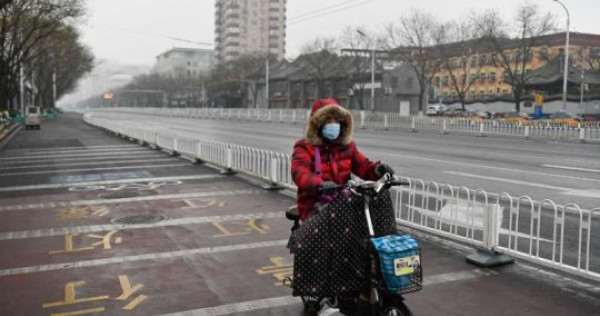
Prof Fisher, from the National University of Singapore told The Straits Times: “It’s extraordinary, the absence of people on streets, the absence of cars, the shops closed.
“And as you look at high rise buildings, it’s full of people complying with China’s request to socially isolate and bring this disease under control.”
China is still ramping up its capacity to deal with the virus because they “don’t believe its going away anytime soon”, including building new isolation rooms and acquiring more equipment.
Compared with it, countries like Italy, Japan and South Korea have not fared any better.
“For all the criticisms against China originally, you can look at the current places, and ask the same questions,” he said.
SINGAPORE: When it comes to ultra-processed food, chicken nuggets are the top choice for Singaporeans, according to a survey commissioned by programme Talking Point.
And almost two in three of those surveyed said they started eating ultra-processed food before the age of 13.
But what does eating chicken nuggets consistently from a young age do to children?
One problem with consuming more processed food from young — which food scientist Yang Hongshun agrees is the case now compared with 20 years ago — is that this increases one’s threshold for salt and sugar.
“When you try natural food, without the same amount of salt … colour, taste or smell, maybe you’d find that it’s not (tasty),” said the assistant professor from the National University of Singapore’s Food Science and Technology Department.
Assistant Professor Yang Hongshun (right) with Talking Point host Steven Chia.
While people know that ultra-processed foods are not good for them, what is it that makes chicken nuggets so addictive?
The programme Talking Point finds out what they are really made of and whether they are even unhealthier than people realise. (Watch the episode here.)
VARYING GREATLY IN COMPOSITION
In the survey of nearly 8,000 Singaporeans, conducted by the Singapore Management University in collaboration with Talking Point, respondents said up to 30 per cent of their meals every week contained ultra-processed foods.
The study investigates local consumption patterns, attitudes and perceptions about ultra-processed foods.
WATCH: What’s really in my chicken nuggets (23:54)
And it seems that many Singaporeans believe the rumour — even though it is unverified — that nuggets are made of unwanted parts of a chicken, like intestine, liver and even crushed bones, all minced into a paste.
So what exactly goes into the chicken nuggets in Singapore, where 4,400 tonnes were imported from countries like Thailand and Malaysia in 2018?
National University Hospital head of pathology Tan Soo Yong extracted samples of nuggets from five different brands and found that they did not contain organs such as liver, kidney or intestine.
Instead, they were composed of muscle, fat, bits of bones and other tissue constituents including collagen, vessels and nerves, as well as vegetative material.
Associate Professor Tan Soo Yong.
The amount of muscle, or what is commonly known as meat, in the samples ranged from 15 to 60 per cent. The muscle to fat ratio also differed greatly across brands, as different parts of the chicken meat were used.
“What does surprise me … is the relative proportion of muscle versus fat in different brands,” said the associate professor.
“If you’re on a diet … you might be interested to know what percentages of muscle and fat are present in your favourite chicken nugget.”
Typically, chicken breast has the least fat, followed by the drumstick, wing and thigh. If these parts have their skin on, the fat content is higher.
The fat content of chicken parts.
SODIUM OR FAT?
Tasty Meat Products, whose factory here produces more than 150,000 nuggets a day, uses meat from the drumstick and thigh because it is juicier and cheaper than chicken breast, which is reserved for premium products.
Its managing director, Sunny Choo, said its nuggets contain about 65 per cent meat, but he has heard of manufacturers that use 20 per cent chicken meat.
The main ingredients of the company’s nuggets besides meat, he said, include textured vegetable protein (which is soya-based), chicken bouillon and modified starch. And the flavour is boosted by the nuggets’ coating, a machine-made combination of bouillon, starches and flours.
The proportions of all these ingredients depend on the manufacturer.
“For instance, (if) you want a cheaper product, then you have to put more of this soya protein, (whose volume) you can inflate (by) two times (with) water,” said Choo. “It would reduce your cost.”
Sunny Choo showing his company’s ingredient room to Chia.
Nuggets made of meat from chicken leg are also cheaper, by 20 to 30 per cent, than those made from chicken breast. But they also contain more fat.
Eat Right Nutrition Consultancy principal dietitian Derrick Ong said nuggets with more fat tend to also have more saturated fat. But this does not necessarily mean nuggets with more fat are unhealthier.
Comparing the labels on some nuggets sold in supermarkets, he pointed out that the saturated fat level of one brand was 2.9 grammes per 100 g, “which is fairly low”, but its sodium level was 610 milligrammes.
Another brand had a lower sodium content, at 520 mg, even though it contained 4 g of saturated fat. “There’s kind of this trend,” he said. “The higher the saturated fat, the sodium content tends to be lower.”
Derrick Ong.
There is a trade-off between the “mouth feel” of the fats and the sodium flavour. “Neither is very good for health,” he added.
Too much saturated fat can increase the risk of heart disease, but too much sodium can also increase the risk of hypertension and heart disease.
BONDING MOMENTS
By eating six pieces of nuggets totalling 510 mg of sodium and 2.5 g of saturated fat, one would have consumed 25 per cent of the recommended daily intake of sodium and up to 15 per cent or so of the recommended intake of saturated fat.
Yet, the flavour can get people hooked early in life. Apart from that, nuggets stand out from other ultra-processed foods and is attractive to children because of the size.
“It’s something that you can pop into your mouth easily,” said food blogger Alexis Cheong.
Chia asks Alexis Cheong why Singaporeans love nuggets more than other ultra-processed foods.
Fast food chains also play a part in inculcating this habit of serving nuggets to children from young by, for example, making it part of a meal to share and enjoy.
“A lot of times we’re focused more on the bonding moments, instead of what (we) are eating and how processed or unhealthy it is,” she said. “As you grow up, it also becomes part of that wonderful memory you have.”
Some fast food chains also periodically release new flavours or time- limited offers to keep consumers coming back for more.
“With habit … all of that combined makes nuggets a really hard thing to resist,” she added.
Watch this episode of Talking Point here. New episodes on Channel 5 every Thursday at 9.30pm.
SINGAPORE: For fiscal year 2019, the Singapore Exchange Limited (SGX) recorded its highest revenue since its listing in 2000, S$910 million.
It also bagged a net profit of S$391 million, its highest since 2008.
Based on these glowing results, one might conclude that all is fine and dandy for SGX. But a closer look suggests the Singapore bourse faces several strong headwinds.
The spreading novel coronavirus, which likely caused the record one-day drop of 1,190.95 points in the Dow Jones Industrial Average on Feb 27, has been getting all the attention.
Although SGX has allowed firms to delay annual general meetings given challenges with holding large meetings, the overall COVID-19 outbreak’s impact on SGX itself, if negative, is likely transient and detracts from the pertinent longer-term challenges that SGX faces.
As the only stock exchange in Singapore, SGX has monopoly pricing power over the trading and clearing of its single-listed equity securities.
However, the market operator has struggled to attract listings. It has instead witnessed net delistings in seven of the last nine years, with the number of listed companies decreasing from 783 in 2010 to 723 in 2019.
SGX must be well aware of this trend. In an about-turn, SGX recently proposed to do away with the minimum trading price rule, which would prevent up to 53 firms on its watch-list from being delisted in June 2020.
Even homegrown companies are shunning SGX as a listing venue. Notable ones include Sea Group and Razer, which opted to list on the NYSE and the Hong Kong Exchange (HKEX), respectively. In spite of the ongoing unrest, Hong Kong continues to be the preferred listing destination for some Singapore-based firms, like CTR Holdings.
A man walks out of the Stock Exchange of Hong Kong offices in the Central district of Hong Kong on Sep 11, 2019. (Photo: AFP/Nicolas Asfouri)
A main reason for listing elsewhere is the perception of better valuations, since businesses can raise more funds in IPOs or rights offerings in markets where stocks are valued at higher multiples.
Going public on the HKEX, for example, allows not only easier access to Chinese capital, which provides support for better valuations, but also a more visible presence in Greater China.
Among the companies that do list on the SGX, the average IPO proceeds has declined from S$380 million in 2010 to S$85 million in 2019.
The REITs sector appears to be the sole bright spot, accounting for 98 per cent of 2019 gross IPO proceeds.
The health of this sector can be mainly attributed to the favourable tax treatment Singapore REITs enjoy. Unlike Hong Kong REITs, which are taxed at corporate rates, Singapore REITs are tax-exempt provided they pay out at least 90 per cent of their income in dividends.
Securities daily average traded value (SDAV) has fallen from S$1.5 billion in 2010 to S$1.14 billion in 2014, due in no small part to the 2013 penny stock scandal, which has affected investor confidence in the Singapore market.
The slide has since continued, albeit at a more moderate pace, to end the decade with an SDAV of S$1.04 billion.
This slower decline occurred after SGX introduced the Market Maker and Liquidity Provider Programme in June 2014, which suggests that the initiative has succeeded in partially arresting the decline.
File photo of the SGX building (Photo: Jeremy Long)
Nonetheless, this initiative has come at a cost to SGX. The designated market makers and liquidity providers are given clearing fee rebates for their trouble, which effectively reduces the clearing fees SGX earns.
As an increasing proportion of trades are not full-fee trades, the average clearing fee has dropped from 3.10 basis points in 2014, just prior to the launch of the programme, to 2.66 basis points in 2019.
This decrease, which is largely due to greater participation from market makers and liquidity providers, is a sign that the Singapore equity market continues to be increasingly illiquid, which is why their intervention is needed.
The end result? A fairly persistent drop in SGX’s securities clearing revenue throughout the decade, from S$239.3 million in 2010 to S$138.9 million in 2019, reducing the contribution to SGX’s bottom line.
There are no easy answers, but SGX has not been sitting idle in the face of these challenges. It has introduced a slew of measures to entice listings and to boost liquidity in its equity market, but some have yet to gain traction.
For instance, to appeal to start-ups with share structures that have unequal voting rights and to compete with HKEX, SGX has allowed firms with dual-class share structures to list on its mainboard, but there are no takers thus far, likely because it is not the pivotal consideration in prospective issuers’ listing decisions.
Against the backdrop of muted SDAVs, SGX offered daily leverage certificates (DLCs) in July 2017. These products magnify returns of an underlying stock or equity index, and because they are classified as securities, DLC trades would increase SDAVs.
A man at the Singapore Exchange (SGX) on July 27, 2016. (File photo: AFP/Roslan Rahman)
However, although DLCs and structured warrants make up 6.21 per cent of SDAV in the second quarter of FY2018, this decreased to 3.19 per cent by the fourth quarter of FY2019.
Also, the average clearing fee is significantly lower for DLCs compared to that for cash equities, which implies smaller DLC revenue contribution for the same traded value.
EARLY DAYS FOR OTHERS
In addition, the market operator has recently abolished mandatory quarterly reporting, opting instead for a risk-based assessment as to which companies require such reporting.
This lowers compliance requirements, which are onerous and costly, but represents playing catch-up rather than conferring a competitive advantage, since companies listed on exchanges like HKEX and the Australian Securities Exchange are already not required to report quarterly.
Furthermore, removing mandatory quarterly reporting can inhibit price discovery since information is conveyed to the market in a less timely manner, which does not help a market that has seen dwindling traded values.
Yet another attempt to address these challenges is the introduction of the S$75 million Grant for Equity Market Singapore (GEMS) by the Monetary Authority of Singapore which, among other things, is intended to help issuers defray some of the initial listing expenses.
However, as the listing grant is only valid for three years, one can only hope that the big names that SGX successfully woos to list here will convince others to follow suit.
IMMINENT COMPETITION FOR POPULAR DERIVATIVE PRODUCT
With these challenges, how did SGX manage a record revenue for FY2019?
The average person may view SGX as a stock exchange but that was the SGX of 2010, when its securities business was its biggest revenue contributor at 46 per cent.
A general view of the Singapore Exchange (SGX) building in Singapore. (Photo: AFP/Rahman Roslan)
SGX has transformed itself over the last decade and today is more of a derivatives exchange, with this business segment making up 51 per cent of its 2019 revenues.
Although its derivatives revenue has increased significantly from S$131 million to S$459.7 million over this period, in the last five years, it has closely tracked the volume of a specific derivative contract — the FTSE China A50 Index futures, the most popular of its derivative offerings and accounts for 44 per cent of the number of derivative contracts traded in FY019.
It also happens to be the only US dollar-denominated futures offering that allows offshore access to the China A-share market, which comprises shares of Chinese companies listed on the Shanghai and Shenzhen stock exchanges and is increasingly represented in major indexes like the MSCI Emerging Markets Index.
SGX’s dominant position may be about to be challenged by the HKEX’s recent initiative to launch MSCI China A Index futures, which saw SGX’s stock price drop from S$8.02 to S$7.26 in the five trading days surrounding the announcement.
SGX’s multi-asset strategy has also allowed it to sufficiently diversify its revenue sources to offset the decline in its equities business.
In particular, the traded volumes of its iron ore and currency derivative contracts show promising growth.
Its diverse iron ore-related derivative offerings allow customers to trade the entire steel value chain and benefit from margin offsets, while its currency derivatives may continue to benefit from the rising convergence of over-the-counter and listed markets.
With SGX’s recent S$280 million acquisition of a 93 per cent stake in Scientific Beta, a smart beta index firm, the market operator is positioning itself to capture growth in this space as the shift towards passive investing continues.
Time will tell whether these moves will be enough for SGX to overcome the headwinds, but the company has reinvented itself before, and there is hope that it will be able to reinvent itself once again.
Dr Tan Eng Joo is senior lecturer at the Singapore University of Social Sciences’ Finance Programme.
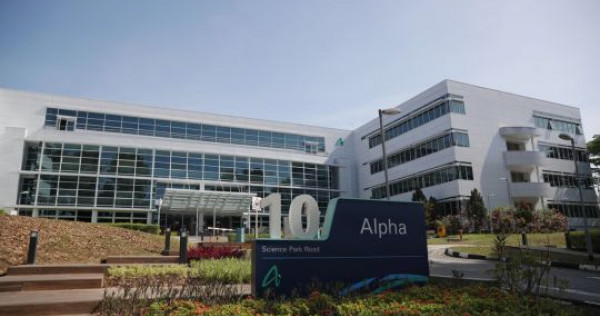
Four new cases have been confirmed in Singapore, all linked to the Wizlearn Technologies cluster, said the Ministry of Health on Saturday.
There are now eight cases linked to the e-learning solutions company at Science Park II that emerged as a new coronavirus cluster on Friday.
Of the new cases, two are Singaporeans, one is a Malaysian and the other is a Filipino. All have no recent travel history to China, or to Daegu city and Cheongdo county in South Korea.
The new infections bring the total number of confirmed cases here to 102.
Meanwhile, three more patients have been discharged, MOH said.
The other clusters that have emerged here are the Yong Thai Hang health products shop, the Grand Hyatt Singapore, a Seletar Aerospace Heights construction site and the former clusters at Grace Assembly of God and the Life Church and Missions Singapore that are now considered one cluster, as a result of the earlier discovery of a missing link between the two.
SINGAPORE: About S$3.2 million has been raised for a fund to help frontline groups and Singaporeans affected by the coronavirus outbreak, said Minister for Social and Family Development Desmond Lee on Saturday (Feb 29).
Speaking on the sidelines of a visit to one of Singapore’s government quarantine facilities, the CSC @ Loyang, Mr Lee thanked those who contributed “for caring for one another in this time”.
The Courage Fund was set up in 2003 when Singapore was hit by the Severe Acute Respiratory Syndrome (SARS) outbreak.
Minister for Social and Family Development Desmond Lee interacts with SPF frontline officers at Civil Service Club @ Loyang on Feb 29, 2020. (Photo: Marcus Ramos)
Mr Lee said the fund will be used during the COVID-19 outbreak “as part of overall efforts to support our frontline and support people who are affected by COVID-19”. Disbursements will be carried out on an “application basis”, Mr Lee added.
Among those who may benefit from the fund are healthcare workers on the frontline, including doctors, nurses, hospital staff and cleaners.
“If they are infected by COVID-19, we will use The Courage Fund and support them, over and above what other support we provide for them,” said Mr Lee.
Minister for Social and Family Development Desmond Lee distributes welfare packs to the frontline workers at Civil Service Club @ Loyang on Feb 29, 2020. (Photo: Marcus Ramos)
Other frontline workers, such as the Certis Cisco officer who was infected by the virus while carrying out home quarantine duties, will also be supported.
The Courage Fund also supports families of those who die from COVID-19. For example, the children of healthcare workers, frontline workers and community volunteers will be offered education grants, said Mr Lee.
In addition, volunteers who get infected with the virus may receive support from the fund “because they have shown courage, in terms of adversity, stepped forward to help frontline fellow Singaporeans”, said Mr Lee.
Minister for Social and Family Development Desmond Lee visits a room at Civil Service Club @ Loyang on Feb 29, 2020. (Photo: Marcus Ramos)
The minister also said that Singaporeans who are affected by the outbreak, including patients and individuals placed under quarantine or the Stay-Home Notice, may benefit.
This is in addition to the home quarantine allowance, the ComCare Fund and other forms of community assistance already available.
“The Courage Fund acts as an extra layer of support,” said Mr Lee.
Minister for Social and Family Development Desmond Lee looks at the basic amenities provided to persons under quarantine. (Photo: Marcus Ramos)
Citing Deputy Prime Minister Heng Swee Keat’s Budget speech on Feb 18, Mr Lee said that Singapore has its national reserves to count on “in times of crisis”, but “there are other forms of reserves, beyond fiscal reserves, like our unity, resilience and the courage of the community”.
“At a time like this where everyone looks out for each other, beyond looking after ourselves and our families, I think that will put us in a stronger position and for Singapore to overcome the situation,” said Mr Lee.
It is a religious group that operated in secret, luring Christian youths and young adults via a front, and then compelling them to keep the group’s existence a secret.
Recruited members were not allowed to contact each other, verify teachings with other churches, or speak to their families about the group’s activities.
This was how members of the Shincheonji Church of Jesus operated in secrecy here, including setting up companies under the guise of providing consultancy services or workshops.
The Ministry of Home Affairs (MHA) said this in a statement on Friday (Feb 28), revealing the workings of the ultra-secret religious cult in Singapore.
Their modus operandi here mirrors tactics they have used elsewhere in the world.
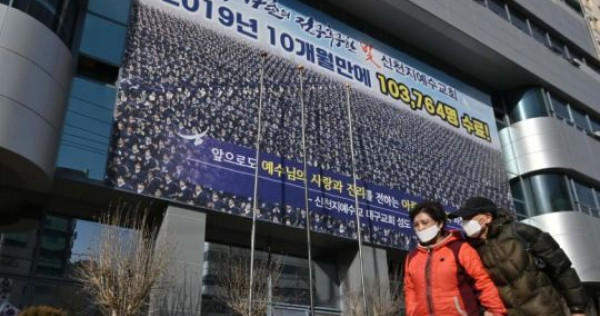
The group, whose name in full is the “Shincheonji Church of Jesus, the Temple of the Tabernacle of the Testimony”, originated in South Korea.
It is also at the centre of the country’s coronavirus outbreak in the city of Daegu. Over half of South Korea’s more than 2,300 coronavirus cases are linked to the church.
A rumour regarding the death of a foreign domestic worker due to the coronavirus has been debunked.
In a statement on its website, the Ministry of Health (MOH) said it was aware of the rumour circulating on social media. But it added: “This is not true. She was tested for Covid-19 and found to be negative.”
As of 4pm on Friday (Feb 28), there has been no fatality related to Covid-19 in Singapore, it said.
A Twitter user posted on Friday that his maid’s friend, who is also a maid, had died due to the virus. “Employer was Chinese frequent I assume,” according to the tweet, which has since been taken down.
The MOH has also been alerted to phone calls received by the public asking them to visit its offices to collect documents.
“The calls are not made by MOH…we will not require anyone to collect documents from MOH’s offices if they do not have any existing matter with us,” it said in an advisory on its website.
The public should verify the authenticity of the phone calls claiming to be from MOH before providing any personal information or making payments by calling the Ministry’s general hotline at 6325 9220.
Lotte’s Choco Pie Banana is being recalled because it contains almonds which were not declared on its packaging.
The United States’ Food and Drug Administration (FDA) issued a food recall alert on the snack and the Singapore Food Agency (SFA) has directed its Singapore importer, Sing Long Foodstuff Trading, to recall the product.
The recall is still going on, SFA said in a statement on Friday (Feb 28).
The implicated product is from South Korea and comes in the 12-pack Lotte’s Choco Pie Banana with a best before date of Nov 4, 2020.
SFA said that those who have bought the product and are allergic to tree nuts such as almonds, and nut products should not consume it.
It added that the presence of almonds does not pose a food safety issue to consumers at large, except those who are allergic to tree nuts.
Those looking to exchange the product or get a refund for it can contact Sing Long Foodstuff Trading on 6284-5254.
A smart speaker is a great way to start building a smart home filled with Internet-connected gadgets that can be respond to your voice commands.
Here’s a step-by-step guide to build your first voice-controlled smart home.
CHOOSE A VOICE ASSISTANT
For most Singapore users, the Google Assistant is the best choice as it can understand the Singaporean accent.
Rival Alexa is not supported here and while Siri is available on Apple phones and tablets, Apple’s HomePod smart speaker is unavailable.
There are valid reasons to choose Alexa – it supports the most number of smart home devices, for one thing.
Apple’s focus on privacy – encrypted video feeds from home security cameras are sent to Apple’s iCloud servers rather than to the camera maker’s servers – may also appeal to some users.
But for the sake of brevity, The Straits Times shows you how to control a smart home with the Google Assistant.
SINGAPORE: It was 6am. The team at Fire Station 1 was winding down before their first meal of the day, marking the end of their 10-hour shift. That was when the call came.
Flight SQ368 bound for Milan on June 27, 2016 had an “engine oil issue” mid-flight and was returning to Changi Airport.
“What was going through my mind was definitely all the possible worst-case scenarios,” said Airport Emergency Service (AES) Senior Staff Officer Ang Kheng Wee, the then Acting Operations Commander.
An engine oil issue could result in a loss of control over the plane’s flight capability, affect the plane’s landing operation or cause a fuel leakage on the runway.
The plane was due to arrive in an hour. Waiting for it, and poised for action, was a fleet of firefighting vehicles known as foam tenders, equipped with a mixture of foam and water.
“It was a pretty peaceful initial landing,” said Ang. “No fire, nothing.”
But something caught his eye: A sudden orange glow emitted from the right engine, then disappeared. As the plane approached the taxiway, the engine burst into flames, which engulfed the right wing.
It was “go time” for the firefighters.
Photo taken from footage of the SQ368 accident.
Sirens blaring, the foam tenders sped out in force. The vehicles’ turrets whirred mechanically as they discharged their foamy solution.
“If truth be told, it wasn’t expected that an engine oil issue could lead to such a big fire,” Ang said. “But we prepare ourselves mentally for the worst-case scenario.”
The fire was put under control in about a minute. “If we’d waited for the SCDF (Singapore Civil Defence Force),” added the 35-year-old, “the passengers could’ve burned to death.”
THREE MINUTES TO SAVE LIVES
For the AES firefighters, seconds mean the difference between life and death.
“Aviation-fuel fires generate more intense heat than normal fires,” said Ang. “The threat of this fire is that it can burn through the aircraft fuselage, through the fuel tanks and subsequently into where the passengers are sitting.”
WATCH: Full emergency – The Changi Airport firefighters (5:00)
In such instances, time becomes even more of a crucial factor. Fires that reach inside the cabin can potentially burn up its roof in 90 seconds, devastating all in its path.
“A car typically carries 40, 50 litres of petrol. And a Boeing 747, for example, can carry more than 200,000 litres of jet fuel,” said Operations Commander Alexander Barry Boey.
“We’ve seen how cars can catch fire, so you can imagine if it were to happen on an aircraft.”
According to a mandate from the International Civil Aviation Organisation, airport fire services must respond to an aircraft emergency in three minutes. But the AES has set for itself a two-minute response time.
“We’re the best airport in the world,” said Boey. “It’s our commitment to passenger safety to hold ourselves accountable to a higher standard.”
Alexander Barry Boey has been in the Airport Emergency Service for close to nine years.
The moment any aircraft-related emergency is declared, the firefighters have 15 seconds to get into their firefighting vehicles and two minutes to reach the accident site. Then it is one minute to get the fire 90 per cent under control.
“It’s muscle memory,” said Senior Fire Warrant Officer Shah Rashid. “As long as the bell (alarm) goes, we go.”
A slow response to an emergency results in uncertainty for others at an airport like Changi, which can have planes taking off and landing on its two runways every 80 seconds.
It could even mean the closure of a runway for several hours — a major disruption. So to mitigate the risk of airport operations coming to a halt, each runway has a dedicated fire station with identical resources.
Fire Station 1.
This gives firefighters a strategic advantage when responding to emergencies, and also means one runway can remain operational should the other be temporarily out of action.
With a full force of 45 men stationed across two runway fire stations, a satellite station and a sea rescue base, the AES team is a lean one. Each firefighter has to be at the top of his game.
‘WE NEED TO STRESS OUR FIREFIGHTERS’
Every year, about 300 hopefuls apply to the AES. The minimum qualification is a National Institute of Technical Education Certificate (Nitec), but the selection criteria focus more on traits like discipline and teamwork.
After two months, several rounds of interviews and physical and medical examinations, the number of successful applicants is reduced to 20.
When Fire Lance Corporal Shek Allaudin was applying, for example, he struck up a conversation with another candidate who he discovered was applying for the eighth time.
“People told me, ‘Wah, AES is more chiong (hectic), more teruk (demanding) than general firefighting,” said the 25-year-old. “I told people, ‘Just pray for me to get in.’”
Getting in, however, is when the hard work begins.
“(We) drill them hard and also inject surprises to make them thinking firefighters,” said Commandant at the School of Airport Emergency Service Leow Eng Hock, referring to the 12 weeks of basic training all new recruits undergo.
“(Aircraft firefighting) is an ever-changing environment … Things can just explode within seconds, aircraft can be ripped into a few parts, and there’s a large quantity of fuel that’s burning.”
“We need to stress our firefighters,” added the 60-year-old.
The heat is the most debilitating. After a month of technical training, the recruits are taught to use firefighting suits — 27kg silver aluminised suits that, complete with breathing apparatus, leave no room for ventilation.
To endure working in such heat in full gear for up to 30 minutes takes training and accustomisation.
The second month of training is also when recruits get their first taste of aircraft firefighting.
“It was the most challenging task,” said Shek as he recounted the first time he did a night drill. His team of 10 was tasked with rescuing dummy casualties from inside a simulator, referred to as the Red Bird by the firefighters.
There were also internal and external fires, which had to be extinguished. “I took the internal fire,” said Shek, “I wanted the thrill of fighting fire in darkness. I actually look forward to this kind of thing.
“I like to push my body’s limit to the (fullest) extent.”
But not everyone shares the same gung-ho attitude. The dropout rate in the second month is 10 to 20 per cent.
“They (recruits) think that it’s a … straightforward job,” said Leow. “In fact it’s not, because physically and mentally, they need to prepare themselves.”
ENTER THE CAGE ROOM
For additional realism and the element of surprise, trainers can turn up heaters in a room known as the cage room, fill it with smoke and turn on sound effects of screams, crying and sirens.
This is where firefighters work together in a simulated mission. Crawling through cages and tunnels, they must search for and retrieve “casualties”, usually scattered around randomly, and find their way out of the snaking maze — all in total darkness.
“It’s to overcome their fear of darkness” said Leow, explaining that firefighters cannot panic if they find themselves in an enclosed environment.
Under the weight of their suit and the heat, they must maintain a steady breath so that their oxygen tank is not depleted before they can make their way out of the cage with their casualty.
“The most important is the teamwork … communication among the team and making sure there’s no man left behind,” Leow said.
Through thermal imaging cameras, trainers assess whether the firefighters make the cut. “We see whether mentally they’re resilient enough to react to all kinds of changing scenarios.”
The same logic applies in the foam tender simulators. Firefighters training to operate the vehicles enter a room with an LCD screen, a chair and a dashboard identical to that in operational foam tenders.
The screen lights up, and faced with a digital replica of Changi Airport’s runway, the trainee waits in the hot seat for instructions. “Runway one … engine one and two on fire,” relays the officer from the tower. “Be advised.”
Then a plane emitting smoke cuts across the screen, and the firefighter moves off in pursuit. As he makes a sharp left turn at 120 kilometres per hour, the trainers throw him a curve ball: It starts pouring with rain.
He calibrates — rain means a slippery tarmac, so continuing at such high speeds could be dangerous, especially since he has three other firefighters in his vehicle. He slows down, but only slightly. After all, he has only two minutes.
As he approaches, he sees casualties on the ground. He is careful to avoid them as he commences firefighting efforts from the vehicle. It is a virtual reality success.
A PILOT’S EYES AND EARS
The firefighters’ responses to emergencies are, in large part, determined by the information relayed from the pilot to the Air Traffic Control and then to the AES team.
What a pilot sees, however, “is just from the cockpit itself”, noted Boey. “When we respond to an incident, we’re essentially the eyes and ears on the ground for the pilot.”
And what they see can inform their next response. For example, to an AES firefighter, smoke is not always or just an indicator of fire. White smoke could indicate overheating of equipment, burning grass or early-stage burning.
“If it’s black smoke,” said Boey, “it’s confirmed a fire.”
The firefighters learn to identify whether planes are carrying chemical, corrosive or explosive substances, and this enables them to adhere to the regulatory safety distance.
Wind direction is another factor they must take into consideration.
Unlike the city centre, surrounded by high-rise buildings that block the wind, an airport is situated in a wide open space, so the planes are vulnerable to strong gusts as well as the wind direction.
“Wind direction can be our friend, it can also be our enemy,” said Boey.
The firefighters aim their foam solution in an upwind position, which also helps direct the trajectory of the solution towards the fire.
“(An) aircraft firefighter needs to have the ability to think on his feet and react to situations,” said Boey. “We don’t have the luxury of time. You have to be on autopilot.”
However, some people, according to Shek, are “not aware of who’s taking care of runway emergencies”.
“I have to explain to them,” he said, “because some people think it’s an SCDF thing.”
Still, despite the lack of awareness, he feels proud to be part of the service, especially when he wears his uniform in public.
Ang can also relate to the lack of awareness about the team. But for him, the service is not about “adulation”.
Citing a “memorable” road traffic accident between a van and a lorry that occurred on the runway years earlier, he remembers the van driver trapped under the dashboard.
Unable to move, the team had to extricate the man by first using a hydraulics spreader to pry open the area between the injured and the dashboard.
When the person thanks you,” he said, “it gives you a certain warmth that you’ve done something right for humanity.”