Home Blog Page 453

Commentary: How to sabotage your child’s future – five dangerous notions about life, careers and education

0

SINGAPORE: “By the time you graduate, everything you will have learnt will already be obsolete.” said the CFO of a major global bank to the audience of University students at a career workshop I was hosting.

“So what’s the point of school?” whispered one of the students to another, both shaking their heads in commiseration.

Welcome to the huge elephant in the room of higher education. No one quite knows what skills will be relevant for us in the future. Not the students, not even the employer and certainly not the grey-haired academics nominally in charge of preparing your daughter or son to face the age of disruption.

The most dangerous notions about education, in my opinion, come from the people who have the most influence over the future of our youth and the least idea about how to guide their children. Yes, parents, I’m looking at you.

Over the years, in my previous life as a director of a university career centre, I have heard hundreds of stories from the frontline where my team of more than 20 career coaches counselled students who were burned out, run down or plain old disillusioned with life.

Mental health conditions like depression and anxiety were rising rapidly. More often than not, the root cause was them doing a course because of parental expectations rather than pursuing their own interests.

My clinical psychologist partner Greg too hears similar stories from clients further down the line in their careers, who may seem successful on the outside, but feel like they’re struggling with old emotional baggage and in finding meaning from life and work.

This left me convinced of the urgent need for us parents to update our attitudes and mindsets, and reimagine how we steward our youth into this brave new future.

In particular, I want to highlight some common unintentional mistakes I’ve seen parents make which sabotage their child’s chances of finding joy and meaning from their higher education and work life.

MISTAKE #1: THINKING STEM SUBJECTS ARE MORE IMPORTANT THAN THE HUMANITIES

Data suggests that demand will continue to rise for jobs in the science and tech sector. But did you know many employers in tech and life sciences sectors are more interested in hiring students from the humanities disciplines?

An engineer monitors a live video feed sent by a surveillance drone at a command centre in Singapore

An engineer monitors a live video feed sent by a surveillance drone at a command centre in Singapore. (Photo: AFP/Roslan RAHMAN)

READ: Commentary: Humanities at the heart of a holistic education in a tech-driven world

One surprising trend I’ve seen over the past few years is traditional STEM (science, technology, engineering and mathematics) companies trying to diversify their talent and hire more non-STEM graduates. For example, bio-pharma companies who are trying to hire anthropologists and social science students to help them pivot their business focus into wellness, and tech titans trying to hire liberal arts students to boost their innovation capacities.

As a senior engineer from a leading tech firm said to me: “If I hire 100 computing science students in Singapore, I normally get just one answer to a problem. They’re trained to see the problem in the same way. But if I hire 10 humanities students, I get 10 whole new perspectives.

Diana Britt, APAC & Japan Head of Google Cloud Search, says: “Most people think of Google and believe it’s all about engineering. Yet our capacity to be a leader and innovate is based on “diversity of thought” merging the best engineers with the best creative thinkers to come up with the “best decision”.

Futurists also agree that the most valuable skills of the future are linked to humanistic, social emotional competencies machines find hard to replicate and that students need to expose themselves to a broad array of generalist experiences rather than devote themselves to a single deep area of expertise that risk being disrupted.

READ: Commentary: Do not fear retrenchment. Four tips for working professionals in a downturn

READ: Commentary: The generalist-specialist job distinction is holding many back

There has never been a more crucial time for our students to invest deliberately in cultivating their soft skills like empathy, creativity and self-awareness, and for parents and educators to place as much importance on them as learning math or science.

MISTAKE #2: BEING FIXATED ON GETTING YOUR CHILD INTO A PRESTIGIOUS UNIVERSITY

The truth behind why people pay so much for a university degree is because in the past, that piece of paper signalled to employers, friends and family: “Look at me, I am smart and diligent.”

In the past, when university degrees were rarer, they did a more efficient job in allowing employers to identify talent.

Nowadays, half of Singapore has a university degree. The piece of paper doesn’t do much to separate your child from thousands of others with the same piece of paper.

We are already seeing trends of employers like Apple, IBM and Google scrapping college degree requirements and CEOs such as IBM’s Ginni Rometty saying that vocational training and on-the-job experience is more relevant for tech sector than traditional four-year college degrees.

Man stands near an IBM logo at the Mobile World Congress in Barcelona

A man stands near an IBM logo at the Mobile World Congress in Barcelona, Spain, on Feb 25, 2019. (File photo: REUTERS/Sergio Perez)

Employers may still use degrees as one of the ways for them to identify talent, but in today’s hyper-competitive jobs landscape, employers don’t just want to know where you went for your education, but more importantly, what life skills and competencies you have learnt. How you can tell a compelling story of how your unique experience will make you an effective team player for them.

Even within the same university, students will end up with very different experiences depending on who their educators are.

The trick here is to advise your child to research what specific courses they are interested in, look up their potential educator’s body of work, and even speak to recently graduated alumni to garner feedback on their experience, rather than blindly trust the institution’s brand name.

Also, don’t limit your thinking to universities but think further upstream. With society’s chase after an Integrated Programme, the reality is a polytechnic education can be a desirable feeder system into university or work life but is often overlooked.

READ: Commentary: Junior college or polytechnic after O-Levels – does it matter?

READ: Commentary: The rise of the digital economy – and how education may be transformed

Polys tend to work very closely with employers to devise highly practical curricula and training that maps on to industry needs. The poly education also exposes students early to real-life work through internships and applied learning.

Polys also tend to have less historical baggage – and do not have to deal with the influence of tenured professors on the deanery, so they can be more agile with changing up their approach and course offerings to suit market needs.

Poly students are also increasingly being seen by employers as more entrepreneurial and resilient, whereas we see more “grade-focused” students in universities coming from the junior colleges who tend to have a harder time accepting failure and setbacks, and are used to external validation for their scores and accomplishments.

MISTAKE #3: VALUING A HIGH STARTING SALARY OVER ENTREPRENEURIAL EXPERIENCE

During University Open Day, I used to be bemused by parents whose first question was about the average starting salary of the various courses we offered.

If you headed over to certain faculties, you could hear a chorus of parents yelling: “Pai Tan!”(hard to earn in Hokkien) while steering their kids by the shoulders away.

Silhouette of a university grad

A university student graduation. (Photo: Reuters/Brian Snyder)

Commentary: Look beyond state-of-the-art campuses for what matters in education

The problem is, starting salaries are highly meaningless metrics, and no predictor of continued long term success. Many design students start off with low salaries and then come back to visit us as millionaires after starting their own companies. The most successful individuals, who are heralded as role models, chose starting their own company over a stable entry wage.

“Every year I stand on stage accepting donations from our ‘C’ students so that the ‘A’ students can do their research” laughed a University president I spoke to at a donor gala. It’s a well-known joke in university circles that ironically, our biggest donors are the self-made entrepreneurs who never cared much about grades in the first place.

In this age of disruption, we actually need more entrepreneurial mindsets and less focus on grades, plus a skills-focused approach to education.

For continued career success, even if you don’t intend to be a business person, I firmly believe that every single person needs an entrepreneurial mindset. 

Even for university academics, the ones who succeed and obtain funding are those who know how to sell their ideas and evaluate risks and opportunities like an entrepreneur.

READ: Commentary: The future just got brighter for aspiring Singapore tech entrepreneurs

READ: Commentary: The future is tech but where is Singapore’s engineering and IT talent?

The same goes for doctors, lawyers and any other profession you can think of. The world of the future is one where everyone needs to be their own best advocate, marketer, influencer and understand how to utilise the power of a network.

Hence, I would encourage students to devote time to developing entrepreneurial mindsets and trying out projects or developing “side hustles”, whether they are graded or not.

This is an area where polytechnics have an edge – their project-based pedagogy requires students to develop people skills early – negotiation, influencing, communicating – all in high demand in the future, as AI and automation take over workplace tasks that don’t require emotional intelligence.

MISTAKE #4: THE ‘COMPARE AND DESPAIR’ SYNDROME

Almost every parent knows that their child is special and incomparable. Yet, most of us fall into the trap of comparing our child to other people’s or even to our other children.

What works for your child depends very much on their personality, strengths and weaknesses. Also, some children are later bloomers than others. Like the old saying goes: “If you judge a fish by its ability to climb a tree, it will live its whole life believing it is stupid.”

READ: Commentary: We have totally undervalued late bloomers

dad parent and child at the beach

(Photo: Unsplash/Steven Van Loy)

READ: Commentary: Over-parenting teaches children to be entitled. Let them fail instead

Comparisons are psychologically toxic and damaging for self-esteem. And what often happens, is that children end up chasing their parents’ affection and pride rather than rebelling or asserting their needs.

A 2007 study conducted by the Institute of Mental Health concluded that Singaporean children have higher rates of internalising problems compared to their Western counterparts, and that cultural factors greatly influence children’s manifestations of emotional problems. 

Researchers hypothesised that this could be because aggression is discouraged in Asian countries, while self-control, emotional restraint and social inhibition are encouraged.

Palliative care expert Bronnie Ware says that the one of the most common regrets of the dying are “I wish I had the courage to live a life true to myself, not the life others expected of me.”

In leadership camps with more than 100 participants, we did a repeated questioning exercise where participants were asked over and over again “What do you really want?”

During the first few minutes of repeated questioning, participants gave responses like “I want money” or “I want a holiday”, but after participants were asked to dig deeper, almost half the room ended up saying something incredibly surprising – some version of “I just want my Dad/Mom to be proud of me”.

READ: Commentary: Why aren’t there more Singaporean CEOs?

READ: Commentary: Give workers permission to disrupt – one way Singapore businesses can accelerate digital transformation

This is a prime example of extrinsic motivation – doing something because of some external reward, including pleasing others. Yet research has shown that extrinsic motivations are not just ineffective, but also often demotivating, while intrinsic motivation taps into people’s desire to do things because they themselves find that thing interesting or meaningful.

What the world of work needs more of is people who are intrinsically motivated and self-driven, and less people focused on delivering what they think others want to hear.

MISTAKE #5: KEEPING UP THE FAÇADE OF THE PERFECT PARENT-HUMAN

The world is full of challenges. Our youth need to understand that setbacks are normal and how to navigate them skillfully.

It’s impossible to be perfect or be right all the time, yet I cannot tell you the number of youth who see their parents as infallible or never having done anything wrong, and hold themselves to impossible ideals.

Parents can help their kids be more resilient by sharing stories of small challenges that they are experiencing where appropriate. They can talk about how they overcame these challenges, what strengths and beliefs they drew on to help them, and what limiting thoughts they managed to dispel.

Parents holding child's hand

(Photo: Unsplash/Artem Bali)

Oftentimes parents boast that they never argue in front of kids but if children are mature enough to handle it, I’m a proponent of modelling how to have a respectful difference of opinion.

This means displaying active listening skills and empathy for the other person’s opinion, without necessarily agreeing with them. It is also a valuable learning for your child to see you apologise and admit that you were wrong, so that they know that it is acceptable to make mistakes, and how to take responsibility for errors.

This ability to empathise and really hear another person fully, while also representing your own point of view and taking responsibility, is a very key communication skill for life, relationships and work.

And as I write this, my 13-year-old son who’s looking over my shoulder is crowing that I too have been guilty of making all the mistakes that I write about in this commentary, which brings me to my final point.

READ: Commentary: Career Mobility is the new Career Stability

READ: Commentary: What the uncertainty after receiving A-Level results can teach you about adulting

Above all, perhaps the most important lesson we can teach our children is that we are all, parents included, are human beings. Fallible, vulnerable, trying our best in a messy and unpredictable world.

And that you don’t need to be perfect to be loved, or to have a right to exist. You don’t need to have a “purpose” at 16, but perhaps you can believe that life itself is intrinsically meaningful and to trust in your own curiosity as a compass.

That no one is successful because they haven’t ever made any mistakes, but because they have exercised their muscles by failing on a thousand different days in a thousand different ways, and getting up a thousand and one times – sometimes, with a little bit of help from their parents.

Crystal Lim-Lange is CEO, Forest Wolf and co-author of Deep Human.
Source link

Commentary: Why Singapore’s new ‘absolute’ climate mitigation targets could be an absolute game changer

0

SINGAPORE: On a day when attention was focused on the short-term challenges to Singapore in the shape of the COVID-19 outbreak, and with DPM Heng Swee Keat also outlining the Government’s philosophy in financing long-term spending needs, another speech also sought to outline Singapore’s longer-term plans for economic transformation.

In his speech spelling out the Government’s Long-Term Emissions Development Strategy (LEDS), Senior Minister Teo Chee Hean announced the goal of capping Singapore’s greenhouse gas (GHG) emissions by 2030, halving it 20 years after that, and in the latter half of the century, achieving net-zero emissions.

These goals are potentially game-changing. In moving the entire structure of the Singapore economy towards meeting these objectives, the Government has painted the picture of a vastly different Singapore for our children and their children.

SHARPENING THE NARRATIVE ON MITIGATION

The evolution of Singapore’s ambitions in climate mitigation over the last decade has been notable.

In 2009, just before the Copenhagen climate conference in 2009, Singapore submitted its pledge to reduce GHG emissions by 16 per cent below “business-as-usual” (BAU) levels by 2020. This target was based on a projection of what emissions would have been, without mitigation measures.

By 2015, Singapore would submit a more ambitious commitment as part of the Paris Agreement. But even then, it was framed around cutting emissions based on “emissions intensity”, or the carbon Singapore emits per dollar of GDP.

READ: Singapore reaffirms commitment to Paris climate agreement after US pullout

READ: Commentary: As time runs out on the climate crisis, Singapore prepares to address the cost of adapting

The target? Reducing emissions intensity by 36 per cent from 2005 levels by 2030, and stabilising emissions with the aim of peaking around 2030. Again, this was a largely relative goal, of improving the efficiency of our carbon emissions, from 2005 levels.

The latest commitment announced by SM Teo is, by comparison, absolute. Total GHG emissions from Singapore will stop growing by 2030, and from there, it will halve by 2050. 

park, 2014

A view along Singapore’s east coast. (File photo)

READ: Commentary: Recycle or reduce waste? Why Southeast Asia’s ocean plastic pile has no easy answers

In absolute terms, our emissions will stop rising at 65 million tonnes of carbon dioxide equivalents and then trend downwards to eventually reach 33 million tonnes 20 years later.

So while there will be some who will argue that Singapore can yet do more in its global contributions to climate mitigation, the fact is that the Government has painted for itself and the country progressively ambitious targets. The key will be to continually improve on these targets as technology evolves.

The move to an absolute target in emissions should also not be under-estimated. In simple terms, countries which have led the way in cutting emissions have largely been able to do so on the back of access to renewable and alternative cleaner energy sources.

In his speech, SM Teo outlined that even at an ambitious level, solar energy will likely only meet around 4 per cent of Singapore’s current annual electricity needs. 

There are few other alternatives for Singapore. At least for now, it would seem. On the back of the new target are ambitious plans to tap regional power grids, and exploring other alternatives such as solar-derived hydrogen.

SHAPING TRANSFORMATION

Underlying Singapore’s renewed commitments is what SM Teo hinted as a wholesale “transformation” in Singapore’s industry, economy and society. Looking squarely at industry, which contributes 60 per cent of emissions, SM Teo pledged to work with the sector to “make the necessary adjustments”.

READ: Commentary: That low-carbon future for Singapore isn’t so far-fetched

singapore climate change

A worker uses a lawn mover to cut bushes next to the financial district in Singapore on June 2, 2014. (Photo: AFP / Roslan Rahman)

As it stands, a large part of emissions from the industrial sector are from the combustion of fuel in the refining and petrochemical sector. Currently a mainstay in the Singapore economy, the imperative now will be for the Government to work closely with major players in the sector to ensure they play their part in contributing to the absolute emissions reductions.

Indeed, the larger question which will emerge in time to come is whether and how the refining and petrochemical industries will feature in the Singapore economy of 2050 and beyond. If they are here to stay, will they be global leaders in efficiency and clean technology?

Indeed, it is not just industry that will need to transform. The transport sector too, currently contributes some 14 per cent of total emissions in Singapore. 

All eyes then will be on the implementation of the recently announced phasing out of internal combustion engines (ICEs) by 2040, and how far and quickly public transport infrastructure and ridership can keep up.

LISTEN: How ready is Singapore for electric vehicles? A Heart of the Matter podcast

READ: Commentary: Electric vehicles will take over Singapore. But here’s what must happen first

Within society, game-changing transformations will also be needed, if the “50-by-50” target is to be reached. 

For example, building developers will have to design for a warming world, but with far lower reliance on traditional carbon-intensive cooling and air-conditioning. Individuals too will have to make significant lifestyle changes that effectively cap their carbon-emitting activities in 10 years.

The challenges are massive, but opportunities exist. For example, a key pillar of Singapore’s more ambitious commitment is to leverage technologies “which are not yet mature such as carbon capture, utilisation and storage (CCUS), and low-carbon fuels,” as SM Teo said.

Here, there is no reason why Singapore can only be a price-taker in adopting these new technologies. Singapore can position itself as a destination to test-bed and create climate solutions, from green finance, to CCUS and clean energy.

Singapore Clean energy

File picture of solar panels on Southeast Asia’s first Zero Energy Building in Singapore. (Photo: TODAY)

WHAT DOES NET-ZERO EMISSIONS MEAN?

The reality is that more can and must always be done.

Urged on by the United Nations, more than 70 countries first signed on to commitments to reach net-zero emissions by 2050 following last September’s climate action summit in New York. As it stands, Singapore has committed to reaching net zero by “as soon as viable in the second half of the century”.

Reaching net zero basically means balancing off carbon emissions through carbon removal, for example, via carbon capture or carbon-offsetting, and has been a key goal in climate action. The science on the importance of the world getting to net-zero emissions is clear.

READ: Commentary: Rising temperatures, fires and floods highlight importance of understanding weather extremes

LISTEN: Heart of the Matter: Talking about the Madrid climate talks, what happened and what’s next?

If we are to ideally limit global warming to 1.5 degrees, net-zero emissions must be attained by 2050. If warming is to be kept to below 2 degrees, then this net-zero goal must be reached by around 2070. Seen in isolation, Singapore’s contribution will look inadequate.

The point, however, is this: Singapore has already achieved and progressively built on its past commitments. It must now deliver again; and in time, strengthen them further. 

The setting of new absolute targets is a positive step. The next steps are just as crucial: Not only in driving further domestic action, but also in pushing international action, for example on carbon markets to allow for carbon-offsets.

From individuals, to companies and at the international level, it is rarely too late for strengthened climate action.

Jaime Ho is Chief Editor at CNA Digital.

Source link

Sing the coronavirus blues away: Dabao KTV experience delivers a karaoke machine and booze to your house

0

[ad_1]

Karaoke is fun! What’s not so fun though is the risk of catching a coronavirus infection at a KTV lounge while belting out that “thunderbolt and lightning” (“very very frightening me”) section of Queen’s Bohemian Rhapsody. 

So maybe it’s not that surprising when a proprietor of a KTV chain noticed that fewer people are going to entertainment spots these days. It’s still premature to confirm that the worst days of the deadly viral outbreak are over, after all. 

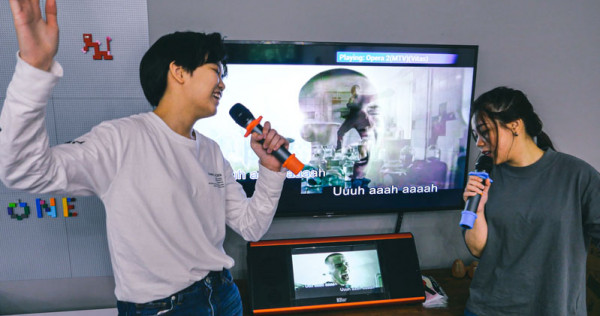
Instead of going outside for a full-fledged KTV experience, the KTV experience can actually come to you — albeit without all the dingy neon lighting, kitschy decor and other hallmarks of a standard karaoke joint. Local chain HaveFun Karaoke wants the music to continue amidst the outbreak with a karaoke kit rental service for a proper KTV party at home. And yes, it comes with bottles of strong spirits too. 

[ad_2]

Source link

Store in Mountbatten provides free groceries for the needy

0

[ad_1]

A unique concept of developing a more targeted approach to providing free food in for those in need was recently carried out by a recently opened community store in Mountbatten in Singapore.

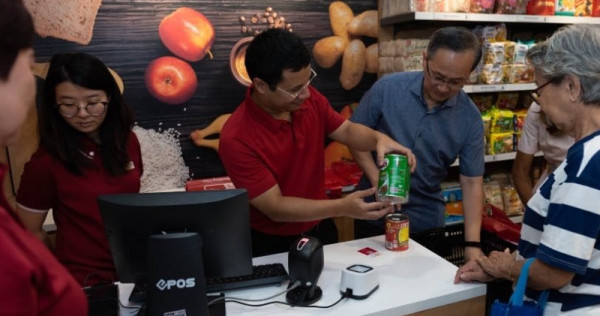
The shop carries only donated products on its shelves and provides free groceries and food rations for the needy. Beneficiaries can go in and select items they want and need, giving way to a more efficient and specific food donation system.

FREE FOOD IN SINGAPORE: FOOD FROM THE HEART, CHARITY

The store is an initiative by charity ‘Food from the Heart’ and is located at Block 13 Old Airport Road.

Manned by volunteers, it opened earlier in February and serves beneficiaries from nearly 500 needy households from the Mountbatten and MacPherson neighbourhoods.

The beneficiaries were previously presented with pre-packed hampers of donated food from various social service centres and did not have a choice in the products they received.

[ad_2]

Source link

How to make steamed milk pudding and chee cheong fun with nearly expired milk and other panic-hoarding food items

0

[ad_1]

Maybe you or your parents were one of those who frantically stockpiled groceries when Singapore turned Dorscon Orange, and now you have too much food that’s taking up space and needs getting rid off.

Some of them might even be almost near their date of expiration. But, wait! Before you toss them out, here are some creative recipes that might help with food wastage. 

Financial consultant and self-admitted foodie Leslie Koh, who went viral for his Valentine’s Day dinner idea involving coronavirus panic-hoarded items is back again with two new, quick and fuss-free recipes. 

STEAM MILK EGG PUDDING

[ad_2]

Source link

'10kg concrete slab' falls onto toilet bowl in Toa Payoh, almost hits domestic helper

0

[ad_1]

What should have been a typical day at work almost ended in tragedy for one domestic helper. 

She had been about to clean the toilet of her Toa Payoh flat on Feb 26 when a slab of concrete fell from the ceiling, narrowly missing her, reported Today

A photo of the scene after the incident showed a large chunk of concrete smack in the middle of the toilet bowl. The floor was also littered with debris.

The incident was a “close call”, said Alan Fu, whose 90-year-old father and 30-year-old nephew live in the three-room Housing Development Board (HDB) flat together with the domestic helper, who is in her 20s. 

Fu, 55, added that the concrete slab was about 50cm in length and weighed an estimated 10kg.

An investigation by HDB the next day (Feb 27) found spalling concrete in the 53-year flat’s toilet and kitchen, a spokesperson told AsiaOne. 

Spalling concrete occurs when the steel bars embedded in the ceiling slab corrode, causing the concrete cover to crack and bulge.

[ad_2]

Source link

Singapore confirms 2 COVID-19 cases linked to new Science Park cluster; 3 more discharged

0

SINGAPORE: Two new COVID-19 patients were reported in Singapore on Friday (Feb 28), the Ministry of Health (MOH) said in a daily update. Both cases are linked to a newly identified cluster, Wizlearn Technologies, located at 10 Science Park Road. 

This brings the total number of cases in Singapore to 98.​​​​​​​ MOH added that three more patients have been discharged after recovering from the disease. 

In all, 69 cases have fully recovered from the infection. Twenty-nine COVID-19 patients remain in hospital, with seven in ICU.

The Wizlearn Technologies cluster includes the latest two cases as well as cases 93 and 95.

Case 97 is a 44-year-old Singapore permanent resident who has no recent travel history to China or to the South Korean outbreak areas in Daegu and Cheongdo. 

She is currently warded at the National Centre for Infectious Diseases (NCID) and linked to Cases 93 and 95. 

She reported the onset of symptoms on Feb 20 and sought treatment at GP clinic that same day. As she was a close contact of Case 93, she was referred by MOH to NCID on Feb 27 and immediately placed into isolation. 

Test results confirmed her infection with COVID-19 on Feb 27. 

Before her admission, she had gone to work at Wizlearn Technologies and attended a meeting at the Agency for Integrated Care on Maxwell Road.

She lives at Choa Chu Kang North 5.

Case 98 is a 24-year-old male Singapore permanent resident who has no recent travel history to China, Daegu or Cheongdo. He was confirmed to have COVID-19 on Feb 28 morning and is being warded in isolation at NCID. He is linked to Cases 93, 95 and 97. 

According to information released by MOH on Friday, Case 95 reported symptoms on Feb 22 and sought treatment at two GP clinics on Feb 25 and 26; he was referred to NCID on Feb 26 and confirmed with COVID-19 on Feb 27 morning. 

Prior to admission, he attended meetings at Sport Singapore, Singapore Aviation Academy and Toa Payoh Hub. He also visited Toa Payoh Sports Centre. 

He stays at Choa Chu Kang Crescent. 

As of noon on Feb 28, MOH has identified 2,940 close contacts who have been quarantined. Of these, 191 are currently quarantined, and 2,749 have completed their quarantine.

COVID-19 new cases graphic Feb 28

THREE PATIENTS DISCHARGED 

MOH said that 3 more patients – cases 52, 79 and 89 – were discharged on Friday.

Case 52 is a 37-year-old Bangladeshi and case 79 is a 36-year-old Malaysian. Case 89 is a 41-year-old permanent resident from Philippines.

On Thursday, MOH’s director of medical services Kenneth Mak said that discharged COVID-19 patients are not a threat to the community as they would have undergone several tests before being discharged.

Explore our interactive: All the COVID-19 cases in Singapore and the clusters and links between them

SUPPORT MEASURES

COVID-19, which emerged in China late last year, has killed more than 2,800 people and infected more than 80,000, mainly in mainland China.

The virus has also spread across the world, with a rising number of cases reported in more than 50 countries and territories.

Singapore has implemented various measures, including border restrictions, contact tracing and quarantine policies, to contain the spread of the coronavirus since the first case was detected in late January.

A couple from Wuhan were charged under the Infectious Diseases Act on Friday for  obstructing the work of health officials containing the spread of COVID-19.

On Wednesday, the Immigration and Checkpoints Authority said that a man who breached a Stay-Home Notice had lost his permanent residency and will be barred from re-entering Singapore.

Singapore has also set out a slew of measures in Budget 2020  – including a S$4 billion stabilisation and support package – to help businesses and workers weather through the economic impact of the coronavirus outbreak.

The measures are calibrated “to put sufficient purchasing power back into the economy, while injecting a boost of confidence”, Deputy Prime Minister Heng Swee Keat said during the Budget debate on Friday.

Mr Heng also said that Singapore has not had to draw on past reserves, but would not rule out doing so if the situation deteriorates significantly.

Mr Heng also announced on Friday that Singapore will award public officers on the front line of the COVID-19 battle with a special bonus of up to one month, while all political office holders, Members of Parliament and President Halimah Yacob will take a one-month cut in their salary.

BOOKMARK THIS: Our comprehensive coverage of novel coronavirus and its developments

Download our app or subscribe to our Telegram channel for the latest updates on the coronavirus outbreak: https://cna.asia/telegram

Source link

Budget debate: Heng Swee Keat on why the GST hike cannot be scrapped

0

[ad_1]

SINGAPORE – In his Budget round-up speech on Friday (Feb 28), Deputy Prime Minister Heng Swee Keat set out in detail why the planned goods and services (GST) tax hike cannot be delayed or dropped entirely.

First, the money is needed to fund upcoming spending, he said, especially in the area of healthcare, as Singapore’s ageing population means demand for it will grow.

Such spending benefits all Singaporeans, so it is fair that everyone bears some part of the costs, Mr Heng said.

“This is about all of us taking shared responsibility to pay for our needs and our society’s needs, and sharing in the effort to provide for them,” he added.

At the same time, the $6 billion Assurance Package and permanent GST voucher scheme ensures that lower-income households will pay less than those who are well-off.

He added that GST is only one way to meet Singapore’s needs, and that the Government will continue to adjust income and wealth taxes to raise revenue.

This is the full text of what Mr Heng said about the GST hike, which will take place between 2022 to 2025:

[ad_2]

Source link

Baby born in jeep on PIE: Mum shares story of her unexpected delivery

0

[ad_1]

Never underestimate a mum’s instinct, they say.

This Singapore mum followed hers, and it led to a beautiful yet unexpected birth story of giving birth in a car, which she shared on Facebook recently (26 Feb).

“I KNEW I WAS IN TROUBLE”

Sindhu RK Johnson recalls exactly 6 months back prior to the birth of son, James Arjuna McQueen.

It was close to midnight and she had only been doing household chores. Once done, she decided to kiss her beloved dog goodnight before heading to bed.

Sindhu knew she was in trouble after she stood up from the kiss which involved a full squat. “I could feel I ruptured something in me. Contractions started immediately at 12.55am,” the mum of two wrote. She even tried to time her contractions, but to no avail because “it was like rapidly dropping from 10 mins to 5 mins to few mins apart.”

HAD TO BE IN A JEEP OF ALL PLACES

Next thing the mum knew, she was in a family car with her husband after waking him up at 1.10am.

[ad_2]

Source link

Ringleader of Downtown East murder back in court for cheating charge

0

[ad_1]

The ringleader of a violent gang clash at Downtown East a decade ago appears to have run afoul of the law again.

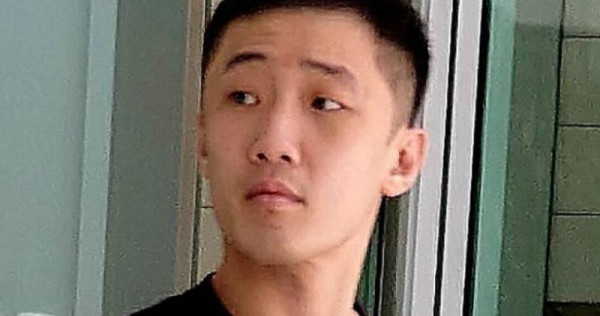
Yesterday, Stilwell Ong Keat Pin, now 28, was slapped with a cheating by personation charge.

Prosecuting officer Lim Hian Teck told the court that the accused is believed to also be involved in other drug and traffic offences.

Investigations are ongoing, and Ong may face additional charges for these offences later.

Ong was jailed in 2012 for 12 years and given 12 strokes of the cane after being convicted of culpable homicide.

He was involved in a widely reported gang clash at Downtown East in 2010 that led to the death of polytechnic student Darren Ng Wei Jie, 19.

The fight involved two rival gangs who had armed themselves for a settlement talk outside a fast-food outlet.

The clash happened on a Saturday evening in front of terrified members of the public.

Ong later admitted to starting the fight and slashing Mr Ng with a chopper.

Mr Ng died in hospital some five hours later with 28 wounds to his head, neck, chest and limbs.

[ad_2]

Source link