SINGAPORE: The Singapore Armed Forces (SAF) will restructure its intelligence and cyber defence units as well as acquire new ships to boost maritime security, Defence Minister Ng Eng Hen said in Parliament on Monday (Mar 2).
This is in response to the clear and present security threats of terrorism, cyber and maritime threats, Dr Ng said in his Committee of Supply debate speech.
Along with the rest of the world, Singapore has entered into a different phase in geopolitics – messier, less predictable, and with therefore more unseen events, he said.
Dr Ng said China has become the world’s largest naval force, while the US has designated the Indo-Pacific as a priority theatre and characterised China as a “strategic competitor” and “rival power”.
Despite the challenges, Dr Ng said Singapore has forged even stronger defence relations with both countries, and must preserve its own space and sovereignty with the world at an “inflexion point”.
“Military spending in Asia has grown by more than 50 per cent in the last decade, with both China and India in the list of top five global spenders. ASEAN member states have doubled their spending on defence over the last 15 years,” he added.
“Willy-nilly, these events, conflated, have resulted in the Asia arena becoming more militarised and contested.”
Amid the changing geopolitics and a new environment of security challenges, Dr Ng said “the SAF must again restructure decisively to meet new challenges, to remain relevant, responsive, and effective for our national defence”.
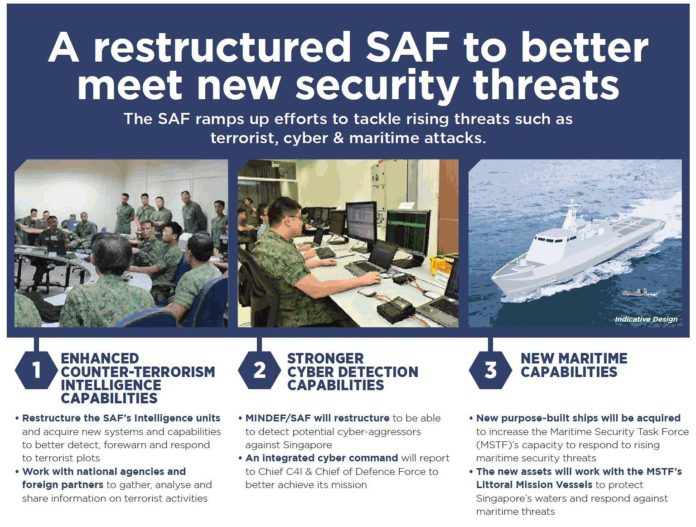
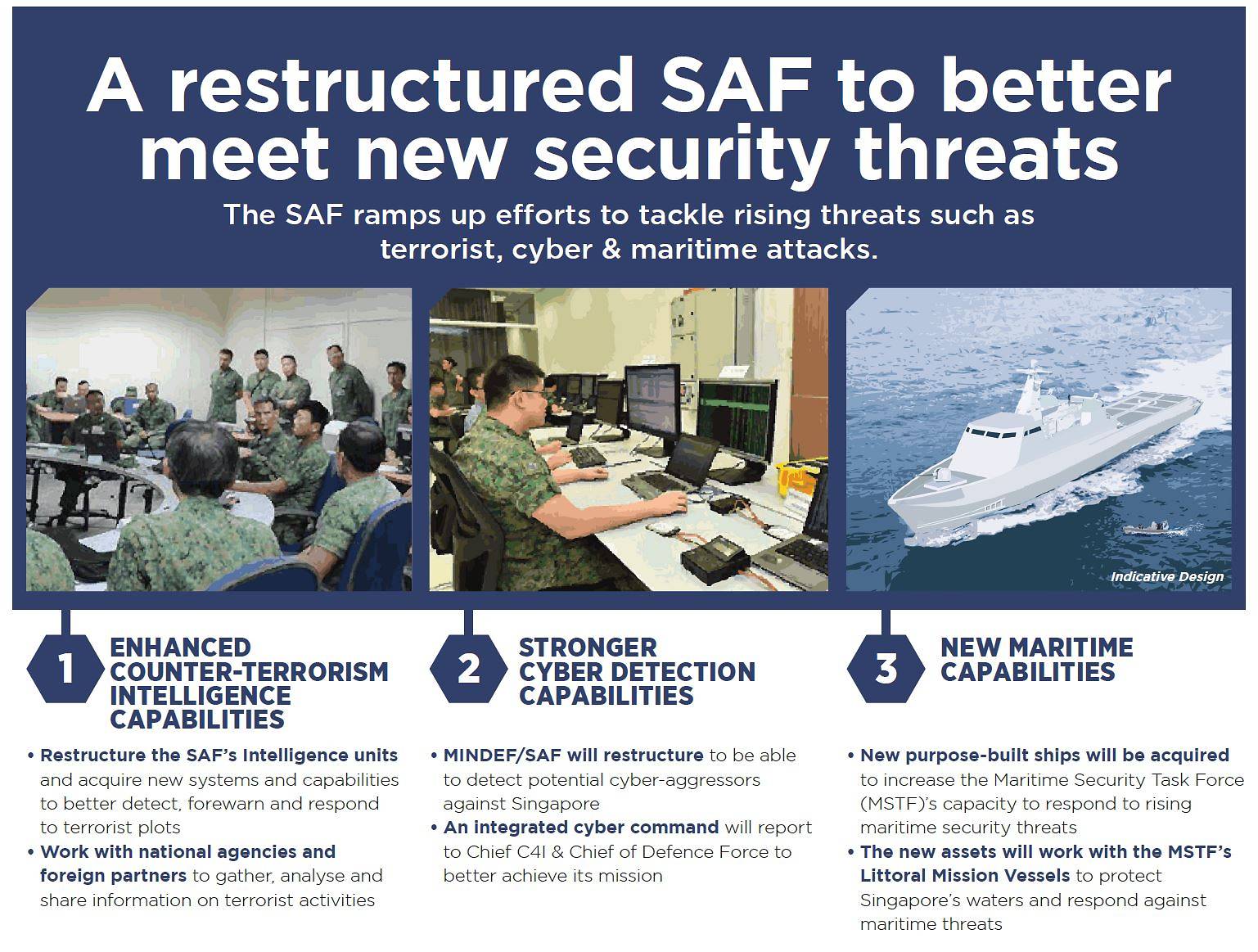
The SAF is restructuring to better deal with evolving threats. (Graphic: MINDEF)
INTELLIGENCE
The SAF will restructure its Military Intelligence Organisation (MIO) to better detect, forewarn and respond to terrorist plots, Dr Ng said, highlighting this as a “key deliverable” for intelligence units even as they work with other agencies.
The restructured MIO will work with defence technology partners to acquire systems and capabilities that can uncover, investigate and monitor threat concerns, as well as strengthen its research and analysis expertise, the Ministry of Defence (MINDEF) said.
It will also work closely with other national agencies and cooperate with foreign military intelligence partners, both on a bilateral and multilateral basis. This includes formalised intelligence sharing with Brunei, Indonesia, Malaysia, the Philippines and Thailand under an intelligence pact launched in 2018.
“The terrorism threat to Singapore remains high,” MINDEF said, adding that Singapore has been a terrorist target in the past, most recently in 2016 for regional militants linked to the Islamic State of Iraq and Syria (ISIS).
“There is the threat of foreign terrorist fighters from conflict zones in the Middle East coming to the region, and introducing new attack methods and capabilities,” it stated. “The threat from home-grown, self-radicalised lone actors also cannot be ruled out.”
In 2016, authorities foiled a plot involving six suspected Indonesian militants to launch a rocket from Batam to Marina Bay after Indonesian police arrested the suspects in Batam.
Singapore’s Home Affairs Ministry stated that it had been aware of the plot and had been coordinating with Indonesian authorities.
CYBER DEFENCE
When it comes to cyber threats, MINDEF will restructure the Defence Cyber Organisation to improve detection of potential cyber-agressors against Singapore. Dr Ng said the process will take “some years” to complete.
The Chief of Defence Force (CDF) and Permanent Secretary (Defence Development) will lead a committee tasked with this effort, and oversee the development of an integrated cyber command and force to defend Singapore’s digital borders especially against foreign cyber actors.
“The SAF cyber command will have to provide threat assessments and early warning in cyber-attacks, and also respond accordingly,” MINDEF said, adding that it was “timely” to bring the command under the SAF
“For command integrity after the restructuring, CDF will continue to be in charge of mission outcomes, and the Chief C4I (Command, Control, Communications, Computers and Intelligence) will be the pinnacle position that holds accountability and reports directly to the CDF.”
The SAF has already taken steps to improve its cyber defence. In 2018, it launched a scheme to train full-time national servicemen to perform advanced cyber roles, like responding to incidents and testing for security weaknesses in IT hardware and software.
“The cyber domain is more difficult to plan and execute than in air, land and sea, and may require different types of units and force configuration,” Dr Ng said.
“The Committee intends to be bold in examining ways that we can address this challenge, but almost more important, to recruit soldiers of the right aptitude, training and deployments.”
MARITIME
In the maritime domain, the SAF will restructure its Maritime Security Task Force (MSTF) to better respond to the increasing maritime security threat in the Singapore Strait.
There were 31 suspected sea robbery incidents in the Singapore Strait in 2019, a four-year high according to an international maritime information sharing centre.
The restructuring includes the acquisition of new, purpose-built ships to be delivered in the next few years, MINDEF said, adding that four patrol vessels will be refurbished for this purpose in the interim.
“These ships will be dedicated and deployed for greater persistence to protect our territorial waters,” it stated.
“Together with the MSTF’s Littoral Mission Vessels, these new assets will enhance the MSTF’s capabilities to protect Singapore’s waters against intrusion and other maritime threats.”
MINDEF said the MSTF will continue to work closely with national agencies, like the Immigration and Checkpoints Authority and Maritime and Port Authority of Singapore, through the Singapore Maritime Crisis Centre, to safeguard Singapore’s waters.
Dr Ng said Singapore has reached out to Malaysia and Indonesia to propose extending the Malacca Straits Patrol initiative, where the countries share intelligence and conduct joint patrols in the Singapore Strait, to other areas in its surrounding waters.
“Maritime threats are transnational in nature and cannot be solved without co-operation and collaboration from our neighbours,” Dr Ng said, adding that discussions are ongoing.
Overall, the minister said the measures come as Singapore watches the changing geopolitics closely while pursuing its own interest.
“We have no desire to take sides or be caught in the crossfire,” he added. “So far, we have maintained independence and space for ourselves, but as contestation increases in this region, it will be increasingly difficult to do so.”
SINGAPORE – Simone Lim had the easy air of a seasoned campaigner, and not that of a seven-year-old who had just snatched victory from the defending champion.
“All children like winning,” she said coolly on Saturday (Feb 29), when asked how it felt to emerge the winner at the Feb 21-23 Pokemon Oceania International Championships Junior Division in Melbourne.
In the next moment, however, Singapore’s youngest e-sports champion was a little girl again, offering a handshake from her stuffed toy.
This combination of precocity and adorableness propelled Simone to overnight Internet fame, after her unlikely triumph against Canadian defending champion Justin Miranda-Radbord, 10.
Simone, in winning the US$1,500 (S$2,089) prize money and qualification points for the world championships in August, became Singapore’s youngest e-sports champion.
Pokemon is a video game franchise centred on collecting and training the eponymous creatures, and has been popular since its 1996 launch.
SINGAPORE – Ride-hailing operator Gojek will be introducing a 70-cent surcharge on trips booked through its platform, which the company says will fund improvements to its service.
It will also be introducing an option for an additional drop-off point in bookings and a programme to retrain drivers who fall short of service standards.
The surcharge, which is termed by Gojek as a platform fee, will kick in from next week.
It will automatically be added to the fare displayed on the Gojek app.
“The amount collected from this will go directly towards initiatives designed to improve the experience for customers and driver-partners, so that they can have even more reliable, safe and enjoyable rides,” said Gojek on Monday (March 2).
It did not elaborate on what improvements the fee will fund, but said more details will be announced in the next few months.
The company, which celebrated its first anniversary in November last year, said that the changes mark its next phase of growth.
Gojek is the second largest ride-hailing operator in Singapore, behind regional rival Grab.
The advancement in technology in the 21st Century has brought about some really innovative, and even cost-efficient, gadgets to improve everyday life.
50 years ago, the idea of a portable or even wireless sound system was scoffed at.
Today, you can find at least one such device in virtually every household.
And usually, the prices for these items can easily go under $100, or even $50 for that matter.
But for a brand such as Ruark Audio, it’s all about living the high life.
The UK-based company, which has been around for 35 years manufacturing traditional yet timeless cabinet-style speakers, is taking its first steps in the Southeast Asian market.
At the inaugural Ruark Audio launch in Singapore earlier this week, Geek Culture managed to sample the sounds of the company’s four newest speaker systems.
They include the petite but powerful MR1, MRx, R5, and the flagship R7.
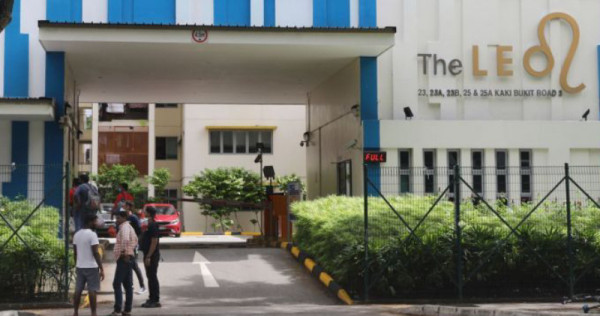
A Bangladeshi worker with coronavirus in Singapore has been critically ill for over three weeks now and will be a father soon, according to his wife.
The worker’s wife told this to the Migrant Workers’ Centre (MWC), when she found out from her husband’s cousin-who also works in Singapore-that he is in critical condition after contracting COVID-19.
The Bangladeshi worker, identified only as Case 42, is one of the five Bangladeshi workers who tested positive of the virus.
They are all linked to a cluster in a Seletar Worksite.
According to the worker’s wife, in a message relayed by the Migrant Workers’ Centre (MWC) to The Straits Times, she had last seen her husband in 2019 from the period of March to June (3 months).
But now with their baby arriving soon, she wants her husband who has been working in Singapore for close to a decade, to return home.
“I hope for my husband to get better. He is going to be a father, so I want him to come back home. Please, just make sure he survives,” the woman said.
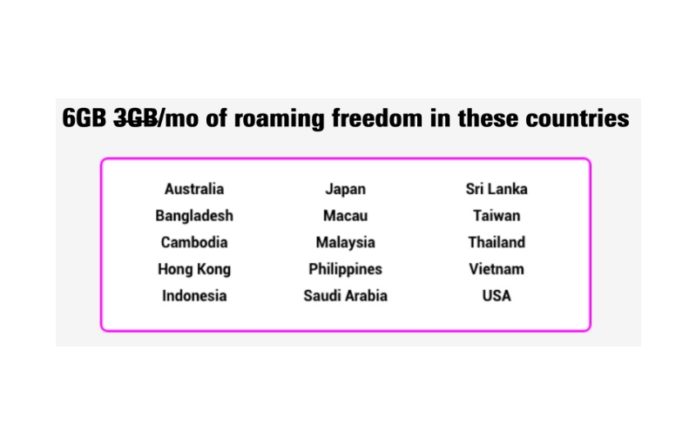
Circles.Life has just announced its new Wanderlust Plan, a travel plan that gives subscribers 3GB of data that can be used in a combination of up to 15 countries. These 15 countries are:
PHOTO: Screengrab from Circles.Life
Targeted at people who are constantly on the go and often travel overseas for work or play, some key features of this plan include:
Baseplan (20GB, 100min talktime, 25 SMS)
3GB roaming data on top of the monthly plan (they have a launch offer where if you sign up now, you will get 6GB roaming data for six months)
Roaming bill shock protection
Global customer support under 30 Sec
At the end of six months, the roaming data will return to 3GB a month. Additional data boosts and other add-on options can be purchased through the Circles.Life app. If subscribers travel to locations, not within the 15 selected counties roaming charges will fall back to Pay-as-you-go rates.
None of the coronavirus patients discharged from hospitals here has shown evidence of re-infection, said a National Centre for Infectious Diseases (NCID) senior consultant.
“Currently, our discharged patients remain well,” Associate Professor David Lye told The New Paper.
High quality studies are needed to determine whether recovered patients can get re-infected, he added.
The Osaka tour guide in her 40s tested positive in late January and was discharged from hospital on Feb 1. She later developed a sore throat and chest pains before testing positive again last Wednesday. Similar reports have surfaced in China, including a patient in Chengdu who was readmitted to hospital days after being discharged.
Prof Lye’s view is shared by other public health experts.
SINGAPORE: At 49, Jeff (not his real name) has been written off by potential employers as “too old, too expensive and too experienced”.
Since he lost his job in October last year, Jeff, who was retrenched from a multinational manufacturing firm, has sent out over 500 job applications to numerous companies but has so far received only one response.
This is even after he began applying for jobs that offered about S$2,000 a month, which is less than half of his S$5,900 monthly paycheck prior to being laid off.
The company which replied told him that it was concerned his prior experience and past salary would mean that he would leave for greener pastures should he receive a better offer down the road.
But Jeff, who has to support his wife, two children and his parents, said he has no such aspirations.
“I have worked for 26 years and so far I’ve only joined three companies. I’m not a job hopper, I’m not the kind to leave for higher pay … It’s very simple, I just need a job to move on with my life,” said Jeff, who is awaiting a second interview with the company which got back to him.
Like Jeff, workers in their 40s and 50s today face greater job insecurity than ever before due to Singapore’s ongoing economic restructuring efforts to raise skills and productivity, as well as disruption caused by rapid technological changes.
Traditionally, those in this age range would be entering the prime of their careers.
But alas, times are different now. Some of them, in fact, find that they have been displaced because their skills are no longer relevant in a knowledge-based economy.
And that is not the only reason. The experiences of mid-career or middle-age workers like Jeff as well as several others interviewed suggest that there are other factors at play, causing some of these workers to struggle to hold on to their jobs or seek new ones. These include ageism and a seniority-based wage system that has left them being deemed as “too expensive” for employers to hire.
This group was singled out in the Budget statement delivered by Deputy Prime Minister and Finance Minister Heng Swee Keat earlier this month.
“Born in the 1960s or 1970s, they grew up in a time when our economy was just starting to take off. When they started work, it was normal, even celebrated, to stay with one job, in one company, for life,” Mr Heng said on Feb 18.
Noting the changing nature of jobs as companies restructure, Mr Heng added: “Some workers in their 40s and 50s have not seen any job or career changes since leaving school, or had the chance to upskill earlier. But they are now facing greater competition, from younger workers and workers overseas. I understand their anxiety.”
To help these workers, Mr Heng announced a SkillsFuture Mid-Career Support Package.
The package includes:
A hiring incentive where employers who hire local jobseekers aged 40 and above through a reskilling programme will receive 20 per cent salary support for six months, capped at S$6,000 in total.
A special SkillsFuture credit top-up of S$500 for Singaporean workers aged 40 to 60 as of Dec 31, 2020. This is on top of the S$500 credit that all Singaporeans aged 25 and above will receive. The additional credit will expire on Dec 31, 2025.
Increased capacity at reskilling programmes such as the Professional Conversion Programme under the Adapt and Grow initiative, and the career transition programmes delivered by the Continuing Education and Training Centres.
A group of volunteer career advisers from professional communities to provide mid-career workers with peer-level support and career guidance.
The package aims to double the annual job placements of older Singaporean workers to around 5,500 by the year 2025.
More details are expected in the Ministry of Manpower’s (MOM) Committee of Supply debate in Parliament in the coming week.
DBS senior economist Irvin Seah expects these new measures to largely benefit the group of older professionals, managers, executives and technicians (PMETs) who make up a large percentage of the workforce, and are more vulnerable to economic disruptions.
On the need to lend this group of workers a helping hand, Mr Seah noted that the retrenchment rate for this group of workers is relatively higher than other segments. Middle-age PMETs also typically have higher financial burdens, he said.
This is unlike younger workers or lower-skilled workers who would not experience such a drastic cut in their salaries or confront as steep a learning curve should they need to switch to a different industry, he added.
THE THREAT OF IRRELEVANCE
Being laid off has become increasingly common among older workers and this is largely due to skills redundancy, labour economists and human resource experts said.
The skills in demand have changed drastically since workers who are now in their 40s and 50s entered the workforce. Unlike in the past, workers could no longer get by with little IT skills and education, so older employees often have to play catch-up in a rapidly evolving economy, the experts said.
Across the globe, middle-age workers are increasingly being displaced as digitisation and mechanisation gradually render many skills redundant. (Photo: Najeer Yusof/TODAY)
The rise of computers and greater automation have also replaced many of the routine and manual tasks historically performed by low-skilled workers, said Dr Kelvin Seah, a senior lecturer at the National University of Singapore’s Department of Economics. “This means that those whose jobs are routine or which rely on manual labour are now at greater risk of being displaced by automation,” he added.
This phenomenon is certainly not unique to Singapore. Across the globe, middle-age workers are increasingly being displaced as digitisation and mechanisation gradually render many skills redundant.
It is therefore unsurprising that so much emphasis has been placed in Singapore on skills upgrading and retraining as, according to career strategist Adrian Choo, it is the “only way” to ensure that workers remain ahead of the curve.
“The biggest worry is that because of the global nature of talent mobility, someone else cheaper or better can come in to do our job … There’s always going to be someone cheaper, better or faster than you. So that’s why all we can do is to continue sharpening the saw,” he said.
That being said, labour experts acknowledged that there could be some element of ageism that hinders middle-age workers from finding new employment after they have been retrenched.
This could happen as early as the stage where firms review job applicants’ resumes, said Associate Professor Walter Theseira, an economist with the Singapore University of Social Sciences.
Assoc Prof Theseira added that companies could easily identify whether the job applicant is a mature worker from his length of background experience or the title of his last few jobs even if he chooses not to report his age.
DBS’ Mr Seah noted that it would be challenging for middle-age workers to accept a job with lower wages, given that their previous salaries have gone up in tandem with their years of experience in the workforce.
These workers also tend to have greater financial obligations than their younger counterparts, he added.
AGE IS NOT JUST A NUMBER FOR THEM
Mr Alan Lim, 52, was retrenched from StarHub two years ago following the telecommunications firm’s restructuring exercise.
He had been at StarHub for two decades and last held the position of senior account manager, drawing S$10,000 a month.
He has since gone for a handful of interviews but has not found any success. He has been told that he was too old and the salary he wanted was too high — even though he was asking for only S$4,000 a month.
Faced with the multiple rejections, Mr Lim chose to become a private hire driver with ride-sharing company Grab instead.
“I didn’t want to waste too much of my time. I felt that it was better for me to focus on driving Grab because that’s the only way for (older workers) like us (to earn a living) and that is the only job that is suitable,” he said.
He was making around S$3,500 to S$5,000 a month as a private-hire car driver, driving up to 10 hours a day. Of late, his earnings have fallen by about a third due to the Covid-19 outbreak.
A 54-year-old who wanted to be known only as Mr Low shared a similar experience.
Mr Low, who was a heavy lift specialist at an international logistics firm, was laid off in July last year as the company was not doing well at the time — it was the second time he was retrenched in about three years.
He has since gone back to being a private hire driver with Grab. He had previously driven for Uber in 2016 after he was previously retrenched from his job as a regional manager for a foreign logistics company when the oil and gas industry tanked.
Mr Low said he is still on the lookout for new opportunities, though he believes that his age will be an obstacle.
“I was almost hired by (another logistics firm) but at the end of the day, they wanted to hire someone new, someone younger. The fact remains that (they think) a younger more energetic person will go the extra mile.
“So you may have the experience and you may have the skill sets but age still matters at the end of the day,” he said.
OTHER CHALLENGES FOR MIDDLE-AGE WORKERS
For Siew Hua (not her real name), a lack of educational qualifications has left her with limited options as she struggles to find work after being laid off from her job last September.
The 54-year-old had worked as a stagehand at an advertising production house for 10 years, but was let go when business slowed down and the company was able to find ways to cut down on its manpower needs.
She said in Mandarin that the only work she could secure so far was a temporary job packing food for barbecued meat retailer Bee Cheng Hiang during the Chinese New Year period this year.
For 40-year-old Laura (not her real name), educational qualifications or a lack of relevant skills had nothing to do with her losing her job.
She said that she was let go from her job earlier this year at an international finance firm. In an effort to cut costs, the company had combined two roles and chose to replace her with a foreign employee who was brought over from another branch in the region.
When Laura asked her boss why she was not retained, he told her that he had evaluated both their performances and felt the foreign employee was a better fit for the company.
But Laura, who had been with the company as a financial planner for six years, was not convinced.
She said: “This is not a skill set issue. I agree that some local workers may need to do some reskilling but that is not the case for me. It’s only fair that you look at my credentials, I have a Master’s in Accountancy.”
She has approached the Ministry of Manpower (MOM) and the Tripartite Alliance for Fair and Progressive Employment Practices (TAFEP) about her case.
MOM has come down hard on companies which treat Singaporeans unfairly in the workplace.
Last month, the ministry announced that five companies have faced stiffer penalties for discriminatory hiring practices under its updated Fair Consideration Framework.
The heavier punishment includes longer debarment periods when applying for work passes, fines and even imprisonment of key personnel involved in the hiring.
Between 2014 and 2018, TAFEP followed up on about 2,000 complaints. Action was taken against employers in 680 cases, with 280 of them resulting in debarment from hiring new foreign workers.
Apart from cracking down on companies with discriminatory hiring practices, the Government has also tightened the foreign manpower regime in recent years.
For example, in 2011, the salary threshold for S-pass holders — the work pass for mid-level skilled staff — was raised from S$1,800 to S$2,000 to keep pace with salaries of local workers which had gone up over the years.
At this year’s Budget, Mr Heng announced that the Government will be reducing the quota for skilled foreign workers in the construction, marine shipyard and process sectors over the next three years to encourage firms to hire more Singaporean skilled workers and technicians.
HOW RETRAINING CAN HELP
Despite the challenges faced by mid-career workers, some have managed to turn their personal situation around by undergoing retraining. This, in turn, has opened new doors for them.
Mr Simon Wee, now 59, found an unexpected lifeline in 2009 when a coffee shop in Chinatown took him in and taught him how to brew coffee.
Before this, he had been drifting from one temporary job to another as the economy was still reeling from the global financial crisis in 2008.
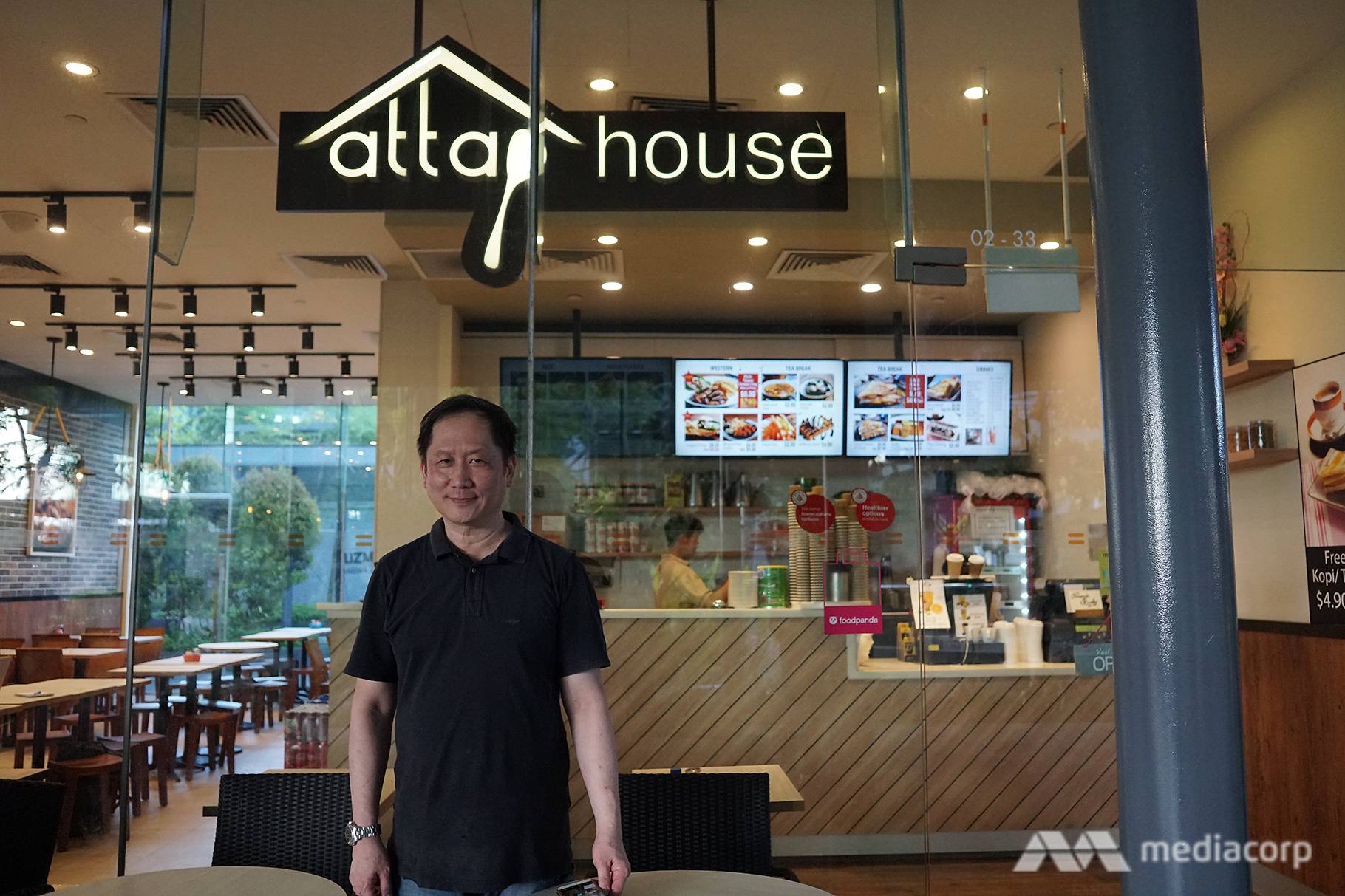
Mr Wee, who now works at Attap House restaurant at Mapletree Business City, said that when he first got the job, he did not think that brewing coffee was something he would be interested in.
Mr Simon Wee, 59, found his calling brewing coffee in 2009 after a coffee shop in Chinatown took him in shortly after the global financial crisis in 2008. He now works at Attap House restaurant at Mapletree Business City. (Photo: Tessa Oh/TODAY)
“I had to wake up at six in the morning to learn how to brew coffee… it was not easy but I knew I had to adapt because there were no jobs around at the time,” he said in Mandarin.
But after close to a decade of doing it, he has come to enjoy the work, especially when his regular customers compliment him.
For Mr Kenneth Lee, 56, attending Workforce Singapore’s (WSG) Professional Conversion Programme helped him to advance further his career goals, and ensure that his skills remained relevant for him to stay in the logistics sector.
“To be honest, it is not easy for a middle-age man like myself to switch industries, especially in this digital economy… Fortunately I have a superior who is willing to mentor, guide and listen (to me),” said Mr Lee, who is now an assistant manager in the healthcare division at ST Logistics.
The training that he received also gave him the necessary qualifications and technical skills to take on new job opportunities in areas beyond the logistics sector.
While success stories abound, the path to finding the right training programmes is not always clear-cut for other middle-age workers.
Ms Lily Teo, 55, who was among those retrenched by travel retailer DFS last year, said she would not mind taking up retraining courses to upgrade her skill set.
However, she said she is unsure which courses would be most suitable for her.
A former cleaner at a childcare centre, who wanted to be known only as Ani, also said she had tried to take up SkillsFuture courses around five years ago. However, Ani, who is 60 now, said she did not understand the course content due to her limited grasp of English.
EVOLVING SKILLSFUTURE TO MEET WORKERS’ NEEDS
Earlier this week, Education Minister Ong Ye Kung acknowledged that more guidance is needed to help individuals find the courses that they need the most.
“We started off ‘letting a thousand flowers bloom’, so we have many courses but sometimes that also causes some confusion, where an individual may not know where and what to learn,” he told reporters on the sidelines of a tour at the National Trades Union Congress (NTUC) LearningHub.
Mr Ong added that courses offered under SkillsFuture — which was launched in 2015 — should evolve to offer more variety as well as become targeted at the needs of workers and companies.
Responding to queries on some issues faced by mid-career workers seeking retraining, a SkillsFuture spokesperson said jobseekers can seek in-person advice from its SkillsFuture Advice workshops which are held at selected National Library branches, community centres and company offices islandwide.
These workshops are conducted in the four national languages.
Separately, a WSG spokesperson noted that many of its programmes are conducted in English, since it is “the language of business for many jobs in Singapore”.
“However to reach out to as many Singaporeans as possible we adopt a wide range of different and targeted approaches tailored to each audience segment, including publicity and engagement efforts in all four national languages,” the spokesperson added.
The SkillsFuture spokesperson noted that with the additional S$500 SkillsFuture credit for mid-career workers, Singaporeans aged between 40 and 60 can use them for career transition programmes offered by the Continuing Education and Training Centres. Career advisory services will also be available to participants of the programmes.
When it comes to raising awareness and engaging the public on these programmes, the WSG spokesperson said it regularly conducts roadshows in the heartlands to bring its programmes closer to those who need them.
At its career fairs, job seekers can meet and speak with prospective employers face-to-face and discover new job opportunities, the spokesperson said.
Job seekers can also go to WSG’s Careers Connect to receive job search assistance and career advisory services, such as resume writing and interview preparation from professionally-certified career coaches.
Labour Member of Parliament Zainal Sapari, who is NTUC’s assistant secretary-general, said that both WSG and the Employment and Employability Institute have ramped up their efforts in advertising the services that they offer.
Noting that workers need to take the first steps themselves, Mr Zainal said: “The information is all out there, on who they can approach (for help). I’m not sure what more can be done other than the mid-career workers approaching these organisations for guidance.”
Still, Assoc Prof Theseira said while such retraining programmes may be sound in principle, more research needs to be done to understand whether they successfully help to raise employment rates among mature workers.
“Otherwise, there’s a good chance we will just be spending more resources on more assistance that may or may not be effective,” he said.
WORKERS NEED TO COUNT ON THEIR SKILLS: EMPLOYERS
Employers spoken to agreed that retraining programmes can be beneficial for them as well.
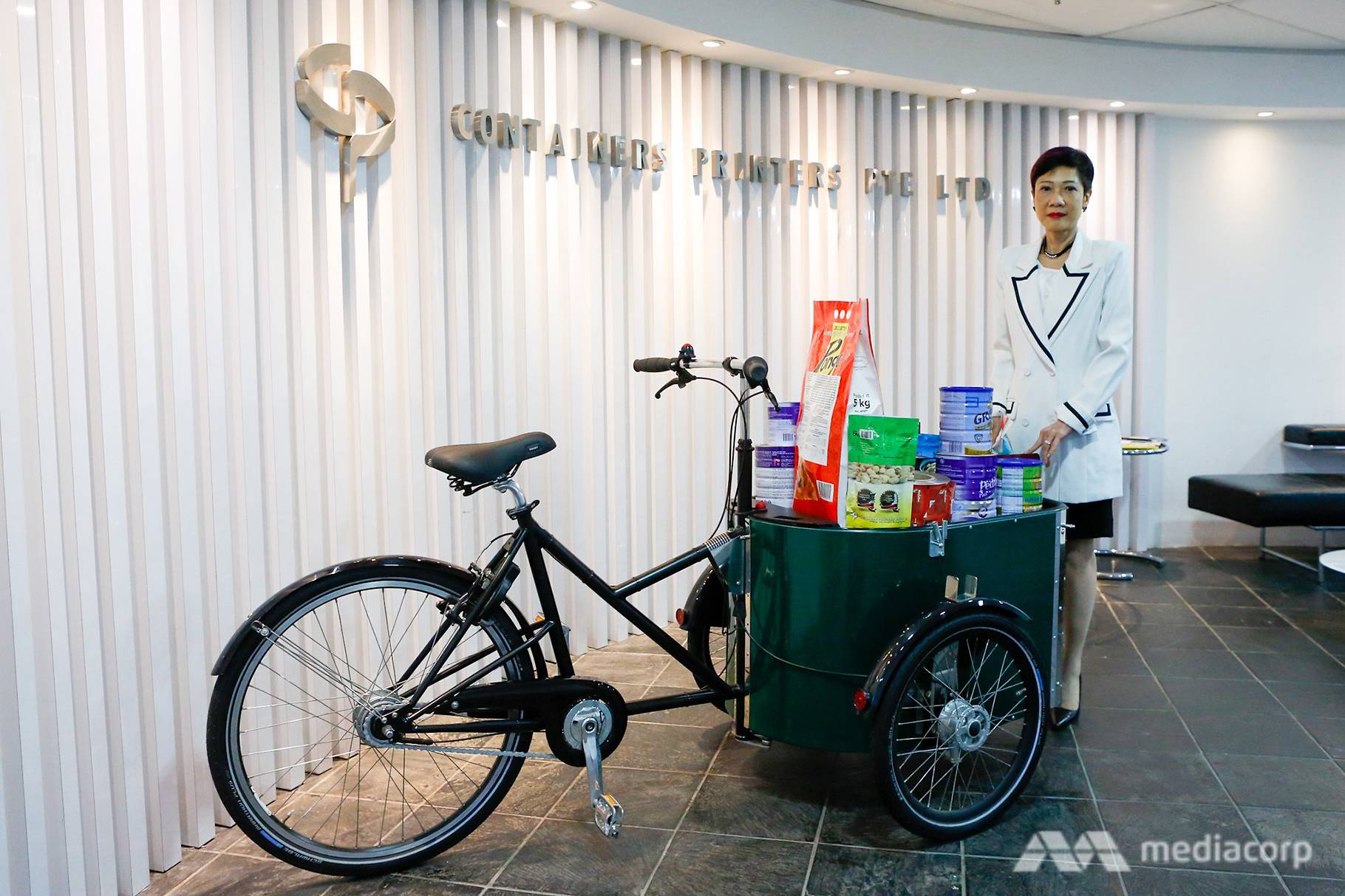
Manufacturing company Containers Printers was able to transform its business and help its employees adopt new skills through an eight-week programme jointly conducted by WSG and McKinsey.
The pilot Industry 4.0 Human Capital Initiative helped the company to strengthen its understanding of the technological tools that would help bring it to the next stage of manufacturing, said chief executive officer Amy Chung.
While the employees were initially apprehensive and fearful that their jobs would be at stake as the business evolved, the programme helped to address some of these concerns and the workers eventually enjoyed the training sessions, she added.
At private transport company Woodlands Transport, many of its employees are older workers who have been with the company since its founding in 1974.
As such, retraining its workers has become an imperative.
“Pragmatically they may not be able to learn as fast as (the younger ones), but we still recognise that they have been the key contributors to the company all these years,” said Mr Bobby Chiew, its head of human resources and workplace safety and health.
He added that so far, the company has not had to lay off older workers due to their inability to adapt to the demands of a rapidly changing economy.
Instead, the firm may place workers whose roles have become limited on a part-time arrangement, Mr Chiew said.
Mr Seah, the DBS senior economist, reiterated that it takes two hands to clap. On their part, employers should overcome their biases and change their mindsets.
“The worker may be older but it doesn’t necessarily mean that he is less productive,” he said.
Companies can leverage on technological advancements to redesign jobs that can complement their older workers and help them to remain productive, he added.
Assoc Prof Theseira believes that part of the problem may be that middle-age workers are not going about their job search in the most effective manner.
“The skills redundancy and discrimination story only explains part of the employer matching decision,” he said. “The worker can limit their search unproductively, sometimes because of lack of knowledge about what are the suitable opportunities, or out of unwillingness to accept some jobs, or because they think that the employer would not consider them anyway.”
Given that the cost of job searching is so low, employers tend to receive more resumes than they can interview, he noted. As a result, some applicants may never get to the interview stage if they are unaware of the fundamental issues with their resumes.
At the end of the day, workers need to count on their skills — not so much their experience — in order to be sought after in today’s economy, employers say.
Kimly Construction director Louis Khoo said: “Relevant experience is subjective to the different companies and is not necessarily future-proof, and being willing to take a pay cut does not matter if your skills and knowledge are outdated.”
He added: “Ultimately, any employer would still want to hire someone who can add value to the work and the culture of the organisation.”
The temporary scheme allows companies in the manufacturing and services sector to hire mainland Chinese work permit holders who are already in Singapore.
The Ministry of Manpower building. (File photo: Calvin Oh)
(Updated: )
Bookmark
SINGAPORE: More than 100 queries have been made on a service that facilitates the transfer of work permit holders, said the Singapore Business Federation (SBF).
The six-month scheme, announced last week by the Ministry of Manpower (MOM) and starting on Monday (Mar 2), allows companies in the manufacturing and services sector to hire mainland Chinese work permit holders who are already in Singapore.
Previously, manufacturing and services companies were only allowed to hire work permit holders from mainland China after they leave Singapore.
The ministry is working with the SBF to run this temporary programme aimed at helping companies manage their manpower needs amid the COVID-19 situation.
Firms with excess manpower during this period can tap on the scheme to move their workers without incurring repatriation costs.
“The interest we’ve seen so far is a clear reflection of the need for this temporary measure for these sectors,” said CEO of SBF Ho Meng Kit.
Companies that want to apply for the programme have to contact SBF with information like the workers’ skillset or the type of workers needed.
SBF said it will respond to either parties within five working days.
Information of available workers will be collated in a database, which will be shared with prospective employers. They have to liaise directly with the worker’s current employer to obtain consent for the transfer.
Once an agreement has been made, SBF will inform MOM and the hiring company can submit a work permit application to the ministry.
Employers who wish to hire or transfer a work permit holder from mainland China can contact SBF at manpowerconnect@sbf.org.sg. The service will be free for the first month, and a nominal fee may apply after that.
SINGAPORE – Singapore’s fourth telecoms company TPG Telecom sparked a war of words after accusing market leader Singtel of blocking number-porting requests from subscribers looking to switch.
TPG, which launched mobile number-porting on Feb 5, said in a Facebook post on Friday afternoon (Feb 28) that Singtel had “repeatedly denied all valid porting requests to TPG”.
Porting allows customers to keep their existing numbers when switching mobile plans from one telco to another.
“This affects consumers’ freedom of choice and we have raised your concerns to the relevant authorities. We seek your understanding and patience in this matter,” TPG added.
Singtel refuted TPG’s accusations in a post on its Facebook page a few hours later.
It said testing of the porting system had been completed successfully and Singtel, StarHub and M1 had written collectively to TPG on Feb 10 to say that all three telcos would support mobile number-porting when TPG launches its commercial service.
“To our knowledge, they have not launched their commercial service,” Singtel said in its post.