Home Blog Page 4496

'Harry, Harry, cool down!'

0

I witnessed Mr Lee’s determination and discipline first-hand during the trying period of 1996 and 1997. First there was his 1996 lawsuit against Yazhou Zhoukan, a Chinese language newsweekly, which had published the comments by a lawyer, Tang Liang Hong, alleging impropriety in Mr Lee’s purchase of two flats.

While the publication quickly retracted the statement and paid a settlement fee, Tang, who would run as a Workers’ Party candidate in the 1997 General Election, refused to apologise. In fact, six months later at an election rally, he repeated the allegations and stated that, if elected, he would raise the matter again.

All this coincided with the period when Mr Lee was having heart problems and had to have a second stent put in.

He was bogged down with health problems and was asked to slow down.

But he kept on going. Despite his ill health, he gave a talk at the Nanyang Technological University on March 14, 1996.

He was just recovering and his blood pressure readings were not good, but he felt it was very important that he addressed the students. He felt it was crucial that they heard the Government’s point of view.

We had to make special arrangements for an ambulance; doctors were also on standby, although they sat discreetly in a corner.

That day he spoke from 8.30pm to midnight, engaging in long exchanges with the students. A normal person would have stayed at home and rested, but not Mr Lee.

It was clear that, to him, duty trumped almost everything. When a mission was key, he always rose to the occasion.

MR LEE AND MRS LEE

Mrs Lee was his constant companion and his sounding board.

She also helped me often by reducing his sting and I was most grateful to her. When he was irritated by an issue or by his health, and I had to bring bad news to him, Mrs Lee would prepare him first.

She would say to him, “Alan is coming in with some bad news but, remember, he is just the messenger.”

Many times, I would be at his desk in the office and she would be sitting in a corner, reading or knitting.

When he was unhappy or upset about something, she would say, “Harry! Harry! Cool down!” She had a very strong human touch.

As he got older, of course, he became more mellow. My predecessors told me I was quite lucky!

MR LEE AND GETTING DOWN TO THE GROUND

Sometimes, on Saturdays at about 11am, Mr Lee would send me an instruction to visit a certain precinct in the afternoon.

He only wanted the town council manager and one ministry officer to be around – no MPs or anyone else. And certainly no media.

By the time I called to inform the precinct, there was little time left for them to prepare for his visit. At the most, they could only ensure that the floors were swept. Certainly they could not repaint anything as he would be able to smell the fresh paint.

He also liked to make spontaneous private visits to the homes of families of different races.

The town council manager would choose three families from different socio-economic backgrounds: from those who lived in one-room flats to those in five-room flats.

Mr Lee would talk to them and get their views. In Chinese, we call it wei fu chu xun (to go on an inspection in plain clothes).

I remember two households in particular.

One was a Malay family living in a five-room flat. Their bathroom was like a hotel’s, with twin washbasins, hairdryer and all the amenities. It showed that they were able to live very well.

The other family also lived in a well-decorated flat.

The son, a surgeon working in Hualien, Taiwan, was not admitted into the National University of Singapore (NUS) but he was so keen to be a doctor that he went to Kaohsiung University where he qualified as a surgeon.

I can only speculate that instances such as this would have set Mr Lee thinking.

Subsequently, NUS increased the intake of students into its medical school and the Singapore Government recognised the qualifications of more foreign medical schools.

Even on Sundays, when the staff weren’t working, Mr Lee would get his security officers to drive him around the housing estates. On Monday mornings, I would get a note detailing his observations.

He always felt the best way to get honest and direct feedback was to go down to the ground himself.

Whenever we travelled overseas, he would ask to go to the local market. He would look at the fruits and fish on sale and, immediately, he would get a feel of how prosperous or poor the place was.

I remember once we were in Dalian, China. At the market, he saw a pineapple and asked the vendor where the fruit came from.

The vendor said it was from Taiwan. He said, “You mean there’s trade between Taiwan and China?”

That was in 1994. It is a clear example of how the reality on the ground could be different from common perception.

Unless you saw and experienced it for yourself, you would not get the real feel of things.

On these market visits, Mr Lee would also ask the price of an egg and what people’s monthly wages were. Everywhere he went, he made it a point to get first-hand information.

MR LEE AND HIS DIET

Mr Lee ate a lot of fruits. Before leaving for a trip, he would first ask for a list of fruits available in the city he was visiting.

Once, before a trip to New Delhi, he asked why watermelon was not on the fruit list.

I quickly sent a telex to our high commission who replied that they were afraid that the watermelon might be contaminated with the hepatitis C virus.

He said to me, “Silly fellow, you only get hepatitis C from animal products.”

I relayed this back to New Delhi and a week later, we received a formal letter from the physician to the High Commissioner of the United Kingdom.

The letter explained that in New Delhi, syringes are used to inject sugar water into the watermelons to sweeten them and these syringes may carry the hepatitis C virus.

Mr Lee liked to drink beer, usually one glass or at most two.

He used to drink Swan Lite Lager because of its low alcohol content. When this beer went out of production, Mr Lee switched to regular beer. He also enjoyed red and white wine.

While he liked Japanese food particularly, he also enjoyed Western food.

When he was having his health problems, two physicians supervised his meals, which would consist mainly of steamed fish, blanched vegetables and plain chicken soup.

In the evenings, he would either run or swim. When it came to exercise, he was quite a taskmaster.


This article was first published on March 20, 2016.
Get a copy of The Straits Times or go to straitstimes.com for more stories.

Image: 
Category: 
Publication Date: 
Monday, March 21, 2016 – 06:45
Keywords: 
Send to mobile app: 
Source: 


Story Type: 
Others

Source link

How Yong Pung How became Chief Justice

0

After graduating, I went back to Kuala Lumpur where my father had a small law firm and was working for Tan Cheng Lock.

I travelled to Singapore a few times, hoping to get some lead work.

I would meet up with Kuan Yew and he would take me out for lunch at a chicken rice stall in Middle Road. On my first visit, he asked where I was staying.

I told him I was at the hotel next to the railway station.

He said, “Oh, it’s a terrible place! I have a spare room in the house.” So I stayed with him a few times at Oxley Road. I think I slept in what would eventually become his daughter Wei Ling’s room because she wasn’t born then. He was very kind to me.

The first time I went to his home, his mother, who I had already heard was a very famous cook, insisted I stay for dinner. She cooked everything. I think I nearly burst myself that night.

When Kuan Yew won the elections in 1959 and became Prime Minister, I would meet him at his office at City Hall and we would go for lunch. Those were good times.

One of his favourite fruits was pomelo. Once, while enjoying some pomelo at his office, he told me it was from lpoh, specially brought in by Malayan Airways pilots.

At the end of that visit, he called his secretary to ask how many of the fruit were left and asked her to put two in my car.

The last time I saw Kuan Yew was in late December 2014, at a dinner, together with a group of his friends.

They always included me in these dinners, which were held every two months; they considered me to be his oldest friend, I guess, at least in age. Someone would organise a dinner for him.

They would give the excuse that the poor chap was lonely, but actually all they wanted were his views.

He knew everything!

MR LEE AS A CO-WORKER AND BOSS

There were a couple of occasions after graduation when Kuan Yew and I worked together on some legal cases. In one case, the richest man in Penang had insulted Dr Lim Chong Yew, a prominent politician and medical doctor. We worked on the case together for a short while until it was settled. We also did a few other small cases together.

At that time, he was famous as a lawyer.

Clearly, he was brilliant. He was the most brilliant man I have ever met. If he was on a legal case, he would work through every detail and angle.

When he set up the People’s Action Party, he was absolutely thorough, in the same way he responded to questions at university or analysed cases. When we studied our cases, he always made sure he covered everything.

The very first time he came to Kuala Lumpur was in the early 1950s. We went for dinner at a restaurant in an amusement park in Bukit Bintang.

We walked into a room that was empty but this newspaper chap, who was part of a wedding reception in the next room, noticed him and recognised him as Lee Kuan Yew from Singapore.

He came up to Kuan Yew and asked him some questions, and soon, half of the wedding guests trooped over. I think Kuan Yew never ever liked any of this attention.

In 1982, when I was vice-chairman of OCBC Bank, I was seconded to the government to help restructure the Monetary Authority of Singapore.

Eventually, I was appointed to head the Government of Singapore Investment Corporation. But I had to leave after a while.

What happened was that there had been a question asked in Parliament which was filed but not published.

The issue was about Singapore money being transferred to a Malaysian. Dr Goh Keng Swee asked me, “Are you a Malaysian?” Indeed I was. So I was sent to see Lim Siong Guan, who was then principal private secretary to Kuan Yew, who then said I should become a Singapore citizen.

He would put up a paper with three names – Lee Kuan Yew, Hon Sui Sen and Goh Keng Swee – and also get them to sign it.

I remember going to Empress Place to get this done. There was a nice lady there who gave me a book. I held it, took an oath, and so I became a citizen.

I then worked for Lim Kim San. I was in a room next to Dr Goh, who was at the Ministry of Education at the time; Kim San’s office was across from Dr Goh’s.

I was actually on loan to Kim San because he was short of staff. He wanted someone to write letters for him – he said lawyers always wrote good letters – but he looked at me and said to Dr Goh: “I just don’t like this bloody chap.” Dr Goh dismissed it and told me Kim San was just in a bad mood that day.

The next time I saw Kim San, he was in a good mood and had forgotten we had ever met. I wrote simple letters for him; they were for his constituents or people requesting help from him, promising them that things would be done but that it would take time and we would do our best in the meantime. Kim San was very nice to me after that.

I had learnt to write very short letters, and the minutes I wrote while at the Government of Singapore Investment Corporation were also short. When I first gave the minutes to Kuan Yew, its new chairman, he said: “I don’t like this. It’s rubbish. I want to know exactly what each person said.” He wanted more details.

In 1989, Kuan Yew was looking for a new Chief Justice and he said my name had been put up by several judges. He said, “Think about it,” and told me to make a decision quickly.

I replied: “Can I think about it?”

He said: “That was what I said. But I hope your answer will be yes because you have done nothing for Singapore!”

He practically scolded me, bringing up the fact that I had declined his offer to be a Supreme Court judge in 1972.

He said there was no time to waste. I asked him what I was supposed to do. He said: “Become Chief Justice! Just clean up the whole thing, you know what to do.”

I said: “Fair enough. But if the job is too much for me, will you release me?”

There was no answer.

The next thing I knew, he was telling people he had found a person and my name was published in the papers. So that was how I became Singapore’s second Chief Justice.


This article was first published on March 20, 2016.
Get a copy of The Straits Times or go to straitstimes.com for more stories.
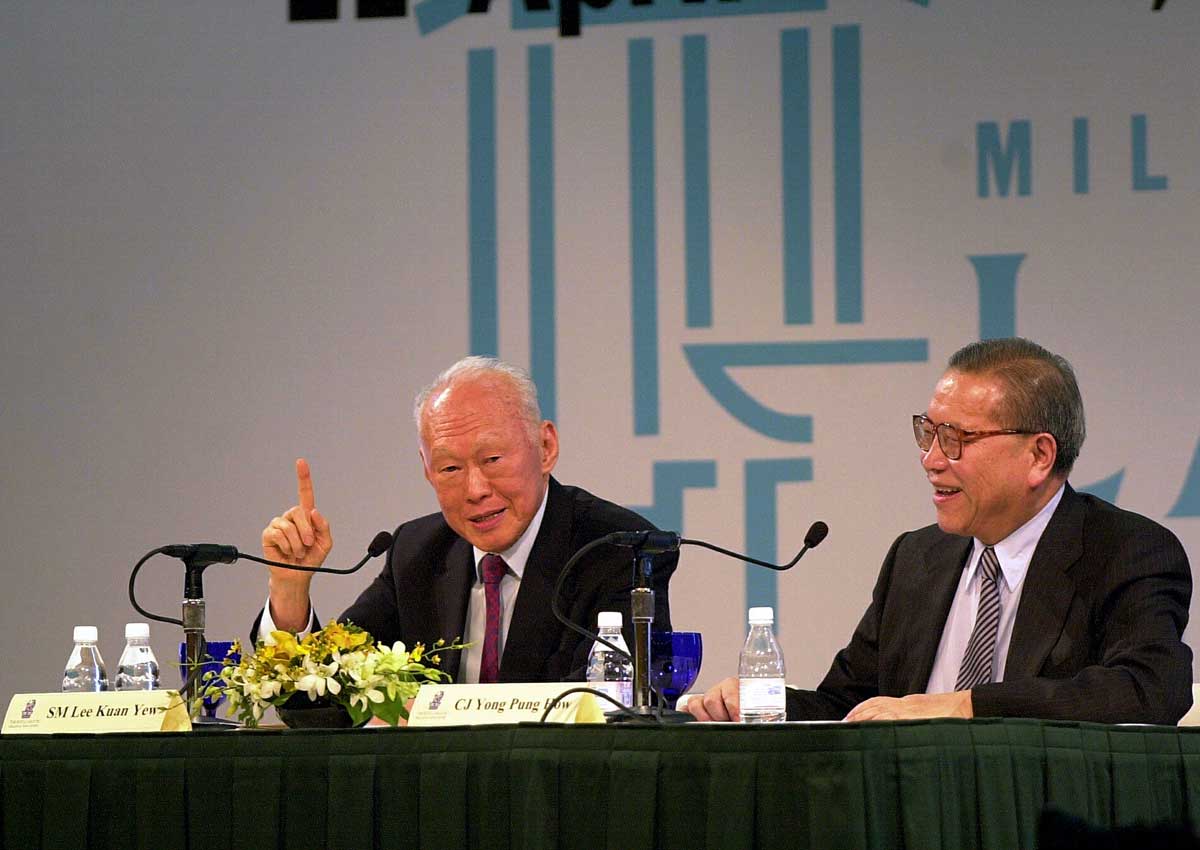
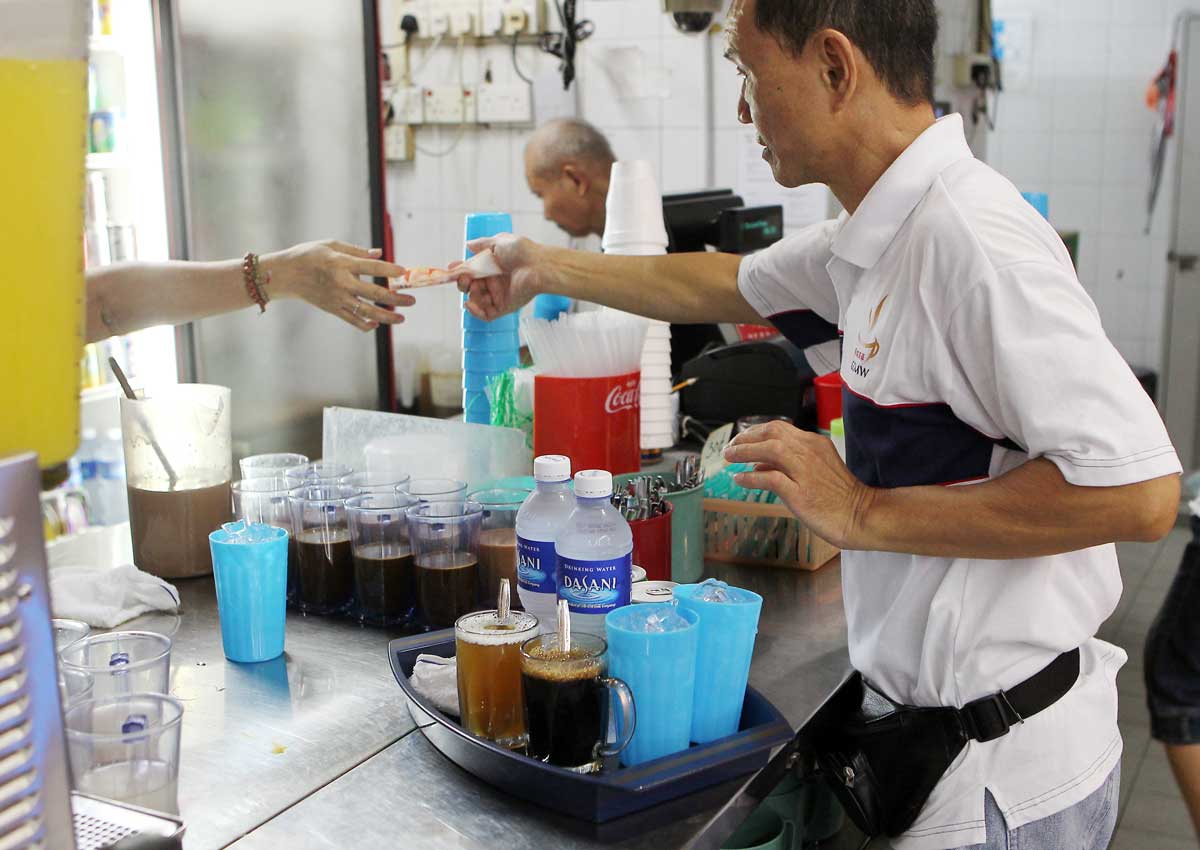
Image: 
Category: 
Publication Date: 
Monday, March 21, 2016 – 07:00
Send to mobile app: 
Source: 


Story Type: 
Others

Source link

Budget 2016: Slowing economy, jobs among Singaporeans' top concerns

0

About 3,600 pieces of feedback were received in the exercise organised by the Ministry of Finance and REACH.

Source link

Of coffee prices and hopes of a helping hand

0

It may only be a cup of coffee, but the rising price of this key consumer item is an example of the cost-of-living crunch that some Singaporeans are experiencing.

Chua Chu Kang GRC MP Zaqy Mohamad tells The Sunday Times that the recent increase in drink prices at coffee shops is causing some unhappiness on the ground. It was reported that over 100 coffee shops in Singapore have increased the prices of coffee and tea, owing to rising rental and labour costs. A cup of kopi at some outlets now costs $1.30, up from $1 previously.

That is a 30 per cent increase – at a time when headline inflation is running at negative 0.6 per cent, in January.

Making ends meet and job losses during a downturn are two of the top worries among constitutents of his mostly middle-income electorate, he says.

“People are worried they will lose their homes if they can’t service the loan if they are retrenched; and many citizens are tied up in mortgage until they are 65, or they are retired,” Mr Zaqy says.

No wonder, then, that many will look back on the big-spending social support Budgets of recent years and expect goodies to at least tide them over these more difficult times, let alone talk about moving ahead with confidence.

Previous Budgets have had a strong social dimension, with the roll-out of blockbuster programmes such as the Pioneer Generation Package (PGP), Silver Support Scheme and MediShield Life – which are focused on supporting the elderly and defraying healthcare costs – as well as the national skills upgrading scheme, SkillsFuture.

While social expenditure is still expected to be sizeable, new multibillion-dollar mega social programmes, however, are unlikely to be tabled by Finance Minister Heng Swee Keat this Thursday.

“There will instead be a recalibration of the social policies now that a more robust social safety net is very much in place,” says Singapore Management University law don Eugene Tan.

DBS Bank economist Irvin Seah notes that the Finance Minister may opt to “keep some powder dry” for off-Budget measures, if needed.

But he agrees: “(The Government) will have to take a more conservative approach, particularly against the backdrop of this difficult environment. Social issues will have to take a back seat for now.”

RE-EMPLOYMENT AND RETRENCHMENT AID

One group of workers, in particular, will need more assistance, notes West Coast GRC MP Patrick Tay.

“I am most concerned about the professionals, managers and executives (PMEs) because I expect retrenchments and layoffs to increasingly affect PMEs more than rank-and-file workers,” says Mr Tay, who is also assistant secretary-general of the National Trades Union Congress (NTUC). These workers are seen as more vulnerable, partly because many work in sectors, such as financial services and oil and gas, that are not performing as well.

“(There could be) some form of unemployment insurance to help Singaporeans affected by retrenchment, should these occur. Safeguards could be built into the payouts to nudge beneficiaries towards seeking employment in the soonest possible time,” says National University of Singapore (NUS) sociologist Tan Ern Ser.

Mr Seah also floats the idea of temporary deferment of income tax payable for those who are laid off, which will give them some “breathing space”.

MIDDLE-INCOME SQUEEZE

The rising cost of living remains a concern, especially for the broad swathe of middle class, or the middle 60 per cent of income earners here.

Juggling daily expenses and servicing a mortgage for his four-room flat, small business owner Kendrick Khoo, 45, hopes for more subsidies for infant care services.

His 36-year-old wife had last Monday returned to the workforce as a trainer, so it is easier on the family’s purse strings. The couple have two daughters, one aged four years and the other nine months, and pays about $1,400 on childcare and infant care services each month.

“I don’t know how long I can survive if I’m the only one working. Looking at the current costs, it’s very tough,” says Mr Khoo.

Landed property owner Ananda Kumar, 54, who runs a logistics business, tells The Sunday Times he hopes for a property tax break to mitigate rising costs.

Dr Tan of NUS also suggests further tax reliefs for Singaporeans supporting dependent seniors.

As Mr Kumar puts it: “I feel wages did not go up in tandem, the cost of living has gone up more, and it adds up at the end of the day.”

Besides ensuring that wages keep pace with increased costs of living, Associate Professor Tan of SMU says an inflation-linked savings scheme can be introduced to help Singaporeans grow wealth and ensure savings are not eroded by inflation.

SAVING JOBS

When it comes to preserving jobs, the Government has never been shy about putting in place the necessary measures.

Take the 2009 Budget for example – it put out a $20.5 billion resilience package, of which one-quarter of the amount was channelled to help Singaporeans stay employed, during a “time of grave economic crisis”, as then Finance Minister Tharman Shanmugaratnam put it.

Among them, a temporary one-year initiative – the Jobs Credit Scheme – where businesses received a cash grant based on the Central Provident Fund (CPF) contributions they had made for their existing employees.

Observers say there is no need to roll out such schemes just yet as the economy is not in dire straits. However, some measures to help firms retain staff are seen as needful, amid a weaker economic outlook.

Ideas include a one-off subsidy on the employer CPF contribution for a year for workers drawing wages below a certain level, or have a special employment credit to subsidise wages of older workers, Mr Seah of DBS says.

Mr Liang Eng Hwa, chairman of the Government Parliamentary Committee for Finance and Trade and Industry, says that job creation and preservation is one pillar of social policy.

The MP for Holland-Bukit Timah GRC adds: “If you can create good jobs for Singaporeans, then that is the best welfare, because you are able to provide for yourself and your family.”

wongsy@sph.com.sg


This article was first published on March 20, 2016.
Get a copy of The Straits Times or go to straitstimes.com for more stories.

Image: 
Category: 
Publication Date: 
Monday, March 21, 2016 – 07:45
Send to mobile app: 
Source: 


Rotator Headline: 
Increase in kopi prices causes worry about living costs
Story Type: 
Others

Source link

Exiled Tibetans to elect leader to sustain struggle against China

0

Exiled Tibetans across India and overseas started voting on Sunday to elect a political leader for the next five years, in a bid to help sustain their struggle to secure complete autonomy for Chinese-ruled Tibet.

Men and women in colourful dresses formed long queues outside temporary polling booths in a Buddhist temple in Dharamsala, a town in India’s Himalayan foothills where a community of Tibetans lives in exile with the Dalai Lama.

The second such election follows a decision by the Dalai Lama, the 80-year-old Nobel Peace Laureate, to relinquish his political authority and vest it in a democratic system that could outlast him.

China does not recognise the government that represents more than 100,000 exiled Tibetans living mainly in India, Nepal and Bhutan.

Concern about the spiritual leader’s health, after his admission to a US hospital this year for treatment, has reinforced the importance of the vote to keeping the issue of Tibet alive.

The “Sikyong”, or elected leader, will be solely responsible for political and diplomatic decisions, as the charismatic monk steps back from the limelight amid uncertainty over how his successor will be chosen.

Tibetan Buddhism holds that the soul of a senior lama is reincarnated in the body of a child after he dies. China says it must sign off on the reincarnation of the Dalai Lama, who fled into exile in 1959 after a failed uprising.

The contest will decide who leads the parliament of the Central Tibetan Administration (CTA) in Dharamsala.

Exiled Tibetans consider the CTA to be their legitimate government, but no country recognises it. China has lobbied to sideline the Dalai Lama from the international circuit, although he did address an audience in Geneva last week despite those efforts.

Image: 
Category: 
Publication Date: 
Sunday, March 20, 2016 – 14:29
Keywords: 
Send to mobile app: 
Source: 


Story Type: 
Others

Source link

Budget 2016 Statement to be read at 3.30pm on Thursday

0

SINGAPORE – Minister for Finance Heng Swee Keat will be reading his first Budget Statement in Parliament on Thursday (March 24) at 3.30pm.

The Budget Speech will be broadcast ‘live’ on television, with Mandarin interpretation on dual sound mode.

A ‘live’ webcast of the speech will also be available on the Singapore Budget Website, and on the Singapore Budget mobile application, which is available for download on both the iOS and Android platforms.

Simultaneous sign language interpretation of the Budget Speech will be provided. Those who wish to tune in to the sign language interpretation may select the relevant viewing option on the Singapore Budget website or mobile application.

The hashtag #SGBudget2016 will be used on social media for all Budget-related tweets and postings.

AsiaOne will also be providing readers with timely updates of announcements made during the Budget Speech. Check out our special Budget 2016 site and follow AsiaOne on Twitter (@sphasiaone) and Facebook for the latest updates and analyses.

ljessica@sph.com.sg

Image: 
Publication Date: 
Sunday, March 20, 2016 – 14:17
Keywords: 
Send to mobile app: 
Source: 


Story Type: 
Others

Source link

My new love from the Sun

0

Move over, Professor Do Min Joon.

K-drama fans around the world have a new love and he, unlike Prof Do, is no alien from another star. Rather, he is the very human and very hot Captain Yoo Si Jin from the South Korean army, Planet Earth.

Since Descendants Of The Sun – a Korean romance starring Song Joong Ki as Captain Yoo and Song Hye Kyo as the doctor he is wooing – premiered in South Korea, China, Singapore, the United States, Britain, Saudi Arabia and elsewhere last month, it has been fast displacing the 2013 hit drama My Love From The Star in viewers’ affections.

Descendants has a total of 16 episodes.

In Seoul, where episodes seven and eight aired last Wednesday and Thursday, Descendants has been reaching ratings above the 30 per cent share of the audience and has long surpassed My Love’s highest numbers.

In China, where My Love – which starred Kim Soo Hyun as Prof Do – was a huge hit, the growing popu- larity of Descendants became official when the Chinese Ministry of Public Security issued a tongue- in-cheek warning on Weibo, cautioning against an unhealthy obsession with Song Joong Ki.

But the warning came too late for a 20-year-old Chinese woman, who was reported to have been diag- nosed with acute glaucoma after she binge-watched 16 episodes of the K-drama Cheese In The Trap and two episodes of Descendants.

The Chinese video platform iQiyi is releasing Descendants exclu- sively in the country and at the same time as in South Korea.

In Hong Kong and Singapore, Descendants is the most-watched show on Viu, the K-drama streaming site and app.

It declines to give viewership figures.

The drama also airs in Singapore on KBS World (StarHub TV Channel 815), the international channel of major Korean network KBS.

Singapore viewers are being left breathless by the fast-paced romance between the two Songs and the thrilling action in picturesque Greece, which stands in for a fictional war-torn country called Urk in the series.

Song Joong Ki’s Captain Yoo goes to Urk on a peacekeeping mission and his love interest, Dr Kang Mo Yeon, played by Song Hye Kyo, also lands there soon afterwards as a medical volunteer.

Azure skies, pristine beaches and lovely ruins form a backdrop to the will-they-won’t-they couple’s flirtation and narrow escapes from death.

Self-professed K-drama lover Sylvia Goh, 48, started watching Descendants for the leading lady, but was soon drawn to the boyish leading man.

She says: “I like Song Hye Kyo. I remember watching her in past dramas Autumn In My Heart (2000) and Full House (2004). Song Joong Ki is cute. I’m looking forward to more touching moments between them and if she accepts him.”

Undergraduate Lee Meiyan, 23, is unabashed in her appreciation of the actor.

“On top of the interesting plot, he is really charming. Six episodes into the drama and he has already saved the female lead from a car dangling off a cliff. It was really romantic and exciting. After his military service, he has definitely become more man, more mature-looking and muscular.”

Male viewer Eugene Quek cannot deny Song Joong Ki’s appeal after watching him in the 2012 melodrama The Innocent Man and Descendants.

The 17-year-old polytechnic student says: “The Innocent Man was a big hit in Korea. After Song entered the army, fans have been waiting to watch him again.”

Some discerning fans also give screenwriter Kim Eun Sook credit for the swoonworthy Descendants. Kim, who has created hit dramas including The Inheritors (2013), Secret Garden (2010), On Air (2008) and Lovers In Paris (2004), is famous for her buzzy shows and punchy dialogue.

For South Korean housewife Oh Jung Yun, Kim’s name alone was enough to draw her attention.

Madam Oh, who is in her 30s and lives in Singapore, says: “Secret Garden showed me the charm of a romantic comedy. The Inheritors was a bit disappointing. Still, hearing Kim’s name made me anticipate the drama.”

She recalls how Kim’s lines lifted a solemn scene in Descendants, where Dr Kang has reservations about dating Captain Yoo because his job might get him killed any time.

The soldier then asks the doctor if she would be more likely to accept him as a boyfriend if he were “an ordinary man from a rich family”.

Dr Kang says: “No, it sounds too ordinary to me.”

Which is when Captain Yoo wins smiles from her and from viewers when he says: “I know I should have said ‘a handsome man from a rich family’.”

Publishing coordinator Geraldine Koh, 27, says: “The couple’s banter makes the drama lighthearted and fun to watch. They are very direct with each other, sometimes to the point of making viewers blush.”

There is no draggy second- guessing in this courtship. From the get-go, Captain Yoo identifies his target, Dr Kang, in the hospital, goes in for the kill and scores a date – all within the first episode.

Administrative service executive Angelina Ong, 25, says: “That’s what I find so refreshing about this show – the way they are so straightforward with each other.

“The romance blossoms in the first episode, then they break up in the second episode. It breaks the norm of how K-drama romances usually unfold. So it keeps you wondering if the leads will end up together.”

Madam Oh may be in Singapore, but she chats about the drama with her mother in South Korea and her sister in the United States on a daily basis on a text-messaging app. They discuss the latest developments in the show and also debate over which K-drama actor is more charming.

She says: “I asked my mother which K-drama male lead she prefers – Do Min Joon or Yoo Si Jin.

“Her answer is Yoo Si Jin. Because Do Min Joon is from a star, he can’t be real in this world.

“Maybe it’s possible to find someone like Yoo Si Jin because there are so many soldiers in Korea.”

nggwen@sph.com.sg


This article was first published on March 20, 2016.
Get a copy of The Straits Times or go to straitstimes.com for more stories.

Image: 
Category: 
Publication Date: 
Monday, March 21, 2016 – 04:00
Keywords: 
Send to mobile app: 
Source: 


Story Type: 
Others

Source link

Mixed fortunes for Quahs

0

Quah Ting Wen experienced a night of disappointment at the Singapura Finance 47th Singapore National Age Group (Snag) Swimming Championships.

She narrowly missed out on the Olympics ‘A’ cut for the 50m freestyle. Her time of 25.54sec was just 0.26sec over the required time.

“I know I have it in me to make the ‘A’ cut,” she said. “The race was fine, I just messed up the start. If not for that, I think I could have come close to 25.3 seconds.”

In her second event of the night, the 100m butterfly, her time of 59.38sec was not enough to meet the ‘A’ cut of 58.74sec.

“I’m glad that I went faster than in the heats. However, I was a little bit tired at the end, so I didn’t bring it home as well as I wanted to.”

While Quah had hoped for better times, she was nevertheless pleased. The 23-year-old said: “I have mixed feelings. It’s nice to consistently set fast times, but this year being the Olympic year, you are trying to make it onto the team.”

Coach Sergio Lopez was slightly disappointed that Quah did not make the ‘A’ cut.

“I am a little sad for her. However, her times were only a little bit off the ‘A’ cut, so hopefully that will help her qualify for the Olympics.

“She swam in both the 200m freestyle and the 200m butterfly yesterday, so the stress of that may have taken a toll on her. But she really put herself out there and did a really good job.”

Quah Zheng Wen had another strong showing at the Snag.

He emerged triumphant from a close-fought race in the 200m individual medley.

His time of 2min2.65sec was enough to give him the win over Wen Ren Hau of Chinese Taipei, who swam a time of 2:02.78. In the process, he broke his own meet record, lowering his 2:03.38 mark set at last year’s meet.

He repeated his winning ways in the 100m butterfly, coming in first with a timing of 52.86sec.

Just as in the individual medley, he broke his own meet record set last year. He had earlier met the ‘A’ qualifying time for this event at the Fina World Cup in Dubai last year.

Lopez believes that Quah’s performance has set him in good stead for the Olympics.

He said: “He will definitely need rest. After this meet, we will start the final cycle of training before the Olympics. He knows I am going to push him very hard. But he is a competitor, so I am not worried about him.”

aleysaj@sph.com.sg


This article was first published on March 20, 2016.
Get a copy of The Straits Times or go to straitstimes.com for more stories.

Image: 
Category: 
Publication Date: 
Monday, March 21, 2016 – 02:00
Send to mobile app: 
Source: 


Story Type: 
Others

Source link

Budget 2016 to be delivered at 3.30pm on Thursday

0

The speech by Finance Minister Heng Swee Keat will be broadcast live on Channel NewsAsia and streamed live on the Channel NewsAsia website.

Source link

Slowing economy, job impact top of S’poreans’ concerns ahead of Budget

0

SINGAPORE – The slowing economy and its impact on the job market are the top concerns for Singaporeans, going by feedback collected by the Government’s feedback portal REACH ahead of the Budget on Thursday (March 24).
Of the 3,600 pieces of feedback collected…

Source link