Home Blog Page 4495

Formula One: Alonso walks away from horror crash in Australia

0

Twice world champion Fernando Alonso walked away unharmed from a horrifying crash that disintegrated his McLaren car in an incident-full Australian Grand Prix in Melbourne on Sunday.

The 34-year-old Spaniard, competing in his 253rd F1 race, was shaken but remarkably uninjured after his car rolled and slammed into a barrier after clipping the Haas car of Mexican Esteban Gutierrez on lap 17 of the 57-lap season-opener.

Alonso’s McLaren initially veered into the wall on turn three before pitching into a series of violent rolls before it flew through the gravel trap and slammed into another barrier disintegrating upon impact.

The Spaniard, who won the world title with Renault in 2005-06, quickly clambered out of the barely recognisable wreckage and walked away unaided.

“I feel good. It was a combination of factors and it ended up in a crash,” Alonso said.

“But we are lucky we are both okay. For the safety of those cars is why I am alive – and the safety wall.

“I think it was a racing thing and sometimes we forget we are going 300 kilometres an hour.” The race was stopped and cars returned to the pit lane by the safety car as the considerable amount of debris was cleared from the track.

Gutierrez rushed to check on Alonso after his Haas car came to rest in the same gravel trap.

“Thankfully we are alright. It was a very, very scary moment,” Gutierrez said.

“The first thing I saw in the mirror I was really worried. I jumped out as quick as I could and ran to him. It was a really big relief he was OK.

“We didn’t speak much. It was a real moment of shock for both of us. I just went to him to see if everything was fine with him.” Gutierrez said he was aware that Alonso’s car was behind him on the track.

“I braked into Turn 3 and everything came by surprise at the rear. I need to see the video to understand what happened.” McLaren-Honda boss Ron Dennis said: “You never pre-judge anything after an accident like that, the cars can be incredibly safe. It’s a testimony to the safety of F1.” American Gene Haas, owner of the Haas team in their first year in F1, said: “Our car came out the better, Alonso’s car was destroyed. He was up and walking and that was important.

“In NASCAR (in the USA) we have incidents like this almost every race and we’re pretty used to it.”

Image: 
Category: 
Publication Date: 
Sunday, March 20, 2016 – 16:49
Send to mobile app: 
Source: 


Story Type: 
Others

Source link

Formula One: Rosberg beats Hamilton to win Australian GP

0

Nico Rosberg capitalised on a slow start off pole by world champion teammate Lewis Hamilton and superior tyre strategy over Ferrari to win the season-opening Australian Grand Prix on Sunday.

The German won his fourth straight GP and 15th overall after stringing together the final three races of 2015 to beat his Mercedes rival Hamilton by eight seconds.

Ferrari’s Sebastian Vettel, who led off the grid and was faster than the Mercedes pair on his super softs before needing a tyre change on lap 36, was third.

It was an incident-packed race with McLaren’s double world champion Fernando Alonso walking away from a horrifying high-speed crash and Kimi Raikkonen’s Ferrari catching fire in the pit lane.

The German team has now won 33 of the last 39 races and it was a sweet triumph for Rosberg who has trailed Hamilton in the drivers’ standings for the past two seasons.

Australian Daniel Riccardo was fourth in his Red Bull, with Brazilian Felipe Massa fifth and Renault’s Romain Grosjean sixth.

Hamilton, who had led every practice and qualifying session for the first race, was slowly away allowing Vettel to dart through a narrow opening between both Mercedes to beat them to first turn.

Rosberg locked up on the inside of the first corner, forcing Hamilton to back off and allow Raikkonen to pass them both on the exit to the sharp right-hander.

Hamilton’s loss of momentum cost him two more places to Max Verstappen and Massa.

Vettel opened up a 2.2sec gap over Raikkonen, with Rosberg falling to 1.1sec behind the second Ferrari.

After a flurry of pit stops by the leaders, Alonso had a heart-stopping moment and was fortunate not to be seriously injured in a spectacular shunt with Esteban Gutierrez in a Haas approaching turn three.

Alonso’s McLaren veered into the wall and went into a series of rolls before it flew through the gravel trap and hit another barrier.

The twice former world champion was shaken but unharmed and quickly clambered out of the barely recognisable wreckage.

The race was stopped and cars returned to the pit lane by the safety car as considerable debris was cleared from the track.

Alonso’s mangled Clarence was craned away with all four corners sheared away by a horrifying collision.

The stoppage wiped away the Ferrari pair’s advantage – and planned tyre strategy – with the entire field able to change to fresh rubber during the stoppage before restarting behind the safety car with 18 laps of the 57 gone.

Indonesian rookie Rio Haryana failed to rejoin, however, with his Manor car experiencing driveline problems.

Vettel, still on the softest compound, again established a lead after the restart from Rosberg, Riccardo and Verstappen with Hamilton sixth.

Raikkonen’s Ferrari came into the pits with flames coming out of the air box of his car and the Finn appeared unflustered while a marshal extinguished the fire above his head as he exited the cockpit with his race over.

Vettel stretched his advantage on lap 26 to 3.7sec over Rosberg, with Ricciardo 9.8sec behind the leader in third, while Verstappen, Sainz and Hamilton were 12-14sec adrift of the flying Ferrari.

But Vettel began to struggle on his fading super-softs with Rosberg, who would not have to stop again on the medium compound, closing the gap before Vettel pitted his Ferrari on lap 36 and rejoined the race on soft tyres in fourth.

Hamilton, now up to third on his own mediums, passed Ricciardo for second on lap 42 to lie 10sec behind Rosberg with Vettel 15.8sec off the lead.

Vettel, with fresher rubber, closed on Hamilton but his challenge ended with two laps to go when he locked up at the penultimate corner and ran wide on to the grass.

Image: 
Category: 
Publication Date: 
Sunday, March 20, 2016 – 16:16
Send to mobile app: 
Source: 


Story Type: 
Others

Source link

Child pageant veteran: 'It’s almost every little girl’s dream'

0

She was once a child pageant contestant with a talent in acrobatic hula-hoop.

Beating more than 150 little hopefuls, Miss Geraldine Ng was crowned overall winner of the Little…

Source link

Employers must ensure policies do not work against women: Ong Ye Kung

0

Qualities such as being nurturing and having empathy, must also be valued in the labour force, says Acting Minister for Education (Higher Education and Skills) Ong Ye Kung.

Source link

The conflict in Yemen and how three S’poreans got involved

0

SINGAPORE – Mohamed Mohideen Mohamed Jais was just 18 when he left Singapore to study in Yemen.
Then, as now, Yemen faced a rebellion from the Houthis, an insurgent group who belong to a branch of Shia Islam. Shias make up about a third of the country.
The…

Source link

The night Mr Lee put food on all our plates

0

I never, in my wildest dreams, thought that I would one day work closely with this great man.

I grew up in Changi Village. My father worked as a civilian for the British at the nearby airbase. Our quarters were at the edge of the nine-hole golf course in Changi.

The golf course is still there. We used to peer over the fence at Mr Lee playing golf with world leaders.

I saw him there with Malaysian Prime Minister Tunku Abdul Rahman.

When Mr Lee came to play golf, he and Mrs Lee would stay at the Changi Cottage. When they were “in town”, everybody in the village knew.

In those days, there was not much security around them. They were free and easy and walked around the village. Their particular interest was this Hainanese bakery called A1.

When A1 baked bread, the aroma would pervade the whole village. All the RAF service wives would come out with their perambulators and babies, and queue up for the French loaves.

Mr Lee once made a speech about that bakery and its impact on the whole village.

Every year in Changi Village, we had a sea carnival where traditional Malay miniature boats with big white sails were released to catch the wind.

You just let them go, and see which one reaches Changi Point first. Changi Point was a Malay village near the present Mindef ferry terminal.

This carnival was one of our traditions, and we always looked forward to it.

I was close to the village headman and helped with the carnival.

So there is this picture of Mr Lee firing a shotgun to start the race. And there I was next to him in my Rover Scout’s uniform doing crowd control; I was 16 or 17, just out of school at that time.

In those days, the Ministry of Culture used to print huge information posters of the latest happenings and put them on the notice boards of bus shelters all over the country, especially in the rural areas.

That was our Internet.

That picture of me next to Mr Lee holding the shotgun found its place on bus shelters everywhere around the island.

Mr Lee looked very strong and vigorous. He had a warm aura around him; you could tell that this man is a special human being.

I thought that was the closest I would get to him. That was in 1961, I think.

Some time in 1976 or 1977, I moved to Spottiswoode Park near the Tanjong Pagar train station.

My wife worked for the Port of Singapore Authority (PSA), and since PSA had two blocks of staff housing at Spottiswoode, we decided to live there. Later, another seven blocks were added to the estate.

Not long after moving in, I got a call from Mr Chng Jit Koon. He was the MP looking after the constituency then. He asked me to form the Residents’ Committee (RC) for Spottiswoode.

We were only the third RC in Singapore.

The first one was in Marine Parade, the second in Tanjong Pagar Plaza.

Our first chairman was Dr Low Cze Hong, a prominent eye surgeon who was living in Spottiswoode then.

Mr Lee was the MP for Tanjong Pagar and he was there at the first RC meeting.

He had everybody’s files with him, including our photos.

We all sat like schoolchildren in rows in front of him. He opened the files, called our names, we stood up, and he asked us questions.

Some people, he grilled.

To me, he said, “Jagjeet Singh. School teacher. Moved into Spottiswoode Park. You don’t mind serving in the RC?”

I just said, “Yes, sir. Thank you, sir.” Then he moved on to someone else. Dare you say no when the PM asks you to serve? I was going to be the secretary of the RC.

I was also the first assistant secretary (we had several assistant secretaries then) of Tanjong Pagar’s Citizens Consultative Committee (CCC).

There were many Chinese clans in the constituency, which made the estate more like a Chinese town. But just like back in Changi, I had no problems in Tanjong Pagar and mixed around quite well with the residents.

Every year, in the Hungry Ghost month, I would be invited to represent the CCC at the Ghost Month functions, two or three in a row.

I understood the things that have meaning for Chinese people, one of them being the Chinese zodiac in which each year is represented by an animal sign. And so every year we made Risis gold-plated animal figurines that corresponded to the zodiac animal for that year, and auctioned them off at these events.

From this we were able to raise money for bursaries. Education was one thing we knew we could always get support for.

No one treated me differently.

I remember one Chinese New Year when I was the organising secretary for the Chinese New Year celebrations. In those days, we used to hold media briefings before the Chinese New Year dinner.

A Chinese reporter asked Mr Chng, “How can a non-Chinese help organise the Chinese New Year dinner?” To which Mr Chng replied sharply, “Why not? Next Deepavali, you can be the organising secretary.”

You may not believe this. My job on the CCC was to do the minutes. But back then, the meetings were all held in dialects and Chinese.

There were times when I did not catch anything even though I had studied Chinese in primary school.

The next day, I would go to the district office, and together with the district secretary, we would sort out the minutes.

It must have worked because no one said anything. One day, during a meeting, the CCC chairman realised I must have been having some difficulty.

He asked, “How did you do the minutes all this time?” I said that I managed them somehow! After that, they got a gentleman who could speak English to sit next to me in the meetings, and he would translate for me.

Gradually as more people in the committee could speak English, the meetings were held in English. Soon I became a vice-chairman, and then a patron.

My wife once told our children, “This is the meaning of patience and tolerance. Your father sits through these meetings, he doesn’t know dialects.

Yet at the end of the day, he is able to produce the minutes.” My children used to laugh about this. I used to laugh about it too. But I got it done.

I told my children, I was asked to serve, so I come to serve, I don’t come to ask for things for myself or the family.

Even today, my children are grown up and they follow this principle.

My daughter also volunteers at the Meet-the-People Sessions in Sembawang.

Sometimes she tells me, “I am there to serve, like you, not to ask for things.” We believe in this.

Well, anyway, this is what it takes to be a grassroots leader. Mr Lee, and Mrs Lee, cared about what was happening with us grassroots leaders. Seven out of 10 times that Mr Lee came to Tanjong Pagar, Mrs Lee would be with him.

She would ask me about my children, even after they had finished university. Mrs Lee was like that.

She was also very strong like Mr Lee, but she also had this caring way.

FIRST DINNER WITH THE PM

I remember the first time I sat down at the same dinner table with Mr Lee. It was after the National Day Rally held at the National Theatre, near where the Van Kleef Aquarium used to be.

It was my first National Day celebration. The dinner was held outdoors in huge tents.

There were large round tables and you were required to sit together with your MPs. We sat down; nobody dared to touch anything. Mr Lee then picked up his chopsticks and one by one, he put the food on each of our plates.

It was the first course, a cold dish with an assortment of appetisers on a big platter.

One by one, around the table, with his own chopsticks, with his own hand, until every one of our plates had food on it. We just sat without moving. We didn’t know what to do.

Then our PM told us: “Come, eat.”


This article was first published on March 20, 2016.
Get a copy of The Straits Times or go to straitstimes.com for more stories.

Image: 
Category: 
Publication Date: 
Monday, March 21, 2016 – 08:00
Keywords: 
Send to mobile app: 
Source: 


Story Type: 
Others

Source link

Motorcylist earns praise online for waving drivers out of ambulance's way

0

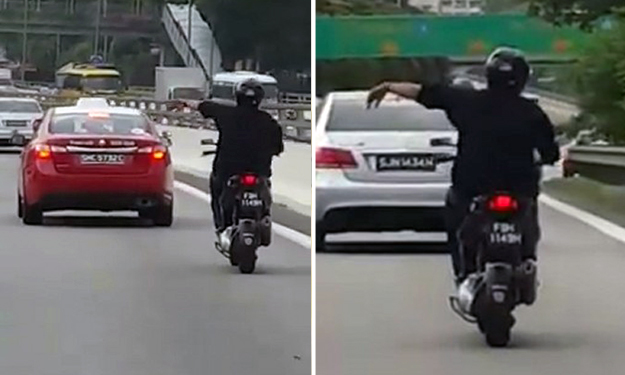
SINGAPORE – A motorcyclist helped clear the path for an ambulance on an expressway here after noticing that vehicles did not make way for the emergency vehicle travelling on the right-most lane.

On Saturday, Facebook user Maria N Clyde Alexander had uploaded a video clip of the motorcyclist waving to other motorists to get them to change lanes.

on Facebook

I was in the ambulance taking my mom to the hospital. I have to really commend this Malay guy who help me clear the…

Posted by Maria N Clyde Alexander on Saturday, March 19, 2016

As of 3.30pm today, the video had already garnered over 12, 766 shares.

Ms Alexandar was in the ambulance with her mother at the time.

“I was in the ambulance taking my mom to the hospital. I have to really commend this Malay guy who help (sic) me clear the road,” she wrote.

She said she wanted to thank the man for his kind deed and added that he “did it on his own all the way”, allowing the ambulance to get to Khoo Teck Phuat hospital smoothly.

debwong@sph.com.sg

Image: 
Category: 
Publication Date: 
Sunday, March 20, 2016 – 15:40
Send to mobile app: 
Source: 


Story Type: 
Rewritten Story

Source link

The times I tried to say 'no' to Mr Lee

0

Don’t ask me how many times I tried to say “no” to Lee Kuan Yew. And don’t ask me how many times he accepted it. The number is zero.

Mr Lee is one who, once he sets his mind he wants you, doesn’t expect you to decline. He will use his way to convince you. You cannot say “no”. Because, you know, whatever he asks you to do, it is for the nation.

The first time I tried to say “no” to Mr Lee, he wasn’t even in the room. In September 1967, I received a letter from the Prime Minister’s Office (PMO), signed by the Deputy Secretary.

It got to me late because it was not sent to the right address.

It had been sent to Nanyang University, and they took some time to redirect it to me.

The letter said: “This is urgent. When you receive this, contact the undersigned immediately.”

I called the PMO. The gentleman on the line said: “I have been waiting for your call! Quick, come over!”

So I went to City Hall. The moment the Deputy Secretary saw me, he scolded me. “Why are you still here?”

I said: “If I’m not here, where should I be?”

“Don’t you know?” he said. “The United Nations General Assembly has already started. You’re supposed to be there. Why are you still here?”

I told him truthfully: “Nobody told me. What am I supposed to do there?”

At this point, he said, “Wait”, and turned to somewhere behind his desk to pull out a stack of papers. He found the extracts of some Cabinet meeting notes.

“See? Here. PM told Cabinet he himself wants to talk to you. He didn’t tell you?”

He did not. The Deputy Secretary told me the Singapore delegation would be headed by Yong Nyuk Lin. But as a Cabinet minister, he would not be able to stay throughout from the opening until the end of the session.

I was supposed to be with the guys who would stay for the whole General Assembly.

He would leave everything to the remaining members of the delegation.

And who were the other guys?

If I recall, I believe they were S R Nathan from the Ministry of Foreign Affairs and Osman Omar, a senior police officer. And the third guy – that’s me.

PM Lee had already gone off to the United States. President Lyndon Johnson had invited him. Singapore was just a newborn nation, a tiny little one. Yet we were invited by a superpower.

It showed that the US regarded us as important. So of course PM had to go. He was accompanied by the Foreign Minister, S. Rajaratnam, and Rahim Ishak, the Minister of State for Education.

At the time, there were two great powers in the world: the United States and the Soviet Union. Rajaratnam had said before, we are friends with everyone. So we had to balance things.

At the same time that PM went to the United States, Dr Toh Chin Chye, the Deputy Prime Minister, led another delegation to visit the USSR.

So, with both our PM and DPM away, another delegation was needed to represent Singapore at the UN General Assembly. At the time, one of the topics being discussed in the UN was the seat of China.

It was then held by the Republic of China government in Taiwan, but the People’s Republic of China government in Beijing was claiming that it should be the rightful owner of the seat in the UN.

l thought maybe S R Nathan and Osman Omar would need someone to help read the Chinese reports in the UN papers, so I should go help.

That was my ignorant thinking at the time. Later on, I learnt that everything we received was in English.

So I said to the Deputy Secretary, “How many days do I need to be there?”

“It’s three months!”

I jumped. “I cannot go. Three months is too long. I’m not a civil servant, I am helping in my family’s business. It is year end. I have to help to close the company accounts.”

But the gentleman explained that because both the PM and DPM were out on official trips, he had nobody to give the approval to change the members of the delegation to the UN General Assembly. He said: “Please help me to solve this problem.”

Since he told me his difficulties, I said I would go back and discuss it with my colleagues in the company.

Luckily, they understood that this was an important task; it was for the nation. They advised me not to decline and said they could handle the company’s accounts themselves.

With their consent, I immediately informed PMO. They arranged for my air ticket and the necessary papers, and I was off to New York within three days. This was the first time I flew that far a distance.

As part of his US visit, PM Lee visited New York. All of us in the UN delegation gathered to greet him. When he saw me he said, “Eh! How come you are here?”

I was stunned and didn’t know what to say. He had already forgotten!

Singapore was not even three years old at that time, and he was already so busy running from place to place to make sure people knew us and took us seriously that he even forgot that he wanted me to go to the UN!

He expected all the rest of us to do our work too, so much so that he even forgot to tell some of us to do the work.

But actually, he knew very well what you did and when you did your work.

He is one who is very grateful and really puts it in his mind that you were with him through the hard times, whatever your status. Whoever helped him during the crucial years, he will always remember you.

I became MP for Tiong Bahru in 1968, and started helping Mr Lee in his Tanjong Pagar ward in 1976. Mr Lee told me that Tanjong Pagar was no longer the same as when he first became an assemblyman.

In the 1950s, the people who lived there were construction workers, sampan men, trishaw riders, Harbour Board workers, hawkers.

They were very hard-working people and supported Mr Lee through the hard times. They started the Goodwill Committee after the racial riots in 1964.

PM Lee never forgot what they did.

By 1976, the residents living around Duxton Road who were affected by the Government’s resettlement plans in the area had been given priority to relocate, to places like Kampong Silat and Bukit Purmei. Some young families from other areas were moving into the newer housing blocks at Tanjong Pagar Plaza.

PM Lee knew that the old ones would no longer be relevant to the new residents. He wanted me to find new residents to keep the grassroots organisations alive.

He also told me: “Mind you, don’t hurt the feelings of the older ones.”

HOW WALKABOUTS CAME ABOUT

The next time I tried to say “no” to PM Lee, I did it in person. It was in 1981.

I had been in Parliament for about 13 years, as a backbencher. Now and then, Mr Lee would ask me something, or tell me something he wanted me to do, or I would tell him something I think he should know about. That was all our interaction.

I wasn’t involved in any big policies or anything like that.

One Saturday in December 1981, near midday, he called me to see him in his office. I went there. He asked me to sit down, then chatted with me, sharing with me his worries. This was after we lost the Anson by-election in October.

He felt an urgent need to groom the younger generation of party leaders. He thought the young ones had good brains, but not the skills to reach out to the people and be accepted by them. He said he needed someone to help him.

Earlier, he had people like Lim Kim San. Lim Kim San had very rich experience in the Chinese business circles and had a wide network.

Now that Mr Lim was already retired, PM needed someone to help him provide a bridge between the young ministers and the people.

He wanted me to help him in the PMO as his Senior Parliamentary Secretary.

It was a Saturday. He wanted me to start the next Monday.

I told him I couldn’t because I had responsibilities in the family’s business. But he wouldn’t take my “no” for an answer. It was December. I explained to him I would need to settle the company’s year-end accounts, so I requested to start the following year.

“Okay. 2nd January,” he pronounced. He was very decisive.

With that settled, he then asked me: “Now, what do you have in mind to do?”

My mind was racing. I was thinking to myself, you just called me into your office this morning, I didn’t know what for, and now straightaway you want me to tell you how I intend to get it started!

But I managed to reply: “First, I agree with you. This group of young ministers, they have very good brains. But they are more technocrats.

They don’t have the experience of communicating with the masses. Once the people have the chance to see them face to face, to talk with them, they may accept them more.”

I then reminded PM about the way he had conducted himself in the 1950s during the fight for self-government, and in the 1960s in the battle for merger, all the things he did to convince people to support him.

I myself was young at the time, and knew very little about politics.

But I went to listen to him at the rallies. We were all eager to see how this man could help us get rid of British rule.

This was the feeling of the people then. This man would go for talks in London, and then once he landed back in Singapore, he would go straight to the kampungs to see the people, staying until the middle of the night still talking to the villagers. That was deep in my mind.

“I was very impressed by you,” I told him.

So I suggested: “Why don’t we organise walkabouts? I think it can work for us.”

“Do you think that will work?” he asked me.

“Let us try it out first,” I said.

“You go ahead,” he said.

In 1988, I tried to say “no” again, in a way.

I knew Mr Lee wanted to recruit more young candidates, so I offered my seat to be replaced. I had been in politics 20 years by then. I got scolded. “Why?” he demanded. “I have served my time. I think it’s time for me to give way to a younger candidate,” I replied.

“What nonsense are you talking about? I’m 11 years your senior and I’m not thinking about stopping work.”

What could I say to that?


This article was first published on March 20, 2016.
Get a copy of The Straits Times or go to straitstimes.com for more stories.


Image: 
Category: 
Publication Date: 
Monday, March 21, 2016 – 07:00
Keywords: 
Send to mobile app: 
Source: 


Story Type: 
Others

Source link

280 women workout together for Shape Fitness Fiesta 2016

0

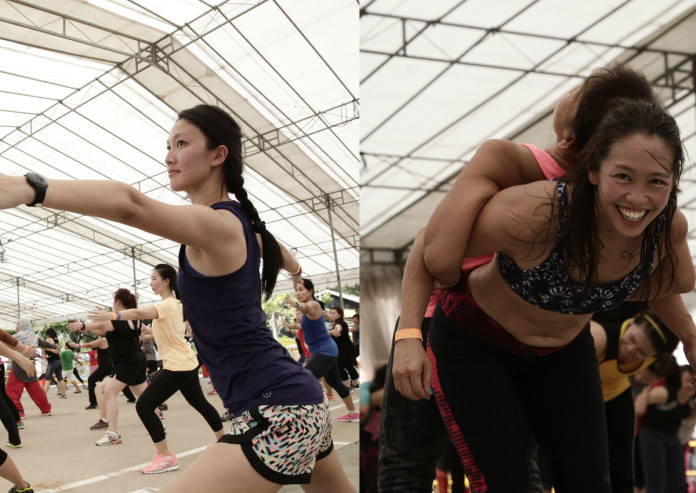
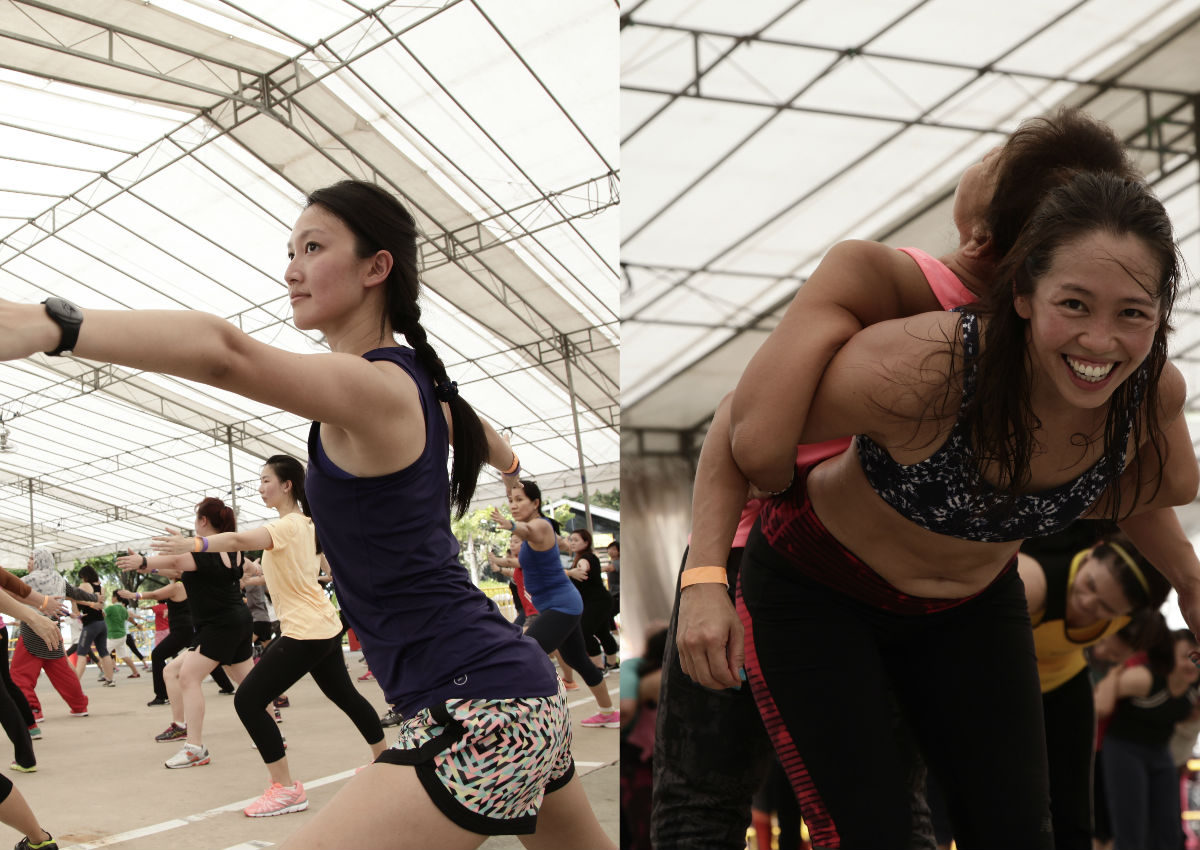
Over 280 women gathered for the fourth rendition of the Shape Fitness Fiesta, one of Shape magazine’s signature events, at Big Splash, East Coast Park on Sunday morning.

The participants did high-energy workouts with the sea breeze in their hair at the all-women outdoor group exercise event.

Led by instructors from Amore Fitness, the workouts comprised 60 minutes of Funkblitz, 60 minutes of Cardiolatino and 30 minutes of StretchFit – the perfect way for the participants to dance away the stresses of the week, mingle with friends and get healthy at the same time.

Several fringe activities conducted by various partners helped to hype up the atmosphere at Big Splash. Amore Fitness offered free body composition analysis and exclusive fitness-and-spa package discounts, while belif offered special deals on their products and held a lucky draw.

Participants also got to quench their thirst with free bottles of Florida’s Natural’s delicious juices at the brand’s booth too.

“I enjoyed the first session the most because the steps are fun. I liked the lively environment and how everyone was very enthusiastic,” shared Catherine Masinloc, who participated in the event with her friend.

Shape’s Contributing Editor Yuen Yi Ying said: “Shape Fitness Fiesta is a great opportunity for us to meet our readers, have fun and get fit at the same time! It was such a nice way to start the day – by getting in some exercise with all these inspiring and lovely women. I feel like this energy will help me power through the week ahead! Thank you to all who came down, and to all our sponsors for making this event such a vibrant one.”

Shape Fitness Fiesta is organised by Shape Magazine and co-presented by Amore Fitness. Other event sponsors include belif as Official Skincare and Florida’s Natural as Official Juice.

ljessica@sph.com.sg

Image: 
Category: 
Publication Date: 
Sunday, March 20, 2016 – 15:26
Keywords: 
Send to mobile app: 
Source: 


Story Type: 
Rewritten Story

Source link

A glimpse of his human side

0

After I moved to Hong Kong, I sort of became Kuan Yew’s second port of call. Run Run Shaw was No. 1, my wife Pauline and I, No. 2.

He liked Pauline and found her simple and earthy ways agreeable.

He and Geok Choo would often come over for dinner.

I would get a caterer and offer good food. I would get instructions, of course, that he could not eat this or that.

The conversation would be light with interesting anecdotes, and I would like to believe they had pleasant evenings dining at our home.

Kuan Yew and I seldom engaged in super-warm or super-friendly talk. But some time in 2007 or 2008, he said a very funny thing that touched my heart.

We were walking down from his hotel to the car to go to dinner.

Pauline was with Geok Choo in front. He turned to me and said: “Come to think of it, finally, it’s only friendship that matters.”

In other words, everything is gone but the only thing left is friendship. I thought, “My God! I am seeing the human side of him!”

On their last few visits to Hong Kong, Kuan Yew became increasingly warm towards me.

He and Geok Choo would stay in our hotel. She was already unwell and, because of her vision problem, we pasted coloured paper on the walls of their room so that she wouldn’t bump into them.

A few years later, I found myself walking with Kuan Yew to make sure he wouldn’t bump into the corridor walls.

Kuan Yew visited me a few times after Geok Choo passed away in October 2010. One thing about him I would say is that he stayed true to one woman his whole life, and that is quite remarkable for a man of those times.

He led an exemplary life, a disciplined life. He never womanised or drank to excess. He smoked for a short time, but that was it.

MR LEE AND HIS LEGACY

In 2010, he wrote me a letter asking for my candid views.

He wanted to know why he always found Hong Kong full of business activity and people with strong enterprising spirit.

Whenever he visited Hong Kong, he always asked to be taken to some government unit or a home industry, where something new was always being invented, and he would be totally amazed by what he saw.

He asked me to write to him and tell him my views frankly.

So I called up my niece Kay and asked if I should talk so straight that I hit him in the solar plexus.

She said it sounded like that was what he wanted.

So I wrote back to him and told him that he had straitjacketed too many of his people in his zeal and impatience to build up Singapore quickly.

There was genius in them, but they could not move.

I told him to take a pair of scissors and cut them loose.

Kuan Yew had a super gung-ho style. He was like such a powerful elephant that when he stomped on the ground, all the plants were crushed. But in so doing, he created the miracle called Singapore.

Also, because of his great zeal and dedication, Singapore was his obsession, and his attitude and behaviour flowed from that: You harm Singapore, I smash you.

My assessment of Singapore as an outsider is that no one could have achieved what Lee Kuan Yew had achieved for Singapore and for the people of Singapore.

Singapore, compared with China, is like a drop of water to a bucket of water.

But that does not mean the drop of water is not important.


This article was first published on March 20, 2016.
Get a copy of The Straits Times or go to straitstimes.com for more stories.

Image: 
Category: 
Publication Date: 
Monday, March 21, 2016 – 06:30
Keywords: 
Send to mobile app: 
Source: 


Story Type: 
Others

Source link