Home Blog Page 4442

Budget 2016: 10 things you need to know

0

Budget 2016 is a prudent one, aimed at balancing the short-term economic concerns with long-term challenges. But it is also a Budget that seeks to take care of those who may be left behind in the restructuring of the economy while fostering a sense of community spirit. The Straits Times’ Janice Heng, Charissa Yong and Aaron Low wrap up some of the Budget’s priorities in this special guide.

1. Tackling challenges in the longer term

While short-term concerns were addressed, Finance Minister Heng Swee Keat was squarely focused on the longer-term challenges.

He rolled out a $4.5 billion Industry Transformation Programme, with measures aimed at fostering innovation, buffing up smaller firms and helping companies use automation.

The Automation Support Package will help subsidise up to 50 per cent of a project, capped at a maximum of $1 million, that aims to scale up the use of automation in their operations. This will cost $400 million over three years.

A new online business portal that will help businesses find the right government grant for their needs will also be up and running by the end of this year.

There will also be a new $100 million national trade platform that will cut costs and raise productivity for firms in the trade sector. Firms looking to expand overseas were also given a leg up with an extension of a double tax deduction scheme.

“We must come together as partners to transform our economy through enterprise and deeper innovation,” said Mr Heng.

2. Short-term relief for companies

Companies looking for help to cope with the short-term woes of a slowing economy got a boost in the Budget.

Finance Minister Heng Swee Keat said the Government will ramp up spending in healthcare, security, education and urban development sectors. These should generate demand for companies in these sectors.

He also rolled out an enhanced corporate income tax rebate which will rise to 50 per cent of tax payable, up to a cap of $20,000. This will cost the Government an additional $180 million.

Mr Heng also cautioned against becoming too pessimistic, noting that this is not 2009, when there was a deep recession. He gave the assurance that the Government will monitor the situation.

3. Investing heavily in skills upgrading

People will be at the heart of the economic transformation and the Government pledged to continue investing heavily in boosting workers’ skills.

It will continue to push ahead with the SkillsFuture programme, which aims to equip workers with skills for the future.

For those affected by retrenchments, support will come in the form of expanded wage credit schemes through the Adapt and Grow initiative. Firms hiring older workers and disabled workers will also get enhanced Special Employment Credit wage subsidies.

Avenues will be opened up to help people pick up skills quickly so they can get good jobs in the fast-growing information and communications technology sector in a new TechSkills Accelerator.

4. No change to property cooling measures

If there was one big announcement that was eagerly anticipated, it was on whether the property cooling measures will be lifted.

But there was no change.

Finance Minister Heng Swee Keat reiterated the Government’s stance on the property market since measures were rolled out to prevent frothy speculation in real estate.

“These are intended to keep the market stable and sustainable,” said Mr Heng, referring to the measures rolled out progressively from 2010.

“Based on the price level and current market conditions, our assessment is that it is premature to relax these measures.

“We will continue to monitor developments in the property market closely.”

5. $3.4 billion surplus expected this year

Thanks to higher operating revenue and a bumper $14.7 billion Net Investment Returns Contribution (NIRC), a solid surplus of $3.4 billion is expected this year.

The amount represents 8 per cent of gross domestic product.

Operating revenue rose 6.7 per cent to hit $68.4 billion, due to one-off factors such as vehicle-related revenues.

More significantly, revenue contributions from Temasek Holdings have been added to the NIRC framework starting this year.

This will be a source of revenue for the long term, noted Finance Minister Heng Swee Keat.

The NIRC framework allows the Government to tap up to half the long-term expected real returns on investments by the GIC, Monetary Authority of Singapore, and now Temasek.

This took the NIRC to $14.7 billion this year, up 48.6 per cent from last year’s $9.9 billion.

All this more than makes up for an expected $5 billion or 7.3 per cent rise in total spending.

But the longer-term picture will grow more challenging, with spending needs expected to grow faster than revenues, he warned.

6. Silver Support payouts for seniors

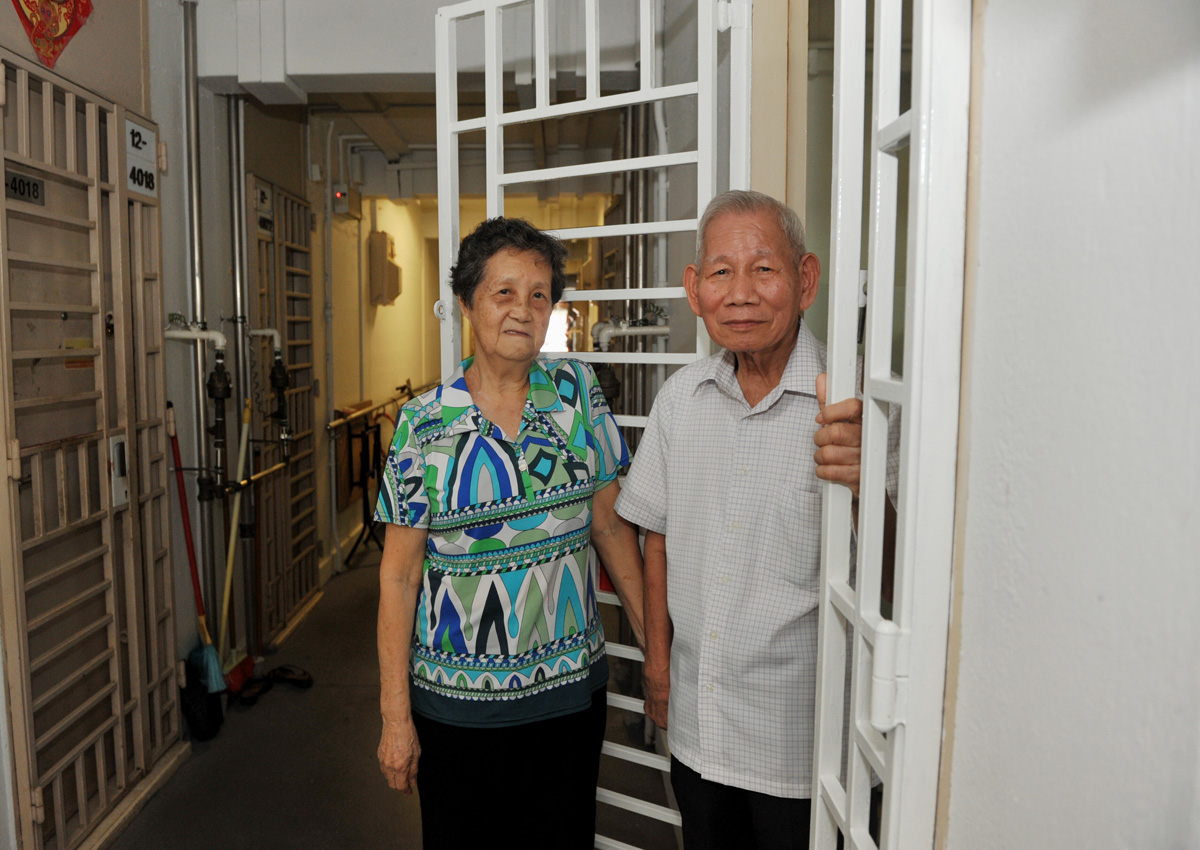
This July, three in 10 elderly citizens will get the first payouts under the Silver Support Scheme.

Some 140,000 Singaporeans aged 65 and above will get $300 to $750 every three months.

Those living in smaller flats get more. The first payout will be a double payment for six months from April to September. First announced in August 2014, the scheme supplements the retirement income of needy seniors.

There is no need to apply for the scheme as eligible seniors will be automatically included.

Three factors determine whether an elderly Singaporean is eligible. To qualify, a person must not have contributed more than $70,000 to his Central Provident Fund savings by age 55.

If a person or his spouse owns a five-room or larger HDB flat, or any private property, he will not qualify.

Eligible seniors must be from households where the average monthly income per household member is no more than $1,100. The scheme will cost close to $320 million in this first year.

Mr Heng also announced plans for a community network to provide seniors with greater support for their health and social needs. A pilot scheme will be launched in a few areas, which could be scaled up later, he said.

7. Help for families with children

A new $3,000 grant will be automatically credited to the Child Development Account (CDA) of any Singaporean child born from yesterday onwards.

This CDA First Step grant can be used for healthcare and childcare needs.

Children from vulnerable families will also be given a leg up.

About 1,000 children aged six and below can benefit from a new programme called KidStart, which will give them learning, developmental and health support.

Second-timer families with young children who live in rental flats can also get a grant of up to $35,000 to buy a two-room home.

Parents must demonstrate they are putting in effort by staying employed and making sure that their children attend school.

8. ‘Industrial park of the future’ in Jurong

An industrial park that extends beyond manufacturing and a body to help start-ups are among the Government’s new initiatives to promote innovation.

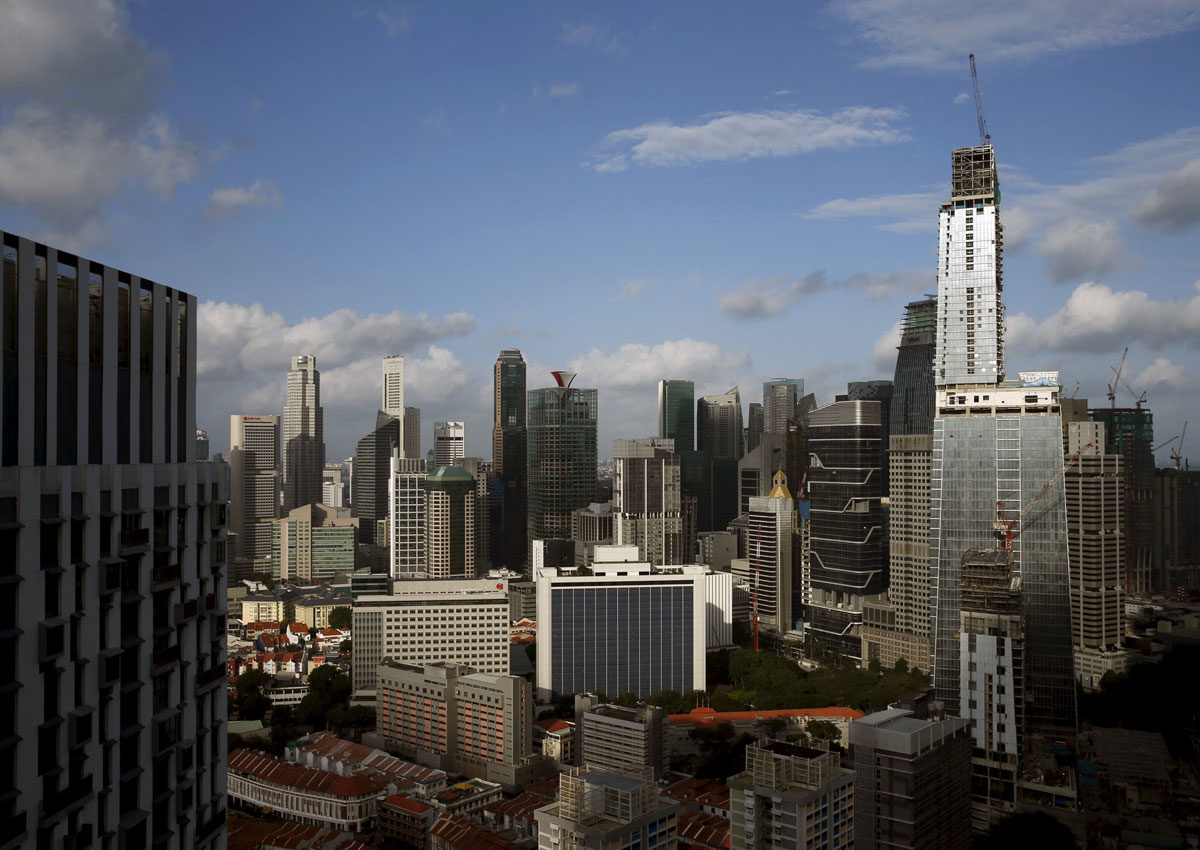
The new Jurong Innovation District will bring together facilities for learning, research, innovation and production to form an “industrial park of the future”, said Mr Heng.

Comprising Nanyang Technological University, CleanTech Park and the surrounding region, the district could host over 100,000 people across student and private residences, learning spaces, and start-up and research facilities. The first phase is expected to be completed in 2022.

A new SG-Innovate body will also be set up to help start-ups. It will match them with mentors, introduce them to venture capital firms and help them go abroad.

9. New $250m OBS campus on Coney Island

A new campus of the Outward Bound Singapore (OBS) adventure school will be built on the rustic Coney Island in Singapore’s north-east.

This would give many more young people the chance to go for an OBS expedition.

“To thrive, our young people need a sense of adventure, resilience, and be ready to challenge themselves to be their best,” said Mr Heng.

The $250 million campus is expected to be ready around 2020.

A fund of up to $25 million will also be set up to support ground-up projects by passionate citizens who want to build the Singaporean spirit.

Called Our Singapore Fund, it will be ready by the second half of this year.

10. More cash assistance for needy households

Singaporeans permanently unable to work or support themselves will get a higher monthly cash allowance under the Public Assistance scheme.

For instance, a two-person household with both on public assistance can get an extra $80 a month, bringing their total amount of cash assistance a month to $870.

More details will be announced next month when Parliament debates the budgets of various ministries.

Eligible households will also receive from $250 to $500 in goods and services tax (GST) cash vouchers to help offset the cost of living. This comprises up to $300 in a regular cash voucher to be paid in August, and up to $200 from a one-off cash voucher to be paid in November.

“If our recipients spend some of these in our neighbourhood shops, it will support our local businesses as well,” said Mr Heng.

About 840,000 households in Housing Board flats will also get between one and three months of service and conservancy charge rebates. This will cost $86 million.


This article was first published on March 25, 2016.
Get a copy of The Straits Times or go to straitstimes.com for more stories.

Image: 
Publication Date: 
Friday, March 25, 2016 – 14:00
Send to mobile app: 
Source: 


Rotator Image: 
Story Type: 
Others

Source link

Jurong to be 'industrial park of the future'

0

After one-north, anothernext-generation industrial area is coming up in the west.

The Jurong West area is set to be home to Singapore’s largest living lab for the testing and development of new technologies, including self-driving vehicles, robots and other smart solutions.

The Jurong Innovation District (JID) – comprising Nanyang Technological University, CleanTech Park and the surrounding region – was one of three government measures announced yesterday to boost innovation.

“Our earlier industrial estates were developed for specific industries, focused mostly on production,” Finance Minister Heng Swee Keat said. “Today, however, learning, research, innovation and production are closely intertwined.”

All these different activities will be housed together at JID, forming an “industrial park of the future”, he added.

When fully developed, it could host over 100,000 people across living spaces, including student and soho residences, learning spaces and start-up and research facilities.

Observers such as Mr Nguyen Do Dzung, senior planner at CPG Consultants, noted that JID is in line with the Government’s long-term strategy of moving towards higher value-added economic activities.

“The global economic environment is not the best at the moment and new, exciting ideas (such as JID) are critical to ensure Singapore is competitive, an attractive place to do business and innovate as well,” he said.

Its creation is also in line with global trends, noted Ms Angelene Chan, chief executive of DP Architects, who cited the Guangzhou Knowledge City Core Area master plan in China which the firm worked on as an example.

There, the vision was for a city attractive to knowledge-based industries.

The idea of a holistic, sustainable environment catering to the modern demands of users will be attractive to firms.

JID will also be close to the lifestyle elements of the Jurong Lake District in Jurong East, she added.

JTC Corporation is constructing LaunchPad @ JID, a space where entrepreneurs, researchers and students can design, make prototypes and test their new creations.

It has also invited private sector technology owners to test and develop sustainable infrastructure solutions in the district.

The first phase of JID is targeted for completion around 2022.

For Mr Frank Phuan, chief executive of local solar energy developer Sunseap Group, the choice of Jurong is not surprising, given multiple technologies piloted in the area.

For example, Yuhua last year was the first estate to get smart-living features, including metering systems that give real-time information on electricity usage.

Sunseap and other private companies have been collaborating with the National University of Singapore’s Solar Energy Research Institute of Singapore in CleanTech Park as well.

“What’s exciting now is the potential scale, compared with smaller pilots so far,” he said.

“The technologies that prove successful can then be implemented in other districts.”

JID comes as a further transformation of Jurong, a swampland-turned-manufacturing hub.

Jurong Island, for example, has attracted over $47 billion worth of investments to date from over 100 global companies, said the Economic Development Board.

In the past five years, a slew of Government Land Sales in Jurong have allowed the region to take on the form of a self-sufficient urban system, said Mr Alan Cheong, Savills Singapore’s research head.

“To ensure new age companies find Jurong attractive, the entire ambience of the district has to be transformed further,” he said.

wrennie@sph.com.sg


This article was first published on March 25, 2016.
Get a copy of The Straits Times or go to straitstimes.com for more stories.

Image: 
Category: 
Publication Date: 
Friday, March 25, 2016 – 12:31
Send to mobile app: 
Source: 


Story Type: 
Others

Source link

$1.9bn wage payouts to employers by end March, with more firms benefiting this year

0

March 25, 2016 12:34 PM

SINGAPORE – Over 95,000 employers in Singapore will receive about $1.9 billion in Wage Credit Scheme (WCS) payouts by the end of March.


Source link

More than 95,000 employers to get Wage Credit Scheme payouts this month

0

These employers will receive about S$1.9 billion in payouts by Mar 31, the Inland Revenue Authority of Singapore and Finance Ministry say. 

Source link

One-off GST cash voucher to help 1.4 million Singaporeans

0

Eligible Singaporeans will get up to $200 in a one-off goods and services tax (GST) cash voucher this year, to help them offset the cost of living amid bleak economic conditions.

The special payments will cost an extra $280 million, and help 1.4 million Singaporeans, Finance Minister Heng Swee Keat said yesterday.

They come on top of existing GST cash vouchers of either $150 or $300 given to eligible Singaporeans aged 21 or older, depending on the annual value of their homes.

“If our recipients spend some of these vouchers in our neighbourhood shops, it will support our local businesses as well,” said Mr Heng. The payouts will be made directly into recipients’ bank accounts.

Introduced in 2012 to help lower- and middle-income households with their expenses, the GST voucher is given in three parts – cash, Medisave and Utilities-Save, which provides HDB households with a rebate to offset utilities bills.

One-off payments, like this year’s, are given out occasionally to boost the voucher.

Families in Housing Board flats will also get a one-off rebate on service and conservancy charges (S&CC), ranging from one to three months, depending on the flat type.

The measures will cost $86 million and help 840,000 households.

Those living in an executive flat or a multi-generation flat will get a one-month rebate, while those in one- or two-room flats will get the maximum rebate of three months.

Beneficiaries welcomed the measures.

Madam Meera Taj Mohamed, 53, a former masseuse who left her job because of health issues, said the GST cash voucher would be a great help with daily expenses.

She said the $200 would help with groceries, as the food ration programme she is currently on does not provide cooking oil or perishables such as vegetables.

She will also get back about $84 from S&CC rebates this year, as she lives in a two-room flat in Sengkang.

“The feeling of having a bit extra is really good for those of us in need of cash,” she said.

For retired technician Tan Poh Huat, 68, the additional help will be less life-changing, but should cover about 20 days of food expenses.

“I spend about $10 a day on three meals, so the $200 won’t last for very long. But I don’t smoke, I don’t drink, and everybody needs money. If the Government wants to give me something, I am satisfied,” he said.

MP Lee Bee Wah (Nee Soon GRC) said she was pleased her wish for cash vouchers had come true, adding that Mr Heng had taken “a very caring approach” in the Budget.

“We are heading into a challenging time from an economic standpoint. So I am not disappointed with the amount. It’s never enough if you ask some people. But for me, it shows we care for the people and that’s important.”

rachelay@sph.com.sg


This article was first published on March 25, 2016.
Get a copy of The Straits Times or go to straitstimes.com for more stories.

Image: 
Category: 
Publication Date: 
Friday, March 25, 2016 – 12:21
Send to mobile app: 
Source: 


Story Type: 
Others

Source link

More money in the kitty for baby

0

Parents of Singaporean newborn babies will get more help to cope with their children’s health and childcare expenses.

They will receive a new grant of $3,000 in their child’s Child Development Account (CDA), without having to first deposit money in it.

Also, the Medisave withdrawal limit for pre-delivery expenses – such as money spent on ultrasound scans and prenatal consultations – will be doubled from $450 to $900.

These changes apply with immediate effect to Singaporean babies born from yesterday.

Finance Minister Heng Swee Keat said to laughter from MPs in the House yesterday: “I am told that, on average last year, we had 93 babies born every day. So congratulations to our 93 babies (born today).”

The changes are part of new family-friendly perks in the Marriage and Parenthood Package, which was introduced in 2001 and has been enhanced four times – in 2004, 2008, 2013 and last year.

The CDA scheme involves the Government matching parents’ contributions dollar for dollar, up to a cap of $6,000 to $18,000, depending on the birth order of the child.

Parents can open a CDA and use it to pay for expenses such as their child’s medical costs and childcare fees, from the time the child is born until he turns 12.

Eligible children will receive the new First Step Grant – which is part of the existing overall government contribution – automatically.

So, while the maximum government contribution remains the same, parents need to deposit only $3,000 to $15,000 for each child – instead of $6,000 to $18,000 – to get the maximum co-matching funds.

With the new grant, an estimated 74 per cent of CDA holders will be able to receive the maximum government contribution, up from the current 60 per cent, said Senior Minister of State Josephine Teo in a Facebook post yesterday.

Mrs Teo, who oversees population issues, added: “Separately, about 5 per cent of CDA holders today do not save into their accounts at all, perhaps because they are unable to do so. They do not enjoy any of the co-matching funds.

“The $3,000 grant will be particularly helpful for this group of parents and their children.”

Singapore had 33,793 citizen babies last year, the highest figure in 13 years.

The grant will be deposited into CDAs from July 1, after necessary updates to systems are made.

The Ministry of Finance said parents of children born between March 24 and June 30 should wait until July 1 before saving in the CDA in order to benefit from the grant.

Staff from the Ministry of Social and Family Development will visit all hospitals over the long weekend to explain the grant.

Business development manager Ivan Ong, 32, who is expecting to welcome a second child in May, intends to use the CDA to offset pre-school costs, which have been rising steadily in recent years.

He said he will wait until July to save in the CDA, so that he needs to contribute only $3,000 to get the maximum $6,000 from the Government.

“My wife will take maternity leave and there are a few months to go before we enrol the child in infant care, so I think we can wait.”

goyshiyi@sph.com.sg


This article was first published on March 25, 2016.
Get a copy of The Straits Times or go to straitstimes.com for more stories.

Image: 
Category: 
Publication Date: 
Friday, March 25, 2016 – 12:21
Send to mobile app: 
Source: 


Story Type: 
Others

Source link

Bee Cheng Hiang Biggest Sale @ 2 Outlets 25 – 27 Mar 2016 | SINGPromos.com

0

Bee Cheng Hiang Biggest Sale at two outlets: Enjoy up to 50% off Sliced Pork, Golden Coin, Bakkwa, Crispy Chicken Roll, Mini EZ pork, Gourmet Fusion & more

Bee Cheng Hiang Biggest Sale @ 2 Outlets 25 – 27 Mar 2016 | SINGPromos.com

Start off your long weekend with Bee Cheng Hiang’s Biggest Sale! Enjoy up to 50% off Sliced Pork, Golden Coin, Bakkwa, Crispy Chicken Roll, Mini EZ pork, Gourmet Fusion & more

Source

Budget to 'build our future together'

0

The first Budget of the Govern- ment’s new term was unveiled yesterday – a prudent plan that balanced targeted relief for companies and households with the longer-term objective of getting them future-ready.

Finance Minister Heng Swee Keat, delivering his maiden Budget, set the tone early on in his relatively compact speech.

With SG50 celebrations over, it was time to plan for Singapore’s next 50 years, he said.

On the economic front, this means not just helping firms and industries ride out current economic uncertainties but, more importantly, transforming them through deeper innovation and collaborations.

Workers, who will have to adapt to changing job demands, will get further help to learn new skills, and the most vulnerable households will get enhanced support to ensure they do not get left behind.

“Core for us to succeed is the spirit of partnership,” declared Mr Heng, who circled back often to this theme.

“Together, we are weaving a rich tapestry – each thread a different colour and texture, but woven together to give strength and resilience to our economy and our society.”

Mr Heng acknowledged that firms are facing tough conditions, from rising costs to slowing export demand.

But while the outlook is subdued, he noted that the economy is still expected to grow.

“We must not let pessimism take hold, lest it creates self-fulfilling expectations. The Government will continue to monitor the situation, and stands ready to act if conditions warrant.”

Nonetheless, he announced a package of measures to provide smaller companies with some short-term relief, such as raising the corporate income tax rebate from 30 to 50 per cent and a new scheme to help small and medium-sized enterprises (SMEs) borrow working capital more easily.

But firms hoping for further delays to foreign worker levy hikes would mostly have been disappointed – he deferred levy increases for work permit holders in only the marine and process sectors, for a year.

Mr Heng stressed that even as firms navigate the current uncertainties, they must keep their eye on the future.

“The global economic landscape is changing, and our challenges are pressing. We have a narrow window. We must find every opportunity to transform, to emerge stronger in the coming years.”

To that end, Mr Heng unveiled an Industry Transformation Programme (ITP), estimated to cost $4.5 billion over five years and mostly aimed at helping SMEs scale up.

It envisions technology and innovation at the core of Singapore’s SMEs, setting aside over $450 million to encourage SMEs to adopt robotics and other forms of automation.

A new $100 million one-stop trade information management system will enable businesses to share data electronically with one another and the Government, giving them capabilities associated with much larger international firms and potentially over $600 million worth of man-hour savings each year.

While helping businesses prepare for the future economy, the Budget also kept an eye on individuals and households.

A new “Adapt and Grow” initiative will see the current system of government wage support for local hires expanded to cover more jobs and workers.

Low-wage workers will benefit from enhancements to the Workfare Income Supplement scheme, which will now have higher, more frequent payouts and simplified criteria.

Mr Heng also gave details of how the Silver Support Scheme, which supports the most vulnerable seniors, will work.

It will pay out between $300 and $750 every quarter to those eligible, benefiting 140,000 senior Singaporeans.

At the other end of the scale, babies born from yesterday will receive $3,000 in their Child Development Accounts, while a pilot initiative called KidStart will see about 1,000 underprivileged children get learning, developmental and health support in their first six years.

As a result of all these, total government expenditure this year is estimated to be $73.4 billion, the largest ever and a rise of 7.3 per cent from financial year 2015’s $68.4 billion.

Despite this, the Budget will see a surplus of $3.4 billion, thanks to the inclusion of revenue contributions from Temasek Holdings.

Analysts said the Budget was a prudent one, with Mr Heng balancing short-term concerns and long-term challenges.

He “maintains a fine balancing act as he tiptoes along this fiscal tightrope,” said ANZ economist Ng Weiwen.

“While there are near-term assistance measures to support the economy, an eagle eye is still maintained on pursuing a productivity-driven growth model in the medium term, aiming to raise productivity from current levels of productivity growth which are close to zero per cent.”

Economists also welcomed the ITP, which they saw as a big push at driving innovation through a more targeted approach by sector, and integrating restructuring efforts.

Singapore Management University economist Hoon Hian Teck said: “There’s always been talk about this, but I must say I walk away from listening (to Mr Heng) feeling that I’ve heard a game plan for the next 50 years. And it makes me a bit more hopeful – I think we’ve identified what are the things we have to do to engineer ourselves for the future.”

yasminey@sph.com.sg


This article was first published on March 25, 2016.
Get a copy of The Straits Times or go to straitstimes.com for more stories.

Image: 
Category: 
Publication Date: 
Friday, March 25, 2016 – 11:40
Keywords: 
Send to mobile app: 
Source: 


Story Type: 
Others

Source link

First Silver Support payout in July

0

The much-awaited Silver Support Scheme will make its first payout in July, with some 140,000 Singaporeans aged 65 and above receiving between $300 and $750 every three months.

About three in 10 Singaporeans aged 65 and above will qualify for the payouts, with those living in smaller Housing Board flats receiving more.

The Central Provident Fund (CPF) Board, which is implementing the scheme, will consider three factors in deciding whether a person qualifies: lifetime wages, housing type and level of financial support in the household.

“Some of our older Singaporeans have fewer resources in their retirement years than others, because they earned low wages even after working consistently throughout their lives, or because they stayed home to raise their families,” said Finance Minister Heng Swee Keat.

The scheme will provide these seniors “a modest but meaningful supplement to their retirement incomes”, he said. “(But) it is not intended to substitute for other sources of support.”

The proportion of Singaporeans aged 65 and above will double from one in eight now to one in four by 2030, he noted.

There is no need to apply to join the scheme. Instead, the CPF Board will use information that it already has, such as CPF contribution history and housing type.

To qualify for the scheme, the person must not have contributed more than $70,000 to the CPF by the age of 55.

Those who own or whose spouse owns a five-room or larger HDB flat or private properties will not qualify.

Each member in the household also cannot earn more than $1,100 each month. The eligibility will be reviewed yearly.

These criteria will “make sure Silver Support goes to those who have lower incomes over their lifetimes and less retirement support”, Mr Heng said. He added that a retired couple living in a three-room flat can receive $4,800 each year.

Recipients will receive the money in their bank accounts or cheques if they do not have bank accounts.

The scheme was announced by Prime Minister Lee Hsien Loong at the National Day Rally in August 2014. During campaigning in the general election last September, PM Lee described the scheme as one that helps seniors to “have a pension in old age”.

A new law was passed in Parliament in August last year and the scheme was to have kicked in by this month, but Mr Heng said that more time was needed because it was a “new and extensive” scheme.

The first payout in July will be a double payment covering six months from April to September.

Thereafter, the payouts will be made every three months: in March, June, September and December.

The scheme costs close to $320 million in the first year. “The cost will likely increase over time as our population ages,” noted Mr Heng.

Those who do not qualify for Silver Support will benefit from other help schemes such as the GST Voucher, MediShield Life and the Pioneer Generation Package, Mr Heng said.

Besides the Silver Support Scheme, Mr Heng also announced yesterday increases in the monthly cash allowance for those under the Public Assistance Scheme. A two-member household will receive $870, or $80 more, in cash each month.

To provide more community support for seniors, pilot networks will be set up.

Run by a small team of full-time staff, the networks will involve volunteers, voluntary welfare organisations, businesses and schools.

The measures targeted at seniors will make Singapore a model for successful ageing, Mr Heng said.

Mr Patrick Tay, who chairs the Government Parliamentary Committee for Manpower, said that with the scheme kicking off in July, this gives seniors time to make an assessment of whether they qualify.

Ms Peh Kim Choo, chief of programmes at the Tsao Foundation, said that the difficulties of defining and calculating lifetime wages and household support could have held back the implementation.

But the payouts can make a difference to the seniors, she said. Some will use it for essentials like medical care.

“For those whose basic needs were met already, this additional payout will enable them to save, buy better food and enjoy a little of life’s luxuries,” she said.

tohyc@sph.com.sg


This article was first published on March 25, 2016.
Get a copy of The Straits Times or go to straitstimes.com for more stories.

Image: 
Category: 
Publication Date: 
Friday, March 25, 2016 – 11:54
Keywords: 
Send to mobile app: 
Source: 


Story Type: 
Others

Source link

China vaccine scandal: 'Most of the dubious vaccines were used'

0

Image: 
Publication Date: 
Friday, March 25, 2016 – 11:34
Keywords: 
Send to mobile app: 
Source: 


Story Type: 
Others

Source link