Home Blog Page 4441

SAF military and live firing exercises to start next week

0

March 25, 2016 2:02 PM

SINGAPORE – The Singapore Armed Forces (SAF) will be conducting military and live firing exercises in the next two weeks in various parts of Singapore, the Ministry of Defence (Mindef) said in a statement.


Source link

Rescued Yishun cats still 'severely malnourished'

0

They were among the 39 cats rescued from a fourth-storey Housing Board flat in Yishun exactly a month ago.

The four cats were still emaciated and sick when they were released yesterday by the Agri-Food and Veterinary Authority (AVA) to the Cat Welfare Society (CWS), a non-profit organisation run by volunteers.

The felines, each weighing less than the normal weight of 2kg, were taken to James Tan Veterinary Centre on Whitley Road for assessment and treatment.

CWS committee member Veron Lau said: “We are hoping to get their weight back up and ensure they are healthy before we sterilise and vaccinate them. We want them to go to good homes.”

The 39 cats, kept in filthy cages, were removed from a three-room unit at Block 207, Yishun Street 21, on Feb 25. Both AVA and CWS learnt of their plight after residents there complained about “faecal odour” from the unit in September last year.

It was after several attempts that AVA managed to contact the flat owner – a hoarder – and removed the cats, which were already in poor condition.

Twenty-five cats had been released to CWS after being under AVA’s care.

“Many were severely malnourished. More than half were below 2kg in weight and were at high risk of organ failure,” Ms Lau told The New Paper yesterday.

Unfortunately, three of the 25 died while at the vet’s and another four from the 14 that were still at AVA also died.

“The four released to us today were not doing too well so we had to take them to Dr Tan to be looked at,” Ms Lau said, adding that the remaining cats left at AVA will be released soon.

Ms Lau said while the kind vets at different practices had given “huge concessions to helping these cats, remedying years of neglect does not come cheaply”.

RAISING MONEY

“We are raising $10,000 to continue the care for these cats, but with 10 more being released to us, it looks like we have to raise more money,” she said.

Under the Animals and Birds Act, anyone found guilty of cruelty to animals, including abandonment, can be jailed up to 18 months, fined up to $15,000, or both.

When asked if the flat owner will be taken to task for his cats, AVA would only say that investigations are still ongoing.

SPCA RESCUERS PICK UP SEVERAL PEDIGREE DOGS

Officers from the Society for the Prevention of Cruelty to Animals (SPCA) and other dog rescuers were kept busy for the past 24 hours.

They picked up more than a dozen pedigree dogs, believed to have been abandoned, from various parts of Singapore.

Founder of Voices for Animals (VfA) Derrick Tan was alerted on Facebook by friends that three pedigree dogs had been found at a public toilet in Yishun on Wednesday.

“They could not house them so I went down to the toilet to get the dogs,” he said.

Yesterday, he picked up another two toy dogs from the grounds of a condominium in Hougang.

“Another two dogs were picked up separately by other rescuers. One was found by the highway near Old Tampines Road,” Mr Tan told The New Paper.

MICROCHIPS

SPCA also rescued six pedigree dogs, five of which were poodles, in the last 24 hours. Other breeds included maltese, shih tzu and cocker spaniel.

Its spokesman said some of the dogs have microchips.

“We are tracing the registration of the microchips to identify the owners of the animals, if possible,” she said.

“We understand that other animal welfare groups have found similar dogs in the past day or so. It is possible that these animals were used for breeding and were abandoned by the same person,” she added.

Mr Tan said: “If you can’t cope and need to rehome your pet, please take them to proper shelters or to the SPCA. Please don’t simply abandon them anywhere. They could get run over by cars or be abused.”


This article was first published on March 25, 2016.
Get The New Paper for more stories.

Image: 
Category: 
Publication Date: 
Friday, March 25, 2016 – 14:00
Send to mobile app: 
Source: 


Story Type: 
Others

Source link

SMRT track accident: Families of dead duo planning joint prayers

0

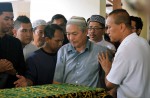
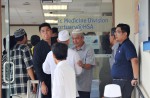
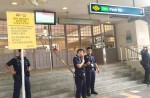
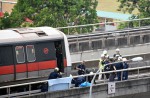
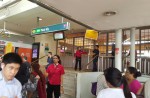
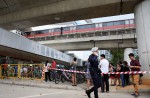
The families of the two SMRT trainees hit and killed by an oncoming train on Tuesday are planning to hold joint prayers next week to mourn their loss, said an uncle of one of the dead men.

Relatives said both families are struggling to cope with the sudden deaths of Mr Nasrulhudin Najumudin, 26, and Mr Muhammad Asyraf Ahmad Buhari, 24.

“We’ll be having prayers every day… We also invited the other family to join us (next week), for a combined prayer for the deceased,” said Mr Bakhtiar Ahmad, 63, an uncle of Mr Muhammad Asyraf.

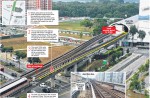
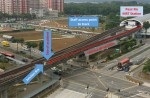
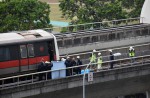
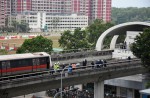
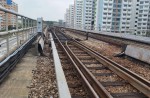
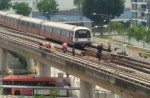
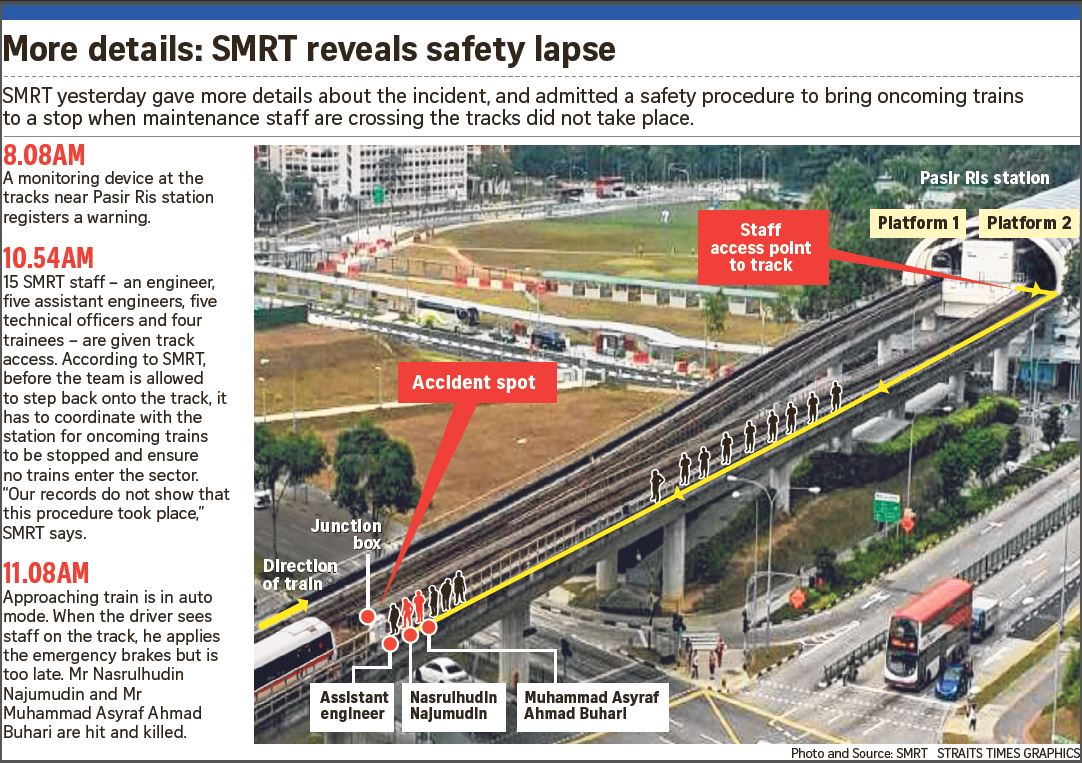
The two trainees were among 15 technical staff investigating a possible fault with a point machine used for trains to change tracks.

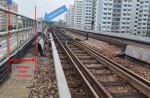
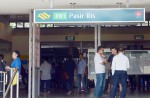
They were struck by an oncoming train near Pasir Ris station while walking towards the machine.

When asked about a statement by SMRT on Wednesday revealing that a key safety procedure had not been followed, Mr Nasrulhudin’s older brother Nisham, 32, said: “We have no comments on SMRT’s statement. We hope to wait for the complete picture after investigations are over.”

Said Mr Bakhtiar: “We don’t want to speculate. Let the authorities do what they are supposed to.”

In an e-mail message to all staff yesterday obtained by The Straits Times, SMRT chief executive Desmond Kuek said “our efforts must now be to make sure such a tragedy never happens again”.

“Clearly there is much more that can and must be done everywhere to make our workplace safer for all our staff,” he wrote.

In the wake of the accident, industry observers also weighed in on SMRT’s safety protocols. “The investigation should reveal why 15 people needed to go down just to inspect a fault. There may be a valid reason, but it’s yet to be known,” said Mr Rajan Krishnan, chief executive of engineering firm KTC group.

According to SMRT, the 15 staff comprised six engineers, five technical officers and four trainees.

A rail engineer, who spoke to ST on condition of anonymity, asked if there was a worker assigned to keep a lookout for oncoming trains, or a controller for site safety.

He said that whenever a track excursion is required, one person among the group should be responsible for the safety of everyone else.

“His job is not to hold a shovel or anything like that, but to set up a safe system of work. He has to calculate the speed of the train and the sighting distance that you have, so that you obtain the required warning time to get out of the track and into a place of safety,” he added.

byseow@sph.com.sg

adrianl@sph.com.sg


This article was first published on March 25, 2016.
Get a copy of The Straits Times or go to straitstimes.com for more stories.


Image: 
Category: 
Publication Date: 
Saturday, March 26, 2016 – 15:21
Send to mobile app: 
Source: 


Story Type: 
Others

Source link

MAS welcomes move to allow cross-border RMB flows from Chongqing

0

The move by the People’s Bank of China Chongqing Operations Office will allow eligible corporates and individuals in the Chinese city to conduct cross-border Renminbi transactions with financial institutions and corporates in Singapore. 

Source link

Budget 2016: She won't have to skip a meal now

0

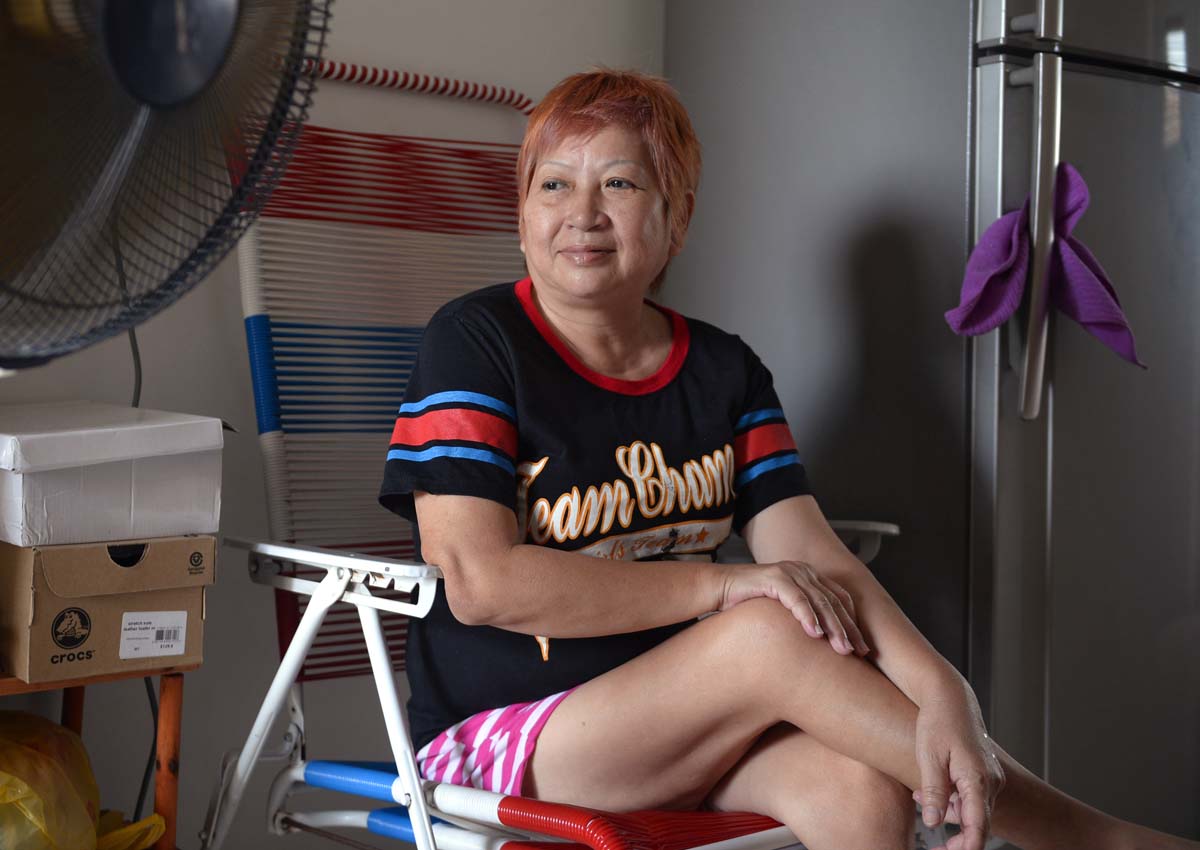
Twice-divorced and estranged from her one living sibling and two children, Ms Goh Quee Eng, 58, also has depression and cannot work.

She has been surviving on long- term financial assistance from the Government of $450 a month since 2011 after her second marriage dissolved.

To make ends meet, she eats only two meals a day and keeps some bread for when she gets hungry.

Ms Goh told The Straits Times in Mandarin: “I am barely scraping by. I don’t have any extra money to save for emergencies.”

But a Budget announcement yesterday means Ms Goh can soon have three meals a day.

Singaporeans such as Ms Goh will get a raise in the monthly cash allowance for Public Assistance beneficiaries.

Public Assistance is for Singaporeans who are permanently unable to work, and lack income and family support. It has a cash component and also covers hygiene essentials and medical treatment.

Finance Minister Heng Swee Keat said: “For example, a two-person household, where both are on public assistance, will now receive an additional $80 a month, bringing the amount of cash assistance per month to $870.”

More details will be announced by the Ministry of Social and Family Development.

Currently, one-person households receive $450 a month, two-persons get $790, three-persons get $990 and four-persons get $1,180.

In 2014, some 4,134 people benefited from Public Assistance, also known as ComCare Long Term Assistance.

Ms Goh, who lives in a rental flat in Woodlands with two friends, is heartened by the announcement.

“The extra allowance will help me ease my financial burdens. I will be able to buy food without worrying about whether I have enough money for the coming weeks,” she said.

She used to work as a cleaner before she was diagnosed with depression, and her second husband’s income of $1,000 as a driver also helped. But now that she only has the $450 to depend on, Ms Goh worries about not having savings for emergencies.

“With the extra allowance, I can have three meals a day instead of merging breakfast and lunch into one meal,” she said. “Maybe I can even save some money.”


This article was first published on March 25, 2016.
Get a copy of The Straits Times or go to straitstimes.com for more stories.
Image: 
Publication Date: 
Friday, March 25, 2016 – 14:00
Send to mobile app: 
Source: 


Story Type: 
Others

Source link

Budget 2016: Not a blockbuster, but sets the scene for the future

0

It was not a blockbuster Budget, understandably as the Government is less than one year into its current term. The Minister for Finance has, however, signalled his longer-term plans for the economy.

Economically, this Budget seems to be a precursor to Committee on the Future Economy plans, focusing on longer-term development, economic transformation and for companies to restructure to fit into the future economy, through initiatives like the innovation and transformation of industries and the new Jurong Innovation District.

These are very good long-term plans for companies and industries that focus on their longer term viability and sustained future growth.

The immediate issues facing companies such as cost competitiveness, a drop in demand, drying up of credit and availability of manpower, seem to have been ignored.

The Government may think the economy is not in such a bad shape yet and expects further decline before it steps in. This is a gross underestimation of the real situation our companies, especially SMEs (small and medium-sized enterprises) are facing.

Not only SMEs, but even the large MNCs are facing huge difficulties coping with the high costs of doing business in Singapore as well as the availability of enough workers.

Ignoring these two issues will have a long-term detrimental effect on the ability to root companies in Singapore. While the higher tax rebate seems useful, this will not mean much if companies are not earning profits in the first place.

For SMEs, a bigger issue is credit availability. All of our banks have tightened credit and have become more conservative. Some banks, especially foreign banks that grew rapidly in the local credit market, have completely exited the SME market in Singapore.

The $300,000 SME Working Capital Loan scheme will not be effective because the 50 per cent risk-sharing provided by the Government is not attractive enough for banks. For $300,000, a minimum of 75 per cent sharing would have been more attractive and may work.

But anyway, $300,000 will be useful only to smaller companies. Many medium and larger companies are also squeezed for credit and the minister should have strengthened schemes like the Loan Insurance Scheme by taking a bigger share of the risk – say 75 per cent – to catalyse credit that has dried up.

Rolling back the Productivity and Innovation Credit Scheme (PIC) also seems to indicate that the Government is giving up on the PIC as a tool to help productivity improvements. I was hoping to see new initiatives for the Government to press on with productivity improvements.

There is an emphasis on robotics, but the level of adoption remains to be seen and even so, the potential displacement of labour is something that this Budget should have addressed, especially with job creation currently low.

On the whole, businesses may not be very excited by this year’s Budget as their immediate and near-term issues have not been adequately addressed.

The writer is an entrepreneur and former Member of Parliament.


This article was first published on March 25, 2016.
Get a copy of The Straits Times or go to straitstimes.com for more stories.

Image: 
Publication Date: 
Friday, March 25, 2016 – 14:00
Send to mobile app: 
Source: 


Story Type: 
Others

Source link

WP calls again for Elected Presidency to be abolished

0

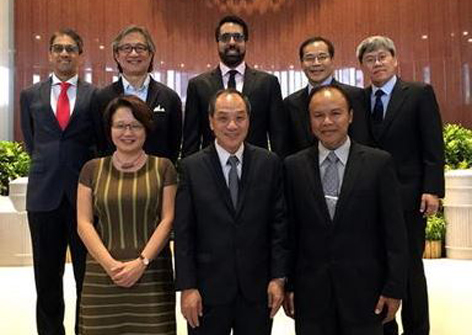
The Workers’ Party (WP) has reiterated its call for the office of the Elected President (EP) to be abolished.

It cited four reasons for its stance in a submission on Monday to the Constitutional Commission formed to study the Elected Presidency and recommend how it can be updated.

In a statement published on the WP’s website on Wednesday, the party argued that the EP undermines parliamentary democracy; could potentially “cripple” a non-People’s Action Party (PAP) government in its first term; and could be an unnecessary alternative power centre, and so cause gridlock.

It also said that Parliament is a sufficient safeguard when it comes to protecting the country’s reserves.

The WP, in the submission signed by chairman and Aljunied GRC MP Sylvia Lim, said current concerns about the EP “were, largely, the making of the Government itself”.

It added: “It is also ironic that the Government has regularly eschewed political systems embroiled in gridlock, yet it is entrenching and exacerbating the potential for real gridlock through the office of the EP and the proposed constitutional changes to the functioning of the office of the EP.”

The commission, led by Chief Justice Sundaresh Menon, is reviewing submissions and will hold public hearings over the next two months.

It was appointed by Prime Minister Lee Hsien Loong in February to review aspects of the EP system, which was instituted in 1991.

PM Lee said during the debate on the Presidential Address at the opening of Parliament that the President had to remain elected, but that certain aspects of the process had to be reviewed.

The growth in Singapore’s reserves, of which the President is custodian, means that individuals with character as well as competence are needed, he said. Yet another consideration: the need for candidates from minority races to get a chance to be elected from time to time.

The WP said its “strong objections” to the EP have remained unchanged since the 1980s, and that its main concerns remain relevant.

On how the EP undermines the parliamentary system, the WP said the Government’s power to govern comes from the popular mandate it receives at general elections.

But the EP, with powers under the Constitution, “fetters the Government in matters which may be critical to the Government’s effectiveness” such as in making key civil service appointments and drawing on past reserves should the need arise.

The WP also said that those who qualify to run for the presidency come from an elite group and many are “senior officials appointed under the PAP Government”.

Therefore, should an opposition party take over government, the EP could block key appointments and “cripple the new administration”, it said, adding: “The EP derogates from and is a blot on Singapore’s commitment to democracy.”

It added that the Government’s suggestion to expand the powers of the Council of Presidential Advisers “may add another layer of gridlock”.

The WP also said the EP’s veto powers could lead to the President becoming an alternative power centre, especially when the EP and Government do not “see eye to eye”.

And while the WP agrees with the need to safeguard the reserves, it said the EP is “not the right mechanism” to do so. “Instead, WP is open to the idea of enacting additional Parliamentary mechanisms to safeguard the reserves,” it said.

This could include requiring a super-majority vote in Parliament before past reserves can be unlocked.

It added that government concerns over a lack of a minority President would be nullified “if Singapore were to revert to its former system of appointed, ceremonial Presidents”.

waltsim@sph.com.sg


This article was first published on March 25, 2016.
Get a copy of The Straits Times or go to straitstimes.com for more stories.

Image: 
Category: 
Publication Date: 
Saturday, March 26, 2016 – 06:30
Send to mobile app: 
Source: 


Story Type: 
Others

Source link

Budget 2016: Heng seeks partners and he'll gladly split the bill

0

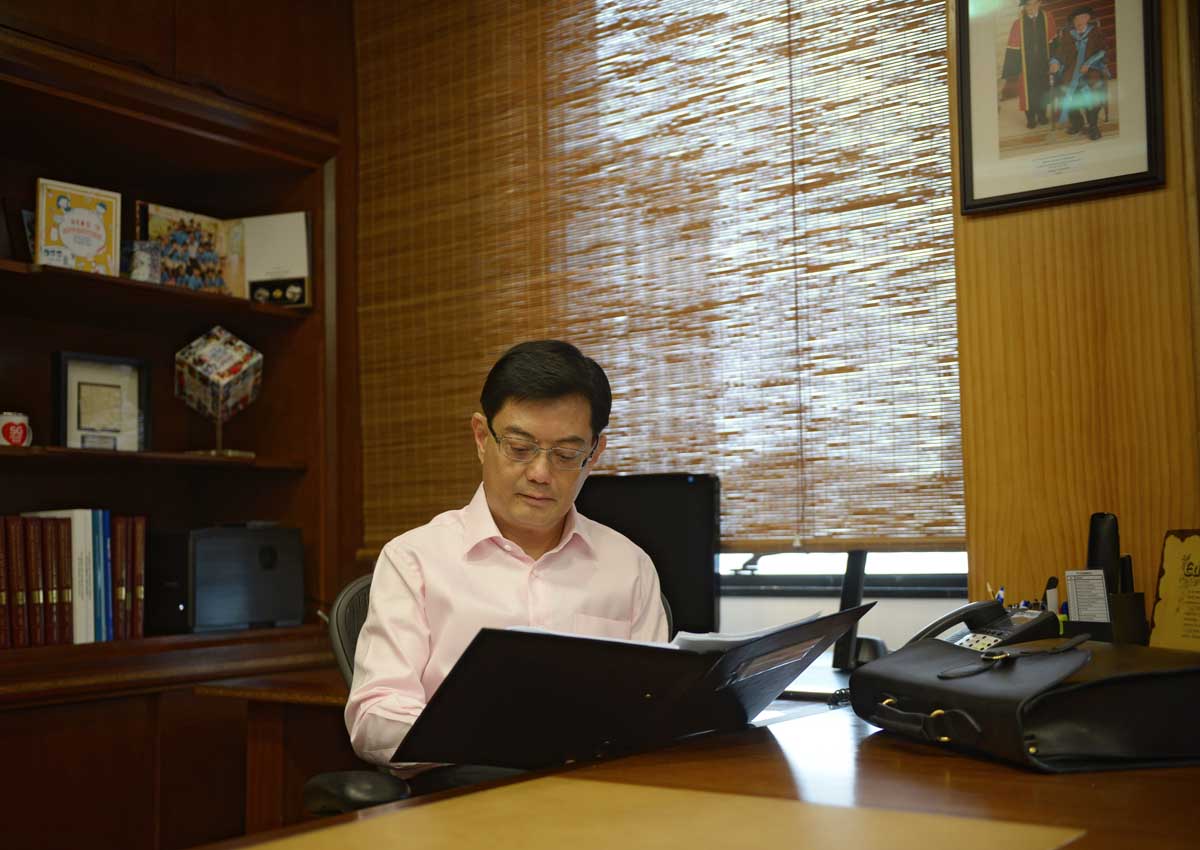
Mr Heng Swee Keat chose as the title of his first Budget statement “Partnering for the Future” – reflecting his preference for collaboration as the best way to grow and transform the economy, and nurture a caring society.

“Core for us to succeed is the spirit of partnership, where Singaporeans work together in new ways to transform our economy and strengthen our society,” he said.

Just six months into his role as Finance Minister, he and his team have crafted a Budget that conveys quiet confidence in the city state’s ability to remake itself for the future. That is no small feat in a world weighed down by worries of slow growth, debt and deficits, terrorism and turbulence.

Amid these external challenges, Singapore is going for growth, with a Budget focused squarely on economic development and anchored by a $4.5 billion Industry Transformation Programme. It is a package of measures to help companies and industries gear up to compete not just locally but also globally, and spur innovation.

The global economic landscape is changing fast, Mr Heng warned, and major economies like China and India are restructuring. Singapore has but a narrow window of opportunity to transform itself.

His message to businesses: “We must come together as partners to transform our economy through enterprise and innovation… Change is accelerating with rapid advances in knowledge and technology. Yet the potential for collaboration has never been greater. We must work together to muster our resources, to innovate, scale up and internationalise.”

He cited the work of Lincoln Electric as an example of how one firm can help kick-start change in an industry through partnering other firms. How? Lincoln redesigned robotics systems to make them more affordable to small and medium-sized enterprises (SMEs) that have use for them in the metal fabrication process. As many as 1,000 SMEs stand to benefit.

“Industry-level transformation works best if firms partner one another, or if industry associations lead the effort, because they know their needs best. Government agencies can help by initialising lead demand or through regulatory changes. We need to form close partnerships among firms, industry associations and Government to drive industry-level transformation,” he said.

The Government will play the role of enabler.

Mr Heng put on the table a $450 million robotics programme to boost development and adoption of the technology. He is footing the bill for a $100 million national trade platform to facilitate information sharing between firms in logistics and trade finance, and the Government.

As for workers, they too are hit by restructuring and many worry that their jobs are no longer secure.

“As economic cycles shorten and changes occur faster, the pressure on our people to adapt will rise,” he acknowledged, adding that he understood Singaporeans’ anxieties and the Government will give every support to those affected.

Yet there is no getting around the fact that workers will have to “Adapt and Grow”. That is the name Mr Heng has given to wage support schemes to encourage firms to hire retrenched workers, and professional conversion programmes to help displaced professionals, managers, executives and technicians learn new skills and switch to jobs in growth sectors.

This then is a partnership premised on responsibility, with the onus on workers to help themselves find replacement jobs.

The Budget makes no mention of other support schemes that some have hoped for, such as unemployment insurance.

On the social side, Mr Heng is banking on partnerships in the community to help address needs, including those due to the rapid ageing of society.

He announced the pilot Community Networks for Seniors in which volunteers, schools, businesses and voluntary welfare organisations work with a team of full-time government officers on the ground to help seniors stay healthy, active and engaged.

He has also set aside funds for a $25 million Our Singapore Fund to support projects that promote unity and deepen people’s sense of being Singaporean.

He spoke with delight of Mr Dennis Quek and Mr Wilson Ang, who had organised a trip for 100 wheelchair users to visit Pulau Ubin. They enlisted the help of 600 others, including the Singapore navy, which helped to ferry the participants there in naval vessels.

The strong emphasis on partnerships in Budget 2016 is consistent with the spirit of Mr Heng’s other major undertakings, such as the Our Singapore Conversation of 2011-12 and last year’s SG50 celebrations.

The first engaged Singaporeans in conversation about their hopes and dreams for the country. The second put the focus on ground-up initiatives to mark 50 years of independence.

Those taking soundings of Mr Heng’s leadership style, since he is touted as a possible future prime minister, will have found in the framing of yesterday’s Budget statement confirmation that he values participation and engagement. As Finance Minister, he chooses not to lead forcefully from the front, preferring instead to facilitate and support change from behind.

It is an approach that is appropriate for the new economy, in which the Government’s role is increasingly to create conditions for private enterprise and creativity to flourish.

But the focus on partnerships also has its drawbacks at a time of rapid economic change, for partnerships take time to get off the ground. After all, all sides involved need to be willing and ready to make a go of it together.

The thing is, Singapore is not used to slow change.

Given the urgency of economic transformation, will the generous incentives and new platforms to encourage collaboration set out in this year’s Budget suffice?

Or will Mr Heng discover that other forms of pressure are needed to spur and speed change along?


This article was first published on March 25, 2016.
Get a copy of The Straits Times or go to straitstimes.com for more stories.

Image: 
Publication Date: 
Friday, March 25, 2016 – 14:00
Send to mobile app: 
Source: 


Story Type: 
Others

Source link

Budget 2016: Fiscal surplus of $3.45b, thanks to Temasek's inclusion in NIR

0

From a $4.88 billion deficit last year to back in the black this year. An overall surplus of $3.45 billion is projected for 2016, buoyed by bigger contributions from Singapore investment company Temasek Holdings.

What is more, the surplus is forecast even as spending rises, including a marked increase in healthcare and business support.

Helping offset the rising expenditure is Temasek’s inclusion in the net investment returns (NIR) framework this year. This will push the NIR contribution to the nation’s coffers to $14.7 billion, up 48.6 per cent from $9.9 billion last year. The inclusion incorporates total expected returns from Temasek, which paid only investment dividends to the Government previously.

The NIR framework allows the Government to spend up to half of the long-term expected real returns from the GIC, Monetary Authority of Singapore and now Temasek.

OCBC economist Selena Ling said: “The increase in NIR contribution is surprisingly large – I expected only around $12 billion with Temasek included. I think from here on you can expect the NIR contribution to be $12 billion to $15 billion.”

At the same time, operating revenue – mostly generated from tax income – is expected to grow 6.7 per cent to $68.44 billion on the back of a $1.1 billion jump in vehicle tax to $2.93 billion, while statutory board contributions will jump threefold to $1.88 billion.

Personal income tax revenue will rise 10.9 per cent to $10.13 billion, but corporate income tax will drop 3.1 per cent to $13.41 billion.

However, the one-off revenue boosts from sources such as motor vehicle taxes this year may not be sustainable, Finance Minister Heng Swee Keat noted yesterday.

“The longer-term picture will grow more challenging as we expect expenditure needs to grow faster than revenues. Even as we plan for rising expenditures, we must spend only when it’s needed and where it best achieves our social and economic objectives,” Mr Heng told Parliament.

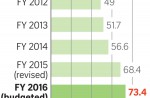
Total expenditure will rise 7.3 per cent from $68.41 billion to $73.43 billion (excluding special transfers), another new high for the nation.

The Government will set aside an additional $1.8 billion for healthcare to cater for MediShield Life subsidies and the construction of facilities such as Sengkang General Hospital and Outram Community Hospital. The total healthcare bill will run to $11 billion.

National development spending will hit $3.8 billion, up $1.1 billion. Education will grow by $700 million to $12.8 billion. Defence will command the largest spending at $14 billion, up $800 million.

Meanwhile, the push to transform Singapore’s economy and help businesses survive restructuring is still a key factor in fiscal planning.

A total of $2.2 billion will be allocated this year for special transfers to businesses, such as the Wage Credit Scheme and the Productivity and Innovation Credit scheme. The National Research Fund – set up to build an economy driven by knowledge and innovation – will receive a $1.5 billion top-up.

Other fund top-ups will include a $1 billion injection into the Changi Airport Development Fund and a $1.1 billion increase in the Special Employment Credit Fund, established in 2011 to encourage the hiring of older Singaporean workers.

All in all, the fiscal position in 2016 is one of balance “between being prudent… and being accommodating to support enterprises… even as we continue our restructuring”, Mr Heng said.

Or as Ms Ling put it: “With higher NIR contributions, the Government can easily spend more, but looks like it is keeping the powder dry for more urgent moments.”


This article was first published on March 25, 2016.
Get a copy of The Straits Times or go to straitstimes.com for more stories.

Image: 
Publication Date: 
Friday, March 25, 2016 – 14:00
Send to mobile app: 
Source: 


Story Type: 
Others

Source link

Coffee, tea and CCTV – eateries step up security

0

The next time you have your meal at a coffee shop, a pair of electronic eyes may be watching you.

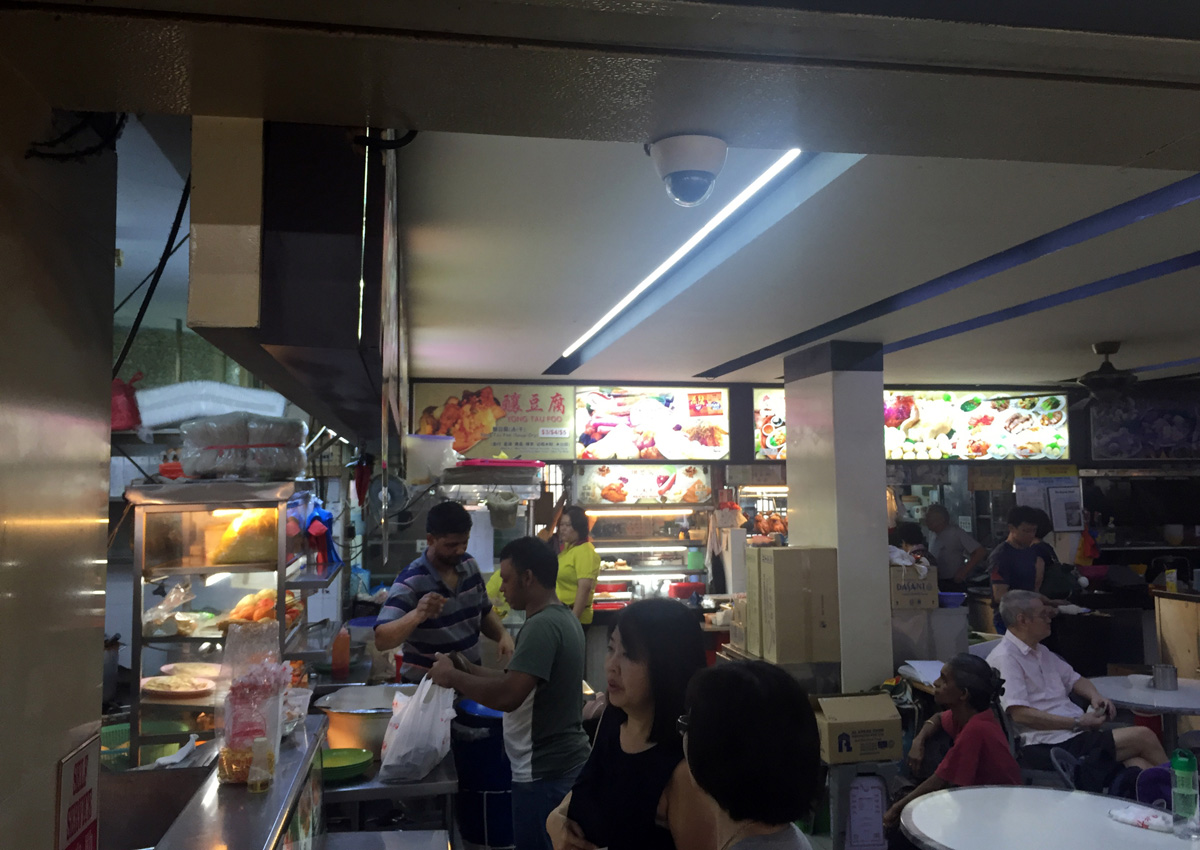
In the light of the recent terror attacks in Europe, local coffee shops are installing closed-circuit television (CCTV) cameras for added security. The two coffee shop associations are pushing their more than 700 members to put up 24-hour surveillance cameras, and about 400 have already done so.

The cameras will show the stalls and surrounding areas. Workers will be trained to look out for suspicious individuals, said Mr Thomas Foo, chairman of the Kheng Keow Coffee Merchants Restaurant and Bar Owners Association, which represents more than 300 coffee shops.

The Foochow Coffee Restaurant & Bar Merchants Association has 400 members.

On Tuesday, coordinated terrorist attacks in the Belgian capital of Brussels killed 31 people and wounded 270.

With the terror threat at its highest level in decades, Home Affairs Minister K. Shanmugam last Friday announced a major upgrade of counter-terrorism measures.

Singapore will strengthen security, installing more CCTV cameras in public places and training emergency response teams to react swiftly to attacks, among other things.

Stallholders and employees of both coffee shop associations will attend workshops by the Singapore Police Force and Singapore Civil Defence Force, and learn how to fire-proof stalls and use fire extinguishers, among other tips.

Setting up the cameras will cost about $4,000 for each coffee shop, but operators can claim 60 per cent of costs under the Government’s Productivity and Innovation Credit scheme, said Mr Foo.

“The CCTVs also improve productivity because during less busy times… the coffee shop operators can check if workers are doing their jobs from their mobile phones and laptops,” he said.

Some coffee shop owners are reluctant to install the cameras because they do not know how to use them, he noted.

Not so coffee shop chains Chang Cheng Mee Wah and Kim San Leng, which have had CCTV cameras on their premises for at least seven years.

“We can watch when the stocks arrive and, if anything happens, like fights, at least we have a recording of it,” said Mr Alfred Hoon, a manager at Kim San Leng.

At Chang Cheng coffee shop in Braddell, drinks stall worker Loh Moh Eng, 58, said a new CCTV system was installed last week to replace the old one, which was of poor quality.

Said Mrs Loh: “If we see anything suspicious, we’ll just call the police as we’ve always been doing.”

And the cameras are so discreetly placed that some customers have not even noticed them.

Restaurant manager Joseph Tan, 33, who visits the coffee shop thrice a week, said: “I haven’t noticed that they installed the CCTV but I think it’s good. In case there are fights or thefts, the police can track the culprits down.”

mellinjm@sph.com.sg

Additional reporting by Dominic Teo


This article was first published on March 25, 2016.
Get a copy of The Straits Times or go to straitstimes.com for more stories.

Image: 
Category: 
Publication Date: 
Friday, March 25, 2016 – 12:31
Keywords: 
Send to mobile app: 
Source: 


Rotator Headline: 
Coffee shops installing CCTV for added security in light of Europe terror attacks
Story Type: 
Others

Source link