Home Blog Page 4197

Stalls selling raw-fish dishes still reeling

0

The Group B streptococcus (GBS) bacteria outbreak may have died down, but stalls which used to sell ready-to-eat raw-fish dishes are still reeling from the effects of the scare.

Food stall owners interviewed by The Sunday Times said they have seen their takings drop drastically. Mr Kiang Choon Tong, 68, stallholder of Soon Heng Pork and Fish Porridge at Amoy Street Food Centre, said business has fallen 60 per cent compared to November last year. His stall now sells only pork porridge.

Lye Bo at Alexandra Village Food Centre has switched to selling noodles instead of porridge. “People still cannot get over it (the GBS outbreak). It is not just going to the hospital a few days, but having to amputate your limbs,” said Madam Lee Wai Ping, 41, one of its stallholders.

Mr Tan Whee Boon, 51, a former technician, had his hands and feet amputated last August after he suffered food poisoning from eating a raw-fish dish.

In December last year, the National Environment Agency (NEA) banned food outlets from using freshwater fish in all ready-to-eat raw-fish dishes. This was after about 150 GBS cases were linked to the consumption of raw freshwater fish toman (snakehead) and song fish (Asian bighead carp), which are typically eaten with porridge .

In response to ST queries, NEA, the Ministry of Health (MOH) and the Agri-Food and Veterinary Authority (AVA) said the ban on using freshwater fish in raw-fish dishes will remain until further notice.

After the ban, some stalls obtained approval to use saltwater salmon in their raw-fish dishes instead, but this has not helped them win back their customers.

Ah Chiang Porridge in Tiong Poh Road, for instance, got the approval to sell ready-to-eat raw salmon in January but its stall supervisor Cher Kee Chiang, 69, said business has plummeted. “Before the incident, we sold about 250 plates of ready-to-eat raw fish every weekday, now we sell at most 35 plates.

“People don’t really like the Norwegian salmon we sell, because it is too soft. It does not suit Singaporeans’ taste.”

As of March 31, 30 food stalls were approved by NEA to resume the sale of ready-to-eat raw-fish, or mainly salmon, dishes. They include those in hotels and hawker centres. GBS bacteria are commonly found in the gut and urinary tract in about 15 to 30 per cent of adults without causing any disease, but they may sometimes cause infections of the skin, joints, heart and brain. There were more than 350 GBS infection cases last year, with two fatalities.

In their reply dated April 4, the authorities said that there have been fewer than five GBS cases a week so far this year, similar to the usual “baseline” figures. This compares with nine to 10 cases per week for the first six months of last year.

“We are unable to establish any link between the baseline GBS cases and consumption of raw fish,” said MOH, NEA and AVA.

Mr Cher hopes there will be some clear answers soon about last year’s GBS outbreak.

“We want to know the origins of the problem, whether it was due to problems with the fish, or improper handling practices. We don’t know the clear reason why we cannot sell raw fish,” he added.

Not all customers, however, remain wary of eating raw fish.

Sales manager Jerryl Ling, 24, is glad that stalls are now selling raw salmon with porridge. “I enjoy sashimi, and I love Chinese yu sheng. I was quite devastated when GBS broke out and I couldn’t eat the song fish,” he said.

kcarolyn@sph.com.sg

trebecca@sph.com.sg


This article was first published on April 17, 2016.
Get a copy of The Straits Times or go to straitstimes.com for more stories.
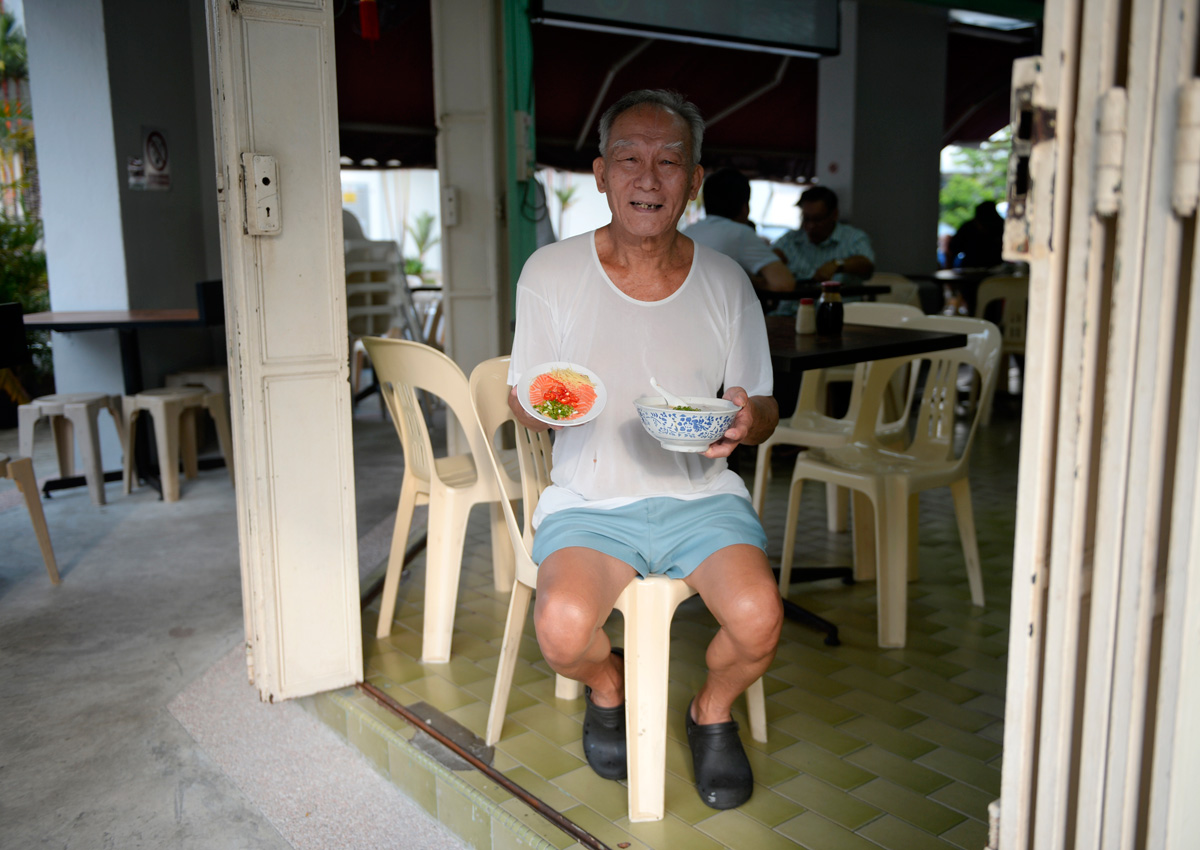
Image: 
Category: 
Publication Date: 
Sunday, April 17, 2016 – 13:24
Send to mobile app: 
Source: 


Rotator Headline: 
Food stall owners selling raw-fish dishes still reeling from GBS scare
Rotator Image: 
Story Type: 
Others

Source link

Sex abuse: Greater clarity urged in law

0

Criminal lawyers and professionals who deal with victims of sexual abuse have called for greater clarity in the law after the High Court last week ruled that a woman cannot be found guilty of sexual penetration of a minor.

But lawyers also agreed that the judge was right to decide the way he did, and that it is up to Parliament to amend Section 376A(1)(b) of the Penal Code if the intent was to cover both male and female offenders.

Zunika Ahmad, 39, had pleaded guilty to six counts of sexual penetration of a minor, and one count of sexual exploitation under the Children and Young Persons Act.

Over a period of around 22 months, she regularly had sex with a girl using a dildo. The abuse started in 2012, when the victim was 13.

Zunika lived as man, and no one suspected otherwise until the girl went to the police.

But last Tuesday, Senior Judge Kan Ting Chiu rejected her guilty pleas to the charges of sexual penetration and ruled that Section 376A(1)(b) did not apply to women. He sentenced her to eight months in jail for the other charge.

Section 376A(1)(b) was enacted in 2007 after a review of the Penal Code. It states that “any person (A) who sexually penetrates, with a part of A’s body (other than A’s penis) or anything else”, a person under the age of 16, is guilty of an offence.

A person found guilty of an offence under the section could be punished with up to 10 years’ imprisonment, a fine, or with both.

If the minor is below 14 years old, the perpetrator could receive up to 20 years’ imprisonment and may be liable to a fine or caning as well.

But the judge reasoned that the reference to a person who has a penis meant that A could not, therefore, be a woman.

He did refer to the parliamentary debate that took place before the law was passed. Then Senior Minister of State for Home Affairs Ho Peng Kee had highlighted public concerns over female sexual abuse of male minors.

But the judge ruled that his hands were tied given the clear phrasing of the law.

The decision led the Association of Women for Action and Research (Aware) to question the seeming inconsistency between the intention of Singapore’s policymakers and the way the provision was interpreted.

Ms Jolene Tan, senior manager for programmes and communications at Aware, wrote in a letter to the Forum page published last Friday that “it is unjust to treat the sexual assault of a minor differently based on the gender or anatomy of the perpetrator”.

She argued that the words “other than A’s penis” in Section 376A(1)(b) seems to be targeted at catching female abusers.

Speaking to The Sunday Times, she said that if the precedent set last week is followed, even clear cases of sexual assault could fall through the cracks. And this could lead to victims being denied justice.

Aware runs a sexual assault care centre that caters to both male and female victims, although it mostly works with women.

Last year, of the 267 cases handled by the centre, 15 per cent involved child sexual abuse. Out of these, more than half involved penetrative assault.

Ms Lena Teo, assistant director for counselling at the Children-at-Risk Empowerment Association, said while a child may not fully understand or be affected by the sentence the perpetrator receives, this may not be the same for older victims.

What is more, sexual assault on a child will cause him or her to grow up with some form of trauma, she added. Whether the perpetrator is a man or a woman, she said, “at the end of the day, the hurt to the victim is the same”.

The victim, now 18, had told this paper last week that she still suffers nightmares and can hardly sleep. “She took advantage of my family situation, betrayed my trust and destroyed our lives,” she said of Zunika.

She said she was saddened that Zunika was acquitted of nearly every charge. “I thought she was a man when she took my virginity, so why can’t she be charged like a man?” she asked.

Criminal lawyer Sunil Sudheesan agreed there could be more clarity in Section 376A, but “if there is a benefit of doubt, it should be given to the accused, as was done in this case”.

“The solution is to relook this section, and other sections involving person A, B, or C,” he said, and make clear the sexes involved.

On concerns that this ruling may lead to harsher punishment for men, veteran lawyer Amolat Singh said this is why it is especially important in criminal law that sections set out the precise boundaries of conduct for offenders. “There are some rules of interpretation when you look at statutes. The basic principle is to give the words their ordinary, literal reading.”

If it was Parliament’s intention for the section to be gender neutral, he added, it is up to Parliament to make the necessary amendments.

Criminal lawyer Rajan Supramaniam said there is a lacuna, or lexical gap, in addressing such a situation. The accused got off lightly because she is a woman, he said, and the ambiguity in wording is an issue that has to be addressed.

He added: “Judges cannot make or amend the laws. It is for the legislature to review.”


This article was first published on April 17, 2016.
Get a copy of The Straits Times or go to straitstimes.com for more stories.
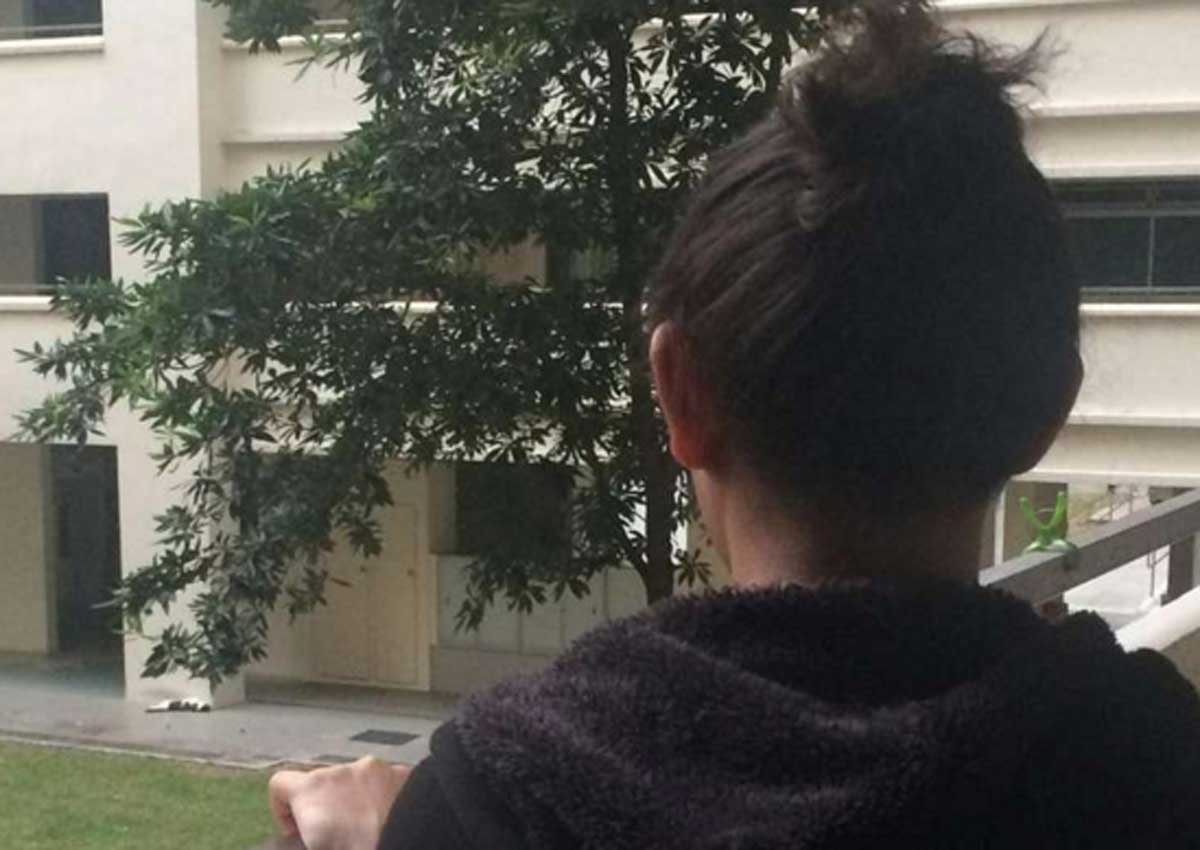
Image: 
Publication Date: 
Sunday, April 17, 2016 – 15:00
Send to mobile app: 
Source: 


Story Type: 
Others

Source link

PM explores Petra during Jordan visit

0

Prime Minister Lee Hsien Loong began his trip to Jordan yesterday with a visit to the country’s most well-known site – the sprawling ancient city of Petra.

On arriving in Petra, Mr Lee, who is on his first official visit to Jordan, was presented with a red-and-white keffiyeh, a symbolic headdress for Jordanians, held in place by a black rope-like circlet known as the agal.

Mr Lee and his wife were accompanied by Mr Nayef H. Al-fayez, Jordan’s Minister of Tourism and Antiquities, and hosted by Mr Mohammad Al-Nawafleh, the chief commissioner of the Petra Development and Tourism Authority.

Known for its rose-red rock structures, Petra was a bustling city whose strategic location near the Mediterranean and Red Seas saw merchants trade frankincense from southern Arabia, silks from China and spices from India in its markets.

It also saw a constant stream of travellers and pilgrims, who marvelled at its hydrological engineering, which Mr Lee was briefed about.

To cope with the harsh desert environment and arid landscape, the Nabataean people built the city’s developed structures and systems to manage the supply of water, especially during periods of dry weather. Petra was the capital of the Nabataean Empire from around the 1st century BC, and the Romans took over some 200 years later.

But a large earthquake in AD363 destroyed much of the city.

Another quake in AD551 and a change in trade routes led to its abandonment, until it was rediscovered by a Swiss explorer in 1812.

Now a Unesco world heritage site, Petra was also the location for a number of scenes in the Hollywood movie Indiana Jones and the Last Crusade.

It was also named one of the new seven wonders of the world in 2007. Today, tourism is a key contributor to the Jordanian economy.

However, tourist guides and others in the industry lament that the ongoing conflict in Jordan’s neighbours – Syria and Iraq – has affected visitor numbers.

Yesterday evening, Environment and Water Resources Minister Masagos Zulkifli and MP Intan Azura Mokhtar also had a closed-door dialogue with Singapore students pursuing higher education in Islamic religious studies and Arabic in Jordan.

Mr Lee also met Singapore students at a dinner reception.

Today, Mr Lee will be hosted to lunch by Jordan’s King Abdullah II.

He will also meet Prime Minister and Defence Minister Abdullah Ensour, who will host him to dinner.


This article was first published on April 17, 2016.
Get a copy of The Straits Times or go to straitstimes.com for more stories.

Image: 
Category: 
Publication Date: 
Sunday, April 17, 2016 – 15:00
Send to mobile app: 
Source: 


Rotator Headline: 
PM Lee visits Petra, one of the new seven wonders of the world
Rotator Image: 
Regions: 
Country: 
State: 
Interest: 
Story Type: 
Others

Source link

BMW catches fire along CTE

0

A car caught fire along the CTE towards the AYE, after the Balestier exit, early Sunday afternoon (April 17). 

Mr Edmund Chng was on the way to Bukit Timah Road to drop his girlfriend off at work when they passed by the fire…

Source link

Victim of Tat Ching Road lift accident: 'I did not feel pain. I was just so scared'

0

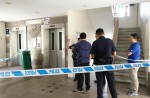
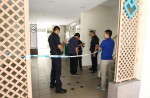
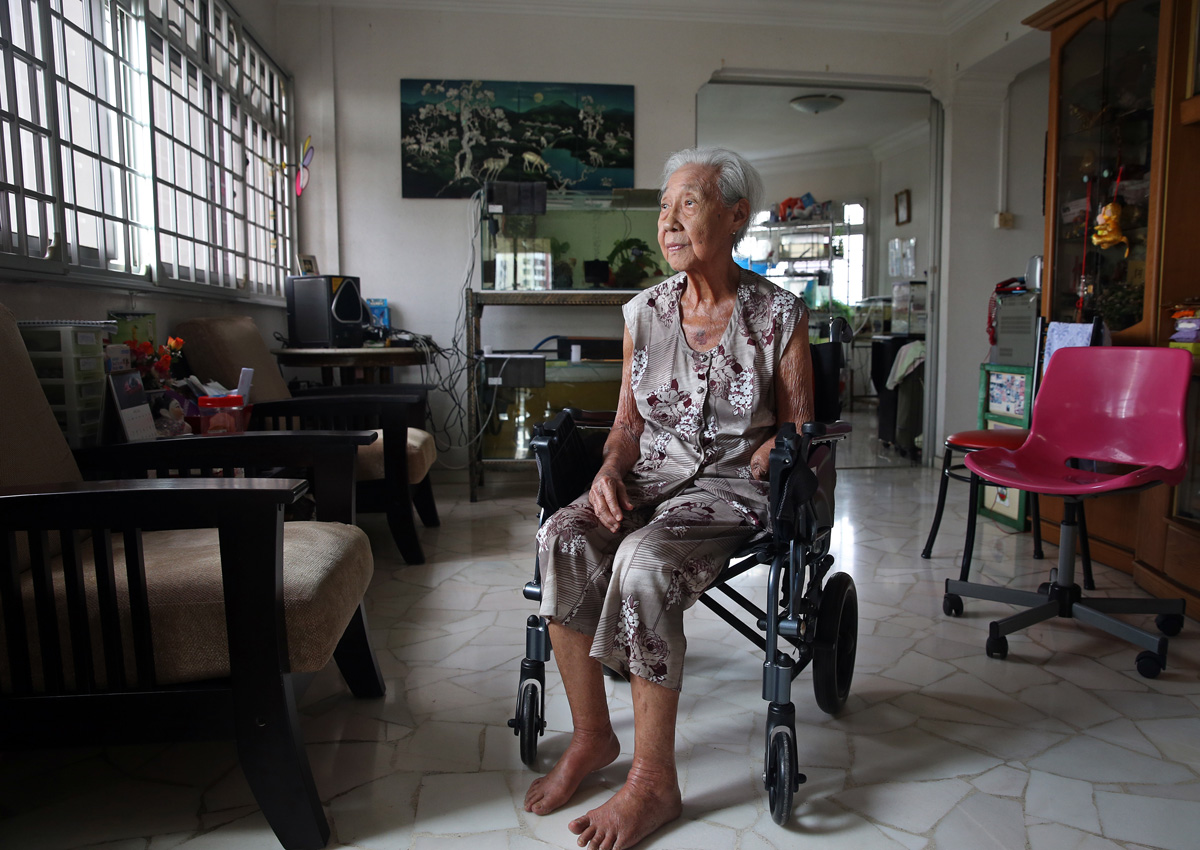
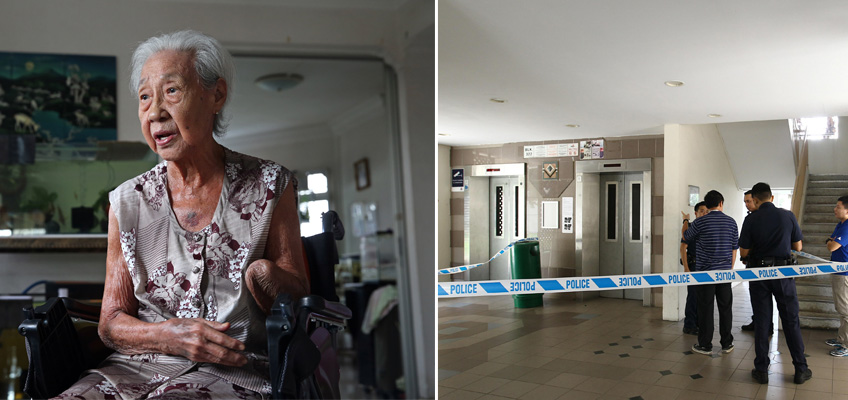
It is a hot, still Thursday afternoon and Madam Khoo Bee Hua stares pensively out of the window of her five-room flat in Tah Ching Road. Her right hand gingerly strokes a smooth stump where her lower left arm used to be, before it was severed in a lift accident.

Yet this is not what really bothers her. “Everyone knows that I lost my hand, but they don’t know that it’s my leg that’s been giving me problems,” she says in Mandarin.

Her left leg, lined with scars, is stiff and swollen from a recent infection. This has forced the proudly independent woman to use a wheelchair.

Insisting sometimes on going to the bathroom without help, Madam Khoo already knows what is the first thing she will do when she can walk again: step into her kitchen and start cooking.

She gets animated reeling off some of her specialities – te kar (braised pig trotters), fried bee hoon, popiah and pig stomach soup. They are Hokkien dishes which she often used to whip up for her children and grandchildren.

Now, Madam Khoo, who turned 86 last month, relies on an Indonesian maid to cook and care for her.

Six months ago, when she was still on her feet, the sprightly grandmother would bustle around the flat where she used to live alone, cleaning and cooking with her dog barking in the background.

This changed on the morning of Oct 9 last year, when she was on the way home after a morning stroll with “Doggie” – a mix-breed which the widow rescued from the streets a few years before.

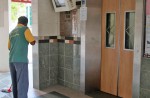
She got into one of the two lifts that she always took up to her home on the 16th storey. What happened next remains a blur to her, but she was left with a broken left leg, and her left hand detached and mangled at the bottom of the lift shaft.

In her first interview since the accident, Madam Khoo tells The Sunday Times that she remembers lying on the lift floor, her head on her upper arm.

“I didn’t know I had lost my hand,” she says. “I just felt that it was very wet, like water was flowing from my arm. I thought I was sweating. I did not feel pain at that point. I was just so scared.”

Madam Khoo also remembers how as she lay injured, she used her walking cane to knock on the doors and push the lift alarm button.

According to an investigation report submitted to the Building and Construction Authority (BCA), there was nothing wrong with the lift and the accident was a result of Doggie not following her into the lift before its doors closed.

The dog’s 2mm-thick leash, which was too narrow for lift sensors to detect, got trapped between the doors. When the lift went up, the leash tightened around Madam Khoo’s left wrist, pulling her hand through a small gap at the bottom of the doors, where it was crushed and severed.

Doggie was dragged up by the leash to the top of the outer lift doors, where it dangled, choking, until a passer-by cut it down.

After Singapore Civil Defence Force officers rescued Madam Khoo, she was rushed to the National University Hospital (NUH). A four-hour surgery failed to re-attach her hand, and she had to undergo another operation a few days later to treat her broken leg.

This was only the beginning of her ordeal. Madam Khoo spent almost five months in and out of various hospitals. Her first weeks of recuperation were a haze of painkillers and concerned faces, she says.

“People would come in and ask how I was, and I would just nod and go back to sleep.”

In December, she returned home for just three days before a leg infection sent her back to hospital with a high fever. She went under the knife a third time to remove the metal plate in her leg, put in from a previous operation.

Over Chinese New Year, the infection returned. She was hospitalised on the third day of the new year for another 10 days.

“I was so miserable I wanted to give up,” she recalls, with tears in her eyes. “I tried to tell the doctors, ‘Don’t save me any more.’ I would rather have died than gone through yet another operation.”

Her doctors have advised her to rest her leg for now but, even in the wheelchair, Madam Khoo is restless. Throughout the interview, she constantly wheels herself around the flat with her feet, her face lighting up as she points out calligraphy pieces by her late husband and hand-coloured birthday cards from her grandchildren.

Her husband, Mr Lee Kock Meng, a former school principal and prominent grassroots leader, died from cancer about three years ago. She has a son, 60, and a daughter, 61, as well as five grandchildren.

But for a woman who used to sew her own clothes and cook Sunday dinners for a family of 10, the loss of a hand and her mobility is a blow. She reluctantly allowed her family to hire a helper to care for her. “I have no choice,” Madam Khoo says with a sigh.

She now spends her days watching television and listening to radio. Her neighbours and friends from her qigong club often visit her, but she no longer goes out, besides for medical check-ups. Neither does she sing karaoke with her friends, like in the old days.

“I lack the mood for it now,” she says. “I’m still very heavy-hearted.”

Conspicuously absent is Doggie, who can no longer live with Madam Khoo because of her condition. The pet now stays with her son in the block opposite hers. “It’s not been the same after the accident. It looks dazed, not as lively as it used to be.”

During her hospital stays, her family took turns caring for her – her daughter in the morning before she went to work, her grandchildren in the afternoon and her son at night.

“I feel very bad that they had to spend so much time looking after me,” Madam Khoo says.

This is why the staunch Buddhist cannot bear to trouble them to retrieve her left hand, which remains on ice at NUH. She wants it cremated, “so that when I finally move on, I can be whole in the afterlife”.

She has turned down offers of a prosthetic hand. “It should be given to young people who are in my situation. I am already so old – it would be only for show.”

Indeed, even after her ordeal, Madam Khoo seems more concerned about the well-being of others, especially her family.

“I pray for my children and grandchildren to be successful, live long lives and have a good future. As for myself, I don’t need anything.” Jurong GRC MP and Deputy Prime Minister Tharman Shanmugaratnam, after visiting her in hospital after the accident, was moved by Madam Khoo’s courage, describing her as “remarkably strong” and “indomitable”.

While she has no qualms taking the lift that cost her her limb, closure still eludes her.”If there was no problem with the lift,” she asks, “does that mean that it was my fault?”

She adds: “I’ve already lost a hand – all I want is a comforting explanation. But I don’t feel comforted.”

Still, Madam Khoo is determined to “accept life” and move on.

“I just look forward to the day when I can stand up and do the things I used to do again.”

See also: Woman’s hand severed by lift doors an accident waiting to happen

yeosamjo@sph.com.sg

oliviaho@sph.com.sg


This article was first published on April 17, 2016.
Get a copy of The Straits Times or go to straitstimes.com for more stories.

Image: 
Category: 
Publication Date: 
Sunday, April 17, 2016 – 13:24
Keywords: 
Send to mobile app: 
Source: 


Rotator Headline: 
Victim of Tat Ching Road lift accident on refusing a prosthetic hand: 'It should be given to young people'
Rotator Image: 
Story Type: 
Others

Source link

North Korea likely to conduct 5th nuclear test soon

0

North Korea is likely to conduct its fifth nuclear test in the near future, possibly before its party congress in early May, a media report said on Sunday (April 15), citing South Korean government sources based on their reading of activity around the test site.

The news of signs indicating the North is readying a nuclear test comes as Pyongyang is gearing up for a ruling Workers Party congress in early May, where leader Kim Jong Un is likely to boast about his achievements in building a weapons programme.

The likelihood of North Korea conducting a fifth nuclear test, possibly within weeks, has increased because of a failed missile launch on Friday that was an embarrassing setback for Mr Kim, South Korean officials and international experts said.

“Compared to last month, the frequency of vehicle, workforce and equipment movements increased twofold-to-threefold recently,” Yonhap News Agency said, quoting multiple government sources.

The possible test, if it happens, follows a fourth nuclear test in January and a long-range rocket launch in February, which led to new United Nations sanctions that have failed to halt Pyongyang’s weapons programmes.

South Korea’s military has said Pyongyang is technically ready for an additional nuclear test, depending on its leadership’s political decision.

The South Korean Defence Ministry said it could not confirm the report but reiterated that North Korea can conduct its new nuclear test at anytime.

Image: 
Category: 
Publication Date: 
Sunday, April 17, 2016 – 14:04
Keywords: 
Send to mobile app: 
Source: 


Story Type: 
Others

Source link

SDP’s Chee says he will push for retrenchment insurance if elected

0

SINGAPORE – Retrenchment insurance to help laid-off workers tide over periods of unemployment is a measure Dr Chee Soon Juan will push for in Parliament if he wins the Bukit Batok by-election, the Singapore Democratic Party (SDP) chief said on Sunday (April…

Source link

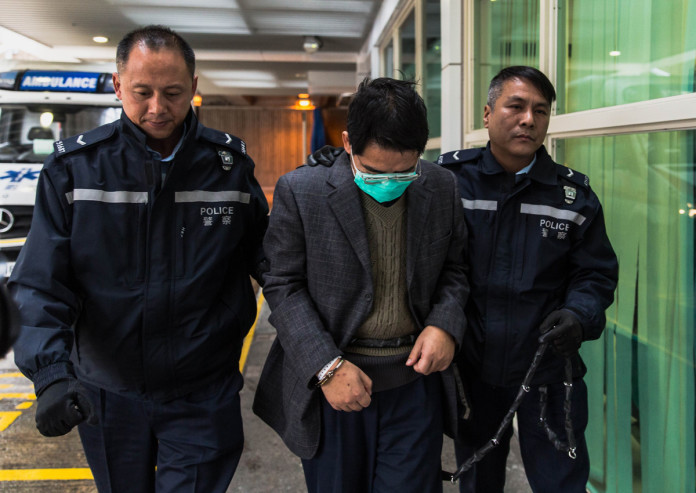
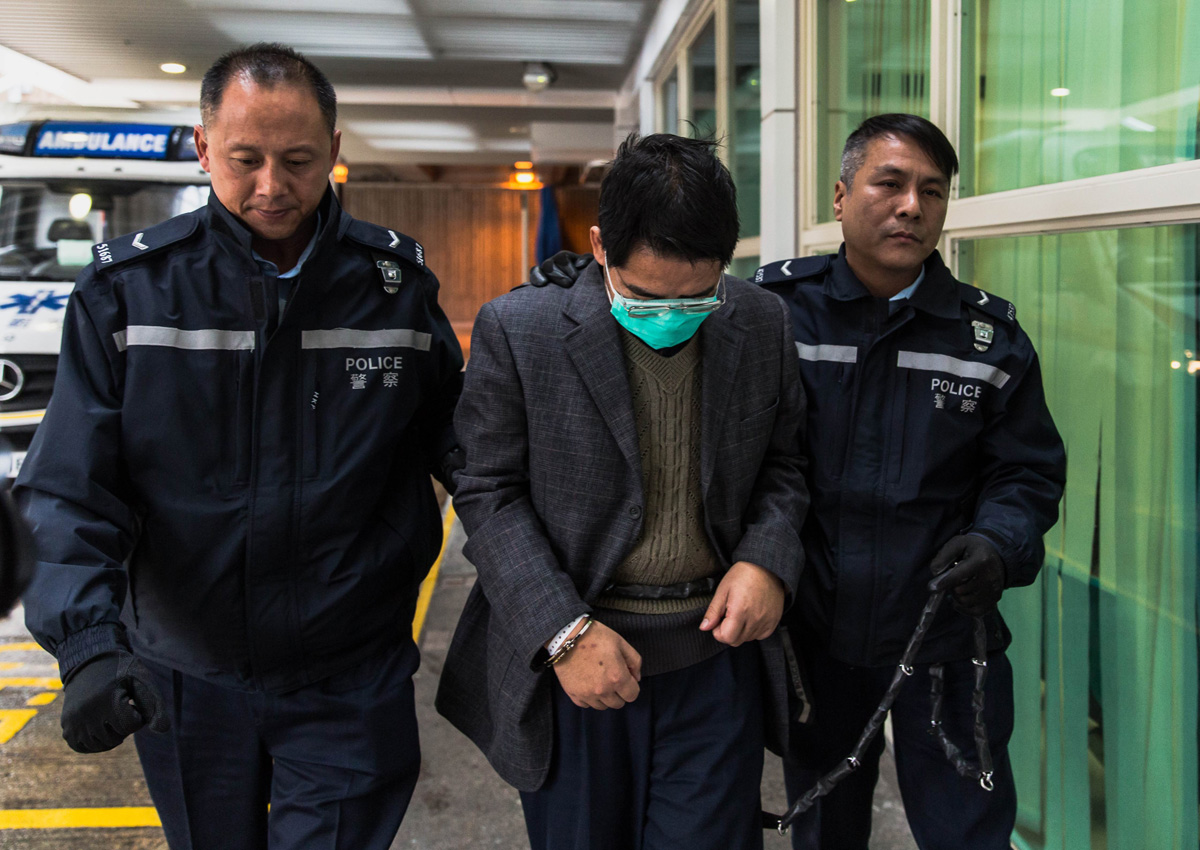
Double murder suspect extradited from Hong Kong to US: police

0

A Chinese national arrested in Hong Kong for allegedly murdering his two teenage nephews in the United States has been extradited back to the US, city police said on Sunday.

Shi Deyun, 44, was detained at Hong Kong’s international airport in January after arriving on a flight from Los Angeles.

He is accused of murdering his nephews, aged 15 and 16.

“Wanted for two cases of murder…(he) was extradited to the United States of America from Hong Kong on April 15,” a police spokesman told AFP in an emailed statement.

Media reports said Shi was heading to mainland China when he was arrested on January 24, but he has denied fleeing, saying that he was heading to the southern city of Shenzhen via Hong Kong to deal with business.

Unlike Hong Kong, mainland China does not have an extradition treaty with the United States.

While in custody in Hong Kong, he was sent to a hospital for a check-up after complaining of being “muddle-headed”, but was denied bail.

He is accused of killing his nephews after his wife filed for divorce, the Los Angeles Times reported.

Their bodies were discovered by their mother at their home in the Californian city.

Both teens had suffered blunt force trauma, the paper said.

Image: 
Category: 
Publication Date: 
Sunday, April 17, 2016 – 13:52
Send to mobile app: 
Source: 


Story Type: 
Others

Source link

China to implement appropriate monetary policy, more forceful fiscal policies

0

Image: 
Category: 
Publication Date: 
Sunday, April 17, 2016 – 13:27
Send to mobile app: 
Source: 


Story Type: 
Others

Source link

Axl Rose joins AC/DC as new singer

0

Australian hard rock elders AC/DC announced Guns N’ Roses frontman Axl Rose as their new singer as longtime frontman Brian Johnson suffers hearing loss.

AC/DC confirmed the move hours before Rose was to take the stage with Guns N’ Roses guitarist Slash at the Coachella festival in California as part of a reunion after more than two decades.

AC/DC, who broke off a North American tour last month after saying that Johnson was at risk of permanent hearing loss, said Rose would make his debut with the band on a 12-show European leg starting on May 7 in Lisbon.

Rose — known for his soaring range and raw emotion — will then return to North America for the arena tour of the reformed Guns N’ Roses, with the 10 postponed AC/DC dates in the United States to be rescheduled later.

“AC/DC band members would like to thank Brian Johnson for his contributions and dedication to the band throughout the years,” the band said in a statement.

“We wish him all the best with his hearing issues and future ventures. As much as we want this tour to end as it started, we understand, respect and support Brian’s decision to stop touring and save his hearing,” it said.

Johnson, however, has been quiet in public and has reportedly voiced dismay at his swift exit.

US comedian and radio host Jim Breuer said he spoke to Johnson, who felt “kicked to the curb” by his bandmates and did not believe his hearing problems were as serious as announced by the group.

Johnson, 68, known for his punishing vocal style, is not an original member of AC/DC, joining after singer Bon Scott died in 1980 after a night of heavy drinking.

Rose’s entrance into AC/DC was first reported by radio station WNNX in Atlanta after the singer was spotted with the band in the city.

Image: 
Category: 
Publication Date: 
Sunday, April 17, 2016 – 12:51
Keywords: 
Send to mobile app: 
Source: 


Story Type: 
Others

Source link