SHANGHAI/BEIJING (REUTERS) – China reported a record rise in imported coronavirus cases on Friday (March 20) as expatriates returned home from the United States and Europe, sparking fears of a second wave of infections just as the country recovers from the initial outbreak.
All 41 of the new confirmed cases in China were imported from abroad, the country’s National Health Commission said on Saturday, bringing the total number of such cases to 269.
Beijing and Shanghai were the main entry points for the returnees, many of whom are students who were studying abroad, according to official reports. They have come back after many education campuses in the United States and Europe shut down to stem rapidly rising infection rates there.
SINGAPORE: The largest COVID-19 cluster in Singapore is linked to a private dinner function at SAFRA Jurong, with 47 confirmed cases as of Mar 19.
The event was held in a private function room with round tables that seated 10 people each. Approximately 200 attendees enjoyed a multi-course Chinese-style dinner, stage performances, and merrymaking among friends.
You know what sounds similar to the SAFRA Jurong event? Wedding banquets.
This is a bad time for any event organiser, but while many events are non-essential and can be postponed, weddings are a trickier affair.
Experts have highlighted that the pandemic may stay for a year, even longer. Against this backdrop, the most socially responsible option is to postpone big events, in order to reduce the risk of further spreading of the coronavirus – and wedding banquets are little different.
After all, many of such in Singapore are huge affairs involving hundreds of guests. For hotel ballroom venues, couples are usually obligated to book at least 20 to 25 tables, given minimum requirements, which will run up an attendance of 200 to 250 guests.
Let’s not forget, the Ministry of Health (MOH) has advised for events to be capped at 250 participants – though this number is meant as a rough benchmark, since factors such as duration and density are just as important.
(Photo: Unsplash/Samantha Gades)
Would you want the first day of your married life to lead to a new COVID-19 cluster that involves your loved ones? Even for couples who must meet HDB timelines to produce a marriage certificate, could you not get your marriage registered first and hold the banquet later?
Then again, how easy is it to postpone a wedding dinner and have to do it all over again at some point in the future?
Couples in Singapore typically plan a year ahead for their weddings, which see the solemnisation ceremony held back-to-back with the banquet. Invitations are sent out a few months in advance.
The cost and time already invested in this once-in a-lifetime event, and the coordination effort in ensuring friends and relatives make it to the wedding would have been tremendous. There’s also the question of whether the terms and conditions of the contract signed with the venue provider provides the couple with flexibility in changing the date, without huge additional costs.
If you have weighed the pros and cons carefully, and decide to go ahead with the wedding as planned, here are five practical tips to bear in mind during this pandemic.
Having to make big changes to your wedding banquet is enough to send any bride into bridezilla mode but you shouldn’t have to lose sleep. Many couples have braved SARS in 2003 and pressed on with their wedding banquets.
1. REDUCE THE NUMBER OF GUESTS
Keep the event to only close friends and family members. Negotiate with your event space provider to reduce the required minimum number of tables.
You can also check with them to see if it is possible to arrange for the staggering of your guests into two sessions – for example, an earlier dinner service and a later dinner service on the same day, or even a breaking-up of the banquet into both lunch and dinner.
(Photo: Unsplash/Alvaro CvG)
Your space provider may extend these arrangements if there are no other bookings on the same day – and at no cost out of goodwill, or simply because it will be better than not having your business at all. You might have paid the deposit but most hotels collect a huge chunk of the payment after the event.
There’s a bright side to this: Now you have a legit reason to roll back invitations to all those nosy relatives and hateful acquaintances you were forced to invite.
2. ADOPT SOCIAL DISTANCING MEASURES
Adjust the seating arrangement to ensure 1m of space in between your attendees, as per the MOH’s recommendations.
Work with your event space provider to reduce the number of seated people per table. This allows for more space between each guest.
You could also serve individually plated food instead of sharing dishes for each table or a buffet arrangement. The key is to avoid introducing touch-points among your guests.
Consider shortening the length of your wedding banquet. Is it really necessary to screen your childhood photos, cut a fake cake for photos, and do coordinated dances with your wedding entourage? You might want to reconsider the morning gate-crashing activities too.
These are certainly fun moments on a regular day, but remember, this is no regular day; we’re now at war against a virus.
If you want life and your wedding to go on, perhaps trim the programme to what’s most meaningful and memorable, and keep the duration of the event short.
4. PRACTISE SOCIAL RESPONSIBILITY AND PERSONAL HYGIENE
Before the wedding, remind your guests they should abstain from attendance if they’re feeling unwell. Assure them you would understand and not take any offence.
During the wedding, make announcements to remind guests to practise good personal hygiene. In lieu of wedding favours, provide hand sanitisers for your guests so they can use them if needed.
Ask if your hotel servers will be wearing gloves. And skip the hugs and handshakes. You can save that for another time.
4. CHECK WITH YOUR VENUE PROVIDER ON TEMPERATURE SCREENING ARRANGEMENTS
Check with your venue provider what their arrangements are with respect to temperature screening and contact tracing.
You should ensure your guests’ temperatures are taken before they enter, and prepare your bridal entourage to note down relevant details for contact tracing, including seating arrangements and any travel history.
While those who already have Stay-Home Notices or Quarantine Orders served on them should stay away from your wedding, a gentle reminder to all guests can be useful.
Remember that guests who are flying in from overseas to attend your wedding won’t be able to do so. As MOH has announced, beginning on Mar 21, they will be issued a 14-day stay-home notice.
Consider livestreaming the event for guests unable to attend the wedding but would have loved to join in your celebration, so they can be a part of it at home. Send out the QR code for e-hongbaos.
5. TAKE IT IN YOUR STRIDE
The pandemic is an unforeseen curveball that may stress soon-to-be brides and grooms. But this hurdle is definitely no greater than all the other complex challenges a wedded couple will inevitably face in their lifetime – in bringing up children, navigating new family dynamics and managing money.
Take it in your stride and seize the opportunity to practise creative problem-solving as a couple. Many couples have already done so.
A couple wearing masks for protection from the new coronavirus, attends a mass wedding ceremony of the Unification Church at Cheongshim Peace World Centre in Gapyeong, South Korea, Feb 7, 2020. (Photo: REUTERS/Heo Ran)
For example, a Singapore couple who travelled to China just before their wedding chose to isolate themselves. They attended their own wedding via livestream while their guests enjoyed dinner at the hotel.
A Hong Kong couple chose to forgo the sit-down wedding dinner. They packed food in takeaway containers for their guests to bring home instead.
I’m sure these couples and their guests will find such an extraordinary wedding memorable, which will make for a fascinating story for the grandkids.
Whether you’re postponing or continuing with your wedding banquet, remember that your wedding takes place on just one day, but your marriage lasts a lifetime.
Whether that dream wedding turns out for the worse rather than for the better, keep the bigger picture in sight. Don’t win the battle but lose the war.
SINGAPORE: Contingency plans have been put in place to boost the Singapore healthcare system’s capacity to care for COVID-19 patients if the need arises, Health Minister Gan Kim Yong said on Friday (Mar 20) as the country recorded 40 new coronavirus cases.
Singapore has in recent days seen a surge in the number of new cases, many of which were imported, raising concerns about the country’s capacity to care for COVID-19 patients in the coming weeks.
“While we have additional capacity and plans to expand them when the need arises, we hope we don’t have to do so,” said Mr Gan.
The minister said there are plans to establish quarantine facilities that can be fitted out and used as medical facilities.
These could be used to accommodate patients with mild symptoms who do not really require medical support, or patients who are ready to be discharged but need further observation to ensure they are clear of any viruses.
“We’re in the process of fitting these out and getting these quarantine facilities ready for these patients. We don’t need this additional capacity yet, but it is better to put it in place ahead of time,” he said.
He added that hospitals are already prepared to turn normal wards into COVID-19 wards, should the need arise.
Ministry of Health (MOH) director of medical services Kenneth Mak said many of these contingency plans were already in place well before the COVID-19 outbreak, such as to deal with mass casualty events.
He said that while Singapore’s current capacity is adequate, the Government does need to prepare for the possibility of an increasing number of patients with or suspected to be infected with COVID-19.
“We have started some preparations for opening up additional isolation rooms and isolation wards, as well as ICU beds to allow us to have sufficient capacity and capability, if the time comes that we need to cater for an increased number of COVID-19 patients,” said Dr Mak.
Such preparations, which cover all of Singapore’s public health institution, also includes other considerations such as equipment availability, manpower and its deployment.
Medical staff wait to cross the street to the National Centre for Infectious Diseases building at Tan Tock Seng Hospital in Singapore on Jan 31, 2020. (Photo: AFP/Roslan Rahman)
The Government is also looking to increase public hospitals’ capacity by working with private hospitals, he said, adding that even before the COVID-19 outbreak, useful partnerships had already been set up, with public hospital patients being treated at private hospitals.
Dr Mak added that the Government will also be setting up additional contact tracing teams in anticipation of a possible increase in the number of suspected patients.
“Many of the steps we’re taking are anticipatory, but we believe that it is important to have these in readiness … if we do have to deal with more patients,” he said.
Singapore on Friday announced several new measures to combat the spread of COVID-19 within the country, such as launching a new mobile app to boost contact tracing efforts.
“We do want to make sure to reduce the number of cases as much as we can … That is why we are announcing additional safe distancing measures … to help us keep the number of cases to as few as possible to help us manage our hospital capacity as well as our healthcare workers,” Mr Gan added.
SINGAPORE – Stricter safe distancing measures will be introduced to reduce the risk of further local transmission, the authorities announced, as Singapore reported another 40 Covid-19 cases on Friday (March 20).
Keeping a safe space around individuals is especially important for vulnerable segments of the population, Health Minister Gan Kim Yong said at a press conference.
All events and gatherings with 250 or more participants are to be suspended until June 30, while the suspension of all social activities for seniors by government agencies will be extended for another two weeks until April 7.
Events with fewer than 250 people and operators of venues accessible to the public, such as restaurants and cinemas, are also required to implement measures to ensure separation of at least 1m between patrons.
The measures will apply across the board for all events, including religious and private gatherings.”
A contact-tracing smartphone app has been launched to allow the local authorities to quickly track people who have been exposed to confirmed coronavirus cases.
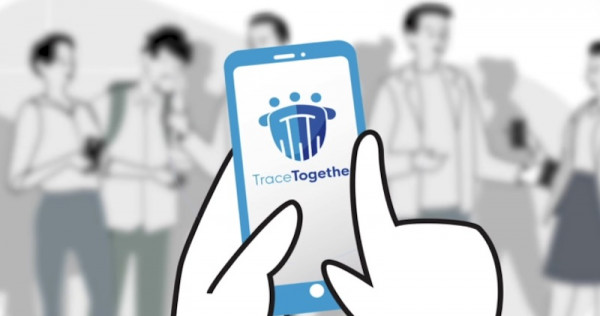
Dubbed TraceTogether, the app is able to identify people who have been in close proximity – within 2m for at least 30 minutes – to coronavirus patients using wireless Bluetooth technology, said its developers, the Government Technology Agency (GovTech) and the Ministry of Health (MOH), on Friday (March 20).
“This is especially useful in cases where the infected persons do not know everyone whom they had been in close proximity with for an extended duration,” said its developers.
While the use of the app is not compulsory, those who use it have to turn on the Bluetooth settings in their phones for tracing to be done. They also need to enable push notifications and location permissions in the app, which is available on the Apple App Store or the Google Play store.
The virus is known to transmit via respiratory droplets and touching your face after being in contact with contaminated surfaces puts you at risk.
Being in a female-dominated company, one of the questions that was first asked in the office during the outbreak was: “Are our online shopping delivery packages safe from the coronavirus?” and “Will we have to disinfect them?”
SINGAPORE: A new mobile application called TraceTogether was launched on Friday (Mar 20) to support ongoing contact tracing efforts amid the COVID-19 outbreak in Singapore.
By downloading the app and consenting to participate in it, TraceTogether allows users to “proactively help” in the contact tracing process, according to a joint press release.
The TraceTogether app, which was developed by the Government Technology Agency (GovTech) in collaboration with MOH, can be downloaded by anyone with a Singapore mobile number and a Bluetooth-enabled smartphone.
Users can scan the QR code to download the TraceTogether app on their phone.
After giving consent during the set-up of the app, users will need to turn on their Bluetooth. The app works by exchanging short-distance Bluetooth signals between phones to detect other users of the app who are in close proximity.
Current MOH guidelines define close proximity as two metres apart, or up to five metres, for 30 minutes.
Records of these encounters will be stored locally in the users’ phones and will not be sent to the authorities. The user may later give consent to send the data to MOH when they are interviewed by the ministry as part of contact tracing investigations.
Currently, contact tracing relies on the memory of interviewees. However, there have been instances when interviewees could not remember all their contacts or did not have information about people they had been in contact with.
The new app will not replace ongoing contact tracing efforts, but it will facilitate the process, enabling contact tracers to inform users who are close contacts of COVID-19 cases “more quickly”, the press release stated.
For a start, authorities hope to use the app to establish 25 per cent to 50 per cent of these close contacts.
“This enables users to take the necessary action sooner, such as monitoring his own health closely for signs of flu-like symptoms. Early detection could potentially help reduce the risk of the spread of the virus, and better protect our families and loved ones,” the release added.
The Smart Nation and Digital Government Group will be working with the public and private sectors to raise awareness of the app and encourage its adoption.
The authorities stressed that the use of the app is voluntary and that users have to give “explicit consent” to participate in TraceTogether.
This consent can be withdrawn anytime, according to GovTech.
The app also has several layers of security and privacy safeguards in place. For example, users will submit only their mobile numbers after downloading the app. Each phone will then be assigned a user ID.
This user ID is then used to generate temporary IDs, which will be changed at regular intervals. It is this temporary ID that is exchanged between the phones of TraceTogether users.
Such regular generation of temporary IDs protect users from eavesdropping and tracking overtime by malicious actors, according to GovTech.
No other personal detail, such as names, will be collected. Neither does the app access a user’s phone contact list or address book.
The app also does not collect or use location data of any kind, such as GPS.
“The app doesn’t identify ‘where’ the exposure to COVID-19 cases may have occurred. It only seeks to establish ‘who’ else might have been exposed to the virus,” according to the TraceTogether website.
This means that location information can only be established by contact tracers during verbal interviews, it added.
All TraceTogether logs will be stored locally on the users’ phone in an encrypted form.
“The logs do not contain the user’s phone numbers but a set of cryptographically generated temporary IDs,” the joint press release said.
“The logs leave his or her phone only when he or she uses the app to send the information to authorities to facilitate contact tracing,” it added.
Even then, the authorities, including MOH and GovTech, have no knowledge of the user’s data as these logs are only deciphered and analysed after the user sends the information.
Other safeguards include how the app will only be active during diseasee outbreaks. For instance after contact tracing ceases, the app will prompt users to deactivate its functionality.
SINGAPORE: As more countries implement travel restrictions aimed at stopping the spread of COVID-19, more travellers find themselves having to cancel their flight plans.
On Wednesday (Mar 18) the Government advised that all travel overseas should be deferred, a move aimed at reducing “the risk of Singaporeans being infected with the virus when abroad and spreading it to other Singaporeans when they return”.
To assist passengers who have had to change their travel plans in light of the COVID-19 outbreak, budget carrier Scoot set up a “self-service refund” portal on its website, which aims to ease the process of obtaining refunds – in the form of travel vouchers.
A Scoot spokesperson told CNA it had received more than 24,000 refund requests on the first day of the portal’s operation, and refunded more than 8,500 customers.
Singapore Airlines (SIA) declined to say how many cancellations it had seen, though it had earlier said it was experiencing an “extraordinarily high volume of customer enquiries at our customer services centres, reservation and sales offices, and social media channels”.
SIA noted that for passengers who are unable to fly due to travel restrictions, it would waive all rebooking fees for tickets issued on or before Mar 15, 2020, for trips until the end of May.
Mr Lester Hio told CNA the coronavirus outbreak put a damper on his plans for a short family getaway to Penang.
However the 30-year-old, who works in publishing, said he had no regrets over having to cancel his vacation.
“I was already planning on cancelling to Penang even before news of the Malaysia lockdown and the advisory to defer all travel,” he said.
The Malaysian government implemented a “restricted movement order” on Wednesday (Mar 18) that, among other regulations, barred its citizens from going overseas and foreigners from entering the country for two weeks.
“It’s the responsible thing to do, especially given that I have elderly parents at home and no trip is worth the risk,” said Mr Hio.
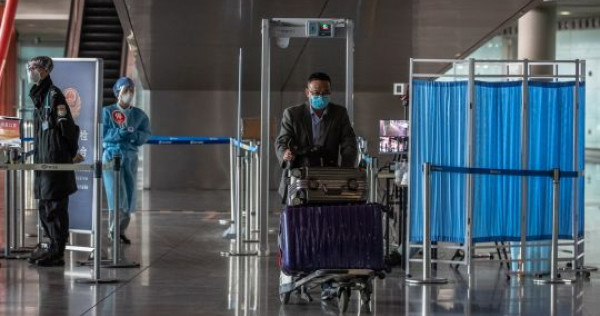
(nstructions for passengers from listed countries to report to airport authorities are displayed in the arrival area, amid concerns over the spread of the COVID-19 coronavirus, at Changi International Airport in Singapore on March 16, 2020. (Photo: Roslan RAHMAN / AFP)
Others noted difficulties with having to change their travel arrangements.
Researcher Basil Lee had initially booked a holiday to South Korea, but changed his plans after travel restrictions kicked in for the country.
“I decided to move my ticket to Australia as I had friends there,” said the 27-year-old, who had planned to visit Sydney and Melbourne.
He was forced to cancel the plan when it was announced on Sunday (Mar 15) that all travellers entering Australia country would have to isolate themselves for two weeks to curb the spread of the coronavirus.
While Mr Lee managed to successfully cancel his flight from Singapore to Australia, he noted he is still “fighting a battle” on cancelling a domestic flight between Melbourne and Sydney.
He believes there could be greater coordination between governments and companies in the tourism business on the implementation of such travel guidelines, noting for example that hotels had requested for a “do not travel” advisory before processing his refunds.
“Having such coordination would make the nightmare of cancelling a lot less painful, and that phone calls do not need to be made,” said Mr Lee, though he noted having such announcements made one or two days before implementation made it easier for him to make the necessary arrangements.
Airlines are seeing the fallout as an increasing number of countries putting travel restrictions into place to stem the spread of the coronavirus.
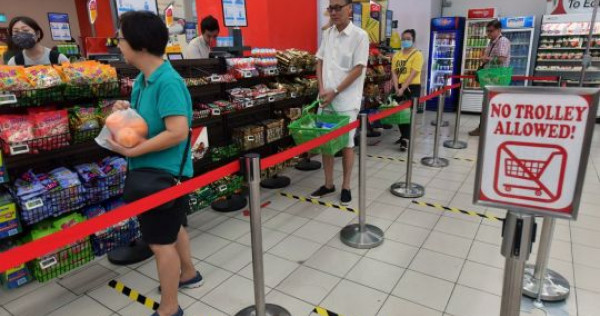
SINGAPORE: Retailers and food and beverage (F&B) outlets should ensure there is enough space in between customers lining up in queues, encourage them to use self-checkouts and limit the number of shoppers within stores.
These are some of the new safe distancing measures in a new government advisory issued to them on Friday (Mar 20) to prevent the spread of COVID-19.
Multiple government agencies including Enterprise Singapore and the Singapore Tourism Board have drawn up a list of safe distancing measures establishments should roll out to provide a safer shopping and dining experience.
Posters up on KOI’s NEX outlet on they are helping to reduce the spread of COVID-19. (Photo: Rachel Phua).
Here are the recommended measures retailers that range from the boutique store to supermarkets, department stores and shopping malls should put in place:
Space out the queuing of shoppers (at least 1m apart) for fitting rooms and at cashiers.
Use floor markers to mark queuing positions for shoppers.
Encourage the use of self-checkouts, and cashless or contactless payment to speed up the processing of payment and reduce cash-handling.
Limit the number of shoppers within the store to allow for at least a metre spacing between them, where possible. This can be done by letting shoppers into the store progressively.
For F&B players, they should:
Reduce the number of people gathering outside the outlet by putting in place queue management solutions. These include taking down diner details and calling them when there are seats available.
Clearly mark queueing areas and space customers out in the queue (if queues are unavoidable), at a safe distance of at least one metre apart.
Incorporate mobile ordering and payment solutions so that diners can order and make payments directly without having to wait at the cashier.
Install pre-ordering solutions for F&B kiosks to minimise physical clustering of customers waiting to pick up their orders.
Ensure a distance of at least one metre between tables or different groups of diners, although related diners (e.g. family members, couples) can be seated together without staggered seating
These safe distancing measures supplement the sanitation and hygiene practices recommended under the SG Clean campaign launched earlier in February, which include access to hand sanitisers, removing product testers and samples that require customer contact and frequently disinfecting common spaces, the agencies said in a media release.
SHOPPING, EATING OUT WITH A “PEACE OF MIND”
Senior minister of state for trade and industry Chee Hong Tat, who visited several establishments at NEX shopping mall which had carried out the safe distancing procedures, said that these precautionary measures are “to give Singaporeans greater confidence and assurance to to protect our safety” as they go about their daily activities.
NTUC Enterprise Seah Kian Peng discussing the measures with Senior Minister of State for Trade and Industry Chee Hong Tat. (Photo: Rachel Phua).
When asked if the measures will affect businesses’ bottomline, Mr Chee said that though it could reduce the seating capacity at F&B outlets, it will give customers a “greater peace of mind”.
Representatives from the food outlets all said that they do not think the social distancing measures will hit their margins badly.
Food outlets at NEX which have put in place the safe distancing measures include COLLIN’S, Soup Restaurant, PUTIEN and KOI.
Soup Restaurant has reduced seating capacity to make sure diners sit at least a metre apart. Seats for those who are lining up outside are also spaced a metre apart.
Customers appreciate the gesture, though waiting time for a table has increased by 10 minutes during peak hours, said its head of marketing Irin Lau.
Rather, Soup Restaurant’s overall business has dipped because fewer people are out and about, particularly at tourist hotspots like Changi Airport and Orchard Road, its managing director Wong Wei Teck said.
Originally for four guests, Soup Restaurant’s NEX branch only placed two set of cutleries to make sure that diners are seated at least a metre apart. (Photo: Rachel Phua).
Since Wednesday, they have also started letting customers leave their numbers with the restaurant to be contacted when a table is ready, instead of having to wait in a line, she said.
Similarly, at COLLIN’S, diners have also been able to leave their numbers with the staff rather than wait in line for a seat.
The restaurant, which can serve about 90 customers, has also removed about eight seats from their NEX outlet.
Other safe distancing measures it has introduced include having promotions on food delivery sites, and off-peak dining offers to spread the crowd out.
These measures have affected profit margins by “a few percentage points”, Mr Jonathan Lim, the chief development officer of SF Group that runs COLLIN’s, said.
COLLIN’s and Soup Restaurant said they will implement the measures at their other branches in the next week or so.
For stores with space constraints, Mr Chee said that they could explore other ideas that prevent transmission of droplets, such as putting up a barrier in between tables.
However, not all customers followed the guidelines. In queues, some stood closer to the people in front than what the tapes demarcated.
Tape has been used to demarcate where customers should stand, but some still refuse to follow it. (Photo: Rachel Phua).
Customers waiting in line at checkout in NTUC Fairprice also did not stick to the one-metre rule. (Photo: Rachel Phua).
While most diners complied when staff reminded them to stand apart, COLLIN’S Mr Lim said some – especially those in groups – refused to as they wanted to “hang together”.
Chief executive of NTUC Enterprise Seah Kian Peng said that it “will take time for people to understand why you’re doing it (and) to get used to (it).”
NTUC rolled out the measures at their NEX Fairprice outlet on Friday, and will do so at the other 147 supermarkets in the near future, he said.
Their supermarkets have also started broadcasting messages in English and Mandarin every half hour to remind customers not to stand close to each other while shopping, he added.
Facebook page NUS Atheist Society has found itself in a crappy situation after a post on toilet humour landed them in trouble.
Police are investigating after the page made a post suggesting the Bible and the Quran as toilet paper alternatives, Law and Home Affairs Minister K Shanmugam said in a Facebook post today (March 20).
A screengrab of NUS Atheist Society’s post showed a picture of the Bible and the Quran, along with the caption: “For use during toilet paper shortages.”
NUS Atheist Society is not an official National University of Singapore (NUS) student organisation, according to the university’s directory of student organisations.
Slamming the post, Shanmugam said that “such offensive remarks have no place in multi-racial and multi-religious Singapore.”



.jpg "toiletpaperpost-2.jpg")


