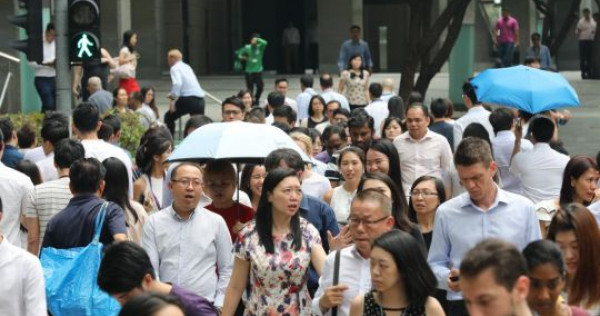
SINGAPORE – Singapore saw fewer job vacancies overall last year but there were still many opportunities in growth sectors, said Manpower Minister Josephine Teo on Friday (March 20). Going forward, however, the uncertainties this year amid the coronavirus outbreak means vacancies are likely to fall further, she said.
“Hiring sentiments have weakened which means job seekers will have a more challenging time,” said Mrs Teo in a Facebook post on the Ministry of Manpower’s report on job vacancies in 2019, released on Friday.
The report showed that despite economic uncertainties, like the United States-China trade war, that resulted in fewer job vacancies, employers were still creating new jobs through business expansion and formation.
A total of 42 per cent of the 52,900 openings available last September were newly created positions from business expansion or formation. The proportion was the same as in the previous year, though the number of openings was lower than the 63,300 available in September 2018.
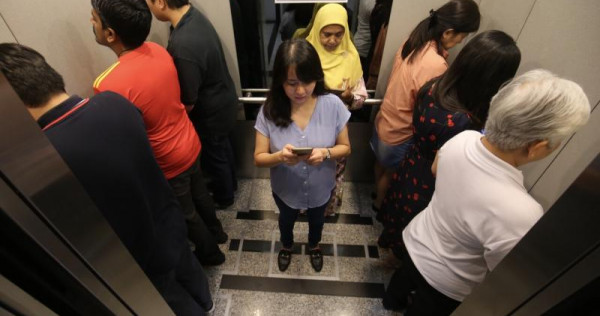
Amidst a global pandemic that’s easily spread via dirty hands and unhygienic objects, local leaders across the political divide are making damn sure that everyone notices their efforts in keeping the country sterile and their constituents clean.
Somehow connected to an upcoming general election? Regardless of motive, the end result is still pretty beneficial to everyone. You can’t say that disinfected HDB lifts are a bad thing.
And it’s residential estate lift lobbies that get a big highlight on the social media pages of various Members of Parliament (MPs). Here’s Tampines MP Cheng Li Hui showcasing how block cleaning is being handled in her neck of the woods.
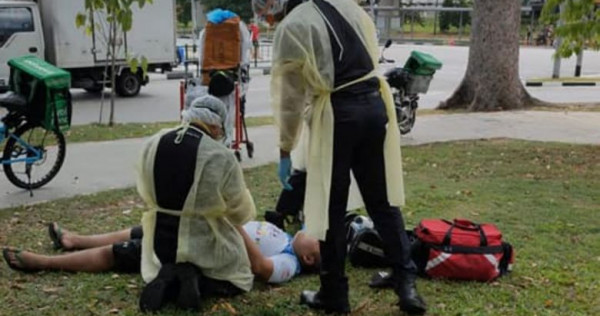
SINGAPORE – An allegation circulating online that an enforcement official kicked a rider off his e-scooter is false and police are now investigating the case, the Land Transport Authority (LTA) said on Friday (March 20).
Various posts on social media platforms had shared the allegation along with pictures of an enforcement officer and a man lying on the ground.
LTA said in response to queries that the incident happened on Thursday afternoon, but the account circulating of what happened was “unfounded and false”.
Its active mobility enforcement officers (AMEOs) in Yishun had spotted the man riding a non-compliant e-scooter on a footpath, said LTA.
SINGAPORE: Job vacancies in Singapore are expected to fall further this year given the “uncertainties in 2020”, said Manpower Minister Josephine Teo on Friday (Mar 20).
Her comment followed the release of the Ministry of Manpower’s (MOM) job vacancies report for 2019, which shows the number of vacancies fell due to cautious hiring sentiments.
There were 52,900 job vacancies compared to 63,300 vacancies in 2018.
However, vacancies remained available across sectors, particularly in the growth sectors, said MOM.
“Job opportunities were mainly in information technology, healthcare, business development and sales,” the report said.
In a Facebook post, Ms Teo said the findings have been overtaken by the “evolving COVID-19 outbreak and a global economic slowdown”, adding that the results were “no surprise”.
“There were fewer vacancies overall in 2019 but still many opportunities in the growth sectors. However, given the uncertainties in 2020, we expect vacancies to fall further,” she added.
About 42 per cent of the vacancies in 2019 were newly created positions as a result of business formation and expansion, said MOM, similar to 2018.
Growth sectors, such as ICT, professional services, financial and insurance services, wholesale trade and healthcare have above average proportion of vacancies for newly created positions.
There was demand for software, web and multimedia developers and systems analysts, as well as commercial and marketing sales executives, business development managers, nurses and healthcare assistants.
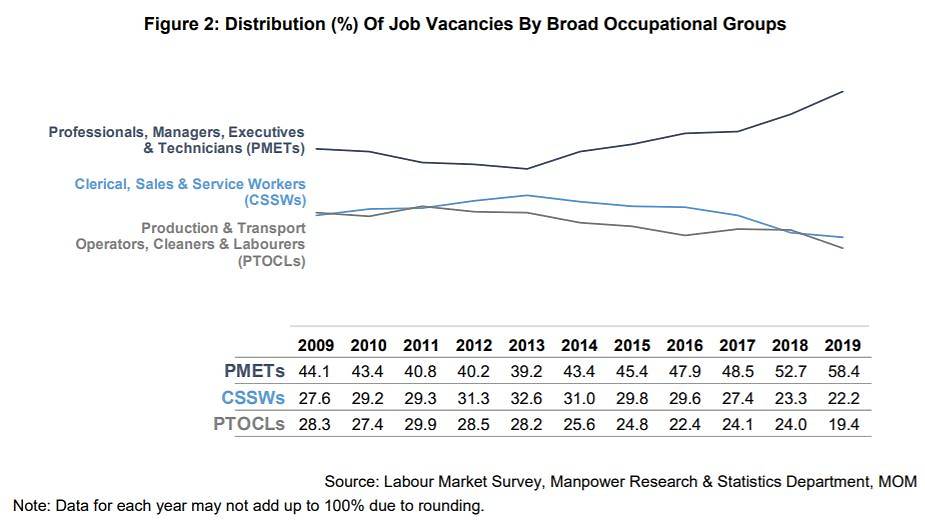
For 51 per cent of PMET vacancies, such as in software, web and multimedia developers and commercial and marketing sales executives, employers placed greater emphasis on skills, work experience and attitude, rather than academic qualifications.
For these vacancies, the lack of specialised skills was also a common reason mentioned by employers, said MOM in a press release on Friday.
For non-PMET positions, it was usually due to a mismatch in wage expectations, the ministry added.
Employers are also placing more emphasis on applicants’ skills, work experience and attitude, beyond academic qualifications, it said.
Hiring sentiments have weakened which means job seekers will have a more challenging time, said Ms Teo.
“Therefore, the focus must be to help as many people as possible stay in their current jobs. We can then direct job matching support to those who need it most,” she added.
“This is similar to our approach in handling the public health crisis – keep most people away from hospitals, so healthcare workers have the capacity to focus on treating those who have more serious conditions.”
Commenting on the report, she said that while the findings have been overtaken by current events, some of the other findings are still relevant.
She highlighted that the job-skills mismatch remains an issue that needs to be tackled.
“During such times when business is down, we want to work with employers to reskill and upskill their workers so that they are ready for new job opportunities when the economy recovers,” she said.
MOM and Workforce Singapore, together with tripartite partners, will also help those in their 40s and 50s through the SkillsFuture Mid-Career Support Package, she added.
“This is a tough time. MOM is here to help. Our lines are sometimes overwhelmed, as are our officers. I seek your kind patience as we try our best to respond to everyone who has reached out,” the minister said.
The report uses data mostly taken from an annual job vacancy survey conducted by the Manpower Research and Statistics Department, covering both the private and public sectors.
A total of 15,290 establishments employing 2,102,600 employees responded to the survey, yielding a response rate of 86.4 per cent.
SINGAPORE: Companies are encouraged to impose a leave of absence for employees who travelled during the March school holidays, the Ministry of Manpower (MOM) said on Friday (Mar 20).
Companies that do so, as well as those who are self-employed, will be allowed to claim for the S$100 daily support under the Leave of Absence Support Programme, the ministry said.
From Friday 11.59pm, all travellers who enter Singapore will be issued with a mandatory 14-day stay-home notice.
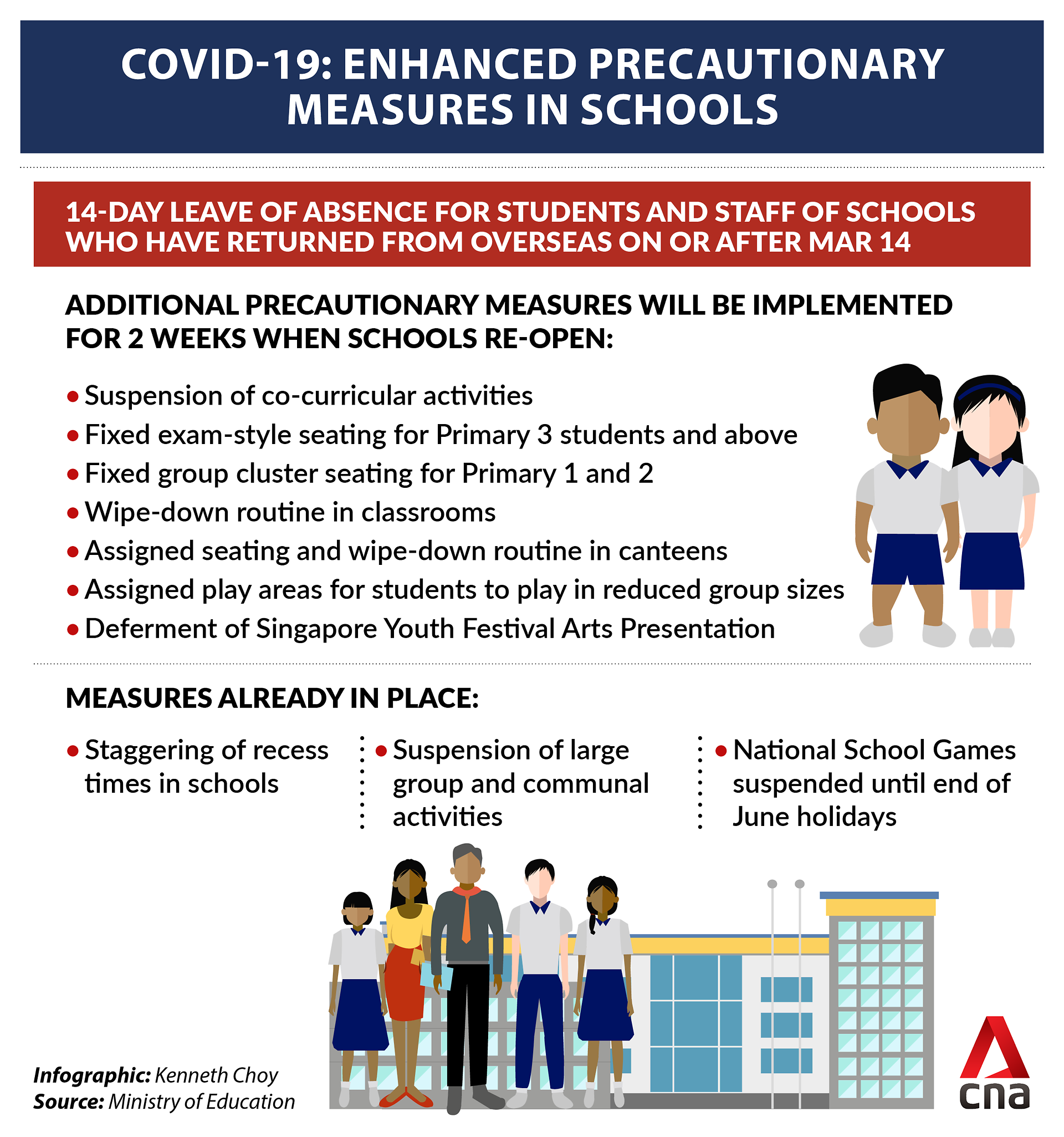
In addition to this, all students and school staff members who travelled between Mar 14 – when the week-long school holidays began – and Mar 20 will be placed on a 14-day leave of absence from the date of their return. The measure also applies to students and staff of pre-schools.
“The Government recognises that many parents have been affected by this national measure due to the need to provide care for their children during this period,” said the Manpower Ministry.
“At the same time, it is a useful precautionary measure for people who have travelled recently to stay away from the workplace to prevent further transmission (of the coronavirus).”
It added: “Hence, MOM encourages employers to similarly impose a leave of absence for all employees returning to Singapore between Mar 14 and 20 if they have not been issued with a stay-home notice.”
S$100 DAILY FOR COMPANIES PROVIDING PAID LEAVE OF ABSENCE
Some employers have already implemented a policy where employees returning from overseas travel between Mar 14 and 20 would be put on a leave of absence, MOM said.
“These employers should continue with their existing flexible work arrangements or leave arrangements, including asking employees to consume annual leave to cover the company leave of absence,” the ministry said.
Companies that have not implemented such a policy are encouraged to follow suit, and to allow these employees to work from home or provide additional paid leave if working from home is not feasible, it added.
Employers that provide additional paid leave in these cases can apply for S$100 daily allowance for each affected employee. Only staff members who are Singaporeans, permanent residents and work pass holders are covered.
Those who are self-employed are also eligible if they have self-imposed leave of absence for 14 days.
Companies are not eligible if the affected employee continues to work remotely during the leave of absence, if he was required to use his own paid leave or if he was placed on mandatory stay-home notice but the travel did not start before regulations came into place for various restricted regions.
“As the COVID-19 situation continues to evolve, there may be additional requirements imposed on work pass holders from time to time,” said MOM, adding that employers should check the ministry’s website for the latest advisories.
Singapore has reported 345 cases of COVID-19, including 32 new cases on Thursday night – 75 per cent of which were imported. All 24 imported cases were returning residents and long-term pass holders.
The Government on Wednesday advised Singaporeans to defer all travel abroad.
Tapping public concern, there has been a significant number of product listings online claiming to prevent or treat Covid-19, the Health Sciences Authority (HSA) said in a press release yesterday.
These fraudulent products include health supplements and herbs. One of the false and misleading claims is they “prevent and cure coronavirus”. Test kits that claim to be able to diagnose Covid-19 within 10 minutes are also being offered.
HSA cautioned there is no evidence that such products can prevent or treat Covid-19.
Testing can be done only by clinical laboratories or medical professionals in clinics and hospitals to ensure an accurate result and diagnosis, it said.
The listings are among more than 2,500 adulterated products or products making false or misleading health claims from local e-commerce platforms that HSA has removed during Operation Pangea, an Internet-based enforcement action coordinated by Interpol between March 3 and 10.
Adulterated lifestyle products such as weight loss pills and sexual enhancement medicines comprised more than 32 per cent of the listings taken down.
Tesla Inc will suspend production at its California vehicle factory beginning on March 24 to comply with local orders aimed at curbing the spread of coronavirus, the company said on Thursday.
The view of Tesla Inc’s U.S. vehicle factory in Freemont, California
(Updated: )
Bookmark
REUTERS: Tesla Inc on Thursday ended a standoff with local California authorities concerned about the spread of the coronavirus, saying it will suspend production at its San Francisco Bay Area vehicle factory on March 24.
The company said its New York solar roof tile factory will also temporarily suspend production, while operations at its Nevada battery plant will continue.
“Despite taking all known health precautions, continued operations in certain locations has caused challenges for our employees, their families and our suppliers,” the company said in a statement.
Tesla’s shares were down 8per cent in after-hours trading following the announcement.
The decision to suspend production at the Fremont, California, plant comes as Tesla ramps up production of its Model Y sport utility vehicle at the factory. Demand for the Model Y is expected to be higher than for all of Tesla’s other models combined, Chief Executive Elon Musk has said.
Musk on Thursday tweeted that Tesla’s China operations were running “normally across hundreds of suppliers & all of Tesla Shanghai.” The Shanghai factory is key to Tesla’s growth strategy and the company plans to expand car production capacity there.
Tesla’s decision to suspend production came after several days of discussions with local officials and after the company met on Thursday with the city of Fremont.
The highly contagious respiratory illness has infected more than 10,700 in the United States.
The automaker also said it believed it had enough liquidity to successfully navigate the extended period of uncertainty, with some US$6.3 billion in cash at the end of the third quarter, ahead of a recent US$2.3 billion capital raise.
The city and officials from the surrounding Alameda County did not immediately respond to a request for comment on Thursday.
Alameda County is one of six counties covered by an order from regional officials to “shelter in place,” which limits activity, travel and business functions to only the most essential, and advises people to stay home except for the most crucial reasons.
The county sheriff’s office said on Tuesday afternoon Tesla was not considered an essential business and cannot continue to operate its factory normally.
Tesla said on Thursday it would continue basic operations at the Fremont factory in compliance with the order to support vehicle and energy services and charging infrastructure.
Tesla’s sole U.S. auto factory employs more than 10,000 workers, with annualized production of slightly more than 415,000 units by the end of December 2019.
In an email to employees on Thursday, Tesla said operations at the Fremont plant will transition to “minimum basic operations” beginning on March 24.
Employees at the California and New York factories will be provided with paid leave during suspended operations, the email said.
Tesla’s Giga factory in Nevada, which employs around 7,000 people, produces battery packs for its electric vehicles and stationary storage systems.
The company’s Buffalo, New York, plant produces the company’s solar roof tiles as well as some Supercharger and energy storage components. It has more than 1,500 jobs in the city of Buffalo, the company said last month.
U.S. automakers Ford Motor Co , General Motors Co and Fiat Chrysler Automobiles NV , on Wednesday said they were shuttering their U.S. plants, as well as factories in Canada and Mexico, to stop the spread of coronavirus.
(Reporting by Tina Bellon in New York; Additional reporting by Nichola Groom in Los Angeles; Editing by Tom Brown and Matthew Lewis)
SINGAPORE: Parents were slightly spooked last week.
After the Singapore Government announced a fresh round of border restrictions, Minister for National Development and co-chair of the multi-ministry taskforce Lawrence Wong had said on Wednesday (Mar 11) he would not rule out the possibility of closing schools to stem the spread of COVID-19 here.
However, Mr Wong caveated that authorities would need to be sure that such a drastic measure would be effective in slowing the chain of transmission first.
Earlier that same day, Prime Minister Lee Hsien Loong also listed school closures as one potential measure Singapore can call upon in the event of a spike. Referring to a suite of additional measures as “extra brakes”, he said that they may help slow down community transmission of the virus.
As cases of new infections in Singapore rose sharply these past few days, some quarters grew increasingly concerned over whether this move would be made.
And so many parents breathed a sigh of relief when the Ministry of Education and the Ministry of Family and Social Development clarified on Thursday (Mar 19) that schools and kindergartens will reopen after the March holidays as scheduled.
But a 14-day Leave of Absence will be issued to students and school staff who travelled overseas since the start of the school holidays, as an additional precautionary measure given the surge in imported cases.
Still, while we all hope we will not come to this point, are Singaporean parents prepared if such a day comes?
MAJOR ADJUSTMENTS IN LIFESTYLE
The COVID-19 outbreak has reshaped many aspects of our lives over the past two months and pushed Singaporeans to alter our lifestyles quite dramatically.
People are seen wearing protective face masks at Orchard Road, Singapore on Jan 28, 2020. (Photo: Gaya Chandramohan)
More people are working from home, fewer are travelling, and everyone is upkeeping top-notch standards of personal hygiene as well as ensuring that their children practise these new habits.
“Wash your hands.” “Cough into your elbows.” All are common refrains you might overhear at a restaurant or hawker centre.
Inculcating new hygiene habits in our young has not been an easy task. Kids, being kids, despite constant reminders not to touch their faces or cough into the air, still do the exact things we tell them not to. (Many adults too are guilty.)
Many families are also opting to keep their children at home, or having smaller-scale play dates within the home or outdoors instead of heading to the malls or indoor playgrounds.
Some are even scheduling more tuition hours to keep their children occupied at home.
Ordering groceries and meals online has quickly become the norm, even for folks who have not done so in the past.
All these in the name of social distancing, or reducing one’s movements and social activities, so as to lower the risk of catching the virus or transmitting it unknowingly.
CERTAIN GROUPS WILL BE MORE AFFECTED
But coping with a week-long school holiday – with kids kept largely at home – is quite different from dealing with an extended period of school closure.
The last time Singapore shuttered her schools was during the SARS period in March 2003.
When you consider dual-income families, single-parent families, and families with members working shifts or in healthcare, the decision whether or not to close schools becomes especially tricky.
A mother feeding her baby at home. (Photo: Unsplash/Tanaphong Toochinda)
Even for households with a parent working from home, balancing the demands of work while dealing with rowdy toddlers and sibling conflicts can be hair-raising to say the least. I’ve already heard some friends quip that working from home just isn’t working out for them.
In spite of working from home for the past six years, I still find it tough to juggle work and kids during school holidays.
The fact remains that some will be harder hit by school closures, such as when the main caregiver needs to be at work physically in order to pay the month’s bills, and have little remote working options.
When is it bad enough to warrant such a drastic and socially disruptive measure?
HOW MUCH TIME CAN SCHOOL CLOSURES BUY, IF AT ALL?
The gravest concern among governments worldwide is that if the number of cases get too big too soon, the healthcare system might be overwhelmed.
By progressively applying a range of interventions, such as what the Singapore Government has done with contact tracing, quarantine measures and border restrictions, we can keep the number of cases at a more manageable level, thereby flattening the curve and reducing the peak.
If the situation worsens, however, more drastic measures such as closure of schools, commercial activities and public spaces may come into play.
In particular, if children are playing a role in disease transmission, as research published in the journal Paediatrics suggests, closing schools could buy healthcare systems critical time in the context of a wide-ranging community spread.
One study in Nature in 2006 found that closing schools at the peak of an influenza pandemic could reduce the rate of spread by up to 40 per cent.
Another study on influenza suggests that school closure can reduce the spread between children but has only a moderate effect on average transmission rates in the wider population.
However, such research assumes a higher attack rate in children, which experts have said does not seem to be the case with COVID-19.
File photo of students at a primary school.
And would a bigger portion of our youths end up outside where the risks of transmission could be greater than in the relatively safe and controlled confines of a school?
Author of Influenza: The 100-Year Hunt to Cure the Deadliest Disease in History Dr Jeremy Brown highlights a second conundrum in a commentary in The Atlantic:
Public closings cannot last forever. They must, sooner or later, be lifted … While mortality rates declined during closures, once they were relaxed, the influenza virus found fertile new territory.
SUPPORT NEEDED FOR VULNERABLE FAMILIES
When cases of COVID-19 rose in Japan in early March, Japanese Prime Minister Shinzo Abe announced nationwide school closures.
This unexpected move was met with huge scepticism and outrage as it created a logistical nightmare for some 13 million children across Japan – and their teachers and parents.
This case illustrates how parents, educators and authorities would do well to plan ahead for a school closure, whether it is allowing schools and teachers some runway to create e-learning resources and assignments, or giving parents some heads up so that alternate care arrangements can be made.
If both parents are working, can one work from home or apply urgent childcare leave? Can companies extend more flexibility?
Alternative, can grandparents or a kind neighbour be enlisted to help?
How can we plan our children’s schedules to also avoid large social gatherings?
People seen wearing masks at Chinatown, Singapore on Mar 11. (Photo: Gaya Chandramohan)
If there ever was a time when the community needs to rally together and show greater solidarity, it is now.
For those struggling to make ends meet and must show up at work in order not to lose their jobs, could financial assistance be provided? Or could a classroom at every school be kept open for parents without alternative child-minders? This latter point could help keep kids away from the streets.
It may take some creative engineering, but these may smoothen the rough edges of this control measure and reduce the costs of activating it – particularly for lower-income families.
As for the rest of us, school closures, if activated, up the ante in terms of coronavirus-related inconveniences but it helps to remember the purpose of it all – to see our children, our nation and our world free from the clutches of COVID-19 sooner rather than later.
Download our app or subscribe to our Telegram channel for the latest updates on the coronavirus outbreak: https://cna.asia/telegram
June Yong is a mother of three, an educational therapist and owner of Mama Wear Papa Shirt, a blog that discusses parenting and education in Singapore.