SINGAPORE: Schools remain safe places for children and many “significant additional precautionary measures” have been implemented to safeguard the entire system, Education Minister Ong Ye Kung said on Sunday (Mar 22).
In a Facebook post a day before schools were due to reopen after the March holidays, Mr Ong said he had received many emails and messages from parents.
“Some asked why not extend the March holidays, especially given the rising numbers of imported cases and impending border closures. Others, including several students, urged (the Ministry of Education) to keep schools open as they would like to go to school,” said Mr Ong, adding that he has personally replied to many queries.
He also went on explain the reasons behind the Ministry of Education’s (MOE) decision to open school on Monday.
“First, science. With the virus being around for several months now, there is body of scientific evidence showing that COVID-19 does not affect the young very much as compared to adults. Parents will be familiar with this concept, as this is the case for other diseases such as chicken pox,” the minister wrote.
Mr Ong said that there is no evidence to show that the young are vectors or spreaders of the virus.
The reverse appears to be the case, where the young get infected by adults at home, he added. For the “small handful” of students who were infected, Mr Ong said they had caught it outside their schools.
With this in mind, he said it “may not be a bad idea” for students to spend the bulk of their day in school, where lessons and activities are arranged such that they mingle only with their classmates, who are “less susceptible to the virus than adults”, the minister said.
“They will be quite a resilient group. If we close schools, many will not stay home, but may run around in the community and mingle with a lot more people, exposing themselves to more risk.
“In that sense, schools remain safe places for children, especially as they seem to be more resilient against the virus,” he said.
The closure of schools will disrupt many lives, especially working parents with limited childcare options with no domestic help, the minister wrote.
“We are particularly concerned about parents who are healthcare workers and providers of essential services,” he said.
“Keeping our healthcare system strong is paramount in the fight against COVID-19. Our frontline warriors will be much more assured if their children are in school, meaningfully engaged, in a safe and healthy environment.”
Mr Ong said precautions have been put in place in schools, but there is “no place for complacency”.
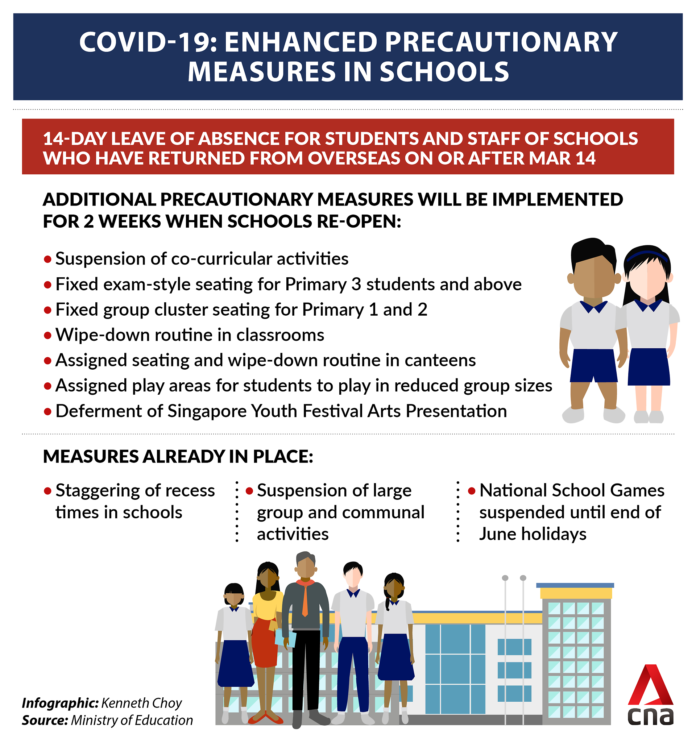
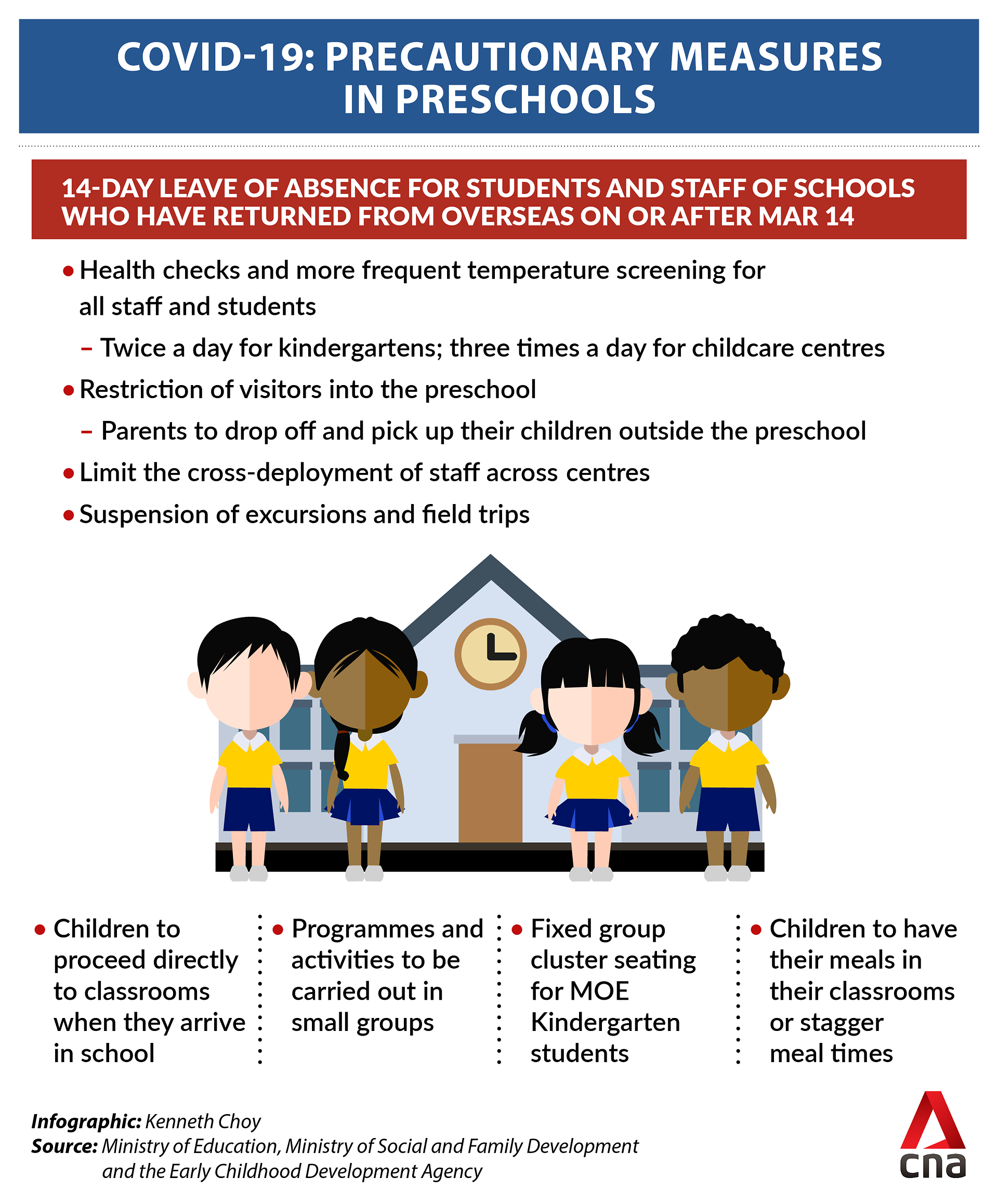
MOE has consulted healthcare experts and put in place many “significant additional precautionary measures to safeguard the entire system” in order to “maintain the calm situation we enjoyed before the March holidays”.
“We have implemented a leave of absence/stay-home notice policy, with the result that come Monday, every student, teacher, staff, canteen stall operator in school would not have gone overseas since the start of the March school holidays,” he said.
As a further precaution, he added that there will be “100 per cent checks” on their travel history at the school gates.
Students will also only spend their time with two groups – their class and their co-curricular activity groups. All other activities that involve mingling have been suspended. With co-curricular activities suspended for two weeks, Mr Ong said their only social group will be their class.
“Another significant precaution is that every morning, every student who is not feeling well, be it with a cough or sore throat, and not just fever, will have to be in an isolation room or sent home,” he added.
Students will also be seated apart in class, similar to during examinations.
“Teachers and students will continue to upkeep the highest standards of hygiene. There is constant supervision (for the younger students) and reminders for all students to wash their hands properly and regularly, and avoid touching their faces.
“Implemented together, these measures will serve as a robust layer of system defence, complementing the natural defence children may already have, to enable school to continue,” Mr Ong said.
SINGAPORE: Stricter safe distancing rules, which require retailers and food and beverage (F&B) operators to ensure sufficient space between their customers, seem to remain a work in progress for some businesses here.
The measures, announced on Friday (Mar 20), are part of the country’s step-up in efforts to control the spread of COVID-19. Among others, it required retail and F&B businesses to limit the number of shoppers within stores, keep patrons at least 1m apart while standing in queues or dining in, and encourage the use of self-checkouts.
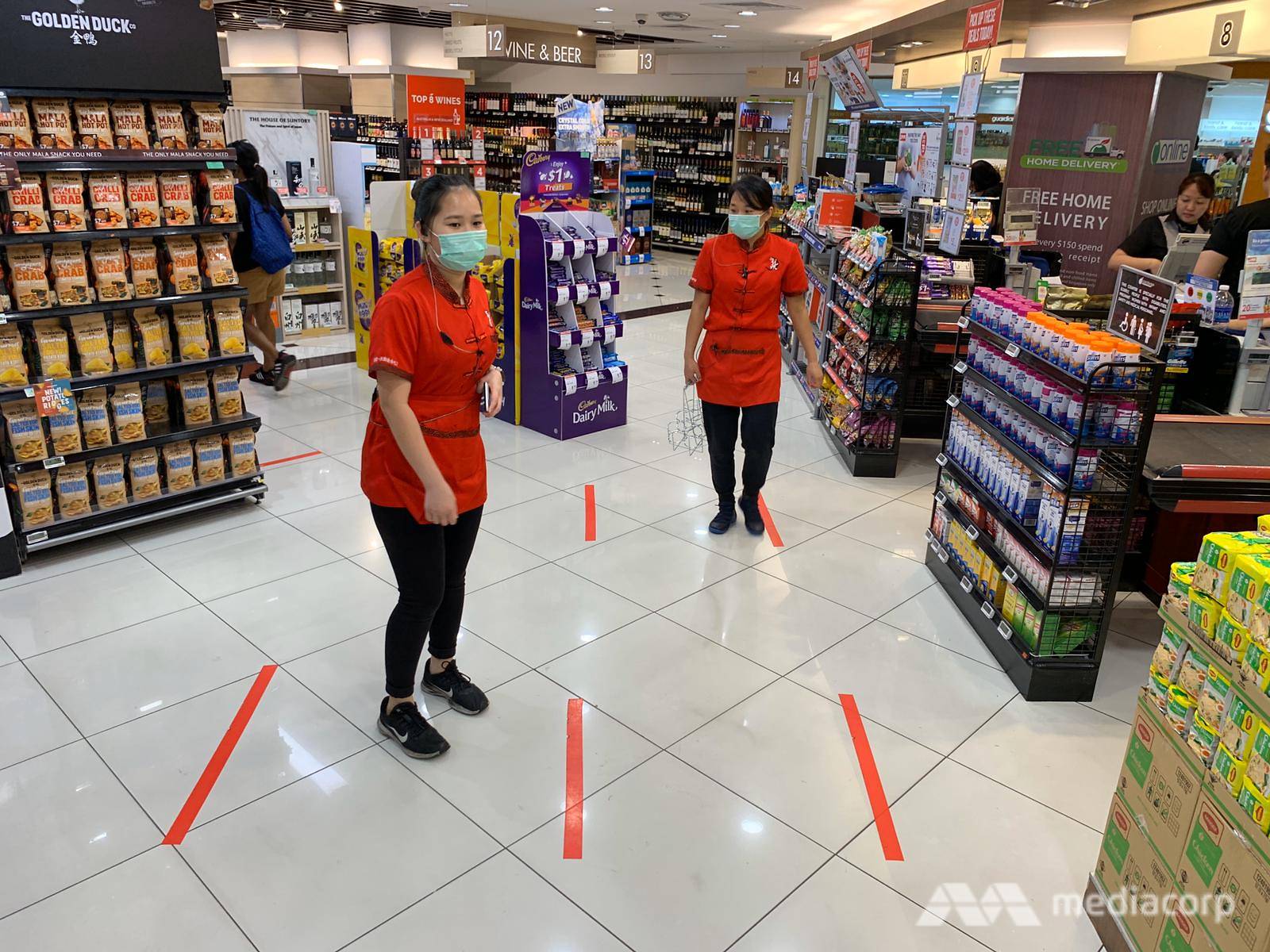
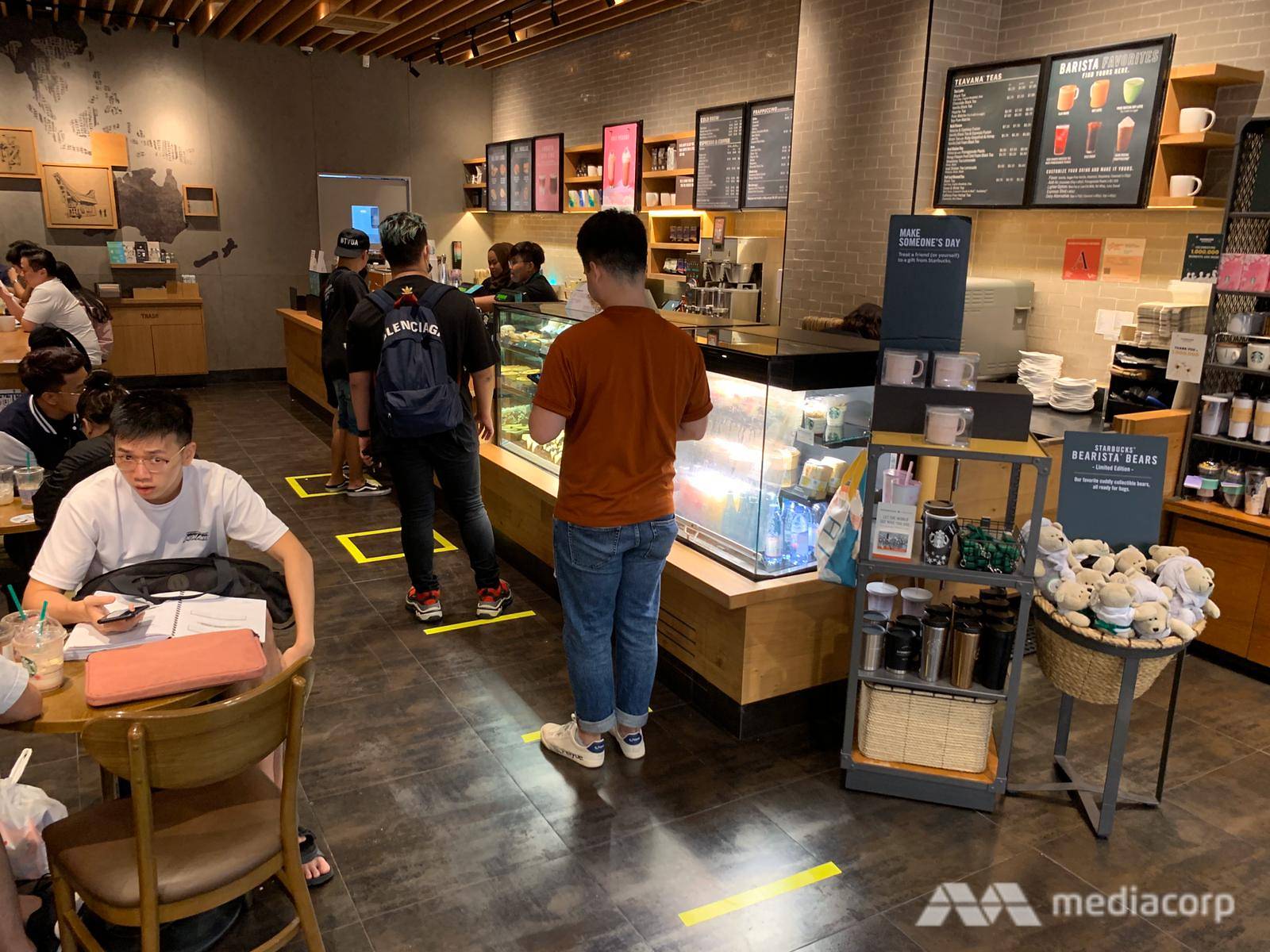
Since then, tape markings on the floor to demarcate queues, as well as tables and chairs left empty and marked out, have been seen at some supermarkets, F&B outlets and retail stores across the island.
But there were also others that have not managed to do so, as observed by CNA on Sunday.
This is due to space and time constraints, according to some businesses that spoke to CNA. Nevertheless, they said they understood the importance of these new measures and are working to implement them in the coming days.
At a Golden Village cinema, for instance, staff members have placed bottles of hand sanitisers at entrances for now. Cinema goers are also required to sit two seats apart from each other.
But more measures will be rolled out, Golden Village Bishan duty manager Lyn Siaw told CNA on Sunday afternoon.
A Golden Village outlet has not placed markings on the floor to remind patrons to stand 1m apart. But it has other distancing measures in place like requiring cinema goers to sit two seats away from each other. (Photo: Cindy Co).
“We haven’t started (placing tape markings) yet. We are still waiting for HQ (headquarters) to approve all the measures,” said Ms Siaw. The tape markings will indicate the 1m distance customers should stand apart from each other.
For now, the Bishan branch has already prepared tape for use as markers ahead of the approval, which Ms Siaw expects to come by Tuesday.
As of Sunday afternoon, not all cashier counters at Mustafa Centre have floor markings to remind customers to stand 1m apart (Photo: Cindy Co).
Over at Mustafa Centre, it has already placed tape markings at its main entrance and at some cashiers, as observed when CNA visited the mall at about 4.30pm.
While the usually-packed mall was significantly emptier, this was probably due to the timing, said Mr Kandasamy Murugesan, who manages the cashiers.
He explained that the centre had not placed tape markings at all cashier counters yet, as staff had been “very busy” the day before. He added that all counters would have the markings by 7pm on Sunday.
To ensure that customers keep their distance, cashiers have also been instructed to remind customers to stay a safe distance apart, he added.
Mustafa Centre has placed tape markings by some cashier counters to remind patrons to stand apart from each other (Photo: Cindy Co).
Tape markings that are a metre apart were also in place at several Starbucks outlets that CNA visited.
The branch at Clarke Quay Central also had its tables and chairs re-arranged on Saturday night, said its supervisor Roselyn Dany. The team will be moving its sofas “soon” to comply with the 1m rule after “getting approval”.
However, there are some businesses that have not done so.
Given that the measures were announced ahead of a weekend, the lack of time is one reason for Barcook Bakery’s outlet in Clarke Quay Central. With the outlet busy with operations over the weekend, tables and chairs will be re-arranged on Sunday night.
“Nearly half of the chairs will be removed by tonight so as to create more empty space,” an employee told CNA on Sunday afternoon.
However, more time may be needed to plan out tape markings on the floor given the limited shop space.
“The area around our display and cashier area is quite narrow so having customers stand 1m apart will mean having our tapes outside of our store, which we are unsure if we are able to do so,” the employee said in Mandarin.
Barcook bakery’s outlet in Clarke Quay Central will be removing nearly half of the chairs in its shop on Sunday night, to comply with the new safe distancing rules. (Photo: Tang See Kit)
Meanwhile, there were no visible signs or tape markings on the floor reminding customers to keep their distance at various The Body Shop outlets that CNA visited.
One staff member, who declined to give her name, said that they “didn’t have any solutions (for safe distancing) yet”.
“Our company hasn’t actually talked to us about it yet,” she said, but added that there was usually no crowd in the store.
The staff member said that as far as she was aware, no other The Body Shop store had received instructions to distance customers. CNA has approached the company for comment.
SOME DIFFICULTIES IN IMPLEMENTING NEW MEASURES
On Sunday, National Development Minister Lawrence Wong said that it might take a few days before these new measures will be implemented nationwide, given the large number of retail and F&B businesses.
“All the agencies are taking this very seriously, following up with these F&B outlets,” he said at a morning media briefing.
“There are many (of these businesses), so I think realistically, given that the measures were only announced on Friday, we do need time to progressively implement (them).”
However, he warned that there could be “enforcement and consequences” for those that do not comply.
Trade and Industry Minister Chan Chun Sing also noted that not all businesses have implemented crowd and queue management systems since the new measures were announced.
“I strongly encourage (them) to do so and to not wilfully disregard the advisories,” he said in a Facebook post.
He said he was aware that the measures “can be difficult to implement”, especially for establishments with space or manpower constraints, and will cause a “drop in revenue”.
Safe distancing measures at a Cold Storage outlet in Bugis Junction shopping mall, Mar 22, 2020. (Photo: Jeremy Long)
However, the measures are critical in safeguarding public health and must be implemented for the country to overcome the outbreak, Mr Chan added.
Since the measures were announced, the team at independent ice cream and coffee lifestyle cafe Creamier has been hard at work.
Thus far, it has managed to place tape markings to demarcate queues, halved its tables and chairs at various outlets to accommodate for more space between its customers, while rolling out other measures such as mandatory temperature taking for all entering its outlets.
Tape markings to indicate how far apart people should stand when queuing seen at Creamier. The ice cream and coffee lifestyle cafe has also removed nearly half of its tables and chairs at some outlets to ensure a 1m space between dine-in customers. (Photo: Tang See Kit)
It is also encouraging customers to order online and have their ice cream delivered, or fill in self-order forms so as to reduce verbal interactions between customers and its staff over the ice cream displays, said co-founder Khoh Wan Chin.
But while it has managed to roll out these measures fairly quickly, Ms Khoh said businesses could have been given more time for planning and “clearer milestones” that can be achieved in stages.
Businesses also face some difficulties in enforcing these new measures.
“We received a complaint that verbal orders are easier so that customers don’t need to touch the pens we provided,” Ms Khoh told CNA, adding that a handful of customers were also upset after being turned away due to their recent travel history.
“There is no perfect solution,” she said.
“We definitely understand that people want to have a good time when they are out but we are trying our best to create a safe environment,” added Ms Khoh. “At the end of the day, we want our customers and employees to feel assured.”
Creamier has rolled out measures such as mandatory temperature taking and now requires all customers entering its outlets to fill in an online form. (Photo: Tang See Kit)
It has also been a scramble for Mr Logan Wong, founder of Pure Senses and distributor of Yankee Candle in Singapore.
Given that most of his retail stores are between 96 to about 300 sq ft, Mr Wong said it was “very difficult” for his team to map out markings on the floor to ensure customers were kept 1m apart.
“For some of our stores, 1m will mean outside of our leasing line,” he said.
While his team managed to do so by Sunday morning, Mr Wong has reached out to his various landlords for approval to shutter his stores for seven days.
This as some of his salespeople have expressed concerns about their safety amid the disease outbreak and challenges in making sure these new safe distancing rules are adhered to.
Safe distancing measures at a Starbucks outlet in Bugis+ shopping mall, Mar 22, 2020. (Photo: Jeremy Long)
“Most of our customers go near to smell our candles so are we going to stop customers now? But how are we going to sell our candles if we don’t let our customers do that?” he told CNA. “It’s very challenging for my frontline people.”
So far, he has secured the green light from one of his landlords – Paya Lebar Square – and will be shutting the outlet in the mall from Tuesday for seven days.
“As business leaders, we need to strike a balance between minimising the health risks of our frontline employees while mitigating the business risks during this period,” he said, noting that landlords providing further rental rebates and wage support from the Government will be crucial for retailers like him.
The local distributor of Yankee Candle is seeking approval from his landlords to shutter his stores for seven days, following the announcement of stricter safe distancing measures. (Photo: Tang See Kit)
“WE SHOULD ALL USE SOME COMMON SENSE”
Authorities have also called on Singaporeans to do their part.
Mr Chan, for instance, has stressed that “the responsibility cannot rest on the shoulders of businesses alone”.
“Please follow the instructions given by the stores you patronise and don’t make things difficult for the staff who are trying to do their jobs. Even if there’s no queue management system in place, make sure you don’t stand too close to other people in the queue,” he wrote in his Facebook post.
“Support your favourite restaurant by ordering your food to go instead of eating in.”
Safe distancing measures in effect at a eatery at Eastpoint mall. (Photo: Gaya Chandramohan)
Customers told CNA that they understood the difficulties of business operators hence they were not too worried about patronising places that did not have these measures in place yet.
A McDonald’s customer, who only wanted to be known as Elaine, said that it would be “very good” if stores could implement social distancing measures but she acknowledged the challenges some stores might face.
“To be fair, some spaces in the malls are very small. It’s a bit hard … but I see some (stores) are trying to implement,” she said.
View of a Japanese restaurant at PLQ Mall that has implemented safe distancing measures, Mar 22, 2020. (Photo: Chew Hui Min)
Mr Joseph Lim, who was enjoying a cup of coffee at Starbucks when approached by CNA, said: “I think it’s more important for everyone to practice personal hygiene and social responsibility.
“Businesses can do what they can, but consumers also should play a part. At this point in time, we should all use some common sense. Even if there’s no marking, let’s just sit or stand further apart.”
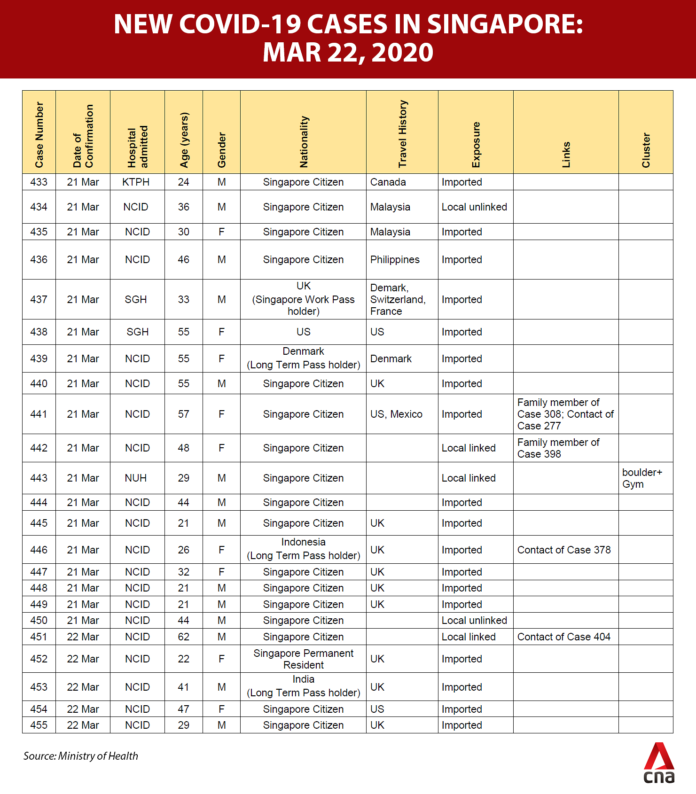
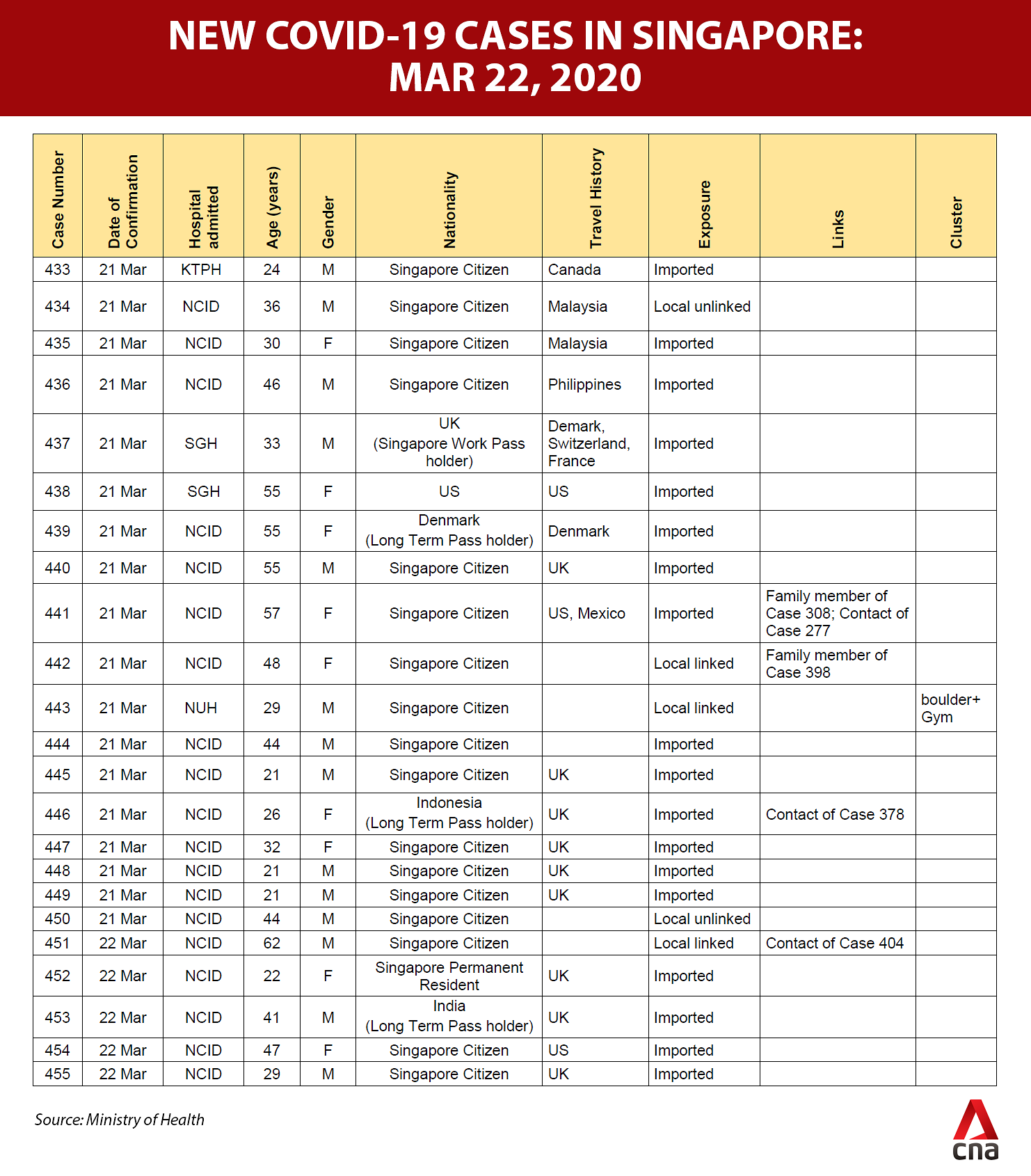
Twenty-three new coronavirus cases were announced on Sunday night (March 22) by the Ministry of Health (MOH), bringing the total number in Singapore to 455.
Of these cases, 18 were imported cases that had travelled to Europe, North America, South America and Asean.
Almost all of these new imported cases are returning residents and long-term pass holders, with only one short-term visitor.
Of the remaining five locally transmitted cases announced on Sunday, three are linked to previous cases, while two are currently not linked.
The MOH also said four more have recovered from the Covid-19 disease. To date, a total of 144 cases have fully recovered from the infection and been discharged from hospital.
Of the 309 still in hospital, most are stable or improving. A total of 14 are in critical condition in the intensive care unit.
Two Covid-19 patients here died from complications on Saturday morning, the Republic’s first deaths from the outbreak.
They were a 75-year-old Singaporean woman linked to the Life Church and Missions Singapore cluster, and a 64-year-old Indonesian national.
SINGAPORE: Singapore on Sunday (Mar 22) confirmed 23 new cases of COVID-19, of which 18 are imported.
The new cases take the national total to 455 cases.
The imported cases had travelled to Europe, North America, South America and ASEAN countries, the Ministry of Health (MOH) said in its daily update.
All except one case were returning residents and long-term pass holders.
Nine of the imported cases had travelled to the United Kingdom, while three others had visited the United States.
Four more patients have also been discharged, MOH said.
To date, a total of 144 cases have fully recovered from the infection and have been discharged from hospital. Of the 309 confirmed cases who are still in hospital, most are stable or improving.
Fourteen are in critical condition in the intensive care unit.
Previously, except for a handful of countries, short-term visitors were allowed to come into Singapore, although they have to serve a 14-day stay-home notice once they entered the country.
The expanded restriction to all short-term visitors will take effect at 11.59pm on Monday.
Only work pass holders providing essential services, such as in healthcare and transport, will be allowed by the Manpower Ministry to enter or return to Singapore. This will include their dependents.
Singapore on Saturday confirmed its first deaths from the disease – a 75-year-old Singaporean woman and 64-year-old Indonesian man.
The woman, known as Case 90, was linked to the cluster at The Life Church and Missions Singapore.
She had a history of chronic heart disease and hypertension and had not travelled recently to affected countries and regions, MOH said.
The second patient, known as Case 212, was a 64-year-old Indonesian man with a history of heart disease. He reported the onset of symptoms on Mar 9 and had been hospitalised in a hospital in Indonesia for pneumonia.
He arrived in Singapore on Mar 13 and sought treatment at Mount Elizabeth Hospital, and was admitted in a critical condition to NCID on the same day.
He was also a contact of Case 289, a 62-year-old Singapore man.
Prime Minister Lee Hsien Loong expressed his condolences in a Facebook post and said there could be more deaths from COVID-19 in Singapore.
“As we get more COVID-19 cases, more patients will need ICU care, and we must brace ourselves for more losses,” he said.
The Government is doing all it can to slow the spread of the virus, said Mr Lee, urging Singaporeans to support and comply with the measures that have been put in place.
As the saying goes: Don’t sh*t where you eat. Basically, don’t have a romantic relationship with someone from your office-and it’s not hard to understand the adage. When you work with the person you’re dating, there might be a lot more things to argue over with professional conflicts of interest in the mix. And if you guys break up, seeing them every day still sure can get awkward, if not painful.
But office romances happen, and while it might not have worked for Tom and Summer in 500 Days of Summer, these four Singaporean couples are able to juggle a romantic and working relationship with the same person. If anything, they demonstrate that a workplace romance can not only thrive, but also serve as a booster for your career if you manage it right.
As the saying goes: Don’t sh*t where you eat. Basically, don’t have a romantic relationship with someone from your office-and it’s not hard to understand the adage. When you work with the person you’re dating, there might be a lot more things to argue over with professional conflicts of interest in the mix. And if you guys break up, seeing them every day still sure can get awkward, if not painful.
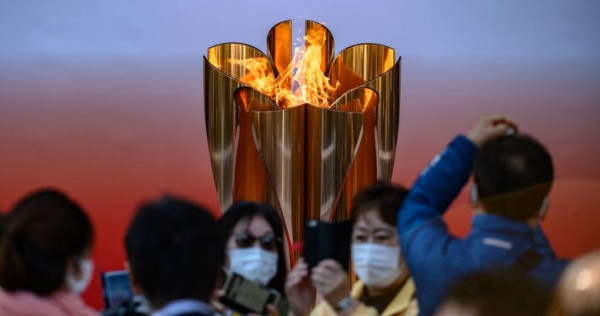
SENDAI, Japan – Tens of thousands of people flocked to a cauldron with the Olympic flame in north-eastern Japan over the weekend despite concerns about the coronavirus pandemic.
The flame arrived in Japan to a scaled-down welcoming ceremony last Friday (March 20) as doubts grew over whether the 2020 Tokyo Olympics will go ahead on schedule as the deadly virus causes chaos around the world.
The pandemic has already shredded the global sports calendar, with top sports leagues suspended and major tournaments postponed.
More than 50,000 people on Saturday queued to watch the flame displayed at Sendai station in Miyagi, chosen as part of the “Recovery Olympics” to showcase the region’s revival after the 2011 earthquake, tsunami and nuclear meltdown.
Some had to stay in a 500m queue for several hours, local media said.
Many of them wore masks as they took pictures with the cherry blossom-shaped cauldron.
“I queued for three hours but watching the Olympic flame was greatly encouraging,” a 70-year-old woman told public broadcaster NHK.
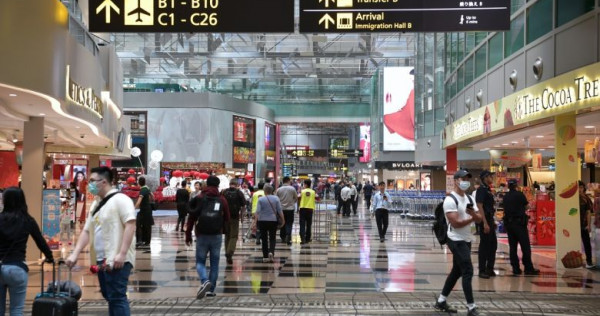
All short term visitors will no longer be allowed to enter or transit through Singapore from 11.59pm on Monday (March 23) in view of the heightened risks of importing coronavirus cases into the country.
Work pass holders and their dependents will be allowed to return to Singapore only if they work in sectors that provide essential services such as healthcare and transport.
This will also kick in at 11.59pm on Monday (March 23), the Ministry of Health (MOH) said in a statement on Sunday.
The measures were announced a day after two patients – a 75-year-old Singaporean woman and a 64-year-old Indonesian man – died from Covid-19 due to complications. They were the first deaths the Republic has seen.
National Development Minister Lawrence Wong said at a briefing on Sunday morning that the measures to “significantly tighten” Singapore’s borders are taken in the light of the rapidly escalating virus outbreak around the world.
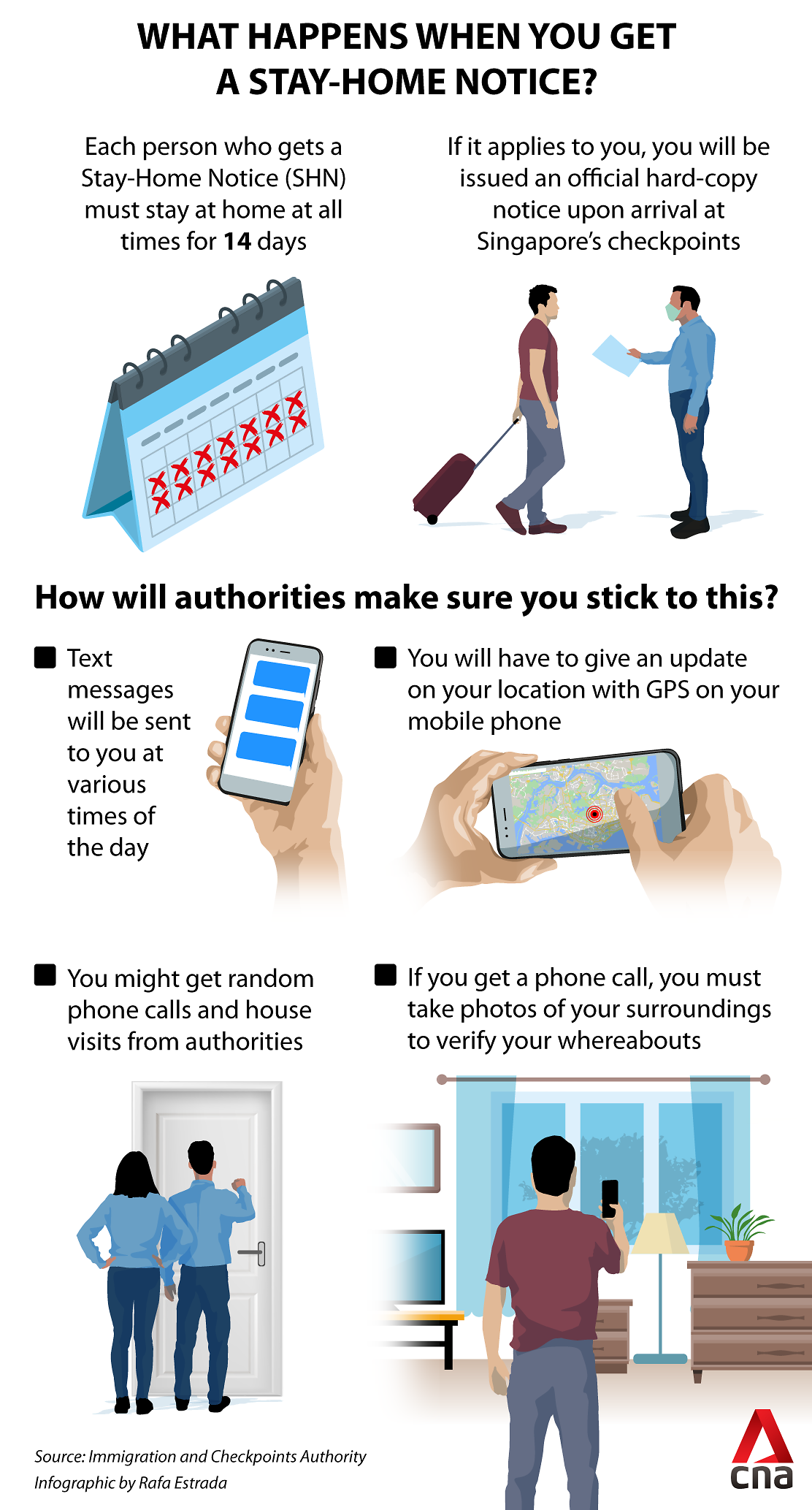
Previously, except for a handful of countries, short-term visitors from elsewhere were allowed to come into Singapore but were issued a 14-day Stay-Home Notice (SHN) upon arrival.
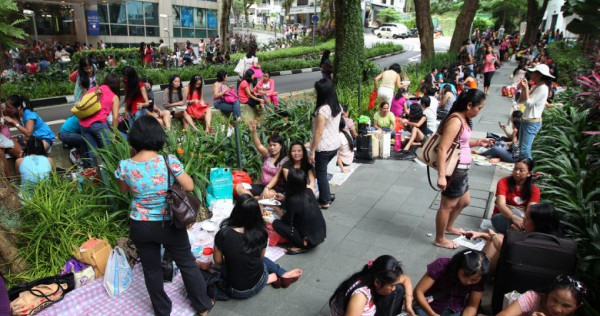
Foreign domestic workers (FDWs) are advised to spend their rest day at home during this period of the coronavirus outbreak, the Ministry of Manpower (MOM) said on Saturday (March 21).
If they still go out on their rest day, they should practise social distancing, the ministry added.
It said in a statement: “FDWs who have errands to attend to are encouraged to take their rest day on a weekday, when public spaces are less crowded.
“If FDWs agree to spend their rest day at home, employers should not assign work to them on their rest day. For FDWs who come to a mutual agreement with their employers to forgo their rest day, employers must provide compensation in lieu of the rest day.”
The Ministry of Health announced on Friday that Singapore will implement stricter safe distancing measures to reduce the risk of further local transmission of Covid-19.
These measures serve to limit close contact and large gatherings of people in close proximity over a prolonged duration.
“FDWs are similarly expected to adhere to safe distancing practices during their rest days,” MOM said.