SINGAPORE – The National Solidarity Party (NSP) intends to contest Tampines GRC, Sembawang GRC and the Pioneer and MacPherson single seats at the next general election.
NSP secretary-general Spencer Ng on Sunday (March 22) said his party would contest the same constituencies that it did in GE2015.
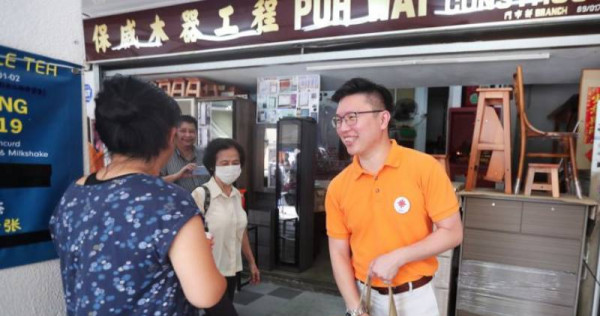
He will lead a team to contest in Sembawang, and party president Reno Fong will helm another team to stand in Tampines, Mr Ng told reporters during a walkabout in Tampines Street 81.
Party members distributed hand sanitiser to members of the public, including shopkeepers.
So far, about 10 party members are interested in standing for election, and the NSP is still reviewing them before unveiling its slate of candidates, Mr Ng added.
The applicants include entrepreneurs and professionals from the IT and logistics sectors who are aged between the late 20s and early 50s, he said.
The NSP joins a growing number of opposition parties that have indicated where they will contest for the GE, which is expected to be held in the next few months following the release of the Electoral Boundaries Review Committee’s report earlier this month.
Echo, the latest hero to join the ranks of Blizzard’s Overwatch, is quite the interesting new addition. Not only is she a sentient robot who has the unique ability to mimic the skills of opposing heroes, but a little-known fact is that she hails from sunny Singapore.
While neither Echo’s reveal trailer or any official write-up of her nationality (after all, do robots even qualify for such a thing?), a recent gameplay video by Team Singapore community lead Caldoran revealed that she can speak Singlish – the informal cultural language of Singapore.
Caldoran discovered Echo’s voice line while playing her in the Overwatch PTR (public test realm) servers. And as he pointed out, shiok is Singlish for describing one’s pleasure or enjoyment. It can range from eating good food, getting a massage… or even dropping foes in Overwatch.
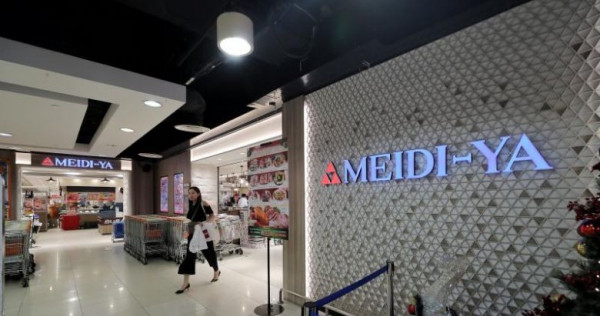
In case you haven’t heard, Japanese supermarket Meidi-Ya will be moving out of its premises at Liang Court by March 31, due to the mall’s redevelopment. According to The Straits Times, the site was bought over and is set to be replaced by an integrated development with two residential towers, a new hotel, and new commercial spaces.
PHOTO: Meidi-Ya’s website
But not to worry, the popular grocer isn’t leaving our shores anytime soon.
When Singapore’s Ministry of Finance commissioned influencers to help promote the national budget to younger Singaporeans in 2018, the campaign was a dismal failure. The fashion and beauty bloggers hired to help sell the budget were widely seen as totally unqualified to discuss high finance.
“I imagine somebody decided: ‘Lets get young people to understand the budget’,” says Andrew Taylor, head of public relations at the media and advertising giant Ogilvy Asia-Pacific.
“It’s an easy trap to fall into – they are a young demographic, birds of a feather flock together – and so ‘we will get like-minded people to talk to them’.
“But then, the audience doesn’t buy it, since it’s not the message they expect from a content creator, or from the Ministry of Finance. So they… are outraged that they are assumed to be so stupid.”
Singapore’s high rate of social media use creates a market ripe for social influencers. Yet as the Ministry of Finance realised, the credibility of influencers is essential for any message to take hold. That applies especially to business-to-business (B2B) influencers.
SINGAPORE – An overnight stay for some patients in Changi General Hospital took an unexpected turn in the early hours of Friday morning (March 20) – when a water pipe cracked above a ward during “rectification works” and left the floor awash with water.
Maintenance works had been going on in Ward 16 not long before the incident, The Straits Times understands, when some quiet sawing and banging noises could be heard.
But a pipe above the ward cracked, causing water to cascade onto the floor and spread across the room. Things had returned to normal by Friday morning. No one was injured, nor were hospital operations affected.
The hospital’s director of support operations Helena Tan told The Straits Times on Sunday that the hospital had been carrying out “rectification works” to the water pipe above the false ceiling in the ward in the early hours of Friday.
She said: “This is non-noisy work and is typically carried out when the water usage is lowest in a 24-hour period to minimise inconvenience to patients. As a safety measure, the area was cordoned off and a section of the ceiling was opened to facilitate works.”
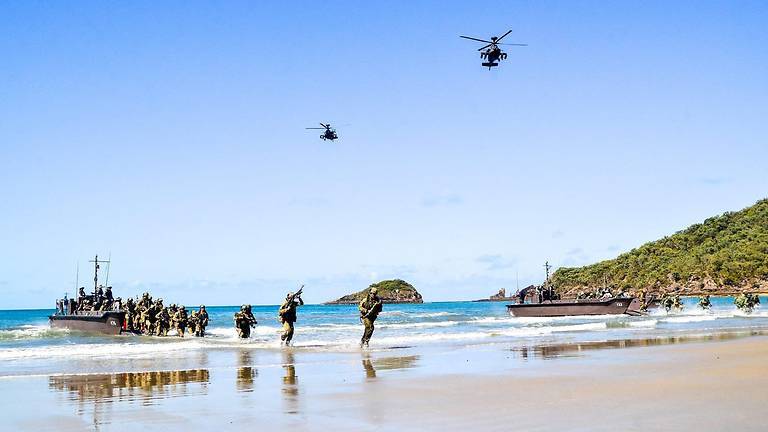
SAF and ADF personnel participating in a bilateral ship-to-shore mission during Exercise Trident. (Photo: MINDEF)
SINGAPORE: Singapore and Australia on Monday (Mar 23) signed an upgraded treaty to facilitate more training access in Australia for the Singapore Armed Forces (SAF).
Singapore will also jointly develop military training facilities in new and bigger training areas there.
Defence Minister Ng Eng Hen and his Australian counterpart Linda Reynolds signed the Treaty on Military Training and Training Area Development during the 5th Singapore-Australia Leaders’ Meeting, which was conducted via video conference amid the COVID-19 pandemic.
The signing was witnessed by Prime Minister Lee Hsien Loong and Australian Prime Minister Scott Morrison.
The treaty marks a “significant milestone” in bilateral defence relations, the Ministry of Defence (MINDEF) said in a statement on Monday, adding that it is an upgrade of a Memorandum of Understanding signed in 2016 under the Singapore-Australia Comprehensive Strategic Partnership (CSP).
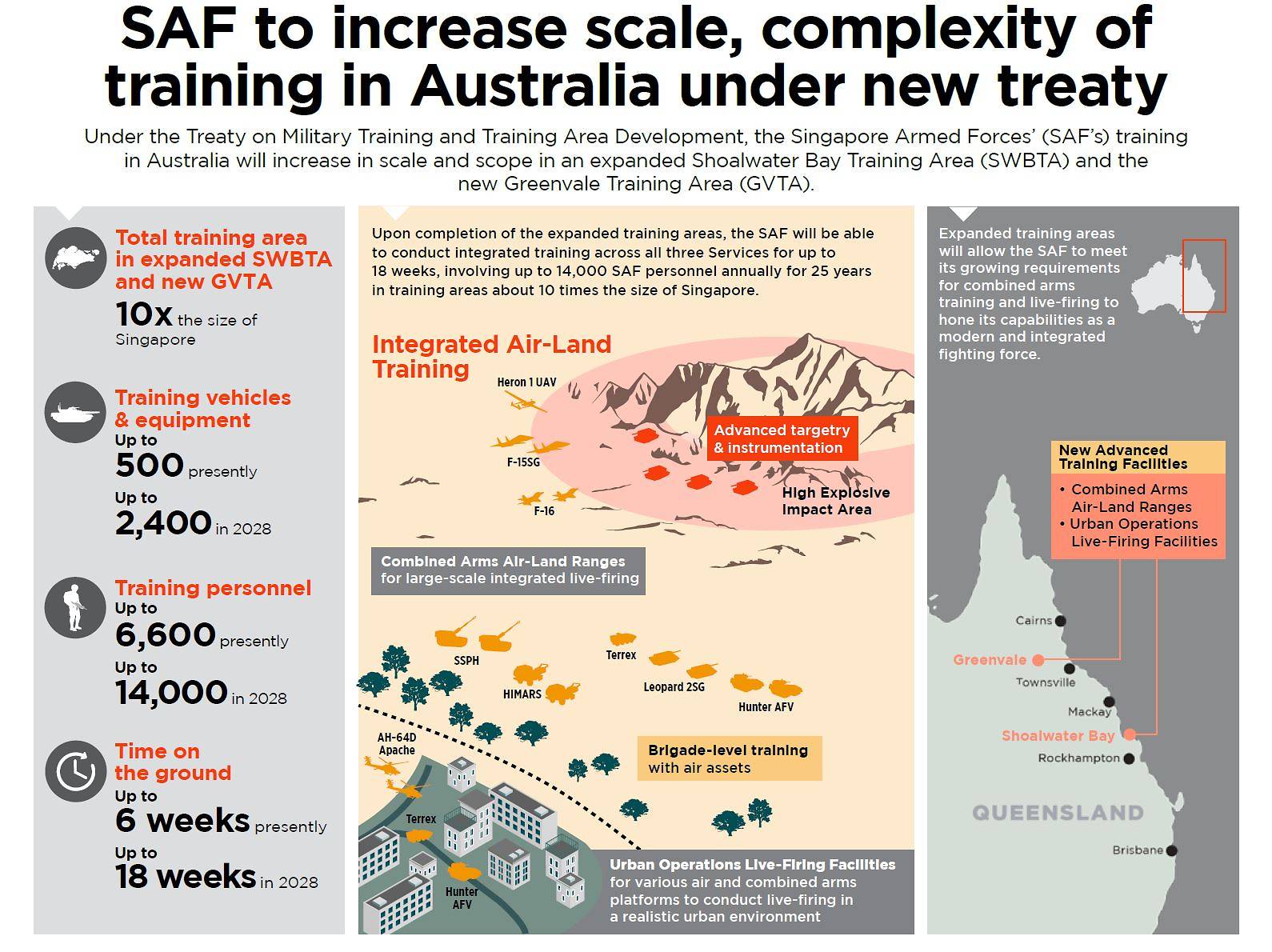
“The treaty facilitates the SAF’s enhanced military training access in Australia, and the joint development of military training areas and facilities in an expanded Shoalwater Bay Training Area (SWBTA) and a new Greenvale Training Area in Queensland, Australia,” MINDEF said.
Dr Ng had announced in his Committee of Supply debate speech on Mar 2 that the combined areas, to be ready in 2024 and 2028 respectively, will be about 10 times the size of Singapore.
This will enable training for up to 14,000 soldiers and 2,400 vehicles over 18 weeks in a year, which MINDEF said will allow the SAF to meet “growing requirements for motorised and armoured live-firing training, as well as combined arms and joint training to hone its capabilities as a modern and integrated fighting force”.
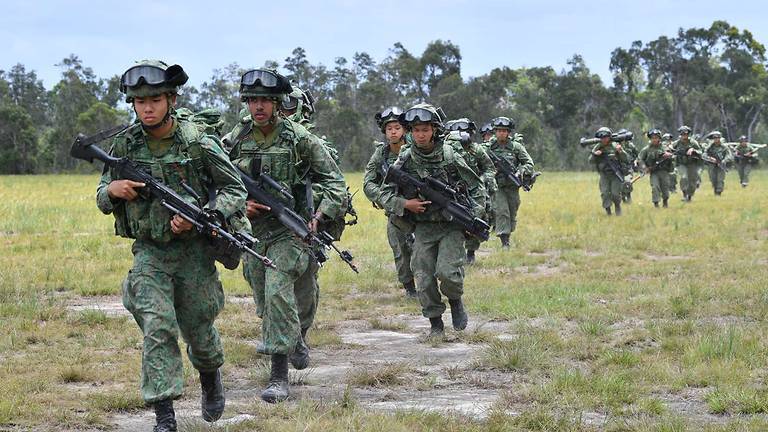
SAF troops participating in Exercise Wallaby conducted in the SWBTA. (Photo: MINDEF)
Currently, about 6,600 troops head to Australia for up to six weeks each year to train in SWBTA, which is about four times the size of Singapore.
MINDEF said on Monday that the treaty allows the SAF to conduct integrated training across its three services in the combined area for 25 years.
“The advanced training facilities will benefit both armed forces and deepen defence cooperation,” it added.
NEXT-GENERATION FACILITIES
The new combined training area will contain next-generation facilities like combined arms air-land ranges and urban operations live firing facilities, allowing the SAF to conduct mass scale, air-land live firing across its services.
The combined arms air-land ranges allow the army and air force to train together with tanks, infantry fighting vehicles, drones, artillery and other combined arms platforms.
The urban operations live-firing facilities enable various air and combined arms platforms to conduct live firing in a realistic urban environment.
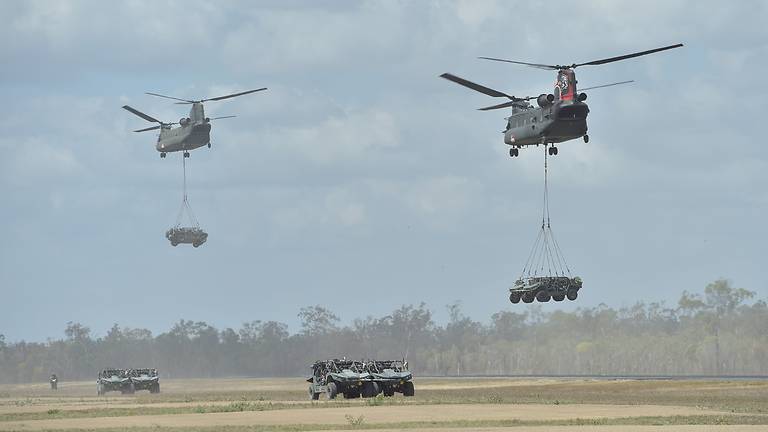
The Air Force’s CH-47 Chinook helicopters performing an underslung operation, which involves hooking up a Light Strike Vehicle to the underbelly of the aircraft during Exercise Wallaby. (Photo: MINDEF)
The Shoalwater Bay Training Area. (Graphic: MINDEF)
“Facilities to be built under the treaty will be mutually agreed upon by both countries, and procurement undertaken by Australia will be carried out in a transparent, open and competitive manner,” MINDEF stated.
The ministry said the countries have made “steady progress” in developing the training areas and facilities, pointing to the completion of an ammunition storage building in 2019.
Dr Ng had told Parliament that there was a halt in construction activity at SWBTA because of fears it could accentuate the bushfires that raged in Australia this year.
An SAF Light Strike Vehicle participating in Exercise Wallaby at SWBTA. (Photo: MINDEF)
MINDEF had announced the expansion plans in 2016 following Singapore’s signing of the CSP with Australia, boosting ties and allowing Singapore troops to train in Australia for 25 years.
“The SAF and the Australian Defence Force have a long history of military cooperation, with extensive interactions including bilateral and multilateral exercises, professional exchanges, cross attendance of courses, and joint operational deployment,” MINDEF stated.
The SAF has conducted Exercise Wallaby, its largest overseas exercise involving air, land and sea components, annually in SWBTA since the exercise’s inauguration in 1990.
An SAF and Australian Defence Force personnel taking part in a weapons sharing session during Exercise Trident. (Photo: MINDEF)
The area also hosts Exercise Trident, the signature bilateral joint exercise between the SAF and the Australian Defence Force involving air, land and sea components.
MINDEF said this exercise enables professional exchanges and improves interoperability between both armed forces.
“Notably, the SAF will mark the 30th anniversary of its training in the SWBTA in October 2020,” it added.
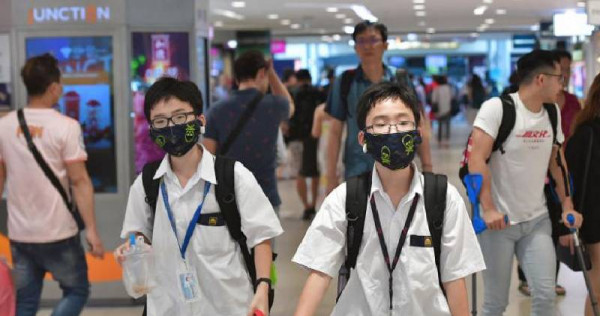
SINGAPORE – Education Minister Ong Ye Kung responded to parents’ concerns about schools reopening on Monday (March 23), citing scientific evidence, extra precautions, and a desire to reduce disruptions as key considerations in allowing students to resume classes.
His Facebook post on Sunday came after Singapore announced it would bar all short-term visitors from entering or transiting through the country from 11.59pm on Monday, to reduce the risk of imported coronavirus cases.
Said Mr Ong: “Part of the reason for the tougher border measures is to ensure we keep Singapore as safe as possible, so that daily activities, like going to work, eating out and attending school, can go on.”
He noted that he has received many e-mails and messages from parents, with some asking why the March holidays were not extended, especially given the rising numbers of imported Covid-19 cases and impending border closures.
Others, including several students, urged the Ministry of Education (MOE) to keep schools open, as they would like to go to school, he added.
SINGAPORE: It’s a situation we are all familiar with — after a relaxing weekend, we return to our email boxes to see a mountain of emails waiting, and instantly feel defeated by the “digital avalanche”.
To avoid the build-up of emails, some employees even choose to stay connected to work through their devices outside of office hours, some even while on holiday.
A 2019 study found that 80 per cent of Singaporeans surveyed checked their emails at least once during their holidays. Of these, 27 per cent did so at least once a day.
Emails are supposed to be tools to help us get things done, so it is not surprising that research has found employees spend around 2.5 hours a day reading and responding to emails.
The downside is, of the average 200 emails which employees receive each day, around 144 of them are not even relevant to the specific work they do.
It is also interesting that employees frequently bring up overtime work culture as the primary cause of job burnout.
When you dig deeper, you’ll realise that the main driver of long working hours is engaging in time-wasting tasks such as reading and responding to emails.
WHEN NOT TO USE EMAILS
Would organising a meeting or calling the person better tackle the issue you need to get resolved, instead of sending an email?
If your answer to the above question is “yes”, you shouldn’t be sending an email. Pick up the phone to organise a meeting or go to the person directly to have a conversation.
A woman looking at a computer while answering a call.
According to Statista, 293.6 billion e-mails were sent and received all across the world each day in 2019. The average adult checks their email 45 times each day, contributing to the incessant flow of emails.
These are later stored in servers within data centres, which contribute to 2 per cent of global carbon dioxide emissions annually.
Sending emails adds to the pool of emails, leading to even more emails, fuelling stress and anxiety and the need to constantly check your inbox to make sure you are on top of things.
Often, people send emails to put the ball in the other person’s court, and free themselves of the task of tackling a problem.
But the reality is, if an issue requires urgent attention, sending off an email is unlikely to be efficient. For one, it assumes the recipient is on stand-by to read and respond decisively.
Have we confused the process of sending emails with the desired outcome of getting a job completed?
WHO REALLY NEEDS TO BE COPIED?
Is there a need to hit “send all” or “reply all” to emails?
No doubt, we should all pay attention to group emails but the growing mountain of emails each of us face has forced us to prioritise some over others.
This is in part because many group emails evolve to become a needless conversation as individuals start talking directly to each other, and copying others in the same thread.
Sometimes there is knowledge management value in keeping others in the loop of the considerations that lead to an important organisational decision taken over the exchange of emails.
Now you can literally “easy apply” or “quick apply” via online job portals like LinkedIn.(Photo: Unsplash/John Schnobrich)
But over time, group emails become hard to follow and risk those involved ceasing to pay attention altogether. Others continue to “reply all” unsure if they should still include everyone or exclude anyone in the thread.
Conversations also risk going off-topic if there is little discipline, sometimes leading to no decisions or solutions, while recipients continue to receive unnecessary email notifications which distract them.
In fact, researchers use the term “email overload” to describe the use of email for functions that it was not designed for.
Such practices include sending mass emails and including everyone in follow-up responses for the sake of demonstrating responsiveness, even if recipients in the emails need not be involved in follow-ups.
THE COVERT USE OF BCC
At times, it may be a show of courtesy to include certain key decision-makers in emails, but is it always necessary to copy other people in an email?
Very often, “CC” or the covert “BCC” is used by people as a way to protect themselves from subsequent criticisms but risk confusion and tension when recipients are unsure what the intent of including them is in the first place.
Sometimes, people copy others to cover themselves, because silence is taken as complicity. But this form of shared responsibility really leads to no one taking responsibility.
Having additional recipients on the “CC” or “BCC” lists may even make accidents more likely when replies are sent to the wrong person.
(Photo: Unsplash/rawpixel)
EMBRACE EMAIL MINIMALISM
The caveat to the above of course depends on the organisational culture and if workers are in sync with how emails should be treated.
But there’s no denying our growing pile of emails are fuelling poor work and work-life outcomes.
Admittedly, our email culture will not change overnight, but it can begin with little steps.
As a start, allocate strict timings to check your inbox, avoiding periods when you work best. Time allocation sets boundaries on the constant need to check and respond, which also reduces the number of emails sent.
If you need to send an email, decide if it is more convenient to just get up and talk to your colleague or manager, or call the person if they are based overseas.
Face-to-face and audio interactions often help to clarify issues and misunderstandings, thus minimising the need to send multiple emails.
If you are already in the middle of a long thread, keep your emails succinct and sharp. Avoid copying more people into the thread and having too many questions and discussion points in an email. This helps to ensure that the conversation remains focused.
Fundamentally, just like how employees are learning how to “switch off” outside work hours, consciously reminding ourselves to cultivate better email habits such as resisting the urge to check your email first thing in the morning and turning off notifications on your work and personal devices will assist in reducing stress and anxiety levels.
As we usher in the Year of the Rat, let’s make good email habits one of our new year goals.
Carys Chan is Assistant Professor at RMIT University’s School of Management.
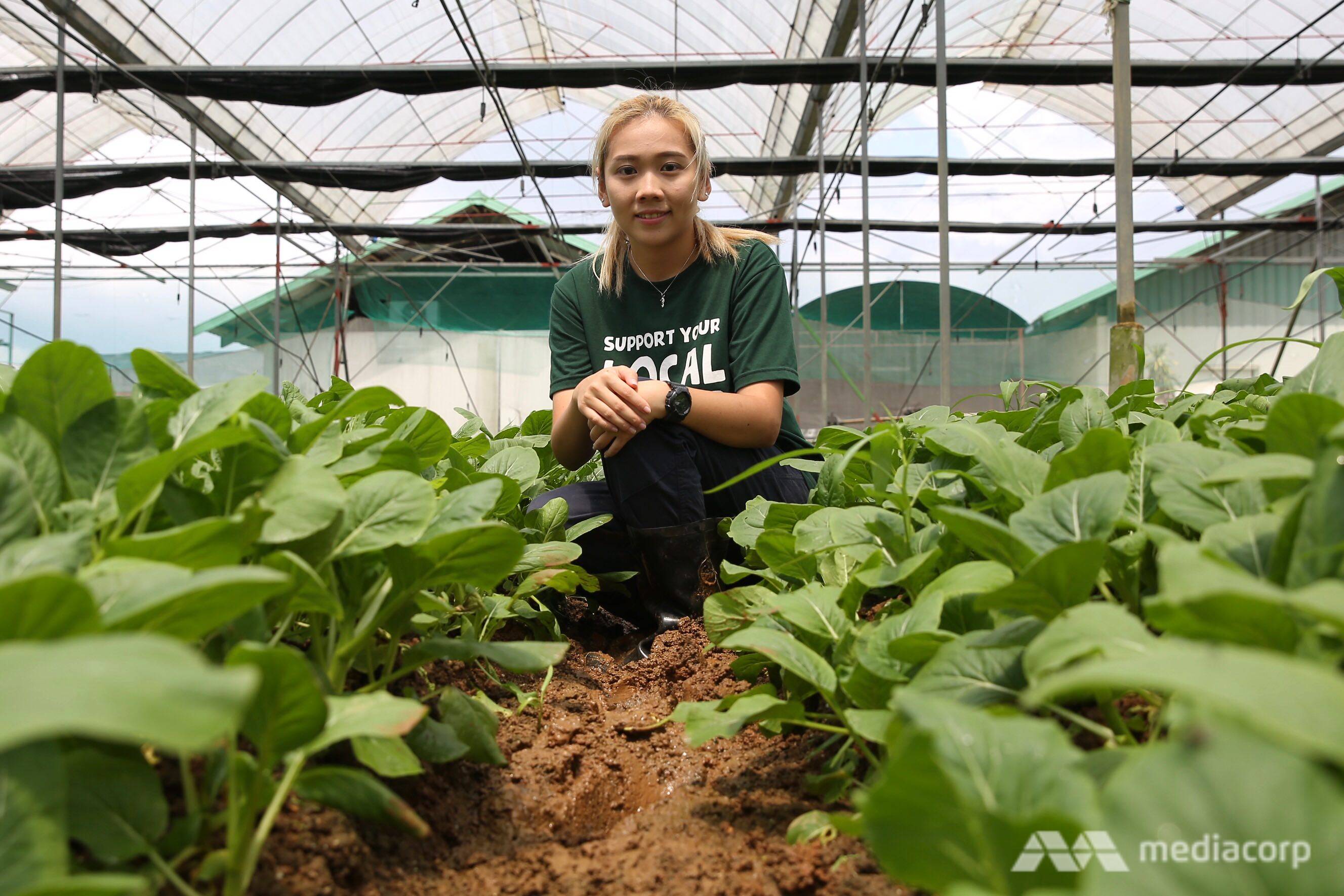
SINGAPORE: On most days, visitors to Yili Farm are a rarity given its remote Lim Chu Kang location and the unsavoury odours of vegetable fertilisers permeating the farm.
But Feb 7 and Mar 17 were not like most days, recalled Miss Toh Yingying, 24, business manager of Yili Vegetation and Trading.
Many people rushed to supermarkets to snap up daily essentials in the two days when Singapore’s disease alert level was upped to orange, and when Malaysia was about to impose a nationwide lockdown respectively.
Some decided that it would be a good idea to head to Lim Chu Kang to buy fresh vegetables right from the source, even though the farms there do not typically keep a ready stock to sell to visitors.
“Four to five families came to the farm to buy vegetables. I told them no, but some of them insisted on plucking the vegetables (off the ground) themselves,” said Miss Toh. The unexpected visitors went home empty-handed.
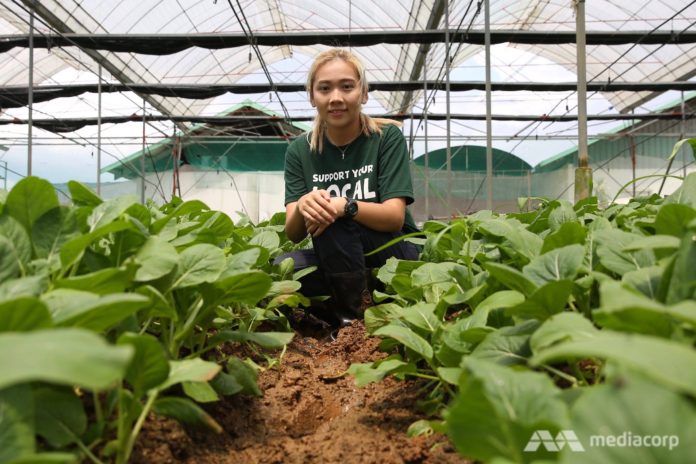
Miss Toh Yingying, 24, a business manager of Yili Vegetation and Trading. She said that on most days, visitors to Yili Farm are a rarity given its remote Lim Chu Kang location and the unsavoury odours of vegetable fertilisers permeating the farm. (Photo: TODAY/Najeer Yusof)
“This has never happened to us before. They thought vegetables from Malaysia would run out,” she said.
The latest bout of mass buying eventually petered out after Prime Minister Lee Hsien Loong said on Mar 17 the flow of goods and cargo from Malaysia would continue during the lockdown, having received reassurances from his Malaysian counterpart, Mr Muhyiddin Yassin.
There was no need to worry, other political leaders chimed in. “A disruption of supplies from Malaysia is a contingency scenario we have planned for many years,” said Minister for Trade and Industry Chan Chun Sing on the same day.
With the movement of goods across the Causeway mostly unaffected, Singapore appears to have dodged a bullet. And even if the lockdown affects Malaysia’s ability to produce food for itself — Malaysia had considered stopping exports of eggs and seafood to Singapore for its own consumption back in 2018 — Singapore’s robust food diversification strategy would mean there is no real cause for concern.
However, if the COVID-19 pandemic rages on globally, the rising number of quarantines and nationwide lockdowns could diminish agricultural labour and threaten global food production. This could put unprecedented pressure on Singapore’s food security, said experts.
Then, there is also the issue of climate change.
UNDER THE SPOTLIGHT
In recent weeks, in light of the COVID-19 outbreak, images of empty supermarket shelves here have turned the spotlight on the island’s food security — an esoteric concept for many but one that has worried authorities and academics for decades.
After all, Singapore is supposed to be a food paradise where no one can possibly starve, with stocks so abundant that food waste is regarded as a societal problem, said Mr Veera Sekaran, one of the directors of indoor vertical farming firm VertiVegies.
“With COVID-19, the urgency of Singapore’s food security has suddenly cropped up again,” he said.
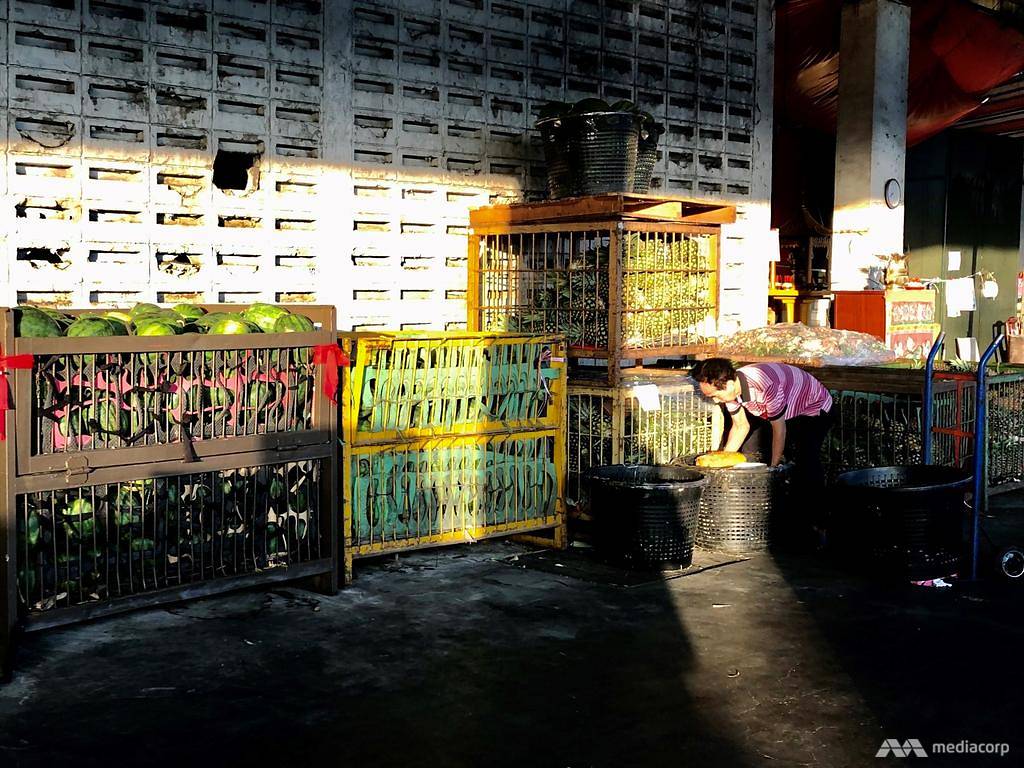
Suppliers of fresh produce at Pasir Panjang Wholesale Centre continued to receive their daily imports of vegetables and fruits from Malaysia on Wednesday (March 18). (Photo: TODAY/Mandy Lee)
Now that the COVID-19 pandemic, along with the economic and social upheaval that it brings, is expected to last until the end of 2020 or beyond, impacting all corners of the globe, there is a chance that Singapore’s food security strategies will be tested again, said experts.
SELF-RELIANT, DIVERSIFIED APPROACH
To meet such challenges, the Singapore Food Agency (SFA) was formed in April last year to focus solely on food-related issues. Securing the country’s food security is its core mission.
Singapore has planned for food supply disruptions for years, putting in place a comprehensive strategy after the food crisis of 2007 and 2008, which saw the global prices of food shoot up dramatically due to trade shocks, rising oil prices and food stocks diverted to produce biofuels.
As a result of all its planning, Singapore topped the Global Food Security Index of 113 countries by the Economist Intelligence Unit in 2018 and 2019. Before that, it had been in the top three positions of the index — which measures affordability, availability, quality and safety of food source in each country — for several years.
However, when climate-related and natural-resource risk factors were taken into account, Singapore fell to 12th place in the 2019 index.
Dr Cecilia Tortajada, senior research fellow at the Lee Kuan Yew School of Public Policy’s Institute of Water Policy, noted Singapore’s high ranking in food security, attributing this to its ability to ensure the safety, availability and affordability of food.
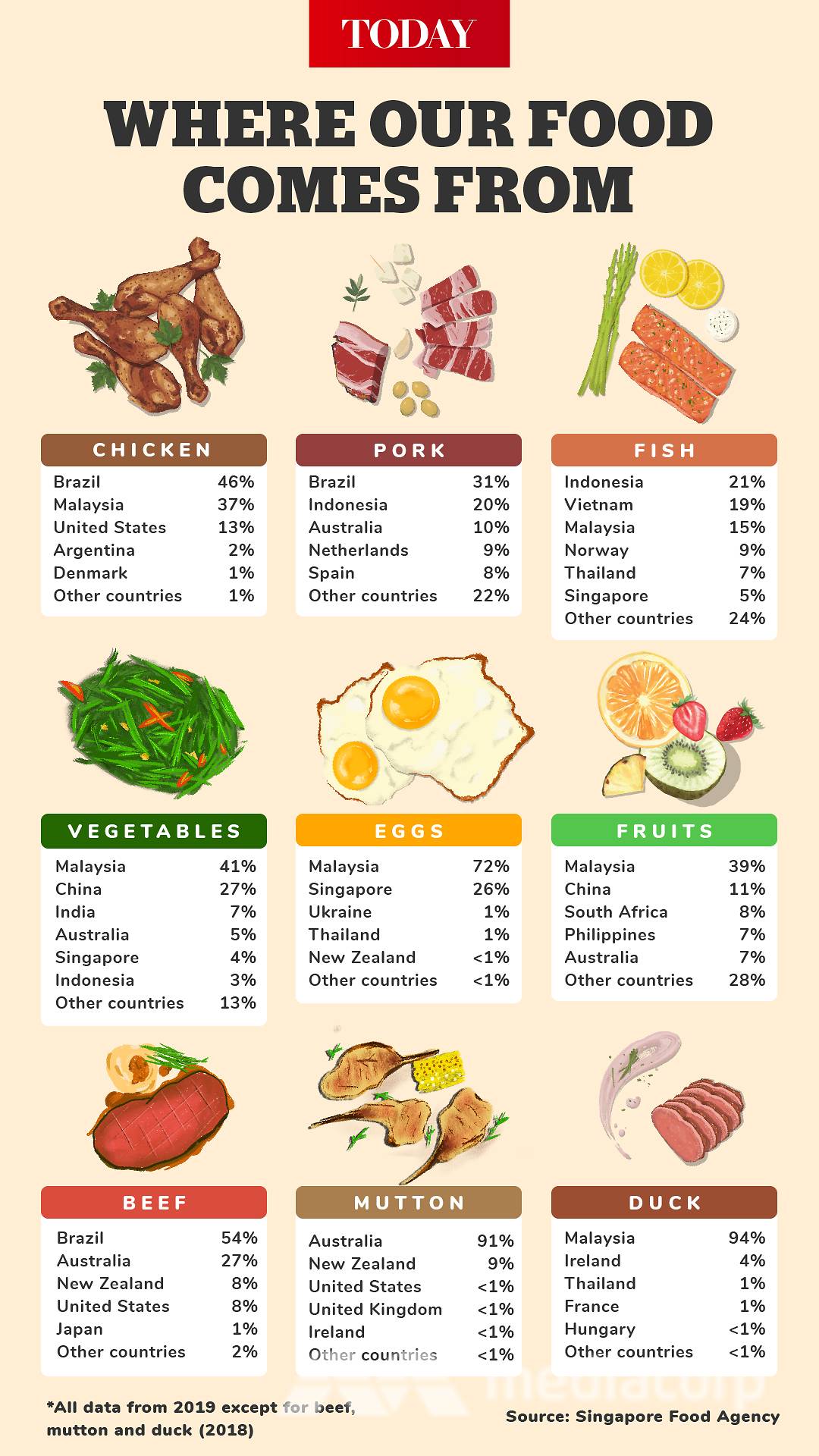
Nevertheless, “the main challenge, which is unavoidable given the size of the city-state, is dependence on foreign produce to a very high percentage,” said Dr Tortajada. The Republic currently imports more than 90 per cent of the food it consumes.
For any nation, forming a viable food security strategy is usually a fine balancing act between self-reliance and self-sufficiency, said Professor Paul Teng, an adjunct senior fellow at the Centre for Non-Traditional Security Studies in the S. Rajaratnam School of International Studies (RSIS).
Self-sufficiency means a country is able to produce its own food and stand on its own feet, and is practised by larger countries such as Indonesia and the Philippines. Both seek to be fully self-sufficient in rice production, for example.
Self-reliance, on the other hand, means the country imports food but also relies on some level of domestic food production, said Prof Teng, a food security expert who has been studying the topic for more than three decades.
Singapore is forced to belong to the second category because it does not have that luxury of natural resources, ample land and water. It has to be self-reliant, using explicit policies to safeguard its food supplies while having some domestic production capability of its own, Prof Teng added.
As such, animal husbandry gave way to urban development, and the once familiar chicken coops and pig farms that dotted Singapore’s landscape in the 60s and 70s eventually had to go.
Said Prof Teng: “Most agricultural and food economists argue in favour of this self-reliance approach… because food security at the household level is linked to GDP (gross domestic product) per capita.”
Most households, for example, currently spend a relatively small portion of their incomes on food and thus have a “buffering capacity” should prices surge in response to supply declines. Thus, food security and rising prosperity goes hand in hand.
“Scarce resources of land, water and labour can be better deployed to activities which have higher economic value than farming,” he said.
Singapore has planned for food supply disruptions for years, putting in place a comprehensive strategy after the food crisis of 2007 and 2008, which saw the global prices of food shoot up dramatically due to trade shocks, rising oil prices and food stocks diverted to produce biofuels. (Photo: TODAY/Najeer Yusof)
But without domestic food production, which comes under the nation’s sovereign control, there is a risk of importing food from a single source. As such, Singapore has strived to import from as many sources as possible.
Environment and Water Resources Minister Masagos Zulkifli said Singapore’s approach is to grow its “three food baskets” — to diversify its sources of imported food, encourage firms to grow food overseas, and expand its local produce industry.
Today, Singapore’s food imports come from over 170 countries and regions around the world, up from 160 in 2007.
This diversification of food sources did not occur overnight, and is a culmination of years of sourcing trips and prudent procurement decisions to ensure that the nation will not starve.
Such a strategy provides resiliency to Singapore’s supply of food, said Prof Teng.
While any disruption by a single source does hurt, it is not a complete wipeout if the country has the ability to quickly top up the shortfall from other sources, said experts.
Said Mr Masagos last month: “(Singapore’s) heavy reliance on food imports makes us vulnerable to short-term disruptions arising from supply shortages, crop failures or animal diseases.
Referring to the SFA’s predecessor the Agri-Food and Veterinary Authority of Singapore (AVA), he added:
We have proven resilient to such disruptions, largely thanks to the astute planning of then-AVA , and the logistics and connectivity of our transport network. That is why, when some Singaporeans started buying up food (in February), and photos of empty supermarket shelves were circulated, we were able to say with full confidence that there is enough food for everyone. There is no risk of us running short of essential food and household items.
Singapore demonstrated this resiliency again just days after Malaysia — the source of more than 90 per cent of the island’s imported eggs — announced at around 10pm on Mar 16 that it would be locking down its borders from Mar 18 to 31.
On Mar 19, Mr Chan posted pictures of a “special cargo” of more than 300,000 eggs arriving at Changi Airport by air freight. These eggs were understood to be from Thailand (one of Singapore’s several alternative sources), though they constituted a fraction — less than 10 per cent — of what Singapore consumes on a daily basis.
Said Mr Chan: “We also have many other source countries which we have identified over the years and are able to activate them quickly when the need calls for it.
“This applies not just to eggs but other food products and essential items. We managed to activate this option in a matter of two days.”
Back in 2018, when Malaysia said that it was considering limiting exports of eggs and some types of seafood to ensure a sufficient supply for its domestic market, Singapore began in the same month to import eggs from Ukraine.
The Republic also imports eggs from Australia, Denmark, Japan, New Zealand, Spain, Sweden, South Korea, Thailand and the United States.
The number of hen shell eggs imported from sources other than Malaysia has increased from an average of 1.4 per cent of total imports in 2018 to 5.7 per cent of total imports in December 2019, said an SFA spokesman in response to queries.
But diversification is not just about putting many eggs in many baskets. The smart thing to do is to pick countries that regularly show a large surplus over domestic consumption for the food concerned, said Prof Teng.
Thus when a global food crisis occurs, the risks of jostling over limited food resources can be reduced.
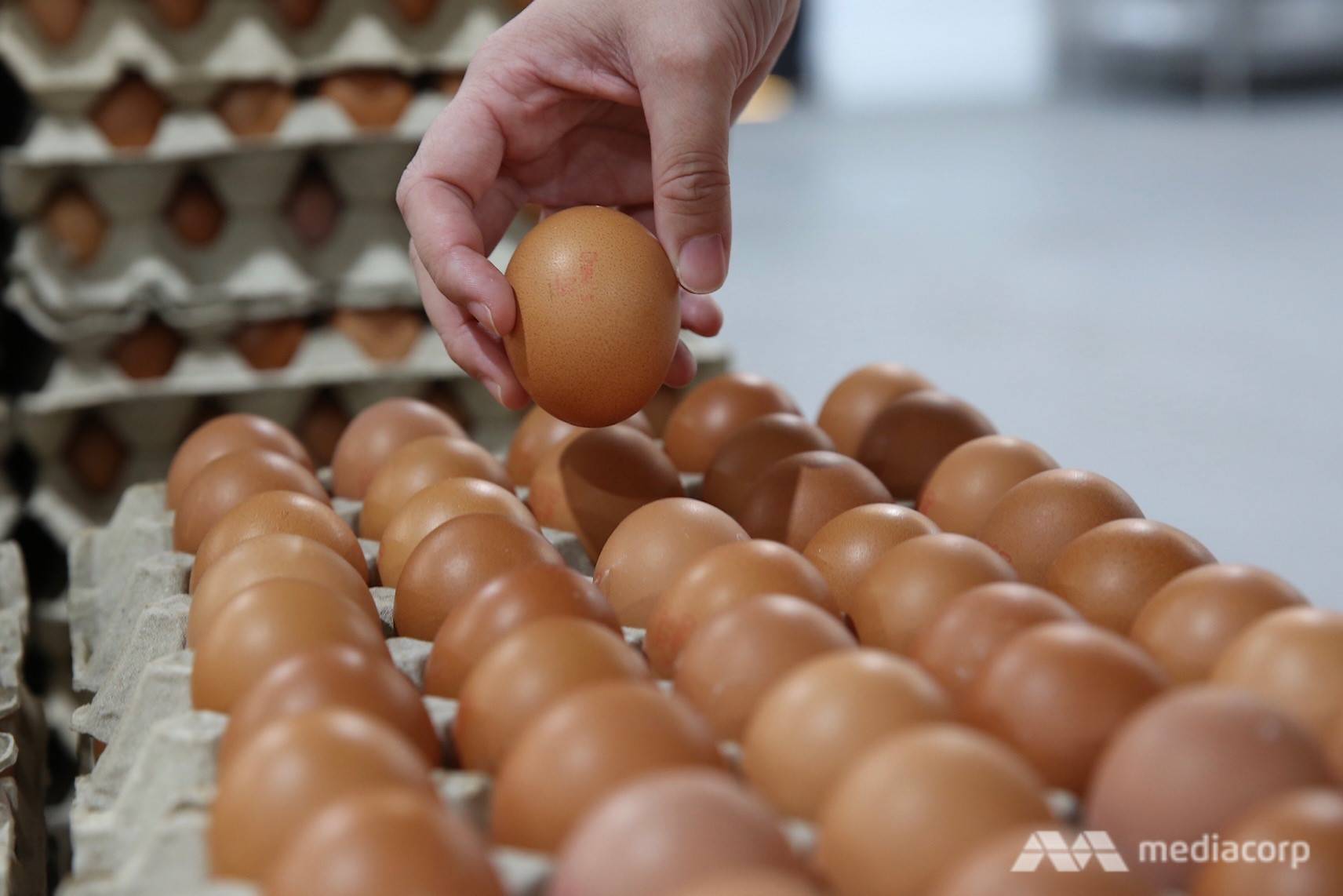
Back in 2018, when Malaysia said that it was considering limiting exports of eggs and some types of seafood to ensure a sufficient supply for its domestic market, Singapore began in the same month to import eggs from Ukraine. (Photo: TODAY/Najeer Yusof)
Another way is to encourage Singapore’s agricultural firms to grow food abroad and scale-up during “peacetime”, and bring the produce back to the country in times of crisis.
“By venturing overseas, companies can overcome land and manpower constraints and access new and bigger markets. They are then able to reap economies of scale and can also export food back to Singapore,” said the SFA spokesman.
Mr Eric Ng, chief executive of Apollo Aquaculture, said his firm is able to take advantage of lower costs by locating part of its operations in Brunei through a joint venture with the Brunei government.
“If Singapore is facing a national crisis, we are able to ship or fly the produce back to Singapore in a very short time,” said Mr Ng. His land-based vertical fish farm in Lim Chu Kang produces around 2,500 tonnes of food fish each year, while his Brunei farm can produce up to 800 tonnes a year.
While there is a risk that the local government could block any exports of food during global food crises, Mr Ng said that is why the choice of country matters — Brunei and Singapore share strong ties and a mutual understanding of food security.
Singapore’s adroit diplomacy does not hurt either. “It was a call from Prime Minister Lee to the Malaysian government that guaranteed that goods will continue to flow during the lockdown,” he noted.
WHEN PROTRACTED CRISIS HITS
Despite the best-laid plans, a prolonged and escalating crisis, such as what the COVID-19 pandemic is shaping up to be, may still push Singapore’s diversification strategy to its limit.
Such a crisis entails a widespread impact on the world’s food-exporting countries, including the key sources that Singapore imports significant amounts of food from, such as Malaysia, Indonesia, Vietnam, China, Brazil, Australia, the Netherlands, Spain, South Africa and the United States.
This is Singapore’s “Achilles’ heel”, warned Prof Teng.
Since the start of the health crisis in China last December, the COVID-19 pandemic has gone global and spread to 177 countries. Several of them, including major food-exporting countries to Singapore, are experiencing what looks to be an exponential growth of new confirmed cases. As of Friday, there were more than 240,000 confirmed cases around the world.
If the situation continues to escalate and the surplus food capacity of these nations nosedives, the rise of food insecurity around the world could put Singapore’s food imports at risk.
When it comes to that, there is another layer of defence: The national stockpiles.
This is where the Ministry of Trade and Industry, which operates the Rice Stockpile Scheme, comes in. Apart from rice, other essential items such as infant milk powder, N95 masks and surgical face masks are stockpiled too.
The scheme requires importers of white rice, basmati rice, ponni rice and parboiled rice to pre-commit the quantity that they wish to import each month to sell in Singapore. Then, they would have to stockpile twice that quantity by keeping it in a government-designated warehouse, and to replace the stockpile with new stock as the rice cannot be kept in the warehouses for more than a year.
While the rice importer owns the rice, the Government has the right to acquire the rice during an emergency, with compensation.
Details of the size of Singapore’s stockpile are usually not revealed for national security reasons as well as not to hamper negotiations with overseas suppliers.
Infographic: Samuel Woo and Anam Musta’ein/TODAY
In a bid to reassure Singaporeans, however, Mr Chan gave a glimpse into the strength of the nation’s current stockpile: “For carbohydrates, like rice and noodles, we have more than three months’ worth of stockpile at the national level.”
“For proteins like meat, and vegetables, we use a combination of fresh, frozen and canned options to meet our demand and we have more than two months’ worth of supplies at normal consumption patterns,” he said on Mar 17, the morning after Malaysia’s sudden announcement.
Eggs, which do not fall under the stockpile scheme, have similar safeguards. Since April last year, egg importers have been required to provide the SFA with a viable business continuity plan — such as holding their own buffer stockpile or signing retainer contracts with suppliers — to mitigate the impact of supply disruptions, said an SFA spokesman.
Yet, stockpiles are finite and would only last as long as advertised based on regular consumption patterns.
Conventional wisdom suggests that in a crisis, people should naturally tighten their belts and reduce unnecessary consumption in order to avoid wasting food.
However, what has been difficult to anticipate and to plan for are the socio-psychological responses to perceived food shortages, as evident by the most recent run on vegetables, chicken and eggs on Tuesday, Prof Teng said.
Dr Tortajada added that these supermarket runs does not necessarily mean that food is unavailable. Rather, it shows the limits of resupplying amid the unplanned rush — a point which government leaders had alluded to during the recent episodes of mass buying.
“Panic shopping puts stress on any supply chains,” Dr Tortajada said.
Asked what could Singapore do if the national stockpiles run dry, Prof Teng said this would be uncharted territory.
Food rationing could be imposed, and Singapore could tap regional stockpiles such as the Asean Plus Three Emergency Rice Reserves. It could also work out new bilateral trade deals with countries with large export stockpiles, though this would likely come with large price spikes, he said.
HARVESTING LOCAL PRODUCE IN TIMES OF CRISIS
Singapore could also drastically ramp up its local food production, Prof Teng added.
Currently, less than 10 per cent of Singapore’s food is locally grown.
Farms could also be converted to grow emergency food crops, which are quickly grown, provide essential nutritional value, take up less room, but may not be grown in “peacetime” due to commercial reasons. These “survival plants” include potatoes, maize, beans, carrots, lettuce and tomatoes.
Can it be done? Some, like VertiVegies’ Mr Veera Sekaran, believe it is possible to scale up, as long as the Government leads the way.
“If it is a national security issue, it is absolutely possible that the Government provides the land and mobilises people, with experienced farmers providing the expertise. Farming is not rocket science, and there is land on rooftops, underneath expressways that all can be converted for this purpose,” said Mr Sekaran.
But the issue of urban farming and local produce has always revolved around commercial limitations — the price of locally grown food will always be higher than imported food due to the costs of land, manpower and raw materials here.
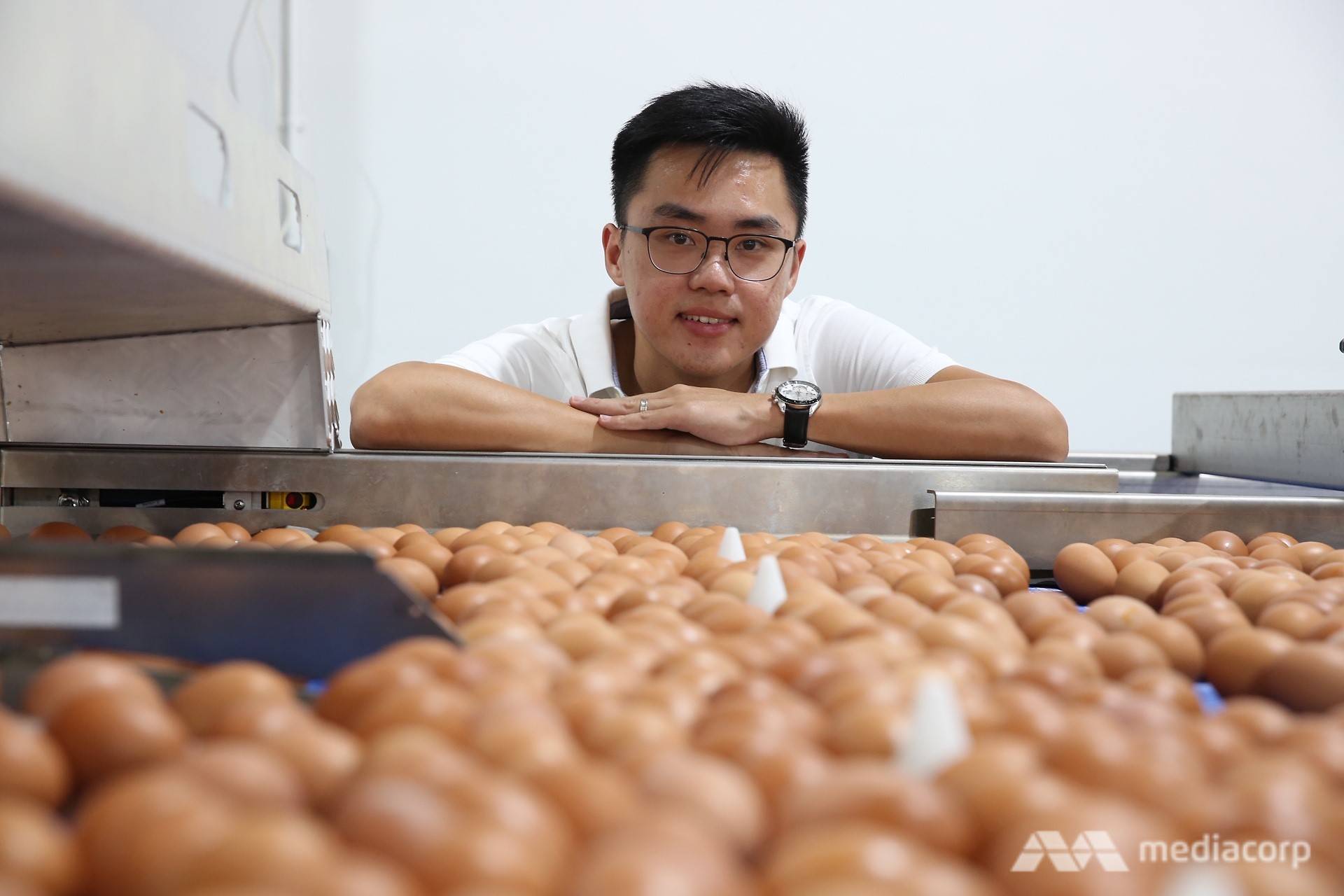
Mr Edvan Lim, director of egg producer Chew’s Agriculture, said it will take at least six months to ramp up the local egg production, as the chickens need about 18 weeks to grow before they start laying eggs.
Foreign alternatives, such as eggs from Malaysia and Ukraine, can cost around 20 to 30 per cent cheaper compared with those produced by local farms.
“It is not a matter of supply, but of commercial demand,” said Mr Lim. “We are very willing to ramp up production provided the market can absorb it.”
His farm currently produces around half a million eggs each day, which can be scaled up to 800,000 eggs daily in the near future.
Mr Edvan Lim, director of egg producer Chew’s Agriculture, said it will take at least six months to ramp up the local egg production, as the chickens need about 18 weeks to grow before they start laying eggs. (Photo: TODAY/Najeer Yusof)
On its end, the Government has not sat idly by when it comes to local produce.
In March last year, Mr Masagos said that by 2030, Singapore aims to provide 30 per cent of its nutritional needs with homegrown produce, using less than 1 per cent of its land area.
Such a target calls for a multi-fold increase in current agricultural production. Local produce will need to account for 10 per cent of the proteins and 20 per cent of the fruits and vegetables consumed by Singapore.
This, he said, is the most “ambitious” leg of the Government’s three-basket strategy.
SFA and the MEWR has been raising awareness of local produce on several fronts. This year, it launched the 2020: Singapore Food Story campaign and new branding to help consumers identify local produce. It is also encouraging the smaller farms to form consortiums so they may collectively bring their produce to market domestically — which is “key for local produce to be price-competitive”, said the SFA spokesman. The spokesman added:
While the average price of our local produce may be higher, we want to educate our consumers why they should select local produce. Local produce is safe, fresher, lasts longer, and there is less spoilage and food waste, as the produce does not need to travel for long periods of time before reaching the consumer.
“This also means a lower carbon footprint was taken to bring the food to your tables.”
Since 2017, SFA has been awarding agriculture land, through a competitive land tender basis, to agri-food companies with promising technologies. This year, SFA will be studying how the larger Lim Chu Kang agriculture area can be planned and redeveloped to enhance food production, said Mr Masagos in the debate on his ministry’s budget earlier this month.
Over the past five years, SFA has committed S$38 million from the S$63 million Agriculture Productivity Fund (APF) to support more than 100 farms in their productivity-enhancing investments, and the support will be extended through 2020 as well.
With the aid of the APF, Chew’s Agriculture, which is currently constructing a new farm in Neo Tiew Road, invested in a high-tech assembly line machinery that can automatically sort, grade, perform quality checks, disinfect and package freshly laid eggs, said Mr Lim. The fund paid for 70 per cent of the equipment cost.
Progress towards the 2030 target, however, will need some time as farmers work out the kinks, since the use of technology is not the panacea, said Miss Toh of Yili Vegetation.
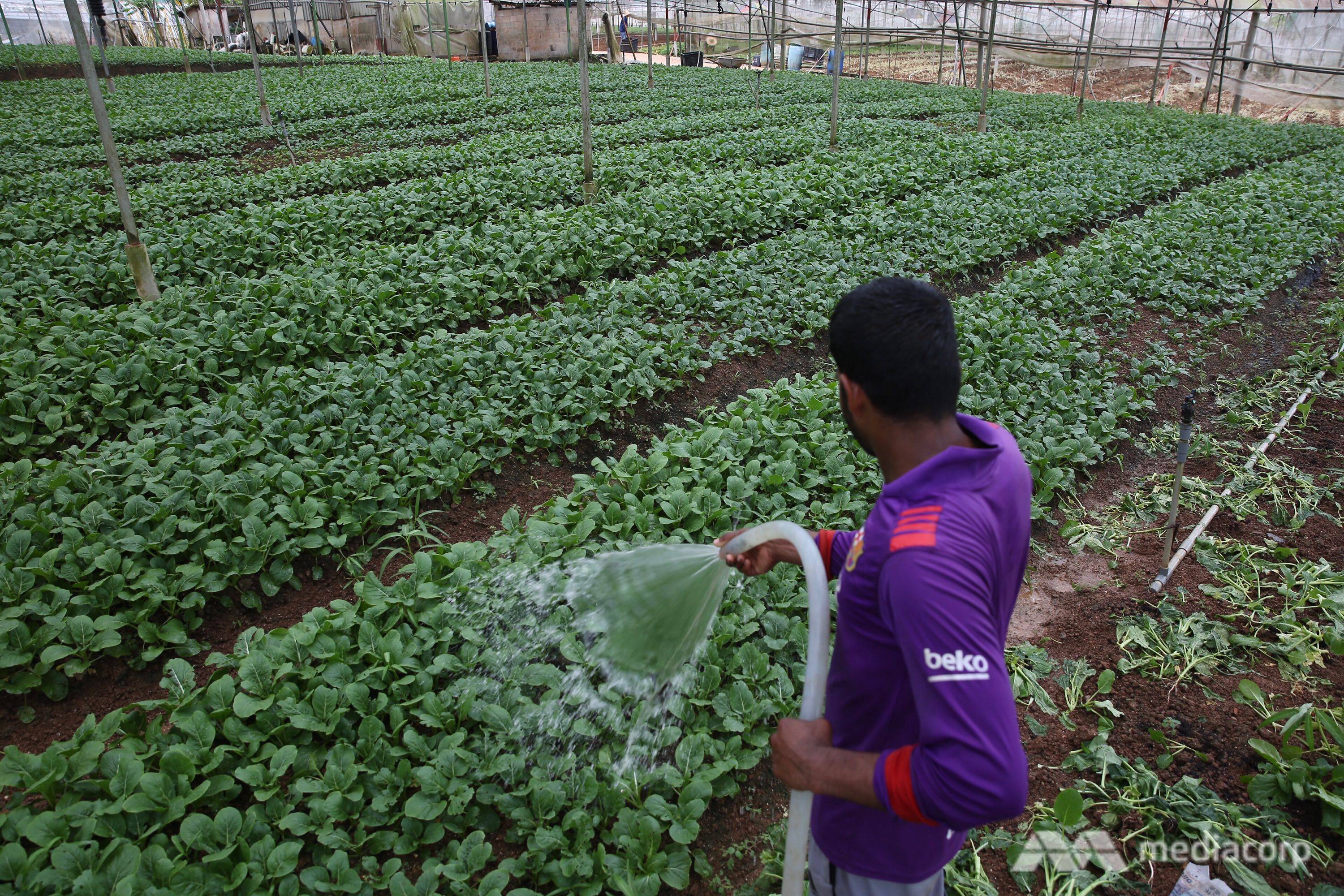
The yield of her three-hectare farm, which uses soil-grown and greenhouse methods, is limited by the space to grow Asian leafy vegetables such as kangkong and spinach. Her upcoming six-hectare farm in Lim Chu Kang — Yili had won the tender from SFA — will have to employ high-tech techniques to nearly triple the farm’s current yield.
Finding the right balance between technology and tradition remains a conundrum — it does not make economic sense to grow its current crop of Asian vegetables, which are typically favoured by Singaporeans, by using costlier high-tech methods, Ms Toh said.
“We got to figure out how to make the technology, which we think is still not yet mature, work for us. Most high-tech indoor farms end up growing kale, not kangkong,” she added.
THE BIGGER THREAT OF CLIMATE CHANGE
Intensifying local farming is not the only way to raise production — advances in food technology raise the possibility of manufacturing novel foods, such as food substitutes and alternative proteins like Impossible Meats and Quorn.
These innovations could pave the way to more productive and more sustainable methods of producing food. Building a soy-based meat patty takes a fraction of the time, manpower, land and raw material costs of rearing an animal.
“Traditional meat production methods are often land and water intensive, and generate high levels of emissions. Today, alternative proteins … are poised to become game-changers,” said Mr Masagos in the budget debate this month.
The sustainability advantages are critical as climate change is a serious challenge to Singapore’s food supply strategy, and is a far more profound crisis to tackle than COVID-19.
“All around the world, we see erratic weather, changes in crop growth patterns, water shortages, and other natural and human-related disasters, sometimes all happening close to and one after another. Population growth will further increase the stress on demand for food, at the same time when crop yields are projected to decline,” Mr Masagos warned.
If perfected, novel food technologies could be the answer to the seeming paradox of food security: Destructive land-use practices to grow food ends up putting food security at risk.
There is a rising trend in alternative lab-grown food production and high-tech, high-intensity farming around the world as well, such as indoor hydroponic vertical farms, indoor fish farms and recirculating aquaculture systems, said Dr Tortajada.
A viable local agriculture industry in land-scarce Singapore is therefore “very feasible”.
Yet, due consideration should be given if Singapore wants to produce more food in-house. “It is important to remember that climatological events, pests, et cetera., can decimate produce, irrespective of whether its origin is national or international,” she said.
“Resilience thus comes from diversity. (A combination of) local food produce as well as imports will make the city-state even more resilient.”
The pragmatic approach is to identify the critical food items which lend themselves to space-limited production, and which confer additional benefits of short “farm to consumer” cycles, said Prof Teng.
But the reality is that getting Singapore consumers to change their dietary preferences or to pay for higher priced, but more sustainable foods, is a tricky affair.
“What would Singaporeans settle for as food substitutes when there is a real crisis of food shortage? Apart from the staples based on rice and wheat, our current society has not experienced the challenges to choice, as some of our older generation did during the Second World War,” he said.
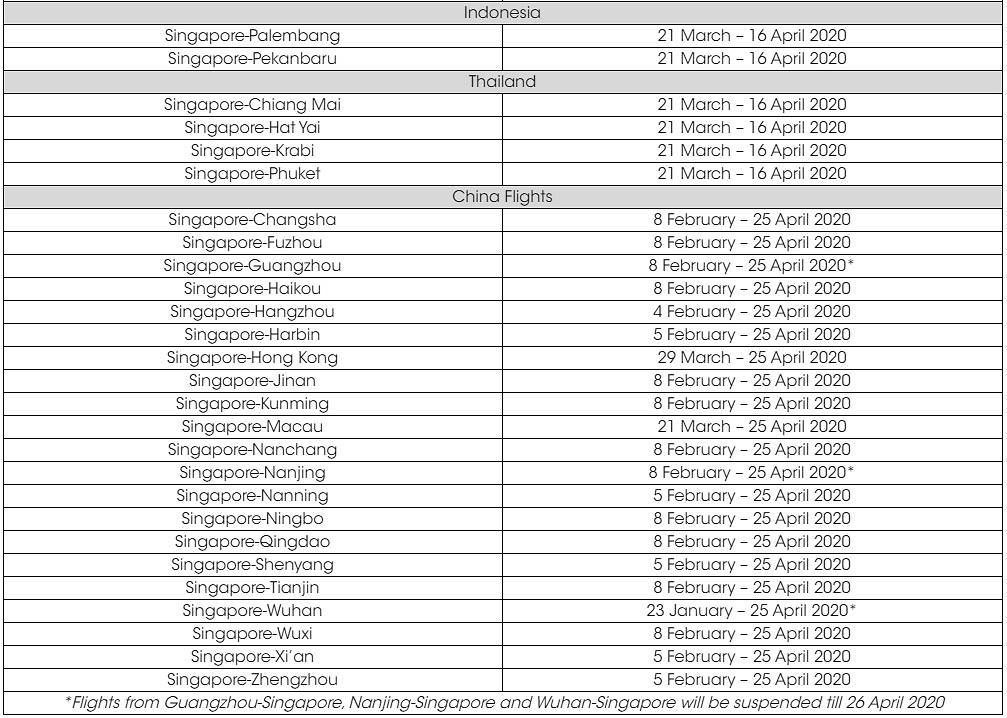
SINGAPORE: Scoot will “temporarily suspend” flights to 49 destinations as countries tighten border restrictions amid the ongoing COVID-19 outbreak.
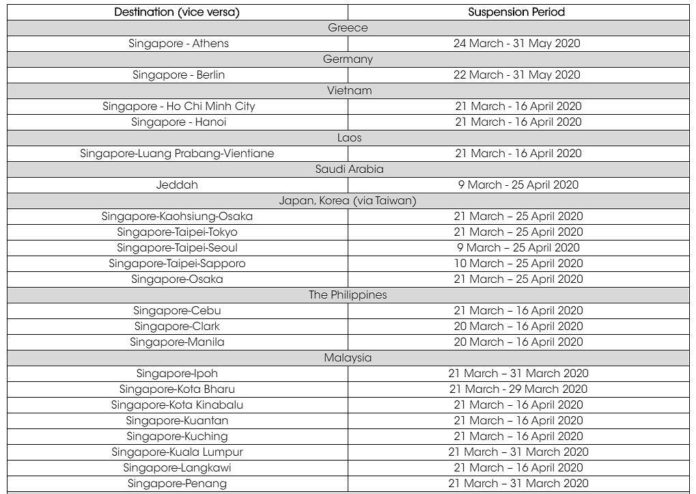
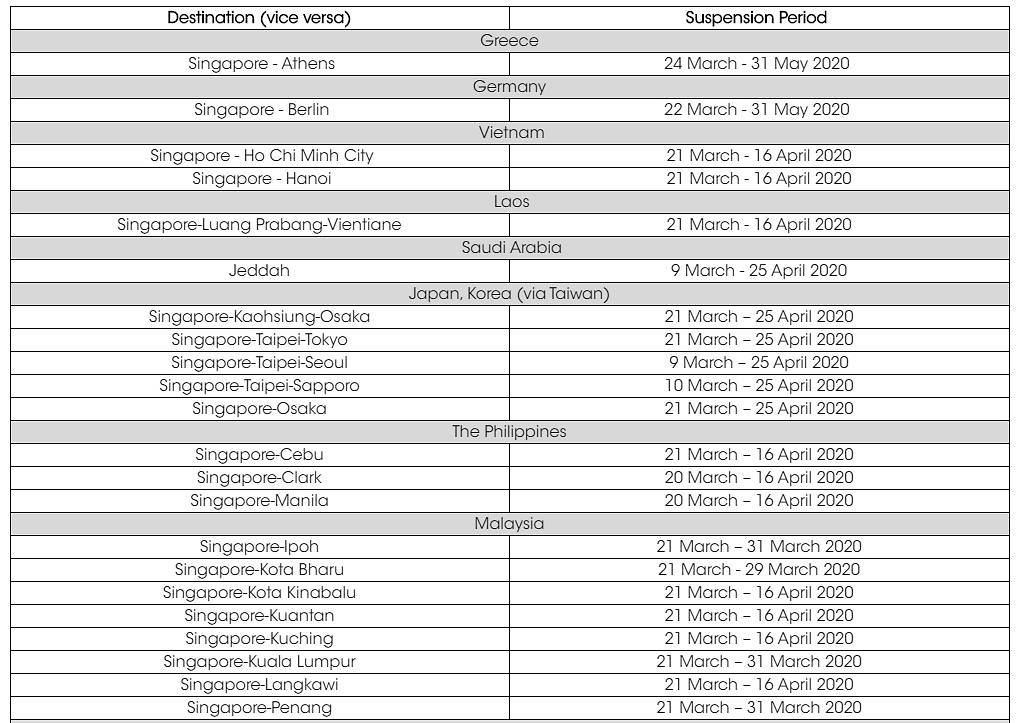
In an announcement on its website, Scoot listed out the affected routes, with many of the flights between Singapore and China. Outside of Asia, Scoot flights to Greece and Germany are also affected.
The suspension of some routes started on Friday (Mar 20).
For customers facing disruption to their travel plans, the airline said: “All affected customers, including those with multiple sectors that include the suspended flights, will be notified progressively and will receive a Scoot travel voucher on the unused portion of their itinerary within 30 business days. No further action is required.”
Other routes will also see frequency adjustments, the airline said, without specifying the destinations affected. Customers who are affected will be contacted directly.
“Scoot is continuing to monitor the situation and will make adjustments to our network as necessary,” it said.
Affected customers who were supposed to travel between Jan 23 and May 31 can either reroute to another Scoot destination, rebook the flight to a later travel date or get a 100 per cent refund of unused itinerary value through a Scoot travel voucher.
“For bookings made on or before Mar 15, 2020, for travel up to May 31, 2020, Scoot will be offering voucher refunds for the full value of bookings,” the airline added.
It also set up a “self-service refund” portal on its website, which aims to ease the process of obtaining refunds, in the form of travel vouchers.
COVID-19 IMPACT ON AVIATION INDUSTRY
With an increasing number of countries enacting travel restrictions to curb the COVID-19 outbreak, analysts said Singapore is left “extremely vulnerable” due to its status as an aviation hub.
Earlier this month, the International Air Transport Association (IATA) warned the COVID-19 pandemic could cost passenger airlines up to US$113 billion (S$162.7 billion) in lost revenue this year.
Singapore Airlines on Mar 17 said it would slash its capacity by 50 per cent, attributing the move to increasing travel restrictions amid the spread of COVID-19.
Just a day earlier, the national carrier said it would waive rebooking fees for tickets issued on or before Mar 15.
Separately, Singapore-based Jetstar Asia announced it was grounding its entire fleet of 18 Airbus 320 aircraft, with all flights suspended for at least three weeks, from Mar 23 to Apr 15.
Emirates announced on Sunday that it will “temporarily suspend” all its passenger operations from Mar 25 in light of the COVID-19 outbreak that has forced countries to close their borders. Cargo flights will operate as normal, the airline said.