SINGAPORE: Some vegetable suppliers from Malaysia are resorting to smuggling their vegetables into Singapore to avoid being fined and their produce being confiscated if they do not meet food safety standards.
These are suppliers that use a lot of pesticides on their vegetables to protect them from pests and to guarantee that they look fresh, according to Malaysian vegetable wholesaler Calvin Chan.
“They were forced to do it … They want to make a living,” he said. “If the vegetables don’t look fresh, the Singaporean boss won’t pay (them) well because the quality isn’t great … The price depends on the quality.”
The director at Mr Vege Trading called it an “ironic problem”, as some Singaporeans insist that their vegetables should “look nice”.
Calvin Chan with Talking Point host Sharda Harrison.
“If they demand nice-looking vegetables, of high quality and visually pleasing, then there must be a lot of pesticides used to achieve all that,” said Chan, who has been in the vegetable export business for over a decade.
In the past five years, the authorities here found more than 200 cases of illegally imported fruits and vegetables — that is, without proper clearance — during food safety checks.
The programme Talking Point finds out more about this illicit trade of smuggled vegetables and how some suppliers have escaped detection.
BYPASSING THE CHECKS
Singapore imports around 1,500 tonnes of fresh vegetables daily from countries like China, Australia and Malaysia.
The main point of import is the Pasir Panjang Wholesale Centre, where lorries coming into Singapore carrying vegetables must make a pit stop before the produce can be sold to local supermarkets, restaurants or hawker stalls.
This is where the Singapore Food Agency, the national authority for food safety, does most of its routine checks — or at importers’ premises — to ensure that the vegetables are safe to eat.
The agency said illegally imported food products are of unknown sources, pose a food safety risk and will not be allowed for sale.
But some vegetables are sneaked across the border by bypassing the checks at Pasir Panjang, according to Hamid (not his real name), a Malaysian driver who used to smuggle vegetables into Singapore “five to 10 years ago”.
He said customers here would request him to pick up the vegetables from wholesale markets in Johor and deliver the goods straight to their restaurants or stalls.
The sellers save money by not risking vegetables being rejected if they fail pesticide checks and through the avoidance of fines, so these vegetables can be sold more cheaply.
But this affects the business of local suppliers such as Lim Ah Keng from TNT Vegetables Importers and Exporters, who brings in vegetables from Malaysia to sell to restaurants and markets.
If some of his vegetable samples fail the inspection, he would have to destroy that batch and bear the cost of those vegetables. His company could also be fined if its vegetables fail the SFA inspections more than once.
Repeat offenders are temporarily suspended from importing vegetables. “After that, we’d have to wait three months until … we can resume the delivery of these vegetables,” said Lim. “This might be one of the reasons many people resort to smuggling.”
Offenders may even be imprisoned for up to three years.
NOT JUST ROUTINE CHECKS
Drivers like Hamid may have got away with it, but the SFA has since stepped up inspections by sending its officers to inspect vegetables at the border. Occasionally, it also conducts surprise checks in addition to the routine ones.
Its officers check the vegetables’ packaging, quantity and source. They look out for signs of spoilage and whether importers are under-declaring the amount of produce brought in or are bringing in vegetables not declared in the permit.
“Our risk-based surveillance programme will flag up vegetables that are of a higher risk, (which means to say) there’s a tendency (towards) pesticide use,” said Patrick Bay, the deputy director of compliance management at the SFA Southwest Regional Office.
“And we’d flag up importers that already have poor track records.”
For these vegetables that have a history of high levels of pesticide, a sample is taken to a laboratory to test for the residue level.
The SFA receives, on average, about 20 to 30 samples of vegetables for testing every day, said Shen Ping, the head of organic chemistry at its Food Safety Monitoring and Forensics Department.
If a sample is found to be safe, the consignment is released for sale. If not, the whole batch of vegetables are rejected, and feedback is given to the farm that grew them.
Out of 7,073 vegetable consignments inspected last year, about 7 per cent, or 497 consignments, were rejected because the presence of pesticide residues exceeded Singapore’s limits.
What happens, however, if people eat vegetables like those smuggled in — with a lot of pesticide?
Studies have shown that the ingestion of high levels of pesticide can be potentially toxic to humans, with long-term exposure linked to asthma, allergies and cancer.
So the SFA has dictated a maximum residue limit — tied to international regulatory and safety standards, which farmers must meet — to protect consumers.
However, these limits on the amount of pesticide allowed to remain in or on a food product are not food safety limits.
They are set with a large safety margin, and food found to exceed the limits are not necessarily unsafe for consumption, stated the SFA.
The agency has recommended guidelines for preparing vegetables: Give them a 30-second rinse, followed by a 15-minute soak and then one final rinse to remove pesticide residue.
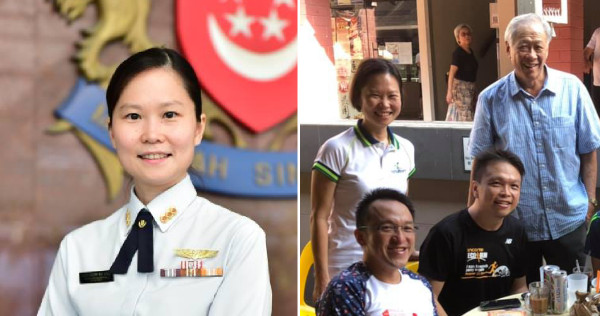
Could the Singapore Armed Forces’ (SAF) first-ever female one-star general be gunning for Josephine Teo’s spot in Bishan North ward?
The jury’s still out — but here’s what we know.
Gan Siow Huang, 45, who reportedly resigned from her position in the SAF last week, set tongues wagging when she was spotted alongside Defence Minister Ng Eng Hen at a Bishan-Toa Payoh group representation constituency (GRC) walkabout on Sunday (March 22).
The pair visited Bishan North Shopping Mall with several other volunteers in tow, prompting speculation that Gan could be one of the candidates fielded by the People’s Action Party in the upcoming general election.
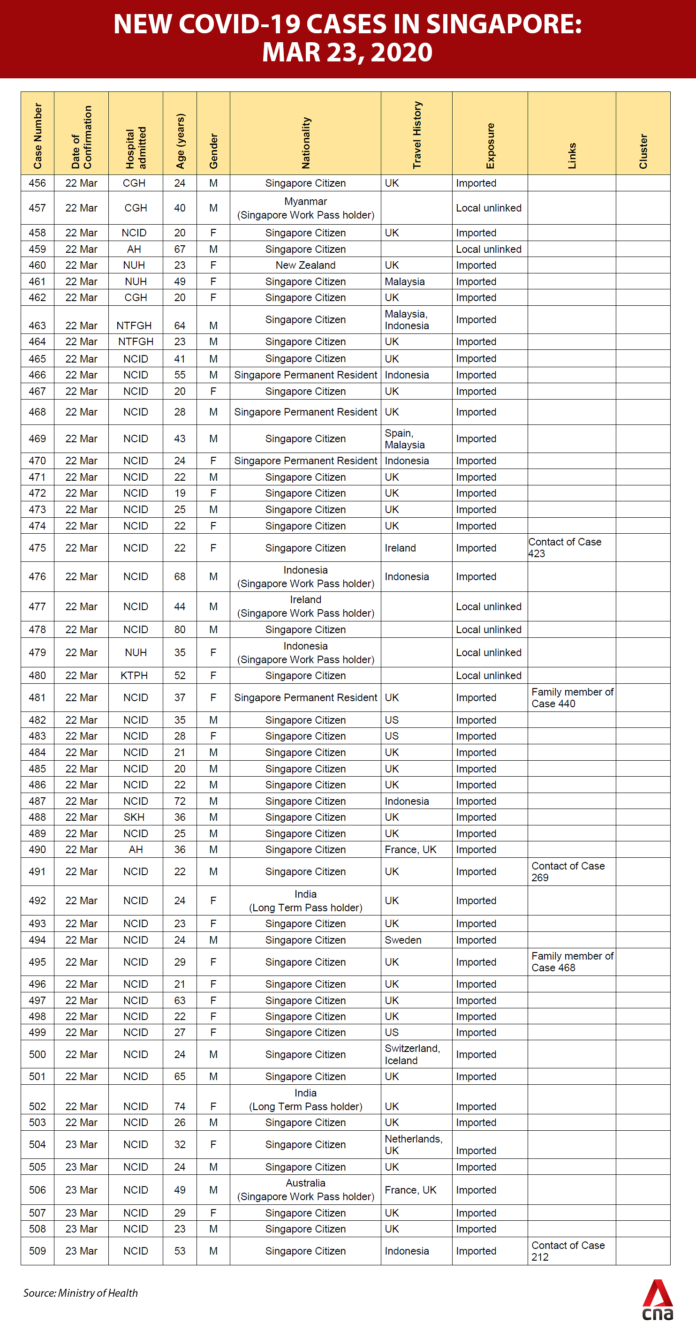
SINGAPORE: Singapore on Monday (Mar 23) confirmed 54 new cases of COVID-19, the highest daily increase to date, taking the total to 509 cases.
Of the new cases, 48 are imported infections.
The imported cases had travel history to Europe, North America and ASEAN countries. All except one were returning residents and Long Term Pass holders, said the Ministry of Health (MOH) in its daily update.
A total of 34 of the imported cases had travelled to the United Kingdom.
Three cases had previously been in the United States while five patients had been in Indonesia.
Six cases are currently unlinked and contact tracing is ongoing.
Eight more patients have also been discharged, MOH said.
To date, a total of 152 cases have fully recovered from the infection and have been discharged from hospital. Of the 355 confirmed cases who are still in hospital, most are stable or improving.
Fifteen are in critical condition in the intensive care unit while two patients have died.
Case 509, a 53-year-old Singaporean man, had been in Indonesia and had been in contact with Case 212, an Indonesian man who had died in Singapore on Saturday. The 64-year-old, who had a history of heart disease, was one of the first two fatalities in the country.
A 75-year-old Singaporean woman also died of complications due to the virus on Saturday.
ADDITIONAL PRECAUTIONARY MEASURES IN SCHOOLS
Schools reopened on Monday after the March holidays with additional precautionary measures to safeguard students, teachers and other staff members.
Education Minister Ong Ye Kung said on Sunday that schools remain safe places for children and that the closure of schools will disrupt many lives, especially working parents with limited childcare options with no domestic help.
All students who are unwell will be put in an isolation room or sent home. Students will also be seated apart in class, similar to during examinations.
Previously, except for a handful of countries, short-term visitors were allowed to come into Singapore, although they have to serve a 14-day stay-home notice once they entered the country.
The expanded restriction to all short-term visitors will take effect at 11.59pm on Monday.
Only work pass holders providing essential services, such as in healthcare and transport, will be allowed by the Manpower Ministry to enter or return to Singapore. This will include their dependents.
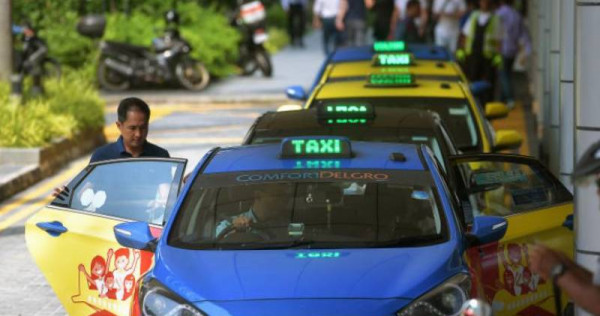
SINGAPORE – Taxi drivers displaced by the developing coronavirus outbreak will be deployed to lessen crowding on trains, Transport Minister Khaw Boon Wan said on Monday (March 23).
Speaking during a visit to Bright Hill station on Stage 2 of the Thomson-East Coast line (TEL), Mr Khaw said having “temporary transport ambassadors to help commuters keep safe distances” was an idea mooted by Senior Minister Teo Chee Hean.
“These are temporary positions to support higher manpower needs at our stations during this special period,” Mr Khaw said. “These ambassadors can also help to sanitise our train cabins, seats, poles more frequently.”
During pre-outbreak times, MRT trains could pack as many as four commuters per square metre during peak hours.
Although crowding has reduced since the coronavirus forced many to work from home, public transport commuters are still placed well within the 1m distance recommended by the Government for entertainment venues, restaurants, hawker centres and cinemas.
SINGAPORE – The Singapore International Festival of Arts (Sifa) and the blockbuster National Theatre’s War Horse are the latest casualties of the coronavirus pandemic. The two biggest productions on Singapore’s upcoming cultural calendar have been cancelled.
The Arts House Limited (AHL), presenter of Sifa, which was to have been held from May 15 to 31, announced that the annual arts festival will go on hiatus in a press release on Monday (March 23).
The West End hit, War Horse, which was to have been staged at the Esplanade from April 24 to May 10, has also been cancelled. Patrons who have bought tickets will be contacted about refunds.
The cancellation will be a financial blow for the Singapore Repertory Theatre (SRT), which is jointly presenting the show with the Esplanade. SRT’s director Charlotte Nors, 53, said: “Having worked for seven years to bring National Theatre’s War Horse to Singapore, it is heart-breaking that it cannot proceed. But the Esplanade and SRT fully support the safety measures put in place and place everyone’s well-being as our number one priority.”
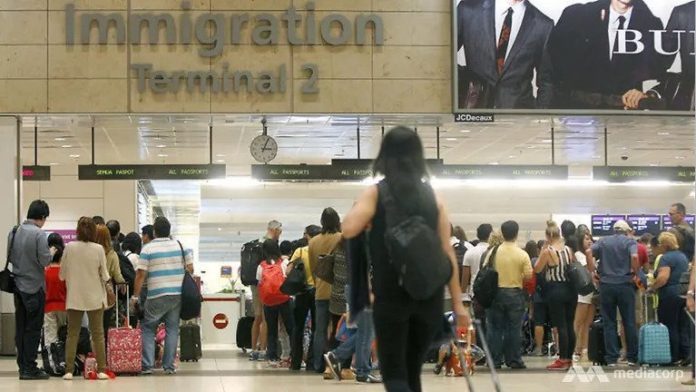
SINGAPORE: From 9am on Mar 27, all travellers arriving in Singapore will have to submit a health declaration online before proceeding with immigration clearance, said the Immigration and Checkpoints Authority (ICA) on Monday (Mar 23).
Travellers – residents and long-term pass holders included – will have to submit their declaration via the SG Arrival Card (SGAC) e-Service.
The health declaration will be made available before Mar 27, so that travellers who are due to arrive before that can complete it in advance of their arrival, said ICA.
Screengrab of the landing page of the SG Arrival Card website.
“This new entry requirement is an additional precautionary measure to mitigate the risk of importation of COVID-19 into Singapore, and will be subject to further review based on the global COVID-19 situation,” said ICA in the media release.
The authority added that this new online health declaration function was developed in consultation with the Ministry of Health and is fully integrated with ICA’s immigration system.
All residents and long-term pass holders who submit their health declaration will need to select “Residents: on the website, after which they will be directed to provide their health and recent travel information, as well as personal and contact details.
“All travellers can submit their health declaration up to three days prior to arrival in Singapore,” said ICA.
They must re-submit their health declaration if there are changes to their health condition or travel history before arriving in Singapore. ICA added that those who make false declarations will be liable for prosecution under the Infectious Diseases Act.
First-time offenders face a fine of up to S$10,000 and jail for six months. Repeat offenders face double those penalties.
Once the rules kick in, those who have not submitted their health declaration electronically before arriving in Singapore will be required to do so upon arrival at the checkpoint, which could delay their immigration clearance, ICA said.
Thousands of Malaysian workers were stranded without accommodation in Singapore after their country announced a national lockdown that came into effect on March 18.
Officials across different agencies led by the Ministry of Manpower (MOM) in Singapore are taking steps to ensure housing for around 10,000 workers, reported The Straits Times.
Meanwhile, generous Singaporeans have stepped up with offers to house workers who are in need of a place to stay.
Stomp contributor Bock Seng said he would like to provide free accommodation to Malaysians with work permits, “especially families who have children studying in Singapore.”
He is offering a three-bedroom apartment located at River Isles condominium in Edgedale Plains, Punggol.
Bock Seng said: “I am the owner of the property and will not be staying there.
“The whole unit is vacant as the tenant has moved out after completing the tenanted agreement. It is fully furnished and ready for occupancy.
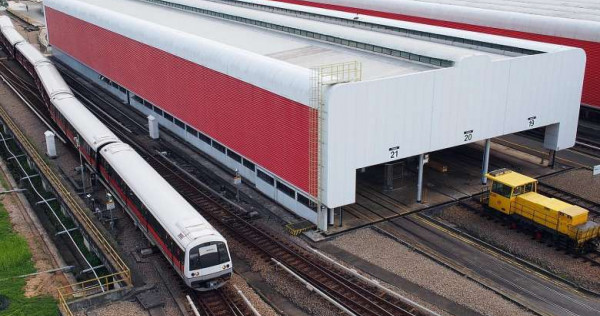
A technical officer died from severe injuries sustained in an accident at Bishan Depot on Monday morning (March 23), SMRT said in a media release.
Muhammad Afiq bin Senawi was operating a hydraulic press machine in a Rolling Stock workshop when he got injured.
He received immediate first aid and was subsequently taken to hospital where he died at 11.20am.
“We have conveyed our deepest condolences to his family and are rendering support and assistance at this very difficult time,” said Mr Neo Kian Hong, SMRT Corporation’s Group Chief Executive Officer.
The public transport operator is assisting the Land Transport Authority, the Ministry of Manpower, and the police with the investigations.
SMRT has also called a safety time-out and suspended all similar maintenance works while investigations are ongoing.
SINGAPORE: Singapore and Australia on Monday (Mar 23) agreed to keep markets open and supply chains running amid the COVID-19 pandemic, said Singapore’s Ministry of Foreign Affairs (MFA).
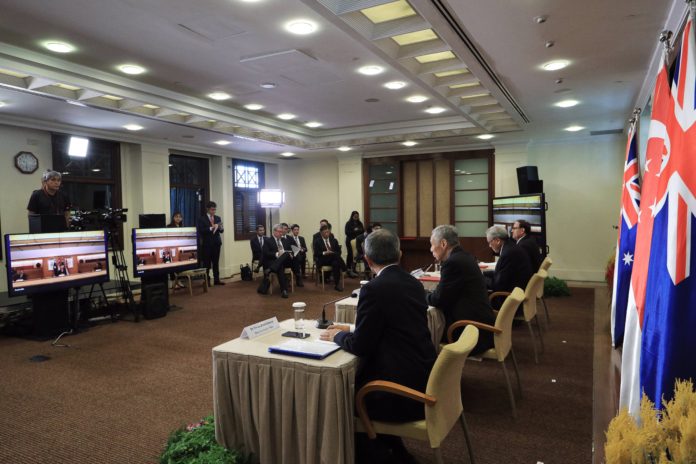
Singapore’s Prime Minister Lee Hsien Loong and his counterpart Scott Morrison welcomed the conclusion of several key agreements during the 5th Singapore-Australia Leaders’ Meeting, which was held via video-conference on Monday, said MFA.
The two countries also agreed to continue sharing best practices to tackle the COVID-19 pandemic which, the leaders noted, is “a serious public health crisis”, said MFA in a press statement.
“They also agreed on the importance of keeping markets open and supply chains functioning to support the delivery of supplies essential for dealing with the pandemic.”
With the ongoing COVID-19 pandemic, they decided to hold their annual meeting virtually, showing that “in this digital age, government-to-government business can continue despite the adverse circumstances”, said MFA.
“It also reflects the shared commitment to advance bilateral relations, even as both sides deal with the challenges presented by the COVID-19 pandemic.”
The 5th Singapore-Australia Leaders’ Meeting is held via video-conference on Mar 23, 2020. (Photo: MCI)
Once the virus outbreak is brought under control, “a stable and open global trading system will be crucial for a global economic recovery”, said the two leaders as they agreed to work together to that end, including in the Asia-Pacific Economic Cooperation Forum (APEC) and at the G20.
Mr Lee and Mr Morrison witnessed the signing of the Treaty on Military Training and Training Area Development, and announced the conclusion of negotiations for a Digital Economy Agreement and seven related Memoranda of Understanding (MOU).
A new Digital Economy pillar will also be added under the Comprehensive Strategic Partnership on top of the existing four pillars.
Both countries also signed MOU on cybersecurity, as well as food safety and standards.
During the meeting, Mr Lee and Mr Morrison reaffirmed the “excellent” state of bilateral relations and reviewed their cooperation under the Singapore-Australia Comprehensive Strategic Partnership agreement in 2015, which established the annual meeting between leaders of the two countries.
They also expressed their commitment to deepen and expand cooperation in all areas.
The leaders agreed on the potential to collaborate further in low-emissions solutions, with the aim to conclude an MOU in 2020.
“At a time of global uncertainty, Australia and Singapore both offer a model of good governance and productive international cooperation,” the prime ministers said in a joint statement.




![Singapore Australia Leaders Meeting Mar 23 [to expire in 3 months]](https://localnewsingapore.com/wp-content/uploads/2020/03/singapore-australia-leaders-hold-virtual-meeting-agree-to-keep-markets-open-amid-covid-19-outbreak.jpg)


