Love them or hate them, you just can’t ignore them.
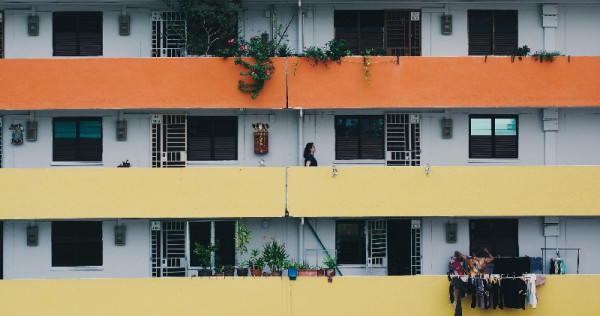
There’s nothing more Singaporean than living in an HDB flat. We love our stray cats, potted plants and crowded corridors.
But are you sure you are not breaking these HDB flat rules in Singapore? Check them out!
1. No smoking in the corridor and void decks
It’s an offence to smoke in common areas in residential buildings including void decks, stairwells and common corridors. If you really want to light up, do so inside your house, or go downstairs, out in the sun.
2. No cats
PHOTO: Unsplash
Yes, that’s right.
To quote HDB, “Cats are not allowed in flats. They are generally difficult to contain within the flat. When allowed to roam indiscriminately, they tend to shed fur and defecate or urinate in public areas, and also make caterwauling sounds, which can inconvenience your neighbours.”
What have doctors in Singapore learnt about the new coronavirus, two months after the first patient was identified here? CNA speaks to NCID consultant Dr Wong Chen Seong to find out.
This image obtained March 12, 2020 courtesy of The National Institutes of Health(NIH)/NIAD-RML shows a scanning electron microscope image of SARS-CoV-2 that causes COVID-19. (Photo: Handout/National Institutes of Health/AFP)
(Updated: )
Bookmark
SINGAPORE: Since the first confirmed case of COVID-19 was announced in Singapore on Jan 23, health experts here have “learnt quite a lot” about the virus including when infected people are the most infectious.
Dr Wong Chen Seong, a consultant at the National Centre for Infectious Diseases (NCID) told CNA in an interview on Monday (Mar 23) that the first week is when the viral levels “are at the highest” in an infected person’s respiratory secretions.
Dr Wong was also asked if patients here have experienced the loss of the sense of smell, also known as anosmia, given that British healthcare experts flagged this as a symptom for COVID-19 infections last week.
To this, he said: “We have heard reports, especially from overseas, of patients losing their sense of smell.
“We’ve had a few patients here at NCID who have reported such symptoms as well. But as to how common it is, we don’t really have a clear idea of that yet,” the consultant added.
What, then, should people do if they are living with someone who may be symptomatic of the virus? This is especially since many who have worked or travelled overseas return to Singapore, and are issued a stay-home notice or leave of absence order to follow.
Dr Wong advised people to maintain really good personal hygiene at home.
The person who is displaying symptoms of the virus should isolate themselves in their own room as much as possible. In shared spaces, make sure good hand hygiene is practised and avoid sharing cutlery or food, he said.
He also gave a message to Singaporeans who may be feeling anxious and uncertain over the ongoing pandemic outbreak: “These are uncertain times and they are quite scary times as well, but we’ve gone through difficult times in the past, and we will get through this.
“But we can only get through this if we go it together.”
An atheist meme has driven a National University of Singapore (NUS) alumni out of an opposition political party that certainly doesn’t want any concerning issues coming up during the forthcoming election season.
30-year-old technology consultant Jan Chan had his membership suspended by the Progress Singapore Party (PSP) last week after he was outed as the figure behind NUS Atheist Society, a Facebook page that recently shared an offensive post.
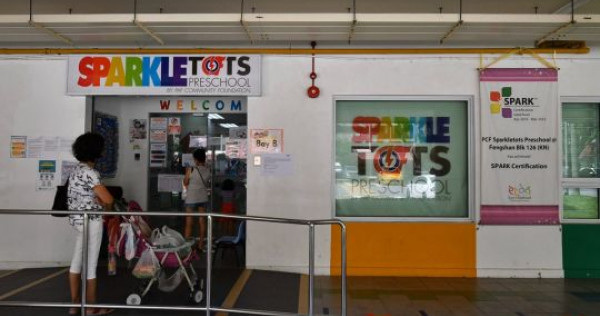
SINGAPORE – A teacher at a PAP Community Foundation (PCF) Sparkletots centre tested positive for Covid-19 on Monday (March 23).
According to an e-mail circular sent to parents from the Early Childhood Development Agency (ECDA), the pre-school at Block 126 Fengshan is closed on Tuesday for thorough cleaning and disinfection of its premises, as an added precautionary measure.
The Health Ministry is conducting contact tracing, and barring further developments, classes and programmes will resume on Wednesday.
According to the circular seen by The Straits Times, the Nursery Two teacher was last in school on Wednesday last week and was well then.
She had been on leave from last Wednesday to Friday, although she came in for a few hours on Wednesday afternoon to attend to some work.
She developed onset of symptoms on Friday and went to see a doctor.
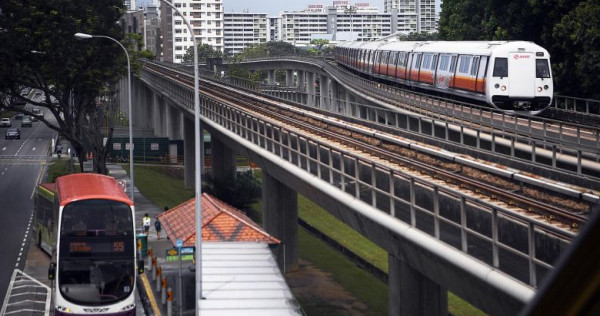
More needs to be done to reduce crowding on public transport in light of the Covid-19 crisis, even though ridership has fallen by around 20 per cent, Transport Minister Khaw Boon Wan said yesterday.
He outlined a few steps:
One, do not use public transport if you are unwell, as doing so will endanger other commuters.
Two, cut down on unnecessary travel during this period.
Three, talk softly, if you need to.
“Best, don’t talk,” he said. “Let fellow commuters have a quiet journey.”
Talking increases the chance of droplets – a key means of transmission – being dispersed.
And, lastly, avoid travelling during peak hours.
“Here we need employers to help out by supporting staggered working hours, flexi-time and telecommuting. Many have done so.”
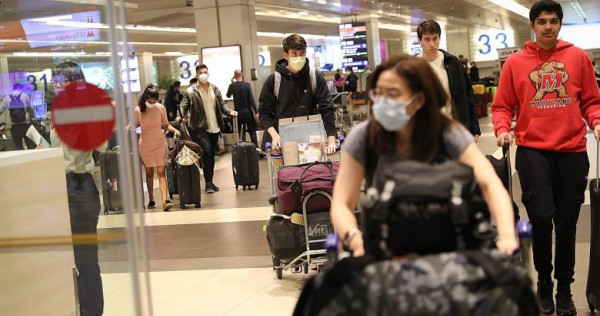
SINGAPORE – Nine in 10 imported Covid-19 cases in Singapore between Wednesday (March 18) and Friday last week did not show symptoms, like fever, when they had passed through the border checkpoints.
As a result, the cases were detected only later on, the Health Ministry said on Monday (March 23) in response to queries.
It explained that about 90 per cent of the imported cases reported in Singapore during the three-day period saw a doctor at a hospital or general practitioner’s clinic after they returned home.
“They had not displayed symptoms when at the checkpoints,” it added.
Travellers into Singapore have to walk past thermal scanners, which would help identify those who are feverish. Those who are observed to be so, or have other respiratory symptoms will be required to do a Covid-19 swab test.
Singapore had 119 cases altogether in those three days, with 87 of them being imported cases, the ministry’s figures show.
There have been mounting concerns that people with coronavirus may not show symptoms, such as fever, dry cough and shortness of breath.
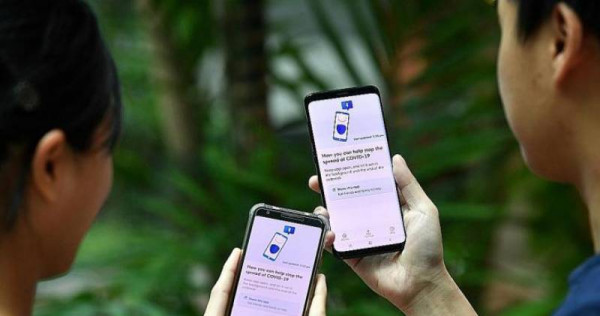
A mobile application developed by the Government Technology Agency (GovTech) that helps in contact tracing for Covid-19 has been installed by more than 620,000 users since its launch last Friday.
With a decision to make the technology behind it available to developers around the world, even more people could stand to benefit.
Developed in collaboration with the Health Ministry (MOH), the TraceTogether mobile app works by exchanging short-distance Bluetooth signals between phones.
Users need to submit only a Singapore number to MOH when they register, and each phone will then be given a random, anonymised user ID.
At regular intervals, a temporary ID is generated based on this user ID, and it is the temporary ID that is exchanged over Bluetooth when users come into contact with each other.
The app uses Bluetooth signal strength to estimate the distance between users and the duration of their encounters.
A record of this is stored on each user’s phone in an encrypted form for 21 days. No other personal information or location data is collected.
SINGAPORE: The Health Sciences Authority (HSA) issued an alert on Tuesday (Mar 24) warning members of the public about three products containing “potent medicinal ingredients” used to treat erectile dysfunction.
Two of the products – Kopi Jantan Ali Macca and Kopi Panggung AL-Ambiak Natural Herbs Coffee – were sold at a coffee shop along Bedok North Street 3.
The latter was also sold on local e-commerce platforms, marketed as a “performance-enhancing coffee”.
Acting on feedback from a member of the public, HSA found that the two coffee products were sold at Shaik Abdul Kader Al-Jailani Makan Place coffee shop in Bedok North.
Subsequents tests showed that Kopi Jantan Ali Macca contained a potent medicinal ingredient called sildenafil, while Kopi Panggung AL-Ambiak Natural Herbs Coffee contained a different ingredient called desmethyl carbodenafil.
Such potent medicinal ingredients can seriously harm people’s health, said HSA.
The third product, Berry Jaga Chewable Candy, was found to contain up to 10 times the usual daily dose of tadalafil, which is normally prescribed for erectile dysfunction.
Berry Jaga Chewable Candy. (Photo: Health Sciences Authority)
The candy was marketed for sexual enhancement on Berry Jaga Marketing’s website and local e-commerce platforms.
It was labelled as containing fruit juice powders, but its marketing included cautionary advice, recommending that consumers with medical conditions such as low blood pressure, heart issues or those who take medicines such as nitrates not consume the product.
“This is usually a tell-tale sign that the product may contain potent medicinal ingredients,” said HSA.
Sildenafil and tadalafil are prescription medicines used to treat erectile dysfunction and should only be used under medical supervision, said the authority.
If used inappropriately, they could cause a stroke, heart attack, low blood pressure and priapism (painful and exceedingly long erections).
Desmethyl carbodenafil is chemically related to sildenafil and may cause similar adverse effects or “even more toxic ones”, added HSA.
The medicines should not be used by patients taking heart medication – especially nitrates – as this can cause potentially life-threatening low blood pressure.
HSA said it has directed Shaik Abdul Kader Al-Jailani Makan Place and Berry Jaga Marketing to stop the sales of the respective products and is working with local e-commerce platform administrators to take down the affected listings.
Consumers are advised to stop taking the three products immediately and should go see a doctor if they feel unwell, said the authority.
“All sellers and suppliers must stop selling these products immediately,” it added. “It is illegal to sell and supply such products which contain potent medicinal ingredients.”
If convicted, sellers and suppliers could be jailed for up to two years and/or fined up to S$10,000.
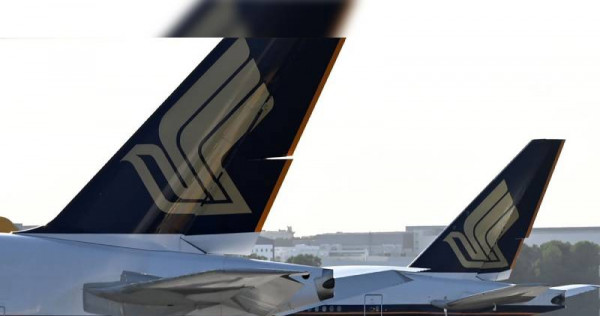
SINGAPORE – Singapore Airlines (SIA) will cut capacity by 96 per cent, ground almost its entire fleet and impose cost cuts affecting about 10,000 staff because of coronavirus travel curbs it described as the “greatest challenge” it has ever faced.
The global aviation industry is struggling to absorb shocks from the pandemic, with airlines across the world grounding fleets, placing thousands of workers on unpaid leave and seeking state bailouts to survive the crisis..
The measures by SIA, majority-owned by state investor Temasek, follow Singapore’s decision to close its borders to stem spread of the virus.
“This will result in the grounding of around 138 SIA and SilkAir aircraft, out of a total fleet of 147, amid the greatest challenge the SIA Group has faced,” SIA said.
When Singapore announced it was shutting its borders to tourists starting Tuesday, entrepreneur Lee Xiaohui, 34, heaved a sigh of relief at her timing. Just two days earlier, she had booked her parents a flight home to the island nation from the United States, where they were helping out with her sister’s newborn.
Lee said she was lucky to have bought the tickets before California declared a state of emergency over the weekend, and tighter travel restrictions worldwide upended air travel. An online search shows just three flights leaving Los Angeles for Singapore this week, and only one next week.
“Considering that they are transiting in Los Angeles now, we are still quite worried and are unsure if they will be able to board their connecting flight,” she said.
“We don’t want them to get stuck there because if they really catch the virus, they won’t get the attention they need. It is safer to be in Singapore even though they could get infected on the flight back.”