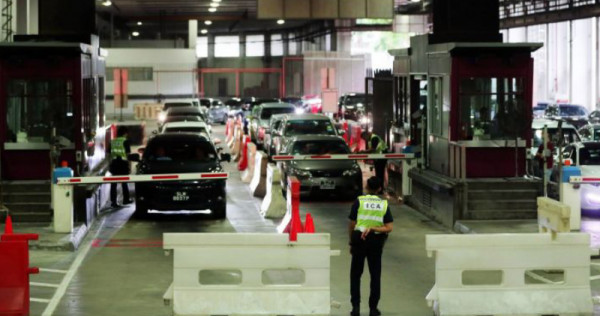
PETALING JAYA – Malaysia and Singapore will be implementing “reciprocal arrangements” to transfer symptomatic travellers detected at the entry points of each other’s country to help curb the spread of Covid-19.
The Malaysia-Singapore Joint Working Group (JWG), in its second meeting on Tuesday, said it agreed to continue the existing temperature screening procedures, and land and sea checkpoints.
The JWG meeting, which was held via video conferencing, saw both countries exchanging updates on the Covid-19 situation.
They also shared existing temperature screening procedures at land and sea check points, and discussed a set of protocols for the transfer of symptomatic travellers between Malaysia and Singapore.
“The JWG agreed to continue entry screenings by both countries, align temperature screening protocols by applying the same temperature cut off (>37.5 deg C) for febrile travellers, and implement reciprocal arrangements for the transfer of symptomatic travellers detected at entry screening back across land and sea checkpoints.
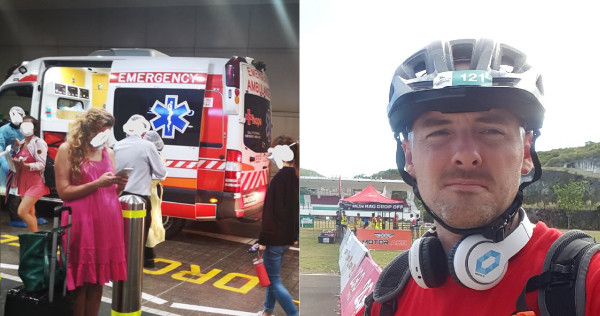
At any other time, getting diagnosed with pneumonia would be a bummer. But in the midst of a global Covid-19 pandemic, this man says he’s “never been happier”.
Writing from his isolation ward at the National Centre for Infectious Diseases (NCID), Mike Davie took to Facebook yesterday (March 25) to recount his harrowing coronavirus scare, revealing behind-the-scenes details about what it’s like for potential Covid-19 patients in Singapore.
The post, which has amassed over 3,100 shares, spared no detail on Davie’s experience. But here are the most illuminating tidbits we gleaned.
How he became a suspected Covid-19 case
Davie, first realised that something was wrong when he developed a fever and a dry cough on Monday (March 23) after completing 15 days of self-isolation.
The CEO and founder of technology company Quadrant, who is based in Singapore, had recently returned from a family trip to South Korea and Canada and was considered to be at “high risk” of getting infected.
After recounting his travel history and symptoms to a doctor at a clinic, he was “thrown into an experience like no other”.
SINGAPORE: The Government will present a set of measures dealing with obligations such as deposits next week, said Deputy Prime Minister Heng Swee Keat as he announced a Resilience Budget to help deal with the COVID-19 outbreak on Thursday (Mar 26).
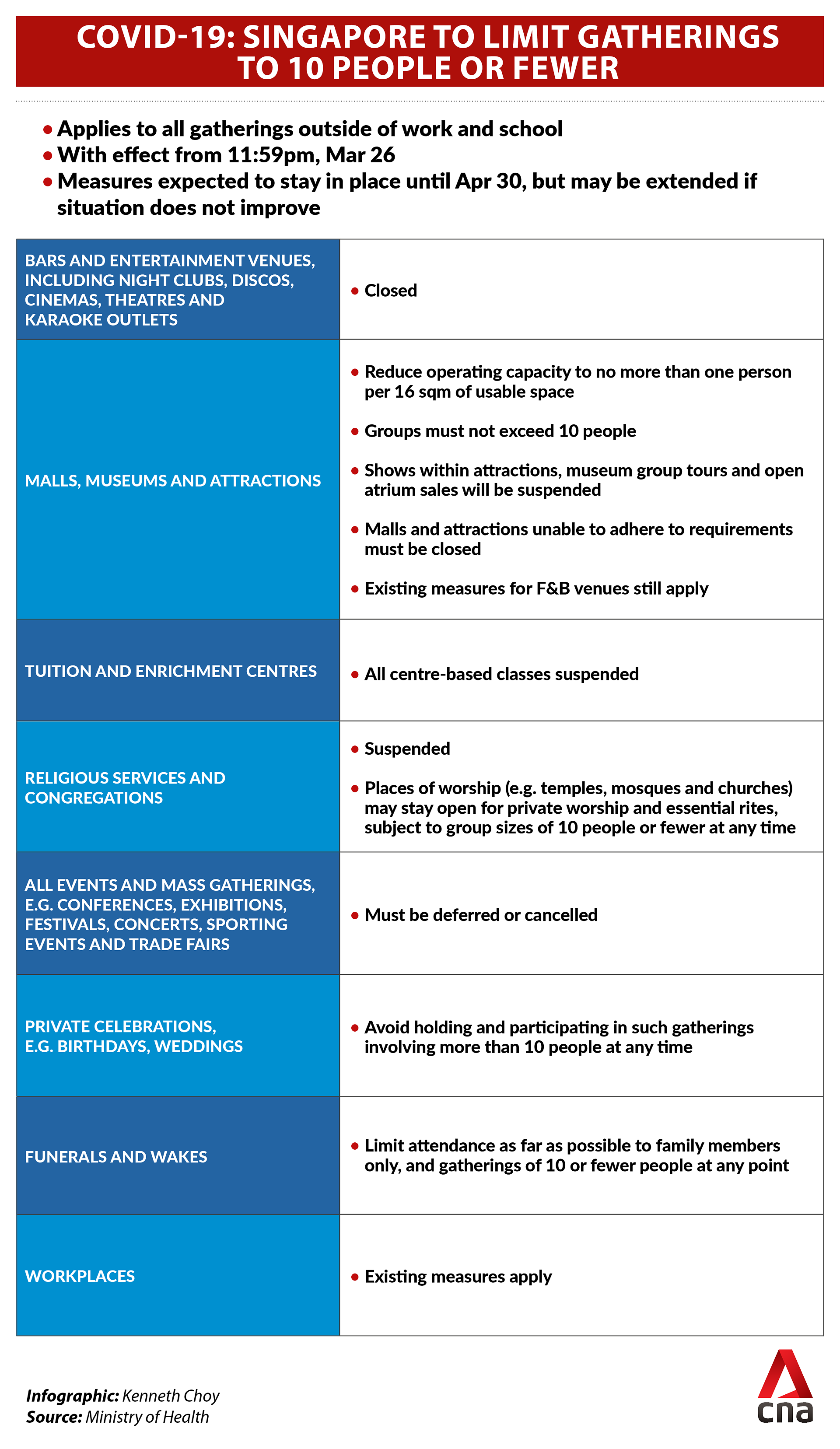
The announcement came as stricter safe distancing measures, such as the 10-person limit on gatherings outside work and school, came into effect the same day.
Previously, the limit for such events was 250 people.
Because of the new regulations, some have found themselves in need of relief from legal obligations, said Mr Heng.
“It is not fault of theirs that they cannot perform these obligations,” he said, adding that one example of a legal obligation is the deposit paid for a big gathering that can now no longer happen.
‘Should the deposits be simply forfeited? That won’t be right,” he said. “The Government is studying the issue and the Minister of Law will present a set of measures next week to deal with this at the next parliamentary sitting.”
COUPLES IN LIMBO
Upon hearing the announcement, brides and grooms in a Telegram group chat named “Wedding affected by COVID-19” expressed their relief through messages saying “thank god” and thumbs-up emojis.
Many couples have had to put their nuptials on hold because of the evolving situation.
One bride, who was supposed to be married on Saturday in a hotel ballroom with 1,200 guests, had to postpone the event indefinitely.
After the initial rule limiting events to 250 or fewer participants was announced on Mar 20, Ms Arynah Aminuddin and her fiance scrambled to cut their guest list to 600 so that there would be fewer than 250 people in the ballroom at any one time.
But when the latest advisory was issued, the 26-year-old, who works as an assistant retail manager, decided to call it off.
“Bitter,” she said, when asked how she was feeling.
Ms Arynah said there would now only be a private solemnisation ceremony to mark her marriage.
Mr Zaki Abdul Rahman, 29, is in a similar boat. Since Tuesday’s announcement, he had been feeling helpless, he said. His wedding is scheduled for Apr 11.
He said he and his fiancee want to cancel their celebration instead of postponing it as they believe there would be “no window for celebration” this year.
They had earlier cut the number of guests down from 800 to 150 in order to keep well within the original safe distancing measures.
After the 10-person limit was announced, their wedding vendor Royal Palm at Orchid Country Club sent the couple an e-mail to say they could proceed with holding the wedding either on Apr 11 or later.
The event would be catered to 150 guests and observe “precautionary measures” such as 1m markers to to ensure ample distancing in queues, no more than 25 tables at least 1m apart, six chairs per dining table and workers to limit physical contact at the buffet station.
If the couple did not want to proceed, they would lose their deposit and be imposed with cancellation charges.
However, the restaurant’s group director of sales said in an email response to CNA that it allows cancellations.
“For such requests, we will work out directly with our clients on the contingency plan and a suitable later date,” wrote Ms Ruby. She did not provide her last name.
“Any request for cancellation (if any) has to be viewed in totality and has to be customer-centric in nature. We need to explore all scenarios with our clients be it to defer or to reduce the numbers originally agreed,” she wrote in a following e-mail.
Subsequent calls, emails and text messages to Ms Ruby were unanswered.
A machine to screen guests’ temperatures have been set up outside the restaurant as part of the measures the restaurant is taking amid the coronavirus outbreak, said Ms Ruby. (Photo: Ms Ruby).
Mr Zaki said he is stuck in limbo because it remains unclear if the couple is allowed more than 10 guests at the wedding.
Bride-to-be Iona Shi, 33, said that she has felt “very tired and honestly really worried with the ever-evolving situation”.
She is hoping that for the sake of her guests’ safety, she can cancel her wedding, which is supposed to be held on Jun 20 at the Mandarin Oriental hotel.
But as she is currently bound by a contract with the hotel, she will wait to see what happens nearer to the date instead.
“Now we can’t even plan anything – like who to invite or un-invite – though (the) wedding is two to three months away,” Ms Shi, an associate in the banking industry, said.
A spokesperson from Mandarin Oriental Singapore said that it is “reviewing all wedding bookings on a case by case basis in view of the latest social distancing announcements”.
News that the law ministry will look into legal obligations such as deposits put Ms Shi more at ease.
“Hopefully it is something that works for both vendors and couples,” she said.
The Ministry of Health (MOH) and the Singapore Tourism Board have yet to respond to CNA’s requests for clarification on whether more than 10 guests are allowed at weddings held in hotels and restaurants.
MOH’s statement on Tuesday said that people are “advised” to avoid holding social events such as weddings, but the ministry did not say if it is mandatory to cancel these gatherings.
Weddings are also often held at HDB void-decks and multi-purpose halls.
Dr Teo Ho Pin, coordinating chairman of the town councils, said the onus is on residents who use town council facilities to make sure that precautionary measures are being taken.
Town councils have conveyed the latest MOH advisories to those who have booked their amenities and reminded them to monitor the MOH website, said Dr Teo, adding that residents have so far been cooperative with many coming forward to either cancel or postpone large-scale events such as weddings.
CATERERS HIT BY MEASURES
Although it is unclear what lies in the horizon, caterers have seen a slew of cancellations.
Cancellations were made for weddings held mostly between March to July 2020, said managing director of Elsie’s Kitchen Catering Reuben Ang, while many couples who are having their weddings from August onwards have opted to postpone.
Overall sales in March and April dipped by 50 to 55 per cent year-on-year, he said.
The caterer provides a full refund to customers if they are able to provide a one-week notice, although an administrative fee will be charged for the process.
“As we understand the unforeseen circumstances faced by couples due to this virus outbreak, we offer the flexibility to reduce their number of pax and fees are also pro-rated to help couples better manage their cost during this period,” Mr Ang said.
“We also do not impose additional fees for reduction of pax as long as they are able to provide at least five days’ notice in advance of their event date,” he added.
Managing director of Rasel Catering Alan Tan said that two customers have cancelled their wedding celebrations and been refunded with credits.
Rasel Catering also allows its customers to postpone their orders up to a year and reduce the number of people being catered for as long as customers inform them at least five working days in advance.
SINGAPORE: The COVID-19 pandemic is proof of the world’s interdependence and not an indictment of globalisation, said Prime Minister Lee Hsien Loong on Thursday (Mar 26).
“It highlights the need for more cooperation between countries, not less,” said Mr Lee in a written statement, which was shared with participants of the Extraordinary Virtual G20 Leaders’ Summit.
In the statement, Mr Lee said that looking into the future, the coronavirus crisis “will change globalisation as we know it”.
“What was unthinkable just two months ago, for example, border restrictions in the Schengen area, is now reality,” he said.
“Naturally, countries will now want more safeguards against the risks of globalisation, and to strengthen national capabilities to reduce dependence on others. Stronger assurances of supply chain reliability and safer human mobility will be needed,” he added.
PM Lee participating in the Extraordinary Virtual G20 Leaders’ Summit. (Photo: MCI)
Mr Lee said “a more hard-headed, pragmatic internationalism may arise”, but countries “should resist the urge to turn inwards and discard globalisation completely, because autarky will result in a poorer world for all”.
The prime minister suggested three areas of collaboration in his statement. Firstly, he noted that even if each country succeeds in eradicating the virus within its own borders, there remains the risk of importing new cases from other countries.
“All of us are only as strong as our weakest link. Thus, we must cooperate, share expertise and experience, and help one another,” said Mr Lee.
He also noted how every government is “doing everything possible to save businesses and jobs” amid the economic downturn.
“I am glad that our finance ministers and central bank governors are coordinating fiscal and monetary policies to prevent this,” he said.
Finally, Mr Lee called on countries to bring together their scientific communities and resources to develop a cure or vaccine for COVID-19.
“This will shorten the crisis and save lives. COVID-19 will end eventually but it will not be the last pandemic the world will face.
“We should therefore learn from our experience and strengthen our preparedness for future pandemics, in the same way some Asian countries have emerged stronger from our experience with SARS,” he said.
“As leaders,” Mr Lee concluded, “we must work together after the crisis to rebuild domestic confidence in the merits of a globalised world.”
“It will not be easy to find the right balance but this is how we can emerge from the crisis stronger and more resilient than before.”
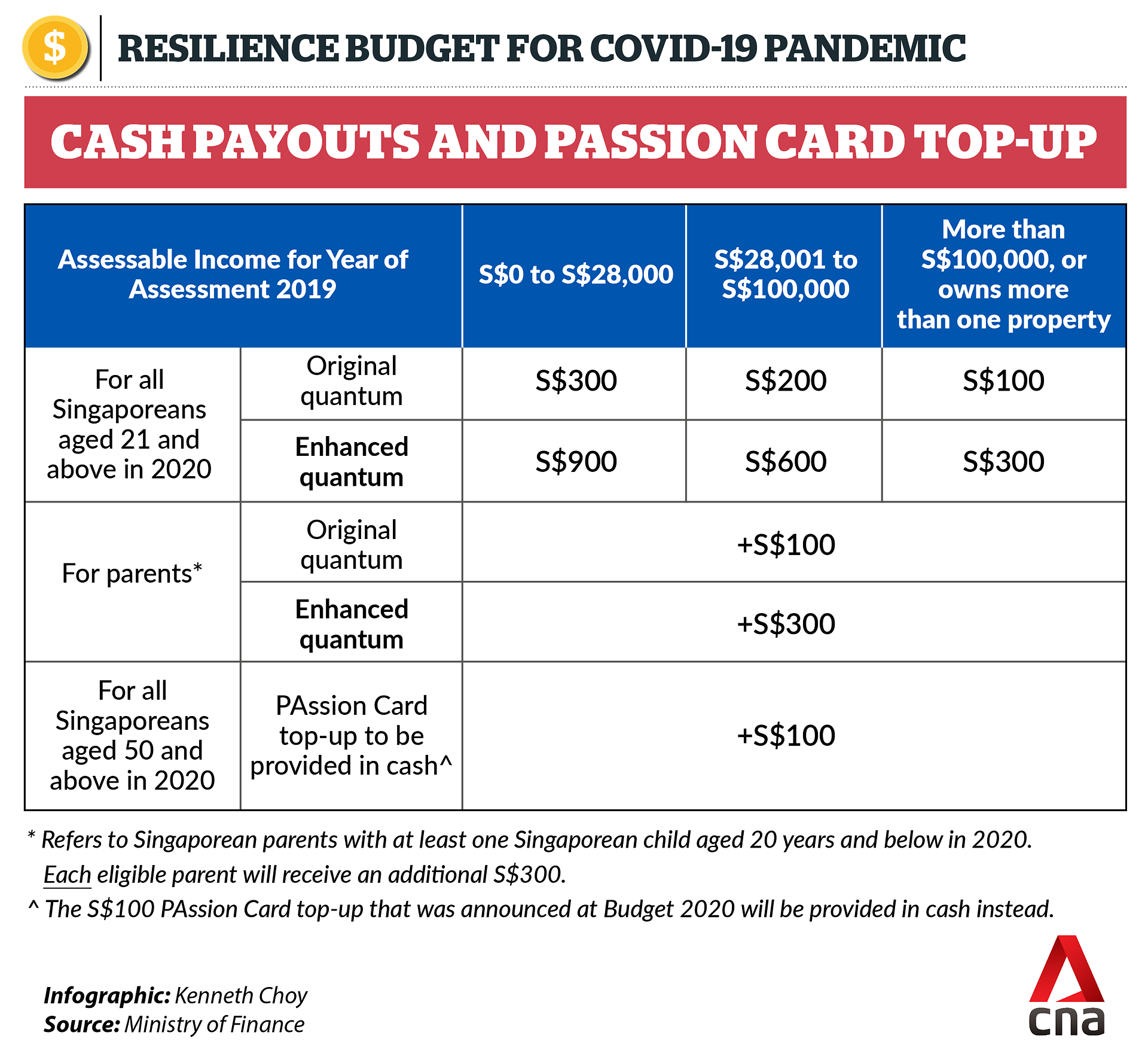
SINGAPORE – Cash payouts announced in Budget 2020 last month will be tripled, with all adult Singaporeans receiving $300, $600 or $900 depending on their income, Deputy Prime Minister Heng Swee Keat said on Thursday.
The amount for parents with at least one Singaporean child aged 20 and younger this year will also go up to $300, from $100 before.
Today, many Singaporeans are worried about how they will pay bills and household expenses if their livelihoods are affected, given the uncertainty. “We will put more cash in the hands of all families to help them cope,” Mr Heng said in delivering the supplementary budget.
Low-income Singaporeans, originally slated to get $100 a year in grocery vouchers over 2020 and 2021, will now have this year’s allowance increased to $300. This means that they get a total of $400 in grocery vouchers over this year and the next.
Mr Heng added that the $100 PAssion Card top-up for seniors, announced during his earlier speech, will also be given in cash instead. They will get their money directly in their designated bank accounts.
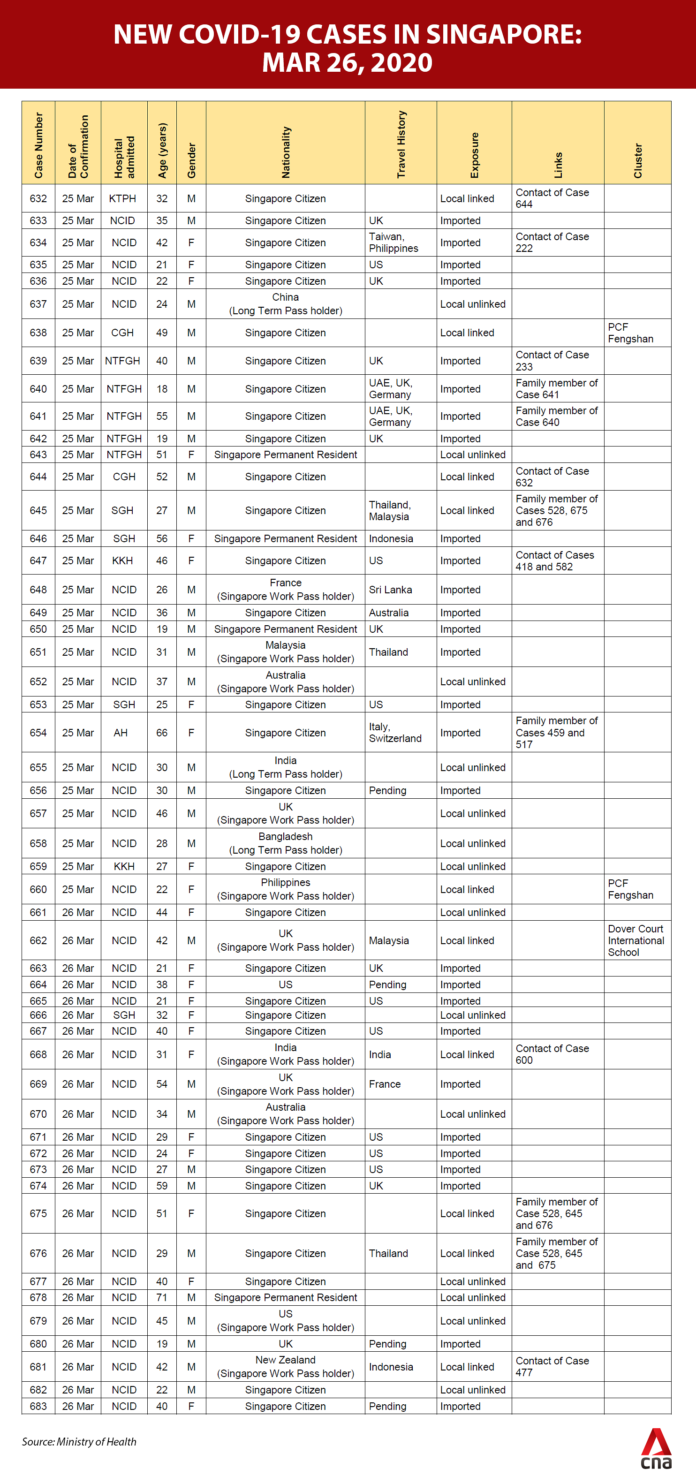
SINGAPORE: Singapore reported 52 new cases of COVID-19 on Thursday (Mar 26), bringing the total number of cases to 683.
A total of 28 cases are imported, while 24 are local cases, said the Ministry of Health (MOH) in a press release.
The imported cases had travelled to Europe, North America, Middle East, ASEAN and other parts of Asia. All except two were returning residents and long-term pass holders, MOH added.
Eight cases had travelled to the United Kingdom while three other cases had been in the United States.
Ten cases are linked to clusters or previous cases while 14 cases are currently unlinked.
In its daily update, MOH said two of the new cases were linked to the cluster involving the PCF Sparkletots pre-school in Fengshan. This cluster is now linked to 20 cases, of which 15 are staff members at the pre-school while five other cases are family members of case 601.
MOH added that another case has been linked to Dover Court International School. This cluster is now linked to a total of four cases, all of whom are staff members at the school.
Twelve more cases have recovered and been discharged from hospital. To date, a total of 172 cases have fully recovered from the infection.
Of the 404 confirmed cases who are still in hospital, most are stable or improving. Eighteen are in critical condition in the intensive care unit.
A total of 87 other cases who are clinically well but tested positive for COVID-19 have been transferred to Concord International Hospital, Mount Elizabeth Hospital and the Community Isolation Facility at D’Resort NTUC for isolation and care. Two patients died last Saturday from complications due to COVID-19 infection.
According to MOH, Case 666 is a 32-year-old Singaporean woman who had not travelled to the affected countries or regions.
She reported onset of symptoms on Mar 24 and tested positive for COVID-19 on Mar 26. She is currently warded in an isolation room at Singapore General Hospital.
She is employed as an associate consultant at the National Skin Centre. Prior to hospital admission, she had gone to work. Contact tracing is ongoing, MOH added.
Deputy Prime Minister and Finance Minister Heng Swee Keat announced additional support measures for businesses and households in response to the COVID-19 pandemic on Thursday afternoon.
The Government is dipping into past reserves to fund an additional S$48 billion worth of measures that include cash handouts, tax rebates and support for businesses.
SINGAPORE – Patients who have acute respiratory symptoms and are issued a five-day sick leave by a medical practitioner must not leave their homes starting on the day the medical certificate is issued, according to the latest update of the Infectious Diseases Act made by the Ministry of Health (MOH).
Those who do not comply will be liable to a fine of up to $10,000 or up to a six-month imprisonment, or both. They can leave only to seek medical attention.
In February, doctors were advised to give five days of sick leave to patients with respiratory symptoms, such as fever, cough, sore throat and runny nose, in an effort to prevent further community spread of the coronavirus.
MOH urged people and employers to “follow strictly the five-day MC regime that has been put in place”.
For the latest updates on the coronavirus, visit here.
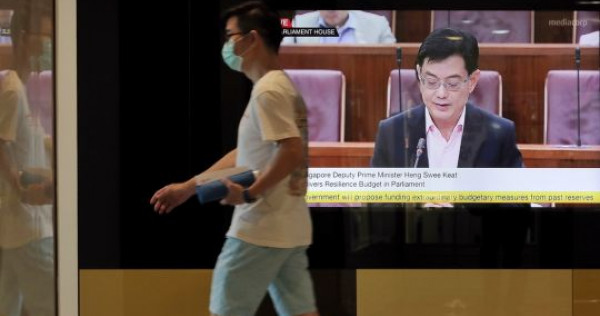
SINGAPORE: Deputy Prime Minister and Minister for Finance Heng Swee Keat delivered a ministerial statement on Thursday (Mar 26), announcing about S$48 billion in additional support measures from the Government in response to the COVID-19 pandemic.
The Resilience Budget has three key areas: To save jobs and support workers; to help businesses overcome immediate challenges; and to strengthen economic and social resilience, Mr Heng said.
Here’s what you need to know about the additional support measures and who they benefit.
The Jobs Support Scheme will be “significantly” enhanced, with the Government co-funding 25 per cent to 75 per cent of wages for local workers, up to a cap of S$4,600 a month. Industries that are badly affected by COVID-19 will get a higher subsidy.
Self-employed workers
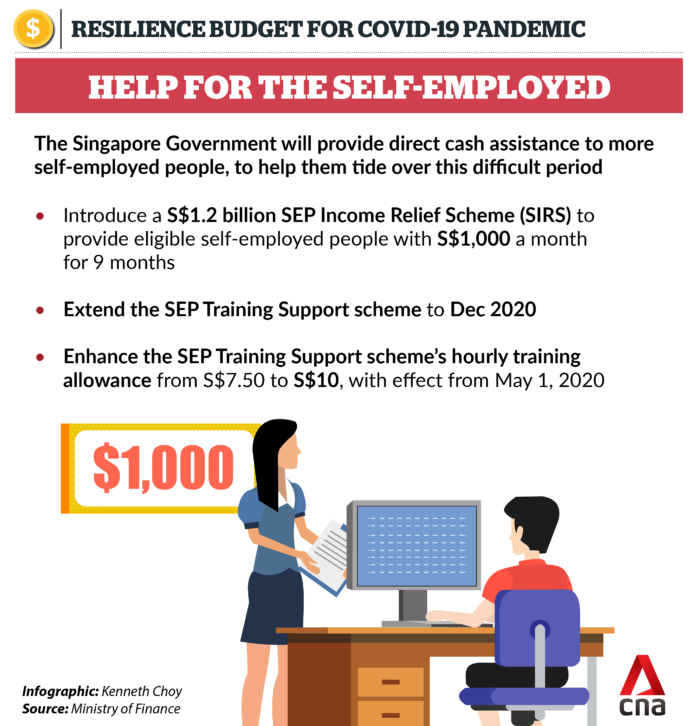
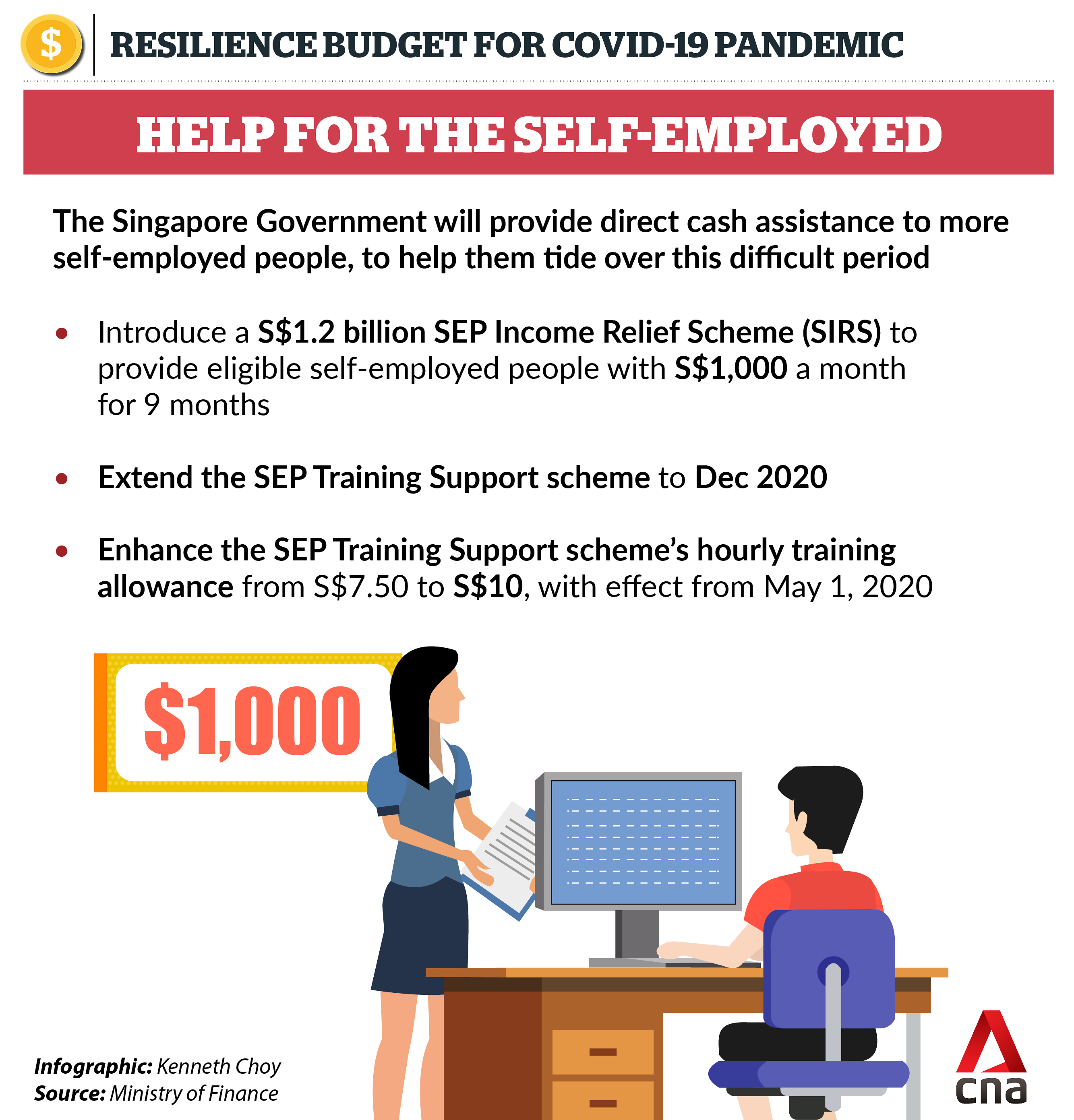
A S$1.2 billion relief fund has been set up for self-employed persons who have less means and family support. Those eligible can get $1,000 a month for nine months.
In addition, self-employed people will receive enhanced hourly training allowances, which will be raised from S$7.50 to S$10. The training support scheme will also be extended to December this year.
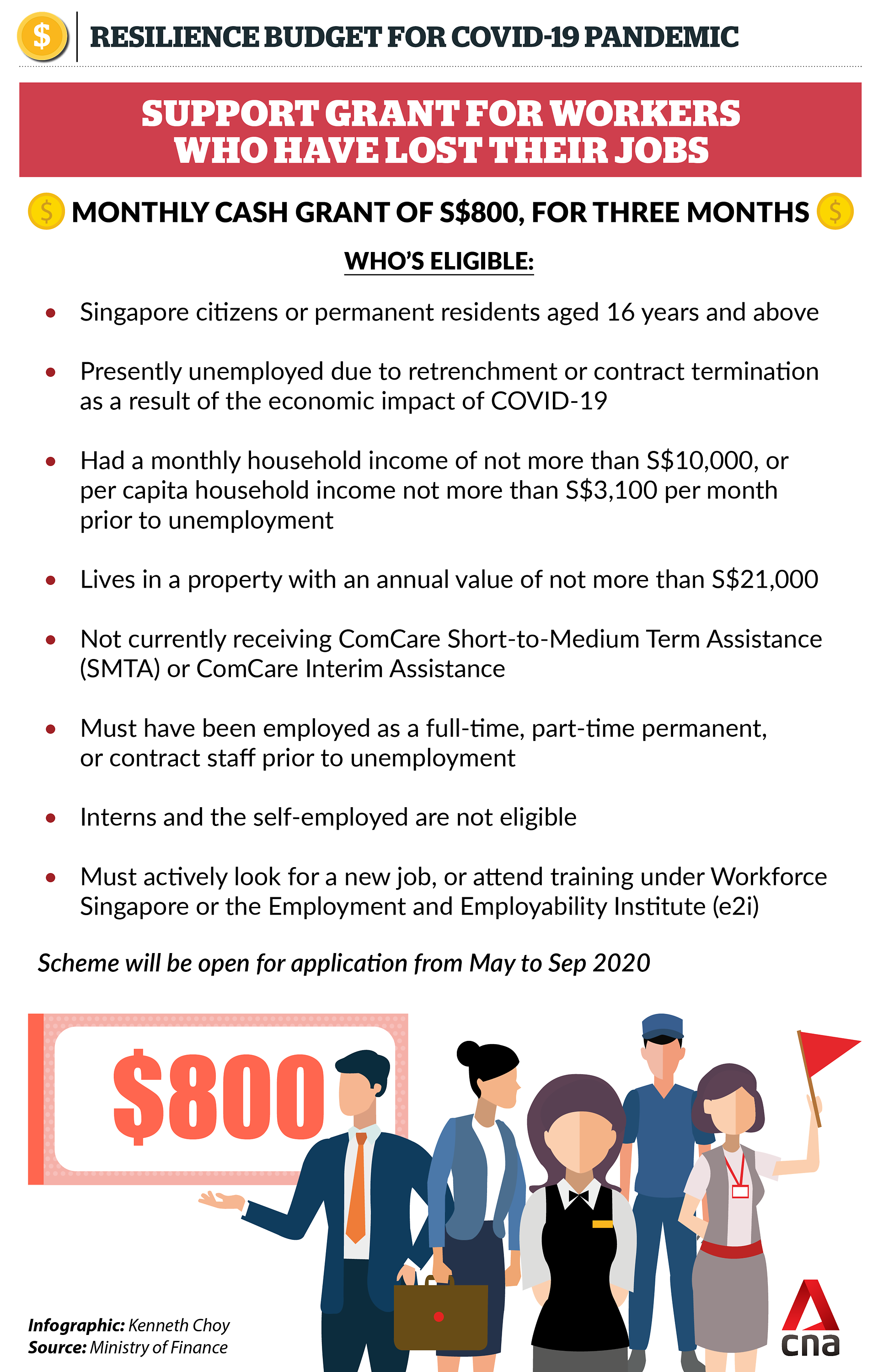
A COVID-19 Support Grant will be introduced from May to September to help those who lost their jobs due to the COVID-19 situation.
Those eligible can receive S$800 per month for three months to tide them over while they look for a new job or go for training.
A SGUnited Traineeship programme for first-time job seekers was also launched to help place them at local firms. Workforce Singapore will co-fund the manpower costs with the companies.
Mr Heng also promised to create about 10,000 jobs over the next year.
The public sector will take the lead and accelerate recruitment. This includes long-term roles in areas such as social services, early childhood education and ICT to enhance the provision of essential services. Short-term temporary jobs will also be offered to handle the increase in COVID-19 related operations.
Lower-income workers
Lower-income workers, including the self-employed, will get an enhanced Workfare Special Payment of S$3,000 cash each.
HELP FOR HOUSEHOLDS
The previously announced Care and Support Package will be enhanced to help all families cope with the uncertainty during the COVID-19 outbreak, with increased cash payouts for all adult Singaporeans, families with young children and needy Singaporeans.
Cash payouts for all adult Singaporeans will now be tripled to a range of S$300 to S$900, depending on their income.
For families that require help urgently while waiting for new measures to kick in, a Temporary Relief Fund will be set up in April to provide immediate financial assistance.
The Government will also exercise more flexibility when considering applications for ComCare to ensure affected Singaporeans can get help.
The Government will also freeze fees and charges for government services, and suspend student loan repayments and interest charges for one year.
In addition, people who have legal obligations arising from the COVID-19 situation – for example, forfeited deposits for a big gathering that cannot go ahead – will get help. Mr Heng said that the Government is studying the issue and will announce measures next week.
HELP FOR BUSINESSES
The supplementary Budget will address three concerns on the minds of business owners during the COVID-19 period – cash flow, cost and credit, said Mr Heng.
An automatic deferment of income tax payments for companies and self-employed persons will be granted for three months.
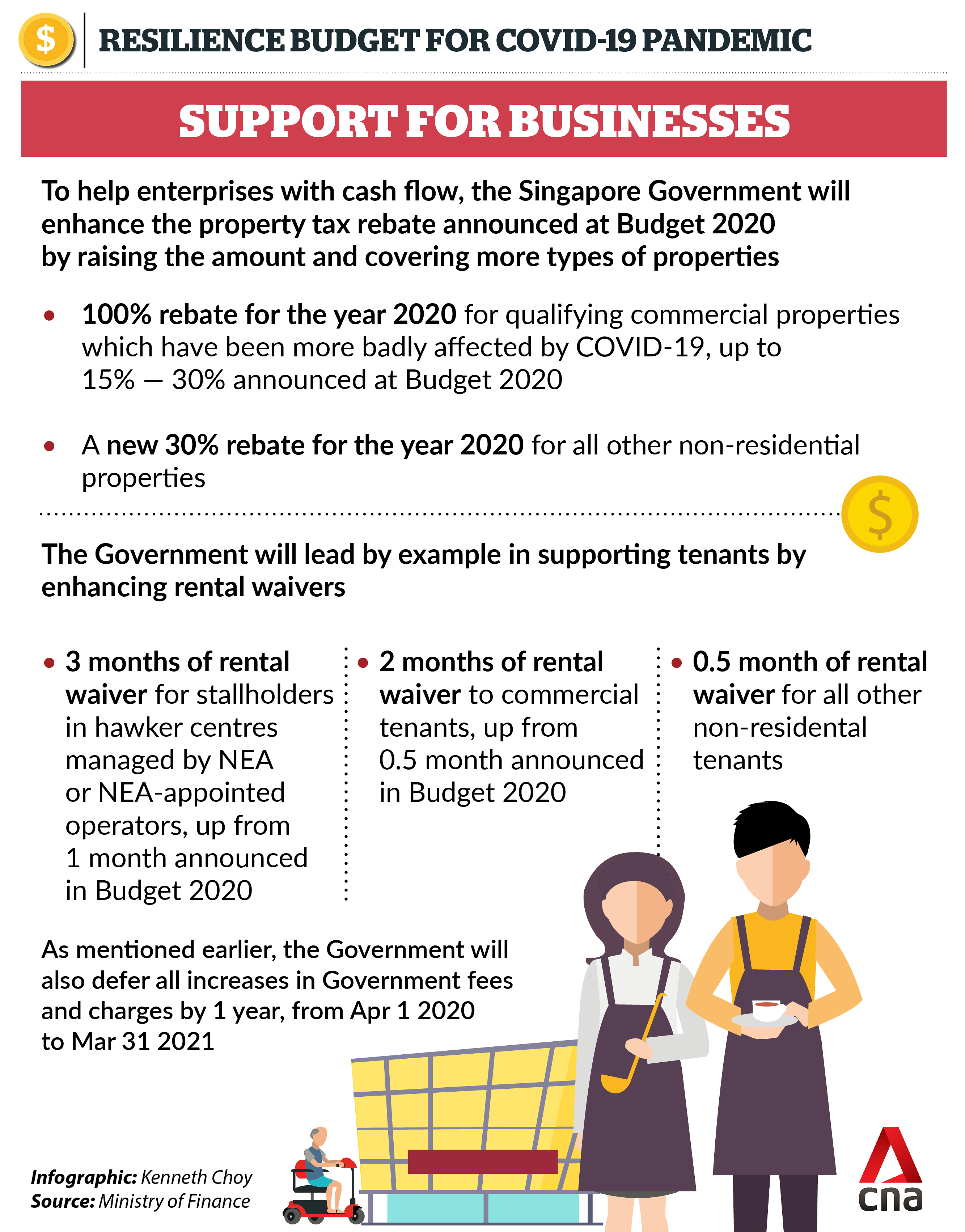
Commercial properties badly affected by COVID-19, such as hotels, tourist attractions, shops and restaurants, will pay no property tax for 2020.
The Government will also waive rent for some. For example, stallholders in hawker centres managed by the National Environment Agency (NEA) or NEA-appointed operators will get three months of rental waiver.
Various schemes, loans and programmes will be enhanced and expanded in order for even the hardest-hit businesses to continue having access to credit, said Mr Heng.
HELP FOR HARDEST HIT SECTORS
As Singapore’s aviation sector is fundamental to the economy, the Government will ensure that the temporary shock to the sector does not become a permanent one, said Mr Heng.
A S$350 million enhanced aviation support package will fund measures such as rebates on landing and parking charges, and rental relief for airlines, ground handlers and cargo agents.
Firms in the food services sector will receive 50 per cent co-funding per worker, while firms in the aviation and tourism sectors will receive 75 per cent. This is subject to a monthly wage cap of S$4,600.
A total of S$90 million will also be set aside to help the tourism industry rebound strongly “when the time is right”, said Mr Heng.
DRAWING FROM RESERVES
Up to S$17 billion will be drawn from Singapore’s past reserves to fund part of the Resilience Budget.
The 2009 financial crisis was the only other time that Singapore had dipped into its reserves, when the Government drew S$4.9 billion to help workers stay employed and companies get credit.
“We have saved up for a rainy day,” said Mr Heng. “The COVID-19 pandemic is already a mighty storm, and is still growing.”
The measures announced on Thursday will raise Singapore’s overall budget deficit for FY2020 to S$39.2 billion, or 7.9 per cent of its GDP.
Mr Heng highlighted that Singapore is able to support the unprecedented deficit and still remain fiscally sustainable because it has been disciplined in the use of past reserves.
He said that political office holders will take a deeper pay cut of three months and urged everyone in Singapore to “stand together” to battle the crisis.
SINGAPORE – The Prime Minister, Cabinet ministers and other political office-holders – as well as the President – will take a three-month pay cut to stand in solidarity with Singaporeans in this difficult time, Deputy Prime Minister Heng Swee Keat said on Thursday.
Mr Heng, who is also finance minister, said that political office-holders will take an additional two-month pay cut on top of the one-month pay cut announced last month, in light of the deteriorating situation caused by the coronavirus.
“The President, Speaker, and both Deputy Speakers have informed me that they will join in and take a similar three-month pay cut in total,” said Mr Heng, as he delivered the supplementary budget.
“It is in times of crisis that the true character of a nation can be seen,” he added. “We are all in this together, and we must all look after one another in these trying times.”
Calling the Covid-19 situation an “unprecedented crisis” that has escalated very quickly, Mr Heng said it has prompted the government to take extraordinary measures and put together a landmark supplementary budget.
From March 27, travellers arriving in Singapore will not only need to submit a health declaration to enter the country, you’ll also need to comply with a 14-day SHN.
Unlike the previously implemented SHN, Singaporeans returning from the US and UK arriving from March 25 onwards will have to stay at participating government-arranged hotels during the SHN period.